Plant Profile & Key Characteristics
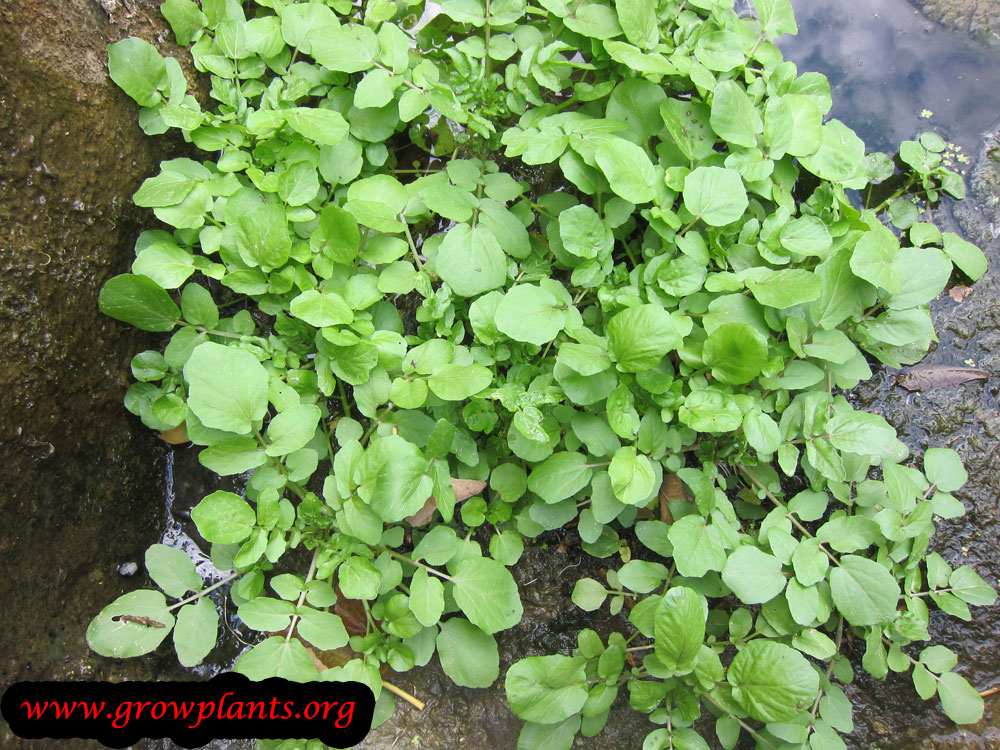
Overview: Watercress (Nasturtium officinale) is a fast-growing edible leaf plant 0.3-1 m (12-40 in) tall that lives in or beside water. Grown as a perennial or annual in temperate, Mediterranean and subtropical climates, its peppery leaves and stems are eaten fresh.
Quick Specifications
| Specification | Attribute |
|---|---|
| Plant Type / Life Cycle | Perennial (or grown as annual) |
| Foliage Type | Evergreen (in mild climates) |
| Mature Size | 0.3-1 m (12-40 in) tall |
| Growth Rate | Fast |
| Root System | Shallow fibrous roots; roots readily from the stem nodes |
| Toxicity | Non-toxic / edible |
| Hardiness | USDA zones 5-10 as perennial (3-5 as annual) |
Growth Form & Structure
- Height & Spread: Trailing stems reach 0.3-1 m (12-40 in); spreads across wet ground or water and can be grown in containers kept constantly wet.
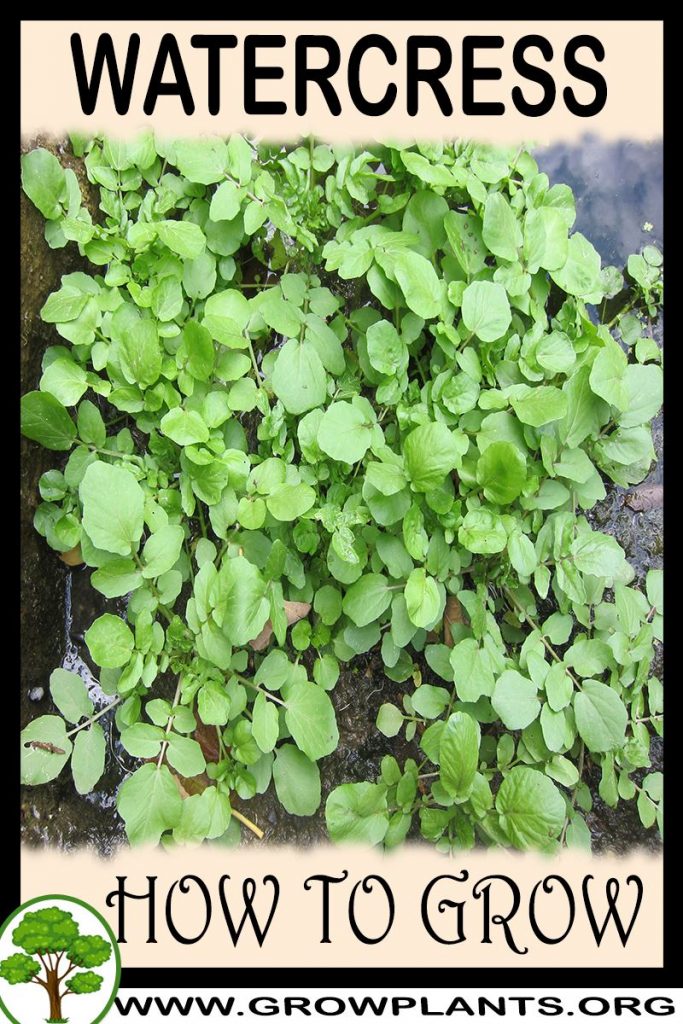
- Growth Habit & Form: Low, creeping semi-aquatic herb with hollow green stems that root as they spread.
- Lifespan & Maturity: Fast-growing; leaves can be harvested continuously once the plant is established.
Anatomy & Physical Features
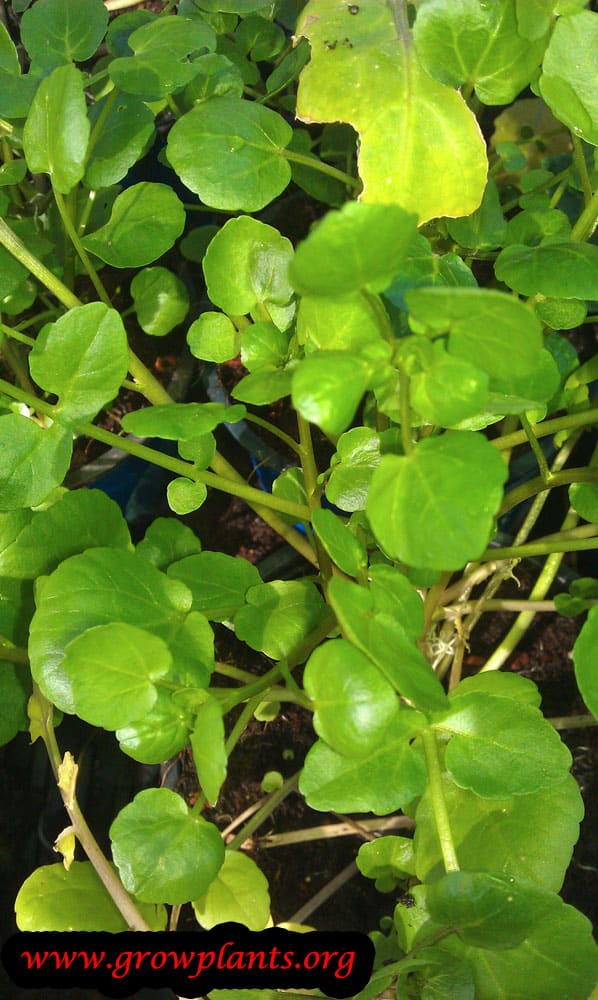
- Leaves & Foliage: Green, pinnate (divided) leaves in a radial arrangement; leaves, sprouts and hollow stems are all edible.
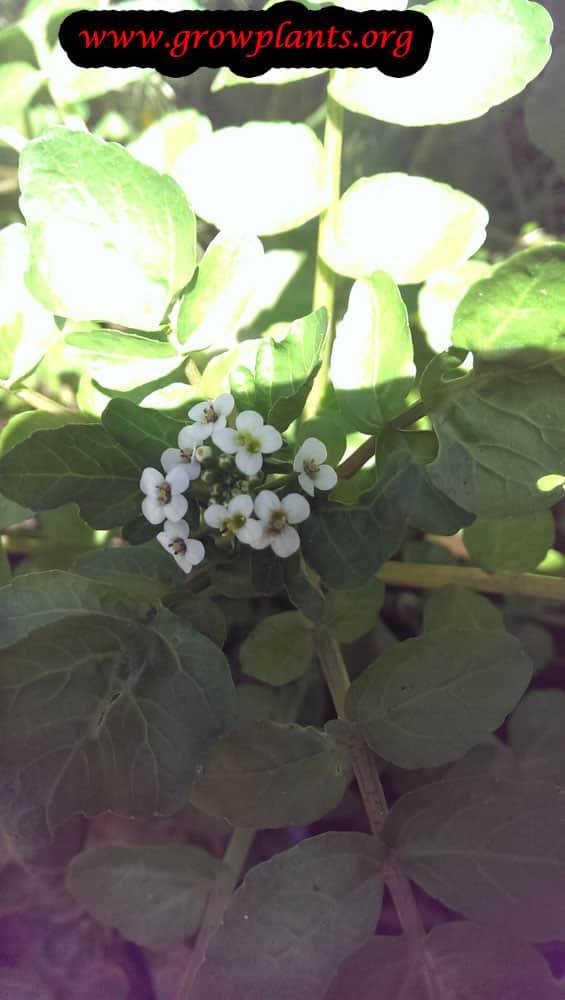
- Flower Characteristics: Tiny white-green flowers (1-2 mm) borne in clusters.
Primary Uses & Landscape Value
- Edible Uses: Peppery leaves and stems eaten fresh in salads, used as a herb and in spreads.
- Functional & Ornamental Roles: Grown at pond and stream margins and in wet containers as an edible aquatic crop.
Care Guide: Planting, Soil & Watering
Overview: Watercress is a fast-growing aquatic leaf crop that lives in or beside fresh water and never tolerates drying out. It wants rich, constantly wet soil, full sun, and a high, steady supply of clean water.
Quick Care Requirements
| Requirement | Ideal Condition |
|---|---|
| Planting Season | Spring |
| Growth Rate | Fast |
| Soil Type | Rich, constantly wet soil at a water margin |
| Soil pH | Neutral to slightly alkaline |
| Water Need | High – needs standing or flowing fresh water; never let it dry |
Planting & Establishment
- Best Planting Season: Plant in spring at a stream or pond margin, or in a container standing in shallow water.
- How to Plant:
- Hole Preparation: Set plants into wet mud at the water’s edge, or into a pot that sits in a tray/pool of water.
- Soil Amendments: Use a rich, organic soil; watercress is a hungry leaf crop.
- Planting Depth: Plant shallow with the crown at the mud surface and keep the roots submerged or permanently saturated.
- Growth Speed & Expectations: Fast and spreading – it can become invasive in waterways.
Soil, Watering & Drainage Care
- Soil Mix & Drainage Needs: The soil must stay constantly wet; watercress does not tolerate drying. Growing it in shallow flowing water gives the cleanest, healthiest leaves.
- Watering Schedule & Technique:
- Young / Newly Planted: Keep the soil saturated from planting onward.
- Established: Keep the plant in standing or flowing water and refresh the water regularly to keep it clean.
- Seasonal Adjustments: Maintain water year-round; growth slows in cold weather and speeds up in warmth.
Climate, Light & Hardiness
Watercress is a fast, semi-aquatic leaf plant of cool, clean running water, grown in full sun in temperate, Mediterranean and subtropical climates in or beside streams, ponds and wet ground. It is happiest in cool water and cool air; the foliage is frost-tender, but the crown persists and regrows where water keeps moving and rarely freezes.
Quick Climate Specifications
| Climate Zones | Temperate, Mediterranean and subtropical; in or beside water |
| USDA Hardiness Zones | Approx. 5–10 as a perennial; 3–5 grown as an annual |
| Optimal Temp Range | approximately 10–20 °C (50–68 °F) |
| Cold Damage Begins | foliage frost-tender; damage around 0 to −3 °C (32 to 27 °F) |
| Approx. Survival Minimum | submerged crown/roots survive in flowing, non-freezing water even after top dies back |
| Frost Tolerance | Low to Moderate (foliage low; crown higher in flowing water) |
| Light Conditions | Full Sun |
| Wind Tolerance | Moderate |
Sunlight & Light Exposure
Optimal Light Setup
Full sun over cool, moving water gives dense, fast growth; the facts list full sun as optimal.
Shade & Heat Management
Where summers are hot, some shade over the water helps keep it cool, which matters because warm, still water encourages bolting and rank growth.
Best Exposure & Orientation
An open, sunny margin of a clean stream or pond is ideal; the key is cool, oxygenated, moving water rather than the aspect itself.
Temperature Extremes & Hardiness
USDA Hardiness & Regional Limits
The site gives two figures reflecting how it is grown: roughly USDA 5–10 as a persisting perennial in mild flowing water, and 3–5 where it is treated as an annual because winter freezes kill exposed growth. In frost-prone regions the running water is the real hardiness factor - a spring or stream that stays unfrozen lets the crown carry through.
Cold Damage & Winter Protection
Exposed foliage is nipped by frost around 0 to −3 °C (32 to 27 °F) and dies back in hard cold, but roots and crown in flowing, non-freezing water survive and reshoot in spring. Where the water body itself freezes, the plant behaves as an annual and is re-established from seed or cuttings.
Frost Sensitivity
Foliage is frost-sensitive; whole-plant survival depends on the water, not the air - moving water buffers temperature and protects the crown.
Extreme Heat Tolerance
Heat is limiting: warm, stagnant water forces flowering and coarse, strong-flavoured growth and stresses the plant, so cool running water is essential in hot climates.
Wind, Humidity & Microclimate
Humidity Preferences
As a water-margin plant it wants constant high moisture at the roots and humid air around the foliage; it will not tolerate drying out.
Wind Tolerance
The low, sprawling stems (0.3–1 m / 12–40 in) are wind-firm at the water surface, though hot drying wind stresses exposed shoots.
Rainfall & Seasonal Moisture
Adapted to permanently wet, cool conditions and steady, clean water flow through the seasons; it is a plant of springs and streams rather than seasonal rain. This is a climate-adaptation note, separate from routine irrigation.
Microclimate Recommendations
A cool, clean, gently flowing water margin gives the best growth and the best chance of the crown overwintering; still, warm water in full summer sun is the condition to avoid.
Growing in Pots, Balconies & Indoors
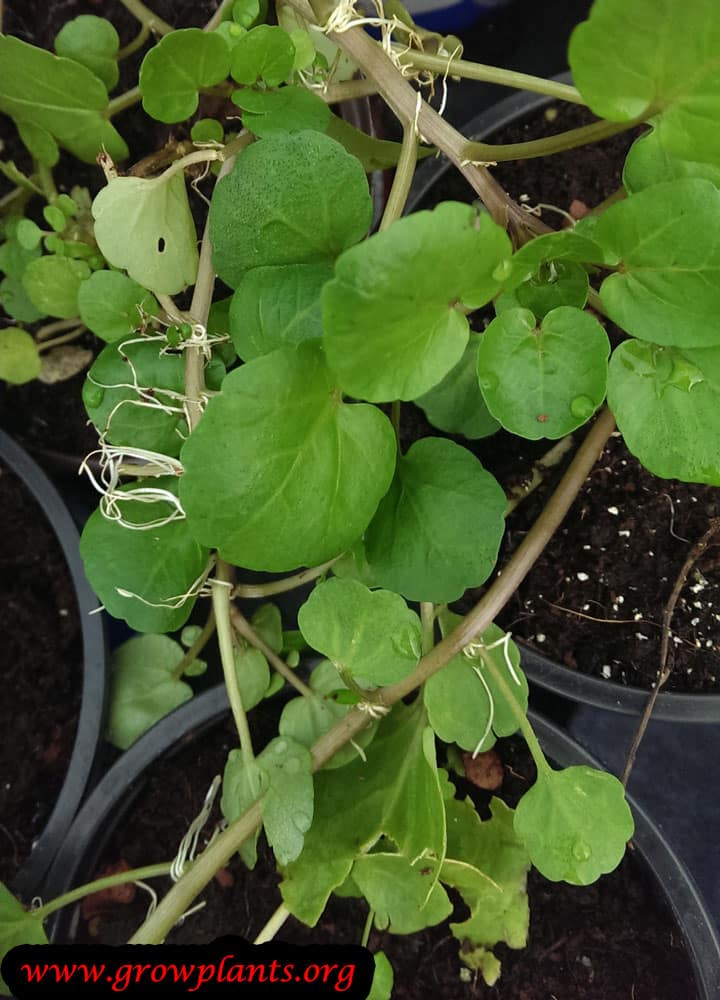
Watercress is unusual among these crops – it wants constant water, so it grows beautifully in a pot standing in a saucer or tray of water on a bright balcony or a sunny windowsill. The grower does not list it as a houseplant, but its love of moisture and bright light makes a water-filled tray one of the easiest ways to grow it at home.
Quick Details
- Container Size: A medium pot standing in a deep water tray or saucer
- Indoor Suitability: Not officially a houseplant, but of all these greens it takes best to a bright sill, because you grow it wet
- Best Spot: full sun; a bright sill or balcony with a constant water supply
- Soil & Drainage: Heavy, moisture-retentive organic mix; here you deliberately keep it wet, not free-draining
- Watering in Pots: Keep it constantly wet – stand the pot in water and refresh the tray often to stop it going stagnant
Indoors & On the Windowsill
- Houseplant note: The grower does not tick it as a houseplant, but grown wet on a bright sill it adapts more readily indoors than most of these greens.
- Windowsill growing: Stand a pot of moisture-retentive mix in a tray of clean water on the sunniest sill, and keep the water fresh to avoid stagnation and off-smells.
- Overwintering: A hardy perennial – it slows in cold but survives; indoors, a cool bright spot keeps it in leaf longer.
On a Balcony or Patio
- Light & water: Full sun and a constant reservoir of water; top up and refresh the tray often in heat so it does not turn foul.
- Practicalities: A pot sitting in water is heavy and can overflow – place it where standing water and spillage are not a problem.
Choosing the Pot, Soil & Long-Term Care
- Pot & water: Unlike most container plants, watercress likes to sit in water – use a pot in a deep saucer or tray and keep it topped up, changing the water regularly to keep it sweet. This is the one case where you do not skip the saucer.
- Mix: A heavy, moisture-retentive organic mix rather than a fast-draining one.
- Feeding: A little balanced feed in the water occasionally is plenty – do not overdo it or the water fouls.
- Long term: Refresh the mix and divide the clump each year; take cuttings, which root readily in water.
Growing this plant in a greenhouse
A greenhouse can give watercress frost protection, cold protection, a longer growing season and winter growing.
Greenhouse at a glance
| Greenhouse suitability | Good - clearly useful |
|---|---|
| Main benefits | frost protection, cold protection, a longer growing season, winter growing |
| Season extension | can grow through winter |
| Outdoor protection advisable below | about -3°C |
| Suitable types | unheated greenhouse, polycarbonate greenhouse |
| Heating | No added heat is normally needed. |
Related greenhouse guides
- Greenhouses: How to Choose the Right Greenhouse
- Polycarbonate Greenhouses: What to Look for Before Buying
- Greenhouse Propagation Equipment
Fertilizing & Feeding
A light feeder: fertile soil and gentle, occasional feeding are usually enough; avoid heavy fertilizer, especially near water, which softens growth and pollutes.
Quick Fertilizing Specs
| Feeding Level | Light |
|---|---|
| Main Nutrient Priority | Nitrogen for continuous, tender leafy growth on a balanced base. |
| Best Feeding Period | During the cool-season active growing period (spring and autumn). |
| Organic Options | Compost or well-rotted manure worked in ahead of planting, plus diluted liquid feeds during growth. |
| Micronutrients | Usually supplied by fertile soil; iron or manganese chlorosis can show on new leaves in cold or high-pH soil. |
| Soil pH | Near neutral to slightly alkaline. |
| Reduce/Stop Feeding | Ease off if leaves grow soft and lush, and keep feeding light near harvest. |
Feeding by Growth Stage
Establishment after sowing or transplanting
Settle seedlings in and build a strong root system before rapid leaf growth begins.
| Nutrient direction | A balanced, complete fertilizer worked into fertile soil; lean mostly on well-prepared, organic-matter-rich soil at this stage. |
|---|---|
| Timing | From sowing or transplanting until seedlings are actively pushing out new leaves. |
| Frequency | Light feeding is usually enough while roots establish. |
| Fertilizer types | Balanced complete garden fertilizer, Compost or other organic matter worked into the bed |
| Precautions | Grown in or beside water: rely on fertile soil or substrate and keep any fertilizer out of open water to avoid runoff and algae; feed lightly. |
Active leaf growth
Drive fast, tender leafy growth for harvest.
| Nutrient direction | A nitrogen-forward complete fertilizer to support continuous leaf production. |
|---|---|
| Timing | During the cool-season growing period once plants are established. |
| Frequency | Several light feedings spread across the active growing season. |
| Fertilizer types | Nitrogen-forward complete fertilizer, Diluted liquid feed or a light side-dressing |
| Precautions | Keep fertilizer out of flowing water; feed lightly through the soil or substrate so leaves stay tender rather than soft. |
Repeated cut-and-come-again harvest
Keep fresh regrowth coming after each cutting of leaves.
| Nutrient direction | A balanced complete fertilizer with adequate nitrogen to push new leaves after each harvest. |
|---|---|
| Timing | Through the harvest window as leaves are cut and allowed to regrow. |
| Frequency | A light feeding after cuttings helps regrowth; feed sparingly. |
| Fertilizer types | Balanced complete fertilizer, Diluted liquid feed applied after cutting |
| Precautions | Avoid overfeeding leaves you will eat soon; keep the soil evenly moist to reduce bitterness and bolting. |
Nutrient Deficiency Signs & Corrections
Older, lower leaves turn pale then yellow while growth slows and leaves stay small.
| Possible causes | Low soil nitrogen or nitrogen leached out by heavy watering or rain, Cold or waterlogged soil limiting nutrient uptake, Poor, low-organic-matter soil |
|---|---|
| Appears first on | Older, lower leaves |
| What to check | Recent heavy rain or irrigation that may have leached nitrogen, Soil organic matter and general fertility, Soil temperature and drainage |
| Possible correction | Apply a nitrogen-forward complete fertilizer at label rates and keep the soil evenly moist; build organic matter over time. |
Yellowing and browning scorch along the margins of older leaves.
| Possible causes | Low soil potassium, Sandy soil that holds few nutrients, Drought stress limiting potassium uptake |
|---|---|
| Appears first on | Margins of older leaves |
| What to check | Soil test for potassium, Watering consistency, Soil type and organic matter |
| Possible correction | Use a complete fertilizer that includes potassium and keep watering consistent. |
New leaves yellow between the veins while the veins themselves stay green.
| Possible causes | High (alkaline) soil pH locking up iron and manganese, Cold, wet soil reducing micronutrient uptake, Waterlogging or poor root health |
|---|---|
| Appears first on | Youngest leaves |
| What to check | Soil pH, Drainage and root condition, Whether symptoms followed cold, wet spells |
| Possible correction | Correct soil pH toward the plant’s preferred range and, if needed, apply a chelated iron or manganese product per its label. |
Pruning, Training & Seasonal Maintenance
Watercress (Nasturtium officinale) is a semi-aquatic perennial (grown as an annual in colder zones) that roots at every node, so it responds to cutting by branching and spreading rather than by any structural pruning. Maintenance is threefold: pinch the growing tips to keep it bushy and delay flowering, harvest sprigs above the waterline, and strip out dead or yellowing leaves before they foul the water. Because it is invasive, preventing flowering and seed-set is a deliberate containment measure, not just a quality one.
Quick Pruning & Maintenance Specs
| Pruning Tolerance | High — regrows readily from the crown/nodes after leaf cutting |
| Primary ‘Pruning’ Action | Cut-and-come-again leaf harvest through the cool season |
| Secondary Action | Removing the bolting flower stalk once heat or long days trigger it |
| Typical Frequency | Outer leaves every 1–2 weeks; one whole-plant shear per flush |
| Main Objective | Keep leaves tender and mild, and delay bolting |
| Young Plant Priority | Thin to spacing and let the rosette establish before cutting |
| Mature Plant Priority | Harvest outer leaves; cut the flower stalk if bolting |
| Best Tool Type | Precision snips only |
| Growth Habit | Sprawling, roots at nodes — cutting makes it branch and thicken |
| Containment Priority | Prevent flowering/seeding — it is invasive and self-seeds freely |
Pruning by Plant Age & Size
Newly Established (Seedling)
Thin—do not cut—seedlings to their final spacing, snipping surplus plants off at soil level rather than pulling so the roots of the keepers are not disturbed. A young watercress should build a full rosette before you take any leaves.
Young / Formative
No training. A young plant is encouraged to bush out by pinching the growing tips, which forces side shoots and a denser, more harvestable mat instead of a few long straggly stems.
Mature / Established
Harvest by cutting leafy sprigs above the waterline; the plant reshoots from the nodes below. Keep pinching tips to hold it vegetative and bushy, and remove flowering stems as they form to stop it setting seed and escaping into waterways.
Seasonal Pruning Schedule
Cool-Season Growth
This is a cool-season crop; while it is bulking in mild weather it needs no cutting beyond ongoing harvest. Steady picking of the oldest outer leaves keeps the centre producing tender new ones.
Bolting (Heat & Lengthening Days)
Lengthening days and warmth push watercress into flower; flowering coarsens the leaves and, more importantly, lets an invasive plant self-seed. Cut flower stems out on sight to keep the stand leafy and contained. A perennial clump can be sheared back hard in spring and will regrow vigorously from the nodes.
Ongoing Sanitary
Remove leaves badly chewed by Pieris (cabbage-white) caterpillars or disfigured by disease. Bin—do not compost—material with brassica downy mildew, white rust or clubroot.
Structural Pruning & Training
No framework to train, but tip-pinching is a genuine structural tool here: each pinch removes apical dominance and forces branching, converting a few long straggling stems into a dense, productive mat. Renewal is by shearing the whole node-rooting mat back hard in spring.
Special Growth to Remove
- Flowering stems — remove promptly for quality and, crucially, to prevent self-seeding of this invasive plant.
- Dead and yellowing leaves — strip them out so they do not decay and foul the water or harbour rot.
- Over-long straggly runners — pinch/cut back to keep a compact, productive mat.
Do not strip healthy inner leaves or cut into the central growing point — that is the source of every future harvest.
Container & Small-Space Pruning
Very well suited to a pot or tray standing in a saucer of clean, frequently changed water. In a container it is easy to keep pinched, compact and—importantly—contained, so it cannot escape into natural watercourses.
Tools
Precision snips or fine scissors are the only tool needed. The cuts are all soft-tissue leaf and stalk work — secateurs, loppers, saws and hedge shears have no role on a leafy annual (shears crush and bruise the crop rather than cut it cleanly).
Tool Hygiene & Disease Risk
Routine as far as the tool goes — clean, sharp snips. The real hygiene issue is the water: use clean, running or frequently changed water, because watercress grown in still or contaminated water can carry waterborne parasites. Remove decaying leaves promptly to keep the water clean.
Cut Placement & Technique
Take outer leaves with a clean cut at the base of the leaf stalk, just above the crown, always leaving the central rosette of young leaves intact. For a rejuvenating shear, cut the whole plant back to roughly 3–5 cm, above the lowest leaf bases and the growing point. Cut any bolting stalk right down at its base.
Heavy Pruning & Rejuvenation
As a perennial it tolerates hard shearing: cut the whole mat back and it regenerates from the many rooting nodes. Use this to rejuvenate a tired, leggy stand — but always remove flower stems first so a hard cut does not scatter seed.
Post-Pruning Care
After a hard cut-and-come-again shear, water to push the regrowth flush and keep the bed cool and evenly moist — heat and drought stress after cutting simply trigger bolting. No feeding is needed to force regrowth; the crown regrows on its own.
Common Pruning Mistakes
- Letting it flower and seed — the leaves decline and, being invasive, it escapes and spreads.
- Never pinching, so it grows long, bare and straggly instead of bushy.
- Leaving dead leaves to rot in the water, fouling it and inviting disease.
When NOT to Prune
Do not cut and dispose of flowering material near natural water, where seeds or rooting fragments can establish. Otherwise there is no season it must be spared — it regrows year-round in mild, wet conditions.
Recommended Tools (by task)
- precision_snips — for tip-pinching, harvesting sprigs and cutting out flower stems and dead leaves; the only tool a soft aquatic leaf plant needs.
Propagation Guide
Watercress can be started three ways — from seed, from stem cuttings, or by division — and, as the site notes, the vegetative routes are so easy they are usually preferred: cut stems root at their nodes within days when stood in water, so a few sprigs from a shop bunch will grow. It is an aquatic perennial needing constantly wet, cool, slightly alkaline conditions, and it spreads vigorously enough to be invasive. Easy by every method.
Quick Propagation Specs
| Best Propagation Method | Stem cuttings (or division) — fastest and easiest |
| Alternative Methods | Seed; division of established clumps |
| Propagation Difficulty | Easy |
| Seed True-to-Type | Species comes true from seed |
| Vegetative True-to-Type | Yes — cuttings and divisions are clones of the parent |
| Best Propagation Season | Spring (or any mild season in frost-free water) |
| Seed Germination Time | Usually 1–3 weeks |
| Cutting Rooting Time | Roots form within days in water |
| Germination Temperature | Around 15–20°C (59–68°F) |
| Seed Sowing Depth | Surface-sow on wet medium — the fine seed needs light and constant moisture |
Growing from Seed
Seed Handling & Sowing
The seed is tiny; surface-sow it on a saturated medium and do not bury it, as it needs light and constant wet to germinate.
Germination Conditions & Time
Keep the medium standing in a little water or permanently soaked at around 15–20°C (59–68°F); seedlings emerge over about 1–3 weeks.
Seedling Care
Prick seedlings out into wet mud or pots stood in shallow water, keeping them saturated as they grow on.
Stem Cuttings
Cutting Type & Setup
Take non-flowering stem pieces — even sprigs from a bought bunch — and stand them in a glass of water or lay them on wet mud.
Rooting Hormone & Time
No rooting hormone is needed: roots emerge from the leaf nodes within a few days in water. Once rooted, plant the pieces into wet soil or shallow standing or slow-running water.
Division
Lift and split an established mat in spring; each piece carrying roots and stems re-establishes at once in wet ground. Because it roots and spreads so freely, confine it or site it only where its spread is acceptable.
Bloom & Edible Flower Guide
Quick Details
- Bloom Season: Spring through autumn
- Time to First Bloom: Once established – as a perennial it flowers freely through the warmer months in its first or second season
- Flower Appearance: Small four-petalled white to greenish-white flowers borne in clusters
- Edibility: Edible – the flowers share the crisp, peppery taste of the leaves, though the greens turn stronger and more bitter once flowering begins
Detailed Blooming Overview
Watercress grows in and beside running water and, once settled, sends up clusters of small white cruciform flowers through the warm season. The blooms are edible and draw bees and hoverflies, though many growers pinch them out to keep the leaves mild and tender.
Flower Characteristics
- Small four-petalled (cruciform) white to greenish-white flowers in clusters.
- Followed by slender curved seed pods if left to mature.
Bloom Care & Thinning
- Managing the bloom: Pinch out flowering stems to keep the leaves mild and prolong the harvest; leaf flavor grows hot and bitter once the plant is in full flower.
- Pollination: Pollinated by bees and flies.
Bloom Health & Protection
- Aphids: Aphids can gather on flowering shoots above the waterline; a strong jet of water or a rinse usually clears them, with insecticidal soap for heavier infestations.
Fruit & Uses
Watercress is grown for its peppery leaves and crisp hollow stems, eaten raw in salads or as a herb; the young sprouts are edible too. It is an aquatic plant grown in or beside clean water – an important point for safe eating (see the safety note below).
Quick Edible Specs
| Edible Parts | Leaves; stems; sprouts |
|---|---|
| Main Use(s) | Culinary – salad, herb, spreads/soups |
| Eaten Raw or Cooked | Both; cook if the water source is not certain to be clean |
| Preparation Required | Wash thoroughly; use clean cultivated water for raw eating |
| Harvest Season | Spring, summer and autumn |
| Time to First Harvest | Fast-growing; cut once established |
| Storage | Best fresh; very perishable |
| Safety/Toxicity Caveat | Not toxic, but wild/contaminated-water plants can carry liver fluke – grow in clean water or cook |
Leaves & Greens
The green leaves grow in a pinnate, radial form on crisp, hollow green stems – both leaf and stem are eaten, along with the young sprouts. Once the plant is established, cut leafy stems at the base; it regrows vigorously (indeed it can be invasive), giving repeat harvests through the warm months.
Preparation, Uses & Safety
Use raw in salads and sandwiches, as a peppery herb, or blend into soups and spreads. Safety: watercress grown in clean, cultivated water is eaten raw, but plants gathered from wild or possibly contaminated waterways can carry liver fluke (a parasite) and should be grown in clean water or thoroughly cooked before eating. Always wash well. There are no toxic plant parts.
Pests, Diseases & Troubleshooting
Overview: Watercress (Nasturtium officinale) is an aquatic brassica, so it shares cabbage-family pests (aphids, flea beetles, caterpillars) but is grown in flowing water. Manage it organically to keep the crop edible, and be aware of its one special risk – liver fluke where wild water and grazing animals are involved.
Quick Troubleshooting Overview
| Issue / Pest | Main Symptom | Primary Solution |
|---|---|---|
| Aphids | Sticky clusters on shoots/undersides | Rinse in flowing water; soap only if severe |
| Flea beetles | Tiny shot-holes in leaves | Fleece/mesh; keep plants vigorous |
| Cabbage white caterpillars | Chewed leaves, green droppings | Handpick; Bt if needed |
| Whiteflies | White flies rising from foliage | Yellow sticky traps; rinse |
| Crook root disease | Bent, swollen white roots; stunting | Fresh clean water source; resistant stock |
| Liver fluke | Human food-safety risk (raw) | Grow in clean, controlled, stock-free water |
Common Pests & Management
- Aphids (Myzus persicae / Brevicoryne brassicae):
- Symptoms: Green or mealy-gray clusters on shoot tips and leaf undersides, distorting growth and fouling the crop with honeydew.
- Prevention & Control: Because the crop is eaten raw, rely on rinsing in flowing water, hand-removal and natural predators (ladybirds, hoverflies); use insecticidal soap only on non-harvest plants and rinse thoroughly.
- Flea beetles (Phyllotreta spp.):
- Symptoms: Countless tiny round shot-holes in the leaves, worst on young plants in warm dry spells.
- Prevention & Control: Cover with fine insect mesh or fleece, keep plants growing strongly in cool flowing water, and clear weedy brassica hosts nearby.
- Cabbage white caterpillars (Pieris rapae / Pieris brassicae):
- Symptoms: Green caterpillars chewing leaves with clusters of green-black droppings; the source’s ‘Pieris’ refers to these butterflies.
- Prevention & Control: Handpick caterpillars and eggs, net plants against egg-laying butterflies, and use the biological caterpillar spray Bt (Bacillus thuringiensis) if needed.
- Whiteflies (Aleyrodidae):
- Symptoms: Tiny white flies that rise in a cloud when foliage is disturbed, leaving sticky honeydew.
- Prevention & Control: Rinse foliage, hang yellow sticky traps, and encourage predators; harsh sprays are unsuitable on an edible aquatic crop.
- Snails & water snails (Gastropoda):
- Symptoms: Grazing damage on leaves; some water snails also host parasites in wild watercourses.
- Prevention & Control: Handpick, keep beds clean, and – critically for safety – control the snail hosts by growing only in clean, managed water.
Diseases & Fungal Issues
- Crook root disease (Spongospora subterranea f.sp. nasturtii):
- Symptoms: The classic watercress disease: roots bend into a crook shape, swell and turn white/translucent, and plants stunt and yellow in cool water.
- Treatment & Management: Use a clean, uncontaminated water supply and resistant strains; the pathogen persists in soil and water, so infected beds may need a fresh source or sterilized substrate.
- Downy mildew / white blister (Peronospora / Albugo candida):
- Symptoms: Yellow blotches with gray or white fuzzy growth beneath the leaves in cool damp conditions.
- Treatment & Management: Improve water flow and airflow, avoid stagnant crowding, and remove affected foliage; keep the crop moving and fresh.
- Damping off (Pythium spp.):
- Symptoms: Seedlings collapse at the waterline in stagnant, warm, dirty water.
- Treatment & Management: Sow into clean media with good water movement and moderate temperatures; discard collapsed seedlings.
Growing Difficulties & Abiotic Problems
- Liver fluke food-safety risk:
- Cause & Symptoms: Watercress from wild water where sheep or cattle graze can carry the liver-fluke parasite (Fasciola hepatica) on the leaves – an issue for people, not the plant.
- Correction Strategy: Grow only in clean, controlled, livestock-free water for raw eating, or cook the crop; never harvest from unknown natural streams.
- Bolting & bitterness:
- Cause & Symptoms: Heat and long days push plants to flower, turning leaves tough and peppery-bitter.
- Correction Strategy: Grow in cool flowing water with some shade in heat, harvest young, and pinch out flower stems to prolong leafy growth.
- Yellowing / nutrient deficiency:
- Cause & Symptoms: Poor, static water starves plants, yellowing older leaves.
- Correction Strategy: Grow in mineral-rich flowing water or feed lightly; ensure constant fresh water movement.
What Helps – Products & Tools
Keep it organic for an edible crop: rinsing and hand-removal, fine mesh, iron-phosphate-free hand control of snails, and Bt for caterpillars; the most important ‘tool’ is a clean, controlled water source for both crook root and food safety.