

Plant Profile & Key Characteristics
Overview: A fast-growing annual leaf vegetable reaching 20-80 cm, grown for its peppery edible leaves. It also produces small white four-petalled flowers and is well suited to cool-season sowing in beds and containers.
Quick Specifications
| Specification | Attribute |
|---|---|
| Plant Type / Life Cycle | Annual |
| Mature Size | 20-80 cm (8-32 in) tall |
| Growth Rate | Fast |
| Toxicity | Non-toxic / edible |
| Hardiness | USDA zones 2-10a for spring sowing (10a-11 for autumn sowing) |
Growth Form & Structure
- Height & Spread: Forms a low leafy rosette 20-80 cm (8-32 in) tall that bolts to a flowering stalk in heat; excellent in containers and window boxes.
- Growth Habit & Form: Upright annual herb – a basal rosette of leaves that elongates into a branched flowering stem.
- Lifespan & Maturity: Leaves are ready to harvest within a few weeks of sowing; the plant completes its cycle in a single season.
Anatomy & Physical Features
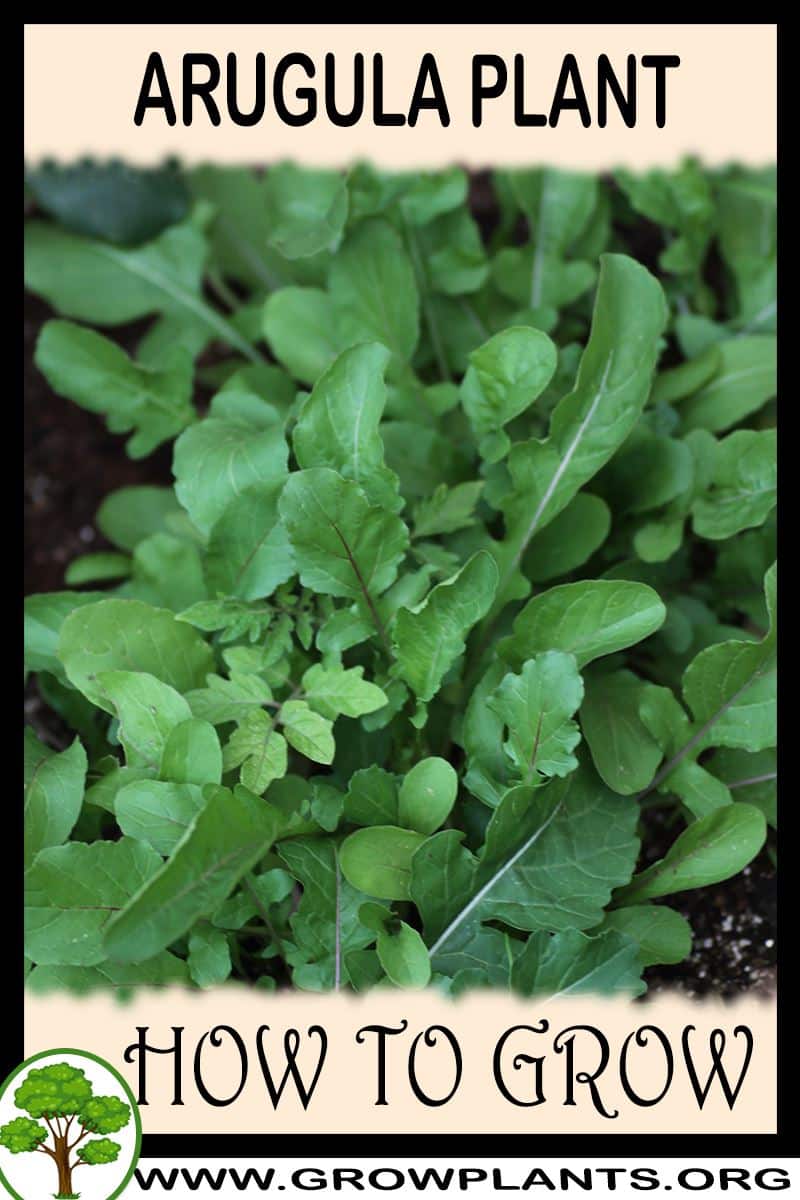
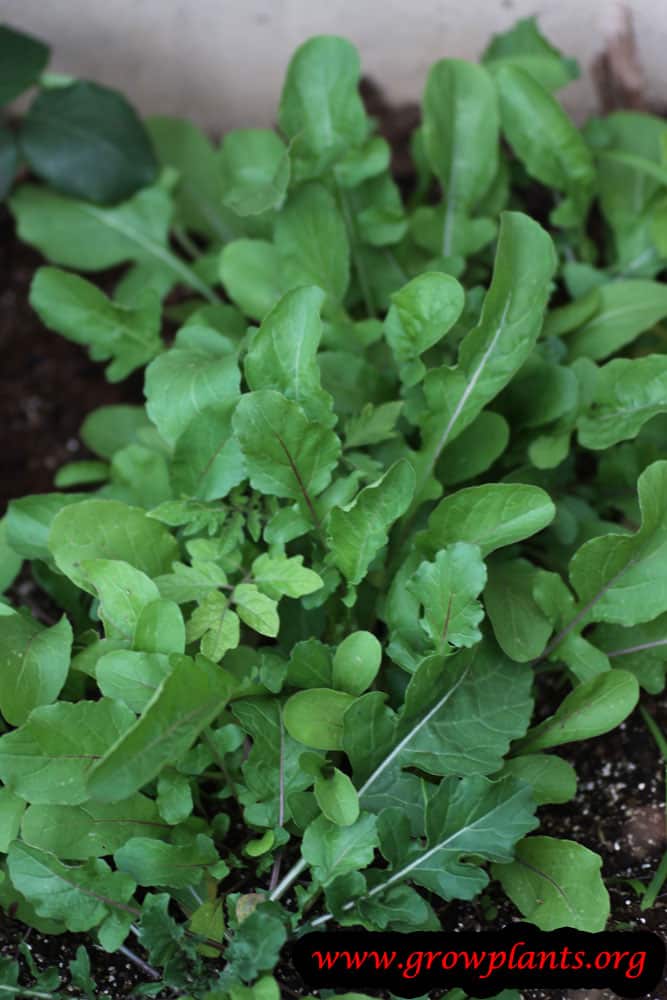
- Leaves & Foliage: Green ovate leaves, often deeply lobed, with a peppery mustard flavour.
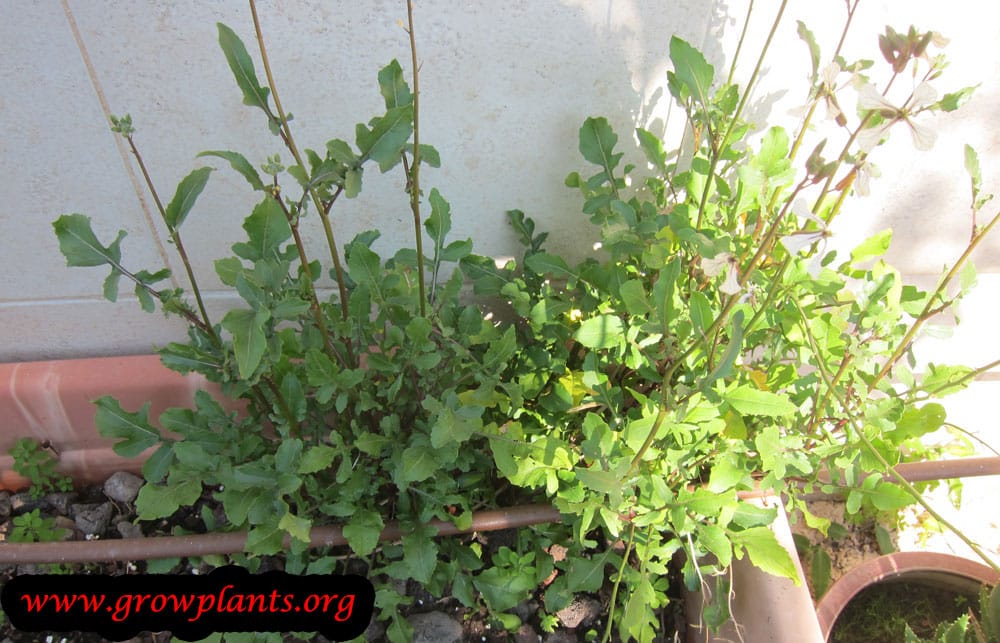
- Flower Characteristics: Small white four-petalled flowers with yellow anthers in late spring to summer.
Primary Uses & Landscape Value
- Edible Uses: Leaves eaten raw in salads or lightly cooked – a classic peppery salad green.
- Functional & Ornamental Roles: Productive cool-season crop for vegetable beds and containers.
Care Guide: Planting, Soil & Watering
Overview: Arugula is a fast-growing, cool-season salad green that performs best in fertile, moisture-retentive but well-drained soil. It prefers the mild temperatures of spring and autumn and needs steady moisture to keep leaves tender and mild.
Quick Care Requirements
| Requirement | Ideal Condition |
|---|---|
| Planting Season | Cool season – spring, or autumn in warm climates |
| Growth Rate | Fast |
| Soil Type | Fertile, moisture-retentive, well-drained |
| Soil pH | Neutral (about 6.0–7.0) |
| Water Need | Moderate to High (keep evenly moist) |
Planting & Establishment
- Best Planting Season: Sow or plant in the cool part of the year – early spring as soon as the soil is workable, or autumn into winter in warm climates – avoiding summer heat, which triggers bolting.
- How to Plant:
- Hole Preparation: For transplants, make a hole just big enough for the root ball; sow seed shallowly into a firmed bed.
- Soil Amendments: Enrich the bed with compost for fertility and moisture retention.
- Planting Depth: Set seedlings at the same depth they grew in the tray; sow seed about 1 cm deep.
- Growth Speed & Expectations: Very fast – leaves are ready to harvest within a few weeks of germination.
Soil, Watering & Drainage Care
- Soil Mix & Drainage Needs: Rich, compost-amended soil that holds moisture yet drains freely; suits containers and window boxes with drainage holes.
- Watering Schedule & Technique:
- Young / Newly Planted: Keep the seedbed consistently moist for even germination and establishment.
- Established: Water regularly and evenly; never let the soil dry out, or the leaves turn bitter and the plant bolts.
- Seasonal Adjustments: Increase watering in warm, dry spells; the plant naturally finishes as summer heat arrives.
Climate, Light & Hardiness
Arugula (salad rocket) is a fast, cool-season salad leaf for Mediterranean, desert, subtropical and temperate gardens in full sun to half shade. It crops best in the cool part of the year; heat and long days push it quickly into flower and sharpen the peppery flavour.
Quick Climate Specifications
| Climate Zones | Mediterranean, desert, subtropical and temperate (cool-season) |
| USDA Hardiness Zones | Approx. 2–11, grown seasonally |
| Optimal Temp Range | approximately 10–20 °C (50–68 °F) |
| Cold Damage Begins | light frost tolerated; first damage around −4 to −6 °C (25 to 21 °F) |
| Approx. Survival Minimum | hardened plants briefly near −7 to −9 °C (19 to 16 °F) |
| Frost Tolerance | Moderate |
| Light Conditions | Full Sun / Half Shade |
| Wind Tolerance | Moderate |
Sunlight & Light Exposure
Optimal Light Setup
Full sun in cool weather gives fast, tender leaves; the facts also allow half shade, useful for slowing bolting in warmer conditions.
Shade & Heat Management
In hot climates or late spring, half or afternoon shade keeps plants cooler and milder and delays the rapid bolting that heat triggers.
Best Exposure & Orientation
An open, sunny bed suits autumn, winter and early-spring crops; for warm-season sowings choose a lightly shaded, cooler aspect.
Temperature Extremes & Hardiness
USDA Hardiness & Regional Limits
The site lists USDA 2–11 for this seasonal crop: spring-sown in cool climates and autumn-sown in warm ones. The zone marks where the quick cool-season crop can be timed rather than a plant that overwinters everywhere, though it often stands through light winter frosts.
Cold Damage & Winter Protection
Arugula is cold-tolerant: light frost is taken in stride and can sweeten the leaves, first damage appears around −4 to −6 °C (25 to 21 °F), and hardened plants briefly survive near −7 to −9 °C (19 to 16 °F). Seedlings are more tender, and a hard freeze cuts the foliage back.
Frost Sensitivity
Low frost sensitivity within its range; only a sustained hard freeze ends the crop.
Extreme Heat Tolerance
Heat is the limit - warm weather and long days force fast bolting and a harsher, hotter flavour, so sustained temperatures much above approximately 24 °C (75 °F) are avoided by cropping in the cool season.
Wind, Humidity & Microclimate
Wind Tolerance
Low leafy plants (20–80 cm / 8–32 in, taller in flower) are reasonably wind-firm; only bolting stems catch strong gusts.
Rainfall & Seasonal Moisture
Adapted to the cool, moist season; steady moisture keeps leaves tender and mild, while heat and drought stress force bolting and pungency. This is a climate-adaptation note, separate from routine irrigation.
Microclimate Recommendations
A cool, evenly moist, lightly shaded pocket lengthens the tender-leaf window and delays bolting in warm spells.
Growing in Pots, Balconies & Indoors
arugula is a cool-season leafy crop that thrives in pots, troughs and window boxes, which makes it a natural choice for a balcony or patio. The grower does not rate it as a true indoor houseplant, but a bright, sunny windowsill will still give you tender baby leaves and cut-and-come-again pickings.
Quick Details
- Container Size: A wide trough or pot at least about 20 cm (8 in) deep; grow several plants close together
- Indoor Suitability: Not a deep-room houseplant; a bright, sunny sill gives baby leaves and repeat cuttings
- Best Spot: full sun, with part shade welcome in hot climates – a bright balcony or patio
- Soil & Drainage: Rich, aerated organic mix (peat or coir with perlite or vermiculite); free-draining yet moisture-retentive
- Watering in Pots: Keep evenly moist – pots dry fast and brassica leaves turn tough and bitter if they dry out; never waterlogged
Indoors & On the Windowsill
- Houseplant limits: The grower lists arugula as not suited to indoors; deep in a room the light is too weak for healthy, well-flavoured leaves.
- Windowsill growing: On a bright, sunny sill it earns its place as a cut-and-come-again crop – sow thickly, pick young leaves, and resow for a steady supply.
- Overwintering: As a hardy cool-season plant it shrugs off light frost outdoors; in a hard winter, shelter a pot in a cold porch or unheated greenhouse rather than a warm room, which is too dim.
On a Balcony or Patio
- Light & wind: Give it the brightest spot, but a little afternoon shade in hot weather helps stop it bolting. Walls and railings throw back heat and wind dries pots quickly, so check moisture daily in warm spells. A drip irrigation kit with a timer can take over that watering check automatically.
- Practicalities: A broad trough or several plants sharing a large planter works well; make sure surplus water can drain clear of the balcony floor.
Choosing the Pot, Soil & Long-Term Care
- Pot & drainage: A wide container about 20 cm deep with strong drainage holes; skip a standing-water saucer to avoid root rot. Terracotta breathes and dries faster, while glazed or plastic holds moisture longer – handy for a thirsty leaf crop.
- Potting mix: A rich, well-aerated organic mix – peat or coir with perlite or vermiculite – holds the steady moisture these greens like.
- Feeding: Potted greens use up their mix quickly and nutrients leach out with watering, so feed more often than plants in the ground, with a balanced, nitrogen-leaning liquid feed for lush leaves.
- Between crops: These are fast, short-lived croppers – refresh or replace the spent mix between sowings rather than nursing old plants along.
Growing this plant in a greenhouse
A greenhouse can give arugula cold protection, a longer growing season, winter growing and a head start for propagation.
Greenhouse at a glance
| Greenhouse suitability | Good - clearly useful |
|---|---|
| Main benefits | cold protection, a longer growing season, winter growing, a head start for propagation |
| Season extension | can grow through winter |
| Outdoor protection advisable below | about -6°C |
| Suitable types | unheated greenhouse, polycarbonate greenhouse |
| Heating | No added heat is normally needed. |
Related greenhouse guides
- Greenhouses: How to Choose the Right Greenhouse
- Polycarbonate Greenhouses: What to Look for Before Buying
- Greenhouse Propagation Equipment
Fertilizing & Feeding
A moderate feeder: fertile soil plus light, steady feeding through the cool growing season keeps leaves tender, while heavy nitrogen softens growth and invites pests. A fertilizer formulated for tomatoes and vegetables supports that feeding pattern through harvest.
Quick Fertilizing Specs
| Feeding Level | Moderate |
|---|---|
| Main Nutrient Priority | Nitrogen for continuous, tender leafy growth on a balanced base. |
| Best Feeding Period | During the cool-season active growing period (spring and autumn). |
| Organic Options | Compost or well-rotted manure worked in ahead of planting, plus diluted liquid feeds during growth. |
| Micronutrients | Usually supplied by fertile soil; iron or manganese chlorosis can show on new leaves in cold or high-pH soil. |
| Soil pH | Slightly acidic to neutral. |
| Reduce/Stop Feeding | Ease off if leaves grow soft and lush, and keep feeding light near harvest. |
Feeding by Growth Stage
Establishment after sowing or transplanting
Settle seedlings in and build a strong root system before rapid leaf growth begins.
| Nutrient direction | A balanced, complete fertilizer worked into fertile soil; lean mostly on well-prepared, organic-matter-rich soil at this stage. |
|---|---|
| Timing | From sowing or transplanting until seedlings are actively pushing out new leaves. |
| Frequency | Light feeding is usually enough while roots establish. |
| Fertilizer types | Balanced complete garden fertilizer, Compost or other organic matter worked into the bed |
| Precautions | Avoid heavy fertilizer against tender seedling roots, which can burn them; keep the bed evenly moist. |
Active leaf growth
Drive fast, tender leafy growth for harvest.
| Nutrient direction | A nitrogen-forward complete fertilizer to support continuous leaf production. |
|---|---|
| Timing | During the cool-season growing period once plants are established. |
| Frequency | Several light feedings spread across the active growing season. |
| Fertilizer types | Nitrogen-forward complete fertilizer, Diluted liquid feed or a light side-dressing |
| Precautions | Excess nitrogen leaves growth soft and more attractive to aphids and caterpillars; keep feeding steady rather than heavy. |
Repeated cut-and-come-again harvest
Keep fresh regrowth coming after each cutting of leaves.
| Nutrient direction | A balanced complete fertilizer with adequate nitrogen to push new leaves after each harvest. |
|---|---|
| Timing | Through the harvest window as leaves are cut and allowed to regrow. |
| Frequency | A light feeding after cuttings helps regrowth; feed sparingly. |
| Fertilizer types | Balanced complete fertilizer, Diluted liquid feed applied after cutting |
| Precautions | Avoid overfeeding leaves you will eat soon; keep the soil evenly moist to reduce bitterness and bolting. |
Nutrient Deficiency Signs & Corrections
Older, lower leaves turn pale then yellow while growth slows and leaves stay small.
| Possible causes | Low soil nitrogen or nitrogen leached out by heavy watering or rain, Cold or waterlogged soil limiting nutrient uptake, Poor, low-organic-matter soil |
|---|---|
| Appears first on | Older, lower leaves |
| What to check | Recent heavy rain or irrigation that may have leached nitrogen, Soil organic matter and general fertility, Soil temperature and drainage |
| Possible correction | Apply a nitrogen-forward complete fertilizer at label rates and keep the soil evenly moist; build organic matter over time. |
Yellowing and browning scorch along the margins of older leaves.
| Possible causes | Low soil potassium, Sandy soil that holds few nutrients, Drought stress limiting potassium uptake |
|---|---|
| Appears first on | Margins of older leaves |
| What to check | Soil test for potassium, Watering consistency, Soil type and organic matter |
| Possible correction | Use a complete fertilizer that includes potassium and keep watering consistent. |
New leaves yellow between the veins while the veins themselves stay green.
| Possible causes | High (alkaline) soil pH locking up iron and manganese, Cold, wet soil reducing micronutrient uptake, Waterlogging or poor root health |
|---|---|
| Appears first on | Youngest leaves |
| What to check | Soil pH, Drainage and root condition, Whether symptoms followed cold, wet spells |
| Possible correction | Correct soil pH toward the plant’s preferred range and, if needed, apply a chelated iron or manganese product per its label. |
Pruning, Training & Seasonal Maintenance
Arugula (Eruca sativa, salad rocket) is a fast annual salad leaf; its own note says cutting is ‘just for harvest and at the end of the season.’ It is cut-and-come-again — take outer leaves or shear the plant — and it regrows quickly. The critical timing point is bolting: rocket runs to flower very readily in heat and long days, and once it does the leaves turn intensely peppery and bitter, so almost all the ‘management’ is about harvesting young and cutting the flower stalk.
Quick Pruning & Maintenance Specs
| Pruning Tolerance | High — regrows readily from the crown/nodes after leaf cutting |
| Primary ‘Pruning’ Action | Cut-and-come-again leaf harvest through the cool season |
| Secondary Action | Removing the bolting flower stalk once heat or long days trigger it |
| Typical Frequency | Outer leaves every 1–2 weeks; one whole-plant shear per flush |
| Main Objective | Keep leaves tender and mild, and delay bolting |
| Young Plant Priority | Thin to spacing and let the rosette establish before cutting |
| Mature Plant Priority | Harvest outer leaves; cut the flower stalk if bolting |
| Best Tool Type | Precision snips only |
| Regrowth Cuts per Sowing | Typically 2–3 cut-and-come-again flushes before it bolts |
| Avoid Heavy Cutting During | Hot spells — rocket bolts and turns bitter fastest of this group |
Pruning by Plant Age & Size
Newly Established (Seedling)
Thin—do not cut—seedlings to their final spacing, snipping surplus plants off at soil level rather than pulling so the roots of the keepers are not disturbed. A young arugula should build a full rosette before you take any leaves.
Young / Formative
No training — a low rosette of lobed leaves. Start cutting young; small rocket leaves are milder, and picking early also slows the plant’s rush to bolt.
Mature / Established
Harvest the whole plant by shearing to 3–5 cm, or take outer leaves repeatedly. Cut off flower stalks as they appear — the white four-petalled flowers are edible, but leaving them speeds bolting and bitters the leaves. Expect two or three flushes before quality drops and it is time to resow.
Seasonal Pruning Schedule
Cool-Season Growth
This is a cool-season crop; while it is bulking in mild weather it needs no cutting beyond ongoing harvest. Steady picking of the oldest outer leaves keeps the centre producing tender new ones.
Bolting (Heat & Lengthening Days)
Rocket is the quickest bolter in this group: heat and long days send up flower stalks within weeks. The leaves then become fiercely hot and bitter. Snip the stalks to squeeze out a little more leaf, but the real answer is fast successional sowing in the cool parts of the year.
Ongoing Sanitary
Remove leaves badly chewed by Pieris (cabbage-white) caterpillars or disfigured by disease. Bin—do not compost—material with brassica downy mildew, white rust or clubroot.
Structural Pruning & Training
None. This is a low leafy rosette with no stem framework to shape — there is no leader, no branches and no training system. The only ‘renewal’ is shearing the whole plant back to a few centimetres above the crown to force a fresh flush of young leaves.
Special Growth to Remove
- Flower stalks — cut at the base as they rise; the flowers are edible if you want them, but they hasten bolting and bittering.
- Aphid- or caterpillar-damaged leaves — remove to keep the salad clean.
Do not strip healthy inner leaves or cut into the central growing point — that is the source of every future harvest.
Container & Small-Space Pruning
Ideal for shallow pots and window boxes as a repeat cut-and-come-again crop. In containers it dries out and bolts even faster, so harvest young and keep it moist and, in summer, in half shade.
Tools
Precision snips or fine scissors are the only tool needed. The cuts are all soft-tissue leaf and stalk work — secateurs, loppers, saws and hedge shears have no role on a leafy annual (shears crush and bruise the crop rather than cut it cleanly).
Tool Hygiene & Disease Risk
Routine. Downy mildew and white rust can appear in humid conditions; remove and bin affected leaves and clean the snips if you see it, but healthy rocket needs no more than a clean, sharp blade.
Cut Placement & Technique
Take outer leaves with a clean cut at the base of the leaf stalk, just above the crown, always leaving the central rosette of young leaves intact. For a rejuvenating shear, cut the whole plant back to roughly 3–5 cm, above the lowest leaf bases and the growing point. Cut any bolting stalk right down at its base.
Heavy Pruning & Rejuvenation
No woody rejuvenation. Shearing to a few centimetres gives one or two more flushes while the weather stays cool; a bolted plant will not recover to mild leaves, so replace it with a fresh sowing.
Post-Pruning Care
After a hard cut-and-come-again shear, water to push the regrowth flush and keep the bed cool and evenly moist — heat and drought stress after cutting simply trigger bolting. No feeding is needed to force regrowth; the crown regrows on its own.
Common Pruning Mistakes
- Letting it flower before harvest — the number-one cause of harsh, bitter rocket.
- Cutting too low, through the crown, so it does not reflush.
- Sowing once and expecting a long season — rocket is a succession crop, not a standing one.
When NOT to Prune
Do not shear a heat-stressed plant expecting a mild reflush — it will bolt instead. In hot weather, stop cutting and resow when it cools.
Recommended Tools (by task)
- precision_snips — the only tool: fast, clean cut-and-come-again harvest and bolt-stalk removal on soft leaves.
Propagation Guide
Arugula is grown from seed, broadcast or direct-sown, and is one of the easiest greens to raise — it germinates within a few days, grows fast for cut-and-come-again picking, and self-sows readily once allowed to flower. No vegetative propagation is used. The species comes true from seed, though it will cross with other arugula plantings. Very easy.
Quick Propagation Specs
| Best Propagation Method | Seed, direct-sown or broadcast |
| Propagation Difficulty | Easy |
| Seed True-to-Type | Species comes true from seed; self-sows freely |
| Best Propagation Season | Spring, or autumn in warm climates (cool weather; bolts in summer heat) |
| Seed Germination Time | Very fast, often within a few days |
| Germination Temperature | Germinates over a wide cool-to-warm range, roughly 10–25°C (50–77°F) |
| Seed Sowing Depth | About 0.5–1 cm (0.25–0.5 in) |
Growing from Seed
Seed Handling & Viability
Seed keeps for a few years stored cool and dry and needs no pre-treatment.
Sowing Season
Sow in spring, or in autumn and winter in warm climates; heat and long days make it bolt and turn peppery, after which it sets abundant seed.
Sowing Depth & Succession
Sow about 0.5–1 cm (0.25–0.5 in) deep, broadcast or in short rows; because it matures so fast, sow small amounts every couple of weeks for a steady supply.
Germination & Self-Seeding
Seedlings appear within a few days. Left to flower, arugula drops seed and returns on its own the following season.
Bloom & Edible Flower Guide
Quick Details
- Bloom Season: Spring to summer
- Time to First Bloom: In its first season – arugula bolts quickly in heat and long days, often within a couple of months of sowing
- Flower Appearance: Four-petalled creamy-white flowers with distinctive purple-brown veins and yellow anthers
- Edibility: Edible – the flowers are a popular garnish, carrying the same peppery, nutty taste as the leaves in a milder form
Detailed Blooming Overview
Arugula runs to flower readily once the weather warms, sending up airy stems of four-petalled cream flowers veined in purple-brown. Far from a loss, the blooms are a sought-after edible in their own right, scattered over salads and plates for their gentle, nutty heat.
Flower Characteristics
- Four-petalled (cruciform) creamy-white flowers with purple-brown veining and yellow anthers.
- Followed by slender seed pods (siliques) if left to mature.
Bloom Care & Thinning
- Managing the bloom: Pinch out flower stalks to prolong the leaf harvest, or leave them to enjoy the edible blooms; the leaves turn sharper and more pungent once the plant flowers.
- Pollination: Self-fertile and also visited by bees and other insects.
Bloom Health & Protection
- Aphids: Aphids often cluster on flowering shoots and buds; a strong jet of water, insecticidal soap or neem oil keeps them in check.
- Cabbage white caterpillars: These can graze buds and open flowers – a Bacillus thuringiensis (Bt) spray is a targeted, low-impact option.
Fruit & Uses
Arugula (rocket) is grown for its peppery green leaves, eaten mostly raw in salads. The young leaves are the prize; the white four-petalled flowers are also edible as a garnish.
Quick Edible Specs
| Edible Parts | Leaves; flowers (garnish) |
|---|---|
| Main Use(s) | Culinary – raw in salad; flowers as an edible garnish |
| Eaten Raw or Cooked | Mostly raw; can also be wilted/cooked |
| Preparation Required | None; wash well |
| Harvest Season | Cold climates spring–summer; warmer climates autumn–winter–spring |
| Time to First Harvest | Fast-growing; pick leaves young |
| Storage | Best fresh; keeps a few days chilled |
| Safety/Toxicity Caveat | No toxic parts; peppery flavour that intensifies with age/heat |
Leaves & Greens
Green, ovate leaves that can be deeply lobed, with a peppery bite. Harvest either by cutting individual leaves at the base or taking the whole plant; young leaves are milder, while older leaves and hot weather make the flavour sharper. Cut-and-come-again picking keeps the plant producing until it bolts.
Flowers & Flower Buds
Once the plant bolts it produces white, four-petalled flowers with yellow centres; these are edible and make a mildly peppery garnish for salads.
Preparation, Uses & Safety
Use the leaves raw in salads, on pizza and in sandwiches, or wilt them briefly into pasta and cooked dishes. No detoxifying preparation is required and there are no toxic parts.
Pests, Diseases & Troubleshooting
Overview: Arugula / salad rocket (Eruca sativa) is a fast-growing brassica, so it shares the cabbage family’s foes: flea beetles riddle the leaves, caterpillars and aphids feed on the foliage, and in cool damp weather white rust and downy mildew appear. Because the crop is quick, the winning strategy is exclusion (row cover) plus fast harvest and rotation, keeping sprays to a minimum on a leaf you eat raw.
Quick Troubleshooting Overview
| Issue / Pest | Main Symptom | Primary Solution |
|---|---|---|
| Flea beetle | Countless tiny shot-holes peppering the leaves | Floating row cover from sowing, quick harvest, mulch |
| Cabbage caterpillars | Chewed leaves and green frass | Handpick, row cover, Bt spray |
| Aphids | Colonies in the leaf heart and undersides, honeydew | Hose off, insecticidal soap, beneficials |
| Slugs & snails | Ragged holes and slime on seedlings | Traps, iron-phosphate bait, barriers |
| White rust | White blister-like pustules under leaves, swelling/distortion | Airflow, rotation, remove infected plants |
| Downy mildew | Yellow angular blotches with grey mould beneath | Space plants, water in the morning, rotate |
Common Pests & Management
- Flea beetles (Phyllotreta spp.):
- Symptoms: The signature rocket pest: tiny black beetles that jump when disturbed and pepper the leaves with hundreds of small round shot-holes, worst on seedlings and in warm dry weather, ruining salad quality.
- Prevention & Control: Cover the crop with floating row cover / insect mesh from the moment of sowing, keep plants growing fast with moisture, harvest young, and use mulch and trap crops; rotate away from other brassicas to reduce carryover.
- Cabbage white & caterpillars (Pieris rapae / Pieris brassicae):
- Symptoms: Green or velvety caterpillars chew large holes and leave wet green frass; the small white lays single eggs, the large white lays clusters that skeletonise leaves.
- Prevention & Control: Exclude the butterflies with mesh, handpick eggs and caterpillars, and spray Bt (Bacillus thuringiensis) if needed – it is selective and safe on edible leaves right up to harvest.
- Diamondback moth (Plutella xylostella):
- Symptoms: Small, slender green caterpillars graze the leaf underside leaving a thin ‘window’ of tissue, and wriggle backwards vigorously when touched; damage looks like fine holes and pale patches.
- Prevention & Control: Row cover excludes the moths, and Bt or spinosad controls larvae; rotate crops and remove brassica debris, as this pest cycles quickly and resists many products.
- Aphids (Brevicoryne brassicae / Myzus persicae):
- Symptoms: Grey-waxy cabbage aphids or green peach aphids colonise the leaf heart and undersides, distorting growth, fouling leaves with honeydew, and hiding deep in the rosette where they are hard to wash out.
- Prevention & Control: Blast off with water, encourage ladybirds, lacewings and parasitic wasps, and use insecticidal soap; because they lodge in the heart, inspect early and harvest promptly rather than letting colonies build.
- Slugs & snails (Gastropoda):
- Symptoms: Seedlings and low leaves are rasped into ragged holes with slime trails, especially in damp, mild weather and among mulch.
- Prevention & Control: Set beer traps, hand-collect at night, use grit or copper barriers around beds, and scatter iron-phosphate bait; water in the morning so the surface is dry by nightfall.
Diseases & Fungal Issues
- White rust / white blister (Albugo candida):
- Symptoms: The signature rocket disease: shiny white, blister-like pustules erupt on leaf undersides, with pale blotches above and sometimes swollen, distorted stems and flower parts; common in cool, moist conditions.
- Treatment & Management: Rotate away from brassicas for several years, space plants for airflow, avoid overhead watering, and promptly remove and destroy infected leaves and plants; grow resistant varieties where available.
- Downy mildew (Hyaloperonospora parasitica):
- Symptoms: Pale yellow angular blotches on the upper leaf bounded by veins, with a fine grey-purple mould on the underside in humid weather; seedlings can be killed, older leaves disfigured.
- Treatment & Management: Improve spacing and airflow, water early in the day so foliage dries, rotate crops, and remove infected debris; copper can protect the crop under heavy pressure, though good culture is usually enough on a fast salad.
- Clubroot (Plasmodiophora brassicae):
- Symptoms: Stunted, wilting plants with yellowing leaves and grossly swollen, distorted roots; a persistent soil disease worst in acid, wet ground.
- Treatment & Management: Rotate strictly away from brassicas, raise soil pH with lime toward neutral, improve drainage, and never move infected soil or transplants; the resting spores survive for years, so prevention is everything.
- Alternaria leaf spot (Alternaria brassicae):
- Symptoms: Dark brown to black concentric target-spots on leaves, sometimes with a yellow halo, downgrading salad leaves in wet seasons.
- Treatment & Management: Use clean seed, rotate, space for airflow and remove debris; the fast harvest of rocket usually outruns serious damage without spraying.
Growing Difficulties & Abiotic Problems
- Bolting & bitterness:
- Cause & Symptoms: Heat, long days and stress make rocket bolt to flower quickly, and the leaves turn tough, hot and unpleasantly bitter.
- Correction Strategy: Sow in the cooler parts of the year, give some afternoon shade in heat, keep soil evenly moist, and harvest young and often; treat it as a fast cut-and-come-again crop rather than leaving it standing.
- Tip burn & tough peppery leaves:
- Cause & Symptoms: Drought and heat stress scorch leaf margins and drive excessively hot, fibrous leaves, while erratic watering worsens it.
- Correction Strategy: Keep moisture steady with mulch and regular watering, provide light shade in heat, and harvest promptly; consistent, unstressed growth gives milder, tender leaves.
- Nitrogen deficiency:
- Cause & Symptoms: Pale, slow, undersized leaves indicate low nitrogen or a cold, leached soil, giving thin unproductive plants.
- Correction Strategy: Grow in fertile soil enriched with compost, side-dress with a balanced or nitrogen feed for leafy crops, and keep the bed evenly moist for steady leaf growth.
What Helps – Products & Tools
For a raw-eaten salad leaf, favour physical and biological tools: floating row cover / insect mesh (flea beetle, caterpillars, aphids), Bt and spinosad (caterpillars, diamondback), insecticidal soap or neem (aphids), iron-phosphate slug bait, and lime to raise pH against clubroot. Copper is available for white rust and downy mildew under heavy pressure, but crop rotation, spacing and quick harvest usually keep sprays unnecessary.