
Plant Profile & Key Characteristics
Overview: A tall, fast-growing cereal grass reaching 2–4 m (6–12 ft), grown as an annual or short-lived perennial. It is drought-tolerant and grown for its edible grain.
Quick Specifications
| Specification | Attribute |
|---|---|
| Plant Type / Life Cycle | Annual to short-lived perennial grass |
| Foliage Type | Herbaceous, evergreen while growing (frost-tender) |
| Mature Size | 2–4 m (6–12 ft) |
| Growth Rate | Fast |
| Root System | Fibrous, with sturdy prop roots at the base of the stem |
| Toxicity | Mature grain is edible; young, wilted or drought-stressed foliage contains cyanogenic compounds and can be toxic to grazing livestock |
| Hardiness | USDA zones 10b+ as a perennial; grown as a warm-season annual from zone 5+ |
Growth Form & Structure
- Height & Spread: Reaches 2–4 m (6–12 ft) in the ground; can be grown in a large container.
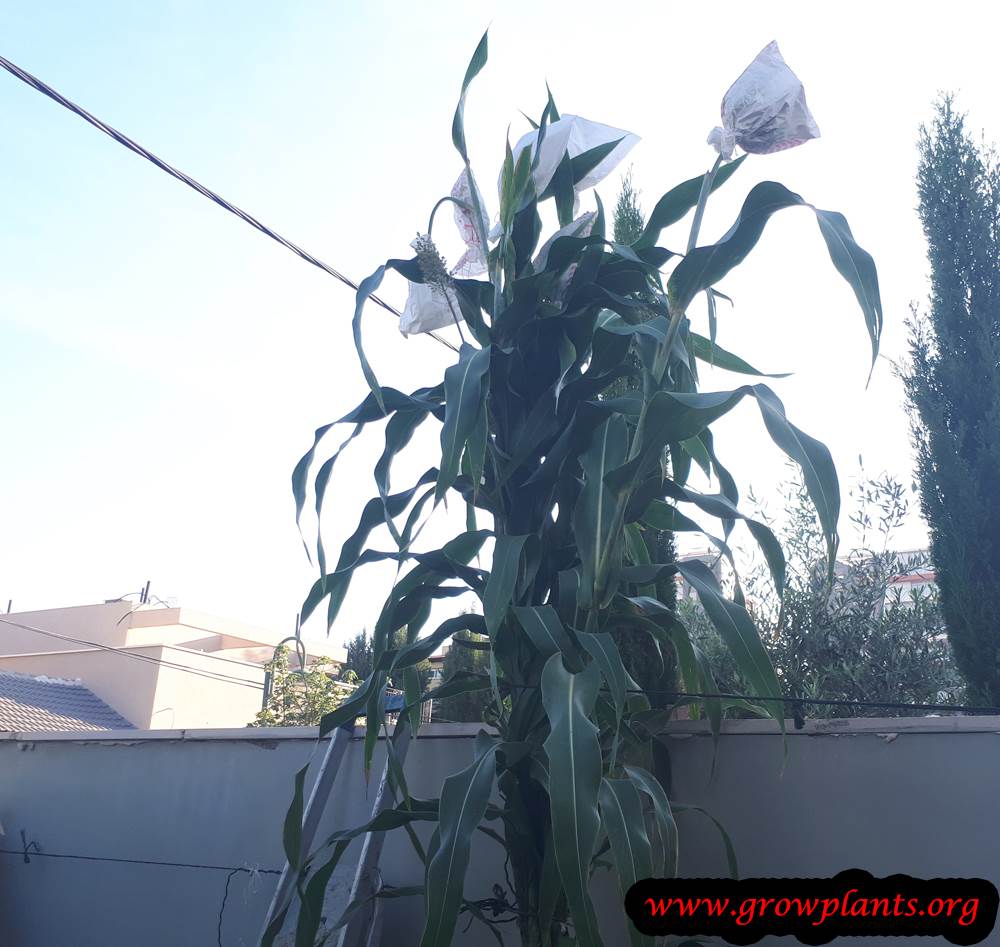
- Growth Habit & Form: Upright, cane-like grass with a stout central stem topped by a seed head; drought tolerant once established.
- Lifespan & Maturity: Grown mainly for a single season, with the grain harvested in autumn.
Anatomy & Physical Features
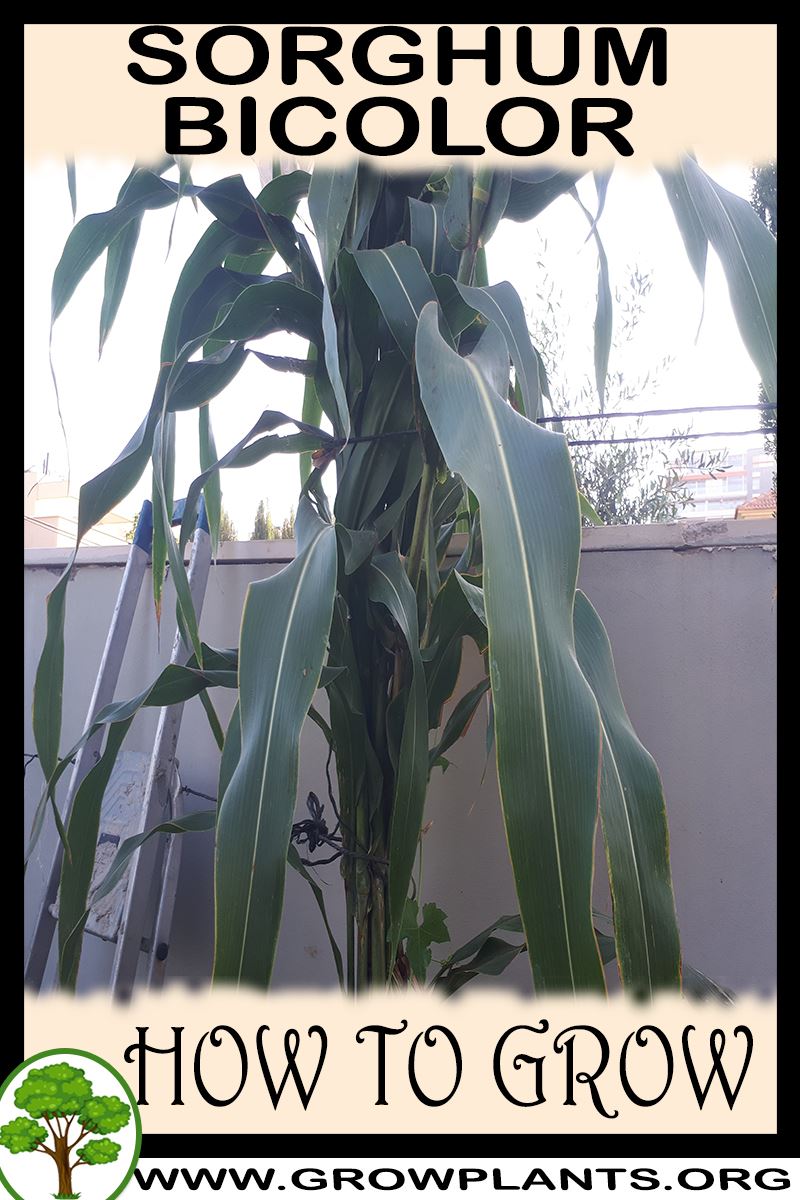
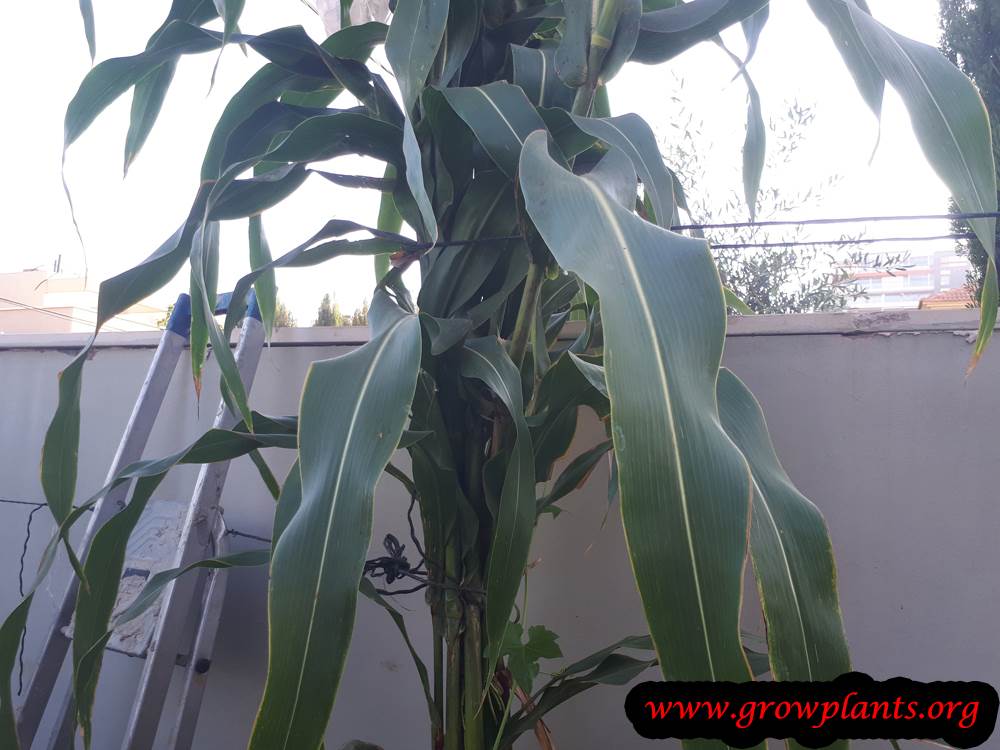
- Leaves & Foliage: Long, linear green leaves clasping a stout stem, in the manner of maize.
Primary Uses & Landscape Value
- Edible Uses: The red-to-brown grain is cooked as a cereal, milled into flour and used for porridge and syrup.
- Functional & Ornamental Roles: A drought-tolerant grain and forage crop; the broom-corn types supply the fibrous seed heads used for making brooms and brushes.
Care Guide: Planting, Soil & Watering
Overview: Sorghum is a fast-growing, drought-tolerant grass grown for its edible grain, thriving in full sun in a wide range of soils. It needs very little water once up and away, tolerating dry conditions well.
Quick Care Requirements
| Requirement | Ideal Condition |
|---|---|
| Planting Season | In spring to summer |
| Growth Rate | Fast |
| Soil Type | Adaptable and well-draining |
| Water Need | Low; drought-tolerant |
Planting & Establishment
- Best Planting Season: Sow or plant in spring to summer once the soil is warm.
- How to Plant:
- Hole Preparation: Prepare a loosened, weed-free seedbed.
- Soil Amendments: Little enrichment is needed; it tolerates poorer soils.
- Planting Depth: Sow seed shallowly and firm the soil over it.
- Growth Speed & Expectations: A fast grower reaching about 2–4 m; it can self-seed and become invasive, so harvest before the seed drops.
Soil, Watering & Drainage Care
- Soil Mix & Drainage Needs: Very adaptable and tolerant of dry soil; free drainage is all it really needs.
- Watering Schedule & Technique:
- Young / Newly Planted: Water lightly to get seedlings established.
- Established: Once established it is drought-tolerant and needs only occasional water.
- Seasonal Adjustments: A little more in prolonged heat, very little otherwise.
Climate, Light & Hardiness
Sorghum bicolor is a warm-season crop suited to tropical, subtropical, Mediterranean, desert, and temperate climates in full sun. It survives as a perennial only in essentially frost-free areas; almost everywhere else it is grown as a fast-maturing summer annual.
Quick Climate Specifications
| Climate Zones | Tropical, Subtropical, Mediterranean, Desert, Temperate |
|---|---|
| USDA Hardiness Zones | 10b and warmer as a perennial; grown as an annual from zone 5 upward |
| Frost Tolerance | Low |
| Light Conditions | Full Sun |
Sunlight & Light Exposure
Optimal Light Setup
Full sun is essential for vigorous growth and seed head development.
Temperature Extremes & Hardiness
USDA Hardiness & Regional Limits
Perennial only in USDA zone 10b and warmer, where winters stay essentially frost-free. Commonly grown as an annual from zone 5 upward, sown in spring once the soil has warmed, and it completes seed production within a few months.
Frost Sensitivity
Frost kills the plant; freezing weather ends the growing season.
Frost-Free Growing Season
Needs a warm, frost-free stretch of spring through summer to sow, grow, and mature its seed heads before autumn cold arrives.
Growing in Pots, Balconies & Indoors
Sorghum is a tall cereal grass reaching 2-4 m, grown for grain, forage or its ornamental seed heads. It is not a houseplant – it needs full sun and open air – but it can be grown in a large, deep pot on a sunny patio as a striking seasonal statement.
Quick Details
- Container Size: A large, deep pot, 20-40 L (5-10 gal), to anchor the tall stems
- Indoor Suitability: Not a houseplant – a full-sun field grass
- Best Spot: Full sun
- Soil & Drainage: Free-draining, fertile mix
- Watering in Pots: Modest – it is drought-tolerant, but water steadily for good grain
Indoors & On the Windowsill
- Houseplant limits: Not a houseplant – it is a big cereal that needs full sun and open space; indoors it cannot get the light or room it needs.
- An outdoor annual: Grown from seed each season, it belongs in the open air or a large sunny pot, not indoors.
On a Balcony or Patio
- Light & wind: Give it the sunniest spot and a heavy, deep pot to stop the tall stems rocking in wind. It is heat- and drought-tolerant, ideal for a hot balcony.
- Practicalities: A filled pot is heavy once watered – check the balcony can take the load, and stand it where drainage runoff will not be a nuisance.
Choosing the Pot, Soil & Long-Term Care
- Pot & drainage: A large, deep pot with strong drainage holes and never leave it standing in a saucer of water, or the roots rot. Terracotta breathes and dries faster; glazed or plastic holds moisture longer.
- Potting mix: A fertile, free-draining potting mix.
- Feeding: Feed for leafy, vigorous growth; potted plants leach nutrients fast.
- Season’s end: An annual – sow fresh each year rather than overwintering.
Fertilizing & Feeding
A light-input grain crop overall: modest balanced feeding at establishment, a nitrogen-forward feeding to build the stand, and light potassium support as the seed heads fill, in keeping with this drought-tolerant plant’s generally low fertility needs.
Quick Fertilizing Specs
| Feeding Level | Light feeder |
|---|---|
| Main Nutrient Priority | Balanced feeding at establishment, nitrogen for early stand growth, then light potassium support as seed heads develop |
| Best Feeding Period | From establishment through active vegetative growth in spring and summer |
| Organic Options | Compost or organic matter worked into the bed before planting |
| Reduce/Stop Feeding | Ease off feeding once seed heads begin to fill and mature |
| Micronutrients | Usually met by a complete fertilizer and organic soil; correct only if a specific deficiency is diagnosed |
Feeding by Growth Stage
Establishment
Support even germination and early stand establishment.
| Nutrient direction | A balanced feeding supports steady early root and shoot growth as the stand establishes. |
|---|---|
| Timing | At and shortly after sowing in spring or early summer. |
| Frequency | A light balanced feeding at establishment is usually sufficient for this low-input crop. |
| Fertilizer types | A balanced complete fertilizer, Compost or organic matter worked into the bed |
| Precautions | Avoid overwatering or overfeeding at establishment; this is a drought-tolerant crop that tolerates lean conditions well. |
Vegetative stand growth
Build strong stalks and leaf canopy ahead of flowering and grain fill.
| Nutrient direction | A nitrogen-forward feeding supports vigorous stalk and leaf growth during the main vegetative period. |
|---|---|
| Timing | During the main period of stalk and leaf growth, before heads emerge. |
| Frequency | A light nitrogen-forward feeding during active vegetative growth. |
| Fertilizer types | A nitrogen-forward complete fertilizer, Compost or organic matter as a side-dressing |
| Precautions | Avoid excess nitrogen, which can cause tall, weak stalks prone to lodging. |
Heading and grain fill
Support seed head formation and grain fill ahead of harvest.
| Nutrient direction | A balanced feeding with attention to potassium supports sturdy stalks and steady grain fill. |
|---|---|
| Timing | As seed heads form and fill, heading into harvest. |
| Frequency | Light supplemental feeding if the stand looks thin, tapering off as grain matures. |
| Fertilizer types | A balanced complete fertilizer, A potassium-inclusive feed to support stalk strength and grain fill |
| Precautions | Ease off feeding once grain fill is well underway; excess nitrogen this late favors leaf growth over grain quality. |
Nutrient Deficiency Signs & Corrections
Older leaves show a pale, yellowing stripe from the tip inward and stalk growth is stunted.
| Possible causes | low available soil nitrogen, leaching from heavy rain or irrigation, poor, sandy soil with little organic matter |
|---|---|
| Appears first on | older, lower leaves |
| What to check | recent feeding history, soil organic matter level, overall stand vigor |
| Possible correction | Apply a nitrogen-forward fertilizer during vegetative growth and work in organic matter. |
Leaf margins scorch or brown and stalks are weak with poor grain fill.
| Possible causes | low soil potassium, feeding skewed heavily toward nitrogen, sandy, leached soil |
|---|---|
| Appears first on | older leaf margins |
| What to check | balance of recent feeding, soil type and drainage, stalk strength and lodging |
| Possible correction | Shift feeding toward a potassium-inclusive product during heading and grain fill. |
Stalks lean or fall over before harvest despite otherwise healthy foliage.
| Possible causes | excess nitrogen producing tall, soft growth, low potassium weakening stalk tissue, wind or heavy rain on a tall stand |
|---|---|
| Appears first on | the stalks themselves |
| What to check | recent nitrogen feeding levels, potassium balance in feeding, planting density and site exposure |
| Possible correction | Moderate nitrogen feeding and ensure potassium is part of the fertilizer program going forward. |
Pruning, Training & Seasonal Maintenance
Sorghum bicolor is a fast-growing, drought-tolerant grass grown mainly for its edible seed head; grown as an annual it needs essentially no pruning beyond removing dead or damaged leaves, since the crop is harvested by cutting the mature seed head/stalk rather than shaped through the season. Where it is grown as a perennial in warm zones (10b+), the only additional task is an ornamental-grass-style cutback of the dead canes after winter dieback, before new growth resumes.
Quick Pruning & Maintenance Specs
| Pruning Tolerance | Low (annual-zone) / Moderate (perennial-zone renewal cutback) |
| Primary Pruning Window | As needed through the growing season (leaf tidy) |
| Secondary Maintenance Window | Early spring cutback of dead canes where grown as a perennial |
| Typical Frequency | Occasional |
| Main Objective | Remove dead/damaged leaves; renew growth in perennial zones |
| Young Plant Priority | None – leave seedlings/young canes untouched |
| Mature Plant Priority | Harvest the seed head at maturity (not a pruning cut) |
| Best Tool Type | Precision snips (leaves); bypass secateurs or loppers (perennial cane bases) |
Pruning by Plant Age & Size
Newly Established
No pruning – let the plant establish and build its full leaf canopy, which drives seed production.
Young / Formative
No structural training applies – this is a grass, not a branching woody plant.
Mature / Established
Remove only dead, yellowed or storm-damaged leaves during the season; in zone 10b+, where it persists as a perennial, cut the whole clump of dead canes back to near ground level in early spring before new shoots emerge, much like renewing an ornamental grass.
Seasonal Pruning Schedule
Ongoing Sanitary
Strip dead or damaged leaves at any point in the growing season.
Dormant / Winter (perennial zones only)
Cut back the prior season’s dead canes to the base in late winter/early spring, before new growth starts, to clear the way for fresh shoots.
Special Growth to Remove
- Dead or storm-damaged leaves.
- In perennial-zone cultivation, the entire dead cane clump after winter dieback (a renewal cutback, not selective pruning).
Container & Small-Space Pruning
In a container, keep the leaf canopy largely intact just as in the ground – there is no compacting or pinching technique that applies to a grass grown for a terminal seed head; simply remove dead leaves as needed.
Tools
Precision snips for removing individual dead leaves; bypass secateurs or loppers for cutting back the thicker, cane-like bases of a perennial-zone clump at renewal time.
Tool Hygiene & Disease Risk
Routine – clean tools are sufficient; no specific tool-transmitted disease is reported for this species.
Cut Placement & Technique
Remove dead leaves at the base of the leaf sheath; cut perennial-zone canes low, near ground level, at the start of the renewal cutback.
Heavy Pruning & Rejuvenation
Only relevant in perennial-zone (10b+) cultivation, where a full cutback of dead canes to the base each early spring is the norm and the clump regrows vigorously from the base given its fast growth rate; in annual cultivation this doesn’t apply, since the plant is grown fresh from seed each year.
Post-Pruning Care
Water normally after a perennial-zone renewal cutback; this species needs only a small amount of water and no special feeding to resume growth.
Common Pruning Mistakes
- Removing healthy leaves unnecessarily, which reduces the photosynthetic area feeding seed development.
- Forgetting the early-spring cutback in perennial-zone plantings, leaving old dead canes to clutter new growth.
When NOT to Prune
Avoid removing leaves during active flowering/seed-head development, since the leaf canopy is what fills the developing seed head; in perennial zones, don’t cut back canes until dieback is clearly complete and frost risk to fresh regrowth has passed.
Recommended Tools (by task)
- precision_snips – removing individual dead leaves through the season.
- bypass_secateurs – cutting back the thicker dead cane clump at renewal time in perennial-zone cultivation.
Propagation Guide
Sorghum bicolor is grown from seed; the site confirms no grafting or vegetative propagation is used or needed. It is a fast, easy warm-season grass to raise from direct-sown seed once the soil has warmed.
Quick Propagation Specs
| Best Propagation Method | Seed, direct-sown |
| Propagation Difficulty | Easy |
| Seed True-to-Type | Usually true-to-type for open-pollinated types; named hybrids may not come true |
| Best Propagation Season | Spring to summer |
Growing from Seed
Sowing Season
Spring to summer, matching this plant’s planting season; as a warm-season grass, sow once the soil has warmed rather than in cool soil.
Sowing Depth & Orientation
Sow shallowly, roughly 2-4cm (about 1-1.5 in) deep, typical for this grain crop (not detailed on the site).
Germination Conditions
Warm soil and full sun suit this drought-tolerant grass; it establishes quickly once conditions are warm enough.
Seedling Care
Water lightly to establish seedlings, then reduce watering, as this species prefers a small amount of water once growing.
Bloom & Flower Guide
Quick Details
- Bloom Season: Spring into summer
- Time to First Bloom: In its first season, a couple of months after sowing once the plant is tall
- Flower Appearance: Tiny flowers packed into a large, branched seedhead (panicle) at the top of the stem
- Edibility: Grown for its edible grain, not its flowers; the bloom is the seedhead stage
Detailed Blooming Overview
Sorghum is a tall grass, and like all grasses its “bloom” is a seedhead rather than a showy flower. At the top of each stem a large, branched panicle opens – the broom-like head the grower describes – carrying many tiny flowers with dangling anthers. Being a grass, it is wind-pollinated, and the flowers quickly give way to the grain that is the crop.
Flower Characteristics
- Many tiny flowers massed in a branched, broom-shaped panicle.
- Yellowish anthers dangle from the head at flowering.
- Wind-pollinated, with no petals to speak of.
Bloom Care & Thinning
- Managing the bloom: No thinning needed; the flowering head becomes the grain, so leave it to fill if you want a harvest.
- Pollination: Pollen moves on the wind – no insects required.
Fruit & Uses
Sorghum bicolor is grown for its small, round-to-drop-shaped seeds (grain), which are threshed from the dried seed heads and used mainly as a cereal grain. The mature grain is ground into flour, popped like popcorn (with suitable varieties), or otherwise cooked; it is not eaten raw.
Quick Edible Specs
| Edible Parts | Seeds (grain) |
|---|---|
| Main Use(s) | Culinary – flour, popped grain (like popcorn) |
| Eaten Raw or Cooked | Cooked (ground into flour and baked/cooked, or popped) |
| Preparation Required | Thresh the dried seed heads to separate the grain; cook, grind to flour, or pop |
| Harvest Season | Autumn |
| Time to First Harvest | A few months from sowing |
| Storage | Dry, threshed grain stores well in a cool, dry container |
| Safety/Toxicity Caveat | Only the mature, dried grain is used for food; young green foliage and unripe growth of sorghum are not eaten and can be unsafe for grazing livestock, so keep this distinction in mind when handling fresh plant material |
Seeds, Pods & Nuts
The edible part is the small, round-to-drop-shaped seed, colored red to brown, borne in a dense, broom-shaped head at the top of the plant. Seeds are left to dry and mature on the plant, then threshed out of the heads. Birds are a significant pest at this stage, so heads are sometimes covered (e.g. with paper or mesh) to protect the ripening grain. Once cleaned, the dry grain can be ground into flour or popped like popcorn.
Harvesting
Grain is harvested in autumn once the seed heads have dried on the plant; heads are cut and threshed to release the seed, which is then cleaned and dried further before storage.
Preparation, Uses & Safety
Dry sorghum grain is milled into flour or popped as a snack, similar to popcorn. Note: sorghum syrup (a traditional sweetener) is actually pressed from the juicy stalks of sweet sorghum varieties, not from the grain – if syrup production is of interest, that use belongs to the stalk/cane rather than the seed described here. As with other cereal grains, the whole grain benefits from proper drying and cleaning before storage to avoid mold. No toxicity concerns apply to the mature grain itself when cooked/prepared normally.
Pests, Diseases & Troubleshooting
Overview: Grain sorghum (Sorghum bicolor) is a tough cereal grass, but it hosts a distinct set of field pests – aphids, midge, borers and head-feeding caterpillars – and grain-mould and foliar fungi in humid conditions, with birds a serious threat to ripening grain. Management is cultural first: adapted resistant varieties, clean rotation, balanced sowing dates and field hygiene, with sprays used only at economic thresholds.
Quick Troubleshooting Overview
| Issue / Pest | Main Symptom | Primary Solution |
|---|---|---|
| Sugarcane / greenbug aphids | Sticky honeydew, leaf reddening; sooty mould | Resistant hybrids, beneficials, threshold spray |
| Sorghum midge | Blasted, empty florets; poor grain fill | Uniform early flowering, resistant lines |
| Shoot fly & stem borers | Deadheart in seedlings; tunnelled stems | Early clean sowing, resistant varieties |
| Headworms | Caterpillars eating developing grain in the head | Monitor, Bt/spinosad at threshold |
| Birds | Grain stripped from ripening heads | Bird-resistant (tannin) types, scaring, netting |
| Anthracnose & grain mould | Leaf lesions; mouldy discoloured grain | Resistant hybrids, rotation, airflow |
Common Pests & Management
- Sugarcane aphid & greenbug (Melanaphis sacchari, Schizaphis graminum):
- Symptoms: Dense colonies on leaf undersides producing heavy sticky honeydew and sooty mould; greenbug also injects toxin causing reddening and leaf death.
- Prevention & Control: Grow aphid-resistant/tolerant hybrids, conserve ladybirds, lacewings and parasitic wasps, monitor undersides, and spray a selective aphicide only at economic threshold.
- Sorghum midge (Stenodiplosis sorghicola):
- Symptoms: Tiny orange flies whose larvae destroy developing grain, leaving blasted, empty florets and poor seed set.
- Prevention & Control: Choose midge-resistant varieties, sow so the crop flowers early and uniformly to escape peak midge, and destroy volunteer/ratoon sorghum and Johnsongrass.
- Sorghum shoot fly (Atherigona soccata):
- Symptoms: Maggots kill the growing point of young seedlings, producing a dead central whorl (‘deadheart’) and side-tillering.
- Prevention & Control: Sow early into a clean, well-prepared seedbed at adequate density, use seed treatment where appropriate, and grow resistant lines.
- Stem borers (Chilo partellus, Busseola fusca):
- Symptoms: Larvae tunnel stems, causing deadheart, weakened lodging-prone stalks and reduced grain.
- Prevention & Control: Destroy crop residue and stubble to kill overwintering larvae, rotate, sow early, and release Trichogramma/Cotesia where available.
- Sorghum headworms (Helicoverpa armigera / zea):
- Symptoms: Caterpillars feed on developing grain within the head, cutting yield.
- Prevention & Control: Monitor heads at flowering-to-milk stage, encourage natural enemies, and apply Bt or spinosad at threshold.
- Birds (various grain-feeding species):
- Symptoms: Flocks strip grain from ripening panicles, sometimes destroying much of the crop.
- Prevention & Control: Grow bird-resistant tannin (brown) types where suitable, use scaring devices, harvest promptly, and net small plots – the source hint ‘birds’ is accurate here.
Diseases & Fungal Issues
- Anthracnose (Colletotrichum sublineola):
- Symptoms: Small reddish leaf lesions with tan centres, plus stalk rot and red discoloration inside the stem; a major sorghum disease in warm humid areas.
- Treatment & Management: Grow resistant hybrids, rotate away from sorghum, plough down residue, and ensure good airflow with proper spacing.
- Grain mould (Fusarium, Curvularia and others):
- Symptoms: Discoloured, pink/grey/black mouldy grain that develops when heads mature in wet weather, cutting quality and germination.
- Treatment & Management: Use resistant, tight-podded or open-headed adapted varieties, avoid maturity coinciding with wet spells, and dry grain quickly after harvest.
- Downy mildew (Peronosclerospora sorghi):
- Symptoms: Chlorotic striping, shredded leaves and stunted, sterile plants; systemic and soil/seed-borne.
- Treatment & Management: Use resistant varieties and treated seed, rotate, and remove infected plants and grassy hosts.
- Rusts, leaf blights & smuts (Puccinia purpurea, Exserohilum turcicum, Sporisorium spp.):
- Symptoms: Rust pustules, long grey-tan leaf-blight lesions, or smut galls/sori replacing grain.
- Treatment & Management: Grow resistant hybrids, use clean treated seed for smuts, rotate, and manage residue; fungicide is rarely economic except in seed crops.
Growing Difficulties & Abiotic Problems
- Prussic acid (cyanide) & nitrate in stressed plants:
- Cause & Symptoms: Young, frosted or drought-stressed sorghum can accumulate toxic hydrogen cyanide and nitrates – a hazard mainly when grazed or fed to livestock.
- Correction Strategy: Do not graze/feed short, stressed or frost-damaged regrowth; wait for adequate height/recovery and test forage in risk periods.
- Lodging:
- Cause & Symptoms: Stalk rots, borers and heavy heads in wind cause stalks to fall, complicating harvest.
- Correction Strategy: Grow standability-rated hybrids, balance nitrogen, control borers and stalk rots, and harvest promptly.
- Nutrient & iron chlorosis:
- Cause & Symptoms: Cold, wet or high-pH soils cause interveinal yellowing (iron) and poor early vigour.
- Correction Strategy: Improve drainage and warmth, correct pH, and apply iron chelate or balanced fertiliser where deficiency shows.
What Helps – Products & Tools
For grain sorghum the useful kit is resistant/tolerant hybrids and clean rotation as the foundation, selective aphicides and Bt/spinosad only at economic thresholds for aphids, midge and headworms, treated seed for smuts and shoot fly, bird-scaring or bird-resistant types for grain protection, and fungicide only in high-value seed crops for anthracnose and rust. Iron chelate corrects chlorosis on alkaline soils.