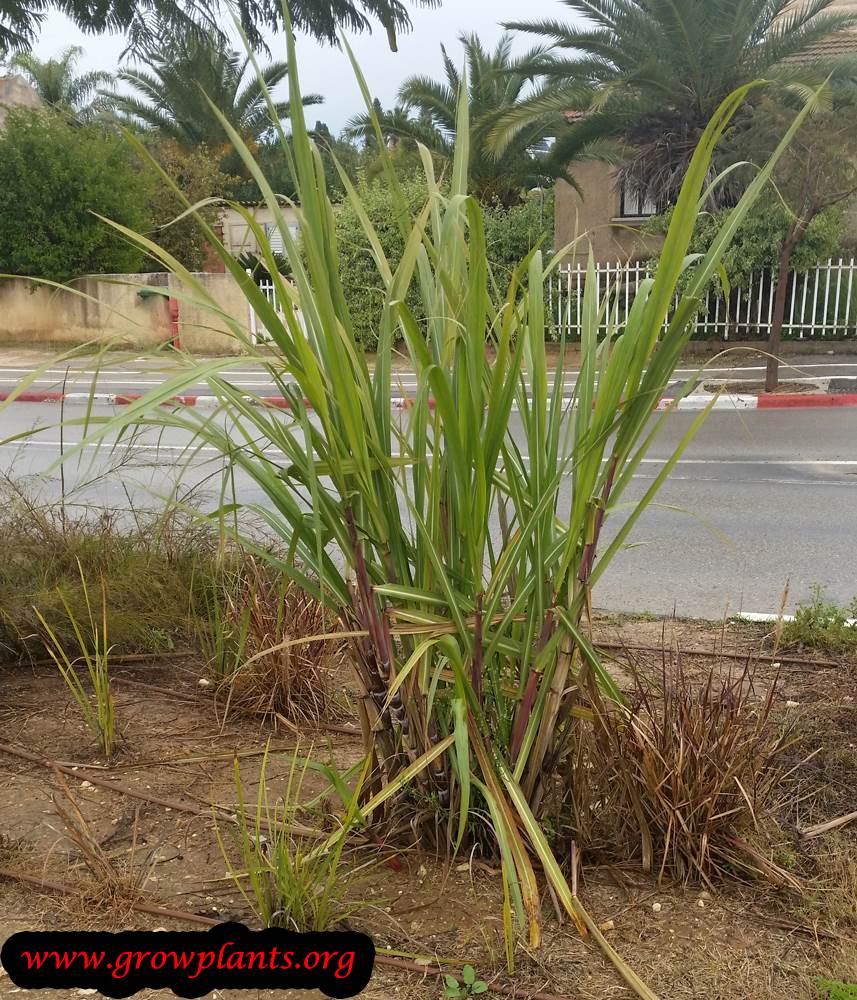
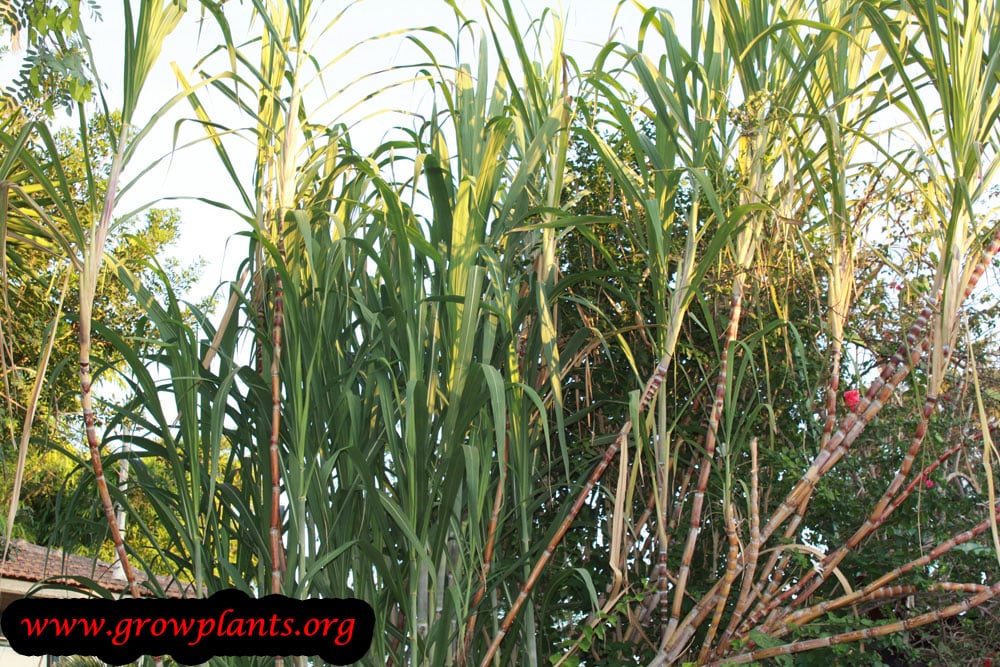
Plant Profile & Key Characteristics
Overview: A tall, fast-growing evergreen perennial grass forming dense clumps of jointed canes 2-5 m (6-15 ft) high. It is grown chiefly for its sugary edible canes and also makes a bold ornamental screen.
Quick Specifications
| Specification | Attribute |
|---|---|
| Plant Type / Life Cycle | Perennial grass (clump-forming cane) |
| Foliage Type | Evergreen (in frost-free climates) |
| Mature Size | 2-5 m (6-15 ft) tall |
| Growth Rate | Fast |
| Root System | Fibrous and rhizomatous, forming spreading clumps |
| Toxicity | Non-toxic / edible |
| Hardiness | USDA zone 8 and warmer |
Growth Form & Structure
- Height & Spread: In the ground a vigorous clump of upright canes 2-5 m (6-15 ft) tall, spaced apart for a good crop; also grows in a large container, where its size stays more restrained.
- Growth Habit & Form: Erect, clump-forming grass; unbranched jointed canes rise from a spreading rhizome and are topped with long strap leaves. It is aggressive, and the leaf margins are sharp.
- Lifespan & Maturity: A perennial that ratoons for several years; canes are ready to harvest 1-2 years from planting.
Anatomy & Physical Features
- Leaves & Foliage: Long green strap-like leaves attached along the canes, with sharp cutting edges.
- Flower Characteristics: Feathery white beard-like flower plumes at the cane tips.
Primary Uses & Landscape Value
- Edible Uses: Purple-green canes with white centres are pressed for juice and sugar, chewed raw or cooked, and used for jam, beverages and alcohol.
- Functional & Ornamental Roles: Grown as a crop for cane, and as a tall living screen or bold architectural clump in warm gardens.
Care Guide: Planting, Soil & Watering
Overview: Sugarcane (Saccharum) is a fast-growing, tall perennial grass grown for its sugary canes and as a bold ornamental, suited to warm climates from hardiness zone 8 upward. It thrives in full sun in rich, moisture-retentive soil and needs plenty of heat, water and space between canes for a good crop.
Quick Care Requirements
| Requirement | Ideal Condition |
|---|---|
| Planting Season | Warm season – spring and summer |
| Growth Rate | Fast |
| Soil Type | Rich, moisture-retentive; well-draining |
| Water Need | Moderate to high; keep the soil consistently moist |
Planting & Establishment
- Best Planting Season: Plant in spring and summer once the soil is warm, giving the canes the long, hot growing season they need to build sugar.
- How to Plant:
- Hole Preparation: Loosen the soil well and set cane cuttings or divisions with room to spread, leaving space between canes so each develops fully.
- Soil Amendments: Work generous organic matter into the soil to build a rich, moisture-holding root zone, and keep it fed through the season.
- Planting Depth: Set plants or cane sections at the depth they grew previously, keeping the crown at the soil surface.
- Growth Speed & Expectations: A fast grower reaching 2-5 m in a season; it is very aggressive and spreads readily, and its leaf edges are sharp, so give it a contained, generous space.
Soil, Watering & Drainage Care
- Soil Mix & Drainage Needs: Give it rich soil that holds moisture yet still drains; it is thirsty but the roots should not stagnate in standing water. It can be grown in large containers with steady water and feeding.
- Watering Schedule & Technique:
- Young / Newly Planted: Keep the soil consistently moist after planting to drive rapid establishment and cane growth.
- Established: Water regularly and generously – sugarcane is a thirsty crop that grows and yields best with steady moisture through the warm season.
- Seasonal Adjustments: Water heavily through summer heat and active growth, and reduce watering as growth slows in cool weather.
Climate, Light & Hardiness
Sugarcane is a tall, warm-season perennial grass for Mediterranean, subtropical and tropical climates, needing full sun, high heat and a long, frost-free growing season to build its sugary canes. It is frost sensitive, so where winters freeze the canes are cut back or the crop is grown for a single warm season.
Quick Climate Specifications
| Climate Zones | Tropical, subtropical, warm Mediterranean |
|---|---|
| USDA Hardiness Zones | 8+ (site data) |
| Optimal Temp Range | Approx. 24–35°C (75–95°F) |
| Cold Damage Begins | Growth stalls below about 10–15°C (50–59°F); foliage at light frost near 0°C (32°F) |
| Approx. Survival Minimum | Tops near 0°C (32°F); in zone 8 the stools may resprout after light frost with protection |
| Frost Tolerance | Low |
| Light Conditions | Full sun |
| Wind Tolerance | Moderate |
Sunlight & Light Exposure
Optimal Light Setup
Full sun is essential; sugar accumulation depends on maximum light and heat.
Direct Sun Requirement
Direct sun all day is required for a good crop; shade sharply reduces cane quality and yield.
Shade & Heat Management
No heat protection is needed - it is a true hot-climate crop that welcomes intense summer sun.
Best Exposure / Orientation
An open, hot, sunny field or bed maximises the growing season.
Temperature Extremes & Hardiness
USDA Hardiness & Regional Limits
Site data lists it for zone 8 and warmer. Hardiness here reflects the perennial stool's cold limit: it is commonly grown as a warm-season crop where winters freeze, but capable of longer-term perennial (ratoon) growth in frost-free conditions.
Cold Damage & Winter Protection
Growth effectively stops in cool weather, and light frost kills the foliage; in zone 8 the underground stools can resprout in spring, especially with mulch, whereas a hard freeze ends the planting.
Frost Sensitivity
Low frost tolerance - the crop is worked around frost, not through it.
Extreme Heat Tolerance
Excellent; among the most heat-loving crops, given adequate water.
Frost-Free Growing Season
A long, warm, frost-free season is the key limiting factor: canes need many months of heat to mature, so short or cool summers give poor yields even where winter cold is survivable.
Wind, Humidity & Microclimate
Humidity Preferences
Prefers moderate to high humidity typical of subtropical and tropical growing areas.
Dry-Air Tolerance
Moderate; tolerates drier air with ample irrigation.
Wind Tolerance
Moderate; tall canes can lodge (fall over) in strong wind.
Microclimate Recommendations
A hot, sheltered, sunny site with a long season and steady water gives the best crop.
Growing in Pots, Balconies & Indoors
Sugarcane is a tall, sun-loving grass – not a houseplant – but it grows well in a big container on a hot, sunny patio or balcony, where it makes a dramatic tropical clump.
Quick Details
- Container Size: A large pot of 30 L or more for a 2-5 m (6-15 ft) clump
- Indoor Suitability: No – too tall and too sun-hungry
- Best Spot: Full sun – the hottest spot you have
- Soil & Drainage: Rich, moisture-retentive but free-draining mix
- Watering in Pots: Average to plenty – it likes moisture; pots dry fast
Indoors & On the Windowsill
- Houseplant limits: Needs full, strong sun and grows very tall – not practical indoors beyond a young plant briefly on the sunniest sill.
- Overwintering: Tender to frost; in cold climates a potted clump (or cut canes) can be brought into a bright, frost-free space over winter.
On a Balcony or Patio
- Heat & sun: Give it the hottest, sunniest corner; reflected wall heat suits it, but keep the big pot well watered as it drinks and dries fast.
- Wind & weight: Tall canes catch the wind – shelter or tie them in – and a moist, filled pot is heavy.
Choosing the Pot, Soil & Long-Term Care
- Pot & drainage: A large pot with strong drainage holes; no standing saucer water.
- Potting mix: Rich and moisture-retentive – peat or coir with perlite; still free-draining.
- Feeding: A hungry grass – feed generously through the growing season.
- Repotting: Divide and refresh the mix every year or two.
Growing this plant in a greenhouse
A greenhouse can give sugarcane frost protection, cold protection, humidity control and extra warmth.
Greenhouse at a glance
| Greenhouse suitability | Conditional - depends on your climate |
|---|---|
| Main benefits | frost protection, cold protection, humidity control, extra warmth |
| Season extension | earlier spring & later autumn |
| Outdoor protection advisable below | about 15°C |
| Maintain greenhouse minimum | around 15°C for active growth |
| Suitable types | heated greenhouse, polycarbonate greenhouse, cold frame |
| Heating | Heating is recommended in cold climates for continuous growth. |
Related greenhouse guides
- Greenhouses: How to Choose the Right Greenhouse
- Best Greenhouse Heaters
- Greenhouse Climate Control: Temperature, Ventilation and Humidity
- Polycarbonate Greenhouses: What to Look for Before Buying
Fertilizing & Feeding
A heavy feeder: enrich the soil with organic matter, feed strong nitrogen through vigorous cane growth, shift toward potassium as canes ripen, and keep soil consistently moist throughout.
Quick Fertilizing Specs
| Feeding Level | Heavy feeder |
|---|---|
| Main Nutrient Priority | Strong nitrogen for cane and leaf growth, with potassium supporting cane quality |
| Best Feeding Period | From establishment through the main warm growing season |
| Organic Options | Compost and well-rotted manure worked in, with mulch retained |
| Reduce/Stop Feeding | Ease off feeding as canes mature toward harvest |
| Micronutrients | Usually met by a complete fertilizer and organic matter; correct only diagnosed shortages |
| Soil pH | Slightly acidic to near neutral, in consistently moist soil |
Feeding by Growth Stage
Establishment after planting
Get setts and young shoots rooting and growing away strongly.
| Nutrient direction | A balanced complete fertilizer over soil enriched with organic matter to start growth. |
|---|---|
| Timing | At and shortly after planting, as shoots emerge. |
| Frequency | A starter feeding as growth begins. |
| Fertilizer types | A balanced complete fertilizer, Compost or well-rotted manure worked in |
| Precautions | Leave space between canes as they establish so each develops fully. |
Vegetative cane and leaf growth
Build tall, vigorous canes and abundant leaf area through the warm season.
| Nutrient direction | A strongly nitrogen-forward complete fertilizer to drive this hungry grass. |
|---|---|
| Timing | Through the main warm growing season while canes elongate. |
| Frequency | Regular feeding while canes are actively growing. |
| Fertilizer types | A nitrogen-forward complete fertilizer, Compost top-dressed and mulch retained |
| Precautions | Keep soil consistently moist; sugarcane is thirsty and demanding, and dry spells stall cane growth. |
Cane ripening
Favor cane quality and sugar as growth slows toward harvest.
| Nutrient direction | Shift toward potassium with a complete fertilizer while easing back heavy nitrogen. |
|---|---|
| Timing | As canes reach full height and begin to ripen. |
| Frequency | A lighter feeding aimed at cane quality rather than more leaf. |
| Fertilizer types | A complete fertilizer supplying potassium, Retained mulch and organic matter |
| Precautions | Avoid heavy late nitrogen, which keeps the plant leafy and soft rather than ripening the canes. |
Nutrient Deficiency Signs & Corrections
Older, lower leaves fade to pale green or uniform yellow and overall growth slows.
| Possible causes | low available soil nitrogen, nitrogen leaching from heavy watering or rain, thin, low-organic-matter soil |
|---|---|
| Appears first on | older, lower leaves |
| What to check | recent feeding history, soil organic matter, watering and drainage |
| Possible correction | Apply a nitrogen-containing complete fertilizer and build soil organic matter, then water evenly. |
Older leaves show yellowing and browning along the margins while inner tissue stays greener.
| Possible causes | low available soil potassium, sandy soils that leach potassium, heavy demand during bulking or fruiting |
|---|---|
| Appears first on | older, lower leaves |
| What to check | recent feeding balance, soil texture and leaching, overall crop load |
| Possible correction | Apply a complete fertilizer that supplies potassium and maintain even soil moisture. |
Leaf margins and tips brown or scorch and growth stalls despite adequate watering.
| Possible causes | fertilizer salt buildup in the root zone, under-watering that concentrates salts, excessive or too-frequent feeding |
|---|---|
| Appears first on | leaf margins and tips |
| What to check | recent fertilizer amounts, watering consistency, drainage and watering consistency |
| Possible correction | Ease off feeding, water thoroughly to flush accumulated salts from the root zone, then return to lighter feeding. |
Pruning, Training & Seasonal Maintenance
Sugarcane is a giant, sugar-storing grass grown as a ratoon crop: mature canes are cut at the base to harvest, and the stool resprouts for several successive cycles before replanting. The pruning tasks are all crop-management — thinning weak young shoots so vigour goes into strong stalks, stripping dead lower leaves, and removing flower tassels, which halt stalk elongation and drop sugar content. There is no woody framework to shape; a note of caution, the leaf margins are razor-sharp.
Pruning & the Edible Harvest
The edible crop is the sugary cane (stem). Pruning here is crop management: thinning weak tillers concentrates vigour and sugar into a few strong canes, stripping flower tassels keeps the canes elongating and sweet rather than going reproductive, and cutting mature canes at the very base is both the harvest and the trigger for the stool to ratoon for the next cycle.
Quick Pruning & Maintenance Specs
| Pruning Tolerance | High — regrows from the stool (ratoon) after basal cutting |
| Primary Pruning Window | Spring–summer for shoot thinning; harvest cutting from about spring (best) though possible year-round |
| Secondary Maintenance Window | Ongoing deleafing; remove tassels as they appear |
| Typical Frequency | Thinning early in the cycle; harvest at 1–2 years, then per ratoon cycle |
| Main Objective | Concentrate vigour into thick, sugary canes; harvest cleanly; keep growth vegetative |
| Young Plant Priority | Thin weak tillers; maintain spacing between canes |
| Mature Plant Priority | Harvest mature canes at the base; manage the ratoon |
| Best Tool Type | Loppers / pruning saw / cane knife for thick stalks; snips for tassels |
| Avoid Heavy Pruning During | Cold spells (frost-tender, hardiness zone 8+) |
Pruning by Plant Age & Size
Newly Established
Let the sett or cutting tiller freely, then remove only obviously weak or damaged shoots. Good spacing between developing canes is essential for a heavy crop.
Young / Formative
No structural training — instead, thin. Remove thin, weak young canes so light and vigour concentrate in the strongest stalks, which build the most sugar.
Mature / Established
Harvest by cutting mature canes at the very base; the stool then ratoons (resprouts) for the next cycle. Strip the dead lower leaf sheaths to expose canes and reduce pest harbourage.
Seasonal Pruning Schedule
Spring–Summer — Thinning and harvest
Objective: build and take the crop. Thin weak young canes early; cut mature canes at ground level for juice or eating. Spring is the ideal harvest window though canes can be taken year-round. Do NOT cut immature thin canes you want to grow on.
Ongoing — Deleafing and tassel removal
Objective: keep growth vegetative and clean. Strip dead lower leaves through the season, and remove the feathery white flower tassels when they emerge — flowering (arrowing) stops the cane elongating and reduces sugar.
Flowering & Fruiting Wood
For sugarcane the reproductive event works against the crop: once a cane tassels it stops elongating and begins to lose sugar. There is no flowering wood to preserve — on the contrary, remove or thin tassels to keep the plant vegetative for as long as possible. Propagation is vegetative, from cane cuttings with at least one node laid in moist soil, not from these flowers.
Structural Pruning & Training
Management is stool and cane thinning plus spacing, not canopy shaping. Keep the strong canes, remove the weak, and maintain gaps between canes so each fattens properly.
Special Growth to Remove
Remove weak tillers, dead leaf sheaths, and flower tassels. Retain strong developing canes — these are the crop. Suckering side shoots at the base are the plant’s natural renewal for the next ratoon; keep vigorous ones and thin only the surplus.
Container & Small-Space Pruning
In large containers, keep only a few strong canes and thin the rest early — a pot cannot support a full clump and still fatten canes. Harvest and let a limited ratoon regrow.
Tools
Match tool to stalk thickness: loppers, a pruning saw, or a traditional cane knife for cutting thick mature canes at the base; precision snips for removing tassels. Always wear gloves and long sleeves — the leaf edges cut skin.
Tool Hygiene & Disease Risk
Increased to high-risk. Ratoon stunting disease (caused by Leifsonia xyli) and other systemic pathogens are spread by contaminated cutting blades between stools. Disinfect the knife or saw between stools, and always cut with a sharp blade — a crushed, ragged cut is an entry point for infection.
Cut Placement & Technique
Cut harvest canes cleanly at the base close to the ground so the stool can ratoon strongly. Cut tassels off at the top of the stalk. Avoid tearing or crushing the cane.
Heavy Pruning & Rejuvenation
The whole above-ground crop is cut at the base at harvest and regrows from the stool — this coppice-like ratooning is the plant’s normal cycle. After several ratoons yields decline and the stand is replanted from fresh setts rather than pruned harder.
Post-Pruning Care
Water generously and feed the stool after harvest to drive a strong ratoon; keep the base free of the stripped dead leaves that can shelter pests such as mice.
Common Pruning Mistakes
- Leaving tassels on, sacrificing cane length and sugar.
- Not thinning weak canes, ending with many thin, low-sugar stalks.
- Cutting with a dull blade and crushing the cane, inviting disease.
- Handling foliage bare-handed and getting cut by the sharp leaf edges.
When NOT to Prune
Avoid cutting canes or stripping leaves just before or during cold snaps, since the crop is frost-tender and fresh cuts and exposed stools are vulnerable.
Recommended Tools (by task)
- loppers — thinning young canes.
- pruning_saw — cutting thick mature canes at the base for harvest.
- blade_disinfectant — sanitising blades between stools to limit ratoon stunting and other cane diseases.
Pruning Troubleshooting
| Problem | Possible Cause | What to Check | Corrective Action |
| Many thin, low-sugar canes | Overcrowded, unthinned stool | Cane density and spacing | Thin weak tillers early; maintain spacing |
| Canes stop lengthening; sugar drops | Plant has tasseled (flowered) | Flower tassels at cane tops | Remove tassels promptly to prolong vegetative growth |
| Weak or failing ratoon after harvest | Cut too high, disease, or exhausted stool | Height of harvest cut; blade hygiene; stool age | Cut at the base with a clean sharp blade; replant after several ratoons |
Propagation Guide
Sugarcane is grown vegetatively from stem cuttings (setts) — sections of cane each with at least one node — laid in warm, moist soil; it is not raised from seed outside breeding programmes. Established stools also regrow from their rhizomes (ratooning), and propagation is easy.
Quick Propagation Specs
| Best Propagation Method | Stem cuttings (setts) |
| Alternative Methods | Rhizome regrowth / ratooning |
| Propagation Difficulty | Easy |
| Vegetative True-to-Type | Yes |
| Best Propagation Season | All year in warmth (spring/summer best) |
| Cutting Rooting Time | 2–10 weeks |
Stem Cuttings
Cutting Type
Cane setts (billets) — sections of stem each with at least one node (knot), which is the growth point that must be present to sprout.
Best Timing
Possible all year where it is warm.
Cutting Preparation
Lay the cane horizontally and bury it a little in moist soil, or start a piece standing in a glass of water; keep the soil generously moist.
Rooting Setup
Warm conditions with plenty of water in moist soil.
Rooting Hormone
Unnecessary.
Rooting Time
Roots and shoots develop in about 2–10 weeks.
Rhizomes, Tubers, Bulbs & Corms
Rhizome Regrowth (Ratoon)
After cutting, the stool resprouts from its underground rhizomes; sections of rooted rhizome can also be lifted and replanted.
Bloom & Flower Guide
Quick Details
- Bloom Season: Summer
- Flower Appearance: A large silvery-white, beard-like plume (the “arrow”) made of many tiny grass flowers
- Edibility: Ornamental / none – the plume is not eaten
Detailed Blooming Overview
Sugarcane sends up a feathery white plume, or “arrow,” at the top of the cane. Flowering channels energy into that tassel and can lower the sugar in the stalks, so growers often prefer canes that stay vegetative. Many varieties only flower under short-day tropical conditions.
Flower Characteristics
- Silvery-white, beard-like flower plume.
- Composed of many tiny wind-pollinated grass flowers.
Bloom Care & Thinning
- Thinning the bloom: The grower recommends removing the flower plumes – this keeps the plant energy in the sugary canes.
- Pollination: Wind-pollinated.
Fruit & Uses
The edible part of sugarcane is the cane itself — the tall, jointed stem, whose white inner pith is packed with sweet sap. It is chewed or pressed raw for juice and is the classic source of cane sugar, while the juice is also boiled down or fermented into syrups, jams, drinks and alcohol.
Quick Edible Specs
| Edible Parts | Cane (the stem) and its sweet sap |
|---|---|
| Main Use(s) | Culinary — sugar, fresh juice, syrup, jam, beverages and alcohol |
| Eaten Raw or Cooked | Both — chewed raw, or the juice processed/cooked |
| Preparation Required | Peel off the hard rind; chew or press the inner pith |
| Harvest Season | Best cut in spring, but canes can be taken year-round |
| Time to First Harvest | Roughly one to two years from planting (see the growing notes) |
| Storage | Best used fresh; cut cane keeps only a short time before drying out |
| Safety/Toxicity Caveat | Not toxic, but the long leaves have sharp, saw-like edges — handle the canes, not the foliage |
Pseudostem / Cane / Sap
The cane is purple-green on the outside with white, fibrous pith inside. Cut mature canes at the base of the plant — spring gives the best quality but harvesting is possible all year. Strip away the tough rind and chew the sweet pith directly, or crush and press the pith to extract the juice.
Preparation, Uses & Safety
For fresh use, peel the rind and chew the pith or press it for juice. Larger quantities are turned into sugar and syrup, jam, cold beverages, or fermented into alcohol. The plant is not poisonous, but take care when cutting: sugarcane foliage has very sharp, cutting leaf edges, so wear gloves and handle the stems.
Pests, Diseases & Troubleshooting
Overview: Sugarcane is a robust tropical grass, but as a long-season crop it accumulates borers, aphids and soil grubs, and several serious diseases move in infected planting setts. The best defence is clean, disease-free seed cane, resistant varieties, good drainage and field hygiene rather than heavy spraying.
Quick Troubleshooting Overview
| Issue / Pest | Main Symptom | Primary Solution |
|---|---|---|
| Sugarcane borer | Bored stems, dead-hearts, tunnelled canes | Trichogramma wasps; clean, resistant setts |
| Sugarcane aphid | Honeydew, sooty mould, yellowing leaves | Beneficials; insecticidal soap; tolerant varieties |
| White grubs | Wilting, lodging, chewed roots | Improve drainage; till; treat soil if severe |
| Red rot | Reddened internal pith, drying canes | Resistant varieties; destroy infected stools |
| Smut | Black ‘whip’ from the growing point | Rogue out whips; disease-free hot-water-treated setts |
| Ratoon stunting | Stunted regrowth, thin canes | Clean seed cane; disinfect cutting blades |
Common Pests & Management
- Sugarcane borer (Diatraea saccharalis):
- Symptoms: Caterpillars bore into the stalks, killing the central shoot of young cane (‘dead-heart’) and tunnelling older canes, which weakens them, invites red rot and reduces sugar. Exit holes, frass and broken canes reveal them.
- Prevention & Control: Plant tolerant varieties and clean setts; conserve and release Trichogramma egg parasitoids and the natural enemy complex; remove and destroy heavily bored canes and crop residue. Reserve insecticides for confirmed threshold infestations because borers hide inside the stalk.
- Sugarcane aphid (Melanaphis sacchari):
- Symptoms: Pale yellow aphids massing on leaf undersides, coating leaves and the ground with sticky honeydew and black sooty mould; heavy feeding yellows and dries the foliage and can transmit viruses.
- Prevention & Control: Encourage ladybirds, lacewings and parasitic wasps, which often control it; hose off and use insecticidal soap on young cane. Choose tolerant varieties and avoid excess nitrogen, which fuels outbreaks.
- White grubs (Scarabaeidae larvae):
- Symptoms: Fat, C-shaped soil-dwelling grubs chew the roots and underground stem, causing patches of wilting, stunting and easily toppled (‘lodging’) canes; damage is worst in light, dry soils.
- Prevention & Control: Improve drainage and rotate where possible; cultivation exposes grubs to birds; encourage predators and use entomopathogenic nematodes or a soil biopesticide in hotspots. Deep, healthy rooting helps plants tolerate some grub feeding.
- Sugarcane mealybug (Saccharicoccus sacchari):
- Symptoms: Pinkish, waxy mealybugs hidden under the leaf sheaths at the nodes, producing honeydew and sooty mould and weakening the cane; often carried on infested setts.
- Prevention & Control: Use clean, treated planting material; strip and destroy infested sheaths; conserve natural enemies. Hot-water treatment of setts before planting greatly reduces carry-over.
- Spider mites (Oligonychus / Tetranychus spp.):
- Symptoms: Fine stippling, reddening and drying of leaves in hot, dry weather, with fine webbing on the undersides; stressed, dusty cane is most affected.
- Prevention & Control: Keep the crop well-watered and unstressed; reduce dust; conserve predatory mites. Miticidal oils are a last resort on a tall field crop.
Diseases & Fungal Issues
- Red rot (Colletotrichum falcatum):
- Symptoms: The most damaging cane disease: split a stalk and the internal pith is reddened with crosswise white patches and a sour, alcoholic smell; leaves dry from the tips and whole stools can die. Spreads in infected setts and through borer wounds.
- Treatment & Management: Grow resistant varieties and plant only healthy, disease-free setts; rogue out and destroy infected stools and crop debris; rotate away from cane; control borers that open entry wounds. There is no field cure once stalks are infected.
- Smut (Sporisorium scitamineum):
- Symptoms: A long, black, whip-like structure of fungal spores emerges from the growing point, and affected stools become thin, grassy and stunted with many spindly shoots.
- Treatment & Management: Remove and bag whips before they shed spores; plant resistant varieties and hot-water-treated, disease-free setts; avoid ratooning badly infected fields. Sanitation of planting material is the key control.
- Common rust (Puccinia melanocephala):
- Symptoms: Rows of small orange-brown to red-brown pustules on the leaves, mainly the undersides, which merge in severe cases to brown and kill leaf tissue and cut yield.
- Treatment & Management: Plant resistant varieties; improve airflow and avoid dense, over-fertilised stands; remove badly affected trash. Fungicides are used only in high-value or seed-cane situations.
- Ratoon stunting (Leifsonia xyli subsp. xyli):
- Symptoms: A hidden bacterial disease with no clear outward symptom except poor, stunted, thin regrowth after cutting and reduced yield; small orange-red dots may show in the vascular bundles at the nodes.
- Treatment & Management: Use certified clean seed cane and hot-water-treat setts; disinfect cutting knives and machinery between stools, as it spreads mechanically on blades. It cannot be sprayed out – clean planting stock is everything.
- Mosaic virus (Sugarcane mosaic virus):
- Symptoms: Pale green to yellow mottling and streaking on young leaves, most visible against the light, with stunting in susceptible varieties; spread by aphids and in infected setts.
- Treatment & Management: Plant resistant varieties and virus-free setts, rogue out symptomatic stools, and manage aphid vectors and nearby grassy weed hosts.
Growing Difficulties & Abiotic Problems
- Lodging:
- Cause & Symptoms: Tall canes flatten in wind and storms, especially when over-fed with nitrogen, borer-weakened or in soft, waterlogged soil; lodged cane rots, ratoons poorly and is hard to harvest.
- Correction Strategy: Balance fertiliser (avoid excess nitrogen), earth-up rows for support, choose sturdier varieties, and keep borers in check so stalks stay strong.
- Nutrient deficiency & poor soil:
- Cause & Symptoms: Heavy-feeding cane on poor or unbalanced soil shows yellowing, thin stalks and low sugar; iron and nitrogen shortages yellow the leaves.
- Correction Strategy: Feed according to a soil test with balanced NPK plus micronutrients, incorporate organic matter and cane trash, and maintain a suitable soil pH for good uptake.
- Waterlogging & drought stress:
- Cause & Symptoms: Cane needs plenty of water but rots in standing water and stalls under drought; both stress the crop and open the door to grubs, borers and disease.
- Correction Strategy: Provide steady moisture with good drainage; avoid low, flood-prone spots or ridge the rows; mulch to buffer dry spells.
- Rodent damage:
- Cause & Symptoms: Rats and mice gnaw the sweet stalks near the base, causing lodging and letting rot fungi in – the grain of truth behind the mistranslated ‘mice’ note in the source.
- Correction Strategy: Keep field margins clean of weeds and trash that shelter rodents, encourage owls and other predators, and use traps or bait stations around the crop where pressure is high.
What Helps – Products & Tools
Manage sugarcane chiefly through clean planting material and biology: hot-water-treat setts, plant resistant varieties, and conserve Trichogramma wasps, ladybirds and lacewings for borers and aphids. Insecticidal soap or horticultural oil handles aphids, mealybugs and mites on young cane; entomopathogenic nematodes target soil white grubs; and disinfecting cutting blades stops ratoon stunting.