Plant Profile & Key Characteristics
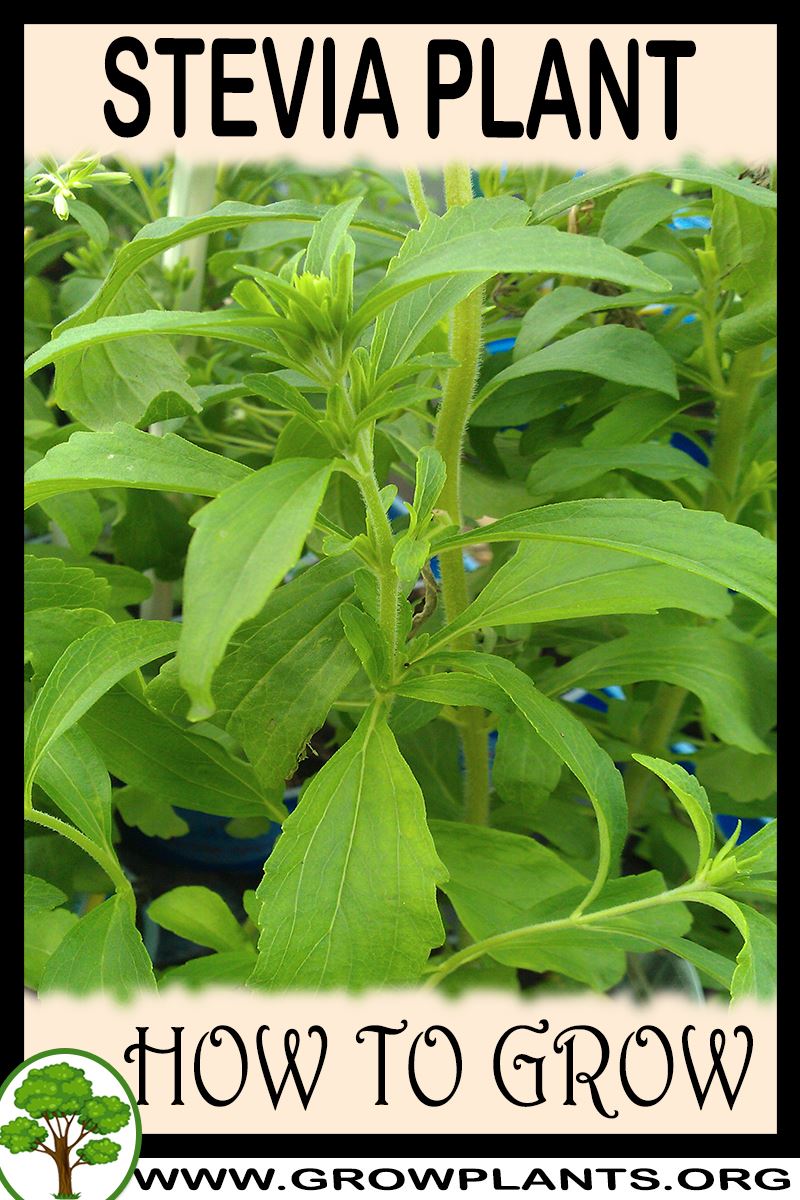
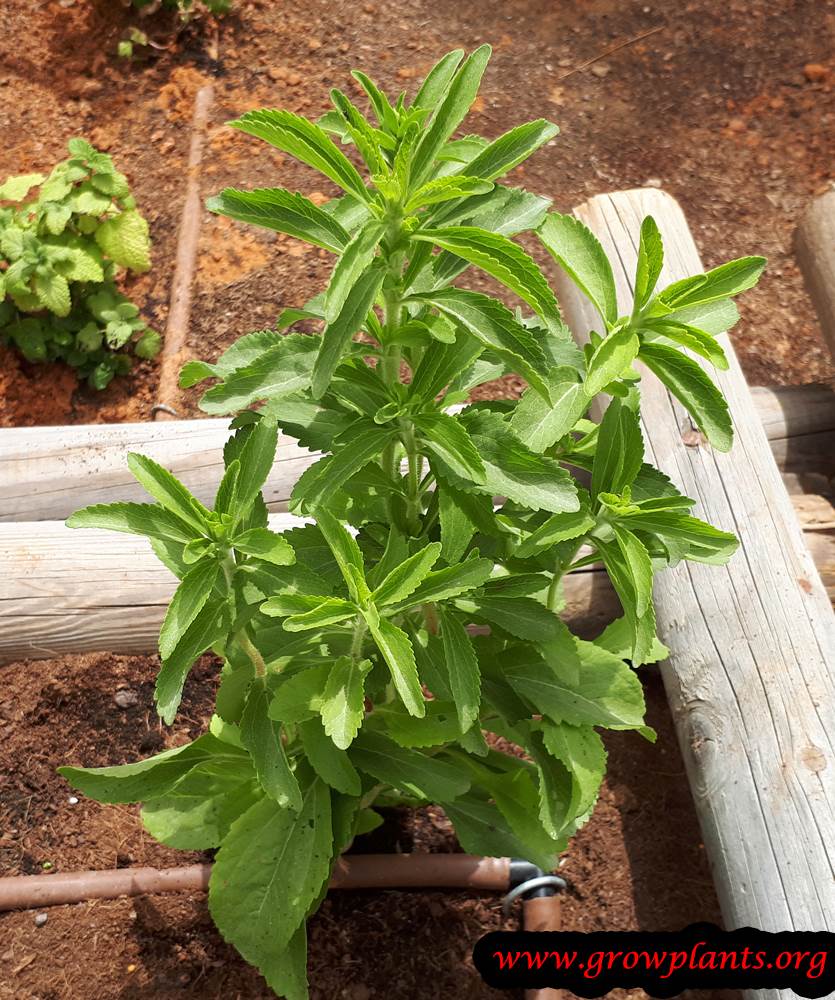
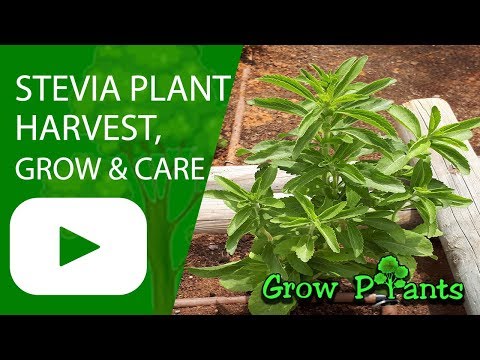
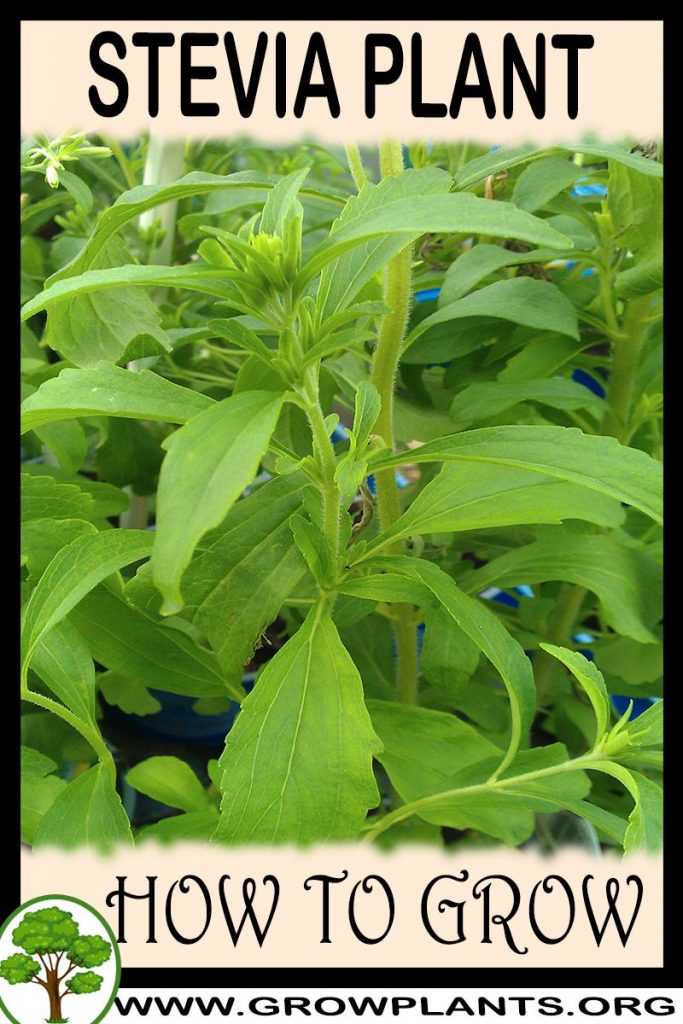
Overview: Stevia (Stevia rebaudiana), sweetleaf, is a bushy herbaceous perennial 30-70 cm tall grown for its intensely sweet edible leaves. It is evergreen in frost-free zones and grown as an annual where winters are cold.
Quick Specifications
| Specification | Attribute |
|---|---|
| Plant Type / Life Cycle | Perennial (grown as annual in cold climates) |
| Foliage Type | Evergreen (in frost-free zones) |
| Mature Size | 30-70 cm (12-28 in) |
| Growth Rate | Moderate to fast |
| Toxicity | Non-toxic / edible (leaves) |
| Hardiness | USDA zone 11+ as perennial, 5+ as annual |
Growth Form & Structure
- Height & Spread: 30-70 cm (12-28 in); grows well in a container.
- Growth Habit & Form: Bushy herbaceous subshrub.
- Lifespan & Maturity: Perennial in warm zones, annual elsewhere; leaves harvested through the year once established.
Anatomy & Physical Features
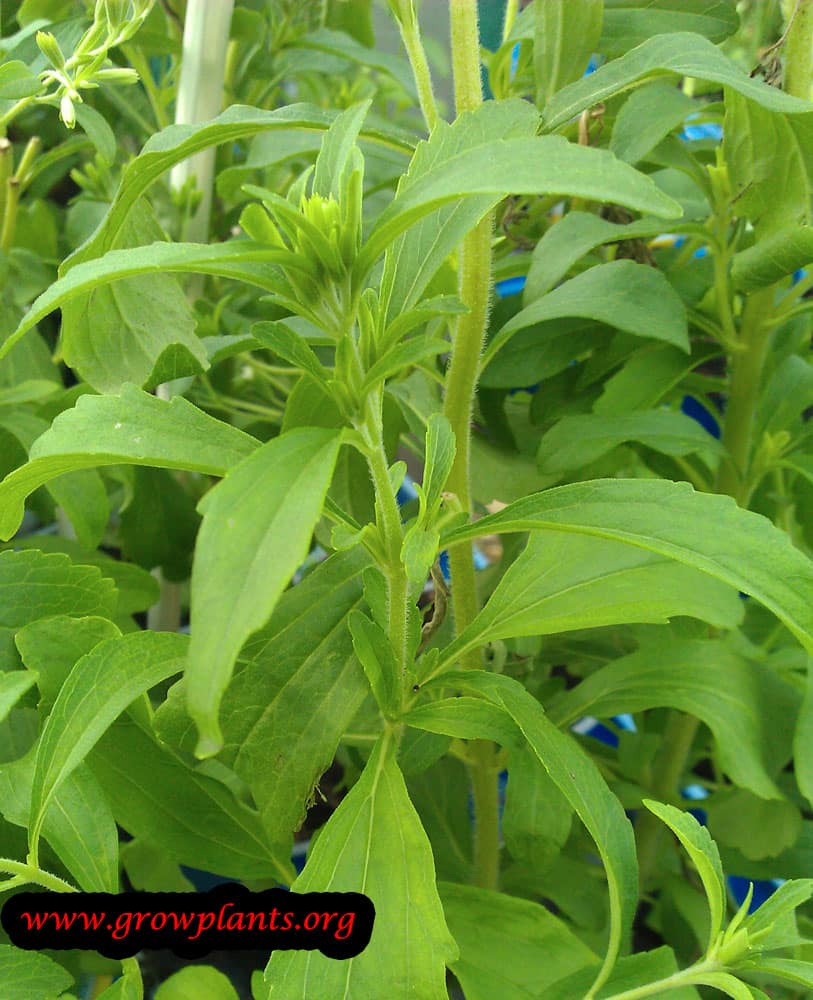
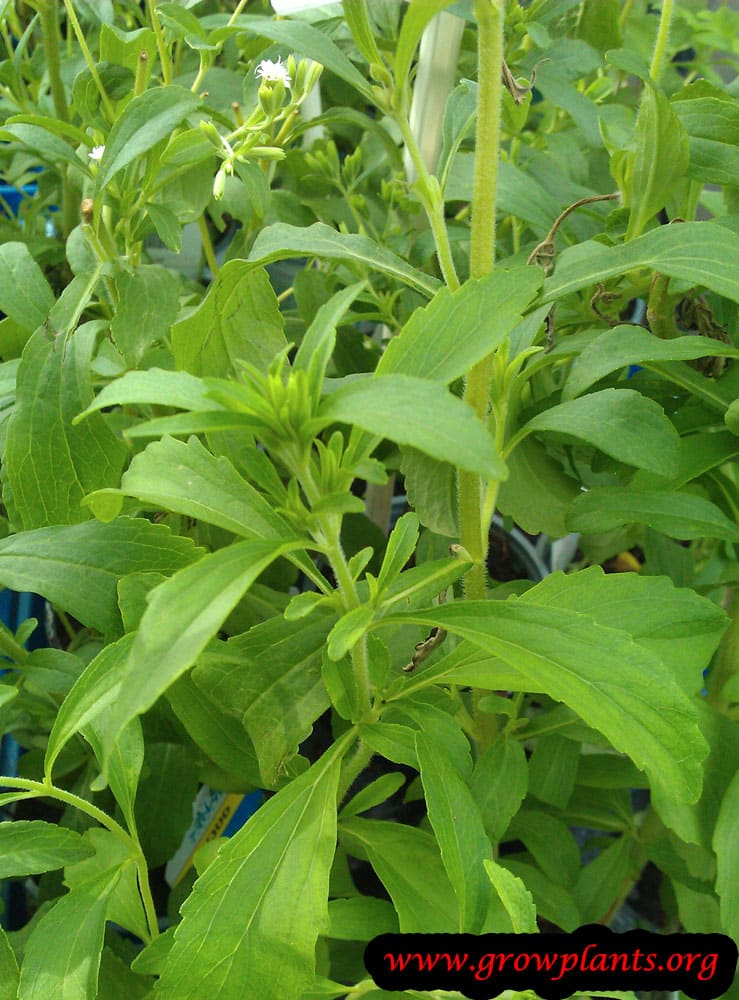
- Leaves & Foliage: Green oval-to-linear leaves with serrated edges and an intensely sweet taste.
- Flower Characteristics: Small white flowers in clusters at the stem tips; usually trimmed off to keep leaf quality (full detail in the Bloom guide).
Primary Uses & Landscape Value
- Edible Uses: Leaves used fresh or dried as a natural sweetener and to flavour beverages.
- Functional & Ornamental Roles: Culinary herb for beds and containers.
Care Guide: Planting, Soil & Watering
Overview: Stevia is a fast-growing, warm-climate herb that does best in full sun to light shade with fertile, consistently moist but well-draining soil. It likes steady, moderate watering through the growing season and resents both drought and waterlogging.
Quick Care Requirements
| Requirement | Ideal Condition |
|---|---|
| Planting Season | Spring once frost has passed (grown as an annual); year-round in frost-free areas |
| Growth Rate | Fast to moderate |
| Soil Type | Fertile, moisture-retentive, well-draining loam |
| Water Need | Moderate – keep evenly moist, never soggy and never bone-dry |
Planting & Establishment
- Best Planting Season: Plant out in spring once all danger of frost has passed and the soil has warmed; in frost-free zones (11+) it can be planted through the year as a short-lived perennial.
- How to Plant:
- Hole Preparation: Dig a hole a little wider than the root ball and the same depth, loosening the surrounding soil for easy rooting.
- Soil Amendments: Work in compost or well-rotted organic matter to enrich the bed and hold moisture while still draining freely.
- Planting Depth: Set the plant at the same level it sat in its pot, with the crown at the soil surface; do not bury the stem.
- Growth Speed & Expectations: Expect fast, bushy growth in warm conditions, with leaves ready for harvest through the season once plants establish.
Soil, Watering & Drainage Care
- Soil Mix & Drainage Needs: Use light, fertile, well-aerated soil; in containers a good-quality potting mix with added compost works well, with free drainage so the roots never sit in water.
- Watering Schedule & Technique:
- Young / Newly Planted: Water regularly after planting to keep the root zone evenly moist while the plant establishes.
- Established: Water moderately and consistently, letting only the very surface dry before watering again – stevia has shallow roots and dislikes drying out.
- Seasonal Adjustments: Water more often in hot, dry weather; ease back in cool spells, and where grown as a perennial keep it drier and protected over cold periods.
Climate, Light & Hardiness
Stevia is a warm-climate herbaceous perennial that grows in tropical, subtropical, mediterranean, or temperate climates and prefers full sun to half shade. It is only reliably perennial in approximately zone 11 and above; in colder climates it is grown as a frost-killed annual, with the site noting suitability down to roughly zone 5 on that basis.
Quick Climate Specifications
| Climate Zones | Tropical, subtropical, mediterranean, and temperate climates |
|---|---|
| USDA Hardiness Zones | Approximately 11 and above as a perennial; commonly grown as an annual from approximately zone 5 upward |
| Frost Tolerance | Very Low |
| Light Conditions | Full Sun to Half Shade |
Sunlight & Light Exposure
Optimal Light Setup
Full sun to half shade both work; choose full sun for the most vigorous, compact growth and half shade in especially hot climates.
Temperature Extremes & Hardiness
USDA Hardiness & Regional Limits
Stevia survives winters and continues growing year after year only from approximately zone 11 upward. Outside that range, freezing winters kill the plant back, which is why it is commonly grown as an annual in climates from about zone 5 upward - the cold limits outdoor year-round survival, not the plant's ability to grow and be harvested for a season.
Cold Damage & Winter Protection
Frost damages and typically kills the plant; where grown as a perennial near the cool edge of zone 11, some winter protection or a sheltered microclimate is prudent.
Frost Sensitivity
Treat as frost-tender at any age; bring potted plants indoors or under cover ahead of the first frost in non-tropical climates.
Wind, Humidity & Microclimate
Microclimate Recommendations
A warm, sheltered spot extends the growing season in marginal climates and helps perennial survival at the cooler edge of zone 11.
Growing in Pots, Balconies & Indoors
Stevia (Stevia rebaudiana) is a compact 30-70 cm (12-28 in) herb that grows happily in a pot. The grower does not class it as a true houseplant – it wants strong light – but a very sunny windowsill can keep a plant going, and it is excellent in a container on a sunny balcony or patio.
Quick Details
- Container Size: A medium pot suits it; step up as it fills out
- Indoor Suitability: Not a deep-room houseplant, but it can grow on a bright, sunny windowsill
- Best Spot: Full sun to part shade
- Soil & Drainage: A well-aerated, organic-rich mix – potting mix, or peat/coir with perlite or vermiculite. Free-draining
- Watering in Pots: Keep the soil evenly moist – an average, steady supply; do not let it dry out in a pot
Indoors & On the Windowsill
- Not a true houseplant: Away from a window the light is too weak and growth turns thin and weak – so it is not suited to a shaded room.
- Windowsill: On your sunniest sill, with several hours of direct light, a potted plant will grow well and stay handy for the kitchen.
- Overwintering: Frost-tender – in cold climates bring the pot to a bright, frost-free spot for the cold season.
On a Balcony or Patio
- Light & heat: Give it the sunniest spot. Walls and paving reflect heat and pots dry fast, so check moisture often in warm weather.
Choosing the Pot, Soil & Long-Term Care
- Pot & drainage: Choose a pot with strong drainage holes; skip a standing-water saucer, or empty it promptly, so the roots never sit wet. Terracotta breathes and dries faster, while glazed or plastic pots hold moisture longer.
- Potting mix: A well-aerated, organic-rich mix – potting mix, or peat/coir with perlite or vermiculite.
- Feeding: Potted plants use up their soil faster because nutrients leach out with every watering, so feed a little more often than plants in open ground.
- Repotting: Refresh part of the mix and pot up every couple of years, lightly pruning the root ball and top growth to keep it in balance.
Fertilizing & Feeding
Stevia is a moderate feeder for a leafy herb: it grows quickly and rewards steady, nitrogen-leaning nutrition through the season with the lush foliage it’s grown for, but heavy feeding right before harvest is best avoided.
Quick Fertilizing Specs
| Feeding Level | Moderate for a herb – regular light feeding supports its fast, leafy growth |
|---|---|
| young_feeding | A light, balanced feed while a new plant or cutting roots in |
| mature_feeding | A nitrogen-leaning, balanced fertilizer to sustain leaf production through harvest |
| Main Nutrient Priority | Nitrogen for steady leaf growth, balanced with other nutrients rather than pushed alone |
| Best Feeding Period | The active growing season while leaves are being harvested |
| Organic Options | Compost or an organic top-dressing suits this plant’s average water and soil needs well |
| Reduce/Stop Feeding | Ease back on feeding as growth slows going into cooler weather; where grown as an annual, feeding stops once the plant is spent |
Feeding by Growth Stage
Establishing Plant
Help a young plant or fresh cutting root in before active leaf harvest begins
| Nutrient direction | A light, balanced feeding to support root and shoot establishment without forcing weak, leggy growth |
|---|---|
| Timing | At planting and through the first weeks of active rooting |
| Frequency | A light feeding at planting, then hold off until fresh growth confirms the plant has rooted in |
| Fertilizer types | A diluted, balanced liquid fertilizer for young plants, Compost worked into the surrounding soil |
| Precautions | Keep feeding light while roots establish – overfeeding young stevia encourages soft growth that stresses easily |
Active Growth and Harvest
Sustain steady leaf production through the growing season, since leaf mass and quality are the point of growing this plant
| Nutrient direction | A nitrogen-leaning, balanced fertilizer supports the lush foliage this plant is grown for |
|---|---|
| Timing | Through the active growing season while leaves are being harvested |
| Frequency | Regular light feedings spaced through the growing season, tapering off as growth slows |
| Fertilizer types | A balanced, nitrogen-leaning liquid or granular fertilizer, Organic matter or compost top-dressing to sustain steady growth |
| Precautions | Avoid heavy feeding right before harvest – excess fertilizer salts can affect leaf flavor and quality |
Nutrient Deficiency Signs & Corrections
Pale, yellow-green leaves and slowed, thin new growth
| Possible causes | Insufficient nitrogen from infrequent feeding, Soil low in organic matter, Heavy watering leaching nutrients from a container or bed |
|---|---|
| Appears first on | Older leaves lower on the stem |
| What to check | Feeding history and organic matter level, Watering frequency and drainage, New growth rate compared with earlier in the season |
| Possible correction | Resume a balanced, nitrogen-leaning feeding during active growth |
Yellowing between the veins of older leaves while the veins themselves stay green
| Possible causes | Magnesium deficiency, more common in fast-draining or heavily leached soil, Excess potassium or calcium interfering with magnesium uptake, Root stress limiting overall nutrient uptake |
|---|---|
| Appears first on | Older, lower leaves |
| What to check | Soil drainage and leaching pattern, Recent fertilizer choice for magnesium content, Overall plant vigor and root health |
| Possible correction | Switch to a complete fertilizer that includes magnesium, or apply a chelated product per its label |
Crisp, browned tips or margins on otherwise healthy-looking leaves
| Possible causes | Fertilizer salt buildup from frequent or concentrated feeding, especially in containers, Underwatering concentrating salts already in the soil, Naturally salty irrigation water |
|---|---|
| Appears first on | Tips and margins of mature leaves |
| What to check | Feeding frequency and concentration, Container drainage and thoroughness of watering, Any visible mineral crust on the soil surface or pot rim |
| Possible correction | Flush the soil thoroughly with plain water and space out future feedings |
Pruning, Training & Seasonal Maintenance
Stevia tolerates frequent, light cutting and, as a soft-stemmed herb grown for its leaves, is pruned mainly by pinching and harvesting rather than by any structural training. The main objective is a bushy, leafy plant that stays vegetative for as long as possible, since letting it flower is understood to reduce leaf sweetness – the source’s own instruction to trim the blossom reflects this. Pruning can be done all year, more so through the active spring–summer growing and flowering period.
Quick Pruning & Maintenance Specs
| Pruning Tolerance | High |
| Primary Pruning Window | All year, ongoing |
| Typical Frequency | Frequent light pinching/harvesting, especially through spring–summer bloom period |
| Main Objective | Encourage bushy leaf growth; delay/limit flowering to preserve leaf sweetness |
| Young Plant Priority | Pinch growing tips once established to build a bushy habit |
| Mature Plant Priority | Ongoing harvest, deadheading and dead-leaf removal |
| Best Tool Type | Precision snips or fingers, for soft stems and leaves |
| Avoid Heavy Pruning During | Immediately after transplanting, before the plant is established |
Pruning by Plant Age & Size
Newly Established
Hold off on pinching or harvesting until the plant is clearly established and growing; premature cutting slows a small transplant.
Young / Formative
Pinch growing tips to encourage side-branching and a fuller, bushier 30–70 cm plant rather than a single tall stem – there is no woody framework to train, so this pinching is the entire formative step.
Mature / Established
Ongoing light maintenance: harvest leaves with their branches as the source describes, trim spent blossoms, and remove dead leaves as they appear.
Seasonal Pruning Schedule
Ongoing Sanitary
Objective: keep the plant productive and vegetative. What to remove: dead leaves and spent flower stems, trimmed as they appear rather than on a fixed calendar, per the source’s stated all-year pruning season. What not to remove: healthy leafy stems that are the plant’s main harvest. Expected response: continued leafy regrowth. Flowering/fruiting impact: trimming blossoms as they form is understood to keep the plant’s energy in leaf production, since flowering is associated with a drop in leaf sweetness.
Structural Pruning & Training
Not relevant beyond pinching for bushiness – stevia is a soft, herbaceous perennial (grown as an annual in cold climates) with no persistent woody structure to train.
Special Growth to Remove
Dead leaves, as the source specifies, should be removed on an ongoing basis. Spent flower/blossom stems should be trimmed unless seed is specifically wanted, since the source notes thinning the bloom is recommended unless seeds are needed.
Container & Small-Space Pruning
Stevia grows well in a container or planter (per the source). In a pot, pinch a little more assertively and harvest regularly to keep the plant compact and to prevent it from becoming leggy in the limited root volume.
Tools
Precision snips (or simply pinching by hand) for soft stems and leaf harvest – no larger cutting tool is needed for this herb.
Tool Hygiene & Disease Risk
Routine. The only pest documented is aphids, a sap-feeding insect rather than a cut-transmitted pathogen; clean, sharp snips are sufficient.
Cut Placement & Technique
Pinch or snip just above a leaf node/pair to encourage branching from that point; harvest leaves with a short length of stem attached, as the source describes, rather than stripping individual leaves.
Post-Pruning Care
Keep watering consistent (average water requirement per the source) after a harvest or pinch; avoid heavy feeding purely because the plant was just cut back, since regular light harvesting itself is the plant’s normal maintenance rhythm.
Common Pruning Mistakes
Letting the plant flower and set seed unchecked, which the source associates with reduced leaf sweetness; harvesting so hard and so often that the plant has no leaf area left to regrow from; leaving dead leaves in place instead of the ongoing removal the source recommends.
Recommended Tools (by task)
- Pinching, harvesting leaves, deadheading blossoms: precision_snips – the only tool this soft-stemmed herb genuinely needs.
Propagation Guide
Stevia can be grown from seed – the site confirms vegetative propagation is not necessary – but seed-grown plants can vary in leaf sweetness and germination is often slow and uneven, so stem cuttings are commonly used, especially to reproduce a known sweet, true-to-parent plant. Overall difficulty is Easy, since cuttings root readily and seed remains a workable if less predictable option.
Quick Propagation Specs
| Best Propagation Method | Stem cuttings (reliable and roots quickly; guarantees the parent’s sweetness) |
| Alternative Methods | Seed (viable and not required to be replaced by vegetative methods, per the site); division of established clumps |
| Propagation Difficulty | Easy |
| Seed True-to-Type | Variable – seedling plants can differ in leaf sweetness from the parent |
| Vegetative True-to-Type | Yes |
| Best Propagation Season | Spring (matching the plant’s planting season as an annual; can be propagated year-round where grown as a perennial) |
| Seed Germination Time | Often slow and uneven, typically several weeks |
| Cutting Rooting Time | Often within one to a few weeks |
| Germination Temperature | Warm conditions, roughly 20–25°C (68–77°F), are generally favorable |
| Seed Sowing Depth | Surface-sown or barely covered – the fine seed benefits from light to germinate |
Growing from Seed
Seed Handling & Viability
A meaningful share of stevia seed can be non-viable, so expect uneven results and use fresh seed from a reliable source; the site does not flag this as a required workaround, only that seed remains a valid option.
Sowing Season
Sow in spring, matching the plant’s stated planting season.
Sowing Depth & Orientation
Surface-sow or barely cover the seed, since it is fine and benefits from light exposure.
Germination Conditions
Warm, consistently moist conditions with bright but indirect light suit germination.
Germination Time
Germination is often slow and uneven, typically taking several weeks.
Seedling Care
Keep the seed tray or pots evenly moist without waterlogging, and pot up seedlings once true leaves appear.
Stem Cuttings
Cutting Type
Short, non-flowering stem-tip cuttings.
Best Timing
Take cuttings during the active growing season, matching the plant’s warm-season growth.
Cutting Preparation
Remove the lower leaves and cut just below a node.
Rooting Setup
Root in moist potting mix or even water, in warm conditions with bright, indirect light.
Rooting Hormone
Not necessary – stevia cuttings generally root readily without it, though hormone may speed the process slightly.
Rooting Time
Often within one to a few weeks.
Division, Offsets, Pups & Suckers
Where stevia is grown as a perennial (per the site’s note on all-year perennial growth in warm climates), an established clump can be divided in spring. Lift the clump, split it into sections with roots attached, and replant promptly, keeping divisions consistently moist until they show new growth.
Bloom & Flower Guide
Quick Details
- Bloom Season: Spring and summer
- Time to First Bloom: Usually in its first year, as the plant matures over the season
- Flower Appearance: Small white flowers in loose clusters at the tops of the stems
- Edibility: Grown for its sweet leaves – the flowers are not eaten and are best removed
Detailed Blooming Overview
Stevia (Stevia rebaudiana) flowers in spring and summer, sending up small white blossoms in clusters at the stem tips. For a leaf crop this bloom is a signal to act: once the plant turns its energy to flowering, the leaves lose some of their sweetness, so most growers pinch the flowers out.
Flower Characteristics
- Small white flowers borne in groups at the tops of the stems.
Bloom Care & Thinning
- Managing the bloom: Unless you want to collect seed, pinch off the flower buds as they form – this keeps the leaves sweeter and the plant productive for longer.
- Pollination: Worked by bees if you do let it flower for seed.
Fruit & Uses
Stevia is grown for its leaves, which contain intensely sweet compounds and are used fresh or dried as a plant-based sweetener. The leaves are eaten raw or steeped, with no cooking required.
Quick Edible Specs
| Edible Parts | Leaves |
|---|---|
| Main Use(s) | Culinary — sweetener, beverages |
| Eaten Raw or Cooked | Raw (fresh) or steeped/dried |
| Preparation Required | None fresh; drying and crumbling gives a more concentrated sweetener |
| Harvest Season | All year, once established |
| Time to First Harvest | After the plant is established (see Propagation) |
| Storage | Dried leaves store well in a dry location |
| Safety/Toxicity Caveat | None known for normal culinary use |
Leaves & Greens
The leaves are green, oval to linear with serrated edges, and have a very sweet taste. They can be harvested year-round once the plant is established, taking leaves together with the branch tips. Fresh leaves are eaten as-is or steeped in beverages; dried and crumbled leaves give a more concentrated sweetener that can be added to drinks and other foods.
Harvesting
Harvest is available all year from an established plant. Because taking many leaves or branches at once is essentially a light prune, pace harvesting alongside the plant’s normal pruning (see Pruning). Thinning flower buds is also recommended unless seed is wanted, which helps keep the plant producing fresh, flavourful leaves.
Preparation, Uses & Safety
Fresh leaves can be eaten directly or steeped in hot or cold beverages. Drying and crumbling the leaves concentrates their sweetness for use as a sugar substitute. No cooking or detoxification step is required, and no specific safety concerns are noted for normal culinary use of the leaves.
Pests, Diseases & Troubleshooting
Overview: Stevia is a tender herbaceous sweet-leaf herb in the daisy family whose soft foliage attracts general sap-suckers – aphids, whitefly, thrips and mites – while its greatest enemy is fungal root and stem rot in heavy, wet soil. Because the leaves are eaten, control stays organic and cultural: good drainage, airflow, spacing and hygiene first.
Quick Troubleshooting Overview
| Issue / Pest | Main Symptom | Primary Solution |
|---|---|---|
| Aphids | Curled sticky new growth, clustered insects | Water blast, insecticidal soap, beneficials |
| Whiteflies | White flies rising from disturbed plants, honeydew | Yellow sticky traps, soap, oil on undersides |
| Thrips | Silvery flecking and distorted new leaves | Blue sticky traps, spinosad at dusk, remove debris |
| Spider mites | Fine stippling and webbing in hot dry air | Rinse, raise humidity, miticidal soap |
| Septoria leaf spot | Dark spots with pale centres on leaves | Airflow, remove infected leaves, avoid wet foliage |
| Root/stem rot | Wilting, blackened base, collapse | Sharp drainage, avoid overwatering, raised beds |
Common Pests & Management
- Aphids (Myzus persicae and others):
- Symptoms: Clusters of small green, black or pinkish insects on new shoots and leaf undersides; growth curls, becomes sticky with honeydew, and sooty mould follows.
- Prevention & Control: Dislodge with a firm water spray, conserve lady beetles, lacewings and parasitic wasps, and use reflective mulch. Spray insecticidal soap on the undersides for heavier infestations, keeping this edible herb on soft organic options and observing the harvest interval.
- Whiteflies (Trialeurodes / Bemisia spp.):
- Symptoms: Tiny white flies that flutter up in clouds when the plant is brushed, with honeydew and sooty mould on lower leaves and general yellowing.
- Prevention & Control: Hang yellow sticky traps to catch adults, rinse leaf undersides, and spray insecticidal soap or light horticultural oil, repeating to catch new emergents; encourage Encarsia wasps and other natural enemies.
- Thrips (Frankliniella / Thrips spp.):
- Symptoms: Silvery streaking and pale flecking on leaves with dark faecal specks, and distorted, scarred new growth.
- Prevention & Control: Remove weeds and debris, use blue sticky traps, and encourage predatory mites and minute pirate bugs. Treat heavy infestations with spinosad or insecticidal soap applied at dusk to protect pollinators.
- Spider mites (Tetranychus urticae):
- Symptoms: Fine pale stippling and a dull bronzed cast with fine webbing on undersides, worst in hot, dry conditions.
- Prevention & Control: Rinse foliage and raise humidity, avoid drought stress, and treat outbreaks with miticidal soap or light oil on the leaf undersides.
- Slugs, snails and caterpillars:
- Symptoms: Ragged holes and slime trails on lower leaves (slugs), or chewed foliage and frass from loopers and armyworms.
- Prevention & Control: Use iron-phosphate slug bait and remove hiding places; handpick caterpillars and spray Bacillus thuringiensis (Bt) while they are small. Row cover protects young transplants.
Diseases & Fungal Issues
- Septoria leaf spot (Septoria steviae):
- Symptoms: Small dark brown to black angular spots, often with pale grey centres, spreading across the leaves in warm humid weather and causing defoliation from the bottom up.
- Treatment & Management: Space plants for airflow, avoid overhead watering and working plants when wet, mulch to stop soil splash, and remove infected lower leaves. Rotate beds and clear crop debris; a copper fungicide gives preventive help under persistent wet conditions.
- Sclerotinia / Sclerotium stem rot:
- Symptoms: Wilting with a white cottony mould and hard black or tan resting bodies at the stem base, and a soft rotting crown.
- Treatment & Management: Improve drainage, avoid dense wet plantings and overwatering, and remove and destroy infected plants with the surrounding soil. Rotate away from other susceptible crops and do not compost infected material.
- Root rot & damping-off (Rhizoctonia, Pythium, Fusarium):
- Symptoms: Seedlings collapse at the soil line, or established plants wilt with darkened, decayed roots and a browning stem base in wet soil.
- Treatment & Management: Use fresh clean media and raised, sharply drained beds, water carefully, and avoid waterlogging. Discard badly affected plants and improve soil structure with organic matter.
- Alternaria / Botrytis blights:
- Symptoms: Brown leaf lesions (Alternaria) or fuzzy grey mould on dying tissue (Botrytis) in humid, crowded stands.
- Treatment & Management: Increase airflow and spacing, remove dead and dying material, and avoid evening watering; sanitation controls both in most gardens.
Growing Difficulties & Abiotic Problems
- Root rot from overwatering:
- Cause & Symptoms: Wilting and yellowing despite moist soil, with a dark soft stem base, in heavy or poorly drained ground.
- Correction Strategy: Grow in light, free-draining soil or raised beds, let the surface dry between waterings, and never leave the roots waterlogged; this is the leading cause of stevia decline.
- Frost / cold sensitivity:
- Cause & Symptoms: Blackened, collapsed foliage after frost; stevia is a tender perennial usually grown as an annual in cool climates.
- Correction Strategy: Grow through the warm season, protect or bring plants under cover before frost, and take cuttings or lift plants to overwinter frost-free.
- Poor germination:
- Cause & Symptoms: Sparse, slow emergence from the tiny seed.
- Correction Strategy: Surface-sow onto warm, moist media with light for germination, keep evenly damp, and propagate from cuttings for reliable, uniform plants.
- Nutrient / leaf yellowing:
- Cause & Symptoms: Pale lower leaves from nitrogen shortage or waterlogged roots.
- Correction Strategy: Feed lightly with a balanced organic fertiliser, avoid excess nitrogen that dilutes leaf sweetness, and correct drainage before assuming a feeding problem.
What Helps – Products & Tools
For this edible herb keep to soft, short-interval tools: insecticidal soap and light horticultural oil for aphids, whitefly and mites, Bacillus thuringiensis (Bt) for caterpillars, yellow and blue sticky traps, spinosad at dusk for heavy thrips, and iron-phosphate slug bait. A copper fungicide addresses Septoria and other leaf spots, but sharp drainage and airflow prevent the worst (root and stem rots).