Plant Profile & Key Characteristics
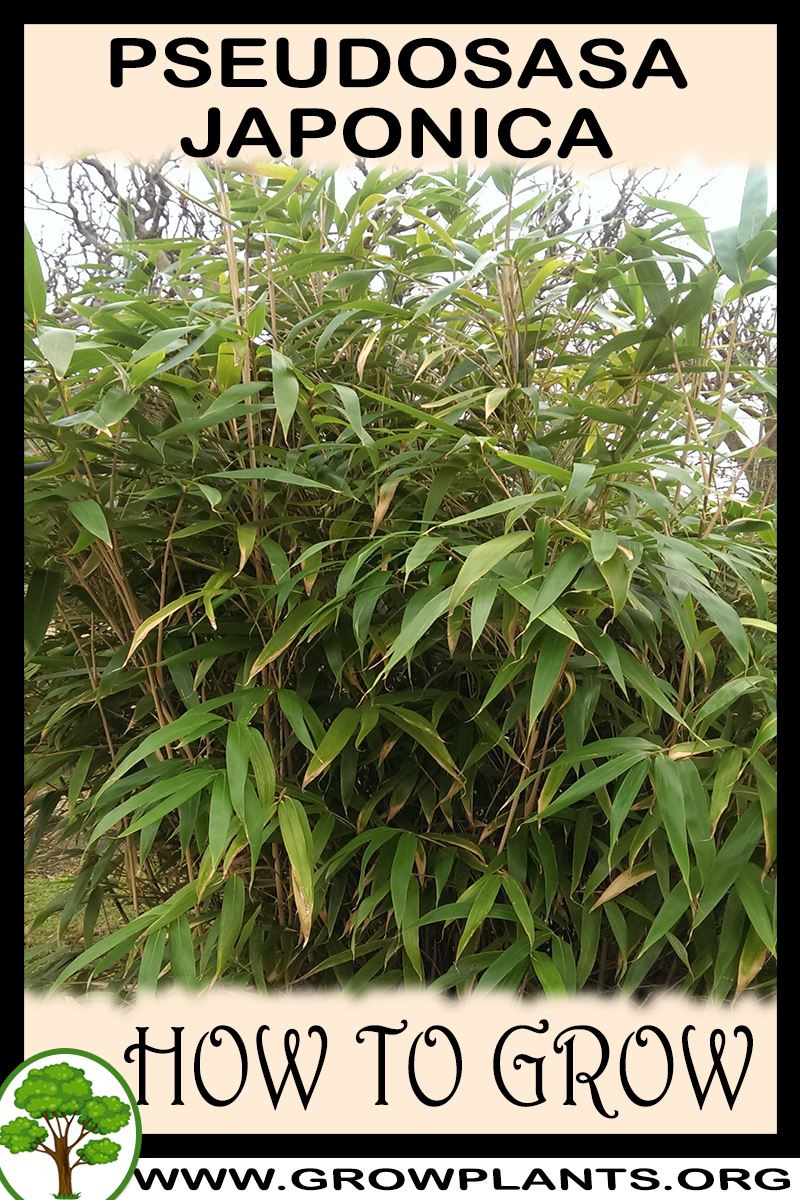
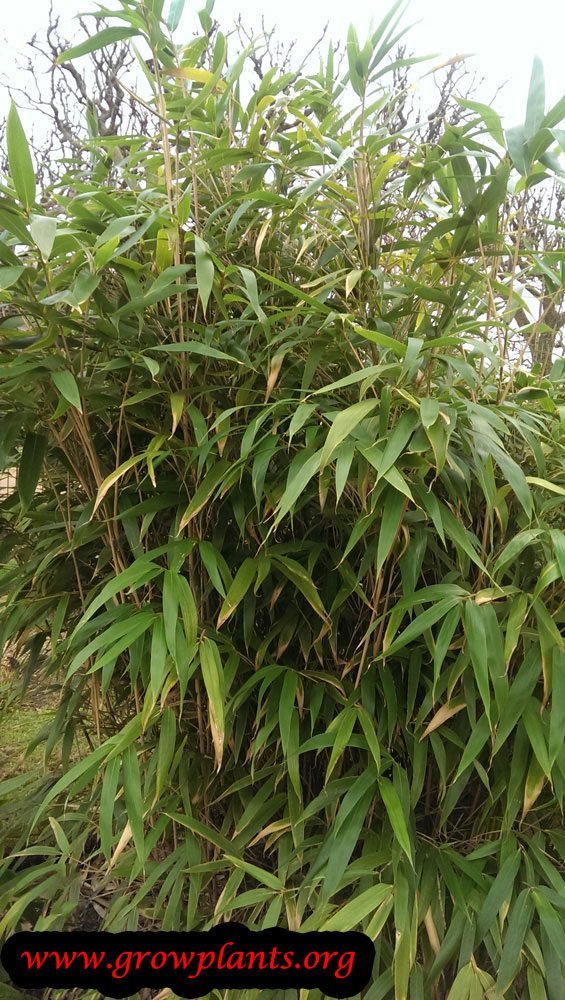
Overview: Arrow bamboo (Pseudosasa japonica) is an evergreen running bamboo reaching 2-5 m (6-15 ft), grown as an ornamental screen. It spreads by rhizomes and is invasive, so it is best contained; it tolerates shade well.
Quick Specifications
| Specification | Attribute |
|---|---|
| Plant Type / Life Cycle | Perennial (woody bamboo) |
| Foliage Type | Evergreen |
| Mature Size | 2-5 m tall (6-15 ft) |
| Growth Rate | Fast to moderate |
| Root System | Rhizomatous (running, invasive) |
| Hardiness | USDA zones 7-10 |
Growth Form & Structure
- Height & Spread: Reaches 2-5 m (6-15 ft) in the ground; grows well in containers and indoors, which also helps contain it.
- Growth Habit & Form: Upright grove of leafy canes from spreading rhizomes; needs a root barrier or regular thinning to stop it taking over.
- Lifespan & Maturity: Long-lived; forms a dense screen quickly.
Anatomy & Physical Features
- Trunk & Bark: Slender brown canes carrying the foliage.
- Leaves & Foliage: Large, lance-shaped green leaves, among the biggest of the hardy bamboos.
- Flower Characteristics: Rarely flowers; yellow-green cone- to bell-shaped flowers appear at the cane tips at long intervals.
Primary Uses & Landscape Value
- Functional & Ornamental Roles: Ornamental screening and shade-tolerant bamboo for gardens and large containers.
Care Guide: Planting, Soil & Watering
Overview: Arrow bamboo is a vigorous evergreen bamboo that tolerates full sun to full shade and prefers consistently moist soil. It spreads readily and appreciates moderate to generous watering.
Quick Care Requirements
| Requirement | Ideal Condition |
|---|---|
| Planting Season | In the warm season – spring through autumn |
| Growth Rate | Moderate to Fast |
| Soil Type | Moisture-retentive, well-drained soil |
| Water Need | Moderate to High – keep evenly moist |
Planting & Establishment
- Best Planting Season: Plant spring through autumn (hardy in zone 7-10).
- How to Plant:
- Hole Preparation: Dig a hole about twice the width of the root ball and fit a rhizome barrier to limit spread.
- Soil Amendments: Mix in organic matter to retain moisture.
- Planting Depth: Set the clump at its original soil level with the rhizomes just below the surface.
- Growth Speed & Expectations: A moderate-to-fast grower reaching 2-5 m; it spreads, so remove unwanted canes.
Soil, Watering & Drainage Care
- Soil Mix & Drainage Needs: Wants moist but drained soil; it tolerates shade and grows in large containers, which also contain it.
- Watering Schedule & Technique:
- Young / Newly Planted: Keep consistently moist during establishment.
- Established: Water regularly; it dislikes drying out.
- Seasonal Adjustments: More in summer, less in winter.
Climate, Light & Hardiness
Arrow bamboo is a hardy, shade-tolerant bamboo for temperate, subtropical and Mediterranean climates, growing from full sun through to full shade on moist soil. Its rhizome is cold-hardy into temperate zones, and it is notably tolerant of coastal wind and salt.
Quick Climate Specifications
| Climate Zones | Temperate, subtropical, Mediterranean |
|---|---|
| USDA Hardiness Zones | 7–10 (site data) |
| Optimal Temp Range | Approx. 18–30°C (64–86°F) |
| Cold Damage Begins | Foliage and canes around −12 to −15°C (10 to 5°F) |
| Approx. Survival Minimum | Rhizomes hardy to roughly −18°C (0°F) in zone 7 |
| Frost Tolerance | Moderate |
| Light Conditions | Full sun to full shade |
| Wind Tolerance | Moderate to High |
| Salt / Coastal Tolerance | Moderate to High |
Sunlight & Light Exposure
Optimal Light Setup
Unusually adaptable - it grows well in full sun, half shade or full shade, making it one of the best bamboos for shady sites.
Shade & Heat Management
In deep shade it stays lush; in full sun in hot climates keep the soil evenly moist to prevent leaf scorch.
Best Exposure / Orientation
Tolerant of exposed and shaded positions alike, including difficult north-facing or coastal spots.
Temperature Extremes & Hardiness
USDA Hardiness & Regional Limits
Site data rates it hardy in zones 7–10. The rhizome survives colder than the evergreen canes, which is what allows the temperate range.
Cold Damage & Winter Protection
Hard freezes burn foliage and can damage canes, but the plant regrows from the rhizome; a winter mulch protects the roots at the cold margin.
Frost Sensitivity
Moderately frost tolerant, comparable to black bamboo.
Extreme Heat Tolerance
Good with reliable moisture; it is happiest with some shade in the hottest climates.
Wind, Humidity & Microclimate
Humidity Preferences
Prefers moderate to high humidity and steady soil moisture.
Dry-Air Tolerance
Moderate; hot dry wind marks the foliage.
Wind Tolerance
Moderate to high; a good windbreak that tolerates exposed positions.
Coastal / Salt Tolerance
Moderate to high - one of the more salt- and wind-tolerant bamboos, useful near the coast.
Microclimate Recommendations
Excellent for shaded, sheltered or coastal screens; because it runs, contain it with a rhizome barrier.
Growing in Pots, Balconies & Indoors
Unusually for a bamboo, arrow bamboo takes shade and even grows indoors – the grower rates it both as a houseplant and a container plant. It makes a leafy green screen in a large pot on a patio, balcony or bright room.
Quick Details
- Container Size: A large pot for a 2-5 m (6-15 ft) clump
- Indoor Suitability: Yes – a shade-tolerant bamboo, good in a bright room
- Best Spot: Full sun to full shade – very adaptable
- Soil & Drainage: Rich, free-draining mix
- Watering in Pots: Average to plenty – it likes more water than most bamboos; do not let it dry out
Indoors & On the Windowsill
- A shade-tolerant houseplant: One of the few bamboos happy indoors; give bright, indirect light and it forms a green screen, though it will also take a darker corner.
- Humidity & care: Mist in dry rooms and wipe dust off the leaves so it can breathe.
- Overwintering: Hardy outdoors in most climates; a potted plant can also simply live indoors year-round.
On a Balcony or Patio
- Screening: A fine leafy privacy screen that tolerates sun or shade, so it suits most balconies; shelter from harsh wind.
- Water & contain: Keep the pot evenly moist – it likes water – and divide it when it fills the container.
Choosing the Pot, Soil & Long-Term Care
- Pot & drainage: A large pot with strong drainage; no standing saucer water.
- Potting mix: Well-aerated, organic-rich mix – peat or coir with perlite or vermiculite.
- Feeding: Feed regularly in growth – potted bamboo leaches nutrients fast.
- Repotting: Divide and root-prune every two to three years.
Fertilizing & Feeding
A moderate, nitrogen-forward feeder: feed as new canes push in spring and through the warm season while keeping soil evenly moist, then hold off in the cool dormant season.
Quick Fertilizing Specs
| Feeding Level | Moderate feeder |
|---|---|
| Main Nutrient Priority | Nitrogen-forward feeding to drive canes and lush foliage |
| Best Feeding Period | Spring through the warm active growing season |
| Organic Options | Compost and aged manure as a top-dressing, plus mulch |
| Reduce/Stop Feeding | Hold off feeding through the cool dormant season |
| Micronutrients | Usually met by a complete fertilizer; correct only diagnosed iron shortage in alkaline soil |
| Soil pH | Slightly acidic to near neutral |
Feeding by Growth Stage
Spring cane and leaf flush
Fuel the spring push of new canes and foliage on this vigorous bamboo.
| Nutrient direction | A nitrogen-forward complete fertilizer to support fast, grassy leaf and cane growth. |
|---|---|
| Timing | As new shoots and canes emerge in spring. |
| Frequency | A feeding as growth starts, renewed as the flush continues. |
| Fertilizer types | A nitrogen-forward complete fertilizer, Compost or aged manure as a top-dressing |
| Precautions | This bamboo can be invasive; feed to keep a screen healthy but contain the spread. |
Warm-season active growth
Keep the clump dense and green through the growing season.
| Nutrient direction | A balanced-to-nitrogen complete fertilizer sustains full, healthy foliage. |
|---|---|
| Timing | Through the warm active growing season, including in shadier sites where it also grows. |
| Frequency | Light, regular feeding across the season with mulch renewed. |
| Fertilizer types | A balanced or nitrogen-forward complete fertilizer, Mulch and compost as a top-dressing |
| Precautions | Keep soil evenly moist; this bamboo prefers steady moisture and dislikes drying out. |
Cool-season rest
Let the planting rest through the cool dormant season.
| Nutrient direction | None – withhold fertilizer while the plant is not in active growth. |
|---|---|
| Timing | During cool weather when top growth slows or stops. |
| Frequency | No feeding at this stage; resume only when active growth returns. |
| Fertilizer types | No feeding at this stage; hold off fertilizing until active growth resumes. |
| Precautions | Withhold fertilizer now; feeding a plant that is not actively growing wastes nutrients and risks salt buildup in the root zone. |
Nutrient Deficiency Signs & Corrections
Older, lower leaves fade to pale green or uniform yellow and overall growth slows.
| Possible causes | low available soil nitrogen, nitrogen leaching from heavy watering or rain, thin, low-organic-matter soil |
|---|---|
| Appears first on | older, lower leaves |
| What to check | recent feeding history, soil organic matter, watering and drainage |
| Possible correction | Apply a nitrogen-containing complete fertilizer and build soil organic matter, then water evenly. |
New leaves yellow between the veins while the veins themselves stay green.
| Possible causes | low available iron, high soil pH locking up iron, cold or waterlogged roots limiting uptake |
|---|---|
| Appears first on | youngest leaves |
| What to check | soil pH, drainage and root health, whether symptoms are on new growth |
| Possible correction | Correct soil pH and improve drainage, then apply a chelated iron product per its label if new growth stays chlorotic. |
Leaf margins and tips brown or scorch and growth stalls despite adequate watering.
| Possible causes | fertilizer salt buildup in the root zone, under-watering that concentrates salts, excessive or too-frequent feeding |
|---|---|
| Appears first on | leaf margins and tips |
| What to check | recent fertilizer amounts, watering consistency, drainage and watering consistency |
| Possible correction | Ease off feeding, water thoroughly to flush accumulated salts from the root zone, then return to lighter feeding. |
Pruning, Training & Seasonal Maintenance
Arrow bamboo is a running woody grass grown as a dense, exceptionally shade-tolerant screen. As with all bamboos, culms do not thicken or regrow taller once cut, so upkeep means thinning old and weak culms, removing lower branches for a clean-caned look, and containing a spreading, invasive rhizome system. Its value as a hedge comes from selectively managing culms and thinning the leafy top, not from shearing.
Pruning & the Edible Harvest
If eaten, the crop is the young shoots. Thinning tired old culms and keeping the grove open encourages fresh shoot emergence, but arrow bamboo’s shoots are bitter and only marginally palatable, and the plant is grown chiefly as an ornamental screening or hedge bamboo rather than for food.
Quick Pruning & Maintenance Specs
| Pruning Tolerance | High for culm removal; no re-extension after topping |
| Primary Pruning Window | After new culms harden in late spring / summer |
| Secondary Maintenance Window | Spring shoot control; year-round tidying and rhizome patrol |
| Typical Frequency | Annual thinning; ongoing containment |
| Main Objective | Maintain a dense screen, remove old culms, control invasive spread |
| Young Plant Priority | Establish; keep the strongest culms |
| Mature Plant Priority | Thin oldest culms; check rhizomes; thin the canopy |
| Best Tool Type | Loppers / pruning saw for culms; spade for rhizomes |
| Avoid Heavy Pruning During | Peak spring shoot emergence while building the screen |
Pruning by Plant Age & Size
Newly Established
Leave it largely alone to build rhizome reserves; remove only broken or dead shoots.
Young / Formative
No tree-style training. Select culms, keeping strong upright canes and cutting weak or crowded ones at the base to develop an even, dense screen.
Mature / Established
Annually remove the oldest culms at ground level to keep the stand fresh, and thin the leafy canopy so the screen does not become top-heavy and shaded. Strip lower branches if a clean-cane effect is wanted.
Seasonal Pruning Schedule
Spring — Shoot control
Objective: limit spread. Remove new shoots emerging beyond the intended line while they are soft. Keep the strong shoots that will form this season’s culms.
Summer — Thinning
Objective: open a congested screen and manage height. After culms leaf out, thin old and weak canes and reduce canopy density; top individual culms above a node if height control is needed.
Ongoing — Containment and sanitation
Objective: keep it in bounds and clean. Patrol for escaping rhizomes and cut them back; remove dead culms as they appear.
Structural Pruning & Training
Work by culm selection and canopy thinning. Because it thrives even in full shade it can pack in densely, so periodic thinning of old culms and the leafy top keeps the screen healthy and prevents a bare, shaded base.
Special Growth to Remove
Priority targets are escaping rhizomes and the stray culms they produce outside the screen line, plus dead culms and, optionally, lower branches for a cleaner look. Retain the wanted new season’s culms.
Container & Small-Space Pruning
Excellent in large containers, which conveniently contain its running habit. Divide the root-bound rhizome mass every few years rather than relying on topping; thin culms to keep the potted clump from becoming congested.
Tools
Loppers for average culms, a pruning saw for thick canes cut at the base, and a spade to sever rhizomes. Avoid hedge shears — shearing this bamboo shreds leaves and ruins the natural cane form; height is set by topping culms above nodes.
Tool Hygiene & Disease Risk
Routine. No significant pruning-transmitted disease; keep blades clean and sharp for smooth cuts.
Cut Placement & Technique
Cut removed culms flush to the ground; when topping, cut just above a node to avoid a hollow, water-collecting stub.
Heavy Pruning & Rejuvenation
Very tolerant — a neglected clump can be cut to the ground and will regenerate from rhizomes the next spring. Because of this vigour, topping alone will never eradicate it; only rhizome removal will.
Post-Pruning Care
Keep the soil moist (this species likes more water than golden bamboo) and feed in spring to fuel strong new culms after thinning or renewal.
Common Pruning Mistakes
- Shearing it like a hedge, shredding foliage instead of thinning culms.
- Expecting topped culms to grow taller.
- Ignoring rhizome spread from a shade-tolerant, invasive runner.
When NOT to Prune
Do not remove wanted new spring shoots, and delay heavy thinning until the season’s culms have hardened.
Recommended Tools (by task)
- loppers — thinning culms and lower branches.
- pruning_saw — thick mature culms at ground level.
- garden_spade — cutting escaping rhizomes and dividing potted clumps.
Pruning Troubleshooting
| Problem | Possible Cause | What to Check | Corrective Action |
| Spreading beyond the screen line | Uncontained rhizomes | Perimeter runners and stray shoots | Barrier plus annual rhizome severing |
| Bare, shaded base to the screen | Canopy too dense on top | Light reaching lower culms | Thin old culms and reduce canopy density |
| Congested, weak new culms | Overcrowding | Culm spacing | Remove oldest and weakest culms at ground level each year |
Propagation Guide
Arrow bamboo is propagated vegetatively — seed is seldom available given its rare, irregular flowering — chiefly by dividing the clump or lifting rooted rhizome sections. It is easy to increase but invasive, so plant it into a barrier or pot; difficulty is moderate.
Quick Propagation Specs
| Best Propagation Method | Clump / rhizome division |
| Alternative Methods | Rhizome cuttings (offsets) |
| Propagation Difficulty | Moderate |
| Vegetative True-to-Type | Yes |
| Best Propagation Season | Spring, at or before the shoot flush |
| Time Until Division Establishes | Over the following season |
Division, Offsets, Pups & Suckers
Clump Division
Divide the clump into sections, each with several canes and attached rooted rhizome; cut back the tops and keep the pieces moist and shaded while they root away.
Rhizomes, Tubers, Bulbs & Corms
Rhizome Cuttings
Sections of rhizome with several nodes and buds can be planted shallowly in warm, moist soil; slower and less certain than a rooted division.
Containment note: confine the spreading rhizomes, as this species runs.
Bloom & Flower Guide
Quick Details
- Bloom Season: Summer, though flowering is uncommon and irregular
- Time to First Bloom: Only after many years – bamboos flower rarely and often gregariously
- Flower Appearance: Yellow-green flowers in a cone- to bell-shape at the tips of the canes
- Edibility: Ornamental / none – the flowers are not eaten
Detailed Blooming Overview
Arrow bamboo rarely flowers, and a planting may go many years between blooms. When it does flower – in summer – it can partly weaken the canes; keeping the clump well cared for helps it bounce back.
Flower Characteristics
- Yellow-green flowers.
- Held in a cone- to bell-shape at the ends of the canes.
Bloom Care & Thinning
- Pollination: Wind-pollinated, like other grasses.
- If a clump flowers: Water and feed well to help it recover; trim spent stems.
Fruit & Uses
Arrow bamboo is grown as an ornamental and screening plant, but its young spring shoots are edible after cooking. They are on the bitter side and are a minor, lower-quality food rather than a prized vegetable, and like all bamboo shoots they must be thoroughly cooked and never eaten raw.
Quick Edible Specs
| Edible Parts | Young shoots (new growth emerging from the soil) |
|---|---|
| Main Use(s) | Culinary vegetable, after cooking (minor / bitter) |
| Eaten Raw or Cooked | Cooked only |
| Preparation Required | Peel the sheaths, slice, and boil with a change of water to reduce bitterness — never raw |
| Harvest Season | Spring, as new shoots appear |
| Safety/Toxicity Caveat | Raw bamboo shoots contain natural cyanogenic compounds; thorough boiling is essential |
Shoots & Stems
Cut the tender young shoots at ground level in spring while they are short and firm, before they toughen into canes. Peel off the tough outer sheaths to reach the pale core. Because this bamboo is vigorous and invasive, harvesting shoots also helps limit its spread.
Preparation, Uses & Safety
Peel, slice and boil until tender, changing the water to cut the bitterness, before using in cooked dishes. Safety first: never eat the shoots raw — raw bamboo shoots contain cyanogenic compounds removed only by thorough cooking. Given the bitterness, this is a marginal edible rather than a recommended crop.
Pests, Diseases & Troubleshooting
Overview: Arrow bamboo (Pseudosasa japonica) is a tough grass whose pests are the specialist bamboo suckers – bamboo spider mites (with their tell-tale rectangular leaf blotches), bamboo aphids, scale and mealybugs – whose honeydew brings sooty mould. Disease is minor (rust, root rot in wet soil). It is a well-behaved clumping/arrow bamboo, so spread is gradual rather than invasive. Airflow, moisture and rhizome management keep it healthy.
Quick Troubleshooting Overview
| Issue / Pest | Main Symptom | Primary Solution |
|---|---|---|
| Bamboo spider mites | Rectangular pale blotches + webbing on leaves | Hose foliage, thin culms, horticultural oil under leaves |
| Bamboo aphids | Honeydew and sooty mould on leaves/culms | Beneficials, water jet, insecticidal soap |
| Scale / mealybugs | Encrustations on culms and sheaths, honeydew | Prune out old culms, horticultural oil |
| Sooty mould | Black film over honeydew | Control sap-suckers, wash off |
| Rust | Rusty pustules under leaves, browning | Thin for airflow, remove foliage |
| Clump congestion | Crowded, weak culms, poor airflow | Thin oldest culms yearly, divide |
Common Pests & Management
- Bamboo Spider Mites (Schizotetranychus celarius, Stigmaeopsis spp.):
- Symptoms: The signature bamboo pest: distinctive rectangular, whitish-to-yellow blotches on the upper leaf, with fine webbing and tiny mites in ‘nests’ beneath; heavy attack browns and drops leaves.
- Prevention & Control: Hose down foliage and raise humidity, thin overcrowded culms for airflow, and conserve predatory mites. Horticultural oil or insecticidal soap on the leaf undersides, repeated, for heavy infestations.
- Bamboo Aphids (Takecallis, Melanaphis spp.):
- Symptoms: Colonies of pale or dark aphids on leaf undersides and new shoots with copious honeydew that turns to black sooty mould, dulling the canes.
- Prevention & Control: Encourage ladybirds, lacewings and parasitic wasps and hose off colonies; insecticidal soap for heavy outbreaks. Controlling them clears the sooty mould.
- Bamboo Scale & Mealybugs (Bambusaspis, Antonina, Palmicultor spp.):
- Symptoms: Brown, white or felted scale and mealybug encrustations along culms, nodes and leaf sheaths; honeydew, sooty mould and weakened, off-colour growth.
- Prevention & Control: Prune out heavily encrusted old culms, encourage parasitic wasps, and apply horticultural oil to smother crawlers; repeat to catch generations.
- Bamboo Mites (rust/tarsonemid) & Borers (Aceria / Dinoderus spp.):
- Symptoms: Additional mite stippling; powderpost/bamboo borers tunnel harvested or stressed culms, leaving fine bore-dust and weak, pin-holed canes.
- Prevention & Control: Keep plants unstressed and well watered, remove and destroy weak or dead culms, and treat prized specimens with horticultural oil; borers mainly attack cut/dry culms, so use fresh, sound canes.
Diseases & Fungal Issues
- Sooty Mould (Capnodium and allies):
- Symptoms: A black film over leaves and culms, growing on the honeydew from aphids, scale and mealybugs; blocks light and blackens the ornamental canes.
- Treatment & Management: Control the sap-sucking insects producing the honeydew and the mould weathers off; wash heavy deposits with soapy water.
- Bamboo Rust (Puccinia, Kweilingia (Dasturella) spp.):
- Symptoms: Yellow-to-rusty pustules on leaf undersides with yellow flecking above; heavy rust browns and sheds leaves in humid weather.
- Treatment & Management: Improve airflow by thinning culms, remove badly rusted foliage, and avoid overhead wetting; fungicide is rarely needed on established groves.
- Root / Rhizome Rot (Phytophthora, Fusarium):
- Symptoms: Yellowing, wilting culms and failure of new shoots where soil is heavy and waterlogged; roots and rhizomes rot.
- Treatment & Management: Plant in free-draining soil, avoid waterlogging, and improve drainage; remove dead culms and rhizome sections.
Growing Difficulties & Abiotic Problems
- Clump Congestion:
- Cause & Symptoms: Even clumping bamboos slowly widen and become congested, with weak, crowded culms and poor airflow.
- Correction Strategy: Thin out the oldest culms at the base every year or two to keep the clump open, airy and vigorous; divide if it outgrows its space.
- Winter Leaf Burn / Bronzing:
- Cause & Symptoms: Cold, drying winter wind and frost brown and curl the evergreen leaves, especially on exposed or newly planted clumps.
- Correction Strategy: Shelter from harsh wind, keep roots mulched and not bone-dry going into winter, and wait – new leaves flush in spring. Established clumps recover well.
- Iron Chlorosis:
- Cause & Symptoms: On alkaline or waterlogged soils the youngest leaves yellow between green veins.
- Correction Strategy: Lower pH with organic matter/sulfur, improve drainage, and apply chelated iron for a fast fix.
- New-Shoot Abortion:
- Cause & Symptoms: Drought, transplant stress or poor feeding during the shoot flush causes emerging shoots to wither before extending.
- Correction Strategy: Water generously and feed through the shooting season; keep newly planted clumps consistently moist.
What Helps – Products & Tools
Bamboo care is light: horticultural oil and insecticidal soap for mites, aphids, scale and mealybugs (spray the leaf undersides), chelated iron for chlorosis, and – most importantly – a deep rhizome barrier and a sharp spade for keeping clumps open. Thinning old culms for airflow prevents most trouble.