Plant Profile & Key Characteristics
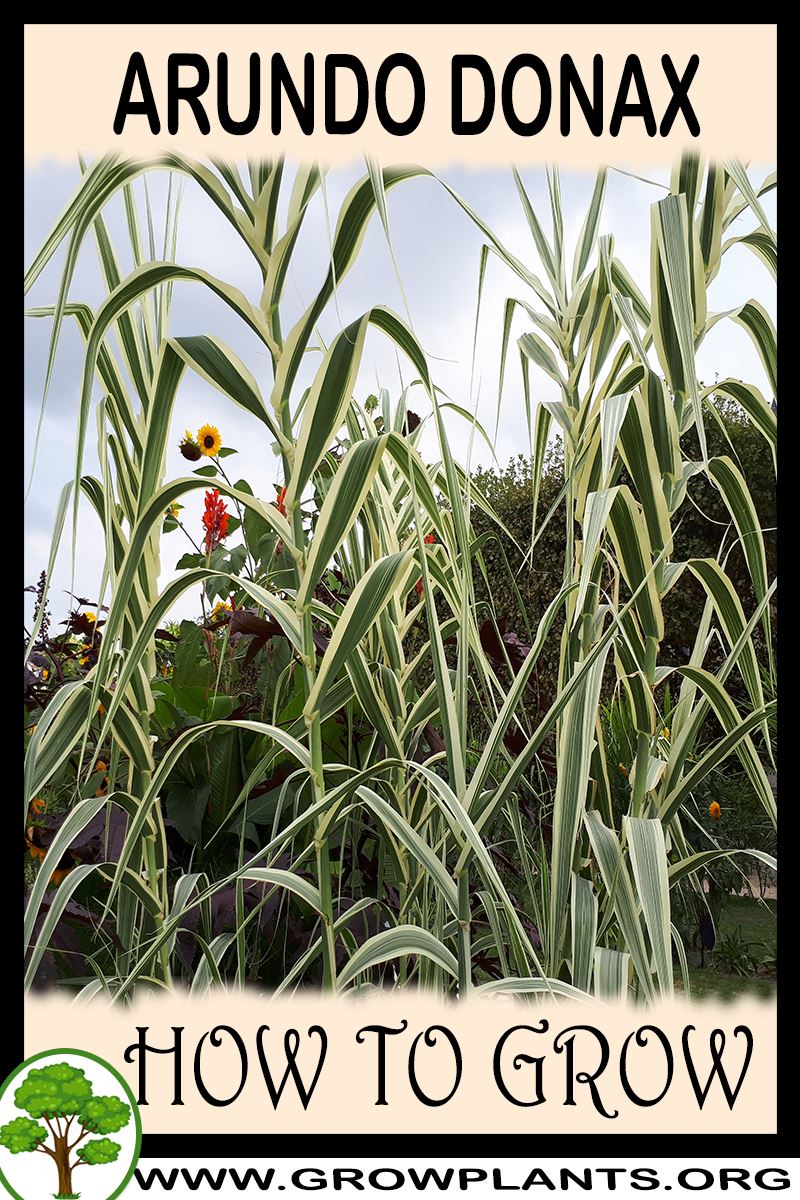
Overview: Arundo donax (giant reed) is an evergreen perennial grass reaching 2-8 m (6-25 ft), grown as a bold ornamental screen or windbreak. It spreads by thick rhizomes and is fast-growing and highly invasive, so it needs to be contained.
Quick Specifications
| Specification | Attribute |
|---|---|
| Plant Type / Life Cycle | Perennial (herbaceous reed grass) |
| Foliage Type | Evergreen (herbaceous) |
| Mature Size | 2-8 m tall (6-25 ft) |
| Growth Rate | Fast |
| Root System | Rhizomatous (spreading, invasive) |
| Hardiness | USDA zones 6-11 |
Growth Form & Structure
- Height & Spread: Reaches 2-8 m (6-25 ft) in the ground; can be grown in planters, which also helps limit its spread.
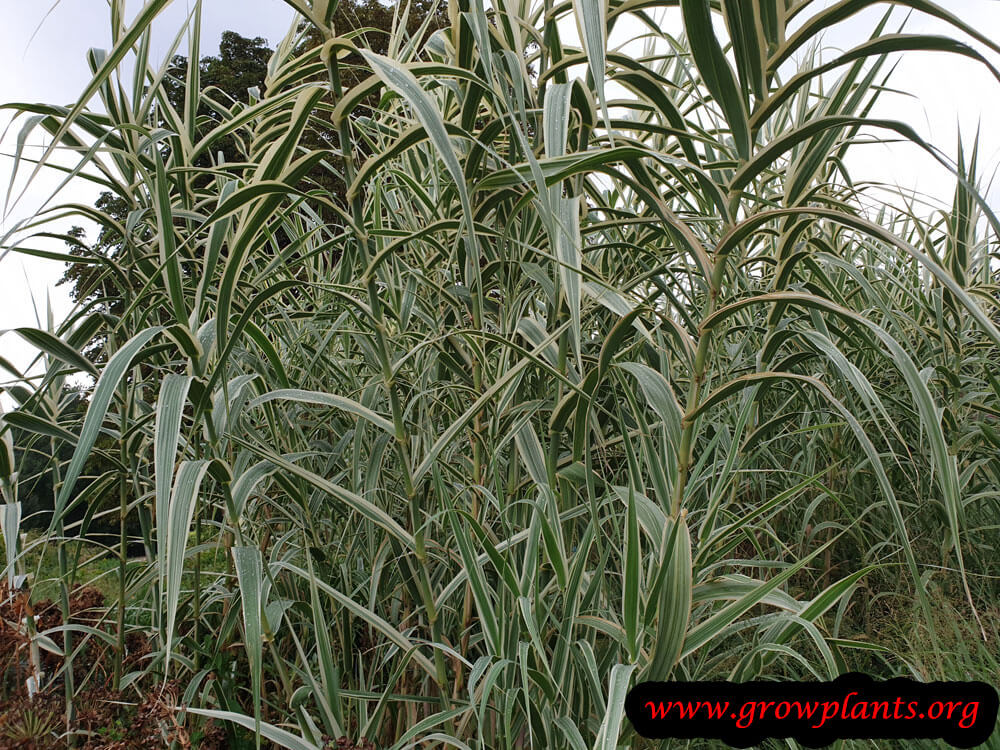
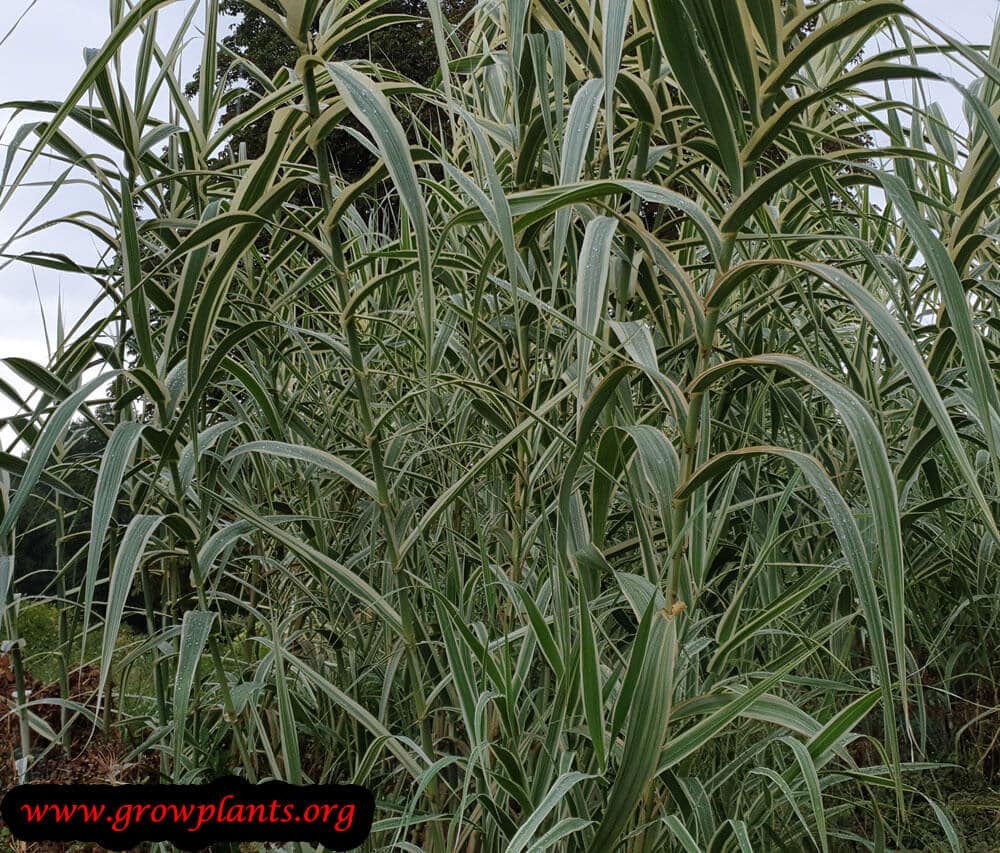
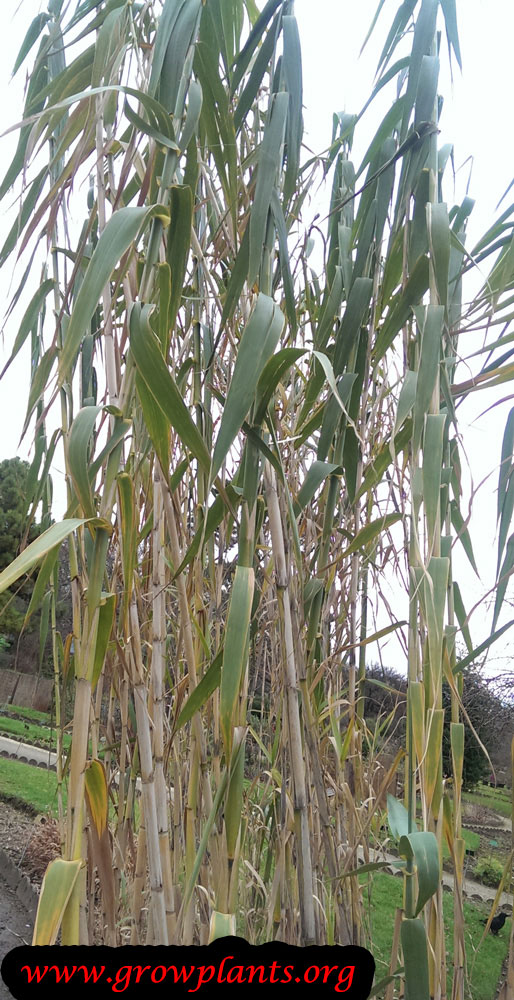
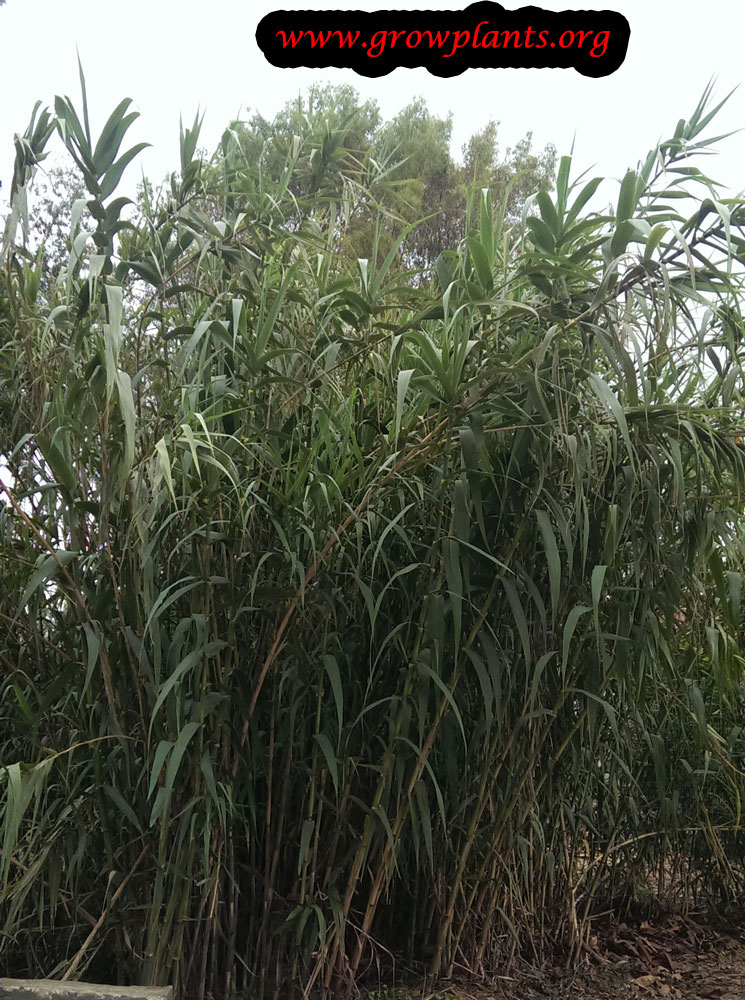
- Growth Habit & Form: Dense, upright clumping-to-running stand of tall bamboo-like canes from a vigorous rhizome; best delimited with a root barrier.
- Lifespan & Maturity: Long-lived and quick to form a tall screen.
Anatomy & Physical Features
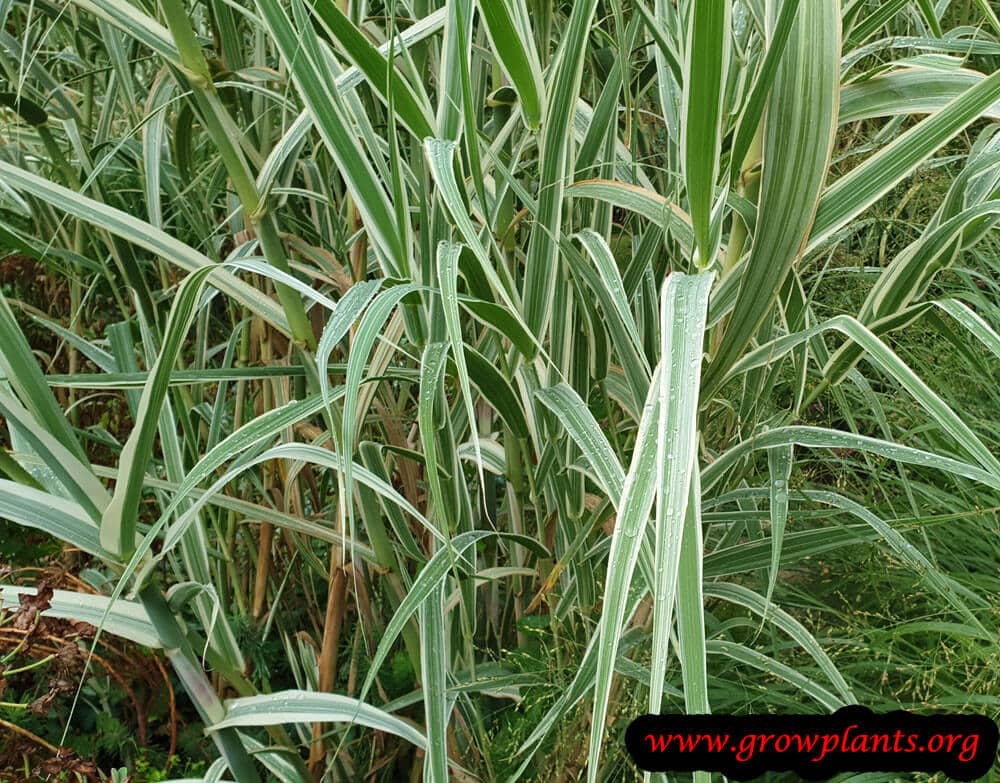
- Leaves & Foliage: Long green leaves 20-50 cm, arranged along the canes, with a rough hairy surface unpleasant to touch.
- Flower Characteristics: Large white feathery (beard-like) plumes in summer.
Primary Uses & Landscape Value
- Functional & Ornamental Roles: Ornamental screening, windbreak and tall accent grass; wet or dry sites, though its invasiveness must be managed.
Care Guide: Planting, Soil & Watering
Overview: Giant cane is an extremely vigorous, grass-like evergreen reed that grows in full sun to part shade and adapts from wet ground to dry. It is undemanding about soil and tolerates a very wide range of moisture.
Quick Care Requirements
| Requirement | Ideal Condition |
|---|---|
| Planting Season | Adaptable – plantable year-round in mild climates |
| Growth Rate | Fast |
| Soil Type | Adaptable – moist to dry, tolerates wet ground |
| Water Need | Low to High – very adaptable, thrives with ample water |
Planting & Establishment
- Best Planting Season: Plant at almost any time of year in its frost-free to temperate range (zone 6-11).
- How to Plant:
- Hole Preparation: Dig a hole matching the rhizome mass, and consider a root barrier because it spreads aggressively.
- Soil Amendments: Little enrichment is needed; it grows in most soils.
- Planting Depth: Set the rhizome at its original depth, level with the soil surface.
- Growth Speed & Expectations: Extremely fast, reaching 2-8 m and forming dense stands in a single season.
Soil, Watering & Drainage Care
- Soil Mix & Drainage Needs: Grows in almost any soil, wet or dry; contain the roots to stop it spreading. In a pot it needs a large, sturdy container.
- Watering Schedule & Technique:
- Young / Newly Planted: Water regularly to establish, especially in dry ground.
- Established: Very adaptable – tolerates both boggy sites and periods of drought once established.
- Seasonal Adjustments: Water more in heat for lush growth; it survives on little in cooler or drier spells.
Climate, Light & Hardiness
Giant reed is a fast, vigorous perennial grass for Mediterranean, temperate and subtropical climates, growing in full sun on both wet and dry ground. Its top growth is frost sensitive, but the tough rhizome is cold-hardy well into temperate zones and resprouts each spring.
Quick Climate Specifications
| Climate Zones | Mediterranean, temperate, subtropical |
|---|---|
| USDA Hardiness Zones | 6–11 (site data) |
| Optimal Temp Range | Approx. 20–35°C (68–95°F) |
| Cold Damage Begins | Foliage and canes at light frost near 0°C (32°F) |
| Approx. Survival Minimum | Rhizomes hardy to roughly −18°C (0°F) in zone 6; top growth dies back well before that |
| Frost Tolerance | Foliage Low; rootstock High |
| Light Conditions | Full sun to half shade |
| Wind Tolerance | Moderate to High |
Sunlight & Light Exposure
Optimal Light Setup
Full sun drives the fastest, tallest cane growth.
Direct Sun Requirement
Direct sun is preferred; half shade slows it but is tolerated.
Shade & Heat Management
No heat protection is needed - it revels in hot summers, especially with ample moisture.
Best Exposure / Orientation
Open, sunny sites, including damp ground and ditch edges, are ideal.
Temperature Extremes & Hardiness
USDA Hardiness & Regional Limits
Site data gives a broad zone 6–11 range. This reflects rhizome cold survival: the canes are warm-season growth, but the underground rootstock persists through cold winters and regrows.
Cold Damage & Winter Protection
Frost browns and kills the current canes and foliage near 0°C (32°F); in colder zones the plant behaves as a die-back perennial, resprouting from the rhizome in spring. A winter mulch protects the rootstock at the cold margin.
Frost Sensitivity
Top growth has low frost tolerance, but the rhizome's high cold hardiness is what allows the wide zone range.
Extreme Heat Tolerance
Excellent; among the most heat- and drought-adaptable large grasses, though it grows fastest with water.
Wind, Humidity & Microclimate
Humidity Preferences
Adaptable to any humidity level.
Dry-Air Tolerance
High, though canes stay lusher in moist air and soil.
Wind Tolerance
Moderate to high; the tall canes flex in wind and form an effective windbreak, but can lodge in severe gusts.
Rainfall & Seasonal Moisture
Adapts from wet ground to seasonally dry soil, matching the wet-winter / dry-summer Mediterranean pattern.
Microclimate Recommendations
Because it is invasive and aggressive, site it where its spread can be contained - along water bodies or with a root barrier.
Growing in Pots, Balconies & Indoors
Giant reed (Arundo donax) is an enormous, fast grass reaching 2-8 m, so it is never an indoor plant. Grow it only in a very large, strong container, which also usefully restrains its aggressively spreading roots.
Quick Details
- Container Size: A very large, strong tub, 40 L (10 gal) or more (general guide)
- Indoor Suitability: Not a houseplant – far too large
- Best Spot: Full sun to half shade
- Soil & Drainage: Any decent mix; it tolerates wet or dry soil
- Watering in Pots: Very adaptable – keep moist for lush growth; it copes with dryness once established
Indoors & On the Windowsill
- Houseplant: No – at up to 8 m it is impossibly large for indoors.
- Windowsill growing: Not applicable.
On a Balcony or Patio
- Light & wind: Give it full sun to part shade; the tall canes act like a sail, so a heavy, sheltered base is essential to stop the pot blowing over. Its height makes a fast screen.
- Practicalities: Very heavy and top-heavy once grown – a container also stops this often-invasive reed escaping into the ground.
Choosing the Pot, Soil & Long-Term Care
- Pot & drainage: A very large, sturdy tub with strong drainage; thin-walled pots can crack as the roots swell.
- Potting mix: Fill with a well-aerated, organic-rich medium – a quality potting mix, or peat/coir blended with perlite or vermiculite for free drainage.
- Feeding: Potted plants use up their soil quickly because watering leaches nutrients away, so feed a little more often than plants in open ground through the growing season.
- Repotting: It fills a pot fast – divide and renew the mix every year or two, and use the container to contain its spread.
Fertilizing & Feeding
A moderate feeder: a nitrogen-forward feeding in spring and light feedings through the warm season keep this grass dense and green, with none during the cool-season rest.
Quick Fertilizing Specs
| Feeding Level | Moderate feeder |
|---|---|
| Main Nutrient Priority | Adequate nitrogen for dense, green, vigorous growth |
| Best Feeding Period | Spring through the warm active growing season |
| Organic Options | Compost and nitrogen-rich organic matter |
| Reduce/Stop Feeding | Stop feeding through the cool-season rest |
| Micronutrients | Usually met by a complete fertilizer; correct only diagnosed issues such as iron chlorosis in alkaline soil |
| Soil pH | Slightly acidic to near neutral; tolerates a range |
Feeding by Growth Stage
Spring flush of new canes
Fuel the vigorous flush of new canes and foliage in spring.
| Nutrient direction | A nitrogen-forward complete fertilizer to drive leafy, vigorous growth. |
|---|---|
| Timing | As new growth and canes emerge in spring. |
| Frequency | A feeding as growth begins, repeated lightly through the flush. |
| Fertilizer types | A nitrogen-forward complete fertilizer, Compost or a nitrogen-rich organic amendment |
| Precautions | This grass grows fast and can spread aggressively; feed for health rather than to push already vigorous growth. |
Warm-season active growth
Maintain dense, green growth through the warm season.
| Nutrient direction | Adequate nitrogen keeps foliage green and canes growing strongly. |
|---|---|
| Timing | Through the warm active growing season. |
| Frequency | Light, periodic feedings during active growth. |
| Fertilizer types | A nitrogen-forward complete fertilizer, A compost top-dressing |
| Precautions | Keep feeding steady but not excessive, and contain the roots if spread is a concern. |
Cool-season rest
Let the clump rest through cool weather.
| Nutrient direction | None – withhold fertilizer while the plant is not in active growth. |
|---|---|
| Timing | During cool-season dormancy or slowed growth. |
| Frequency | No feeding at this stage. |
| Fertilizer types | No feeding at this stage; hold off fertilizing until active growth resumes. |
| Precautions | Do not fertilize during the cool-season rest; wait for spring growth. |
Nutrient Deficiency Signs & Corrections
Older, lower leaves fade to pale green or uniform yellow and overall growth slows.
| Possible causes | low available soil nitrogen, nitrogen leaching from heavy watering or rain, thin, low-organic-matter soil |
|---|---|
| Appears first on | older, lower leaves |
| What to check | recent feeding history, soil organic matter, watering and drainage |
| Possible correction | Apply a nitrogen-containing complete fertilizer and build soil organic matter, then water evenly. |
The youngest leaves turn pale or yellow between green veins while older leaves stay greener.
| Possible causes | high or alkaline soil pH locking up iron, waterlogged or poorly aerated roots, genuinely low available iron |
|---|---|
| Appears first on | new, youngest leaves |
| What to check | soil pH, drainage and root health, whether symptoms favor the newest growth |
| Possible correction | Correct soil pH toward the plant’s preferred range and apply a chelated iron product per its label. |
Leaf margins brown or scorch and growth stalls despite adequate watering.
| Possible causes | fertilizer salt buildup in the root zone, under-watering that concentrates salts, excessive or too-frequent feeding |
|---|---|
| Appears first on | leaf margins and tips |
| What to check | recent fertilizer amounts, watering consistency, drainage, especially in containers |
| Possible correction | Ease off feeding, water thoroughly to flush accumulated salts, then return to lighter feeding. |
Pruning, Training & Seasonal Maintenance
Giant reed is a very tall, fast, invasive cane-forming grass, so its maintenance is cane renewal and rhizome containment, not shaping. Each cane grows to full height in a single season and does not re-extend once cut, so height is controlled by cutting whole canes, and a clump is refreshed by cutting the old canes down in late winter to force a flush of new ones. Because it spreads aggressively by rhizome and by rooting stem fragments, a root barrier and careful disposal of cut material are the real priorities.
Quick Pruning & Maintenance Specs
| Pruning Tolerance | High — annual cut-to-ground is normal |
| Primary Pruning Window | Late winter, before new canes emerge |
| Secondary Maintenance Window | Any time to remove broken or leaning canes |
| Typical Frequency | Annual cut-back plus ongoing containment |
| Main Objective | Renew canes; contain aggressive spread |
| Young Plant Priority | Install a rhizome barrier; let the clump establish |
| Mature Plant Priority | Cut old canes to the base; check rhizome spread |
| Best Tool Type | Loppers and a pruning saw for thick canes |
| Avoid Heavy Pruning During | Mid-season if you need the tall screen that year |
Pruning by Plant Age & Size
Newly Established
The most important early action is not a cut but a barrier: install deep rhizome edging to contain it, then let the clump build.
Young / Formative
No training — canes rise to full height on their own. Simply remove any broken canes and keep the clump within its bounds.
Mature / Established
Each late winter cut all the old canes down close to the ground to trigger a strong flush of fresh canes; thin overcrowded clumps and sever any rhizomes escaping the barrier.
Seasonal Pruning Schedule
Late winter (renewal): cut the whole stand to near ground level before new growth; expect vigorous fresh canes to full height by late summer.
Ongoing sanitary and containment: remove broken or leaning canes and cut back rhizome runners escaping the barrier throughout the season.
Feathery plumes appear on the summer canes, but outside its native range viable seed is rare; spread is overwhelmingly vegetative, by rhizome and rooting fragments, which is why disposal discipline matters more than any flower removal.
Structural Pruning & Training
The only “structure” work is thinning overcrowded canes for a tidier stand and, crucially, containing the rhizome with a physical barrier. Individual canes are not shortened for height — a cut cane simply stays cut, so remove whole canes instead.
Special Growth to Remove
- Old, spent and broken canes: cut at the base.
- Escaping rhizomes: sever and dig out any that breach the barrier — the key to keeping it in bounds.
Container & Small-Space Pruning
Growing it in a large, sturdy container is one of the best ways to enjoy it without the invasion risk. Cut the whole clump back each late winter as in the ground, and never tip fragments into a garden or waterway.
Tools
Loppers handle young canes; a pruning saw (or a powered brush cutter for a big stand) is needed for the thick mature canes. Precision snips and secateurs are too light for this plant.
Tool Hygiene & Disease Risk
Routine for disease — a clean sharp blade suffices. The real hazard is spread: do not leave cut canes or rhizome pieces where fragments can root, and clean plant debris off tools before moving to unaffected ground.
Cut Placement & Technique
Cut canes low, near the base, in a clean pass. There is no bud-direction or collar consideration — this is bulk cane removal, not selective shoot pruning.
Heavy Pruning & Rejuvenation
Fully tolerated and, in fact, the standard maintenance: an annual cut-to-the-ground rejuvenates the stand and keeps it fresh and upright. There is no risk of killing it this way.
Post-Pruning Care
Water if dry to speed the new flush; no feeding is needed — the plant is vigorous by nature. Bag or burn (where permitted) the canes; compost only if you are certain no fragment can regrow.
Common Pruning Mistakes
- Skipping the rhizome barrier — the single biggest error, letting it invade.
- Leaving cut canes or rhizome pieces where they can root and spread.
- Trying to shorten individual canes for height instead of removing whole canes.
When NOT to Prune
Do not cut the stand to the ground in mid-season if you still need it as a screen that year, and avoid disturbing rhizomes in a way that scatters fragments into moist ground.
Recommended Tools (by task)
- loppers — cutting young to medium canes at the base.
- pruning_saw — for thick, hard mature canes.
- garden_spade — to sever and lift escaping rhizomes at the barrier.
Pruning Troubleshooting
| Problem | Possible Cause | What to Check | Corrective Action |
| Spreading well beyond its spot | No rhizome barrier | Rhizomes escaping the clump edge | Install deep edging; sever and dig out escapees |
| New reeds sprouting from clippings | Fragments left to root | Where cut canes were dumped | Bag or destroy cut material; never leave fragments on soil |
| Weak, floppy, congested canes | Overcrowded old stand not renewed | Density of old versus new canes | Cut the whole stand to the ground in late winter to renew |
Propagation Guide
Giant reed is propagated only vegetatively — it rarely produces viable seed and instead spreads by thick rhizomes — so dividing the rhizome or rooting stem (culm) sections at the nodes are the standard, very easy methods. Because the plant is highly invasive, contain the material and dispose of trimmings responsibly.
Quick Propagation Specs
| Best Propagation Method | Rhizome division |
| Alternative Methods | Stem (culm) cuttings |
| Propagation Difficulty | Easy |
| Vegetative True-to-Type | Yes |
| Best Propagation Season | Most of the year in warmth |
| Cutting Rooting Time | A few weeks in warm, moist soil |
Rhizomes, Tubers, Bulbs & Corms
Rhizome Division
Lift a clump and cut the rhizome into sections, each carrying buds or growth points, then replant. This is the quickest, most reliable method and re-establishes fast.
Stem Cuttings
Cutting Type
Sections of cane (culm), each with at least one node.
Cutting Preparation
Lay the cane horizontally, partly buried in moist soil, or start it in water; roots and shoots emerge from the nodes.
Rooting Setup
Keep warm and consistently moist — the plant tolerates wet ground.
Rooting Time
Usually a few weeks under warm, moist conditions.
Containment note: keep new plants confined, as both rhizomes and rooted canes spread aggressively.
Bloom & Flower Guide
Quick Details
- Bloom Season: Summer
- Time to First Bloom: On established clumps (perennial)
- Flower Appearance: Soft, feathery white plumes at the tops of the tall canes
- Edibility: Not eaten – grown as an ornamental screen or accent
Detailed Blooming Overview
Giant reed tops its tall canes with soft, silvery-white feathery plumes in summer. These are ornamental rather than productive – the plant spreads by its roots and rarely sets viable seed.
Flower Characteristics
- Fluffy, beard-like white plumes held above the foliage.
Bloom Care & Pollination
- Pollination: Wind-pollinated, but it seldom produces viable seed and spreads mainly by its roots – it can be invasive, so contain it.
Pests, Diseases & Troubleshooting
Overview: Giant reed (Arundo donax) is one of the most vigorous grasses in cultivation and is remarkably free of pests and diseases in the ordinary garden – so much so that it is a serious invasive weed in many warm regions, and biocontrol insects (arundo scale, arundo wasp) are deliberately released to slow it. For growers the genuine issue is containment, not pest control; occasional aphids, mites, rust or leaf spot are minor and cosmetic.
Quick Troubleshooting Overview
| Issue / Pest | Main Symptom | Primary Solution |
|---|---|---|
| Invasive spread | Dense rhizome colonies swamping ground and waterways | Containment, rhizome barriers, remove seedlings/fragments |
| Aphids | Colonies on new leaves, honeydew | Water jet, beneficials; rarely needed |
| Spider mites | Fine stippling in hot, dry, dusty spots | Hose foliage; usually cosmetic |
| Rust | Yellow-brown pustules on leaves | Remove affected canes; rarely significant |
| Leaf spot | Brown spots/streaks on leaves | Cosmetic; cut old canes |
| Winter dieback | Foliage browns/dies to ground in cold | Cut old canes to base; resprouts vigorously |
Common Pests & Management
- Aphids (Melanaphis, Rhopalosiphum spp.):
- Symptoms: Colonies of small aphids on tender new foliage and cane tips with sticky honeydew; largely cosmetic on such a vigorous plant.
- Prevention & Control: Encourage ladybirds and lacewings and hose off colonies; control is rarely warranted.
- Arundo Scale (Rhizaspidiotus donacis):
- Symptoms: Encrusting scale on rhizomes and cane bases; deliberately introduced as a biocontrol to weaken invasive stands, so its presence is usually welcome rather than a problem.
- Prevention & Control: No control is needed or wanted in a weed-management context; on an ornamental clump, horticultural oil would suppress it if ever desired.
- Spider Mites (Tetranychus spp.):
- Symptoms: Fine pale stippling on leaves in hot, dry, dusty positions; minor and cosmetic.
- Prevention & Control: Hose down foliage and raise humidity; treatment is seldom needed.
- Stem / Leaf Borers (Lepidoptera & the arundo wasp Tetramesa romana):
- Symptoms: Larvae tunnel shoots and cane tips, wilting the growing point; the arundo wasp is another released biocontrol.
- Prevention & Control: Cut out and destroy wilted, bored shoots on ornamental plants; in weed control these borers are beneficial and left alone.
Diseases & Fungal Issues
- Rust (Puccinia spp.):
- Symptoms: Yellow to rusty-brown pustules on leaf blades, mostly late in the season; heavy rust can brown foliage but rarely harms the vigorous plant.
- Treatment & Management: Remove badly affected canes and improve airflow; fungicide is almost never justified on this tough grass.
- Leaf Spot (various fungi):
- Symptoms: Brown spots and streaks on older leaves in humid weather; cosmetic.
- Treatment & Management: Cut down old, tatty canes to refresh the clump; no treatment needed.
Growing Difficulties & Abiotic Problems
- Invasive, Aggressive Spread:
- Cause & Symptoms: Thick, fast-creeping rhizomes and cane fragments that root readily let it form dense monocultures and choke waterways; it is banned or restricted in several regions.
- Correction Strategy: Site it only where it can be contained, install a deep solid rhizome barrier or grow in a large sunken container, and promptly remove strays, fragments and any seedlings. Check whether it is a listed weed locally before planting.
- Winter Dieback:
- Cause & Symptoms: In cold-winter areas the tall canes brown and die back; the rootstock survives and resprouts vigorously.
- Correction Strategy: Cut spent canes to the ground in late winter; the clump regrows strongly. In frost-free areas it stays evergreen.
- Lodging / Wind Throw:
- Cause & Symptoms: Very tall canes can bend or snap in strong wind, especially in rich, over-watered conditions.
- Correction Strategy: Site with some shelter, avoid excessive feeding, and remove damaged canes.
What Helps – Products & Tools
Almost nothing is needed here – a sharp spade and a solid rhizome barrier are the key ‘tools’. If ever wanted, horticultural oil handles scale and mites and a water jet clears aphids, but for giant reed, containment is the whole task.
Varieties & Cultivars
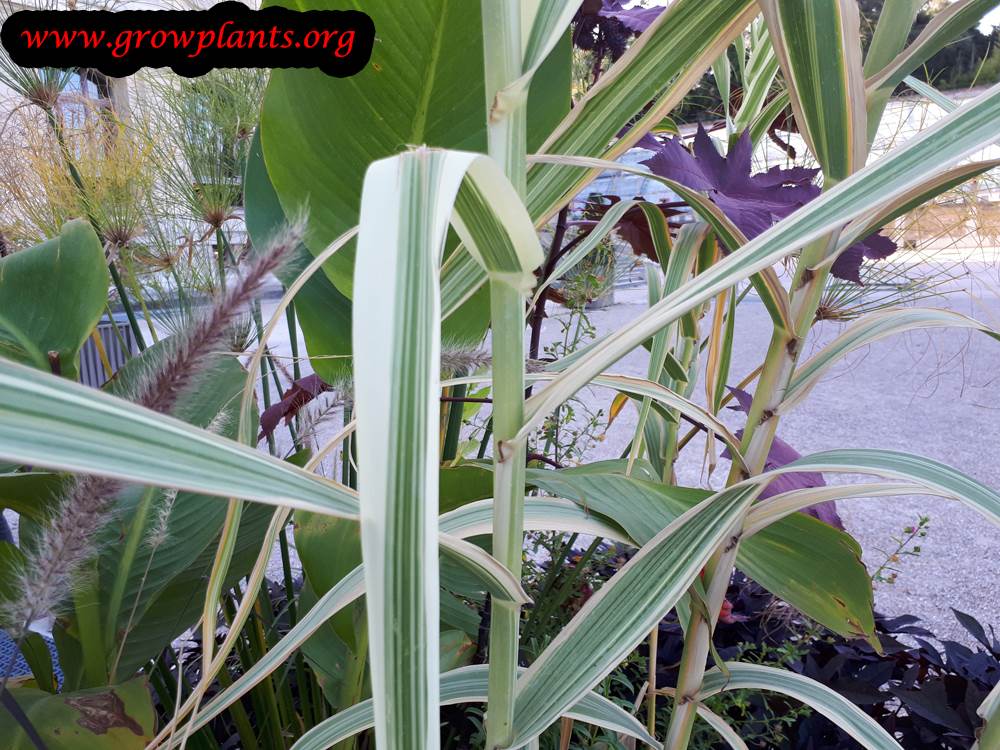
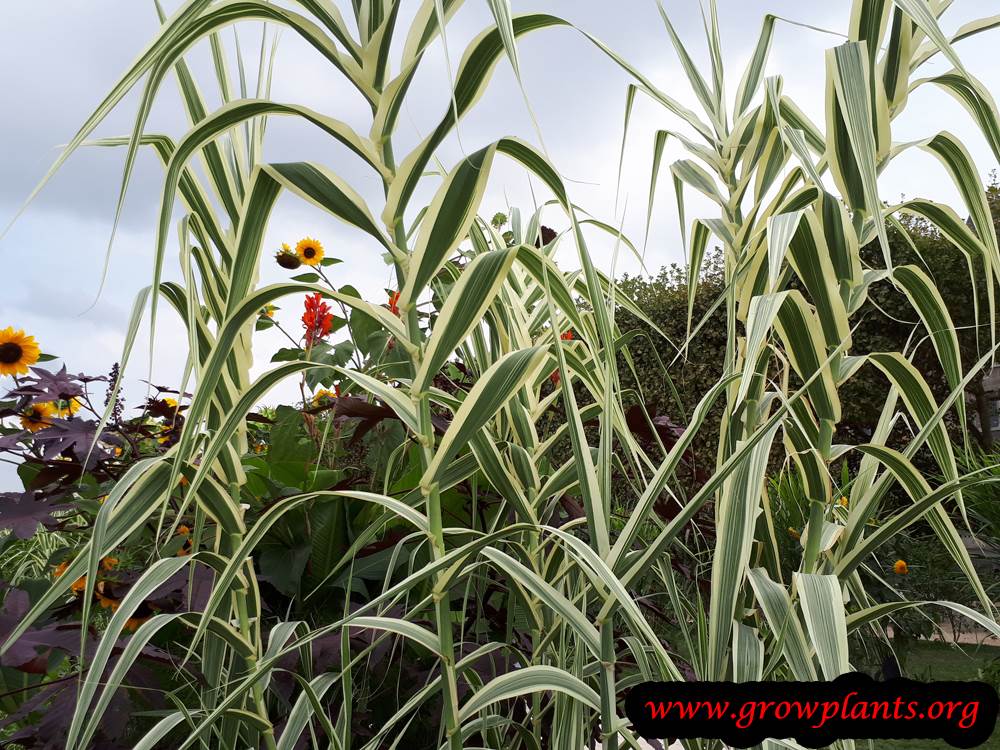
- Arundo donax versicolor — Learn more about Arundo donax versicolor