Plant Profile & Key Characteristics
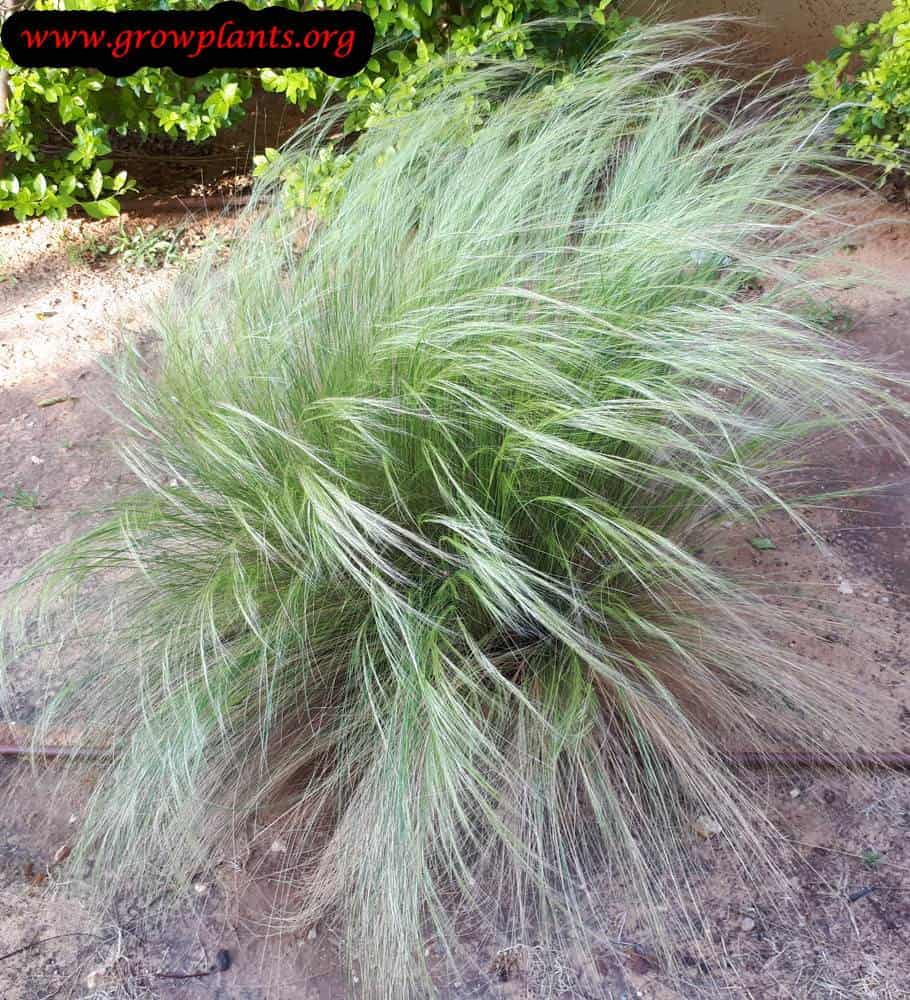
Overview: Nassella tenuissima (Mexican feather grass) is a fine-textured ornamental grass 30-60 cm (12-24 in / 1-2 ft) tall, grown as a perennial or annual for its soft, flowing plumes. Drought tolerant and evergreen in mild areas, it works as a groundcover in Mediterranean, desert, subtropical, temperate and tropical climates.
Quick Specifications
| Specification | Attribute |
|---|---|
| Plant Type / Life Cycle | Perennial (evergreen) in mild zones, grown as an annual where cold |
| Foliage Type | Evergreen (in mild climates) |
| Mature Size | 30-60 cm (12-24 in / 1-2 ft) tall |
| Growth Rate | Moderate to Fast |
| Root System | Fibrous (typical of grasses) |
| Hardiness | USDA zones 8+ as perennial (5-8 as annual) |
Growth Form & Structure
- Height & Spread: Forms a soft tuft 30-60 cm (12-24 in) tall and wide; also grown in containers.
- Growth Habit & Form: Dense, clump-forming ornamental grass with arching, hair-fine foliage.
- Lifespan & Maturity: Fast-establishing short-lived perennial that self-seeds readily.
Anatomy & Physical Features
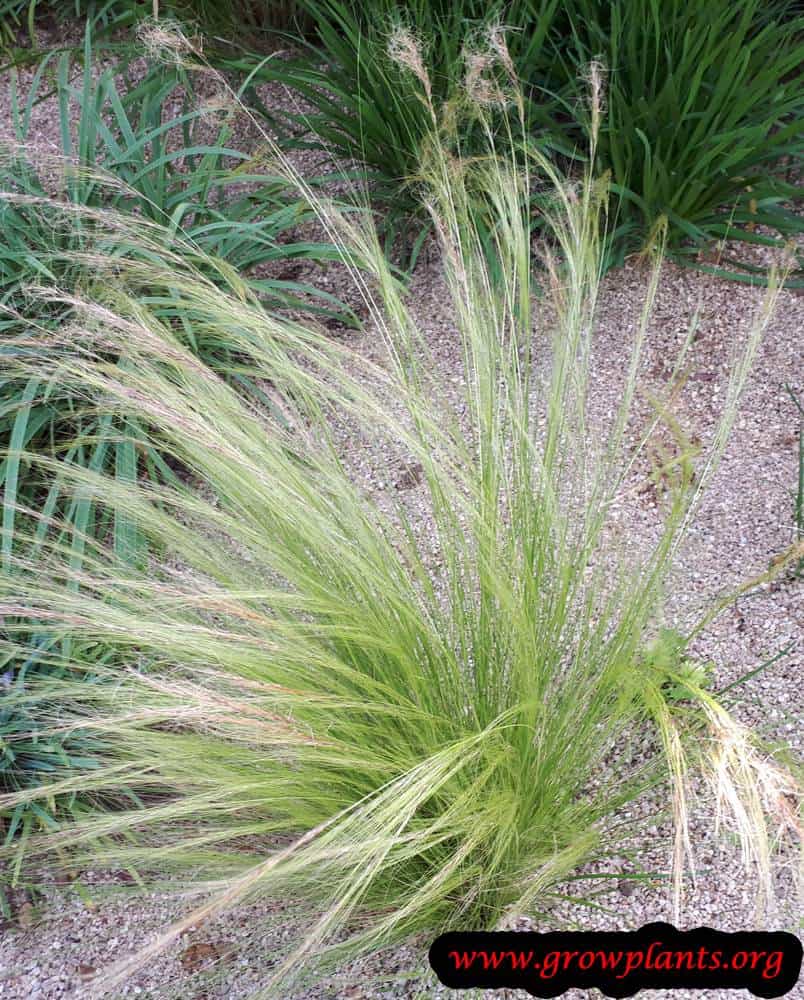
- Leaves & Foliage: Thread-like, needle-fine green leaves that move in the breeze.
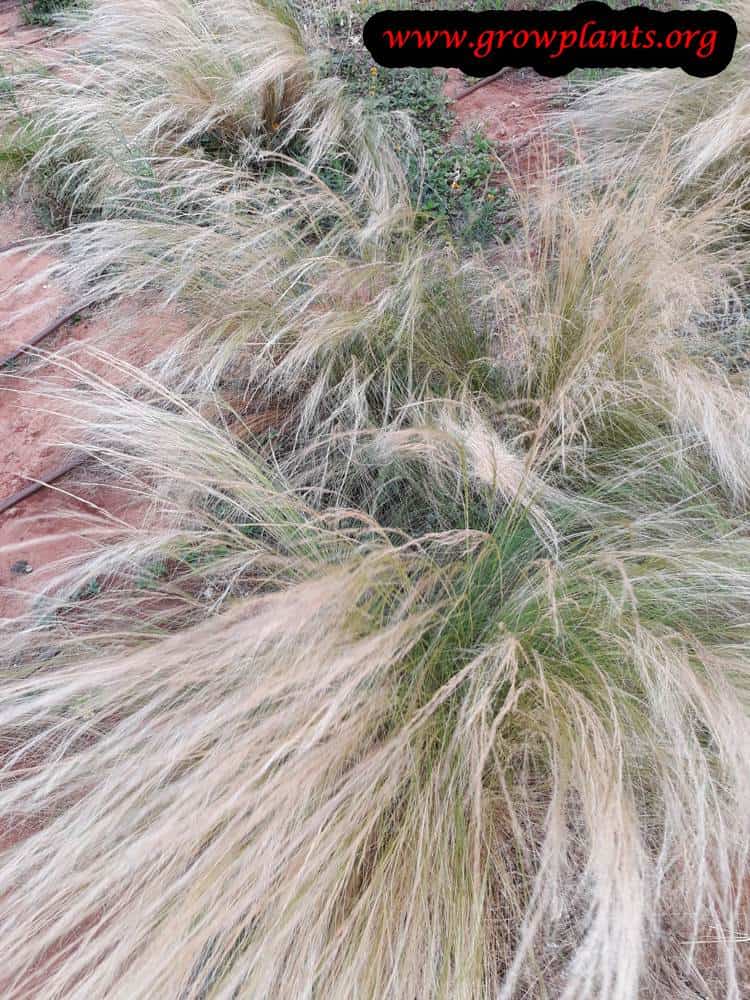
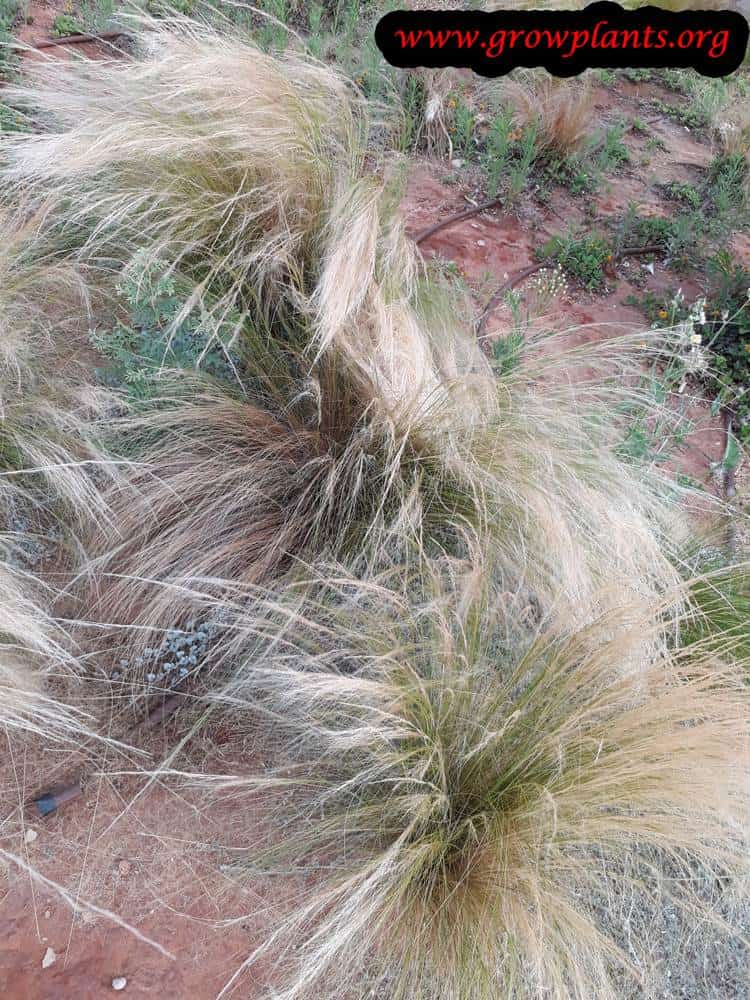
- Flower Characteristics: Feathery yellow-to-white flower plumes in raceme-like heads through the warm season.
Primary Uses & Landscape Value
- Functional & Ornamental Roles: Ornamental and groundcover grass for borders, gravel and drought-tolerant plantings, and containers.
Care Guide: Planting, Soil & Watering
Overview: Mexican feather grass is a drought-tolerant ornamental grass that thrives in lean, sharply drained soil and full sun. It needs only moderate water and, once established, tolerates dry spells well.
Quick Care Requirements
| Requirement | Ideal Condition |
|---|---|
| Planting Season | Spring to summer; spring to autumn where grown as a perennial, and year-round in tropical climates |
| Growth Rate | Fast to moderate |
| Soil Type | Well-drained; tolerant of poor and sandy soils |
| Water Need | Moderate; drought-tolerant once established |
Planting & Establishment
- Best Planting Season: Plant in spring to summer (spring through autumn as a perennial, year-round in the tropics), giving roots warm soil to establish in.
- How to Plant:
- Hole Preparation: Dig a hole slightly wider than the root ball and about the same depth.
- Soil Amendments: Keep it lean – this grass prefers light, well-drained soil and does not need rich feeding; add grit if drainage is poor.
- Planting Depth: Set the crown at soil level; do not bury it.
- Growth Speed & Expectations: Fast to moderate; it self-seeds freely, so remove seed heads if you want to limit its spread.
Soil, Watering & Drainage Care
- Soil Mix & Drainage Needs: Wants sharp drainage and tolerates poor, sandy ground; avoid heavy, waterlogged soil.
- Watering Schedule & Technique:
- Young / Newly Planted: Water regularly to settle the roots in the first season.
- Established: Drought-tolerant – water deeply but occasionally.
- Seasonal Adjustments: Little to no water in winter; a bit more during extreme heat.
Climate, Light & Hardiness
Nassella tenuissima (Mexican feathergrass) is a drought-tolerant ornamental grass suited to a wide range of warm to temperate climates. It performs best in full sun and is hardy as a true perennial in milder zones, with a wider annual range further north.
Quick Climate Specifications
| Climate Zones | Mediterranean, desert, subtropical, temperate, tropic |
|---|---|
| USDA Hardiness Zones | 8+ as a perennial; 5–8 grown as an annual |
| Light Conditions | Full sun; half shade is not recommended |
| Frost Tolerance | Moderate as an established perennial in its hardy range |
Sunlight & Light Exposure
Optimal Light Setup
Full sun is essential for the fine, airy foliage to develop its characteristic golden, wind-swept look; the site notes half shade is best avoided.
Extreme Heat Tolerance
Being drought-tolerant, it copes well with hot, dry summer conditions once established.
Temperature Extremes & Hardiness
USDA Hardiness & Regional Limits
Reliably perennial from zone 8 upward; in zones 5–8 it is usually grown as an annual since winter cold will kill it outright rather than allow it to persist.
Frost Sensitivity
Moderately frost-sensitive – light frost can brown the foliage, and a hard freeze outside its perennial range typically kills the plant.
Wind, Humidity & Microclimate
Dry-Air Tolerance
Well suited to arid and desert conditions, tolerating dry air and low rainfall once established.
Wind Tolerance
High – its fine, flexible blades move naturally in wind, which is part of its ornamental appeal.
Growing in Pots, Balconies & Indoors
Mexican feather grass is a fine-textured ornamental grass, not a houseplant, but its airy plumes look wonderful in a full-sun container on a patio or balcony.
Quick Details
- Container Size: A roomy pot sized to the plant, potting on as it grows
- Indoor Suitability: Not a true houseplant; grows best outdoors
- Best Spot: Full sun (grower notes half shade is not ideal)
- Soil & Drainage: Aerated, organic-rich mix (peat or coir with perlite or vermiculite); must drain freely
- Watering in Pots: Water moderately; it is drought-tolerant once settled and dislikes soggy mix
Indoors & On the Windowsill
- Houseplant limits: As a sun-loving grass it flops and thins in indoor light; it needs strong outdoor sun.
On a Balcony or Patio
- Light & wind: Give it full sun and let the plumes catch the breeze; comb out old growth each year. Walls and paving reflect heat, so pots dry quickly – check moisture often in hot weather.
- A note of caution: It can self-seed freely and is invasive in some regions – deadhead spent plumes if that is a concern where you live.
- Practicalities: Set the pot where drainage runoff won’t stain, and remember a full, wet container is heavy to move.
Choosing the Pot, Soil & Long-Term Care
- Pot & drainage: A container with strong drainage holes and no standing-water saucer, to avoid root rot; terracotta breathes and dries faster, glazed or plastic holds moisture longer.
- Potting mix: A well-aerated, organic-rich mix – peat or coir with perlite or vermiculite.
- Feeding: Potted plants exhaust their soil quickly – feed a little more often, since watering leaches nutrients away.
- Repotting: Refresh the top of the mix each year and pot on every couple of years, trimming the root ball lightly.
Fertilizing & Feeding
Mexican feathergrass is a lean, drought-tolerant ornamental grass that performs best with minimal feeding – a light start at planting is usually all it needs, since rich soil just produces floppy growth and more self-seeding.
Quick Fertilizing Specs
| Feeding Level | light |
|---|---|
| Main Nutrient Priority | Lean feeding to keep the fine-textured clumps upright rather than lush and floppy |
| Best Feeding Period | Establishment in the first growing season; established plants need little to none |
| Reduce/Stop Feeding | Cut back or stop feeding once established, and through winter dormancy |
| Soil pH | Tolerates a wide range in well-drained soil |
| Organic Options | Compost at planting only |
Feeding by Growth Stage
Establishment after planting
Help newly planted Mexican feathergrass develop a deep, drought-tolerant root system.
| Nutrient direction | Light, balanced feeding to support root establishment without pushing lush, floppy top growth. |
|---|---|
| Timing | The first growing season after planting, in spring through autumn. |
| Frequency | A light feeding at planting is usually enough; established plants rarely need more. |
| Fertilizer types | A light, balanced starter fertilizer at planting, Compost worked into the planting hole |
| Precautions | Avoid rich soil or heavy fertilizer, which encourages soft, floppy growth and can make the grass more aggressive and prone to self-seeding. |
Established active growth
Maintain the fine, airy seedhead display and naturally upright, lean form once established.
| Nutrient direction | Minimal supplemental feeding – this drought-tolerant grass performs best in lean soil and rarely needs fertilizer once established. |
|---|---|
| Timing | Through the spring-to-autumn growing season on established plantings. |
| Frequency | Feed sparingly if at all; lean soil keeps the form tight and upright. |
| Fertilizer types | Typically thrives without supplemental fertilizer once established, A very light balanced feeding only if growth looks weak or pale |
| Precautions | Rich soil or extra feeding tends to produce lax, floppy clumps and can increase self-seeding into a weed problem. |
Winter dormancy
Let growth pause through the cold season with no active feeding demand.
| Nutrient direction | None – withhold fertilizer during winter dormancy. |
|---|---|
| Timing | Winter, when growth slows or foliage may brown back in colder zones. |
| Frequency | No feeding at this stage. |
| Fertilizer types | No feeding at this stage; do not fertilize while the grass is dormant. |
| Precautions | Do not fertilize in winter; a light feeding can resume once new spring growth appears. |
Nutrient Deficiency Signs & Corrections
Pale, yellowish overall color and thin growth.
| Possible causes | Nitrogen deficiency in very poor soil, Poor drainage limiting root function, Root-bound container growth |
|---|---|
| Appears first on | Whole clump, especially older blades |
| What to check | Soil fertility history, Drainage, Root crowding in containers |
| Possible correction | Apply a light, balanced fertilizer and correct any drainage or root-crowding problems rather than over-fertilizing. |
Normally upright, fine-textured clumps flop over or lose their tight form.
| Possible causes | Excess nitrogen or overly rich soil, Too much shade, Overwatering |
|---|---|
| Appears first on | Whole clump form |
| What to check | Recent feeding, Sun exposure, Watering frequency |
| Possible correction | Reduce feeding and watering, and confirm the planting site gets enough sun to keep growth compact. |
New growth appears pale yellow while older blades stay green.
| Possible causes | High soil pH limiting iron availability, Waterlogged soil, Root stress |
|---|---|
| Appears first on | Newest blades |
| What to check | Soil pH, Drainage |
| Possible correction | Correct pH and drainage; apply a chelated iron product per its label only if chlorosis persists. |
Pruning, Training & Seasonal Maintenance
Mexican feathergrass is grown for its fine, hair-like foliage and airy seed heads, and it tolerates only one real pruning event: an annual whole-clump cutback to remove old, weathered foliage. There is no framework to shape, so the work is either a hard renewal cut or ongoing deadheading of spent seed stems – the latter matters more than usual here because the source data flags this species as invasive through self-seeding.
Quick Pruning & Maintenance Specs
| Pruning Tolerance | Moderate (as a whole-clump cutback, not selective shaping) |
| Primary Pruning Window | Late winter, just before spring regrowth (delaying past the source’s raw autumn/winter window preserves winter interest and crown protection) |
| Secondary Maintenance Window | Summer, deadheading spent seed heads |
| Typical Frequency | One hard cutback per year, plus as-needed deadheading |
| Main Objective | Remove old/dead blades, refresh the clump, control self-seeding |
| Young Plant Priority | None – let the clump establish undisturbed |
| Mature Plant Priority | Annual whole-tuft renewal cutback |
| Best Tool Type | Hedge/grass shears for the clump; precision snips for spot deadheading |
| Avoid Heavy Pruning During | Active summer growth and while seed heads still provide ornamental display |
Pruning by Plant Age & Size
Newly Established
No cutting beyond removing any blades damaged during transplanting.
Young / Formative
No structural training applies to a tufted grass; light hand-combing to remove dead blades is enough.
Mature / Established
Perform the annual whole-clump cutback. The source’s own guidance names three things to remove each cycle: dead leaves, spent bloom stems, and general size/spread control.
Seasonal Pruning Schedule
| Stage | Objective | Remove | Do Not Remove | Response |
| Dormant / Late Winter | Renew the clump | Cut the whole tuft back hard to a few cm above the crown | The crown itself | Fresh, even spring regrowth from the base |
| Ongoing Sanitary | Tidiness and seeding control | Dead blades; spent flower/seed stems | – | Neater display; reduced self-seeding pressure |
Structural Pruning & Training
Not applicable – there is no woody framework, branching, or canopy to train on a tufted grass.
Special Growth to Remove
- Spent bloom/seed stems – removing these before they shatter is the main lever for limiting self-seeding, which the source flags as a real problem for this species.
- Dead blades generally – thatch buildup dulls the display and can smother the crown.
Container & Small-Space Pruning
Grows well in pots (per source). The same annual cutback applies, and containment in a pot is itself a useful way to blunt the self-seeding spread that’s a documented issue in open ground.
Tools
- Hedge shears or dedicated grass shears for the once-yearly whole-clump cutback – a genuine case for shearing the whole plant, since it’s a uniform tuft rather than selective branches.
- Precision snips for pulling individual dead blades or deadheading through the season.
Tool Hygiene & Disease Risk
Routine – no disease risk is documented for this species; clean, sharp blades are enough to avoid shredding the fine foliage.
Cut Placement & Technique
Cut the whole clump back to a low, even stub a few centimetres above the crown, never into the crown itself. When deadheading, cut individual stems at the base of the flowering stalk.
Heavy Pruning & Rejuvenation
The annual hard cutback is itself the rejuvenation method for this species and is well tolerated – regrowth is fast (fast-to-medium growth per source) and expected within weeks once the growing season resumes.
Post-Pruning Care
Water normally; no feeding needed. The fresh new growth emerges thin and sparse before filling in – don’t mistake it for a failed cutback.
Common Pruning Mistakes
- Cutting back too late in spring, after new growth has already emerged.
- Leaving spent seed heads on too long where the documented self-seeding tendency is a concern.
- Cutting into the crown rather than stopping just above it.
When NOT to Prune
Skip the hard cutback in autumn if winter interest from the seed heads is wanted, and avoid disturbing the crown during waterlogged conditions – well-drained soil is this species’ stated preference.
Recommended Tools (by task)
- hedge_shears – the once-a-year whole-clump renewal cut across a uniform tuft.
- precision_snips – deadheading individual seed stalks through the season to slow self-seeding.
Propagation Guide
Mexican feathergrass is easiest and most commonly grown from seed, which the site confirms is sufficient on its own since vegetative propagation isn’t necessary – in fact this grass self-seeds so readily that it is noted as invasive. Dividing established clumps is a reliable alternative when an exact match to the parent plant is wanted. Overall difficulty: Easy.
Quick Propagation Specs
| Best Propagation Method | Seed |
| Alternative Methods | Division of established clumps |
| Propagation Difficulty | Easy |
| Seed True-to-Type | Usually true-to-type (species) |
| Vegetative True-to-Type | Yes |
| Best Propagation Season | Spring, matching the plant’s spring planting/establishment season |
| Seed Germination Time | Typically 2–4 weeks |
| Germination Temperature | 18–24°C (64–75°F) |
| Seed Sowing Depth | Shallow – surface-sow or barely cover, as this fine grass seed benefits from light |
Growing from Seed
Sowing Season
Spring, or in warm-winter/tropical climates it can be sown over a longer window as the plant grows spring through autumn (or year-round in the tropics).
Sowing Depth & Orientation
Surface-sow or cover only very lightly.
Germination Conditions
Full sun and average moisture; germination can be somewhat uneven.
Germination Time
Generally a few weeks, though timing varies with temperature.
Seedling Care
Because this species self-seeds freely, deadheading spent bloom stems (part of its normal pruning routine) helps control unwanted volunteer seedlings and spread.
Division, Offsets, Pups & Suckers
Established clumps can be lifted and divided into sections, each with its own roots and growth points, in spring before active growth resumes. Replant divisions promptly and keep them consistently watered until re-established.
Bloom & Flower Guide
Quick Details
- Bloom Season: Spring through autumn
- Time to First Bloom: Usually flowers in its first season from a spring start
- Flower Appearance: Fine, silky, feathery plumes in greenish-white to soft gold, held on slender stems
- Edibility: Ornamental only – a grass grown for its plumes, not for eating
Detailed Blooming Overview
Mexican feathergrass is all about movement: the hair-fine flower plumes flow and shimmer in the slightest breeze, opening greenish and maturing to a bleached gold. It flowers over a long stretch from spring into autumn.
Flower Characteristics
- Feathery plumes – the grower likens them to a feather or horse’s tail – in yellow to white tones.
- Very fine textured, giving a soft, flowing look.
Bloom Care & Thinning
- Tidying: Comb out or trim old plumes and foliage to refresh the clump.
- Self-seeding: It seeds itself freely – remove spent plumes before seed drops if you want to limit spread.
- Water: Very drought tolerant once established.
Pests, Diseases & Troubleshooting
Overview: Mexican feather grass (Nassella tenuissima, syn. Stipa tenuissima) is one of the most trouble-free ornamental grasses, virtually never bothered by insects or disease. Its few issues are cultural – rot in soggy soil and, in some regions, aggressive self-seeding. Manage it with good drainage and tidy grooming rather than sprays.
Quick Troubleshooting Overview
| Issue / Pest | Main Symptom | Primary Solution |
|---|---|---|
| Root/crown rot | Center dies out, soggy soil | Sharp drainage; avoid overwatering |
| Rust | Orange-brown pustules on blades | Improve airflow; remove badly rusted foliage |
| Aphids | Rare clusters on soft growth | Hose off; usually needs nothing |
| Self-seeding/invasiveness | Seedlings spreading widely | Cut back seed heads before shedding |
Common Pests & Management
- Aphids (Aphididae):
- Symptoms: Only rarely, small clusters on soft new growth in spring; generally not a problem on this grass.
- Prevention & Control: Almost never needed – a strong water jet or simply tolerating them suffices, as natural predators keep them in check.
- Slugs & snails (Gastropoda):
- Symptoms: Very occasional grazing on young seedlings; established clumps are ignored.
- Prevention & Control: Protect only new plantings with a grit barrier or iron-phosphate bait; mature plants need no action.
Diseases & Fungal Issues
- Rust (Puccinia spp.):
- Symptoms: Occasional orange to brown powdery pustules on the fine blades in humid, crowded conditions.
- Treatment & Management: Space plants for airflow, avoid overhead watering, and comb out or cut back badly affected foliage; fungicide is essentially never warranted.
- Crown rot (Fusarium / Rhizoctonia):
- Symptoms: The center of the clump dies out and rots in wet, heavy soil or with overhead irrigation.
- Treatment & Management: Grow in full sun and sharply drained soil, divide old clumps, and cut water back – the cure is cultural, not chemical.
Growing Difficulties & Abiotic Problems
- Center die-out / flopping:
- Cause & Symptoms: Clumps naturally thin and flop in the center with age or in rich, wet soil.
- Correction Strategy: Comb or cut back hard in the dormant season and divide every few years to renew vigor.
- Overwatering rot:
- Cause & Symptoms: This drought-adapted grass rots if kept constantly moist.
- Correction Strategy: Water only to establish, then treat as drought-tolerant; ensure the crown never sits wet.
- Invasive self-seeding:
- Cause & Symptoms: In mild Mediterranean-type climates it seeds prolifically and can become weedy/invasive.
- Correction Strategy: Shear off the feathery seed heads before they ripen and shed; consider alternatives where it is listed as invasive.
What Helps – Products & Tools
This grass needs essentially no pest products – good drainage, annual grooming/combing, and cutting back seed heads are the real tools; at most an occasional water jet for aphids or grit barrier for slugs on seedlings.