
Plant Profile & Key Characteristics
Overview: Fountain grass (fountain grass (Pennisetum)) is a clump-forming ornamental grass reaching 0.1–4 m (4 in–13 ft), varying by species, grown mainly for its feathery, hair-like flower plumes. It is an evergreen herbaceous perennial (dying back in cold-winter regions), valued as a drought-tolerant ornamental accent (USDA zone 5+).
Quick Specifications
| Specification | Attribute |
|---|---|
| Plant Type / Life Cycle | Herbaceous perennial |
| Foliage Type | Evergreen in mild climates; dies back in cold winters |
| Mature Size | 0.1–4 m (4 in–13 ft), varying by species |
| Growth Rate | Moderate to fast |
| Root System | Fibrous (clump-forming) |
| Toxicity | Non-toxic (ornamental grass; genus includes forage/food species) |
| Hardiness | USDA zone 5+ |
Growth Form & Structure
- Height & Spread: Forms a dense clump reaching 0.1–4 m (4 in–13 ft), varying by species, with flower stems rising above the foliage. Grows well in containers of at least 15–20 L (4–5 gal) for a full, blooming specimen, with division every few years.
- Growth Habit & Form: Clump-forming perennial grass with arching, linear leaves and upright, hair-like flower spikes (raceme inflorescences).
- Lifespan & Maturity: Long-lived perennial that reaches full size within a season or two; benefits from division every few years.
Anatomy & Physical Features
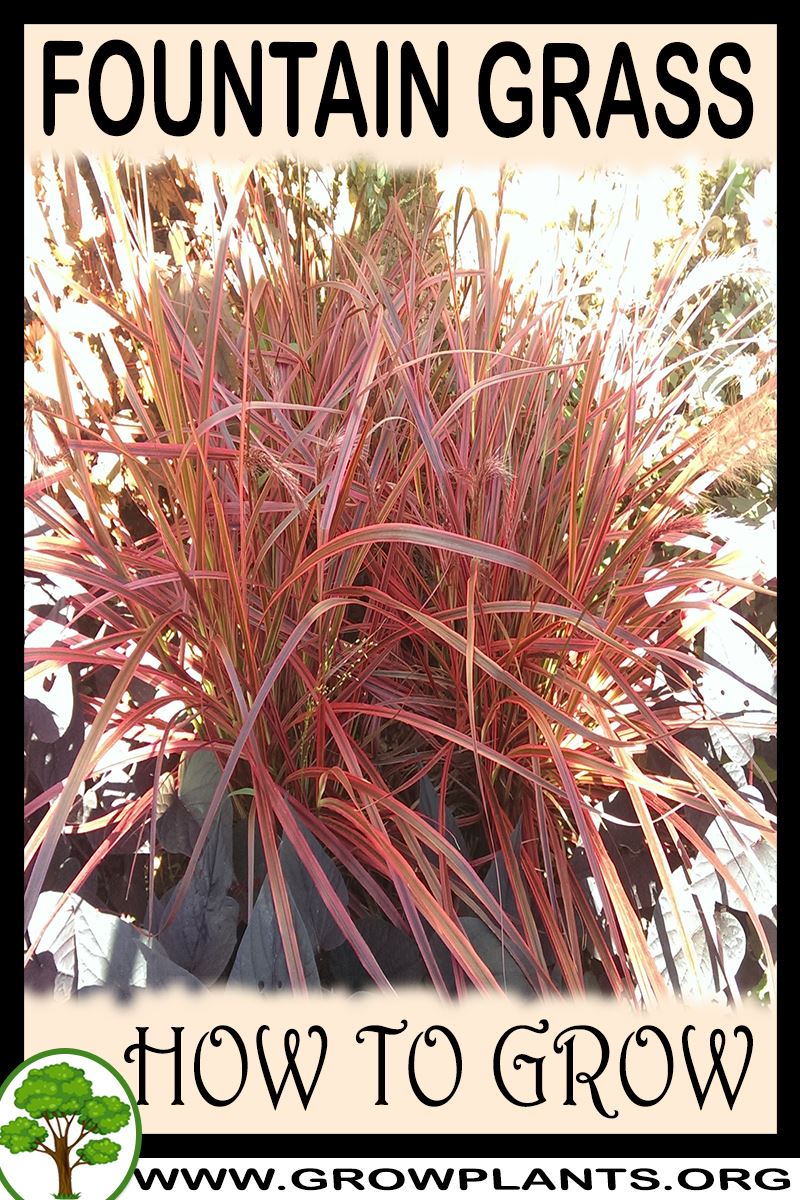
- Leaves & Foliage: Linear, strap-shaped leaves, green, red or purple.
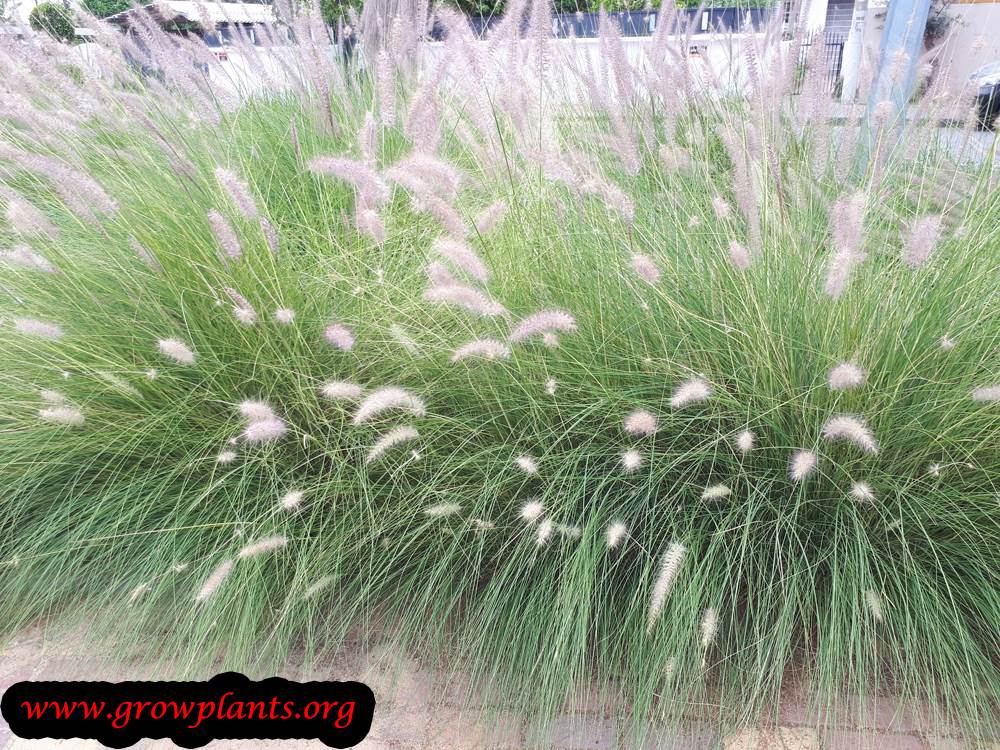
- Flower Characteristics: Feathery, bottlebrush-like plumes, white with a purple hue, borne in raceme inflorescences (full detail in the Bloom guide).
Primary Uses & Landscape Value
- Functional & Ornamental Roles: Ornamental specimen and border grass; drought-tolerant once established; plumes valued for cut and dried flower arrangements. Some fountain grasses self-seed freely and can naturalise; source flags it as invasive/aggressive.
Care Guide: Planting, Soil & Watering
Overview: Fountain grass is a tough, sun-loving ornamental grass that grows best in full sun in well-draining soil enriched with organic matter. It is drought tolerant once established, needing only a small amount of water, though it responds to a little extra moisture around flowering as long as drainage stays sharp.
Quick Care Requirements
| Requirement | Ideal Condition |
|---|---|
| Planting Season | The warm season, timed to your hardiness zone (see below) |
| Growth Rate | Fast to Moderate |
| Soil Type | Well-draining, enriched with organic matter |
| Water Need | Low – drought tolerant; let the soil dry between waterings |
Planting & Establishment
- Best Planting Season: Plant in the warm season: Spring in hardiness zone 5-8b, spring to summer in hardiness zone 9-10a, spring to autumn in hardiness zone 10b-11, and all year in hardiness zone 12 and up.
- How to Plant:
- Hole Preparation: Dig a hole about twice the width of the root ball and the same depth, and loosen the surrounding soil so the clump can root out easily.
- Soil Amendments: Mix plenty of compost or well-rotted organic matter into the planting soil, and add coarse material if drainage is poor.
- Planting Depth: Set the crown level with the soil surface – planting too deep can rot the base of the clump.
- Growth Speed & Expectations: Fast to moderate in warm weather; young clumps fill out quickly, and it helps to protect late-planted or young plants over their first winter.
Soil, Watering & Drainage Care
- Soil Mix & Drainage Needs: Light, free-draining soil is essential; in containers use a quality potting mix. Good drainage prevents root rot, especially when the grass is watered more heavily around flowering.
- Watering Schedule & Technique:
- Young / Newly Planted: Water regularly for the first couple of weeks after planting to help roots establish, keeping the soil lightly moist.
- Established: Once established it needs very little water – water deeply but infrequently, letting the soil dry between waterings.
- Seasonal Adjustments: A little extra water around the flowering season improves the display; cut watering right back in cool weather and winter.
Climate, Light & Hardiness
Fountain Grass is an ornamental grass genus for Mediterranean, desert, subtropical, temperate, and tropical climates that flowers best in full sun. Cold tolerance varies by species within the genus, but the site lists it as hardy from roughly zone 5 upward.
Quick Climate Specifications
| Climate Zones | Mediterranean, Desert, Subtropical, Temperate, Tropical |
| USDA Hardiness Zones | Approximately 5 and warmer (varies by species within the genus) |
| Optimal Temp Range | Approximately 18–29°C (65–85°F) during active growth |
| Frost Tolerance | Varies by species; hardier types are cold-deciduous, tender types are frost-sensitive |
| Light Conditions | Full Sun (tolerates less than half shade, but flowers less) |
Sunlight & Light Exposure
Optimal Light Setup
Full sun brings the best, most abundant flowering plumes.
Direct Sun Requirement
Strongly recommended - while it survives in some shade, flowering drops off noticeably, per the site data.
Shade & Heat Management
No heat management is needed; it thrives in hot, sunny climates.
Best Exposure/Orientation
An open, unobstructed, sunny bed or border.
Temperature Extremes & Hardiness
USDA Hardiness & Regional Limits
The site lists it as hardy from about zone 5 upward, though this spans species with different cold tolerances - the most cold-hardy types die back and regrow from the crown in cold winters, while tender types need frost-free conditions.
Cold Damage & Winter Protection
The site specifically notes that young plants (from seed or late planting) benefit from winter protection, since they haven't yet built the root reserves of an established clump.
Frost Sensitivity
Varies by species; where hardy, top growth dies back with frost and regrows from the crown (bloom season runs all year, except winter in cold climates, per the site).
Extreme Heat Tolerance
Good - it grows well in hot Mediterranean, desert, subtropical, and tropical summers.
Wind, Humidity & Microclimate
Humidity Preferences
Tolerates a wide range of humidity given its adaptability across climates from desert to tropical.
Dry-Air Tolerance
Good - established plants tolerate extended dry periods.
Wind Tolerance
Good; ornamental grasses generally flex well in wind.
Rainfall & Seasonal Moisture
Adapts to a range of rainfall; the site notes it can go without water for long periods but needs more moisture with good drainage during the blooming season.
Microclimate Recommendations
An open, sunny, well-drained site suits it; protect young plants over their first winter in colder zones.
Growing in Pots, Balconies & Indoors
Fountain grass (Pennisetum) is a graceful, full-sun ornamental grass grown for its arching foliage and fluffy flower spikes. It is an outdoor container and border plant rather than a houseplant, and it looks superb spilling from a large pot on a sunny patio or balcony.
Quick Details
- Container Size: From about 5 L (1.5 gal) for a few plants grown together, but 15-20 L (4-5 gal) for a full, free-flowering specimen
- Indoor Suitability: Not a houseplant – a full-sun outdoor grass
- Best Spot: Full sun; it tolerates light shade but flowers less
- Soil & Drainage: Free-draining potting mix; good drainage matters, especially if watered more for flowering
- Watering in Pots: Low and drought-tolerant, but water more through the flowering season – with sharp drainage
Indoors & On the Windowsill
- As a houseplant: No – it needs full sun and open air to grow and flower, so it is not suited to indoor life. Grow it outdoors.
- On a sill: Not a windowsill plant.
On a Balcony or Patio
- Light & wind: Give it full sun; wind animates the plumes beautifully. A large pot dries fast in heat, so water in hot spells – but keep drainage sharp.
- Practicalities: Use a stable pot raised on feet; note that some Pennisetum self-seed, so deadhead if you want to keep it in check.
Choosing the Pot, Soil & Long-Term Care
- Pot & drainage: A roomy pot (15-20 L for a full clump) with strong drainage holes and no standing saucer.
- Potting mix: A free-draining potting mix or something similar.
- Feeding: Feed lightly through the growing season; grasses need little.
Grower’s Container Tip
- Keeping it flowering: Start in about 5 L (1.5 gal) for a few plants grown together, but for an impressive, free-flowering clump give it 15-20 L (4-5 gal). Every few years, check the roots have not filled the pot – if they have, reduce the number of plants and trim the roots, or move up a pot size. After flowering, pull out old plants and cut back leaves and roots to make room for fresh growth; refresh tired soil by washing off the old mix and replacing it with new potting mix.
Fertilizing & Feeding
A moderate feeder for an ornamental grass: fountain grass grows fastest and blooms best in soil enriched with organic matter, and it responds well to feeding worked in ahead of its flowering display.
Quick Fertilizing Specs
| Feeding Level | Moderate feeder |
|---|---|
| Main Nutrient Priority | Balanced feeding paired with organic matter, favoring steady blade growth that supports a strong plume display |
| Best Feeding Period | During active growth, timed ahead of the blooming season |
| Organic Options | Organic matter worked into the soil, which this grass clearly favors over lean, unamended ground |
| Reduce/Stop Feeding | Ease off feeding as blooming finishes and growth slows heading into the dormant season |
| Micronutrients | Rarely needed in organic-matter-enriched soil; treat only a diagnosed issue |
| Soil pH | Adapts to a range of soil; prefers well-drained ground enriched with organic matter |
Feeding by Growth Stage
Spring and summer growth
Build a full clump of foliage in organic-matter-enriched soil ahead of flowering.
| Nutrient direction | A balanced feeding paired with organic matter supports strong blade growth heading toward bloom. |
|---|---|
| Timing | During active growth, timed ahead of the blooming season rather than during it. |
| Frequency | Moderate, occasional feeding through the growing season suits this vigorous grass. |
| Fertilizer types | A balanced fertilizer worked into the soil during active growth, Organic matter or compost added to enrich the planting site |
| Precautions | Time feeding to active growth ahead of bloom rather than late in the season; feeding too late favors leafy growth over a strong plume display. |
Flowering
Sustain the hairy, plume-like flower spikes through their display.
| Nutrient direction | Feeding needs are minimal once flowering is underway; the plant is drawing on growth built up beforehand. |
|---|---|
| Timing | Through the flowering display, which can continue over an extended period in warm climates. |
| Frequency | Feeding is rarely needed while the plumes are on display. |
| Fertilizer types | A very diluted balanced fertilizer only if growth clearly continues alongside flowering |
| Precautions | Avoid pushing extra feeding during bloom; it favors leafy growth over the flower display and offers little benefit to the current plumes. |
Dormant season
Let the clump rest through its dormant or cold season without pushing new growth.
| Nutrient direction | None – withhold fertilizer while the plant is dormant or growth has stopped for the season. |
|---|---|
| Timing | Through the cold season where the plant goes dormant, or whenever growth otherwise stalls. |
| Frequency | No feeding at this stage. |
| Fertilizer types | No feeding at this stage; do not fertilize until active growth resumes. |
| Precautions | Do not fertilize during dormancy; unused nutrients simply build up as salts in the soil. |
Nutrient Deficiency Signs & Corrections
Blades look pale or yellow-green overall and the clump fills in slowly during the growing season.
| Possible causes | low available nitrogen in soil that lacks organic matter, nutrients leaching away with routine watering, root stress limiting nutrient uptake |
|---|---|
| Appears first on | older, lower blades |
| What to check | feeding history, soil organic matter content, root and base condition |
| Possible correction | Give a balanced feeding during active growth and work organic matter into the soil. |
New blades emerge pale yellow while older blades stay green.
| Possible causes | high soil pH tying up available iron, compacted or waterlogged soil limiting root uptake, alkaline irrigation water affecting nutrient availability |
|---|---|
| Appears first on | newest blades |
| What to check | soil or water pH, drainage and root health, recent soil amendments |
| Possible correction | Improve drainage and check pH first; apply a chelated iron product per its label only if the pattern persists. |
Blade tips and margins scorch or brown and flower spikes come smaller or fewer than expected.
| Possible causes | low potassium relative to nitrogen in recent feeding, an imbalanced or overly diluted feeding routine, soil that lacks organic matter and supplies little potassium on its own |
|---|---|
| Appears first on | older blade margins |
| What to check | recent fertilizer balance, soil organic matter content, overall plant vigor |
| Possible correction | Shift to a balanced feeding timed ahead of bloom rather than a nitrogen-heavy one late in the season. |
Pruning, Training & Seasonal Maintenance
“Fountain grass” covers many ornamental Pennisetum species and cultivars, ranging from small 30cm edging grasses to large 4m clumps, and from cold-hardy deciduous types to frost-tender evergreen ones – so the right pruning approach depends on which kind is actually planted. The general rule across the genus: these are grown for their arching foliage and hair-like flower plumes, they tolerate a hard annual (or periodic) cutback well, and the safest timing is tied to the plant’s own dormancy pattern rather than a fixed date.
Quick Pruning & Maintenance Specs
| Pruning Tolerance | High, for the whole-clump cutback |
| Primary Pruning Window | Cold-hardy/deciduous types: late winter, before new blades emerge. Frost-free/evergreen types: no fixed window – periodic renewal as growth tires |
| Typical Frequency | Annual (deciduous types) to occasional (evergreen types) |
| Main Objective | Remove tired or dried foliage and renew a fresh, fountain-shaped clump |
| Mature Plant Priority | Whole-clump cutback or renewal thinning; divide overgrown/hollow-centered clumps |
| Best Tool Type | Hedge shears (whole-clump cutback) / garden spade (division) |
| Avoid Heavy Pruning During | Once new-season growth has started emerging from the crown |
Pruning by Plant Age & Size
Newly Established
No cutback in the first season; remove only damaged blades while the clump roots in.
Young / Formative
No structural training – these grasses build clump size and shape on their own; formative pruning is limited to removing damaged growth.
Mature / Established
Deciduous, cold-climate types get an annual hard cutback once foliage browns off for winter. Evergreen, frost-free types are renewed periodically – cut back or comb out old foliage when the clump looks tired, and divide any clump that has thinned or gone hollow in the center.
Seasonal Pruning Schedule
Dormant/Winter
For cold-hardy, winter-dormant Pennisetum: cut the whole clump back to a few inches above the crown before new growth starts. Do not cut into the crown itself. This season’s flower plumes come entirely from new growth produced after the cutback, so timing does not cost a bloom.
Ongoing Sanitary
For frost-free, evergreen Pennisetum without a hard winter dormancy: remove dead or ragged blades and spent flower stems as they appear, since there is no single natural cutback trigger.
Special Growth to Remove
- Dried or browned-off foliage, at the seasonal or periodic cutback.
- Spent flower plumes, once past their display value.
Container & Small-Space Pruning
Smaller cultivars suit containers well; give the same seasonal or periodic cutback, scaled down, and watch for the clump becoming root-bound over time.
Tools
Hedge shears for a uniform whole-clump cutback; garden spade for lifting and dividing an overgrown clump.
Tool Hygiene & Disease Risk
Routine: a clean, sharp blade is sufficient; no major transmissible disease is documented across the genus.
Cut Placement & Technique
Shear the clump evenly a few inches above the crown; avoid cutting into the crown itself, which can kill growing points.
Heavy Pruning & Rejuvenation
The seasonal or periodic hard cutback is itself the expected renewal and is well tolerated across the genus. Divide clumps that have thinned or died out in the center rather than repeatedly cutting back a declining clump.
Post-Pruning Care
Water normally after cutback; established plantings generally don’t need a fertilizer push to recover.
Common Pruning Mistakes
- Applying one fixed calendar date to every Pennisetum regardless of whether the specific type is winter-dormant or evergreen.
- Cutting into the crown rather than stopping a few inches above it.
- Shearing after new-season growth has already started, disfiguring fresh blades.
When NOT to Prune
Avoid cutting back once new-season growth has started emerging from the crown, for any type. For evergreen/frost-tender types, avoid a hard cutback right before a cold snap they aren’t adapted to handle leafless.
Recommended Tools (by task)
- hedge_shears – for the uniform seasonal or periodic whole-clump cutback.
- garden_spade – for dividing an overgrown or hollow-centered clump.
Propagation Guide
Fountain grass (Pennisetum) is easiest to start from a divided daughter plant rather than from seed, though seed is a fully viable alternative for the species type. Overall it is an easy, forgiving grass to propagate.
Quick Propagation Specs
| Best Propagation Method | Division of daughter plants |
| Alternative Methods | Seed |
| Propagation Difficulty | Easy |
| Seed True-to-Type | Usually true-to-type for the species; cultivar-dependent for named selections |
| Vegetative True-to-Type | Yes |
| Best Propagation Season | Spring to summer in hardiness zone 8-11; possible all year in zone 12+ |
| Seed Germination Time | 2-8 weeks |
| Seed Sowing Depth | 0.5-1 cm (0.25-0.5 in) |
Growing from Seed
Seed Handling & Viability
Store seed in a dry, dark place; site guidance recommends refrigerating it before sowing.
Sowing Season
Spring to summer in hardiness zone 8-11; can be sown year-round in zone 12+.
Sowing Depth & Orientation
Sow 0.5-1 cm (0.25-0.5 in) deep in a sunny, well-drained site. In nursery rows or trays, space seedlings roughly 20×30 cm (8×12 in) apart.
Germination Conditions
Moist soil with light humidity; keep evenly moist without overwatering.
Germination Time
2-8 weeks.
Seedling Care
Full sun with regular watering, keeping the soil consistently moist.
Division, Offsets, Pups & Suckers
Divide a full-grown clump into daughter plants. Water the soil well beforehand so it separates easily and the roots can be kept as long and intact as possible. After separating, increase watering for at least the first two weeks – ideally continuing the extra water until the first new leaf appears, which confirms the division has taken.
Bloom & Flower Guide
Quick Details
- Bloom Season: Through the warm months – in mild climates almost year-round, pausing only in cold winters
- Flower Appearance: Soft, hair-like plumes, white flushed with purple, arching above the foliage
- Edibility: Grown as an ornamental grass; the flower plumes are decorative, not a food
Detailed Blooming Overview
Fountain grass is grown for exactly this moment: fluffy, bottlebrush-like flower spikes that rise on arching stems and catch the light and the breeze. The plumes are white with a purple hue and appear over a long season, lasting well as a cut flower too. As a grass its flowers are wind-pollinated rather than insect-pollinated. Do give it room, as it can seed around and become invasive in warm climates.
Flower Characteristics
- Colour is white with a purple hue.
- Fine, hair-like flowers gathered into a soft, arching plume (a raceme-like spike).
- Held above the linear green, red or purple leaves.
Bloom Care & Thinning
- Best display: Grow in full sun and, if you can, feed lightly before the flowering season; in shade it flowers far less.
- Managing the bloom: Cut back old flower stems and foliage – tidying is easiest in winter – and remove spent plumes if you want to limit self-seeding.
Pests, Diseases & Troubleshooting
Overview: Fountain grasses are ornamental (or forage) grasses that are genuinely among the most trouble-free plants in the garden – insect pests are few and usually minor, and the real risks are fungal rusts and leaf spots in humid, crowded conditions and crown/root rot in wet, poorly drained or over-watered soil. Management is almost entirely cultural: full sun, sharp drainage, airflow, and an annual clean-up of old foliage. Reach for products only in the rare event of rust or a grub outbreak.
Quick Troubleshooting Overview
| Issue / Pest | Main Symptom | Primary Solution |
|---|---|---|
| Rust | Orange-brown powdery pustules on blades | Airflow, avoid wet foliage, remove infected leaves |
| Leaf spot / blight | Brown/purple spots or streaks on blades | Improve drainage & airflow, reduce nitrogen |
| Crown / root rot | Rotted, mushy base; clump collapses | Sharp drainage, avoid overwatering, don’t bury crown |
| Aphids / mealybugs | Honeydew, sticky blades, insects at base | Water jet, conserve predators, oil/soap if heavy |
| White grubs (root feeders) | Patches yellow and pull up easily | Encourage predators; beneficial nematodes if severe |
| Self-seeding / spread | Seedlings or runners colonising beds | Cut seedheads before shed; contain or remove volunteers |
Common Pests & Management
- Aphids (Aphididae (e.g. Rhopalosiphum spp.)):
- Symptoms: Occasional colonies on soft blades and flowering stems, with sticky honeydew and sooty mould; rarely more than a nuisance on grasses.
- Prevention & Control: Dislodge with a water jet; conserve ladybirds, lacewings and hoverflies; avoid excess nitrogen. Insecticidal soap only in the rare case of a heavy build-up.
- Mealybugs / scale (Pseudococcidae / Coccidae):
- Symptoms: Cottony masses or small scales hidden low among the leaf sheaths at the crown, with honeydew; uncommon and usually mild.
- Prevention & Control: Part the clump and hose out infestations; conserve natural enemies; a horticultural oil drench of the crown for persistent cases.
- Two-spotted spider mite (Tetranychus urticae):
- Symptoms: Fine stippling and dull, bronzed blades with faint webbing in prolonged hot, dry, dusty conditions.
- Prevention & Control: Keep the plant unstressed and hose foliage in dry spells; conserve predatory mites; horticultural oil rarely needed.
- White grubs / root-feeding larvae (Scarabaeidae larvae):
- Symptoms: Patches of the clump or turf that yellow, thin and lift easily because roots have been chewed below the surface; more relevant in lawn/pasture settings.
- Prevention & Control: Maintain vigorous roots with sound watering and feeding; encourage birds and predatory insects; apply entomopathogenic (beneficial) nematodes to moist soil for damaging populations.
- Armyworm / cutworm caterpillars (Noctuidae larvae):
- Symptoms: Sudden chewing and ragged, notched blades from night-feeding caterpillars during periodic outbreaks, mainly in warm regions and turf.
- Prevention & Control: Encourage birds and parasitic wasps; hand-pick where practical; apply Bacillus thuringiensis (Bt) to young larvae for heavy outbreaks.
Diseases & Fungal Issues
- Rust (Puccinia spp.):
- Symptoms: Raised orange to reddish-brown powdery pustules scattered along the leaf blades and sheaths, sometimes with yellowing; worst in humid, crowded, shaded or overhead-watered plantings. The most likely disease of fountain grasses.
- Treatment & Management: Grow in full sun with good spacing and air movement; avoid overhead watering and keep foliage dry; remove and destroy badly rusted foliage and the annual old growth; divide congested clumps. A sulfur or suitable fungicide is only warranted where rust is severe and recurrent.
- Leaf spot & blight (Bipolaris / Drechslera / Curvularia spp.):
- Symptoms: Brown, purple or tan spots, streaks and blotches on blades that may coalesce and blight leaves in warm, wet, humid weather or with excess nitrogen.
- Treatment & Management: Improve drainage and airflow; avoid overhead irrigation and high-nitrogen feeding; clear debris and old foliage; a fungicide is rarely needed for these mostly cosmetic spots.
- Crown & root rot (Fusarium / Rhizoctonia / Pythium spp.):
- Symptoms: Rotting, browning and softening at the base of the clump, with collapse and death, in wet, cold, compacted or over-watered soil – the main way fountain grasses are lost.
- Treatment & Management: Plant in free-draining soil in full sun and never bury the crown; avoid waterlogging and winter wet; divide and replant congested crowns; discard rotted plants and improve drainage before replanting.
- Head smut (Ustilago / Sporisorium spp.):
- Symptoms: Flower heads or blades replaced by masses of dark, sooty spores in affected plants; sporadic and mostly cosmetic in ornamentals.
- Treatment & Management: Remove and destroy smutted heads and plants; avoid saving seed from infected stands; sound sanitation is usually enough.
Growing Difficulties & Abiotic Problems
- Crown rot from overwatering / winter wet:
- Cause & Symptoms: Fountain grasses hate ‘wet feet’; saturated or poorly drained soil, especially over a cold dormant season, rots the crown and kills the clump.
- Correction Strategy: Plant in sharply drained soil in full sun; water established plants sparingly; avoid heavy mulch piled against the crown; in wet-winter climates ensure drainage or grow in raised beds/containers.
- Flopping / lodging:
- Cause & Symptoms: Too much shade, over-rich soil or excess nitrogen produces weak, leggy growth that splays open, and clumps go bare in the centre with age.
- Correction Strategy: Grow in full sun and lean-to-moderate fertility; avoid high nitrogen; divide and replant every few years to rejuvenate tired, hollow clumps.
- Self-seeding & invasiveness:
- Cause & Symptoms: Several fountain grasses (notably P. setaceum) seed prolifically and can escape to become weedy or invasive in warm climates.
- Correction Strategy: Cut and remove seedheads before they shed; choose sterile or non-invasive cultivars; remove volunteer seedlings; check local regulations before planting where the species is restricted.
- Leaf yellowing / chlorosis:
- Cause & Symptoms: Nutrient shortage on poor soils or waterlogging yellows blades; grasses generally need little feeding.
- Correction Strategy: Give a light balanced feed if genuinely deficient; correct drainage; avoid over-fertilising, which weakens the plant and invites disease.
- Frost & dormancy browning:
- Cause & Symptoms: Warm-season fountain grasses brown off and go dormant in cold weather; tender types can be killed by hard frost.
- Correction Strategy: Leave the dormant foliage for winter interest and cut back to the base before new spring growth; grow tender species as annuals or lift/protect them in cold climates.
What Helps – Products & Tools
Fountain grasses need very little: cultural care – full sun, sharp drainage, airflow and an annual cut-back – prevents almost everything. On the rare occasion, use a water jet or insecticidal soap for aphids, horticultural (neem) oil for mealybugs, beneficial nematodes for root grubs, and Bacillus thuringiensis (Bt) for caterpillar outbreaks. A sulfur or suitable fungicide is reserved for stubborn rust. The best ‘tool’ of all is good drainage, which prevents the crown rot that actually kills these grasses.