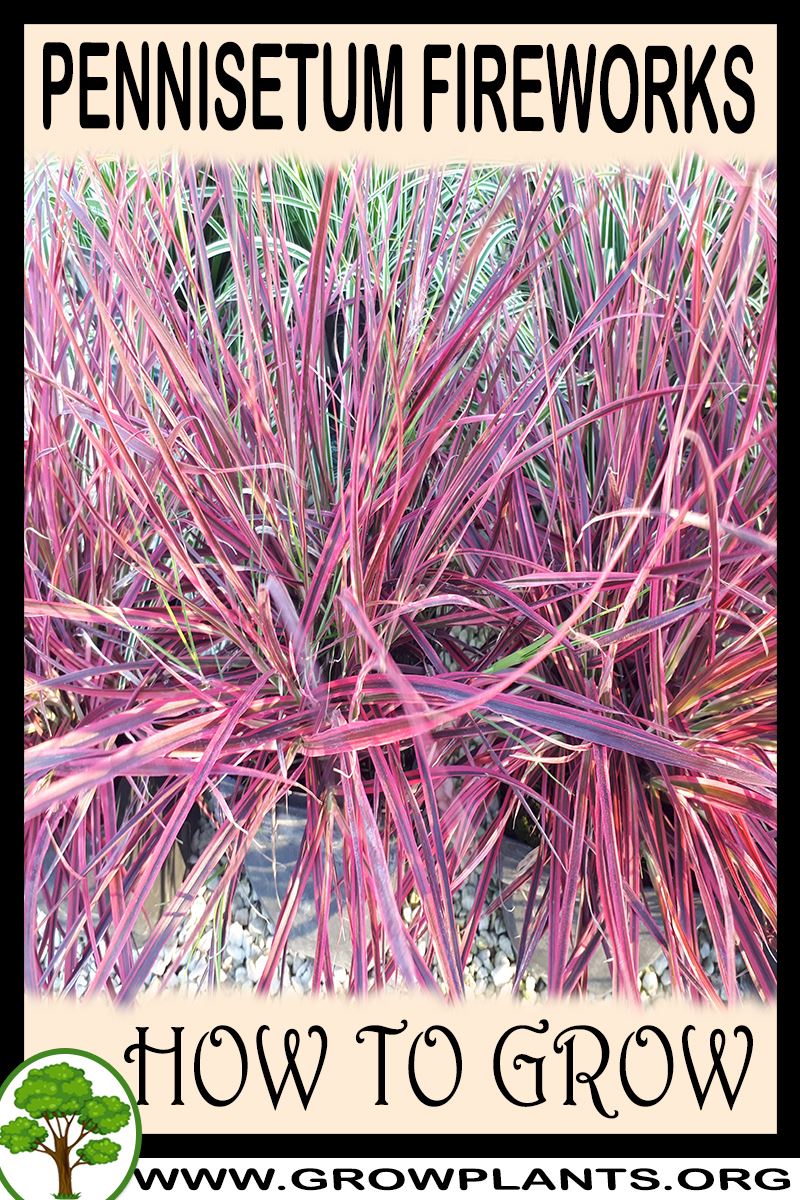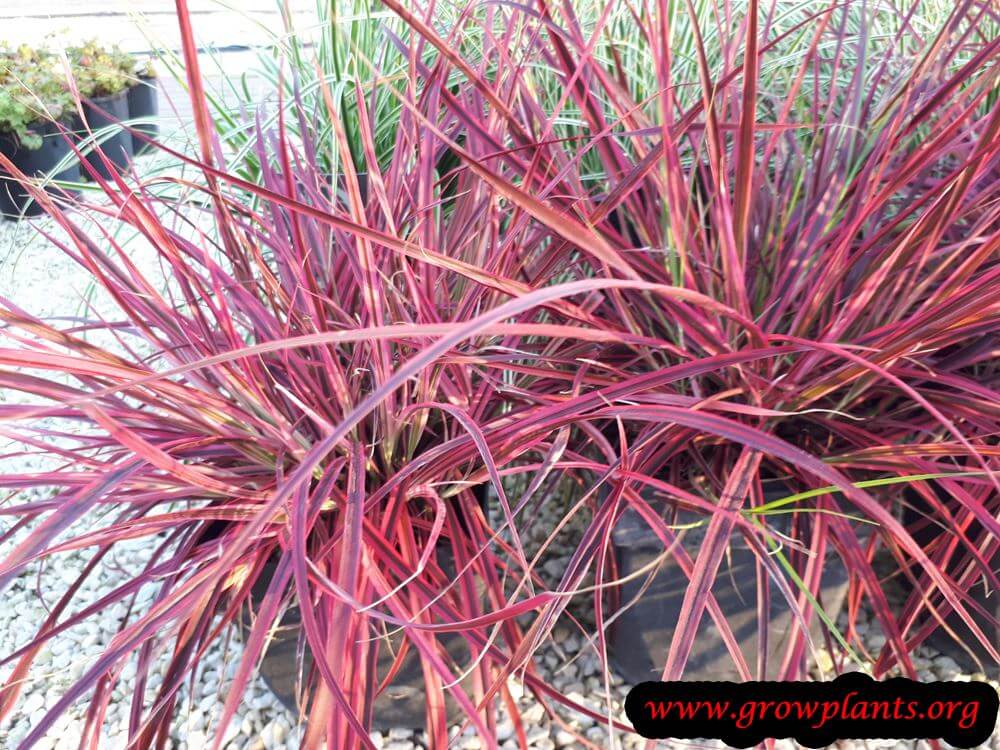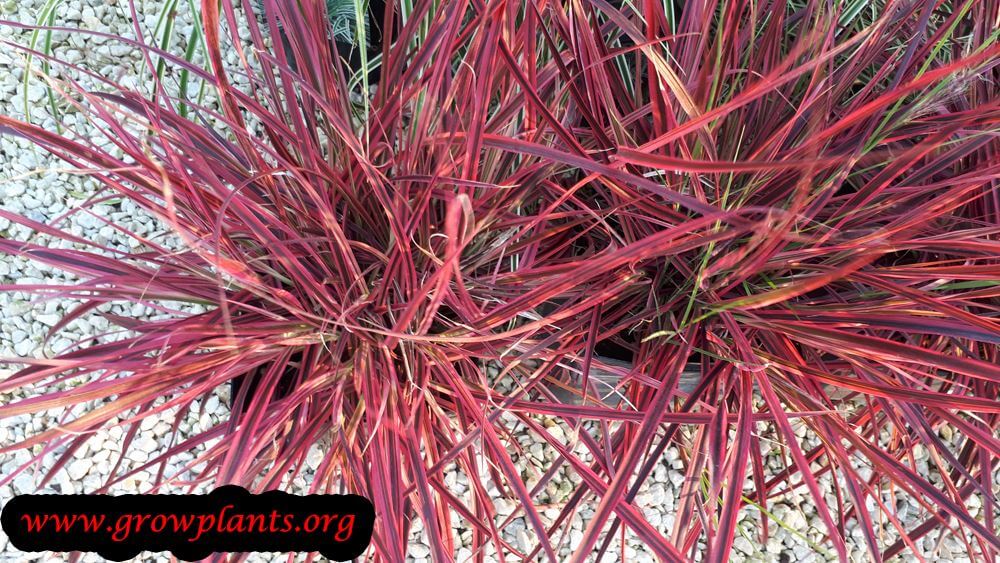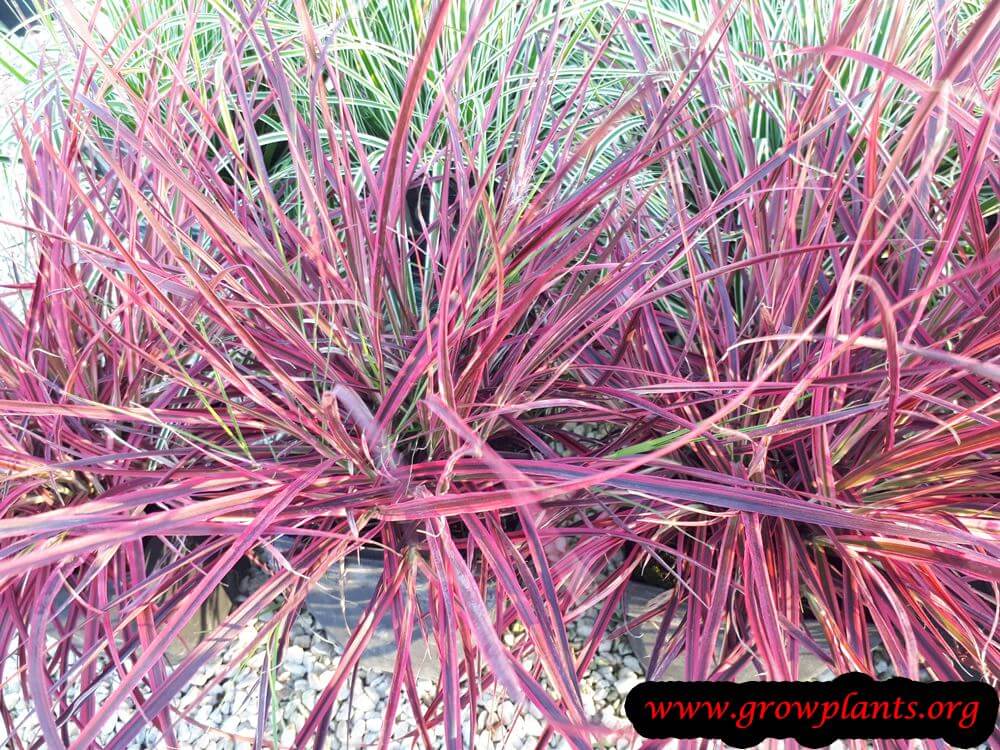
Plant Profile & Key Characteristics
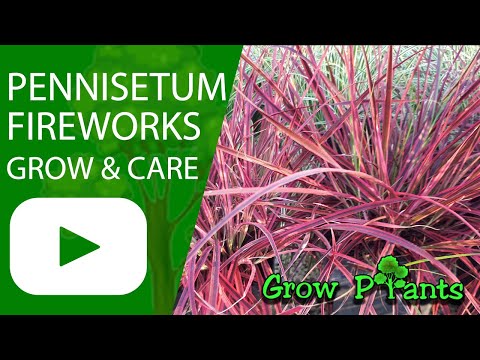
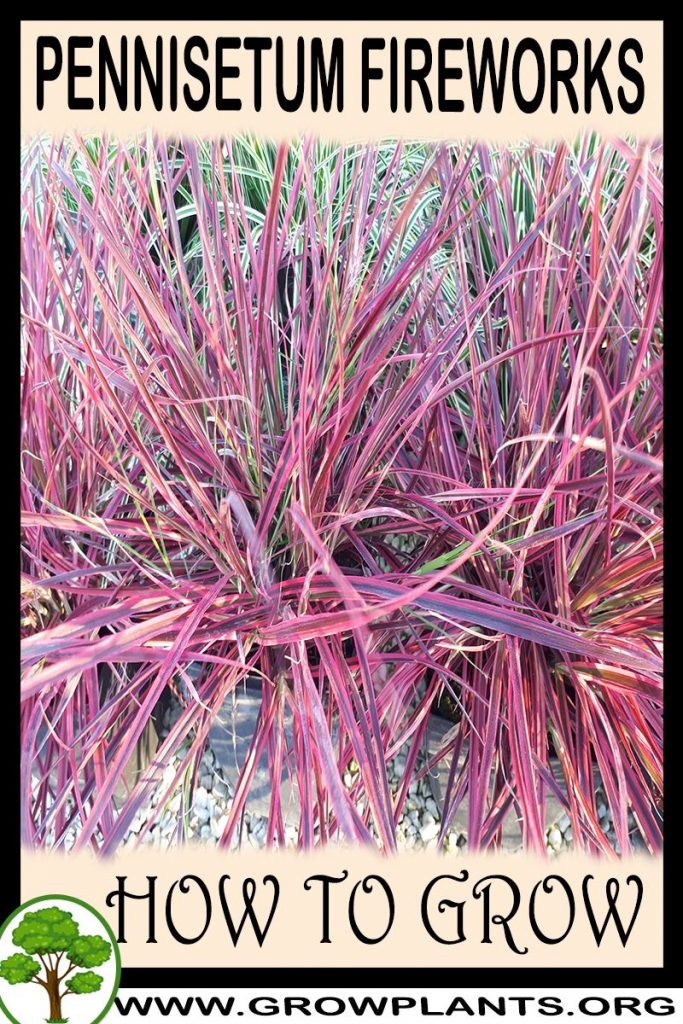
Overview: A striking evergreen fountain grass grown for its burgundy-red, arching foliage, reaching about 0.7-1.2 m (2.5-4 ft) tall. It is used purely as an ornamental, valued equally for its coloured blades and feathery flowering plumes.
Quick Specifications
| Specification | Attribute |
|---|---|
| Plant Type / Life Cycle | Herbaceous perennial grass |
| Foliage Type | Evergreen (in mild climates) |
| Mature Size | 0.7-1.2 m (2.5-4 ft) tall, similar spread |
| Growth Rate | Fast to moderate |
| Root System | Fibrous (dense clump-forming grass roots) |
| Toxicity | Non-toxic — fountain grass is listed as non-toxic to cats and dogs |
| Hardiness | USDA zones 8 and warmer |
Growth Form & Structure
- Height & Spread: In the ground it forms a rounded clump 0.7-1.2 m (2.5-4 ft) high and wide; in a container start at about 5 L for a small group but allow 15-20 L (4-5 gal) for a full, free-flowering specimen.
- Growth Habit & Form: A tufted, clump-forming grass with a fountain-like arching habit; the coloured blades spill outward and slender flower stems rise above the mound.
- Lifespan & Maturity: A vigorous perennial reaching full size in a season or two; treated as an annual in colder zones and best managed where its self-seeding can be controlled.
Anatomy & Physical Features
- Leaves & Foliage: Narrow, linear blades 30-50 cm long in rich red to purple, forming a fine-textured arching mound.
- Flower Characteristics: Soft, hair-like plumes, white flushed with purple, held in raceme-like spikes above the foliage.
Primary Uses & Landscape Value
- Functional & Ornamental Roles: A dramatic accent and mass-planting grass for colour, movement and texture, excellent in large containers; plumes are attractive for cut and dried arrangements.
Care Guide: Planting, Soil & Watering
Overview: Pennisetum ‘Fireworks’ is a tough, sun-loving ornamental grass that grows best in full sun in well-draining soil enriched with organic matter. It is drought tolerant once established, needing only a small amount of water, though it responds to a little extra moisture around flowering as long as drainage stays sharp.
Quick Care Requirements
| Requirement | Ideal Condition |
|---|---|
| Planting Season | The warm season, timed to your hardiness zone (see below) |
| Growth Rate | Fast to Moderate |
| Soil Type | Well-draining, enriched with organic matter |
| Water Need | Low – drought tolerant; let the soil dry between waterings |
Planting & Establishment
- Best Planting Season: Plant in the warm season: Spring in hardiness zone 8, spring to summer in hardiness zone 9-10a, spring to autumn in hardiness zone 10b-11, and all year in hardiness zone 12 and up.
- How to Plant:
- Hole Preparation: Dig a hole about twice the width of the root ball and the same depth, and loosen the surrounding soil so the clump can root out easily.
- Soil Amendments: Mix plenty of compost or well-rotted organic matter into the planting soil, and add coarse material if drainage is poor.
- Planting Depth: Set the crown level with the soil surface – planting too deep can rot the base of the clump.
- Growth Speed & Expectations: Fast to moderate in warm weather; young clumps fill out quickly, and it helps to protect late-planted or young plants over their first winter.
Soil, Watering & Drainage Care
- Soil Mix & Drainage Needs: Light, free-draining soil is essential; in containers use a quality potting mix. Good drainage prevents root rot, especially when the grass is watered more heavily around flowering.
- Watering Schedule & Technique:
- Young / Newly Planted: Water regularly for the first couple of weeks after planting to help roots establish, keeping the soil lightly moist.
- Established: Once established it needs very little water – water deeply but infrequently, letting the soil dry between waterings.
- Seasonal Adjustments: A little extra water around the flowering season improves the display; cut watering right back in cool weather and winter.
Climate, Light & Hardiness
Pennisetum Fireworks (Pennisetum setaceum var. rubrum) is a sun-loving ornamental grass adapted to a wide range of warm and temperate climates. It is root-hardy into cooler areas but performs best, and stays evergreen, only where winters remain mild.
Quick Climate Specifications
| Climate Zones | Mediterranean, Desert, Subtropical, Temperate, Tropical |
|---|---|
| USDA Hardiness Zones | 8+ |
| Frost Tolerance | Moderate (established plants); Low (young plants) |
| Light Conditions | Full Sun (tolerates Half Shade, with reduced flowering) |
Sunlight & Light Exposure
Optimal Light Setup
Full sun brings out the best foliage color and the most flower plumes.
Shade & Heat Management
Tolerates less than half shade reasonably well, but expect noticeably fewer flower plumes than in full sun.
Best Exposure & Orientation
An open, unshaded bed or border gives the strongest overall performance.
Temperature Extremes & Hardiness
USDA Hardiness & Regional Limits
Root-hardy to USDA zone 8+. In the cooler part of its range the foliage typically dies back to the ground over winter and regrows in spring, while in warm Mediterranean, subtropical, and tropical climates it stays evergreen year-round.
Cold Damage & Winter Protection
Young plants - whether from seed or planted late in the season - are noticeably more cold-sensitive than established clumps and benefit from winter protection until settled in.
Frost Sensitivity
Established plants generally tolerate winter frost at the root level even where top growth is killed back; young or newly planted specimens are at greater risk and should be protected.
Extreme Heat Tolerance
Very good; it grows across desert, Mediterranean, and tropical climates and handles high summer heat without difficulty.
Wind, Humidity & Microclimate
Microclimate Recommendations
In the coldest parts of its hardiness range, a sheltered spot or a mulch layer over the crown for winter helps protect the roots and encourages reliable spring regrowth.
Growing in Pots, Balconies & Indoors
Purple fountain grass is a showy, full-sun ornamental grass grown for its burgundy foliage and plumes. The grower says it is not a houseplant – it needs open sun and air movement – but it is a superb container plant for a sunny balcony or patio, where a good-sized pot gives an impressive, flowering display.
Quick Details
- Container Size: From 5 L (1.5 gal) for a few plants together, but 15-20 L (4-5 gal) for an impressive, well-flowering specimen
- Indoor Suitability: Not an indoor plant – it needs full sun and open air that a room cannot provide
- Best Spot: Full sun for best plumes; it grows in light shade but flowers less
- Soil & Drainage: Potting mix or similar, free-draining; it copes with lean conditions
- Watering in Pots: Small amounts suffice and it tolerates long dry spells; it responds to more water (especially when flowering) but then needs good drainage
Indoors & On the Windowsill
- Not a houseplant: The grower says no. Fountain grass needs full sun, open air, and the movement of a breeze to look its best – a room interior leaves it weak and floppy.
- Why a sill will not do: Even a sunny window rarely gives enough light and airflow for a vigorous grass; this one belongs outdoors.
- Overwintering: In cold climates the red form is tender – lift the pot into a bright, frost-free spot and keep it barely watered until warmth returns, or treat it as an annual.
On a Balcony or Patio
- Light & wind: Give it the sunniest, most open spot; it actually loves the movement of wind, which shows off the arching plumes. Walls and paving reflect heat, so check the pot often in summer.
- Practicalities: A big, well-flowering clump is heavy and top-heavy – use a stable, weighted pot with free drainage runoff.
Choosing the Pot, Soil & Long-Term Care
- Pot & drainage: A roomy pot with strong drainage holes and no standing-water saucer; extra water only works with sharp drainage.
- Potting mix: Potting mix or similar, free-draining; nothing special is needed.
- Feeding: Feed modestly through the growing season for lush foliage and good plumes – potted grasses leach nutrients.
- Refreshing the mix: Every few years check the soil is still viable and replace it if not, washing off the old soil and repotting into fresh mix.
Grower’s Container Tip
- Managing the clump (grower’s method): To keep it flowering over the years, check that the roots have not filled the whole planter. If they have, reduce the number of plants and cut the roots, or move up to a bigger container. Pull out old plants after they have flowered, prune the leaves and roots to thin the clump, and let fresh roots grow.
Fertilizing & Feeding
An ornamental grass grown mainly for its colorful foliage and plumes; it grows well with modest feeding and organic matter rather than a rich, heavy fertilizing routine.
Quick Fertilizing Specs
| Feeding Level | Light to moderate – a fast grower that still does well on modest feeding |
|---|---|
| Main Nutrient Priority | A balanced feed to support both colorful foliage and plume production |
| Best Feeding Period | Early in the growing season as new growth resumes, especially after a hard cutback |
| Organic Options | Working organic matter or compost into the bed supports steady growth without pushing weak, floppy foliage |
Feeding by Growth Stage
Establishment
Help a newly planted or divided clump build a strong root system before focusing on top growth
| Nutrient direction | A balanced feed alongside worked-in organic matter to encourage steady rooting |
|---|---|
| Timing | The first growing season after planting or dividing |
| Frequency | Light, occasional feeding through the first season is enough to support establishment |
| Fertilizer types | Balanced granular or liquid feed, Compost or well-aged organic matter worked into the soil |
| Precautions | Avoid heavy feeding right after planting, which can push weak top growth before roots are established |
Active Growth and Plume Production
Support vigorous colorful foliage and the development of flowering plumes through the growing season
| Nutrient direction | A balanced feed, favoring steady growth over a single heavy application |
|---|---|
| Timing | Through the main warm growing season, ideally timed ahead of the plant’s natural bloom period |
| Frequency | A light seasonal feeding is generally enough; established clumps often do fine with minimal feeding |
| Fertilizer types | Balanced granular or liquid feed, Organic matter worked in at the start of the season |
| Precautions | Over-feeding, especially with a nitrogen-heavy product, can produce floppy foliage and fewer plumes |
Cool-Season Rest
Let the clump slow down naturally without pushing new growth going into cooler weather
| Nutrient direction | None – withhold fertilizer as growth slows for the season |
|---|---|
| Timing | Cooler months when active growth visibly stops |
| Frequency | No feeding at this stage |
| Fertilizer types | No feeding at this stage – resume only once active growth restarts |
| Precautions | Do not fertilize going into the cool season; new soft growth is more vulnerable to cold damage |
Nutrient Deficiency Signs & Corrections
Foliage color fades toward green instead of the plant’s normal deep red or purple tone
| Possible causes | Insufficient light reducing pigment development, Nutrient-depleted soil after several seasons without feeding or organic matter, Overly wet, poorly drained soil stressing the root system |
|---|---|
| Appears first on | New foliage across the clump |
| What to check | Hours of direct sun the planting receives, Soil drainage and moisture retention, How long since the bed was last fed or amended |
| Possible correction | Confirm the planting gets adequate sun, then work in organic matter or apply a light balanced feed early in the growing season |
Foliage grows tall and floppy, flopping open instead of holding an upright fountain form
| Possible causes | Excess nitrogen pushing soft, weak growth, Too much shade weakening stem strength, Overcrowding or an overgrown, root-bound clump needing division |
|---|---|
| Appears first on | Whole-clump growth habit |
| What to check | Recent feeding type and amount, Sun exposure across the planting, Time since the clump was last divided |
| Possible correction | Reduce nitrogen-heavy feeding, confirm adequate sun, and divide an overcrowded clump at the appropriate season |
Few or no flowering plumes form despite otherwise healthy foliage
| Possible causes | Insufficient light, since flowering is reduced in shadier spots, Nutrient imbalance from heavy nitrogen feeding at the expense of overall plant balance, Late-season stress from drought or poor establishment |
|---|---|
| Appears first on | Whole-plant flowering response |
| What to check | Sun exposure, since partial shade reduces flowering, Feeding history and fertilizer type used, Watering consistency through the growing season |
| Possible correction | Improve sun exposure where possible and keep feeding balanced rather than nitrogen-heavy to support plume formation |
Pruning, Training & Seasonal Maintenance
Pennisetum fireworks (red fountain grass) is a fast-to-medium growing, clump-forming ornamental grass that tolerates hard, whole-clump cutting back. Its main pruning objective is annual rejuvenation of the red-purple foliage color and form, plus controlling self-seeding, and the safest window is late winter to very early spring, just before new growth resumes, while old, weather-worn leaves are still present but the coming flush has not yet started. Cutting back does not sacrifice flowering the way it would on a woody shrub – new plumes are produced on the fresh season’s growth regardless of how hard the clump was cut.
Quick Pruning & Maintenance Specs
| Pruning Tolerance | High |
| Primary Pruning Window | Late winter / pre-spring (whole-clump cutback) |
| Secondary Maintenance Window | Any time, for deadheading spent plumes and damaged blades |
| Typical Frequency | One hard cutback per year, plus occasional deadheading |
| Main Objective | Remove the prior season’s tattered/frost-marked foliage, refresh color, limit self-seeding |
| Young Plant Priority | Minimal cutting the first season; protect over winter in marginal zones rather than prune hard |
| Mature Plant Priority | Annual whole-clump cutback plus deadheading spent plumes to reduce volunteer seedlings |
| Best Tool Type | Hedge shears for the bulk cutback, hand pruners for spot deadheading |
| Avoid Heavy Pruning During | Active summer growth/heat stress, and the plant’s first establishment season |
Pruning by Plant Age & Size
Newly Established
Do not cut back hard in the first season; remove only dead or damaged blades, and in marginal (zone 8) areas give winter protection instead of a hard prune.
Young / Formative
No structural training system applies – this is a clump-forming grass with no leader/vase framework. Simply let the clump fill in.
Mature / Established
An annual whole-clump cutback each late winter keeps the red-purple coloring vivid and prevents a thatchy, browned-out center from building up.
Seasonal Pruning Schedule
Pre-Growth/Early-Spring
Objective: rejuvenate the clump before the new flush. Remove: cut the entire clump back to roughly 15–20cm (6–8in) above ground, including old leaves and any dried plumes. Do not remove: the crown/root mass itself. Expected response: vigorous fresh red-purple foliage within a few weeks. Flowering impact: none negative – new plumes form on the new season’s growth.
Ongoing Sanitary
Objective: tidiness and seedling control through the growing season. Remove: fading plumes as they finish, which also substantially cuts down on self-sown seedlings, since this variety is noted as aggressive/invasive by seed. Do not remove: actively blooming plumes if the flower display is wanted.
Structural Pruning & Training
The only relevant structural point is canopy/thatch density: the annual hard cutback prevents the dead thatch buildup at the clump’s center that would otherwise shade out fresh blades. No branch-selection or leader concept applies to a grass.
Special Growth to Remove
- Spent flower plumes – deadhead to reduce self-seeding, given the plant’s own noted invasive/aggressive tendency.
- Dead or frost-bleached blades, removable year-round.
Container & Small-Space Pruning
In a container, the same annual hard cutback keeps the grass in scale with the pot. Pot-grown clumps fill their container faster than in-ground plants, so also expect to divide and root-prune every few years, per the plant’s own note on checking that the root system has not become pot-bound.
Tools
Hedge shears for the annual bulk cutback across the whole clump – a mass, non-selective cut, unlike the selective cuts hedge shears are unsuited to on woody plants. Bypass secateurs for spot deadheading individual plumes.
Tool Hygiene & Disease Risk
Routine – clean tools are sufficient; no specific transmissible disease risk is documented for this species.
Cut Placement & Technique
For the annual cutback, shear the whole clump straight across, a hand’s width above the crown, avoiding cuts into the crown itself. For deadheading, snip individual plume stems back to where they emerge from the foliage.
Heavy Pruning & Rejuvenation
Fully tolerated, and in fact the recommended annual maintenance – cutting the entire clump back hard each late winter is how this grass is kept looking fresh. Expect full regrowth within 4–6 weeks into the following growing season.
Post-Pruning Care
Water normally after the cutback; no need to fertilize beyond the plant’s usual light feeding before bloom. In the first spring after a hard cutback, watch tender new shoots for the plant’s documented slug/snail pests.
Common Pruning Mistakes
- Cutting back too late in spring, after new blades have already emerged, so the shears chop the tips of new growth.
- Leaving spent plumes on all season, increasing unwanted self-seeding given this variety’s noted invasive tendency.
- Snipping one blade at a time on a mature clump instead of shearing the whole thing at once.
When NOT to Prune
Do not hard-cut a first-year or newly divided plant – let it establish first. In marginal zone-8 climates, avoid cutting back in autumn, since the standing old top growth helps protect the crown from cold; delay the hard cutback to late winter instead.
Recommended Tools (by task)
- hedge_shears – fast, even cutback of the whole grass clump each year, a bulk non-selective cut unlike a woody shrub’s.
- bypass_secateurs – spot deadheading of individual spent plumes through the season.
Propagation Guide
Pennisetum fireworks is best propagated using division of established clumps when the goal is to preserve the current plant form. Wetting the soil first makes separation easier and helps keep roots as long as possible; water more heavily for a while after transplanting, until the first new leaf appears.
Quick Propagation Specs
| Preferred Method | Division of established clumps |
| Seed | Seed is not a regular route for preserving the variegated cultivar |
Division
Divide an established clump so each section retains roots and viable shoots, then replant promptly and water enough to settle the soil.
Seed Propagation
Seed is not a regular route for preserving the variegated cultivar. When seed is used, sow mature viable seed in a clean, free-draining medium.
Aftercare
Protect newly propagated plants from severe drought, heat and waterlogging until new roots and shoots are established.
Bloom & Flower Guide
Quick Details
- Bloom Season: Much of the year; in cold climates it pauses in winter
- Flower Appearance: Soft, foxtail-like plumes of white flushed with purple, held above the foliage
- Edibility: Ornamental only – grown for its plumes, not for eating
Detailed Blooming Overview
Pennisetum “Fireworks” is a red fountain grass whose “flowers” are its ornamental plumes – the feathery flower spikes that arch above the burgundy foliage over a long season. Each plume is a mass of tiny, petal-less grass flowers, white brushed with purple, catching the light and moving in the breeze. Being a grass, it is wind-pollinated, and this variegated selection sets very few viable seeds, so it rarely self-sows.
Flower Characteristics
- Soft, foxtail-shaped plumes of white washed with purple.
- Made up of many tiny, petal-less grass flowers.
- Held on arching stems above the coloured leaves.
Bloom Care & Thinning
- Encouraging bloom: Full sun and warmth bring the freest plume production.
- Tidying: Cut back the clump before new growth restarts to keep fresh plumes coming; the old plumes also dry well.
Pests, Diseases & Troubleshooting
Fountain grasses are among the most trouble-free ornamentals and are rarely bothered by insects, so management is almost entirely about siting and moisture. Their main real risks are foliar rust and leaf spots in humid, crowded, or poorly drained plantings, plus crown and root rot where the soil stays wet. Grow them in full sun with sharp drainage and good airflow and they largely look after themselves.
Quick Troubleshooting Overview
| Issue / Pest | Main Symptom | Primary Solution |
|---|---|---|
| Rust | Orange-brown powdery pustules on leaf blades and sheaths | Improve airflow, remove affected foliage; avoid overhead watering |
| Leaf spot / blight | Tan-to-brown lens-shaped spots, leaf dieback in humid weather | Thin clumps, water at the base, clear old thatch |
| Aphids | Sticky honeydew and sooty mould on tender new blades | Hose off; encourage ladybirds and lacewings |
| Crown / root rot | Base rots, centre of clump collapses and browns out | Plant high in gritty, free-draining soil; never let it sit wet |
Common Pests & Management
- Aphids (Aphidoidea):
- Symptoms: Small green or black soft-bodied insects clustered on emerging blades and flower spikes, leaving sticky honeydew that blackens with sooty mould; populations are usually light on grasses.
- Prevention & Control: Dislodge with a strong jet of water and let predators (ladybirds, lacewings, hoverfly larvae) finish the job; only escalate to insecticidal soap or a light horticultural oil if colonies persist, spraying in the cool of the evening.
- Grass mites / spider mites (Tetranychidae):
- Symptoms: Fine stippling, dull bronzed blades and faint webbing during hot, dry, dusty spells, most often on stressed or sheltered clumps.
- Prevention & Control: Keep plants adequately watered to avoid drought stress, raise humidity by hosing foliage, and treat heavy infestations with insecticidal soap or horticultural oil.
- Mealybugs (Pseudococcidae):
- Symptoms: White cottony masses tucked into leaf sheaths and the crown, with honeydew and slowed growth; uncommon but seen on congested or container clumps.
- Prevention & Control: Divide and clean out congested crowns, dab visible clusters with an alcohol-moistened swab, and treat with insecticidal soap or horticultural oil if they spread.
Diseases & Fungal Issues
- Rust (Puccinia spp.):
- Symptoms: Raised orange-to-rusty-brown pustules speckle the blades and sheaths, releasing powdery spores; badly rusted foliage yellows and dies back, worst in humid, still air.
- Treatment & Management: Space and divide clumps for airflow, water at the base rather than overhead, and cut out and bin infected foliage; a preventive sulfur or copper-based fungicide is rarely needed but can help in wet seasons.
- Leaf spot / blight (Bipolaris / Drechslera spp.):
- Symptoms: Small tan-to-dark-brown, often lens-shaped lesions on blades that merge into blighted, dying leaf tips in warm, wet weather.
- Treatment & Management: Improve air movement, remove and destroy affected leaves and old thatch, and avoid overhead irrigation; fungicides are seldom warranted on ornamental grasses.
Growing Difficulties & Abiotic Problems
- Crown and root rot:
- Cause & Symptoms: The most common killer of fountain grass: waterlogged or heavy soil rots the crown so the centre of the clump browns out and collapses while the edges may still grow.
- Correction Strategy: Plant in gritty, free-draining soil, set the crown slightly high, avoid winter wet, and divide tired clumps every few years to rejuvenate the centre.
- Winter dieback / cold damage:
- Cause & Symptoms: Warm-climate fountain grasses (especially purple/Fireworks types) are frost-tender and can be killed or knocked back by hard cold.
- Correction Strategy: In cold regions grow as an annual or overwinter the crown under cover; leave old foliage as insulation and cut back only when new growth starts.
- Flopping / leaf scorch:
- Cause & Symptoms: Over-rich soil or too much shade makes clumps flop, while extreme drought can scorch blade tips brown.
- Correction Strategy: Grow in full sun on lean soil with minimal feeding for sturdy upright form, and give an occasional deep soak in prolonged drought.
What Helps – Products & Tools
Because these grasses are so pest-resistant, you rarely need more than a hose and good siting. Keep on hand insecticidal soap or light horticultural oil for the odd aphid, mite, or mealybug outbreak, and a sulfur or copper-based fungicide only if rust or leaf spot flares in a wet season. Sharp-draining soil and division are your best long-term tools against crown rot.