

Plant Profile & Key Characteristics
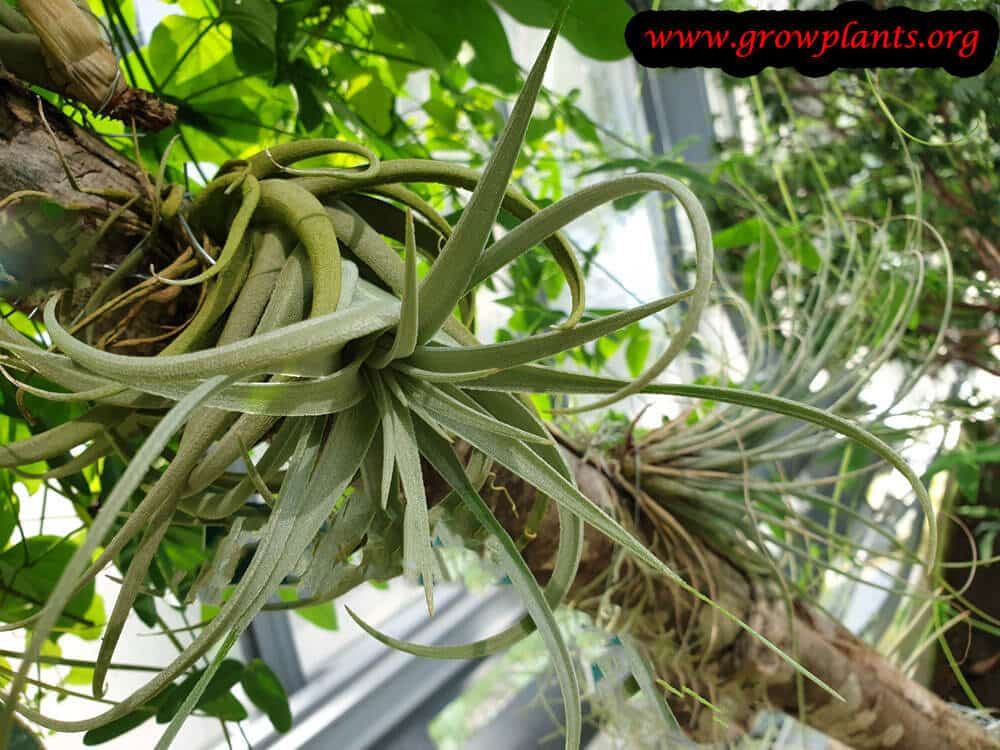
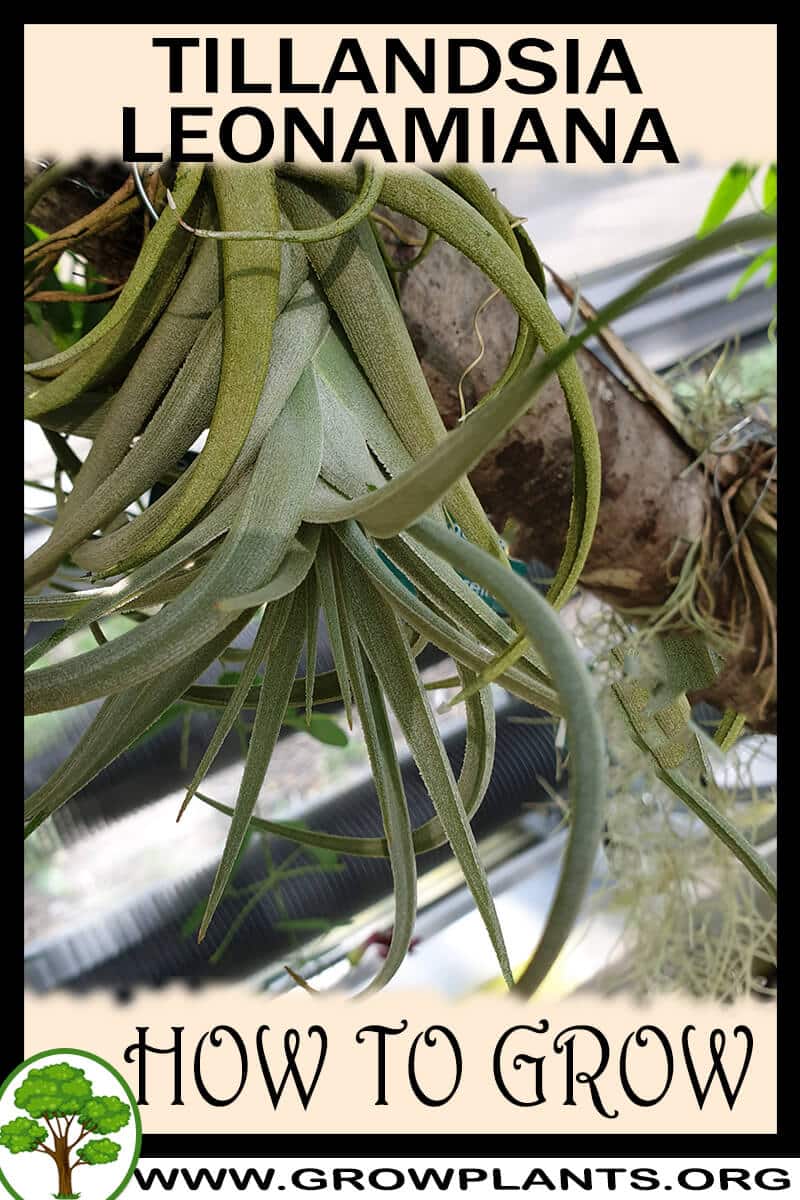
Overview: Air plant (Tillandsia leonamiana) is an evergreen epiphytic air plant of the genus Tillandsia, a compact 5-15 cm ornamental grown clinging to objects rather than in soil. It absorbs water and nutrients through its leaves and makes an easy houseplant.
Quick Specifications
| Specification | Attribute |
|---|---|
| Plant Type / Life Cycle | Perennial (evergreen epiphyte) |
| Foliage Type | Evergreen |
| Mature Size | 5-15 cm (2-6 in) |
| Growth Rate | Slow |
| Root System | Epiphytic – only wiry roots that anchor the plant; water and nutrients are taken up through leaf scales (trichomes), not roots |
| Toxicity | Non-toxic |
| Hardiness | USDA zones 10b and warmer |
Growth Form & Structure
- Height & Spread: 5-15 cm (2-6 in); grown mounted, in a dish or hung rather than planted in soil, so a pot is used only as a stand, not filled with substrate
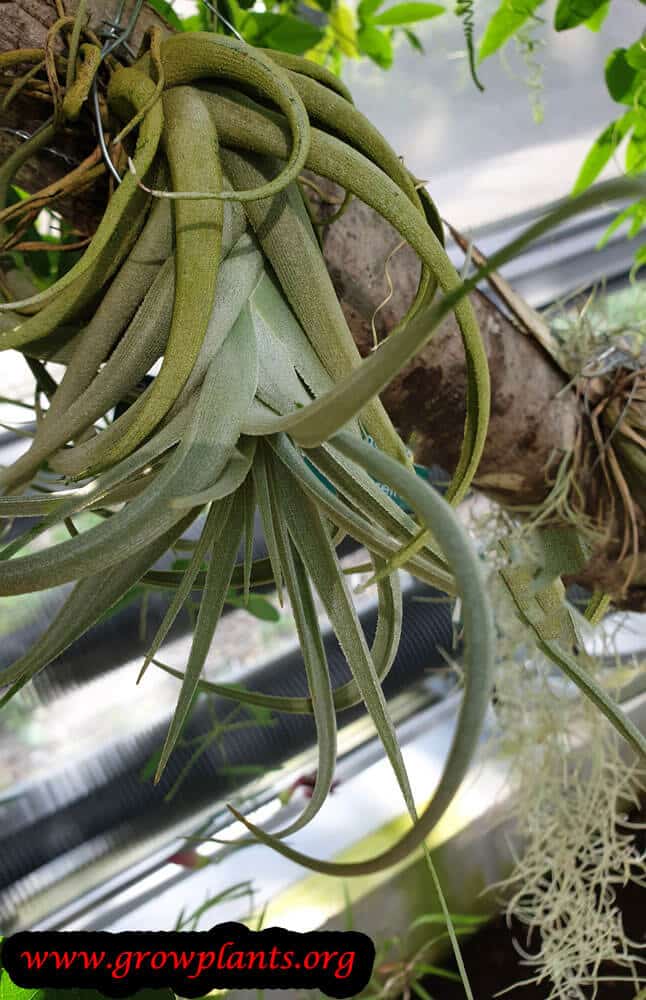
- Growth Habit & Form: Stemless (or short-stemmed) rosette of stiff leaves that clings to bark, rock or ornaments as an epiphyte
- Lifespan & Maturity: Slow-growing; each rosette flowers only once, then produces offsets (“pups”) that continue the clump
Anatomy & Physical Features
- Leaves & Foliage: Green to grey, elliptic, sharp-tipped leaves in a rosette
- Flower Characteristics: Small purple-violet flowers in clusters, set off by showy pink bracts
Primary Uses & Landscape Value
- Functional & Ornamental Roles: Ornamental air plant for mounts, terrariums, driftwood, shells and hanging displays; an easy low-water houseplant
Care Guide: Planting, Soil & Watering
Overview: Tillandsia leonamiana is an epiphytic air plant that grows without soil, clinging to bark, cork or driftwood and drinking moisture straight from the air through its leaves. It thrives in bright, indirect light and frost-free warmth (hardy only to about zone 10b), needing just occasional misting or soaking with soft water rather than a rooted watering routine.
Quick Care Requirements
| Requirement | Ideal Condition |
|---|---|
| Planting Season | Year-round indoors; mount or place outdoors in spring to summer in frost-free areas |
| Growth Rate | Slow |
| Water Need | Low; mist or soak with soft water, then let it dry out completely |
Planting & Establishment
- Best Planting Season: There is no true planting – mount or set the plant in place any time of year indoors; if positioning it outdoors, do so in the warm season once all frost has passed.
- How to Mount:
- Attachment: Rest it in a shallow dish or wire holder, or fix it to cork, driftwood or a mounted board with plant-safe glue, wire or fishing line – never bury the base in soil.
- Positioning: Choose a spot with bright, indirect light and good air movement, away from heaters, air conditioners and strong drafts.
- Settling In: Once mounted, avoid moving or disturbing it – Tillandsia resent being shifted while they anchor themselves.
- Growth Speed & Expectations: A slow grower reaching only about 5-15 cm; each rosette flowers just once after several years, then offsets (‘pups’) carry the plant on.
Soil, Watering & Drainage Care
- Growing Medium & Drainage: No potting soil is needed – the keys are air flow and fast drying. If you sit it in a container, use it only as a holder (cork, shell or glass), never packed with wet substrate, so moisture never lingers around the base and rots it.
- Watering Schedule & Technique:
- Young / Newly Mounted: Treat it exactly like a mature plant – mist or briefly soak, then let it dry.
- Established: In summer, water about once a week (twice in hot, dry spots) by misting or dunking in soft rainwater or filtered water, then shake off the excess and let it dry within a few hours.
- Seasonal Adjustments: Cut back to once a week or every two weeks in winter – or barely at all in a cool, damp winter – and keep it above roughly 3°C.
Climate, Light & Hardiness
Tillandsia leonamiana is a tropical-to-subtropical epiphytic air plant needing warm conditions, bright filtered light, and regular misting rather than soil moisture. It can be grown outdoors in Mediterranean or frost-free climates, or as a houseplant, but has only modest cold tolerance.
Quick Climate Specifications
| Climate Zones | Tropical, subtropical, and Mediterranean gardens; also widely grown as a houseplant |
|---|---|
| USDA Hardiness Zones | Approximately 10b and warmer outdoors |
| Optimal Temp Range | Generally above approximately 10°C (50°F) |
| Approx. Survival Minimum | Can briefly tolerate down to approximately 3°C (37°F) in a mild, dry winter |
| Frost Tolerance | None |
| Light Conditions | Half shade to full shade with bright ambient light |
Sunlight & Light Exposure
Optimal Light Setup
Give it bright, filtered light – half shade or a shaded spot with generous ambient brightness works well.
Shade & Heat Management
Shield it from harsh direct midday sun, which can scorch the foliage, especially during hot weather.
Best Exposure / Orientation
A bright, sheltered spot out of direct sun – mounted or hanging outdoors, or a well-lit room away from intense direct-sun windows indoors.
Temperature Extremes & Hardiness
USDA Hardiness & Regional Limits
Suited to outdoor culture in roughly zone 10b and warmer; where winters are colder it is best grown as a houseplant or moved under cover.
Cold Damage & Winter Protection
Keep it above approximately 10°C (50°F) for reliable growth; in a mild, dry winter it may briefly withstand temperatures down to around 3°C (37°F), though this stresses the plant.
Frost Sensitivity
Frost-tender, with no tolerance for freezing conditions.
Extreme Heat Tolerance
Tolerates warm tropical and subtropical heat well as long as humidity and airflow are adequate.
Wind, Humidity & Microclimate
Humidity Preferences
Prefers moderate to high humidity, particularly during warm weather; misting or a naturally humid room benefits indoor specimens.
Dry-Air Tolerance
Poor tolerance for prolonged dry air, which can brown the leaf tips; avoid positioning it near heating or air-conditioning vents.
Wind Tolerance
Naturally adapted to open, airy sites, it tolerates gentle to moderate air movement well, which also helps foliage dry between waterings.
Microclimate Recommendations
A bright, humid, well-ventilated position away from direct sun and drafts suits it best; a well-lit bathroom is a good indoor spot.
Growing in Pots, Balconies & Indoors
This is a small (mostly 5-35 cm / 2-14 in) epiphytic air plant that grows without soil, so it is one of the easiest of all houseplants – you display it on wood, in a shell or glass holder, rather than potting it up. It likes bright, indirect light with even a little sun and never needs a garden bed.
Because it takes water and nutrients through its leaves, care indoors is mostly about light, air movement and the occasional soak or mist rather than watering a rootball.
Quick Details
- Container Size: No soil pot needed – mount on cork/bark or set in an open holder; any planter must stay airy and free-draining.
- Indoor Suitability: An excellent, low-effort houseplant.
- Best Spot: Bright indirect light with a little direct sun; good air flow, away from heaters, AC and fans.
- Soil & Drainage: None – it is an epiphyte; if displayed in a container it must never sit wet.
- Watering in Pots: Mist or briefly soak, then let it dry fully; use less water in humid spots such as a bathroom.
Indoors & On the Windowsill
- Genuine houseplant: Yes – it is made for indoor life. Give it a spot with enough light and even a little sun.
- Grower’s indoor care: Keep it away from ventilators, heaters and air-conditioning, which dry it out. It can be grown in a bathroom, but because the air there is humid it needs less watering.
- Windowsill: A bright sill is ideal; after watering, always let it dry in a well-ventilated spot to prevent rot.
On a Balcony or Patio
- Light & wind: In frost-free weather it enjoys a shaded, airy balcony out of harsh midday sun; bring it in before cold nights.
- Display: Hang it or wedge it into bark so it never traps water; exposed spots dry it fast, so mist more often in heat.
Choosing the Pot, Soil & Long-Term Care
- Mounting instead of potting: It grows disconnected from soil, so fix it to cork, driftwood or bark, or rest it in an open decorative holder rather than a soil-filled pot.
- Airflow & drainage: Any container must let it dry quickly; standing moisture at the base is the main cause of loss.
- Feeding: Occasional very dilute foliar feed added to the misting water is plenty; it needs little.
Fertilizing & Feeding
A very light feeder: this epiphyte takes almost all its nutrition through misting rather than soil, so infrequent, dilute feeding in the warm season is plenty.
Quick Fertilizing Specs
| Feeding Level | Very light feeder |
|---|---|
| Main Nutrient Priority | A dilute balanced fertilizer applied by misting rather than soil feeding |
| Best Feeding Period | During the warmer months when the plant is actively growing |
| Reduce/Stop Feeding | Hold off feeding in cold weather or winter rest |
| Micronutrients | Usually met by a complete dilute foliar fertilizer; correct only diagnosed issues |
Feeding by Growth Stage
Establishment after mounting or dividing
Let a newly mounted plant or separated offset settle in before adding fertilizer to its misting routine.
| Nutrient direction | None – withhold fertilizer while the plant settles into its new mount or location. |
|---|---|
| Timing | The first weeks after mounting, moving, or separating an offset. |
| Frequency | No feeding at this stage. |
| Fertilizer types | No feeding at this stage; hold off fertilizing until the plant is settled and actively growing. |
| Precautions | Do not fertilize a freshly mounted or divided plant; let it re-establish with plain water first. |
Active growth in the warm season
Supply light nutrition to support foliage and eventual bloom during active growth.
| Nutrient direction | A dilute, balanced fertilizer misted onto the foliage provides gentle nutrition. |
|---|---|
| Timing | During the warmer months when the plant is actively growing. |
| Frequency | Infrequent, light misted feedings are usually enough for this minimal feeder. |
| Fertilizer types | A balanced fertilizer diluted well below normal strength and applied as a fine mist |
| Routine trace nutrients | iron, manganese |
| Precautions | Use soft water for feeding and avoid concentrated fertilizer, since this plant is sensitive to hard water and mineral or salt buildup on its leaves. |
Cool weather rest
Avoid pushing growth when cooler temperatures slow the plant down.
| Nutrient direction | None – growth has slowed in cool weather and feeding is not needed. |
|---|---|
| Timing | Cooler months or winter rest. |
| Frequency | No feeding during cool-weather rest. |
| Fertilizer types | No feeding at this stage; withhold fertilizer until warmer weather and active growth resume. |
| Precautions | Do not fertilize during cool-weather rest; the plant cannot make use of the nutrients and misting with plain water is enough. |
Nutrient Deficiency Signs & Corrections
New leaves grow in pale and weak, and overall growth slows.
| Possible causes | very infrequent misted feeding over a long period, too-dilute fertilizer solution, fast growth outpacing a light feeding routine |
|---|---|
| Appears first on | newest leaves |
| What to check | recent misting and feeding history, fertilizer dilution used, overall growth rate and light conditions |
| Possible correction | Resume a light, dilute balanced misted feeding during active growth. |
Leaf tips brown or a crusty residue appears on the leaves.
| Possible causes | hard tap water used for misting or feeding, over-concentrated fertilizer solution, insufficient rinsing or drying after feeding |
|---|---|
| Appears first on | leaf tips |
| What to check | water source and mineral content, fertilizer strength used, how well the plant dries after misting |
| Possible correction | Switch to soft or rain water, dilute fertilizer further, and rinse the plant with plain water occasionally. |
New growth emerges pale or yellowed while older leaves stay green.
| Possible causes | consistently hard or alkaline water limiting iron availability, mineral buildup on the leaves blocking uptake, root or base rot from poor drying after watering |
|---|---|
| Appears first on | newest leaves |
| What to check | water source and hardness, how well the plant dries after watering, base and root condition |
| Possible correction | Switch to soft or rain water and apply a chelated iron product per its label. |
Pruning, Training & Seasonal Maintenance
Tillandsia leonamiana is a small epiphytic air plant with sharp-edged, elliptic leaves arranged in a rosette. It needs almost no pruning beyond removing dead tissue, and because it has no soil, no persistent wood and no true dormant season, light grooming can be done at any time of year. The main seasonal event is its own bloom: once the spring/summer flush of purple-violet flowers and pink bracts fades, the spent spike can be trimmed away, but the rosette that flowered will decline afterward regardless of pruning — this species carries on through offsets (“pups”), not through cutting.
Quick Pruning & Maintenance Specs
| Pruning Tolerance | Low – sanitary trimming only, no structural cuts |
| Primary Pruning Window | All year, as dead leaf tissue appears |
| Secondary Maintenance Window | After the spring/summer bloom fades, to remove the spent flower spike |
| Typical Frequency | Light, occasional trims; not routine |
| Main Objective | Remove dead/infected leaf tissue and the spent bloom spike |
| Young Plant Priority | Leave undisturbed while establishing on its mount |
| Mature Plant Priority | Remove spent bloom spike; separate offsets once large enough |
| Best Tool Type | Precision snips |
| Avoid Heavy Pruning During | Always – this species has no tolerance for hard cutting into living tissue |
Pruning by Plant Age & Size
Newly Established
Leave a newly mounted or newly separated plant alone apart from removing any clearly dead or damaged leaf tips; disturbing it while it is anchoring itself can set growth back.
Young / Formative
No structural training applies — the rosette shape is fixed by the plant itself.
Mature / Established
Remove the spent flower spike once its colour has faded and dried; once offsets reach roughly a third to half the size of the parent they can be separated for propagation, or simply left attached to build a fuller clump.
Seasonal Pruning Schedule
Post-Flowering: once the purple-violet flowers and pink bracts have faded and dried (bloom is spring/summer), the spent spike can be cut away at its base; this does not affect future flowering since a new bloom will only ever come from a new offset, not from the same rosette. Ongoing Sanitary: trim brown or infected leaf tips whenever noticed, at any time of year.
Special Growth to Remove
- Dead or infected leaves – snip back to healthy grey-green tissue.
- Spent flower spike – remove once fully dried, generally weeks to months after bloom.
- Offsets (pups) – may be left attached to form a clump, or separated once about a third to half the parent’s size for propagation.
Container & Small-Space Pruning
This species is not grown in soil — it is mounted or simply set in place — so no root pruning applies; the only “space” consideration is trimming dead tissue so it doesn’t shade neighbouring plants on a mount or in a display case.
Tools
Precision snips only, for trimming dead leaf tips, the spent bloom spike, and separating small offsets.
Tool Hygiene & Disease Risk
Increased: fungal disease is one of this species’ recorded problems (alongside aphids, slugs and snails), so wipe the snip blade clean between plants when working through a collection to avoid spreading rot from an infected specimen.
Cut Placement & Technique
Snip dead leaf tissue back to the healthy green base rather than into living tissue; cut the spent bloom spike near where it emerges from the rosette without nicking surrounding leaves; when separating an offset, cut or gently twist it free close to its connection point to the parent.
Heavy Pruning & Rejuvenation
Not tolerated: the rosette will not resprout or regenerate from a hard cutback. Rejuvenation of a clump comes only from offsets replacing a spent mother rosette, never from pruning.
Post-Pruning Care
After separating an offset, let the cut point dry slightly before resuming the normal watering routine (spray or soak, per this species’ care). No feeding is needed as a result of trimming.
Common Pruning Mistakes
- Trimming into healthy grey-green leaf tissue instead of just the dead portion, which removes water- and nutrient-absorbing surface.
- Separating an offset before it is large enough to survive independently.
- Removing the spent bloom spike too early, before its colour has fully faded.
When NOT to Prune
Do not detach offsets before they reach roughly a third to half the parent’s size. Avoid cutting into any living grey-green leaf tissue at any time — only fully dead or infected material should be removed.
Recommended Tools (by task)
- precision_snips – the only cuts this plant ever needs are fine trims of dead tissue, spent bloom spikes, and small offset separations.
- blade_disinfectant – warranted by the fungal disease risk noted for this species when maintaining multiple air plants together.
Propagation Guide
Tillandsia leonamiana is best propagated by separating the daughter offsets (“pups”) that form at the base of the mother plant, an easy method that reliably reproduces the exact same plant. Seed is possible but, as the site notes, is not easy to start and will not guarantee identical offspring, so vegetative propagation is preferred to keep a particular plant true.
Quick Propagation Specs
| Best Propagation Method | Offset (Pup) Division |
| Alternative Methods | Seed (difficult, slow) |
| Propagation Difficulty | Easy (offsets); Difficult (seed) |
| Seed True-to-Type | Not reliably true – hard to start and offspring may not match the parent |
| Vegetative True-to-Type | Yes |
| Best Propagation Season | Spring |
| Seed Germination Time | Slow and irregular, typically several weeks or more |
| Germination Temperature | Roughly 21–27°C (70–80°F) |
| Seed Sowing Depth | Surface-sow, do not bury |
Growing from Seed
Seed Handling & Viability
Tillandsia seed carries a silky, wind-dispersed plume and is best sown while reasonably fresh, since viability declines with storage.
Dormancy & Pre-Sowing Treatment
No pretreatment is required.
Sowing Depth & Orientation
Surface-sow onto a damp, sterile, well-draining mount or fine medium – as an epiphyte, the seed should not be buried.
Germination Conditions
Warm temperatures, roughly 21–27°C (70–80°F), with high humidity and bright, indirect light.
Germination Time
Slow and often irregular, consistent with the site’s note that this method is not easy.
Seedling Care
Seedlings are tiny and need sustained high humidity through a long establishment period; avoid disturbing them, as this species generally dislikes being moved once settled.
Division, Offsets, Pups & Suckers
Separate a daughter pup once it has grown several leaves of its own – commonly once it reaches roughly a third of the parent’s size, though the site’s own guidance is simply to wait until several leaves have formed. Division is best carried out in spring. After separating, treat the pup exactly as a mature plant, and once it is given a location, avoid moving it around too much.
Bloom & Flower Guide
Quick Details
- Bloom Season: Spring into summer
- Time to First Bloom: Once the plant reaches maturity; each rosette flowers a single time
- Flower Appearance: Small purple-violet flowers in clusters at the base of showy pink bracts
- Edibility: Ornamental – grown as an air plant
Detailed Blooming Overview
Tillandsia leonamiana is an air plant with a two-part bloom. Small purple-violet flowers emerge in clusters from the base of bright pink bracts, and it is the bracts – really coloured modified leaves rather than petals – that supply most of the lasting display. The true flowers are small and short-lived, while the bracts keep their colour far longer.
Flower Characteristics
- Small purple-violet flowers, clustered at the base of the bracts.
- Showy pink bracts (coloured leaves) that look flower-like and outlast the true flowers.
Bloom Care & Thinning
- Understanding the bloom: Air plants flower only once in their life, often signalled by the bracts colouring up. Afterwards the plant produces offsets (“pups”) that continue on.
- During bloom: Keep up regular misting and good airflow so the flowers and bracts last well.
Pests, Diseases & Troubleshooting
Overview: Air plants are epiphytic bromeliads grown without soil, and they are among the most pest-free plants you can keep – the great majority of failures are cultural, above all rot from water trapped in the crown and mineral damage from hard water. When pests do appear they are chiefly mealybugs and scale. Good airflow, correct watering and soft water prevent almost every problem.
Quick Troubleshooting Overview
| Issue / Pest | Main Symptom | Primary Solution |
|---|---|---|
| Crown / base rot | Soft brown mushy centre, leaves pull out easily | Dry fast after watering; never leave water in the crown |
| Mealybugs | White cottony tufts in leaf bases, sticky residue | Alcohol swab / rinse; horticultural oil; isolate |
| Scale insects | Small brown or waxy bumps on leaves | Scrape off; horticultural oil; isolate |
| Hard-water damage | White crusty deposits, scorched leaf tips | Use rain/distilled water; avoid softened water |
| Dehydration | Rolled leaves, exaggerated curling, dry crispy tips | Soak and mist more often; improve humidity |
| Sunburn | Bleached or brown scorched patches | Move to bright indirect light; avoid harsh midday sun |
Common Pests & Management
- Mealybugs (Pseudococcidae):
- Symptoms: Small white cottony tufts wedged between the leaves and at the base of the plant, with sticky honeydew and, over time, weakened, stunted growth. The most likely insect pest on an air plant.
- Prevention & Control: Isolate the plant, then remove mealybugs by dipping in or swabbing with dilute alcohol and rinsing well. Improve airflow. For stubborn cases, treat with a light horticultural oil or insecticidal soap, then rinse and dry the plant thoroughly so no residue sits in the crown.
- Scale Insects (Diaspididae / Coccidae):
- Symptoms: Small, immobile brown, tan or waxy bumps along the leaves, sometimes with sticky residue; heavy infestations dull and weaken the foliage.
- Prevention & Control: Gently scrape or pick off the scales with a soft brush or fingernail and isolate the plant. Apply horticultural oil to smother remaining scales and crawlers, then rinse and allow the plant to dry fully.
- Aphids (Aphidoidea):
- Symptoms: Occasional small soft-bodied insects on tender flower spikes and new growth, with a little sticky honeydew; uncommon and usually minor on air plants.
- Prevention & Control: Rinse off under running water; a strong soak usually clears them. Only rarely is insecticidal soap needed – if used, rinse the plant well afterwards.
- Fungus Gnats / Damp Pests (Sciaridae):
- Symptoms: Small flies hovering around plants kept constantly damp or in decaying mounting material – a symptom of over-wet conditions rather than a true air-plant pest.
- Prevention & Control: Let plants dry properly between waterings, improve ventilation, and replace any soggy mount or moss. Yellow sticky traps catch the adults.
Diseases & Fungal Issues
- Crown / Base Rot (bacterial & fungal (Erwinia / fungal complex)):
- Symptoms: By far the number-one killer of air plants: the centre turns soft, brown and mushy, the plant loses colour, and the inner leaves pull out with a gentle tug. It follows water left sitting in the crown, especially in cool, still air.
- Treatment & Management: Prevention is the only real cure. After soaking or misting, turn the plant upside down and shake out trapped water, then dry it fully in bright, airy conditions within a few hours. Never leave water pooled in the centre and avoid watering late in the day. A plant that has begun to rot from the base cannot be saved and should be discarded to protect others.
- Fungal Leaf Spot / Rot (various fungi):
- Symptoms: Brown or black soft spots and patches on leaves in overly humid, stagnant conditions.
- Treatment & Management: Increase airflow, water earlier in the day, and avoid crowding. Remove affected leaves; ensure the plant dries quickly after each watering.
Growing Difficulties & Abiotic Problems
- Overwatering & Poor Drying (Rot):
- Cause & Symptoms: Water trapped in the crown or plants kept damp without drying is the leading cause of collapse, showing as a soft, discoloured, foul base.
- Correction Strategy: Soak or mist, then invert and shake out water and dry the plant fully in good light and air within a few hours. Mount so plants can drain; never sit them in water.
- Hard-Water Damage:
- Cause & Symptoms: This genus is sensitive to hard water: dissolved minerals leave white crusty deposits and scorch or brown the leaf tips, and softened (sodium) water is worse still.
- Correction Strategy: Water with rainwater, distilled or reverse-osmosis water; never use chemically softened water. Wipe off any mineral crust and, in hard-water areas, mist rather than soak with tap water.
- Under-Watering & Dehydration:
- Cause & Symptoms: Too little water shows as exaggerated leaf rolling, closing-in of the plant and dry, crispy, curling tips.
- Correction Strategy: Soak plants for 20–60 minutes then dry, or mist frequently, increasing both frequency and humidity in warm, dry or heated air. Xeric silver-leaved types need less; greener types need more.
- Sunburn & Light Problems:
- Cause & Symptoms: Harsh direct sun bleaches or scorches leaves with brown patches, while too little light causes fading, floppy growth and reluctance to flower.
- Correction Strategy: Give bright, indirect light or gentle filtered sun, avoiding hot midday exposure. Acclimatise gradually when moving plants to brighter positions.
What Helps – Products & Tools
Air plants rarely need chemicals – the key ‘products’ are soft water (rainwater, distilled or RO) and good airflow. For the occasional mealybug or scale, reach for a light horticultural oil or insecticidal soap followed by a thorough rinse, plus dilute alcohol on cotton buds for spot-treatment. Yellow sticky traps monitor damp-loving flies. Avoid heavy sprays and never leave residue in the crown.