Plant Profile & Key Characteristics
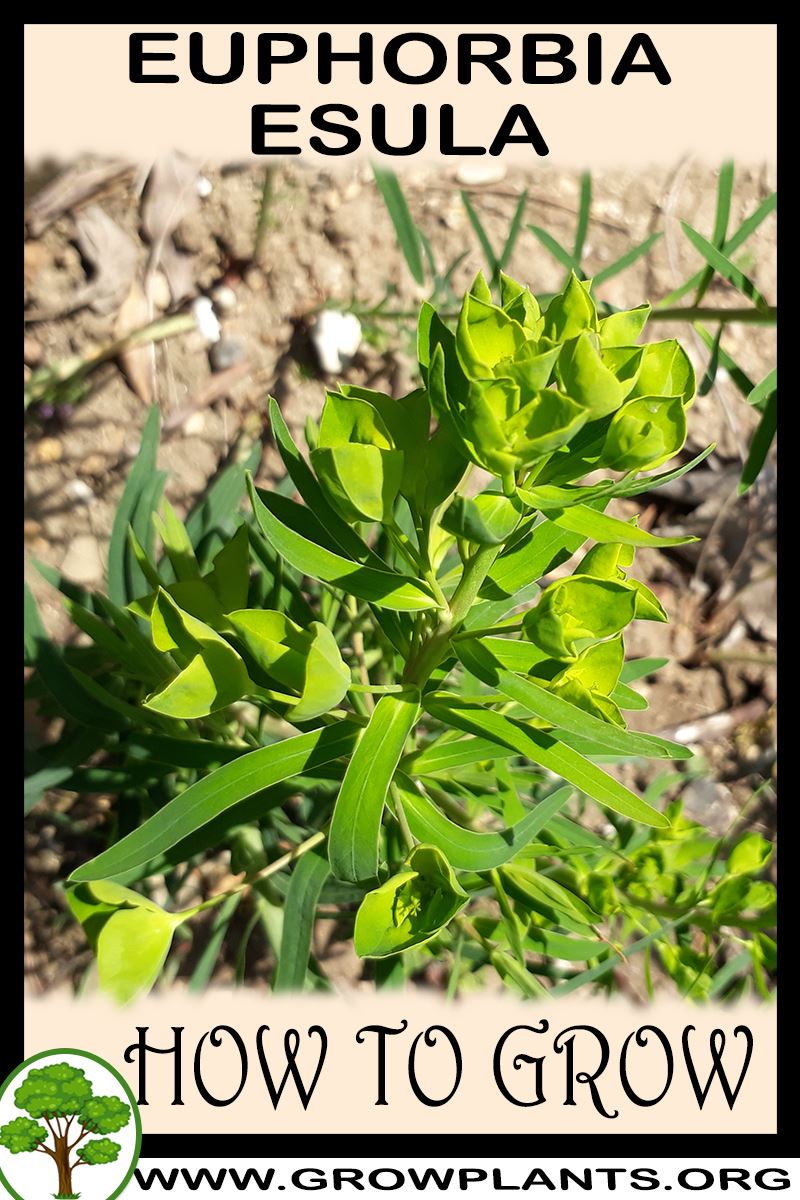
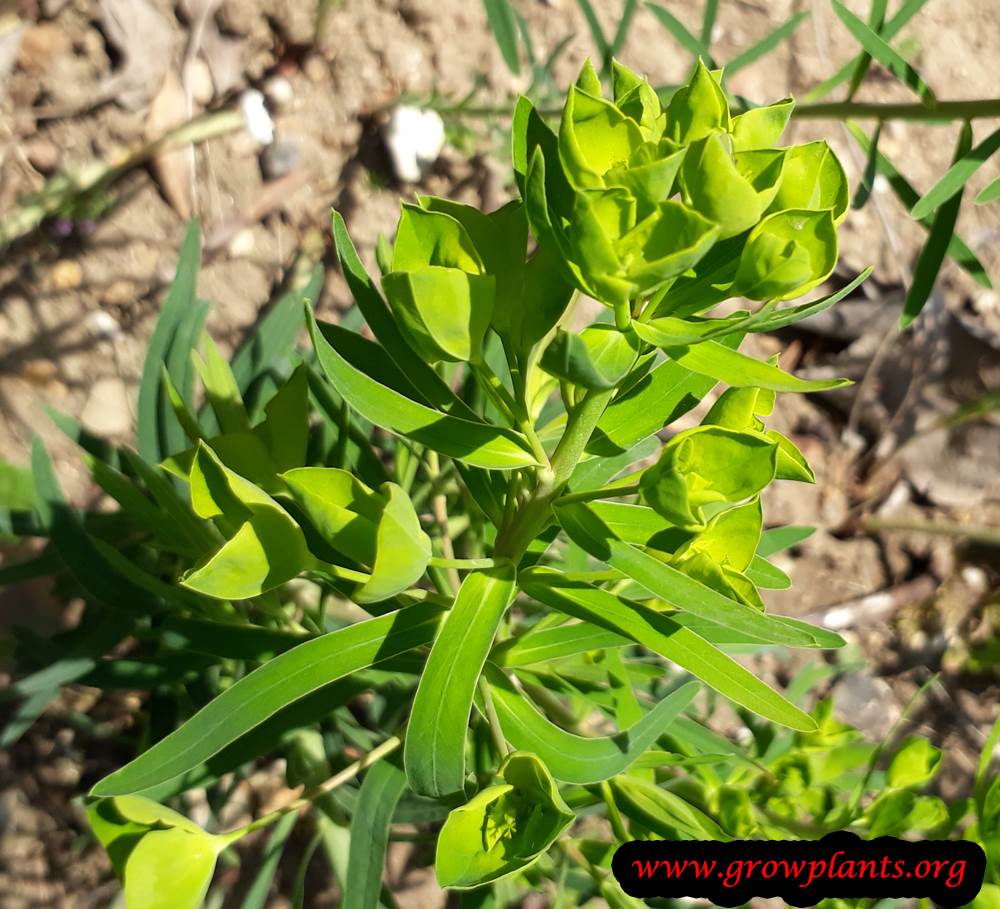
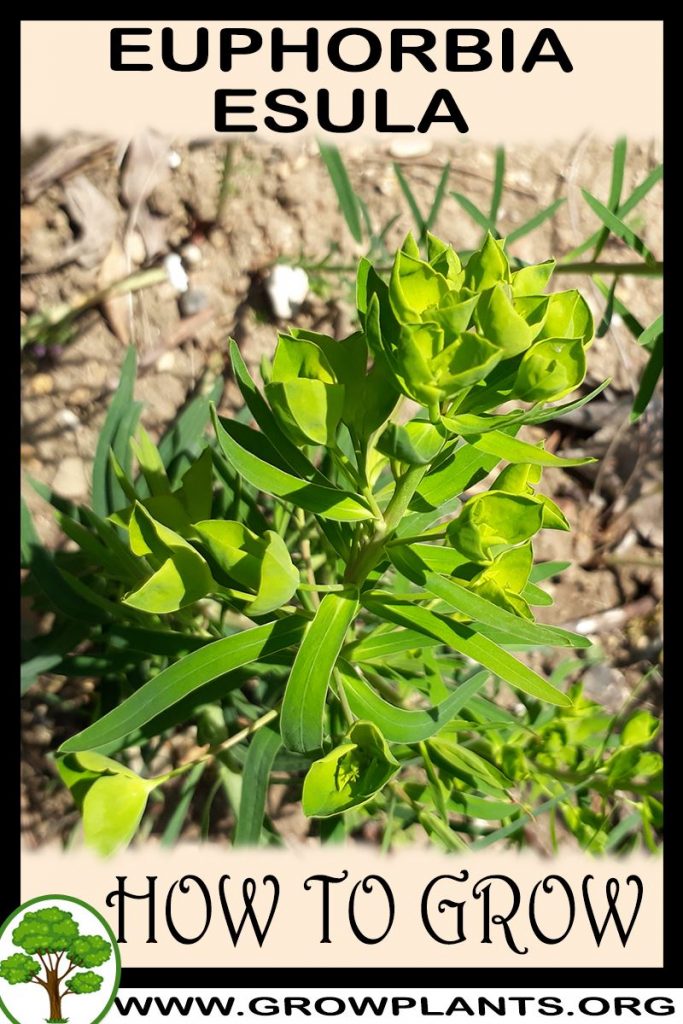
Overview: Euphorbia esula (Leafy Spurge) is an upright herbaceous perennial 0.6-1.2 m (24-48 in) tall with narrow green leaves and green-yellow bracts. Grown occasionally as an ornamental, it is best known as an aggressive, deep-rooted colony-former.
Quick Specifications
| Specification | Attribute |
|---|---|
| Plant Type / Life Cycle | Perennial (sometimes grown as an annual) |
| Foliage Type | Evergreen (herbaceous perennial) |
| Mature Size | 0.6-1.2 m (24-48 in) tall |
| Growth Rate | Slow to moderate |
| Root System | Deep, extensively spreading creeping roots (colony-forming) |
| Toxicity | Toxic – the milky latex sap is a skin, eye and mucous-membrane irritant and is poisonous to people and pets if ingested. |
| Hardiness | USDA zones 4-10 |
Growth Form & Structure
- Height & Spread: Upright stems reach 0.6-1.2 m (24-48 in); it spreads widely by creeping roots into dense colonies, so it is better contained in pots than let loose in the ground.
- Growth Habit & Form: An upright, colony-forming herbaceous perennial that spreads aggressively from deep, creeping roots.
- Lifespan & Maturity: Long-lived and persistent; regrows readily from root fragments.
Anatomy & Physical Features
- Leaves & Foliage: Narrow green leaves arranged around the stem in a circular pattern.
- Flower Characteristics: Green-yellowish flowers with two petal-like parts and rounded, heart-shaped bracts, in clusters in spring.
Primary Uses & Landscape Value
- Functional & Ornamental Roles: Occasionally ornamental, but chiefly notable as a hardy, drought-tolerant spreader; a serious weed where it escapes.
Care Guide: Planting, Soil & Watering
Overview: Euphorbia esula is a cold-hardy (zones 4–10) spurge that grows best in full sun to partial shade and free-draining soil. It is fairly drought-tolerant once established, needing only modest watering, and dislikes waterlogged ground.
Quick Care Requirements
| Requirement | Ideal Condition |
|---|---|
| Planting Season | Spring, summer or autumn |
| Growth Rate | Slow to moderate |
| Soil Type | Well-draining soil; tolerates lean, sandy or average garden ground |
| Water Need | Low to moderate – let the top of the soil dry before watering again |
Planting & Establishment
- Best Planting Season: A cold-hardy spurge that can be planted spring, summer or autumn; spring gives the longest establishment season in colder zones.
- How to Plant:
- Hole Preparation: Wear gloves and take care with the milky sap, which is a skin and eye irritant common to all euphorbias. Dig a hole about twice the width of the root ball and the same depth, so the plant sits at the level it grew at, and loosen the sides for easy rooting.
- Soil Amendments: Work some grit or compost into heavy ground to open up drainage; these spurges dislike sitting in wet soil.
- Planting Depth: Set the plant so the crown sits at soil level – do not bury the stem base.
- Growth Speed & Expectations: Growth is slow to moderate – steady rather than rushed, picking up once the plant is well established.
Soil, Watering & Drainage Care
- Soil Mix & Drainage Needs: Give it free-draining soil, as it dislikes waterlogging. Lighten heavy ground with grit or compost, and in a container use a well-draining potting mix with added perlite or sand.
- Watering Schedule & Technique:
- Young / Newly Planted: Water regularly after planting to settle the roots and keep the soil lightly moist while it establishes.
- Established: Once established it is fairly drought-tolerant; water deeply but only when the top few centimetres of soil have dried.
- Seasonal Adjustments: Water more during prolonged heat and much less over the cooler months, when growth slows.
Climate, Light & Hardiness
Despite being labeled a succulent shrub in some records, this species behaves as a cold-hardy, rhizomatous herbaceous perennial across a wide USDA range, thriving in full sun to half shade. It tolerates cold winters well but is less at home in constant tropical heat.
Quick Climate Specifications
| Climate Zones | Mediterranean, desert, subtropical |
|---|---|
| USDA Hardiness Zones | 4–10 |
| Optimal Temp Range | Approximately 15–27°C (59–80°F) |
| Cold Damage Begins | Top growth dies back naturally with the first hard freeze, around 0°C (32°F), as part of normal winter dormancy |
| Approx. Survival Minimum | The root/rhizome system in zone 4 gardens is generally hardy to around −29°C (−20°F) |
| Frost Tolerance | High (root-hardy) |
| Light Conditions | Full sun to half shade |
Sunlight & Light Exposure
Optimal Light Setup
Full sun gives the strongest, most vigorous growth; half shade is tolerated.
Direct Sun Requirement
Grows best with several hours of direct sun.
Shade & Heat Management
Half shade is tolerated without issue; in the warmest part of its range it may go semi-dormant in peak summer heat.
Best Exposure / Orientation
Open sunny sites suit it, but given its vigorous spreading habit it is best sited where its rhizomes can be contained.
Temperature Extremes & Hardiness
USDA Hardiness & Regional Limits
Hardy from USDA zone 4 through zone 10, reflecting strong cold tolerance at the root level.
Cold Damage & Winter Protection
Foliage dieback each autumn/winter is normal dormancy, not damage; the plant resprouts vigorously from its spreading root system in spring, which is also why it can behave as an aggressive spreader in cool climates.
Frost Sensitivity
Low; the root system is very cold-hardy even though top growth is not evergreen through winter.
Extreme Heat Tolerance
Moderate to good; may slow down in the most intense heat toward the warm end of its range.
Wind, Humidity & Microclimate
Humidity Preferences
Tolerates a range of humidity levels across its Mediterranean-to-subtropical climate range.
Dry-Air Tolerance
Good, consistent with its desert/Mediterranean climate adaptability.
Wind Tolerance
No specific data is documented; as a low, clump-forming perennial it is not expected to be especially wind-sensitive.
Rainfall & Seasonal Moisture
Tolerates low to moderate rainfall once established and prefers well-drained soil over consistently wet ground.
Microclimate Recommendations
Adapts to a wide range of open, sunny garden situations across its hardiness range; because of its spreading habit, contained beds or root barriers are a practical microclimate/siting consideration.
Growing in Pots, Balconies & Indoors
Euphorbia esula (leafy spurge) is a tough, sun-loving perennial – not a houseplant. The grower confirms it will not grow indoors as a houseplant. It is also a notoriously invasive, deep-rooted spreader, so a pot is actually a sensible way to contain it and stop it seeding into the garden.
Quick Details
- Container Size: A sturdy, free-draining pot that contains its running roots
- Indoor Suitability: Not a houseplant; an outdoor sun-lover
- Best Spot: Full sun to half shade, outdoors
- Soil & Drainage: Free-draining mix; it is not fussy
- Watering in Pots: A small-to-average amount; let it dry between waterings
Indoors & On the Windowsill
- Not a houseplant: The grower says it will not grow indoors; it needs full outdoor light.
- Containment: If grown at all, keep it in a pot to prevent its aggressive roots and seed from escaping – it is invasive in many regions.
On a Balcony or Patio
- Sun & control: Give a bright spot and deadhead before it sets seed; stand the pot where escaping roots or seed cannot reach open ground.
Choosing the Pot, Soil & Long-Term Care
- Pot & drainage: A strong pot with good holes and no standing saucer.
- Potting mix: Any free-draining potting mix; it thrives on poor soils.
- Feeding: Little or no feeding is needed.
- Safety: Like all euphorbias, the milky sap is toxic and a skin, eye and mouth irritant – wear gloves when cutting, wash off any sap, and keep the plant away from children and pets. Never treat any part as edible.
Fertilizing & Feeding
A cold-hardy, spreading succulent shrub that is naturally vigorous even in lean, well-drained soil – it needs only minimal feeding, and rich feeding mainly encourages growth it does not need.
Quick Fertilizing Specs
| Feeding Level | Light feeder |
|---|---|
| Main Nutrient Priority | Low-nitrogen, balanced feeding since this species already spreads and grows readily without extra encouragement |
| Best Feeding Period | Spring through early summer while the plant is actively growing |
| Soil pH | Adaptable to a range of well-drained soils; not particular about pH |
| Micronutrients | No routine micronutrient supplementation needed |
| Organic Options | A lean, well-drained soil suits this species better than an organically rich one |
| Reduce/Stop Feeding | Stop feeding as growth slows heading into its winter dormancy |
Feeding by Growth Stage
Spring–Summer Active Growth
Support the plant’s characteristic mounding, circular leaf growth and spring flowering without over-encouraging a species that already spreads readily.
| Nutrient direction | Light, low-nitrogen feeding – this species is vigorous and cold-hardy on its own, and rarely benefits from rich feeding. |
|---|---|
| Timing | During spring and summer while the plant is actively growing. |
| Frequency | Feed sparingly – a light application at the start of the growing season is usually enough, and many established plantings need none at all. |
| Fertilizer types | A dilute, low-nitrogen fertilizer formulated for succulents, used sparingly if at all |
| Precautions | The sap is poisonous and can irritate skin, so wear gloves when handling this plant, including at feeding or pruning time; avoid heavy feeding, which pushes more of the vigorous growth this species already produces on its own. |
Winter Dormancy
Let the plant rest through winter dormancy without pushing new growth it cannot use.
| Nutrient direction | None – withhold fertilizer during winter dormancy. |
|---|---|
| Timing | Winter, once growth slows and the plant enters dormancy. |
| Frequency | No feeding at this stage. |
| Fertilizer types | No feeding at this stage |
| Precautions | Do not fertilize during winter dormancy; wait for clear new spring growth before feeding again. |
Nutrient Deficiency Signs & Corrections
Unusually pale foliage or weak new growth despite this species’ normally vigorous habit.
| Possible causes | Nitrogen deficiency in very poor or depleted soil, Overwatering weakening root function, Root competition from aggressive neighboring plants |
|---|---|
| Appears first on | New growth at the stem tips |
| What to check | Soil condition and how depleted it may be, Watering frequency and drainage, Competing roots nearby |
| Possible correction | Work a little compost into the soil and apply only a light, dilute feeding if new growth stays weak, since this species rarely needs more. |
Yellowing new leaves despite otherwise normal care.
| Possible causes | High-pH or waterlogged soil limiting iron availability, Poor drainage reducing root function, Root stress from compacted soil |
|---|---|
| Appears first on | Newest leaf growth |
| What to check | Soil pH and drainage, Watering frequency, Whether older leaves are also affected |
| Possible correction | Improve drainage and correct markedly alkaline soil; a chelated iron product per its label can help if chlorosis persists. |
Noticeably fewer of the plant’s green-yellow clustered spring flowers than in previous years.
| Possible causes | Insufficient light reducing bloom, General stress from poor drainage or waterlogged soil, Overcrowding limiting individual plant vigor |
|---|---|
| Appears first on | Overall flower count at bloom time |
| What to check | Sun exposure, Soil drainage, How crowded the planting has become |
| Possible correction | Improve sun exposure and drainage, and thin overcrowded plantings to restore vigor ahead of the next bloom season. |
Pruning, Training & Seasonal Maintenance
Euphorbia esula (cypress/leafy spurge) is a succulent-ish subshrub that spreads both by deep, far-running rhizomes and by explosively dispersing seed capsules — a combination that makes it a recognized noxious or invasive weed across large parts of its non-native range. In the garden it tolerates cutting at any time, but the priority is control rather than shape: removing flower/seed heads before capsules split, and keeping the rhizome spread contained, matter far more here than any decorative pruning.
Quick Pruning & Maintenance Specs
| Pruning Tolerance | High |
| Primary Pruning Window | Any time during active growth (no strict dormant-only window) |
| Secondary Maintenance Window | Before/at flowering, to remove seed heads ahead of capsule split |
| Typical Frequency | Regular seed-head removal through spring bloom; occasional shaping cuts |
| Main Objective | Prevent seed dispersal and monitor/contain rhizome spread |
| Young Plant Priority | Establish inside a root barrier or container if spread is unwanted |
| Mature Plant Priority | Remove seed heads before capsules split; contain rhizomes |
| Best Tool Type | Bypass secateurs / hand shears |
| Avoid Heavy Pruning During | No strong seasonal restriction — timing around seed-set matters more than season |
Pruning by Plant Age & Size
Newly Established
If containment matters, install a root barrier or grow it confined to a container from planting — pruning after the fact cannot fully undo rhizome spread once it’s underway.
Young / Formative
No structural training; growth habit is defined by the spreading rhizome system, not above-ground branching architecture.
Mature / Established
Remove flower/seed heads promptly as capsules approach maturity; periodically cut back to check the spread of surface growth and expose any rhizome shoots emerging outside the intended area.
Seasonal Pruning Schedule
| Spring (bloom period) | Objective: stop seed dispersal at its source. Remove: flower clusters and developing seed capsules before they split explosively. Do not remove: foliage needed to sustain the rhizome system if the plant is being kept. Response: sharply reduced volunteer seedlings. |
| Ongoing Sanitary | Objective: contain spread. Remove: rhizome-borne shoots found outside the intended planting area, and any dead growth. Response: slows lateral colonization; does not eliminate the rhizome system. |
Special Growth to Remove
- Flower and developing seed heads — the highest-priority cut, given this species’ documented capsule-based seed dispersal.
- Rhizome-sprouted shoots emerging beyond the planting’s intended footprint — sever and remove; note that cutting alone will not eliminate an established rhizome network, only limit its visible spread.
Container & Small-Space Pruning
Container culture is the most reliable way to enjoy this species without its rhizomes escaping into surrounding ground; even potted, still remove seed heads before capsules split, since wind/mechanical seed dispersal is not contained by the pot.
Tools
- Bypass secateurs or hand shears for seed-head removal and general cutback.
- No saw or hedge shears needed — this is not a woody, hedge-form plant.
Tool Hygiene & Disease Risk
Routine for disease — aphids are the main pest noted, not a transmissible pathogen. Wear gloves: the sap is documented as poisonous/irritating on contact.
Cut Placement & Technique
Cut flower stems below the developing capsules and bag or dispose of the cut material rather than leaving it on the ground, since capsules can continue to ripen and split after cutting.
Heavy Pruning & Rejuvenation
Tolerated — the top growth can be cut back hard at any time without harming the plant, since regrowth comes readily from the extensive rhizome system. This is more often used to manage spread/appearance than to rejuvenate a declining plant, as this species rarely declines on its own.
Post-Pruning Care
No special care needed after cutback; avoid feeding, since encouraging more vigorous growth in an already spread-prone species is counterproductive.
Common Pruning Mistakes
- Leaving flower heads to mature and split, allowing seed to disperse.
- Composting cut material with viable seed capsules or rhizome fragments, which can resprout.
- Assuming top-growth pruning alone controls this species, without addressing the underground rhizome spread.
- Handling cuttings without gloves despite the documented sap toxicity.
When NOT to Prune
No strong biological restriction on timing; the main caution is procedural — do not delay seed-head removal once capsules begin forming.
Recommended Tools (by task)
- bypass_secateurs — removing flower/seed heads and general cutback.
- blade_disinfectant — wipe down after working this species before moving to other plants, given its noted invasive potential and easily-spread rhizome fragments.
Propagation & Spread
Euphorbia esula, commonly known as leafy spurge, is a highly invasive plant in parts of its introduced range and is listed as a noxious weed in a number of jurisdictions. This page therefore focuses on spread and containment rather than providing instructions for intentionally propagating it.
How It Spreads
Leafy spurge spreads both by seed and through its extensive underground root system. New shoots can arise from buds on the roots, and disturbed root fragments can contribute to continued spread.
Containment
Prevent seed production and avoid moving soil or root fragments from infested areas to clean ground. Because established plants can regenerate from the underground root system, simple top-growth removal may not eliminate a population.
Handling
Cut or broken tissues release a milky latex that can irritate skin and eyes. Wear gloves and eye protection when handling or removing the plant and avoid contact with the sap.
Local Regulations
Check current local invasive-plant and noxious-weed requirements before growing, moving or disposing of this species. Legal status varies by jurisdiction.
Bloom & Flower Guide
Quick Details
- Bloom Season: Spring
- Flower Appearance: Greenish-yellow flowers whose paired bracts form a rounded, heart-like shape, borne in flat clusters
- Edibility: Not edible – the plant is toxic, the milky sap is an irritant, and it is a noxious weed in many regions
Detailed Blooming Overview
Cypress or leafy spurge blooms in spring, its greenish-yellow flowers set off by rounded, heart-shaped yellow-green bracts carried in flat clusters. The milky sap is an irritant, and the plant is a vigorous spreader that is considered a noxious weed in many parts of the world.
Flower Characteristics
- Greenish-yellow flowers.
- Paired bracts forming a rounded or heart shape.
- Borne together in clusters.
Bloom Care & Thinning
- Handling: Wear gloves – the sap is a skin and eye irritant.
- Managing the bloom: Remove flower heads before they run to seed to limit its aggressive spread.
- Position: Full sun and free-draining soil.
Pests, Diseases & Troubleshooting
Overview: The Leafy spurge (Euphorbia esula) is, like most of the genus Euphorbia, far more often lost to cultural mistakes than to pests. As a leafy spurge it is generally robust and drought-tough, bothered mainly by aphids, occasional spurge rust and powdery mildew, and by root rot only where drainage is poor. Cultural care carries it a long way; chemicals are rarely needed.
Quick Troubleshooting Overview
| Issue / Pest | Main Symptom | Primary Solution |
|---|---|---|
| Overwatering / root rot | Wilting, yellowing, mushy crown in wet soil | Improve drainage; water less |
| Aphids | Clusters on shoot tips & flower heads; sticky honeydew | Blast off with water; insecticidal soap/neem |
| Spurge rust | Orange/yellow pustules on leaves and stems | Remove affected growth; improve airflow; fungicide if severe |
| Powdery mildew | White powder on leaves in humid, still air | Space plants; sulfur/potassium-bicarbonate spray |
| Latex burns (handling) | Skin/eye irritation from cut sap | Wear gloves & eye protection; wash off promptly |
Common Pests & Management
- Aphids (Aphis & Macrosiphum spp.):
- Symptoms: Soft green, black or yellow insects clustered on tender new shoots, leaves and flower heads; distorted growth, sticky honeydew and sooty mould. Colonies build fast in mild, sheltered conditions.
- Prevention & Control: Dislodge with a firm jet of water, encourage ladybirds and lacewings, and spray insecticidal soap or neem to the undersides of the growth if numbers climb. Avoid heavy nitrogen feeding, which fuels soft, aphid-prone growth.
- Spider mites (Tetranychus urticae):
- Symptoms: Fine pale stippling and a dull, bronzed skin, worst in hot dry air; in bad cases fine webbing over the growing tips. On green-stemmed cactiform species the damage shows as permanent russet scarring.
- Prevention & Control: Raise humidity and airflow and avoid heat-stress. Rinse the plant, then apply horticultural oil or a labelled miticide, repeating to catch newly hatched mites; rotate actives to avoid resistance. Predatory mites work well in enclosed spaces.
- Mealybugs, incl. root mealybug (Pseudococcus & Rhizoecus spp.):
- Symptoms: Soft white, cottony tufts tucked into ribs, spine cushions, branch junctions and the growing point; sticky honeydew and sooty mould follow. Root mealybugs hide below soil as a white, mealy crust on roots and inside the rootball, causing unexplained stalling and slow decline — always suspect them when a euphorbia sulks with no pest visible above ground.
- Prevention & Control: Inspect crevices and roots at every repot; isolate new plants. Dab colonies with a cotton bud dipped in isopropyl alcohol, then follow with neem or insecticidal soap, repeating every 7–10 days. For root mealybug, bare-root, wash the roots, drench with a soil-applied systemic and repot into fresh gritty mix in a clean pot.
- Slugs & snails:
- Symptoms: Ragged holes and chewed edges on leaves and soft new shoots, with silvery slime trails, worst in damp shaded conditions and on outdoor plantings. They mostly damage leafy growth rather than hard stems.
- Prevention & Control: Clear damp debris and hiding places, water in the morning, and set beer traps or hand-pick after dark. A ring of grit or iron-phosphate bait protects vulnerable young growth.
Diseases & Fungal Issues
- Spurge rust (Melampsora / Uromyces spp.):
- Symptoms: Powdery orange, yellow or brown pustules on leaves and stems, sometimes with distortion and premature leaf-fall; a characteristic disease of the leafy spurges in damp seasons.
- Treatment & Management: Remove and bin affected growth, clear old stems at season’s end, and improve spacing and airflow. A sulfur or labelled fungicide checks severe outbreaks.
- Powdery mildew (Oidium / Podosphaera spp.):
- Symptoms: A white powdery bloom on leaves and soft stems, with yellowing and distortion beneath, in humid but still air with big day/night swings.
- Treatment & Management: Open up airflow and space plants, avoid shade and overhead water, and spray sulfur, potassium bicarbonate or a biofungicide at the first sign (avoid sulfur in high heat, which can scorch the plant).
- Fungal stem & leaf spot (Cercospora, Alternaria spp.):
- Symptoms: Sunken tan, brown or black spots and blotches on stems or leaves, sometimes with concentric rings or a yellow halo; favoured by overhead water sitting on the plant and by poor airflow.
- Treatment & Management: Improve ventilation, keep water off the stems, and remove affected parts with a sterile blade. A copper fungicide checks spread in persistent cases; avoid misting.
- Root, basal & stem rot (Pythium, Phytophthora, Fusarium, Rhizoctonia):
- Symptoms: The number-one killer of this plant. Soft, water-soaked, blackening tissue at the base or along a stem, often with a foul smell; the rot travels upward or downward and can collapse the whole plant within days. Usually starts from cold, wet, airless soil or a wound.
- Treatment & Management: Prevent it — a gritty, sharply draining mix, a pot with drainage, warmth and restrained watering. At the first soft patch, cut back to clean firm tissue with a sterile blade, dust the wound, let it callus, and re-root the healthy top if the base is lost. Drench survivors sparingly; a biofungicide (Bacillus/Trichoderma) helps protect fresh roots.
Growing Difficulties & Abiotic Problems
- Overwatering (root & stem rot — the killer):
- Cause & Symptoms: Soggy, airless soil starves and drowns the roots; the base yellows, softens and blackens, and the plant collapses. This, not any pest, is what kills most of these euphorbias.
- Correction Strategy: Use a gritty, mineral-rich free-draining mix and a pot with a drainage hole, water only when the mix has dried, and cut watering right back in cool or dim conditions.
- Sunburn & etiolation (light problems):
- Cause & Symptoms: A sudden move into fierce direct sun scorches the skin with pale or brown corky patches that never heal; too little light does the opposite — pale, thin, stretched (etiolated) growth that leans and topples.
- Correction Strategy: Give bright light but acclimatise gradually to strong sun over a couple of weeks, and shade during the fiercest midday heat. Increase light slowly to firm up drawn growth.
- Nutrient / salt issues:
- Cause & Symptoms: Overfeeding or hard water builds salts that scorch root tips and brown leaf/stem margins; starvation shows as overall paling.
- Correction Strategy: Feed lightly in growth only, flush the pot occasionally with clean water, and use rainwater where the supply is hard.
- Caustic milky latex (handling hazard):
- Cause & Symptoms: Every part of the plant bleeds a white latex when cut, snapped or bruised. On skin it causes burning, redness and blistering; splashed in the eye it can cause intense pain, inflammation and, in severe cases, temporary or lasting vision damage. It is also toxic if ingested by people or pets.
- Correction Strategy: Always wear nitrile gloves and eye protection when pruning, repotting or taking cuttings; keep the plant away from the face and never rub your eyes while handling it. Seal cut cuttings by rinsing or blotting the latex, work out of reach of children and animals, and wash skin and tools immediately with soap and water. If latex contacts the eye, flush with water and seek medical advice.
What Helps — Products & Tools
This spurge needs little: a strong jet of water plus insecticidal soap or neem for aphids, sulfur or potassium bicarbonate for powdery mildew and rust, and iron-phosphate slug bait outdoors. Good drainage and spacing matter more than any product.