Plant Profile & Key Characteristics
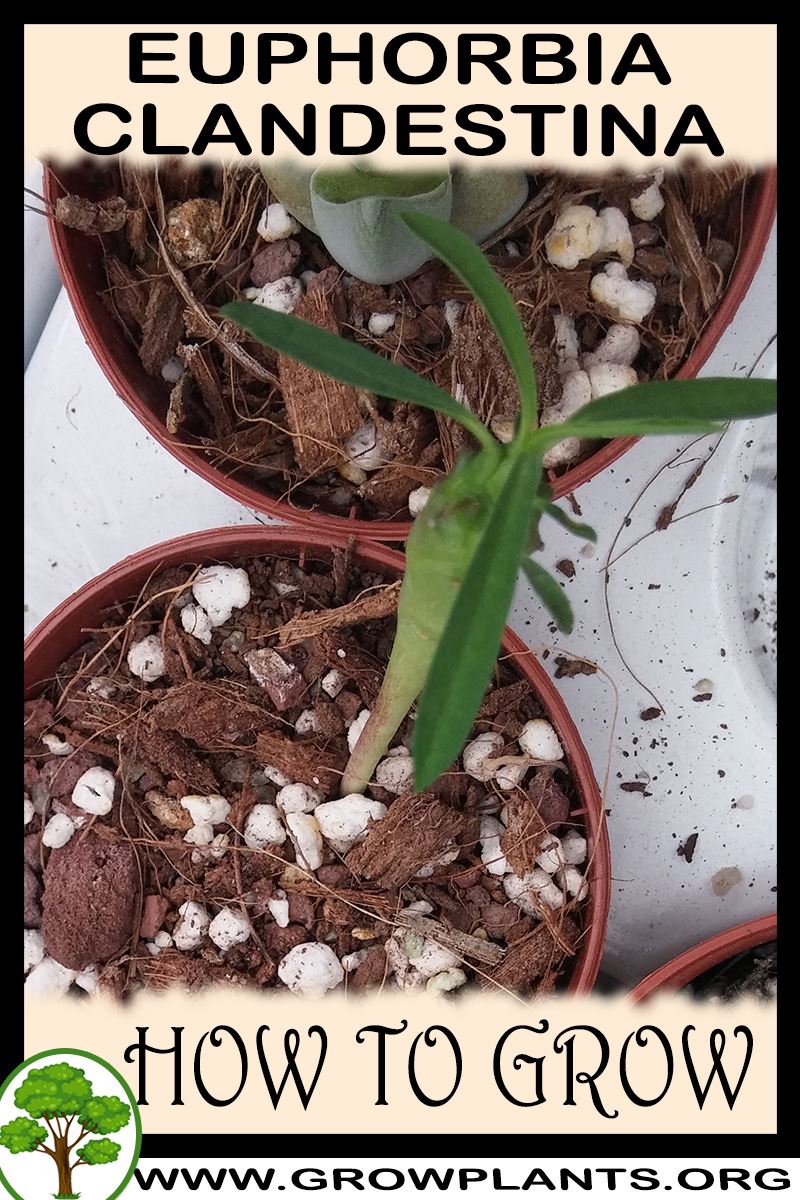
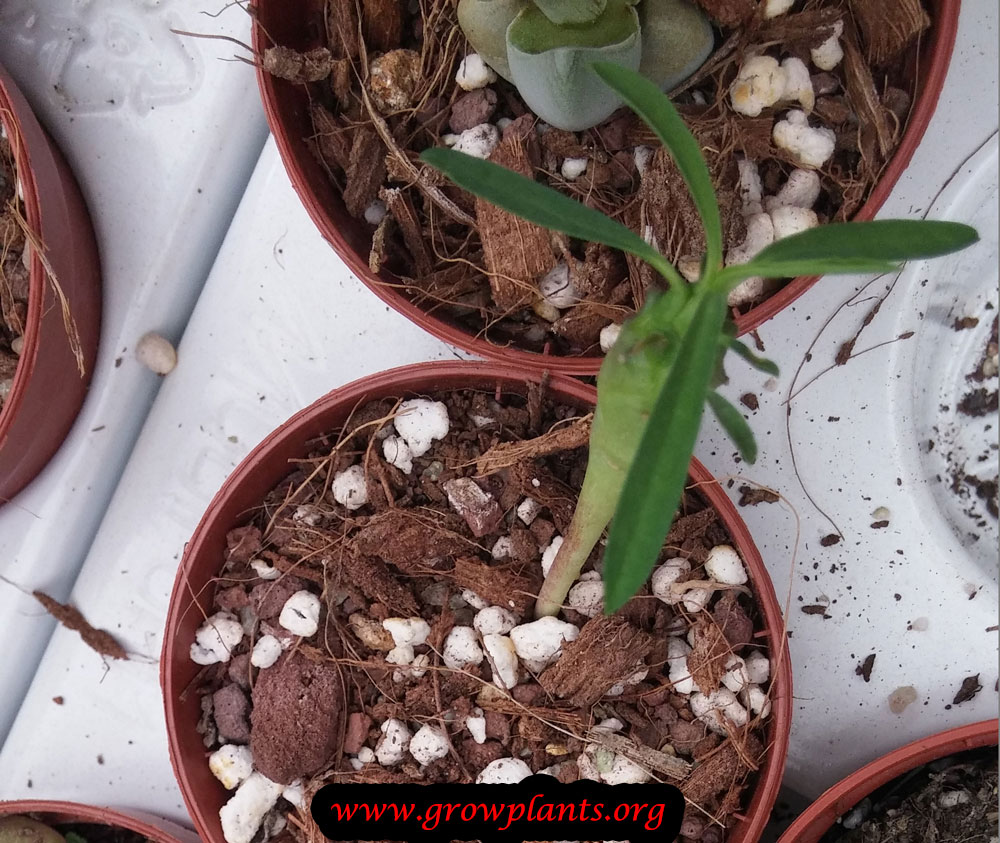
Overview: A slow-growing succulent shrub reaching 30-90 cm, with an erect stem crowned by a tuft of linear leaves and green flowers at the top. It is grown as an unusual drought-tolerant ornamental.
Quick Specifications
| Specification | Attribute |
|---|---|
| Plant Type / Life Cycle | Perennial (succulent shrub) |
| Foliage Type | Deciduous (leaves at the stem top) |
| Mature Size | 30-90 cm (1-3 ft) tall |
| Growth Rate | Slow |
| Toxicity | Toxic – the milky latex irritates skin |
| Hardiness | USDA zones 10-12 |
Growth Form & Structure
- Height & Spread: 30-90 cm (1-3 ft) tall; container-friendly.
- Growth Habit & Form: An erect, sparsely branched succulent stem topped with a crown of foliage.
- Lifespan & Maturity: Slow-growing and long-lived.
Anatomy & Physical Features
- Stem & Leaves: Green linear leaves clustered at the tip of a knobbly succulent stem.
- Flower Characteristics: Green five-lobed flowers borne at the top of the plant, in spring.
Primary Uses & Landscape Value
- Functional & Ornamental Roles: Drought-tolerant ornamental for containers and succulent collections.
Care Guide: Planting, Soil & Watering
Overview: Euphorbia clandestina is a slow-growing columnar succulent that needs sharply draining soil and bright light. It is very drought-tolerant and should be watered sparingly, with the soil drying between waterings.
Quick Care Requirements
| Requirement | Ideal Condition |
|---|---|
| Planting Season | Warm season – spring through autumn |
| Growth Rate | Slow |
| Soil Type | Sharply draining, sandy/gritty |
| Water Need | Low |
Planting & Establishment
- Best Planting Season: Plant in the warm season, spring through autumn.
- How to Plant:
- Hole Preparation: Make a hole just large enough for the root ball.
- Soil Amendments: Add coarse sand and grit for fast drainage; avoid rich, moisture-holding soil.
- Planting Depth: Set the plant at the same depth it was growing, keeping the stem base at soil level.
- Growth Speed & Expectations: Slow, forming a single upright stem topped with a tuft of foliage.
Soil, Watering & Drainage Care
- Soil Mix & Drainage Needs: Fast-draining mineral/sandy mix in the ground or a pot with drainage holes.
- Watering Schedule & Technique:
- Young / Newly Planted: Water lightly and occasionally while establishing.
- Established: Water sparingly – soak, then let the soil dry between waterings.
- Seasonal Adjustments: Keep dry in winter; a little water during summer growth.
Climate, Light & Hardiness
Euphorbia clandestina is a succulent shrub suited to subtropical, Mediterranean, and desert climates in full sun to half shade. It tolerates only light frost, so cold protection matters wherever winters turn colder than that.
Quick Climate Specifications
| Climate Zones | Subtropical, Mediterranean, Desert |
|---|---|
| USDA Hardiness Zones | 10–12 |
| Frost Tolerance | Low |
| Light Conditions | Full Sun / Half Shade |
Sunlight & Light Exposure
Optimal Light Setup
Full sun to half shade both suit this species.
Direct Sun Requirement
Tolerates direct sun for most of the day; half shade is also acceptable.
Temperature Extremes & Hardiness
USDA Hardiness & Regional Limits
Suited to zones 10–12; cold limits outdoor cultivation outside this range, and in cooler climates it is best grown in a container that can be sheltered from winter cold.
Cold Damage & Winter Protection
Handles only light frost; anything beyond a brief, light frost is likely to damage or kill the plant, so winter protection is needed at the cooler edge of its range.
Frost Sensitivity
Frost-sensitive beyond light, brief exposure; not suited to climates with regular hard freezes.
Extreme Heat Tolerance
As a drought-tolerant succulent, it handles hot, dry conditions well.
Growing in Pots, Balconies & Indoors
Euphorbia clandestina is a compact, upright succulent; the grower doesn’t list it as a houseplant, but a small plant grows well on a bright, sunny windowsill and makes an easy potted specimen.
Quick Details
- Container Size: A pot only 20-50% wider than the root ball – roots stay shallow, so width matters more than depth
- Indoor Suitability: Not rated a houseplant, but a small plant grows well on a bright, sunny windowsill
- Best Spot: Full sun to half shade
- Soil & Drainage: Gritty, fast-draining cactus/succulent mix – potting soil with extra perlite, coarse sand or lava grit; never soggy. A ready-made cactus and succulent soil mix provides that structure without mixing it yourself.
- Watering in Pots: Sparing – let the mix dry between waterings; overwatering is the main killer in pots
Indoors & On the Windowsill
- On a sunny windowsill: The grower doesn’t list it as a houseplant, but this compact succulent does well on a bright, sunny sill with strong light. Deep in a room it will stretch and weaken.
- Overwintering indoors: Most of these are tender – in cold climates a pot lets you bring it into a bright, frost-free room for winter, kept nearly dry until warmth and light return.
On a Balcony or Patio
- Light & warmth: Give it the brightest, warmest corner – sunny walls and paving throw back the heat these desert plants love. Pots dry faster there, so check the mix, but still water sparingly. Shelter tall or top-heavy stems from strong wind.
- Practicalities: Use a stable, heavy-based pot for tall specimens, and make sure drainage water runs away freely rather than pooling under the pot.
Choosing the Pot, Soil & Long-Term Care
- Pot & drainage: A clay pot 20-50% wider than the root ball (roots stay shallow) with strong drainage holes; skip a standing-water saucer to avoid root rot. Terracotta breathes and dries faster than glazed or plastic – ideal for a succulent.
- Potting mix: A fast-draining cactus mix – potting soil loosened with plenty of perlite, coarse sand or lava grit, with a layer of gravel or small stones at the base.
- Feeding: Feed lightly – a dilute, low-strength cactus feed once or twice through the warm growing season; nutrients leach from pots faster than open ground.
- Repotting: Refresh the mix and pot up every few years; these are slow-growing, so they rarely need it more often.
Fertilizing & Feeding
A light feeder: this small, spiny deciduous succulent needs only occasional diluted feeding while it is in leaf, with none needed once it drops its leaves and rests.
Quick Fertilizing Specs
| Feeding Level | Light feeder |
|---|---|
| Main Nutrient Priority | Low-nitrogen feeding while the plant is actively in leaf |
| Best Feeding Period | Spring through autumn while the plant is in active leaf growth |
| Organic Options | Not typically needed; a lean, well-drained mineral soil suits this species |
| Reduce/Stop Feeding | Withhold fertilizer once the plant sheds its leaves and enters its deciduous rest |
| Micronutrients | Usually unnecessary in well-drained soil; correct only a diagnosed deficiency |
| Soil pH | Prefers sharply drained soil rather than moisture-retentive conditions |
Feeding by Growth Stage
In-leaf active growth
Support this small succulent’s leaf and stem growth while it is actively in leaf.
| Nutrient direction | A diluted, low-nitrogen cactus or succulent fertilizer applied sparingly while the plant is in active growth. |
|---|---|
| Timing | While the plant is in leaf, typically spring through autumn. |
| Frequency | An occasional light feeding is enough for this small, slow-growing succulent. |
| Fertilizer types | A diluted, low-nitrogen cactus or succulent fertilizer, A sharply drained, mineral-based soil as the growing medium |
| Precautions | Feed sparingly and handle the plant carefully – it has spines and toxic sap, so gloves are recommended when working around it. |
Leafless deciduous rest
Let the plant rest through its natural leafless period without pushing new growth it cannot support.
| Nutrient direction | None – withhold fertilizer once the plant has dropped its leaves for its rest period. |
|---|---|
| Timing | During the leafless, deciduous rest period. |
| Frequency | No feeding at this stage; resume light feeding only once fresh leaves clearly emerge again. |
| Fertilizer types | No feeding at this stage; hold off fertilizing until active growth resumes. |
| Precautions | Do not fertilize a leafless, resting plant – it cannot use the nutrients, and unused fertilizer can build up as salts in the soil. |
Nutrient Deficiency Signs & Corrections
Leaves emerge pale or small and overall growth is weaker than expected during the in-leaf period.
| Possible causes | very lean, mineral soil with little available nitrogen, soil that has never been amended or fed, root stress limiting nutrient uptake |
|---|---|
| Appears first on | newly emerging leaves |
| What to check | recent feeding history, how lean or sandy the soil is, root health and drainage |
| Possible correction | Apply a diluted, low-nitrogen fertilizer while the plant is actively in leaf. |
New leaves emerge pale yellow-green while older growth stays a deeper green.
| Possible causes | alkaline or high-pH soil limiting iron availability, waterlogged or poorly drained soil, recent root disturbance from transplanting |
|---|---|
| Appears first on | the newest leaves |
| What to check | soil drainage and how quickly it dries, soil pH, recent transplanting or root disturbance |
| Possible correction | Correct drainage first, then apply a chelated iron product per its label if pale new growth persists. |
Stem or leaf tissue near the soil line browns or looks scorched despite otherwise normal care.
| Possible causes | fertilizer salt buildup in lean, slow-draining soil, over-fertilizing a species adapted to very lean conditions, feeding continued into the leafless rest period |
|---|---|
| Appears first on | stem or leaf bases near the soil line |
| What to check | recent fertilizer amounts and timing, whether feeding continued after the plant went leafless, soil drainage and salt crusting |
| Possible correction | Stop feeding, flush the soil thoroughly with water, then resume only light, diluted feeding once the plant is clearly in active growth. |
Pruning, Training & Seasonal Maintenance
Euphorbia clandestina is a small, slow-growing, spiny deciduous succulent shrub. Like other non-flowering-display Euphorbias, it is not grown or pruned around a floral show, so pruning is limited to occasional sanitary or design trimming. Because it is deciduous, it may drop its leaves and rest – assessing what actually needs removing during that leafless state is difficult, so pruning is best kept to periods when the plant is in active leaf and any damage is clearly visible.
Quick Pruning & Maintenance Specs
| Pruning Tolerance | Low |
| Primary Pruning Window | During active growth/leafy periods (Spring–Autumn, per its own facts) |
| Typical Frequency | Occasional, as needed |
| Main Objective | Remove damaged growth / light shaping |
| Best Tool Type | Precision snips |
| Avoid Heavy Pruning During | The leafless dormant period |
Pruning by Plant Age & Size
Newly Established
None – let the plant establish.
Young / Formative
No structural training – its small clustering/branching habit develops naturally.
Mature / Established
Occasional light shaping or removal of damaged stems only.
Seasonal Pruning Schedule
Ongoing Sanitary
Through Spring–Autumn active growth, remove damaged tissue as it becomes visible. Avoid pruning in the leafless dormant phase, when damage is hard to assess and wounds heal more slowly.
Special Growth to Remove
Only dead or damaged stem tissue. The plant is spiny, so handle removed material carefully.
Container & Small-Space Pruning
A small (30–90cm) plant well suited to containers. Being deciduous, reduce watering during its leafless rest, and avoid disturbing or pruning either roots or top growth during that dormant window.
Tools
Precision snips for small stems; a grafting knife for a single clean, sterile cut on the fleshy succulent stem when removing damaged tissue.
Tool Hygiene & Disease Risk
Routine, but wear gloves for both the spines and the irritant latex sap common to Euphorbia.
Cut Placement & Technique
Cut back into clean tissue just past any damaged section; avoid crushing the fleshy stem.
Heavy Pruning & Rejuvenation
Not tolerated or applicable – slow growth means a hard cut leaves a long-lasting gap. Stick to minor sanitary trims.
Post-Pruning Care
Let cuts dry and callus before watering resumes over that area; keep out of direct hot sun immediately after cutting.
Common Pruning Mistakes
- Attempting to prune during the leafless dormant phase.
- Not protecting hands from spines and sap.
When NOT to Prune
Avoid pruning during dormancy/leaf-drop, and avoid cutting during cold snaps – it tolerates only light frost per its own facts.
Recommended Tools (by task)
- precision_snips – small sanitary or design trims.
- grafting_knife – a sterile clean cut removing damaged succulent tissue.
Propagation Guide
Euphorbia clandestina can be started from seed or from stem cuttings; cuttings are presented as the primary practical option since they are generally the quicker route for shrubby succulent Euphorbias, with seed as a slower alternative.
Quick Propagation Specs
| Best Propagation Method | Stem cuttings |
| Alternative Methods | Seed |
| Propagation Difficulty | Easy |
| Seed True-to-Type | Usually true-to-type |
| Vegetative True-to-Type | Yes |
| Best Propagation Season | Spring to summer |
Growing from Seed
Sow in spring or summer in a well-drained mix; keep the soil only lightly moist, as this is a drought-tolerant succulent sensitive to overwatering.
Stem Cuttings
Take a stem cutting and let the cut surface callus in a shaded, dry spot before potting into a well-drained mix. Water sparingly while the cutting establishes, and handle with care — this species is noted as poisonous, so the sap may irritate skin.
Bloom & Flower Guide
Quick Details
- Bloom Season: Spring
- Flower Appearance: Small green flower heads clustered at the top of the plant
- Edibility: Not edible; the milky sap irritates skin and eyes
Detailed Blooming Overview
Euphorbia clandestina is grown for its sculptural, column-like stem topped with narrow leaves. In spring it produces small green flower heads gathered at the crown of the plant, a subtle bloom that suits its quiet, architectural character.
Flower Characteristics
- Small green flower heads clustered at the top of the plant
Bloom Care & Thinning
- Managing the bloom: No thinning or deadheading is needed.
- Safety: Wear gloves and eye protection when handling; the milky sap is a skin and eye irritant and toxic if swallowed.
- Pollination: By insects drawn to the nectar glands.
Pests, Diseases & Troubleshooting
Overview: Zig-zag spurge (Euphorbia clandestina) is a succulent spurge, and like most succulent euphorbias it is tough and largely pest-free; the real killer is stem and root rot from overwatering, with mealybugs, spider mites and scale the main pests, mostly under glass. A crucial safety point: the milky white latex is caustic and toxic, badly irritating skin and especially eyes, so always wear gloves and eye protection when handling or pruning. This caudex succulent is noted as poisonous – the latex is the key hazard; culturally it is rot-prone if overwatered and otherwise very tough, with mealybug and mites the usual minor pests.
Quick Troubleshooting Overview
| Issue / Pest | Main Symptom | Primary Solution |
|---|---|---|
| Root / stem rot | Soft, blackening, collapsing base or stems | Gritty free-draining mix, dry between waterings, warmth |
| Mealybug | White cottony tufts in growth points, crevices or roots | Alcohol/oil, isolate, root drench for root mealybug |
| Spider mite | Stippling, corky scarring and fine webbing | Raise humidity, rinse, miticide if severe |
| Scale | Immobile bumps on stems | Scrape off, horticultural oil |
| Edema | Corky, warty bumps on stems or leaves | Reduce water and humidity, improve airflow and light |
| Toxic latex | Skin/eye burns from cut or bruised sap | Wear gloves and eye protection; wash off at once |
Common Pests & Management
- Mealybugs (incl. root mealybug) (Pseudococcus / Rhizoecus spp.):
- Symptoms: White cottony tufts gather in the growth points, branch crevices and – as root mealybug – on the roots and inside the rootball, sucking sap, stunting growth and leaving honeydew and sooty mould.
- Prevention & Control: Dab visible mealybugs with an alcohol swab and treat with horticultural oil; for root mealybug, unpot, bare-root and rinse the plant, repot in fresh gritty mix, and use a systemic soil drench if needed. Isolate new and infested plants. Wear gloves – cut or bruised tissue bleeds irritant latex.
- Spider mites (Tetranychus urticae):
- Symptoms: Fine pale stippling, dull bronzing and permanent corky scarring on the stems in hot, dry, still air, with faint webbing in bad cases; the slow-growing surface keeps the damage.
- Prevention & Control: Raise humidity and rinse the plant to suppress mites, improve airflow, isolate affected plants, and use a miticide or horticultural oil; predatory mites work in enclosed collections.
- Scale insects (Coccoidea):
- Symptoms: Small immobile brown or grey limpet-like bumps on the stems, often tucked into ribs and crevices, sapping the plant and causing yellow spotting.
- Prevention & Control: Scrape or brush off scale and treat with horticultural oil to smother crawlers; inspect the ribs and crevices where scale hides, and wear gloves to avoid the latex when working close to the skin.
- Whitefly & aphids (Aleyrodidae / Aphididae):
- Symptoms: Occasional whitefly clouds or aphid colonies on any softer new growth, leaving honeydew and sooty mould; less common on hard succulent species than on leafy euphorbias.
- Prevention & Control: Hose or trap where practical, use insecticidal soap or horticultural oil, and encourage natural enemies; usually a minor issue on succulent species.
Diseases & Fungal Issues
- Stem & root rot (Fusarium / Pythium / Phytophthora):
- Symptoms: The chief killer of succulent euphorbias: the base, stems or roots turn soft, brown or black and collapse, almost always following overwatering, a cold wet spell or a soggy, poorly drained mix; rot can spread fast up a stem.
- Treatment & Management: Grow in a very gritty, fast-draining mix, water thoroughly only when the mix is dry and scarcely at all in cool weather, keep the plant warm and airy, and never let it sit wet; if caught early, cut back to clean firm tissue (gloves on – latex flows freely), let it callus, dust with sulfur, and re-root the healthy top.
- Fungal leaf/stem spot (Cercospora / Alternaria):
- Symptoms: Brown or blackish spots and blotches on stems or any leaves, mainly in damp, stagnant conditions.
- Treatment & Management: Improve ventilation, keep the plant on the dry side, remove affected tissue, and treat persistent cases with a suitable fungicide while correcting the damp conditions.
- Grey mould (Botrytis) (Botrytis cinerea):
- Symptoms: Grey fuzzy mould on damaged or dying tissue and at the growth points in cool, damp, stagnant air.
- Treatment & Management: Improve airflow, reduce humidity and watering, remove affected and dead tissue promptly, and avoid injuries that let the mould in.
Growing Difficulties & Abiotic Problems
- Edema (oedema):
- Cause & Symptoms: Corky, warty bumps or blisters on stems or leaf undersides where the plant takes up water faster than it transpires, typically in cool, humid, overcast, overwatered conditions.
- Correction Strategy: Reduce watering and humidity, improve airflow and light, and space plants; the existing corky bumps are permanent but new growth will be clean once conditions are corrected.
- Sunburn, scorch & etiolation:
- Cause & Symptoms: Sudden strong sun bleaches and scorches tissue, while too little light causes soft, pale, elongated (etiolated) growth that flops; light-change stress is common when plants are moved.
- Correction Strategy: Acclimatise gradually to stronger light over a couple of weeks, give bright light for tight characteristic growth, and provide light shade in the fiercest heat; move plants between conditions slowly.
- Cold damage & natural corking:
- Cause & Symptoms: Cold or frost blackens and softens tissue on these warm-climate plants, while older stems develop normal brown corky bark (not disease) with age.
- Correction Strategy: Keep plants above their cold limit and dry in cool weather (cold plus wet is lethal), and distinguish firm, dry corking from soft, spreading rot, which needs cutting out.
- Toxic irritant latex (handling hazard):
- Cause & Symptoms: Every cut or bruise bleeds copious milky latex that burns and blisters skin and can cause severe, even lasting, eye injury; sap can also irritate airways and is poisonous if ingested.
- Correction Strategy: Always wear gloves and eye protection when pruning, propagating or handling; keep the sap off skin and well away from eyes and mouth, wash off immediately with soap and water, work in ventilation, and keep children and pets away from cut plants.
What Helps – Products & Tools
For Zig-zag spurge the key ‘products’ are a gritty free-draining mix and careful watering rather than pesticides. Keep horticultural oil and rubbing alcohol (mealybug, scale, mites), insecticidal soap (aphids, whitefly), a systemic drench for root mealybug, sulfur or potassium bicarbonate for mildew, and a fungicide plus sulfur for cut rot surfaces. And essential PPE – gloves and eye protection – for the caustic latex.