

Plant Profile & Key Characteristics
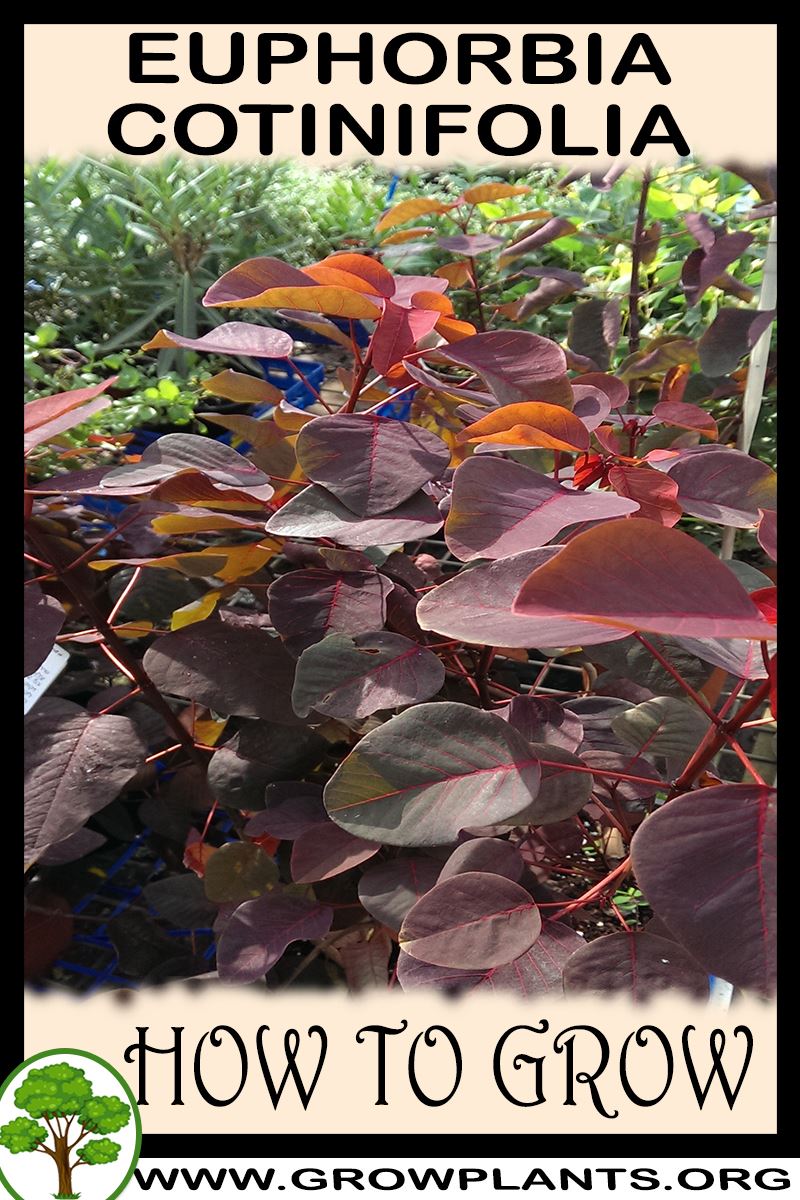
Overview: An evergreen shrub to small tree reaching up to 2-9 m (often kept as a 1-3 m shrub), grown for its striking red-purple rounded foliage. Airy white-yellow flower clusters appear at the branch tips.
Quick Specifications
| Specification | Attribute |
|---|---|
| Plant Type / Life Cycle | Perennial (shrub to small tree) |
| Foliage Type | Evergreen |
| Mature Size | Shrub 1-3 m (3-10 ft), tree 2-9 m (6-27 ft) |
| Growth Rate | Moderate |
| Toxicity | Toxic – the milky latex irritates skin |
| Hardiness | USDA zones 9+ |
Growth Form & Structure
- Height & Spread: 1-3 m as a shrub, up to 2-9 m (6-27 ft) as a tree; container-friendly.
- Growth Habit & Form: Multi-stemmed shrub or small tree with an airy branching canopy.
- Lifespan & Maturity: Long-lived, with moderate growth.
Anatomy & Physical Features
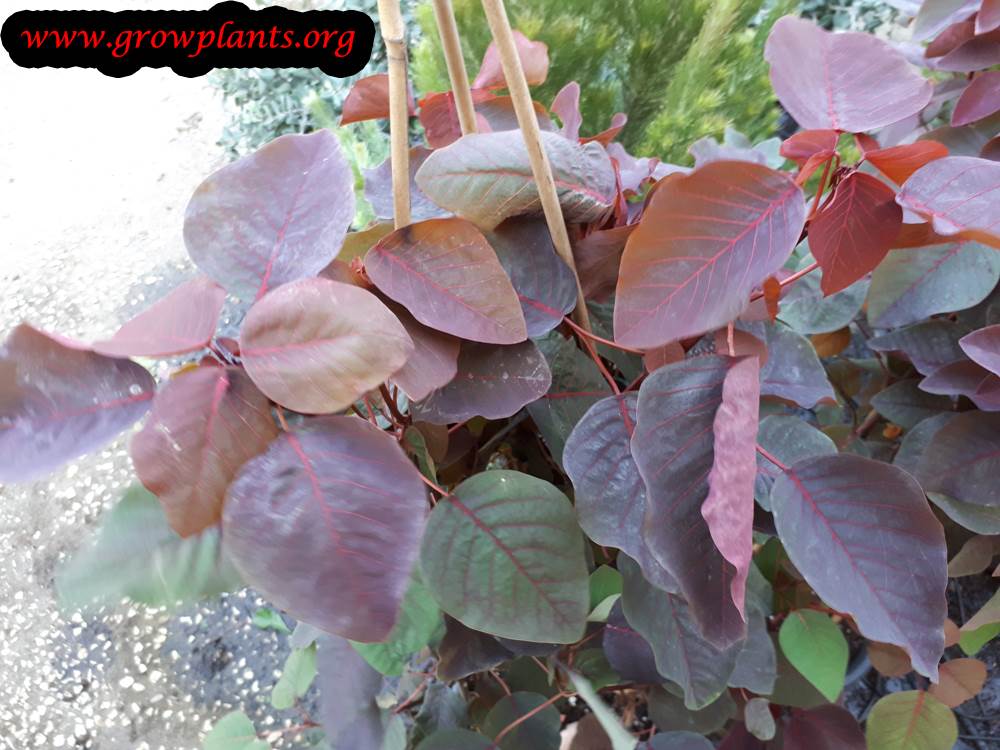
- Leaves & Foliage: Purple-red rounded leaves – the main ornamental feature.
- Flower Characteristics: Small white-yellow flowers in clusters at the branch tips, in spring.
Primary Uses & Landscape Value
- Functional & Ornamental Roles: Ornamental foliage shrub / small tree and container specimen.
Care Guide: Planting, Soil & Watering
Overview: Euphorbia cotinifolia is a frost-tender shrub-tree grown for its deep red-purple foliage, thriving in full sun and well-drained soil sheltered from strong wind. It needs moderate, regular water – more than most euphorbias, but never waterlogged.
Quick Care Requirements
| Requirement | Ideal Condition |
|---|---|
| Planting Season | Warm season – spring and summer |
| Growth Rate | Moderate |
| Soil Type | Well-drained, sheltered from wind |
| Water Need | Moderate |
Planting & Establishment
- Best Planting Season: Plant in the warm season, spring to summer, once frost has passed (roughly zone 9 and warmer).
- How to Plant:
- Hole Preparation: Dig a hole about twice the width of the root ball.
- Soil Amendments: Work in compost and grit for fertility and drainage.
- Planting Depth: Set the root collar level with the surrounding soil.
- Growth Speed & Expectations: Moderate; can be kept as a shrub or grown into a small tree.
Soil, Watering & Drainage Care
- Soil Mix & Drainage Needs: Fertile, free-draining soil; suits containers with drainage holes.
- Watering Schedule & Technique:
- Young / Newly Planted: Water regularly to establish the young plant.
- Established: Water moderately, letting the surface dry between waterings.
- Seasonal Adjustments: More during summer heat; reduce in cool weather.
Climate, Light & Hardiness
Euphorbia cotinifolia (smoke tree) grows as an ornamental shrub or small tree in tropical, Mediterranean, and subtropical climates in full sun to half shade. It requires an essentially frost-free, wind-sheltered site to thrive.
Quick Climate Specifications
| Climate Zones | Tropical, Mediterranean, Subtropical |
|---|---|
| USDA Hardiness Zones | 9+ |
| Frost Tolerance | Very Low |
| Light Conditions | Full Sun / Half Shade |
| Wind Tolerance | Low |
Sunlight & Light Exposure
Optimal Light Setup
Full sun to half shade both suit this species; full sun tends to intensify the purple-red foliage color.
Direct Sun Requirement
Tolerates direct sun for most of the day, with half shade also acceptable.
Temperature Extremes & Hardiness
USDA Hardiness & Regional Limits
Suited to zone 9 and warmer, needing essentially frost-free conditions; cold limits outdoor cultivation outside this range.
Cold Damage & Winter Protection
Frost damages or kills the plant, so in marginal areas it should be sited in the warmest, most sheltered part of the garden or grown in a container that can be moved under cover.
Frost Sensitivity
Frost-sensitive; not suited to any location with regular freezing winter temperatures.
Wind, Humidity & Microclimate
Wind Tolerance
Prefers a wind-sheltered site; exposed, windy locations can damage the brittle branches and stress the plant.
Microclimate Recommendations
A sheltered spot protected from both wind and winter cold, such as near a warm wall, suits this species best at the cooler edge of its range.
Growing in Pots, Balconies & Indoors
The Caribbean copper plant (Euphorbia cotinifolia) is a fast-growing, red-purple-leaved shrub or small tree – far too large to be a houseplant. While young it can be grown in a big tub on a warm, sunny patio.
Quick Details
- Container Size: A pot only 20-50% wider than the root ball – roots stay shallow, so width matters more than depth
- Indoor Suitability: Not a houseplant – it grows into a small tree; a container suits it only while young
- Best Spot: Full sun to half shade (full sun deepens the red foliage)
- Soil & Drainage: Free-draining potting mix; thrives in poor, dry soils and dislikes waterlogging
- Watering in Pots: Sparing – let the mix dry between waterings; overwatering is the main killer in pots
Indoors & On the Windowsill
- Too large for indoors: The Caribbean copper plant quickly becomes a big red-leaved shrub or small tree, so it isn’t a houseplant. Enjoy a young plant in a large tub outdoors, giving it the brightest spot for the best leaf colour.
- Overwintering indoors: Most of these are tender – in cold climates a pot lets you bring it into a bright, frost-free room for winter, kept nearly dry until warmth and light return.
On a Balcony or Patio
- Light & warmth: Give it the brightest, warmest corner – sunny walls and paving throw back the heat these desert plants love. Pots dry faster there, so check the mix, but still water sparingly. Shelter tall or top-heavy stems from strong wind.
- Practicalities: Use a stable, heavy-based pot for tall specimens, and make sure drainage water runs away freely rather than pooling under the pot.
Choosing the Pot, Soil & Long-Term Care
- Pot & drainage: A pot 20-50% wider than the root ball with strong drainage holes; skip a standing-water saucer to avoid root rot. Terracotta breathes and dries faster than glazed or plastic.
- Potting mix: A free-draining potting mix kept open with grit or perlite; these tolerate poor, dry soils but hate waterlogging.
- Feeding: Feed lightly – a dilute general feed once or twice in the warm growing season; nutrients leach from pots faster than open ground.
- Repotting: Refresh the mix and pot up every couple of years, trimming the roots to keep a shrub in scale.
Fertilizing & Feeding
A light feeder: this purple-leaved succulent shrub or small tree grows well with modest feeding through its warm active season and needs none once it slows down.
Quick Fertilizing Specs
| Feeding Level | Light feeder |
|---|---|
| Main Nutrient Priority | Balanced, moderate-nitrogen feeding to sustain foliage growth and vivid purple-red leaf color |
| Best Feeding Period | Spring through summer while it is actively producing new growth |
| Organic Options | A modest amount of compost worked into well-drained planting soil |
| Reduce/Stop Feeding | Ease off feeding as growth slows heading into cooler weather |
| Micronutrients | Usually unnecessary in well-drained soil; correct only a diagnosed deficiency |
| Soil pH | Tolerates a range of well-drained soils; avoid heavy, waterlogged ground |
Feeding by Growth Stage
Warm-season active growth
Support new branch and leaf growth while maintaining the vivid purple-red foliage color this plant is grown for.
| Nutrient direction | A balanced, moderate fertilizer applied lightly to fuel steady growth without pushing overly soft, wind-vulnerable shoots. |
|---|---|
| Timing | Through the warm growing season, once frost risk and wind exposure concerns have passed. |
| Frequency | A light, occasional feeding through the growing season suits this shrub well. |
| Fertilizer types | A balanced, moderate-nitrogen fertilizer, Well-drained soil with some organic matter worked in |
| Precautions | Avoid heavy nitrogen feeding, which can push soft new growth that is more vulnerable to wind and cold damage; keep gloves on when handling – the sap can irritate skin. |
Cool-season rest
Let the plant rest through cool, frost-risk weather without pushing tender new growth.
| Nutrient direction | None – withhold fertilizer as growth slows for the season. |
|---|---|
| Timing | During cooler weather when this frost-sensitive species is not actively growing. |
| Frequency | No feeding at this stage; resume light feeding only once warm-season growth is clearly underway. |
| Fertilizer types | No feeding at this stage; hold off fertilizing until active growth resumes. |
| Precautions | Do not fertilize now – tender growth pushed by feeding during this rest period is especially vulnerable to cold and wind damage. |
Nutrient Deficiency Signs & Corrections
Foliage color fades from its normal vivid purple-red toward dull green, and overall growth slows.
| Possible causes | low available soil nitrogen, nitrogen leaching from heavy watering or rain, root competition in a crowded planting bed |
|---|---|
| Appears first on | overall leaf color, especially on newer growth |
| What to check | recent feeding history, soil organic matter, watering and drainage |
| Possible correction | Apply a balanced, moderate-nitrogen fertilizer during active growth. |
Newest leaves emerge pale or blotchy rather than developing their normal deep purple-red color.
| Possible causes | alkaline or high-pH soil limiting iron availability, waterlogged or poorly drained soil, root stress from recent transplanting |
|---|---|
| Appears first on | the newest leaves |
| What to check | soil pH, drainage and how quickly the soil dries, recent transplanting or root disturbance |
| Possible correction | Correct drainage and check soil pH first, then apply a chelated iron product per its label if pale new growth persists. |
Leaf scorch or dieback appears at branch tips despite normal feeding and watering.
| Possible causes | wind exposure, which this species is sensitive to, cold or frost damage rather than a true nutrient issue, root stress from poor drainage or recent transplanting |
|---|---|
| Appears first on | branch tips and outer canopy |
| What to check | recent wind or cold exposure, planting site shelter, root health and drainage |
| Possible correction | Address site shelter and drainage first; feeding will not resolve wind or cold-related dieback. |
Pruning, Training & Seasonal Maintenance
Grown as either a large shrub or a small tree, Euphorbia cotinifolia is valued mainly for its colorful purple-red rounded foliage. Because the ornamental value is leaf color rather than a floral display or fruit crop, pruning is primarily about shaping, size control, and encouraging flushes of fresh, vividly colored new growth. Its own care notes call for a wind-free, frost-free site, so pruning timing should also avoid leaving the plant freshly cut and exposed going into cold or windy weather.
Quick Pruning & Maintenance Specs
| Pruning Tolerance | Moderate–High |
| Primary Pruning Window | Year-round in frost-free conditions, best timed just before the main Spring growth flush |
| Typical Frequency | Occasional shaping as needed |
| Main Objective | Size/form control and stimulating fresh colorful foliage |
| Young Plant Priority | Establish tree-form (single trunk) vs. multi-stem shrub form |
| Mature Plant Priority | Canopy shape and size maintenance |
| Best Tool Type | Bypass secateurs to pruning saw by branch size; pole pruner on tree-form specimens |
| Avoid Heavy Pruning During | Cold or wind-exposed periods |
Pruning by Plant Age & Size
Newly Established
Minimal – let the plant establish before any shaping.
Young / Formative
Choose a form: for tree-form, select and retain one central trunk and remove lower/competing stems to raise the canopy; for shrub-form, encourage multiple leaders from the base for a fuller screen.
Mature / Established
Maintain the chosen form with size-control cuts and occasional thinning of crowded interior branches, keeping the colorful canopy dense but not congested.
Seasonal Pruning Schedule
Pre-Growth / Early-Spring
Objective: best shaping window ahead of the main flush so new colorful leaves fill in quickly. Remove: overgrown or crossing growth. Expected response: vigorous flush of fresh, vividly colored foliage.
Ongoing Sanitary
Remove wind- or cold-damaged growth as it appears, consistent with its need for a wind-free, frost-free site.
Structural Pruning & Training
For tree-form specimens, establish a clear single trunk with a raised canopy; for shrub-form, manage as a multi-leader form. Either way, remove crossing/rubbing branches and control height and spread, since it can reach 2–9m as a tree.
Special Growth to Remove
No suckers or watersprouts are noted (not grafted); simply remove weak, crossing, or storm-damaged growth.
Container & Small-Space Pruning
Young plants can be grown in containers and kept in shrub-form with regular tip pruning to control size, rather than allowed to develop into tree form, which needs in-ground room.
Tools
Bypass secateurs for young growth and small branches; loppers for medium branches; a pruning saw for larger branches, especially on tree-form specimens; a pole pruner for reaching the upper canopy safely on mature tree-form specimens, warranted given its potential size up to 9m.
Tool Hygiene & Disease Risk
Routine for disease transmission, but as with all Euphorbia, protect skin and eyes from the latex and avoid touching cut surfaces – its own care notes specifically warn the sap can cause skin problems by touch and caution against touching the branches at the cut.
Cut Placement & Technique
Make larger tree-form cuts just outside the branch collar rather than flush to the trunk. On shrub-form growth, cut just above an outward-facing bud to keep an open, well-lit canopy.
Heavy Pruning & Rejuvenation
Tolerates a fairly hard cutback well given its medium growth rate, to renew leggy growth and refresh foliage color, with regrowth typically filling back in within a season. Stage removal of very large limbs on tree-form specimens over more than one session to avoid over-stressing the plant.
Post-Pruning Care
Protect from wind and cold immediately after a hard prune, since the plant already needs a wind-free, frost-free site and fresh cuts/new growth are more vulnerable. Watch for sunburn on newly exposed interior stems after opening up a dense canopy.
Common Pruning Mistakes
- Pruning right before cold or windy weather, when the plant specifically needs a wind-free, frost-free position.
- Touching or brushing against fresh cut surfaces – its own care notes flag this as a skin-irritation risk.
When NOT to Prune
Avoid pruning right before a cold snap or during an exposed windy period, and avoid pruning during establishment.
Recommended Tools (by task)
- bypass_secateurs – small branches and young growth.
- loppers – medium branches.
- pruning_saw – larger branches, especially on tree-form specimens.
- pole_pruner – upper canopy on mature tree-form specimens up to 9m.
Pruning Troubleshooting
| Problem | Possible Cause | What to Check | Corrective Action |
| Dull, less colorful new foliage | Heavy shade or lack of any renewal pruning | Canopy light levels and age of foliage | Light renewal pruning in a sunnier position to stimulate fresh colorful growth |
| Dieback after pruning | Cuts made right before cold or windy weather | Recent weather and wound condition | Time pruning away from cold/windy periods and protect fresh cuts |
Propagation Guide
Euphorbia cotinifolia is propagated from seed or stem cuttings; cuttings are generally the more practical and faster route to a usable plant, since seed takes longer to reach a similar size. Propagation is easy either way in warm, frost-free conditions.
Quick Propagation Specs
| Best Propagation Method | Stem cuttings |
| Alternative Methods | Seed |
| Propagation Difficulty | Easy |
| Seed True-to-Type | Usually true-to-type |
| Vegetative True-to-Type | Yes |
| Best Propagation Season | Spring to summer |
Growing from Seed
Sow in spring or summer in warm, frost-free, wind-sheltered conditions — matching the plant’s own preferred growing conditions — in a well-drained mix.
Stem Cuttings
Take semi-hardwood stem cuttings in spring or summer. As with pruning cuts on this plant, avoid direct contact with the cut surface — the sap can irritate skin. Let the cut end firm up briefly before inserting into a well-drained rooting mix, and keep it sheltered from wind and frost while it establishes.
Bloom & Flower Guide
Quick Details
- Bloom Season: Spring
- Flower Appearance: Small white-yellow flowers borne in clusters at the ends of the branches
- Edibility: Toxic – no part is edible; the milky sap is a strong skin and eye irritant
Detailed Blooming Overview
Grown mainly for its smoky-red foliage, this euphorbia adds small white-yellow flower clusters at the branch tips in spring. As in all euphorbias, each ‘flower’ is really a tiny cup-like structure (a cyathium), and the effect is a delicate froth of bloom above the colorful leaves.
Flower Characteristics
- Small white-yellow flowers gathered in clusters.
- Carried at the ends of the branches, above the smoke-colored leaves.
Bloom Care & Thinning
- Handling safely: Any cut releases milky latex – wear gloves and eye protection when pruning flowered stems, and keep the sap away from skin, eyes, children, and pets.
Pests, Diseases & Troubleshooting
Overview: Caribbean copper plant (Euphorbia cotinifolia) is a shrubby, non-succulent spurge, and euphorbias of this type are troubled mainly by sap-suckers – aphids, whitefly, spider mites, scale and mealybug – plus fungal leaf spots and powdery mildew, with root rot in wet soil; they are generally tough and easy. A crucial safety point: the milky white latex is caustic and toxic, badly irritating skin and especially eyes, so always wear gloves and eye protection when cutting or handling. This shrub/small tree is troubled mainly by whitefly, spider mites, mealybug and scale on the coppery foliage, plus leaf spot in wet conditions.
Quick Troubleshooting Overview
| Issue / Pest | Main Symptom | Primary Solution |
|---|---|---|
| Root / stem rot | Soft, blackening, collapsing base or stems | Gritty free-draining mix, dry between waterings, warmth |
| Mealybug | White cottony tufts in growth points, crevices or roots | Alcohol/oil, isolate, root drench for root mealybug |
| Spider mite | Stippling, corky scarring and fine webbing | Raise humidity, rinse, miticide if severe |
| Scale | Immobile bumps on stems | Scrape off, horticultural oil |
| Edema | Corky, warty bumps on stems or leaves | Reduce water and humidity, improve airflow and light |
| Toxic latex | Skin/eye burns from cut or bruised sap | Wear gloves and eye protection; wash off at once |
Common Pests & Management
- Aphids (Aphididae):
- Symptoms: Colonies of green, black or grey aphids cluster on the soft new shoots and around the flower-heads, distorting growth and leaving honeydew and sooty mould; a common early-season pest of shrubby euphorbias.
- Prevention & Control: Hose off, encourage ladybirds, hoverflies and parasitic wasps, and use insecticidal soap on heavy colonies; avoid over-feeding with nitrogen. Wear gloves – cut stems bleed irritant latex.
- Whitefly (Aleyrodidae):
- Symptoms: Tiny white flies rise in clouds when foliage is disturbed, with nymphs on the leaf undersides sucking sap and excreting honeydew that blackens with sooty mould.
- Prevention & Control: Use yellow sticky traps, hose off, and treat with insecticidal soap or horticultural oil; encourage Encarsia and other natural enemies under cover, and clear infested debris.
- Spider mites (Tetranychus urticae):
- Symptoms: Fine pale stippling, dull bronzing and faint webbing on leaves in hot, dry conditions, dulling the foliage.
- Prevention & Control: Raise humidity and rinse foliage, relieve drought stress, and use insecticidal soap or horticultural oil; predatory mites help under cover.
- Scale & mealybugs (Coccoidea / Pseudococcidae):
- Symptoms: Bumps or white cottony tufts on stems and leaf undersides, sapping the plant and leaving honeydew and sooty mould.
- Prevention & Control: Prune out or wipe off colonies, treat with horticultural oil, control ants, and conserve natural enemies; wear gloves to avoid the latex.
Diseases & Fungal Issues
- Root & stem rot (Phytophthora / Pythium / Fusarium):
- Symptoms: Wilting, yellowing and dark rotted roots and stem base in waterlogged or poorly drained soil, which can kill the plant.
- Treatment & Management: Plant in free-draining soil, avoid overwatering and heavy wet ground, improve drainage, and remove badly affected plants; keep the crown from sitting in water.
- Powdery mildew (Erysiphe / Podosphaera):
- Symptoms: White powdery coating on leaves and stems in crowded, humid or shaded conditions, disfiguring the foliage.
- Treatment & Management: Grow in good light with airflow, avoid crowding, remove affected growth, and spray sulfur or potassium bicarbonate if it takes hold.
- Fungal leaf spot (Cercospora / Alternaria):
- Symptoms: Brown or dark leaf spots and blotches, sometimes with yellow halos, causing leaf drop in wet weather.
- Treatment & Management: Improve airflow, remove fallen and spotted leaves, avoid overhead watering, and use copper only if it becomes severe.
Growing Difficulties & Abiotic Problems
- Edema (oedema):
- Cause & Symptoms: Corky, warty bumps or blisters on stems or leaf undersides where the plant takes up water faster than it transpires, typically in cool, humid, overcast, overwatered conditions.
- Correction Strategy: Reduce watering and humidity, improve airflow and light, and space plants; the existing corky bumps are permanent but new growth will be clean once conditions are corrected.
- Sunburn, scorch & etiolation:
- Cause & Symptoms: Sudden strong sun bleaches and scorches tissue, while too little light causes soft, pale, elongated (etiolated) growth that flops; light-change stress is common when plants are moved.
- Correction Strategy: Acclimatise gradually to stronger light over a couple of weeks, give bright light for tight characteristic growth, and provide light shade in the fiercest heat; move plants between conditions slowly.
- Cold damage & natural corking:
- Cause & Symptoms: Cold or frost blackens and softens tissue on these warm-climate plants, while older stems develop normal brown corky bark (not disease) with age.
- Correction Strategy: Keep plants above their cold limit and dry in cool weather (cold plus wet is lethal), and distinguish firm, dry corking from soft, spreading rot, which needs cutting out.
- Toxic irritant latex (handling hazard):
- Cause & Symptoms: Every cut or bruise bleeds copious milky latex that burns and blisters skin and can cause severe, even lasting, eye injury; sap can also irritate airways and is poisonous if ingested.
- Correction Strategy: Always wear gloves and eye protection when pruning, propagating or handling; keep the sap off skin and well away from eyes and mouth, wash off immediately with soap and water, work in ventilation, and keep children and pets away from cut plants.
What Helps – Products & Tools
For Caribbean copper plant the key ‘products’ are a gritty free-draining mix and careful watering rather than pesticides. Keep horticultural oil and rubbing alcohol (mealybug, scale, mites), insecticidal soap (aphids, whitefly), a systemic drench for root mealybug, sulfur or potassium bicarbonate for mildew, and a fungicide plus sulfur for cut rot surfaces. And essential PPE – gloves and eye protection – for the caustic latex.
Frequently Asked Questions
Is Euphorbia cotinifolia a tree or a shrub?
Euphorbia cotinifolia is naturally an evergreen shrub to small tree, reaching up to 2-9 m (though it is often kept as a 1-3 m shrub). You can train it into whichever form you prefer: for tree-form, select and retain one central trunk and remove lower or competing stems to raise the canopy, while for shrub-form you encourage multiple leaders from the base for a fuller screen.
Is Euphorbia cotinifolia poisonous or dangerous to touch?
Yes. Every cut or bruise on Euphorbia cotinifolia bleeds copious milky latex that burns and blisters skin and can cause severe, even lasting, eye injury; the sap can also irritate airways and is poisonous if ingested. Always wear gloves and eye protection when pruning, propagating or handling it, keep the sap off skin and well away from eyes and mouth, wash off immediately with soap and water, work in ventilation, and keep children and pets away from cut plants.
How much sun does Euphorbia cotinifolia need for the best leaf color?
Euphorbia cotinifolia grows well in full sun to half shade, and full sun tends to intensify the purple-red foliage color, so giving it the brightest spot available will produce the deepest leaf color.
Is Euphorbia cotinifolia cold hardy or frost tolerant?
No – Euphorbia cotinifolia is suited to zone 9 and warmer, needing essentially frost-free conditions, since cold limits outdoor cultivation outside this range. Frost damages or kills the plant, so in marginal areas it should be sited in the warmest, most sheltered part of the garden or grown in a container that can be moved under cover.
Can Euphorbia cotinifolia be grown in a pot?
While young, yes – it can be grown in a big tub on a warm, sunny patio, in a pot only 20-50% wider than the root ball since its roots stay shallow. It is not a good long-term houseplant, though: the Caribbean copper plant quickly becomes a big red-leaved shrub or small tree, so it isn’t a houseplant.