Whiteflies are tiny, moth-like white insects that rise in a cloud when you disturb an infested plant, then settle back onto the leaf undersides. They suck sap, weaken plants, coat leaves in sticky honeydew and, on some plants, spread viruses. This is a general guide; whiteflies are a group of related species with differing host ranges and virus risks, so treat it as the framework and follow guidance specific to your plant and any product you use.
What whiteflies are
Whiteflies are small (around 1–2 mm) sap-sucking insects, closely related to aphids and scale, with white, powdery wings. The winged adults are what you notice; the immature stages are flat, scale-like and largely stationary on the undersides of leaves. They breed quickly in warm, sheltered conditions, so populations can build fast — especially indoors and under glass.
Common visual symptoms
- Adults flying up in a white cloud when foliage is disturbed, then resettling underneath the leaves.
- Immature stages on leaf undersides — tiny, flat, oval, translucent-to-white scale-like specks that don’t move.
- Yellowing, mottled or fading leaves, and weakened, stunted growth.
- Sticky honeydew on lower leaves and surfaces, often turning black with sooty mould.
- Ants attracted to the honeydew.
Damage they cause
By feeding in numbers, whiteflies drain sap and weaken plants, causing yellowing, leaf loss and reduced vigour. Their honeydew coats foliage and grows black sooty mould that blocks light. On some plants and with some whitefly species, they also transmit plant viruses — but virus risk varies by species and host, so it is genuinely important on certain crops (such as some vegetables) and not a universal threat for every plant. Judge the virus risk against your specific plant rather than assuming it always applies.
Conditions that favour them
- Warm, sheltered environments — greenhouses, conservatories and indoors, where they breed continuously.
- Dense, crowded plantings with poor airflow.
- Soft, lush growth from heavy nitrogen feeding.
- Bought-in plants that arrive already carrying whitefly.
Monitoring
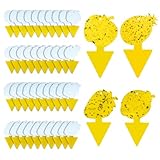
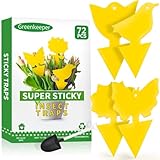
Because adults are mobile and the young hide underneath leaves, monitor deliberately. Turn over leaves to check for the flat immature stages, and gently shake plants to see if adults fly up. Yellow sticky traps are a useful monitoring tool: whiteflies are drawn to yellow, so traps show you early whether whitefly are present and whether numbers are rising or falling. Treat sticky traps mainly as monitoring and mass-trapping aids rather than a complete control on their own.
Isolation
Inspect new plants before bringing them indoors or into a greenhouse, and isolate any that carry whitefly so they don’t spread to the rest of your collection — whitefly are very commonly introduced on bought-in plants.
Removing badly infested material
Pick off and dispose of heavily infested leaves (with the immature stages underneath), rather than composting them near susceptible plants. On sturdy plants, a firm spray of water to the leaf undersides knocks off adults and dislodges some young.
Cultural control
- Improve airflow and avoid overcrowding.
- Avoid excess nitrogen, which drives the soft growth whitefly favour.
- Clear heavily infested lower leaves and keep plants healthy.
- Remove nearby weeds that can host whitefly.
Biological approaches
Whitefly have effective natural enemies that are widely used, particularly under glass — notably the parasitic wasp Encarsia formosa, along with predatory beetles and lacewings. Encouraging or introducing beneficials, and avoiding broad-spectrum sprays that kill them, is one of the most reliable long-term approaches in greenhouses and indoor spaces.
Treatment principles
- Start with monitoring, physical removal and biological controls — these handle many infestations, especially under cover.
- Target leaf undersides, where the young stages live; adults are harder to hit.
- Insecticidal soaps and horticultural oils are common low-toxicity contact options; thorough undersides coverage and repeat applications matter.
- If using a product, no single product suits every plant or every whitefly species, and whitefly are prone to resistance. Choose one labelled for your plant and pest, follow the label exactly, rotate modes of action, and never exceed labelled rates.
Repeat monitoring
Whitefly have overlapping generations and the young stages survive many single treatments, so keep checking leaf undersides and traps and repeat control as the label allows — rotating products — until numbers fall and stay down.
Prevention
- Inspect and isolate new plants before introducing them.
- Use yellow sticky traps as an early-warning system on vulnerable plants.
- Keep plants well spaced with good airflow, and avoid excess nitrogen.
- Support natural enemies by avoiding broad-spectrum sprays.
- Control host weeds nearby.
Common mistakes
- Only treating when adults fly up, and ignoring the young stages underneath the leaves.
- Spraying leaf tops instead of undersides.
- Relying on one product repeatedly, which drives resistance.
- Killing the parasitic wasps and predators that give the best long-term control.
- Bringing in infested plants without inspecting or isolating them.
Quick questions
What are the tiny white flies on my plant? Most likely whiteflies — sap-sucking insects that cluster on leaf undersides and fly up in a cloud when disturbed.
Do yellow sticky traps get rid of whitefly? They’re excellent for monitoring and reduce adult numbers, but usually work best alongside removing infested leaves and using biological or low-toxicity controls.
Do whiteflies spread disease? Some species transmit viruses to certain plants, so it matters on susceptible crops, but it is not a universal risk for every plant — check your specific plant.
Related guides
◀ Back to the Plant Problems hub to diagnose by symptom, pest or disease.
- Scale insects · mealybugs · thrips · aphids
- Choosing a plant sprayer · all plant pests & protection
- Sticky traps & pest monitoring – detect and track these pests early.