



Plant Profile & Key Characteristics
Overview: A hardy herbaceous Allium grown for its edible parts, reaching 0.5–2 m (20–80 in). This culinary perennial (its bulb is biennial) is usually cultivated as an annual or biennial for the kitchen.
Quick Specifications
| Specification | Attribute |
|---|---|
| Plant Type / Life Cycle | Herbaceous perennial (usually grown as an annual/biennial) |
| Mature Size | 0.5–2 m (20–80 in) |
| Growth Rate | Fast to moderate |
| Root System | Bulbous — fibrous roots from a bulb. |
| Toxicity | Edible for people; toxic to dogs, cats and livestock (onion/garlic toxicity from organosulfur compounds). |
| Hardiness | USDA zones 6–11 |
Growth Form & Structure
- Height & Spread: About 0.5–2 m (20–80 in) in the ground; grows well in pots, troughs and window boxes.
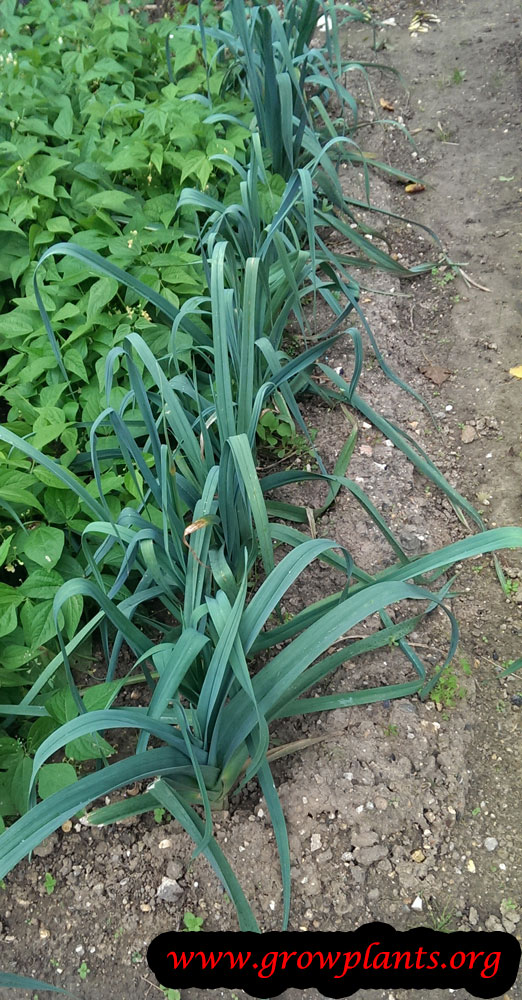
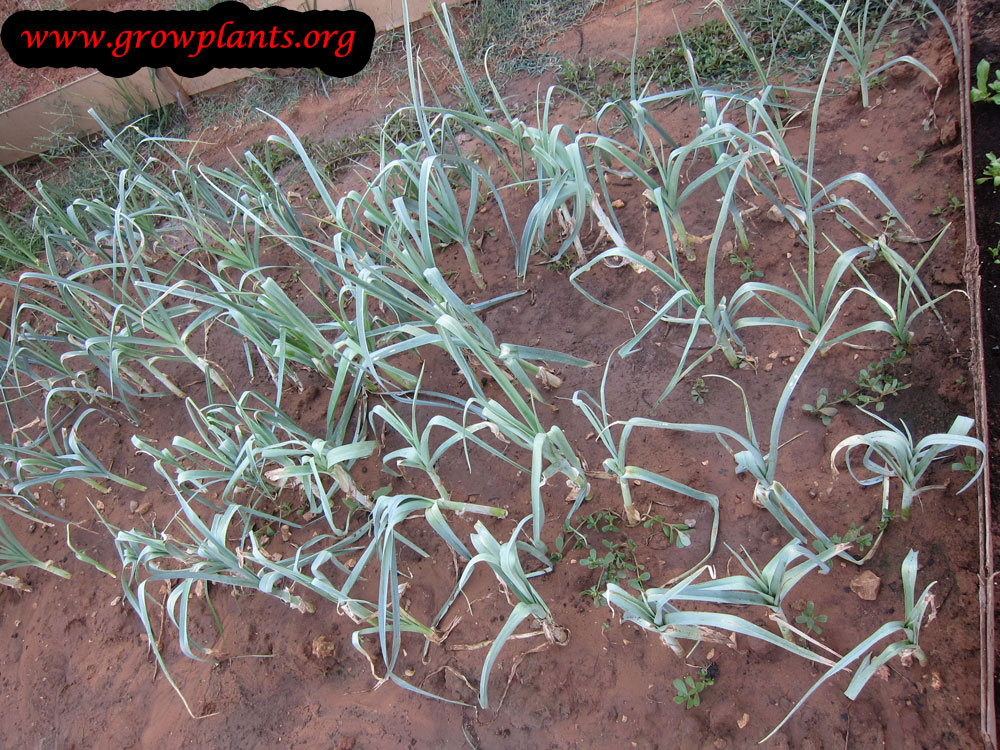
- Growth Habit & Form: Clump-forming bulbous herb with upright leaves rising from the base.
- Lifespan & Maturity: Perennial from its bulbs; usually harvested within its first season or two of growth.
Anatomy & Physical Features
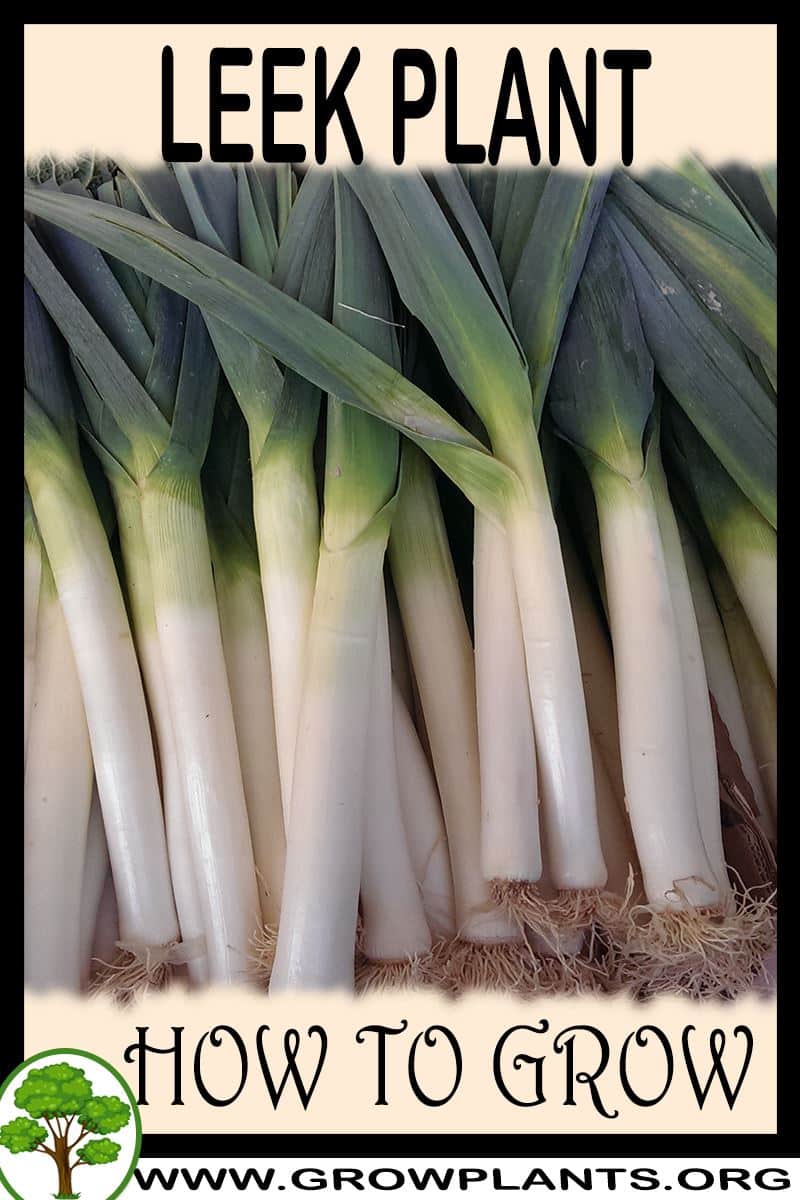
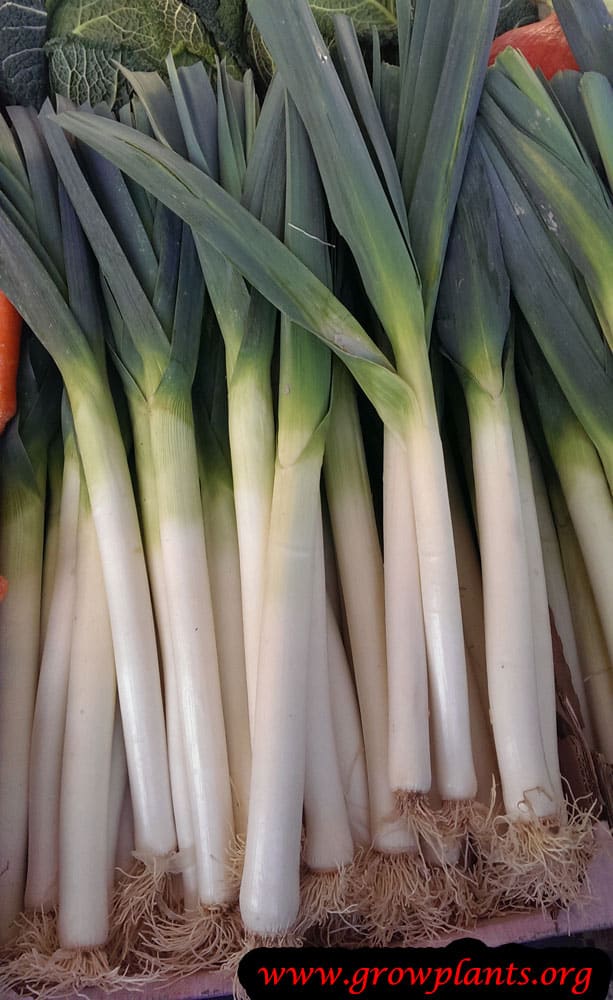
- Leaves & Foliage: Broad, flat, blue-green leaves folded into a tight cylinder that forms the blanched edible stem.
- Flower Characteristics: Large rounded umbel of small pale purple to white flowers on a tall stalk in the second year; edible. (see the Bloom guide for detail).
Primary Uses & Landscape Value
- Edible Uses: Thick, mild-flavoured blanched leaf-stem (shank) is the main crop, harvested when fully grown for soups, stews and roasting.
- Functional & Ornamental Roles: Cool-season vegetable crop for the kitchen garden and deep containers.
Care Guide: Planting, Soil & Watering
Overview: Leek is a hardy, sun-loving allium that grows best in loose, fertile, well-drained soil enriched with organic matter and nitrogen, and kept free of stones. It needs steady, even moisture in an open bed so the roots and bulbs can develop.
Quick Care Requirements
| Requirement | Ideal Condition |
|---|---|
| Planting Season | Year-round in mild climates |
| Growth Rate | Moderate to Fast |
| Soil Type | Loose, rich, well-drained soil, free of rocks, with added nitrogen |
| Soil pH | Neutral, about 6.0–7.0 |
| Water Need | Moderate — keep the soil evenly moist but never waterlogged |
Planting & Establishment
- Best Planting Season: Plant year-round in mild climates; alliums do best sown or set when temperatures suit the chosen cultivar.
- How to Plant:
- Hole Preparation: Work the bed to a loose, rock-free tilth so bulbs and roots can develop without obstruction.
- Soil Amendments: Enrich the bed with compost and a source of nitrogen before planting for strong growth.
- Planting Depth: Set bulbs, cloves or sets with the pointed tip up and about 2–3 cm of soil over them (roughly their own height), leaving the neck near the surface — do not bury them deeply; sow seed more shallowly.
- Growth Speed & Expectations: Expect moderate to fast growth in good conditions.
Soil, Watering & Drainage Care
- Soil Mix & Drainage Needs: Alliums need a light, rich, free-draining bed kept clear of stones so bulbs can swell; in containers use a fertile potting mix with good drainage. Waterlogged soil causes bulb and root rot.
- Watering Schedule & Technique:
- Young / Newly Planted: Keep the soil consistently moist while seedlings, bulbs or cloves establish and root.
- Established: Water regularly and evenly through the growing season, avoiding both drought stress and waterlogging.
- Seasonal Adjustments: As bulbs mature and the tops begin to bend over, ease off watering to let them firm up; water more in warm, dry spells and less in cool, wet weather.
Climate, Light & Hardiness
Leeks grow well across Mediterranean, subtropical, and temperate climates and prefer full sun to half shade. The bulb is biennial and the crop is typically grown on an annual cycle, but the plant itself is reasonably cold-hardy through USDA zone 6–11.
Quick Climate Specifications
| Climate Zones | Mediterranean, subtropical, temperate |
|---|---|
| USDA Hardiness Zones | 6–11 |
| Light Conditions | Full sun to half shade |
Sunlight & Light Exposure
Optimal Light Setup
Full sun produces the strongest stalks; half shade is tolerated with somewhat slower growth.
Temperature Extremes & Hardiness
USDA Hardiness & Regional Limits
Grows from zone 6 through 11 and tolerates cool-season conditions well, which is why it is often planted for autumn-through-winter harvest in milder climates; further north it is grown as an annual within a single, sufficiently warm season.
Growing in Pots, Balconies & Indoors
Leeks are a tall, full-sun-to-part-shade vegetable, not a houseplant – they grow well in a deep container outdoors, where they can develop long stems, but indoor light is too weak.
Quick Details
- Container Size: A pot or planter with free drainage (the grower confirms container growing but gives no set size); use a deep container to blanch long white stems
- Indoor Suitability: Not a houseplant – it needs real outdoor light and depth to grow long stems
- Best Spot: Full sun to half shade
- Soil & Drainage: Loose, free-draining, organic-rich mix
- Watering in Pots: Average, even moisture; let the pot drain freely.
Indoors & On the Windowsill
- Houseplant limits: The grower lists leeks as not an indoor plant.
- Windowsill option: Only the brightest sill would keep seedlings going; leeks are far better grown on outdoors in a deep pot.
- Safety: Onions, garlic and their relatives are toxic to cats and dogs – keep pots out of pets’ reach if you grow them indoors, and never let pets nibble the leaves.
On a Balcony or Patio
- Light and shelter: A sunny balcony or patio suits it well; containers dry quickly, so check moisture often in warm weather.
- Practicalities: Mind the weight of a watered planter and manage drainage runoff with a tray or pot feet.
Choosing the Pot, Soil & Long-Term Care
- Pot and drainage: Choose a pot with strong drainage holes; if you stand it on a saucer, empty the saucer promptly so the roots never sit in water. Terracotta breathes and dries faster, while glazed or plastic pots hold moisture longer.
- Potting mix: Use a well-aerated, organic-rich mix – a good potting soil, or peat/coir blended with perlite or vermiculite for drainage and air.
- Watering: Water regularly to keep the mix evenly moist – pots dry out far faster than open ground, so check often in heat – but never leave it standing wet.
- Feeding: Potted plants run through their soil faster because nutrients leach out with every watering, so feed a little more often than you would in open ground.
Fertilizing & Feeding
Leeks are steady, moderate nitrogen feeders through their long growing season, then ease off to a lighter balanced feed as the shank finishes.
Quick Fertilizing Specs
| Main Nutrient Priority | Nitrogen through the main growing season, easing to balanced as the shank finishes |
|---|---|
| Best Feeding Period | The main leafy growth phase |
| Soil pH | Prefers soil on the neutral side |
| Reduce/Stop Feeding | Taper to light feeding as the leek nears harvest size |
| Organic Options | Compost or aged manure worked into the row at planting and as a side-dress during active growth |
Feeding by Growth Stage
Establishment After Transplanting
Help transplanted seedlings settle in and root out in their rich, well-drained bed
| Nutrient direction | Balanced feeding to support root establishment |
|---|---|
| Timing | At transplanting and through the first weeks of root establishment |
| Frequency | A light initial feeding at planting, then minimal feeding until new growth is visible |
| Fertilizer types | A balanced, complete fertilizer or finished compost mixed into the planting row |
| Precautions | Keep the rich, well-drained, rock-free soil leeks prefer; avoid burying fertilizer against young roots |
Leaf and Shank Growth
Drive vigorous leaf growth and the thickening of the edible shank
| Nutrient direction | Nitrogen-forward feeding to fuel steady leaf and stem growth |
|---|---|
| Timing | Through the main growing season as the plant builds height and girth |
| Frequency | Several light feedings spread through the active growing season |
| Fertilizer types | A nitrogen-forward complete fertilizer, or nitrogen-rich compost or aged manure as a side-dress |
| Routine trace nutrients | iron, manganese |
| Precautions | Keep soil consistently moist alongside nitrogen feeding; leeks growing in dry, low-fertility soil stall out |
Finishing the Shank Before Harvest
Support final shank thickening and cold-hardiness as the plant nears harvest size
| Nutrient direction | Ease back to a balanced, lighter feed as the plant approaches full size |
|---|---|
| Timing | As the leek approaches harvest size, into the cooler part of the growing season |
| Frequency | Feeding tapers off, with light feeding at most as harvest nears |
| Fertilizer types | A balanced, lighter-strength complete fertilizer, or none if the bed is already fertile |
| Routine trace nutrients | iron, manganese |
| Precautions | Rarely needs feeding this late; heavy feeding this close to harvest favors leaf growth over shank quality |
Nutrient Deficiency Signs & Corrections
Leaves turn pale and growth slows during the main growing season
| Possible causes | Insufficient nitrogen, Cool or waterlogged soil slowing nutrient uptake, Low soil fertility from repeated cropping without replenishment |
|---|---|
| Appears first on | Older, lower leaves first |
| What to check | Soil fertility and recent feeding history, Drainage and soil temperature |
| Possible correction | Apply a nitrogen-forward feed and confirm the bed drains well |
New leaves emerge pale yellow while veins stay greener
| Possible causes | High soil pH limiting iron availability, Waterlogged soil, Root stress from compacted soil |
|---|---|
| Appears first on | New, inner leaves |
| What to check | Soil pH and drainage |
| Possible correction | Correct pH toward neutral and improve drainage; a chelated iron product per its label can help persistent cases |
Overall stunted, weak growth despite otherwise adequate light and water
| Possible causes | General nutrient deficiency from lean soil, Compacted or rocky soil restricting roots, Persistent pest pressure such as onion fly or thrips diverting plant energy |
|---|---|
| Appears first on | Whole plant, uniformly weak |
| What to check | Soil compaction and rock content, Pest pressure, Feeding history |
| Possible correction | Improve soil tilth, address any pest pressure, and resume a balanced feeding routine |
Pruning, Training & Seasonal Maintenance
Leek is grown as an annual/biennial vegetable for its blanched leaf-shank, and unlike the chives and garlic chives in this same genus it is not repeatedly cut back through the season – the whole plant is lifted at harvest, so ongoing leaf-cutting would only rob the shank of the foliage that feeds it. The one routine cut is a one-time leaf (and root) trim applied to bare-root transplants at planting time, which eases transplant shock and encourages a thicker, straighter shank; beyond that, maintenance is limited to removing dead or damaged outer leaves and promptly cutting out any flower stalk that appears, since a bolted leek toughens and becomes unusable at the shank. Pruning has essentially no effect on “flowering” for culinary purposes here – the goal is to prevent it, not manage it.
Quick Pruning & Maintenance Specs
| Pruning Tolerance | Low on live foliage – leaves feed shank development and are not routinely cut like chives |
| Primary Pruning Window | At transplanting – one-time leaf/root trim on bare-root seedlings |
| Secondary Maintenance Window | Ongoing, as needed – removal of dead/damaged outer leaves and any bolting flower stalk |
| Typical Frequency | Once at transplant; occasional sanitary removal; not a repeat harvest cut |
| Main Objective | Reduce transplant stress and support shank thickening; prevent energy loss to premature flowering |
| Young Plant Priority | Trim transplant leaf tops (and roots) by about a third; no cutting after that while the shank bulks up |
| Mature Plant Priority | Remove dead/yellowed outer leaves; remove any flower stalk at its base as soon as it appears |
| Best Tool Type | Precision snips |
| Avoid Heavy Pruning During | The main shank-bulking period through summer – foliage should stay largely intact until harvest |
Pruning by Plant Age & Size
Newly Established
At transplanting, trim the seedling’s leaf tops (and trailing roots) back by roughly a third with a clean cut – a standard technique for bare-root leek transplants that reduces transplant stress and encourages the plant to put energy into a thicker stem rather than tall, floppy leaves. Do not trim again once the plant is growing on.
Young / Formative
No structural training in the cutting sense – leek grows as a fan of overlapping leaf bases from a single point, and the white shank is developed by blanching (hilling soil or a collar around the base) rather than by any pruning cut.
Mature / Established
Leave foliage largely uncut while the shank bulks up; simply remove any obviously dead, yellowed or storm-damaged outer leaf, and watch for a flower stalk rising from the centre, which should be cut out promptly if it appears.
Seasonal Pruning Schedule
At transplanting: trim leaf tops and roots by about a third on bare-root seedlings – the plant’s one deliberate pruning event, aimed at easing establishment rather than shaping mature growth.
Through the growing season (shank bulking): avoid cutting leaves; the priority action is watching for and removing any flower stalk at its base as soon as it is noticed, since a bolted plant diverts energy from the shank into flowering and the stem toughens.
Ongoing sanitary: remove dead, yellowed or wind-battered outer leaves at any time; this is cosmetic/disease-prevention housekeeping, not a harvest technique.
Special Growth to Remove
A flower stalk (bolting) is the main growth to remove – cut it out at its base as soon as it is noticed, unless the goal is deliberately saving seed, since a bolted leek’s shank turns tough and pithy. Otherwise remove only dead or damaged outer leaves. Leek does not produce suckers, watersprouts or runners.
Container & Small-Space Pruning
Leek grows well in a deep container, and the same rules apply as in-ground: trim transplant leaf tops once at planting, then leave foliage intact through the season, and mound soil or mulch around the base as the pot allows to keep the shank blanched. Watch pot-grown plants just as closely for bolting, which can happen faster under the more variable temperature swings of a container.
Tools
Precision snips are the only tool needed – for the one-time transplant leaf/root trim and for cutting out a flower stalk. Leek’s tissue is entirely soft and non-woody, so secateurs, loppers, a saw or hedge shears are never appropriate.
Tool Hygiene & Disease Risk
Routine. Onion fly and onion thrips are the reported pest risks rather than any tool-transmitted disease; keep the snips clean and sharp as general practice.
Cut Placement & Technique
When trimming a transplant, cut leaf tops straight across roughly a third of their length, and trim any excessively long roots similarly – never cut into the central growing point. When removing a flower stalk, cut it right at its base rather than partway up, since a remaining stub will still push on toward flowering.
Heavy Pruning & Rejuvenation
Not applicable – leek is grown from seed or sets as an annual/biennial vegetable crop and is harvested as a whole plant; there is no cutting back or rejuvenating an individual leek, only starting fresh plants the following season.
Post-Pruning Care
Water transplants in well after the leaf/root trim to settle the soil and support quick re-establishment. No extra feeding is needed simply for the transplant trim or for removing a flower stalk.
Common Pruning Mistakes
- Repeatedly cutting leaves through the season as if leek were chives, which reduces final shank size instead of encouraging regrowth.
- Leaving a bolted flower stalk in place, which toughens and hollows the shank.
- Over-trimming a transplant’s leaves and roots by more than about a third, stressing an already-vulnerable seedling.
When NOT to Prune
Do not cut live leaves during the main shank-bulking period – that foliage is what feeds shank growth. Do not trim a transplant beyond the standard light one-third reduction, and there is no benefit to any leaf-cutting once the plant is approaching harvest size.
Recommended Tools (by task)
- precision_snips – the light transplant leaf/root trim and cutting out an occasional flower stalk are the only cuts this crop needs.
Pruning Troubleshooting
| Problem | Possible Cause | What to Check | Corrective Action |
| Tough, pithy or split shank at harvest | A flower stalk (bolting) formed and was left uncut | Look for a hardening central stalk inside the leaf fan | Harvest bolted plants promptly; cut out flower stalks as soon as seen in future crops |
| Thin, poorly developed shank | Leaves were repeatedly cut/harvested like a cut-and-come-again herb | Check whether foliage was trimmed during the growing season | Stop routine leaf-cutting; leave foliage intact until the whole plant is lifted at maturity |
| Ragged, torn or browning leaf tips after transplanting | Leaves not trimmed cleanly before transplanting, or torn by wind/handling | Check the timing and cleanliness of the transplant leaf trim | Trim leaf tops by about one-third with a clean straight cut at transplanting, not by tearing |
Propagation Guide
Leeks are most commonly started from seed, which reliably produces new plants each season and is the standard commercial and home-garden method. Because Allium ampeloprasum readily cross-pollinates with other flowering alliums, seed saved from open, unisolated plants may not come fully true to the parent, so growers wanting an exact match should isolate flowering plants or instead divide an existing bulb/basal offset, which this site also lists as a workable starting method; overall difficulty is Easy.
Quick Propagation Specs
| Best Propagation Method | Seed |
| Alternative Methods | Bulb / basal offset division |
| Propagation Difficulty | Easy |
| Seed True-to-Type | Usually true-to-type for isolated open-pollinated varieties; may cross with other flowering Allium plants nearby |
| Vegetative True-to-Type | Yes |
| Best Propagation Season | All year in frost-free areas; spring sowing is typical in cooler climates |
| Seed Germination Time | Typically 1-3 weeks, depending on soil temperature |
| Germination Temperature | Roughly 10-24°C (50-75°F) |
| Seed Sowing Depth | Shallow – roughly 0.5-1 cm (0.2-0.4 in) |
Growing from Seed
Sowing Season
Can be sown year-round where frost-free; in cooler climates, sow in spring for a summer/autumn crop.
Sowing Depth & Orientation
Sow shallowly, just covering the seed.
Germination Conditions & Time
Germinates in roughly 1-3 weeks under warm, evenly moist conditions; cooler soil slows and can stagger germination.
Seedling Care
Seedlings are usually started in trays or a nursery seedbed and transplanted once they reach pencil thickness, generally several weeks to a couple of months after sowing.
Division, Offsets, Pups & Suckers
Some forms within this species produce clustered basal offset bulbs rather than relying only on seed. Where offsets are present, lift the clump when dormant and separate individual bulbs with roots attached, then replant – this matches this site’s own listing of bulb/plant division as an accepted way to start leek.
Bloom & Edible Flower Guide
Quick Details
- Bloom Season: Summer
- Time to First Bloom: Usually in its second year – leek is biennial and bolts to flower after overwintering
- Flower Appearance: A rounded umbel of many small white to pink-purple flowers atop a tall stem
- Edibility: Edible – the flowers have a mild oniony flavor and make a pretty, savory garnish
Detailed Blooming Overview
Left in the ground into a second year, a leek bolts: it sends up a tall stalk crowned with a globe-shaped umbel packed with small white to pink-purple flowers. It is a striking bloom and a good pollinator plant, though for eating leeks it usually signals the end of the tender harvest.
Flower Characteristics
- Many small flowers gathered into a rounded, ball-like umbel.
- White through pink-purple, carried on a tall, stiff stem.
Bloom Care & Thinning
- Thinning the bloom: Unless you want to save seed, remove the flower stalks as they form to keep the crop in good eating condition.
- Pollination: Bees and flies work the nectar-rich umbels heavily.
Fruit & Uses
Leek is grown for its thick, layered white shank (the leaf-base pseudostem) and its green leaves, both of which are cooked rather than eaten raw. It is a classic soup, stew, and braising vegetable rather than a storage-bulb crop like onion or garlic.
Quick Edible Specs
| Edible Parts | Leaf-base shank (pseudostem), Leaves |
|---|---|
| Main Use(s) | Culinary (soups, stews, braising) |
| Eaten Raw or Cooked | Cooked |
| Preparation Required | Cook; trim and rinse well between leaf layers (grit collects there) |
| Harvest Season | All year in mild climates; restricted in the coldest part of winter in cold areas |
| Time to First Harvest | Single harvest once the plant is fully grown (see Propagation) |
| Storage | Best used fresh soon after harvest |
| Safety/Toxicity Caveat | Like other Allium plants, leek is toxic to dogs and cats and should be kept away from pets |
Leaves & Greens
The leaves are green above and whiter toward the base, growing in a connected radial pattern with new growth from the centre. They are cooked, not eaten raw, and are typically harvested together with the shank rather than picked leaf by leaf.
Pseudostem / Cane / Sap
The edible white ‘bulb’ described for this plant is really the swollen shank of overlapping leaf bases (the pseudostem), 2–5 cm across, built up in layers — it does not cure and store as a dry bulb the way onion does. Cultivars vary from milder to spicier. It is harvested by pulling the whole plant from the ground once mature, then cooked in dishes such as soups, stews, and meatballs.
Harvesting
Leeks are typically lifted whole rather than picked piece by piece — pull the entire plant once it has reached size. Harvest is possible most of the year, though very cold areas restrict pulling in winter.
Preparation, Uses & Safety
Leek is always cooked, never eaten raw. Split and rinse well between the leaf layers, where grit collects. Used in soups, stews, braises, and mixed into dishes like meatballs. As with other Allium plants, keep leek away from dogs and cats.
Pests, Diseases & Troubleshooting
Overview: Leeks are the classic host of leek moth and allium leafminer, whose caterpillars and grubs tunnel the shanks, and they are very prone to orange rust in crowded, damp, over-fed stands. In cool wet weather white tip can bleach the leaves. Wide spacing, insect mesh, rotation and moderate nitrogen prevent most trouble.
Quick Troubleshooting Overview
| Issue / Pest | Main Symptom | Primary Solution |
|---|---|---|
| Onion thrips | Silver streaks/stippling on leaves | Even watering; soap/spinosad in evening; beneficials |
| Onion fly / maggot | Wilting seedlings; maggots in bulb base | Rotate; insect mesh; remove culls; nematodes |
| Leaf/stem miners & moths | Windowpane mines & tunnels in leaves/shank | Mesh barrier; destroy mined leaves; Bt/spinosad |
| Downy mildew | Grey-violet fuzz; yellow collapsing leaves | Airflow; no evening overhead water; copper |
| Basal / white rot | Rotten basal plate; white mould, black sclerotia | Clean stock; long rotation; destroy infected plants |
| Neck / soft rot (store) | Soft slimy neck; bulb collapses in store | Cure & dry well; store cool, dry, ventilated |
Common Pests & Management
- Leek Moth (Acrolepiopsis assectella):
- Symptoms: Caterpillars mine inside the leaves and down into the stem/bulb, leaving whitish ‘windowpane’ patches and pinhole entry tunnels; frass and secondary rot follow. Most damaging on leeks and garlic in warm regions with two or more generations per season.
- Prevention & Control: Cover the crop with insect mesh from planting to exclude egg-laying moths; remove and destroy mined leaves and crop debris. Rotate and avoid a continuous allium supply. Bacillus thuringiensis (Bt) sprayed onto young larvae, and spinosad, give control when applied at first sign of mining.
- Allium Leafminer (Phytomyza gymnostoma):
- Symptoms: Adults make neat rows of white feeding punctures down the leaf; larvae mine toward the base and pupate as brown seed-like puparia in the stem and bulb, opening the door to bacterial and fungal rot. Two generations, in spring and autumn.
- Prevention & Control: Exclude adults with insect netting during the spring and autumn flight periods; destroy infested debris and rotate. Delay or time plantings to miss peak flights. Spinosad or a suitable systemic can be used where pressure is high, applied at first sign of the punch-row feeding scars.
- Onion Thrips (Thrips tabaci):
- Symptoms: Tiny (1 mm) slender straw-yellow insects hiding in the leaf axils and inner leaf bases; feeding rasps the surface leaving silvery-white streaks, blotches and a general silvering that later browns. Worst in hot, dry weather; heavy populations distort growth and cut bulb size. Look-alikes: nutrient streaking (uniform) versus thrips (stippled with black frass specks).
- Prevention & Control: Encourage natural enemies (predatory mites, minute pirate bugs, lacewings); avoid drought stress with even irrigation and mulch, since stressed plants attract thrips. Use reflective/silver mulch and blue sticky traps for monitoring. Rotate away from other alliums. If needed, spray insecticidal soap, spinosad or horticultural oil into the leaf bases in the evening, repeating at 5–7 day intervals; rotate modes of action as thrips resist products quickly.
- Onion Fly / Onion Maggot (Delia antiqua):
- Symptoms: Small white legless maggots tunnel into the base of the bulb and stem; young plants wilt, yellow and collapse, older bulbs rot and are riddled with tunnels that invite secondary soft rot. Adults are grey, house-fly-like. Damage often appears in patches, worst in cool moist springs.
- Prevention & Control: Rotate crops and avoid planting into ground that grew alliums the previous year; remove and destroy culls and thinnings (their smell attracts egg-laying females). Firm the soil around transplants and cover beds with insect mesh/floating row cover at emergence to exclude the fly. Avoid heavy fresh manure. Beneficial nematodes (Steinernema) drenched into the soil help against larvae.
- Cutworms (Agrotis spp.):
- Symptoms: Young transplants and seedlings cut off at or near the soil line overnight; fat grey-brown caterpillars curl up just below the surface when exposed.
- Prevention & Control: Keep beds weed-free before planting to deny egg-laying sites; use cardboard/foil collars around transplants. Hand-pick at dusk, apply Bt or beneficial nematodes, and hoe to expose larvae to birds.
Diseases & Fungal Issues
- Allium Rust (Puccinia allii):
- Symptoms: Bright orange-brown raised pustules that rupture and shed powdery spores along leaves; heavy infection yellows and kills foliage, cutting yield. Especially common on leeks, chives and garlic.
- Treatment & Management: Avoid overcrowding and excess nitrogen; space for airflow and rotate. Remove and destroy infected leaves and debris. Resistant/tolerant varieties help. Where severe, apply a suitable rust fungicide (triazole or, in gardens, sulfur) early.
- Leek White Tip (Phytophthora porri):
- Symptoms: Leaf tips go pale, water-soaked then bleached white and collapse, with a rot spreading down the leaf; worst in cool, wet autumn/winter conditions on leeks.
- Treatment & Management: Improve drainage and airflow, rotate, and remove affected leaves and debris. Protectant copper or a Phytophthora-active fungicide in prolonged cool wet spells; avoid overcrowding.
- Downy Mildew (Peronospora destructor):
- Symptoms: Pale green to yellow oval patches on leaves and stalks, soon covered by a fuzzy grey-violet mould in humid mornings; leaves collapse and die back from the tip, bulbs mature small and soft. Favoured by cool, wet, humid weather.
- Treatment & Management: Space and orient rows for airflow and morning drying; avoid overhead evening irrigation; rotate 3+ years and destroy volunteers and culls. Use resistant varieties where available. Preventive copper or an approved downy-mildew fungicide at the first cool damp spell, on a protectant schedule.
- Purple Blotch (Alternaria porri):
- Symptoms: Small water-soaked spots that enlarge into zonate, purplish-brown lesions with yellow halos on leaves and seed stalks; lesions girdle and collapse the leaf, and can infect bulbs at the neck in storage. Worst in warm, humid weather with dew.
- Treatment & Management: Rotate, space for airflow, avoid prolonged leaf wetness and remove debris. Use tolerant varieties. Protectant fungicides (chlorothalonil, mancozeb or copper) on a schedule during warm humid spells; add a spreader-sticker as waxy allium leaves shed spray.
- White Rot (Sclerotium cepivorum):
- Symptoms: Yellowing, wilting and dieback; a fluffy white mould with tiny black poppy-seed-sized sclerotia rots the base of the bulb and roots. Devastating and persistent – sclerotia survive 15–20+ years in soil, so a field once infested stays infested.
- Treatment & Management: Prevention is everything: never move soil, tools or bulbs from infested ground; plant only clean stock; practise very long rotations. Remove and destroy infected plants with surrounding soil before sclerotia form. Garlic and onion are highly susceptible; there is no reliable cure once established, so containment and sanitation are key.
- Bacterial Soft Rot (Pectobacterium / Burkholderia spp.):
- Symptoms: One or more inner scales turn soft, water-soaked and slimy with a foul smell while the outside may look sound; the bulb collapses in the field or store, usually entering through the neck or through insect and sun-scald wounds.
- Treatment & Management: Avoid bruising and sunscald; cure and dry bulbs well and store cool, dry and ventilated. Do not harvest or handle wet; control neck-rot and maggot wounds that let bacteria in. Discard any soft, weeping bulbs promptly.
Growing Difficulties & Abiotic Problems
- Premature Bolting (Flowering):
- Cause & Symptoms: A tough flower stalk shoots up before the bulb sizes, hollowing the neck and stopping bulb growth; triggered by a cold spell after growth starts, oversized transplants/sets, or wide temperature swings.
- Correction Strategy: Use correctly sized sets (about 1–2 cm), the right variety for your daylength/season, and avoid very early exposure to cold. Snap off bolters early and use those bulbs first – they will not store.
- Cold Damage & Frost Heave:
- Cause & Symptoms: Overwintered chives/leeks/garlic pushed out of the ground by freeze-thaw, or leaf tips burnt by hard frost; loosened roots dry out and die.
- Correction Strategy: Mulch overwintering alliums to buffer soil temperature, firm and re-cover heaved plants, and choose hardy varieties for cold sites.
- Leaf Tip Burn & Yellowing:
- Cause & Symptoms: Leaf tips brown and die back, older leaves yellow; from drought stress, salinity, or nitrogen/potassium shortage on the shallow allium root system.
- Correction Strategy: Water evenly, mulch to buffer moisture, and feed with a balanced fertiliser matched to a shallow-rooted crop; leach salts in over-fertilised beds and correct deficiencies.
- Bulb Sunscald & Greening:
- Cause & Symptoms: Exposed shoulders of maturing/curing bulbs bleach, blister or green (chlorophyll); scalded tissue then rots. From bulbs sitting fully exposed in intense sun, especially during curing.
- Correction Strategy: Cure in a shaded, airy, dry place rather than in full sun; keep developing bulbs lightly covered with soil/mulch. Handle gently and remove scalded bulbs from the store.
What Helps – Products & Tools
For allium pests, reach first for insecticidal soap, horticultural/neem oil and spinosad (thrips, leek moth, leafminer), insect mesh/floating row cover as a physical barrier, blue sticky traps for thrips monitoring, reflective mulch, and beneficial nematodes for soil maggots and larvae. For disease, use protectant copper or an approved downy-mildew/purple-blotch/rust fungicide, garden sulfur for rust, a spreader-sticker so spray clings to waxy leaves, and above all clean seed/sets plus long rotations. Cure and store bulbs cool, dry and ventilated to beat neck rot and soft rot.
Frequently Asked Questions
What is a leek?
Leek is Allium ampeloprasum, a hardy herbaceous Allium grown for its edible parts. Grown for its thick, mild-flavored blanched stems rather than a true bulb, it’s a cool-season vegetable favored in soups and stews, typically reaching 0.5–2 m (20–80 in) and grown as an annual or biennial in the kitchen garden.
How often should I water leeks?
Keep the soil evenly moist but never waterlogged. Water consistently while seedlings, bulbs or cloves are establishing, then water regularly and evenly through the growing season, avoiding both drought stress and waterlogging. As the bulbs mature and the tops begin to bend over, ease off watering to let them firm up — water more in warm, dry spells and less in cool, wet weather.
Can leeks be grown in pots or containers?
Yes — leeks grow well in a deep container outdoors, where they can develop long stems, but indoor light is too weak for them. Use a well-aerated, organic-rich mix, such as a good potting soil or peat/coir blended with perlite or vermiculite for drainage and air, and check moisture often since pots dry out faster than open ground. Feed a little more often than in-ground plants, since nutrients leach out with every watering.
Why did my leek’s shank turn tough, hollow or pithy?
This happens when the plant bolts: a tough flower stalk shoots up before the shank sizes, hollowing the neck and stopping growth — often triggered by a cold spell after growth starts, oversized transplants or sets, or wide temperature swings. Cut out any flower stalk at its base as soon as it’s noticed, since a bolted leek’s shank turns tough and pithy and won’t store well.
What pests and diseases most commonly affect leeks?
Leeks are the classic host of leek moth and allium leafminer, whose caterpillars and grubs tunnel the shanks, and they are very prone to orange rust in crowded, damp, over-fed stands. In cool wet weather white tip can bleach the leaves. Wide spacing, insect mesh, rotation and moderate nitrogen prevent most trouble.