
Plant Profile & Key Characteristics
Also known as: Casimiroa, White sapote, Mexican apple, Cochitzapotl, White zapote, Casimiroa sapota
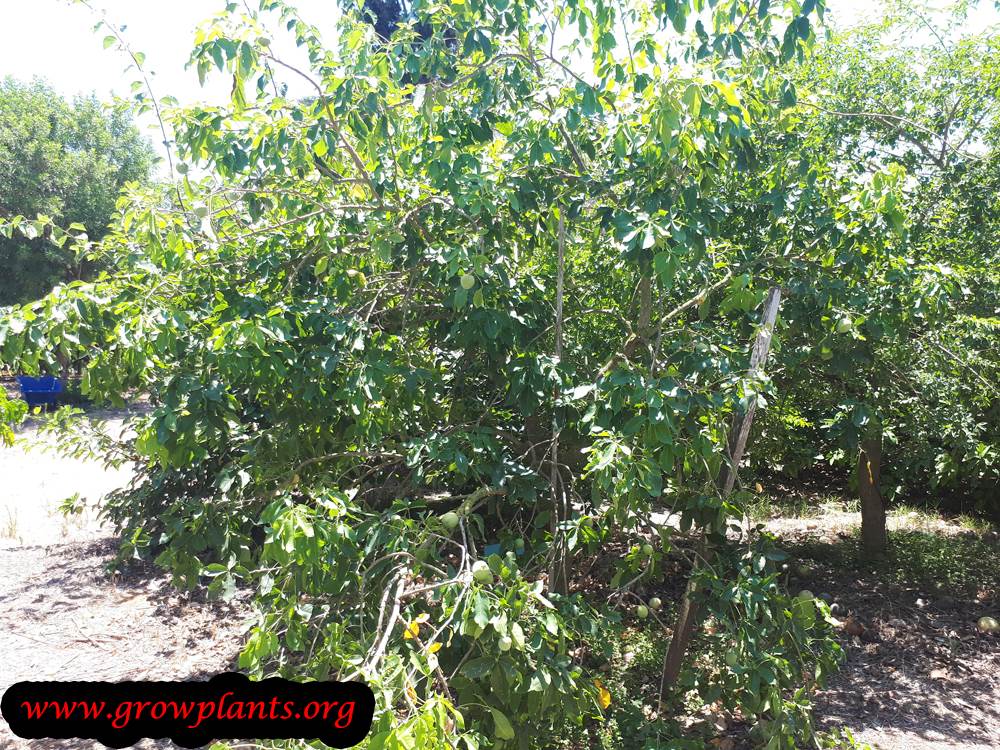
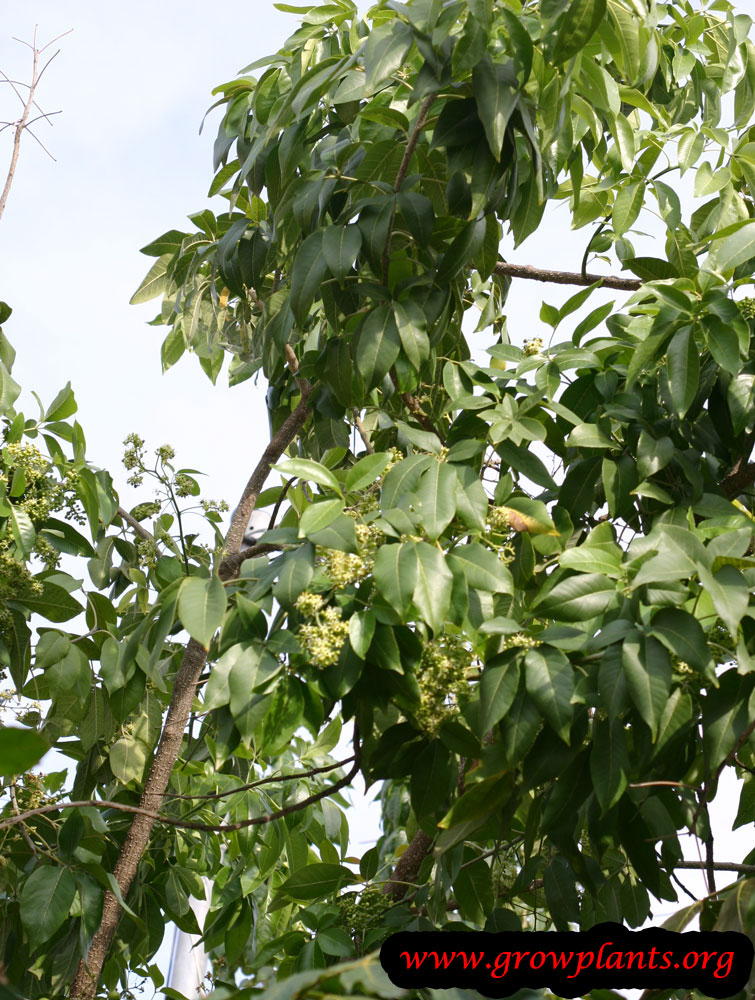
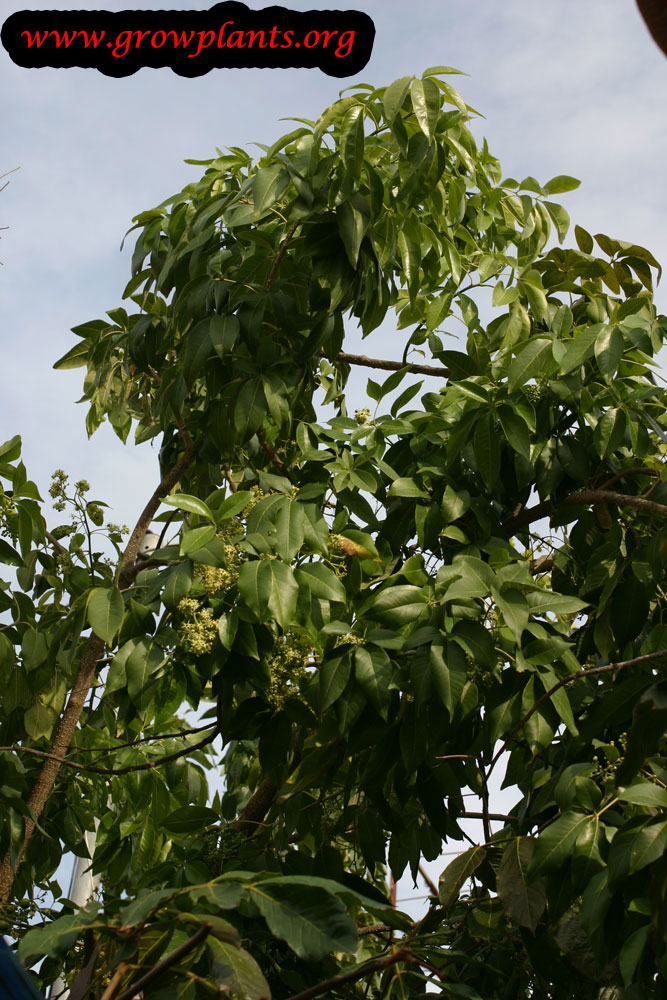
An evergreen fruit tree reaching about 5-8 m (16-26 ft), usually kept smaller by pruning. A subtropical perennial grown for its sweet, custard-like fruit and as an ornamental shade tree.
Quick Specifications
| Specification | Attribute |
|---|---|
| Plant Type / Life Cycle | Perennial |
| Foliage Type | Evergreen |
| Mature Size | 5-8 m tall (16-26 ft); often kept smaller |
| Growth Rate | Moderate |
| Toxicity | Ripe flesh edible; skin and seeds are discarded |
| Hardiness | USDA zone 10a-10b+ |
Growth Form & Structure
- Height & Spread: 5-8 m (16-26 ft), best kept compact by pruning; grafted or dwarf types can be container-grown with care
- Growth Habit & Form: Spreading evergreen tree with a dense canopy
- Lifespan & Maturity: Bears fruit about 3-5 years from a grafted tree (7+ years from seed)
Anatomy & Physical Features
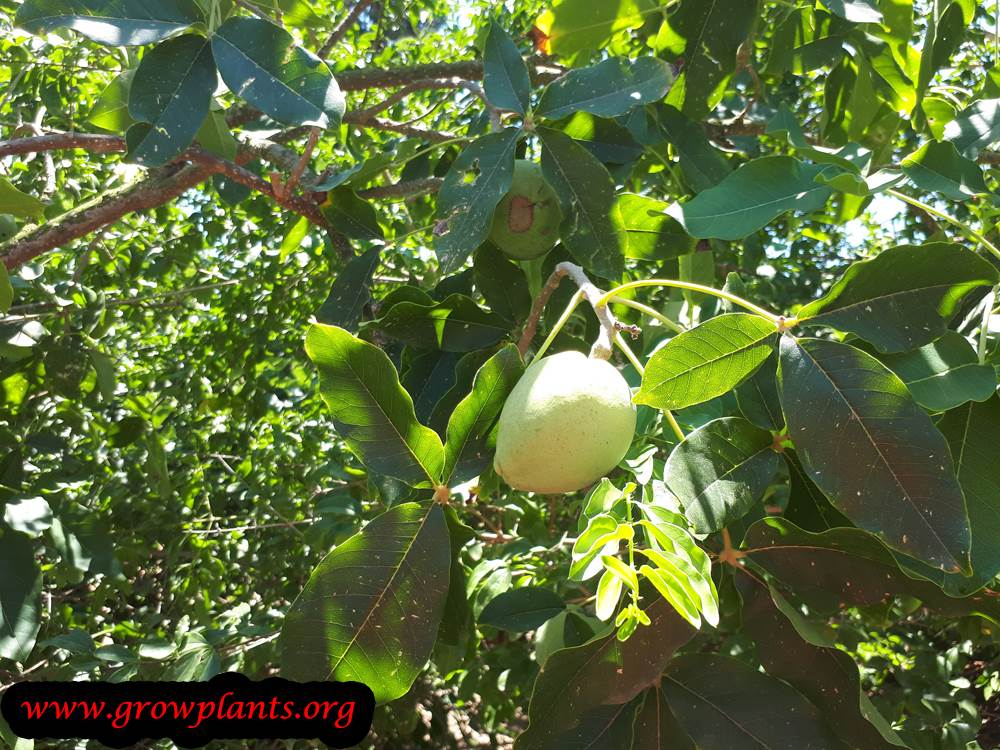
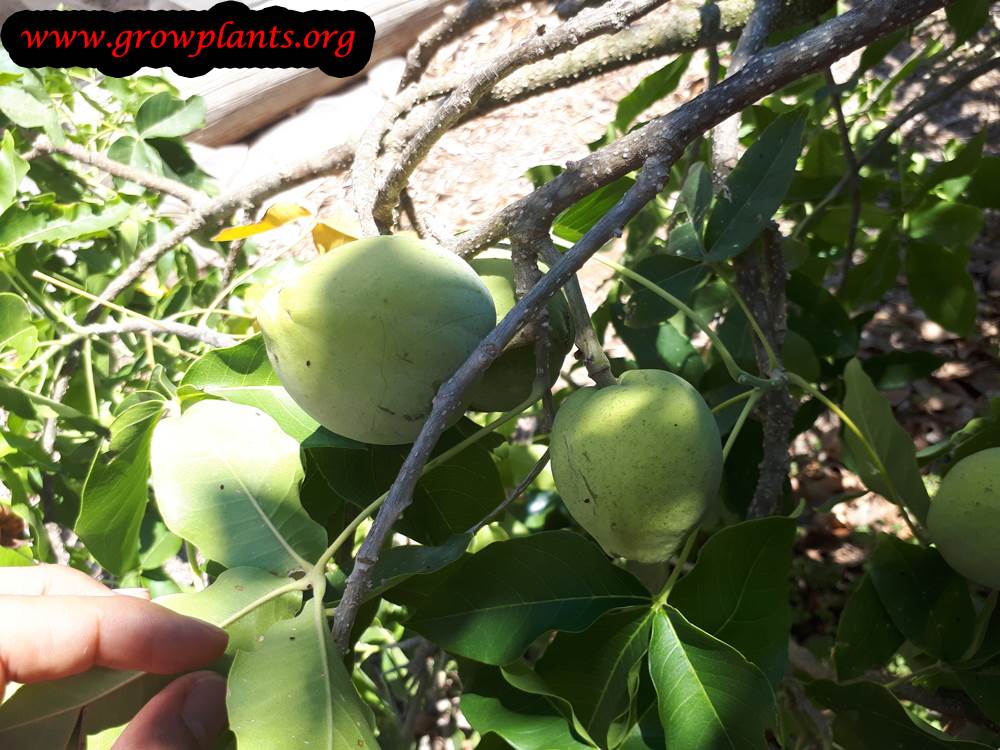
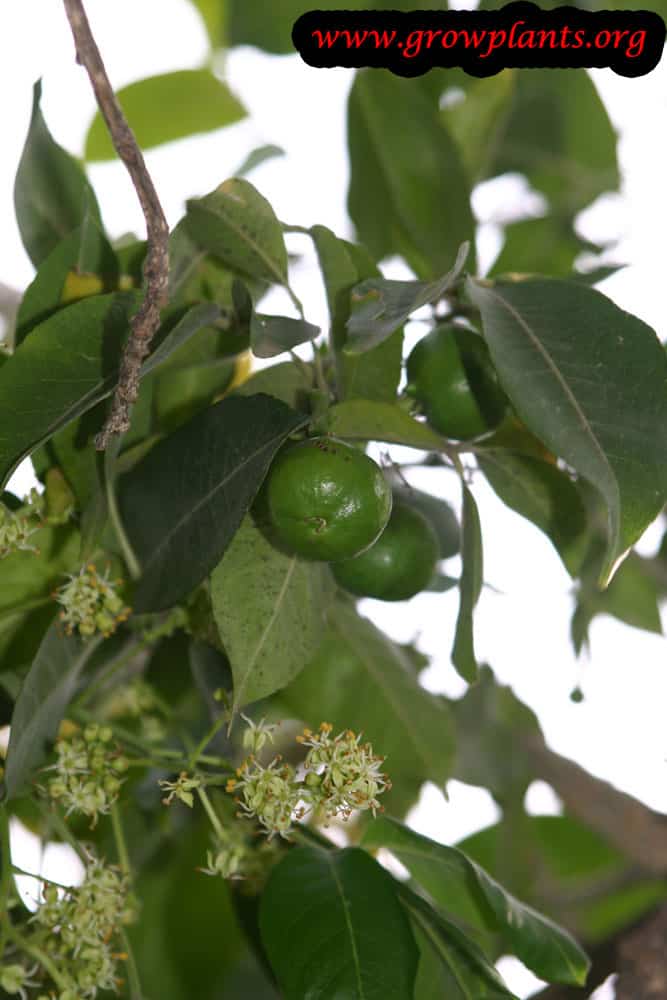
- Leaves & Foliage: Palmately compound leaves in groups of 3-5 leaflets
- Flower Characteristics: Small green-white flowers in clusters; bee-pollinated; blooms several times a year
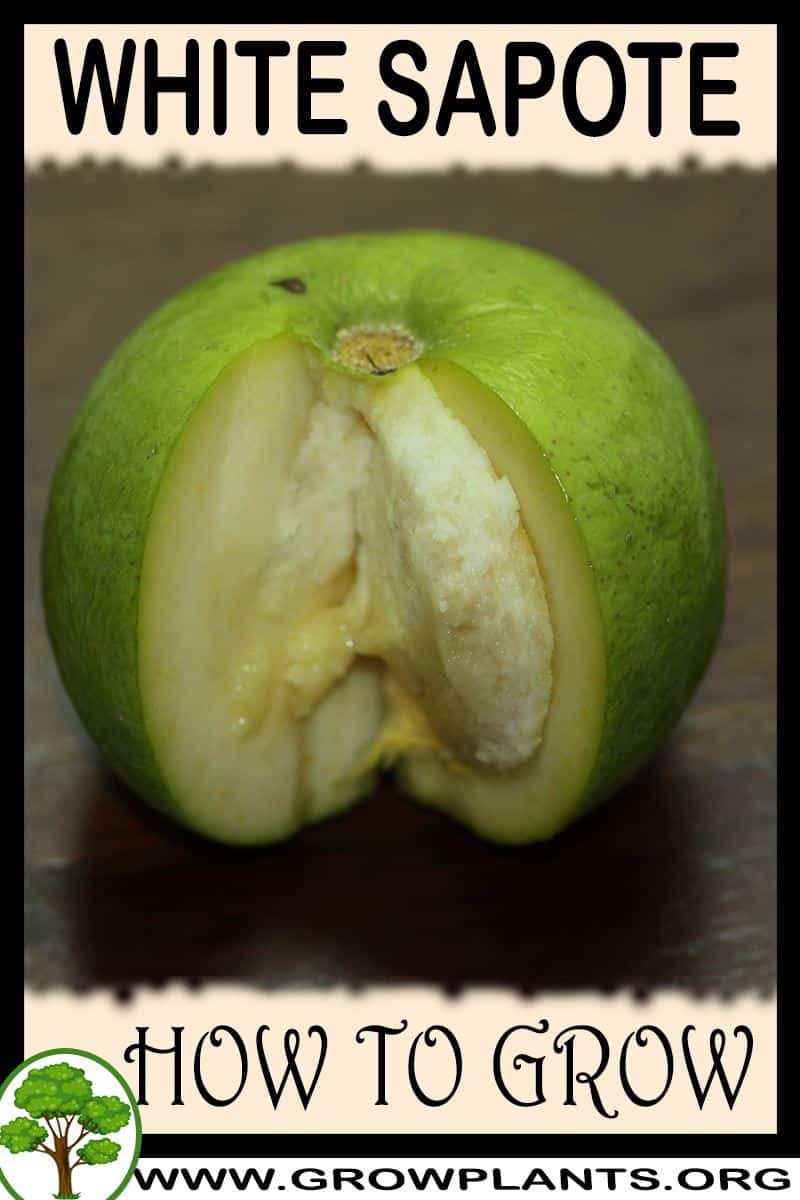
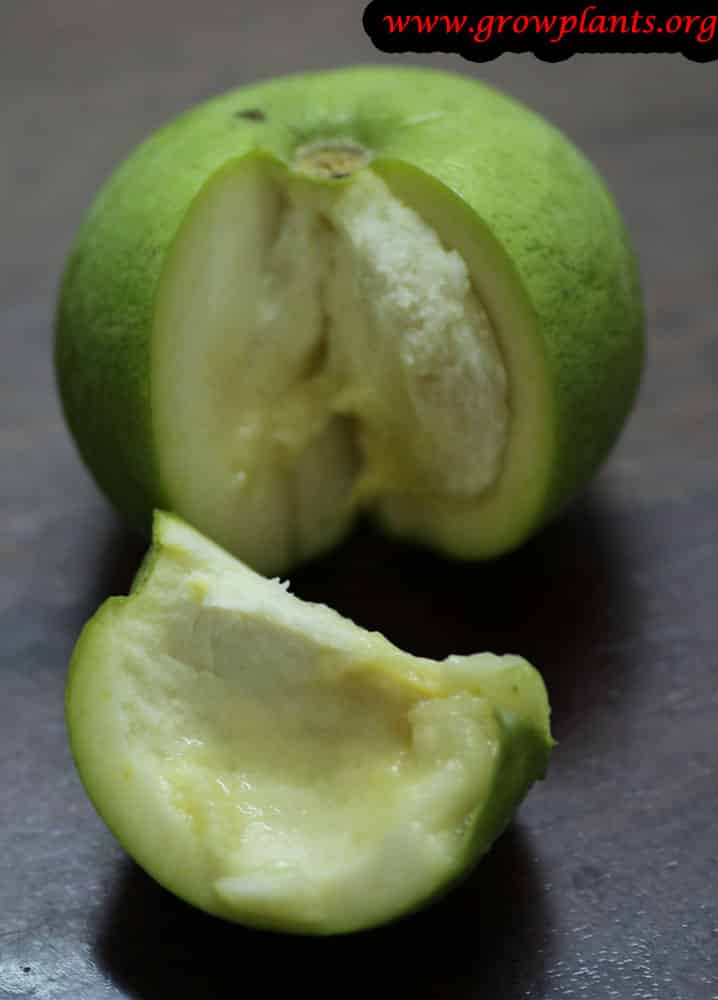
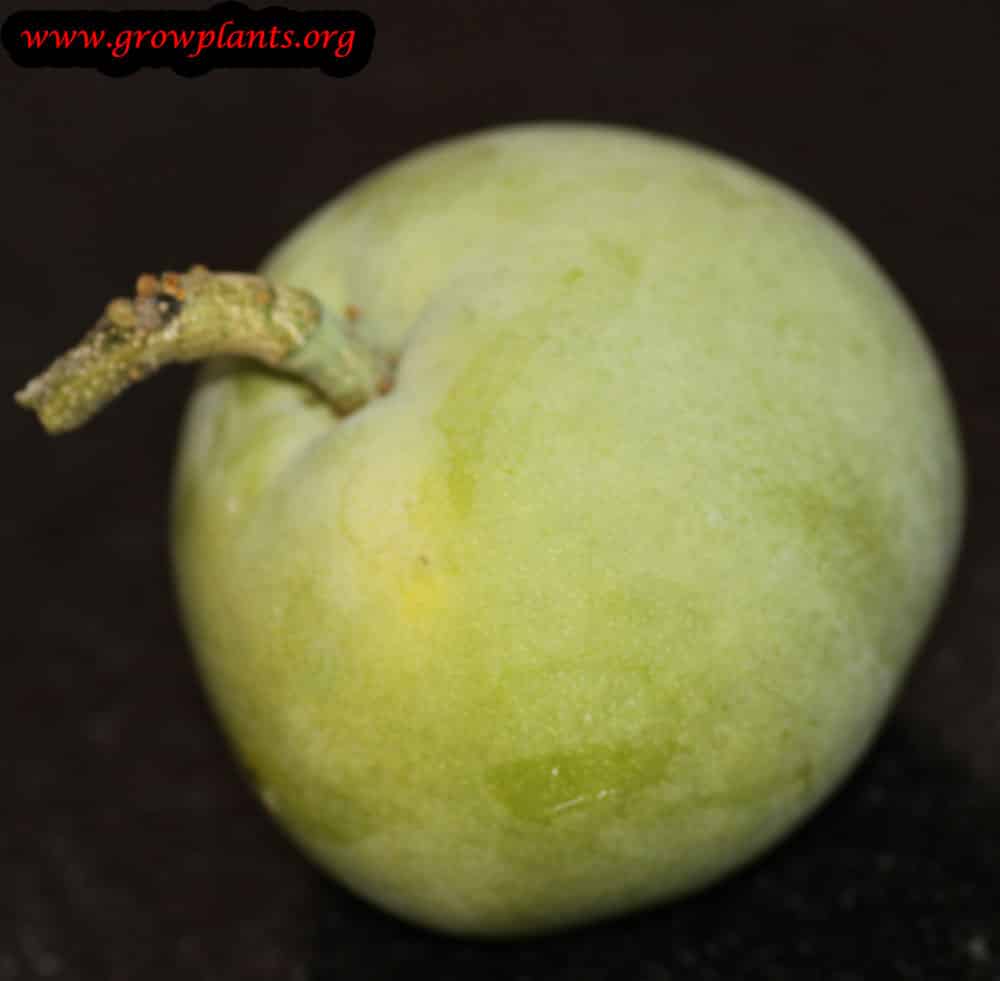
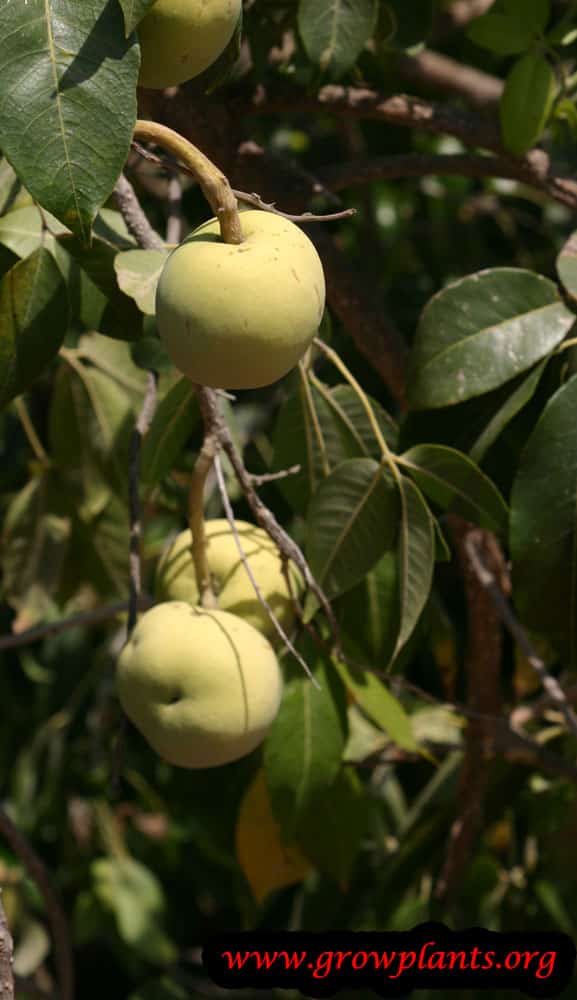
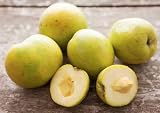
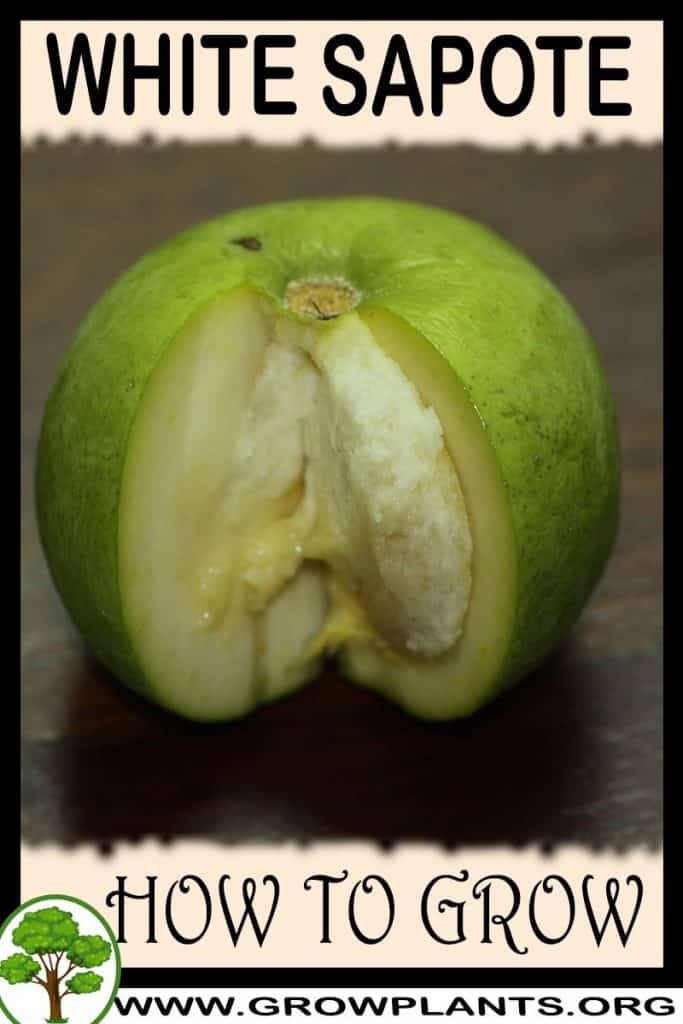
- Fruit Profile: Round green-to-yellow fruit with sweet, soft, avocado/custard-like flesh
Primary Uses & Landscape Value
- Edible Uses: Ripe flesh eaten fresh (peel and seeds removed); also used to make alcohol
- Functional & Ornamental Roles: Fruit tree and evergreen shade/ornamental; grafting recommended for good fruit
Care Guide: Planting, Soil & Watering
Overview: A moderate-growing subtropical fruit tree for full sun and rich, well-drained soil. It takes moderate, regular watering and benefits from being kept compact.
Quick Care Requirements
| Requirement | Ideal Condition |
|---|---|
| Planting Season | In spring, summer or autumn (also winter in the tropics) |
| Growth Rate | Moderate |
| Soil Type | Rich, moisture-retentive but well-draining |
| Water Need | Moderate – keep evenly moist, never waterlogged |
Planting & Establishment
- Best Planting Season: Plant across the warm season, from spring to autumn (year-round in the tropics).
- How to Plant:
- Hole Preparation: Dig a hole wider than the root ball.
- Soil Amendments: Use a rich, moisture-holding yet free-draining soil; peat or vermiculite can help hold moisture.
- Planting Depth: Set the root collar level with the soil.
- Growth Speed & Expectations: Moderate; can reach 5–8 m but is best kept small by pruning.
Soil, Watering & Drainage Care
- Soil Mix & Drainage Needs: Rich, well-drained soil that still holds some moisture; can be grown in a large container, ideally from a grafted or air-layered dwarf.
- Watering Schedule & Technique:
- Young / Newly Planted: Keep the soil consistently moist while establishing.
- Established: Water regularly and deeply, letting the surface dry slightly.
- Seasonal Adjustments: More in heat, less in cool weather.
Climate, Light & Hardiness
White sapote grows in Mediterranean, subtropical, and tropical climates in full sun, and is one of the more cold-tolerant subtropical fruit trees, tolerating brief light frost once established. Winter wind can dislodge flowers on trees that bloom during the cold season, so a sheltered site helps fruit set.
Quick Climate Specifications
| Climate Zones | Mediterranean, Subtropical, Tropical |
|---|---|
| USDA Hardiness Zones | 10b+, and 10a with overwinter care |
| Approx. Survival Minimum | approximately −1 to 1.7°C (30–35°F) at the zone 10 boundary, briefly, for an established tree |
| Frost Tolerance | Low to Moderate |
| Light Conditions | Full Sun |
| Wind Tolerance | Low during winter bloom |
Sunlight & Light Exposure
Optimal Light Setup
Full sun for best growth and fruiting.
Direct Sun Requirement
Yes.
Best Exposure / Orientation
An open, sunny, wind-sheltered site, particularly useful when the tree blooms in winter.
Temperature Extremes & Hardiness
USDA Hardiness & Regional Limits
Reliable from zone 10b upward; zone 10a is workable with care.
Cold Damage & Winter Protection
Comparatively cold-tolerant for a subtropical fruit tree; still benefits from a sheltered site and winter protection while young.
Frost Sensitivity
Low to moderate; tolerates light frost better than many subtropical fruit trees but is not fully hardy.
Extreme Heat Tolerance
Good in Mediterranean and subtropical summer heat.
Wind, Humidity & Microclimate
Wind Tolerance
Can bloom in winter or during a windy season; site data notes that flowers should be covered and protected from wind at that time to protect the crop.
Rainfall & Seasonal Moisture
Suited to Mediterranean, subtropical, and tropical rainfall patterns.
Microclimate Recommendations
A sunny site sheltered from strong winter wind protects both cold-sensitive tissue and the flower crop.
Growing in Pots, Balconies & Indoors
White sapote (Casimiroa edulis) grows to 5-8 m (16-26 ft) but is best kept small, and the grower recommends pruning it compact. It is not a houseplant; it can be grown in a container, though the grower cautions this is not ideal and needs the right start.
Quick Details
- Container Size: A large tub, potted up over time; start from an air layer or a small grafted tree
- Indoor Suitability: Not a houseplant; grow it outdoors
- Best Spot: Full sun
- Soil & Drainage: Rich, free-draining mix
- Watering in Pots: Average – keep evenly moist, never waterlogged
Indoors & On the Windowsill
- Houseplant limits: Not a houseplant – it needs full sun and becomes a sizeable tree.
- Overwintering: A potted specimen can be sheltered in a bright, frost-free spot for the cool season in cold climates.
On a Balcony or Patio
- Light & exposure: Give it full sun and keep it pruned compact. Pots dry fast against warm walls, so water regularly.
Choosing the Pot, Soil & Long-Term Care
- Pot & drainage: Use a pot with plenty of drainage holes; skip a standing water saucer to avoid root rot. Terracotta breathes and dries faster, while glazed or plastic pots hold moisture longer.
- Potting mix: A well-aerated, organic-rich mix – peat or coir blended with perlite or vermiculite for drainage.
- Feeding: Potted plants need feeding more often than those in the ground, as nutrients leach out with each watering – feed lightly through the active growing season. In a pot it may not fruit without generous feeding and the right care, so do not let it go hungry.
- Repotting: Refresh the mix or pot up about every two years; for an established specimen, replace part of the soil and lightly prune the roots and top growth.
Grower’s Container Tip
- Start it right: For container growing, begin with an air layer or a small grafted tree (keep the graft small) and choose a compact cultivar where possible. Be aware it may not fruit in a pot without plenty of fertilizer and attentive care.
Fertilizing & Feeding
White sapote is typically kept as a compact, well-drained-soil tree; it responds well to a feeding applied ahead of its bloom period, with container-grown trees needing more consistent feeding to bear reliably.
Quick Fertilizing Specs
| Feeding Level | Moderate; container-grown trees in particular need consistent feeding to bear well. |
|---|---|
| young_feeding | A nitrogen-forward approach supports canopy development on a young, non-bearing tree. |
| mature_feeding | A feeding applied ahead of the bloom period, then balanced to potassium-conscious feeding as fruit develops. |
| Main Nutrient Priority | Balanced nutrition overall, timed around the bloom period, with attention to potassium during fruiting. |
| Best Feeding Period | Ahead of and through the bloom period, into the active growing season. |
| Organic Options | Well-drained soil built up with organic matter suits this tree well. |
| Reduce/Stop Feeding | Ease off feeding once fruit is developing toward harvest and as growth slows in the cooler part of the year. |
Feeding by Growth Stage
Newly planted
Help a newly planted white sapote root into well-drained soil and begin producing new growth.
| Nutrient direction | Light, balanced nutrition focused on root establishment rather than pushing top growth. |
|---|---|
| Timing | In the weeks and months after planting, while the young tree is still becoming established. |
| Frequency | A light feeding at planting, with further light feedings only once new growth confirms the tree has rooted in. |
| Fertilizer types | A balanced complete fertilizer used lightly, Organic matter worked into well-drained soil |
| Precautions | Avoid heavy feeding right at transplanting, which can stress young roots before they’ve spread into the surrounding soil. |
Young, non-bearing tree
Build a full, compact canopy on a young white sapote before it begins bearing fruit, since this species is usually kept deliberately small.
| Nutrient direction | A nitrogen-forward feeding approach to encourage steady vegetative growth. |
|---|---|
| Timing | Through the active growing season as the young tree puts on new growth. |
| Frequency | Several light feedings spread through the growing season suit a young, actively growing tree better than one heavy application. |
| Fertilizer types | A nitrogen-forward complete fertilizer for young trees, Organic matter to build soil fertility |
| Routine trace nutrients | iron, manganese, zinc |
| Precautions | Container-grown trees are more dependent on regular feeding than trees grown in open ground, and container culture is generally less reliable for bearing fruit. |
Pre-bloom feeding
Feed an established white sapote ahead of its bloom period to support strong flowering and the fruit set that follows.
| Nutrient direction | A balanced feeding timed to arrive ahead of flowering, supporting bud development. |
|---|---|
| Timing | In the period leading up to the tree’s bloom, which can occur at different points in the year depending on climate. |
| Frequency | A feeding applied ahead of the bloom period suits this tree better than feeding after flowering has already begun. |
| Fertilizer types | A balanced complete fruit-tree fertilizer applied ahead of bloom, Organic matter maintained around the root zone |
| Routine trace nutrients | iron, manganese, zinc |
| Precautions | Because bloom timing varies with climate, watch the tree’s own buds rather than the calendar to time this feeding. |
Mature, fruit-bearing
Support a mature white sapote through fruit development, since it typically needs netting against birds and consistent care to bear well, especially in containers.
| Nutrient direction | Balanced nutrition shifting toward potassium-conscious feeding as the soft, avocado-like fruit develops. |
|---|---|
| Timing | Through fruit development following bloom. |
| Frequency | Regular, moderate feedings through fruit development support the crop better than a single heavy application. |
| Fertilizer types | A balanced to potassium-conscious complete fruit-tree fertilizer, Organic matter maintained around the root zone |
| Routine trace nutrients | iron, manganese, zinc |
| Precautions | Keep feeding consistent rather than heavy and infrequent, especially on container-grown trees, which rely more heavily on regular feeding to bear at all. |
Nutrient Deficiency Signs & Corrections
Leaves yellow between the veins while the veins themselves stay dark green.
| Possible causes | High soil pH limiting iron or manganese availability, Waterlogged or compacted soil restricting root uptake, A genuine iron or manganese shortage in the soil |
|---|---|
| Appears first on | New growth toward the branch tips. |
| What to check | Soil pH and drainage, Whether only the newest leaves are affected, Recent watering and root health |
| Possible correction | Correct soil pH and drainage first; if yellowing persists, apply a chelated iron or manganese product per its label. |
The tree blooms but sets little fruit, or small fruit drops before maturing.
| Possible causes | A missed or poorly timed pre-bloom feeding, Insufficient pollinator activity during flowering, Container culture without enough consistent feeding |
|---|---|
| Appears first on | The flower clusters and developing fruit. |
| What to check | Whether a balanced feeding was given ahead of bloom, Pollinator activity during flowering, Whether the tree is container-grown and under-fed |
| Possible correction | Time a balanced feeding to arrive just ahead of the next bloom period, and feed container-grown trees more consistently. |
Overall leaf color is pale and new growth stays sparse rather than filling out the canopy.
| Possible causes | A general nitrogen shortage in poor soil, Root competition or crowding from nearby plants, A container-grown tree that has become root-bound |
|---|---|
| Appears first on | New growth across the canopy. |
| What to check | Recent feeding history and soil fertility, Root zone competition or container root-binding, Light exposure |
| Possible correction | Confirm root and light conditions are adequate, then step up to a nitrogen-forward feeding if pale, sparse growth continues. |
Pruning, Training & Seasonal Maintenance
White sapote’s own care guidance is explicit and repeated: keep this tree small, and prune about once a year. Because it can bloom several times through the year — in early spring, winter, or late summer depending on climate — there is no single universal bloom window to avoid; the safest general timing is after a fruiting flush or before winter, as the plant’s own facts state. Thinning is also recommended in the first few years to help a young, grafted tree establish a productive structure without overbearing.
Quick Pruning & Maintenance Specs
| Pruning Tolerance | Moderate–High (explicitly maintained small by regular pruning) |
| Primary Pruning Window | After the fruit is picked, or before winter |
| Typical Frequency | About once a year, plus fruit/bloom thinning in the first few years |
| Main Objective | Keep the tree small and compact; thin early crops for structure |
| Young Plant Priority | Thin bloom/fruit in the first few years rather than letting the young tree overbear |
| Mature Plant Priority | Annual size-control pruning — this tree would otherwise reach 5–8m |
| Best Tool Type | Bypass secateurs/loppers |
| Avoid Heavy Pruning During | Any active bloom flush — check the actual tree, since bloom timing varies by climate |
Pruning by Plant Age & Size
Newly Established
Minimal pruning.
Young / Formative
Thin bloom and fruit set in the first few years, per the plant’s own guidance, to build the tree’s structure before letting it fully crop.
Mature / Established
Annual size-control pruning to hold the tree well below its natural 5–8m size, as explicitly recommended.
Seasonal Pruning Schedule
Post-Harvest or Pre-Dormant (after fruit is picked, or before winter)
Objective: the plant’s own two stated options for the annual prune — remove excess growth and control size. Because bloom timing varies by climate and can occur in early spring, winter, or late summer, check the actual tree for active flowers or young fruit before cutting rather than assuming a fixed season is safe.
Flowering & Fruiting Wood
Bloom timing is unusually variable for this species. The practical rule is to avoid cutting through whichever bloom or fruit-set period the tree is currently in, rather than relying on one universal dormant window; the annual post-harvest or pre-winter prune is timed specifically to fall between fruiting cycles.
Structural Pruning & Training
The central, repeated instruction from the plant’s own facts is height and spread control — actively keeping the tree small rather than letting it reach its natural size, which also makes the crop easier to net and protect (fruit-fly and bird pressure are both noted).
Special Growth to Remove
- Rootstock suckers below the graft union, since grafting is necessary for good fruit quality in this species.
- Excess bloom or small fruit on young trees in their first few years, thinned to build structure rather than overcrop.
Container & Small-Space Pruning
Container growing is possible but not generally recommended — the plant’s own facts note it needs to start from an air-layered or already-small grafted cultivar, and may not fruit well without heavy fertilizing and care. If attempted, prune primarily for compactness and accept that fruiting may be limited.
Tools
- bypass_secateurs — bloom/fruit thinning, small-diameter size-control cuts.
- loppers — heavier size-control cuts to keep this naturally 5–8m tree small.
Tool Hygiene & Disease Risk
Routine — clean, sharp tools. Recorded pest pressure (ants, aphids, birds, Mediterranean fruit fly) targets the fruit rather than indicating a tool-spread disease risk.
Cut Placement & Technique
Heading cuts are appropriate here specifically because the goal is active size control — unlike most fruit trees, where heading is generally discouraged — so cut back vigorous upward growth to hold the tree’s height. Use thinning cuts for any dead or crossing wood, just outside the branch collar.
Heavy Pruning & Rejuvenation
Tolerated. Since this species’ whole management approach already centers on repeated size-reduction pruning to keep a naturally larger tree small, more assertive cuts are appropriate here than on a typical fruit tree. Expect some temporary reduction in the next bloom flush after a harder cut.
Post-Pruning Care
Net or otherwise protect the tree once it resumes fruiting, per its own pest notes (fruit fly, birds). The fruit has soft skin and bruises on contact, so avoid dropping cut branches onto ripening fruit below. No special feeding is tied to the pruning itself.
Common Pruning Mistakes
- Letting the tree grow to its full natural 5–8m size instead of maintaining the recommended small form.
- Skipping bloom-thinning on a young tree and overstressing it with an early heavy crop.
- Pruning heavily during whichever bloom flush the tree happens to be in, given its variable multi-season bloom pattern.
When NOT to Prune
Avoid heavy cuts during any active bloom flush — check the specific tree rather than assuming a season is safe. Avoid pruning right as the current crop is ripening, since the fruit bruises easily.
Recommended Tools (by task)
- Annual size-control pruning and bloom/fruit thinning: bypass_secateurs — for the fine cuts involved in the plant’s own core “keep it small” recommendation.
- Heavier size-reduction cuts on a maturing tree: loppers — for the larger wood generated by a tree that would otherwise reach 5–8m.
Pruning Troubleshooting
| Problem | Possible Cause | What to Check | Corrective Action |
| Tree has outgrown its space | Annual size-control prune skipped or too light | Current height/spread against the “keep it small” target | Resume the annual post-harvest/pre-winter size-reduction prune |
| Young tree fruiting poorly or dropping fruit | Overcropped before establishing structure | Whether early-years bloom/fruit thinning was done | Thin bloom or young fruit on trees in their first few years, per the plant’s own guidance |
Propagation Guide
White sapote can be grown from seed, but the site is emphatic that grafting is needed to get fruit that is reliably larger, sweeter, better-seeded and timed to a known harvest season; air layering is also mentioned as a way to start a compact, container-friendly tree. Seed itself needs to be sown fresh – the site is explicit that seed loses viability and dies if allowed to dry out – making difficulty Moderate overall.
Quick Propagation Specs
| Best Propagation Method | Grafting, for reliable fruit size, sweetness, seed count and harvest timing |
| Alternative Methods | Seed; air layering for compact, container-grown trees |
| Propagation Difficulty | Moderate |
| Seed True-to-Type | Variable – seedling trees vary in fruit size, seed count, sweetness and harvest timing |
| Vegetative True-to-Type | Yes |
| Best Propagation Season | Spring, summer, autumn (also winter in the tropics), for sowing |
| Seed Germination Time | 2–5 weeks |
| Seed Sowing Depth | About 2 cm (1 in) from the top of the seed |
Growing from Seed
Seed Handling & Viability
Clean the seeds and sow them fresh – the site is explicit that seeds lose viability and die if not sown fresh. Lightly scratching (scarifying) the seed coat is mentioned as an option. If seed can’t be sown right away, keep it in well-moistened peat soil inside a closed, transparent plastic bag rather than letting it dry out.
Sowing Season
Spring, summer, autumn (also winter in the tropics).
Sowing Depth & Orientation
Sow about 2 cm (1 in) deep in soil that holds moisture well, such as vermiculite or peat soil. In nursery pots, space seedlings roughly 30×40 cm (about 12×16 in) apart when transplanting; direct spacing at final location is about 4×5 m (12×15 ft) for medium trees, or 3×3 m (10×10 ft) for trees kept small.
Germination Conditions
High humidity and consistently moist soil.
Germination Time
2–5 weeks.
Seedling Care
Full sun and well-drained soil.
Grafting & Budding
Why Grafting Is Used
The site states grafting is needed to reliably get fruit that is bigger, has fewer or no seeds, is sweeter (or less sweet, by preference), ripens in a different or known season, and can be picked before it is fully ripe. Grafted trees also come into bearing notably sooner than seedling trees.
Rootstock
Not detailed by the site; commercially, white sapote is typically grafted onto seedling white sapote rootstock. (General nursery practice, added with caution.)
Scion Selection
The site lists ‘Vernon’ – a sweet, green-fruited cultivar – as an example variety that grafting would preserve.
Air & Ground Layering
The site notes that container-grown trees should be started from air layering or as a small grafted tree, since container culture doesn’t suit larger seedling trees; some cultivars stay smaller and are better suited to this.
Bloom & Flower Guide
Quick Details
- Bloom Season: Can flower more than once a year, often from late winter into spring and again in late summer, depending on climate
- Flower Appearance: Small white-green flowers in branched clusters (inflorescences)
- Edibility: The flower is not eaten; the tree is grown for its sweet edible fruit
Detailed Blooming Overview
White sapote is a generous bloomer, often flowering in more than one flush across the year. The small greenish-white flowers are carried in branched clusters, with the leaves grouped in threes to fives around them.
Flower Characteristics
- Small white-green flowers borne in branched inflorescences.
Bloom Care & Thinning
- Pollination: Bees and other insects.
Fruit & Uses
Safety note first: only the ripe flesh of white sapote is eaten – the peel and, especially, the seeds are excluded, as the site’s own care notes specify. The flesh itself is a well-established, soft, sweet fruit eaten fresh once fully ripe, with a flavour reminiscent of a sweet avocado or Annona-type fruit.
Quick Edible Specs
| Edible Parts | Fruit flesh only |
|---|---|
| Main Use(s) | Fresh eating; occasionally fermented into alcohol |
| Eaten Raw or Cooked | Raw |
| Preparation Required | Remove toxic part – peel and deseed before eating; eat flesh only |
| Harvest Season | Summer in hardiness zone 10a; summer to autumn in zone 10b; spring to autumn in zone 11; year-round in zone 12+ |
| Time to First Harvest | Several years after planting, longer from seed-grown trees – see Propagation |
| Storage | Handle gently – the ripe skin is soft and bruises/splits easily if bumped |
| Safety/Toxicity Caveat | Do not eat the peel or seeds – Casimiroa seeds (and leaves) are known to contain compounds with sedative-type effects; eat the soft ripe flesh only |
Fruit
Fruit colour ranges from green to yellow depending on sun exposure and cultivar. It is round, and is eaten only once fully soft – underripe fruit is not palatable. Because the ripe skin is soft, fruit is picked a little before full ripeness and left to finish softening, and is handled carefully since it bruises or smashes easily once ripe. To eat, the fruit is opened, the peel and seeds discarded, and only the soft flesh eaten.
Preparation, Uses & Safety
The soft, ripe flesh is eaten fresh out of hand, or occasionally used to make an alcoholic drink. Always discard the peel and seeds rather than eating them – this species is known for seeds (and leaves) containing sedative-type compounds, historically used in folk remedies, so sticking to flesh only is a genuine safety matter and not just a matter of taste or texture.
Note: Ripening fruit attracts birds and other wildlife; netting the tree as fruit approaches ripeness helps protect the crop.
Pests, Diseases & Troubleshooting
Overview: White sapote (Casimiroa edulis) is a vigorous, fairly pest- and disease-resistant subtropical fruit tree whose main problems are fruit flies attacking its soft-skinned fruit and the usual sap-sucking scale, mealybug and aphid complex, with sooty mold in tow. Serious disease is uncommon apart from root/crown rot in wet soil, so management is mostly cultural — fruit-fly sanitation and bagging, good drainage, sensible pruning of its brittle limbs, and conserving beneficial insects — rather than routine spraying.
Quick Troubleshooting Overview
| Issue / Pest | Main Symptom | Primary Solution |
|---|---|---|
| Fruit flies | Maggots in soft fruit, oozing stings, premature drop | Bag/net fruit, remove dropped fruit, bait traps |
| Soft / black scale | Bumps on twigs and leaves, honeydew, sooty mold | Prune, conserve beneficials, horticultural oil |
| Mealybug / aphids | White cottony masses or curled new growth, honeydew | Water wash, alcohol swab, insecticidal soap |
| Root / crown rot | Wilt in moist soil, dark rotted roots, crown decline | Mound planting, drainage, less water, phosphonate |
| Fruit drop / brittle limbs | Heavy drop; branches split under load | Even moisture, thin fruit, prune strong scaffolds |
| Iron chlorosis | Yellow leaves with green veins on new growth | Fix drainage, lower pH, chelated iron |
Common Pests & Management
- Fruit flies (Ceratitis capitata / Anastrepha spp.):
- Symptoms: Adults sting the soft, thin-skinned fruit and larvae (maggots) tunnel through the flesh, causing premature ripening, oozing puncture spots, internal breakdown and fruit drop — the main pest of white sapote in fruit-fly country.
- Prevention & Control: Bag developing fruit or net small trees; harvest promptly at maturity and never leave fallen fruit on the ground; hang protein-bait and pheromone fruit-fly traps to monitor and reduce adults. Sanitation of dropped fruit is the single most effective measure.
- Soft and black scale (Saissetia oleae / Coccus spp.):
- Symptoms: Brown, black or tan bumps on twigs, leaf midribs and undersides; yellowing, twig dieback, copious honeydew and blackening sooty mold; a common pest of this subtropical fruit tree.
- Prevention & Control: Prune out heavily infested twigs; conserve the parasitic wasps and lady beetles that attack scale; wash off sooty mold. Horticultural oil smothers scale and crawlers — time to the crawler stage and repeat.
- Mealybugs (Planococcus / Pseudococcus spp.):
- Symptoms: White cottony masses in leaf axils, on new growth and around fruit clusters; honeydew, sooty mold and reduced vigor.
- Prevention & Control: Wash off with water or wipe with alcohol swabs; encourage beneficials; remove badly infested tips. Neem or horticultural oil and insecticidal soap control persistent colonies.
- Aphids (Aphididae):
- Symptoms: Small soft insects on flushes of tender new growth causing curling and honeydew; mostly a spring-flush nuisance rather than a chronic threat.
- Prevention & Control: Blast off with water; conserve ladybirds and lacewings; treat heavy colonies with insecticidal soap.
- Snails (Helicidae):
- Symptoms: Chewed leaves and rasped bark on young trees, with slime trails, especially where irrigation keeps the base damp and shaded.
- Prevention & Control: Keep the trunk base clear and drier; hand-pick at night; use copper bands or iron-phosphate bait around young trees.
Diseases & Fungal Issues
- Root and crown rot (Phytophthora / Armillaria spp.):
- Symptoms: Wilting despite adequate soil moisture, sparse yellowing canopy, bark discoloration at the crown, and dark rotted roots in wet or poorly drained soil; the main disease risk for an otherwise fairly disease-resistant tree.
- Treatment & Management: Plant in well-drained soil on a slight mound and avoid overwatering or planting too deep; keep mulch off the trunk. Improve drainage; phosphonate treatments help protect trees against Phytophthora, but Armillaria is best avoided by good site selection.
- Anthracnose / leaf and fruit spot (Colletotrichum gloeosporioides):
- Symptoms: Dark leaf spots and blotches, twig dieback, and sunken lesions on fruit in warm, wet, humid weather; usually minor on a healthy tree.
- Treatment & Management: Improve airflow with pruning; remove infected debris and mummified fruit; avoid overhead watering. Copper fungicide gives protection during prolonged wet spells.
- Sooty mold (Capnodium spp.):
- Symptoms: Black superficial coating on leaves and fruit wherever scale, mealybug or aphid honeydew has fallen; blocks light and dirties fruit but does not infect tissue.
- Treatment & Management: Control the honeydew-producing sap-suckers, then the mold weathers off; rinsing hastens the cleanup.
Growing Difficulties & Abiotic Problems
- Heavy fruit drop and alternate bearing:
- Cause & Symptoms: Large numbers of small fruit drop, and crops swing from heavy to light between years; white sapote naturally over-sets and self-thins, and drop worsens with moisture stress or poor pollination.
- Correction Strategy: Keep soil moisture even (avoid drought during fruit set and sizing) and feed moderately; thinning very heavy sets improves size and reduces limb breakage and the alternate-bearing swing.
- Brittle limbs and breakage:
- Cause & Symptoms: Branches, which are naturally brittle, split under heavy fruit loads or their own fast, soft growth, especially on over-fertilized trees.
- Correction Strategy: Prune young trees to strong, well-spaced scaffolds and shorten over-long limbs; thin heavy fruit and prop or tie laden branches; avoid excess nitrogen that forces weak growth.
- Iron chlorosis and nutrient issues:
- Cause & Symptoms: Yellowing leaves with green veins on new growth in alkaline or waterlogged soils where iron is unavailable; general pale growth on poor soils.
- Correction Strategy: Improve drainage and avoid overwatering; lower pH gradually and apply chelated iron for a quick correction; maintain balanced feeding through the growing season.
What Helps — Products & Tools
For white sapote, keep protein-bait/pheromone fruit-fly traps and fruit bags or netting as the priority tools, plus horticultural or neem oil and insecticidal soap for scale, mealybug and aphids. Copper fungicide covers occasional anthracnose, phosphonate products protect against Phytophthora root rot, and chelated iron corrects chlorosis on alkaline soils. Good drainage, prompt cleanup of dropped fruit, and structural pruning of the brittle limbs prevent most trouble.
Varieties & Cultivars
- Vernon: Sweet fruit with green-colored flesh/skin.