



Plant Profile & Key Characteristics
Overview: The marula tree (Sclerocarya birrea) is a large deciduous to semi-evergreen shade tree, 10-30 m (30-100 ft), grown for its juicy edible fruit and nutritious edible seed. Fast- to moderate-growing and drought-tolerant, it is a dioecious tree of desert, Mediterranean and subtropical climates (hardiness zone 10-12).
Quick Specifications
| Specification | Attribute |
|---|---|
| Plant Type / Life Cycle | Perennial (deciduous to semi-evergreen tree) |
| Foliage Type | Evergreen to semi-deciduous |
| Mature Size | 10-30 m tall (30-100 ft) |
| Growth Rate | Fast to moderate |
| Root System | Deep (mature roots can reach groundwater) |
| Toxicity | Non-toxic; fruit and seed are edible |
| Hardiness | USDA zone 10-12 |
Growth Form & Structure
- Height & Spread: Reaches 10-30 m (30-100 ft) in the ground; not a houseplant and grown in a container only as a bonsai.
- Growth Habit & Form: Large, single-trunked shade tree with a rounded, spreading crown; dioecious, so male and female trees are needed for fruit; can also be trained as a bonsai.
- Lifespan & Maturity: Takes at least 5 years to reach fruiting size and roughly 5-6 years to begin bearing fruit (longer from seed).
Anatomy & Physical Features
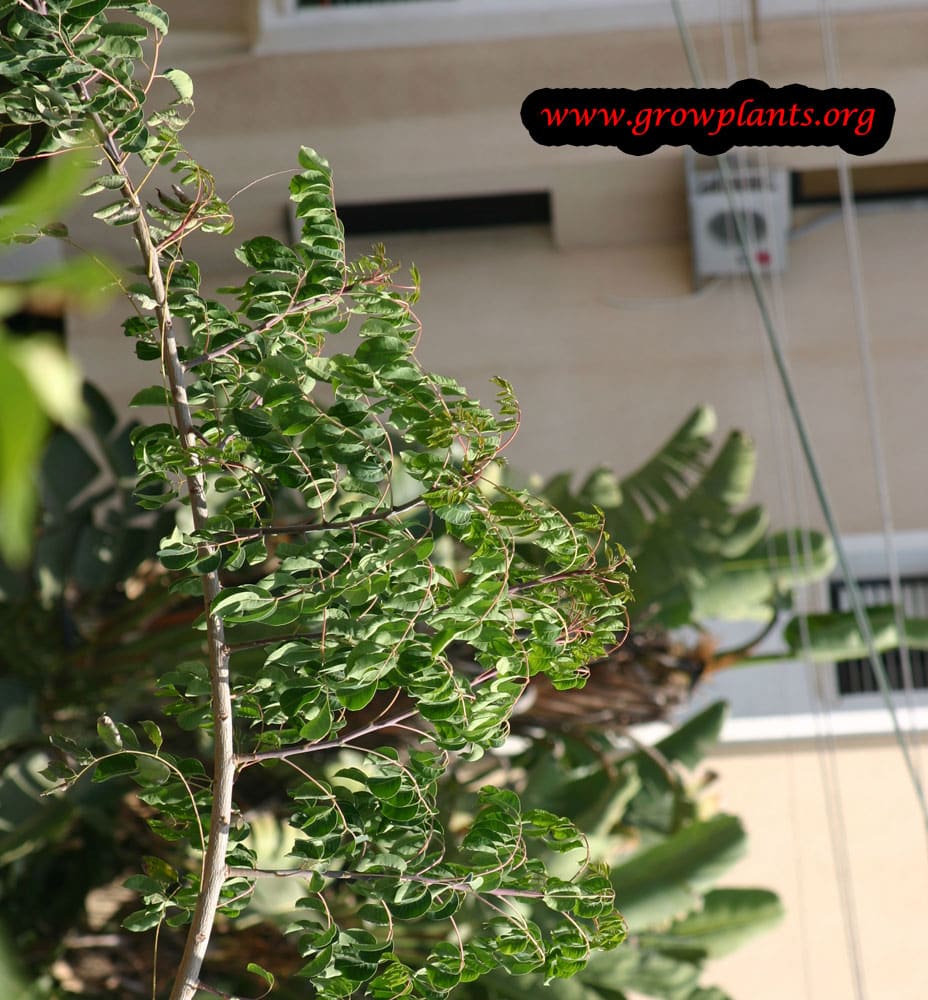
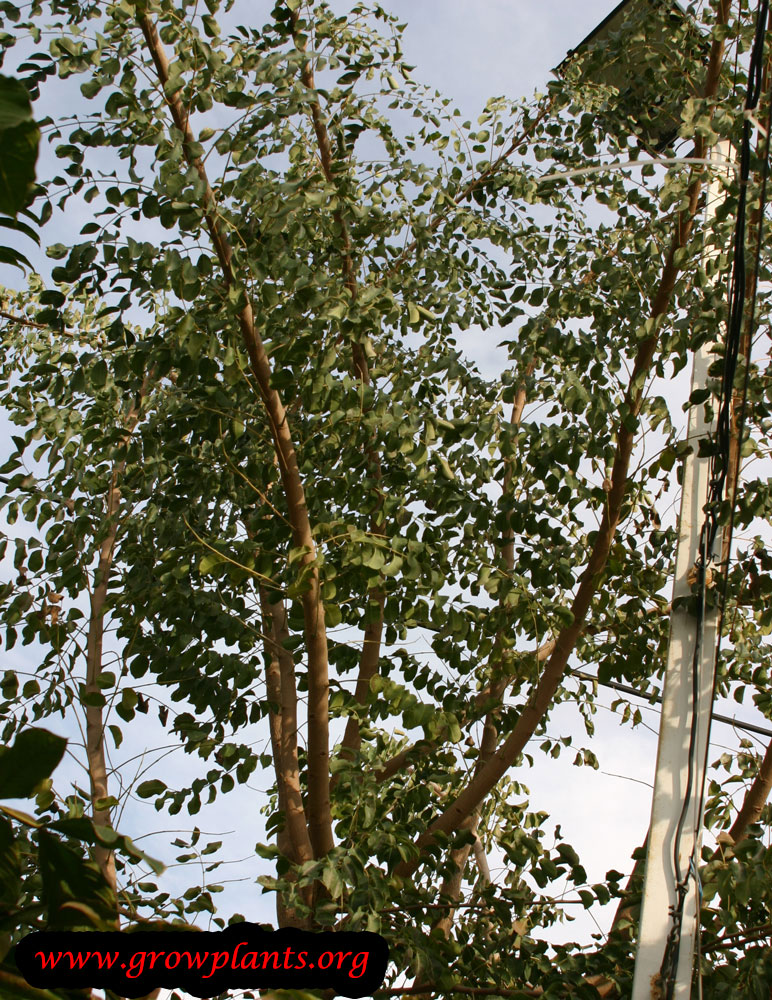
- Trunk & Bark: Stout trunk carrying a broad, spreading canopy, making it a useful shade tree.
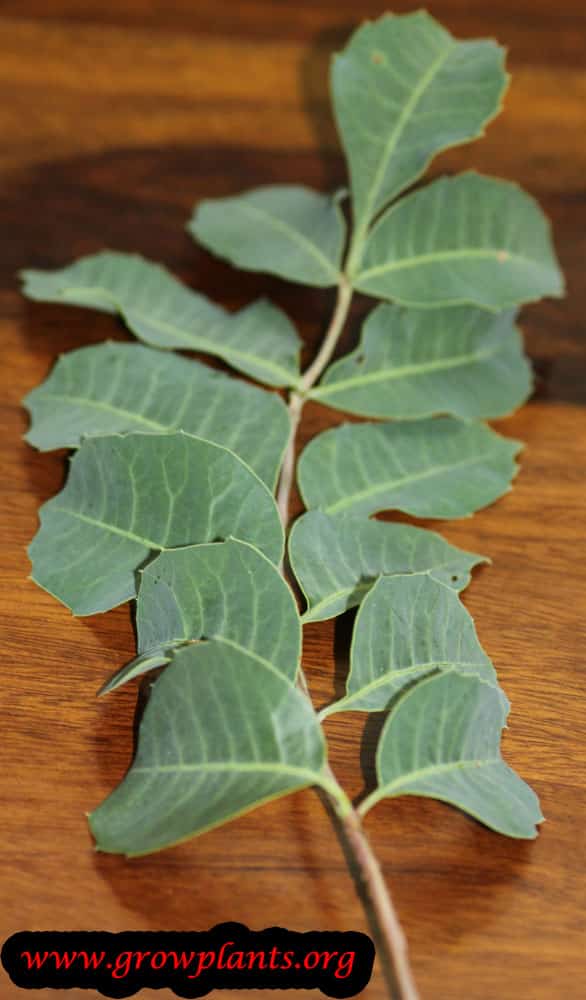
- Leaves & Foliage: Green to light-green ovate leaflets arranged in a pinnate (compound) structure.
- Flower Characteristics: Small (1-2 mm) green-yellow flowers in groups; male and female flowers are borne on separate trees.
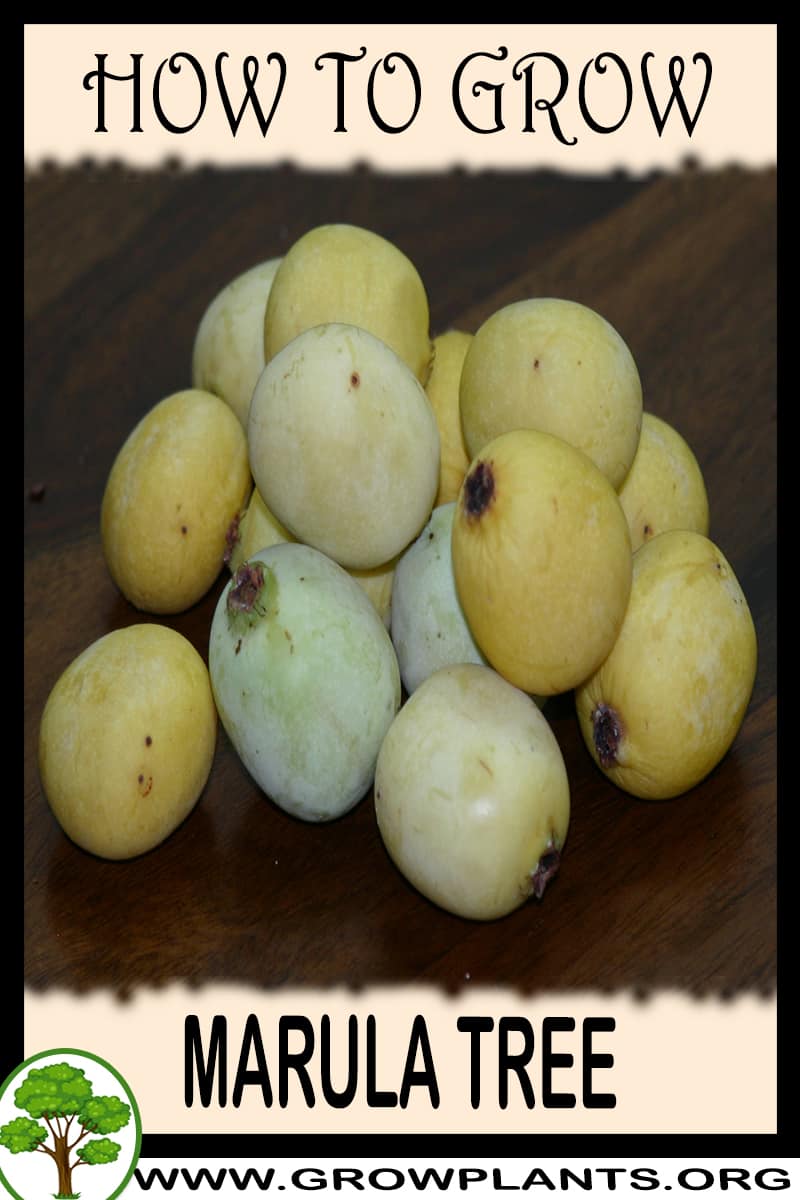
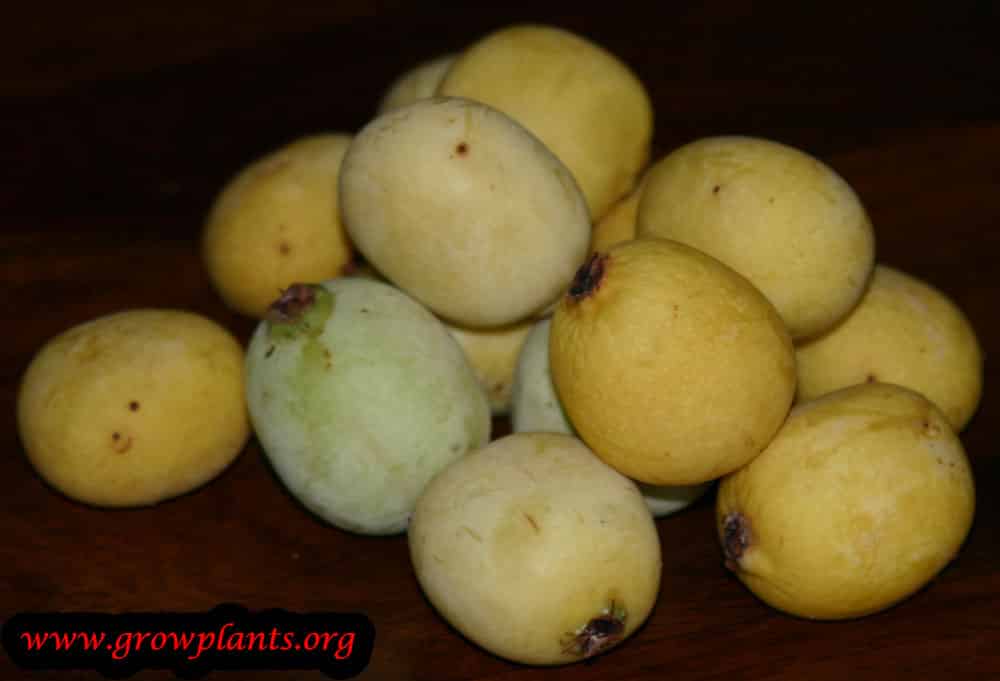
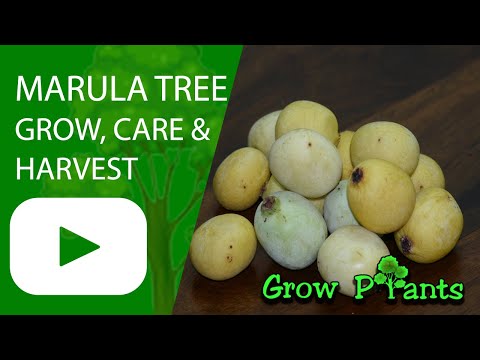
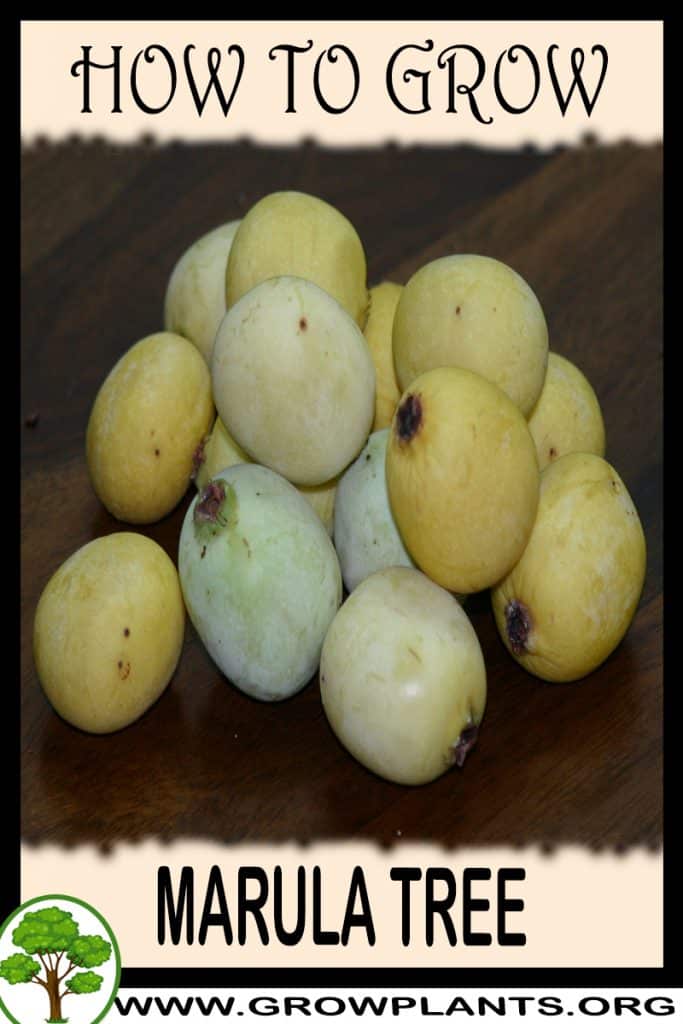
- Fruit Profile: Yellow-green, juicy, plum-sized fruit with an edible, nut-like white-yellow kernel; usually collected from the ground when ripe.
Primary Uses & Landscape Value
- Edible Uses: Fruit eaten fresh or made into juice, oil and cream liqueur (Amarula); the seed kernel is eaten as an edible nut.
- Functional & Ornamental Roles: Fruit, nut and oil tree; ornamental shade tree, drought-tolerant specimen and bonsai subject.
Care Guide: Planting, Soil & Watering
Overview: The marula is a large, drought-tolerant tree that thrives in full sun and hot, dry climates on deep, well-drained soil. Young trees grow faster with generous water and feeding, while mature trees become highly drought-hardy once their deep roots are established.
Quick Care Requirements
| Requirement | Ideal Condition |
|---|---|
| Planting Season | The warm, frost-free part of the year — through winter, spring and summer in suitable (zone 10–12) climates |
| Growth Rate | Moderate to Fast |
| Soil Type | Deep, well-drained soil |
| Water Need | Low to Moderate — drought-tolerant once established, but grows faster with regular water when young |
Planting & Establishment
- Best Planting Season: Plant during the warm season in a frost-free climate; suited to zones 10–12, it can go in through winter, spring or summer wherever the weather stays mild.
- How to Plant:
- Hole Preparation: Dig a hole about 40% deeper and wider than the root ball to give the roots loose soil to establish into.
- Soil Amendments: Mix organic matter, humus and dried leaves into some of the backfill; mulch young trees and feed with nitrogen to speed their growth. Firm the soil enough to hold the tree stable without packing it hard.
- Planting Depth: Lightly loosen the outside of the root ball and set the tree so its root collar sits at the surface — do not bury the trunk — then cover, mulch and water in.
- Growth Speed & Expectations: Growth is moderate to fast, quickest on young, well-watered and well-fed trees; it takes several years to reach fruiting size.
Soil, Watering & Drainage Care
- Soil Mix & Drainage Needs: Marula demands sharp drainage and will not tolerate waterlogged ground; plant it in the open in deep soil rather than a container, which only suits it as a bonsai.
- Watering Schedule & Technique:
- Young / Newly Planted: Keep the soil moist after planting, watering regularly for at least the first couple of weeks and through the early years to drive faster growth.
- Established: Water moderately; the tree is drought-tolerant and, once large, its deep roots may reach groundwater, so watering can be reduced.
- Seasonal Adjustments: Water more through hot, dry spells and less in cool, wet weather, always avoiding standing water.
Climate, Light & Hardiness
Marula is a hot-climate savanna tree suited to desert, Mediterranean, and subtropical conditions in full sun, and it is notably drought tolerant once established. Its cold tolerance is limited, so it is best suited to warm, largely frost-free regions.
Quick Climate Specifications
| Climate Zones | Desert, Mediterranean, Subtropical |
|---|---|
| USDA Hardiness Zones | approximately 10–12 |
| Approx. Survival Minimum | approximately −1°C (30°F) at the zone 10 boundary, briefly, for an established tree |
| Frost Tolerance | Low |
| Light Conditions | Full sun (young trees tolerate half shade but grow more slowly and may not fruit reliably) |
| Wind Tolerance | Moderate |
Sunlight & Light Exposure
Optimal Light Setup
Full sun gives the best growth rate and fruiting; this is a naturally open-savanna species.
Direct Sun Requirement
Yes – full sun is important for reliable fruit set; young trees can start in half shade but will grow slower and may not fruit well until moved into more light.
Shade & Heat Management
Tolerates intense heat well once established; little heat-shading is needed.
Best Exposure / Orientation
An open, unobstructed, south-facing (or equivalent) exposure suits it best.
Temperature Extremes & Hardiness
USDA Hardiness & Regional Limits
Site data places it around zones 10–12, fitting warm subtropical, Mediterranean, and desert-fringe climates without hard winters.
Cold Damage & Winter Protection
Young trees are more cold-sensitive than mature specimens; mulching the root zone and siting in the warmest available spot helps young plants through cool spells.
Frost Sensitivity
Generally low frost tolerance; avoid frost pockets, especially for young trees.
Extreme Heat Tolerance
Excellent – native to hot African savanna and semi-arid regions.
Wind, Humidity & Microclimate
Humidity Preferences
Not humidity-demanding; adapted to relatively dry savanna air.
Dry-Air Tolerance
High – well suited to arid and desert-fringe conditions.
Wind Tolerance
Reasonably wind-tolerant as an open-grown savanna tree.
Rainfall & Seasonal Moisture
Naturally adapted to seasonal wet/dry savanna rainfall, growing actively with rain and coping with long dry spells.
Microclimate Recommendations
Choose the warmest, sunniest, most open site available, and avoid low-lying frost pockets.
Growing in Pots, Balconies & Indoors
Marula is a large tree, 10-30 m (30-100 ft), and needs both male and female trees to fruit. The grower says it is not a houseplant and works in a pot only as a bonsai – otherwise a ground tree.
Quick Details
- Container Size: Not for ordinary pots; possible only as a trained bonsai
- Indoor Suitability: Not a houseplant; container-grown only as a bonsai
- Best Spot: Full sun (part shade only while young, and slower)
- Soil & Drainage: Aerated, organic-rich mix that drains freely
- Watering in Pots: Water when the top of the mix begins to dry; pots dry faster than open ground, so check often and don’t let it fully dry out.
Indoors & On the Windowsill
- Houseplant limits: No – it grows far too large and needs full sun.
- Windowsill growing: Not a sill plant.
- As a bonsai: Bonsai is the only pot route the grower endorses; remember you need male and female plants for fruit, so a single bonsai won’t fruit alone.
On a Balcony or Patio
- Bonsai on the patio: A bonsai can sit on a bright, sheltered patio; the full tree is far too big for lasting pot life.
- Light & establishment: Give it full sun; it takes at least five years to reach fruiting size, and adding mulch and nitrogen while young speeds growth.
Choosing the Pot, Soil & Long-Term Care
- Pot & drainage: A deep pot with strong drainage holes; skip a standing-water saucer to avoid root rot. Terracotta breathes and dries faster, while glazed or plastic hold moisture longer.
- Potting mix: Well-drained mix, as the grower stresses good drainage.
- Feeding: Potted plants use up their food faster because nutrients leach out with each watering, so feed a little more often than plants in open ground.
- Bonsai care: Refresh part of the mix and pot up every couple of years; for established plants, lightly prune the root ball and top growth when you repot.
Fertilizing & Feeding
A young Marula benefits from steady nitrogen to help it size up toward bearing age faster; once established it is drought tolerant and naturally low-demand, so feeding can stay light and balanced.
Quick Fertilizing Specs
| Feeding Level | moderate while young, light once mature |
|---|---|
| young_feeding | nitrogen-forward feeding to speed growth toward a fruit-bearing size |
| mature_feeding | light, balanced feeding; a drought-tolerant tree with deep roots needs little supplemental feeding |
| Main Nutrient Priority | nitrogen while young, balanced through bloom and fruit set once mature |
| Best Feeding Period | during active growth flushes in the warm season |
| Organic Options | mulch and worked-in organic matter, especially while the tree is young |
| Micronutrients | a complete fruit-tree fertilizer supplies routine trace elements during the growing years |
| Soil pH | adaptable to a wide range of well-drained soils |
| Reduce/Stop Feeding | scale feeding back as the tree matures and its roots reach deeper, more reliable moisture |
Feeding by Growth Stage
Newly planted
Help a newly planted Marula settle in and put down a strong root system.
| Nutrient direction | Keep feeding minimal and balanced while the roots establish; let worked-in organic matter and mulch carry most of the early load. |
|---|---|
| Timing | Right after planting, once the tree shows fresh new growth. |
| Frequency | A light feeding through the first growing season is generally enough. |
| Fertilizer types | A diluted, balanced fertilizer formulated for young trees, Organic matter and mulch worked in around, not against, the trunk |
| Precautions | Keep any fertilizer away from the trunk and root ball; a newly planted tree’s tender roots scorch easily. |
Young tree, building growth
Build a strong framework of branches on the way to a fruit-bearing size.
| Nutrient direction | Lean nitrogen-forward to push vegetative growth – Marula is naturally slow to reach bearing size, and steady nitrogen through the young years helps it fill out faster. |
|---|---|
| Timing | Through each active growth flush in the warm season. |
| Frequency | Regular light feedings across the growing season, easing back as growth slows toward the cooler months. |
| Fertilizer types | A nitrogen-forward complete fertilizer suited to young fruit and shade trees |
| Routine trace nutrients | iron, manganese, zinc |
| Precautions | Taper feeding ahead of the cool season so new growth has time to harden off. |
Established, approaching bearing age
Support the shift from a fast-growing young tree toward a mature, fruit-bearing one.
| Nutrient direction | Move toward a balanced feed as the tree nears bearing age, keeping nitrogen moderate rather than pushing hard vegetative growth. |
|---|---|
| Timing | Spring into the main growing season. |
| Frequency | A few feedings spread across the active season. |
| Fertilizer types | A balanced complete fertilizer suited to fruiting trees |
| Routine trace nutrients | iron, manganese, zinc |
| Precautions | Marula becomes drought tolerant with age – pair any feeding with adequate water rather than fertilizing a dry, stressed tree. |
Mature, bearing tree
Support flowering and fruit development on a mature, drought-tolerant bearing tree.
| Nutrient direction | Keep feeding light and balanced; a mature Marula draws on deep roots and naturally needs little input, so avoid pushing heavy nitrogen that favors leaves over fruit. |
|---|---|
| Timing | Around the main growth flush leading into bloom. |
| Frequency | Light feeding is usually enough for a mature, deep-rooted tree. |
| Fertilizer types | A balanced complete fruiting-tree fertilizer, applied sparingly |
| Routine trace nutrients | iron, manganese, zinc |
| Precautions | Avoid heavy nitrogen on a bearing tree – it favors foliage over flowering and fruit set. |
Nutrient Deficiency Signs & Corrections
Overall pale to yellow-green foliage and slower growth than expected, most visible on older leaves.
| Possible causes | Low soil nitrogen, Nitrogen leaching from fast-draining desert or subtropical soils, Root stress limiting uptake, Competition from surrounding turf or vegetation |
|---|---|
| Appears first on | Older, lower leaves |
| What to check | Overall canopy growth versus prior seasons, Leaf color across the whole tree versus just new growth, Whether the tree recently went through drought or root disturbance |
| Possible correction | Apply a nitrogen-forward fertilizer suited to young or actively growing trees and confirm the tree is getting enough water to use it. |
New leaves turn yellow between green veins while the veins themselves stay green.
| Possible causes | High soil pH limiting iron availability, Poorly drained or waterlogged soil, Root damage limiting uptake, Genuinely low soil iron |
|---|---|
| Appears first on | Newest growth at the branch tips |
| What to check | Soil drainage and compaction around the root zone, Whether neighboring trees in the same soil show the same pattern, Recent root disturbance or waterlogging |
| Possible correction | Correct drainage and soil conditions first; if chlorosis persists, apply a chelated iron product according to its label. |
Marginal browning or scorch on older leaves and undersized, poorly filled fruit.
| Possible causes | Low soil potassium, A heavy fruit load depleting reserves, Sandy soil with poor nutrient retention, Root stress limiting uptake |
|---|---|
| Appears first on | Leaf margins on older leaves |
| What to check | Fruit size and fill compared with prior seasons, Whether scorch follows an especially heavy bearing year, Soil texture and drainage |
| Possible correction | Shift toward a potassium-forward feed as fruit develops, applied per the product label. |
Pruning, Training & Seasonal Maintenance
Marula is a semi-deciduous to deciduous, dioecious tree (10–30m as a landscape specimen, though it is also grown as bonsai) that needs both sexes present – usually via a male branch grafted onto a female tree – to bear fruit. Pruning tolerance is low to moderate: the main job is removing downward-drooping or weak branches during the autumn/winter leaf-thin period, and the tree’s overall form and fruiting depend on keeping the graft union intact rather than on heavy annual cutting.
Quick Pruning & Maintenance Specs
| Pruning Tolerance | Low–Moderate |
| Primary Pruning Window | Autumn/Winter (during or after leaf drop) |
| Typical Frequency | Once a year, light corrective work |
| Main Objective | Remove downward/weak growth; maintain form |
| Young Plant Priority | Establish structure; protect the graft union |
| Mature Plant Priority | Remove drooping/crossing wood; preserve pollinator (grafted) branch |
| Best Tool Type | Bypass secateurs and loppers; saw for large old limbs |
| Avoid Heavy Pruning During | Spring/summer bloom and the new-growth flush |
Pruning by Plant Age & Size
Newly Established
Remove only damaged growth. Take special care not to disturb or accidentally remove the graft union – the male scion grafted onto a female tree (or vice versa) is what makes the tree fruitful, and it can look like an odd extra branch to an unfamiliar eye.
Young / Formative
For a landscape tree, build an open structure with well-spaced scaffold branches. For bonsai specimens, formative work is lighter and more frequent – selectively removing vigorous shoots to keep proportions in check rather than one hard structural cut.
Mature / Established
Remove branches that droop or grow downward, plus any crossing or dead wood. Keep the productive grafted branch even if its growth habit looks different from the rest of the canopy.
Seasonal Pruning Schedule
Dormant/Winter
Objective: correct structure while the canopy is leafless or thin, when branch architecture is easiest to read. Remove: downward-growing, weak, or crossing branches, plus deadwood. Do not remove: developing flower buds ahead of the spring bloom, or the grafted pollinator branch. Expected response: clean new growth at the next flush. Flowering impact: minimal if finished before buds swell.
Flowering & Fruiting Wood
Flowers appear on the growth that follows the dormant, leaf-thin period, so winter pruning done before bud break should not remove the coming season’s flowering wood. Pruning late, once spring growth has started, risks cutting into forming flower clusters and should be avoided.
Structural Pruning & Training
Downward-growing branches are the main structural issue to correct; remove them along with crossing or rubbing wood. Canopy thinning for airflow is not a priority – the species is drought-tolerant and prefers full sun regardless of density.
Special Growth to Remove
Remove rootstock suckers or off-type shoots that arise below a graft union, since they compete with the intended scion. Do not remove the grafted pollinator branch itself – on a dioecious tree relying on a grafted male (or female) scion, that branch is essential for fruit set even though it may look like an unusual addition to the canopy.
Container & Small-Space Pruning
Marula is not grown as a general houseplant or container specimen, but it is a recognized bonsai subject. As bonsai, pruning is lighter and more frequent than for a landscape tree: pinch or trim new shoots regularly to hold miniature proportions, and avoid one large annual cut, since the species’ fast-to-medium growth rate can otherwise leave disproportionate scars on a small specimen. Any hard size reduction should be spread across seasons.
Tools
- Bypass secateurs – young trees and bonsai work.
- Loppers – removing downward or crossing branches on established trees.
- Pruning saw – large structural limbs on older landscape specimens.
- Pole pruner – canopy and height work on large mature trees, which can reach 30m.
Tool Hygiene & Disease Risk
Routine: clean, sharp tools are sufficient. No specific transmissible pathogen is documented for this species in the source data.
Cut Placement & Technique
Use thinning cuts to remove drooping or crossing branches, cutting just outside the branch collar and avoiding flush cuts or stubs. On bonsai, keep cuts small and precise to limit scarring on the miniature form.
Heavy Pruning & Rejuvenation
Landscape specimens tolerate moderate renewal pruning thanks to their fast-to-medium growth rate, but any hard reduction must avoid removing the grafted pollinator wood. Bonsai specimens should not be hard-pruned in one session; reduce gradually over multiple seasons to avoid large, disfiguring scars on a small trunk.
Post-Pruning Care
No extra feeding is required after routine cuts. The species is drought-tolerant, so no special watering increase is needed; simply monitor cuts near the graft union to confirm the union has not been disturbed.
Common Pruning Mistakes
Mistaking the grafted pollinator branch for an errant shoot and removing it, which eliminates fruit set on a dioecious tree; pruning heavily just before the spring bloom; hard-pruning a bonsai specimen in a single session instead of reducing gradually.
When NOT to Prune
Avoid pruning during the spring/summer bloom and the new-growth flush. Never remove growth from the graft union without first confirming which branch is the productive scion.
Recommended Tools (by task)
- bypass_secateurs – bonsai and young-tree work: precise small cuts near the graft union.
- loppers – removing downward/crossing branches: reach and leverage on established wood.
- pruning_saw – large structural limbs on old landscape specimens.
- pole_pruner – height/canopy work on mature trees reaching up to 30m.
Pruning Troubleshooting
| Problem | Possible Cause | What to Check | Corrective Action |
| Tree not fruiting | Missing male pollinator, or the grafted pollinator branch was removed by mistake | Presence of a male tree nearby, or whether the graft union is intact | Never remove grafted pollinator wood; graft or plant a male if none is present |
| Weak, drooping canopy | Downward branch growth left untended | Branch angles during the dormant season | Remove downward-growing branches in autumn/winter |
| Bonsai losing miniature proportions | Vigorous regrowth left unchecked | Length of recent growth flush | Pinch/prune new shoots regularly instead of one heavy annual cut |
Propagation Guide
Marula is usually started from seed, which germinates in a matter of weeks under warm, moist conditions, making it the easiest and most practical way for a home grower to begin new plants. Because this species is dioecious (separate male and female trees) and seedlings cannot be sexed until they mature, grafting known male and female material onto a tree is used when a guaranteed fruit-bearing pairing is needed – this makes grafting a specialist-level technique with inconsistent success, even though it is not required simply to grow the tree.
Quick Propagation Specs
| Best Propagation Method | Seed |
| Alternative Methods | Grafting (used to guarantee sex and hasten fruiting) |
| Propagation Difficulty | Easy by seed; grafting for guaranteed fruiting is Specialist – the site notes success is rarely 100% |
| Seed True-to-Type | True-to-type, but sex cannot be determined until the tree flowers, since male and female flowers grow on separate trees |
| Vegetative True-to-Type | Yes – grafted material retains the known sex and fruiting characteristics of the source tree |
| Best Propagation Season | Spring to summer; in desert climates, autumn and late winter sowing are also used |
| Seed Germination Time | 3–9 weeks |
| Seed Sowing Depth | 3–5 cm (about 1–2 in) |
Growing from Seed
Seed Handling & Viability
Store seed in a dry, dark location at room temperature until sowing.
Sowing Season
Spring to summer is standard; in desert climates, sowing in autumn and at the end of winter is also used.
Sowing Depth & Orientation
Dig a hole a little larger than the seed itself, use light soil, and cover lightly, at a depth of about 3–5 cm (1–2 in).
Germination Conditions
Needs moist, well-drained soil, a sunny location, and warm weather, with an average amount of watering.
Germination Time
About 3–9 weeks.
Seedling Care
Keep the soil moist and feed with a high-nitrogen fertilizer to support faster early growth; mulching young trees is also recommended.
Grafting & Budding
Why Grafting Is Used
Marula trees are dioecious, so a seed-grown tree’s sex is unknown until it flowers at maturity. Grafting known male or female material is the way growers ensure a tree will fruit, and can also bring a tree into bearing sooner than starting fresh from seed.
Preferred Grafting Methods
For a single garden tree, the site describes grafting both a male and a female onto the same plant – typically grafting the male scion onto the side of the tree and the female scion onto the top. When growing several trees, it is better to graft the desired male or female material onto young plants before transplanting them.
Scion Selection
Scion wood should come from trees of confirmed sex (male or female).
Graft Aftercare
Note that grafting success with this species is inconsistent – the site describes it as rare to succeed with every graft attempted, so growers should expect to graft more unions than they ultimately need.
Bloom & Flower Guide
Quick Details
- Bloom Season: Spring to summer
- Flower Appearance: Small (1-2 mm) green to yellow flowers borne in groups
- Edibility: The flower is not eaten; the tree is grown for its edible fruit and seeds
Detailed Blooming Overview
The marula is usually dioecious – male and female flowers grow on separate trees – so a female tree needs a male nearby to set fruit. The small green-yellow flowers appear in clusters ahead of the fruit.
Flower Characteristics
- Small green to yellow flowers, 1-2 mm, in clusters.
- Male and female flowers usually on separate trees (occasionally a tree carries both).
Bloom Care & Thinning
- Pollination: Mainly bees; only rarely self-pollinating.
- Fruit set: Poor set usually just means there is no male tree close enough to supply pollen.
Fruit & Uses
Marula is grown for its juicy, yellow-green fruit and its oily edible kernels (seeds), both eaten once removed from the fruit. The pulp is eaten raw or made into juice, jelly and the traditionally fermented alcoholic drink marula wine/liqueur, while the kernels inside the hard stone are eaten like nuts or pressed for oil.
Quick Edible Specs
| Edible Parts | Fruit (flesh), Nuts (kernels inside the stone) |
|---|---|
| Main Use(s) | Culinary – fresh eating, juice, fermented drinks, oil; kernels eaten as nuts |
| Eaten Raw or Cooked | Fruit: raw or fermented. Kernels: raw, after cracking the stone |
| Preparation Required | Fruit: none. Kernels: crack the hard stone to remove |
| Harvest Season | Summer / autumn / winter |
| Time to First Harvest | Takes several years to reach a size that bears a meaningful crop (see Propagation for detail) |
| Storage | Fruit is best used soon after collecting; kernels store longer once dried and cracked out |
| Safety/Toxicity Caveat | None known for ripe fruit or kernel |
Fruit
The fruit turns yellow-green and juicy when ripe and is best collected once it has fallen to the ground rather than picked from the tree. It is eaten raw, pressed for juice, or traditionally fermented into an alcoholic drink. Fruit flies and, in its native range, foraging animals such as elephants compete for the ripe crop.
Seeds, Pods & Nuts
Inside each fruit is a hard stone containing one or more white-yellowish kernels. Once the stone is cracked open, the kernels are eaten raw like a nut, or pressed to yield an edible, rich oil used in cooking.
Preparation, Uses & Safety
No preparation is needed for the fruit beyond normal washing; the kernel simply requires cracking the surrounding stone to access. No toxicity is documented for either part.
Pests, Diseases & Troubleshooting
Overview: The marula is a robust African savanna fruit tree in the mango family (Anacardiaceae) and, as a large established tree, is fairly resilient; its main concerns are fruit flies that maggot the ripening fruit, sap-sucking aphids and scale on young growth, and the anthracnose and powdery mildew typical of its family, plus browsing by large wildlife. Manage it with orchard hygiene-clearing fallen fruit-and good airflow, keeping sprays for real fruit-fly or fungal pressure.
Quick Troubleshooting Overview
| Issue / Pest | Main Symptom | Primary Solution |
|---|---|---|
| Fruit flies | Maggots inside softening fruit, puncture stings, premature fruit drop and rot | Clear fallen fruit, bait/lure traps, harvest promptly |
| Aphids | Colonies on soft new shoots, distortion, sticky honeydew and sooty mould | Water blast, insecticidal soap, encourage predators |
| Scale & mealybugs | Bumps and cottony masses on twigs, honeydew, sooty mould, ants | Horticultural oil, prune infested wood, control ants |
| Anthracnose | Dark sunken spots on leaves, flowers and fruit, dieback in wet weather | Airflow, sanitation, copper fungicide if severe |
| Wildlife browsing | Bark stripped and fruit eaten by elephants, antelope and livestock | Protect young trees with guards/fencing |
Common Pests & Management
- Marula & Mediterranean fruit flies (Ceratitis cosyra, Ceratitis capitata):
- Symptoms: The key fruit pest: female flies sting the ripening fruit to lay eggs, and the maggots tunnel the flesh, causing internal rot, premature drop and unusable fruit; small puncture marks and oozing mark the egg sites.
- Prevention & Control: Practise strict orchard hygiene-collect and destroy all fallen and infested fruit to break the breeding cycle. Hang protein-bait and pheromone lure traps to monitor and reduce flies, bag or harvest fruit as it matures, and use bait sprays rather than cover sprays where pressure is high.
- Aphids (Aphis spp., Toxoptera spp.):
- Symptoms: Colonies of soft insects on the flush of new leaves and shoots, curling growth and coating it with honeydew that blackens into sooty mould and attracts ants.
- Prevention & Control: On a large tree they are seldom serious-support ladybirds, lacewings and parasitic wasps, and hose down accessible young trees. Insecticidal soap or neem controls heavy infestations on nursery and young trees; treat in the evening to protect pollinators.
- Scale insects & mealybugs (Coccidae, Pseudococcus spp.):
- Symptoms: Immobile brown or waxy bumps and white cottony masses on twigs, leaf undersides and branch forks, draining sap and producing honeydew and sooty mould, often tended by ants.
- Prevention & Control: Prune out and destroy heavily infested wood, control the ants that farm them, and smother colonies on young trees with horticultural or neem oil; encourage the natural predators and parasitoids that usually keep them in check.
- Fruit-piercing & stink bugs (Pentatomidae, various):
- Symptoms: Shield-shaped bugs that pierce developing and ripening fruit, causing sunken, discoloured, corky patches, dimpling and premature drop.
- Prevention & Control: Monitor as fruit develops, hand-pick where practical, keep surrounding weeds and alternate hosts down, and target only if damage is significant, preserving beneficial insects.
Diseases & Fungal Issues
- Anthracnose (Colletotrichum gloeosporioides):
- Symptoms: As in its relative the mango, dark, sunken, spreading spots appear on leaves, flower panicles and especially fruit, which rot with pinkish spore masses in warm, wet weather; twig dieback can follow.
- Treatment & Management: Prune for an open, airy canopy, remove mummified fruit and dead wood, and clear fallen debris. Where wet-season pressure is high, protect flowering and fruiting with a copper-based fungicide, timed to the label and the weather.
- Powdery mildew (Erysiphe / Oidium spp.):
- Symptoms: A white powdery coating on young leaves, shoots and flower panicles in warm conditions with humid nights, distorting growth and reducing fruit set.
- Treatment & Management: Favour good airflow and sunlight, remove badly affected shoots, and treat vulnerable flushes and flowering with a sulphur or potassium-bicarbonate spray if needed.
- Root & collar rot / dieback (Phytophthora spp., Botryosphaeria):
- Symptoms: Poorly drained or waterlogged soil brings root and collar rot, with canopy thinning, dieback and gumming; branch cankers and dieback can also follow drought or wounding.
- Treatment & Management: Plant on well-drained ground, avoid waterlogging and trunk wounds, and prune out dead and cankered wood back to healthy tissue, sealing large cuts in high-risk areas.
Growing Difficulties & Abiotic Problems
- Frost & cold sensitivity:
- Cause & Symptoms: A tropical to subtropical tree, marula is damaged by frost-young trees especially suffer leaf and shoot dieback in cold snaps.
- Correction Strategy: Plant in a warm, frost-free position, protect young trees over their first winters, and choose a sheltered site in marginal climates.
- Irregular bearing & fruit drop:
- Cause & Symptoms: Marula is dioecious, so only female trees fruit and a nearby male is needed for pollination; poor pollination, drought stress or heat can cause flower and young-fruit drop and uneven yields.
- Correction Strategy: Ensure male and female trees are grown together for pollination, water young and bearing trees through dry spells, and accept some natural fruit drop; mulch to steady soil moisture.
- Wildlife & livestock damage:
- Cause & Symptoms: Famously attractive to wildlife-elephants, antelope, monkeys, warthogs and livestock eat the fruit and can strip bark or break branches, which is the grain of truth behind the source’s mention of elephants.
- Correction Strategy: Protect young trees with sturdy guards or fencing until established; mature trees generally withstand browsing, and fallen fruit is best cleared promptly to reduce both animals and fruit flies.
What Helps – Products & Tools
For marula the priorities are fruit-fly control and family fungal diseases: protein-bait and pheromone fruit-fly traps and rigorous removal of fallen fruit, insecticidal soap, neem or horticultural oil for aphids, scale and mealybugs on young trees, and a copper fungicide (with sulphur or potassium-bicarbonate for mildew) against anthracnose on flowers and fruit. Physical tree guards protect young trees from wildlife.
Frequently Asked Questions
How do you grow a marula tree?
Plant a marula in full sun on deep, well-drained soil, choosing the warm, frost-free part of the year to do it — in zones 10–12 you can plant through winter, spring or summer as long as the weather stays mild. Keep the soil moist after planting, watering regularly for at least the first couple of weeks and through the early years to drive faster growth, then water moderately once the tree is established, since it becomes drought-tolerant and its deep roots may eventually reach groundwater.
Why isn’t my marula tree fruiting?
Marula trees are dioecious, so male and female flowers grow on separate trees, and a female tree needs a male nearby to set fruit. If fruit set is poor, it usually just means there isn’t a male tree close enough to supply pollen.
Can you grow a marula tree in a pot?
Not as an ordinary houseplant or patio pot — marula grows far too large for that. The only container option is training it as a bonsai, and since the tree is dioecious you would still need both a male and a female plant to get fruit, so a single bonsai won’t fruit alone.
What pests and diseases affect marula trees?
Marula’s main problems are fruit flies, sap-sucking aphids and scale on young growth, plus the anthracnose and powdery mildew typical of its mango-family relatives, and browsing by large wildlife. Fruit flies are the biggest threat to the crop — females sting the ripening fruit to lay eggs, and the maggots tunnel the flesh, causing internal rot, premature drop and unusable fruit.
Is marula fruit edible, and what is it used for?
Yes — marula is grown for its edible fruit and seeds. The pulp is eaten raw or made into juice, jelly and the traditionally fermented alcoholic drink marula wine/liqueur (it’s the fruit behind the commercial Amarula liqueur), while the kernels inside the hard stone are eaten like nuts or pressed for oil.