

Plant Profile & Key Characteristics
Also known as: Ambarella, June plum, Golden apple, Golden plum, Hog plum, Umbrella magnolia
Overview: Ambarella (Spondias dulcis) is a deciduous to semi-evergreen fruit tree reaching 3-10 m, grown for its edible sweet-sour fruit. It is a perennial tropical to subtropical tree that begins bearing after a few years.
Quick Specifications
| Specification | Attribute |
|---|---|
| Plant Type / Life Cycle | Perennial (fruiting tree) |
| Foliage Type | Deciduous / semi-evergreen |
| Mature Size | 3-10 m (10-30 ft) |
| Growth Rate | Moderate |
| Toxicity | Non-toxic / edible fruit |
| Hardiness | USDA zone 9+ |
Growth Form & Structure
- Height & Spread: 3-10 m (10-30 ft) in ground; can be container-grown if the trunk is kept short (about 50 cm) to fruit low.
- Growth Habit & Form: Upright branching fruit tree; best kept small for easier fruit management.
- Lifespan & Maturity: Begins bearing fruit in about 3-4 years.
Anatomy & Physical Features
- Flower Characteristics: Small white flowers with yellow stamens in clusters (full detail in the Bloom guide).
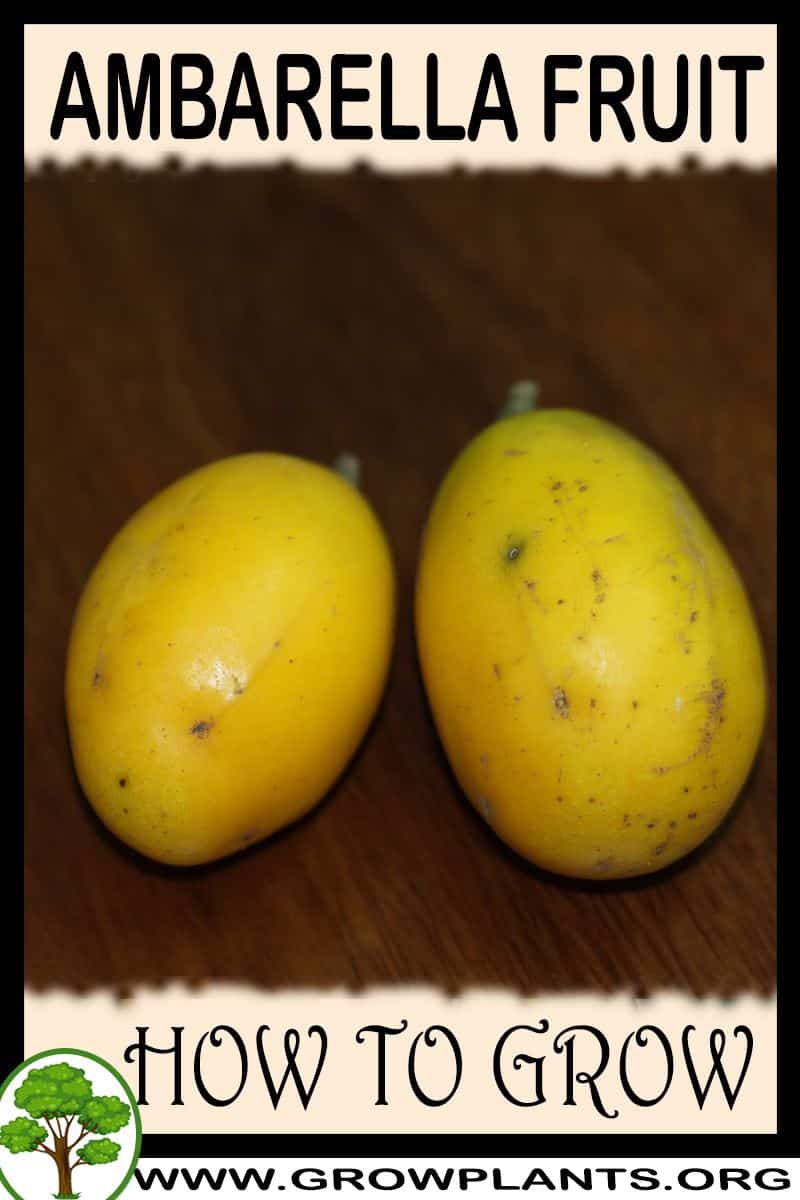
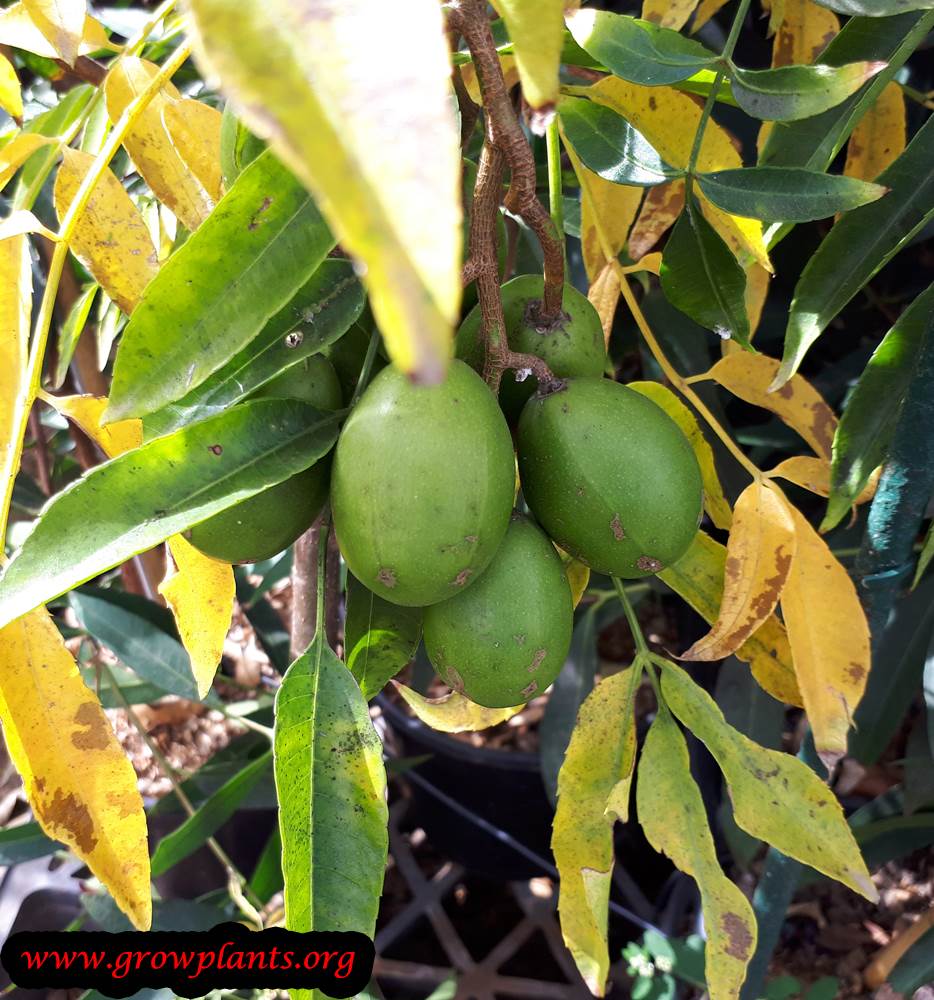
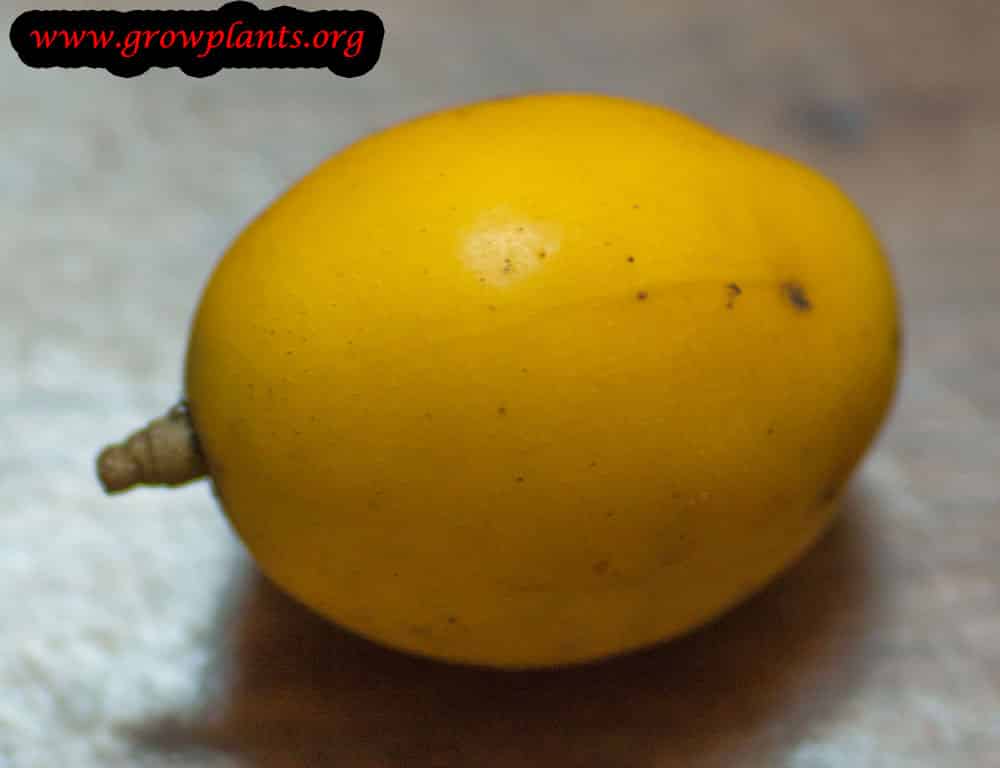
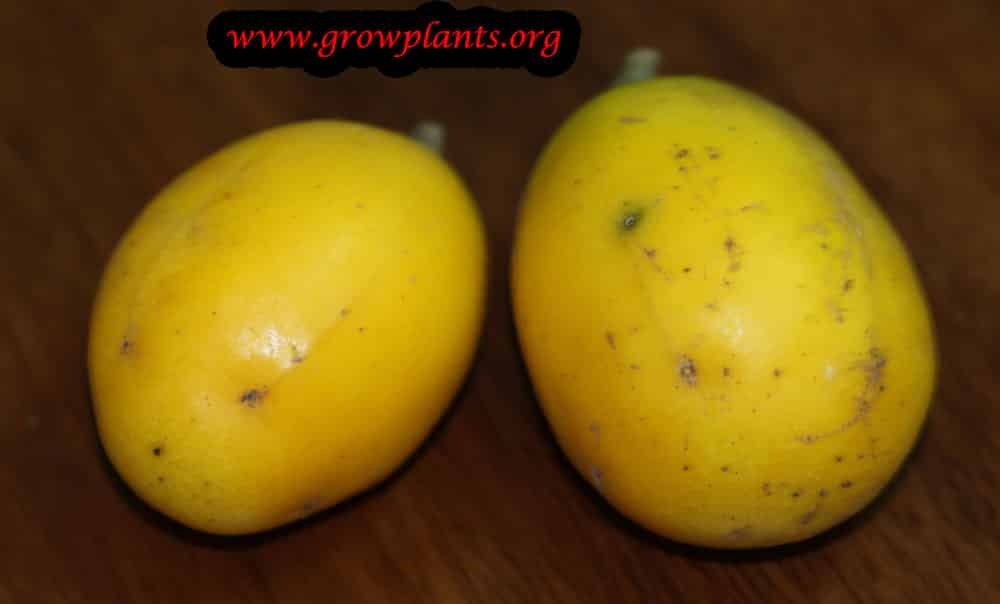
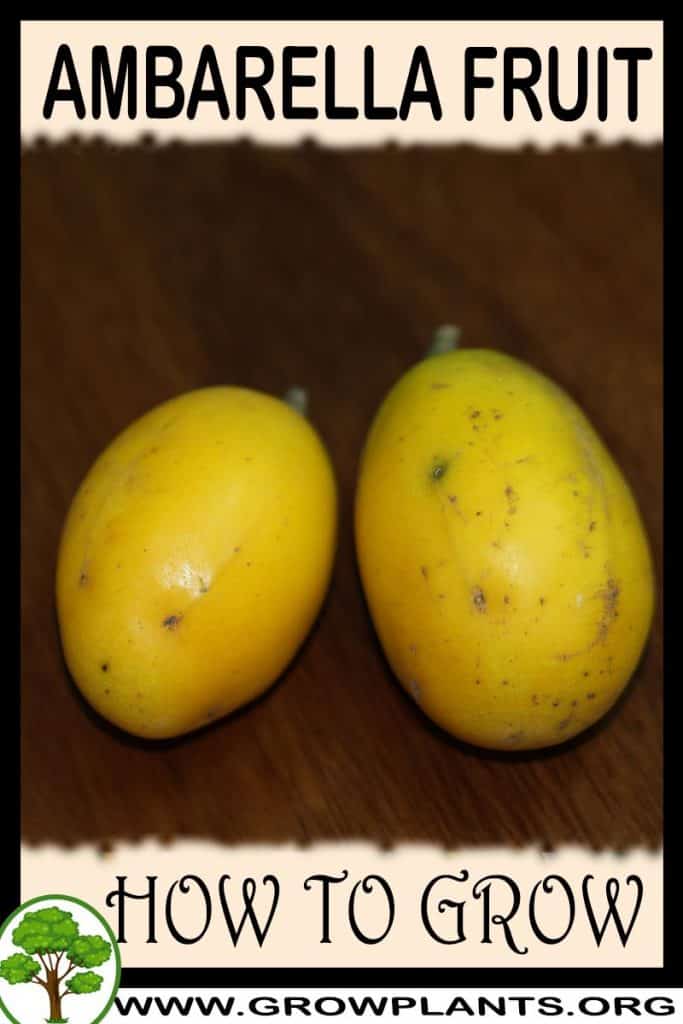
- Fruit Profile: Ovate green-yellow to orange fruit with a single seed and sweet-sour flesh reminiscent of pineapple-mango (full detail in the Fruit guide).
Primary Uses & Landscape Value
- Edible Uses: Fruit eaten raw, juiced or made into paste.
- Functional & Ornamental Roles: Backyard fruit and shade tree; suits large containers when pruned.
Care Guide: Planting, Soil & Watering
Overview: Ambarella is a tropical to subtropical fruit tree that grows best in full sun in rich, organic, well-draining soil. It is frost-tender and prefers humidity and steady moisture, so keep the soil evenly moist.
Quick Care Requirements
| Requirement | Ideal Condition |
|---|---|
| Planting Season | In spring (spring to summer in warmer zones; year-round in zone 12+) |
| Growth Rate | Moderate |
| Soil Type | Rich, organic, moist and well-draining |
| Water Need | Moderate to high; keep the soil evenly moist |
Planting & Establishment
- Best Planting Season: Plant in spring in zone 9, spring to summer in zones 10–11, and year-round from zone 12; it needs a frost-free spot.
- How to Plant:
- Hole Preparation: Dig a hole wider than the root ball in rich, free-draining soil.
- Soil Amendments: Work in plenty of organic matter to feed the tree and hold moisture.
- Planting Depth: Set the root collar level with the soil surface and firm gently.
- Growth Speed & Expectations: A moderate grower reaching about 3–10 m; keep it pruned small (even container-grown) for easier fruit care.
Soil, Watering & Drainage Care
- Soil Mix & Drainage Needs: Rich soil with organic matter and free drainage suits it; it likes humidity and moist soil but not waterlogging.
- Watering Schedule & Technique:
- Young / Newly Planted: Keep the soil evenly moist and humid while the tree establishes.
- Established: Water regularly and deeply so the soil stays moist through the warm season.
- Seasonal Adjustments: More in summer heat, less in cooler weather; protect from frost.
Climate, Light & Hardiness
Ambarella is a tropical-to-Mediterranean fruit tree, semi-evergreen to deciduous depending on climate, that needs full sun and frost-free or near-frost-free conditions. It has only light frost tolerance and is best suited to warm, humid, zone 9+ climates.
Quick Climate Specifications
| Climate Zones | Tropical, Subtropical, Mediterranean |
|---|---|
| USDA Hardiness Zones | 9+ |
| Frost Tolerance | Low |
| Light Conditions | Full Sun; half shade possible but full sun preferred |
Sunlight & Light Exposure
Optimal Light Setup
Best in full sun; half shade is tolerated but full sun is preferred for fruiting.
Temperature Extremes & Hardiness
USDA Hardiness & Regional Limits
Reliable as a perennial fruit tree from zone 9 upward; the site's care overview specifically calls for frost-free conditions.
Cold Damage & Winter Protection
Best kept frost free; growth and fruiting decline in cool conditions well before any hard freeze occurs.
Frost Sensitivity
Only lightly frost tolerant; the source data specifically calls for frost-free siting, so hard frost is likely to cause serious damage.
Wind, Humidity & Microclimate
Humidity Preferences
Prefers humid conditions with consistently moist soil, per the site's care overview.
Microclimate Recommendations
A warm, sunny, frost-free, humid microclimate gives the most reliable fruiting.
Growing in Pots, Balconies & Indoors
Ambarella (June plum) (Spondias dulcis) is a 3-10 m (10-30 ft) tree, so it is not a houseplant. It can, however, be kept in a large container for years if you keep it small by potting up gradually and pruning.
Quick Details
- Container Size: A large tub; keep the plant small by pruning
- Indoor Suitability: Not a houseplant – grow it outdoors
- Best Spot: Full sun outdoors – a sunny patio, courtyard or balcony
- Soil & Drainage: Peat-based mix (add perlite or potting mix) with strong drainage; some lava grit at the base helps
- Watering in Pots: Water so it fills the saucer, but let that saucer dry the same day – standing water means too much
Indoors & On the Windowsill
- Not a houseplant: This is a full-sized fruit tree that needs strong outdoor sun to grow and fruit – indoor light is far too weak, so it will not thrive as a room plant.
- Overwintering: Being frost-tender, in cold climates it is best kept in a pot that can be moved into a bright, frost-free space for the cold season and back outside once warmth returns.
On a Balcony or Patio
- Light & heat: Give it the sunniest, most sheltered spot. Walls and paving reflect heat and pots dry fast, so check moisture often and shelter a top-heavy plant from wind.
- Weight & runoff: A fruiting tree in a large tub is heavy – set it where the floor can take the load and where drainage runoff won’t be a problem.
Choosing the Pot, Soil & Long-Term Care
- Pot & drainage: Make plenty of drainage holes and add lava grit at the base. You can stand it on a saucer, but when you water and it fills, let it dry off the same day – if water lingers, cut back. A large tub is the working range the grower gives.
- Potting mix: Peat soil with perlite, or potting mix, kept open and free-draining.
- Feeding: Grown in a pot it needs more fertiliser to set fruit, as nutrients leach with watering; feed through the growing season.
- Refreshing the soil: When the tree is large, replace part of the soil rather than the whole root ball, taking it from the sides of the pot.
Grower’s Container Tip
- Pot up gradually: Keep the main trunk short – about 50 cm (20 in) – and let the tree divide itself so it branches and fruits lower down. This keeps the tree compact, refreshes tired soil over time, and makes long-term care more efficient.
Fertilizing & Feeding
A tropical fruit tree that takes several years to reach bearing size; feed steadily but moderately through establishment and young growth, then shift toward a more balanced, fruiting-focused feed once the tree begins to flower and set fruit.
Quick Fertilizing Specs
| Feeding Level | moderate |
|---|---|
| young_feeding | A nitrogen-forward complete fertilizer to build a strong canopy and root system while the tree is young and not yet bearing. |
| mature_feeding | A balanced, complete fertilizer once the tree flowers and sets fruit regularly. |
| Main Nutrient Priority | Nitrogen while the canopy is developing, shifting toward balanced nutrition with attention to potassium once the tree is fruiting. |
| Best Feeding Period | The warm, actively growing months, tapering off as growth slows in cooler or drier weather. |
| Organic Options | Rich compost or well-rotted organic matter worked around the root zone, kept away from the trunk. |
| Micronutrients | Iron, manganese and zinc are typically supplied by a complete fruit-tree fertilizer once the tree is past its earliest establishment. |
| Soil pH | Grows best in rich, well-drained soil without an extreme pH. |
| Reduce/Stop Feeding | Ease off feeding as growth slows toward the cooler part of the year or ahead of fruit ripening. |
Feeding by Growth Stage
Newly Planted Tree
Help a newly planted tree establish a strong root system before pushing top growth.
| Nutrient direction | Light, balanced feeding to support root establishment without overwhelming a young root system. |
|---|---|
| Timing | In the first growing season after planting, once new growth resumes. |
| Frequency | A few light feedings spread across the active growing season is usually enough while roots establish. |
| Fertilizer types | A balanced, complete fertilizer formulated for young trees, Well-rotted compost worked into the surrounding soil |
| Precautions | Keep fertilizer well away from the trunk and taper off as growth slows toward the end of the season. |
Young, Non-Bearing Tree
Build a strong canopy and root system through the years before the tree begins bearing fruit.
| Nutrient direction | A nitrogen-forward fertilizer to drive vegetative growth, paired with a complete formula that supplies routine trace elements. |
|---|---|
| Timing | Through the tree’s active growing seasons while it is still developing toward fruiting size. |
| Frequency | Regular light feedings through the warm growing season, tapering as growth slows. |
| Fertilizer types | A nitrogen-forward complete fertilizer for young fruit trees, Composted organic matter as a soil-building supplement |
| Routine trace nutrients | iron, manganese, zinc |
| Precautions | Watch for scorched leaf edges, a sign of over-fertilizing – scale back rather than feeding more often. |
Established, Approaching Fruiting
Shift from a growth-focused feed to a more balanced one as the tree matures toward its first flowering and fruit set.
| Nutrient direction | A balanced, complete fertilizer rather than a heavily nitrogen-leaning one. |
|---|---|
| Timing | As the tree matures, in the seasons leading up to its first bloom and fruit. |
| Frequency | A modest, evenly spaced feeding routine through the growing season. |
| Fertilizer types | A balanced, complete fruit-tree fertilizer, Organic mulch renewed around, not against, the trunk |
| Routine trace nutrients | iron, manganese, zinc |
| Precautions | Avoid excess nitrogen this close to first fruiting; it favors leafy growth over the flowering the tree needs to start bearing. |
Mature, Fruit-Bearing Tree
Sustain flowering and fruit development on a tree that is now bearing fruit regularly.
| Nutrient direction | Balanced feeding with attention to potassium to support fruit development and quality. |
|---|---|
| Timing | Around the tree’s bloom and fruit-development window, tapering as fruit ripens. |
| Frequency | A steady, moderate feeding routine through the growing season, easing off as fruit nears harvest. |
| Fertilizer types | A balanced, complete fruit-tree fertilizer with attention to potassium, Organic mulch refreshed seasonally around the root zone |
| Routine trace nutrients | iron, manganese, zinc |
| Precautions | Reduce feeding as fruit approaches ripeness; heavy late feeding can affect fruit quality and delay ripening. |
Nutrient Deficiency Signs & Corrections
New leaves develop yellowing between veins that stay green – a contrast to the reddish flush this tree normally shows on healthy new growth.
| Possible causes | Iron locked out by alkaline or compacted soil, Poor drainage or waterlogged roots, Root stress after transplanting or repotting, Container culture in soil that has lost structure |
|---|---|
| Appears first on | Newest leaves near the shoot tips |
| What to check | Test soil pH, Check drainage around the root zone, Review recent transplant or repotting history |
| Possible correction | Work toward less alkaline soil conditions and apply a chelated iron product per its label if chlorosis persists. |
Pale, undersized leaves and weak new shoot growth.
| Possible causes | Insufficient nitrogen supply for a developing canopy, Leaching from heavy rain or frequent irrigation, Root competition from nearby plantings, Thin or depleted soil |
|---|---|
| Appears first on | Older leaves first, then newer growth if uncorrected |
| What to check | Review recent feeding history, Check for competing roots nearby, Assess soil organic matter content |
| Possible correction | Resume nitrogen-forward feeding for a young tree, or balanced feeding for a bearing one, and enrich the soil with organic matter. |
Leaf margins scorch yellow to brown while the center stays green, most visible on older leaves; fruiting trees may also show reduced fruit quality.
| Possible causes | Low potassium in sandy or leached soil, Drought stress during fruit development, A nitrogen-heavy recent feeding pattern, Salt buildup from over-fertilizing |
|---|---|
| Appears first on | Older leaves, starting at the margins |
| What to check | Review fertilizer history for a nitrogen-heavy pattern, Check for drought stress during fruiting, Flush the root zone if salt buildup is suspected |
| Possible correction | Switch to a balanced, potassium-inclusive fertilizer, particularly once the tree is fruiting, and correct any drought stress. |
New leaves emerge small, narrow and clustered in a rosette pattern rather than the tree’s normal leaf size and spacing.
| Possible causes | Zinc unavailable in alkaline or sandy soil, Overuse of phosphorus-heavy fertilizer, which can interfere with zinc uptake, Compacted or poorly aerated soil restricting root function, General micronutrient depletion in old container soil |
|---|---|
| Appears first on | New growth at the shoot tips |
| What to check | Test soil pH and zinc availability, Review recent fertilizer history for heavy phosphorus use, Check soil compaction and drainage |
| Possible correction | Apply a chelated zinc product per its label and switch to a balanced complete fruit-tree fertilizer going forward. |
Pruning, Training & Seasonal Maintenance
Ambarella is a fast-to-medium growing tropical tree that can reach 3-10m, but for fruit growers the goal is usually to keep it deliberately smaller than that, since a compact tree is far easier to net against fruit fly and to harvest. Pruning tolerance is moderate: the tree responds well to structural shaping, and the safest time for the main cut is autumn, right after the summer harvest, while the tree has a full dormant-ish period ahead before it flushes and flowers again in spring.
Quick Pruning & Maintenance Specs
| Pruning Tolerance | Moderate |
| Primary Pruning Window | Autumn, directly after the summer harvest |
| Typical Frequency | Once a year, plus opportunistic removal of damaged or pest-infested growth |
| Main Objective | Keep the tree compact enough to net and hand-harvest, on a schedule that doesn’t cut into the next flowering flush |
| Young Plant Priority | Establish a low, open framework early, before the tree gets tall enough that fruiting height becomes a problem |
| Mature Plant Priority | Height and spread control to keep fruit within reach and the canopy netable |
| Best Tool Type | Bypass secateurs and loppers for framework work; a pruning saw for larger limbs on an older tree |
| Avoid Heavy Pruning During | Spring flowering and through fruit set and development into summer |
Pruning by Plant Age & Size
Newly Established
Remove only damaged growth for the first year or two; let the young tree build enough structure to select a framework from.
Young / Formative
Train to an open, low-branched framework (heading the leader while young to encourage branching low down) rather than letting it run up as a single tall trunk – this is what makes later netting and picking manageable.
Mature / Established
Annual height and spread reduction to hold the tree at a manageable size, plus removal of any dead, crossing or storm-damaged wood.
Seasonal Pruning Schedule
Post-Harvest
Objective: reset the tree’s size and shape for the next cycle. Remove: excess height, overly long reaches, dead or fruit-fly-damaged wood, and any crossing branches, once the summer fruit is in. Do not remove: more than a moderate portion of the canopy at once on a young or lightly-established tree. Expected response: a fresh flush of growth over the following months, from which next spring’s flowers will form. Flowering/fruiting impact: minimal if pruning is finished well before spring flowering; pruning close to or during flowering removes the flush that would have carried fruit.
Flowering & Fruiting Wood
Ambarella flowers on the new growth flush produced in spring, so the goal of an autumn prune is to shape the tree well ahead of that flush, not to cut into wood that is about to flower. Pruning too close to spring risks removing developing flower growth and delaying or reducing that season’s fruit.
Structural Pruning & Training
Favour an open, low-headed framework over a single tall leader – this directly serves the source guidance to keep the tree small for easier fruit-fly netting and picking. Remove crossing or rubbing branches and any growth that pushes the canopy taller or wider than the netting/reach you plan to use.
Special Growth to Remove
- Dead, storm-damaged or fruit-fly-damaged wood
- Crossing or rubbing branches
- Rootstock suckers below the graft, only if your particular tree was grafted for better fruit quality
Container & Small-Space Pruning
When grown in a container, prune to keep the main trunk to around 50cm and let the tree branch low from there rather than growing a tall single trunk – this brings fruiting height down and suits the compact, netable shape container growers want anyway.
Tools
Bypass secateurs for young growth and thin wood; loppers for framework branches; a pruning saw for any larger limb removal as the tree matures.
Tool Hygiene & Disease Risk
Increased when removing fruit-fly-damaged or pest-affected wood – dispose of prunings away from the tree rather than leaving them to harbour pests, and wipe blades if cutting visibly diseased material.
Cut Placement & Technique
Use thinning cuts back to a branch junction rather than heading cuts mid-branch where possible, to keep the canopy open; cut just outside the branch collar on any larger limb to help the wound close cleanly.
Heavy Pruning & Rejuvenation
Tolerated for size control – an overgrown tree can be cut back significantly in autumn to bring it back down to a netable, hand-harvestable size, accepting a lighter crop the following spring while it recovers canopy.
Post-Pruning Care
Water normally; in strong tropical sun, a canopy opened up too aggressively can expose previously shaded bark and fruit to sunburn, so avoid removing more than a moderate share of the canopy in one go. Watch new growth for aphids.
Common Pruning Mistakes
- Letting the tree grow tall before starting to train it low, making later netting and harvest difficult
- Pruning in spring, cutting into the flush that would have flowered and fruited that season
- Leaving fruit-fly-damaged prunings under the tree instead of disposing of them away from it
When NOT to Prune
Avoid pruning during spring flowering and while fruit is developing through summer; do the main structural work only after harvest, in autumn.
Recommended Tools (by task)
- bypass_secateurs – young shoots and thin wood
- loppers – framework branches when training the low, open shape
- pruning_saw – larger limb removal on an older, established tree
Pruning Troubleshooting
| Problem | Possible Cause | What to Check | Corrective Action |
| Poor fruit set after pruning | Pruned too close to or during spring flowering, removing the flowering flush | Timing of the last prune relative to spring bloom | Move structural pruning to directly after harvest in autumn |
| Tree too tall to net or hand-harvest | No early low-branching training | Height of the main trunk before the first branches | Head back the leader and favour low, spreading branches on future growth |
| Heavy fruit fly damage | Uncovered, hard-to-net canopy | Canopy size relative to available netting | Prune for compact size and net promptly as fruit develops |
Propagation Guide
Ambarella is easiest to start from seed sown fresh straight after eating the fruit, but seedling trees can vary in fruit quality and take a few years to bear; large hardwood stem cuttings (‘stakes’) planted directly in the ground are a traditional and reliable way to get a true-to-type tree faster, and grafting is used, as the site notes, to improve fruit size or sweetness on trees whose fruit isn’t good. Air layering is also used, mainly to propagate a proven, good-fruiting tree true to type. Overall this is a moderately easy tree to propagate by seed or large cuttings, with grafting reserved for improving fruit quality.
Quick Propagation Specs
| Best Propagation Method | Seed (fresh) for a new tree; large hardwood stem cuttings for a true-to-type tree |
| Alternative Methods | Air layering; grafting (to improve fruit quality) |
| Propagation Difficulty | Moderate |
| Seed True-to-Type | Variable – seedling fruit quality can differ from the parent tree |
| Vegetative True-to-Type | Yes |
| Best Propagation Season | Spring to summer; seed is best sown fresh and can be sown year-round in warm climates |
| Seed Germination Time | 2–4 weeks, sometimes longer |
| Germination Temperature | Warm tropical conditions; sunny, warm locations encourage germination |
| Seed Sowing Depth | 2–5 cm (1–2 inches) |
Growing from Seed
Seed Handling & Viability
Sow directly after harvesting the fruit; clean the seed with water and dry it on a net before storing briefly – fresh seed germinates best.
Sowing Season
Spring to summer; possible year-round in warm climates, but fresher seed is preferred.
Sowing Depth & Orientation
Sow about 2–5 cm (1–2 inches) deep in rich soil.
Germination Conditions
Keep the soil moist without letting it dry out; a sunny spot helps trigger germination; a peat and vermiculite mix works well.
Germination Time
2–4 weeks, sometimes longer.
Seedling Care
Keep soil moist in a warm, humid spot with rich, organic soil while the seedling establishes.
Stem Cuttings
Cutting Type
Large, mature hardwood branch cuttings (‘stakes’), a well-known way to start Spondias trees rather than small softwood tip cuttings.
Best Timing
Warm months (spring to summer), avoiding cold periods.
Cutting Preparation
Take a substantial leafless hardwood branch section and allow the cut end to callus for a day or so before planting.
Rooting Setup
Plant directly into rich, well-drained soil in a warm spot and keep moist; large stake cuttings of this genus root and establish readily without special equipment.
Rooting Hormone
Not usually necessary for this easily-rooting genus.
Grafting & Budding
Why Grafting Is Used
As the site notes, grafting is used when a tree’s fruit isn’t good – it allows bigger fruit and can make the taste sweeter or more sour depending on the scion selected, while also preserving a proven tree’s exact fruit quality.
Preferred Grafting Methods
Cleft or veneer grafting onto young seedling rootstock, as commonly used for this genus.
Rootstock
Seedling Ambarella rootstock.
Scion Selection
Take scion wood from a mature tree with proven good fruit size and flavor.
Best Grafting Season
Warm growing months (spring to summer).
Graft Aftercare
Keep the graft union protected and the young graft warm and humid until it has knitted and new growth resumes.
Air & Ground Layering
A healthy branch can be wounded/girdled, wrapped with moist rooting medium, and left to root over some weeks to months before being cut off and potted – used to get a true-to-type tree from a proven good-fruiting parent, similar in purpose to grafting but without needing rootstock.
Bloom & Flower Guide
Quick Details
- Bloom Season: Spring
- Flower Appearance: Small white flowers with yellow stamens, carried in branched clusters
- Edibility: Grown for its fruit – the flowers are ornamental and are not eaten
Detailed Blooming Overview
Ambarella (Spondias dulcis) flowers in spring, sending out loose, branched sprays of small white blossoms ahead of the fruiting season. The bloom is modest rather than showy, but it draws steady insect traffic and sets the stage for the June-plum crop that follows.
Flower Characteristics
- Small white flowers with prominent yellow stamens.
- Borne together in open clusters (panicles) toward the branch tips.
Bloom Care & Thinning
- Pollination: Worked mainly by bees, so it helps to avoid spraying while the tree is in flower.
- Managing the bloom: No routine thinning is needed – simply let the flowers set naturally.
Fruit & Uses
Ambarella is grown for its green-yellow to orange, sweet-sour fruit, which has a pineapple-mango-like flavour and is eaten fresh or processed into juice and paste; in parts of Southeast Asia the tender young leaves are also eaten as a sour salad green. The single central seed is not eaten.
Quick Edible Specs
| Edible Parts | Fruit; young leaves (regional use) |
|---|---|
| Main Use(s) | Fresh eating, juice, paste/chutney; young leaves as a sour salad green in some Southeast Asian cuisines |
| Eaten Raw or Cooked | Fruit: raw, or processed into juice or paste; unripe fruit is also used, especially for pickles and chutneys. Leaves: raw, in salads |
| Preparation Required | Remove the central seed before eating the flesh; wash leaves before use |
| Harvest Season | Summer |
| Time to First Harvest | Several years after planting from seed (see the site’s Propagation/Fruit facts for the exact bearing-age figure) |
| Storage | Best used fresh soon after picking; continues to ripen and soften off the tree |
| Safety/Toxicity Caveat | None known for the ripe fruit or young leaves; standard produce-washing hygiene applies |
Fruit
The ovate fruit ripens from green through yellow to orange; it is ready to pick once it has coloured and softened slightly, though many growers harvest it while still firm and green-yellow for a tarter, crunchier eating style or for pickling. There is one seed in the centre, which is removed before eating. The sweet-sour, pineapple-mango-like flesh is eaten out of hand, juiced, or cooked down into a paste or chutney. Because the fruit is very prone to fruit fly, growers commonly cover the tree with netting or use fruit-fly traps to protect the crop.
Leaves & Greens
In some Southeast Asian cuisines, tender young Ambarella leaves are eaten raw as a tangy, sour salad green, often served with dipping sauces. This is a regional use rather than the plant’s main purpose, which remains the fruit.
Preparation, Uses & Safety
Ripe fruit needs no preparation beyond washing and removing the central seed. Unripe, firmer fruit is popular pickled or made into chutney and relish. No specific toxicity or required processing is documented for the ripe fruit or the young leaves.
Pests, Diseases & Troubleshooting
Overview: Ambarella is a vigorous tropical fruit tree whose leaves shrug off most trouble, but whose fruit is highly attractive to fruit flies and whose soft new growth draws sap-sucking mealybugs, scale and aphids. Management centres on orchard sanitation, fruit protection (bagging and trapping) and conserving natural enemies, with foliar oils reserved for sap-sucker outbreaks.
Quick Troubleshooting Overview
| Issue / Pest | Main Symptom | Primary Solution |
|---|---|---|
| Fruit flies | Sting marks, maggots and premature fruit drop | Bag fruit, hang protein/lure traps, collect fallen fruit |
| Mealybugs | White cottony masses on shoots, honeydew, sooty mould | Prune, wash off, horticultural oil, control ants |
| Scale insects | Bumps on twigs and leaves, sticky honeydew | Horticultural oil, prune heavily infested wood |
| Aphids | Curled sticky new growth, colonies on tips | Water blast, insecticidal soap, encourage predators |
| Anthracnose | Dark sunken spots on leaves, flowers and fruit | Airflow, sanitation, copper fungicide in wet weather |
| Fruit drop | Young fruit yellows and falls | Steady water and nutrition, reduce stress |
Common Pests & Management
- Fruit flies (Bactrocera dorsalis and related tephritids):
- Symptoms: Tiny sting punctures on ripening fruit, softening and internal rot, white maggots inside, and premature fruit drop; a whole crop can be ruined near harvest.
- Prevention & Control: Collect and destroy all fallen and infested fruit at least twice weekly to break the breeding cycle – this is the single most important step. Bag developing fruit in paper or fine mesh sleeves, hang protein-bait and para-pheromone lure traps to monitor and mass-trap, and harvest at the correct stage rather than letting fruit over-ripen on the tree.
- Mealybugs (Planococcus / Ferrisia spp.):
- Symptoms: White cottony clusters in shoot tips, leaf axils, flower panicles and on young fruit stalks; sticky honeydew coats leaves and blackens with sooty mould, and ants farm the colonies.
- Prevention & Control: Prune out and destroy badly infested shoots, and wash off small colonies with a firm water jet. Control the ants that protect them with sticky trunk bands, conserve lady beetles and lacewings, and spray horticultural or neem oil onto the colonies, repeating to catch survivors in leaf axils.
- Scale insects (armoured & soft scale):
- Symptoms: Immobile brown, grey or waxy bumps on twigs, leaf undersides and midribs; soft scales exude honeydew feeding sooty mould, and heavy crusting weakens branches and causes dieback.
- Prevention & Control: Prune out encrusted wood, smother crawlers and settled scale with horticultural oil applied to thorough coverage, and manage ants. Preserve the parasitic wasps and predatory beetles that naturally suppress scale.
- Aphids (Aphis / Toxoptera spp.):
- Symptoms: Clusters of soft green or brown insects on tender new shoots and flush; leaves curl and become sticky, and sooty mould follows.
- Prevention & Control: Direct a strong water spray at colonies, conserve natural enemies, and spray insecticidal soap or light oil on heavy flushes, coating the undersides. Avoid excess nitrogen that pushes soft aphid-prone growth.
- Fruit-piercing moths & fruit borers:
- Symptoms: Large night-flying moths pierce ripening fruit to feed, leaving rot-entry punctures; borer larvae tunnel fruit or shoots.
- Prevention & Control: Bag fruit, harvest promptly, and remove over-ripe fruit that attracts the moths. Light traps and sanitation reduce pressure; there is no easy spray, so exclusion and timely picking are key.
Diseases & Fungal Issues
- Anthracnose (Colletotrichum gloeosporioides):
- Symptoms: Dark, sunken spots on leaves, blackened flower panicles causing flower and young-fruit drop, and sunken rotting lesions on ripening and stored fruit – worst in warm wet, humid weather.
- Treatment & Management: Prune for an open, airy canopy, remove mummified fruit and fallen debris, and avoid overhead wetting. Apply a copper-based fungicide preventively through wet flowering and fruit-set periods, and handle fruit carefully at harvest to avoid bruising.
- Sooty mould (secondary):
- Symptoms: A black superficial coating on leaves and fruit growing on the honeydew of mealybugs, scale and aphids; it blocks light and downgrades fruit but does not infect tissue.
- Treatment & Management: Control the sap-sucking insects and their attendant ants, and the mould weathers away. Wash valuable fruit; no fungicide is needed once the honeydew source is gone.
- Pink disease (Erythricium salmonicolor):
- Symptoms: A pinkish encrusting fungal growth on branches in very humid climates, girdling and killing limbs above the infection.
- Treatment & Management: Prune out and burn affected branches back to healthy wood, open the canopy for drying, and paint or spray cut wood with copper where the disease is active.
- Fruit and stem-end rots:
- Symptoms: Soft watery rot spreading from the stem end or wounds after harvest.
- Treatment & Management: Harvest carefully to avoid injury, cool and use fruit promptly, and maintain orchard sanitation; copper sprays help where rots are chronic.
Growing Difficulties & Abiotic Problems
- Fruit drop:
- Cause & Symptoms: Young fruit yellows and drops from water stress, erratic irrigation, poor pollination or nutrient shortage.
- Correction Strategy: Keep soil moisture steady through fruit set and development, feed a balanced fertiliser, and shelter from strong drying wind; some natural thinning is normal.
- Sunburn on fruit and bark:
- Cause & Symptoms: Pale then brown scalded patches on exposed fruit and thin bark after canopy loss or intense sun.
- Correction Strategy: Retain enough canopy to shade fruit, whitewash exposed trunks in intense sun, and avoid heavy summer pruning that suddenly exposes wood.
- Cold / chilling injury:
- Cause & Symptoms: Leaf blackening, shoot dieback and defoliation below the tree’s tropical comfort range.
- Correction Strategy: Site in the warmest, most sheltered spot, protect young trees during cold snaps, and avoid frost pockets; this species is strictly tropical to warm-subtropical.
- Nutrient deficiency / chlorosis:
- Cause & Symptoms: Yellowing leaves and weak growth on poor or alkaline soils.
- Correction Strategy: Feed regularly with a complete fertiliser including micronutrients, mulch to build soil, and correct iron or zinc chlorosis with foliar chelates.
What Helps – Products & Tools
For ambarella the toolkit is fruit-fly traps (protein bait and lure) plus fruit bags, horticultural and neem oil for mealybugs, scale and aphids, insecticidal soap for soft flushes, ant-control trunk bands, and a copper-based fungicide for anthracnose and pink disease in wet weather. Sanitation – clearing fallen fruit – outperforms any spray.
Frequently Asked Questions
What is ambarella (Spondias dulcis) and how do you grow it?
Ambarella is a fast-growing tropical tree grown for its clusters of crisp, sweet-sour fruit whose flavour recalls a blend of pineapple and mango. It grows best in full sun in rich, organic, well-draining soil, needs frost-free conditions and is reliable from USDA zone 9+, and it is frost-tender and prefers humidity and steady moisture, so the soil should be kept evenly moist.
What does ambarella (Spondias dulcis) fruit taste like and how do you eat it?
The ovate fruit ripens from green through yellow to orange, and the sweet-sour, pineapple-mango-like flesh is eaten out of hand, juiced, or cooked down into a paste or chutney. There is one seed in the centre, which is removed before eating; many growers also harvest it while still firm and green-yellow for a tarter, crunchier eating style or for pickling.
How do you protect ambarella fruit from fruit flies?
Fruit flies are the biggest threat to ripening ambarella fruit. Collect and destroy all fallen and infested fruit at least twice weekly to break the breeding cycle – this is the single most important step. Bag developing fruit in paper or fine mesh sleeves, hang protein-bait and para-pheromone lure traps to monitor and mass-trap, and harvest at the correct stage rather than letting fruit over-ripen on the tree.
Can ambarella be grown in a pot?
Yes. It can be kept in a large container for years if you keep it small by potting up gradually and pruning. Keep the main trunk short – about 50 cm (20 in) – and let the tree divide itself so it branches and fruits lower down, growing it in peat soil with perlite, or potting mix, kept open and free-draining. Grown in a pot it needs more fertiliser to set fruit, as nutrients leach with watering, and in cold climates it is best kept in a pot that can be moved into a bright, frost-free space for the cold season.
When is the best time to prune ambarella?
The safest time for the main cut is autumn, right after the summer harvest, while the tree has a full dormant-ish period ahead before it flushes and flowers again in spring. Ambarella flowers on the new growth flush produced in spring, so avoid pruning during spring flowering and while fruit is developing through summer; do the main structural work only after harvest, in autumn.