A plant that flowers well but sets little or no fruit is one of the most common and frustrating growing problems — and it has many possible causes, from a plant that is simply too young to missing pollinators, pests, disease or weather at flowering time. This guide is a diagnostic walk-through: work through the questions roughly in order, because the causes near the top are the most common. It is a general framework — the exact reason depends on your specific plant, so confirm anything critical against guidance for that species.
Start here: is it really flowering — and are the flowers healthy?
First confirm the plant is producing normal, healthy flowers that open fully. If flowers are deformed, discoloured, dropping as buds, or never opening properly, the problem may be at the flowering stage itself (pests, disease, weather or nutrition) rather than at pollination. If it is not flowering at all, that is a different problem — usually maturity, too little light, over-pruning, or too much nitrogen — and fruit can’t follow. Assuming healthy, open flowers, work down the list.
1. Is the plant mature enough to fruit?
Many woody and perennial plants flower some years before — or independently of — reliably bearing fruit, and quite a few need several years of growth before they crop. Young trees, shrubs and vines commonly flower lightly and set little while they are still establishing. If the plant is young or recently planted, immaturity alone can explain a flower-but-no-fruit year, and patience (plus good general care) is often the answer.
2. Does it need pollination help you’re not providing?
Pollination is the single largest group of causes. Many fruiting plants can’t turn a flower into fruit without pollen moving to the right place, and there are several distinct ways this can fail. Work through the sub-questions below for your plant.
Are pollinators present and active?
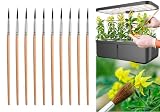
A great many plants rely on bees and other insects to carry pollen. If pollinators are scarce — because of cold or wet weather at bloom, an enclosed or indoor space, or insecticide use — flowers may simply go unpollinated. Growing pollinator-friendly plants, avoiding spraying open blooms, and hand-pollinating where practical can all help.
Does it have separate male and female flowers (monoecious)?
Some plants (many in the squash and cucumber family, for example) carry separate male and female flowers on the same plant. Early in the season a plant may open only male flowers, so nothing sets until female flowers appear and both are open together. Recognising which flowers are which explains a lot of “flowers but no fruit” on these plants.
Does it need a second plant of the opposite sex (dioecious)?
Some species have male and female flowers on separate plants, so a lone plant — or a group all of one sex — can flower endlessly and never fruit. These plants need both a male and a female plant nearby to crop.
Does it need a second, compatible variety (cross-pollination)?
Some plants set poorly or not at all with their own pollen and fruit much better when a second, compatible variety flowers nearby at the same time. Where this applies, a single plant on its own — or two varieties whose bloom times don’t overlap — can flower freely yet set little. Check whether your specific plant is described as self-fertile or as benefiting from a pollination partner; don’t assume, as it varies by species and variety.
Is it wind-pollinated?
A few fruiting plants are pollinated by wind rather than insects. For these, still air, an isolated single plant, or heavy rain during the brief pollination window can all reduce set.
3. Do the flowering periods actually overlap?
Where two plants or varieties are needed, they only help each other if they are in bloom at the same time. Different varieties, different ages, or different microclimates can shift bloom timing so the partners miss each other. If set is poor despite having more than one plant, check whether they truly flower together.
4. Are pests damaging flowers, pollen or young fruit?
Pests don’t only chew leaves — several feed directly on buds, flowers, pollen and newly set fruit, causing flower drop, failed pollination or scarred, aborted fruit. This is an often-overlooked cause. Look closely inside and around the blooms for:
- Thrips — feed on pollen and flowers, damaging set and scarring young fruit.
- Aphids — distort buds and flowers and can transmit viruses.
- Spider mites — weaken flowering and damage young growth in hot, dry spells.
- Mealybugs and scale — weaken flowering stalks and buds.
If blooms are flecked, distorted, dropping or hiding insects, treat the pest problem as part of the cause. See the plant pests & protection hub for identification and low-toxicity control.
5. Are diseases attacking the flowers or fruit?
Some diseases infect flowers, flower stalks and young fruit directly, so a flowering-time failure can be a disease problem rather than a pollination one. The classic example is powdery mildew, which on plants such as mango can infect the flowering panicles and sharply cut fruit set. Botrytis (grey mould) rots flowers and buds in cool, damp conditions, causing blossom blight and failed set. If flowers are coated, spotted, browning or rotting, diagnose and treat the disease.
6. Is the weather interfering during flowering?
Temperature and weather at bloom have a big effect. Frost can kill open blossoms outright; excessive heat can cause flowers to drop or pollen to become non-viable; and prolonged rain or strong wind can keep pollinators grounded and wash or damage pollen. If poor set coincides with a cold snap, heatwave or a wet, windy spell during flowering, weather is a likely cause — see protecting plants from frost for the cold end of that range.
7. Are the flowers dropping before they set?
If flowers fall without setting, the plant flowered but pollination or early development failed — often from one of the causes above (no pollinator, incompatible variety, pest or disease in the bloom, heat or cold stress, or erratic watering). Flower drop is a symptom that points you back up this list rather than a separate cause on its own.
8. Does fruit set and then drop while small?
Some plants set fruit and then shed a proportion of it while still small. A degree of this natural thinning is normal and healthy. Heavier young-fruit drop, though, usually signals stress — irregular watering, extreme heat, nutrient imbalance, or a heavy crop the plant can’t carry. Steady watering and balanced care through fruit development reduce excessive drop.
9. Are cultural conditions (water, feeding, light, pruning) working against fruiting?
- Too much nitrogen pushes leafy growth at the expense of flowers and fruit — a very common cause of lush plants that won’t crop. Favour balanced feeding, not high-nitrogen.
- Too little light limits the energy a plant has for fruiting; most fruiting plants need generous sun.
- Irregular watering stresses plants at the critical flowering and set stages.
- Wrong or excessive pruning can remove the very wood or buds that would have fruited — know where your plant flowers before you cut.
10. Is there a species-specific reason?
Finally, some plants have their own quirks — alternate (biennial) bearing where heavy crops alternate with light ones, specific chilling requirements, particular pollinator relationships, or cultivar traits. If you’ve worked through everything above and set is still poor, check the specific requirements and known fruiting habits of your exact plant and variety.
A quick diagnostic checklist
- Old enough to fruit? → if young, wait and grow it well.
- Flowers healthy and fully open? → if not, suspect pests, disease, weather or nutrition.
- Does it need pollinators, a second plant/variety, or hand-pollination? → provide the partner or help.
- Pests or disease in the blooms? → identify and treat (thrips, aphids, mites, powdery mildew, botrytis).
- Cold, heat, rain or wind at bloom? → protect and be patient for a better season.
- Too much nitrogen, too little light, erratic water? → correct the cultural care.
Quick questions
My plant is covered in flowers but gets no fruit — why? Heavy flowering with no fruit most often means a pollination gap (no pollinator, or it needs a compatible partner), or that pests, disease or weather are damaging the flowers before they set. Work down the list above.
Do all plants need a second plant to fruit? No. Many are self-fertile and fruit alone; others need a partner or two sexes. It depends entirely on the species and variety — check yours rather than assuming.
Could a pest really stop fruiting? Yes. Thrips, aphids and others feed on pollen, flowers and young fruit, so a flowering-time pest problem can directly cause poor set.
Related guides
◀ Back to the Plant Problems hub to diagnose by symptom, pest or disease.
- Thrips on plants · spider mites · mealybugs · aphids
- Powdery mildew · botrytis (grey mould)
- Protecting plants from frost · all plant pests & protection
If the plant is not flowering in the first place, start with why a plant won’t flower.
Browse our other fruit growing guides for related trees and berries.