



Plant Profile & Key Characteristics
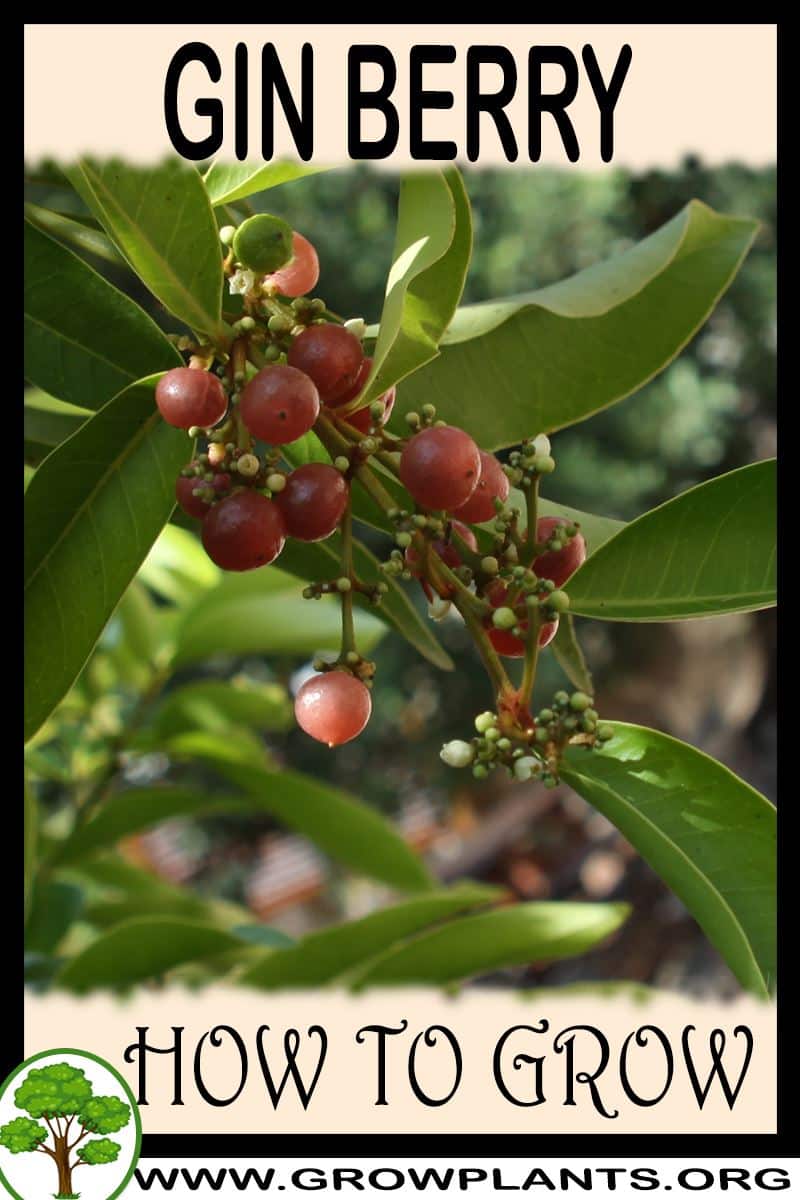
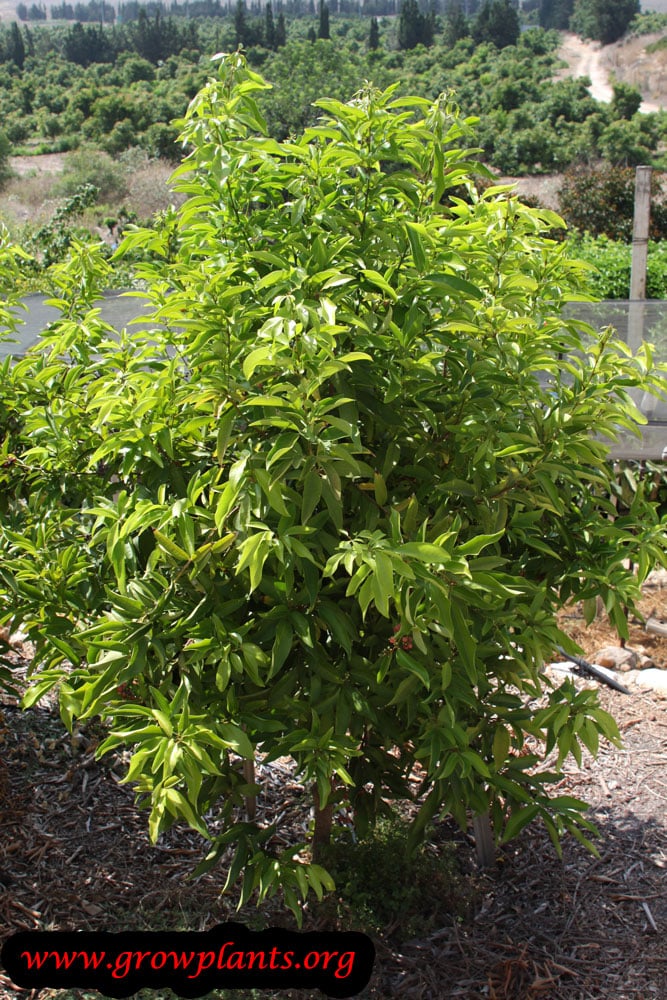
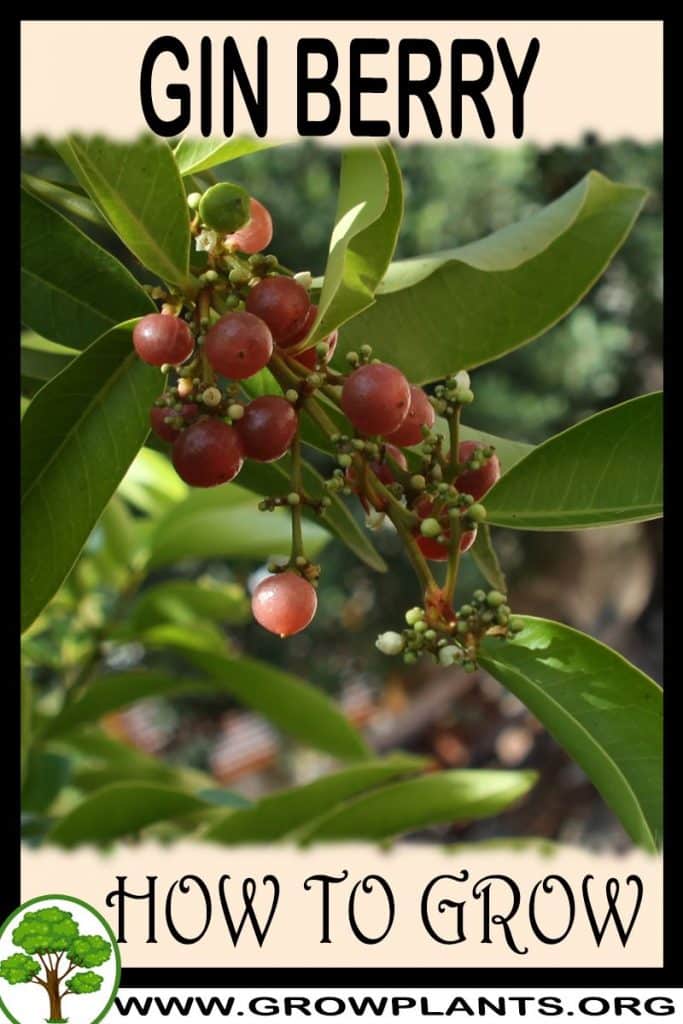
Overview: Gin berry (Glycosmis pentaphylla) is an evergreen shrub or small tree 2-4 m (6.5-13 ft) tall, grown for its edible berries and as an ornamental and medicinal plant. It bears white flower clusters followed by small translucent pink-red fruits.
Quick Specifications
| Specification | Attribute |
|---|---|
| Plant Type / Life Cycle | Evergreen perennial (shrub to small tree) |
| Foliage Type | Evergreen |
| Mature Size | 2-4 m (6.5-13 ft) tall |
| Growth Rate | Fast to moderate |
| Toxicity | The ripe fruit flesh is edible; the large seed inside is not eaten |
| Hardiness | USDA zones 10+ |
Growth Form & Structure
- Height & Spread: A shrub or small tree 2-4 m (6.5-13 ft) tall; can be grown in a large container.
- Growth Habit & Form: Multi-stemmed evergreen shrub to small tree.
- Lifespan & Maturity: A perennial that begins bearing fruit about 1.5-3 years from planting; can become invasive.
Anatomy & Physical Features
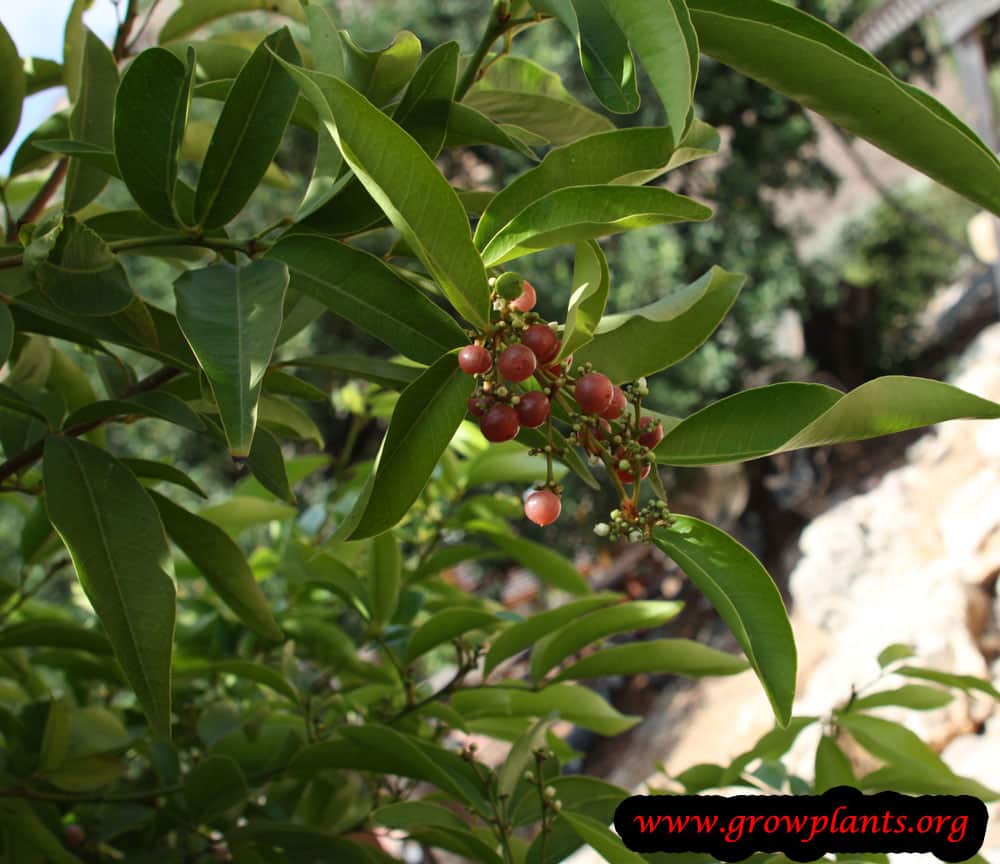
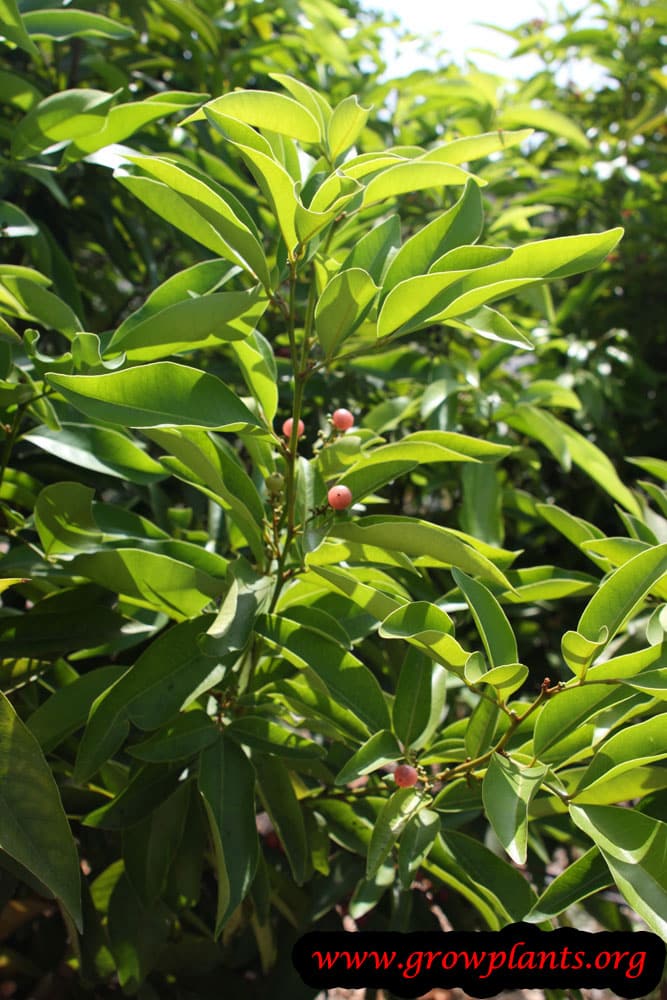
- Leaves & Foliage: Glossy green, compound (pinnate) foliage.
- Flower Characteristics: Small white flowers borne in inflorescences.
- Fruit Profile: Small translucent pink-red berries about 0.5-1 cm across, with a large inedible seed.
Primary Uses & Landscape Value
- Edible Uses: Ripe berries eaten fresh or juiced.
- Functional & Ornamental Roles: An ornamental and hedge shrub with medicinal uses.
Care Guide: Planting, Soil & Watering
Overview: Gin berry (Glycosmis pentaphylla) is a fast-growing, frost-free evergreen shrub or small tree (hardiness zone 10+) for full sun to part shade, thriving in fertile, well-drained soil. It takes low to moderate water and establishes readily in warm climates.
Quick Care Requirements
| Requirement | Ideal Condition |
|---|---|
| Planting Season | Warm season — spring, summer or autumn (and winter in the tropics) |
| Growth Rate | Fast to Moderate |
| Soil Type | Fertile, well-draining soil |
| Water Need | Low to Moderate — water when the top few cm dry out |
Planting & Establishment
- Best Planting Season: Plant in the warm months of spring through autumn (year-round in the tropics), giving roots time to settle before any cool weather.
- How to Plant:
- Hole Preparation: Dig a hole about twice the width of the root ball and the same depth, loosening the sides.
- Soil Amendments: Enrich the soil with compost and make sure it drains freely.
- Planting Depth: Set the root collar level with the surrounding soil; don’t bury the stem.
- Growth Speed & Expectations: Fast to moderate — grows into a bushy shrub or small tree 2–4 m tall.
Soil, Watering & Drainage Care
- Soil Mix & Drainage Needs: Give it fertile, well-drained soil; use a free-draining potting mix in containers.
- Watering Schedule & Technique:
- Young / Newly Planted: Water regularly to settle the roots and keep the soil lightly moist while it establishes.
- Established: Water when the top few cm dry out; it tolerates short dry spells once established.
- Seasonal Adjustments: Reduce watering in cool weather and water more often during heat.
Climate, Light & Hardiness
Gin berry is a tropical, subtropical, and mediterranean-climate fruiting shrub or small tree that requires frost-free conditions. It grows in full sun to half shade and is only suited to warm-winter climates.
Quick Climate Specifications
| Climate Zones | Tropical, subtropical, Mediterranean |
|---|---|
| USDA Hardiness Zones | Approximately 10 and warmer |
| Frost Tolerance | None |
| Light Conditions | Full Sun to Half Shade |
Sunlight & Light Exposure
Optimal Light Setup
Full sun to half shade suits this shrub or small tree.
Temperature Extremes & Hardiness
USDA Hardiness & Regional Limits
Grown from roughly USDA zone 10 upward; the site data specifies frost-free conditions are required.
Frost Sensitivity
Freezing temperatures are not tolerated based on the site's frost-free requirement.
Growing in Pots, Balconies & Indoors
Gin berry is a 2-4 m (6.5-13 ft) shrub. The grower says it isn’t a houseplant but grows well in a container – a good patio shrub, though note it can be invasive if planted out.
Quick Details
- Container Size: A large, deep container (grower didn’t state a size)
- Indoor Suitability: Not a houseplant; a patio container shrub
- Best Spot: Full sun to light shade
- Soil & Drainage: Aerated, organic-rich mix that drains freely
- Watering in Pots: Water when the top of the mix begins to dry; pots dry faster than open ground, so check often and don’t let it fully dry out.
Indoors & On the Windowsill
- Houseplant limits: Not a houseplant – it wants strong sun outdoors.
- Windowsill growing: Too large for a sill; grow it in a container outdoors.
- Overwintering: Frost-tender, so in cold areas keep it potted and shelter it frost-free over winter.
On a Balcony or Patio
- Light & wind: Give it the sunniest spot on the balcony or patio. Walls and paving reflect heat and pots dry quickly, so check moisture often; shelter and stake exposed plants against wind.
Choosing the Pot, Soil & Long-Term Care
- Pot & drainage: A deep pot with strong drainage holes; skip a standing-water saucer to avoid root rot. Terracotta breathes and dries faster, while glazed or plastic hold moisture longer.
- Potting mix: Well-aerated, organic-rich mix – peat or coir with perlite and a little organic matter; it must drain freely.
- Feeding: Potted plants use up their food faster because nutrients leach out with each watering, so feed a little more often than plants in open ground.
- Repotting: Refresh part of the mix and pot up every couple of years; for established plants, lightly prune the root ball and top growth when you repot.
Fertilizing & Feeding
A tough, fast-establishing shrub that isn’t grown as an intensive fruit crop, so a light hand with feeding is enough to keep it healthy and fruiting.
Quick Fertilizing Specs
| Feeding Level | Light – this shrub does not need a rich feeding program. |
|---|---|
| young_feeding | A balanced, nitrogen-leaning fertilizer while the shrub is filling out. |
| mature_feeding | A balanced fertilizer once the shrub is flowering and setting its small fruit. |
| Main Nutrient Priority | Balanced feeding, with a little extra potassium and boron once fruiting begins. |
| Best Feeding Period | The warm active-growth months. |
| Organic Options | Compost or aged organic matter worked around the root zone. |
| Micronutrients | Iron and manganese are typically covered by a complete fertilizer for fruiting shrubs. |
| Soil pH | Adaptable to a range of well-drained soils; no strong pH preference is documented. |
| Reduce/Stop Feeding | Ease off feeding as growth naturally slows outside the warm growing months. |
Feeding by Growth Stage
Establishment
Get a newly planted gin berry rooted in and growing steadily.
| Nutrient direction | Keep feeding light while the root system establishes. |
|---|---|
| Timing | The first growing season after planting. |
| Frequency | A few light feedings spread across the active growing season is plenty for this fast starter. |
| Fertilizer types | A balanced, complete fertilizer for young shrubs, Compost worked into the planting area |
| Precautions | This shrub can be vigorous and self-seed readily – avoid overfeeding, which only adds to its spread. |
Vegetative Growth
Build a full, well-branched shrub ahead of flowering.
| Nutrient direction | Lean slightly toward nitrogen to support leafy growth, using a complete fertilizer. |
|---|---|
| Timing | Through the shrub’s active growing season, before flowering ramps up. |
| Frequency | Regular light feedings during warm-season growth flushes. |
| Fertilizer types | A balanced to nitrogen-leaning complete fertilizer, Composted organic matter |
| Routine trace nutrients | iron, manganese |
| Precautions | Keep an eye on vigor – this species is already a fast, somewhat weedy grower, so avoid pushing it further with heavy nitrogen. |
Flowering and Fruiting
Support the shrub through its long flowering and fruiting window.
| Nutrient direction | Move to a balanced fertilizer with a little extra potassium to support fruit development. |
|---|---|
| Timing | During the shrub’s extended bloom and fruiting period, which can run for much of the year. |
| Frequency | A light, balanced feeding routine through the growing season. |
| Fertilizer types | A balanced, complete fertilizer with modest potassium emphasis, Organic mulch to build soil fertility |
| Routine trace nutrients | iron, manganese |
| Precautions | Because fruiting can occur on and off much of the year, keep feeding light and steady rather than heavy and infrequent. |
Nutrient Deficiency Signs & Corrections
Pale, yellowish foliage overall and slower-than-expected new growth.
| Possible causes | Insufficient nitrogen in the soil, Nitrogen leaching from light, fast-draining soil, Root stress from overly wet conditions limiting uptake |
|---|---|
| Appears first on | older leaves first |
| What to check | Growth rate versus prior seasons, Soil drainage and watering habits, Recent feeding history |
| Possible correction | Apply a balanced or nitrogen-leaning fertilizer and monitor for improved color in new growth. |
Yellowing between the veins on the newest leaves, with veins remaining green.
| Possible causes | Elevated soil pH limiting iron availability, Compacted or waterlogged soil restricting root uptake, A genuine iron shortfall in poor soil |
|---|---|
| Appears first on | newest growth |
| What to check | Soil pH if testable, Drainage around the roots, Whether older leaves stay green while new ones yellow |
| Possible correction | Address drainage first, then consider a chelated iron product per its label if the pattern persists. |
Browning or scorching along the edges of older leaves during heavy fruiting.
| Possible causes | Potassium depletion from sustained fruit production, Drought stress reducing nutrient movement, Excess soil salts interfering with uptake |
|---|---|
| Appears first on | older leaves, at the margins |
| What to check | Whether symptoms track with fruiting load, Watering consistency, Soil salinity if irrigation water is hard |
| Possible correction | Feed with a balanced, potassium-inclusive fertilizer and keep watering steady. |
Pruning, Training & Seasonal Maintenance
Gin berry has a distinctive pruning need that sets it apart from citrus relatives that tolerate little pruning: the source growing guidance notes that branches degenerate after fruiting, so pruning is not just cosmetic but a renewal task – removing spent, declining fruiting wood so the shrub keeps producing from fresh growth. Winter is the recommended window, though because bloom and fruit run through most of the year in warm climates, dead or clearly degenerated branches can be removed whenever they’re spotted without waiting for a fixed season.
Quick Pruning & Maintenance Specs
| Pruning Tolerance | Moderate |
| Primary Pruning Window | Winter |
| Secondary Maintenance Window | Ongoing, for branches that have degenerated after fruiting |
| Typical Frequency | Annual renewal pass plus ongoing removal of spent fruiting wood |
| Main Objective | Remove dead wood and branches that have declined after fruiting, to keep the shrub renewing itself |
| Young Plant Priority | Build a well-branched multi-stem framework rather than a single trunk |
| Mature Plant Priority | Ongoing renewal: cut out post-fruit degenerated branches to make room for new fruiting growth |
| Best Tool Type | Precision snips or bypass secateurs, sized to a small shrub’s slender wood |
| Avoid Heavy Pruning During | A current bloom/fruit cycle, given the plant crops in flushes through most of the year |
Pruning by Plant Age & Size
Newly Established
Minimal – remove only damaged growth while the shrub is establishing its multi-stem base.
Young / Formative
No formal training system is needed; simply allow the naturally branching shrub/small-tree habit to develop, lightly tipping over-long shoots to encourage a bushy, multi-stemmed form suited to its 2–4 m mature size.
Mature / Established
Ongoing renewal is the main task: as each fruiting branch finishes its cycle and begins to decline (the degeneration the source guidance describes), cut it back to a healthy junction to make room for the next round of fruiting wood, rather than leaving spent branches in place.
Flowering & Fruiting Wood
Gin berry blooms and fruits repeatedly through most of the year rather than on a single fixed flush, and individual fruiting branches decline once they’ve cropped. This means the plant’s own fruiting wood is self-limiting – pruning’s role is largely to remove that spent wood promptly so the shrub channels energy into fresh growth instead of maintaining branches that are no longer productive.
Special Growth to Remove
Branches that have visibly degenerated after fruiting, per the source guidance – these should be cut back to sound wood rather than left in place; dead wood at any time.
Container & Small-Space Pruning
Container growth is explicitly supported for this small shrub; renewal pruning is even more useful in a pot, since removing spent fruiting branches promptly keeps the plant compact and prevents the tangled, twiggy build-up a small container can’t accommodate.
Tools
Precision snips or bypass secateurs are sufficient for essentially all cuts on this small-statured shrub; no saw or pole tool is warranted at its 2–4 m size.
Tool Hygiene & Disease Risk
Routine – aphids and ants are the only issues noted, neither a tool-transmissible pathogen, so clean, sharp secateurs are enough.
Cut Placement & Technique
Cut degenerated fruiting branches back to a healthy lateral or main stem junction rather than leaving a dead stub; avoid flush cuts into the main stems.
Heavy Pruning & Rejuvenation
Because renewal happens continuously at the branch level as fruiting wood degenerates, a single hard whole-plant rejuvenation cut is rarely needed; if the shrub does become congested with old, unproductive wood, remove the oldest third over a season rather than cutting the whole plant back at once.
Post-Pruning Care
Routine watering is sufficient; no special aftercare beyond normal care is indicated.
Common Pruning Mistakes
Leaving degenerated post-fruit branches in place instead of renewing them, which lets the shrub get twiggy and less productive over time; treating this plant like its low-pruning citrus relatives and skipping renewal cuts altogether.
When NOT to Prune
Avoid removing healthy branches that are mid-cycle in active bloom or fruit, since flushes overlap through much of the year – target only wood that has clearly finished and begun to decline.
Recommended Tools (by task)
- Removing spent, post-fruit branches – precision_snips: clean cuts on the slender wood typical of this small shrub
- General shaping and dead-wood removal – bypass_secateurs: for slightly thicker stems than snips can manage
Propagation Guide
Gin berry is most simply grown from seed – the site’s own note that it can be invasive points to easy, ready self-seeding – and grafting is not necessary. Stem cuttings can offer a vegetative alternative, as is common for shrubby members of the citrus family (Rutaceae), though this is not specifically documented for this species. Propagation is Easy from seed.
Quick Propagation Specs
| Best Propagation Method | Seed |
| Alternative Methods | Semi-hardwood stem cuttings (not well documented for this species) |
| Propagation Difficulty | Easy (seed) |
| Best Propagation Season | Spring through autumn (also winter in true tropical climates), matching the site’s planting season |
Growing from Seed
Seed Handling & Viability
Clean the seed out of the fleshy fruit before sowing. Seed longevity is not well documented for this species, so sowing fresh is the cautious approach.
Sowing Season
Within the site’s planting season – spring through autumn, and also winter in true tropical climates.
Sowing Depth & Orientation
Sow shallowly, just covered – the site notes the seed is relatively large for the size of the fruit (0.5–1 cm fruit).
Germination Conditions
Warm, humid, evenly moist conditions suited to this tropical-to-subtropical shrub.
Germination Time
Not well documented for this species; allow at least a few weeks under warm, humid conditions.
Seedling Care
Keep warm and evenly moist; the plant’s fast-to-medium growth rate (per site) suggests seedlings establish without much difficulty.
Stem Cuttings
Cutting Type
Semi-hardwood cuttings.
Best Timing
Warm growing season.
Rooting Setup
A moist, humid, well-draining mix.
Rooting Hormone
May be beneficial, though not confirmed as necessary for this species.
Rooting Time
Not well documented for this species; allow several weeks.
Bloom & Flower Guide
Quick Details
- Bloom Season: On and off through much of the year
- Flower Appearance: Small white flowers borne in clusters (inflorescences)
- Edibility: The flowers are not the edible part – this plant is grown for its berries; the blooms are ornamental
Detailed Blooming Overview
Gin berry, a small citrus-family shrub or tree, flowers in flushes through much of the year, carrying clusters of small white flowers that later give way to its edible berries. As with many of its relatives in the Rutaceae, the blooms carry a light fragrance.
Flower Characteristics
- Small white flowers held in branched clusters (inflorescences)
- Lightly fragrant, in the manner of its citrus relatives
Bloom Care & Thinning
- Pollination: The flowers are visited and pollinated by bees.
- Steady flowering: Because it blooms in repeated flushes, a little tidying of spent clusters keeps it looking fresh.
Fruit & Uses
Gin berry is grown mainly for its small, translucent fruit, which is eaten fresh out of hand or juiced once fully ripe. The fruit’s large seed is not eaten and is simply spat out or discarded.
Quick Edible Specs
| Edible Parts | Fruit |
|---|---|
| Main Use(s) | Culinary – fresh eating, juice; traditionally used medicinally |
| Eaten Raw or Cooked | Raw |
| Preparation Required | Deseed (spit out or remove the large seed before/while eating) – the seed itself is not eaten |
| Harvest Season | Most of the year, with flushes rather than one single season |
| Time to First Harvest | Bears relatively young for a shrub/small tree (see Propagation) |
| Storage | Best eaten fresh; fruit is small and thin–skinned |
| Safety/Toxicity Caveat | Flesh has no known toxicity; the large seed inside is not eaten |
Fruit
The fruit is small (0.5–1 cm), translucent red–pink when ripe, and contains a large seed relative to the fruit’s size. It is picked once fully coloured and soft, straight from the shrub. The juicy flesh is eaten fresh or juiced, while the seed itself is discarded rather than eaten. The species also has a history of traditional medicinal use.
Harvesting
Because flowering and fruiting run through most of the year rather than in one tight window, fruit can typically be picked over an extended period rather than all at once. Birds and bats are strong competitors for ripe fruit.
Preparation, Uses & Safety
Ripe fruit is eaten fresh or juiced; the large seed is spat out or removed rather than eaten. No safety concerns are noted for the flesh. Any traditional medicinal use should be treated as folk use rather than a health claim.
Pests, Diseases & Troubleshooting
Overview: Gin berry (Glycosmis pentaphylla) is a small Rutaceae (citrus-family) shrub, and as an obscure ornamental its documented pest data is limited; the profile below is inferred from the citrus family and should be verified. Being in the citrus family, it hosts the classic Rutaceae pests – swallowtail caterpillars, citrus leafminer, aphids, scale, mealybugs and whitefly, with sooty mould from honeydew. Manage with hygiene, predators and horticultural oil first.
Quick Troubleshooting Overview
| Issue / Pest | Main Symptom | Primary Solution |
|---|---|---|
| Swallowtail caterpillars | Large chewed leaves; big green/brown ‘bird-dropping’ larvae | Hand-pick larvae, Bt if needed; tolerate on established shrubs |
| Citrus leafminer | Silvery serpentine tunnels and curled new leaves | Prune/remove tips, encourage parasitoids, oil on flushes |
| Aphids | Sticky, curled new growth; sooty mould | Hose off, predators, soap/neem |
| Scale & mealybugs | Bumps or cottony masses; honeydew and sooty mould | Horticultural oil, wipe off, control ants |
| Whitefly / psyllids | Tiny white flies or psyllids; honeydew (potential HLB vector) | Sticky traps, oil/soap; monitor for psyllids |
| Sooty mould (abiotic) | Black film over honeydew-coated leaves | Control the sap-suckers; wash foliage |
Common Pests & Management
- Citrus swallowtail caterpillars (Papilio spp.):
- Symptoms: Large caterpillars, often mimicking bird droppings when young then turning green, that chew and strip leaves of citrus-family plants; can defoliate small shrubs.
- Prevention & Control: Hand-pick larvae (the shrub is a natural host for swallowtail butterflies), encourage birds and parasitoids, and use Bacillus thuringiensis (Bt) for heavy pressure; tolerate light feeding on established plants.
- Citrus leafminer (Phyllocnistis citrella):
- Symptoms: Silvery, winding serpentine mines in new leaves, which curl and distort; damage concentrates on tender flushes.
- Prevention & Control: Avoid excess nitrogen that drives soft flushes, prune out and destroy heavily mined tips, and encourage parasitoid wasps; horticultural oil on new flushes deters egg-laying.
- Aphids (Aphis / Toxoptera spp.):
- Symptoms: Soft-bodied colonies on new shoots causing curling, distortion, honeydew and sooty mould; ants often tend them.
- Prevention & Control: Hose off, support ladybirds and lacewings, control ants, and treat with insecticidal soap or neem in the evening.
- Scale insects & mealybugs (Coccidae / Pseudococcidae):
- Symptoms: Immobile bumps (scale) or cottony white masses (mealybugs) on stems and leaf undersides, with copious honeydew and sooty mould.
- Prevention & Control: Scrape or wipe off, apply horticultural oil to smother them, control the ants that protect them, and encourage natural predators; repeat to catch crawlers.
- Whitefly & citrus psyllids (Aleyrodidae / Diaphorina citri):
- Symptoms: Tiny white flies and psyllids on new growth with honeydew and sooty mould; citrus psyllid is a serious concern as a vector of citrus greening (HLB) where present.
- Prevention & Control: Use yellow sticky traps, treat with insecticidal soap, neem or oil, and monitor closely for psyllids in citrus-growing regions, following local area-wide guidance.
Diseases & Fungal Issues
- Sooty mould (Capnodium spp.):
- Symptoms: A black, soot-like film coating leaves and stems, growing on the honeydew excreted by aphids, scale, mealybugs and whitefly; it blocks light rather than infecting tissue.
- Treatment & Management: Control the underlying sap-suckers and the ants that farm them; wash or wipe foliage clean. It fades once the honeydew source is removed.
- Leaf spot & anthracnose (Colletotrichum / Cercospora):
- Symptoms: Brown or tan spots and blotches on leaves in humid, wet or crowded conditions.
- Treatment & Management: Improve airflow, water at the base, remove affected leaves, and clear fallen debris; a copper or general fungicide only if it spreads.
- Root rot (Phytophthora / Pythium):
- Symptoms: Wilting, yellowing and decline in heavy, waterlogged soil, as with other Rutaceae.
- Treatment & Management: Plant in free-draining soil, avoid overwatering and deep planting, and improve drainage; there is no cure once roots are rotted.
Growing Difficulties & Abiotic Problems
- Chlorosis in poor or alkaline soil:
- Cause & Symptoms: Yellowing between the veins on new leaves where iron and other micronutrients lock up, common in the citrus family.
- Correction Strategy: Improve soil and drainage, keep the root zone healthy, and apply chelated iron and a balanced feed; avoid waterlogging.
- Cold sensitivity:
- Cause & Symptoms: Leaf damage or dieback in cold, as befits a tropical/subtropical shrub.
- Correction Strategy: Site in a warm, sheltered spot, protect or bring under cover in cold climates, and avoid frost exposure.
- Waterlogging & root stress:
- Cause & Symptoms: Yellowing, wilting and poor growth in heavy, wet soil.
- Correction Strategy: Grow in free-draining soil, water when the surface dries, and avoid standing water around the roots.
What Helps – Products & Tools
Manage as you would a small citrus: hygiene, ant control and predators first. Horticultural oil and insecticidal soap or neem handle leafminer flushes, scale, mealybugs, aphids and whitefly; Bt covers caterpillars; yellow sticky traps monitor whitefly and psyllids; and a copper or general fungicide is kept in reserve for leaf spot.