Plant Profile & Key Characteristics
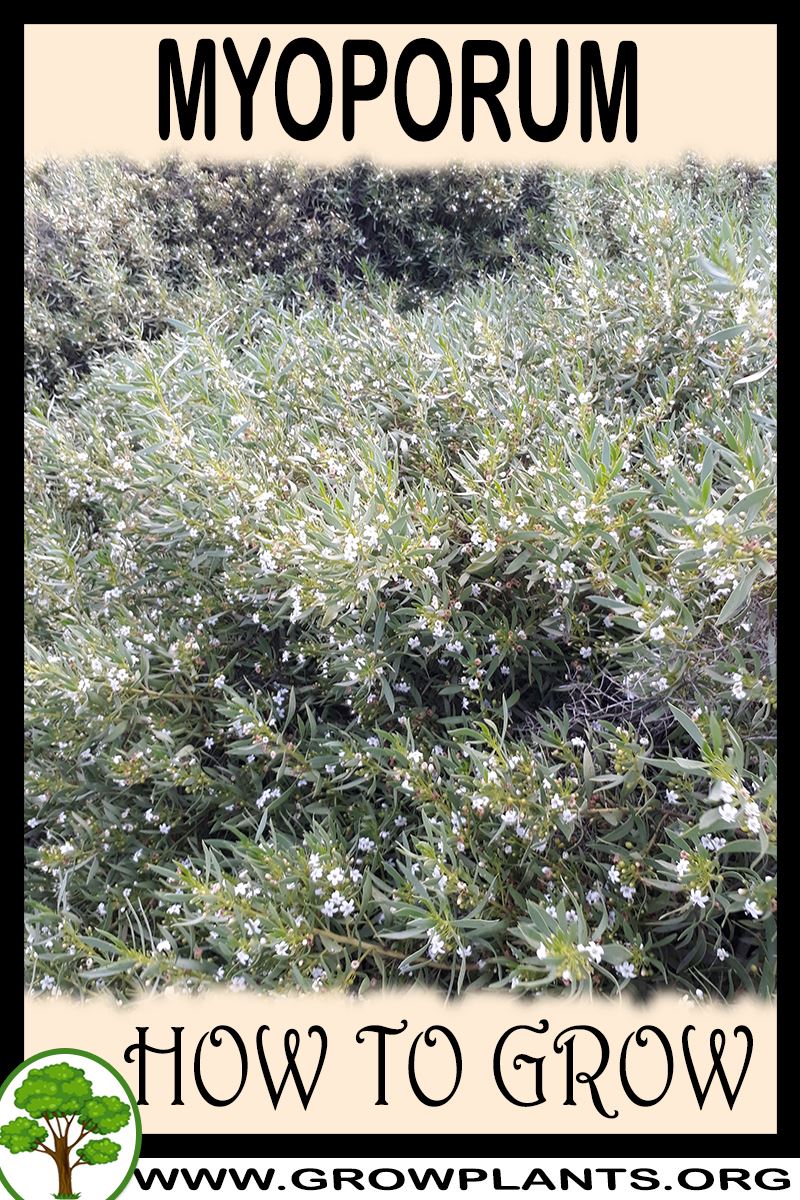
Overview: Myoporum is an evergreen, drought-tolerant shrub to small tree, ranging from low, spreading groundcover forms of 30-90 cm (1-3 ft) up to trees of 2-5 m (6-15 ft). It is grown as a tough ornamental for dry, sunny and coastal gardens.
Quick Specifications
| Specification | Attribute |
|---|---|
| Plant Type / Life Cycle | Perennial |
| Foliage Type | Evergreen |
| Mature Size | 30-90 cm (1-3 ft) as a shrub; 2-5 m (6-15 ft) as a small tree |
| Growth Rate | Moderate to fast |
| Toxicity | Poisonous foliage — not for consumption |
| Hardiness | USDA zone 10+ |
Growth Form & Structure
- Height & Spread: Ground-hugging forms make dense mats 30-90 cm (1-3 ft) high, while tree forms reach 2-5 m (6-15 ft); also suited to large containers.
- Growth Habit & Form: Evergreen shrub to small tree, some cultivars low and spreading as groundcover; vigorous and can become invasive.
- Lifespan & Maturity: Long-lived, fast-establishing perennial that is highly drought tolerant once established.
Anatomy & Physical Features
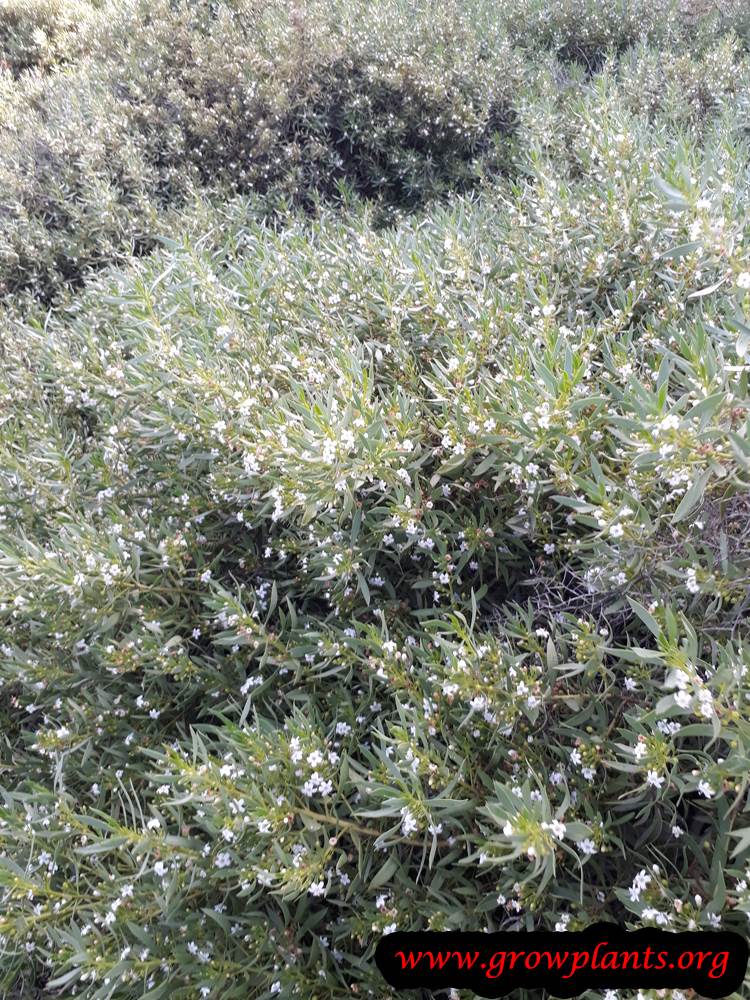
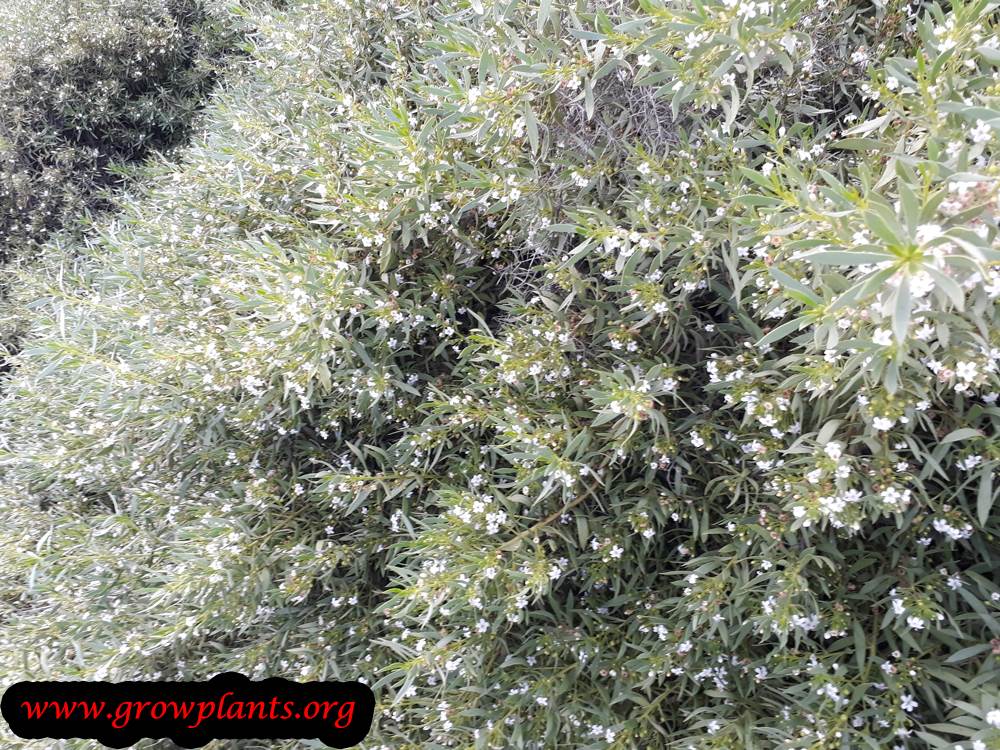
- Leaves & Foliage: Green, elliptic leaves, often slightly fleshy.
- Flower Characteristics: Small, star-shaped white-to-pink flowers borne in clusters through the warmer months.
Primary Uses & Landscape Value
- Functional & Ornamental Roles: Used as a drought-tolerant ornamental, groundcover, informal hedge or screen, and for coastal and bank plantings; note its poisonous foliage and invasive tendency.
Care Guide: Planting, Soil & Watering
Overview: Myoporum is a tough, drought-tolerant shrub for full sun to part shade. It asks for little beyond well-drained soil and, once established, gets by on modest water.
Quick Care Requirements
| Requirement | Ideal Condition |
|---|---|
| Planting Season | In spring, summer or autumn during mild, frost-free weather |
| Growth Rate | Moderate to fast |
| Soil Type | Well-drained; tolerates poor and sandy soils |
| Water Need | Low to moderate – drought tolerant once established; let soil dry between waterings |
Planting & Establishment
- Best Planting Season: Plant during the mild parts of the year – spring, summer or autumn – avoiding hard frost, giving roots time to settle before extreme heat or cold.
- How to Plant:
- Hole Preparation: Dig a hole roughly twice the width of the root ball and no deeper, so the plant sits firm on undisturbed soil.
- Soil Amendments: On heavy ground work in grit or compost to improve drainage; on already free-draining soil little amendment is needed.
- Planting Depth: Set the root collar level with the soil surface and firm gently; keep the stem base unburied.
- Growth Speed & Expectations: Growth is moderate to fast, quickly forming ground cover or a shrubby screen depending on the species.
Soil, Watering & Drainage Care
- Soil Mix & Drainage Needs: Sharp drainage matters most; these plants resent wet feet, so avoid heavy, waterlogged spots and use a free-draining mix in containers.
- Watering Schedule & Technique:
- Young / Newly Planted: Water regularly through the first season to establish a deep root system.
- Established: Once settled it is drought tolerant – water deeply but infrequently, letting the soil dry well between waterings.
- Seasonal Adjustments: Give a little extra in prolonged heat and almost none in cool, wet winter weather.
Climate, Light & Hardiness
Myoporum is a drought-tolerant, warm-climate shrub to small tree suited to mediterranean, desert, subtropical, and tropical conditions. It grows in full sun to half shade and is best suited to essentially frost-free areas.
Quick Climate Specifications
| Climate Zones | Mediterranean, desert, subtropical, tropical |
|---|---|
| USDA Hardiness Zones | Approximately 10 and warmer |
| Light Conditions | Full Sun to Half Shade |
Sunlight & Light Exposure
Optimal Light Setup
Full sun to half shade suits both the shrub and small-tree/groundcover forms.
Temperature Extremes & Hardiness
USDA Hardiness & Regional Limits
Grown in USDA zone 10 and warmer; it is a warm-climate species not adapted to regions with hard freezes.
Wind, Humidity & Microclimate
Dry-Air Tolerance
As a drought-tolerant plant of mediterranean and desert climates, it handles dry air well once established.
Growing in Pots, Balconies & Indoors
Myoporum is a fast, tough evergreen grown as a low groundcover shrub or a small tree. The grower rates it for containers but not indoors – it needs strong outdoor light and is best kept on a sunny patio or balcony.
Quick Details
- Container Size: A large tub, 30-50 L (8-13 gal), scaled to the form you grow
- Indoor Suitability: Not a houseplant (grower); a tough, sun-loving evergreen for outdoor pots
- Best Spot: Full sun to partial shade; a bright spot with some direct sun is ideal.
- Soil & Drainage: Aerated, organic-rich mix (quality potting mix, or peat/coir with perlite or vermiculite); it must drain freely.
- Watering in Pots: Let the top few centimetres of mix dry between waterings; pots drain fast, so check often, but never leave it waterlogged.
Indoors & On the Windowsill
- Not a houseplant: The grower marks it unsuitable indoors; it is a vigorous, light-hungry plant with no place in a room.
- Hardy-ish outdoors: Keep it outside; in marginal-frost areas give a young potted plant some winter shelter.
On a Balcony or Patio
- Light & exposure: Full sun to part shade suits it; it is drought-tolerant and copes with wind and coastal conditions, making it an easy tough-balcony plant.
- Watering: Let the mix dry between waterings – it dislikes constant wet.
Choosing the Pot, Soil & Long-Term Care
- Pot & drainage: A large tub with strong drainage holes; skip a standing-water saucer. Terracotta breathes and dries fast, which suits this drought-tolerant plant.
- Potting mix: Use a well-aerated, organic-rich mix – quality potting mix, or peat/coir blended with perlite or vermiculite.
- Feeding: As nutrients wash out of pots faster than open ground, feed potted plants regularly through the growing season with a balanced fertiliser.
- Repotting: Pot up or root-prune every couple of years; trim to keep the form you want.
Fertilizing & Feeding
Myoporum is a tough, drought-tolerant landscape and ground cover shrub that thrives on lean feeding; heavy fertilizing is more likely to cause weak growth than to help this naturally low-input plant.
Quick Fertilizing Specs
| Feeding Level | Light; a drought-tolerant landscape plant that performs well on lean soil. |
|---|---|
| Main Nutrient Priority | Balanced nutrition applied sparingly to support steady growth without forcing soft, water-hungry growth. |
| Best Feeding Period | During the main spring and summer growth period. |
| Reduce/Stop Feeding | Little to no feeding is usually needed once the plant is established. |
Feeding by Growth Stage
Establishment
Help a newly planted Myoporum root into well-drained soil, whether grown as a shrub, small tree form, or ground cover.
| Nutrient direction | Light, balanced nutrition to support early root growth without forcing lush top growth this drought-tolerant plant doesn’t need. |
|---|---|
| Timing | In the weeks after planting. |
| Frequency | A single light feeding at planting is usually enough to help roots establish. |
| Fertilizer types | A balanced complete fertilizer used lightly at planting |
| Precautions | Avoid overwatering alongside feeding; this species is adapted to well-drained, on the drier side soil and can suffer in soggy conditions. |
Established growth
Maintain healthy foliage, the white-to-pink clustered star flowers, and dense form for hedge or ground cover use once the plant is established.
| Nutrient direction | Minimal, balanced nutrition – established plants generally sustain themselves on lean, well-drained soil. |
|---|---|
| Timing | During the main spring and summer growing season, once the plant is well rooted. |
| Frequency | Minimal feeding is usually enough for established plants; many sites need none beyond occasional light applications. |
| Fertilizer types | A balanced complete fertilizer used sparingly, if at all, A light compost top-dressing as an alternative to concentrated fertilizer |
| Precautions | Overfeeding this drought-tolerant species tends to produce soft, floppy growth that is more prone to pest and wind damage. |
Cool-season rest
Let growth slow naturally during the coolest part of the year.
| Nutrient direction | None – withhold fertilizer while growth is minimal. |
|---|---|
| Timing | Through the coolest, slowest-growing part of the year. |
| Frequency | No feeding at this stage. |
| Fertilizer types | No feeding – resume light feeding once active growth returns |
| Precautions | Do not fertilize during the slow season; this species needs very little input to stay healthy. |
Nutrient Deficiency Signs & Corrections
Foliage looks pale or thin rather than the normal dense green.
| Possible causes | A genuine nutrient shortage on very poor, depleted soil, Waterlogged roots from soil that drains poorly for this species, Underlying pest pressure such as aphids reducing plant vigor |
|---|---|
| Appears first on | New growth across the plant. |
| What to check | Soil drainage, Signs of aphids or other pests on new growth, Recent feeding and general site conditions |
| Possible correction | Improve drainage first, check for and manage any pest pressure, then give only a light balanced feeding if pale growth continues. |
Stems grow soft, floppy or overly leggy instead of the plant’s typically dense, compact habit.
| Possible causes | Overfeeding pushing soft growth this lean-loving plant doesn’t need, Too much shade for what is normally a full-sun to half-shade plant, Overwatering in poorly drained soil |
|---|---|
| Appears first on | New stems throughout the plant. |
| What to check | Recent feeding amounts, Sun exposure at the site, Soil drainage and watering frequency |
| Possible correction | Cut back on feeding, confirm the site gets enough sun, and improve drainage rather than adding more fertilizer. |
The plant grows well but produces few of its small star-shaped flower clusters.
| Possible causes | Excess nitrogen favoring foliage over flowering, Insufficient sun for good bud formation, Heavy recent pruning removing flowering wood |
|---|---|
| Appears first on | Overall flowering across the plant. |
| What to check | Recent nitrogen-heavy feeding, Sun exposure, Timing and severity of recent pruning |
| Possible correction | Reduce nitrogen-heavy feeding, confirm adequate sun, and allow recovery time after pruning before expecting a full flower display. |
Pruning, Training & Seasonal Maintenance
Myoporum ranges from a low shrub or groundcover to a small tree, grown mainly for its foliage, form, and drought tolerance rather than for a prized flower display, so shaping is not constrained by old-wood bloom timing the way many spring-flowering shrubs are. It has a high tolerance for pruning and is regularly sheared as a hedge or screen. The most effective structural window is autumn into winter, before the spring growth flush, though light touch-ups are tolerated through the growing season. Handle prunings with care — this plant is noted as poisonous.
Quick Pruning & Maintenance Specs
| Pruning Tolerance | High |
| Primary Pruning Window | Autumn-winter, before the spring growth flush |
| Secondary Maintenance Window | Light shearing through the growing season for hedges/screens |
| Typical Frequency | 1-2x/year for hedges; occasional for tree-form specimens |
| Main Objective | Size/shape control, hedge density, or (tree form) raising a clear canopy |
| Young Plant Priority | Tree form: select a leader, remove low competing branches. Shrub/groundcover form: pinch tips for density |
| Mature Plant Priority | Size maintenance, hedge shearing, or canopy thinning on tree-form specimens |
| Best Tool Type | Bypass secateurs/hedge shears for shrub form; pruning saw and pole pruner for tree-form specimens |
| Avoid Heavy Pruning During | Extreme heat or drought stress |
Pruning by Plant Age & Size
Newly Established
Minimal pruning; avoid stressing young plants with heavy cuts while they establish.
Young / Formative
Shrub or groundcover forms: pinch tips for a fuller, denser habit. Tree forms: select a central leader and gradually remove lower competing branches to raise the canopy over time.
Mature / Established
Routine hedge or screen shearing for shrub forms; for tree-form specimens, thin the canopy and control height/spread with structural cuts.
Seasonal Pruning Schedule
Dormant/Winter (primary window)
Objective: shape before spring growth begins. Remove: damaged wood, excess growth for size control. Expected response: a controlled flush of new growth in spring.
Summer Canopy Management
Objective: cosmetic touch-up on hedges/screens. Remove: new shoot tips extending past the desired line. Expected response: denser outer growth.
Ongoing Sanitary
Remove dead wood at any time, and remove any distorted or galled shoot tips as soon as noticed (see Special Growth to Remove).
Structural Pruning & Training
On tree-form specimens, remove crossing or rubbing branches and any low branches not wanted as the plant matures into a small tree. Thinning the canopy also reduces wind-catch and lets more light reach nearby groundcover-form plantings.
Special Growth to Remove
- Distorted or galled new shoot tips — some Myoporum are susceptible to a tip-feeding thrips pest that causes swollen, gall-like leaf distortion at the growing tips; pruning out and disposing of affected tips (away from the plant, not composted on-site) is a recognized way to reduce reinfestation.
- Lower or crossing branches on tree-form specimens as the canopy is raised.
Container & Small-Space Pruning
Shrub and groundcover forms tolerate container culture with regular tip pinching to stay compact. Tree-form types are a poor long-term container choice given their potential height of up to about 15 feet.
Tools
- Bypass secateurs — routine shaping and tip/gall removal.
- Hedge shears — for specimens kept as a formal hedge or screen.
- Pruning saw — larger structural cuts on tree-form specimens.
- Pole pruner — raising or thinning the canopy on a mature tree-form specimen out of easy reach.
Tool Hygiene & Disease Risk
Increased when removing thrips-galled or otherwise pest-distorted tip growth — dispose of that material away from the plant rather than leaving it nearby, to reduce reinfestation. Otherwise routine clean-tool care is sufficient; aphids are the other noted pest.
Cut Placement & Technique
Use thinning cuts to open the canopy on tree-form specimens; for hedges, taper the sides slightly wider at the base for even light penetration. Cut pest-distorted tips well back into clean, undistorted growth.
Heavy Pruning & Rejuvenation
An overgrown hedge or shrub tolerates being cut back hard to renew density and resprouts readily. For tree-form specimens, avoid removing too much canopy in one session when raising the crown — stage it over a couple of seasons to avoid stressing the plant and exposing bark suddenly.
Post-Pruning Care
Water during regrowth after a hard cut, especially while the plant is establishing. Monitor the fresh flush of tender new growth for the tip-distorting thrips issue noted above. Wear gloves and keep prunings out of reach of children/animals given the plant’s noted toxicity.
Common Pruning Mistakes
- Pruning during peak heat or drought stress.
- Shearing a hedge into a tight outer shell that hollows out the interior.
- Raising the crown of a tree-form specimen all at once instead of staging it, risking sunscald on newly exposed bark.
- Ignoring galled, distorted tip growth instead of pruning it out.
When NOT to Prune
Avoid heavy cuts during extreme heat or drought stress, and always handle cuttings and prunings with gloves given the plant’s noted toxicity.
Recommended Tools (by task)
- bypass_secateurs — routine shaping and gall/tip removal on shrub-form plants.
- hedge_shears — formal hedge or screen maintenance.
- pruning_saw — structural cuts on tree-form specimens.
- pole_pruner — raising and thinning the canopy of a mature tree-form specimen, which genuinely reaches small-tree height (up to ~15ft).
Pruning Troubleshooting
| Problem | Possible Cause | What to Check | Corrective Action |
| Swollen or distorted new tips | Tip-feeding pest (thrips-type) rather than pruning error | New growth for galled or curled leaf tips | Prune out and dispose of affected tips away from the plant |
| Hollow, bare hedge interior | Repeated shallow shearing without interior thinning | Density of the interior canopy | Periodic selective thinning cuts |
| Sunscald on newly exposed bark | Crown raised too aggressively in a single session on a tree-form specimen | Bark condition on newly sun-exposed limbs | Stage crown-raising over multiple seasons |
Propagation Guide
Myoporum can be raised from seed or from stem cuttings, and grafting or vegetative propagation is not required for a typical plant. Cuttings are especially useful for prostrate, groundcover-habit types to keep their spreading form true. Overall propagation difficulty is easy.
Quick Propagation Specs
| Best Propagation Method | Seed (shrub/tree forms) or semi-hardwood stem cuttings (groundcover forms) |
| Alternative Methods | Whichever of seed or cuttings is not used as the primary method |
| Propagation Difficulty | Easy |
| Seed True-to-Type | Mostly uniform (species) |
| Vegetative True-to-Type | Yes |
| Best Propagation Season | Spring to summer, within the plant's planting window |
Growing from Seed
Seed Handling & Viability
Fruit is a small drupe in many Myoporum species; as with many drupe-fruited shrubs, removing the fleshy pulp before sowing or storing seed is often recommended, though detailed data for this genus is limited.
Sowing Season
Spring to summer.
Germination Conditions
Warm, moist, well-drained conditions; germination timing is not well documented, so treat it as approximate.
Seedling Care
Grow seedlings on in full sun to half shade, matching this plant's light needs.
Stem Cuttings
Cutting Type
Semi-hardwood tip cuttings, particularly useful for groundcover-habit selections to keep their spreading form true.
Best Timing
Spring to summer, during active growth.
Cutting Preparation
Take short tip cuttings and remove the lower leaves.
Rooting Setup
A well-drained propagation mix with moderate humidity, matching this plant's preference for well-drained soil.
Rooting Hormone
Optional.
Rooting Time
Typically several weeks.
Air & Ground Layering
Some prostrate, groundcover-habit Myoporum types will root naturally at the nodes where trailing stems stay in contact with moist soil; these rooted sections can be lifted and separated into new plants.
Bloom & Flower Guide
Quick Details
- Bloom Season: Spring through autumn
- Flower Appearance: Small star-shaped flowers in leaf-axil clusters
- Edibility: Not edible – the plant is poisonous; grow it strictly as an ornamental
Detailed Blooming Overview
Boobialla is a tough, drought-tolerant shrub or small tree that flowers over a long season from spring into autumn. Its small white-to-pink stars are dainty rather than dramatic, dotted along the stems among glossy leaves.
Flower Characteristics
- Star-shaped flowers ranging from white to pink, often finely spotted.
- They appear in small clusters where the leaves meet the stem.
Bloom Care & Thinning
- Managing the bloom: Little is needed beyond light shaping; prune in autumn or winter.
- Safety: Myoporum is poisonous – keep it away from grazing animals, children, and pets, and never treat any part as edible.
- Light and water: Full sun to half shade with modest watering suits flowering.
Pests, Diseases & Troubleshooting
Overview: Myoporum are tough, fast, drought-tolerant groundcovers and shrubs that are mostly problem-free, with one major exception: the host-specific Myoporum thrips, which has become a serious, disfiguring pest wherever these plants are grown ornamentally. Beyond that the genus mainly resents wet feet. Lead with cultural care – airflow, restrained watering and prompt removal of galled growth – and reserve products for the thrips.
Quick Troubleshooting Overview
| Issue / Pest | Main Symptom | Primary Solution |
|---|---|---|
| Myoporum thrips | Tightly curled, thickened, galled leaf tips and shoots | Prune out galls, systemic/oil control, resistant species |
| Scale insects | Brown/white bumps on stems; honeydew and sooty mould | Horticultural oil, prune infested wood |
| Aphids | Distorted, sticky new growth | Water jet, insecticidal soap |
| Mealybugs | White cottony masses in leaf axils | Alcohol swab, insecticidal soap or oil |
| Root rot (Phytophthora) | Wilting, dieback in heavy, wet soil | Improve drainage, reduce watering |
Common Pests & Management
- Myoporum Thrips (Klambothrips myopori):
- Symptoms: The defining pest of the genus – tiny slender insects that feed on developing leaves and cause them to curl tightly, thicken and fuse into galled, deformed, sometimes reddened clusters at the shoot tips; heavy attack stops growth and disfigures whole plants. Look for the thrips and their dark frass inside the curled tissue.
- Prevention & Control: Prune out and bag galled growth as it appears to remove the sheltered breeding sites, and avoid shearing that stimulates flushes of vulnerable new growth. Encourage predatory mites, lacewings and minute pirate bugs; where pressure is severe, horticultural oil or a systemic insecticide labelled for thrips gives the best knock-down, and choosing less susceptible species helps long-term.
- Scale Insects (soft and armoured, various spp.):
- Symptoms: Immobile brown, grey or white bumps along stems and leaf undersides that suck sap; soft scales also excrete honeydew that fuels sooty mould, while heavy armoured-scale colonies cause yellowing and dieback.
- Prevention & Control: Prune out badly encrusted stems and coat the rest with horticultural oil to smother scale and crawlers, repeating as needed. Keep plants unstressed and encourage parasitic wasps and ladybirds that naturally suppress scale.
- Aphids (Aphidoidea):
- Symptoms: Clusters of small soft insects on tender new shoots, causing curled, sticky growth and honeydew, most active during spring flushes of soft growth.
- Prevention & Control: Hose off colonies and support natural predators; avoid heavy nitrogen feeding. Insecticidal soap or light horticultural oil clears stubborn infestations when sprayed in the evening.
- Mealybugs (Pseudococcus spp.):
- Symptoms: White, cottony, waxy insects in leaf axils and sheltered crevices, producing honeydew and weakening growth, more of a problem on container or sheltered plants.
- Prevention & Control: Dab colonies with alcohol and treat with insecticidal soap or horticultural oil; isolate infested plants and keep them open and airy so colonies cannot hide.
Diseases & Fungal Issues
- Phytophthora Root Rot (Phytophthora spp.):
- Symptoms: Wilting, yellowing and branch dieback despite adequate or excess water, with darkened, rotted roots and collar; brought on by heavy, poorly drained or overwatered soil – the genus’s main disease weakness.
- Treatment & Management: Prevent by planting in well-drained soil, watering deeply but infrequently, and never siting in low, boggy ground. Remove severely affected plants; a phosphonate treatment can support survival of valued specimens but cannot replace good drainage.
- Leaf Spot (fungal, various spp.):
- Symptoms: Brown or dark spots and blotches on leaves during warm, wet, humid weather, sometimes with premature leaf drop; usually cosmetic on a healthy plant.
- Treatment & Management: Improve airflow, avoid overhead watering, and clear fallen leaves. Rarely needs spraying; a copper fungicide can be used only where spotting is chronic and severe.
- Sooty Mould (secondary):
- Symptoms: A black film on leaves and stems growing on the honeydew of scale, aphids and mealybugs, blocking light and dulling the foliage without infecting it.
- Treatment & Management: Control the honeydew-producing insects and the mould will weather off; wash heavy deposits from prominent foliage with soapy water.
Growing Difficulties & Abiotic Problems
- Wet-Feet Root Rot / Overwatering:
- Symptoms: Cause & Symptoms: As drought-adapted plants, Myoporum decline quickly in constantly wet soil – dieback, yellowing and collapse follow overwatering or poor drainage.
- Correction Strategy: Plant in free-draining soil, water established plants deeply but infrequently, and avoid heavy irrigation or clay pockets; raised beds help on wet sites.
- Frost / Cold Damage:
- Symptoms: Cause & Symptoms: The commonly grown species are tender and show blackened, scorched foliage and tip dieback after frost.
- Correction Strategy: Site in a warm, sheltered position out of frost pockets, and delay pruning frost-damaged growth until the danger has passed so the old wood protects the crown.
- Iron Chlorosis:
- Symptoms: Cause & Symptoms: Yellowing between green veins on new leaves on alkaline soils where iron is unavailable.
- Correction Strategy: Improve soil with organic matter, mulch, and apply chelated iron; avoid over-liming.
- Invasive Self-seeding:
- Symptoms: Cause & Symptoms: Some Myoporum (notably M. laetum) seed prolifically and naturalise where they are not wanted, especially in mild coastal climates.
- Correction Strategy: Deadhead or clip before fruit sets where seeding is a concern, remove volunteer seedlings, and check local status before planting in sensitive areas.
What Helps – Products & Tools
The one product priority for Myoporum is thrips management – horticultural oil for regular knock-down and a thrips-labelled systemic where galling is severe – combined with pruning out galled growth. Keep insecticidal soap and light horticultural oil for scale, aphids and mealybugs, and chelated iron for chlorosis. Good drainage, not a fungicide, is the real defence against root rot.