

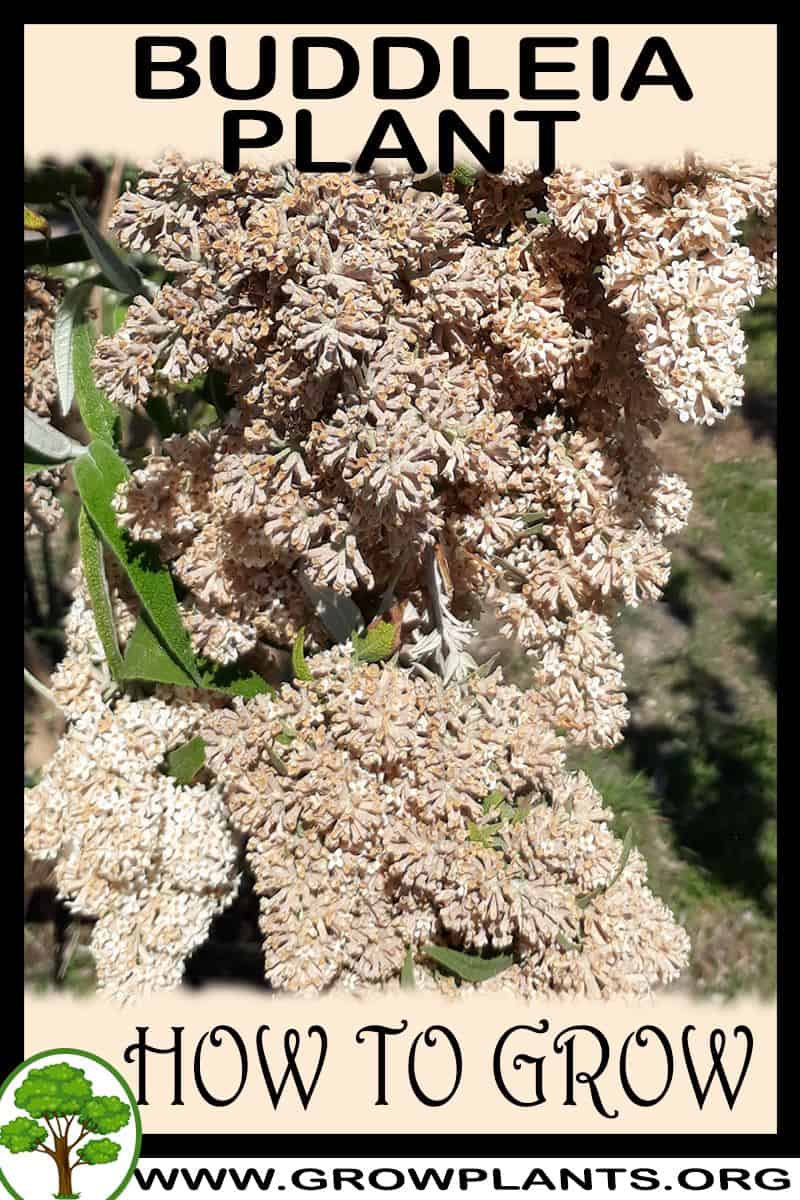
Plant Profile & Key Characteristics
Overview: Butterfly bush is a fast- to moderate-growing perennial shrub, 2-4 m (6-12 ft) and larger as a tree form, grown as an ornamental and hedge plant that strongly attracts pollinators. It can be aggressively invasive.
Quick Specifications
| Specification | Attribute |
|---|---|
| Plant Type / Life Cycle | Perennial (shrub) |
| Foliage Type | Semi-evergreen (evergreen to deciduous) |
| Mature Size | 2-4 m (6-12 ft), larger as a tree form |
| Growth Rate | Moderate to fast |
| Toxicity | Non-toxic |
| Hardiness | USDA zones 5+ |
Growth Form & Structure
- Height & Spread: 2-4 m (6-12 ft) in the ground, larger if grown on as a tree; also grows in a container.
- Growth Habit & Form: Vigorous arching shrub; can spread aggressively and is considered invasive in many areas.
- Lifespan & Maturity: Perennial shrub; fast to reach flowering size.
Anatomy & Physical Features
- Leaves & Foliage: Green lanceolate leaves.
- Flower Characteristics: Small star-shaped flowers packed into cone-shaped spikes, in purple, pink, white or lilac; nectar-rich and scented.
Primary Uses & Landscape Value
- Functional & Ornamental Roles: Ornamental flowering shrub, informal hedge and pollinator/butterfly plant for beds and containers.
Care Guide: Planting, Soil & Watering
Overview: Buddleia (butterfly bush) is a fast, vigorous shrub that grows best in full sun to light shade and rich, well-draining soil, though it tolerates poorer ground. Water it to establish and it then becomes largely drought-tolerant, disliking any waterlogging.
Quick Care Requirements
| Requirement | Ideal Condition |
|---|---|
| Planting Season | Warm season – spring through autumn |
| Growth Rate | Fast to moderate |
| Soil Type | Rich, well-draining soil; tolerant of poorer ground |
| Water Need | Moderate – water to establish, then largely drought-tolerant |
Planting & Establishment
- Best Planting Season: Plant in the warm season, spring through autumn. It is hardy to about zone 5 and establishes quickly in warm soil.
- How to Plant:
- Hole Preparation: Dig a hole roughly twice as wide as the root ball and no deeper than it, loosening the sides.
- Soil Amendments: Mix compost or organic matter into the backfill; it will also grow in leaner soil, so heavy enrichment is not essential.
- Planting Depth: Set the plant with the root collar level with the surrounding soil – do not bury the stem – firm in and water.
- Growth Speed & Expectations: Growth is fast to moderate and it can become large, so give it space; it responds well to hard pruning to keep it in bounds.
Soil, Watering & Drainage Care
- Soil Mix & Drainage Needs: Undemanding but happiest in rich, well-draining soil; it tolerates poorer, drier ground once established and dislikes waterlogging. Containers should be large with good drainage.
- Watering Schedule & Technique:
- Young / Newly Planted: Water regularly through the first season to build a strong root system.
- Established: Once established it is largely drought-tolerant; water mainly during prolonged dry spells and to support its heavy flowering.
- Seasonal Adjustments: Water more in summer heat and little in cool, wet weather.
Climate, Light & Hardiness
Buddleia (butterfly bush) is an adaptable, fast-growing shrub that grows in full sun to half shade across an unusually wide range of climates from tropical to temperate. It is notably cold-hardy for a shrub of this type, generally surviving from about USDA zone 5 upward, behaving as evergreen in warm climates and deciduous where winters are cold.
Quick Climate Specifications
| Climate Zones | Tropic, Mediterranean, desert, subtropical, or temperate |
|---|---|
| USDA Hardiness Zones | Approximately 5 and warmer |
| Frost Tolerance | Moderate to high |
| Light Conditions | Full sun to half shade |
Sunlight & Light Exposure
Optimal Light Setup
Full sun gives the best flowering; half shade is tolerated with somewhat reduced bloom.
Direct Sun Requirement
Performs best with plenty of direct sun through the growing season.
Temperature Extremes & Hardiness
USDA Hardiness & Regional Limits
Cold-hardy down to about USDA zone 5, one of the more winter-tolerant shrubs in its group; in warm, frost-free climates it stays evergreen, while in colder zones it drops its leaves and dies back to woody stems or the base each winter.
Cold Damage & Winter Protection
Where grown as deciduous, hard freezes kill the above-ground growth but the root system survives to resprout in spring; annual winter pruning of dead wood is routine in these colder zones.
Frost Sensitivity
Established plants are relatively frost-tolerant for the genus, though tender new growth can be damaged by an early or late frost.
Extreme Heat Tolerance
Tolerates hot subtropical and desert summers well given adequate water.
Growing in Pots, Balconies & Indoors
Buddleia (butterfly bush) is a large, fast-growing sun shrub the grower does not treat as a houseplant. It can be grown in a big container, especially while young, where its arching spikes of nectar-rich flowers draw butterflies; it wants full sun and space, and a pot plus hard pruning helps restrain this invasive spreader.
Quick Details
- Container Size: A large, heavy tub; it is vigorous, so give it a big root run
- Indoor Suitability: Not a houseplant – a large, sun-loving shrub
- Best Spot: Full sun to half shade, in the open
- Soil & Drainage: Free-draining mix – it dislikes waterlogging
- Watering in Pots: Average to generous while young; established plants are fairly drought-tolerant
Indoors & On the Windowsill
- Houseplant limits: Not an indoor plant: it grows too big and fast and needs full sun to flower.
- A pot restrains it: It is aggressive and seeds itself freely, so a container plus deadheading is a good way to keep it in check.
On a Balcony or Patio
- Light, wind & heat: Give it the brightest, sunniest spot; walls and paving throw heat back so pots dry quickly – check moisture daily in warm spells, and stake or shelter anything tall or exposed from wind.
- Practicalities: Use a wide, heavy pot to stop wind toppling it, and deadhead spent flowers to limit self-seeding.
Choosing the Pot, Soil & Long-Term Care
- Pot & drainage: Use a pot with strong drainage holes and skip a standing saucer of water, which invites root rot; terracotta breathes and dries fast, while glazed or plastic holds moisture longer.
- Potting mix: Well-aerated and organic-rich – a peat- or coir-based mix opened up with perlite or vermiculite and enriched with compost.
- Feeding: Potted plants use up their food faster because frequent watering leaches nutrients away – feed a little more often through the growing season than plants in open ground.
- Hard pruning: Cut it back hard each dormant season to keep it compact and flowering well in a pot; refresh the mix at the same time.
Fertilizing & Feeding
A light feeder – this vigorous, sometimes aggressive shrub blooms freely on modest, balanced feeding and does not need rich soil.
Quick Fertilizing Specs
| Feeding Level | Light – a vigorous shrub that grows well without heavy feeding. |
|---|---|
| young_feeding | A light balanced feed as new plants establish in rich, well-drained soil. |
| mature_feeding | Occasional light feeding through the growing season is usually enough. |
| Main Nutrient Priority | Balanced nutrition to support foliage and the long summer-into-autumn bloom. |
| Best Feeding Period | Spring through the summer and autumn bloom period. |
| Organic Options | Compost or well-rotted organic matter worked into well-drained soil. |
| Soil pH | Tolerates a wide range of soil pH. |
| Reduce/Stop Feeding | Reduce feeding as growth slows heading into autumn and winter dormancy. |
| Micronutrients | Rarely needed; correct only if a deficiency shows. |
Feeding by Growth Stage
Spring growth flush
Support vigorous new stem and leaf growth as the season starts.
| Nutrient direction | A light, balanced feed is enough for this fast-to-medium growing shrub. |
|---|---|
| Timing | As new growth begins in spring. |
| Frequency | A light feeding as growth resumes is generally sufficient. |
| Fertilizer types | Balanced complete fertilizer at a light rate, Compost or well-rotted organic matter |
| Precautions | This plant can be aggressive and self-seed; deadhead spent blooms and avoid over-feeding, which encourages excess spread. |
Summer and autumn bloom
Sustain the long, pollinator-attracting bloom of cone-shaped flower clusters.
| Nutrient direction | Continue only light, balanced feeding; extra phosphorus is not needed to drive more bloom. |
|---|---|
| Timing | Through the summer and autumn flowering period. |
| Frequency | Light, occasional feeding sustains blooming without overdoing it. |
| Fertilizer types | Balanced complete fertilizer at a light rate |
| Precautions | Watch for aphids on new growth; avoid heavy feeding that encourages soft growth prone to pest damage. |
Autumn and winter dormancy
Let the shrub rest as growth slows or stops for winter.
| Nutrient direction | None – withhold fertilizer while the plant is dormant. |
|---|---|
| Timing | Through autumn and winter dormancy. |
| Frequency | No feeding at this stage. |
| Fertilizer types | No feeding at this stage – resume once active spring growth appears. |
| Precautions | Do not fertilize during dormancy; wait for active growth to resume. |
Nutrient Deficiency Signs & Corrections
Pale, yellow-green older leaves and reduced flowering.
| Possible causes | Low soil nitrogen, Nutrients leached away by heavy rain or watering, Poor soil fertility overall |
|---|---|
| Appears first on | Older, lower leaves first. |
| What to check | Recent feeding history, Soil drainage and fertility, Overall bloom performance compared to prior seasons |
| Possible correction | Apply a light, balanced fertilizer during active growth. |
Yellowing between the veins of the newest leaves while veins stay green.
| Possible causes | High or alkaline soil pH locking up iron or manganese, Waterlogged soil reducing uptake, Low available iron or manganese in the soil |
|---|---|
| Appears first on | New growth at the shoot tips. |
| What to check | Soil pH, Drainage, Whether symptoms follow wet spells |
| Possible correction | Correct soil pH toward the plant’s preferred range, improve drainage, and if it persists apply a chelated iron or manganese product per its label. |
Scorched leaf edges or wilting despite adequate water.
| Possible causes | Over-application of fertilizer on this light-feeding shrub, Poor leaching in containers, Fertilizing during hot, dry spells |
|---|---|
| Appears first on | Leaf margins and tips; container plants first. |
| What to check | Recent fertilizer amounts, Drainage, Soil surface for crusting or residue |
| Possible correction | Ease off feeding, water thoroughly to flush excess salts, and resume with only light feeding. |
Pruning, Training & Seasonal Maintenance
Buddleia (Butterfly Bush) flowers on the current season’s new wood, so it tolerates — and actively benefits from — a hard annual cutback: the harder it is pruned in late winter, the more vigorous the new growth that carries that year’s flower panicles. Its safest and most effective pruning window is dormant autumn/winter into early spring, and because this species is noted as aggressive and self-seeding, deadheading spent panicles through the bloom season is as important as the structural cut.
Quick Pruning & Maintenance Specs
| Pruning Tolerance | High |
| Primary Pruning Window | Late Autumn–Winter through early spring, before new growth pushes |
| Secondary Maintenance Window | Deadhead continuously through spring–autumn bloom |
| Typical Frequency | One hard annual cutback, plus ongoing deadheading |
| Main Objective | Force vigorous new flowering wood; control size and self-seeding |
| Young Plant Priority | Light shaping only in year one to build a framework of main stems |
| Mature Plant Priority | Hard annual cutback to a low permanent framework |
| Best Tool Type | Bypass secateurs and loppers; hedge shears if kept as a clipped hedge |
| Avoid Heavy Pruning During | Active summer bloom; the first growing season after planting |
Pruning by Plant Age & Size
Newly Established
Prune lightly in the first year — remove damaged tips and lightly shape — to let the plant build a strong root system and framework before committing to hard annual cuts.
Young / Formative
Select 3–6 main stems as a permanent low framework (an open, multi-leader structure, not a single trunk); head these back to encourage branching that will form next year’s cutback points.
Mature / Established
Each dormant season, cut all of the previous year’s growth back hard to within a few buds of the permanent framework (roughly to knee-to-waist height); this is the main event and is repeated annually, not occasional.
Seasonal Pruning Schedule
| Dormant/Winter | Objective: force vigorous new flowering wood and control size. Cut all of last year’s growth back hard to the framework; do not leave long unpruned stems, which get top-heavy and sparse-flowered. Because bloom is on new wood, this maximizes rather than reduces next season’s flowers. |
| Ongoing Sanitary | Deadhead spent flower panicles through the spring–autumn bloom period; this both prolongs flowering and, given this species’ aggressive/invasive tendency, meaningfully reduces unwanted self-seeding. |
Flowering & Fruiting Wood
Buddleia flowers on current-season growth, not on one-year or older wood. This means an annual hard dormant-season cutback does not remove next year’s flowers — it creates the vigorous new shoots that will carry them, and skipping the hard cut instead produces a taller but weaker-flowering shrub with blooms mostly out of reach and view.
Structural Pruning & Training
Maintain a low, permanent woody framework and remove growth each year down to that point rather than letting the plant build height on height; thin out crossing or crowded stems within the framework, and control overall spread by how low the annual cutback is taken.
Special Growth to Remove
- Spent flower panicles — deadhead regularly, both to extend bloom and to limit self-seeding
- Weak, thin or crossing stems within the framework at the annual cutback
- Any suckering growth beyond the intended framework, given this species’ spreading tendency
Container & Small-Space Pruning
Can be kept in a large container with an even harder annual cutback than in-ground plants to control its naturally vigorous size; watch for a smaller, more restrained flush of new growth and adjust the cutback height down accordingly to keep it in scale.
Tools
- Loppers or a pruning saw for the thick base of the annual hard cutback on older, woody framework stems
- Bypass secateurs for deadheading and finer stem work
- Hedge shears only if the plant is deliberately kept clipped as a hedge rather than as a free-form specimen
Tool Hygiene & Disease Risk
Routine: clean, sharp tools are sufficient for general cuts. Aphids (its documented pest) can be spread on tools handling heavily infested material, so wipe blades if cutting visibly infested stems before moving to a clean plant.
Cut Placement & Technique
Make the annual hard cutback just above a healthy outward-facing bud on each framework stem; use thinning cuts to remove whole weak stems at their base rather than leaving stubs; deadhead spent panicles back to the first strong bud or leaf pair below the spent flower.
Heavy Pruning & Rejuvenation
This species is built for heavy annual pruning — cutting back hard every dormant season is the norm, not an occasional rescue measure. A badly overgrown or neglected specimen can even be cut back close to ground level in one go and will regrow and reflower vigorously the same season.
Post-Pruning Care
Water in after the hard annual cutback to support the vigorous flush of regrowth; avoid extra feeding beyond a normal light spring feed, since hard pruning already stimulates strong regrowth on its own.
Common Pruning Mistakes
- Leaving the shrub unpruned for several years, resulting in a tall, leggy, sparsely-flowered plant with blooms out of reach
- Pruning lightly at the tips instead of committing to a hard cutback to the framework each year
- Skipping deadheading, which lets this aggressive species set and drop large amounts of seed
When NOT to Prune
Avoid the hard structural cutback during active summer bloom — save it for dormancy so the current display isn’t lost; avoid any hard pruning in the first growing season after planting while the root system establishes.
Recommended Tools (by task)
- loppers — the thick base cuts of the annual hard cutback on mature framework stems
- bypass_secateurs — deadheading and finer stem selection within the framework
- hedge_shears — only for specimens deliberately kept as a clipped hedge
Pruning Troubleshooting
| Problem | Possible Cause | What to Check | Corrective Action |
| Tall, leggy plant with sparse, high-up flowers | Years without a hard annual cutback | Height and location of last season’s flowers relative to the framework | Resume a hard annual dormant-season cutback to the low framework |
| Unwanted seedlings spreading nearby | Spent flowers left to set and drop seed | Presence of buddleia seedlings in beds, paving cracks, waste ground | Deadhead consistently through the bloom season; remove seedlings promptly |
| Weak, spindly regrowth after cutback | Cutback made too late, after the plant had already pushed soft growth, or aphid damage on new shoots | Timing of the cut; inspect new growth for aphid colonies | Cut earlier in dormancy next season; treat aphids on regrowth promptly |
Propagation Guide
Butterfly bush roots easily from stem cuttings – softwood in summer or hardwood taken from routine autumn/winter prunings – making cuttings the most practical way to keep a particular plant’s exact flower color. It also self-seeds freely, which is part of why it can behave as an aggressive, invasive plant in some regions. Propagation is Easy.
Quick Propagation Specs
| Best Propagation Method | Stem cuttings (softwood or hardwood) |
| Alternative Methods | Seed |
| Propagation Difficulty | Easy |
| Seed True-to-Type | Usually true-to-type for the species; cultivar-dependent for named color forms |
| Vegetative True-to-Type | Yes |
| Best Propagation Season | Summer (softwood cuttings) or autumn/winter dormant season (hardwood cuttings) |
| Cutting Rooting Time | A few weeks (softwood); slower, over the dormant season (hardwood) |
Growing from Seed
This plant self-seeds readily – consistent with the site’s own note that it can be aggressive/invasive. Sow the fine seed on the surface of a moist, warm medium; germination generally takes a few weeks. Where Buddleja is considered invasive locally, removing spent flowers before seed sets can help limit unwanted spread.
Stem Cuttings
Cutting Type
Softwood tip cuttings in summer, or hardwood cuttings from leafless dormant wood in autumn/winter.
Best Timing
Softwood in summer; hardwood cuttings can conveniently be taken from material removed during the plant’s normal autumn/winter pruning.
Cutting Preparation
Softwood: 10–15cm tip sections with the lower leaves removed. Hardwood: leafless dormant stem sections.
Rooting Setup
Free-draining cutting mix; softwood cuttings need warmth and humidity, while hardwood cuttings can be inserted directly outdoors or in a cold frame.
Rooting Hormone
Optional – not required, as this plant roots readily without it.
Rooting Time
Softwood cuttings typically root within a few weeks; hardwood cuttings root more slowly over the dormant season.
Bloom & Flower Guide
Quick Details
- Bloom Season: Spring, summer and autumn
- Flower Appearance: Long, cone-shaped plumes made of many tiny, fragrant star-shaped flowers in purple, pink, white or lilac
- Edibility: Not grown for eating – an ornamental, pollinator shrub
Detailed Blooming Overview
Buddleia (Buddleja, the butterfly bush) is a vigorous shrub grown for its long summer show and its magnetic pull on pollinators. The tapering flower spikes appear from spring through autumn in tropical, Mediterranean, desert, subtropical and temperate gardens, roughly zone 5 and warmer.
Flower Characteristics
- Dense, cone- or plume-shaped clusters of small fragrant flowers.
- Colors span purple, pink, white and lilac.
- Rich in nectar – a well-earned favorite of butterflies and bees.
Bloom Care & Thinning
- Prolonging the display: Deadhead faded spikes to push out a fresh round of bloom and to curb self-seeding.
- Pruning: Cut back hard in late winter to encourage strong new stems and the biggest flower plumes.
- Note: It can seed around freely and is considered invasive in some regions – removing spent flowers helps keep it in bounds.
Bloom Health & Protection
- Capsid bugs: They can distort and blotch developing flower spikes; keeping the shrub healthy and, if needed, an insecticidal soap or neem oil helps.
- Spider mites: In hot, dry spells mites can dull the foliage around the blooms; a spray of water and improved humidity keep them down.
Pests, Diseases & Troubleshooting
Overview: Butterfly bush (Buddleja davidii) is a famously tough, fast, resilient shrub with very few serious pests — its nectar-rich flowers are a magnet for beneficial insects, and healthy plants shrug off most trouble. The chief exceptions are spider mites in hot, dry spells and capsid (plant) bugs distorting the shoot tips, plus dieback and downy mildew where drainage or airflow is poor. In many regions it self-seeds aggressively and is treated as invasive, so the biggest ‘management’ task is often containment, not pest control.
Quick Troubleshooting Overview
| Issue / Pest | Main Symptom | Primary Solution |
|---|---|---|
| Two-spotted spider mite | Fine speckling & bronzing in hot dry weather, webbing | Hose foliage, raise humidity; hort oil |
| Capsid bugs | Distorted, tattered new leaves with small ragged holes | Tolerate; tidy debris, encourage predators |
| Caterpillars | Chewed leaves, occasional defoliation | Hand-pick; Bt if heavy |
| Vine weevil (pots) | Notched leaf edges; grubs eat roots, plant collapses | Nematodes, check root balls, remove grubs |
| Downy mildew | Yellow blotches, greyish mould beneath leaves | Airflow, remove leaves; copper if persistent |
| Dieback | Wilting stems, brown wood, branch death | Prune to healthy wood, improve drainage |
Common Pests & Management
- Two-spotted spider mite (Tetranychus urticae):
- Symptoms: The most likely pest on butterfly bush: fine pale stippling that dulls and bronzes the leaves, with faint webbing on the undersides during hot, dry weather; badly hit leaves yellow and fall.
- Prevention & Control: Keep the shrub watered and unstressed (drought stress invites mites), hose down the foliage in dry spells, and encourage predatory mites and other natural enemies. Spray horticultural oil or insecticidal soap on the undersides only if numbers climb.
- Capsid / plant bugs (Lygocoris pabulinus, Lygus spp.):
- Symptoms: Small, fast, green or brown sap-sucking bugs feed on shoot tips; their toxic saliva kills tiny patches that tear as the leaf expands, leaving distorted, tattered, ragged-holed young leaves and blind shoots.
- Prevention & Control: Damage looks alarming but rarely harms an established shrub, so tolerance is usually best. Clear leaf litter and weeds where they overwinter, encourage predators, and treat only severe cases on young plants.
- Caterpillars (various moths):
- Symptoms: Assorted caterpillars chew holes in the leaves and can locally defoliate a shoot; usually a minor, cosmetic nuisance on a vigorous plant.
- Prevention & Control: Hand-pick where practical and accept light damage on so tough a shrub. For heavy attacks on young plants, spray Bacillus thuringiensis (Bt) onto the caterpillars in the evening.
- Vine weevil (Otiorhynchus sulcatus):
- Symptoms: Adults notch neat bites from the leaf margins at night; far more damaging are the white C-shaped grubs that eat the roots of container-grown plants, causing sudden wilting and collapse.
- Prevention & Control: Check the leaf notching as an early warning, and inspect root balls of potted plants. Drench pots with parasitic nematodes when the soil is warm, remove and destroy any grubs found, and encourage ground beetles and birds outdoors.
- Aphids (Aphis spp.):
- Symptoms: Occasional soft green or black colonies on the tender new shoots, leaving honeydew; seldom a real problem here.
- Prevention & Control: Rinse off with a water jet and let the abundant predators the plant attracts do the rest; spray insecticidal soap only in the rare heavy infestation.
Diseases & Fungal Issues
- Downy mildew (Peronospora sp.):
- Symptoms: Yellow blotches on the upper leaf surface with a greyish, downy mould beneath, worst in cool, damp, crowded conditions; affected leaves distort and drop.
- Treatment & Management: Improve airflow by spacing and thinning, water at the base to keep foliage dry, and remove infected leaves. A copper-based fungicide protects new growth only where it recurs badly.
- Dieback & stem canker (Phytophthora, Botryosphaeria):
- Symptoms: Individual stems wilt and die back, the wood browning inside; often follows waterlogging, winter injury or a soil-borne root/collar rot.
- Treatment & Management: Prune dead and dying stems back to healthy wood with sterilised tools, improve soil drainage, and avoid planting too deep or overwatering. The hard annual pruning this shrub enjoys also removes much diseased wood.
- Root rot (Phytophthora spp.):
- Symptoms: General wilting, poor growth and dark, decayed roots on plants in heavy, waterlogged soil.
- Treatment & Management: Plant on free-draining ground or improve the soil with grit and organic matter, avoid overwatering, and never let the crown sit wet. Severely rotted plants seldom recover.
- Fungal leaf spot:
- Symptoms: Brown or black spots scattered on the leaves in wet weather; largely cosmetic on a healthy shrub.
- Treatment & Management: Rake up fallen leaves, improve airflow, and remove badly spotted foliage; chemical control is rarely justified.
Growing Difficulties & Abiotic Problems
- Winter dieback:
- Cause & Symptoms: Upper stems blacken and die back over a hard winter; normal for this shrub, which flowers on new wood.
- Correction Strategy: Prune hard in late dormancy, cutting the framework back low to strong buds; this both removes winter-killed wood and drives the vigorous new growth that carries the best flowers.
- Chlorosis / poor growth in wet or alkaline soil:
- Cause & Symptoms: Yellowing leaves and weak growth on waterlogged or very alkaline ground.
- Correction Strategy: Improve drainage with grit and organic matter, mulch, and apply a chelated micronutrient feed if yellowing persists; the shrub otherwise tolerates poor soils well.
- Self-seeding & invasiveness:
- Cause & Symptoms: Prolific wind-blown seed colonises walls, waste ground and riverbanks; the plant is classed as invasive in many regions.
- Correction Strategy: Deadhead spent flower spikes before they set seed to prolong bloom and prevent spread, choose sterile or low-seeding cultivars, and check local regulations before planting.
- Poor flowering:
- Cause & Symptoms: Few blooms from too much shade or from failing to prune.
- Correction Strategy: Grow in full sun and prune hard each dormant season; flowers form on the current year’s growth, so light or unpruned plants bloom poorly.
What Helps — Products & Tools
Butterfly bush rarely needs spraying, and because it is grown to feed pollinators, restraint matters: a strong hose, horticultural or neem oil and insecticidal soap cover the odd spider mite or aphid outbreak, and parasitic nematodes deal with vine weevil grubs in pots. Bacillus thuringiensis (Bt) handles heavy caterpillar attacks, and a copper spray covers persistent downy mildew. The most valuable tools are sharp loppers for the hard annual prune (which prevents most disease and drives flowering) and deadheading to curb its invasive self-seeding. Spray oils in the evening to protect the many pollinators the plant attracts.