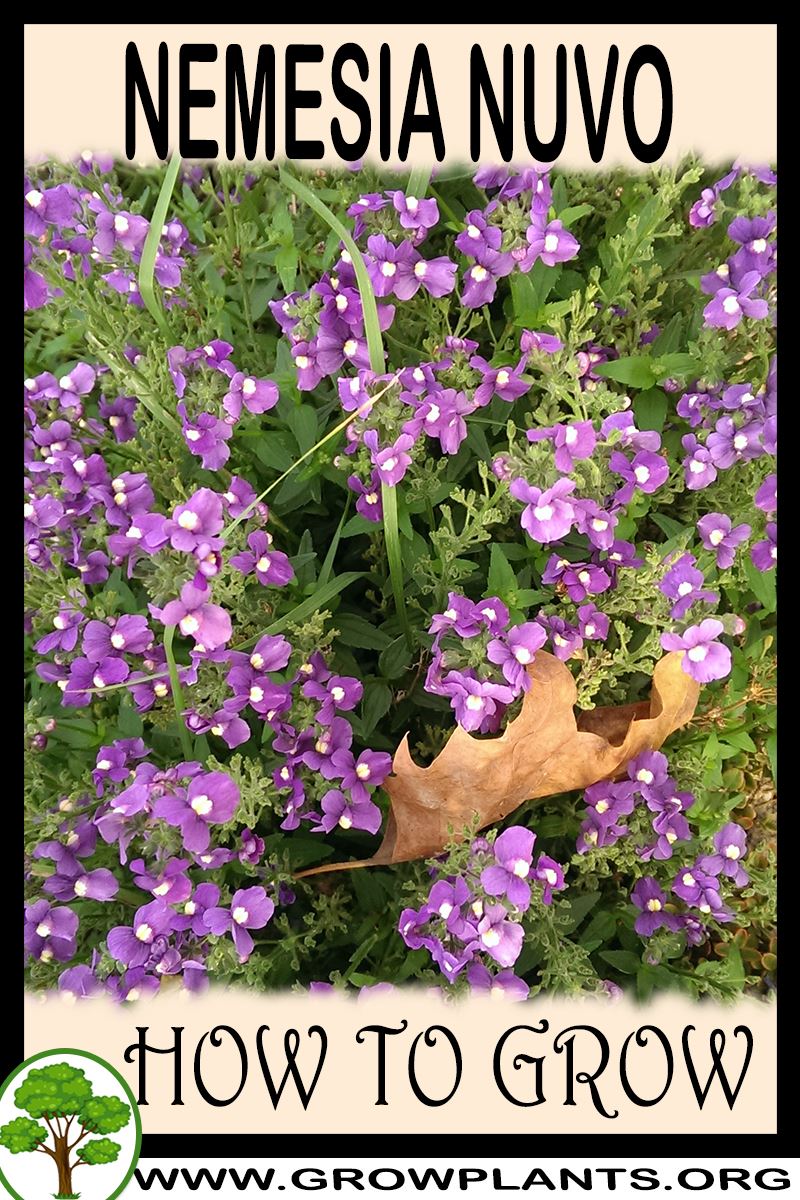
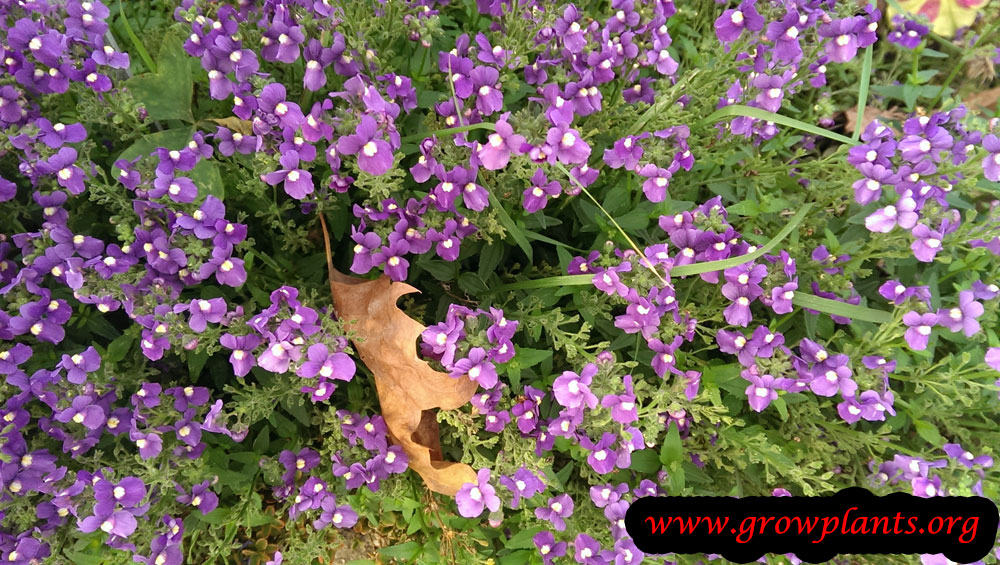
Plant Profile & Key Characteristics
Overview: Nemesia nuvo is a fragrant, mounding subshrub 30-60 cm (12-24 in) tall, grown as a perennial or annual for its scented two-lipped flowers. It suits subtropical, Mediterranean, desert, temperate and tropical climates and is popular in containers.
Quick Specifications
| Specification | Attribute |
|---|---|
| Plant Type / Life Cycle | Perennial subshrub (often grown as an annual) |
| Foliage Type | Evergreen (in mild climates) |
| Mature Size | 30-60 cm (12-24 in) tall |
| Growth Rate | Moderate to Fast |
| Hardiness | USDA zones 10+ as perennial (3-9 as annual) |
Growth Form & Structure
- Height & Spread: Forms a bushy mound 30-60 cm (12-24 in) tall; excellent in planters, pots and hanging containers.
- Growth Habit & Form: Compact, well-branched subshrub with an upright to mounding habit.
- Lifespan & Maturity: Fast-growing but often short-lived; frequently replanted each season.
Anatomy & Physical Features
- Leaves & Foliage: Green, elliptic leaves.
- Flower Characteristics: Fragrant two-lipped flowers in purple, pink or white, sometimes bicoloured.
Primary Uses & Landscape Value
- Functional & Ornamental Roles: Ornamental for beds, borders, containers and hanging baskets; valued for fragrance.
Care Guide: Planting, Soil & Watering
Overview: Nemesia is a cool-season flowering plant that likes fertile, moisture-retentive but well-drained soil and warm-but-not-hot weather. It wants steady moderate water and does not like to dry out completely.
Quick Care Requirements
| Requirement | Ideal Condition |
|---|---|
| Planting Season | Cool season – autumn, winter and spring in mild climates |
| Growth Rate | Fast to moderate |
| Soil Type | Fertile, moisture-retentive yet well-drained |
| Water Need | Moderate; keep evenly moist |
Planting & Establishment
- Best Planting Season: Plant in the cool season – autumn through spring in mild climates – and avoid establishing it in peak summer heat.
- How to Plant:
- Hole Preparation: Dig a hole as wide as, and slightly larger than, the root ball, and about the same depth.
- Soil Amendments: Mix in compost or organic matter for a fertile, moisture-retentive soil that still drains.
- Planting Depth: Set the crown level with the soil surface; do not bury the stems.
- Growth Speed & Expectations: Fast to moderate, quick to come into flower.
Soil, Watering & Drainage Care
- Soil Mix & Drainage Needs: Wants a moisture-retentive but well-drained soil – don’t let it dry out fully, and don’t leave it waterlogged.
- Watering Schedule & Technique:
- Young / Newly Planted: Keep consistently moist while it establishes.
- Established: Water regularly and moderately; avoid letting the soil dry between waterings.
- Seasonal Adjustments: More water in warm, dry spells; less in cool, wet weather.
Climate, Light & Hardiness
Nemesia nuvo is a cool-season, free-flowering plant for subtropical, Mediterranean, temperate, desert and even tropical climates, grown in full sun to half shade. It flowers best in cool conditions and is frost-sensitive, so it is treated as a tender perennial in frost-free areas and as a cool-season annual where winters freeze.
Quick Climate Specifications
| Climate Zones | Subtropical, Mediterranean, temperate, desert, tropical |
|---|---|
| USDA Hardiness Zones | Approximately 10 and above as a perennial; grown as an annual in about zones 3–9 |
| Optimal Temp Range | Cool to mild, roughly 10–20 °C (50–68 °F) |
| Cold Damage Begins | Foliage and flowers are damaged around freezing |
| Frost Tolerance | Low |
| Light Conditions | Full sun to half shade |
| Wind Tolerance | Moderate |
Sunlight & Light Exposure
Optimal Light Setup
Flowers most freely in full sun where conditions stay cool; in warmer regions half shade during the hottest part of the day helps prolong bloom.
Shade & Heat Management
As temperatures rise, some afternoon shade slows heat stress and extends flowering into early summer.
Best Exposure / Orientation
An open, sunny position for cool-season display, shifting to a lightly shaded aspect where summers turn hot.
Temperature Extremes & Hardiness
USDA Hardiness & Regional Limits
Perennial only in frost-free, roughly zone-10-and-warmer areas; commonly grown as an annual across about zones 3–9, planted from autumn through spring so it flowers in the cool season. Cold limits year-round outdoor culture, but the plant continues as a perennial where frost is absent.
Cold Damage & Winter Protection
Light frost may be shrugged off by hardened plants, but hard or repeated freezes damage soft growth and flowers; container plants are easily moved under cover during cold snaps.
Frost Sensitivity
Frost-sensitive overall - blooms and tender shoots are the first to be hit by a sharp freeze.
Extreme Heat Tolerance
Heat is the main limiter: flowering slows and plants tire in prolonged hot weather, which is why it is grown mainly for the cool seasons in warm climates.
Wind, Humidity & Microclimate
Humidity Preferences
Prefers mild, moderately moist air and dislikes hot, stagnant conditions; good airflow keeps the mounded growth healthy.
Wind Tolerance
Reasonably wind-tolerant given its low, bushy habit, though exposed sites can batter the flower stems.
Microclimate Recommendations
Use a bright, airy, cool-season spot; in hot regions a position that catches morning sun but escapes fierce afternoon heat gives the longest display.
Growing in Pots, Balconies & Indoors
Nemesia is a compact, free-flowering cool-season plant and one of the best container, window-box and balcony fillers. The grower does not grow it as a houseplant, but it shines in pots outdoors – give it a bright, airy spot.
Quick Details
- Container Size: Pots, window boxes and mixed containers – ideal as a filler
- Indoor Suitability: Not a houseplant – a sun-loving bedding plant
- Best Spot: Full sun to half shade; cool and airy
- Soil & Drainage: Aerated, organic-rich, free-draining potting mix
- Watering in Pots: Keep evenly moist – it dislikes drying out; deadhead and trim to keep it flowering
Indoors & On the Windowsill
- Not a houseplant: The grower does not grow it indoors – it is a sun-loving bedding plant that flowers best outdoors and sulks in warm, low-light rooms.
- Bright windowsill: A cool, very bright sill can hold it for a while, but it is really at its best in outdoor pots and boxes.
On a Balcony or Patio
- Light & wind: Give it the sunniest spot. Walls, railings and paving reflect heat, so pots dry fast – check moisture daily in warm weather, and shelter or stake tall growth from wind. A drip irrigation kit with a timer can take over that watering check automatically.
- Weight & runoff: A full pot of moist soil is heavy – check the balcony can take it, and stand pots so drainage water runs off cleanly without staining or flooding a neighbour below.
Choosing the Pot, Soil & Long-Term Care
- Pot & drainage: A pot with strong drainage holes and no standing-water saucer, so the roots never sit wet and rot. Terracotta breathes and dries faster (good against overwatering), while glazed or plastic holds moisture longer – match it to how often you water.
- Potting mix: A light, aerated, organic-rich mix – potting soil or peat/coir with perlite or vermiculite, blended with compost or well-rotted organic matter.
- Feeding: Nutrients leach out of pots with every watering, so potted plants need feeding more often than those in the ground – a balanced liquid feed through the growing season keeps them going.
- Repotting: Refresh the mix and pot up about every two years; for perennials, lightly trim the root ball and top growth at the same time to keep them vigorous.
Fertilizing & Feeding
Nemesia nuvo is a moderate feeder that flowers over a long season; feed lightly and evenly and refresh after each flush to sustain repeat bloom.
Quick Fertilizing Specs
| Feeding Level | moderate |
|---|---|
| Main Nutrient Priority | Balanced feeding with moderate nitrogen and adequate potassium |
| Best Feeding Period | Across the extended spring-to-autumn bloom season |
| Soil pH | Slightly acidic to near neutral, in moist well-drained soil |
| Organic Options | Compost and well-rotted organic matter |
| Micronutrients | Rarely needed unless a deficiency appears |
| Reduce/Stop Feeding | Taper off as growth slows heading into cold |
Feeding by Growth Stage
Spring growth flush
Support strong leafy and stem growth as the plant wakes up so it can carry plenty of flowers.
| Nutrient direction | Balanced, complete feeding with adequate nitrogen to drive healthy foliage and stems. |
|---|---|
| Timing | As new growth begins in spring. |
| Frequency | A few light feedings spaced through the flush of spring growth. |
| Fertilizer types | A balanced complete garden fertilizer, Compost or well-rotted organic matter worked into the soil |
| Precautions | Go easy on nitrogen; too much pushes soft leafy growth and delays or reduces flowering. |
Blooming period
Keep the plant well nourished through flowering for abundant, long-lasting blooms.
| Nutrient direction | Balanced feeding; adequate potassium and steady nitrogen support flowering better than a high-phosphorus ‘bloom’ product. |
|---|---|
| Timing | From the onset of budding through the main bloom. |
| Frequency | Light, regular feeding across the blooming period. |
| Fertilizer types | A balanced complete fertilizer, A balanced liquid feed for container plants |
| Precautions | Avoid high-phosphorus ‘bloom booster’ products; balanced nutrition and adequate nitrogen drive bloom. |
Repeat flushes and mid-season refresh
Sustain repeated flushes of bloom through the long flowering season and after any shearing.
| Nutrient direction | Balanced feeding to refuel growth and rebloom; keep nitrogen moderate. |
|---|---|
| Timing | Between flushes and after cutting back spent flowers, through the extended season. |
| Frequency | Light feeding to refresh growth after each flush. |
| Fertilizer types | A balanced complete fertilizer, A balanced liquid feed for containers |
| Precautions | Feed sparingly and keep it balanced; excess nitrogen favors leaves over the next flush of flowers. |
Dormancy / rest
Let the plant rest without pushing new growth when it is dormant or checked by cold or summer heat.
| Nutrient direction | None – withhold fertilizer while the plant is resting. |
|---|---|
| Timing | During winter dormancy, or the resting spell brought on by heat or cold. |
| Frequency | No feeding at this stage. |
| Fertilizer types | No feeding at this stage – the plant is dormant or resting and takes up little nutrient. |
| Precautions | Do not fertilize until active growth resumes; feeding a dormant plant wastes nutrients and can burn roots. |
Nutrient Deficiency Signs & Corrections
Older, lower leaves turn pale and yellow-green, growth is weak and blooming is sparse.
| Possible causes | low available nitrogen in the soil, nitrogen leached out by heavy watering or in sandy soil, cold or waterlogged soil limiting root uptake |
|---|---|
| Appears first on | older, lower leaves |
| What to check | whether yellowing starts on old versus new leaves, recent feeding history, drainage and how wet the soil stays |
| Possible correction | Apply a balanced complete fertilizer and build soil organic matter; correct drainage so roots can take up nutrients. |
Newest leaves yellow between the veins while the veins stay green (interveinal chlorosis).
| Possible causes | high (alkaline) soil pH locking up iron, waterlogged or cold soil impairing root function, genuinely low available iron |
|---|---|
| Appears first on | youngest leaves |
| What to check | soil pH, drainage and root health, whether new growth is most affected |
| Possible correction | Correct soil pH toward the plant’s preferred range and improve drainage; if it persists, apply a chelated iron product per its label. |
Leaf margins on older leaves scorch and brown, stems are weak and flowering is poor.
| Possible causes | low soil potassium, uneven watering or drought stress, excess nitrogen pushing leafy growth at the expense of flowers |
|---|---|
| Appears first on | margins of older leaves |
| What to check | watering consistency, whether feeding has been very nitrogen-heavy, soil test for potassium |
| Possible correction | Use a balanced fertilizer that supplies adequate potassium and keep watering even; avoid over-applying high-nitrogen feeds. |
Pruning, Training & Seasonal Maintenance
Nemesia ‘Nuvo’ is a named, fragrant nemesia grown as a compact bedding and container plant, and like all the modern nemesias it is a soft-stemmed subshrub that flowers on new growth — so its care hinges on cutting it back after each flush of bloom to force fresh, flowering shoots. A light all-over trim once a flush fades keeps this floriferous selection dense and blooming, where an untrimmed plant would soon go leggy and stall. There is no woody structure to build; it is a soft mound. In mild areas (about zone 10 and up) it can be sheared repeatedly as a short-lived perennial; in colder zones it is treated as an annual. Early pinching for bushiness and shearing spent flushes are essentially the whole of its pruning.
Quick Pruning & Maintenance Specs
| Pruning Tolerance | High for soft trimming — reshoots into fresh bloom after a shear-back |
| Primary Pruning Window | After each flowering flush — trim the whole plant back by up to a third |
| Secondary Maintenance Window | Pinch young plants early; deadhead or light-trim through bloom |
| Typical Frequency | A rejuvenating trim after every main flush; ongoing light tidying |
| Main Objective | Force repeat bloom on this floriferous selection and keep it compact |
| Young Plant Priority | Pinch growing tips for a dense, branching mound |
| Mature Plant Priority | Shear back spent flushes to trigger the next wave of flowers |
| Best Tool Type | Precision snips, or one-handed shears for the whole soft mound |
| Avoid Heavy Pruning During | Peak summer heat/drought, when regrowth is weak |
Pruning by Plant Age & Size
Newly Established
A young plant needs only damaged growth removed as it settles into moist, warm, well-drained soil in sun or part shade. Start pinching as soon as it is growing away — this selection bushes up well and rewards early tip removal with a fuller plant.
Young / Formative
There is no framework to train; formative care is pinching out the growing tips so the plant branches low into a dense cushion rather than a few quickly-leggy stems. A couple of early pinches give a much better-clothed plant for the season.
Mature / Established
The key mature task is the post-flush shear: when the first burst of flower fades and the plant opens up, trim the whole mound back by up to a third to strip spent bloom and prompt a flush of new flowering shoots. Repeating this whenever a flush tires keeps this compact selection performing through the season.
Seasonal Pruning Schedule
Early Growth (formative pinch)
Objective: a dense, branching plant. Remove: soft growing tips. Do NOT: wait until it is leggy. Expected response: low branching, a fuller mound. Flowering impact: a brief delay, then more flowering shoots.
After Each Flush (rejuvenating shear)
Objective: trigger repeat bloom and restore shape. Remove: the top third of the mound with its spent flowers and tired tips. Do NOT: cut into bare, leafless lower stems. Expected response: fresh shoots and a new wave of flowers. Flowering impact: a short pause, then renewed bloom on the new growth.
Ongoing (light tidying)
Objective: neatness between shears. Remove: spent flower clusters and dead stems. Do NOT: let it run to seed and stop. Expected response: a longer display. Flowering impact: prolongs bloom.
Flowering & Fruiting Wood
‘Nuvo’ flowers on current-season new growth, not on persistent woody stems, which is why trimming it works: a cut removes spent bloom and drives new shoots that flower within weeks, so shearing makes flowers rather than sacrificing them. Cut back promptly as each flush fades, while the plant still has leafy growth to reshoot from, rather than waiting until the base is bare and woody.
Structural Pruning & Training
There is no framework to select or train; the ‘structural’ goal is simply to keep the soft mound dense through pinching and repeated shear-backs. Renewal is that same recurring trim, not woody-stem selection. As a short-lived plant, the aim is vigour and compactness for its season or two, not a lasting structure.
Special Growth to Remove
The growth to remove is spent flowers and the tired stem tips that bore them, taken in the post-flush shear, along with any dead or weak stems. There are no suckers, runners or woody shoots — it is all soft, seasonal growth, and clearing the spent flowering tips is what redirects the plant into fresh bloom.
Container & Small-Space Pruning
As a compact selection, ‘Nuvo’ is ideal for pots, boxes and baskets, where the shear-back regime is even more important because container plants tire and stretch faster. Pinch early, trim back by up to a third whenever a flush fades, and keep the plant fed and watered to fuel the reflush — a light liquid feed after each shear genuinely helps here, since the pot’s reserves are limited.
Tools
Precision snips handle pinching and deadheading, and because the post-flush cut is an all-over trim of soft, thin stems, one-handed shears (or the snips) shear the mound cleanly and quickly — a genuine case for light shearing rather than selective cuts. Loppers, saws and full hedge shears are unnecessary on so small and soft a plant.
Tool Hygiene & Disease Risk
Hygiene is Routine: clean, sharp snips or shears suffice, with aphids the main concern rather than a tool-borne disease. Wipe the blade between plants as good practice, but no specific pathogen here calls for disinfecting between cuts.
Cut Placement & Technique
Pinch young tips just above a leaf pair to force branching. For the rejuvenating shear, trim the whole mound back by up to a third into leafy growth — always leaving foliage below the cut to reshoot from — never into bare stem. Deadhead by snipping spent clusters back to a leaf or bud, and keep the blade sharp so the soft stems are cut, not crushed.
Heavy Pruning & Rejuvenation
‘Nuvo’ tolerates repeated cut-backs of up to a third of the mound, which is its normal rejuvenation, responding with fresh shoots and renewed flower. It does not reshoot reliably from old, bare, leafless lower stems, so harder is not better: a plant gone woody and bare at the base is usually near the end of its short life and best replaced. Always trim into leafy growth.
Post-Pruning Care
After the shear, water and give a light feed to power the flush of new flowering shoots — a case where feeding after cutting genuinely helps, because the trim is prompting fresh growth. Keep container plants from drying out as they reflush, and give good light so the regrowth stays compact rather than drawn.
Common Pruning Mistakes
- Never trimming, so even this floriferous selection flowers once, goes leggy and stops.
- Shearing too late into bare, leafless lower stems that will not reshoot.
- Skipping the early pinch and getting a thin, floppy plant instead of a dense cushion.
- Shearing in peak heat or drought, or forgetting to water and feed afterwards, so the reflush is weak.
When NOT to Prune
Do not shear in peak summer heat or drought stress, when regrowth is weak — wait for cooler, moister conditions or water well first. Avoid cutting into bare, woody lower stems that will not reliably regrow. There is no dormant-season pruning; work with the flushes of growth rather than a fixed calendar.
Recommended Tools (by task)
- precision_snips — for pinching young tips and deadheading spent flower clusters.
- hedge_shears — light one-handed shears for the all-over post-flush trim that drives repeat bloom on this soft mound.
Propagation Guide
As a named nemesia selection, ‘Nuvo’ is best increased from soft cuttings so that its flower colour and habit are reproduced exactly; seed-raised plants of this type are variable. Cuttings root easily, making propagation simple for a home grower.
Quick Propagation Specs
| Best Propagation Method | Soft stem cuttings |
| Alternative Methods | Seed (variable), division of established clumps |
| Propagation Difficulty | Easy |
| Seed True-to-Type | Variable – a named selection is not reproduced faithfully from seed |
| Vegetative True-to-Type | Yes |
| Best Propagation Season | Spring to summer for cuttings |
| Cutting Rooting Time | Usually a few weeks |
Stem Cuttings
Cutting Type & Timing
Take short, non-flowering soft tip cuttings in spring or summer, when the plant is in active growth.
Cutting Preparation & Rooting Setup
Strip the lower leaves, insert cuttings into a moist, free-draining mix and keep them humid and out of direct sun until rooted. Rooting hormone is optional on this soft material.
Rooting Time
Roots typically form within a few weeks under warm, bright, humid conditions; pinch the young plant once to build a bushy shape.
Growing from Seed
Seed can be sown from autumn to spring in cool conditions, but expect variation in colour and form, so use seed only where an exact match to the parent is not required. Barely cover the small seed and keep it cool and moist to germinate.
Bloom & Flower Guide
Quick Details
- Bloom Season: Spring, summer and autumn
- Time to First Bloom: In its first season, flowering quickly from young plants
- Flower Appearance: Small, fragrant two-lipped flowers in purple, pink or white, sometimes bi-coloured
- Edibility: Grown as an ornamental – the flowers are not eaten
Detailed Blooming Overview
Nemesia nuvo is a compact, fragrant selection that flowers freely over a long season from spring into autumn. Its small, snapdragon-like blooms in purple, pink and white are two-lipped, with the petals merging at the base into a little mouth-like throat, and carry a sweet scent.
Flower Characteristics
- Small, two-lipped flowers in purple, pink or white, sometimes more than one colour.
- The petals merge at the base to form a little mouth-like throat.
- Fragrant, and produced in abundance over the foliage.
Bloom Care & Thinning
- Managing the bloom: Trim plants back lightly after the first flush to encourage fresh growth and more flowers; regular light shearing keeps them going.
- Pollination: Visited by bees and other insects drawn to the scent.
Pests, Diseases & Troubleshooting
Overview: Nemesia are short-lived South African bedding plants, generally easy but prone to a few sap-feeders and to rot in humid, crowded, or waterlogged conditions. ‘Nuvo’ is a modern hybrid bedding Nemesia bred for longer, tidier flowering. Good spacing, airflow and drainage prevent most problems.
Quick Troubleshooting Overview
| Issue / Pest | Main Symptom | Primary Solution |
|---|---|---|
| Aphids | Curled shoots, sticky honeydew | Water jet, soap, encourage predators |
| Thrips | Silvery flecking, distorted buds | Sticky traps; remove affected buds |
| Downy/powdery mildew | Yellow blotches or white coating | Space for airflow; remove foliage |
| Root & stem (foot) rot | Sudden wilt, blackened base | Sharp drainage; avoid overwatering |
| Leggy/spent plants | Flowering fades, plant flops | Shear back to regenerate; feed |
Common Pests & Management
- Aphids (Myzus persicae / Aphis spp.):
- Symptoms: Clusters on soft shoot tips and flower stalks, curling growth and dropping sticky honeydew.
- Prevention & Control: Knock off with a water jet, encourage ladybirds and hoverflies, and spot-treat with insecticidal soap or neem if colonies build.
- Thrips (Frankliniella occidentalis):
- Symptoms: Silvery streaks and speckling on leaves and distorted, discolored buds; can spread viruses.
- Prevention & Control: Use blue sticky cards to monitor, remove badly affected buds, keep plants uncrowded, and treat with soap or spinosad only if needed.
- Whiteflies (Trialeurodes vaporariorum):
- Symptoms: Tiny white flies rising from disturbed foliage, with honeydew and sooty mold.
- Prevention & Control: Hang yellow sticky traps, rinse leaf undersides, and apply insecticidal soap or neem in the evening.
- Slugs & snails (Gastropoda):
- Symptoms: Grazed seedlings and holed leaves, worst in damp shady plantings.
- Prevention & Control: Handpick at night, remove damp debris, and use iron-phosphate bait around young plants.
Diseases & Fungal Issues
- Downy mildew (Peronospora / Plasmopara):
- Symptoms: Yellow blotches on upper leaves with gray-purple fuzzy growth beneath, in cool damp weather.
- Treatment & Management: Space and ventilate plants, avoid overhead watering late in the day, remove affected foliage, and use a suitable fungicide only in persistent damp.
- Powdery mildew (Erysiphaceae):
- Symptoms: White powdery patches on leaves and stems in crowded, humid, low-airflow conditions.
- Treatment & Management: Improve airflow and light, avoid drought stress, and treat with sulfur, potassium bicarbonate or neem if it spreads.
- Root & foot rot (Pythium / Phytophthora / Rhizoctonia):
- Symptoms: Sudden wilting with a blackened, rotten stem base and roots, in wet or poorly drained soil.
- Treatment & Management: Grow in free-draining soil or mix, water at the base and let the surface dry between waterings, and discard collapsed plants.
Growing Difficulties & Abiotic Problems
- Legginess & fading bloom:
- Cause & Symptoms: Heat and age make plants stretch and stop flowering by mid-season.
- Correction Strategy: Shear plants back by about a third and feed to trigger a fresh flush; they flower best in cooler conditions.
- Heat stress:
- Cause & Symptoms: High summer heat causes wilting and flower drop on these cool-season plants.
- Correction Strategy: Give afternoon shade in hot climates, keep evenly moist, and treat as a cool-season/spring-autumn plant.
- Nutrient chlorosis:
- Cause & Symptoms: Container plants yellow when starved or waterlogged.
- Correction Strategy: Feed regularly with a balanced liquid fertilizer and correct drainage; keep these container hybrids evenly fed and never waterlogged.
What Helps – Products & Tools
Light organic care suits these bedding plants: insecticidal soap or neem for aphids, thrips and whitefly, sticky traps for monitoring, sulfur or potassium bicarbonate for mildew, and above all good spacing and drainage to prevent rot.