Plant Profile & Key Characteristics
Overview: Nemesia strumosa is a fragrant, mounding subshrub 30-60 cm (12-24 in) tall, grown as a perennial or annual for its colourful two-lipped flowers. It suits subtropical, Mediterranean, desert, temperate and tropical climates and is popular in containers.
Quick Specifications
| Specification | Attribute |
|---|---|
| Plant Type / Life Cycle | Perennial subshrub (often grown as an annual) |
| Foliage Type | Evergreen (in mild climates) |
| Mature Size | 30-60 cm (12-24 in) tall |
| Growth Rate | Moderate to Fast |
| Hardiness | USDA zones 10+ as perennial (3-9 as annual) |
Growth Form & Structure
- Height & Spread: Forms a bushy mound 30-60 cm (12-24 in) tall; excellent in planters, pots and hanging containers.
- Growth Habit & Form: Compact, well-branched subshrub with an upright to mounding habit.
- Lifespan & Maturity: Fast-growing but often short-lived; frequently replanted each season.
Anatomy & Physical Features
- Leaves & Foliage: Green, elliptic leaves.
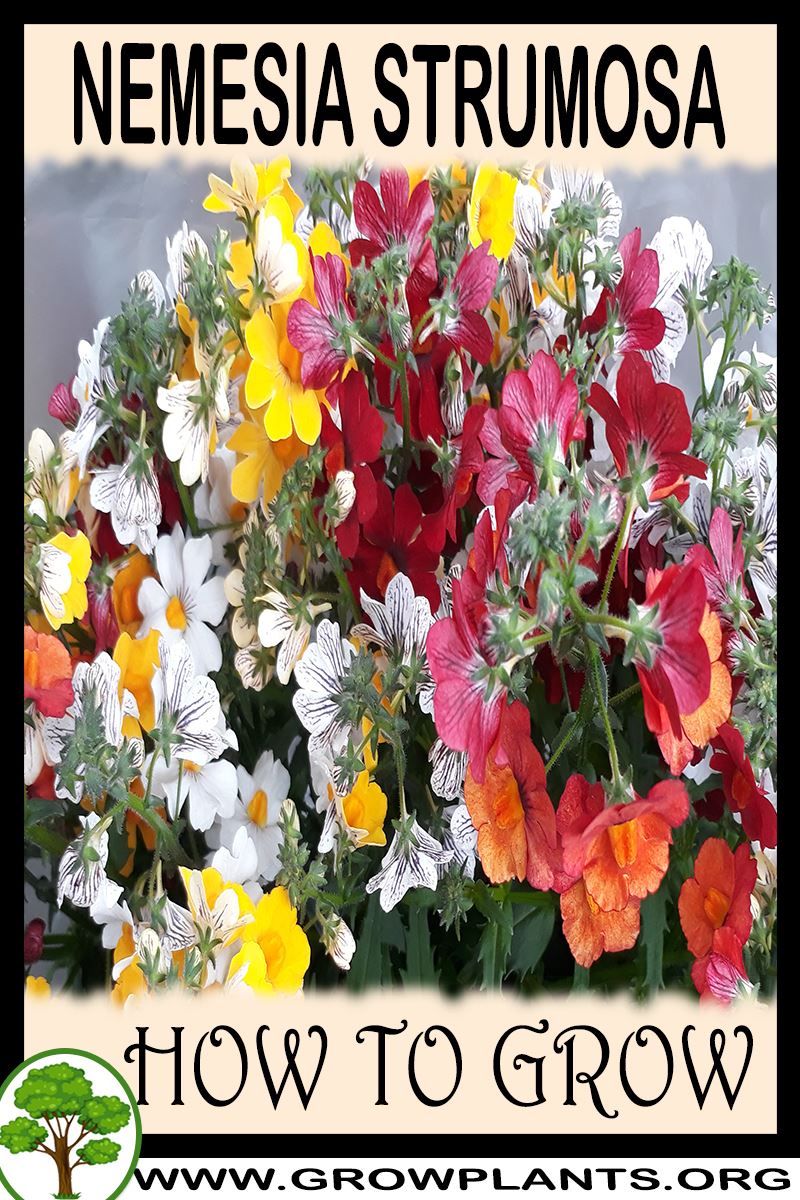
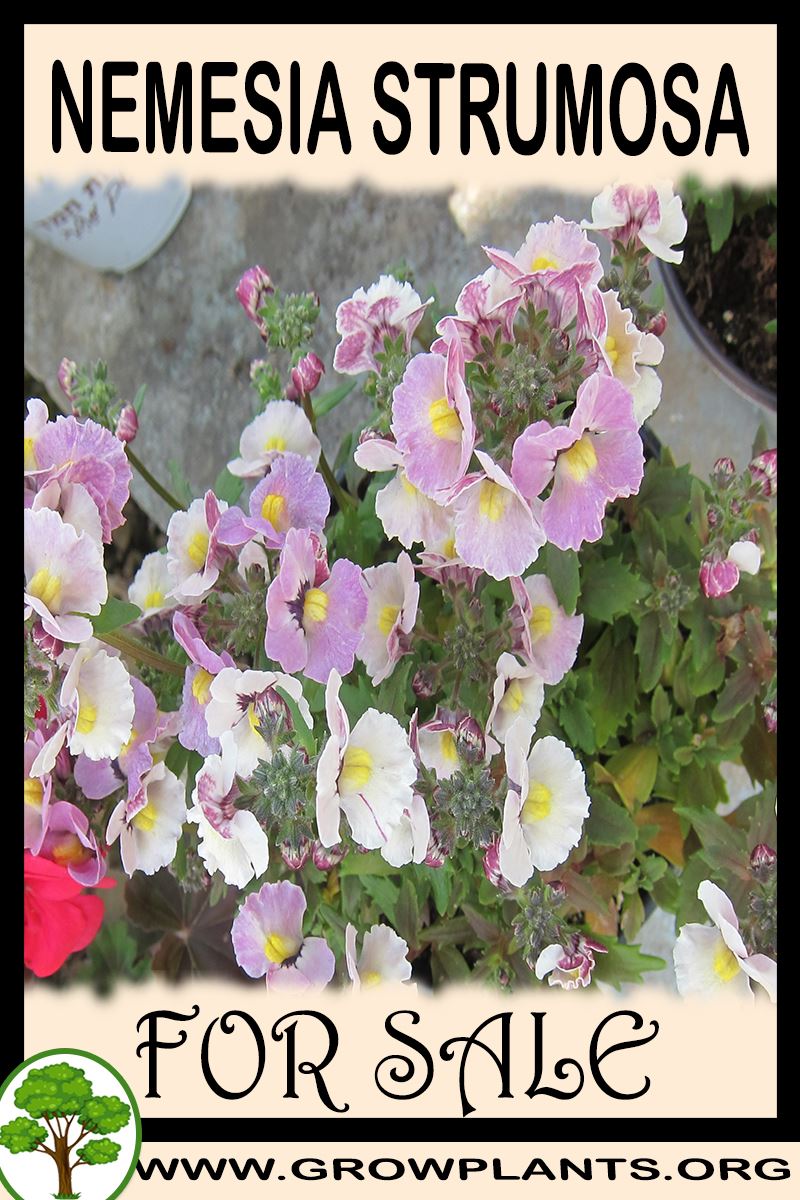
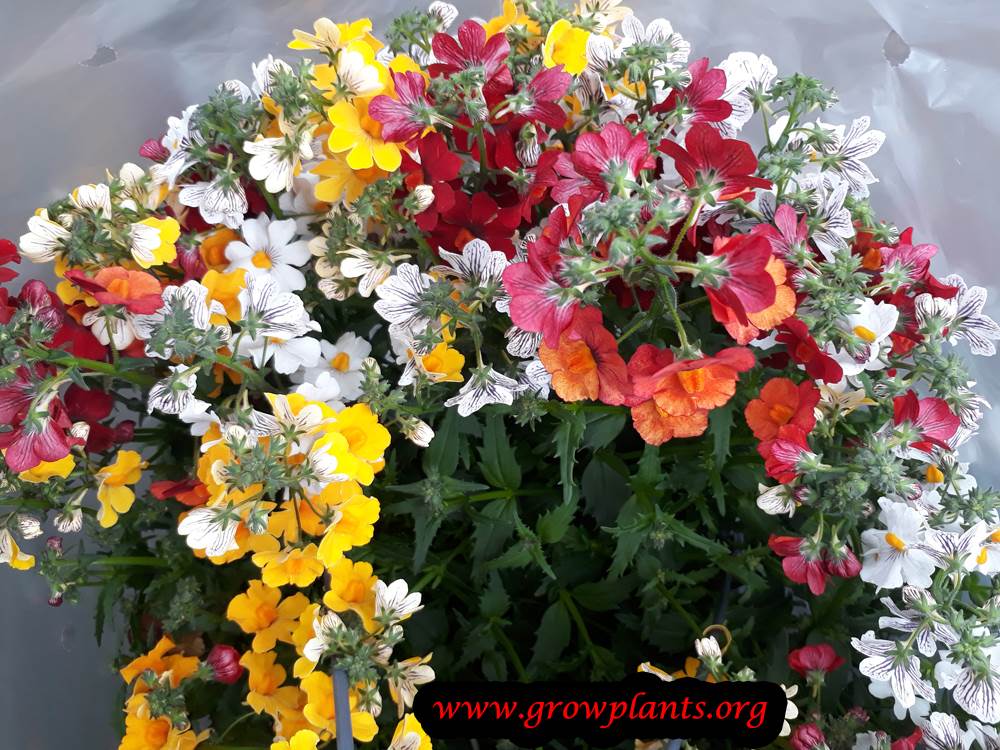
- Flower Characteristics: Fragrant two-lipped flowers in red, purple, orange, pink, yellow or white, often bicoloured.
Primary Uses & Landscape Value
- Functional & Ornamental Roles: Ornamental for beds, borders, edging, containers and hanging baskets; valued for fragrance.
Care Guide: Planting, Soil & Watering
Overview: Nemesia is a cool-season flowering plant that likes fertile, moisture-retentive but well-drained soil and warm-but-not-hot weather. It wants steady moderate water and does not like to dry out completely.
Quick Care Requirements
| Requirement | Ideal Condition |
|---|---|
| Planting Season | Cool season – autumn, winter and spring in mild climates |
| Growth Rate | Fast to moderate |
| Soil Type | Fertile, moisture-retentive yet well-drained |
| Water Need | Moderate; keep evenly moist |
Planting & Establishment
- Best Planting Season: Plant in the cool season – autumn through spring in mild climates – and avoid establishing it in peak summer heat.
- How to Plant:
- Hole Preparation: Dig a hole as wide as, and slightly larger than, the root ball, and about the same depth.
- Soil Amendments: Mix in compost or organic matter for a fertile, moisture-retentive soil that still drains.
- Planting Depth: Set the crown level with the soil surface; do not bury the stems.
- Growth Speed & Expectations: Fast to moderate, quick to come into flower.
Soil, Watering & Drainage Care
- Soil Mix & Drainage Needs: Wants a moisture-retentive but well-drained soil – don’t let it dry out fully, and don’t leave it waterlogged.
- Watering Schedule & Technique:
- Young / Newly Planted: Keep consistently moist while it establishes.
- Established: Water regularly and moderately; avoid letting the soil dry between waterings.
- Seasonal Adjustments: More water in warm, dry spells; less in cool, wet weather.
Climate, Light & Hardiness
Nemesia strumosa grows as a true perennial only in warm, frost-free climates and is grown as a cool-season annual almost everywhere else, doing best in subtropical, mediterranean, desert, temperate, or tropical climates with full sun to half shade. Its cold tolerance depends heavily on whether it is being treated as perennial or annual.
Quick Climate Specifications
| Climate Zones | Subtropics, mediterranean, desert, temperate, tropics |
|---|---|
| USDA Hardiness Zones | 10+ grown as a perennial; 3–9 grown as a cool-season annual |
| Light Conditions | Full Sun to Half Shade |
Sunlight & Light Exposure
Optimal Light Setup
Full sun to half shade suits it well; in hot climates some afternoon shade prolongs flowering.
Temperature Extremes & Hardiness
USDA Hardiness & Regional Limits
In zone 10 and warmer it can persist as a genuine short-lived perennial through mild winters. In zone 3–9, freezing winters kill the plant, so it is grown as an autumn-, winter-, or spring-planted annual timed to flower in cool weather before summer heat sets in - the cold limit determines whether it survives the winter, not whether it can be grown at all.
Frost Sensitivity
Frost-tender top growth is killed by hard freezes, which is why gardeners outside its perennial range treat it as an annual planted for a single cool season rather than attempt winter survival outdoors.
Wind, Humidity & Microclimate
Microclimate Recommendations
Prefers moist soil and a warm-but-not-scorching microclimate; a site sheltered from the harshest summer sun helps extend its cool-season flower display.
Growing in Pots, Balconies & Indoors
Nemesia is a bright, cool-season bedding annual that is not a houseplant, but it is superb in pots, troughs and window boxes for a burst of colour on a sunny patio or balcony.
Quick Details
- Container Size: Small to medium pot, trough or window box
- Indoor Suitability: Not a houseplant – grow it outdoors in containers
- Best Spot: Full sun to light shade, in the open air
- Soil & Drainage: Free-draining potting mix
- Watering in Pots: Keep evenly moist – small pots dry quickly
Indoors & On the Windowsill
- Not a houseplant: The grower rates it unsuitable indoors – it needs open-air light and cool, airy conditions and will stretch and flop in a room.
- Windowsill: At most a very bright, cool, sunny sill for a short spell, but it truly performs outdoors.
On a Balcony or Patio
- A star in containers: Ideal for pots, troughs and window boxes on a sunny or lightly shaded balcony.
- Light & heat: Walls, railings and paving reflect heat and wind dries pots fast, so check moisture often and water more in hot spells.
Choosing the Pot, Soil & Long-Term Care
- Pot & drainage: Any pot with good drainage holes; do not let it stand in water.
- Potting mix: A light, free-draining mix – a good potting mix, or peat/coir blended with perlite or vermiculite.
- Feeding: Feed regularly for continuous flowering, as nutrients wash out of pots.
- Refresh: Being a short-lived annual, replant the container each season with fresh mix.
Fertilizing & Feeding
Nemesia strumosa flowers most freely with steady, balanced feeding through its long bloom season, but it does not need a heavy or nitrogen-loaded diet.
Quick Fertilizing Specs
| Feeding Level | Moderate feeder through active growth and bloom |
|---|---|
| Main Nutrient Priority | Balanced feeding with adequate nitrogen rather than a high-phosphorus bloom product |
| Best Feeding Period | Spring through the main bloom flush, with light follow-up feeding into summer and autumn |
| Organic Options | Compost tea or a light topdressing of well-rotted compost |
| Reduce/Stop Feeding | Stop once the plant dies back or growth halts for the season |
Feeding by Growth Stage
Spring Growth
Fuel vigorous new stem and leaf growth as the plant breaks into active growth.
| Nutrient direction | A balanced fertilizer with adequate nitrogen to build a full, bushy plant ahead of flowering. |
|---|---|
| Timing | Early spring as new growth resumes after planting or the winter rest period. |
| Frequency | Light, regular feedings through the early growth flush. |
| Fertilizer types | A balanced water-soluble or granular flowering-plant fertilizer, applied as a diluted liquid feed or worked lightly into the topsoil. |
| Precautions | Avoid heavy nitrogen doses that push soft leafy growth at the expense of later flowering. |
Bloom
Sustain the plant through its main flowering flush with steady, balanced nutrition.
| Nutrient direction | Continue a balanced feed – adequate nitrogen alongside phosphorus and potassium supports strong bloom without relying on a high-phosphorus product. |
|---|---|
| Timing | Once flower buds form, through the main spring-to-summer bloom period. |
| Frequency | Light, regular feedings maintained through the bloom period. |
| Fertilizer types | A balanced flowering-plant fertilizer; a light organic feed such as compost tea also works well. |
| Precautions | Skip high-phosphorus ‘bloom booster’ products – a balanced feed with adequate nitrogen supports flowering just as well and avoids nutrient imbalance. |
Repeat Bloom
Encourage continued flushes of flowers through summer into autumn.
| Nutrient direction | Light, balanced feeding paired with deadheading keeps the plant reblooming. |
|---|---|
| Timing | Summer into autumn, after the first bloom flush fades and spent flowers are deadheaded. |
| Frequency | Occasional light feedings between deadheading rounds to support fresh flower flushes. |
| Fertilizer types | A diluted balanced liquid feed, applied lightly to avoid pushing weak, floppy growth in hot weather. |
| Precautions | Keep feeding light in hot weather – heavy feeding during heat stress can do more harm than good. |
Dormancy or Winter Rest
Let the plant rest without added nutrients once growth stops for the season.
| Nutrient direction | None – withhold fertilizer while the plant is dormant or not in active growth. |
|---|---|
| Timing | Winter, or whenever the plant dies back or stops producing new growth. |
| Frequency | No feeding at this stage. |
| Fertilizer types | No feeding at this stage; resume only once new spring growth appears. |
| Precautions | Do not fertilize a dormant or resting plant; wait for active new growth before feeding again. |
Nutrient Deficiency Signs & Corrections
Leaves appear pale green and stems are thin and weak, with fewer flowers than expected.
| Possible causes | Nitrogen deficiency from insufficient feeding, Root stress from waterlogged or compacted soil, Aphid infestation weakening the plant |
|---|---|
| Appears first on | Older lower leaves and overall stem vigor |
| What to check | Recent feeding history, Soil drainage and moisture, Undersides of leaves and stems for aphids |
| Possible correction | Resume balanced feeding during active growth, improve drainage, and treat any aphid infestation. |
The plant grows leafy but produces few flowers, or flower stems are weak and floppy.
| Possible causes | Excess nitrogen relative to phosphorus and potassium, Insufficient light for bloom, Overcrowded planting reducing airflow and vigor |
|---|---|
| Appears first on | Whole plant, most noticeable at expected bloom time |
| What to check | How nitrogen-heavy the recent fertilizer has been, Hours of direct sun the bed or pot receives, Plant spacing and airflow |
| Possible correction | Switch to a balanced feed rather than a high-nitrogen one, and confirm the plant is getting adequate sun. |
New leaves emerge yellow between green veins while older leaves stay green.
| Possible causes | Iron deficiency, often linked to alkaline or compacted soil, Overwatering limiting root uptake, Cold soil temperatures slowing nutrient uptake |
|---|---|
| Appears first on | Newest leaves at the growing tips |
| What to check | Soil pH and drainage, Recent watering frequency, Soil temperature relative to season |
| Possible correction | Improve drainage and correct pH if alkaline; apply a chelated iron product per its label if chlorosis persists. |
Pruning, Training & Seasonal Maintenance
Nemesia strumosa is a soft, non-woody subshrub grown as a warm-season bedding annual (colder zones) or a short-lived perennial in zone 10+. It has no framework of persistent wood, so “pruning” here means deadheading and reset-shearing rather than structural cuts. It tolerates frequent light trimming very well, and cutting back a spent flush actually triggers more bloom rather than sacrificing it, since flowers form on new growth. The safest time for a harder cutback is right after a flowering flush fades, or in late winter for plants being carried over as perennials.
Quick Pruning & Maintenance Specs
| Pruning Tolerance | Moderate–High (regenerates readily from soft growth) |
| Primary Pruning Window | Immediately after each bloom flush finishes |
| Secondary Maintenance Window | Late winter reset cutback (zone 10+ overwintered plants only) |
| Typical Frequency | Light deadheading every 1–2 weeks in bloom; one reset-shear per flush cycle |
| Main Objective | Prolong flowering and prevent a thin, leggy center |
| Young Plant Priority | Pinch the growing tip once 2–3 leaf pairs are established to force branching |
| Mature Plant Priority | Shear back by about one-third after each flush to reset bloom |
| Best Tool Type | Fingers or precision snips (stems are thin and soft) |
| Avoid Heavy Pruning During | Peak summer heat/drought stress or the first 1–2 weeks after transplanting |
Pruning by Plant Age & Size
Newly Established
No cutting beyond an optional single pinch of the growing tip once the plant has rooted in; do not deadhead or shear until it is settled, since removing growth on an unestablished root system slows establishment.
Young / Formative
Pinching only – there is no structural training system for this low, mounding subshrub. Regular tip-pinching in the first weeks builds a fuller base before the first bloom flush.
Mature / Established
Routine deadheading plus a periodic one-third reset-shear after each flush. Where kept as a perennial in mild zones, a harder late-winter cutback (up to half the plant) removes tired winter growth and resets it for the spring flush.
Seasonal Pruning Schedule
Dormant/Winter (zone 10+ perennial plants only)
Objective: reset the plant before spring growth. Remove: tired, thin winter stems, cutting back by roughly a third to a half. Do not remove: any visibly healthy new basal shoots. Expected response: a flush of compact new growth ahead of spring bloom. Where grown as an annual in colder zones this stage does not apply – the plant is simply replaced.
Ongoing Sanitary
Year-round removal of spent flower stems and yellowing lower leaves keeps the plant tidy and encourages continued flowering.
Special Growth to Remove
- Spent flower stems – deadhead back to the nearest leaf node or side shoot to keep the plant reblooming.
- Yellowing or thinning lower leaves as the center of an older plant opens up.
Container & Small-Space Pruning
Nemesia is very commonly grown in patio pots and hanging containers. Container plants dry out and run through a bloom flush faster than ground-grown plants, so they respond especially well to a mid-season hard reset-shear (cutting back by about a third) once growth starts to sprawl over the pot rim – this keeps the mound compact and restarts flowering within a couple of weeks.
Tools
Precision snips (or simply pinching by hand) are the only tool this plant ever needs – stems are thin and soft, so anything larger is unnecessary.
Tool Hygiene & Disease Risk
Routine care is sufficient – clean, sharp snips. This plant’s main problem is aphids rather than a cut-transmissible disease, so no special tool disinfection protocol is needed.
Cut Placement & Technique
Deadhead just above a healthy leaf node or side shoot. When reset-shearing, cut into leafy green stem rather than down into bare lower stem, which resprouts less reliably.
Heavy Pruning & Rejuvenation
Tolerated in moderation: a whole-plant shear-back of a third to a half after a flush (or in late winter for overwintered plants) forces a fresh flowering flush within a few weeks. Avoid cutting into the oldest, most basal woody-ish growth of a declining second- or third-year plant – regrowth from old base tissue becomes unreliable, and replacing the plant is usually more effective than forcing a rejuvenation.
Post-Pruning Care
Water normally after light deadheading. After a hard reset-shear, keep the soil evenly moist to support the new flush; hold off feeding immediately after a hard cut, since fertilizing a freshly sheared plant tends to push soft, floppy growth rather than more flowers.
Common Pruning Mistakes
- Letting spent flowers set seed, which shuts down further blooming.
- Shearing during a summer heat spell, which stresses the plant instead of triggering reflush.
- Deadheading individual flowers only and never doing a reset-shear, leading to a thin, leggy center by mid-season.
When NOT to Prune
Avoid hard shearing during a summer heat wave or drought stress, when the plant may not have the reserves to push a fresh flush. Avoid any pruning in the first 1–2 weeks after transplanting until roots are established.
Recommended Tools (by task)
- precision_snips – for deadheading spent flowers and reset-shearing thin, soft stems; the only cut size this plant ever presents.
Propagation Guide
Nemesia strumosa is most commonly and easily raised from seed, which is the standard way this bedding plant is grown fresh each season; vegetative propagation by cuttings is possible but, per this plant’s own data, not necessary. Seed of the species is generally easy and reliable, while cuttings are mainly useful for holding on to a particular flower color or habit.
Quick Propagation Specs
| Best Propagation Method | Seed |
| Alternative Methods | Softwood tip cuttings |
| Propagation Difficulty | Easy |
| Seed True-to-Type | Mostly true-to-type for the species; particular named color forms may not come true from seed |
| Vegetative True-to-Type | Yes |
| Best Propagation Season | Autumn to spring, in line with this plant’s stated planting season, avoiding hot summer weather |
Growing from Seed
Sowing Season
Sow in the cooler part of the year – autumn, winter, or spring – matching this plant’s recommended planting season; avoid sowing during hot summer conditions.
Germination Conditions
Keep the sowing medium consistently moist in a sunny to lightly shaded spot; germination is typically fastest under mild, not hot, temperatures.
Stem Cuttings
Cutting Type
Softwood tip cuttings, taken from healthy non-flowering growth.
Best Timing
During active growth in the cooler growing season, avoiding summer heat.
Rooting Hormone
Not required for this easy-rooting subshrub, though it may help speed things along.
Rooting Time
Typically roots within a few weeks under humid, sheltered conditions with light misting.
Bloom & Flower Guide
Quick Details
- Bloom Season: Spring and summer, continuing into autumn where the weather stays cool and mild
- Time to First Bloom: Fast from seed — plants sown in late winter usually flower within about ten to twelve weeks
- Flower Appearance: Small, lightly fragrant two-lipped flowers with two petals below and three above, fused at the base into a little mouth-like throat; colours include red, purple, orange, pink, yellow and white, often more than one colour on a bloom
- Edibility: Grown as an ornamental — the flowers are not eaten
Detailed Blooming Overview
Nemesia strumosa is a short-lived, free-flowering plant that covers itself in dainty, scented blooms during the cooler parts of the year. It flowers most generously when nights are cool; through the heat of high summer it may pause, then flush again as temperatures ease. Grown as an annual in most gardens, it earns its place with sheer quantity of bloom.
Flower Characteristics
- Two-lipped, snapdragon-like flowers with a fused throat, carried in loose clusters at the stem tips.
- A wide colour range — red, purple, orange, pink, yellow and white — frequently bicoloured.
- Many forms are pleasantly fragrant, and the flowers draw bees and other small pollinators.
Bloom Care & Thinning
- Encouraging more bloom: Shear the plants back lightly after the first main flush; fresh growth and a second wave of flowers usually follow.
- Deadheading: Removing spent flowers keeps the display tidy and prolongs flowering.
- Keep them cool: Steady moisture and cool roots extend the season; flowering falls away quickly in hot, dry spells.
Bloom Health & Protection
- Aphids on buds: Soft new buds can attract aphids; a jet of water or an insecticidal soap keeps them in check.
Pests, Diseases & Troubleshooting
Overview: Nemesia are short-lived South African bedding plants, generally easy but prone to a few sap-feeders and to rot in humid, crowded, or waterlogged conditions. N. strumosa is the classic annual pouched Nemesia, a cool-season bedding species. Good spacing, airflow and drainage prevent most problems.
Quick Troubleshooting Overview
| Issue / Pest | Main Symptom | Primary Solution |
|---|---|---|
| Aphids | Curled shoots, sticky honeydew | Water jet, soap, encourage predators |
| Thrips | Silvery flecking, distorted buds | Sticky traps; remove affected buds |
| Downy/powdery mildew | Yellow blotches or white coating | Space for airflow; remove foliage |
| Root & stem (foot) rot | Sudden wilt, blackened base | Sharp drainage; avoid overwatering |
| Leggy/spent plants | Flowering fades, plant flops | Shear back to regenerate; feed |
Common Pests & Management
- Aphids (Myzus persicae / Aphis spp.):
- Symptoms: Clusters on soft shoot tips and flower stalks, curling growth and dropping sticky honeydew.
- Prevention & Control: Knock off with a water jet, encourage ladybirds and hoverflies, and spot-treat with insecticidal soap or neem if colonies build.
- Thrips (Frankliniella occidentalis):
- Symptoms: Silvery streaks and speckling on leaves and distorted, discolored buds; can spread viruses.
- Prevention & Control: Use blue sticky cards to monitor, remove badly affected buds, keep plants uncrowded, and treat with soap or spinosad only if needed.
- Whiteflies (Trialeurodes vaporariorum):
- Symptoms: Tiny white flies rising from disturbed foliage, with honeydew and sooty mold.
- Prevention & Control: Hang yellow sticky traps, rinse leaf undersides, and apply insecticidal soap or neem in the evening.
- Slugs & snails (Gastropoda):
- Symptoms: Grazed seedlings and holed leaves, worst in damp shady plantings.
- Prevention & Control: Handpick at night, remove damp debris, and use iron-phosphate bait around young plants.
Diseases & Fungal Issues
- Downy mildew (Peronospora / Plasmopara):
- Symptoms: Yellow blotches on upper leaves with gray-purple fuzzy growth beneath, in cool damp weather.
- Treatment & Management: Space and ventilate plants, avoid overhead watering late in the day, remove affected foliage, and use a suitable fungicide only in persistent damp.
- Powdery mildew (Erysiphaceae):
- Symptoms: White powdery patches on leaves and stems in crowded, humid, low-airflow conditions.
- Treatment & Management: Improve airflow and light, avoid drought stress, and treat with sulfur, potassium bicarbonate or neem if it spreads.
- Root & foot rot (Pythium / Phytophthora / Rhizoctonia):
- Symptoms: Sudden wilting with a blackened, rotten stem base and roots, in wet or poorly drained soil.
- Treatment & Management: Grow in free-draining soil or mix, water at the base and let the surface dry between waterings, and discard collapsed plants.
Growing Difficulties & Abiotic Problems
- Legginess & fading bloom:
- Cause & Symptoms: Heat and age make plants stretch and stop flowering by mid-season.
- Correction Strategy: Shear plants back by about a third and feed to trigger a fresh flush; they flower best in cooler conditions.
- Heat stress:
- Cause & Symptoms: High summer heat causes wilting and flower drop on these cool-season plants.
- Correction Strategy: Give afternoon shade in hot climates, keep evenly moist, and treat as a cool-season/spring-autumn plant.
- Nutrient chlorosis:
- Cause & Symptoms: Container plants yellow when starved or waterlogged.
- Correction Strategy: Feed regularly with a balanced liquid fertilizer and correct drainage; as a true annual, refresh soil and feeding for containers each season.
What Helps – Products & Tools
Light organic care suits these bedding plants: insecticidal soap or neem for aphids, thrips and whitefly, sticky traps for monitoring, sulfur or potassium bicarbonate for mildew, and above all good spacing and drainage to prevent rot.