Plant Profile & Key Characteristics
Overview: A vigorous rhizomatous ginger with annual leafy stems reaching 1-3 m, dying back in cold weather. Grown as a fragrant ornamental and medicinal plant, with edible leaves and stems.
Quick Specifications
| Specification | Attribute |
|---|---|
| Plant Type / Life Cycle | Perennial (rhizome with annual stems) |
| Foliage Type | Deciduous (stems die back) |
| Mature Size | 1-3 m (3-10 ft) tall |
| Growth Rate | Moderate to fast |
| Root System | Rhizomatous |
| Toxicity | Non-toxic / edible |
| Hardiness | USDA zone 8 and warmer |
Growth Form & Structure
- Height & Spread: Clumps of leafy stems 1-3 m tall spreading by rhizomes; can also be grown in large containers or as a houseplant.
- Growth Habit & Form: Clump-forming herbaceous ginger with tall, arching leafy pseudostems.
- Lifespan & Maturity: Long-lived perennial; stems are annual and regrow each season from the rhizome.
Anatomy & Physical Features
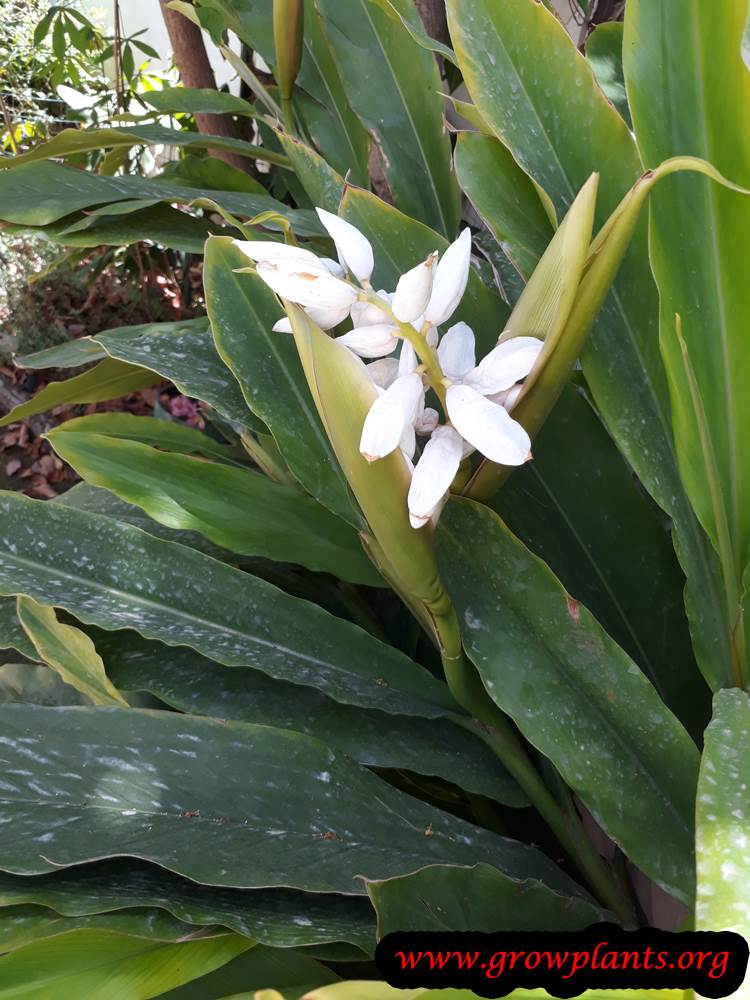
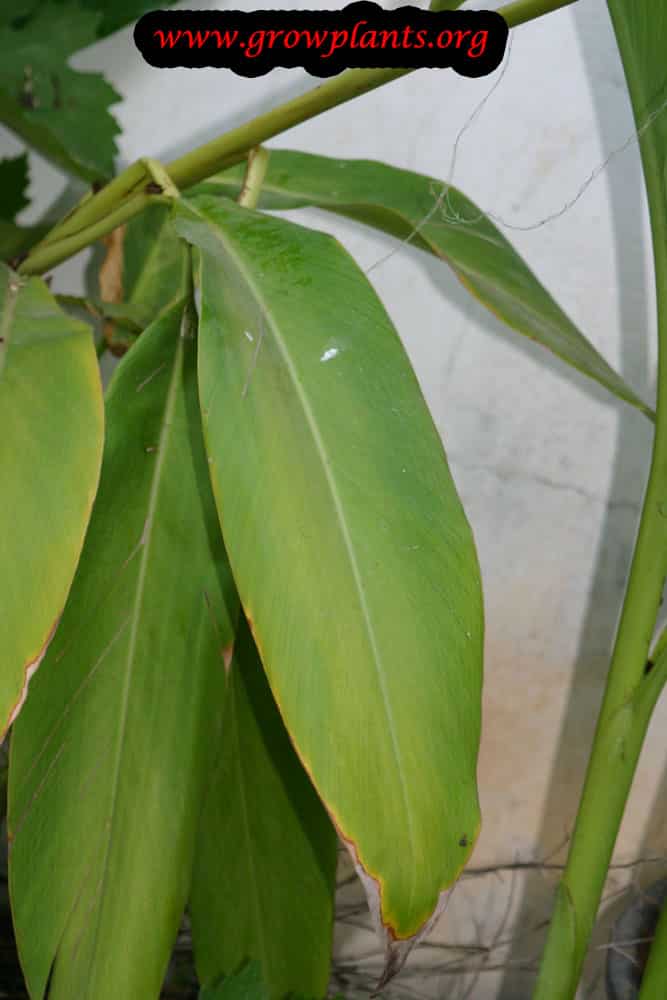
- Leaves & Foliage: Edible, linear leaves along the arching stems; both leaves and stems are used.
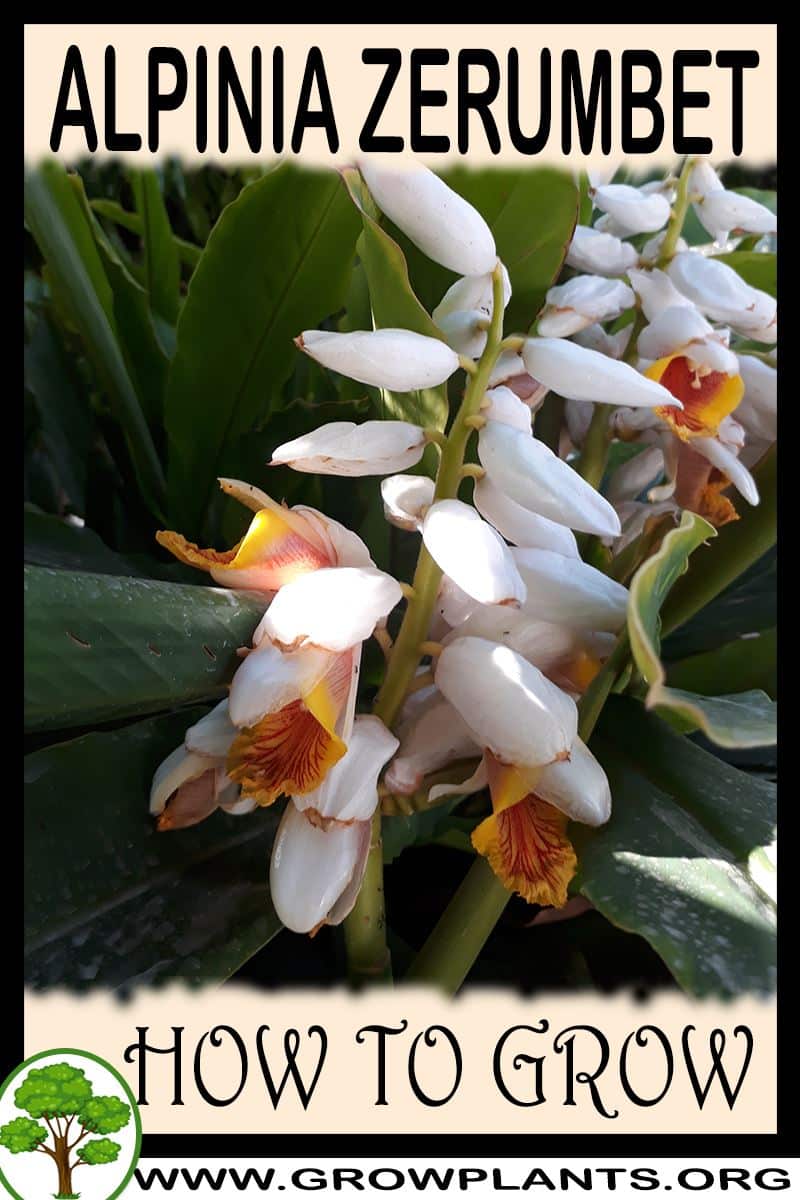
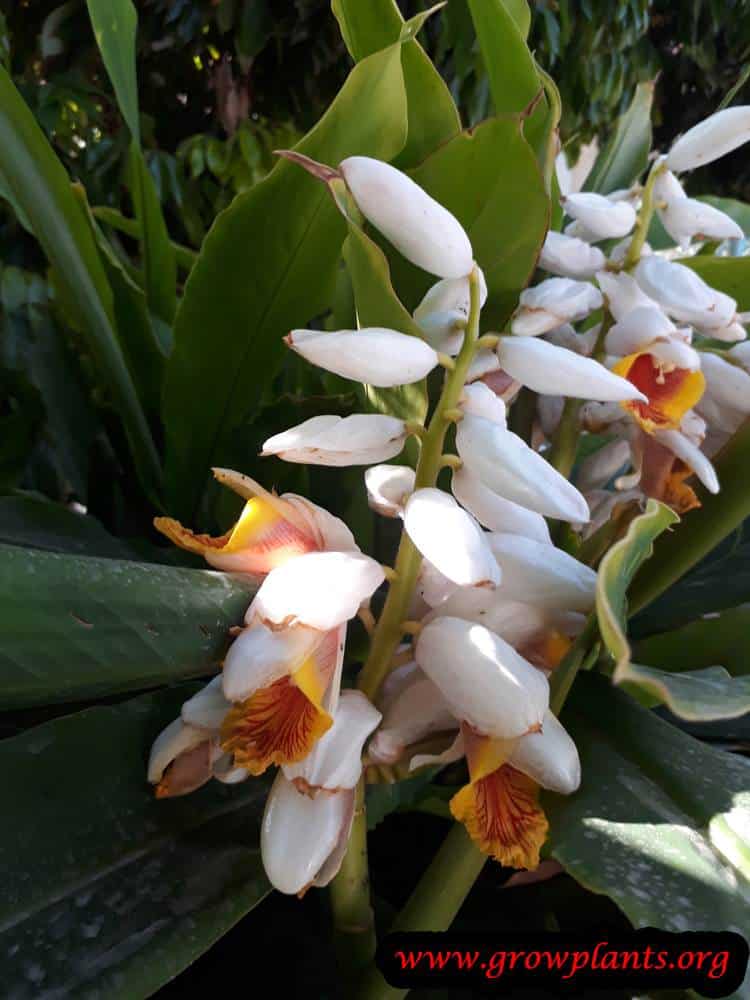
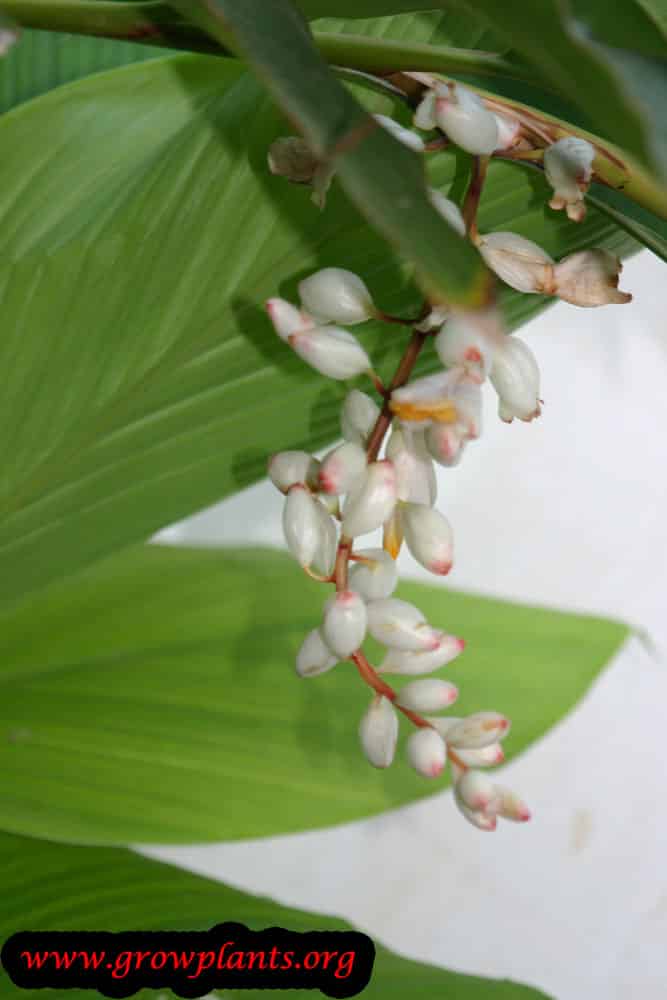
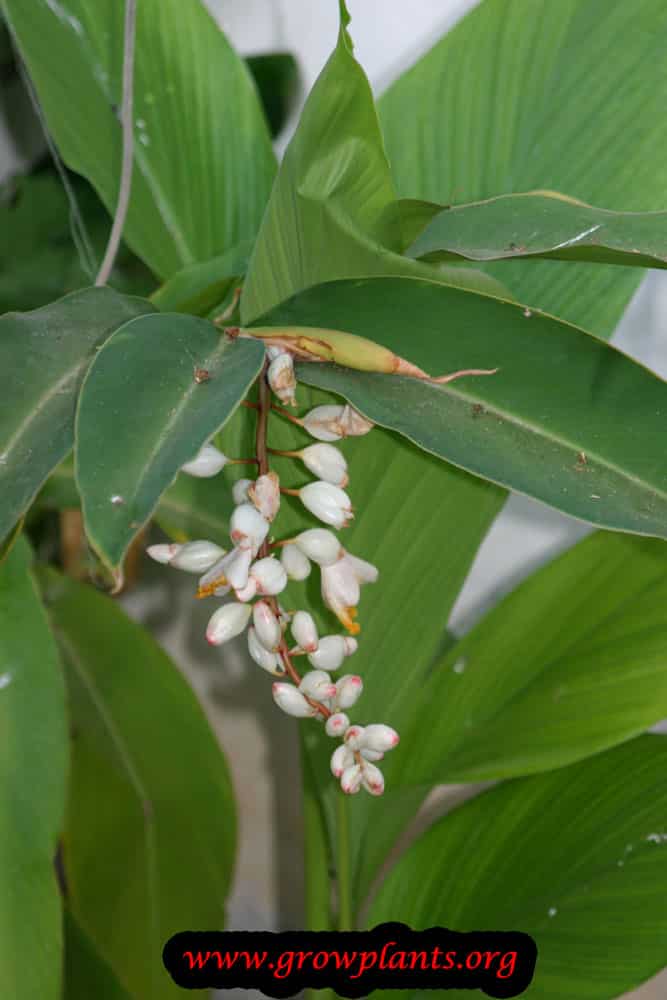
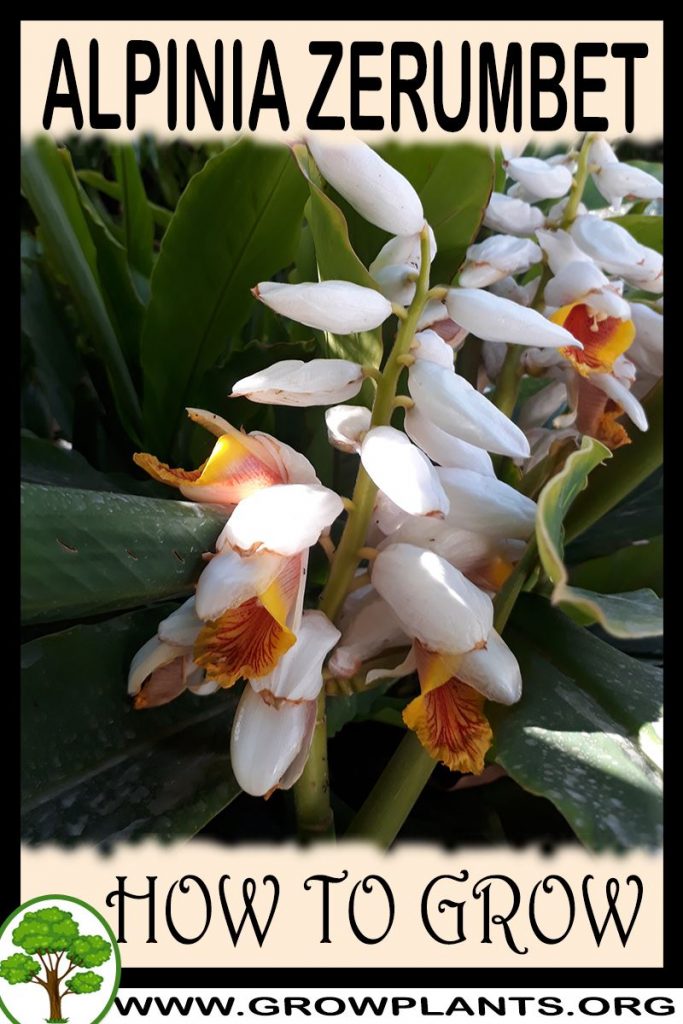
- Flower Characteristics: White flowers with pink edges and a yellow throat at the stem tips (summer); pollinated by bees, birds and butterflies.
Primary Uses & Landscape Value
- Edible Uses: Leaves used to wrap food and to make herbal beverages; leaves and stems are edible.
- Functional & Ornamental Roles: Fragrant ornamental, medicinal and culinary plant for tropical and subtropical gardens or containers.
Care Guide: Planting, Soil & Watering
Overview: Alpinia zerumbet is a moderate-to-fast-growing, rhizomatous ginger that thrives in warm, frost-free, humid conditions and rich, constantly moist soil. It is a thirsty plant that appreciates plenty of water and shelter from cold.
Quick Care Requirements
| Requirement | Ideal Condition |
|---|---|
| Planting Season | Through the warm season, from spring to autumn |
| Growth Rate | Moderate to Fast |
| Soil Type | Rich, fertile, organic and consistently moist, yet free-draining |
| Water Need | Moderate to High — keep the soil consistently moist, never letting it dry out |
Planting & Establishment
- Best Planting Season: Plant during the warm season, from spring through autumn, once the soil has warmed and there is no further risk of frost.
- How to Plant:
- Hole Preparation: Dig a generous hole, roughly twice the width of the rhizome or root ball, and work plenty of compost into the surrounding soil.
- Soil Amendments: Enrich the planting area with compost and other organic matter to build the rich, moisture-retentive soil this ginger needs, while keeping the ground free-draining so the rhizome does not rot.
- Planting Depth: Set rhizomes shallowly, just below the soil surface, and plant divisions at the depth they were previously growing.
- Growth Speed & Expectations: A moderate-to-fast grower in warm conditions that spreads vigorously by rhizome to form a clump, so give it plenty of room.
Soil, Watering & Drainage Care
- Soil Mix & Drainage Needs: Grow in rich, organic soil that holds moisture but still drains, as heavy, permanently waterlogged ground can rot the rhizome. In containers use a fertile, moisture-retentive potting mix with good drainage holes.
- Watering Schedule & Technique:
- Young / Newly Planted: Keep the soil evenly moist while the plant establishes, watering whenever the surface starts to dry.
- Established: Water generously and regularly so the soil stays consistently moist, especially in warm weather and while in active growth.
- Seasonal Adjustments: Reduce watering in cooler weather and over winter when growth slows, but never let the rootball dry out completely.
Climate, Light & Hardiness
Alpinia zerumbet (shell ginger) is notably more cold-tolerant than most ornamental gingers, growing outdoors in tropical, subtropical, and Mediterranean climates and surviving light freezes as a root-hardy perennial even though its stems behave as annual growth. It prefers half to full shade and can also be grown indoors as a houseplant.
Quick Climate Specifications
| Climate Zones | Tropical, Subtropical, Mediterranean |
|---|---|
| USDA Hardiness Zones | 8+ |
| Frost Tolerance | Low to Moderate (rhizome; top growth is more tender) |
| Light Conditions | Half Shade to Full Shade |
Sunlight & Light Exposure
Optimal Light Setup
Prefers half to full shade rather than intense direct sun, consistent with a tropical understory plant.
Temperature Extremes & Hardiness
USDA Hardiness & Regional Limits
Root-hardy across USDA zone 8 and warmer - a considerably broader cold tolerance than most gingers, thanks to its rhizome surviving conditions that kill the above-ground stems.
Cold Damage & Winter Protection
The stems are treated as annual growth: they die back with frost, but rich, moist, frost-free-leaning soil around the rhizome (with mulch in the coldest part of the range) lets the plant resprout from the root the following season.
Frost Sensitivity
Top growth is frost-sensitive and dies back readily, but the established rhizome tolerates considerably more cold than the foliage, allowing the plant to persist as a perennial well outside truly frost-free climates.
Wind, Humidity & Microclimate
Humidity Preferences
Prefers humid conditions typical of tropical and subtropical climates.
Rainfall & Seasonal Moisture
Needs average to generous, consistent moisture rather than a pronounced dry season.
Growing in Pots, Balconies & Indoors
Shell ginger (Alpinia zerumbet) is a tropical ginger the grower rates as a genuine houseplant, and it grows well in containers. Its tolerance of shade makes it one of the easier gingers for indoor light, though it can reach up to 3 m, so give it a large pot and space.
Quick Details
- Container Size: A large, deep pot – it can reach up to 3 m, so give the roots room
- Indoor Suitability: A good houseplant – shade-tolerant and forgiving of indoor light
- Best Spot: Half to full shade; bright, indirect light indoors
- Soil & Drainage: Rich, aerated potting mix that stays moist yet drains
- Watering in Pots: Average to generous – it likes steady moisture, never sodden
Indoors & On the Windowsill
- A real houseplant: The grower confirms it can be grown indoors; as a shade-loving ginger it accepts ordinary room light.
- Best light indoors: Bright, indirect light gives the fullest foliage; it tolerates lower light but grows more slowly.
- Care: Give it warmth and humidity, keep the mix moist in growth, and ease off in the cooler resting season.
On a Balcony or Patio
- Light & exposure: A sheltered, part-shaded balcony suits it; shield the broad leaves from strong wind and harsh midday sun.
- Practicalities: Big leaves lose water fast – check pots often in warm, reflected-heat spots and keep the mix evenly moist.
Choosing the Pot, Soil & Long-Term Care
- Pot & drainage: A large, deep pot – it can reach up to 3 m, so give the roots room – use a container with strong drainage holes; skip a standing-water saucer to avoid root rot.
- Pot material: Terracotta breathes and dries fast (good where you tend to overwater); glazed or plastic pots hold moisture longer.
- Potting mix: a light, aerated potting mix – peat or coir blended with perlite or vermiculite, plus some organic matter/compost.
- Feeding: Potted plants exhaust their feed faster because water washes nutrients out, so feed a little more often than plants in open ground during active growth.
- Repotting: Refresh the top of the mix each growing season and pot up or divide roughly every couple of years, trimming crowded roots.
Fertilizing & Feeding
A light feeder: balanced feeding gets a new clump established, and once growing, only occasional light feeding is needed to keep the aromatic foliage and stems healthy without diluting their flavor.
Quick Fertilizing Specs
| Feeding Level | Light feeder |
|---|---|
| Main Nutrient Priority | Balanced, modest feeding that keeps growth steady without diluting leaf fragrance |
| Best Feeding Period | Spring through summer while in active growth |
| Organic Options | Compost or organic matter worked into rich, moist soil |
| Reduce/Stop Feeding | Ease off feeding during any cooler or lower-light rest period |
| Micronutrients | Usually met by organic matter and a complete fertilizer; correct only a diagnosed deficiency |
| Soil pH | Prefers rich, moist soil; tolerates a range of pH |
Feeding by Growth Stage
Establishment after planting or division
Help a newly planted or divided clump establish a healthy root system.
| Nutrient direction | A balanced fertilizer supports steady root and shoot establishment. |
|---|---|
| Timing | At planting and through early growth. |
| Frequency | Light, regular feeding as the clump becomes established. |
| Fertilizer types | A balanced complete fertilizer, Compost or organic matter worked into rich soil |
| Precautions | Keep soil consistently moist and avoid overfeeding tender new shoots. |
Ongoing growth for foliage and stems
Maintain healthy, aromatic foliage and stems for ongoing harvest and ornamental display.
| Nutrient direction | Light, balanced feeding keeps growth steady; this aromatic plant rarely needs heavy feeding. |
|---|---|
| Timing | Through the warm active growing season. |
| Frequency | An occasional light feeding is usually enough for an established clump. |
| Fertilizer types | A balanced complete fertilizer, used sparingly, Compost or organic mulch to maintain soil richness |
| Precautions | Avoid heavy nitrogen feeding, which can push soft growth and may dilute the leaves’ aroma and flavor. |
Nutrient Deficiency Signs & Corrections
Older leaves fade to pale green or yellow and overall growth slows.
| Possible causes | low available soil nitrogen, nitrogen leaching from frequent watering in rich, moist soil, thin, low-organic-matter soil |
|---|---|
| Appears first on | older, lower leaves |
| What to check | recent feeding history, soil organic matter, watering frequency and drainage |
| Possible correction | Apply a light, nitrogen-containing balanced fertilizer during active growth and build soil organic matter. |
Interveinal yellowing on older leaves while the veins themselves stay green.
| Possible causes | low soil magnesium, leaching in light, sandy, or consistently moist soils, an imbalance from heavier potassium feeding |
|---|---|
| Appears first on | older, lower leaves |
| What to check | soil magnesium status, soil texture and drainage, recent fertilizer balance |
| Possible correction | Apply a labeled magnesium source such as Epsom salt and keep overall feeding light and balanced. |
Leaf margins brown or scorch despite regular watering.
| Possible causes | fertilizer salt buildup in the root zone, under-watering that concentrates salts, feeding more heavily than this light-feeding plant needs |
|---|---|
| Appears first on | leaf margins and tips |
| What to check | recent fertilizer amounts and frequency, watering consistency, soil drainage |
| Possible correction | Ease off feeding, water thoroughly to help flush accumulated salts, then return to lighter, less frequent feeding. |
Pruning, Training & Seasonal Maintenance
Shell ginger is a clump-forming, cane-based perennial that tolerates only light, sanitation-focused pruning. Each cane must reach its second year before it flowers at the tip, so routine hard cutback trades away next season’s bloom rather than improving the plant. The safest and most effective work is removing spent or disease-spotted canes and leaves in autumn and winter as growth slows; light, selective pruning has little effect on overall size but directly controls flowering and leaf-spot spread.
Quick Pruning & Maintenance Specs
| Pruning Tolerance | Low–Moderate |
| Primary Pruning Window | Autumn–Winter, as growth slows |
| Secondary Maintenance Window | Spring clean-up of frost-damaged canes in marginal (zone 8) sites |
| Typical Frequency | 1–2 rounds per year, plus spot sanitation |
| Main Objective | Sanitation and cane renewal, not size reduction |
| Young Plant Priority | Leave new canes undisturbed to build cane number |
| Mature Plant Priority | Remove canes that have already flowered and declined (usually 3+ years old); keep 1–2-year-old unflowered canes intact |
| Best Tool Type | Bypass secateurs for canes, precision snips for leaves |
| Avoid Heavy Pruning During | Active summer bloom and right after transplanting a rhizome division |
Pruning by Plant Age & Size
Newly Established
Remove only damaged planting-stock leaves. Let the clump build cane number for the first one to two seasons before any renewal cuts.
Young / Formative
No structural training system applies to this clump-forming cane habit. If the clump is overcrowded, thin out only weak, thin canes at the base.
Mature / Established
Annually remove old, ragged, or already-flowered canes at ground level to make room for new flowering-age canes, and continue removing Phyllosticta-spotted leaves as they appear.
Seasonal Pruning Schedule
Dormant/Winter
Objective: sanitation and cane renewal. Remove frost-damaged, dead, or already-flowered (3+ year) canes at the base. Do not remove young green canes – they carry this year’s or next year’s flowers. Response: a cleaner clump without loss of upcoming bloom if cuts are selective.
Ongoing Sanitary
In warm climates where growth continues year-round, remove Phyllosticta zingiberi-spotted leaves as seen to slow spread, and remove bloom stems only once the inflorescence has fully finished. Leaves harvested for wraps or tea are best taken from non-blooming stems, so flowering canes are best left undisturbed until spent.
Structural Pruning & Training
The core structural task is cane renewal: removing older, spent canes at the base each year so the clump keeps producing young canes that will flower in one to two years. No leader, vase, or espalier system applies to this rhizomatous cane habit.
Special Growth to Remove
- Spent flower canes, once the inflorescence is fully finished – cut at the base
- Leaves showing Phyllosticta zingiberi leaf-spot
- Growth damaged by rhizome flies
Do not treat young, non-flowering canes as unwanted growth to thin out – they are next season’s flowers.
Container & Small-Space Pruning
Shell ginger is commonly grown in pots and indoors. In containers, remove old canes at the base to stop the clump overcrowding the pot; there is no tip-pinching response since canes don’t branch. Size is controlled by cane removal and root confinement rather than heading cuts.
Tools
- Bypass secateurs – cutting mature canes at the base
- Precision snips – leaf and small-stem sanitation
No saw is needed; canes are fibrous, not woody.
Tool Hygiene & Disease Risk
Increased risk: Phyllosticta zingiberi is a foliar fungal pathogen. Wipe or disinfect blades after cutting visibly spotted leaves before moving on to clean canes or another plant.
Cut Placement & Technique
Cut spent canes flush at the base near the rhizome, not partway up – a mid-cane stub will not reflower and simply dies back. Remove infected leaves whole at the leaf sheath rather than leaving a damaged blade in place.
Heavy Pruning & Rejuvenation
Shell ginger does not respond well to routine whole-clump hard cutback: because flowering is tied to canes that are two or more years old, cutting everything to the ground sacrifices one to two years of bloom. If frost has killed all top growth in a marginal (zone 8) site, cutting the dead canes to the ground is appropriate recovery – the plant regrows from the rhizome – but this is damage-repair, not a routine rejuvenation technique.
Post-Pruning Care
Keep soil evenly moist while new canes emerge. Avoid heavy feeding immediately after cane removal – regrowth is driven by rhizome reserves. Watch new shoots for rhizome-fly damage.
Common Pruning Mistakes
- Cutting all canes to the ground every year ‘for tidiness,’ which removes next year’s flowering canes
- Heading canes mid-height – canes don’t branch from a heading cut, so the stub simply dies back
- Leaving early leaf-spot unaddressed until it has spread through the clump
When NOT to Prune
Avoid pruning during active summer bloom, when cuts remove current flowers, and immediately after transplanting a rhizome division, when the plant needs to establish undisturbed.
Recommended Tools (by task)
- bypass_secateurs – clean base cuts on mature canes for renewal pruning
- precision_snips – leaf and small-stem sanitation cuts
- blade_disinfectant – limits spread of Phyllosticta leaf spot between cuts and plants
Propagation Guide
Alpinia zerumbet (Shell Ginger) is grown almost exclusively from rhizome division, which the site notes is easier than seed even though not strictly required; division also guarantees any ornamental leaf form is preserved. Propagation is easy.
Quick Propagation Specs
| Best Propagation Method | Rhizome division |
| Alternative Methods | Seed |
| Propagation Difficulty | Easy |
| Vegetative True-to-Type | Yes |
| Best Propagation Season | Spring, extending through summer and autumn |
Growing from Seed
Dormancy & Pre-Sowing Treatment
Seed has a hard outer coat; soaking it, or lightly nicking the coat, before sowing can help produce more even germination.
Germination Conditions
Sow in warm, humid, constantly moist conditions. Germination can be slow and uneven, sometimes taking a couple of months.
Division, Offsets, Pups & Suckers
Divide established clumps in spring, taking rhizome sections with at least one healthy growth eye and, ideally, attached roots. Discard any sections showing Phyllosticta zingiberi leaf-spot symptoms or rhizome-fly damage. Any ornamentally variegated selections of this species must be propagated by division rather than seed to keep their leaf pattern true.
Bloom & Flower Guide
Quick Details
- Bloom Season: Summer
- Time to First Bloom: Established clumps flower in the warm season; young plants may take a year or two
- Flower Appearance: Waxy, shell-like white flowers tipped with pink, opening to a yellow-and-red patterned throat, in drooping clusters at the stem tips
- Edibility: Ornamental and medicinal ginger relative – the flowers are not eaten
Detailed Blooming Overview
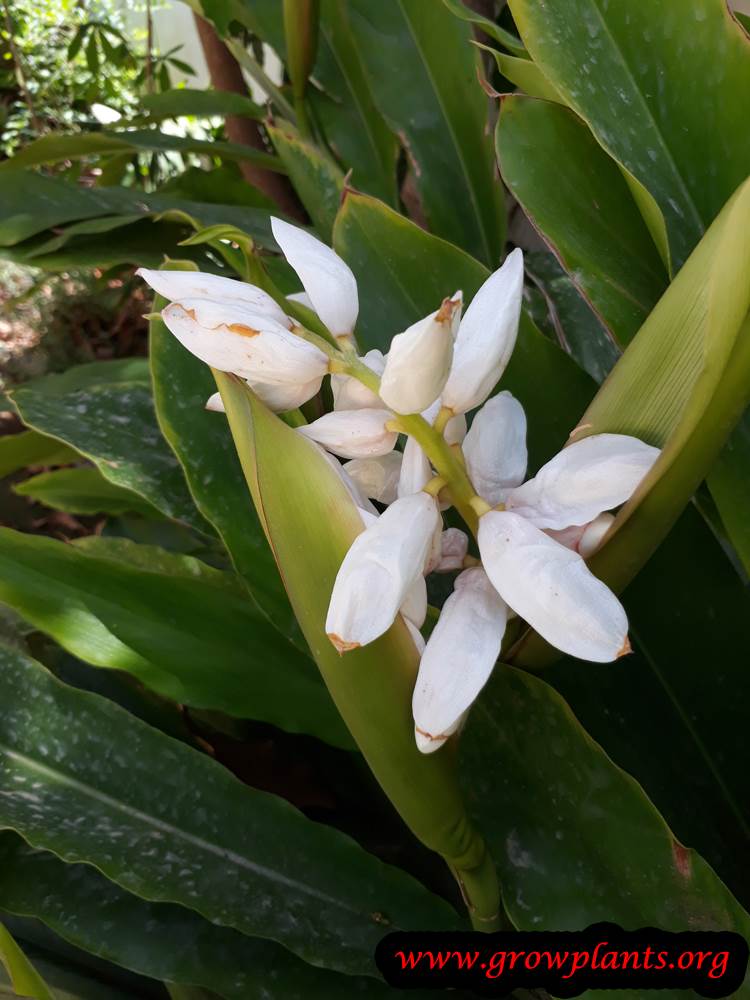
Shell ginger takes its name from the pearly, shell-like buds that line its arching stems. In summer these open into pendant clusters of waxy white-and-pink flowers with a boldly marked throat, a lush and tropical display on established clumps.
Flower Characteristics
- Waxy white with a pink edge and a yellow inner throat, borne in drooping clusters.
- Carried at the tips of tall, arching leafy stems.
Bloom Care & Thinning
- Care: Warmth and humidity encourage the best flowering; flowers form on older stems, so avoid cutting them all back.
- Pollination: Bees, birds and butterflies visit the flowers.
Fruit & Uses
Shell ginger (Alpinia zerumbet) is grown for its aromatic leaves and young stems, which are used fresh or dried rather than eaten raw as a vegetable. The leaves are most often used whole, as a fragrant wrapper for cooking, or steeped into an herbal beverage.
Quick Edible Specs
| Edible Parts | Leaves, stems |
|---|---|
| Main Use(s) | Culinary wrapping leaf; herbal tea/beverage |
| Eaten Raw or Cooked | Leaves used as a wrap around cooked food, or infused (steeped), not eaten raw on their own |
| Preparation Required | None beyond washing; leaves are typically wilted or steamed slightly to make them pliable for wrapping, or dried/steeped for tea |
| Harvest Season | All year, with the best flush in spring and autumn |
| Storage | Best used fresh soon after cutting; leaves can also be air-dried for later use in tea |
Leaves & Stems
The long, linear, fragrant leaves and the annual stems are the edible parts of this plant. Leaves are cut year-round, with the heaviest, most tender growth available in spring and autumn. For the best quality, take leaves from stems that are not currently flowering – blooming stems put their energy into flowers rather than leaf growth, so their leaves are considered lower quality for eating. Cut leaves are used whole as a fragrant wrap for steaming or grilling other foods (similar in concept to banana or ti leaf wraps), and are also steeped fresh or dried to make an aromatic herbal beverage.
Harvesting
Harvesting is a simple cut-and-come-again process: select healthy, non-flowering stems and cut leaves as needed through the growing season, favoring the spring and autumn flushes for the best leaf quality. This is a repeat harvest, not a single end-of-season event.
Preparation, Uses & Safety
No special detoxification or cooking is required to use the leaves – preparation is mainly about handling (softening leaves slightly so they wrap without tearing, or drying them for tea). No specific toxicity or safety caveat is noted for the leaves or stems in normal culinary/beverage use.
Pests, Diseases & Troubleshooting
Overview: Alpinia gingers are lush, tender tropicals that stay largely trouble-free outdoors in warm humid climates, but under glass or indoors they attract spider mites, mealybugs and scale, and their fleshy rhizomes are vulnerable to soil-borne rots and nematodes. The real threats are below ground – bacterial wilt, rhizome and root rot in warm wet soil – so clean stock, good drainage and warmth without waterlogging are the foundation of healthy plants. Shell ginger is among the hardier Alpinias; watch leaf spot in humid weather, spider mites in dry indoor air, and cold-induced yellowing at its temperature limit.
Quick Troubleshooting Overview
| Issue / Pest | Main Symptom | Primary Solution |
|---|---|---|
| Spider mites | Stippling, bronzing and webbing, worst in dry indoor air | Raise humidity, hose foliage; horticultural oil |
| Mealybugs & scale | White fluff or brown discs on stems, leaf sheaths, rhizomes | Alcohol/oil; inspect and clean rhizomes before planting |
| Root-knot nematode | Stunting, yellowing, galled and knotted roots/rhizomes | Clean stock, rotate soil; solarise, add organic matter |
| Bacterial wilt | Sudden wilt, yellowing, milky ooze from cut stem base | Rogue and destroy; never replant clumps or wet soil |
| Rhizome / soft rot | Soft, foul, water-soaked rhizome; plant collapses | Sharp drainage; clean seed pieces, avoid waterlogging |
| Cold damage / chlorosis | Blackened tips after chill; yellowing on wet or poor soil | Keep warm and drained; feed, correct iron |
Common Pests & Management
- Spider mites (Tetranychus urticae):
- Symptoms: Fine pale stippling and bronzing of the broad leaves with webbing on the undersides and along the midrib, worst on plants kept in hot, dry, still indoor or greenhouse air.
- Prevention & Control: Raise humidity, mist and hose the foliage (especially undersides), and keep plants unstressed. Treat outbreaks with horticultural oil or insecticidal soap, repeating to break the cycle, and use predatory mites under cover.
- Mealybugs (Pseudococcus / Planococcus spp.):
- Symptoms: White, cottony, waxy clusters tucked into leaf sheaths, stem bases and among the rhizomes, with honeydew and sooty mould; a root/rhizome form stunts potted plants.
- Prevention & Control: Wipe or dab clusters with alcohol and rinse the crown; inspect and clean rhizomes before planting. Use insecticidal soap, neem or horticultural oil for heavier infestations, and repot into fresh mix after washing the roots.
- Scale (Coccus / Aspidiotus spp.):
- Symptoms: Flat brown or greyish discs and bumps along stems, leaf sheaths and midribs; heavy colonies sap vigour, yellow the foliage and drip honeydew that blackens with sooty mould.
- Prevention & Control: Scrape off and wipe stems clean, and prune out badly encrusted canes. Smother crawlers with horticultural oil or insecticidal soap, repeating for successive generations, and conserve natural enemies outdoors.
- Root-knot nematode (Meloidogyne spp.):
- Symptoms: Above ground, unexplained stunting, yellowing, wilting in heat and poor vigour; below ground, swollen galls and knots on roots and rhizomes that cripple water and nutrient uptake and open the door to rots.
- Prevention & Control: Start with clean, nematode-free rhizomes and fresh or solarised soil, and rotate planting sites. Build soil organic matter and beneficial microbes, and discard heavily galled clumps rather than replanting infested stock.
- Chewing pests – beetles & caterpillars (leaf-rollers, Cnaphalocrocis and beetles):
- Symptoms: Ragged holes, notched margins and rolled or tied leaves from caterpillars and leaf-eating beetles, common on gingers in warm humid gardens; damage is usually cosmetic.
- Prevention & Control: Hand-pick caterpillars and beetles, unroll and remove leaf-rollers, and encourage birds and predatory insects. For heavier caterpillar pressure use a targeted Bacillus thuringiensis (Bt) spray, which spares beneficials.
Diseases & Fungal Issues
- Bacterial wilt (Ralstonia solanacearum):
- Symptoms: The most serious ginger disease – sudden wilting and yellowing of shoots that does not recover overnight, browning from the base up, and a milky bacterial ooze when a cut stem is stood in water; the rhizome rots and smells foul.
- Treatment & Management: There is no cure. Rogue out and destroy affected plants with the soil around them, never save or replant rhizomes from an infected clump, sterilise tools, and avoid working plants when wet. Use clean stock and fresh, well-drained, disease-free soil, and rotate away from the ginger and tomato families.
- Rhizome & soft rot (Pythium / Fusarium spp.):
- Symptoms: Yellowing and wilting of shoots, then a soft, water-soaked, foul-smelling rot of the rhizome (Pythium soft rot) or a slower, drier yellows-and-decline with rotting rhizomes (Fusarium); both thrive in warm, wet, poorly drained soil.
- Treatment & Management: Prevention is everything: plant clean, undamaged rhizomes in raised, sharply drained beds or gritty container mix, avoid waterlogging, and do not injure the rhizomes. Remove and destroy rotting clumps and improve drainage before replanting elsewhere.
- Leaf spot (Phyllosticta / Colletotrichum spp.):
- Symptoms: Small brown, tan or grey spots, sometimes with yellow halos or water-soaked margins, coalescing into blotches on the leaves in prolonged warm, wet, humid weather.
- Treatment & Management: Improve air movement and spacing, water at the base to keep foliage dry, and clear fallen affected leaves. Copper fungicide helps where spotting spreads in a persistently wet season; it is otherwise mostly cosmetic.
- Fusarium yellows (Fusarium oxysporum):
- Symptoms: Progressive yellowing, stunting and wilting of shoots with dry, discoloured internal rhizome tissue; slower than bacterial wilt but similarly persistent in the soil.
- Treatment & Management: Use clean stock and fresh soil, ensure sharp drainage, and rotate. Remove and destroy affected clumps; the fungus persists in soil, so do not replant gingers into a known-infected bed.
Growing Difficulties & Abiotic Problems
- Cold & frost damage:
- Cause & Symptoms: These are warm-tropical plants; chill blackens and collapses the foliage and hard frost cuts the top growth to the ground, while cold wet soil rots the rhizomes.
- Correction Strategy: Grow in warmth and shelter, mulch the rhizomes heavily in marginal areas, and lift or protect containers over winter. Keep the soil on the dry side in cold weather; established rhizomes often reshoot from below once warmth returns.
- Chlorosis (yellowing leaves):
- Cause & Symptoms: Pale or yellow leaves with green veins from iron shortage on alkaline or waterlogged soil, or overall yellowing from cold wet roots or nutrient shortage in a tired mix.
- Correction Strategy: Improve drainage, feed with a balanced fertiliser through the growing season, and apply chelated iron and organic matter or acidify slightly on alkaline soils. Correct watering usually greens the plant back up.
- Leaf-tip & margin scorch:
- Cause & Symptoms: Brown, crisped leaf tips and edges from dry air, drought, salt build-up in containers, or hot dry wind – gingers want steady moisture and humidity.
- Correction Strategy: Keep humidity and even soil moisture up, shelter from drying wind, and flush containers periodically to leach salts. Mulch outdoor plants to hold moisture around the roots.
- Sun scorch / too much light:
- Cause & Symptoms: Bleached, scorched patches and faded, crisped leaves on plants in fierce full sun, especially the variegated forms and those grown in low light then moved out.
- Correction Strategy: Give bright light with shade from the harshest midday sun, and acclimatise gradually when moving plants. Filtered light or morning sun keeps the foliage lush and unmarked.
What Helps – Products & Tools
For Alpinia gingers the priorities are clean rhizomes and sharp drainage. Useful items are horticultural oil and insecticidal soap for spider mites, mealybug and scale; Bt for caterpillars; copper fungicide for leaf spot in wet spells; and chelated iron plus balanced feed for chlorosis. There is no spray cure for bacterial wilt, Fusarium or rhizome rot – the defences are disease-free stock, raised well-drained beds and rotation. The source’s “Phyllosticta zingiberi, rhizome flies” points only at leaf spot and soil pests; the graver risks are the below-ground wilts and rots above.
Frequently Asked Questions
How do you care for Alpinia zerumbet (shell ginger)?
Shell ginger thrives in warm, frost-free, humid conditions and rich, constantly moist soil that still drains freely. Water needs are moderate to high — keep the soil consistently moist, never letting it dry out — and it prefers half to full shade rather than intense direct sun. It is a light feeder, so only occasional balanced feeding is needed once established, and it is best planted during the warm season, from spring through autumn.
Is Alpinia zerumbet edible, and which parts can you eat?
Yes — shell ginger is grown for its aromatic leaves and young stems, which are used fresh or dried rather than eaten raw as a vegetable; the flowers themselves are not eaten. Leaves are most often used whole as a fragrant wrapper for cooking or steeped fresh or dried into an herbal beverage, and they are typically wilted or steamed slightly to make them pliable for wrapping.
Can Alpinia zerumbet be grown indoors as a houseplant?
Yes — shell ginger is a genuine houseplant, and its tolerance of shade makes it one of the easier gingers for indoor light. It can reach up to 3 m, so give it a large, deep pot with room for the roots and strong drainage. Bright, indirect light gives the fullest foliage indoors, though it tolerates lower light and simply grows more slowly, and it does best with warmth, humidity, and a mix kept moist in growth, easing off in the cooler resting season.
What kind of plant is Alpinia zerumbet (shell ginger)?
Shell ginger is a vigorous, rhizomatous ginger with annual leafy stems reaching 1-3 m, dying back in cold weather, grown as a fragrant ornamental and medicinal plant with edible leaves and stems. It earns its common name from pearly, pink-tipped shell-like flower buds, and its aromatic edible leaves are used to wrap food.