Plant Profile & Key Characteristics
Overview: Turmeric is a fast- to moderate-growing herbaceous perennial about 0.5-1.5 m (20-60 in) tall, grown from rhizomes for its aromatic orange edible rhizome. It is also grown ornamentally for its foliage and bracted flower spikes.
Quick Specifications
| Specification | Attribute |
|---|---|
| Plant Type / Life Cycle | Perennial (herbaceous, rhizomatous) |
| Foliage Type | Evergreen to semi-deciduous (dies back in a cool dry season) |
| Mature Size | 0.5-1.5 m (20-60 in) tall |
| Growth Rate | Fast to moderate |
| Root System | Rhizomatous (fleshy underground rhizomes) |
| Toxicity | Non-toxic / edible |
| Hardiness | USDA zones 8+ |
Growth Form & Structure
- Height & Spread: A clumping plant 0.5-1.5 m (20-60 in) tall from spreading rhizomes; grows well in the ground, in containers, or indoors.
- Growth Habit & Form: An upright, clump-forming herbaceous perennial with broad leaves rising from underground rhizomes.
- Lifespan & Maturity: Perennial; rhizomes are harvested after a growing season, typically lifted in late summer to autumn.
Anatomy & Physical Features
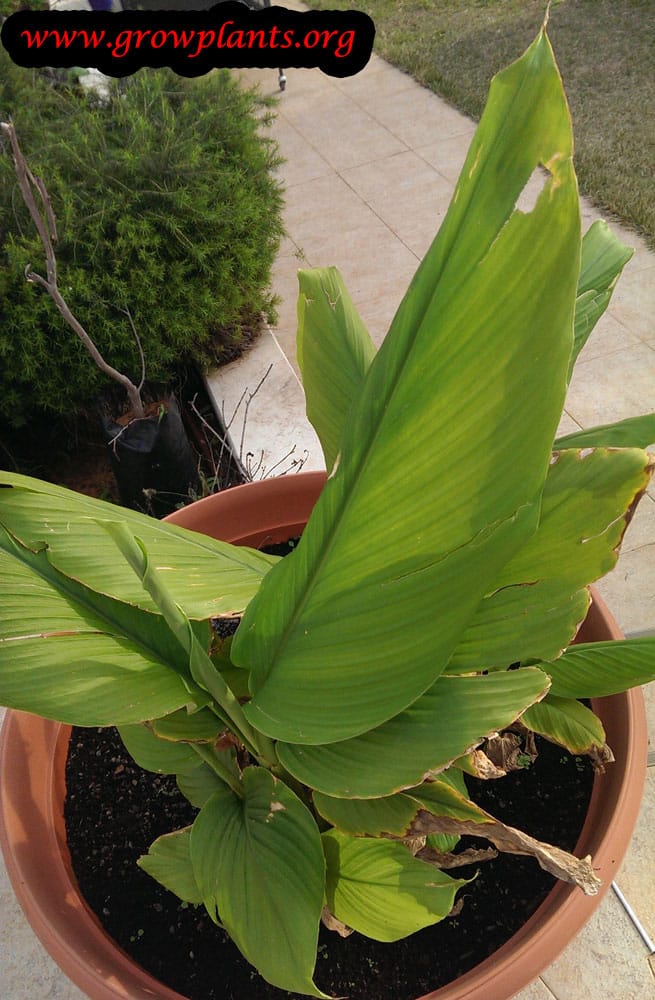
- Leaves & Foliage: Large, broad, lush green leaves rising in a clump.
- Flower Characteristics: White, pink or purple flowers on an upright spike with green, beehive-like bracts.
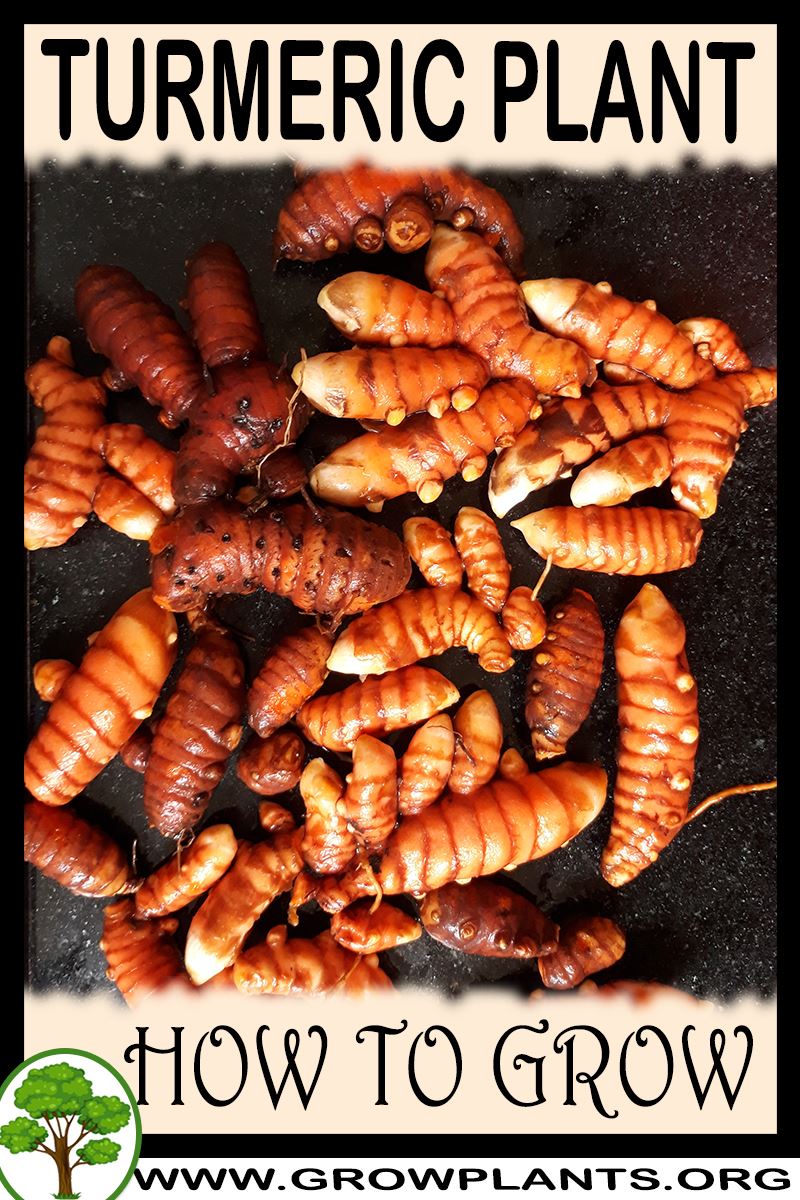
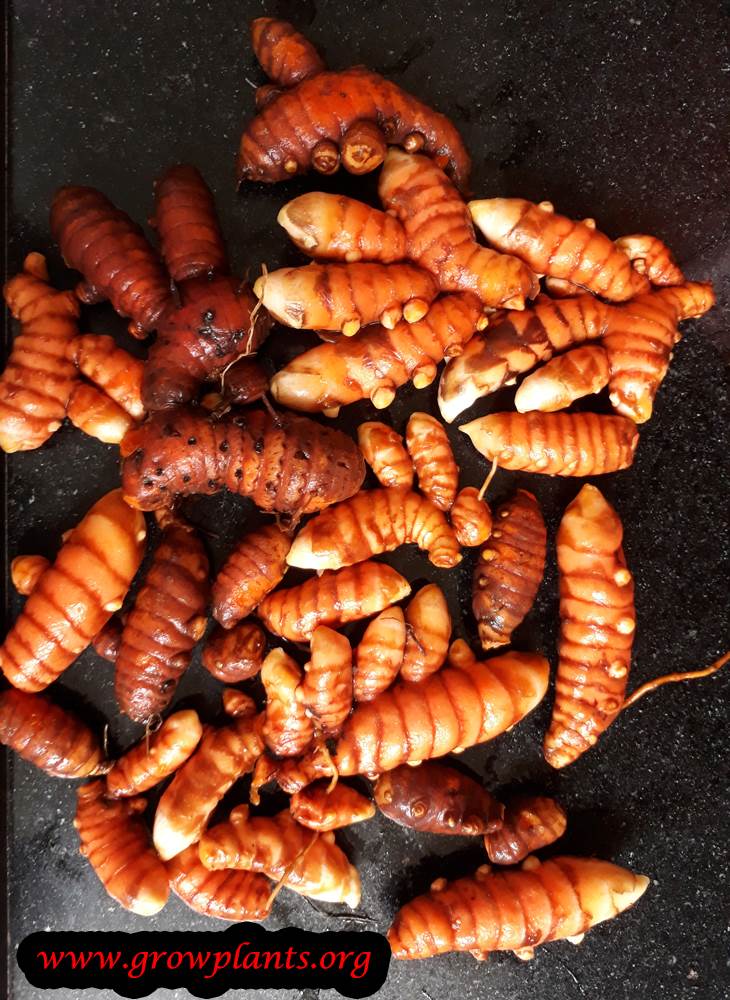
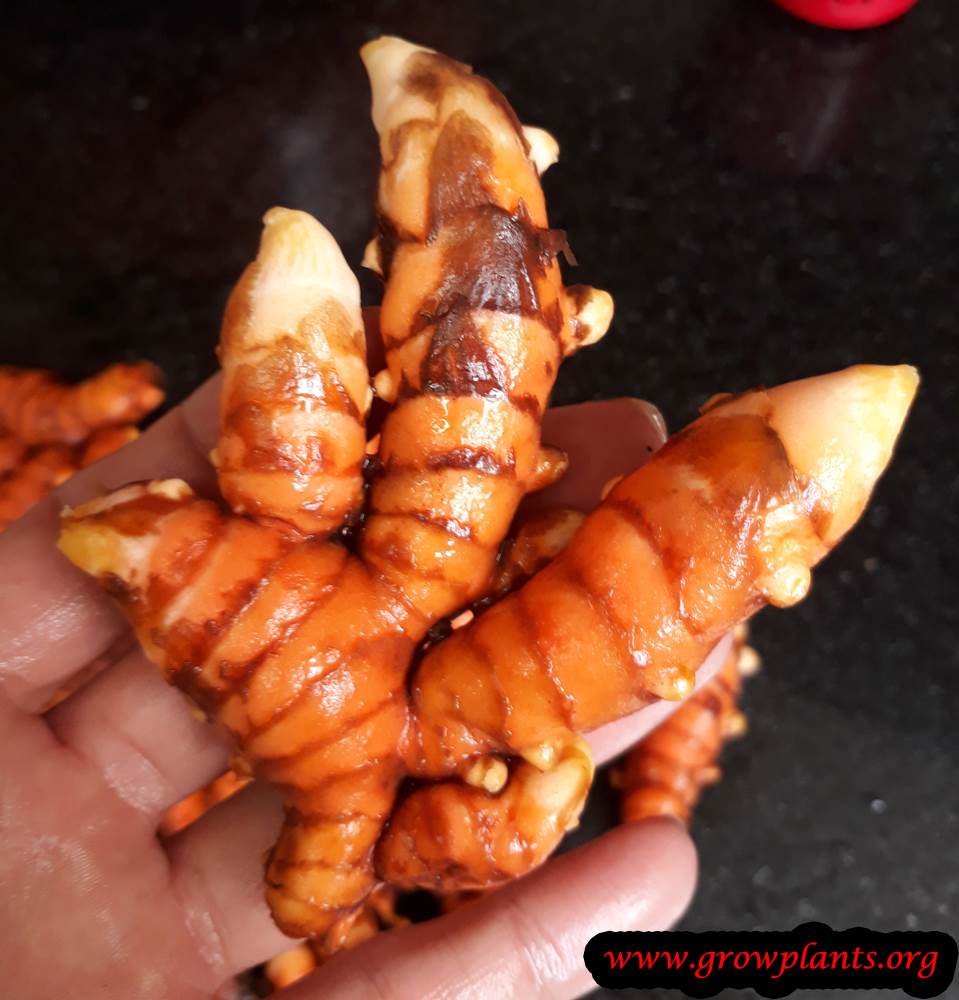
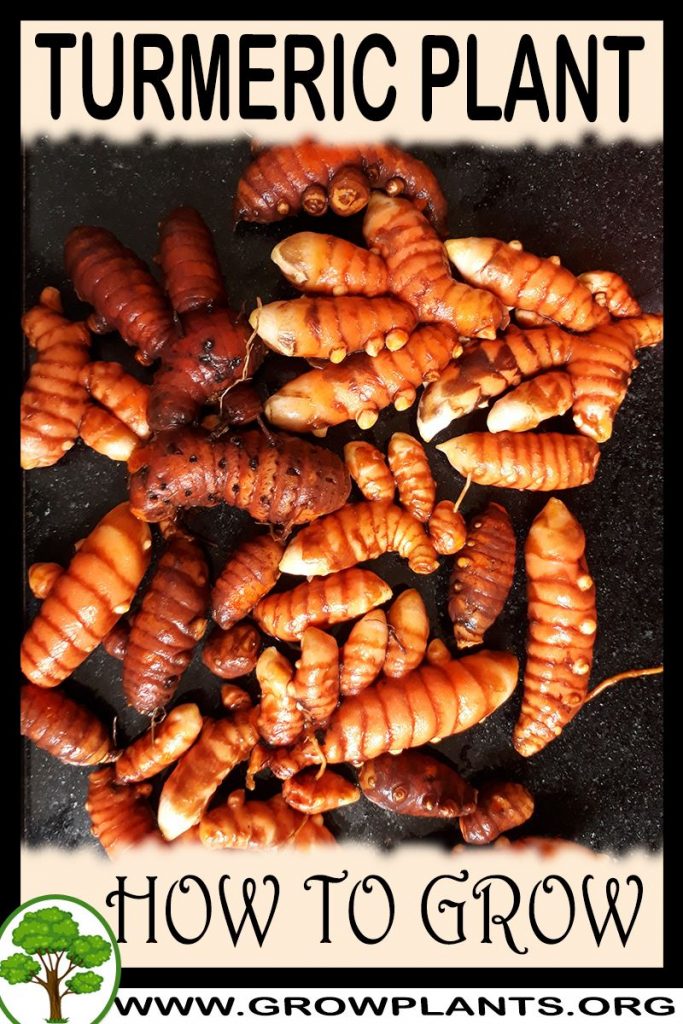
- Fruit Profile: The edible part is the orange, brown-skinned rhizome, not a fruit; it has a very strong, earthy flavour.
Primary Uses & Landscape Value
- Edible Uses: Rhizome used fresh or dried and ground as a spice, and cooked.
- Functional & Ornamental Roles: Ornamental foliage and cut-flower plant; also grown as a houseplant and valued medicinally.
Care Guide: Planting, Soil & Watering
Overview: Turmeric is a tropical rhizome plant that loves warmth, humidity and a rich, moisture-retentive soil in partial to full shade. Keep the soil consistently moist through the growing season and protect it from frost.
Quick Care Requirements
| Requirement | Ideal Condition |
|---|---|
| Planting Season | In the warm season, spring through autumn (frost-free, ~zone 8+) |
| Growth Rate | Moderate to fast |
| Soil Type | Rich, humus-heavy and moisture-retentive yet well-draining |
| Water Need | Moderate to high – keep evenly moist in growth |
Planting & Establishment
- Best Planting Season: Plant rhizomes in the warm season once the soil has warmed; they need a frost-free, sheltered spot.
- How to Plant:
- Hole Preparation: Plant rhizomes a few cm deep in loosened, richly amended soil.
- Soil Amendments: Blend in plenty of compost and organic matter for fertility and moisture retention.
- Planting Depth: Set rhizomes about 5 cm deep with the growth buds facing up.
- Growth Speed & Expectations: Moderate to fast in warmth; foliage clumps to 0.5-1.5 m (20-60 in) and dies back in the cool season.
Soil, Watering & Drainage Care
- Soil Mix & Drainage Needs: A rich but free-draining mix that holds moisture without waterlogging; grows well in pots with drainage holes and as a houseplant.
- Watering Schedule & Technique:
- Young / Newly Planted: Keep the soil moist and warm while shoots emerge.
- Established: Water freely during active growth to keep the soil evenly moist; high humidity helps.
- Seasonal Adjustments: Reduce watering as the foliage dies back into autumn/winter dormancy, then resume in spring.
Climate, Light & Hardiness
Turmeric is an evergreen to semi-deciduous rhizome plant that spans tropical through temperate climates, root-hardy to about zone 8 even though active growth needs frost-free, humid warmth. It prefers half to full shade.
Quick Climate Specifications
| Climate Zones | Tropical, Temperate, Subtropical, Mediterranean |
|---|---|
| USDA Hardiness Zones | 8+ |
| Frost Tolerance | Low to Moderate (rhizome; top growth is more tender) |
| Light Conditions | Half Shade to Full Shade |
Sunlight & Light Exposure
Optimal Light Setup
Prefers half to full shade rather than intense direct sun, consistent with a tropical understory plant.
Temperature Extremes & Hardiness
USDA Hardiness & Regional Limits
The rhizome is root-hardy to about USDA zone 8, but the plant needs frost-free conditions to remain in active growth; where winters bring frost, it typically goes dormant underground rather than growing year-round.
Cold Damage & Winter Protection
Semi-deciduous behavior (leaf loss under cooler or drier stress) is normal; at the cooler edge of its range, mulching the rhizome or lifting and storing it over winter protects it from hard freezing.
Frost Sensitivity
Top growth is frost-sensitive and dies back readily, while the established rhizome tolerates considerably more cold, allowing the plant to persist as a perennial outside strictly frost-free climates.
Wind, Humidity & Microclimate
Humidity Preferences
Needs good humidity for healthy growth, in keeping with its tropical origins.
Rainfall & Seasonal Moisture
Prefers average to generous, consistent moisture rather than a pronounced dry season.
Growing in Pots, Balconies & Indoors
Turmeric grows happily as a houseplant and in containers, as the grower confirms, and a pot is the natural choice in cool climates since it is frost-tender (hardy to about zone 8). Its bold leaves are handsome indoors, and you can harvest your own fresh rhizomes.
Quick Details
- Container Size: A wide, fairly deep pot to let the rhizome spread and bulk up
- Indoor Suitability: A good houseplant in a warm, bright spot
- Best Spot: Part to full shade; protect from harsh direct sun
- Soil & Drainage: Rich, moisture-retentive mix; keep humid and frost-free
- Watering in Pots: Average to plenty in growth, tapering off as leaves die back in the cool season
Indoors & On the Windowsill
- Genuine houseplant: The grower confirms it; give it a warm room with bright, indirect light and some humidity – the large leaves resent dry, cold air.
- Windowsill growing: Start a piece of rhizome just under the surface of a wide pot on a warm sill; growth follows in warmth.
- Overwintering: As foliage dies back for the cool season, keep the pot warm and nearly dry until it reshoots, or harvest and replant a piece.
On a Balcony or Patio
- Light & wind: On a patio give it warmth and bright light with shade from fierce midday sun; keep pots evenly moist as they dry quickly in heat.
- Practicalities: Move it indoors before frost – the rhizome is not cold-hardy.
Choosing the Pot, Soil & Long-Term Care
- Pot & drainage: Use a wide, deep pot with strong drainage holes; skip a standing-water saucer to avoid root rot. Terracotta breathes and dries faster, while glazed or plastic pots hold moisture longer, which suits turmeric.
- Potting mix: A rich, well-aerated organic mix – peat or coir with plenty of compost or organic matter, lightened with perlite or vermiculite for drainage.
- Feeding: Potted plants exhaust their soil quickly as nutrients leach out – feed lightly but regularly through the growing season.
- Repotting: Refresh the mix or pot up about every two years; for clumping perennials, lift and divide, trimming the roots and old top growth as you go.
Fertilizing & Feeding
A moderate feeder: build the leafy canopy with nitrogen early, shift toward potassium as the rhizome develops, then stop feeding entirely as the semi-deciduous foliage dies back before harvest.
Quick Fertilizing Specs
| Feeding Level | Moderate feeder |
|---|---|
| Main Nutrient Priority | Nitrogen to build the leafy canopy early, then a potassium-inclusive feeding as the rhizome develops |
| Best Feeding Period | Spring through summer while the canopy is actively growing and the rhizome is forming |
| Organic Options | Compost or well-rotted organic matter worked into humid, moisture-retentive soil |
| Reduce/Stop Feeding | Stop feeding as the semi-deciduous foliage begins dying back ahead of harvest |
| Micronutrients | Usually met by rich, organic soil and a complete fertilizer; correct only a diagnosed deficiency |
| Soil pH | Prefers rich, humid, frost-free conditions; avoid extremes rather than targeting an exact number |
Feeding by Growth Stage
Establishment after planting
Help newly planted rhizome pieces root in and put up their first shoots in warm, frost-free conditions.
| Nutrient direction | A balanced, modest feeding supports early rooting without forcing top growth before the root system is ready. |
|---|---|
| Timing | At planting in spring and through early shoot emergence. |
| Frequency | A light feeding as shoots first appear. |
| Fertilizer types | A balanced complete fertilizer worked lightly into the soil, Compost or well-rotted organic matter at planting |
| Precautions | Keep conditions warm, humid, and frost-free; cold or dry spells slow establishment more than any feeding choice. |
Leafy canopy development
Build a full stand of leafy growth that will fuel rhizome development later in the season.
| Nutrient direction | A nitrogen-forward feeding drives the leafy growth the plant needs before it invests in the rhizome. |
|---|---|
| Timing | As the canopy fills in through late spring and summer. |
| Frequency | Regular light feedings while the canopy is expanding. |
| Fertilizer types | A nitrogen-forward complete fertilizer, Organic matter or compost renewed as a top-dressing |
| Precautions | Maintain high humidity and part shade to light shade; this canopy stage does not tolerate drying out. |
Rhizome development
Support the rhizome as it fills with the deep orange flesh the plant is grown for.
| Nutrient direction | Shift toward a balanced to potassium-inclusive feeding to favor rhizome development over more leafy growth. |
|---|---|
| Timing | Summer into early autumn as rhizomes fill out underground. |
| Frequency | Continue feeding at a steady, moderate pace through this stage. |
| Fertilizer types | A balanced to potassium-inclusive fertilizer, Compost worked around the base of the plants |
| Precautions | Avoid heavy late nitrogen, which favors more leaf growth over rhizome development. |
Maturation and dieback before harvest
Let the plant wind down naturally as the semi-deciduous foliage dies back ahead of harvest.
| Nutrient direction | No feeding is needed once the canopy begins dying back before the rhizome is dug. |
|---|---|
| Timing | Summer into autumn, as foliage yellows before harvest. |
| Frequency | No feeding during this dieback period. |
| Fertilizer types | No feeding at this stage; withhold fertilizer as the plant prepares for harvest. |
| Precautions | Do not fertilize during dieback; the plant is done taking up nutrients and the focus shifts to timing the harvest. |
Nutrient Deficiency Signs & Corrections
Canopy leaves are pale and growth is stunted during the leafy growth stage.
| Possible causes | low available soil nitrogen, leaching from frequent watering in humid conditions, insufficient organic matter |
|---|---|
| Appears first on | older, lower leaves |
| What to check | feeding history, soil organic matter, watering frequency |
| Possible correction | Apply a nitrogen-forward fertilizer during canopy development and build soil organic matter. |
Leaf margins scorch or brown as rhizomes are developing underground.
| Possible causes | low soil potassium during rhizome development, heavy nitrogen feeding late in the season, drought stress limiting uptake |
|---|---|
| Appears first on | older leaf margins |
| What to check | fertilizer balance used during rhizome development, soil moisture consistency, overall canopy vigor |
| Possible correction | Shift to a balanced or potassium-inclusive fertilizer as rhizomes develop. |
New leaves are smaller than normal with a mottled, pale appearance.
| Possible causes | low soil zinc availability, high soil pH tying up zinc, cool soil temperatures slowing uptake |
|---|---|
| Appears first on | newest leaves |
| What to check | soil pH, soil temperature, recent micronutrient feeding history |
| Possible correction | Warm and mulch the soil, correct pH if needed, and apply a chelated zinc product per its label. |
Pruning, Training & Seasonal Maintenance
Turmeric’s evergreen-to-semi-deciduous foliage naturally yellows and dies back as the rhizome matures toward its summer/autumn harvest, so most pruning is simply removing dead leaves as they senesce, with a fuller clean-up once foliage declines near harvest time. This species’ relevant pest is a stem borer rather than a foliar fungus, so pruning also doubles as pest management: promptly removing and destroying visibly bored stems limits the pest’s spread through the clump.
Quick Pruning & Maintenance Specs
| Pruning Tolerance | High |
| Primary Pruning Window | All year for dead-leaf removal, with a heavier clean-up as foliage declines toward the summer/autumn harvest |
| Typical Frequency | Ongoing, as leaves senesce or borer damage appears |
| Main Objective | Sanitation, borer management, and harvest-linked clean-up |
| Young Plant Priority | Remove only damaged leaves; otherwise leave undisturbed |
| Mature Plant Priority | Remove dead/yellowing leaves as they occur; remove and destroy borer-infested stems promptly; clear top growth at harvest |
| Best Tool Type | Precision snips or bypass secateurs |
| Avoid Heavy Pruning During | Peak active growth, while foliage is still green and the rhizome is bulking |
Pruning by Plant Age & Size
Newly Established
Remove only damaged planting-stock leaves; leave the young clump otherwise undisturbed.
Young / Formative
No structural training applies to this simple clumping habit.
Mature / Established
Remove dead or yellowing leaves as they occur, inspect for borer damage and remove affected stems promptly, and clear the dying top growth when foliage naturally declines at harvest time.
Seasonal Pruning Schedule
Ongoing Sanitary
Remove dead or yellowing leaves as they occur throughout the year. Inspect for borer entry holes, frass, or hollowed stems, and remove and destroy affected stems promptly rather than waiting for a scheduled round – this limits the pest’s spread rather than just tidying appearance.
Post-Harvest (natural die-back, Summer/Autumn)
Once foliage yellows and dies back naturally ahead of or at rhizome harvest, clear the dead top growth – this both cleans up the planting and signals the rhizome is ready to lift.
Special Growth to Remove
- Dead or yellowing leaves
- Borer-damaged stems – cut below the visible damage into clean tissue and remove the material from the site rather than composting it
- A spent inflorescence, once faded, where grown ornamentally
Container & Small-Space Pruning
Turmeric grows well in containers. Remove dead leaves the same way as in-ground plants; because a container restricts rhizome expansion faster than open ground, plan to lift, harvest, and divide pot-grown clumps more frequently.
Tools
- Precision snips or bypass secateurs – dead-leaf removal and borer-damaged stem cuts
No loppers or saw are needed at this species’ modest 0.5–1.5 m, soft-stemmed scale.
Tool Hygiene & Disease Risk
Routine: the relevant pest here is an insect stem borer, not a transmissible foliar pathogen, so blade disinfection between cuts is less critical than for the Phyllosticta-affected ginger relatives. The operative hygiene step is destroying borer-infested material rather than composting it, to avoid reintroducing the pest.
Cut Placement & Technique
Cut dead leaves near the base/pseudostem. Cut borer-damaged stems below the damaged section into clean tissue, and remove that material from the growing area.
Heavy Pruning & Rejuvenation
A full clean-up cutback of the clump’s foliage at natural die-back/harvest time is normal and well tolerated – this is routine seasonal senescence, not a stress-recovery rejuvenation technique.
Post-Pruning Care
After clearing dead top growth or dividing at harvest, avoid waterlogging the disturbed rhizome sections, and scout regrowth for early borer activity.
Common Pruning Mistakes
- Stripping healthy green leaves early to tidy up, which reduces the rhizome’s ability to bulk up before harvest
- Composting borer-infested material instead of destroying it, which can carry the pest back into the garden
- Ignoring early borer damage until stems collapse
When NOT to Prune
Avoid removing healthy green foliage during active growth, since it is still feeding rhizome development ahead of harvest.
Recommended Tools (by task)
- precision_snips – dead-leaf and light sanitation cuts
- bypass_secateurs – borer-damaged stem removal
- garden_spade – rhizome harvest and division
Propagation Guide
Turmeric is propagated primarily by dividing healthy rhizomes. Seed is not a co-equal practical method for routine cultivation.
Quick Propagation Specs
| Primary Method | Rhizome division |
| Underground Organ | Rhizome |
Rhizome Division
Select a healthy, firm rhizome with at least one viable growth bud. Divide it into plantable sections, allow fresh cuts to dry briefly if needed, and plant into warm, fertile, well-drained soil.
Aftercare
Keep the growing medium evenly moist but not waterlogged while new shoots and roots establish.
Bloom & Flower Guide
Quick Details
- Bloom Season: Summer
- Time to First Bloom: Established clumps flower in the warm, wet season
- Flower Appearance: White, pink or purple flowers nestled among showy green (sometimes pink-tipped) bracts in a cone- or beehive-shaped spike
- Edibility: Grown mainly for its edible rhizome (the spice turmeric) – the flower is ornamental
Detailed Blooming Overview
Turmeric is grown for its golden, aromatic rhizome, but its summer flower spike is highly ornamental in its own right. Small white, pink or purple flowers sit among a cone of leafy green bracts, sometimes flushed pink at the tips, rising during the warm, wet season.
Flower Characteristics
- Small flowers in white, pink or purple, held among a cone of green (sometimes pink-tipped) bracts.
- Arranged in a beehive-like spike.
Bloom Care & Thinning
- Care: Warmth and steady moisture bring the best flowering.
- Pollination: Bees and birds visit the flowers.
Fruit & Uses
Turmeric is grown for its bright orange, strongly flavoured rhizome, the source of the well-known culinary spice. It is used cooked, dried, and ground into the familiar spice powder rather than eaten raw.
Quick Edible Specs
| Edible Parts | Rhizome |
|---|---|
| Main Use(s) | Culinary spice; traditionally used medicinally as well |
| Eaten Raw or Cooked | Cooked / used as a dried spice |
| Preparation Required | Peel; cook, or dry and grind into powder |
| Harvest Season | Summer / Autumn |
| Storage | Dried, ground rhizome (turmeric powder) stores well long-term; fresh rhizome keeps only short-term |
Bulbs, Corms & Rhizomes
The rhizome has an orange flesh under a brown-orange peel, with a very strong, earthy flavour. It is lifted from the soil in summer or autumn once the clump has bulked up. The rhizome is used as a spice, either cooked directly into dishes or dried and ground into turmeric powder; it is also traditionally used medicinally (no specific health claims implied).
Harvesting
Rhizomes are dug up once mature, in summer or autumn, similar to other edible Zingiberaceae in this group; this is a single lifting rather than a repeat cut-and-come-again harvest.
Preparation, Uses & Safety
Peel before use. The rhizome is normally cooked into dishes or dried and powdered as a spice; no detoxification step is required, and no specific toxicity caveat applies to normal culinary use.
Pests, Diseases & Troubleshooting
Overview: Turmeric (Curcuma longa) is a robust rhizomatous ginger whose defining problem is rhizome rot in wet soil — far more damaging than any insect — alongside the shoot/rhizome borer, root-knot nematode, leaf spot and, on stored seed, rhizome scale. Manage it the ginger way: plant clean, treated rhizomes in rich, free-draining raised beds, rotate, keep the soil moist but never waterlogged, and treat pests organically.
Quick Troubleshooting Overview
| Issue / Pest | Main Symptom | Primary Solution |
|---|---|---|
| Rhizome rot / soft rot | Yellowing, soft foul-smelling rotting rhizome | Clean rhizomes, raised free-draining beds, no waterlogging |
| Shoot / rhizome borer | Bore-holes, frass, dead central shoot | Cut out bored shoots; Bt on young larvae |
| Spider mites / thrips | Stippling, bronzing, silvery scarring on leaves | Raise humidity, hose down, soap/oil or spinosad |
| Mealybugs / scale | White tufts in sheaths; sooty mould | Alcohol swab, oil; control ants |
| Root-knot nematode | Stunting, galled roots and rhizomes | Clean seed rhizomes, rotation, fresh soil |
| Leaf spot / blotch | Brown or yellow spots dulling foliage | Airflow, remove debris, copper if severe |
Common Pests & Management
- Shoot / Rhizome Borer (Conogethes punctiferalis):
- Symptoms: Pseudostems with bore-holes oozing frass, a central shoot that yellows, wilts and dies (‘dead heart’), and caterpillars tunnelling inside the stem and into rhizomes; the key insect pest of turmeric and ginger relatives.
- Prevention & Control: Cut out and destroy bored, wilted shoots with their larvae, keep the planting clean of crop residue, and encourage predators and parasitic wasps. Where pressure is high, target young larvae with Bacillus thuringiensis (Bt) or a labelled product before they bore in; healthy, well-spaced clumps are less affected.
- Rhizome Scale (Aspidiella hartii):
- Symptoms: Small circular grey-brown scales encrusting stored and planted rhizomes, sucking sap so they shrivel and sprout poorly; infestation spreads on seed rhizomes and worsens in storage.
- Prevention & Control: Plant only clean, scale-free seed rhizomes, discard heavily encrusted ones, and store in cool, airy conditions. A pre-planting dip of seed rhizomes in horticultural oil or a labelled treatment reduces carry-over; inspect stored stock regularly.
- Spider Mites (Tetranychus urticae):
- Symptoms: Fine yellow stippling, bronzing and webbing on the broad leaves in hot, dry conditions or under cover — a particular problem on ornamental Curcuma grown in greenhouses and pots.
- Prevention & Control: Raise humidity, hose down leaf undersides, and avoid drought and dust stress. Insecticidal soap or horticultural oil controls outbreaks; release predatory mites under cover and avoid broad-spectrum sprays.
- Mealybugs & Scale (Planococcus / Pseudococcus spp.):
- Symptoms: White cottony tufts in leaf sheaths and at the base of pseudostems, plus soft scale on foliage, sucking sap and producing honeydew and sooty mould; common on potted and indoor plants.
- Prevention & Control: Dab colonies with an alcohol-dipped swab, rinse the plant, and control attending ants. Horticultural oil or insecticidal soap helps for heavier infestations, reaching into the sheaths where they hide.
- Thrips (Thrips / Panchaetothrips spp.):
- Symptoms: Silvery scarring, leaf-roll and speckling of foliage (and, on ornamentals, damaged bracts) from tiny rasping insects; worse in warm, dry weather and under cover.
- Prevention & Control: Keep plants unstressed and encourage predatory mites and minute pirate bugs; use blue sticky traps to monitor. Treat with spinosad or neem in the evening only if damage is significant.
- Root-Knot Nematode (Meloidogyne spp.):
- Symptoms: Stunted, yellow, poorly-tillering plants with galled roots and knotted, pitted rhizomes; a soil-borne pest that reduces yield and lets rot organisms in. Serious in continuous ginger/turmeric ground.
- Prevention & Control: Rotate away from host crops, plant clean seed rhizomes in fresh or solarised soil, and add organic matter to boost antagonistic microbes. Discard galled rhizomes; there is no easy home cure once soil is infested, so clean planting stock and rotation are key.
Diseases & Fungal Issues
- Rhizome Rot / Soft Rot (Pythium aphanidermatum / Fusarium spp.):
- Symptoms: Yellowing lower leaves, a water-soaked, soft, foul-smelling rot of the collar and rhizome, and collapse of the shoot — the most destructive disease of turmeric and its relatives, exploding in waterlogged, warm soil.
- Treatment & Management: Plant disease-free rhizomes in raised, free-draining beds, never waterlog, and rotate. Treat seed rhizomes with Trichoderma or a labelled fungicide before planting, remove and destroy rotting clumps, and improve drainage — the disease is driven by wet soil.
- Leaf Spot (Colletotrichum capsici / Taphrina maculans):
- Symptoms: Brown-to-blackish oval spots, sometimes with pale centres and yellow halos, on the leaves (Colletotrichum), or small dirty-yellow angular spots that dull the foliage (turmeric leaf blotch, Taphrina maculans); heavy spotting shrivels leaves and cuts rhizome yield.
- Treatment & Management: Space for airflow, avoid overhead watering, and remove and destroy infected leaves and debris. Grow tolerant varieties; where spotting is severe, protective copper or a labelled fungicide from early leaf growth helps. Airflow and sanitation come first.
- Bacterial Wilt (Ralstonia solanacearum):
- Symptoms: Rapid wilting of green shoots without yellowing at first, a water-soaked rot of the rhizome that oozes milky bacterial streaming in water, and collapse in warm, wet soil; spreads in drainage water and on tools.
- Treatment & Management: Use clean seed rhizomes and land with no history of the disease, ensure good drainage, rogue and destroy wilting clumps, and disinfect tools. There is no cure once infected — sanitation, drainage and rotation are the only controls.
Growing Difficulties & Abiotic Problems
- Overwatering & Rhizome Rot:
- Cause & Symptoms: Yellowing, soft base and rotting rhizomes in soggy soil or pots — the commonest way these gingers are lost, especially heading into dormancy.
- Correction Strategy: Grow in rich but free-draining soil or mix on raised beds, water generously in active growth but never waterlog, and taper off water as leaves die down for dormancy.
- Dormancy Confusion:
- Cause & Symptoms: Leaves yellowing and dying back in autumn is often mistaken for disease; the rhizome is simply going dormant, and rot follows only if it is kept wet.
- Correction Strategy: Let the plant die back naturally, reduce watering, and store or overwinter the dry rhizome warm and barely moist; resume watering when new shoots appear.
- Leaf Scorch & Wind Tatter:
- Cause & Symptoms: Browned leaf margins and tips from hot direct sun, dry wind or low humidity, and torn leaves in exposed sites; the large soft leaves scorch easily.
- Correction Strategy: Give bright light with shelter from scorching midday sun and drying wind, and keep humidity up. Site out of strong wind to protect the foliage and (on ornamentals) the bracts.
- Nutrient Deficiency / Chlorosis:
- Cause & Symptoms: Overall paleness or interveinal yellowing of leaves when underfed or on poor soil, giving weak growth and small rhizomes.
- Correction Strategy: Feed with rich organic matter and balanced fertiliser through the growing season, and correct persistent interveinal yellowing with a balanced micronutrient or chelated iron feed.
What Helps – Products & Tools
For Curcuma keep insecticidal soap and neem or horticultural oil for mites, mealybugs, scale and thrips, rubbing alcohol swabs for spot-treating mealybugs, Bt (Bacillus thuringiensis) for the shoot borer, and blue sticky traps for thrips monitoring. On disease the priorities are clean/treated seed rhizomes, Trichoderma and raised free-draining beds against rhizome rot, plus copper fungicide for leaf spot — drainage and clean planting stock matter far more than any spray.