Plant Profile & Key Characteristics
Overview: Curcuma are fast- to moderate-growing herbaceous perennials about 0.5-1.5 m (20-60 in) tall, grown from rhizomes. They are valued as ornamentals for their bold foliage and colourful bracted flower spikes, and some species yield edible or spice rhizomes.
Quick Specifications
| Specification | Attribute |
|---|---|
| Plant Type / Life Cycle | Perennial (herbaceous, rhizomatous) |
| Foliage Type | Evergreen to semi-deciduous (dies back in a cool dry season) |
| Mature Size | 0.5-1.5 m (20-60 in) tall |
| Growth Rate | Fast to moderate |
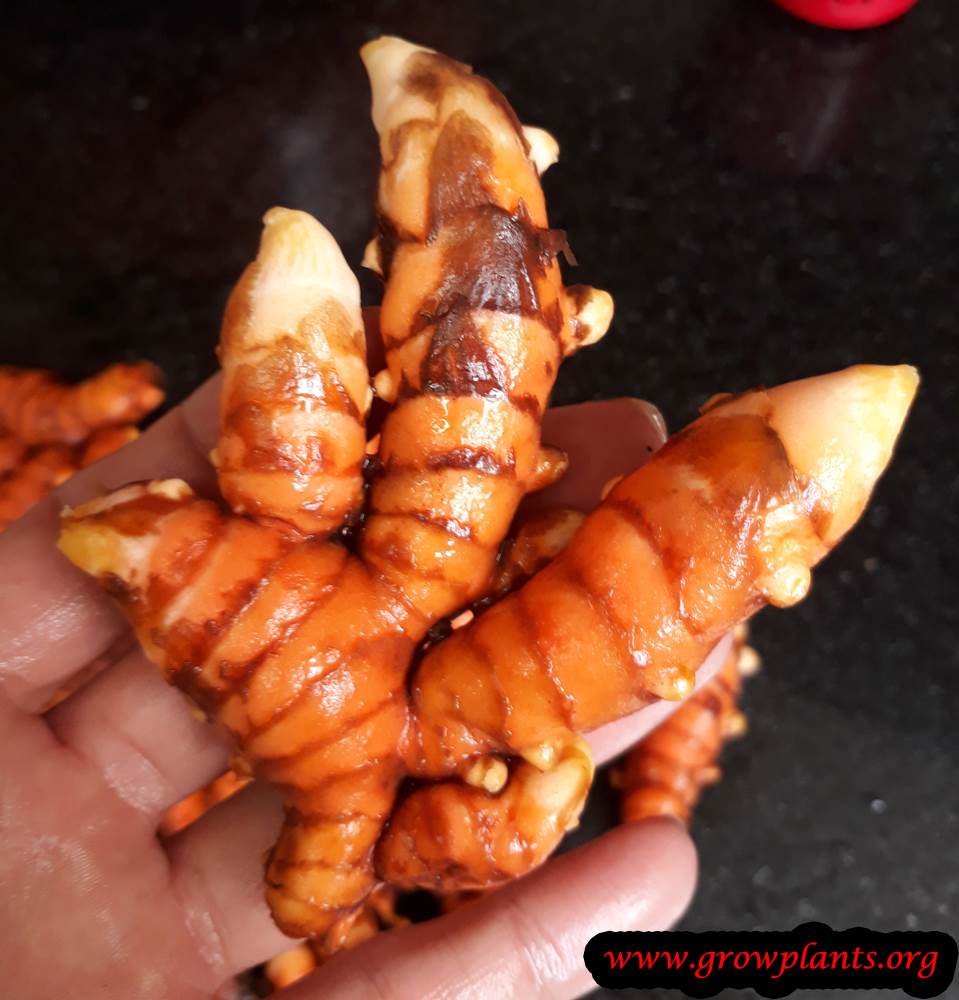
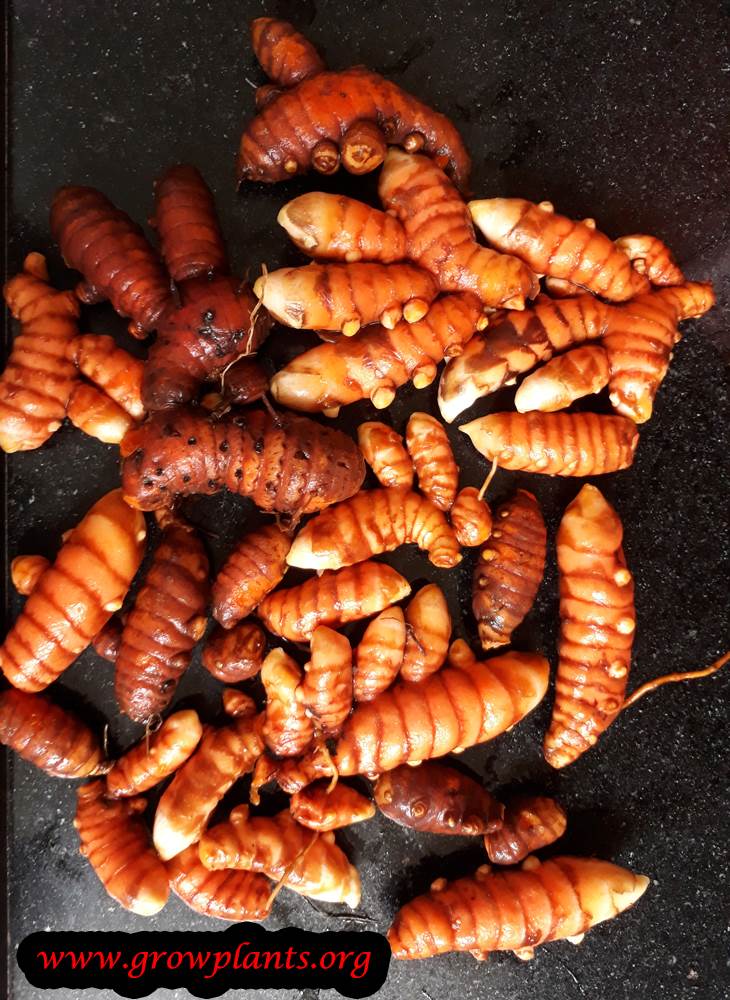
| Root System | Rhizomatous (fleshy underground rhizomes) |
| Hardiness | USDA zones 8+ |
Growth Form & Structure
- Height & Spread: Clumping plants 0.5-1.5 m (20-60 in) tall from spreading rhizomes; grown in the ground, in containers, or indoors.
- Growth Habit & Form: Upright, clump-forming herbaceous perennials with broad leaves from underground rhizomes.
- Lifespan & Maturity: Perennial; rhizomes multiply each season and are lifted in late summer to autumn where needed.
Anatomy & Physical Features
- Leaves & Foliage: Large, broad, green leaves rising in a clump.
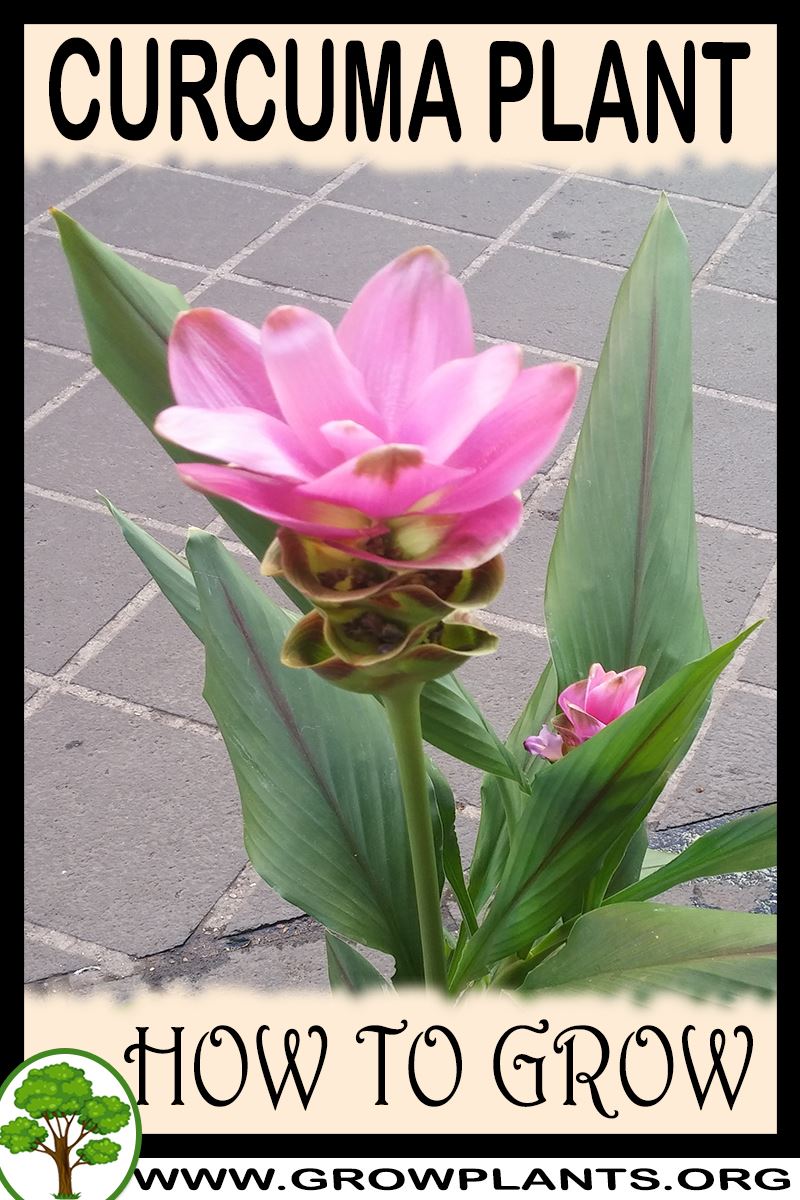
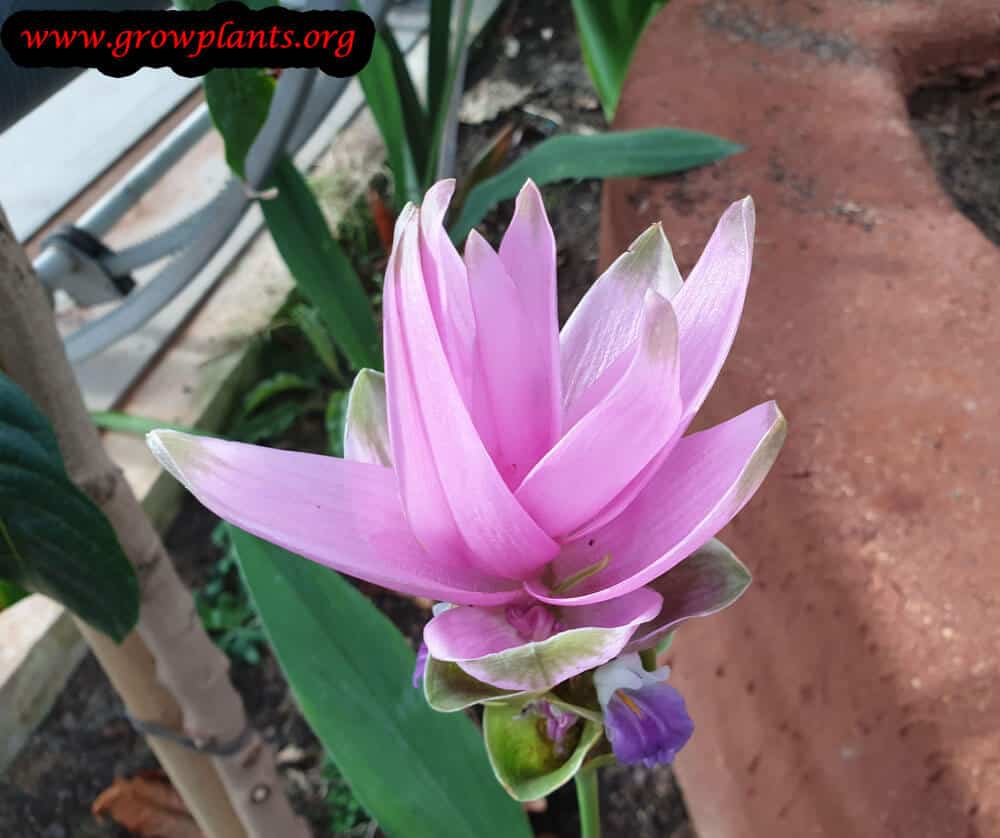
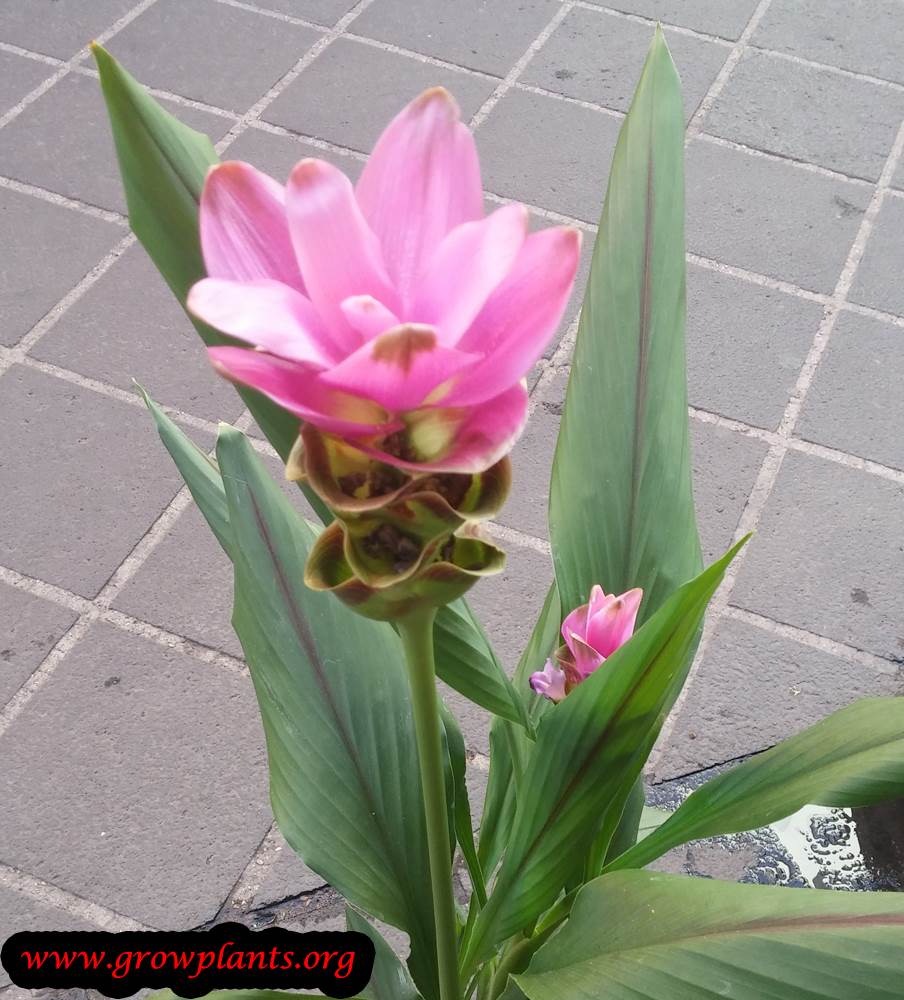
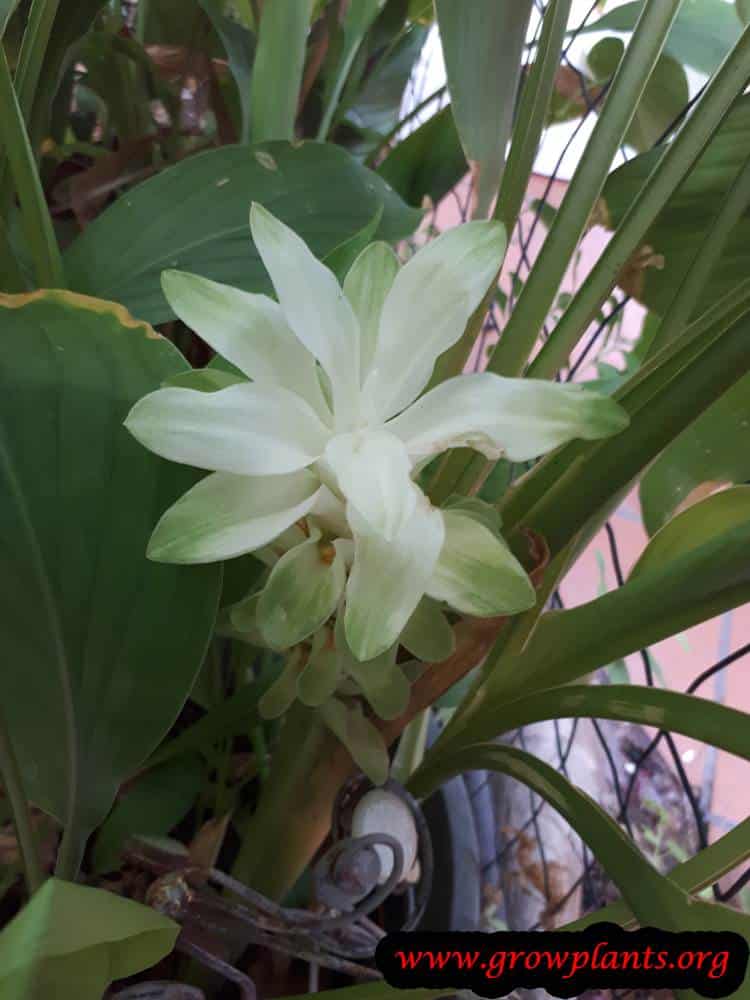
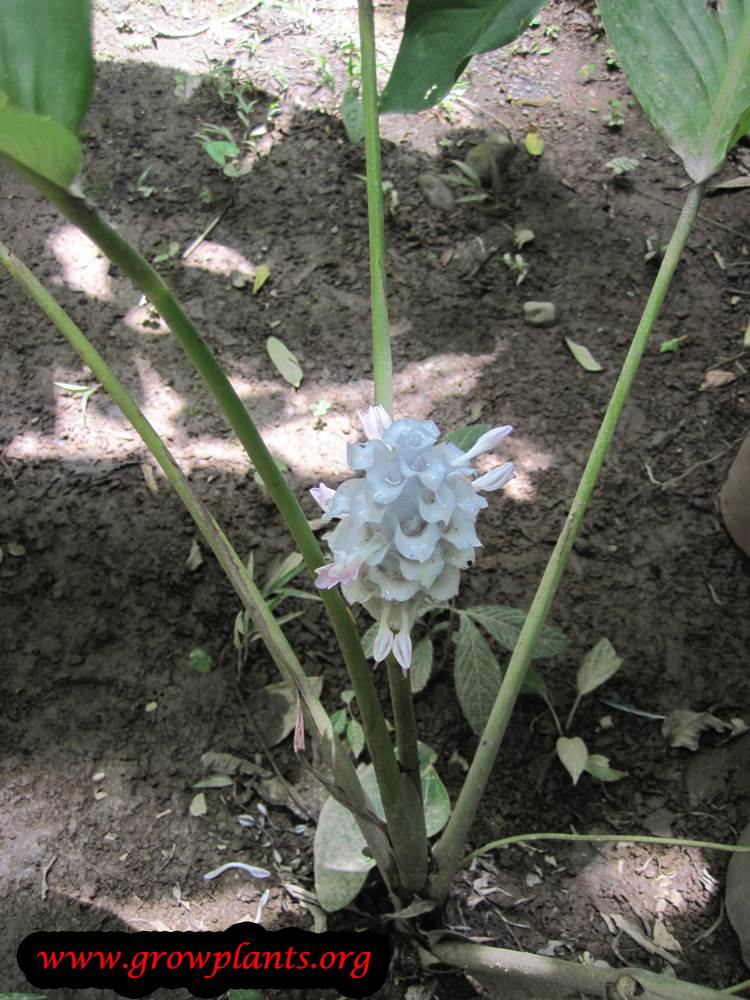
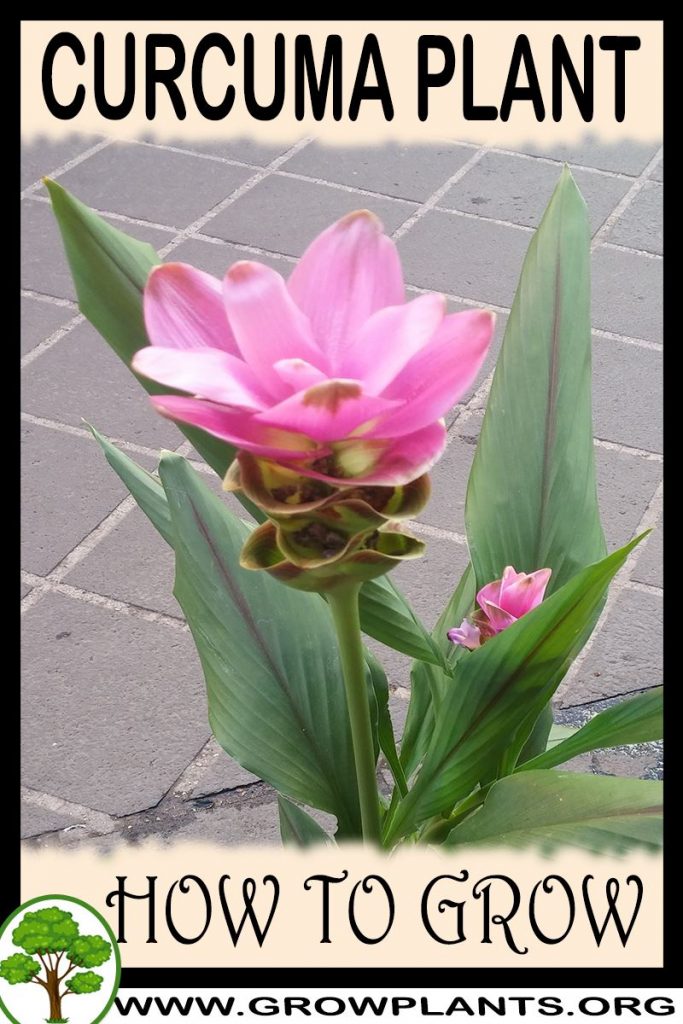
- Flower Characteristics: White, pink, red, orange or purple flowers on upright spikes with green, beehive-like bracts.
Primary Uses & Landscape Value
- Functional & Ornamental Roles: Ornamental foliage and cut-flower plants; also grown as houseplants, with some species used for spice or medicine.
Care Guide: Planting, Soil & Watering
Overview: Curcuma (turmeric genus) is a tropical rhizome plant that loves warmth, humidity and a rich, moisture-retentive soil in partial to full shade. Keep the soil consistently moist through the growing season and protect it from frost.
Quick Care Requirements
| Requirement | Ideal Condition |
|---|---|
| Planting Season | In the warm season, spring through autumn (frost-free, ~zone 8+) |
| Growth Rate | Moderate to fast |
| Soil Type | Rich, humus-heavy and moisture-retentive yet well-draining |
| Water Need | Moderate to high – keep evenly moist in growth |
Planting & Establishment
- Best Planting Season: Plant rhizomes in the warm season once the soil has warmed; they need a frost-free, sheltered spot.
- How to Plant:
- Hole Preparation: Plant rhizomes a few cm deep in loosened, richly amended soil.
- Soil Amendments: Blend in plenty of compost and organic matter for fertility and moisture retention.
- Planting Depth: Set rhizomes about 5 cm deep with the growth buds facing up.
- Growth Speed & Expectations: Moderate to fast in warmth; foliage clumps to 0.5-1.5 m (20-60 in) and dies back in the cool season.
Soil, Watering & Drainage Care
- Soil Mix & Drainage Needs: A rich but free-draining mix that holds moisture without waterlogging; grows well in pots with drainage holes and as a houseplant.
- Watering Schedule & Technique:
- Young / Newly Planted: Keep the soil moist and warm while shoots emerge.
- Established: Water freely during active growth to keep the soil evenly moist; high humidity helps.
- Seasonal Adjustments: Reduce watering as the foliage dies back into autumn/winter dormancy, then resume in spring.
Climate, Light & Hardiness
Curcuma is a tropical to subtropical rhizomatous perennial that thrives in warm, humid conditions with filtered or shaded light. It has low frost tolerance and dies back where winters bring sustained cold, so it is best treated as a frost-free or container plant in marginal climates.
Quick Climate Specifications
| Climate Zones | Tropical, subtropical, temperate, and Mediterranean climates |
|---|---|
| USDA Hardiness Zones | Approximately zone 8+ per site data, though the rhizome fares best where winters stay largely frost-free |
| Optimal Temp Range | Generally warm, around 20–30°C (68–86°F) |
| Cold Damage Begins | Foliage yellows and dies back as temperatures approach 10°C (50°F) |
| Approx. Survival Minimum | A dormant, mulched rhizome may briefly tolerate light frost near 0°C (32°F), but hard freezes typically kill it |
| Frost Tolerance | Low |
| Light Conditions | Half Shade to Full Shade |
Sunlight & Light Exposure
Optimal Light Setup
Filtered or dappled light, or half shade with some gentle morning sun, suits Curcuma best, mimicking its understory habitat.
Shade & Heat Management
Full shade with adequate ambient light is tolerated, and light shade helps protect leaves from scorching in hot climates.
Best Exposure / Orientation
An east-facing or otherwise shaded position protected from harsh afternoon sun works well.
Temperature Extremes & Hardiness
USDA Hardiness & Regional Limits
Site data places Curcuma at approximately zone 8 and warmer. Outside consistently warm, frost-free climates it is commonly grown as a dieback perennial (rhizome overwinters underground) or in containers that can be moved indoors; a young rhizome is generally less resilient than an established, well-mulched clump.
Cold Damage & Winter Protection
In cooler parts of its range, heavy mulch over the dormant rhizome or lifting and storing it dry indoors for winter protects it from cold damage.
Frost Sensitivity
Frost tolerance is low; foliage is damaged by any frost, and hard freezes can kill the rhizome outright.
Extreme Heat Tolerance
Curcuma handles heat well provided humidity and soil moisture are maintained.
Wind, Humidity & Microclimate
Humidity Preferences
Prefers consistently high humidity, in keeping with its tropical, understory origins.
Rainfall & Seasonal Moisture
Benefits from steady moisture during active growth, tapering off naturally as the plant enters winter dormancy.
Microclimate Recommendations
A sheltered, shaded spot with wind protection and stable humidity suits this plant best; growing it in a container makes it easy to relocate in marginal climates.
Growing in Pots, Balconies & Indoors
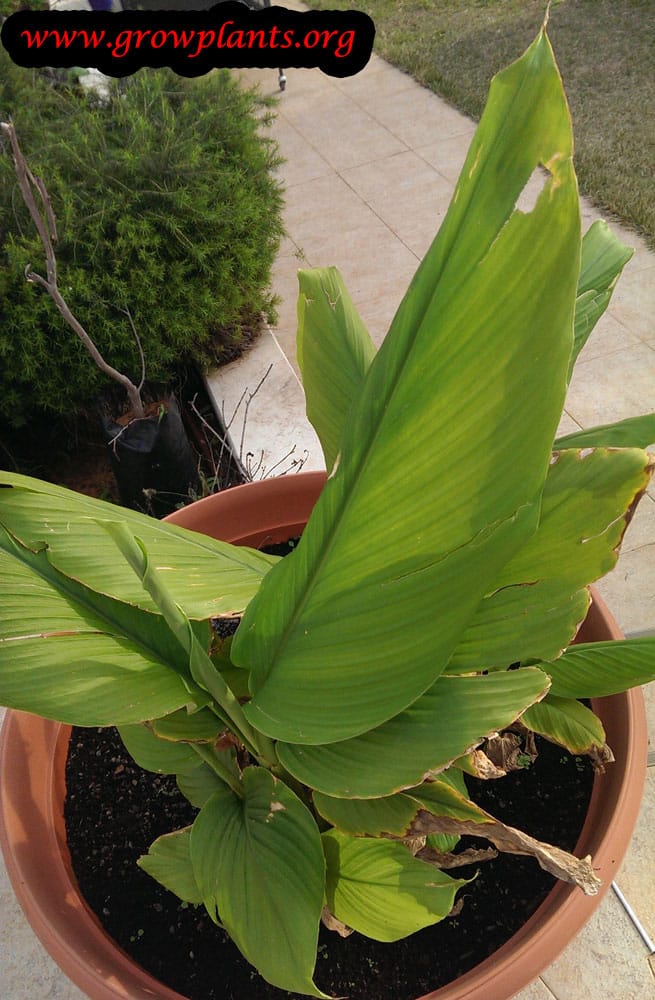
Curcuma (Hidden ginger) (Curcuma) is a lush, shade-tolerant foliage plant, and the grower confirms it grows well both as a houseplant and in containers. It can reach about 0.5-1.5 m (20-60 in), so give a mature plant room and a large pot, but its tolerance of shade makes it a fine leafy houseplant.
Quick Details
- Container Size: A large, deep container – this is a big, vigorous plant (to about 0.5-1.5 m (20-60 in))
- Indoor Suitability: A good houseplant (grower-confirmed); tolerates shade well
- Best Spot: Half to full shade indoors or out; keep it out of harsh direct sun
- Soil & Drainage: Rich, organic, moisture-retentive mix that still drains freely
- Watering in Pots: Keep evenly moist – these gingers like generous water; never let them go bone dry
Indoors & On the Windowsill
- A good houseplant: The grower confirms it grows well indoors, and its tolerance of shade suits ordinary room light.
- Give it room: It is a large plant, so allow space and a big pot for the foliage to develop.
- Humidity: Like most gingers it enjoys warmth and humidity – group it with other plants or mist in dry rooms.
On a Balcony or Patio
- Shade & shelter: On a balcony or patio give it a warm, sheltered, part-shaded spot out of strong wind, which tears the large leaves.
- Water & weight: A big leafy plant in a big pot is heavy and thirsty – site it where you can water often and drainage can escape freely.
Choosing the Pot, Soil & Long-Term Care
- Pot & drainage: A large container with strong drainage holes; skip a standing-water saucer to avoid root rot.
- Potting mix: A rich, organic, moisture-retentive mix opened up with perlite so it holds water yet still drains.
- Feeding: Potted gingers are hungry – feed regularly through the growing season, as watering leaches nutrients from the pot.
- Repotting: Divide and refresh the mix every couple of years as the clump fills the pot.
- Dormancy & overwintering: It dies back to the rhizome in the cool/dry rest season – reduce watering then, and keep the pot warm and frost-free before it reshoots.
Growing this plant in a greenhouse
A greenhouse can give curcuma plant frost protection, cold protection, humidity control and extra warmth.
Greenhouse at a glance
| Greenhouse suitability | Conditional - depends on your climate |
|---|---|
| Main benefits | frost protection, cold protection, humidity control, extra warmth |
| Season extension | earlier spring & later autumn |
| Outdoor protection advisable below | about 10°C |
| Maintain greenhouse minimum | around 10°C for active growth |
| Suitable types | heated greenhouse, polycarbonate greenhouse |
| Heating | Heating is recommended in cold climates for continuous growth. |
Related greenhouse guides
- Greenhouses: How to Choose the Right Greenhouse
- Best Greenhouse Heaters
- Greenhouse Climate Control: Temperature, Ventilation and Humidity
- Polycarbonate Greenhouses: What to Look for Before Buying
Fertilizing & Feeding
Grown from a rhizome for its showy inflorescences in white, pink, red, orange, or purple set above green, hive-like bracts, this semi-deciduous plant is a moderate feeder while its leaves and flower stem are actively growing, then needs no feeding once it dies back to rest.
Quick Fertilizing Specs
| Feeding Level | Moderate feeder |
|---|---|
| Main Nutrient Priority | Balanced feeding while leaves are actively growing, shifting toward potassium-supportive feeding as flowering approaches |
| Best Feeding Period | From the start of spring/summer leaf growth through the summer bloom |
| Organic Options | Compost or well-rotted organic matter worked into humid, moisture-retentive soil |
| Reduce/Stop Feeding | Stop feeding once the foliage begins its natural die-back after bloom |
| Micronutrients | Usually met by a complete fertilizer in organic-rich soil; correct only a diagnosed problem |
| Soil pH | Grows well in humid, moisture-retentive garden or container soil without needing a particular pH |
Feeding by Growth Stage
Establishment and leaf growth
Support the rhizome as it sends up new foliage at the start of the growing season.
| Nutrient direction | A balanced, complete fertilizer supports steady leaf growth as the plant emerges from its rhizome. |
|---|---|
| Timing | At planting, or as new growth emerges from the rhizome in spring or summer. |
| Frequency | Regular light-to-moderate feeding through this leaf-growth period is usually enough. |
| Fertilizer types | A balanced, complete fertilizer, Compost or organic matter worked into the planting area |
| Precautions | Keep the humid, moisture-retentive soil this plant favors evenly moist, and avoid feeding cold or frosted soil since this plant needs frost-free conditions. |
Summer bloom
Support the showy inflorescence as it rises above the foliage and its colorful bracts and flowers develop.
| Nutrient direction | A shift toward potassium-supportive balanced feeding as the flower stem develops helps support strong bloom. |
|---|---|
| Timing | Through the summer flowering period. |
| Frequency | Continued moderate feeding through bloom is usually enough for this stage. |
| Fertilizer types | A balanced, complete fertilizer with attention to potassium as flowering approaches |
| Precautions | Avoid a heavily nitrogen-forward fertilizer during bloom, which favors leafy growth over the flower display. |
Post-bloom die-back and rest
Let the rhizome rest as the semi-deciduous foliage naturally yellows and dies back after flowering.
| Nutrient direction | None – withhold fertilizer once the foliage begins its natural die-back. |
|---|---|
| Timing | After flowering finishes, as the foliage yellows and dies back, through the rhizome’s rest period. |
| Frequency | No feeding at this stage. |
| Fertilizer types | No feeding at this stage; the rhizome is resting rather than in active growth |
| Precautions | Do not fertilize a resting rhizome with no active foliage; wait for new leaf growth before resuming feeding. |
Nutrient Deficiency Signs & Corrections
Older, lower leaves fade to pale green or yellow and new leaf growth slows during the active growing period.
| Possible causes | low available soil or container nutrients, nutrients leaching from the frequent watering this plant needs, root crowding in an undersized container |
|---|---|
| Appears first on | older, lower leaves |
| What to check | recent feeding history, container size and drainage, watering frequency |
| Possible correction | Apply a balanced, complete fertilizer during active leaf growth and check that the container or bed has adequate root room. |
Foliage grows well but the plant produces few or no flowering stems.
| Possible causes | insufficient light for a plant that flowers best with good bright light, overfeeding with a nitrogen-heavy fertilizer favoring leaves over the flower stem, borer pest activity weakening the rhizome or stems |
|---|---|
| Appears first on | whole-plant effect rather than a single leaf |
| What to check | light exposure, recent fertilizer type and amount, signs of borer activity |
| Possible correction | Improve light exposure, shift feeding toward balanced with attention to potassium as bloom approaches, and address any borer activity directly. |
Rhizome or base feels soft or discolored, especially after the foliage has died back for its rest period.
| Possible causes | overwatering or feeding while the rhizome is resting with no active foliage, poorly drained soil holding excess moisture, fungal infection following rhizome stress |
|---|---|
| Appears first on | rhizome and base of the plant |
| What to check | soil drainage, watering and feeding timing relative to active foliage, visible rhizome condition |
| Possible correction | Withhold feeding and reduce watering during the rest period, improve drainage, and remove any visibly rotten tissue with a sterile tool. |
Pruning, Training & Seasonal Maintenance
The Curcuma plant (ornamental turmeric) is a semi-deciduous herbaceous perennial that grows fresh leaves and flower spikes from an underground rhizome each season, then dies back as its foliage naturally yellows and collapses. Pruning is entirely about removing this dead or dying leaf tissue and spent flower stalks — there is no woody structure, and cutting back living green foliage before it yellows only weakens the rhizome’s reserves for next season’s regrowth.
Quick Pruning & Maintenance Specs
| Pruning Tolerance | High for dead material; Low for actively green foliage |
| Primary Pruning Window | All year as needed; heaviest cutback once foliage yellows and dies back at season’s end |
| Typical Frequency | Ongoing spot removal of dead leaves, plus one main dieback cutback per cycle |
| Main Objective | Remove dead leaves and spent flower stalks; let the rhizome go dormant cleanly |
| Best Tool Type | Precision snips / bypass secateurs |
| Avoid Heavy Pruning During | While foliage is still green and actively growing |
Seasonal Pruning Schedule
Ongoing Sanitary
Objective: tidy appearance and reduce disease entry points through damaged tissue.
Remove: individual dead or badly damaged leaves as they occur.
Don’t remove: healthy green leaves, which are still feeding the rhizome.
Expected response: no impact on the plant’s growth cycle.
Dormant/Winter (or post-dieback)
Objective: clear spent top growth once the plant naturally yellows and collapses at the end of its growing cycle.
Remove: all yellowed/collapsed foliage and any finished flower stalks, cut back near the rhizome.
Don’t remove: foliage that is still green, even if the season is turning — wait for it to fully yellow so the rhizome finishes storing reserves.
Expected response: a clean dormant rhizome that resprouts fully once conditions warm again.
Special Growth to Remove
- Dead or yellowed leaves, at any time of year.
- Spent flower stalks once the inflorescence has faded, cut near the base.
Container & Small-Space Pruning
Container-grown plants (this species tolerates pots and indoor culture) follow the same dieback pattern — let foliage yellow fully before cutting back, then reduce watering through the dormant period since a resting rhizome in a pot is more prone to rot from excess moisture than one in open ground.
Tools
- Precision snips: for individual dead leaves and light removal through the growing season.
- Bypass secateurs: for cutting the thicker leaf bases and flower stalks at dieback time.
Tool Hygiene & Disease Risk
Routine: the plant’s noted pest is borers rather than a tool-transmitted disease, so ordinary clean, sharp tools are sufficient; there is no need for between-cut disinfection.
Cut Placement & Technique
Cut dead leaves and stalks back close to the point where they emerge from the rhizome, rather than leaving long dying stubs standing.
Heavy Pruning & Rejuvenation
The full end-of-cycle cutback (removing all collapsed top growth down to the rhizome) is a normal, tolerated part of this plant’s seasonal dormancy, not a stress-response rejuvenation technique — it resprouts fully from the rhizome once its next growing season begins.
Post-Pruning Care
After the dieback cutback, cut back on watering while the rhizome rests dormant, since excess moisture on a leafless rhizome invites rot; resume normal average-to-heavy watering only once new growth appears.
Common Pruning Mistakes
- Cutting back green, actively growing foliage before it yellows, which reduces the reserves the rhizome needs for the next cycle.
- Continuing to water heavily right after the dormant cutback, risking rhizome rot.
When NOT to Prune
Do not cut back foliage that is still green and upright, even late in the season — wait until it yellows and collapses on its own before removing it.
Recommended Tools (by task)
- precision_snips – for ongoing removal of individual dead leaves.
- bypass_secateurs – for the thicker leaf-base and flower-stalk cuts at the main seasonal dieback.
Propagation Guide
Curcuma is propagated almost entirely by dividing its underground rhizomes, which the site notes is easier than growing from seed, though seed is also possible. Rhizome division reliably reproduces the parent plant and is the standard way growers and nurseries multiply Curcuma; overall this genus is Easy to propagate vegetatively.
Quick Propagation Specs
| Best Propagation Method | Rhizome division |
| Alternative Methods | Seed |
| Propagation Difficulty | Easy |
| Seed True-to-Type | Usually true-to-type for species; hybrid ornamental selections may vary |
| Vegetative True-to-Type | Yes |
| Best Propagation Season | Spring, matching the start of active growth |
| Germination Temperature | Warm, roughly 22–28°C (72–82°F), matching its tropical/subtropical habit |
Growing from Seed
Seed is a slower and less common route for this genus in cultivation; sow fresh seed in a warm, humid, well-drained mix and expect germination to be gradual, with young plants taking a while to form a rhizome worth dividing later.
Rhizomes, Tubers, Bulbs & Corms
Rhizome Division
As the plant dies back to dormancy (semi-deciduous per the site), lift the rhizome clump and divide it into sections, each with at least one visible growth point/eye and, where possible, some existing roots attached. Divide in spring as new growth is about to resume, so divisions can establish quickly through the plant’s active spring-to-autumn growing season.
Curing & Planting
Unlike rhizomes grown purely for storage/eating, divisions kept for propagation are best replanted promptly rather than dried out for long-term curing, since drying reduces bud viability; keep divisions in warm, humid, frost-free conditions consistent with this plant’s stated preference for warmth and humidity.
Bloom & Flower Guide
Quick Details
- Bloom Season: Summer
- Time to First Bloom: In summer, once the rhizome is in active growth and the clump is established
- Flower Appearance: An upright spike topped with green, beehive-like bracts, with small true flowers in white, pink, red, orange or purple tucked among them
- Edibility: Grown for the rhizome (turmeric) and as an ornamental; the flowers are not eaten as a flower
Detailed Blooming Overview
Curcuma sends up a distinctive summer bloom: an upright inflorescence crowned with stacked, beehive-like bracts. The showy green (and often pink-tipped) bracts are what catch the eye, while the small true flowers – white, pink, red, orange or purple – open a few at a time from between them. The spike is long-lasting and stands well above the bold, paddle-shaped leaves.
Flower Characteristics
- Small true flowers in white, pink, red, orange or purple, borne on an upright stem.
- Green, beehive-like bracts stacked into a cone that carries most of the display.
Bloom Care & Thinning
- Encouraging bloom: Warmth, steady moisture and a fed, established clump bring on the summer spikes; a dry rest in the cool season sets up the next round.
- After flowering: Remove spent spikes to keep the clump tidy.
- Pollination: The flowers are visited by bees, and in some settings by nectar-feeding birds.
Pests, Diseases & Troubleshooting
Overview: Curcuma species are robust rhizomatous gingers whose central weakness is rhizome and root rot in wet soil rather than insects; the pests that matter — shoot borer, spider mites, thrips, mealybugs, scale and root-knot nematode — are secondary and organically manageable. Across the genus the recipe is the same: clean rhizomes, rich free-draining soil, moisture in growth, a dry dormancy, and rotation to keep soil-borne rot and nematodes down.
Quick Troubleshooting Overview
| Issue / Pest | Main Symptom | Primary Solution |
|---|---|---|
| Rhizome rot / soft rot | Yellowing, soft foul-smelling rotting rhizome | Clean rhizomes, raised free-draining beds, no waterlogging |
| Shoot / rhizome borer | Bore-holes, frass, dead central shoot | Cut out bored shoots; Bt on young larvae |
| Spider mites / thrips | Stippling, bronzing, silvery scarring on leaves | Raise humidity, hose down, soap/oil or spinosad |
| Mealybugs / scale | White tufts in sheaths; sooty mould | Alcohol swab, oil; control ants |
| Root-knot nematode | Stunting, galled roots and rhizomes | Clean seed rhizomes, rotation, fresh soil |
| Leaf spot / blotch | Brown or yellow spots dulling foliage | Airflow, remove debris, copper if severe |
Common Pests & Management
- Shoot / Rhizome Borer (Conogethes punctiferalis):
- Symptoms: Pseudostems with bore-holes oozing frass, a central shoot that yellows, wilts and dies (‘dead heart’), and caterpillars tunnelling inside the stem and into rhizomes; the key insect pest of turmeric and ginger relatives.
- Prevention & Control: Cut out and destroy bored, wilted shoots with their larvae, keep the planting clean of crop residue, and encourage predators and parasitic wasps. Where pressure is high, target young larvae with Bacillus thuringiensis (Bt) or a labelled product before they bore in; healthy, well-spaced clumps are less affected.
- Rhizome Scale (Aspidiella hartii):
- Symptoms: Small circular grey-brown scales encrusting stored and planted rhizomes, sucking sap so they shrivel and sprout poorly; infestation spreads on seed rhizomes and worsens in storage.
- Prevention & Control: Plant only clean, scale-free seed rhizomes, discard heavily encrusted ones, and store in cool, airy conditions. A pre-planting dip of seed rhizomes in horticultural oil or a labelled treatment reduces carry-over; inspect stored stock regularly.
- Spider Mites (Tetranychus urticae):
- Symptoms: Fine yellow stippling, bronzing and webbing on the broad leaves in hot, dry conditions or under cover — a particular problem on ornamental Curcuma grown in greenhouses and pots.
- Prevention & Control: Raise humidity, hose down leaf undersides, and avoid drought and dust stress. Insecticidal soap or horticultural oil controls outbreaks; release predatory mites under cover and avoid broad-spectrum sprays.
- Mealybugs & Scale (Planococcus / Pseudococcus spp.):
- Symptoms: White cottony tufts in leaf sheaths and at the base of pseudostems, plus soft scale on foliage, sucking sap and producing honeydew and sooty mould; common on potted and indoor plants.
- Prevention & Control: Dab colonies with an alcohol-dipped swab, rinse the plant, and control attending ants. Horticultural oil or insecticidal soap helps for heavier infestations, reaching into the sheaths where they hide.
- Thrips (Thrips / Panchaetothrips spp.):
- Symptoms: Silvery scarring, leaf-roll and speckling of foliage (and, on ornamentals, damaged bracts) from tiny rasping insects; worse in warm, dry weather and under cover.
- Prevention & Control: Keep plants unstressed and encourage predatory mites and minute pirate bugs; use blue sticky traps to monitor. Treat with spinosad or neem in the evening only if damage is significant.
- Root-Knot Nematode (Meloidogyne spp.):
- Symptoms: Stunted, yellow, poorly-tillering plants with galled roots and knotted, pitted rhizomes; a soil-borne pest that reduces yield and lets rot organisms in. Serious in continuous ginger/turmeric ground.
- Prevention & Control: Rotate away from host crops, plant clean seed rhizomes in fresh or solarised soil, and add organic matter to boost antagonistic microbes. Discard galled rhizomes; there is no easy home cure once soil is infested, so clean planting stock and rotation are key.
Diseases & Fungal Issues
- Rhizome Rot / Soft Rot (Pythium aphanidermatum / Fusarium spp.):
- Symptoms: Yellowing lower leaves, a water-soaked, soft, foul-smelling rot of the collar and rhizome, and collapse of the shoot — the most destructive disease of turmeric and its relatives, exploding in waterlogged, warm soil.
- Treatment & Management: Plant disease-free rhizomes in raised, free-draining beds, never waterlog, and rotate. Treat seed rhizomes with Trichoderma or a labelled fungicide before planting, remove and destroy rotting clumps, and improve drainage — the disease is driven by wet soil.
- Leaf Spot (Colletotrichum capsici / Taphrina maculans):
- Symptoms: Brown-to-blackish oval spots, sometimes with pale centres and yellow halos, on the leaves (Colletotrichum), or small dirty-yellow angular spots that dull the foliage (turmeric leaf blotch, Taphrina maculans); heavy spotting shrivels leaves and cuts rhizome yield.
- Treatment & Management: Space for airflow, avoid overhead watering, and remove and destroy infected leaves and debris. Grow tolerant varieties; where spotting is severe, protective copper or a labelled fungicide from early leaf growth helps. Airflow and sanitation come first.
- Bacterial Wilt (Ralstonia solanacearum):
- Symptoms: Rapid wilting of green shoots without yellowing at first, a water-soaked rot of the rhizome that oozes milky bacterial streaming in water, and collapse in warm, wet soil; spreads in drainage water and on tools.
- Treatment & Management: Use clean seed rhizomes and land with no history of the disease, ensure good drainage, rogue and destroy wilting clumps, and disinfect tools. There is no cure once infected — sanitation, drainage and rotation are the only controls.
Growing Difficulties & Abiotic Problems
- Overwatering & Rhizome Rot:
- Cause & Symptoms: Yellowing, soft base and rotting rhizomes in soggy soil or pots — the commonest way these gingers are lost, especially heading into dormancy.
- Correction Strategy: Grow in rich but free-draining soil or mix on raised beds, water generously in active growth but never waterlog, and taper off water as leaves die down for dormancy.
- Dormancy Confusion:
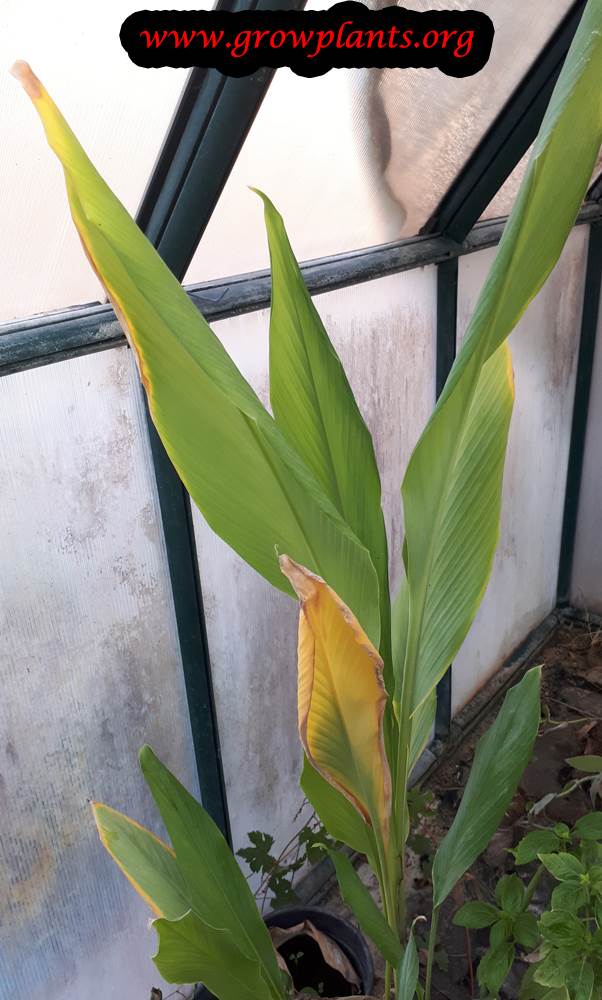
- Cause & Symptoms: Leaves yellowing and dying back in autumn is often mistaken for disease; the rhizome is simply going dormant, and rot follows only if it is kept wet.
- Correction Strategy: Let the plant die back naturally, reduce watering, and store or overwinter the dry rhizome warm and barely moist; resume watering when new shoots appear.
- Leaf Scorch & Wind Tatter:
- Cause & Symptoms: Browned leaf margins and tips from hot direct sun, dry wind or low humidity, and torn leaves in exposed sites; the large soft leaves scorch easily.
- Correction Strategy: Give bright light with shelter from scorching midday sun and drying wind, and keep humidity up. Site out of strong wind to protect the foliage and (on ornamentals) the bracts.
- Nutrient Deficiency / Chlorosis:
- Cause & Symptoms: Overall paleness or interveinal yellowing of leaves when underfed or on poor soil, giving weak growth and small rhizomes.
- Correction Strategy: Feed with rich organic matter and balanced fertiliser through the growing season, and correct persistent interveinal yellowing with a balanced micronutrient or chelated iron feed.
What Helps – Products & Tools
For Curcuma keep insecticidal soap and neem or horticultural oil for mites, mealybugs, scale and thrips, rubbing alcohol swabs for spot-treating mealybugs, Bt (Bacillus thuringiensis) for the shoot borer, and blue sticky traps for thrips monitoring. On disease the priorities are clean/treated seed rhizomes, Trichoderma and raised free-draining beds against rhizome rot, plus copper fungicide for leaf spot — drainage and clean planting stock matter far more than any spray.