Plant Profile & Key Characteristics
Overview: A large evergreen clump-forming ginger reaching 1-4 m, grown from rhizomes for its dramatic red-to-pink fragrant flower spikes. It is prized as a cut flower and tropical ornamental, and its buds and shoots are edible.
Quick Specifications
| Specification | Attribute |
|---|---|
| Plant Type / Life Cycle | Perennial (herbaceous, rhizomatous geophyte) |
| Foliage Type | Evergreen |
| Mature Size | 1-4 m (3-12 ft) tall |
| Growth Rate | Moderate to fast |
| Root System | Rhizomatous |
| Toxicity | Non-toxic / edible (flower buds and shoots used in cooking) |
| Hardiness | USDA zone 10b+ |
Growth Form & Structure
- Height & Spread: A tall leafy clump of pseudostems 1-4 m (3-12 ft) high; can be grown in large containers and in bright, warm interiors.
- Growth Habit & Form: Clump-forming herbaceous perennial spreading by rhizomes, with upright leafy pseudostems and separate flower stalks.
- Lifespan & Maturity: A long-lived clump that enlarges year on year once established.
Anatomy & Physical Features
- Leaves & Foliage: Large green lanceolate leaves borne on tall pseudostems.
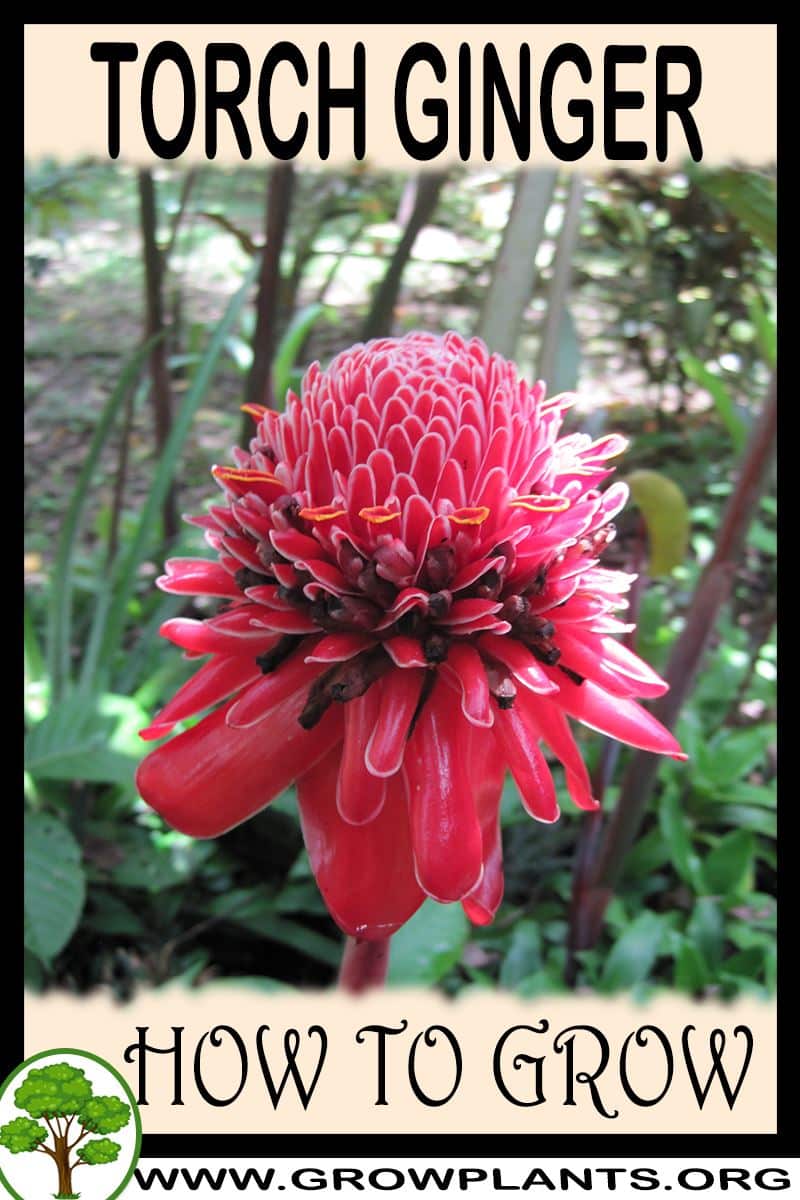
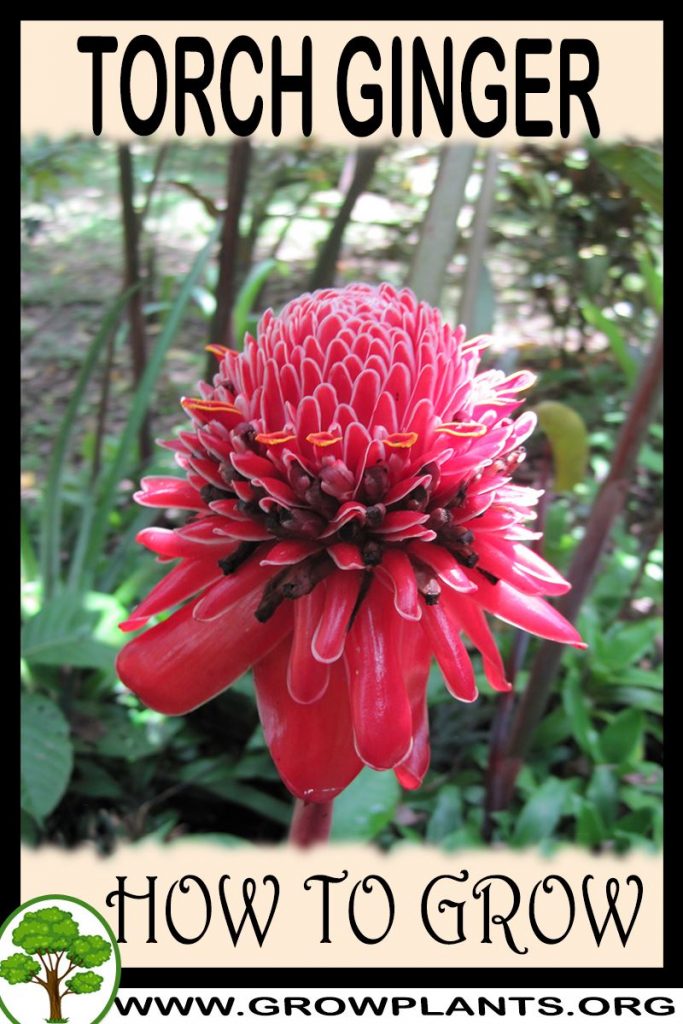
- Flower Characteristics: Fragrant red-to-pink torch-like inflorescences on separate stalks, in spring and summer.
Primary Uses & Landscape Value
- Edible Uses: Young flower buds and shoots used as a flavouring in Southeast Asian cooking.
- Functional & Ornamental Roles: Tropical ornamental and long-lasting cut flower; suits large containers and warm interiors.
Care Guide: Planting, Soil & Watering
Overview: Torch ginger is a large tropical rhizome that thrives in rich, moist, well-drained soil and high humidity. It needs warmth, plenty of water, and protection from cold, performing best in tropical to frost-free subtropical settings.
Quick Care Requirements
| Requirement | Ideal Condition |
|---|---|
| Planting Season | Warm season – spring through autumn |
| Growth Rate | Moderate to Fast |
| Soil Type | Rich, organic, moist yet well-drained |
| Water Need | Moderate to High (keep consistently moist) |
Planting & Establishment
- Best Planting Season: Plant in the warm season, spring through autumn, in frost-free conditions (roughly zone 10b and warmer).
- How to Plant:
- Hole Preparation: Dig a wide hole and set the rhizome just below the surface.
- Soil Amendments: Work in plenty of compost and organic matter for fertility and moisture retention while keeping drainage open.
- Planting Depth: Plant the rhizome shallowly, with the growth buds at or just under the soil surface.
- Growth Speed & Expectations: Fast to moderate; clumps can reach several metres tall, so allow ample space.
Soil, Watering & Drainage Care
- Soil Mix & Drainage Needs: Rich, humus-heavy soil that stays moist but never waterlogged; in containers use a large pot with a fertile, free-draining mix.
- Watering Schedule & Technique:
- Young / Newly Planted: Keep the soil consistently moist while the clump establishes.
- Established: Water generously and often; this thirsty tropical dislikes drying out.
- Seasonal Adjustments: Water heavily during warm growth; ease back in cooler weather while keeping the rootzone from fully drying.
Climate, Light & Hardiness
Torch ginger is a tropical to subtropical rhizome plant needing frost-free, humid, consistently moist conditions, and can also be grown indoors as a houseplant. It tolerates almost full sun through full shade, provided shaded spots still receive plenty of ambient light.
Quick Climate Specifications
| Climate Zones | Tropical, Subtropical, Mediterranean |
|---|---|
| USDA Hardiness Zones | 10b+ |
| Frost Tolerance | Very Low |
| Light Conditions | Almost Full Sun to Full Shade (with plenty of light) |
Sunlight & Light Exposure
Optimal Light Setup
Tolerates almost full sun down to full shade, though even shaded planting spots should still receive a good amount of ambient light for strong growth.
Temperature Extremes & Hardiness
USDA Hardiness & Regional Limits
Suited to outdoor growing in USDA zone 10b and warmer; outside that range it needs to be grown as a container plant that can be sheltered indoors.
Cold Damage & Winter Protection
Needs frost-free conditions year-round; where outdoor winters are not reliably frost-free, container culture with indoor shelter is the practical approach.
Frost Sensitivity
Very frost-sensitive with essentially no cold tolerance.
Wind, Humidity & Microclimate
Humidity Preferences
Needs consistently high humidity, reflecting its tropical rainforest origins.
Rainfall & Seasonal Moisture
Prefers rich, well-drained soil with average to generous, steady moisture rather than a pronounced dry season.
Growing in Pots, Balconies & Indoors
The grower rates Torch Ginger as suitable both indoors and in containers, though it is a big, thirsty tropical (1-4 m / 3-12 ft) that needs real warmth, high humidity and plenty of light to thrive – so think of it as a statement plant for a bright conservatory or a large patio pot rather than a small room. As a tender zone-10b plant, a pot is the only practical way to grow it outside the tropics.
Quick Details
- Container Size: Large and deep – this is a tall, vigorous clump-former
- Indoor Suitability: Can be grown indoors given warmth, high humidity and strong light, but needs space
- Best Spot: Almost full sun to part shade; even in shade it wants lots of light
- Soil & Drainage: Rich, moist, well-drained mix with high humidity around the plant
- Watering in Pots: Average to plenty – never let it dry out in growth
Indoors & On the Windowsill
- Indoors: The grower confirms it can be grown indoors – give it the brightest, warmest, most humid spot you have (a conservatory or sunroom is ideal) and room to reach upward.
- Reality check: It naturally reaches several metres, so even a happy indoor plant eventually needs a big container and headroom, or a move outside in warm weather.
- Overwintering: Outside the tropics keep it indoors over winter, warm and humid – it will not tolerate cold or dry air.
On a Balcony or Patio
- Light & wind: Bright light with some shelter from harsh midday sun suits it. Pots dry fast in heat and wind, so check moisture daily in warm weather and never let this moisture-lover dry out; shelter tall stems from wind.
- Practicalities: A large, wet pot is heavy – position it before filling, and allow for drainage runoff on paving or decking.
Choosing the Pot, Soil & Long-Term Care
- Pot & drainage: Use a large, deep pot with strong drainage holes; skip a standing-water saucer to avoid root rot. Terracotta breathes and dries faster, while glazed or plastic pots hold moisture longer, which this thirsty tropical appreciates.
- Potting mix: A rich, well-aerated organic mix – peat or coir with plenty of compost or organic matter, lightened with perlite or vermiculite for drainage.
- Feeding: Feed regularly and generously through the warm season – a large tropical in a pot is very hungry.
- Repotting: Refresh the mix or pot up about every two years; for clumping perennials, lift and divide, trimming the roots and old top growth as you go.
Fertilizing & Feeding
A moderate feeder: balanced, nitrogen-forward feeding supports this large plant’s cane growth and cut-flower stems through the active season, then eases off during any slow period.
Quick Fertilizing Specs
| Feeding Level | Moderate feeder |
|---|---|
| Main Nutrient Priority | Balanced feeding with adequate nitrogen to support the large canopy and cut-flower stems |
| Best Feeding Period | Spring through autumn while the clump is in active growth |
| Organic Options | Compost or well-rotted organic matter worked into rich, moist, well-drained soil |
| Reduce/Stop Feeding | Ease off feeding as growth slows in cooler, shorter days |
| Micronutrients | Usually supplied by rich, organic soil and a complete fertilizer; correct only a diagnosed deficiency |
| Soil pH | Prefers rich, well-drained soil; avoid extremes rather than targeting an exact number |
Feeding by Growth Stage
Active-season growth
Support the tall canes and broad leaves that build the clump before flowering.
| Nutrient direction | A balanced, nitrogen-forward feeding supports strong cane and leaf growth. |
|---|---|
| Timing | Spring through summer as new canes emerge and the clump expands. |
| Frequency | Regular light feedings through this growth period. |
| Fertilizer types | A balanced complete fertilizer with available nitrogen, Compost or organic matter worked into the soil |
| Precautions | Keep soil consistently moist and humidity high; this is a large, thirsty plant and drought stress does more harm than any feeding choice. |
Cut-flower bloom
Support the showy flower heads prized for cutting.
| Nutrient direction | Continue a balanced complete feeding; overall plant vigor and adequate nitrogen support strong flower stems more than extra phosphorus. |
|---|---|
| Timing | Spring into summer during bloom. |
| Frequency | Continue light, regular feeding as flower stems form. |
| Fertilizer types | A balanced complete fertilizer, Organic matter as a top-dressing |
| Precautions | Cutting flower stems removes stored nutrients with each harvest, so keep feeding consistent through a heavy cutting season. |
Slow-season rest
Let the clump ease off growth when conditions turn cooler or drier.
| Nutrient direction | No feeding is needed while growth has slowed and the clump is not pushing new canes. |
|---|---|
| Timing | Cooler months or any extended dry, slow-growth period. |
| Frequency | No feeding during this rest period. |
| Fertilizer types | No feeding at this stage; withhold fertilizer until active growth resumes. |
| Precautions | Do not fertilize a clump that has stopped pushing new growth; resume once warmth and moisture return. |
Nutrient Deficiency Signs & Corrections
Leaves are pale green to yellow and new cane growth is weak.
| Possible causes | low available soil nitrogen, leaching from frequent heavy watering, insufficient organic matter for such a large plant |
|---|---|
| Appears first on | older, lower leaves |
| What to check | feeding history, soil organic matter, watering frequency |
| Possible correction | Apply a nitrogen-forward fertilizer and build up soil organic matter. |
New leaves emerge pale yellow while the veins stay green.
| Possible causes | waterlogged or poorly drained soil, high soil pH tying up iron, root stress in crowded plantings |
|---|---|
| Appears first on | newest leaves |
| What to check | soil drainage, soil pH, planting density |
| Possible correction | Improve drainage, correct pH if needed, and apply a chelated iron product per its label. |
Leaf margins scorch or brown, especially during a heavy cutting season.
| Possible causes | low soil potassium, frequent flower-stem harvest removing stored nutrients, drought stress limiting uptake |
|---|---|
| Appears first on | older leaf margins |
| What to check | recent fertilizer balance, harvest frequency, soil moisture consistency |
| Possible correction | Shift toward a balanced or potassium-inclusive fertilizer, especially during a heavy cutting season. |
Pruning, Training & Seasonal Maintenance
Torch ginger’s flowers develop on short stalks that emerge directly from the base of the clump, separate from the tall leafy pseudostems, so harvesting or deadheading a flower stalk (cut near its base) never affects the leafy canopy. The pseudostems themselves are long-lived and mostly just need periodic thinning for design and access in a plant that can form a dense, multi-meter thicket, plus routine removal of dead material. There is no true dormancy in its tropical (zone 10b+) range, though growth slows in the cooler, drier months, which is a practical window for the year’s main clean-up.
Quick Pruning & Maintenance Specs
| Pruning Tolerance | Moderate |
| Primary Pruning Window | Cooler, slower-growth months (locally ‘autumn/winter’), for the main thinning round |
| Secondary Maintenance Window | Ongoing flower-stalk harvest/deadheading year-round |
| Typical Frequency | Ongoing sanitary work plus one main thinning per year |
| Main Objective | Design/access thinning of the pseudostem clump, dead-material removal, flower-stalk harvest |
| Young Plant Priority | Let the clump build pseudostem number before any thinning |
| Mature Plant Priority | Thin crowded or aging pseudostems for access and light; remove dead leaves/stems; cut spent flower stalks at the base |
| Best Tool Type | Loppers or pruning saw for pseudostem bases; precision snips or bypass secateurs for flower stalks and leaves |
| Avoid Heavy Pruning During | While a flower stalk intended for cutting is still developing; during any rare cool snap at the cooler edge of zone 10b |
Pruning by Plant Age & Size
Newly Established
Let the clump establish and build pseudostem number for the first couple of seasons before doing any thinning.
Young / Formative
No leader, vase, or espalier training applies to this clump-forming pseudostem habit.
Mature / Established
Thin older, crowded, or ragged pseudostems at the base to keep the clump accessible and well-lit, remove dead leaves and stems, and cut spent flower stalks at their base once finished or harvested.
Seasonal Pruning Schedule
Ongoing Sanitary
In this true-tropical species, dead leaves, spent flower stalks, and aging pseudostems can be removed year-round as they appear. The cooler, drier months of the local growing season are a convenient time to do the bulk of clump thinning, since growth has slowed and the work is less disruptive to active flower production.
Structural Pruning & Training
The main structural task is canopy/clump density management: thinning older or overcrowded pseudostems at the base to maintain access and light penetration in what can otherwise become an impenetrable thicket. Height cannot be reduced by heading – pseudostems don’t branch from a topping cut, so height is managed only by removing whole canes at the base, not by cutting them partway down.
Special Growth to Remove
- Dead leaves and dying pseudostems
- Spent flower stalks once finished blooming or after cutting for floral use – removed at their base near the rhizome
- Old, ragged pseudostems thinned out to make room for design/access
Container & Small-Space Pruning
Torch ginger can be grown in a large container while young, but at this species’ mature 1–4 m size it typically outgrows pots and performs best in-ground. If kept containerized, thin top growth in proportion to the root space so the clump doesn’t become top-heavy or pot-bound.
Tools
- Loppers or pruning saw – removing thick, older pseudostem bases
- Bypass secateurs or precision snips – flower-stalk harvest and leaf clean-up
A pole pruner is not needed despite the plant’s height – all cuts here are made at or near ground level, not overhead.
Tool Hygiene & Disease Risk
Increased risk: Phyllosticta zingiberi leaf spot is a listed pest/disease risk for this species. Disinfect blades after cutting affected material before moving to clean growth or another plant.
Cut Placement & Technique
Cut old pseudostems flush at ground level, not partway up – a stub will not releaf. Cut flower stalks at their base near the rhizome, leaving as short a stub as practical to reduce rot entry in humid, consistently wet conditions.
Heavy Pruning & Rejuvenation
A mature, overcrowded clump tolerates hard renewal thinning (removing most old pseudostems) to open it up and stimulate fresh growth. Because new pseudostems take time to reach flowering/cutting size, spread heavy renewal over two seasons rather than all at once if the planting is grown for cut flowers, to avoid a sharp drop in flower-stalk yield.
Post-Pruning Care
Watch cut pseudostem bases for rot in consistently wet tropical conditions. Don’t push growth with heavy feeding immediately after a hard thinning; let the clump recover at its own pace.
Common Pruning Mistakes
- Topping tall pseudostems to reduce height – they don’t branch from a heading cut, so it just kills that cane
- Over-harvesting flower stalks without leaving enough foliage and pseudostems to support the clump
- Letting the clump grow into an impenetrable thicket without periodic thinning
When NOT to Prune
Avoid disturbing a flower stalk destined for cutting before it has reached full size and color, and avoid hard cutback during any cool snap at the cooler edge of this species’ zone 10b+ range.
Recommended Tools (by task)
- loppers – pseudostem base removal during thinning
- pruning_saw – the largest, oldest pseudostem clusters
- bypass_secateurs – flower-stalk harvest and leaf clean-up
- blade_disinfectant – limits spread of Phyllosticta leaf spot
Propagation Guide
Torch Ginger is most practically increased by dividing its large rhizome clumps and separating rooted suckers; seed is possible and is listed as a method, but division is faster and more reliable for a plant of this size. Propagation is easy, though mature clumps can be physically demanding to lift and split.
Quick Propagation Specs
| Best Propagation Method | Rhizome (clump/sucker) division |
| Alternative Methods | Seed |
| Propagation Difficulty | Easy |
| Seed True-to-Type | Usually true-to-type |
| Vegetative True-to-Type | Yes |
| Best Propagation Season | Spring, extending through summer and autumn |
| Seed Germination Time | Several weeks to a couple of months, often uneven |
| Germination Temperature | Warm, roughly 24–29°C (75–85°F) |
| Seed Sowing Depth | Shallow – just cover the seed |
Growing from Seed
Germination Conditions
Sow fresh seed in warm, humid, constantly moist, rich soil conditions matching this plant’s high-humidity requirements; germination is typically slow and uneven.
Division, Offsets, Pups & Suckers
Separate rooted suckers or divide the rhizome clump from spring through autumn, each division carrying at least one healthy growth eye and, ideally, some roots. Avoid sections affected by Phyllosticta zingiberi leaf spot or rhizome flies. Replant promptly into rich, moist, well-drained, humid conditions to avoid rhizome desiccation.
Bloom & Edible Flower Guide
Quick Details
- Bloom Season: Spring and summer (much of the year in the tropics)
- Time to First Bloom: Established clumps flower once well settled, typically in the warm season
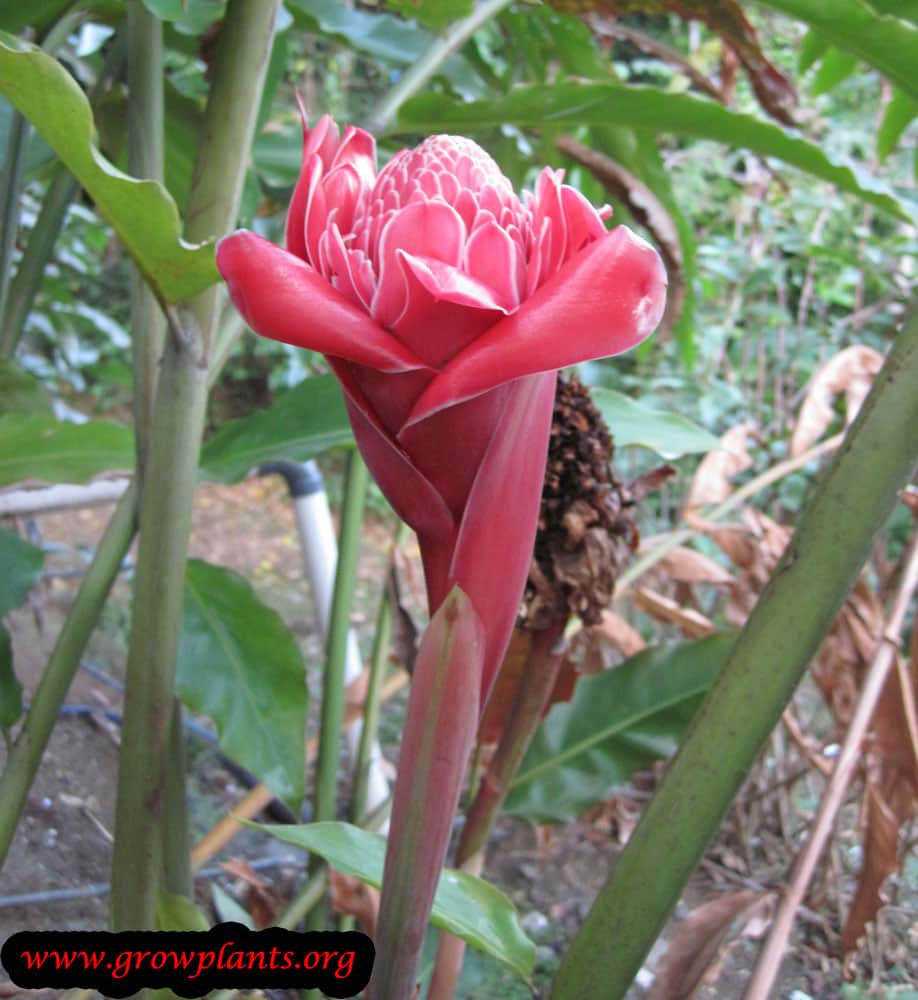
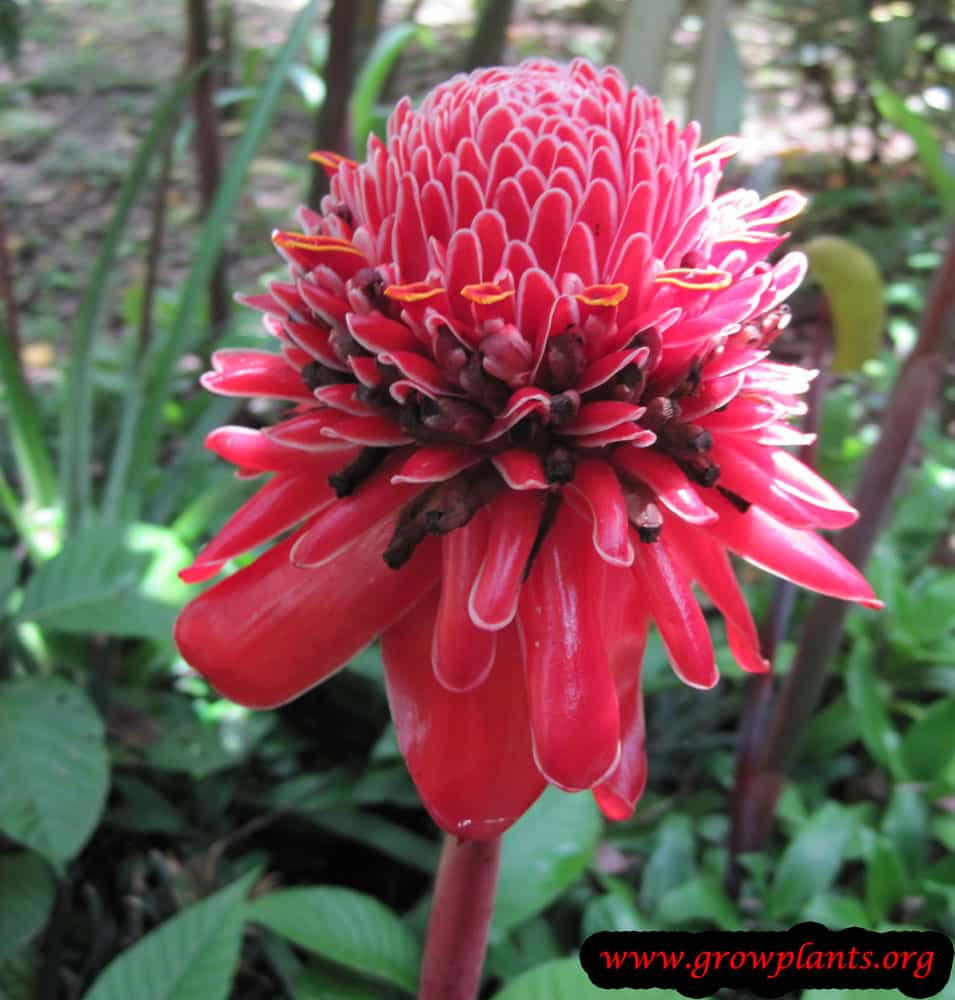
- Flower Appearance: Dramatic, fragrant red-to-pink torch-like flower heads on tall stalks, with waxy bracts around a central egg-shaped structure
- Edibility: Edible – the young flower buds are a prized vegetable and flavouring in Southeast Asian cooking, sliced for their aromatic, tangy note
Detailed Blooming Overview
Torch ginger is grown both as a bold cut flower and as an edible. The flower head rises on its own tall stalk, separate from the leafy shoots, forming a waxy, torch-like cone of red-to-pink bracts around a central boss. Caught young and tender, the buds are a well-loved ingredient in dishes such as laksa and rojak.
Flower Characteristics
- Torch-shaped and fragrant, with waxy red-to-pink bracts around an egg-shaped centre.
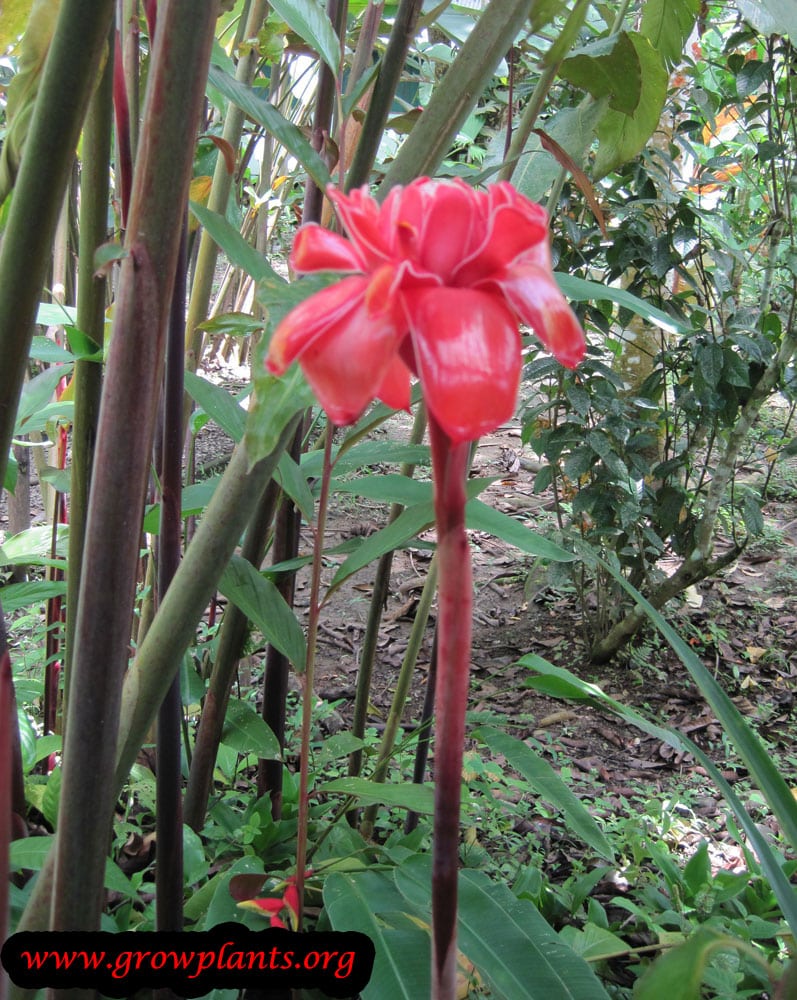
- Held high on a dedicated stalk above the foliage.
Bloom Care & Thinning
- In the kitchen: Harvest the buds young and tender for cooking; leave others to open for striking cut flowers.
- Care: Needs tropical warmth, humidity and rich, moist soil to flower well.
Fruit & Uses
Torch ginger is grown mainly as an ornamental cut flower, but in its native Southeast Asia the unopened flower bud is a well-known culinary ingredient, prized for its citrusy, floral-sour flavour. The bud is used raw (finely sliced) or cooked into dishes rather than eaten whole.
Quick Edible Specs
| Edible Parts | Flower bud (main use); tender young shoots (minor, secondary use) |
|---|---|
| Main Use(s) | Culinary aromatic/souring ingredient in Southeast Asian cooking (e.g. laksa, sambal, salads) |
| Eaten Raw or Cooked | Bud: raw when very finely sliced into salads/relishes, or cooked into soups and sauces |
| Preparation Required | Finely slice the unopened bud; discard tougher outer bracts |
| Harvest Season | Buds are picked while still tightly closed, before the flower opens; on this plant, flowering is noted as spring/summer, so unopened buds would be gathered around that period |
| Storage | Best used fresh soon after picking, as with other fresh flower buds |
Flowers & Flower Buds
The edible part is the still-closed flower bud – the same reddish-pink structure the site describes for ornamental cutting – harvested just before it would open. The bud is trimmed of its tougher outer bracts and the tender inner portion is thinly sliced. It has a distinctive sour-citrus, slightly floral flavour and is used raw in salads and relishes or cooked into soups, curries, and sauces.
Shoots & Stems
Very young, tender shoots are sometimes used in a similar way to other edible gingers, though this is a minor, secondary use compared with the flower bud.
Harvesting
Buds must be cut while still fully closed – once a bud opens into the mature flower described on this page, it is past the ideal eating stage and is left for ornamental/cut-flower use instead. This is a repeat, season-long harvest as new buds are produced.
Preparation, Uses & Safety
No cooking is strictly required, but the bud is almost always finely sliced first since it is fibrous whole; tougher outer bracts should be removed. No specific toxicity caveat is documented for this plant – the main caution here is that this edible use is not confirmed by the site’s own facts and should be verified before publishing.
Pests, Diseases & Troubleshooting
Overview: Torch ginger (Etlingera elatior) is a large, vigorous tropical ginger that is fairly robust in warm, humid, fertile conditions; its main problems are sap-suckers (spider mites, mealybug, scale), stem and rhizome borers, and – most seriously – rhizome rot and bacterial wilt in poorly drained soil. Manage with clean planting stock, good drainage and airflow, and prompt removal of infested canes.
Quick Troubleshooting Overview
| Issue / Pest | Main Symptom | Primary Solution |
|---|---|---|
| Rhizome rot / bacterial wilt | Yellowing, wilting, foul-smelling mushy rhizome | Sharp drainage, clean stock, dig and destroy infected clumps |
| Spider mites | Stippled, bronzed leaves in dry air | Raise humidity, rinse foliage, oil or soap |
| Mealybug & scale | Cottony tufts or bumps with honeydew | Horticultural oil, prune, biocontrol |
| Stem / rhizome borer | Boreholes, frass, toppling or wilting shoots | Cut and destroy infested canes, sanitation |
| Leaf spot | Brown or target spots on leaves | Airflow, remove litter, copper if severe |
| Root-knot nematode | Stunting, poor vigour, galled roots/rhizomes | Clean stock, add organic matter, rotate ground |
Common Pests & Management
- Spider mites (Tetranychus spp.):
- Symptoms: In dry air or under cover the large leaves show fine pale stippling, dull bronzing and faint webbing on the undersides, worst on stressed or dusty plants.
- Prevention & Control: Raise humidity and rinse the foliage regularly, keep plants well-watered and unstressed, and use insecticidal soap or horticultural oil; predatory mites help in greenhouses.
- Mealybugs & scale (Pseudococcidae / Coccoidea):
- Symptoms: White cottony mealybug colonies gather in leaf sheaths and at bases, while scale forms bumps on stems and leaves; both suck sap, weaken growth and drip honeydew that blackens with sooty mould.
- Prevention & Control: Wipe or prune out colonies, apply horticultural oil, control the ants that tend them, and conserve ladybirds and parasitic wasps; isolate infested plants and treat leaf sheaths where pests hide.
- Stem & rhizome borers (Ostrinia / lepidopteran & fly larvae):
- Symptoms: Caterpillars and rhizome-fly maggots bore into pseudostems and rhizomes, causing frass at entry holes, wilting or toppling canes, and rotting entry wounds that let disease in.
- Prevention & Control: Cut out and destroy infested and wilting canes promptly, keep the clump clean of old and damaged stems, use clean planting stock, and maintain vigour; sanitation and removal are more effective than sprays against concealed borers.
- Aphids (Aphididae):
- Symptoms: Soft-bodied aphids on tender new growth and inflorescences distort shoots and leave honeydew and sooty mould.
- Prevention & Control: Hose off, encourage natural enemies, and use insecticidal soap on persistent colonies; avoid excess nitrogen that drives soft growth.
- Root-knot nematodes (Meloidogyne spp.):
- Symptoms: Stunting, yellowing and poor vigour despite good care, with galls and knots on roots and rhizomes when dug.
- Prevention & Control: Plant only clean, nematode-free rhizomes in fresh or solarised ground, build up organic matter to support antagonistic organisms, rotate planting sites, and discard heavily galled stock.
Diseases & Fungal Issues
- Rhizome rot & bacterial wilt (Ralstonia solanacearum / Fusarium / Pythium):
- Symptoms: The most serious disease: leaves yellow and wilt, canes collapse, and the rhizome turns soft, brown and foul-smelling; bacterial wilt oozes milky slime from cut tissue and spreads in wet soil and via tools.
- Treatment & Management: Use only clean, disease-free planting stock, plant in well-drained soil and never waterlog, rogue out and destroy infected clumps with surrounding soil, disinfect tools, and rotate the ground; there is no cure once a clump is infected, so prevention and sanitation are everything.
- Leaf spot (Phyllosticta / Colletotrichum):
- Symptoms: Brown, sometimes target-like or yellow-haloed spots on the leaves, coalescing in humid weather and downgrading the foliage.
- Treatment & Management: Improve airflow, avoid overhead watering late in the day, remove fallen and spotted leaves, and use copper or a suitable fungicide during persistent wet spells.
- Root-knot nematode complex (Meloidogyne spp.):
- Symptoms: Chronic decline, stunting and reduced flowering linked to galled roots; nematode wounds also open the door to rhizome rots.
- Treatment & Management: Manage as under pests – clean stock, organic matter, rotation and solarisation; combine with good drainage to limit the rot infections that follow nematode damage.
Growing Difficulties & Abiotic Problems
- Cold damage:
- Cause & Symptoms: As a true tropical, torch ginger is damaged or killed by cold; leaves brown and collapse below its comfort range and it will not tolerate frost.
- Correction Strategy: Grow in a warm, frost-free position or under protection in cool climates, mulch the rhizomes, and keep it sheltered; move container plants to warmth before cold arrives.
- Leaf scorch & low-humidity browning:
- Cause & Symptoms: Dry air, hot wind and drought scorch and brown the huge leaf margins, spoiling the lush look.
- Correction Strategy: Maintain high humidity and steady soil moisture, shelter from drying wind, and site in bright light but out of harsh, exposed heat; mulch and mist in dry spells.
- Nutrient / iron chlorosis:
- Cause & Symptoms: Heavy feeders, these gingers pale and grow weakly on poor or alkaline soil, with interveinal yellowing of new leaves.
- Correction Strategy: Feed generously with a balanced fertiliser through the growing season, enrich soil with organic matter, and apply chelated iron if new growth yellows on high-pH soil.
What Helps – Products & Tools
Torch ginger tools include horticultural oil and insecticidal soap (mites, mealybug, scale), copper or a suitable fungicide (leaf spot), and – above all – clean planting stock and good drainage to prevent rhizome rot and bacterial wilt, for which there is no cure. Sharp, disinfected tools for cutting out borer canes and diseased clumps, plus organic matter against nematodes, round out the kit.