Plant Profile & Key Characteristics
Overview: A fast-growing evergreen rhizomatous ginger to about 0.5-1.4 m, grown for its bold green-and-white variegated foliage. Used as a fragrant ornamental and cut flower.
Quick Specifications
| Specification | Attribute |
|---|---|
| Plant Type / Life Cycle | Perennial |
| Foliage Type | Evergreen |
| Mature Size | 0.5-1.4 m (1.6-4.6 ft) tall |
| Growth Rate | Fast |
| Root System | Rhizomatous (spreading) |
| Hardiness | USDA zone 11 and warmer |
Growth Form & Structure
- Height & Spread: Clumps of leafy stems 0.5-1.4 m tall spreading by rhizomes; can also be grown in large containers or as a houseplant.
- Growth Habit & Form: Clump-forming herbaceous ginger with upright, leafy pseudostems.
- Lifespan & Maturity: Long-lived perennial; fast to establish from the rhizome.
Anatomy & Physical Features
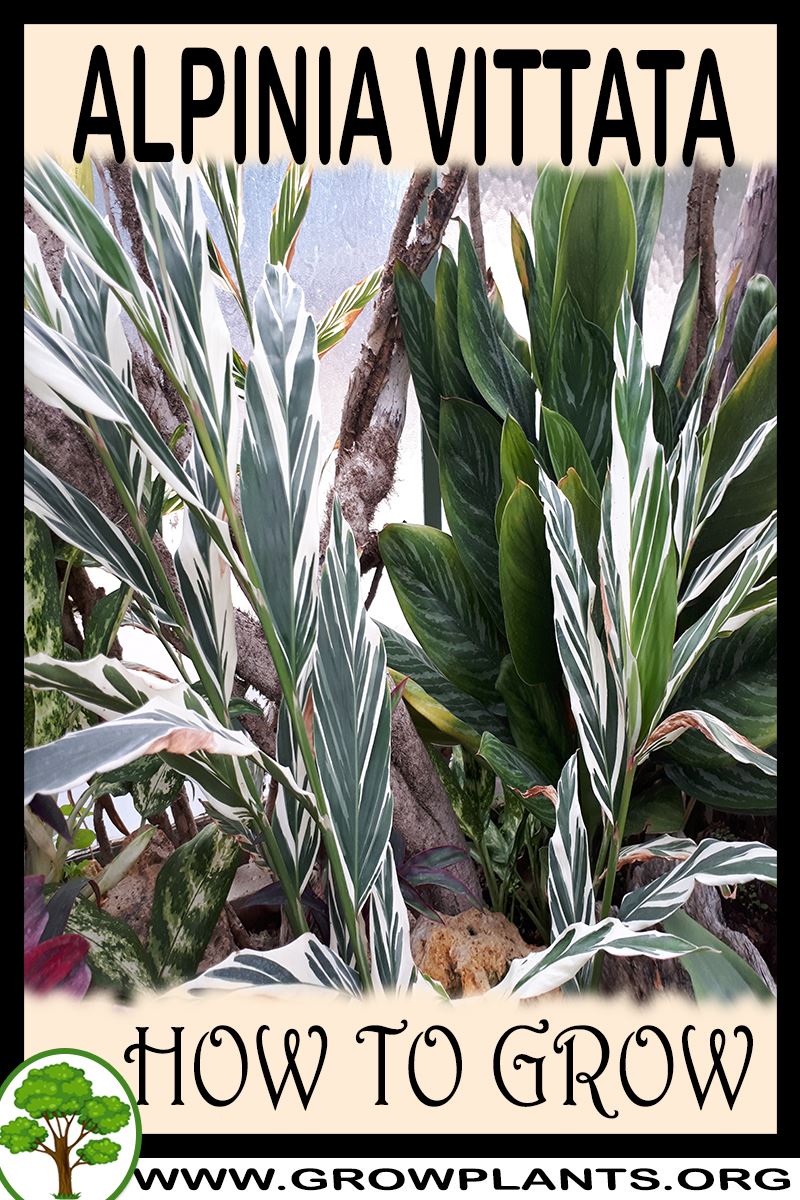
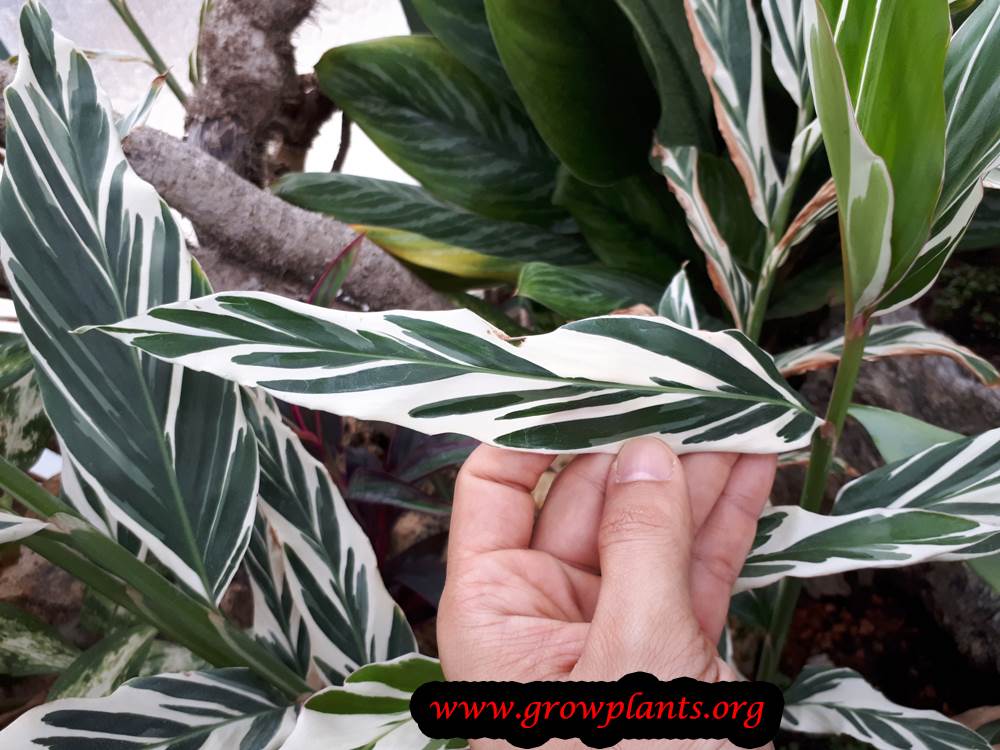
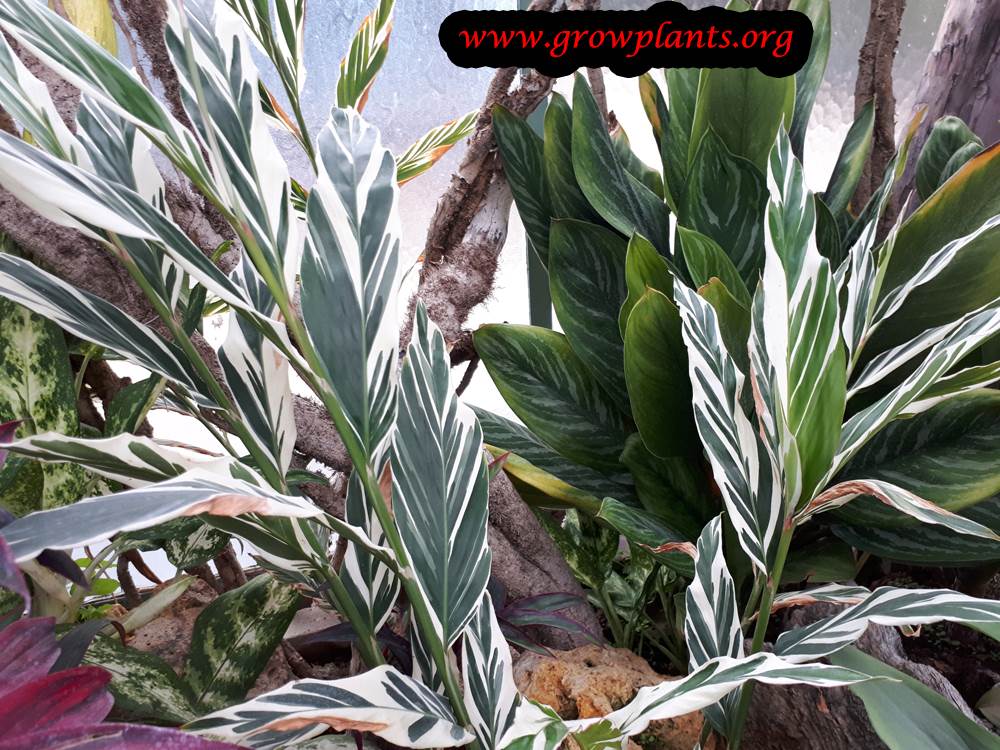
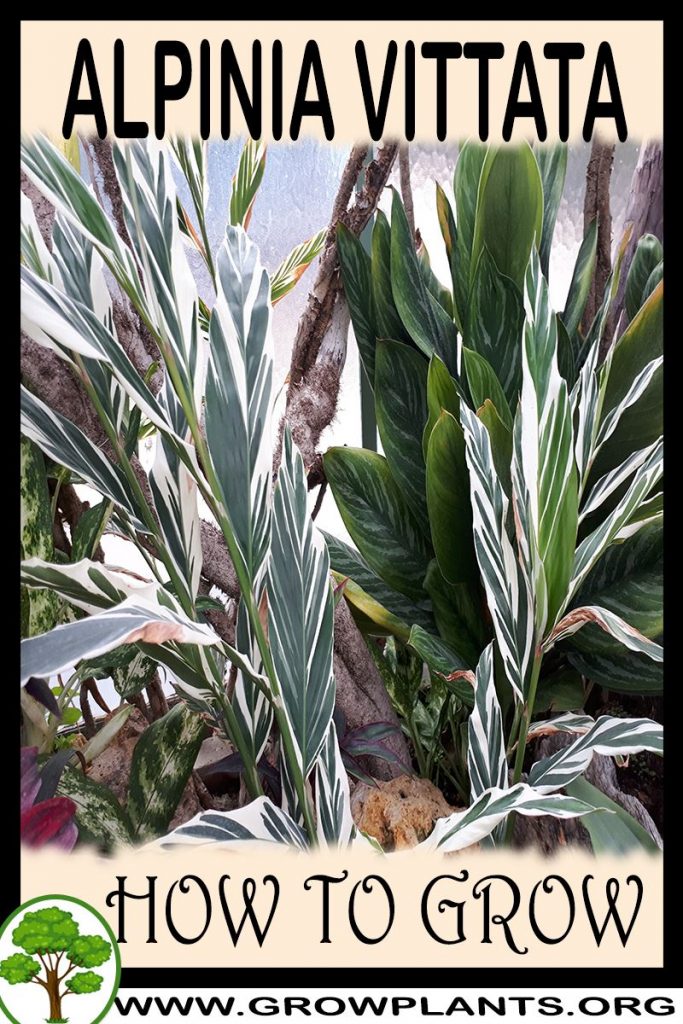
- Leaves & Foliage: Linear leaves boldly striped green and white (variegated), along the upright stems.
- Flower Characteristics: Fragrant red or pink flowers in a cone- or hive-like head at the stem tips (summer).
Primary Uses & Landscape Value
- Functional & Ornamental Roles: Fragrant ornamental grown for variegated foliage and as a cut flower; suited to tropical-style gardens, containers and as a houseplant.
Care Guide: Planting, Soil & Watering
Overview: Alpinia vittata is a fast-growing, rhizomatous ginger that thrives in warm, frost-free, humid conditions and rich, constantly moist soil. It is a thirsty plant that appreciates plenty of water and shelter from cold.
Quick Care Requirements
| Requirement | Ideal Condition |
|---|---|
| Planting Season | Through the warm season, from spring to autumn |
| Growth Rate | Fast |
| Soil Type | Rich, fertile, organic and consistently moist, yet free-draining |
| Soil pH | Slightly acidic |
| Water Need | Moderate to High — keep the soil consistently moist, never letting it dry out |
Planting & Establishment
- Best Planting Season: Plant during the warm season, from spring through autumn, once the soil has warmed and there is no further risk of frost.
- How to Plant:
- Hole Preparation: Dig a generous hole, roughly twice the width of the rhizome or root ball, and work plenty of compost into the surrounding soil.
- Soil Amendments: Enrich the planting area with compost and other organic matter to build the rich, moisture-retentive soil this ginger needs, while keeping the ground free-draining so the rhizome does not rot.
- Planting Depth: Set rhizomes shallowly, just below the soil surface, and plant divisions at the depth they were previously growing.
- Growth Speed & Expectations: A fast grower in warm conditions that spreads vigorously by rhizome to form a clump, so give it plenty of room.
Soil, Watering & Drainage Care
- Soil Mix & Drainage Needs: Grow in rich, organic soil that holds moisture but still drains, as heavy, permanently waterlogged ground can rot the rhizome. In containers use a fertile, moisture-retentive potting mix with good drainage holes.
- Watering Schedule & Technique:
- Young / Newly Planted: Keep the soil evenly moist while the plant establishes, watering whenever the surface starts to dry.
- Established: Water generously and regularly so the soil stays consistently moist, especially in warm weather and while in active growth.
- Seasonal Adjustments: Reduce watering in cooler weather and over winter when growth slows, but never let the rootball dry out completely.
Climate, Light & Hardiness
Alpinia vittata is a lush tropical foliage plant for tropical, Mediterranean, and subtropical gardens, or houseplant growing in cooler climates. It tolerates a flexible range of light from near-full sun to full shade, but needs frost-free warmth and high humidity.
Quick Climate Specifications
| Climate Zones | Tropics, Mediterranean, subtropics |
|---|---|
| USDA Hardiness Zones | 11+ |
| Frost Tolerance | None |
| Light Conditions | Almost full sun to half shade or full shade |
Sunlight & Light Exposure
Optimal Light Setup
Unusually flexible for a tropical foliage plant – tolerates conditions from almost full sun down to full shade, though variegation and vigor are typically best with bright light and some protection from the harshest midday sun.
Temperature Extremes & Hardiness
USDA Hardiness & Regional Limits
Reliable outdoors year-round only in USDA zone 11 and warmer, frost-free climates; elsewhere it is best grown as a houseplant or seasonal container plant brought indoors for winter.
Frost Sensitivity
Frost sensitive; needs frost-free conditions at all times.
Wind, Humidity & Microclimate
Humidity Preferences
Prefers high humidity and consistently moist, slightly acidic, rich soil, reflecting its tropical rainforest origin.
Microclimate Recommendations
A warm, humid, sheltered spot suits it outdoors; indoors, keep away from dry heating vents and cold drafts.
Growing in Pots, Balconies & Indoors
Alpinia vittata (Variegated ginger) (Alpinia vittata) is a lush, shade-tolerant foliage plant, and the grower confirms it grows well both as a houseplant and in containers. It can reach about 0.5-1.4 m (1.7-4.6 ft), so give a mature plant room and a large pot, but its tolerance of shade makes it a fine leafy houseplant.
Quick Details
- Container Size: A large, deep container – this is a big, vigorous plant (to about 0.5-1.4 m (1.7-4.6 ft))
- Indoor Suitability: A good houseplant (grower-confirmed); tolerates shade well
- Best Spot: Half to full shade indoors or out; keep it out of harsh direct sun
- Soil & Drainage: Rich, organic, moisture-retentive mix that still drains freely
- Watering in Pots: Keep evenly moist – these gingers like generous water; never let them go bone dry
Indoors & On the Windowsill
- A good houseplant: The grower confirms it grows well indoors, and its tolerance of shade suits ordinary room light.
- Give it room: It is a large plant, so allow space and a big pot for the foliage to develop.
- Humidity: Like most gingers it enjoys warmth and humidity – group it with other plants or mist in dry rooms.
On a Balcony or Patio
- Shade & shelter: On a balcony or patio give it a warm, sheltered, part-shaded spot out of strong wind, which tears the large leaves.
- Water & weight: A big leafy plant in a big pot is heavy and thirsty – site it where you can water often and drainage can escape freely.
Choosing the Pot, Soil & Long-Term Care
- Pot & drainage: A large container with strong drainage holes; skip a standing-water saucer to avoid root rot.
- Potting mix: A rich, organic, moisture-retentive mix opened up with perlite so it holds water yet still drains.
- Feeding: Potted gingers are hungry – feed regularly through the growing season, as watering leaches nutrients from the pot.
- Repotting: Divide and refresh the mix every couple of years as the clump fills the pot.
- Overwintering: Where winters are cold, bring the pot into a warm, bright spot – it is frost tender.
Fertilizing & Feeding
A fast-growing, rhizomatous tropical grown for both its striped foliage and fragrant flower spikes, this red ginger is a fairly steady feeder through its warm growing season, tapering off as growth slows in cooler or lower-light conditions.
Quick Fertilizing Specs
| Feeding Level | Moderate feeder |
|---|---|
| Main Nutrient Priority | Balanced feeding with adequate nitrogen to support its lush, variegated foliage and cane growth |
| Best Feeding Period | Through the warm, humid growing season into flowering |
| Organic Options | Compost or well-rotted organic matter worked into rich, moisture-retentive soil |
| Reduce/Stop Feeding | Taper off as growth slows in cooler weather or lower indoor light |
| Micronutrients | Usually met by rich, organic-matter soil and a complete fertilizer; correct only a diagnosed problem |
| Soil pH | Prefers slightly acidic, moist, humus-rich soil |
Feeding by Growth Stage
Spring flush of cane and foliage growth
Fuel the emergence of new canes and their striped leaves as warm, humid growing conditions return.
| Nutrient direction | A balanced, complete fertilizer with adequate nitrogen supports vigorous new cane and leaf growth. |
|---|---|
| Timing | As new growth resumes with warm temperatures and rising humidity. |
| Frequency | Regular feeding through this flush supports the plant’s naturally fast growth. |
| Fertilizer types | A balanced, complete fertilizer with adequate nitrogen, Compost or organic matter worked into moist, humus-rich soil |
| Precautions | Keep the rich, moist soil this plant favors well fed but not waterlogged, since soggy soil undermines root health regardless of feeding. |
Flowering
Support the fragrant, hive-shaped flower spikes at the ends of mature canes.
| Nutrient direction | Continue balanced, complete feeding; adequate overall nutrition drives good flowering more reliably than any single nutrient. |
|---|---|
| Timing | As flower spikes form and open during the warm growing season. |
| Frequency | Steady, regular feeding through the bloom period keeps flowering and foliage growth going together. |
| Fertilizer types | A balanced, complete fertilizer, Organic matter renewed as a top-dressing |
| Precautions | Do not switch to a high-phosphorus “bloom booster”; balanced feeding with adequate nitrogen is what supports strong flowering in this species. |
Cooler-season or low-light slowdown
Let the plant rest through cooler weather or reduced indoor light without pushing new growth it cannot support well.
| Nutrient direction | None – withhold fertilizer while growth is slowed by cool weather or low light. |
|---|---|
| Timing | During cooler months outdoors, or over winter for plants grown as houseplants with reduced light. |
| Frequency | No feeding at this stage. |
| Fertilizer types | No feeding at this stage; hold off fertilizing until warm, humid active growth resumes. |
| Precautions | Do not fertilize while growth has slowed for the season; unused nutrients can build up in the soil rather than being taken up. |
Nutrient Deficiency Signs & Corrections
Older, lower leaves turn pale green to yellow and overall cane growth slows.
| Possible causes | low available soil nitrogen, nitrogen leaching from this plant’s frequent watering needs, thin or depleted soil low in organic matter |
|---|---|
| Appears first on | older, lower leaves on established canes |
| What to check | recent feeding history, soil organic matter, watering frequency and drainage |
| Possible correction | Apply a balanced, nitrogen-containing complete fertilizer and renew organic matter in the soil. |
New leaves emerge pale yellow while the veins remain green, most visible on fresh growth.
| Possible causes | alkaline or high-pH soil tying up available iron, waterlogged soil limiting root function, cold soil slowing nutrient uptake |
|---|---|
| Appears first on | newest leaves at the top of the canes |
| What to check | soil pH, drainage and any waterlogging, recent soil temperature |
| Possible correction | Correct soil pH toward the slightly acidic range this plant favors and improve drainage; apply a chelated iron product per its label if pale leaves persist. |
Canes grow well but few or no flower spikes form.
| Possible causes | insufficient light for a plant that needs strong brightness to bloom well, canes too young or not yet mature enough to flower, overall poor nutrition or very lean soil limiting energy for flowering |
|---|---|
| Appears first on | whole-planting effect rather than a single leaf or cane |
| What to check | light levels reaching the planting, age and maturity of the canes, recent feeding and soil richness |
| Possible correction | Improve light exposure, allow canes to mature, and maintain steady balanced feeding through the growing season. |
Pruning, Training & Seasonal Maintenance
Alpinia vittata (red ginger) grows as a clump of soft, non-woody canes from a spreading rhizome, so pruning is really clump management rather than shaping wood. Tolerance is moderate: individual canes can be cut freely at the base, but the plant has no permanent branch framework to injure. The main goals are removing canes once they finish flowering and keeping the clump from becoming congested, which the source notes as an autumn/winter task once flowering has tailed off; light cane and leaf tidying can otherwise be done any time. Because each cane’s ornamental value is mostly used up after it blooms, pruning timing has little effect on the plant’s overall shape but a real effect on how tidy and floriferous the clump looks the following season.
Quick Pruning & Maintenance Specs
| Pruning Tolerance | Moderate |
| Primary Pruning Window | Autumn/winter, once flowering has finished and growth slows |
| Secondary Maintenance Window | Any time for dead, damaged or overcrowded canes |
| Typical Frequency | 1–2 clump clean-outs per year |
| Main Objective | Remove spent flowering canes; thin an overcrowded clump for airflow |
| Young Plant Priority | Let new divisions establish; avoid cutting canes in the first season |
| Mature Plant Priority | Base-level cane renewal to keep flowering canes coming |
| Best Tool Type | Bypass secateurs for canes; precision snips for foliage |
| Avoid Heavy Pruning During | Active flowering flush |
Pruning by Plant Age & Size
Newly Established
Leave the clump alone beyond removing any transplant-damaged foliage; new rhizome divisions need their first canes to build reserves.
Young / Formative
No structural training – canes emerge in a natural clumping habit from the rhizome. The only formative task is thinning weak, thin canes if the clump is planted densely, to favour strong growth.
Mature / Established
Ongoing renewal: cut individual canes to the base once they have flowered and start to decline, which keeps the clump producing fresh flowering canes rather than accumulating tired ones.
Seasonal Pruning Schedule
Post-Flowering
Objective: clear out canes that have already bloomed. Remove: spent flowering canes cut back to the base, plus any dead or storm-damaged canes. Do not remove: young, still-green non-flowering canes that have not yet bloomed. Expected response: the rhizome pushes fresh canes from the base, and the clump stays denser and more floriferous rather than accumulating leggy, spent growth. Flowering impact: positive – removing spent canes redirects energy to new flowering shoots for the next cycle.
Special Growth to Remove
- Spent flowering canes – each cane flowers once at its tip; once the fragrant red/pink inflorescence fades, cut that cane to the base rather than leaving it to decline in place.
- Dead or damaged canes – remove promptly, especially after cold snaps, since this species is not frost-hardy.
- Overcrowded basal canes – because the rhizome is described as aggressive/spreading, thinning excess basal canes keeps the clump in bounds; use division rather than pruning if the spread itself needs to be controlled.
Container & Small-Space Pruning
Commonly grown as a houseplant or in a container. In a pot, cane renewal is even more important since the clump cannot spread to compensate for old canes – cut spent and crowded canes to the base regularly to keep a container specimen full rather than top-heavy, and expect a smaller mature size than in-ground plants.
Tools
Bypass secateurs for cutting canes at the base; precision snips for trimming individual leaves or fibrous leaf tips.
Tool Hygiene & Disease Risk
Increased – the species is noted as susceptible to Phyllosticta leaf spot, so use clean tools and remove spot-affected foliage promptly rather than leaving it in the clump.
Cut Placement & Technique
Cut spent or damaged canes as close to the base (soil/rhizome level) as possible – a partial cane left standing will not reflower and just looks untidy. Trim damaged leaf tips just above the healthy tissue.
Heavy Pruning & Rejuvenation
Tolerated: if cold or neglect leaves the whole clump tatty, cutting all canes to the ground in late winter is an acceptable reset – the rhizome resprouts a full flush of new canes, though flowering will be delayed until the new canes mature.
Post-Pruning Care
Water normally after routine cane removal; after a full hard cutback, keep the rhizome on the drier side of its normal moist regime until new shoots appear to avoid rot at the cut bases. Do not fertilize specifically in response to pruning – once-yearly feeding is enough for this species.
Common Pruning Mistakes
- Cutting a cane back partway instead of to the base – a stub will not produce new flowers or foliage.
- Leaving spent canes in place all season, which shades out and crowds new emerging canes.
- Hard-cutting the whole clump during active flowering, sacrificing the current bloom for no real gain.
When NOT to Prune
Avoid a full hard cutback right before the cool season if plants are in a marginal (cooler) part of their range, since fresh growth is more cold-sensitive. Avoid removing actively flowering canes purely for tidiness – wait until the bloom fades.
Recommended Tools (by task)
- bypass_secateurs – for cutting fibrous, soft-wood canes cleanly at the base.
- precision_snips – for trimming leaves and small damaged tips without crushing the tissue.
- blade_disinfectant – reduces spread of Phyllosticta leaf-spot fungus between canes and plants.
Propagation Guide
Red Ginger is most easily and reliably propagated by dividing its spreading rhizome, which quickly reproduces the plant and keeps its variegated foliage true. Seed is listed as a possible route but is rarely used in practice, since it is slow and seedlings may not retain the parent’s exact leaf coloring; the site notes grafting or other vegetative reproduction is not required. Overall this is an Easy plant to propagate by division.
Quick Propagation Specs
| Best Propagation Method | Rhizome division |
| Alternative Methods | Seed (uncommon in cultivation) |
| Propagation Difficulty | Easy |
| Seed True-to-Type | Variable – seedlings may not retain the variegated leaf pattern |
| Vegetative True-to-Type | Yes |
| Best Propagation Season | Spring to summer, during active growth |
Growing from Seed
Seed is listed as an option for starting this plant, but the site gives no specific sowing or germination data, and named/variegated forms are usually reproduced vegetatively instead since seedlings can vary. If attempting seed, sow in a warm, humid, rich growing medium similar to the plant’s normal growing conditions.
Rhizomes, Tubers, Bulbs & Corms
Rhizome Division: divide the clump during active growth in spring to summer, when the plant is putting on new shoots. Each division should include at least one growth point (an emerging shoot or visible bud) along with attached roots. Trimming back some of the top growth at planting can help reduce water loss while new roots establish. Keep new divisions warm, humid, and consistently moist (never fully dry) as they re-establish, matching this plant’s normal frost-free, humid, rich-soil requirements; this also fits its naturally vigorous, spreading habit noted for this species.
Bloom & Flower Guide
Quick Details
- Bloom Season: Summer
- Time to First Bloom: On established clumps in warm conditions, once the plant is in strong active growth
- Flower Appearance: Fragrant red or pink flowers in a hive-shaped cluster at the tips of the stems
- Edibility: Grown as an ornamental, fragrant cut flower; the flowers are not eaten as a flower
Detailed Blooming Overview
Alpinia vittata is a variegated ginger grown for its bright, striped foliage and its scented blooms. In the warmth of summer, established clumps carry fragrant red-to-pink flower clusters at the ends of the leafy stems, making a striking and long-lasting cut flower. It flowers best where it has room to form a full, settled clump.
Flower Characteristics
- Fragrant flowers in red or pink, packed into a hive-shaped cluster.
- Held at the end of the stems, above the green-and-white striped leaves.
Bloom Care & Thinning
- Encouraging bloom: Warmth, humidity and an established clump bring on the best flowering; feed and water well through the growing season.
- After flowering: Cut spent flowering stems back to the base to keep the clump tidy and vigorous.
- Pollination: Ginger flowers are visited by bees and nectar-feeding birds in warm climates.
Pests, Diseases & Troubleshooting
Overview: Alpinia gingers are lush, tender tropicals that stay largely trouble-free outdoors in warm humid climates, but under glass or indoors they attract spider mites, mealybugs and scale, and their fleshy rhizomes are vulnerable to soil-borne rots and nematodes. The real threats are below ground – bacterial wilt, rhizome and root rot in warm wet soil – so clean stock, good drainage and warmth without waterlogging are the foundation of healthy plants. The variegated foliage ginger is grown for its striped leaves, which scorch in fierce sun; spider mites and scale are the main indoor pests and it is cold-sensitive.
Quick Troubleshooting Overview
| Issue / Pest | Main Symptom | Primary Solution |
|---|---|---|
| Spider mites | Stippling, bronzing and webbing, worst in dry indoor air | Raise humidity, hose foliage; horticultural oil |
| Mealybugs & scale | White fluff or brown discs on stems, leaf sheaths, rhizomes | Alcohol/oil; inspect and clean rhizomes before planting |
| Root-knot nematode | Stunting, yellowing, galled and knotted roots/rhizomes | Clean stock, rotate soil; solarise, add organic matter |
| Bacterial wilt | Sudden wilt, yellowing, milky ooze from cut stem base | Rogue and destroy; never replant clumps or wet soil |
| Rhizome / soft rot | Soft, foul, water-soaked rhizome; plant collapses | Sharp drainage; clean seed pieces, avoid waterlogging |
| Cold damage / chlorosis | Blackened tips after chill; yellowing on wet or poor soil | Keep warm and drained; feed, correct iron |
Common Pests & Management
- Spider mites (Tetranychus urticae):
- Symptoms: Fine pale stippling and bronzing of the broad leaves with webbing on the undersides and along the midrib, worst on plants kept in hot, dry, still indoor or greenhouse air.
- Prevention & Control: Raise humidity, mist and hose the foliage (especially undersides), and keep plants unstressed. Treat outbreaks with horticultural oil or insecticidal soap, repeating to break the cycle, and use predatory mites under cover.
- Mealybugs (Pseudococcus / Planococcus spp.):
- Symptoms: White, cottony, waxy clusters tucked into leaf sheaths, stem bases and among the rhizomes, with honeydew and sooty mould; a root/rhizome form stunts potted plants.
- Prevention & Control: Wipe or dab clusters with alcohol and rinse the crown; inspect and clean rhizomes before planting. Use insecticidal soap, neem or horticultural oil for heavier infestations, and repot into fresh mix after washing the roots.
- Scale (Coccus / Aspidiotus spp.):
- Symptoms: Flat brown or greyish discs and bumps along stems, leaf sheaths and midribs; heavy colonies sap vigour, yellow the foliage and drip honeydew that blackens with sooty mould.
- Prevention & Control: Scrape off and wipe stems clean, and prune out badly encrusted canes. Smother crawlers with horticultural oil or insecticidal soap, repeating for successive generations, and conserve natural enemies outdoors.
- Root-knot nematode (Meloidogyne spp.):
- Symptoms: Above ground, unexplained stunting, yellowing, wilting in heat and poor vigour; below ground, swollen galls and knots on roots and rhizomes that cripple water and nutrient uptake and open the door to rots.
- Prevention & Control: Start with clean, nematode-free rhizomes and fresh or solarised soil, and rotate planting sites. Build soil organic matter and beneficial microbes, and discard heavily galled clumps rather than replanting infested stock.
- Chewing pests – beetles & caterpillars (leaf-rollers, Cnaphalocrocis and beetles):
- Symptoms: Ragged holes, notched margins and rolled or tied leaves from caterpillars and leaf-eating beetles, common on gingers in warm humid gardens; damage is usually cosmetic.
- Prevention & Control: Hand-pick caterpillars and beetles, unroll and remove leaf-rollers, and encourage birds and predatory insects. For heavier caterpillar pressure use a targeted Bacillus thuringiensis (Bt) spray, which spares beneficials.
Diseases & Fungal Issues
- Bacterial wilt (Ralstonia solanacearum):
- Symptoms: The most serious ginger disease – sudden wilting and yellowing of shoots that does not recover overnight, browning from the base up, and a milky bacterial ooze when a cut stem is stood in water; the rhizome rots and smells foul.
- Treatment & Management: There is no cure. Rogue out and destroy affected plants with the soil around them, never save or replant rhizomes from an infected clump, sterilise tools, and avoid working plants when wet. Use clean stock and fresh, well-drained, disease-free soil, and rotate away from the ginger and tomato families.
- Rhizome & soft rot (Pythium / Fusarium spp.):
- Symptoms: Yellowing and wilting of shoots, then a soft, water-soaked, foul-smelling rot of the rhizome (Pythium soft rot) or a slower, drier yellows-and-decline with rotting rhizomes (Fusarium); both thrive in warm, wet, poorly drained soil.
- Treatment & Management: Prevention is everything: plant clean, undamaged rhizomes in raised, sharply drained beds or gritty container mix, avoid waterlogging, and do not injure the rhizomes. Remove and destroy rotting clumps and improve drainage before replanting elsewhere.
- Leaf spot (Phyllosticta / Colletotrichum spp.):
- Symptoms: Small brown, tan or grey spots, sometimes with yellow halos or water-soaked margins, coalescing into blotches on the leaves in prolonged warm, wet, humid weather.
- Treatment & Management: Improve air movement and spacing, water at the base to keep foliage dry, and clear fallen affected leaves. Copper fungicide helps where spotting spreads in a persistently wet season; it is otherwise mostly cosmetic.
- Fusarium yellows (Fusarium oxysporum):
- Symptoms: Progressive yellowing, stunting and wilting of shoots with dry, discoloured internal rhizome tissue; slower than bacterial wilt but similarly persistent in the soil.
- Treatment & Management: Use clean stock and fresh soil, ensure sharp drainage, and rotate. Remove and destroy affected clumps; the fungus persists in soil, so do not replant gingers into a known-infected bed.
Growing Difficulties & Abiotic Problems
- Cold & frost damage:
- Cause & Symptoms: These are warm-tropical plants; chill blackens and collapses the foliage and hard frost cuts the top growth to the ground, while cold wet soil rots the rhizomes.
- Correction Strategy: Grow in warmth and shelter, mulch the rhizomes heavily in marginal areas, and lift or protect containers over winter. Keep the soil on the dry side in cold weather; established rhizomes often reshoot from below once warmth returns.
- Chlorosis (yellowing leaves):
- Cause & Symptoms: Pale or yellow leaves with green veins from iron shortage on alkaline or waterlogged soil, or overall yellowing from cold wet roots or nutrient shortage in a tired mix.
- Correction Strategy: Improve drainage, feed with a balanced fertiliser through the growing season, and apply chelated iron and organic matter or acidify slightly on alkaline soils. Correct watering usually greens the plant back up.
- Leaf-tip & margin scorch:
- Cause & Symptoms: Brown, crisped leaf tips and edges from dry air, drought, salt build-up in containers, or hot dry wind – gingers want steady moisture and humidity.
- Correction Strategy: Keep humidity and even soil moisture up, shelter from drying wind, and flush containers periodically to leach salts. Mulch outdoor plants to hold moisture around the roots.
- Sun scorch / too much light:
- Cause & Symptoms: Bleached, scorched patches and faded, crisped leaves on plants in fierce full sun, especially the variegated forms and those grown in low light then moved out.
- Correction Strategy: Give bright light with shade from the harshest midday sun, and acclimatise gradually when moving plants. Filtered light or morning sun keeps the foliage lush and unmarked.
What Helps – Products & Tools
For Alpinia gingers the priorities are clean rhizomes and sharp drainage. Useful items are horticultural oil and insecticidal soap for spider mites, mealybug and scale; Bt for caterpillars; copper fungicide for leaf spot in wet spells; and chelated iron plus balanced feed for chlorosis. There is no spray cure for bacterial wilt, Fusarium or rhizome rot – the defences are disease-free stock, raised well-drained beds and rotation. The source’s “Phyllosticta zingiberi, rhizome flies” points only at leaf spot and soil pests; the graver risks are the below-ground wilts and rots above.