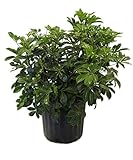




Plant Profile & Key Characteristics
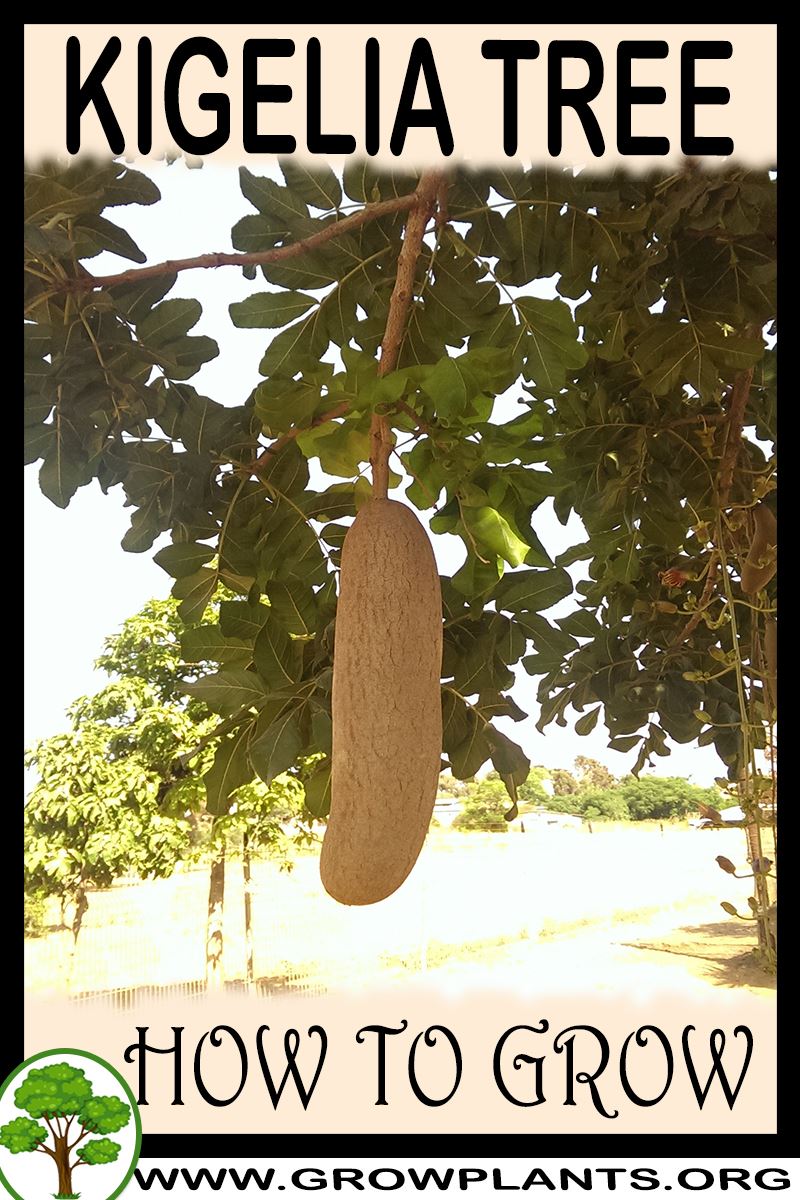
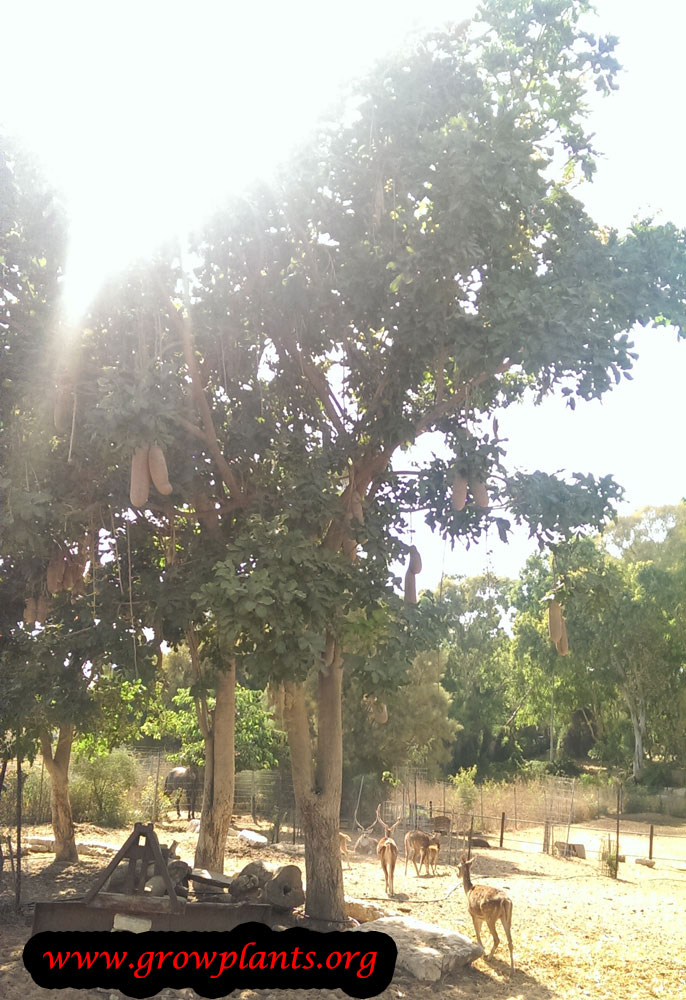
Overview: Kigelia (sausage tree) is a large tree 10–20 m (30–60 ft) tall, evergreen in moist climates but drought-deciduous, grown as a shade and ornamental specimen. It is known for its big, fragrant, bat-pollinated flowers and enormous sausage-like fruits.
Quick Specifications
| Specification | Attribute |
|---|---|
| Plant Type / Life Cycle | Perennial |
| Foliage Type | Semi-evergreen (drought-deciduous in hot, dry spells) |
| Mature Size | 10–20 m tall (30–60 ft) |
| Growth Rate | Moderate to fast |
| Toxicity | Raw fruit is toxic and purgative – not edible fresh; only used after traditional processing (and to flavour beer) |
| Hardiness | USDA zones 9+ |
Growth Form & Structure
- Height & Spread: A large tree 10–20 m (30–60 ft) with a broad, rounded crown; not suited to containers.
- Growth Habit & Form: Single-trunked shade tree with a spreading canopy.
- Lifespan & Maturity: Long-lived tree of moderate to fast growth.
Anatomy & Physical Features
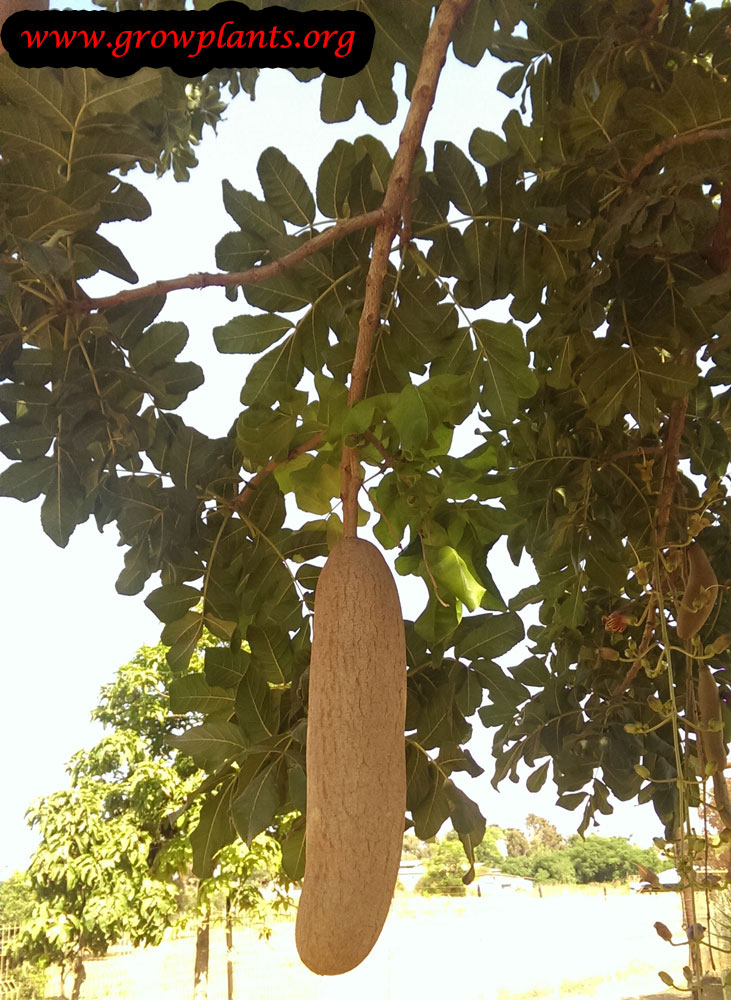
- Leaves & Foliage: Green, elliptic leaflets borne in pinnate (compound) arrangement.
- Flower Characteristics: Large, fragrant, mouth-shaped dark-red flowers hanging on long stalks; bat-pollinated.
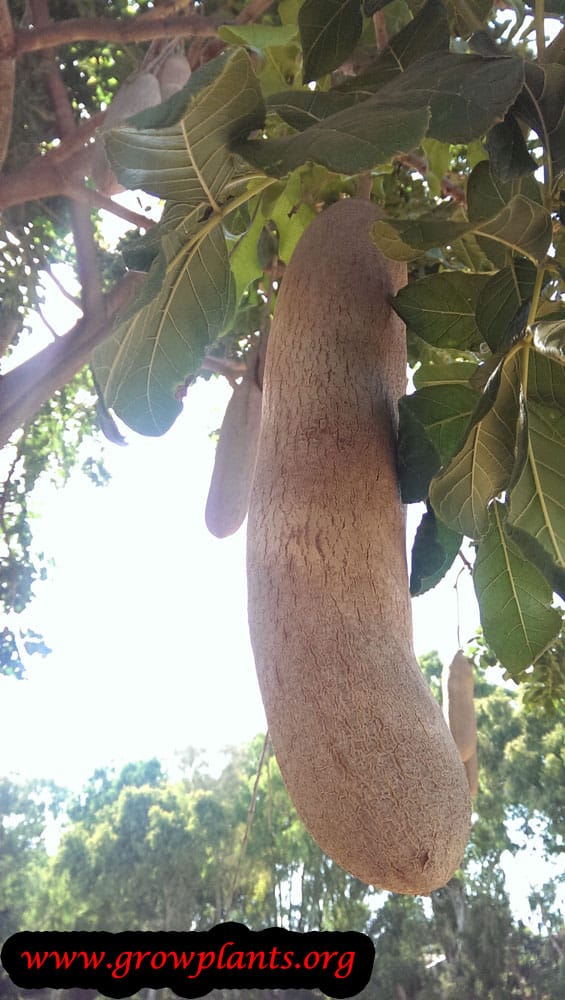
- Fruit Profile: Very large, heavy, brown sausage-shaped fruits; not edible raw but used to brew beverages after processing.
Primary Uses & Landscape Value
- Functional & Ornamental Roles: Shade and ornamental specimen tree valued for its dramatic flowers and fruit; also used in traditional medicine. Caution: the heavy fruits can fall and injure people or property.
Care Guide: Planting, Soil & Watering
Overview: The sausage tree is a large, frost-tender tree (hardy roughly zone 9 and up) for tropical to mediterranean climates, grown in full sun as a shade and flowering tree. It appreciates a well-drained soil and moderate to generous watering, and grows quickly in warmth.
Quick Care Requirements
| Requirement | Ideal Condition |
|---|---|
| Planting Season | In spring, summer or autumn during the warm, frost-free season |
| Growth Rate | Moderate to fast |
| Soil Type | Well-draining soil |
| Water Need | Moderate to high – water regularly, especially while young and in dry heat |
Planting & Establishment
- Best Planting Season: Plant during the warm season, from spring to autumn, in frost-free conditions so it establishes before any cold.
- How to Plant:
- Hole Preparation: Dig a wide hole about twice the width of the root ball and the same depth, loosening the sides so roots spread; give it plenty of room as a large tree.
- Soil Amendments: Mix compost or organic matter into the backfill and make sure the site drains freely.
- Planting Depth: Set the top of the root ball level with the surrounding soil, keeping the root collar at grade.
- Growth Speed & Expectations: Moderate to fast in warmth, developing quickly into a broad shade tree.
Soil, Watering & Drainage Care
- Soil Mix & Drainage Needs: It grows best in a deep, well-drained soil; water generously but avoid waterlogging.
- Watering Schedule & Technique:
- Young / Newly Planted: Water young trees deeply and regularly to build a strong root system.
- Established: Established trees take moderate to generous water and are more resilient, but still appreciate deep watering in dry heat.
- Seasonal Adjustments: Water more through hot, dry summer weather and reduce in the cooler, wetter part of the year.
Climate, Light & Hardiness
Kigelia (sausage tree) grows in tropical, Mediterranean, desert, and subtropical climates in full sun, and is evergreen in warm, humid conditions but becomes deciduous under hot, dry stress. It has some cold tolerance for a tropical tree but is best suited to areas that see only light, occasional frost rather than hard freezes.
Quick Climate Specifications
| Climate Zones | Tropical, Mediterranean, Desert, Subtropical |
|---|---|
| USDA Hardiness Zones | 9+ |
| Frost Tolerance | Low (tolerates only light frost) |
| Light Conditions | Full Sun |
Sunlight & Light Exposure
Optimal Light Setup
Needs full sun to grow and flower well as a shade tree species adapted to open, sunny savanna-type conditions.
Temperature Extremes & Hardiness
USDA Hardiness & Regional Limits
Suited to USDA zone 9 and warmer, reflecting a tropical-to-subtropical origin with somewhat better cold tolerance than strictly tropical species.
Cold Damage & Winter Protection
Foliage responds to hot, dry stress by dropping (deciduous behavior) even though the species is normally evergreen in favorable conditions; in cooler climates within its zone range, some protection during the coldest nights is prudent, especially for young trees.
Frost Sensitivity
Generally tolerates only light, brief frost; sustained or hard freezes are likely to cause significant damage, so it is not recommended for climates with regular hard frost.
Extreme Heat Tolerance
Well adapted to hot, dry conditions, responding to heat stress by shedding leaves rather than by permanent damage.
Wind, Humidity & Microclimate
Rainfall & Seasonal Moisture
Tolerates both average and generous water, reflecting its adaptability across humid tropical and drier savanna-type climates.
Growing in Pots, Balconies & Indoors
The sausage tree (Kigelia) is a large tree (10-20 m), so it is not a long-term container or indoor plant. The grower marks it as neither a houseplant nor a pot plant.
Quick Details
- Container Size: Not suited to containers long term
- Indoor Suitability: Not a houseplant – a full-size tree
- Best Spot: Full sun, open ground
- Soil & Drainage: a light, aerated potting mix – peat or coir blended with perlite or vermiculite, plus some organic matter/compost (for young/bonsai plants)
- Watering in Pots: Frequent while young in a tub – pots dry fast; avoid waterlogging
Indoors & On the Windowsill
- Not a houseplant: The grower marks it as unsuitable indoors – it is a full-size tree that needs open ground and full light.
On a Balcony or Patio
- Not for pots: The grower does not recommend container growing – it simply gets too large.
- Hazard: Its large, heavy fruit can fall and injure people – a real reason to site it carefully in open ground away from paths and seating.
- Young plants: A large tub can hold a sapling for a short spell, but plan its final position in open ground with room to spread.
Choosing the Pot, Soil & Long-Term Care
- Young / bonsai only: If you grow it in a pot at all, keep it to the juvenile stage in a large, free-draining tub with drainage holes.
- Potting mix: a light, aerated potting mix – peat or coir blended with perlite or vermiculite, plus some organic matter/compost.
- Feeding & watering: Potted plants exhaust their feed faster because water washes nutrients out, so feed a little more often than plants in open ground during active growth; potted trees also dry out fast, so water more attentively than one in the ground.
- Repotting: Refresh the top of the mix each growing season and pot up or divide roughly every couple of years, trimming crowded roots – but recognise that a vigorous tree will soon need the open ground.
Fertilizing & Feeding
Grown mainly as a fragrant-flowered ornamental shade tree, the sausage tree responds well to nitrogen-supported feeding while young and vigorous, settling into more moderate, balanced feeding as it matures into its large, heavy-limbed form.
Quick Fertilizing Specs
| Feeding Level | Moderate feeder |
|---|---|
| Main Nutrient Priority | Nitrogen-supported feeding while young, shifting to balanced feeding as the tree matures |
| Best Feeding Period | During the active growing season, especially while the tree is young and putting on size |
| Organic Options | Organic matter worked into the root zone supports this fast-to-medium growing tropical tree |
| Reduce/Stop Feeding | Reduce feeding as growth naturally slows in cooler or drier periods |
Feeding by Growth Stage
Young tree establishment
Support vigorous early growth as the sausage tree establishes its canopy and root system.
| Nutrient direction | A nitrogen-supported, complete fertilizer favors the strong early growth typical of this fast-to-medium growing tropical tree. |
|---|---|
| Timing | During the active growing season while the tree is young. |
| Frequency | Feed through the growing season and reduce as growth naturally slows. |
| Fertilizer types | A nitrogen-supported, complete fertilizer suited to establishing shade trees, Organic matter worked into the root zone |
| Routine trace nutrients | iron, manganese |
| Precautions | Match feeding to the tree’s water needs; this species prefers consistently available moisture and should not be allowed to dry out while actively growing. |
Established tree growth
Maintain healthy canopy growth and flowering on a maturing shade tree.
| Nutrient direction | A balanced, complete fertilizer supports steady growth and the tree’s large, fragrant red flowers without pushing excessive, weak growth. |
|---|---|
| Timing | During the active growing season for an established tree. |
| Frequency | Moderate feeding through the growing season is generally enough for an established tree. |
| Fertilizer types | A balanced, complete fertilizer applied at a moderate rate |
| Routine trace nutrients | iron, manganese |
| Precautions | Site this tree away from paths and seating areas where its heavy, hanging fruit could fall; this is a placement concern rather than a feeding one, but worth noting alongside routine care. |
Nutrient Deficiency Signs & Corrections
Pale foliage and slow growth in a young or establishing tree.
| Possible causes | insufficient nitrogen during active growth, root competition or stress after transplanting, soil lacking organic matter |
|---|---|
| Appears first on | new growth |
| What to check | recent feeding history, time since planting or transplanting, soil organic matter |
| Possible correction | Apply a nitrogen-supported feeding during the growing season and improve soil organic matter. |
New leaves emerge yellowish with darker green veins.
| Possible causes | iron availability limited by soil pH, root stress from waterlogged or compacted soil, genuinely low soil iron |
|---|---|
| Appears first on | newest foliage |
| What to check | soil drainage and moisture, soil pH if known, root health |
| Possible correction | Improve drainage first; if chlorosis persists, apply a chelated iron product per its label. |
Wilting or dieback despite an established feeding routine.
| Possible causes | insufficient water for this moisture-loving species, poor drainage compounding fertilizer salts around the roots, root damage from soil compaction |
|---|---|
| Appears first on | leaf margins and outer canopy |
| What to check | watering consistency, soil drainage, signs of root or trunk damage |
| Possible correction | Correct watering and drainage first, then resume normal feeding once the tree recovers. |
Pruning, Training & Seasonal Maintenance
Kigelia is a fast-to-medium growing shade tree that needs only light, formative pruning while young to establish a strong single trunk and canopy; once established it is not routinely cut back hard. The tree’s most distinctive pruning consideration is not flowering or fruiting wood but safety: its heavy, sausage-shaped fruits hang on long stalks from the branches and can injure people or property when they drop, so structural decisions – where the canopy is allowed to develop, and keeping fruiting branches clear of paths, seating, and parking – matter more here than in most ornamental shade trees.
Quick Pruning & Maintenance Specs
| Pruning Tolerance | Low–Moderate – light formative and safety pruning |
| Primary Pruning Window | Summer, during active growth |
| Secondary Maintenance Window | None significant beyond routine sanitary checks |
| Typical Frequency | Occasional, mainly while young |
| Main Objective | Build a single strong trunk/canopy while young; manage fruit-drop hazard on mature specimens |
| Young Plant Priority | Establish one central trunk; remove low or weak competing branches |
| Mature Plant Priority | Keep fruiting branches clear of paths, parking, seating, and structures; remove dead/damaged/hazardous wood |
| Best Tool Type | Loppers/pruning saw for young structural cuts; pole pruner for high branches on a mature tree |
| Avoid Heavy Pruning During | Cooler/frost-risk weather – the species tolerates ‘more than light frost’ per its own care note, so cold periods are its most vulnerable time |
Pruning by Plant Age & Size
Newly Established
Minimal pruning – remove only damaged growth and let the young tree establish.
Young / Formative
Central-leader training – select and keep one dominant trunk, and remove competing leaders and low branches that will eventually be in the way of people or vehicles as the tree matures, since those branches will later carry very heavy hanging fruit.
Mature / Established
Little routine pruning; when it is done, prioritize removing or redirecting any fruit-bearing branch positioned over walkways, seating, or parking, and removing dead or hazardous wood.
Structural Pruning & Training
Focus while young on siting the canopy and main scaffold so that, at maturity, the heaviest fruiting branches are not directly over high-traffic areas – a safety-driven structural decision specific to this species rather than a cosmetic one.
Special Growth to Remove
No documented sucker or watersprout issue for this species. The operative ‘special growth’ consideration is managing where heavy fruit-bearing branches are allowed to hang, given the documented fruit-drop hazard.
Tools
Loppers and a pruning saw for young structural cuts; a pole pruner for reaching higher branches once the tree is large (10–20 m at maturity).
Tool Hygiene & Disease Risk
Routine – no specific elevated disease risk is documented for this species; clean, sharp cuts are sufficient.
Cut Placement & Technique
Cut just outside the branch collar; stage the removal of any larger limb, especially a fruit-laden one, to avoid bark tear and to control where the heavy branch falls.
Heavy Pruning & Rejuvenation
Not documented or advisable as routine care – ‘just for design’ per the species’ own care note indicates light, purely formative pruning rather than hard rejuvenation, and there is no basis in the plant’s own data for hard cutting back a mature specimen.
Post-Pruning Care
Water normally; watch young trees for aphid and mite activity after cuts, since a fresh growth flush can attract them.
Common Pruning Mistakes
- Allowing a heavy fruiting branch to develop directly over a path, seating area, or parking spot.
- Over-pruning a species that inherently needs very little structural work.
When NOT to Prune
During frost or cold snaps, since the species is more cold-sensitive than most (only tolerating light frost); avoid unnecessary pruning of a species that naturally needs minimal intervention.
Recommended Tools (by task)
- loppers – young branch selection and removal of small-to-medium wood.
- pruning_saw – larger structural cuts as the trunk and scaffold branches thicken.
- pole_pruner – reaching high branches, including fruit-hazard management, once the tree reaches its mature height.
Pruning Troubleshooting
| Problem | Possible Cause | What to Check | Corrective Action |
| Fruit dropping onto paths or people | Fruiting branches sited directly over high-traffic areas | Branch position relative to paths, parking, and seating | Remove or redirect the offending branch while young, or restrict access beneath mature fruiting branches |
| Weak or lopsided young trunk | Multiple competing leaders left unpruned | Number of co-dominant stems | Select one central leader early and remove competitors |
| Pest buildup (aphids/mites) after pruning | Flush of soft new growth following cuts | Undersides of new leaves | Monitor and treat per standard pest thresholds; avoid repeated unnecessary flush-inducing cuts |
Propagation Guide
Sausage tree is propagated from seed – the only method recorded for it – and no grafting or vegetative method is needed to grow a typical plant. Propagation is best rated Moderate, reflecting the generally unhurried germination typical of large-seeded tropical trees rather than any specific difficulty noted for this species.
Quick Propagation Specs
| Best Propagation Method | Seed |
| Propagation Difficulty | Moderate |
| Seed True-to-Type | Usually true-to-type (species) |
| Best Propagation Season | Spring, summer or autumn |
Growing from Seed
Seed Handling & Viability
Extract seed from the ripe fruit pulp before sowing, as is standard practice for fleshy-fruited tree seed.
Sowing Season
Spring, summer or autumn.
Germination Conditions
Warm, humid conditions typical of this tropical genus favor germination.
Germination Time
Can take several weeks to a few months, and germination is often uneven for this genus.
Seedling Care
This species needs hardiness zone 9 or warmer; protect young seedlings from frost, growing them in containers until large enough to plant out where winters are borderline.
Bloom & Flower Guide
Quick Details
- Bloom Season: Winter into spring
- Flower Appearance: Large, deep red trumpet or bell (“mouth”) shaped flowers hanging on long stalks
- Edibility: Grown as an ornamental shade tree; the flowers are not eaten (and the raw fruit that follows is toxic)
Detailed Blooming Overview
The Sausage tree carries big, waxy, blood-red flowers that hang on long ropes beneath the canopy. They open at night and give off a strong scent that, together with the abundant nectar, draws in bats – the tree’s main pollinators. Fallen flowers gather on the ground below, where they are eagerly eaten by wildlife.
Flower Characteristics
- Large, fleshy, deep red flowers shaped like an open mouth or bell.
- Fragrant, especially at night.
- Hang on long stalks below the branches.
Bloom Care & Thinning
- Encouraging bloom: Needs a mature tree, warmth and space; flowering comes with age rather than any special treatment.
- Pollination: Chiefly by bats visiting the night-opening flowers.
- Safety: The flowers are not for eating, and the raw fruit that develops afterwards is toxic.
Fruit & Uses
Kigelia produces a large, heavy, sausage-shaped fruit that is not edible raw and is not a food crop in the ordinary sense. Its only traditional edible-adjacent use is as an ingredient in a fermented alcoholic beverage, and only after extensive processing.
Quick Edible Specs
| Edible Parts | Fruit (processed only – not eaten as a raw food) |
|---|---|
| Main Use(s) | Traditional alcoholic-beverage ingredient after processing; not a culinary fruit |
| Eaten Raw or Cooked | Not eaten raw; used only after roasting/fermenting as part of brewing |
| Preparation Required | Extensive processing (traditionally roasting and fermenting) required before any use; raw fruit should not be consumed |
| Harvest Season | Fruit matures and can be collected once fully formed on the tree, following the winter/spring bloom |
| Time to First Harvest | Not documented; not relevant given the fruit is not a food crop |
| Storage | Not documented for food use |
| Safety/Toxicity Caveat | Raw fruit is not edible/is considered unsafe to eat as-is; only traditional, heavily processed beverage use is documented. Fruit is also large and heavy and can be a physical hazard falling from the tree (see Care) |
Fruit
The fruit is brown and grows in a distinctive large, sausage-like shape, hanging from the tree on long stalks. It is not eaten fresh. In parts of its native range it is traditionally roasted and fermented as an ingredient in making a local alcoholic beverage; this is a specialist, heavily processed traditional use, not a home-kitchen preparation.
Harvesting
Fruit is left on the tree until fully mature and heavy; because mature fruit can weigh several kilograms and fall unpredictably, harvesting (and even walking beneath a fruiting tree) calls for caution.
Preparation, Uses & Safety
Do not eat the raw fruit. The only documented edible-adjacent use is as a component in traditional beer-brewing, where the fruit is roasted and fermented as part of a multi-step process – this reduces the fruit from its raw, unsafe state rather than making it a snack food. Beyond this, Kigelia fruit and bark have traditional topical/medicinal uses in some cultures; no medical claims are made here and this is not health advice. Given the lack of a genuine raw-food use, this fruit should not be treated as edible produce for home growers.
Pests, Diseases & Troubleshooting
Overview: The sausage tree is a large, vigorous tropical/subtropical tree that is generally robust and not seriously troubled by pests; the usual sap-suckers (aphids, scale, mites) and leaf-chewing caterpillars may appear, and honeydew can bring sooty mold, while poorly drained soil risks root rot. Documented pest and disease information for this species is limited, so treat this as general, family-informed guidance.
Quick Troubleshooting Overview
| Issue / Pest | Main Symptom | Primary Solution |
|---|---|---|
| Aphids | Sticky honeydew, sooty mold on new growth | Water jet; encourage predators; oil if severe |
| Scale & mealybugs | Bumps/fluff on stems, sticky leaves | Prune/wipe off; horticultural or neem oil |
| Spider mites | Stippled, dull leaves in hot dry conditions | Hose foliage; miticidal oil |
| Caterpillars | Chewed leaves, defoliation of shoots | Hand-pick; Bt on young larvae |
| Sooty mold | Black film on leaves | Control the sap-suckers producing honeydew |
| Root rot | Wilting, decline in wet heavy soil | Improve drainage; avoid waterlogging |
Common Pests & Management
- Aphids (Aphis spp.):
- Symptoms: Soft insects on tender new shoots with sticky honeydew, curled leaves and following sooty mold; mostly on young trees and soft flushes.
- Prevention & Control: Hose off, encourage ladybirds, lacewings and hoverflies, and use horticultural oil or insecticidal soap only for heavy early-season buildups.
- Scale insects (Coccus / Aspidiotus spp.):
- Symptoms: Fixed brown or tan bumps along stems and leaf undersides, sticky foliage and sooty mold in bad cases.
- Prevention & Control: Prune out badly encrusted wood, scrape off light infestations, and smother the rest with horticultural or neem oil at the crawler stage.
- Mealybugs (Planococcus / Ferrisia spp.):
- Symptoms: White cottony tufts in leaf axils and on stems with sticky residue, most on young or container-grown trees.
- Prevention & Control: Wash off, dab with an alcohol swab, and treat with insecticidal soap or neem oil; conserve natural predators on established trees.
- Spider mites (Tetranychus / Oligonychus spp.):
- Symptoms: Fine pale stippling and a dull, bronzed look to leaves in hot, dry, dusty spells.
- Prevention & Control: Rinse foliage, relieve drought stress, and treat with a miticidal horticultural oil if damage is significant.
- Leaf-chewing caterpillars (various Lepidoptera):
- Symptoms: Ragged, chewed or skeletonized leaves with caterpillars and droppings present, mostly cosmetic on a large tree.
- Prevention & Control: Hand-pick where reachable, encourage birds and parasitic wasps, and spot-treat heavy infestations on young trees with Bacillus thuringiensis.
Diseases & Fungal Issues
- Sooty mold:
- Symptoms: A black, soot-like film coating leaves that blocks light but does not infect the tissue directly.
- Treatment & Management: It is a symptom of sap-sucking pests – control the aphids, scale or mealybugs producing honeydew, after which rain and new growth clear the film.
- Leaf spot & anthracnose (Cercospora / Colletotrichum spp.):
- Symptoms: Brown to dark leaf spots or blotches, sometimes causing early leaf drop, in warm, wet, humid conditions.
- Treatment & Management: Rake and remove fallen leaves, improve airflow where practical, and use a copper fungicide on young or high-value trees only if spotting is severe.
- Root & crown rot (Phytophthora / Armillaria):
- Symptoms: Wilting, thinning canopy and decline with decay at the base in heavy, waterlogged soils.
- Treatment & Management: Plant on well-drained sites, avoid overwatering and deep planting, keep mulch off the trunk, and remove trees killed by root rot.
Growing Difficulties & Abiotic Problems
- Cold / frost damage:
- Cause & Symptoms: Blackened, wilted young growth and dieback after frost; the tree is frost-tender when young.
- Correction Strategy: Site in a warm, sheltered, frost-free position, protect young trees over cold snaps, and grow only in suitably warm climates.
- Falling fruit hazard:
- Cause & Symptoms: The heavy, sausage-shaped fruits can fall and cause injury or damage below – a practical rather than health problem.
- Correction Strategy: Site the tree away from parked cars, paths and seating, or remove developing fruit where falls would be a hazard.
- Wet-soil decline / drought stress:
- Cause & Symptoms: Yellowing and poor growth in waterlogged ground, or wilting and leaf drop in prolonged drought.
- Correction Strategy: Provide deep, well-drained soil and water young trees through dry spells; established trees are fairly drought-tolerant once rooted.
What Helps – Products & Tools
The sausage tree needs little intervention. Cultural care – good drainage, sun and watering young trees – prevents most trouble. For pests, horticultural or neem oil and insecticidal soap cover aphids, scale, mealybugs and mites, and Bacillus thuringiensis targets caterpillars on young trees. Copper fungicide handles occasional leaf spot, and controlling sap-suckers clears the sooty mold they cause. Spray oils in the evening to protect pollinators.