Plant Profile & Key Characteristics
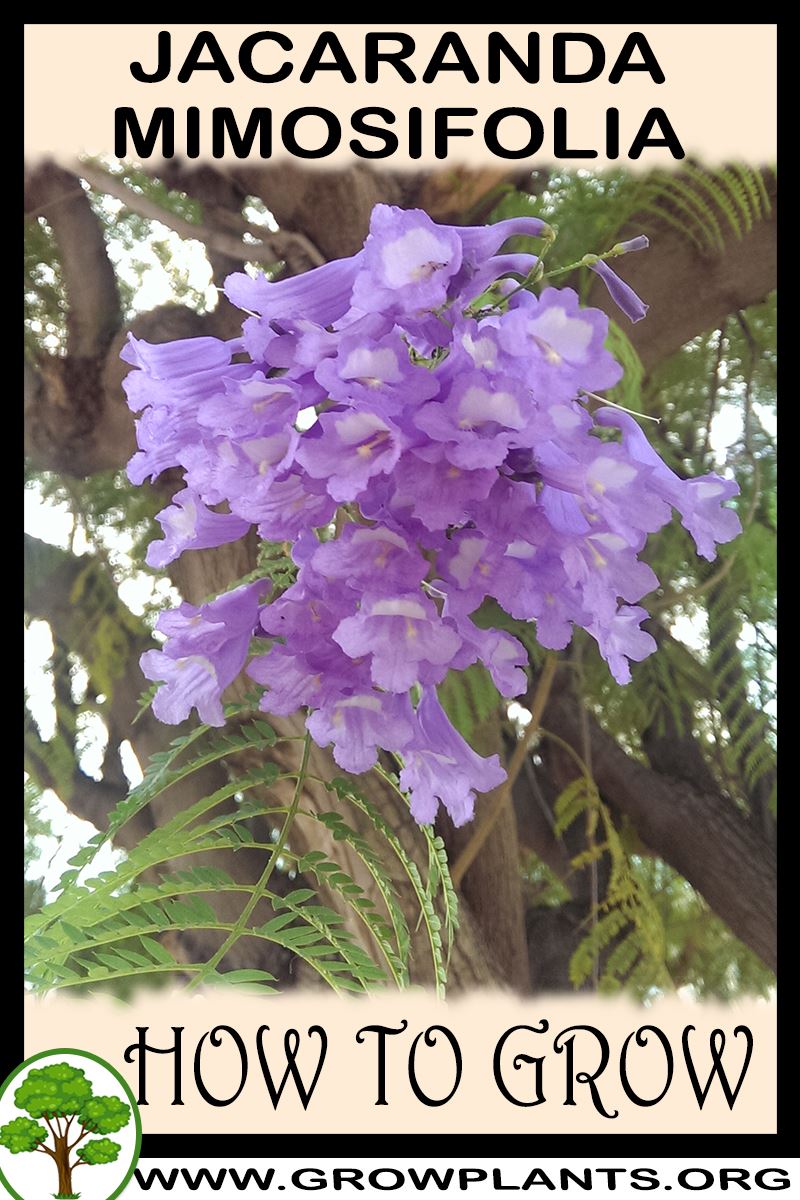
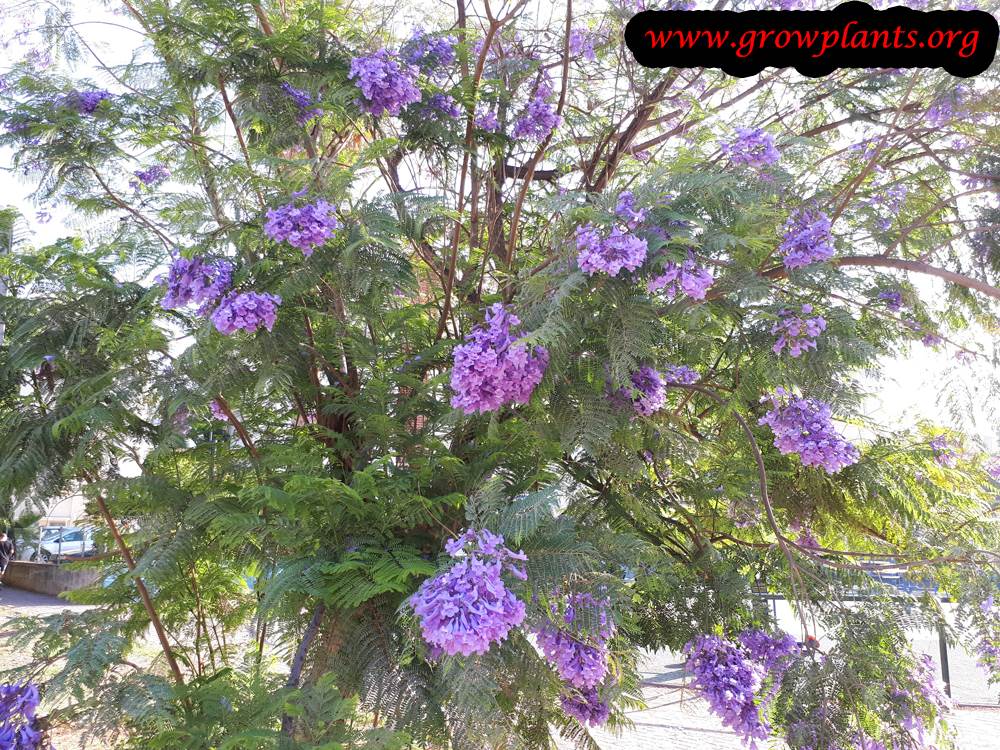
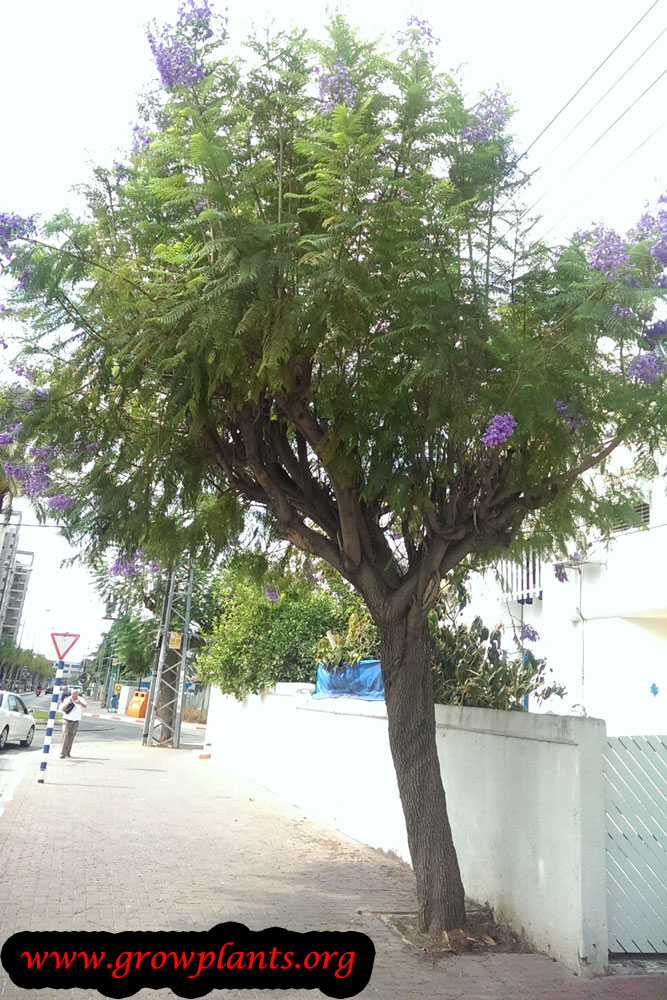
Overview: Jacaranda mimosifolia (fern tree) is a fast-growing deciduous to semi-evergreen ornamental tree 7-20 m tall, famed for its large panicles of blue-purple trumpet flowers and fine, fern-like foliage. It is also grown as a bonsai subject.
Quick Specifications
| Specification | Attribute |
|---|---|
| Plant Type / Life Cycle | Perennial (tree) |
| Foliage Type | Deciduous to semi-evergreen |
| Mature Size | 7-20 m (21-60 ft) tall |
| Growth Rate | Fast to moderate |
| Root System | Spreading lateral roots (can lift paving; site away from structures) |
| Hardiness | USDA zone 9+ |
Growth Form & Structure
- Height & Spread: 7-20 m (21-60 ft) with a broad, spreading canopy; not suited to long-term container culture except as a bonsai.
- Growth Habit & Form: Open, spreading tree with an airy, umbrella-like crown of fern-like foliage.
- Lifespan & Maturity: Long-lived; fast to establish and usually begins flowering after several years.
Anatomy & Physical Features
- Trunk & Bark: Slender trunk with thin, smooth to finely scaly grey-brown bark.
- Leaves & Foliage: Bright green, twice-pinnate (bipinnate), fern-like leaves with many small oval leaflets.
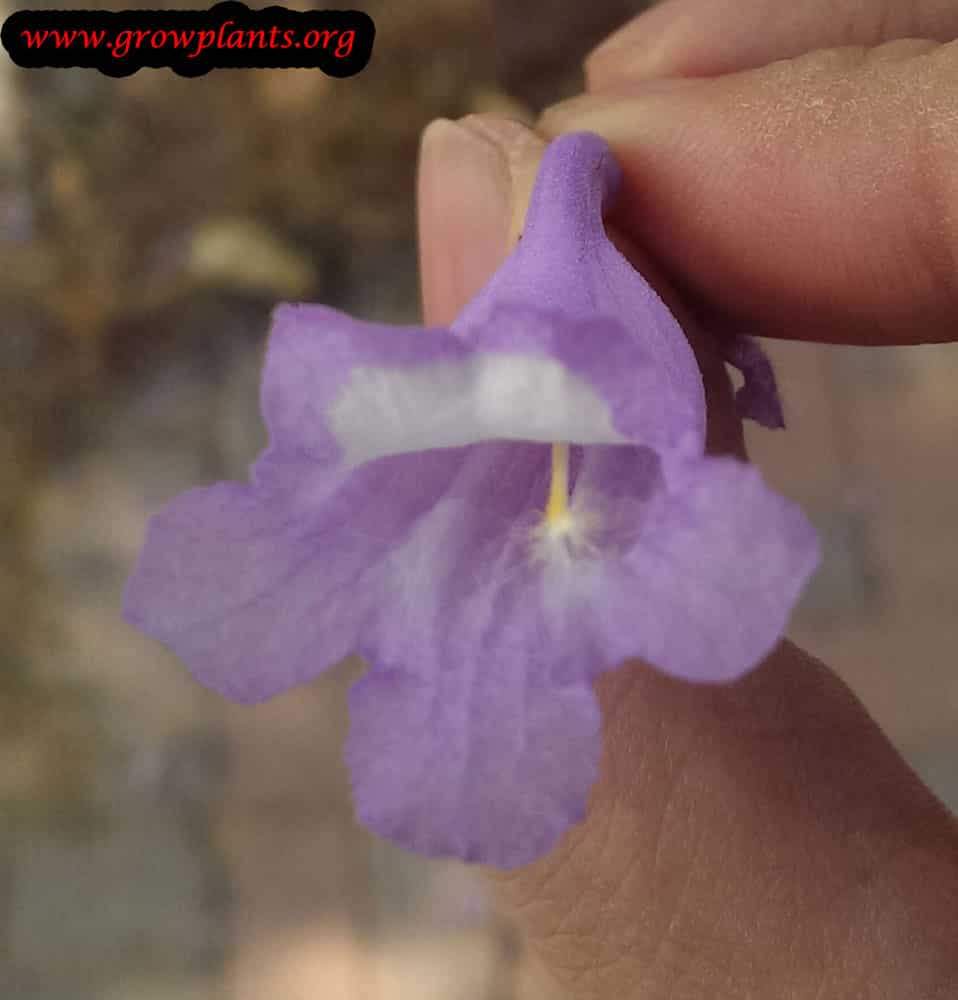
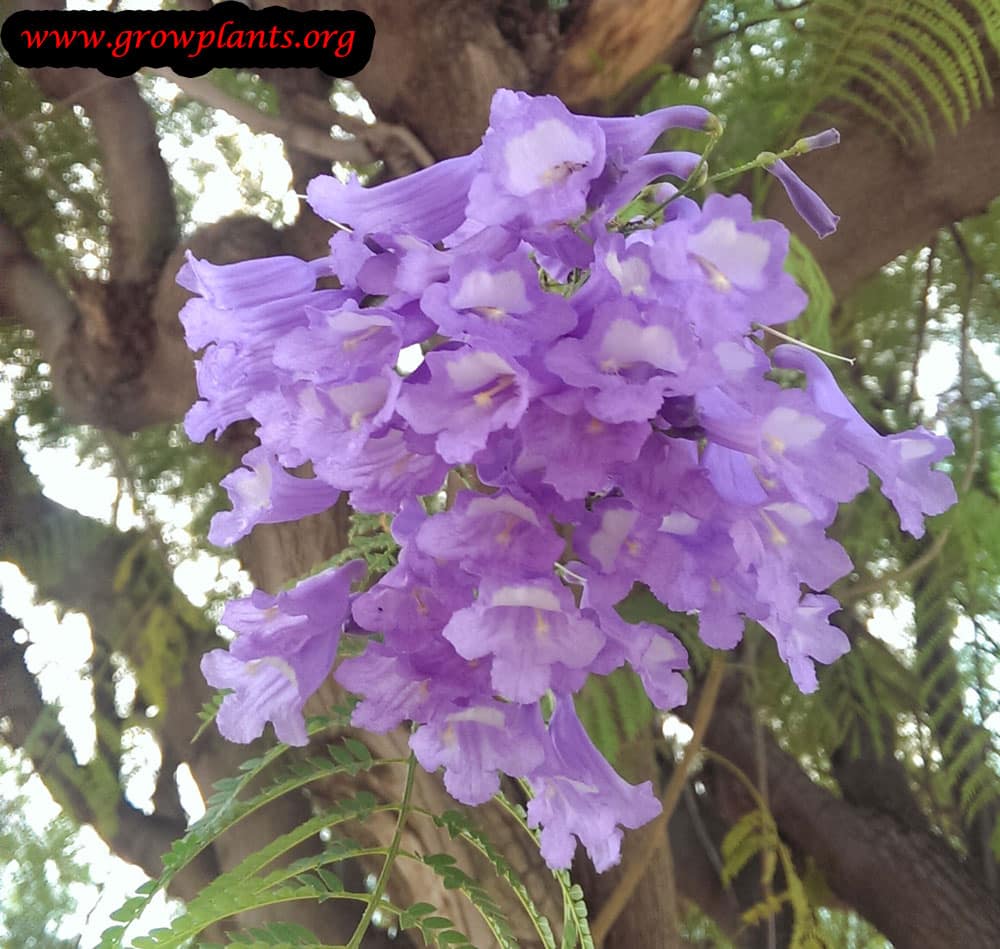
- Flower Characteristics: Blue-purple, bell- to trumpet-shaped flowers in large panicles, borne in the warm season (full detail in the Bloom guide).
- Fruit Profile: Flattened, rounded woody seed pods (castanet-like) that are not edible.
Primary Uses & Landscape Value
- Functional & Ornamental Roles: Ornamental shade, specimen and street tree, and a favoured bonsai subject; can be invasive in some regions.
Care Guide: Planting, Soil & Watering
Overview: This large ornamental tree grows in full sun in sandy, well-drained soil and warm, frost-free to mild climates. Once established it is fairly drought-tolerant, but it needs space and free-draining ground to thrive.
Quick Care Requirements
| Requirement | Ideal Condition |
|---|---|
| Planting Season | Year-round in frost-free climates; in spring where light frost occurs |
| Growth Rate | Moderate to fast |
| Soil Type | Sandy and well-draining |
| Water Need | Moderate; deep but infrequent, drought-tolerant once established |
Planting & Establishment
- Best Planting Season: In frost-free climates it can be planted year-round; where light frosts occur, plant in spring so it establishes before winter.
- How to Plant:
- Hole Preparation: Dig a hole two to three times the width of the root ball in sandy, well-drained ground.
- Soil Amendments: Loosen the backfill and add some compost if the soil is poor; sharp drainage matters more than richness.
- Planting Depth: Set the tree at the same depth it grew in the nursery, keeping the root collar at soil level, and firm well.
- Growth Speed & Expectations: A moderate to fast grower reaching 7-20 m, so give it plenty of room away from paving and buildings.
Soil, Watering & Drainage Care
- Soil Mix & Drainage Needs: Sandy, free-draining soil prevents root rot; it is not suited to containers long-term and prefers to be planted in the open ground.
- Watering Schedule & Technique:
- Young / Newly Planted: Water deeply and regularly through the first year or two while the roots establish.
- Established: Water deeply but infrequently, letting the soil dry between waterings; mature trees tolerate drought.
- Seasonal Adjustments: More in prolonged summer heat, much less in winter.
Climate, Light & Hardiness
Jacaranda mimosifolia is a subtropical to Mediterranean ornamental tree that grows across a wide range of warm climates and needs full sun to half shade. It has moderate cold tolerance, generally evergreen to semi-evergreen in mild winters and shedding more foliage where winters are cooler.
Quick Climate Specifications
| Climate Zones | Subtropical, Temperate, Mediterranean, Tropical, Desert |
|---|---|
| USDA Hardiness Zones | 9+ |
| Frost Tolerance | Low to Moderate |
| Light Conditions | Full Sun to Half Shade |
Sunlight & Light Exposure
Optimal Light Setup
Flowers most heavily in full sun, though it also tolerates half shade.
Temperature Extremes & Hardiness
USDA Hardiness & Regional Limits
Suited to USDA zone 9 and warmer, spanning subtropical, Mediterranean, and mild-temperate climates as long as hard freezes are rare.
Cold Damage & Winter Protection
Behaves as semi-evergreen to fully deciduous depending on how cold the winter is - foliage drop in cooler conditions is typically a normal seasonal response rather than damage, but young trees benefit from a sheltered site at the cooler edge of the zone range.
Frost Sensitivity
Tolerates light, brief frost once established, but is not reliably hardy through hard or prolonged freezes, which can damage branches and set back flowering.
Extreme Heat Tolerance
Well suited to hot, dry desert and Mediterranean summers.
Wind, Humidity & Microclimate
Rainfall & Seasonal Moisture
Prefers an average water regime in well-drained, sandy soil rather than consistently wet or waterlogged conditions.
Growing in Pots, Balconies & Indoors
Jacaranda is a large tree (7-20 m), so it is not a long-term container or indoor plant. The grower marks it as neither a houseplant nor a pot plant.
Quick Details
- Container Size: Not suited to containers long term
- Indoor Suitability: Not a houseplant – a full-size tree
- Best Spot: Full sun, open ground
- Soil & Drainage: a light, aerated potting mix – peat or coir blended with perlite or vermiculite, plus some organic matter/compost (for young/bonsai plants)
- Watering in Pots: Frequent while young in a tub – pots dry fast; avoid waterlogging
Indoors & On the Windowsill
- Not a houseplant: The grower marks it as unsuitable indoors – it is a full-size tree that needs open ground and full light.
On a Balcony or Patio
- Not for pots: The grower does not recommend container growing – it simply gets too large.
- Young plants: A large tub can hold a sapling for a short spell, but plan its final position in open ground with room to spread.
Choosing the Pot, Soil & Long-Term Care
- Young / bonsai only: If you grow it in a pot at all, keep it to the juvenile stage in a large, free-draining tub with drainage holes.
- Potting mix: a light, aerated potting mix – peat or coir blended with perlite or vermiculite, plus some organic matter/compost.
- Feeding & watering: Potted plants exhaust their feed faster because water washes nutrients out, so feed a little more often than plants in open ground during active growth; potted trees also dry out fast, so water more attentively than one in the ground.
- Repotting: Refresh the top of the mix each growing season and pot up or divide roughly every couple of years, trimming crowded roots – but recognise that a vigorous tree will soon need the open ground.
Fertilizing & Feeding
A moderate feeder: young trees benefit from steady balanced feeding to build a strong canopy, while the tree’s famous blue-purple bloom is driven by overall vigor and good light rather than any special bloom fertilizer.
Quick Fertilizing Specs
| Feeding Level | Moderate feeder, especially while young and establishing |
|---|---|
| Main Nutrient Priority | Balanced feeding with adequate nitrogen; avoid chasing bloom with extra phosphorus |
| Best Feeding Period | Spring into the warm growing season |
| Organic Options | Compost or well-rotted organic matter worked into the root zone |
| Reduce/Stop Feeding | Ease off feeding as the season winds down or during any leaf-drop period |
| Micronutrients | Usually met by a complete fertilizer; correct only a diagnosed deficiency |
| Soil pH | Prefers well-drained soil; tolerates a range of pH |
Feeding by Growth Stage
Spring flush of growth
Fuel fresh canopy growth as the tree breaks into active growth.
| Nutrient direction | A balanced, nitrogen-forward fertilizer supports vigorous new growth. |
|---|---|
| Timing | Spring as new growth begins. |
| Frequency | A light, regular feeding at the start of the growing season. |
| Fertilizer types | A balanced complete fertilizer, Compost worked into the root zone |
| Precautions | Avoid heavy nitrogen late in this stage, which can delay the shift into flowering. |
Flowering period
Support the tree’s dramatic show of blue-purple flowers.
| Nutrient direction | A balanced fertilizer with adequate nitrogen drives strong bloom; extra phosphorus is not needed to force flowering. |
|---|---|
| Timing | As flower buds form and through the bloom period. |
| Frequency | A light feeding is usually enough heading into bloom. |
| Fertilizer types | A balanced complete fertilizer |
| Precautions | Skip high-phosphorus ‘bloom booster’ products; a well-fed tree in good light blooms well without them. |
Leaf-drop or slow-growth rest
Let the tree rest through any leaf-drop or slow-growth period without pushing new growth.
| Nutrient direction | None – withhold fertilizer while the tree is not in active growth. |
|---|---|
| Timing | During leaf drop in cooler parts of its range, or any extended slow-growth period. |
| Frequency | No feeding during this rest period. |
| Fertilizer types | No feeding at this stage; do not fertilize until active growth resumes. |
| Precautions | Do not fertilize while the tree is resting; feeding now wastes nutrients and can encourage tender growth vulnerable to cold snaps. |
Nutrient Deficiency Signs & Corrections
Older leaves turn pale green or yellow and canopy growth slows.
| Possible causes | low available soil nitrogen, nitrogen leaching from heavy rain or irrigation, competing turf or ground cover near the root zone |
|---|---|
| Appears first on | older, lower leaves |
| What to check | recent feeding history, soil organic matter, watering and drainage |
| Possible correction | Apply a nitrogen-containing balanced fertilizer during active growth and build soil organic matter. |
New leaves turn yellow while the veins remain distinctly green.
| Possible causes | high or alkaline soil pH tying up available iron, poorly drained or compacted soil limiting root uptake, naturally low soil iron in desert or alkaline sites |
|---|---|
| Appears first on | newest growth at branch tips |
| What to check | soil pH, soil drainage, irrigation water quality |
| Possible correction | Correct pH toward neutral where testing warrants it and apply a chelated iron product per its label. |
Interveinal yellowing on older leaves while the veins themselves stay green.
| Possible causes | low soil magnesium, heavy potassium feeding competing with magnesium uptake, leaching in light, sandy soils |
|---|---|
| Appears first on | older, lower leaves |
| What to check | soil magnesium status, recent fertilizer balance, soil texture and drainage |
| Possible correction | Apply a labeled magnesium source such as Epsom salt or a dolomitic amendment and rebalance overall feeding. |
Pruning, Training & Seasonal Maintenance
Jacaranda tolerates moderate pruning and its main structural concern is preventing weak, narrow-angled branch forks — a well-known failure point in this species — rather than shaping for flower production. The safest window is autumn into winter, once that season’s summer bloom is well finished and before next season’s flower buds are set on new growth. Pruning affects size and structure far more than it affects flowering, since blooms form on wood grown the previous season.
Quick Pruning & Maintenance Specs
| Pruning Tolerance | Moderate |
| Primary Pruning Window | Autumn to winter, after bloom has finished and before next season’s buds form |
| Main Objective | Wide, strong branch angles; size and shape control |
| Young Plant Priority | Correct narrow, included-bark crotches before they become structural |
| Mature Plant Priority | Remove weak or crossing limbs; manage size |
| Best Tool Type | Bypass secateurs and loppers while young; pruning saw and pole pruner on a mature 7-20 m tree |
| Avoid Heavy Pruning During | Just before or during the summer bloom period |
Pruning by Plant Age & Size
Newly Established
Remove only damaged or dead growth; let the young tree settle before formative training begins.
Young / Formative
This is the most important stage: identify and correct branches forming narrow, included-bark unions with the main trunk before they thicken into permanent weak points — jacaranda is notably prone to limb failure at these forks later in life if left untrained.
Mature / Established
Focus on removing any remaining weak or crossing branches, deadwood, and managing overall size, since this is a fast-growing tree that can outgrow smaller gardens.
Seasonal Pruning Schedule
Dormant/Winter
Objective: structural correction and size control, done after the summer flower display has finished and before next season’s flower buds form on new growth. What NOT to remove: avoid heading back shoots that are about to set next season’s terminal flower buds late in the dormant window.
Ongoing Sanitary
Remove dead or storm-damaged wood as needed in any season.
Flowering Wood
Jacaranda flowers in terminal clusters on wood produced during the prior growing season. Pruning immediately before or during the bloom period removes developing flower buds; the autumn/winter window works because it falls well after that cycle’s bloom and before the next season’s buds are set.
Structural Pruning & Training
The defining structural task for this species is eliminating narrow, included-bark branch unions while they are still small and easy to correct, since mature limbs at these weak forks are a documented storm-damage risk. Otherwise, thin only crossing or rubbing branches — interior canopy thinning is not otherwise required.
Special Growth to Remove
The tree is noted as self-seeding (invasive in some regions); removing the persistent woody seed pods after they form can reduce unwanted self-seeding and tidy the tree’s appearance, though it is optional maintenance rather than a health necessity.
Tools
Bypass secateurs for young shoots and loppers for correcting narrow crotches while branches are still slender. A pruning saw and pole pruner are needed for structural work and size control once the tree approaches its mature 7-20 m height.
Tool Hygiene & Disease Risk
Routine: no major transmissible disease is documented for this species. Clean, sharp tools are sufficient for ordinary maintenance.
Cut Placement & Technique
Cut just outside the branch collar, never flush. When removing a narrow-angled competing branch, cut back fully to its point of origin rather than leaving a stub that will resprout weakly attached growth.
Heavy Pruning & Rejuvenation
Jacaranda is fast-growing and generally tolerates size-reduction pruning, but hard heading cuts encourage a flush of weakly attached watersprouts that recreate the same narrow-crotch problem the tree is prone to — prefer thinning cuts back to a lateral branch over indiscriminate heading, and spread significant reduction over more than one season.
Post-Pruning Care
No feeding is needed after pruning. Watch regrowth at cut points for the same narrow-angle attachment issue and correct it early rather than letting it repeat.
Common Pruning Mistakes
Leaving narrow, included-bark forks untrained while the tree is young; heading cuts that trigger dense, weakly attached watersprout regrowth; pruning right before or during the summer bloom and losing the flower display.
When NOT to Prune
Avoid pruning just before or during the bloom period, and avoid heavy pruning in the first year after transplanting.
Recommended Tools (by task)
- bypass_secateurs — young shoots and light shaping.
- loppers — correcting narrow branch unions while still small, and general formative training.
- pruning_saw — structural cuts and deadwood removal on an established tree.
- pole_pruner — elevated size-control and deadwood removal once the tree approaches its mature 7-20 m height.
Pruning Troubleshooting
| Problem | Possible Cause | What to Check | Corrective Action |
| Large limb splits or fails, especially after wind | Included bark at a narrow branch union left untrained when young | Angle and bark condition at major forks | Remove or subordinate competing leaders while small; have an arborist assess large existing weak unions |
| Dense cluster of upright shoots after a hard cut | Watersprout response to heading cuts | Whether recent pruning used heading vs. thinning cuts | Thin the watersprouts to a few well-attached ones; favor thinning cuts in future pruning |
| Reduced flowering after pruning | Structural cuts removed the prior season’s flower-bud-bearing wood | Timing of the most recent pruning relative to bloom | Shift pruning to the recommended autumn/winter window and avoid cutting shortly before bloom |
Propagation Guide
Jacaranda mimosifolia is grown from seed, which germinates reasonably readily and produces trees true to the typical blue-purple flower color; vegetative propagation is not needed for ordinary garden trees. Overall difficulty is easy from seed, making it the standard practical method for this species.
Quick Propagation Specs
| Best Propagation Method | Seed |
| Alternative Methods | Semi-hardwood cuttings (mainly used to preserve a specific flower-color selection, such as the white-flowered form) |
| Propagation Difficulty | Easy |
| Seed True-to-Type | Usually true-to-type for the typical blue-purple flower, though flower color intensity and bloom timing can vary somewhat between seedlings |
| Vegetative True-to-Type | Yes |
| Best Propagation Season | Spring, matching the site’s all-year planting note for warmer climates |
| Seed Germination Time | Typically two to four weeks, sometimes uneven |
| Cutting Rooting Time | Several weeks under warm, humid conditions |
| Germination Temperature | Warm, roughly 20–25°C (68–77°F) |
| Seed Sowing Depth | Very shallow, lightly covered or barely covered, about 0.5cm (0.2in) |
Growing from Seed
Seed Handling & Viability
Flat, winged seeds are separated from the woody seed pods; sow reasonably fresh, as viability can decline with extended storage.
Dormancy & Pre-Sowing Treatment
No strong dormancy is typically reported; an optional brief soak in water before sowing can aid even water uptake.
Sowing Season
Spring, once warm conditions are established.
Sowing Depth & Orientation
Sow very shallowly, just lightly covered, about 0.5cm (0.2in) deep.
Germination Conditions
Warm temperatures and evenly moist, free-draining medium favor germination.
Germination Time
Usually two to four weeks, though it can be uneven.
Seedling Care
Young seedlings are frost-tender and should be protected or grown on under cover until well established.
Stem Cuttings
Cutting Type
Semi-hardwood tip cuttings.
Best Timing
Warm growing season.
Cutting Preparation
Take firm, non-flowering tip growth and remove lower leaves; mainly worthwhile when a specific flower-color selection needs to be preserved true-to-type.
Rooting Setup
Free-draining propagating mix under mist or a humid cover.
Rooting Hormone
Beneficial for improving an otherwise moderate rooting rate.
Rooting Time
Several weeks.
Bloom & Flower Guide
Quick Details
- Bloom Season: Summer (late spring into summer)
- Time to First Bloom: Usually several years from seed before the first bloom (often seven or more years)
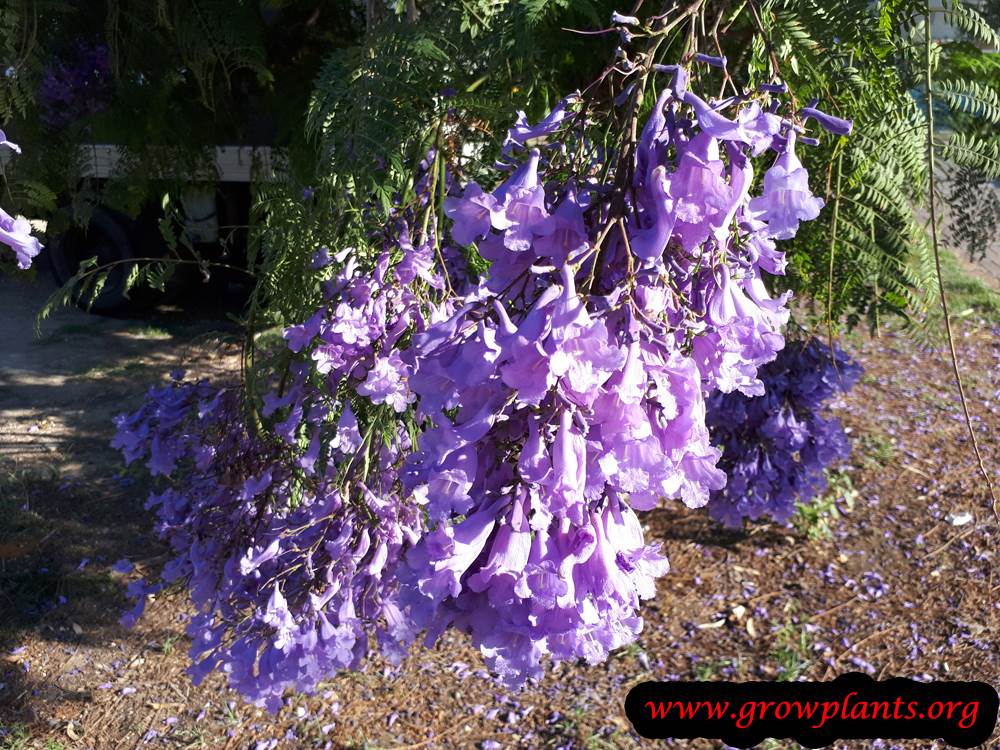
- Flower Appearance: Blue-purple, bell- to trumpet-shaped flowers borne in large panicles that can smother the tree
- Edibility: Ornamental tree – the flowers are not eaten
Detailed Blooming Overview
Jacaranda is grown for its spectacular haze of violet-blue: in early summer the tree carries large panicles of bell-shaped flowers, often as the ferny new foliage flushes. Spent flowers fall to carpet the ground below in blue, extending the display.
Flower Characteristics
- Blue-purple, bell- to trumpet-shaped, gathered into showy panicles.
- Set off by delicate, fern-like leaves.
Bloom Care & Thinning
- Care: Needs warmth, full sun and a drier spell to flower well; little pruning is required.
- Pollination: The tubular flowers attract bees and other insects.
Pests, Diseases & Troubleshooting
Overview: Jacaranda is a large, generally robust flowering tree with relatively few serious pests; the main insect issues are sap-feeders like aphids, whitefly, scale and mealybugs, while its more consequential problems are root rots in wet or heavy soil and iron chlorosis in alkaline ground. Good drainage, the right soil pH and frost protection when young are key.
Quick Troubleshooting Overview
| Issue / Pest | Main Symptom | Primary Solution |
|---|---|---|
| Aphids / whitefly | Sticky honeydew, sooty mold under the canopy | Hose off, encourage predators, soap/oil |
| Scale / mealybugs | Bumps or cottony tufts, honeydew, sooty mold | Horticultural oil, prune, control ants |
| Root rot (Phytophthora/Armillaria) | Canopy dieback, wilting, decayed roots | Improve drainage, avoid overwatering |
| Iron chlorosis | Yellow leaves with green veins | Acidify soil, chelated iron |
| Frost damage | Blackened shoots on young trees | Protect young trees, plant in warm site |
| Failure to bloom | Vigorous tree but few/no flowers | Full sun, lean/dry soil, patience with young trees |
Common Pests & Management
- Aphids (Aphis spp.):
- Symptoms: Colonies on soft new growth and flower stalks causing distortion and copious honeydew that coats leaves, cars and paving below the canopy with sooty mold.
- Prevention & Control: Hose down reachable growth and encourage ladybirds, lacewings and hoverflies, which usually control them on established trees. Insecticidal soap or neem helps on young or accessible trees; avoid high-nitrogen feeding that fuels soft growth.
- Giant whitefly (Aleurodicus dugesii):
- Symptoms: Clouds of large white flies and long white waxy ‘beard-like’ filaments and honeydew on leaf undersides, with sooty mold building up on the foliage.
- Prevention & Control: Wash off colonies and waxy deposits with a strong water jet on a regular schedule, remove badly infested lower leaves, and support natural parasites and predators. Insecticidal soap or horticultural oil helps on smaller trees.
- Scale insects (Coccus / Saissetia / Aspidiotus spp.):
- Symptoms: Brown, tan or white immobile bumps on twigs, branches and leaf veins; sap-feeding weakens growth and soft scales drop honeydew that blackens foliage with sooty mold.
- Prevention & Control: Prune out heavily encrusted wood and spray horticultural oil to smother crawlers, timing to the crawler stage and repeating as needed. Control ants, which protect scale from predators, and encourage parasitic wasps.
- Mealybugs (Planococcus / Pseudococcus spp.):
- Symptoms: White cottony waxy masses in branch crotches and on new growth, with honeydew and sooty mold; more common on young or container trees.
- Prevention & Control: Wash the plant, dab clusters with alcohol, and apply neem or horticultural oil into the crevices. Control ants and encourage predatory beetles and lacewings.
Diseases & Fungal Issues
- Phytophthora root rot (Phytophthora spp.):
- Symptoms: Gradual canopy thinning, yellowing, branch dieback and poor vigor, with dark, decayed roots and sometimes bleeding cankers at the base; driven by heavy, waterlogged or over-irrigated soil.
- Treatment & Management: Plant in well-drained soil, water deeply but infrequently and keep water off the trunk, and avoid piling mulch or soil against the base. There is no cure for advanced cases – prevention through drainage and correct watering is essential.
- Armillaria (mushroom) root rot (Armillaria mellea):
- Symptoms: Slow decline and dieback with white fungal fans under the bark at the base and clusters of honey-colored mushrooms after rain; often on trees planted where old tree roots remain.
- Treatment & Management: There is no effective cure – maintain tree vigor, avoid overwatering, and remove old infected stumps and roots before planting. Improve drainage and do not replant a susceptible tree in the same infected soil.
- Sooty mold (Capnodium spp.):
- Symptoms: A black, soot-like film coating leaves and anything beneath the canopy, growing on the honeydew from aphids, whitefly, scale and mealybugs.
- Treatment & Management: Harmless in itself – control the sap-feeding insects producing the honeydew and the mold weathers off. It is a signal to look for and manage the underlying pest.
Growing Difficulties & Abiotic Problems
- Iron chlorosis in alkaline soil:
- Cause & Symptoms: Yellowing leaves with green veins, especially on new growth, indicate iron (and sometimes manganese) shortage locked up in high-pH or waterlogged soil.
- Correction Strategy: Lower high soil pH with elemental sulfur or an acidifying fertilizer, improve drainage, and apply chelated iron for a faster response; mulch to keep the root zone cool and evenly moist.
- Frost damage on young trees:
- Cause & Symptoms: Jacaranda is frost-tender when young; cold blackens the soft shoots and can kill small trees, though mature specimens are hardier.
- Correction Strategy: Plant in a warm, sheltered, sunny site after frost risk passes, protect young trees over cold spells with fleece or wraps, and delay hard pruning until growth is established.
- Failure to flower:
- Cause & Symptoms: Young trees can take several years to bloom, and over-watered, over-fed or heavily shaded trees put energy into growth rather than flowers.
- Correction Strategy: Be patient with young trees, grow in full sun, and keep the soil on the lean, drier side with low nitrogen; a slight dry stress and a cool, dry rest period encourage flowering.
- Brittle wood & surface roots:
- Cause & Symptoms: Fast growth makes for brittle branches prone to storm breakage, and vigorous surface roots can lift paving.
- Correction Strategy: Prune structurally when young to build strong branch angles, shelter from strong wind, and site the tree well away from paths, drives and foundations.
What Helps – Products & Tools
For sap-feeders use insecticidal soap, neem or horticultural oil and a strong water jet, plus ant control to let predators work; for the more important cultural problems, use an acidifying fertilizer or elemental sulfur and chelated iron against chlorosis and focus on drainage and correct watering to avoid root rot. Frost fleece protects young trees. Follow labels and protect pollinators.