

Plant Profile & Key Characteristics
Overview: Iris reticulata ‘Pauline’ is a dwarf bulbous perennial geophyte 5-15 cm tall, grown as an ornamental for its purple-and-white early flowers. Its narrow foliage is summer-deciduous, dying back after flowering.
Quick Specifications
| Specification | Attribute |
|---|---|
| Plant Type / Life Cycle | Perennial geophyte |
| Foliage Type | Deciduous (summer-dormant) |
| Mature Size | 5-15 cm (2-6 in) |
| Growth Rate | Moderate |
| Root System | Bulb (geophyte) |
| Toxicity | Toxic if ingested – bulbs contain irritant compounds; keep from pets |
| Hardiness | USDA zone 4-9 |
Growth Form & Structure
- Height & Spread: 5-15 cm (2-6 in) in ground; excellent in troughs and containers.
- Growth Habit & Form: Low, tufted bulb producing narrow leaves and short-stemmed flowers.
- Lifespan & Maturity: Perennial; naturalises in well-drained spots.
Anatomy & Physical Features
- Leaves & Foliage: Green, narrow, straight and rather brittle, growing in linked groups.
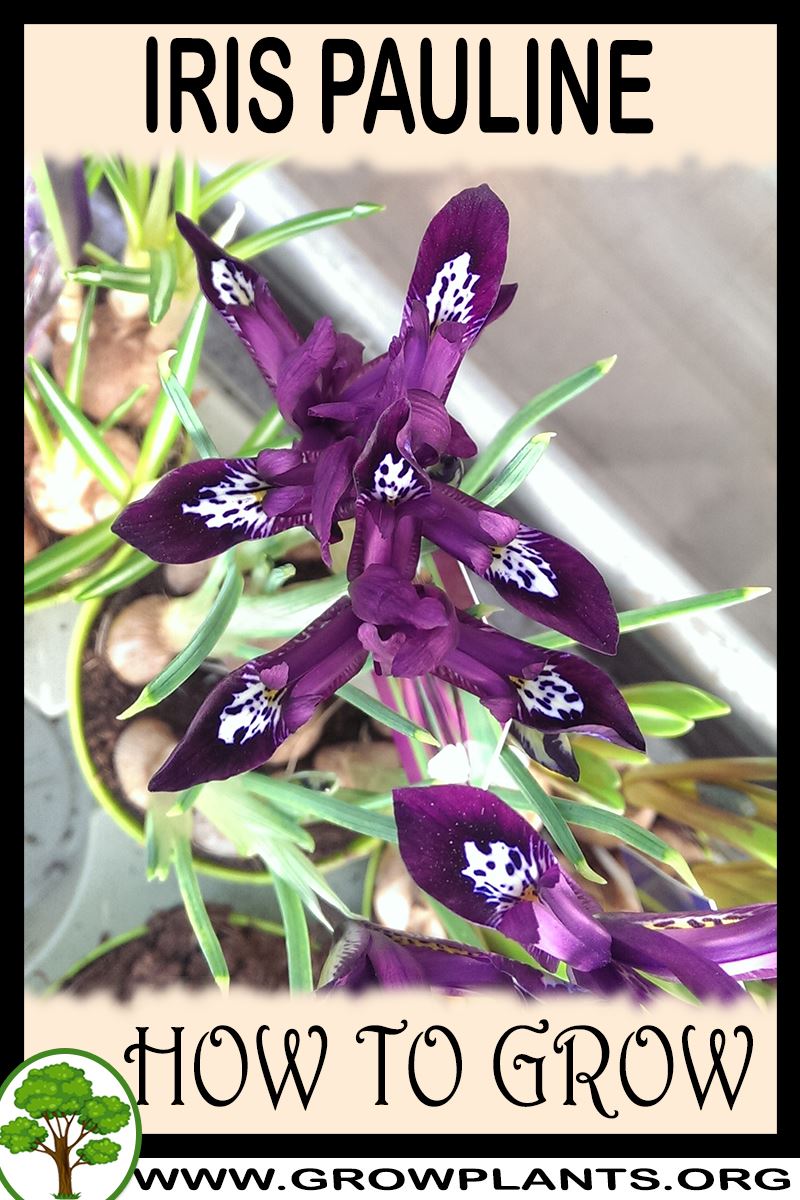
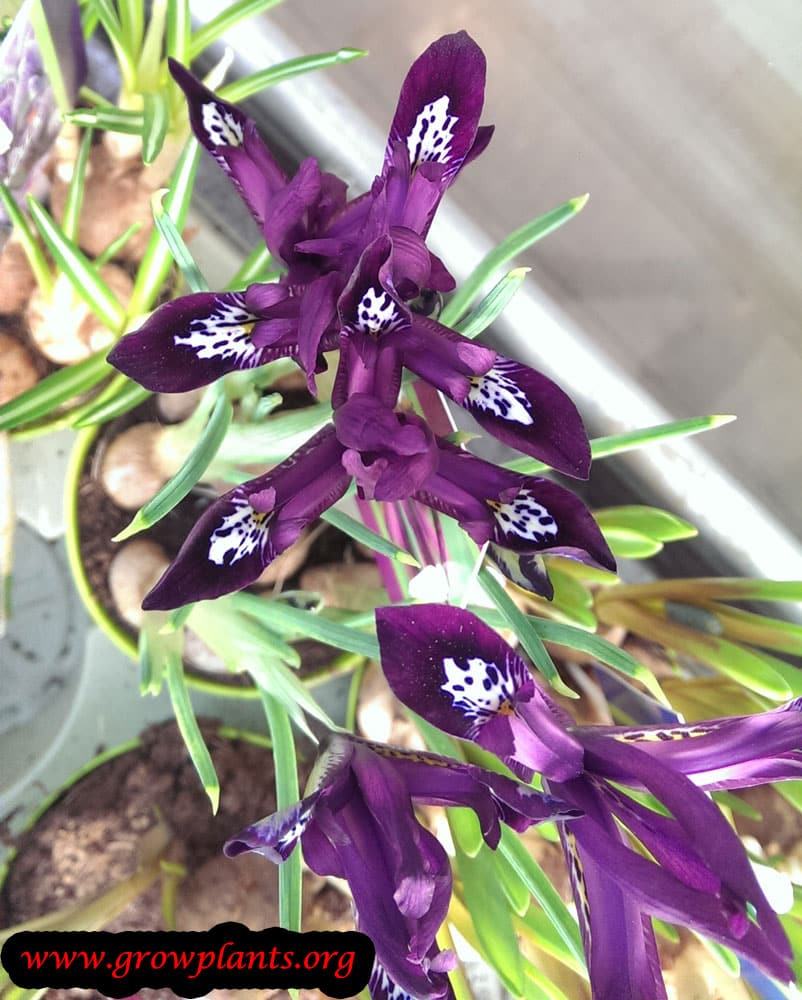
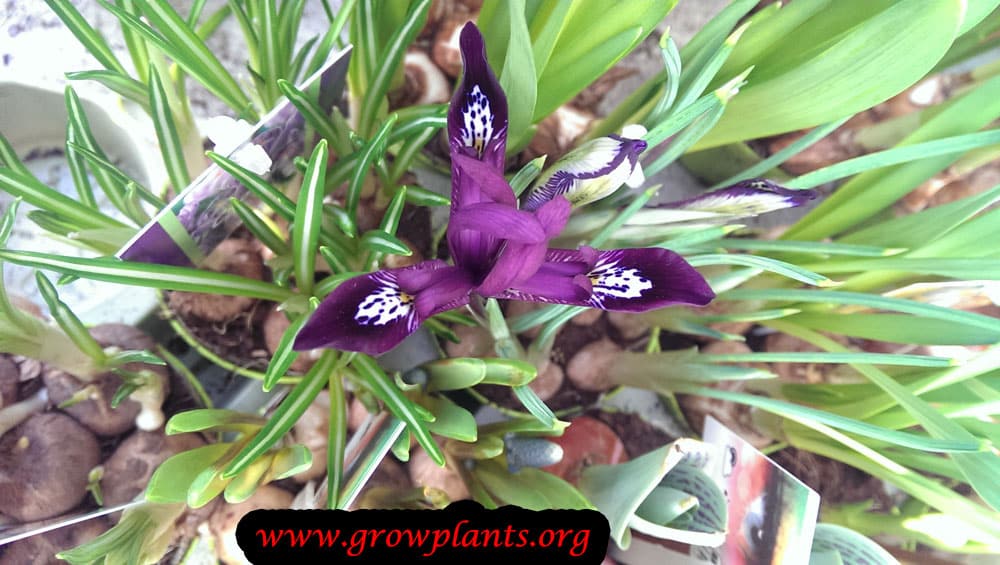
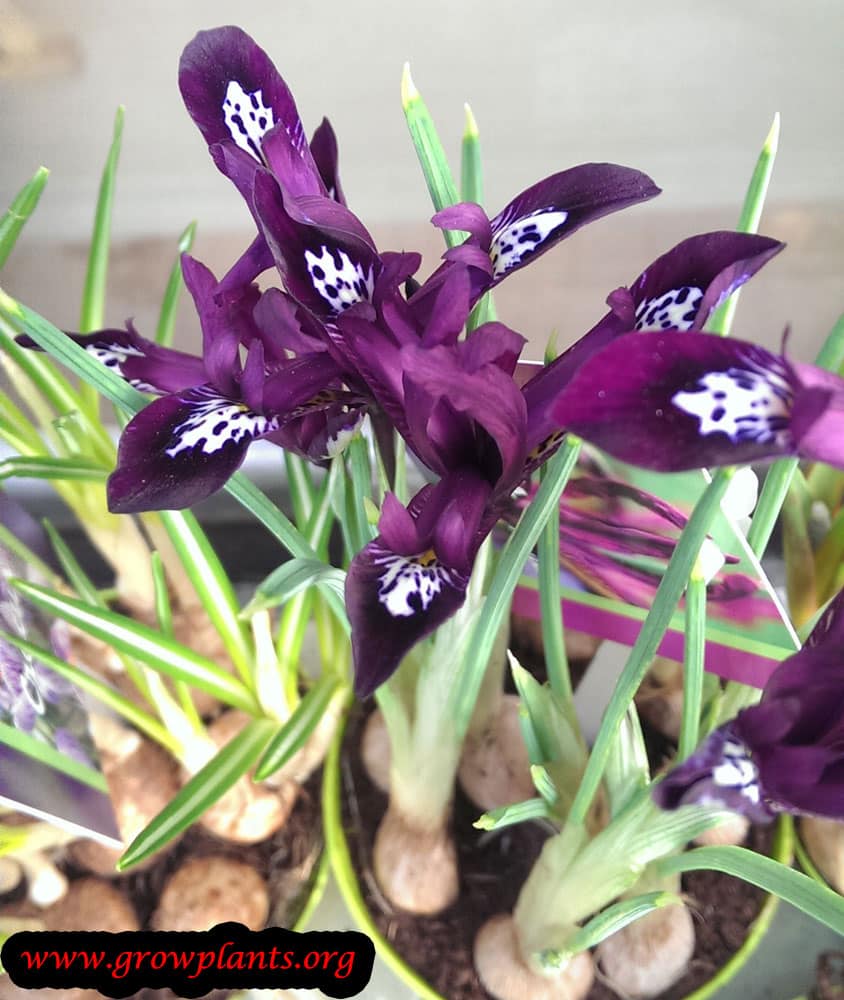
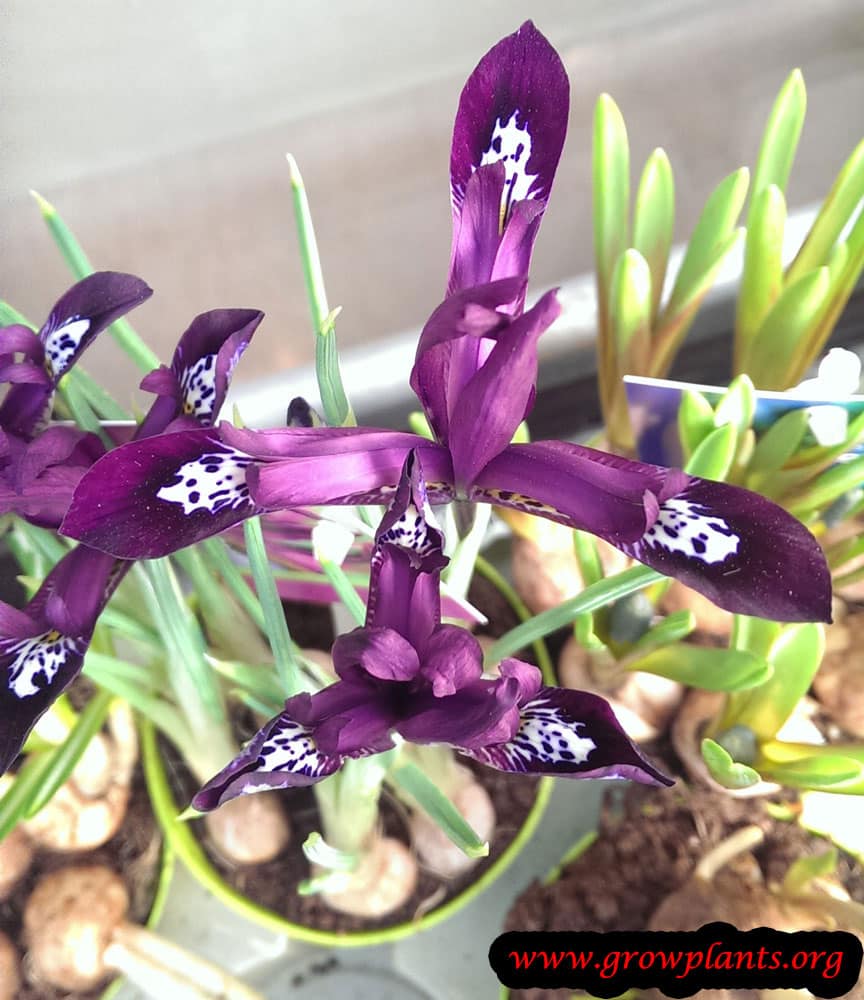
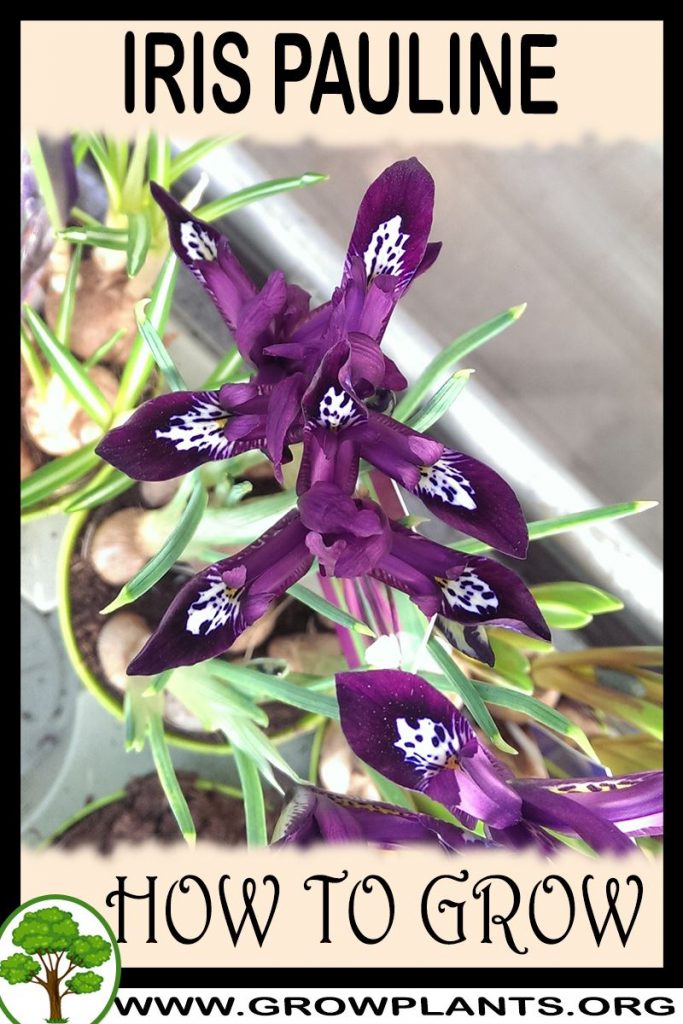
- Flower Characteristics: Six-petalled purple flowers, the falls purple-and-white with purple dots (full detail in the Bloom guide).
Primary Uses & Landscape Value
- Functional & Ornamental Roles: Ornamental for rock gardens, edging, troughs and containers; a welcome early-season flower.
Care Guide: Planting, Soil & Watering
Overview: ‘Pauline’ is a dwarf netted iris (a reticulata form) for full sun and gritty, well-drained soil, flowering very early. Plant it in autumn and let it rest dry through summer dormancy.
Quick Care Requirements
| Requirement | Ideal Condition |
|---|---|
| Planting Season | In autumn (bulbs) |
| Growth Rate | Moderate |
| Soil Type | Well-draining, gritty |
| Water Need | Moderate while in growth; keep dry during summer dormancy |
Planting & Establishment
- Best Planting Season: Plant the bulbs in autumn for late-winter to spring flowers.
- How to Plant:
- Hole Preparation: Loosen a free-draining, sunny bed and dig planting holes several times the bulb’s own height deep.
- Soil Amendments: Add grit or coarse sand to heavy soil to keep drainage sharp; it does not need rich ground.
- Planting Depth: Set the bulbs pointed-end up, roughly 8-10 cm deep, on firmed soil.
- Growth Speed & Expectations: A moderate grower that flowers early then dies back to summer dormancy; the leaves are brittle, so plant where they will not be knocked.
Soil, Watering & Drainage Care
- Soil Mix & Drainage Needs: Sharp drainage is essential to prevent bulb rot; in containers use a gritty, free-draining mix and never leave pots standing in water.
- Watering Schedule & Technique:
- Young / Newly Planted: Water in after planting and keep the soil lightly moist while roots and leaves grow.
- Established: Give moderate, even water through the growing and flowering season.
- Seasonal Adjustments: Reduce sharply and keep dry once the foliage yellows and dies back for summer dormancy.
Climate, Light & Hardiness
Iris reticulata ‘Pauline’ is a small bulb (geophyte) of temperate and subtropical climates that grows through the cool season and goes summer-dormant, much like other reticulata-type irises. It wants full sun to half shade and well-drained soil, and its USDA zone 4–9 rating shows strong winter cold tolerance for the dormant bulb.
Quick Climate Specifications
| Climate Zones | Temperate, Subtropical |
|---|---|
| USDA Hardiness Zones | 4–9 |
| Frost Tolerance | High |
| Light Conditions | Full Sun / Half Shade (shade can reduce flowering) |
Sunlight & Light Exposure
Optimal Light Setup
Full sun gives the most reliable flowering; half shade is tolerated but may reduce bloom.
Direct Sun Requirement
Recommended for best flowering, though the plant tolerates half shade with some trade-off.
Best Exposure / Orientation
An open, sunny bed, rock garden, or container position suits this small bulb well.
Temperature Extremes & Hardiness
USDA Hardiness & Regional Limits
Hardy across USDA zones 4–9, a wide cold-tolerant range typical of small winter/spring-growing reticulata irises; the dormant summer bulb survives cold winters underground.
Cold Damage & Winter Protection
No special winter protection is generally needed within its zone range.
Frost Sensitivity
Good winter frost tolerance as a dormant bulb, consistent with its zone-4 cold-hardy rating.
Wind, Humidity & Microclimate
Rainfall & Seasonal Moisture
Best suited to climates with a distinct dry summer to match its dormancy; avoid waterlogged soil while the bulb rests.
Microclimate Recommendations
Sharp drainage matters most, particularly through the summer dormant period when excess moisture risks bulb rot.
Growing in Pots, Balconies & Indoors
Iris reticulata ‘Pauline’ (Pauline dwarf iris) is a tiny bulbous iris just 5-15 cm tall. The grower does not rate it as a houseplant but confirms it for growing in pots or containers, where its watering and dormancy are easy to control.
Quick Details
- Container Size: 15-18 cm bulb pan or small 3-6 L pot, planted in a group
- Indoor Suitability: Not a houseplant; can be forced briefly in a cool, bright room
- Best Spot: Full sun to part shade
- Soil & Drainage: Sharply drained, gritty loam-based mix
- Watering in Pots: Average – keep evenly moist in growth, then much drier through dormancy after the foliage dies back; never waterlogged.
Indoors & On the Windowsill
- Not a houseplant: The grower does not grow it indoors – irises need a real seasonal rhythm and strong outdoor light that rooms cannot supply, so they belong on a balcony, patio or in the garden.
- Temporary forcing: Dwarf types like this are sometimes potted and brought into a cool, bright room to enjoy the flowers, then returned outdoors afterwards – a short display, not a permanent houseplant.
- Dormancy, not overwintering: Rather than needing indoor warmth, it wants a proper rest – after the leaves die back keep the pot cooler and much drier through the dormant season.
- Safety: Irises are toxic if eaten (especially the rhizomes and bulbs) and the sap can irritate skin – site them away from where children or pets might dig or chew.
On a Balcony or Patio
- Light & wind: Give it the brightest spot the balcony offers; shelter exposed plants from strong wind and stake any tall or top-heavy growth. Walls and paving reflect heat, so pots dry quickly – check moisture often in warm weather.
- Practicalities: A filled pot is heavy once watered, so make sure the balcony can take the weight and stand it where drainage runoff will not be a nuisance.
Choosing the Pot, Soil & Long-Term Care
- Pot & drainage: 15-18 cm bulb pan or small 3-6 L pot, planted in a group with strong drainage holes; skip a standing water saucer so the roots never sit wet. Terracotta breathes and dries fast, while glazed or plastic pots hold moisture longer.
- Potting mix: A free-draining, gritty loam-based mix; sharp drainage matters more than richness.
- Watering: Average – keep evenly moist in growth, then much drier through dormancy after the foliage dies back; never waterlogged.
- Feeding: Potted plants exhaust their soil faster because nutrients leach out with every watering – feed lightly but regularly through the growing season.
- Repotting: Refresh the mix or pot up about every couple of years, teasing out and lightly trimming the roots of established plants.
Fertilizing & Feeding
A light feeder: this compact dwarf bulb needs only a light balanced feeding while leaves are actively growing, with feeding stopped once foliage dies back for summer dormancy.
Quick Fertilizing Specs
| Feeding Level | Light feeder |
|---|---|
| Main Nutrient Priority | Balanced feeding while leaves are actively growing |
| Best Feeding Period | From leaf emergence through the autumn bloom |
| Reduce/Stop Feeding | Stop feeding once foliage begins to die back and the bulb goes dormant |
| Organic Options | A little compost worked into well-drained soil at planting time |
| Soil pH | Tolerates a wide range in well-drained soil |
Feeding by Growth Stage
Leaf growth into autumn bloom
Support the compact foliage and delicate purple and white autumn flowers of this small bulb.
| Nutrient direction | A light, balanced feeding as leaves emerge is enough for this compact bulb; it does not need forcing. |
|---|---|
| Timing | As new leaves emerge heading into the autumn bloom period. |
| Frequency | A light feeding at the start of growth is usually all this small bulb needs. |
| Fertilizer types | A balanced complete fertilizer, applied lightly, Well-drained soil with a little compost worked in at planting |
| Precautions | Feed sparingly; overfeeding a small dwarf bulb like this offers little benefit and can encourage soft growth. |
Die-back and summer dormancy
Allow the foliage to die back and the bulb to rest through its summer dormancy undisturbed.
| Nutrient direction | None – withhold fertilizer once the foliage begins to die back after bloom. |
|---|---|
| Timing | After flowering, as leaves are cut back, and through summer dormancy. |
| Frequency | No feeding during this rest; feeding resumes only when new leaves appear next season. |
| Fertilizer types | No feeding at this stage; hold off fertilizing until new leaves emerge next season. |
| Precautions | Withhold fertilizer now; this bulb is summer deciduous and dormant, so feeding now only wastes nutrients. |
Nutrient Deficiency Signs & Corrections
New leaves emerge pale or noticeably thin and growth looks weak.
| Possible causes | low available soil nitrogen, poor organic matter in the planting soil, nitrogen leaching from wet weather or watering |
|---|---|
| Appears first on | new leaves as they emerge |
| What to check | soil organic matter, recent feeding history, drainage and rainfall |
| Possible correction | Apply a balanced complete fertilizer lightly as leaves emerge and improve soil organic matter. |
Flowering is sparse or the flower stems look weak despite healthy leaves.
| Possible causes | low soil potassium, nitrogen-heavy feeding that crowds out other nutrients, light, fast-draining soil that leaches nutrients quickly |
|---|---|
| Appears first on | flower stems and buds |
| What to check | recent fertilizer balance, soil texture and drainage, bulb crowding or age |
| Possible correction | Use a balanced fertilizer rather than a nitrogen-only product, and divide crowded clumps. |
Bulbs or roots look soft or discolored and leaf tips brown despite normal watering.
| Possible causes | fertilizer salt buildup in poorly drained soil, overwatering or waterlogging around the bulb, over-fertilizing a light-feeding bulb |
|---|---|
| Appears first on | leaf tips and the bulb itself |
| What to check | soil drainage, recent fertilizer amounts, watering frequency |
| Possible correction | Improve drainage, ease off feeding, and avoid fertilizing during wet periods. |
Pruning, Training & Seasonal Maintenance
Iris pauline (Iris reticulata ‘Pauline’) is a small true bulb of the Reticulata group that dies back and goes fully dormant each summer, so there is no woody structure to prune. The only real task is foliage management: after flowering, the narrow leaves keep working to recharge the bulb for the following year, so they need to stay in place, however untidy, until they yellow and dry on their own. Only at that point should they be cut away, matching the plant’s own care data exactly.
Quick Pruning & Maintenance Specs
| Pruning Tolerance | Low – no live-tissue cutting, only post-dieback leaf removal |
| Primary Pruning Window | Summer, once the foliage has fully yellowed and dried |
| Typical Frequency | Once a year |
| Main Objective | Clear away spent foliage without cutting the bulb’s food supply short |
| Mature Plant Priority | Annual dead-leaf cleanup; lift and separate offset bulbs every few years if flowering thins |
| Best Tool Type | Precision snips, or hand-pulling once leaves are fully dry |
| Avoid Heavy Pruning During | Any time the leaves are green or only partly dried |
Pruning by Plant Age & Size
Newly Established
Leave all foliage untouched through the first year after flowering, even if it looks messy – the young bulb needs that leaf time to build up reserves.
Mature / Established
One annual removal of fully dried leaves once the plant is dormant, plus lifting and dividing offset bulbs (end of summer into autumn, per this plant’s own propagation timing) if the clump becomes congested and blooms decline.
Seasonal Pruning Schedule
Dormant / Summer Die-Back
Objective: clear spent foliage before dormancy. Remove: leaves only once fully yellowed and dry. Do not remove: anything still green – it is still feeding the bulb. Expected response: the bulb rests through summer and regrows with the return of cooler conditions. Flowering impact: none when timed correctly; cutting green leaves early reduces or skips the following year’s bloom.
Special Growth to Remove
Fully dried leaf fans, cut or gently pulled free at the base. Spent flower stems can be tidied away once petals fade. Where clumps have become crowded, lift and separate offset bulbs at the plant’s usual division time (late summer–autumn).
Container & Small-Space Pruning
A good candidate for pots given its small size. The same rule applies regardless of container or ground – never cut green leaves – and a pot makes it simple to let the compost dry out fully once the leaves have died, matching this bulb’s dormancy needs.
Tools
Precision snips for cutting dried leaf fans at the base; fully dry leaves can often be pulled away by hand instead.
Tool Hygiene & Disease Risk
Routine – clean, sharp tools are sufficient; no notable tool-transmitted disease risk for this species.
Cut Placement & Technique
Cut or pull dried leaves close to their base without disturbing or nicking the small bulb beneath.
Heavy Pruning & Rejuvenation
Not applicable – the foliage dies back naturally on its own schedule each year and is simply cleared away once dry; there is no rejuvenation cut for this plant.
Post-Pruning Care
Keep dormant bulbs on the dry side through summer after foliage removal. If dividing offsets, store them somewhere cool, dry, and well ventilated until autumn replanting.
Common Pruning Mistakes
Cutting or bundling down green leaves for a neater look right after flowering, which starves the bulb; overwatering through summer dormancy; disturbing bulbs while they are still actively growing.
When NOT to Prune
Never cut foliage while it is green or only partly dried, no matter how untidy the bed looks post-bloom.
Recommended Tools (by task)
- Removing fully dried leaf fans (summer): precision_snips – a controlled cut at the leaf base that leaves the small bulb undisturbed.
Propagation Guide
Iris pauline (Iris reticulata ‘Pauline’) is propagated almost entirely by dividing the small offset bulbs that form around the mother bulb, since as a named cultivar it needs to be increased vegetatively to stay true to its exact flower colour and pattern. This is an easy, reliable method with nothing special to watch for beyond normal bulb handling.
Quick Propagation Specs
| Best Propagation Method | Bulb offset division |
| Propagation Difficulty | Easy |
| Vegetative True-to-Type | Yes – required to keep the ‘Pauline’ cultivar true |
| Best Propagation Season | End of summer into autumn |
| Time Until Division Establishes | Roots re-establish ahead of the next growing season |
Rhizomes, Tubers, Bulbs & Corms
Lift and separate the small offset bulbs from the mother bulb at the end of summer into autumn, once the foliage has died back, and replant them right away using the same well-drained soil as an established plant. Give the divisions the same treatment as a grown plant afterwards; larger offsets are more likely to flower the next season, while the smallest ones may need an extra season to reach flowering size.
Bloom & Flower Guide
Quick Details
- Bloom Season: Autumn (rarely into winter)
- Time to First Bloom: The first season after the bulbs are planted
- Flower Appearance: Six-petalled dwarf-iris flowers, purple and white – three outer falls purple-and-white spotted with purple, and purple inner petals
- Edibility: Not edible – irises are toxic; grown as an ornamental
Detailed Blooming Overview
Iris ‘Pauline’ is a jewel-like dwarf reticulata iris. Each small flower has six petals: three outer “falls” in purple and white, freckled with darker purple spots, set off by purple inner petals. It flowers close to the ground and, in this selection, in autumn (occasionally winter). Note that reticulata irises, like other irises, are toxic if eaten, so grow them purely for their early colour.
Flower Characteristics
- Six petals: three outer falls and three inner standards.
- Falls purple-and-white with purple spotting; inner petals purple.
- Small, low-growing flowers.
Bloom Care & Thinning
- After flowering: Deadhead spent blooms and allow the leaves to die back naturally so the bulb can build up for next year.
- Handling safely: Wash hands after handling the bulbs and keep them away from children and pets.
Pests, Diseases & Troubleshooting
Overview: Bulbous irises grow from true bulbs and, unlike the rhizomatous kinds, are rarely troubled by the iris borer; their real enemies are bulb and basal rots, ‘ink disease’, bulb flies and aphid-borne viruses, plus slugs on the emerging foliage. Sharp drainage, healthy dry storage and clean stock are the heart of prevention.
Quick Troubleshooting Overview
| Issue / Pest | Main Symptom | Primary Solution |
|---|---|---|
| Basal / bulb rot | Bulbs soft, moldy, fail to emerge | Sharp drainage, healthy stock, fungicide dip |
| Ink disease | Black crusty blotches on bulb scales | Discard infected bulbs, rotate, clean stock |
| Aphids & viruses | Distorted, mottled or streaked leaves/flowers | Control aphids, rogue infected plants |
| Narcissus bulb fly | Soft bulbs hollowed by a fat maggot | Firm/discard soft bulbs, disturb soil at dieback |
| Slugs & snails | Ragged holes in emerging foliage | Iron-phosphate bait, traps |
| Grey/blue mold in storage | Fuzzy mold on stored bulbs | Dry, airy storage; discard damaged bulbs |
Common Pests & Management
- Aphids (Aphis / Myzus persicae):
- Symptoms: Colonies on emerging leaves and buds causing distortion and honeydew; their main harm is transmitting iris mosaic and other viruses that mottle and streak foliage and flowers.
- Prevention & Control: Rinse off with water, encourage ladybirds, and remove nearby infected plants. Insecticidal soap or neem controls colonies; keeping aphids down is the best defense against virus.
- Narcissus bulb fly (Merodon equestris):
- Symptoms: A single fat, grey maggot tunnels into the bulb, hollowing and softening it so it rots or fails to sprout; the adult resembles a small bumblebee.
- Prevention & Control: Handle only firm bulbs and discard any that feel soft. Firm the soil and cultivate lightly around plants as the foliage dies down to deter egg-laying, and hot-water treat valued bulbs where infestation is known.
- Slugs and snails (Gastropoda):
- Symptoms: Ragged holes in the emerging leaves and flowers with slime trails, worst in damp, mild conditions.
- Prevention & Control: Keep beds tidy, hand-pick after dark, and use iron-phosphate bait or copper barriers around plantings.
- Thrips (Frankliniella spp.):
- Symptoms: Silvery streaking and distortion of leaves and flowers in warm dry weather; can also blemish bulbs in storage.
- Prevention & Control: Remove weeds, hose plants, and use blue sticky traps; insecticidal soap or spinosad controls active thrips. Inspect and clean bulbs before storage.
Diseases & Fungal Issues
- Fusarium basal rot (Fusarium oxysporum):
- Symptoms: Rot starting at the base plate of the bulb and spreading up, with pinkish or white mold; bulbs go soft, fail to emerge, or produce weak yellowing plants.
- Treatment & Management: Plant only firm, healthy bulbs in sharply drained soil, avoid waterlogging, and lift and cure bulbs dry after foliage dies down. A fungicide bulb dip before storage or planting helps in problem soils; discard any soft bulbs.
- Ink disease (Drechslera (Bipolaris) iridis):
- Symptoms: Black, crusty, ink-like blotches and streaks on the bulb scales and leaf bases, mainly on reticulata-type irises; infected bulbs weaken and die out.
- Treatment & Management: There is no cure – dig up and destroy affected bulbs and the surrounding soil, plant clean stock elsewhere, and rotate. Inspect bulbs carefully at purchase and before storage.
- Iris mosaic virus (Iris mosaic potyvirus):
- Symptoms: Pale mottling, streaking or feathering of leaves and colour-breaking in flowers; spread by aphids and through infected bulbs, with no cure.
- Treatment & Management: Buy virus-free stock, control aphids diligently, and rogue out and destroy symptomatic plants to protect the rest of the planting.
- Grey and blue storage molds (Botrytis / Penicillium spp.):
- Symptoms: Fuzzy grey or blue-green mold on bulbs held in warm, damp, poorly ventilated storage.
- Treatment & Management: Cure bulbs dry, store them cool and airy in mesh or paper, and discard any bruised or soft bulbs before storage. Handle gently to avoid the wounds that let mold in.
Growing Difficulties & Abiotic Problems
- Bulb rot from wet or heavy soil:
- Cause & Symptoms: Bulbous irises need a dry summer rest; heavy, poorly drained or summer-irrigated soil rots the dormant bulbs.
- Correction Strategy: Plant in sharply drained soil or raised beds/gravel, keep them dry through summer dormancy, or lift and store bulbs after the foliage dies down and replant in autumn.
- Blindness / no flowers after the first year:
- Cause & Symptoms: Small dwarf bulbous irises (e.g. reticulata types) often flower well the first year then split into non-flowering ‘grass’, especially in rich, moist or shaded ground.
- Correction Strategy: Plant deeply in a hot, well-drained, sunny spot that bakes dry in summer, feed after flowering to build the bulb, and be prepared to treat them as short-lived and replant.
- Frost heave / cold damage to early flowers:
- Cause & Symptoms: Very early blooms can be browned by hard frost, and shallow bulbs can heave in freeze-thaw soils.
- Correction Strategy: Plant at the correct depth, mulch lightly in hard-frost areas, and accept that the earliest flowers occasionally take weather damage in exposed spots.
What Helps – Products & Tools
Useful tools are a sharp sanitized knife for cutting out borers and rot, slug traps/iron-phosphate bait and copper barriers, insecticidal soap or horticultural oil for aphids and thrips, and – for foliar disease – a copper or mancozeb-type fungicide; systemic insecticide is a last resort for borer where cultural control fails. Bulbous types benefit from a fungicide bulb dip before storage. Always follow the label and protect pollinators.