
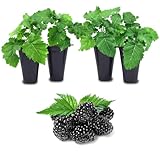


Plant Profile & Key Characteristics
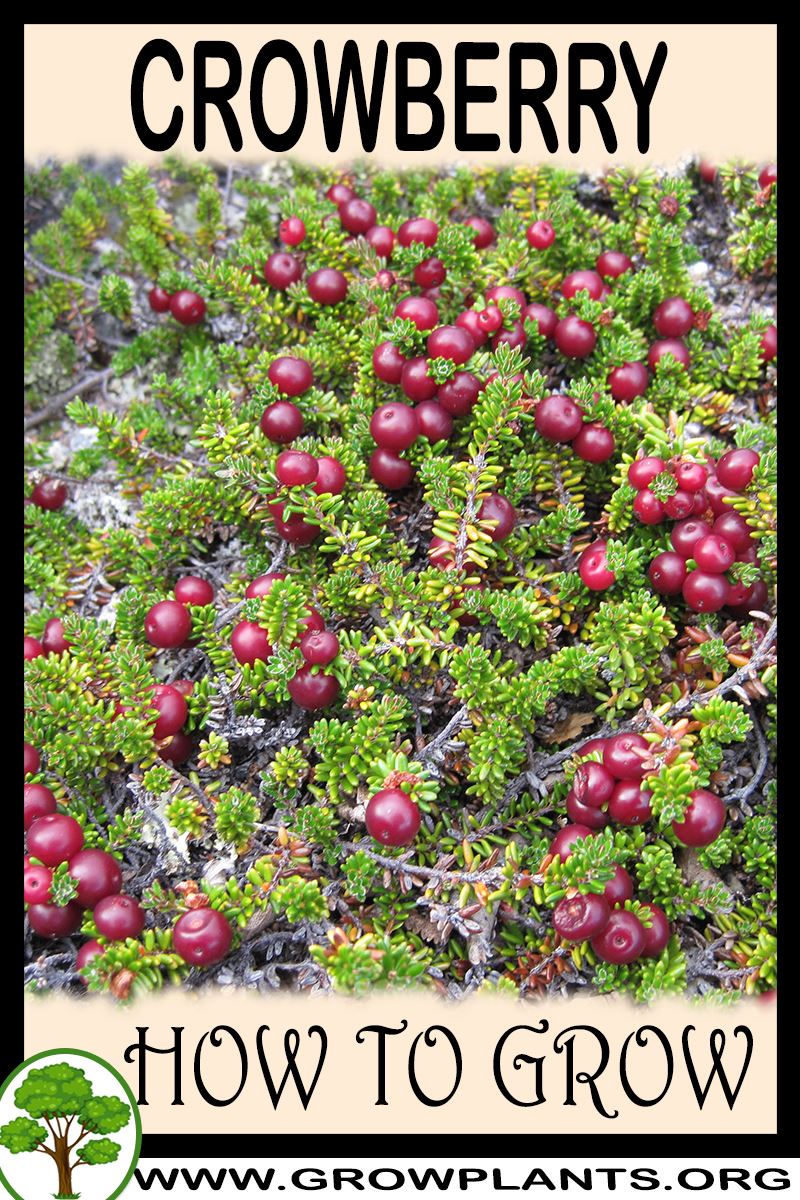
Overview: Crowberry is a low, mat-forming evergreen subshrub growing just 10-50 cm (4-20 in) tall, with needle-like foliage on trailing stems. Cold-loving and hardy, it is grown as an ornamental groundcover and for its edible berries.
Quick Specifications
| Specification | Attribute |
|---|---|
| Plant Type / Life Cycle | Perennial (subshrub) |
| Foliage Type | Evergreen |
| Mature Size | 10-50 cm (4-20 in) tall, spreading mat |
| Growth Rate | Fast |
| Root System | Fibrous, shallow (mat-forming) |
| Toxicity | Non-toxic / edible fruit |
| Hardiness | USDA zone 2-6 |
Growth Form & Structure
- Height & Spread: Low spreading habit 10-50 cm (4-20 in) tall forming dense mats; also grown in containers.
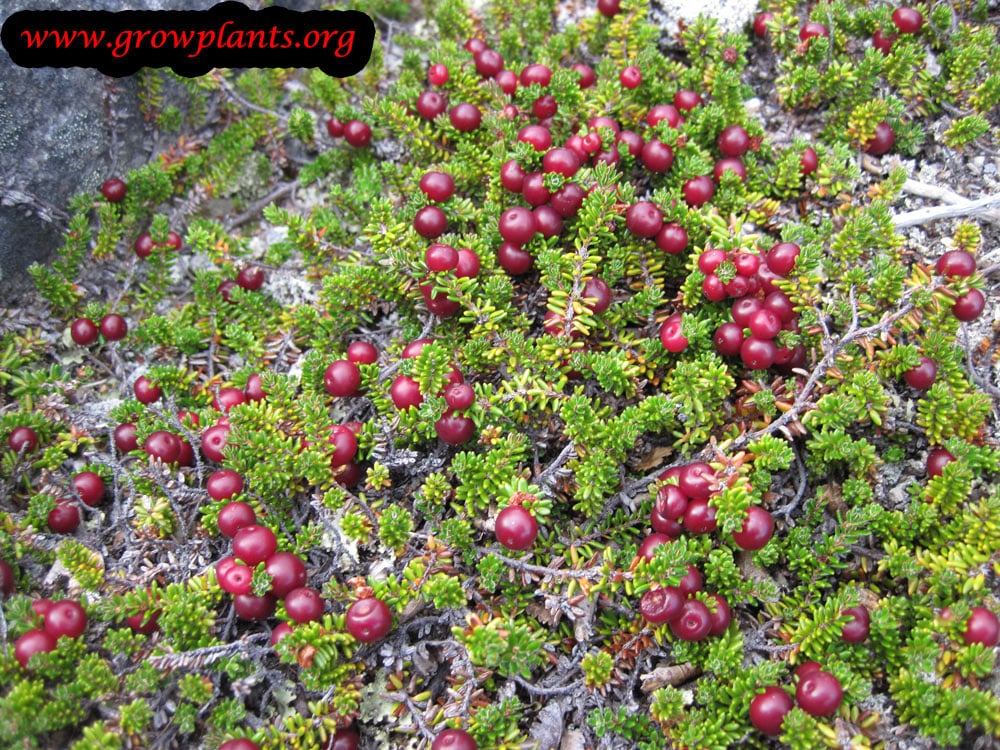
- Growth Habit & Form: Prostrate, mat-forming evergreen subshrub with wiry trailing stems.
- Lifespan & Maturity: Long-lived perennial; begins bearing fruit in about 1-2 years.
Anatomy & Physical Features
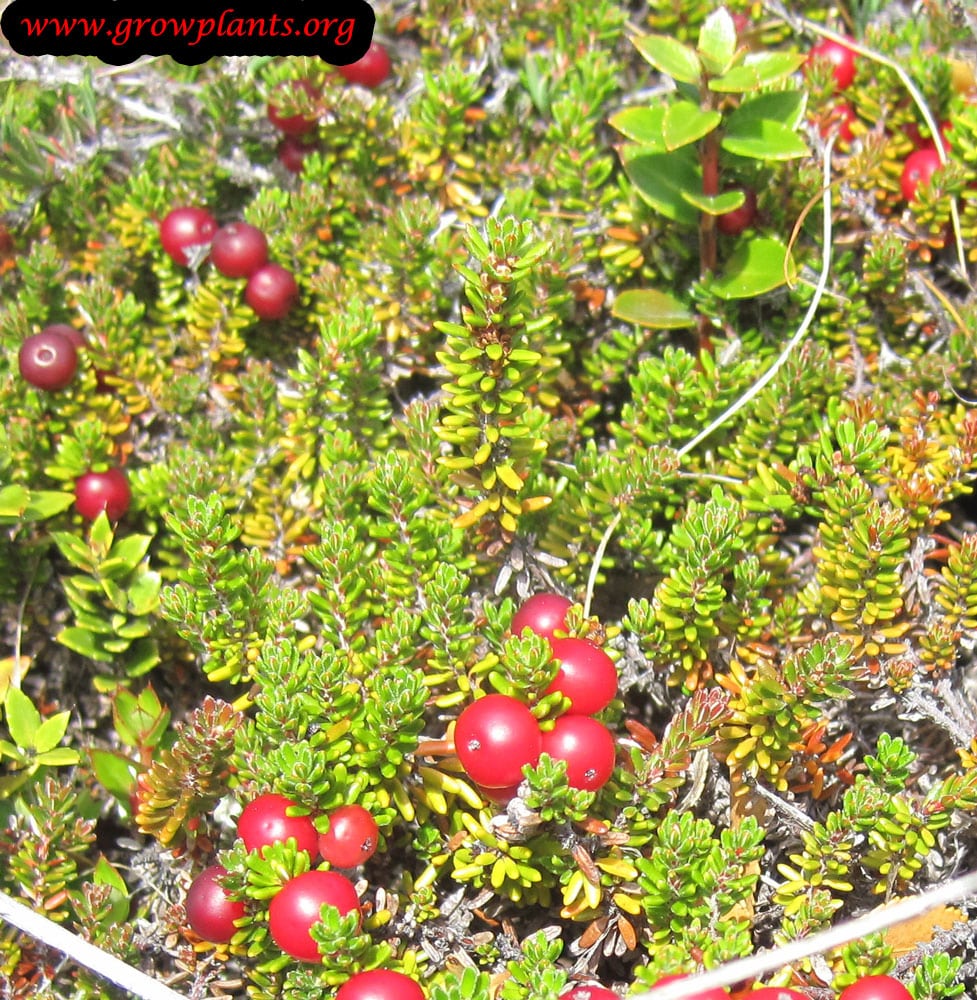
- Leaves & Foliage: Small needle-like green leaves set closely around the stems.
- Flower Characteristics: Tiny purple flowers about 0.3-0.6 cm across (full detail in the Bloom guide).
- Fruit Profile: Round berries in black, red or purple (full detail in the Fruit guide).
Primary Uses & Landscape Value
- Edible Uses: Berries eaten raw and made into jams and juice.
- Functional & Ornamental Roles: Ornamental evergreen groundcover for cool climates; suited to containers.
Care Guide: Planting, Soil & Watering
Overview: Crowberry is a hardy, mat-forming subshrub of cool moorland that thrives in moist, acidic, peaty soil and full sun to light shade. It likes its roots consistently damp and needs an acidic, lime-free medium.
Quick Care Requirements
| Requirement | Ideal Condition |
|---|---|
| Planting Season | Late winter to summer; spring in cold-winter areas |
| Growth Rate | Fast |
| Soil Type | Moist, acidic, peaty or organic |
| Soil pH | Acidic (tolerates neutral) – as specified in the source |
| Water Need | High – keep the soil consistently moist |
Planting & Establishment
- Best Planting Season: Plant from late winter through summer as conditions allow; in cold-winter areas wait until spring.
- How to Plant:
- Hole Preparation: Dig a shallow, wide hole for this shallow-rooted mat-former, loosening the surrounding soil.
- Soil Amendments: Blend in acidic organic matter such as peat or composted bark to keep the soil moist and lime-free.
- Planting Depth: Set the crown at soil level and firm gently, then mulch to conserve moisture.
- Growth Speed & Expectations: Growth is fast, spreading into a low, dense evergreen carpet.
Soil, Watering & Drainage Care
- Soil Mix & Drainage Needs: The soil should stay moist and acidic yet not stagnant; in pots use ericaceous (lime-free) mix and water with rainwater.
- Watering Schedule & Technique:
- Young / Newly Planted: Keep the soil consistently moist while establishing and never let it dry out.
- Established: Water regularly so the ground stays damp, especially in summer.
- Seasonal Adjustments: Water freely in warm weather and less in cold dormancy, while keeping the soil from drying out.
Climate, Light & Hardiness
Crowberry is a low, cold-climate evergreen subshrub of temperate and subarctic/tundra-adjacent regions, growing in full sun to half shade with consistently moist, acidic soil. It is exceptionally cold-hardy, rated by the site to USDA zone 2–6, and needs a genuinely cold climate rather than heat.
Quick Climate Specifications
| Climate Zones | Temperate climates (including cold-temperate/subarctic-adjacent regions) |
|---|---|
| USDA Hardiness Zones | Zone 2–6 |
| Optimal Temp Range | approximately 5–20°C (41–68°F) during the growing season |
| Cold Damage Begins | Not meaningfully applicable - this is a cold-hardy tundra-margin subshrub, not one at risk from ordinary winter cold within its zones |
| Approx. Survival Minimum | approximately −40°C (−40°F) or lower briefly under snow cover, dormant established plant, consistent with zone 2 |
| Frost Tolerance | Very High |
| Light Conditions | Full sun / half shade |
| Wind Tolerance | High (native to open, exposed cold-climate habitats) |
| Salt / Coastal Tolerance | Not established in source data |
Sunlight & Light Exposure
Optimal Light Setup
Full sun to half shade both suit this low subshrub.
Direct Sun Requirement
Not strictly required; half shade is listed as an acceptable alternative to full sun.
Shade & Heat Management
Some shade can help where summers run warmer than its native cold-climate range; this is not a heat-loving plant.
Best Exposure / Orientation
Open, exposed sites are well tolerated, matching its native tundra-margin and heathland habitats.
Temperature Extremes & Hardiness
USDA Hardiness & Regional Limits
The site rates crowberry to zone 2–6, among the most cold-hardy plants covered here, reflecting its native range in cold-temperate and subarctic-adjacent heath and tundra-margin habitats.
Cold Damage & Winter Protection
Established plants need no winter protection within their hardiness range and are adapted to survive deep cold, typically under insulating snow cover in their native habitat.
Frost Sensitivity
Frost tolerance is very high for the dormant plant; like other cold-climate evergreens it is far more at risk from heat and drought stress than from cold.
Extreme Heat Tolerance
Not well suited to hot climates; it is a cool- to cold-climate specialist, and prolonged heat outside its natural range is more likely to stress it than cold ever would.
Wind, Humidity & Microclimate
Humidity Preferences
Prefers consistently moist, acidic soil conditions typical of heath and tundra-margin habitats; the site notes the soil should stay moist.
Wind Tolerance
High - adapted to open, wind-exposed cold-climate ground cover habitats.
Rainfall & Seasonal Moisture
Needs reliably moist soil through the growing season; the site lists a fairly high water requirement.
Microclimate Recommendations
Within its hardy zone 2–6 range this plant needs little special siting; where summers are hotter than ideal, part shade and consistent soil moisture help offset heat stress.
Growing in Pots, Balconies & Indoors
Crowberry (Empetrum) is a low, spreading sub-shrub of 10-50 cm (4-20 in) from cold moor and heath, not a houseplant, but it makes a neat pot or trough plant on a bright balcony or patio. It likes full sun to half shade, plenty of moisture and an acidic soil, and being a cold-climate plant it should stay outdoors for its winter chill.
Quick Details
- Container Size: A shallow pot or trough suits its low, spreading habit
- Indoor Suitability: Not a houseplant – a hardy, cool-climate ground-cover that needs winter cold
- Best Spot: Full sun to half shade outdoors, kept cool and moist
- Soil & Drainage: Moist but free-draining acidic (ericaceous) mix
- Watering in Pots: Generous – it likes plenty of water and dislikes drying out
Indoors & On the Windowsill
- Houseplant limits: The grower marks it as no for indoors – it is a cold-climate plant that needs cool, bright, moist conditions and a winter chill a warm room can’t give.
- Keep it outdoors: Leave the pot outside year-round; indoor warmth and dry air don’t suit it.
On a Balcony or Patio
- Light & moisture: A bright but cool spot is ideal; the shallow roots dry fast in a pot, so check moisture often and don’t let it bake against a hot wall.
- Practicalities: Being low and spreading, it looks best in a wide, shallow container or trough with good drainage.
Choosing the Pot, Soil & Long-Term Care
- Pot & drainage: A wide pot with strong drainage holes; skip a standing water saucer to avoid root rot, though the mix should never dry out.
- Potting mix: An acidic (ericaceous) mix – peat or coir with a little perlite – kept moist.
- Feeding: Feed lightly through the growing season with an ericaceous feed, as nutrients leach from pots.
- Repotting: Refresh the mix and pot on every couple of years, keeping the acidic conditions it needs.
Fertilizing & Feeding
Crowberry is a light feeder – as a plant naturally adapted to lean tundra and moorland soils, it typically thrives with little to no supplemental fertilizer beyond consistent moisture and organic mulch.
Quick Fertilizing Specs
| Feeding Level | Light |
|---|---|
| young_feeding | Very light, low-nitrogen feeding – often not needed at all in decent soil. |
| mature_feeding | Light, balanced feeding only if growth or fruiting seems weak. |
| Main Nutrient Priority | Minimal, low-nitrogen feeding that respects this plant’s adaptation to lean native soils. |
| Best Feeding Period | Active growing season, if feeding is needed at all. |
| Organic Options | Organic mulch to mimic this plant’s naturally lean, moist native soils. |
| Soil pH | Prefers acidic soil but tolerates neutral. |
| Reduce/Stop Feeding | Feeding naturally winds down as growth slows heading into the cold season. |
Feeding by Growth Stage
Newly Planted Crowberry
Establish roots in moist, acidic-to-neutral soil without overfeeding a plant adapted to naturally lean, poor soils.
| Nutrient direction | Very light, balanced feeding – crowberry is naturally adapted to nutrient-poor soils and doesn’t need a rich feeding program. |
|---|---|
| Timing | After planting, once new growth begins. |
| Frequency | At most a light feeding as the plant settles in; many plantings establish well with little to no supplemental feeding. |
| Fertilizer types | A light, balanced fertilizer for acid-tolerant plants, used sparingly if at all, Organic mulch to maintain moisture and mimic this plant’s native lean, moist soils |
| Precautions | Avoid over-fertilizing, since this tundra-adapted subshrub is naturally suited to lean soils and can be stressed by rich feeding. |
Vegetative Growth
Support steady, naturally fast spreading growth without pushing excess soft growth.
| Nutrient direction | Low-nitrogen, light feeding that respects this plant’s adaptation to naturally poor soils. |
|---|---|
| Timing | Through the active growing season. |
| Frequency | Feeding needs are minimal during active growth; a light feeding is usually enough if the planting shows slow growth or pale color. |
| Fertilizer types | A light, low-nitrogen fertilizer used only if growth or color suggests it’s needed, Consistent moisture and organic mulch as the main ongoing care |
| Precautions | Keep soil consistently moist, since this plant’s water needs matter more to its performance than feeding does. |
Flowering and Fruiting
Support the shift from small purple flowers into a full set of berries.
| Nutrient direction | Light, balanced feeding through bloom and fruit development – this plant doesn’t need heavy feeding to fruit well. |
|---|---|
| Timing | From spring bloom through fruit development in the following months. |
| Frequency | Light feeding is usually enough through flowering and fruiting, easing off once fruit is ripe. |
| Fertilizer types | A light, balanced fertilizer for acid-tolerant plants if growth or fruiting seems weak, Consistent moisture through bloom and fruit development |
| Precautions | Keep soil consistently moist through fruiting, since dry conditions affect fruit quality more than feeding does. |
Nutrient Deficiency Signs & Corrections
Unusually pale or yellowish foliage and slowed growth in a plant that is normally a fast grower.
| Possible causes | Very poor, depleted garden soil lacking the organic matter this plant would have in its native habitat, Insufficient soil moisture stressing the plant, Root competition from other nearby plantings |
|---|---|
| Appears first on | New growth across the plant |
| What to check | Soil organic matter and moisture levels, Competition from nearby roots, Overall planting age and soil history |
| Possible correction | Add organic mulch to build soil quality and confirm the planting is getting consistent moisture before considering a light feeding. |
New leaves show yellowing between the veins while the veins stay green.
| Possible causes | Soil pH drifting toward alkaline, outside this plant’s preferred acidic-to-neutral range, Poorly drained soil limiting root uptake, Naturally low-iron soil |
|---|---|
| Appears first on | Newest growth |
| What to check | Soil pH, Drainage around the root zone, Whether the plant is growing in cooler, consistently moist conditions it prefers |
| Possible correction | Work to keep soil on the acidic-to-neutral side and apply a chelated iron product per its label if yellowing persists. |
Pruning, Training & Seasonal Maintenance
Crowberry is a low, mat-forming evergreen subshrub, and it tolerates light trimming at almost any time of year – but it rarely needs anything beyond occasional tidying. The main objective is keeping the mat dense and compact and removing winter-damaged growth; because flowers and berries form on that season’s new growth, a light trim does not sacrifice the coming bloom or fruit display.
Quick Pruning & Maintenance Specs
| Pruning Tolerance | Low to Moderate – tolerates trimming but does not need or benefit from heavy pruning |
| Primary Pruning Window | Any time for light tidying; best just after spring flowering if reshaping is wanted |
| Typical Frequency | Occasional light tidy every year or two, not a routine annual task |
| Main Objective | Dense, compact mat; remove dead or browned stems |
| Young Plant Priority | None – let the mat establish and fill in |
| Mature Plant Priority | Light shearing to prevent bare, woody patches in the center of the mat |
| Best Tool Type | Fine hand shears / precision snips |
| Avoid Heavy Pruning During | Hot, dry spells and immediately after planting |
Pruning by Plant Age & Size
Newly Established
No pruning needed beyond removing any obviously dead or damaged nursery growth; let the plant establish its mat.
Young / Formative
No structural training – crowberry spreads naturally as a low mat and does not need a leader, framework, or staking.
Mature / Established
Light shearing every couple of years refreshes density and prevents the mat’s interior from going bare and woody.
Seasonal Pruning Schedule
Ongoing Sanitary
Objective: remove dead or winter-browned stems as they’re noticed, in any season, since this is an evergreen with a tough, tundra-adapted constitution. What NOT to remove: healthy green current-season growth. Expected response: quick fill-in from adjacent stems. Flowering/fruiting impact: none if limited to dead material.
Post-Flowering Light Shaping
Objective: refresh the mat’s outline and density once spring flowering has finished, so a light trim does not remove the developing flowers. What to remove: leggy or uneven tips. What NOT to remove: don’t shear hard into old wood at the base. Expected response: denser regrowth. Flowering/fruiting impact: minimal if done after bloom rather than during.
Special Growth to Remove
- Dead or winter-killed stems
- Browned or damaged foliage patches
- Old, woody, unproductive growth in the mat’s interior (can be selectively thinned to encourage fresh low growth)
Container & Small-Space Pruning
Crowberry is grown in containers as well as in the ground. In a pot, light annual shearing keeps it compact and prevents it from becoming leggy; because it is naturally low and slow to build woody structure, root pruning is rarely needed – refresh the potting mix instead as the plant matures.
Tools
Precision snips or fine hand shears only – stems are thin and a mat like this needs light, all-over trimming rather than heavy cutting tools.
Tool Hygiene & Disease Risk
Routine – clean, sharp tools are sufficient. Aphids are the only pest noted for this plant and no transmissible pathogen risk is documented.
Cut Placement & Technique
Use light, even shearing or tip-trimming across the mat’s surface rather than selective heading cuts; stems are too fine to need branch-collar-style cuts.
Heavy Pruning & Rejuvenation
If a mat becomes sparse or woody at the base after many years, a hard cutback in spring can rejuvenate regrowth, as with many low ericaceous mat shrubs – but expect reduced flowering and fruiting for a season while it recovers.
Post-Pruning Care
Keep the soil consistently moist after any harder cutback, since this plant wants ample water; no extra feeding is needed given its adaptation to lean, acid soils.
Common Pruning Mistakes
- Shearing hard during hot, dry weather
- Disturbing the mat while it is carrying its ornamental berries
- Treating it like a formal hedge that needs regular clipping, when it largely does not
When NOT to Prune
Avoid a hard cutback while flowering or while berries are on display for ornamental interest, and avoid pruning during drought stress or right before a hard frost at the colder end of its hardiness range.
Recommended Tools (by task)
- precision_snips – the only tool this plant’s fine stems call for; used for occasional light shaping or removing dead patches from the mat.
Propagation Guide
Crowberry can be grown from seed, which the site notes is not strictly necessary to substitute with vegetative propagation, but semi-hardwood cuttings or rooted sections of its spreading stems are generally the quicker, more dependable way to establish new plants since seed of this type often germinates slowly and unevenly. Overall propagation difficulty is moderate.
Quick Propagation Specs
| Best Propagation Method | Semi-hardwood stem cuttings |
| Alternative Methods | Seed; layering/division of naturally rooted trailing stems |
| Propagation Difficulty | Moderate |
| Seed True-to-Type | Usually true-to-type for the species |
| Vegetative True-to-Type | Yes |
| Best Propagation Season | Cuttings: mid–late summer; Seed: sown after fresh cleaning in autumn, or stratified before spring sowing |
| Cutting Rooting Time | Several weeks to a couple of months |
Growing from Seed
Seed Handling & Viability
Clean the small seed from ripe berries before sowing or storing.
Dormancy & Pre-Sowing Treatment
Seed of this type often benefits from a period of cool, moist stratification to improve germination.
Sowing Depth & Orientation
Sow shallow, barely covering the fine seed.
Germination Conditions
Cool, consistently moist, partly shaded conditions suit germination, which is often slow and uneven, occurring over weeks to months.
Seedling Care
Keep seedlings evenly moist in acid to neutral soil (the plant’s preferred moist, acid soil applies to seedlings too) and avoid letting them dry out.
Stem Cuttings
Cutting Type
Semi-hardwood cuttings from current season’s growth.
Best Timing
Mid–late summer.
Cutting Preparation
Take short cuttings and strip the lower needle-like leaves.
Rooting Setup
A moisture-retentive, well-drained, acidic mix (such as peat and perlite) kept humid.
Rooting Hormone
Beneficial, though not strictly required.
Rooting Time
Typically several weeks to a couple of months.
Air & Ground Layering
As a fast-growing, spreading subshrub, crowberry’s trailing stems often root readily where they stay in contact with moist soil. A trailing stem can be pinned down and kept moist; once it has rooted well – which can take from several months up to about a year – it can be severed from the parent plant and transplanted.
Bloom & Flower Guide
Quick Details
- Bloom Season: Spring
- Time to First Bloom: A few years from planting, as this low, slow shrub establishes
- Flower Appearance: Tiny purple flowers, about 0.3 to 0.6 cm, tucked close to the stems
- Edibility: Grown for its berries; the tiny flowers are not eaten
Detailed Blooming Overview
Crowberry is a low, spreading evergreen of cool northern heaths, and its flowers are easy to miss: small purple blooms pressed close to the wiry stems in spring. What they lack in show they make up for later as the dark berries form.
Flower Characteristics
- Very small purple flowers, roughly 0.3 to 0.6 cm across.
- Held tight against the stems rather than on display.
Bloom Care & Thinning
- Pollination: crowberry is mainly wind-pollinated, though bees and other insects may visit the small flowers.
- Plant a mix: plants are often male or female, so growing several together helps ensure a good berry set.
Fruit & Uses
Crowberry (Empetrum) is grown for its small round berries – black, red or purple depending on the plant – which are the only edible part, eaten fresh off the plant or cooked into jams and juice.
Quick Edible Specs
| Edible Parts | Fruit (berries) |
|---|---|
| Main Use(s) | Culinary – fresh eating, jams, juice |
| Eaten Raw or Cooked | Raw for fresh eating; cooked for jam or juice |
| Preparation Required | None for fresh eating; cook/strain for jam or juice |
| Harvest Season | Spring / Summer |
| Time to First Harvest | Not immediate – young plants need a season or two to establish before fruiting well; see this page’s planting/propagation details for the general timeline |
| Storage | Best eaten fresh or processed promptly into jam or juice for longer storage |
| Safety/Toxicity Caveat | None known for the ripe fruit |
Fruit
Round berries ripen black, red or purple depending on the plant, and are picked once fully coloured and soft. They are eaten raw straight off the plant or cooked into jams and juice. Flavour is mild rather than assertive, which is why crowberries have traditionally been mixed with richer-tasting fruit rather than eaten alone. Birds are the main competition for the crop.
Harvesting
Harvest through spring into summer as berries colour up; because ripening is uneven across the plant, picking more than once over the season captures more of the crop.
Preparation, Uses & Safety
Fresh berries need no preparation beyond picking and rinsing. For jams or juice, the fruit is simply cooked down or pressed. No toxicity is noted for the ripe fruit.
Pests, Diseases & Troubleshooting
Overview: Crowberry is a wiry, cold-hardy heath-family groundcover from acidic, peaty moor and tundra soils, and it is close to pest-free. The few problems it does have are cultural – chlorosis in limey soil and rot in poorly drained ground – with only the odd sap-sucker or root weevil in cultivation.
Quick Troubleshooting Overview
| Issue / Pest | Main Symptom | Primary Solution |
|---|---|---|
| Lime-induced chlorosis | Yellowing leaves with green veins on alkaline soil | Acidify soil; ericaceous compost; iron chelate |
| Root rot | Dieback and browning in wet, heavy soil | Improve drainage; plant in gritty acid mix |
| Vine weevil (containers) | Notched leaves; grubs eat roots; sudden collapse | Biological nematodes; check root ball |
| Aphids | Occasional colonies on soft new growth | Water jet; insecticidal soap |
| Spider mites | Fine stippling in hot, dry, sheltered spots | Raise humidity; rinse foliage |
Common Pests & Management
- Vine weevil (Otiorhynchus sulcatus):
- Symptoms: Mainly a container problem. Adults notch leaf margins at night while the C-shaped white larvae eat roots, causing sudden wilting or collapse of an apparently healthy plant.
- Prevention & Control: Check the root ball of pot-grown plants, drench with parasitic nematodes (Heterorhabditis/Steinernema) when the soil is warm and moist to target grubs, and hand-pick or trap adults at night. Open-ground crowberry is rarely affected.
- Aphids (Aphididae):
- Symptoms: Occasional small colonies on tender new shoots, with slight distortion and honeydew; seldom serious on this tough plant.
- Prevention & Control: Dislodge with a jet of water and rely on natural predators; treat only heavy colonies with insecticidal soap.
- Spider mites (Tetranychus urticae):
- Symptoms: Fine pale stippling and dull foliage where plants are grown too warm, dry or sheltered – unusual on cool, open-sited crowberry.
- Prevention & Control: Keep the plant cool and moist at the root, hose the foliage, and use insecticidal soap only if an infestation builds.
Diseases & Fungal Issues
- Leaf spot (Fungal leaf-spotting spp.):
- Symptoms: Occasional small brown spots on foliage in damp, stagnant conditions; largely cosmetic.
- Treatment & Management: Improve air movement and drainage, clear fallen debris, and avoid overhead watering. Fungicides are essentially never needed.
- Root and crown rot (Phytophthora / Pythium spp.):
- Symptoms: Browning, dieback and general decline where the soil stays wet or is not sufficiently free-draining and acidic.
- Treatment & Management: Prevention only: plant in gritty, acidic, well-drained media, never let it sit waterlogged, and avoid rich or limey soils that stress the roots.
Growing Difficulties & Abiotic Problems
- Lime-induced chlorosis:
- Cause & Symptoms: As a calcifuge (lime-hating) heath, crowberry cannot take up iron in neutral or alkaline soil, so leaves yellow between the veins.
- Correction Strategy: Grow only in acidic, humus-rich, peaty soil; use ericaceous compost in pots, mulch with pine needles or bark, water with rainwater not hard tap water, and apply iron chelate (sequestered iron) to correct a flare-up.
- Waterlogging / poor drainage:
- Cause & Symptoms: Despite loving moist moorland, it needs oxygen at the roots; compacted or waterlogged soil causes decline and rot.
- Correction Strategy: Plant in a free-draining acidic mix with added grit, on a slope or raised bed, keeping the soil evenly moist but never stagnant.
- Heat & drought scorch:
- Cause & Symptoms: A cool-climate tundra plant, it scorches and browns in hot, dry, exposed positions.
- Correction Strategy: Site in cool conditions with a moisture-retentive but drained root run, mulch well, and shade from fierce afternoon sun in warm regions.
What Helps – Products & Tools
Crowberry needs almost nothing beyond the right soil. Keep ericaceous compost and iron chelate for chlorosis, a moisture-retentive acidic mulch, and parasitic nematodes on standby for vine weevil in containers; insecticidal soap covers the rare aphid or mite. Its real ‘treatment’ is correct siting, not spraying.
Frequently Asked Questions
What is a crowberry plant?
Crowberry is a low, heath-like evergreen subshrub of cold northern regions, grown as ground cover and for its edible black berries. It’s a mat-forming perennial growing just 10-50 cm (4-20 in) tall, with needle-like foliage on trailing stems, and it’s rated hardy to USDA zone 2-6.
What color are crowberry berries?
Crowberry berries are round and ripen in black, red or purple depending on the specific plant. They’re picked once fully coloured and soft.
Are crowberries edible and how do you eat them?
Yes – the berries are the only edible part of the plant, and they’re eaten fresh off the plant or cooked into jams and juice. Fresh berries need no preparation beyond picking and rinsing, while jam or juice just means cooking down or pressing the fruit. No toxicity is known for the ripe fruit.
Does crowberry need acidic soil?
Yes. Crowberry thrives in moist, acidic, peaty soil and will develop lime-induced chlorosis – yellowing between the veins – if grown in neutral or alkaline ground. In containers, use an ericaceous (lime-free) mix and water with rainwater rather than hard tap water.
Can crowberry be grown indoors or in a pot?
It does well in a pot or trough outdoors on a bright balcony or patio, but it isn’t suited to being a houseplant – it needs cool, bright, moist conditions and a winter chill that a warm indoor room can’t provide, so keep containers outside year-round.