Plant Profile & Key Characteristics
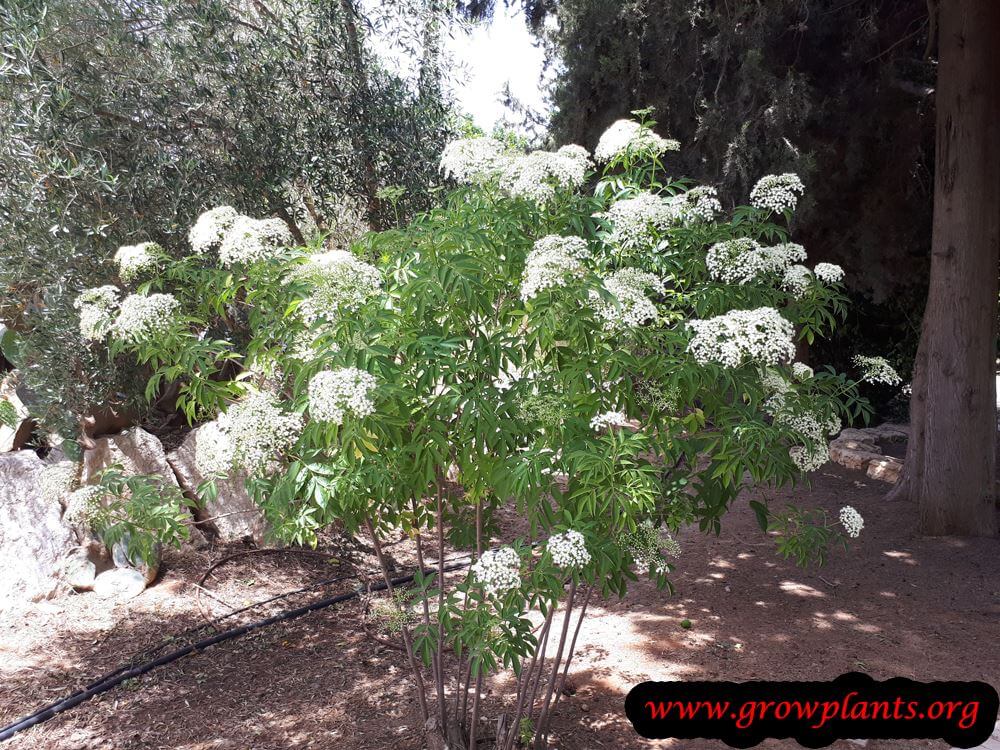
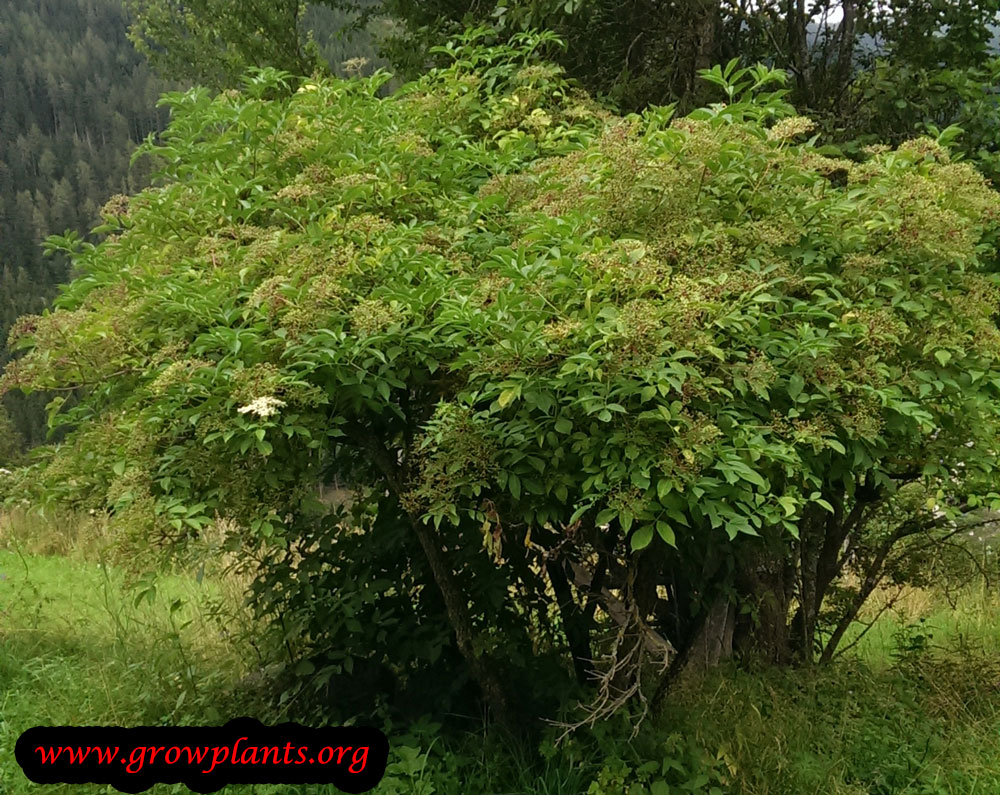
Overview: A fast-growing deciduous shrub to small tree, commonly 0.5-2 m (20-80 in) tall but reaching 4-8 m (12-25 ft) in the blue elderberry. It is grown for its edible cooked berries and fragrant flower heads, and as an ornamental.
Quick Specifications
| Specification | Attribute |
|---|---|
| Plant Type / Life Cycle | Deciduous perennial shrub to small tree |
| Foliage Type | Deciduous |
| Mature Size | 0.5-2 m (20-80 in) commonly; blue elderberry 4-8 m (12-25 ft) |
| Growth Rate | Fast |
| Root System | Suckering – sends up basal shoots from the base and roots |
| Toxicity | The raw berries, leaves and stems contain cyanogenic compounds and are toxic if eaten raw; the ripe berries are safe only after cooking, and the flowers are edible |
| Hardiness | USDA zones 3-10 |
Growth Form & Structure
- Height & Spread: In the ground usually a multi-stemmed shrub 0.5-2 m (20-80 in) tall, while the blue elderberry can reach 4-8 m (12-25 ft); not suited to containers.
- Growth Habit & Form: Vigorous, multi-stemmed shrub to small tree that suckers freely from the base, giving fast, somewhat aggressive growth.
- Lifespan & Maturity: A long-lived perennial shrub that begins bearing fruit in about 1-2 years and renews itself continually from basal shoots.
Anatomy & Physical Features
- Leaves & Foliage: Compound (pinnate) green leaves on arching, pithy stems.
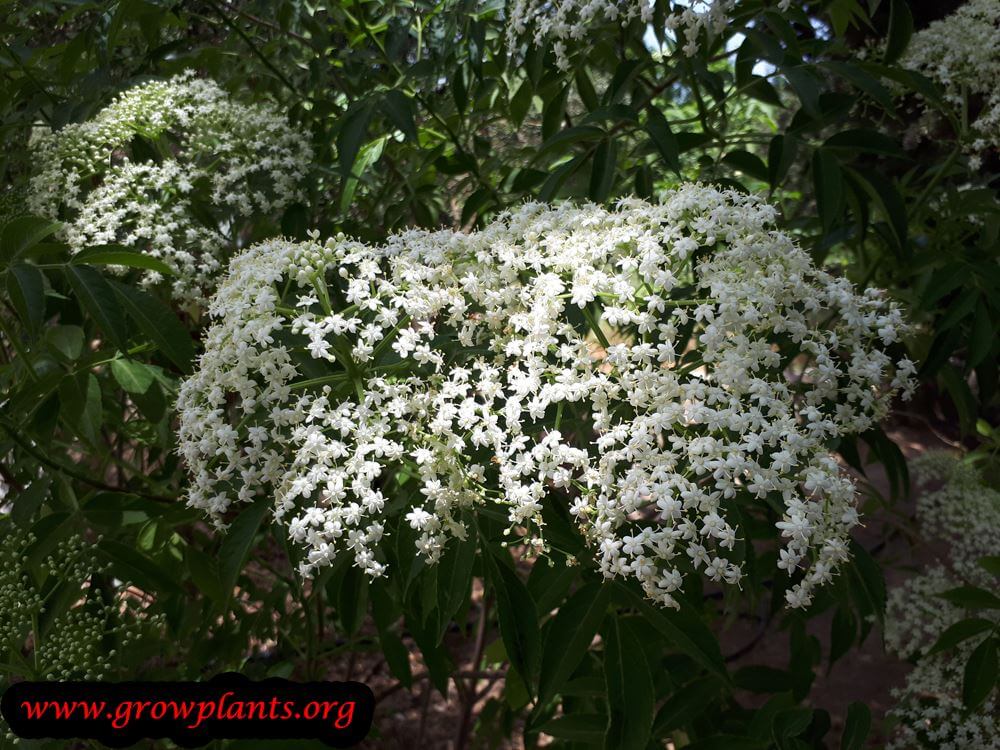
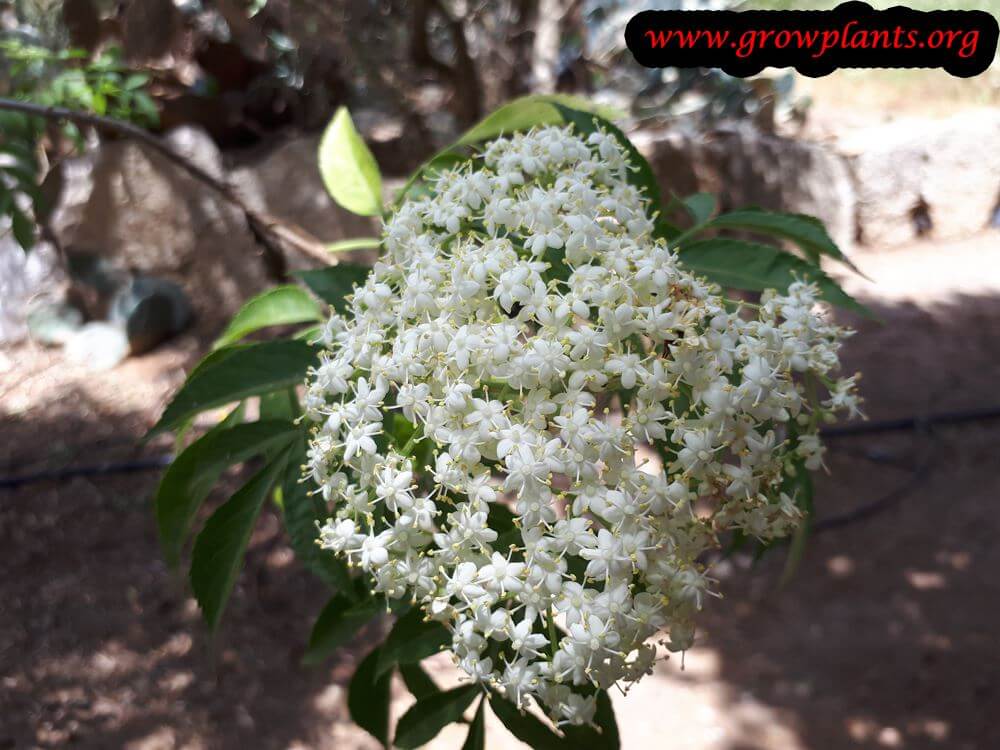
- Flower Characteristics: Fragrant, edible white flowers in flat or rounded heads, bee-pollinated.
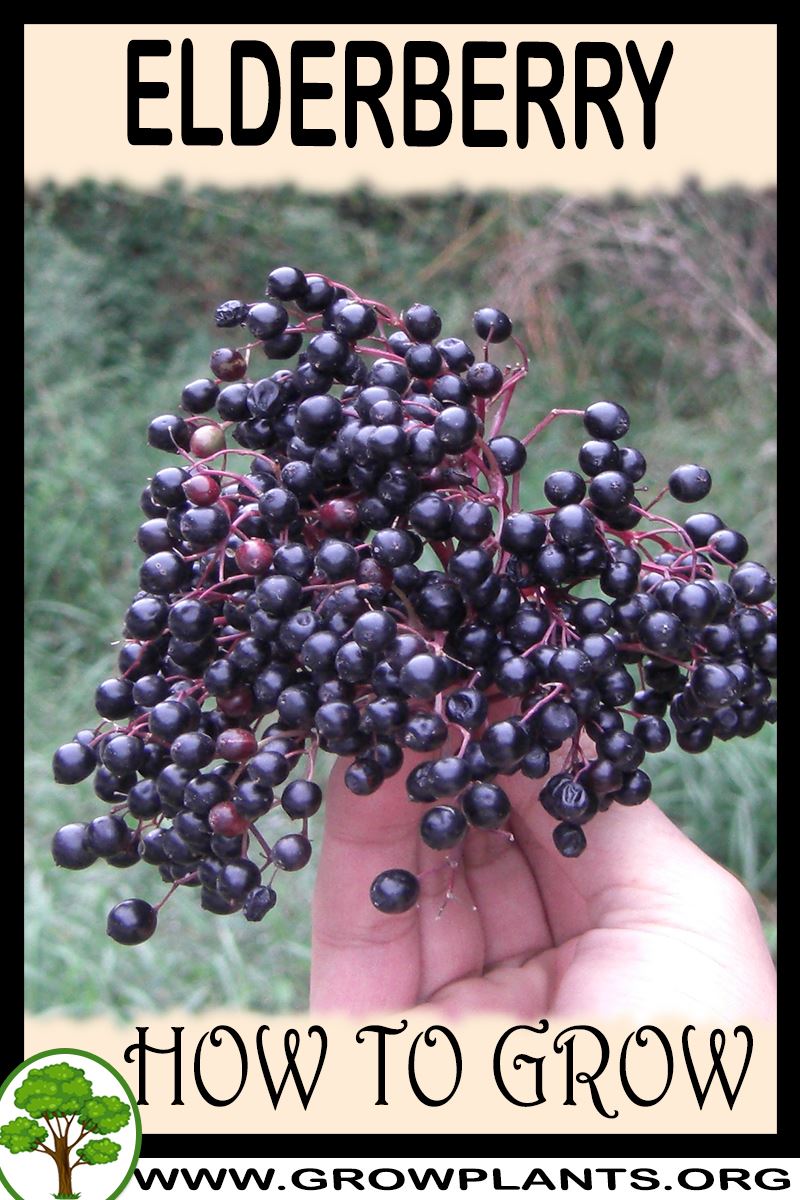
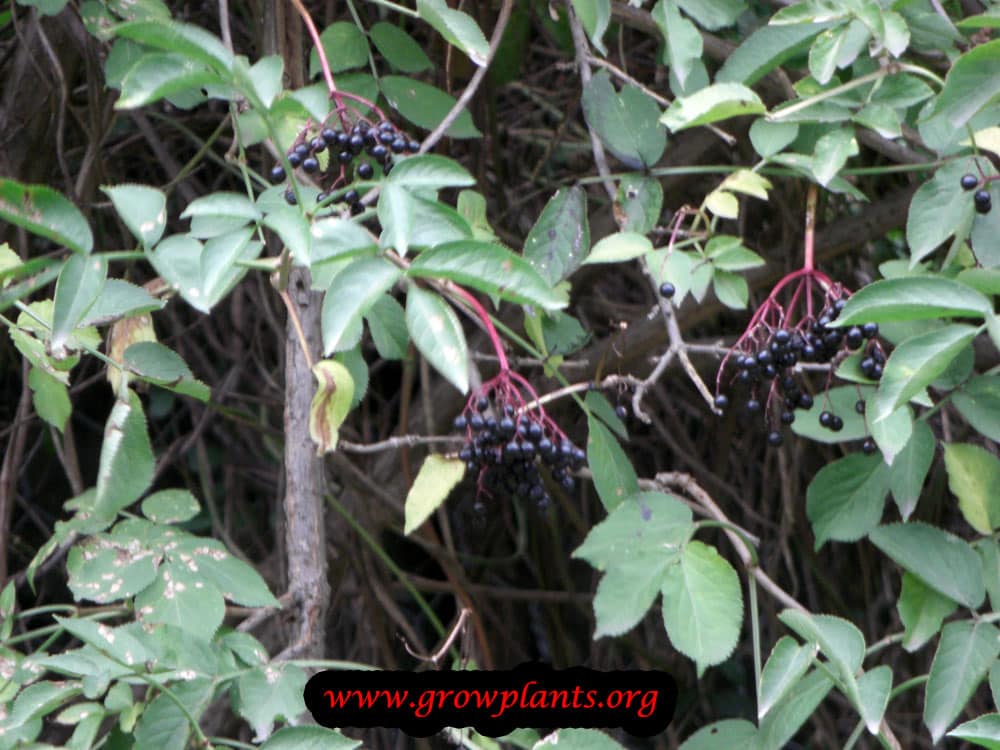
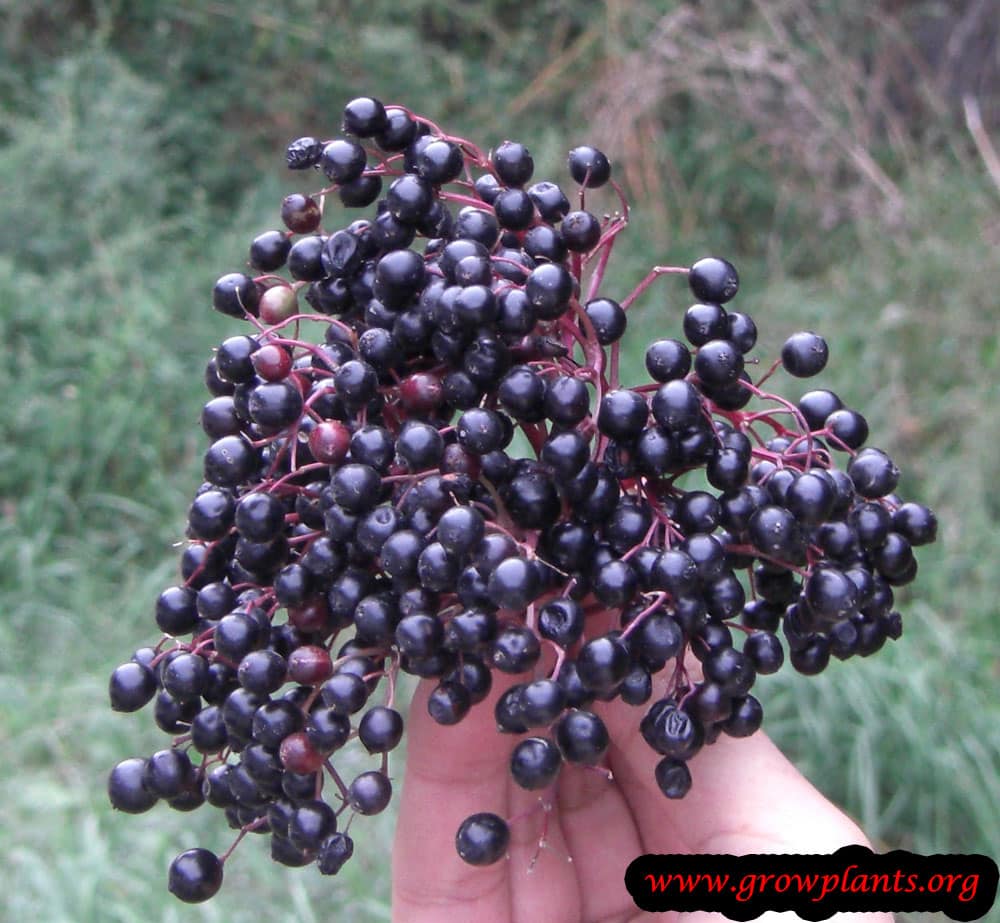
- Fruit Profile: Small berries in heavy clusters, black, blue, purple or red, edible only when fully ripe and cooked.
Primary Uses & Landscape Value
- Edible Uses: Ripe cooked berries make juice, jam, cordial, wine and baked goods; the fresh flower heads are used for cordials and fritters.
- Functional & Ornamental Roles: Fruiting and ornamental shrub for hedges and wildlife plantings, providing food for pollinators and birds.
Care Guide: Planting, Soil & Watering
Overview: Elderberry (Sambucus) is a fast-growing, deciduous shrub to small tree grown for its edible flowers and berries in temperate, Mediterranean and subtropical gardens (hardiness zones 3-10). It does best in full sun to part shade in fertile, moist, well-draining soil that is slightly acidic, and it needs a cold winter to crop well.
Quick Care Requirements
| Requirement | Ideal Condition |
|---|---|
| Planting Season | Dormant season – winter to spring |
| Growth Rate | Fast |
| Soil Type | Fertile, moist, well-draining |
| Soil pH | Slightly acidic |
| Water Need | Moderate; keep the soil evenly moist |
Planting & Establishment
- Best Planting Season: Plant while dormant in winter to spring, in full sun or light shade. Allow room for its vigorous, suckering habit, as it readily throws up new shoots from the base.
- How to Plant:
- Hole Preparation: Dig a hole wider than the root ball and loosen the surrounding soil to give the spreading roots and basal shoots room to run.
- Soil Amendments: Enrich the backfill with compost and plenty of organic matter to build the fertile, moisture-holding soil it prefers.
- Planting Depth: Set the plant at the depth it grew previously, keeping the crown level with the soil surface.
- Growth Speed & Expectations: A fast grower reaching about 0.5-2 m for most forms, with the blue elderberry making a 4-8 m small tree; expect quick establishment and spreading basal shoots that may need controlling.
Soil, Watering & Drainage Care
- Soil Mix & Drainage Needs: Give fertile, well-draining ground that still holds moisture; it is a vigorous shrub best planted in open ground rather than containers.
- Watering Schedule & Technique:
- Young / Newly Planted: Water regularly through the first year or two so young plants never dry out while they establish.
- Established: Once established it is fairly tough but crops best with steady, moderate watering that keeps the soil evenly moist.
- Seasonal Adjustments: Water more through summer as fruit swells, and ease off over the dormant winter period.
Climate, Light & Hardiness
Elderberry grows across temperate, Mediterranean, and subtropical climates in full sun to half shade. It is a genuinely cold-hardy, winter-dormant deciduous shrub, rated by the site to USDA zone 3–10, with the site noting a real cold-winter/chilling requirement for some cultivars.
Quick Climate Specifications
| Climate Zones | Temperate, mediterranean, and subtropical climates |
|---|---|
| USDA Hardiness Zones | Zone 3–10 |
| Optimal Temp Range | approximately 10–27°C (50–81°F) during the growing season |
| Cold Damage Begins | Not meaningfully applicable within zone 3–10 once the plant is dormant; late-season or very early spring frost can damage active new growth and flowers |
| Approx. Survival Minimum | approximately −35 to −40°C (−31 to −40°F) briefly, dormant established plant, consistent with zone 3 |
| Frost Tolerance | High |
| Light Conditions | Full sun / half shade |
| Wind Tolerance | Moderate |
| Salt / Coastal Tolerance | Not established in source data |
Sunlight & Light Exposure
Optimal Light Setup
Full sun to half shade both suit elderberry, with full sun generally giving the best flowering (and therefore berry) production.
Direct Sun Requirement
Not strictly required, though more sun tends to mean more flowers and fruit.
Shade & Heat Management
Handles half shade well; in the hottest, driest part of its subtropical range some afternoon shade can help reduce heat stress.
Best Exposure / Orientation
Adaptable to open or partly shaded sites; the site notes it grows vigorously (even aggressively, with basal shoots), so space accordingly.
Temperature Extremes & Hardiness
USDA Hardiness & Regional Limits
The site rates elderberry across a very broad zone 3–10, spanning cold-temperate to subtropical climates - among the widest hardiness ranges covered here. Cold tolerance and chilling needs vary by cultivar (blue, red, and black elderberry types are noted with different sizes and ranges), and plant age and exposure duration also matter.
Cold Damage & Winter Protection
Established, dormant plants need no winter protection across most of this range; young plants benefit from mulch through their first winters in the colder part of the zone range.
Frost Sensitivity
Frost tolerance is high once dormant; spring frost after new growth or flowers emerge can still cause damage, as with most deciduous temperate shrubs.
Extreme Heat Tolerance
Reasonably heat-tolerant given its range extends to zone 10 (subtropical), though consistent moisture becomes more important in hot climates.
Chilling Requirement
The site notes “some cultivars” have a chilling-hours requirement - treat this as cultivar-dependent: some elderberry selections need a real winter chill to flower and fruit well, while others (suited to the milder end of zone 3–10) need little to none. No specific chill-hour figure is given in the source data.
Wind, Humidity & Microclimate
Humidity Preferences
Adaptable to a range of humidity levels across its broad climate range.
Wind Tolerance
Moderate; the site notes weak or bending branches benefit from pruning, which also helps limit wind damage.
Rainfall & Seasonal Moisture
Prefers reasonably consistent moisture through the growing season; the site lists an average water requirement.
Microclimate Recommendations
Because hardiness and chill needs vary by cultivar, choosing a selection suited to the local winter climate (cold-hardy types for zone 3–6, low-chill types for zone 8–10) is the most reliable way to get consistent flowering and fruiting.
Growing in Pots, Balconies & Indoors
Elderberry (Sambucus) is a vigorous shrub – many types 0.5-2 m (20-80 in), the blue elderberry 4-8 m (12-25 ft). The grower does not recommend it for pots, and it is not a houseplant: it grows large, suckers freely and crops best in open ground. If space is tight, only a young plant or naturally compact type can be held in a very large tub for a while.
Quick Details
- Container Size: Not recommended by the grower; if attempted, only a young or compact plant in a very large tub, short-term
- Indoor Suitability: Not a houseplant
- Best Spot: Full sun to half shade in open ground
- Soil & Drainage: Moist, fertile, free-draining soil
- Watering: Average – keep evenly moist
Indoors & On the Windowsill
- Houseplant limits: The grower marks it as no for indoors – it is a large, fast-growing outdoor shrub, far too big and vigorous for a room or windowsill.
- Safety: The raw berries, leaves and stems are toxic and must not be eaten uncooked; keep the plant and its raw fruit away from children and pets, and cook the berries before use.
On a Balcony or Patio
- Grower’s view: He marks it as not suited to containers – it grows large and suckers, so it soon outgrows a pot and crops poorly confined.
- If you try it: Use the biggest tub you can, a young or compact type, strong drainage, and expect to plant it out or replace it before long.
Choosing the Pot, Soil & Long-Term Care
- Pot & drainage: If grown in a tub, use a large pot with strong drainage holes and skip a standing water saucer to avoid root rot.
- Potting mix: A fertile, moisture-retentive but free-draining mix with plenty of organic matter.
- Feeding & care: Feed through the growing season as pot nutrients leach, and prune hard in the dormant season to keep it in bounds – though open ground remains the better home.
Fertilizing & Feeding
Elderberry is a moderate feeder, but because it is naturally such a vigorous, suckering grower, it typically needs less added nitrogen than other fruiting shrubs – balanced feeding through bloom and fruiting is usually enough.
Quick Fertilizing Specs
| Feeding Level | Moderate |
|---|---|
| young_feeding | Light, balanced feeding – this naturally vigorous shrub needs little help getting established. |
| mature_feeding | Balanced-to-potassium feeding through bloom and fruiting. |
| Main Nutrient Priority | Modest, balanced feeding rather than heavy nitrogen, since the shrub is already a vigorous, suckering grower. |
| Best Feeding Period | Active growing season, from spring growth through fruiting. |
| Organic Options | Organic matter and mulch worked around the base. |
| Soil pH | Prefers slightly acidic soil. |
| Reduce/Stop Feeding | Ease back once berries are fully ripe and the shrub heads into winter dormancy. |
Feeding by Growth Stage
Newly Planted Elderberry
Establish roots in slightly acidic soil and support the shrub’s naturally vigorous early growth.
| Nutrient direction | Light, balanced feeding – elderberry is a naturally vigorous grower and doesn’t need a rich feeding program to get established. |
|---|---|
| Timing | After planting, once new growth begins. |
| Frequency | A light feeding as the plant settles in, then easing into its regular seasonal rhythm. |
| Fertilizer types | A balanced fertilizer suited to shrubs, used lightly, Organic matter worked into the planting area to support establishment |
| Precautions | Avoid heavy feeding at planting, since elderberry is already an aggressive grower prone to sending up basal shoots. |
Vegetative Growth
Support healthy branch development while managing this shrub’s naturally aggressive, suckering growth habit.
| Nutrient direction | Modest, balanced-to-nitrogen feeding – because elderberry already grows vigorously and suckers freely, it typically needs less added nitrogen than other fruiting shrubs. |
|---|---|
| Timing | Through the active growing season. |
| Frequency | Light, occasional feedings during active growth; established plants in decent soil often need little supplemental feeding. |
| Fertilizer types | A balanced shrub fertilizer used sparingly, Organic mulch to support steady, even growth |
| Precautions | Manage basal shoots by removing unwanted suckers rather than relying on feeding to control the plant’s vigorous growth habit. |
Flowering and Fruiting
Support the shift from fragrant white flower heads into a full set of berries, which are edible only once fully ripe and cooked.
| Nutrient direction | Balanced feeding through bloom, shifting toward potassium support as berries develop. |
|---|---|
| Timing | From spring or summer bloom through fruit development into summer and autumn. |
| Frequency | Feed through the active flowering and fruiting period, easing back once fruit is fully ripe. |
| Fertilizer types | A balanced-to-potassium shrub fertilizer as berries develop, Consistent soil moisture through bloom and fruiting |
| Precautions | Net or otherwise protect ripening fruit from birds, and remember the berries need full ripening and cooking before eating. |
Nutrient Deficiency Signs & Corrections
Pale foliage and noticeably slowed growth in a shrub that is normally vigorous.
| Possible causes | Insufficient nitrogen feeding for the growth stage, Poor, depleted soil unusual for this typically adaptable shrub, Root stress from waterlogged or compacted soil |
|---|---|
| Appears first on | Older leaves first, spreading through the shrub |
| What to check | Recent feeding history and soil quality, Soil drainage and compaction, Root health |
| Possible correction | Add a modest balanced feeding and improve soil drainage if roots show signs of stress. |
Good flowering but few berries develop, or berry clusters stay small.
| Possible causes | Insufficient pollinator activity during bloom, Water stress during flowering and fruit set, Feeding too heavily skewed toward nitrogen at bloom time, favoring leaves over fruit |
|---|---|
| Appears first on | Whole-plant pattern rather than a single branch |
| What to check | Pollinator activity during bloom, Soil moisture consistency during flowering, Recent feeding balance |
| Possible correction | Keep soil moisture consistent through bloom and fruit set, and balance feeding rather than leaning on nitrogen at bloom time. |
New leaves show yellowing between the veins while the veins remain green.
| Possible causes | Soil pH drifting too alkaline for this slightly-acid-preferring shrub, Waterlogged or poorly drained soil limiting root uptake, True iron deficiency in depleted soil |
|---|---|
| Appears first on | Newest growth |
| What to check | Soil pH, Drainage around the root zone, Overall root health |
| Possible correction | Work to keep soil on the slightly acidic side and apply a chelated iron product per its label if yellowing persists. |
Pruning, Training & Seasonal Maintenance
Elderberry is a fast-growing, multi-stemmed shrub that flowers and fruits on its current season’s new growth, so dormant winter pruning does not remove the coming year’s crop – it actually helps produce it. The main objective is managing its naturally vigorous, sucker-prone habit: renewing old canes, removing weak or drooping wood, and keeping the thicket from becoming overcrowded.
Quick Pruning & Maintenance Specs
| Pruning Tolerance | High – vigorous and fast growing, recovers quickly |
| Primary Pruning Window | Winter dormancy |
| Typical Frequency | Annual |
| Main Objective | Renew oldest canes; remove weak, dead, or bending branches; manage sucker density |
| Young Plant Priority | Minimal – remove only damaged growth; thin the first year’s flower clusters to direct energy into establishment |
| Mature Plant Priority | Annual removal of the oldest, least productive canes at ground level |
| Best Tool Type | Bypass secateurs; loppers for older basal canes |
| Avoid Heavy Pruning During | While flower clusters are being harvested for culinary use, and right after transplanting |
Pruning by Plant Age & Size
Newly Established
Minimal pruning – remove only dead or damaged growth and let the plant build its root and cane system. In the first year, thinning some of the flower clusters is worthwhile so the young plant puts energy into establishing rather than a heavy first fruit set.
Young / Formative
Multi-cane thicket training, not a central leader: let several strong canes develop from the base, and begin thinning excess root suckers so the clump doesn’t spread further than intended.
Mature / Established
Each winter, remove the oldest and weakest canes (elderberry canes are generally most productive in their second and third years and decline after) to keep the thicket renewing itself with vigorous new wood.
Seasonal Pruning Schedule
Dormant/Winter
Objective: renew the cane population and correct structural problems. What to remove: the oldest, weakest canes at ground level; dead wood; and weak, bending or drooping branches. What NOT to remove: strong current-season canes, which will carry next year’s flowers and fruit. Expected response: vigorous new basal shoots in spring. Flowering/fruiting impact: none – since bloom and fruit form on the new growth that follows, winter pruning does not remove flower buds.
Flowering & Fruiting Wood
Elderberry flowers and fruits on current-season growth, not on older wood. This is why winter pruning is safe and even beneficial: cutting out old, tired canes redirects the plant’s vigor into strong new shoots that will flower and fruit that same year.
Structural Pruning & Training
Elderberry grows as a multi-stem thicket rather than a single trunk. Thinning crowded stems and excess suckers improves light and airflow through the clump, which helps reduce fungal issues in humid conditions and keeps fruit clusters accessible.
Special Growth to Remove
- Root and basal suckers beyond what’s needed for cane renewal – elderberry is noted as an aggressive grower, so active sucker management is needed to keep the thicket in bounds
- Weak, dead, or bending/drooping branches
- Crossing or rubbing canes
Tools
Bypass secateurs for canes and suckers, loppers for thicker basal wood being cut out at ground level; a pruning saw is rarely needed unless an old cane has become unusually thick.
Tool Hygiene & Disease Risk
Routine – clean, sharp tools are enough. Aphids are the only pest documented; no major tool-transmissible disease is noted for this plant.
Cut Placement & Technique
Cut the oldest canes off flush at or near ground level (a thinning cut) rather than heading them partway up, which just stimulates weak lateral regrowth.
Heavy Pruning & Rejuvenation
Elderberry tolerates hard rejuvenation well given how fast it grows – an overgrown, leggy shrub can be cut back hard at the base in winter to force a fresh flush of canes, though that year’s fruit crop will be reduced while it recovers.
Post-Pruning Care
Expect vigorous regrowth that will likely need thinning again the following winter; no extra feeding is needed beyond the normal program.
Common Pruning Mistakes
- Letting root suckers run unchecked into an overcrowded thicket
- Never renewing old, unproductive canes
- Pruning very early in winter in cold-winter areas, which can expose fresh cuts to hard-frost dieback – it’s safer to prune later in dormancy, closer to spring
When NOT to Prune
Avoid removing flowering wood while harvesting the edible flower clusters in spring and summer, and avoid heavy pruning immediately after transplanting – let the plant establish first.
Pruning Troubleshooting
| Problem | Possible Cause | What to Check | Corrective Action |
| Weak, bending or lodging branches | Vigorous new growth without enough wood strength to support itself | Cane diameter versus length | Remove weak/bending branches during the winter prune |
| Overcrowded, thicket-like growth | Unmanaged basal shoot vigor | Cane density and spacing | Thin to well-spaced strongest canes each winter; remove excess suckers |
| Reduced fruiting | Canes past their most productive age (generally beyond 2-3 years), or first-year over-thinning | Cane age and current-season growth | Renew oldest canes over successive winters; retain healthy new growth |
Recommended Tools (by task)
- bypass_secateurs – for thinning canes, suckers, and weak/bending branches.
- loppers – for cutting out thicker old canes at ground level.
- garden_spade – useful when digging out or dividing excess basal suckers that have spread beyond the intended clump.
Propagation Guide
Elderberry is most easily and reliably propagated vegetatively from the basal shoots it produces once established, which the site identifies as its standard method of vegetative reproduction; growing from seed is possible but, as the site notes, sowing can be problematic, so cuttings or separated shoots are generally preferred for faster, more predictable results. Given how readily this plant suckers and roots, overall propagation difficulty is easy.
Quick Propagation Specs
| Best Propagation Method | Basal shoots (suckers) |
| Alternative Methods | Softwood or hardwood stem cuttings (elder is well known to root readily from both); seed (possible but can be problematic to sow) |
| Propagation Difficulty | Easy |
| Seed True-to-Type | Seedlings can vary in vigor and fruit characteristics; named color forms (see subspecies) should be propagated vegetatively to stay true |
| Vegetative True-to-Type | Yes |
| Best Propagation Season | Spring, summer or autumn for basal shoots; hardwood cuttings in the dormant season, softwood cuttings in spring/summer |
| Cutting Rooting Time | Softwood cuttings often root within a few weeks under warm, humid conditions; hardwood cuttings may take longer, through the following season |
Growing from Seed
Seed Handling & Viability
Clean the pulp from the fruit before storing seed, as fresh pulp left on the seed can hinder germination.
Dormancy & Pre-Sowing Treatment
Elderberry seed typically has a hard coat and embryo dormancy; germination is generally improved by scarification followed by a period of warm stratification and then cold stratification. This double dormancy is part of why the site describes sowing as problematic.
Germination Time
Germination is often slow and staggered, and may not occur until the following growing season.
Seedling Care
Keep young seedlings moist and protected while they establish.
Division, Offsets, Pups & Suckers
Method
Elderberry grows vigorously and produces basal shoots from the base of established plants (an aggressive-growth trait the site also lists as a difficulty to manage in mature plants) – these shoots are the standard way to propagate it vegetatively.
Timing
Spring, summer or autumn.
Establishing New Shoots
New basal shoots naturally emerge from the ground once the parent plant is established; separate a shoot with roots attached and transplant it.
Aftercare
Treat the newly separated plant the same as a fully grown one, but give it a bit more water while it settles in.
Stem Cuttings
Cutting Type
Both hardwood (dormant-season) and softwood (actively growing tip) cuttings root readily in elderberry.
Best Timing
Hardwood cuttings in winter dormancy; softwood cuttings in spring or summer.
Cutting Preparation
Take sections with a few buds/nodes from healthy stems.
Rooting Setup
A moist, well-drained propagation medium; softwood cuttings benefit from added humidity.
Rooting Hormone
Generally not required – elder is noted for rooting easily – though a hormone can still speed and even out rooting.
Rooting Time
Typically a few weeks for softwood cuttings under warm, humid conditions; hardwood cuttings can take longer.
Bloom & Edible Flower Guide
Quick Details
- Bloom Season: Late spring into summer
- Time to First Bloom: Often the second or third year after planting
- Flower Appearance: Flat- or round-topped clusters of small, fragrant creamy-white flowers
- Edibility: Edible; the fragrant flowers are used for cordials, syrups and infusions (use flowers only)
Detailed Blooming Overview
Elder blooms in broad, lacy heads of tiny creamy-white flowers whose sweet fragrance is unmistakable in early summer. The flowers are the plant’s first useful harvest, gathered fresh for cordials and infusions before the berries follow.
Flower Characteristics
- Small creamy-white flowers massed into flat- or round-topped clusters.
- Sweetly fragrant, and traditionally used for elderflower cordial and syrups.
Bloom Care & Thinning
- First-year thinning: in the first year it is worth removing the blossom so the young plant puts its energy into establishing rather than fruiting.
- Pollination: bees and other insects work the flowers.
- Safety: use only the flowers, typically cooked or infused. The leaves, bark, stems and unripe berries contain cyanogenic compounds and should not be eaten.
Fruit & Uses
Elderberry (Sambucus) has two edible parts: the fragrant white flower clusters, used fresh or dried for cordials and other beverages, and the small berries, which must be fully ripe and then cooked before eating. Raw or unripe fruit, along with the leaves, stems, seeds, roots and bark of the plant, contain compounds that are toxic and should not be eaten.
Quick Edible Specs
| Edible Parts | Flowers; Fruit (only once fully ripe and cooked) |
|---|---|
| Main Use(s) | Culinary – flower cordials and beverages; cooked berries for juice, jam and baking |
| Eaten Raw or Cooked | Flowers: raw or infused. Fruit: cooked only, never raw |
| Preparation Required | Cook fruit fully; remove stems and, where practical, seeds; use flowers fresh or dried |
| Harvest Season | Flowers: Spring / Summer bloom. Fruit: Summer / Autumn, once fully ripened |
| Time to First Harvest | Fairly quick to establish and begin flowering/fruiting compared with many shrubs; see this page’s planting/propagation details for the general timeline |
| Storage | Fruit is best cooked and processed promptly (juice, jam, syrup) rather than kept fresh; flowers can be dried for later use |
| Safety/Toxicity Caveat | Raw or unripe berries, and the leaves, stems, seeds, roots and bark of the plant, are toxic and must not be eaten; red elderberry (S. racemosa) fruit warrants extra caution |
Flowers & Flower Buds
The creamy-white, fragrant flowers grow in flat or rounded clusters and are picked once fully open and fragrant. They are used fresh or dried, steeped for cordials, teas and other beverages. This is the more straightforward edible part of the plant, without the raw-fruit safety concerns below.
Fruit
Berries come in black, blue, purple or red depending on the type of elderberry. They must be left on the plant until fully ripe and evenly dark before picking – the site’s own guidance stresses that eating the fruit only once fully ripened matters. Even then, the fruit needs cooking before eating; it is used for juice, jam, syrup and baking. Birds compete heavily for the crop, so netting is sometimes used. Among the varieties noted here, blue elderberry and black elder are the types most commonly used for fruit; red elderberry fruit is more sensitive and needs particularly careful ripening and cooking.
Harvesting
Pick flower clusters in spring/summer as they open. Harvest fruit clusters in summer/autumn only once berries are fully coloured and soft – under-ripe fruit carries more of the plant’s toxic compounds. Strip berries from their stems before cooking, since the stems themselves are not edible.
Preparation, Uses & Safety
Safety first: raw or unripe elderberries, and the leaves, stems, seeds, roots and bark of the plant, contain compounds that are toxic and can cause nausea and vomiting – do not eat these parts or unripe fruit. Fully ripe berries must be cooked (simmered for juice, jam or syrup) before eating; straining out seeds and skins is common practice. Red elderberry fruit (S. racemosa) is considered more sensitive than black elder, and some sources advise avoiding it altogether or being especially thorough with ripening and cooking. Flowers are used more simply, fresh or dried in cordials, teas and other beverages. Elderflower and elderberry preparations have a long history of traditional use, but no medical claims are made here.
Pests, Diseases & Troubleshooting
Overview: Elderberry is a fast, tough shrub that tolerates most conditions and shrugs off many problems, but a handful of pests matter: dense elder aphid colonies on shoots, stem/cane borers, and – for anyone growing the fruit – spotted wing drosophila laying in ripening berries. Diseases are mostly leaf spots, powdery mildew and cane cankers; abiotic issues centre on the brittle wood and chlorosis. Manage with hygiene, pruning out old/cankered canes, and clean fruit handling.
Quick Troubleshooting Overview
| Issue / Pest | Main Symptom | Primary Solution |
|---|---|---|
| Elder aphid | Dense black colonies on shoots & buds | Water jet, beneficials, insecticidal soap |
| Spotted wing drosophila | Soft, collapsing, maggoty ripe berries | Nets, prompt harvest, sanitation, traps |
| Stem / cane borers | Wilting shoots, tunnels, dieback | Cut out & destroy affected canes |
| Powdery mildew | White coating on leaves | Airflow, prune, sulphur/bicarb spray |
| Cankers & dieback | Sunken lesions, dying canes | Prune out to healthy wood, sanitise tools |
| Chlorosis / brittle wood | Yellowing leaves; canes snap | Correct soil, site out of wind |
Common Pests & Management
- Elder aphid (Aphis sambuci):
- Symptoms: Dense colonies of dark blue-black aphids smothering soft new shoots, leaf undersides and flower heads; heavy honeydew, sooty mould and curled, distorted tips.
- Prevention & Control: Blast off with water and encourage ladybirds, lacewings and hoverflies, which usually bring colonies under control. Prune out badly infested tips; for severe early attacks use insecticidal soap or light horticultural oil, avoiding open flowers to protect pollinators.
- Spotted wing drosophila (Drosophila suzukii):
- Symptoms: A vinegar fly that lays into sound, ripening berries; fruit softens, weeps, collapses and contains small white maggots – the key pest of elderberry grown for fruit.
- Prevention & Control: Harvest promptly and completely, remove fallen and over-ripe fruit, and keep the planting open and dry. Net or bag developing fruit clusters, monitor with vinegar/yeast traps, and refrigerate or process berries quickly after picking; cultural control and sanitation are the mainstay.
- Elder / currant stem borers (Achatodes zeae / Synanthedon tipuliformis):
- Symptoms: Larvae tunnel inside canes; shoots wilt, break or die back, and hollow, frass-filled stems are revealed when cut.
- Prevention & Control: Cut out and destroy affected canes below the tunnelling in the dormant season, and remove old, weak wood on a renewal-pruning cycle to reduce breeding sites. Keep plants vigorous; borers favour stressed, aged canes.
- Japanese beetle and other leaf beetles (Popillia japonica):
- Symptoms: Adults skeletonise leaves, chewing tissue between the veins to leave a lacy framework, often in mid-season swarms.
- Prevention & Control: Hand-pick or knock beetles into soapy water in the cool of the morning; encourage predators and avoid ineffective lure traps that draw more in. Neem can deter light feeding; healthy shrubs tolerate a surprising amount of leaf loss.
- Spider mites (Tetranychus / Oligonychus spp.):
- Symptoms: Fine stippling, bronzing and faint webbing on leaves in hot, dry, dusty conditions.
- Prevention & Control: Hose foliage in hot spells to raise humidity and dislodge mites, encourage predatory mites, and treat persistent outbreaks with horticultural oil or insecticidal soap.
- Eriophyid gall / bud mites (Eriophyid spp.):
- Symptoms: Abnormal swellings, blistered leaves or distorted buds and flower heads caused by microscopic mites.
- Prevention & Control: Prune out and destroy galled or distorted growth; damage is usually cosmetic and rarely warrants spraying. Keep plants vigorous and remove heavily affected shoots.
Diseases & Fungal Issues
- Powdery mildew (Erysiphe / Podosphaera spp.):
- Symptoms: White powdery patches on leaves and shoots, mainly in late season, crowding or shade; leaves may yellow and drop early.
- Treatment & Management: Prune to open the canopy, remove suckers for airflow, and clear fallen leaves. Grow in good light; a sulphur or potassium-bicarbonate spray helps if mildew is persistent.
- Cankers and dieback (Cytospora / Nectria spp.):
- Symptoms: Sunken, discoloured lesions on canes, wilting above the lesion, and progressive dieback of stems.
- Treatment & Management: Prune out affected canes well below the canker into healthy wood, sanitising tools between cuts, and burn or bin the prunings. Maintain vigour and avoid wounding; renewal-prune old wood to keep the shrub young and healthy.
- Leaf spots (Cercospora / Ramularia spp.):
- Symptoms: Brown, grey or purple-edged spots on leaves, sometimes merging, with premature leaf yellowing in wet seasons.
- Treatment & Management: Rake and remove fallen leaves, improve airflow, and avoid overhead watering. Damage is usually cosmetic and rarely needs fungicide on an established, vigorous shrub.
- Verticillium wilt and viral decline:
- Symptoms: Sudden wilting or yellowing of one side/branch (Verticillium), or general stunting, mottling and decline associated with viruses such as tomato ringspot.
- Treatment & Management: There is no cure: remove and destroy badly affected plants, avoid replanting susceptible species in known Verticillium ground, and buy clean, virus-tested stock. Keep plants vigorous and control sap-sucking vectors.
Growing Difficulties & Abiotic Problems
- Brittle wood / wind breakage:
- Cause & Symptoms: Elder wood is pithy and brittle; heavy fruit and strong wind snap canes and split branches.
- Correction Strategy: Site out of the strongest wind, renewal-prune to keep a framework of younger, stronger canes, and thin heavy fruiting stems that are prone to bending and breaking.
- Chlorosis:
- Cause & Symptoms: Yellowing leaves with green veins from nutrient shortage or unsuitable (very alkaline or very poor) soil.
- Correction Strategy: Mulch with compost and feed in spring; on alkaline soils apply chelated iron/manganese and improve organic matter to free up micronutrients.
- Suckering spread:
- Cause & Symptoms: Elders sucker and self-seed freely, spreading beyond their space over time.
- Correction Strategy: Remove unwanted suckers and seedlings as they appear, and cut back hard on a renewal cycle to keep the clump contained and productive.
What Helps – Products & Tools
Elderberry rarely needs much: insecticidal soap or horticultural/neem oil for elder aphid and mites; fine netting or bags plus vinegar/yeast traps against spotted wing drosophila on the fruit; and a sulphur or potassium-bicarbonate fungicide for powdery mildew. Sharp, sanitised secateurs for renewal pruning out borers and cankers are the single most useful tool. Follow labels and protect pollinators, which flock to elder flowers.