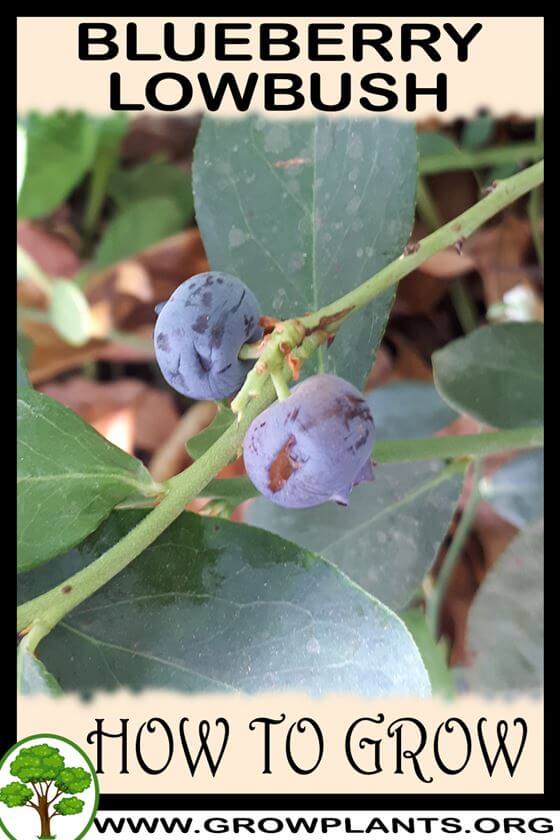
Plant Profile & Key Characteristics
Overview: Blueberry lowbush is a low, spreading deciduous shrub 0.2-0.6 m (1-2 ft) tall, grown for its sweet edible berries and fiery autumn foliage. An extremely cold-hardy perennial (USDA zones 2-8), it forms low colonies by underground rhizomes in acidic soil.
Quick Specifications
| Specification | Attribute |
|---|---|
| Plant Type / Life Cycle | Perennial (deciduous shrub) |
| Foliage Type | Deciduous |
| Mature Size | 0.2-0.6 m (1-2 ft) tall |
| Growth Rate | Moderate |
| Root System | Fibrous and shallow, spreading by rhizomes |
| Toxicity | Non-toxic / edible |
| Hardiness | USDA zones 2-8 (to 9 with care) |
Growth Form & Structure
- Height & Spread: 0.2-0.6 m (1-2 ft) tall, spreading by rhizomes into low colonies; in a pot use roughly 7-12 L (1.8-3 gal).
- Growth Habit & Form: Low, twiggy deciduous shrub / groundcover.
- Lifespan & Maturity: Long-lived; bears fruit in about 1-2 years from plants, 3-4 years from seed.
Anatomy & Physical Features
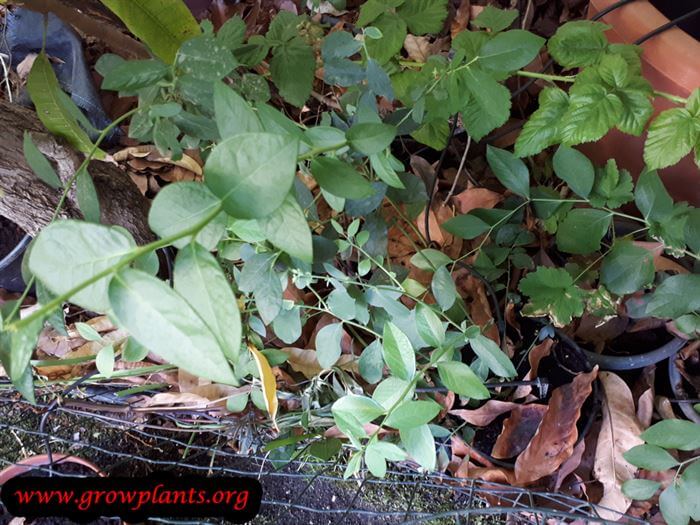
- Leaves & Foliage: Small green leaves that turn red in autumn.
- Flower Characteristics: White bell-shaped flowers borne in clusters.
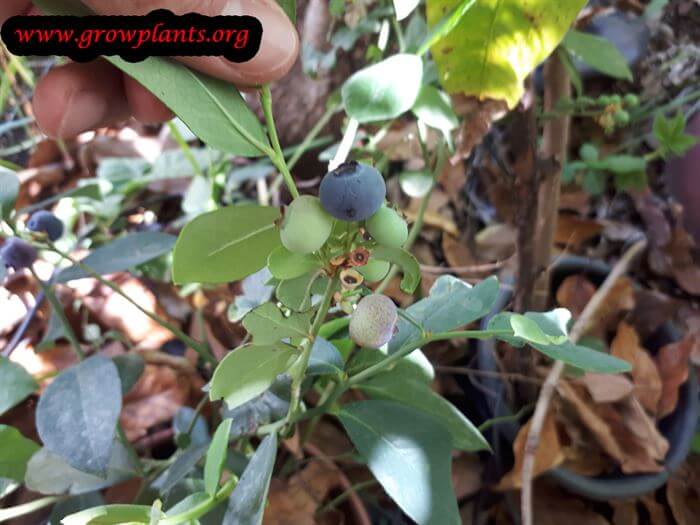
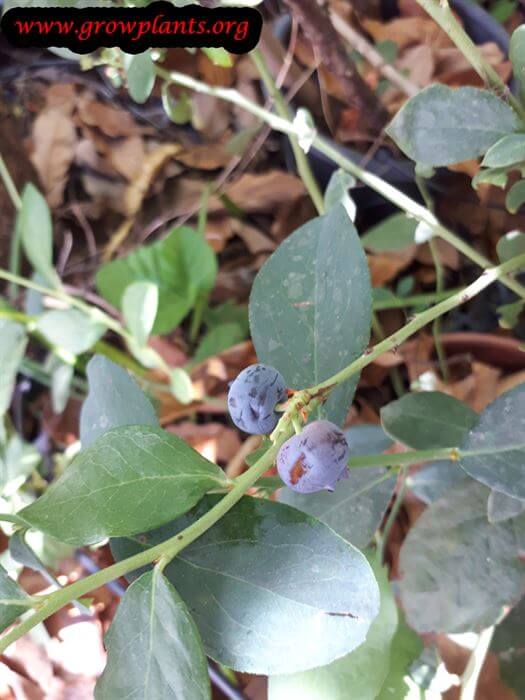
- Fruit Profile: Small blue-black berries with a little crown at the tip and sweet flavour.
Primary Uses & Landscape Value
- Edible Uses: Berries eaten raw and used for jams, juice and beverages.
- Functional & Ornamental Roles: Edible ornamental shrub with strong autumn colour; suits containers and acidic-soil beds.
Care Guide: Planting, Soil & Watering
Overview: Lowbush blueberry is an acid-loving deciduous shrub that needs a distinctly acidic, humus-rich soil to thrive, along with a cold-winter chilling period. Grow it in full sun in moist but well-drained soil kept consistently damp under a pine mulch.
Quick Care Requirements
| Requirement | Ideal Condition |
|---|---|
| Planting Season | Winter to spring |
| Growth Rate | Moderate |
| Soil Type | Acidic, rich in organic matter, moist yet well-draining |
| Soil pH | 4.5-5.5 (strongly acidic) |
| Water Need | Moderate to High; keep the soil consistently moist |
Planting & Establishment
- Best Planting Season: Plant during dormancy, in winter to spring; in the coldest zones (2-8) it can also be planted in summer. Avoid planting in the heat of summer.
- How to Plant:
- Hole Preparation: Dig a wide hole; if planting bare-root stock, trim any damaged roots first.
- Soil Amendments: Mix in acidic organic matter such as humus, peat, pine bark and dead leaves to acidify and enrich the soil.
- Planting Depth: Set the crown at soil level, then mulch with pine bark or needles and water in well.
- Growth Speed & Expectations: A moderate grower reaching about 0.2-0.6 m (1-2 ft).
Soil, Watering & Drainage Care
- Soil Mix & Drainage Needs: Keep it in acidic, humus-rich soil (peat, pine bark and leaf mould) that stays moist but drains freely. In a container use an ericaceous mix with good drainage and some lava grit at the base, and finish with a pine mulch.
- Watering Schedule & Technique:
- Young / Newly Planted: Keep the soil consistently moist and increase watering right after planting to settle the roots.
- Established: Water regularly and deeply so the soil never dries out; soft or rain water is best for keeping the soil acidic.
- Seasonal Adjustments: Water more in heat and while fruiting, and ease back during winter dormancy.
Climate, Light & Hardiness
Lowbush blueberry is an exceptionally cold-hardy, cool-temperate deciduous shrub that wants full sun to half shade and a real winter chill to flower and fruit well; the plant itself shrugs off severe cold, but its spring flowers are frost-tender.
Quick Climate Specifications
| Climate Zones | Temperate, Cold Mediterranean, Cold Subtropical |
|---|---|
| USDA Hardiness Zones | 2–8 (possible in zone 9 with attentive care, per site data) |
| Frost Tolerance | High (dormant plant); flowers are frost-sensitive |
| Light Conditions | Full Sun / Half Shade (half shade preferred toward zone 9) |
| Wind Tolerance | High |
Sunlight & Light Exposure
Optimal Light Setup
Full sun gives the best flowering and fruit set; half shade is a useful option toward the warm end of its range.
Direct Sun Requirement
Needs several hours of direct sun daily for good flowering; heavy shade reduces yield.
Shade & Heat Management
In zone 9, the warmest part of its range, the site notes half shade is preferable to help the plant cope with summer heat.
Best Exposure / Orientation
An open bed away from the shade of taller trees or buildings.
Temperature Extremes & Hardiness
USDA Hardiness & Regional Limits
Exceptionally cold-hardy, reliable from zone 2 through 8; the site notes zone 9 is workable with attentive care, where summer heat management becomes the limiting factor rather than winter cold.
Cold Damage & Winter Protection
The dormant plant itself tolerates severe winter cold characteristic of zone 2 without special protection. The real risk is a late-spring frost after flower buds open, which can damage or destroy that season's crop - watch spring frost forecasts during bloom in cold-climate gardens.
Frost Sensitivity
Dormant wood and buds: very frost hardy. Open flowers and young fruit: frost sensitive.
Extreme Heat Tolerance
Adapted to cool-temperate summers; performance declines under prolonged heat, which is why half shade is recommended at the warm edge of its range (zone 9).
Chilling Requirement
As a deciduous cold-climate shrub it needs a substantial winter chilling period - the site's own data describes roughly 2–5 months of cold dormancy. Inadequate chill (relevant only at the very warm edge of its range) can reduce or delay flowering.
Wind, Humidity & Microclimate
Humidity Preferences
Comes from cool, moist northern habitats and appreciates consistently moist (not soggy), humus-rich soil and moderate humidity.
Dry-Air Tolerance
Not well suited to hot, dry conditions; pairs naturally with its preference for moist, rich soil.
Wind Tolerance
Good - it naturally grows as a low, spreading groundcover across open, exposed barrens in the wild.
Rainfall & Seasonal Moisture
Adapted to a temperate climate with reasonably even moisture through the growing season, consistent with the site's own call for rich, moist soil.
Microclimate Recommendations
An open site with full winter sun exposure allows even snow cover, a natural insulator, and helps dormant buds break evenly together in spring.
Growing in Pots, Balconies & Indoors
Blueberry lowbush (Vaccinium angustifolium) is a small deciduous fruiting shrub, 0.2-0.6 m, that the grower does not treat as a houseplant – it needs full sun, winter chilling and acidic soil, all of which belong outdoors. It does, however, grow and crop well in a pot on a sunny patio or balcony, and the grower gives detailed container instructions.
Quick Details
- Container Size: Start about 40-60% larger than the root ball and pot up as it fills, to a final pot of roughly 7-12 L (1.8-3 gal)
- Indoor Suitability: Not a houseplant – it is deciduous and needs winter cold and full sun; grow it outdoors
- Best Spot: Full sun (half shade in the hottest zones), outdoors on a patio or balcony
- Soil & Drainage: Acidic (ericaceous) peat-based mix with pine mulch; free-draining with plenty of holes and a little lava grit at the base
- Watering in Pots: Average to generous – keep the acidic mix consistently moist (it dislikes drying out), but let excess drain the same day
Indoors & On the Windowsill
- Not a houseplant: The grower marks it as unsuitable indoors. It is a deciduous fruit bush that needs a cold winter dormancy (chilling hours) and full sun to fruit – conditions a heated room cannot give.
- Why a pot still helps: Growing it in a container is really about giving it the acidic soil it demands: potting mix is far easier to keep acidic than most garden soils, so a pot on the patio is often the best way to fruit it well.
On a Balcony or Patio
- Light & chilling: Give it the sunniest spot for the best crop, and leave it outside through winter so it gets its cold hours. In the hottest zones a little afternoon shade helps.
- Watering & weight: Pots dry faster than open ground and this bush hates drying out, so check often in warm weather. Its shallow roots and modest size keep the pot manageable.
Choosing the Pot, Soil & Long-Term Care
- Pot & drainage: Pot up in stages to about 7-12 L; make good drainage holes and add a little lava grit at the base. The grower uses a saucer/tray under the pot – let watering fill it, but make sure it drains and dries the same day so roots never sit in water.
- Potting mix: An acidic, peat-based (ericaceous) mix topped with pine mulch, which the grower stresses; the mulch keeps roots cool, moist and acidic.
- Feeding: Fertilise at least once a year in spring with an acid-loving-plant (ericaceous) feed; container plants leach nutrients and blueberries are sensitive to soil pH.
- Repotting: Switch the soil in mid-winter dormancy: the mix loses vitality over time and refreshing it cares for the roots. Pot up until you reach your final size – a well-fitted pot bears more fruit.
Grower’s Container Tip
- Grower’s blueberry-in-a-pot method: Start in a pot about 40-60% bigger than the root ball and step up as it fills; use acidic peat mix with pine mulch, keep it consistently moist with a tray beneath that drains the same day, feed once a year, and refresh the soil in mid-winter.
Fertilizing & Feeding
This acid-loving shrub is a moderate feeder that depends far more on maintaining strongly acidic soil than on heavy fertilizing; incorrect soil pH causes more visible problems here than under-feeding does.
Quick Fertilizing Specs
| Feeding Level | moderate |
|---|---|
| Main Nutrient Priority | Nitrogen-forward feeding while establishing and building new wood, shifting toward a more balanced feed as fruiting increases |
| Best Feeding Period | Early in the growing season as new spring growth begins |
| Organic Options | Composted pine bark, pine needle mulch, and other acidic organic matter both feed the plant and help maintain the acidic soil it requires |
| Soil pH | Distinctly acidic soil is essential; this species performs poorly in neutral or alkaline soil regardless of the fertilizer used |
| Micronutrients | Iron availability drops sharply if soil pH drifts upward, so correcting pH and iron access often matters more than adding extra nitrogen |
| Reduce/Stop Feeding | Ease off feeding as the plant heads into the winter chill period it needs to fruit well the following year |
Feeding by Growth Stage
Establishment After Planting
Help a newly planted shrub build roots and settle into acidic, organic-rich soil before pushing much top growth.
| Nutrient direction | Light, balanced feeding paired with acidic organic matter worked into the soil; heavy feeding at planting can stress new roots. |
|---|---|
| Timing | The first growing season after planting, beginning once new growth shows the plant has rooted in. |
| Frequency | Keep feeding light and infrequent this first season; the priority is soil preparation and root establishment over fertilizer volume. |
| Fertilizer types | An acid-forming fertilizer formulated for blueberries or other acid-loving plants, Well-composted pine bark, peat, or other acidic organic matter mixed into the planting area |
| Precautions | Avoid fertilizers or amendments that raise soil pH; even a good feeding program fails if the surrounding soil isn’t kept acidic. |
Spring Vegetative Growth
Fuel new stem and leaf growth each spring on an established plant before flowering and fruiting take over the plant’s energy.
| Nutrient direction | Nitrogen-forward feeding to support new wood and leaf growth, applied on acidic, well-drained soil. |
|---|---|
| Timing | Early spring as new growth begins, timed to the plant’s main flush of growth for the year. |
| Frequency | A single well-timed feeding at the start of the growing season generally covers this stage on most soils. |
| Fertilizer types | An acid-forming, nitrogen-forward fertilizer formulated for blueberries or other acid-loving shrubs, Blood meal, feather meal, or other slow-release organic nitrogen sources that also help maintain soil acidity |
| Precautions | Spread fertilizer over the root zone rather than concentrating it at the base of the stem; over-concentrated feeding can burn the shallow, fibrous roots typical of this genus. |
Flowering Through Fruit Development
Support flowering, pollination, and development of the blue-black berries without pushing excess soft growth that competes with fruiting.
| Nutrient direction | Shift toward a more balanced feed, with adequate potassium supporting fruit development rather than continuing heavy nitrogen. |
|---|---|
| Timing | From bloom through fruit ripening later in the growing season. |
| Frequency | Feeding needs are modest at this stage if spring feeding was already applied; avoid adding more nitrogen once flowering starts. |
| Fertilizer types | A balanced, acid-forming fertilizer rather than one heavily weighted toward nitrogen, Continued acidic mulch, such as pine needles or pine bark, to maintain soil conditions through fruiting |
| Precautions | Heavy nitrogen during bloom and fruiting tends to favor leafy growth over fruit set and can delay ripening. |
Nutrient Deficiency Signs & Corrections
Yellowing between the veins on younger leaves while the veins themselves stay green.
| Possible causes | Soil pH that has drifted too high for good iron availability, A fertilizer or soil amendment that has raised pH over time, Poor drainage or root stress limiting nutrient uptake generally |
|---|---|
| Appears first on | younger, upper leaves |
| What to check | Test soil pH and compare it against what this acid-loving species needs, Review whether lime, wood ash, or alkaline water sources have been used nearby, Inspect roots and drainage for signs of stress |
| Possible correction | Lower soil pH with an acidifying soil amendment and use a fertilizer formulated for acid-loving plants; a chelated iron product can green up leaves faster while the underlying pH is corrected. |
Overall pale green to yellow foliage and noticeably reduced new shoot growth.
| Possible causes | Insufficient nitrogen relative to the plant’s spring growth demand, Soil pH too high, indirectly limiting overall nutrient uptake, Root competition from grass or weeds growing close to the shrub |
|---|---|
| Appears first on | older leaves lower on the plant, then spreading |
| What to check | Review whether spring feeding was applied and at what rate, Test soil pH to rule out a pH-driven uptake problem, Check for grass or weeds competing for nutrients near the root zone |
| Possible correction | Apply an acid-forming, nitrogen-forward fertilizer in early spring and keep the root zone clear of competing turf and weeds. |
Flowering occurs but relatively little fruit actually develops and matures.
| Possible causes | Excess nitrogen favoring leafy growth over flowering and fruit development, Insufficient pollination activity during bloom, Plant stress from incorrect soil pH or inconsistent moisture during flowering |
|---|---|
| Appears first on | whole-plant pattern of flowers versus developing berries |
| What to check | Review nitrogen fertilizer rates used earlier in the season, Consider pollinator activity and whether compatible plants are nearby, Check soil moisture consistency and pH during the bloom period |
| Possible correction | Moderate nitrogen once flowering begins, support pollinators, and keep soil consistently moist and properly acidic through bloom and fruit set. |
Pruning, Training & Seasonal Maintenance
Lowbush blueberry is a compact, colony-forming deciduous shrub (usually 20–60 cm) that tolerates moderate annual pruning well. The objective is to remove weak, dead and aging wood so the remaining one-year-old shoots produce fewer but larger berries. The safest window is late autumn into winter dormancy after leaf drop (or right after harvest if that year’s crop was sparse), since cutting into leafed, actively growing wood removes photosynthetic capacity the plant needs to set next year’s flower buds.
Quick Pruning & Maintenance Specs
| Pruning Tolerance | Moderate |
| Primary Pruning Window | Late autumn to early winter, after leaf drop (full dormancy) |
| Secondary Maintenance Window | Right after harvest, only if that season’s crop was light |
| Typical Frequency | Annual, light to moderate |
| Main Objective | Renew fruiting wood; open the low canopy so berries size up |
| Young Plant Priority | Remove only damaged or dead growth; let the plant fill in |
| Mature Plant Priority | Remove oldest/weakest stems at the base; thin crowded buds and crossing growth |
| Best Tool Type | Bypass hand pruners; loppers for thicker old stems |
| Avoid Heavy Pruning During | Spring bloom and fruit set, and just before hard frost |
Pruning by Plant Age & Size
Newly Established
In the first year or two, prune only to remove damaged, broken or diseased wood. Hard cutting back a still-establishing plant delays cropping and weakens the developing root and crown system.
Young / Formative
Lowbush blueberry does not take a formal leader or vase form. Instead of structural training, select and retain the most vigorous young canes arising from the base and remove thin, spindly growth that would only shade the plant without adding productive wood.
Mature / Established
Each dormant season, cut out the oldest, grayest, least productive stems at ground level, remove crossing or rubbing wood, and where growth is congested reduce the number of flower buds on remaining shoots so the plant channels energy into fewer, larger berries.
Seasonal Pruning Schedule
Dormant / Winter
Objective: renew fruiting wood and open the plant to light. Remove: dead, weak, diseased or crossing stems, plus a portion of the oldest wood. Do not remove: most of the vigorous one-year-old wood — that is what carries next year’s crop. Expected response: stronger, better-lit shoots the following season. Flowering/fruiting impact: improves berry size and does not reduce next year’s bloom if enough young wood is retained.
Post-Harvest (conditional)
If fruiting was poor that year, a light renewal prune right after harvest — rather than waiting for full dormancy — gives the plant more of the growing season to push replacement wood before winter.
Flowering & Fruiting Wood
Lowbush blueberry flowers and fruits on one-year-old wood formed the previous season. Dormant pruning should target the oldest, spent stems rather than this year’s new wood; removing too much one-year-old wood in a single dormant season noticeably reduces the following year’s crop, so renewal of an overgrown planting is best spread gradually rather than done all at once.
Structural Pruning & Training
Renewal pruning — removing the oldest stems each year to keep a mix of ages — is the main structural tool. Thin crowded stem clusters for airflow and light to the fruit. Because this is also a colony/mat-forming shrub, trim any stems or rhizome shoots spreading beyond the intended bed line if containment is wanted.
Special Growth to Remove
Old, gray, unproductive stems (renewal); weak or spindly shoots that won’t support fruit; any stems showing virus-like decline should be removed and not left in the planting.
Container & Small-Space Pruning
Lowbush blueberry can be grown in a pot 40–60% larger than the root ball. In containers, keep pruning slightly more assertive than in-ground to maintain a compact, well-lit shape that balances the smaller root volume, and reassess pruning needs when the potting mix is renewed as roots fill the container.
Tools
Bypass hand pruners for most stems; loppers for older, thicker basal wood.
Tool Hygiene & Disease Risk
Increased — this species is noted as susceptible to virus problems affecting many cultivars. Disinfect blades between plants, and between cuts if any stem shows discoloration, dieback or stunted growth, to avoid spreading infection through pruning wounds.
Cut Placement & Technique
Make renewal cuts low, at or near the base/crown, rather than leaving tall stubs. Use thinning cuts (removing a whole stem to its origin) rather than heading cuts partway up a stem, which just produces bushy regrowth in the wrong place.
Heavy Pruning & Rejuvenation
An overgrown, unproductive planting can be rejuvenated, but spread it over two to three dormant seasons rather than removing all the old wood at once — cutting everything back in a single year sacrifices most of that cycle’s crop.
Post-Pruning Care
After a larger renewal cut, keep the acidic, moist soil and pine mulch consistent and avoid extra fertilizing beyond the plant’s normal spring feeding — the goal is to let remaining wood recover, not to push soft new growth. Watch cut ends and canes for dieback that could signal virus or fungal entry.
Common Pruning Mistakes
Shearing the whole plant instead of selectively removing individual old stems (reduces berry size); pruning after spring growth has hardened, sacrificing that year’s flower buds; leaving all old, grayed stems indefinitely so yields decline over time; ignoring stems with virus symptoms instead of removing them.
When NOT to Prune
Avoid pruning during spring bloom and fruit set (removes the current crop); avoid pruning right before an expected hard frost, since fresh cuts are more cold-sensitive; avoid heavy renewal work during drought stress.
Recommended Tools (by task)
- bypass_secateurs — annual removal of weak, dead and old basal stems; this is the main cut size on a knee-high shrub.
- loppers — the occasional thicker, older stem at the base that hand pruners can’t cleanly cut.
- blade_disinfectant — the plant is noted as virus-susceptible, so wiping the blade between plants/cuts limits spread.
Pruning Troubleshooting
| Problem | Possible Cause | What to Check | Corrective Action |
| Small, low-yield berries | Too many stems/buds left on the plant | Stem density and bud count per stem | Thin stems and reduce buds at the next dormant prune |
| Declining yield over the years | Old, unproductive wood never removed | Stem color and age (grayed, low-vigor stems) | Begin a gradual renewal prune, removing the oldest stems first |
| Dieback on canes after pruning | Possible virus infection or winter injury at the cut | Cane color, vigor, and any pre-existing symptoms | Remove and discard affected canes; disinfect tools before continuing |
| Poor fruiting the year after a big prune | Too much one-year-old fruiting wood removed at once | Proportion of old vs. new wood taken out | Spread renewal pruning over two to three seasons instead of one |
Propagation Guide
Stem cuttings are the best way to propagate a specific lowbush blueberry selection, since the site notes vegetative propagation is needed to keep fruit size, sweetness and yield consistent with the parent plant; seed-grown plants can vary in these traits even though the species is not a complex hybrid. As a naturally colony-forming shrub, this species also spreads by underground rhizomes, so division of rooted rhizome sections is a recognized supplementary method for multiplying an existing planting. Overall difficulty is Moderate, since the site’s own cutting protocol calls for fairly close humidity and temperature control.
Quick Propagation Specs
| Best Propagation Method | Stem cuttings |
| Alternative Methods | Rhizome/sod division; seed (for the straight species) |
| Propagation Difficulty | Moderate |
| Seed True-to-Type | Variable – seedlings can differ in fruit size, sweetness/tartness and yield |
| Vegetative True-to-Type | Yes |
| Best Propagation Season | End of winter to spring (for both seed and cuttings) |
| Seed Germination Time | 2–4 months |
| Cutting Rooting Time | At least two months; cuttings started in autumn may not finish rooting until spring |
| Germination Temperature | 10–20°C (50–68°F) |
| Seed Sowing Depth | Surface-sow – press onto the soil rather than covering deeply |
Growing from Seed
Seed Handling & Viability
Store seed in a dry, dark place, ideally refrigerated, until sowing time.
Dormancy & Pre-Sowing Treatment
The plant’s own chilling requirement (roughly 2–5 months) is a winter dormancy need rather than a stated seed treatment, but Vaccinium seed in general can benefit from a period of cold, moist stratification before sowing – worth trying if germination is otherwise slow.
Sowing Season
End of winter to spring.
Sowing Depth & Orientation
Do not bury the seed deeply – press it onto the surface of the growing medium.
Germination Conditions
High humidity and consistently moist soil in full sun; in pots, covering with plastic wrap helps hold humidity during germination.
Germination Time
2–4 months.
Seedling Care
Grow on in full sun with average to generous watering, and protect young seedlings from pests, wind and heavy snow. Sow at roughly 3x4cm (1.2×1.8in) spacing or into individual pots, which makes it easier to monitor and care for each seedling.
Stem Cuttings
Best Timing
Cuttings can be started across the growing season; those begun in autumn are slower and may not finish rooting until spring.
Rooting Setup
Use an acidic, peaty rooting medium kept consistently moist, with high humidity around the cutting; sterile water is preferable to reduce rot risk. Keep temperatures above 10–25°C (50–77°F).
Rooting Hormone
Not specified by the site as required; a rooting hormone is commonly used on blueberry cuttings to improve success rate, though cuttings can root without it.
Rooting Time
At least two months, extending into spring for cuttings started in autumn.
Bloom & Flower Guide
Quick Details
- Bloom Season: Spring
- Time to First Bloom: Young bushes usually begin flowering a couple of years after planting
- Flower Appearance: Small, white, bell-shaped (urn-shaped) flowers that hang in clusters
- Edibility: The flowers are not eaten – the bush is grown for the fruit that follows
Detailed Blooming Overview
Lowbush blueberry opens its clusters of dainty white bells in spring, and the quality of that bloom decides the crop to come. The flowers are shaped like little upside-down urns, and pollinating insects have to work their way up inside them, so an active bee presence at flowering makes a real difference to how well the flowers set.
Flower Characteristics
- Small, white, bell- or urn-shaped flowers.
- Carried in hanging clusters along the stems.
Bloom Care & Thinning
- Pollination: Bees are the main pollinators; lowbush blueberry sets far better with cross-pollination, so growing more than one plant nearby lifts the set.
- Protect the bloom: A late frost can kill open flowers – covering the bushes on cold spring nights protects the coming crop.
- Steady moisture: Even watering through flowering, in the acid soil these plants need, supports good set.
Bloom Health & Protection
- Mummy berry first strikes at the bloom and new-shoot stage, blighting flowers and shoot tips before it later spoils fruit – clearing fallen mummified berries beneath the bush and a suitably timed fungicide help break its cycle.
- Botrytis blossom blight can grey and rot the flowers in cool, wet spells – good airflow and removing damaged blooms, with a fungicide if it persists, keep it in check.
Fruit & Uses
Lowbush blueberry is grown for its small, sweet berries, the plant’s main edible part. The fruit is eaten fresh off the bush or cooked down into jams, juice and other beverages.
Quick Edible Specs
| Edible Parts | Fruit (berries) |
|---|---|
| Main Use(s) | Culinary – fresh eating, jams, juice, beverages |
| Eaten Raw or Cooked | Raw (cooked only when making jams, juice or baked goods) |
| Preparation Required | None for fresh eating – rinse before eating |
| Harvest Season | Spring into summer |
| Time to First Harvest | A young plant needs a couple of growing seasons before a worthwhile crop; seed-grown plants take noticeably longer (see Propagation) |
| Storage | Best used fresh within a few days when refrigerated; freezes well for longer storage |
| Safety/Toxicity Caveat | None known – ripe berries are safe to eat raw |
Fruit
Berries ripen to a blue-black color with a small, crown-like remnant of the flower at the tip – a useful ripeness cue, along with the fruit softening and pulling away easily from the stem. Because this is a low, spreading shrub (around 0.2–0.6m / 1–2ft), picking is done close to the ground rather than from a tall bush. Ripening is uneven, so berries are gathered over more than one pass through the planting. Birds are the main competition for the ripening crop. Fruit is used fresh or processed into jams, juice and other beverages.
Harvesting
Harvest runs from spring into summer as berries color up; because not all fruit ripens at once, plan on picking in several rounds rather than a single harvest. Pick only fully blue-black berries – underripe fruit is tart and firmer. Netting the planting can help where birds are taking a significant share of the crop.
Preparation, Uses & Safety
No preparation beyond rinsing is needed to eat the berries fresh. For jams, juice or baking, the fruit is simply cooked down in the usual way. No toxicity or safety caveats apply to the fruit itself; the main risk to the crop is birds, not a food-safety concern.
Pests, Diseases & Troubleshooting
Overview: Lowbush blueberry is a low, spreading acid-soil shrub with the classic blueberry problem set: blueberry maggot and spotted wing drosophila in the fruit, aphids spreading viruses, and mummy berry, Botrytis and anthracnose rots. Clean harvesting, airflow and correct acidic pH are the core of management.
Quick Troubleshooting Overview
| Issue / Pest | Main Symptom | Primary Solution |
|---|---|---|
| Spotted wing drosophila / birds | Maggots in ripening fruit; berries stripped | Fine netting; harvest promptly; fruit-fly traps |
| Blueberry aphids | Curled shoots, honeydew, virus spread | Beneficials; insecticidal soap; oil |
| Mummy berry | Shoot blight then shrivelled tan berries | Remove mummies; mulch; sanitation |
| Botrytis / anthracnose | Rotting flowers and soft fruit | Airflow; remove debris; avoid wet foliage |
| Iron chlorosis | Yellow leaves, green veins | Lower soil pH; acidic mulch; iron chelate |
| Stem/twig blight | Dieback of canes from tips | Prune out; improve drainage |
Common Pests & Management
- Blueberry maggot / spotted wing drosophila (Rhagoletis mendax / Drosophila suzukii):
- Symptoms: Small white maggots inside ripening berries, which soften, dimple and collapse; the vinegar fly D. suzukii attacks sound, still-firm fruit as it colours. Adults are small flies hovering around the crop.
- Prevention & Control: Harvest ripe fruit promptly and completely, remove fallen and cull berries, and keep the ground clean to break the cycle. Monitor with red sphere and apple-cider-vinegar traps. Fine mesh (about 1 mm) exclusion netting over the bushes is the most effective organic defence; refrigerate picked fruit quickly.
- Blueberry aphids (Ericaphis / Illinoia spp.):
- Symptoms: Small pale green aphids on new shoots and leaf undersides, curled tips, honeydew and sooty mould. Their main importance is spreading blueberry shoestring and scorch viruses.
- Prevention & Control: Encourage ladybirds, lacewings and parasitic wasps, avoid heavy nitrogen feeding, and hose off or prune infested tips. Insecticidal soap or horticultural oil on leaf undersides in the evening controls outbreaks and reduces virus spread.
- Scale insects (Coccoidea):
- Symptoms: Immobile brown, tan or waxy-white bumps along stems and leaf veins; yellowing, weak growth, honeydew and sooty mould with soft (unarmoured) scales. Hard scales sit tight and do not wipe off easily.
- Prevention & Control: Rub off light infestations by hand or with a soft brush; prune out heavily encrusted stems. Conserve parasitic wasps and predatory beetles that keep scale in check. For active crawlers, apply horticultural oil to smother them, repeating as new crawlers emerge; oils give the best organic control against the protective waxy shell.
- Thrips (Thysanoptera):
- Symptoms: Silvery-white flecking and streaking on leaves and petals, tiny black frass dots, and distorted new growth; slender pale-to-dark insects that dart away when disturbed. Thrips can also spread viruses.
- Prevention & Control: Remove weeds and spent flowers that harbour them, and use blue sticky traps to monitor and reduce adults. Encourage predatory mites, minute pirate bugs and lacewings. Where control is needed, spinosad or insecticidal soap applied to growing points in the evening helps; rotate products to avoid resistance.
Diseases & Fungal Issues
- Mummy berry (Monilinia vaccinii-corymbosi):
- Symptoms: New shoots and flower clusters suddenly wilt, blacken and die back in spring; infected berries turn cream-pink then shrivel into hard grey ‘mummies’ that drop and overwinter to reinfect.
- Treatment & Management: Rake up and destroy fallen mummies and apply a fresh mulch layer before growth starts to bury the fungus; cultivate the surface lightly. Prune for airflow. On susceptible sites a protectant fungicide at bud break, plus resistant cultivars, gives the best results.
- Anthracnose / ripe rot (Colletotrichum spp.):
- Symptoms: Salmon-orange spore masses on ripening and picked berries, which soften and rot; blossom and twig blight in wet weather. Fruit often breaks down quickly after harvest.
- Treatment & Management: Prune for open, airy bushes, remove mummified and rotten fruit, and avoid overhead watering. Harvest promptly and cool fruit fast. Where rot pressure is high, protectant fungicide sprays through bloom and resistant varieties reduce losses.
- Grey mould / Botrytis blight (Botrytis cinerea):
- Symptoms: Fuzzy grey-brown mould on flowers, buds, soft stems and fruit, often starting on damaged or fading tissue; water-soaked spots that collapse in cool, damp, still conditions.
- Treatment & Management: Remove faded flowers, damaged tissue and debris promptly, improve ventilation and avoid overhead watering and overcrowding. Do not leave wet foliage overnight. Where pressure is high, an appropriate fungicide can be used, but sanitation and airflow are the main controls.
- Stem and twig blight / canker (Botryosphaeria / Phomopsis spp.):
- Symptoms: Individual canes wilt, redden and die back while the rest of the bush looks healthy; brown wedge-shaped staining under the bark and cankers at the base of affected stems.
- Treatment & Management: Prune out and destroy dying canes well below the discolouration, disinfecting tools between cuts, and avoid winter/drought stress and mechanical wounds. Maintain vigour with correct pH and steady moisture; there is no cure once a cane is infected, so sanitation is key.
- Root and crown rot (Phytophthora / Pythium spp.):
- Symptoms: Wilting despite moist soil, yellowing lower leaves, dark soft roots and a blackened crown; general decline and collapse. Waterlogged or poorly drained soil is the trigger.
- Treatment & Management: Prevention is decisive: plant in free-draining soil or raised beds, avoid overwatering, and never let containers stand in water. Remove and destroy badly affected plants. Improve drainage and let the surface dry between waterings; biological drenches (Trichoderma) can help protect healthy roots.
Growing Difficulties & Abiotic Problems
- Iron chlorosis (high soil pH):
- Cause & Symptoms: Young leaves turn yellow between green veins while older leaves stay greener; growth is weak. Vaccinium demand strongly acidic soil (about pH 4.5–5.5) and cannot take up iron in neutral or limey ground.
- Correction Strategy: Test and acidify the soil with elemental sulfur or an acidic (pine bark/peat) mulch, irrigate with low-lime water where possible, and use an ericaceous feed. A foliar or soil iron chelate (Fe-EDDHA in high pH) gives a quicker green-up while the pH is corrected.
- Winter injury and drought stress:
- Cause & Symptoms: Browned leaf margins, dead buds and cane tip dieback after cold, drying winds or dry spells; shallow fibrous roots are easily stressed by drought or waterlogging.
- Correction Strategy: Keep an even, moisture-retentive but well-drained root zone with a thick acidic mulch, water steadily through dry periods, and shelter from harsh drying winds. Choose cultivars suited to the local hardiness range.
- Poor pollination / small crops:
- Cause & Symptoms: Few or small misshapen berries despite good flowering, often where only one variety is grown or pollinators are scarce.
- Correction Strategy: Grow more than one compatible cultivar for cross-pollination, provide pollinator-friendly planting and avoid spraying open flowers, and shelter bushes so bees can work them in cool weather.
What Helps — Products & Tools
For this crop the mainstays are exclusion netting and fruit-fly (apple-cider-vinegar) traps against maggots and birds, insecticidal soap and horticultural/neem oil for aphids, scale and thrips, and sulfur or a copper fungicide plus rigorous sanitation for the fungal rots. Soil sulfur, an ericaceous feed and an iron chelate correct the very common high-pH chlorosis.