

Plant Profile & Key Characteristics
Overview: Lingonberry is a low, mat-forming evergreen subshrub reaching only 10-15 cm (4-6 in) tall, grown as an ornamental groundcover and for its tart red berries. It is a cold-hardy perennial (USDA zones 3-8) that thrives in acidic soil and spreads slowly by underground rhizomes.
Quick Specifications
| Specification | Attribute |
|---|---|
| Plant Type / Life Cycle | Perennial (evergreen subshrub) |
| Foliage Type | Evergreen |
| Mature Size | 10-15 cm (4-6 in) tall, spreading groundcover |
| Growth Rate | Moderate |
| Root System | Fibrous and shallow, spreading by rhizomes |
| Toxicity | Non-toxic / edible |
| Hardiness | USDA zones 3-8 |
Growth Form & Structure
- Height & Spread: 10-15 cm (4-6 in) tall; spreads laterally by rhizomes into a dense evergreen carpet and is well suited to containers.
- Growth Habit & Form: Creeping, mat-forming subshrub / groundcover with wiry stems.
- Lifespan & Maturity: Long-lived perennial; begins bearing fruit about 2-3 years from seed or 1-2 years from cuttings.
Anatomy & Physical Features
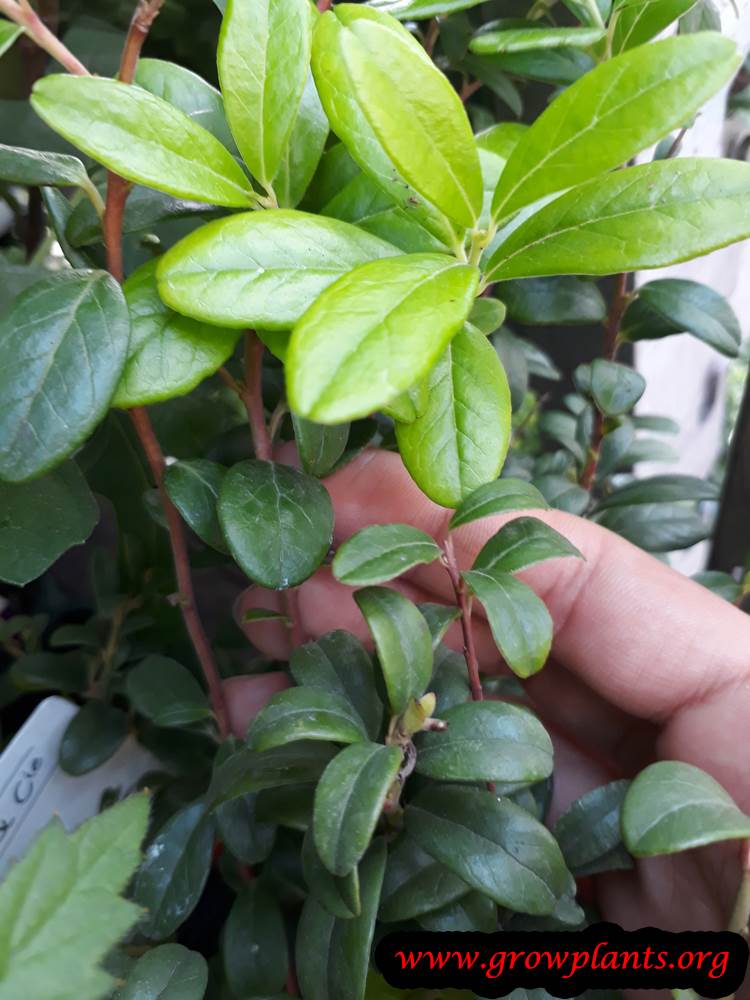
- Leaves & Foliage: Small, glossy dark-green oval leaves that flush red when young and take on red tones in winter.
- Flower Characteristics: Small white to pale-pink bell-shaped flowers with reflexed petals, borne in nodding clusters.
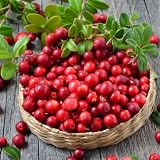
- Fruit Profile: Round red berries 0.3-2 cm across with a tart, sour flavour.
Primary Uses & Landscape Value
- Edible Uses: Berries eaten raw and made into jams, juice and beverages.
- Functional & Ornamental Roles: Evergreen ornamental groundcover for acidic, cool-climate gardens; container-friendly.
Care Guide: Planting, Soil & Watering
Overview: Lingonberry is an acid-loving, low evergreen ground cover that needs a distinctly acidic, humus-rich soil, a cold winter, and protection from summer heat. Grow it in full sun in moist but well-drained soil kept consistently damp under a pine mulch.
Quick Care Requirements
| Requirement | Ideal Condition |
|---|---|
| Planting Season | Winter to spring |
| Growth Rate | Moderate |
| Soil Type | Acidic, rich in organic matter, moist yet well-draining |
| Soil pH | 4.5-5.5 (strongly acidic) |
| Water Need | High; keep the soil consistently moist |
Planting & Establishment
- Best Planting Season: Plant during dormancy, in winter to spring; plant it while dormant and avoid summer heat, to which it is sensitive. Avoid planting in the heat of summer.
- How to Plant:
- Hole Preparation: Dig a wide hole in ground that has been acidified.
- Soil Amendments: Mix in acidic organic matter such as humus, peat and pine bark to lower the pH and enrich the soil.
- Planting Depth: Set the crown at soil level, then mulch and water in well.
- Growth Speed & Expectations: A moderate grower reaching about 10-15 cm (4-6 in), spreading as a ground cover.
Soil, Watering & Drainage Care
- Soil Mix & Drainage Needs: Keep it in acidic, humus-rich soil (peat, pine bark and leaf mould) that stays moist but drains freely. In a container use an ericaceous mix with good drainage and some lava grit at the base, and finish with a pine mulch.
- Watering Schedule & Technique:
- Young / Newly Planted: Keep the soil consistently moist and increase watering right after planting to settle the roots.
- Established: Water regularly and deeply so the soil never dries out; soft or rain water is best for keeping the soil acidic.
- Seasonal Adjustments: Water more in heat and while fruiting, and ease back during winter dormancy.
Climate, Light & Hardiness
Lingonberry is a cold-climate, temperate-zone plant that needs winter chilling hours and performs best in full sun to half shade (tolerating full shade outside the temperate zone). It is reliably hardy through USDA zones 3–8 but is notably heat-sensitive.
Quick Climate Specifications
| Climate Zones | Temperate |
|---|---|
| USDA Hardiness Zones | 3–8 |
| Frost Tolerance | High |
| Light Conditions | Full Sun / Half Shade / Full Shade (outside the temperate zone) |
Sunlight & Light Exposure
Optimal Light Setup
Full sun to half shade gives the best fruiting within its temperate home range.
Shade & Heat Management
Outside the cool temperate zone, more shade is recommended to offset heat stress - the plant is explicitly noted as sensitive to heat, so warmer climates should favor a shadier, cooler site.
Temperature Extremes & Hardiness
USDA Hardiness & Regional Limits
Hardy through USDA zones 3–8, this subshrub needs winter chilling hours to grow and fruit well - it is a plant of cold-winter temperate climates, not warm regions.
Extreme Heat Tolerance
Sensitive to heat; hot summers stress the plant and increase susceptibility to virus problems noted in its care data.
Chilling Requirement
Requires winter chilling hours to grow and fruit properly, consistent with its native cold-temperate, boreal-forest origin.
Wind, Humidity & Microclimate
Humidity Preferences
Prefers consistently moist, acidic soil conditions typical of cool northern climates; it is not adapted to hot, dry heat.
Microclimate Recommendations
A cool, humus-rich, part-shaded site with reliable moisture and winter cold best mimics its native cold-temperate woodland habitat.
Growing in Pots, Balconies & Indoors
Lingonberry is a hardy, low evergreen berry the grower confirms is not a houseplant but grows well in containers. It is actually an excellent pot plant for a cool patio, provided it gets acidic soil and outdoor winter cold – conditions a warm room can’t supply, so grow it outside.
Quick Details
- Container Size: A wide, shallow pot, 5-15 L, suits its mat-forming roots
- Indoor Suitability: Not an indoor plant – it needs acid soil and winter cold
- Best Spot: Full sun to part shade (some shade outside cool climates), outdoors
- Soil & Drainage: Acidic, ericaceous, moisture-retentive mix; never limy
- Watering in Pots: Generous – it likes consistently moist soil; use rainwater where possible
Indoors & On the Windowsill
- Not a houseplant: It needs a cold winter to fruit and acidic soil to survive, so it won’t work as a room plant.
- Grow it outdoors: Keep it on a cool balcony or patio year-round; it is very cold-hardy.
On a Balcony or Patio
- Light & moisture: Sun or part shade suits it; pots dry faster than the ground, and lingonberry hates drying out, so water often – ideally with rainwater.
- Acid care: Top-dress with an ericaceous mulch and avoid hard tap water, which is often limy.
Choosing the Pot, Soil & Long-Term Care
- Pot & drainage: A well-drained pot with strong drainage holes and no standing-water saucer to avoid root rot; terracotta breathes and dries faster, glazed or plastic holds moisture longer, but kept steadily moist.
- Potting mix: An acidic, ericaceous, peat/coir-based mix – lime-free.
- Feeding: Potted plants are fed more often than those in the ground, as watering steadily leaches nutrients from the mix – use a lime-free (ericaceous) feed sparingly.
- Repotting: Refresh the top of the mix and pot up about every couple of years, lightly trimming the root ball and top growth every couple of years with fresh ericaceous mix.
Fertilizing & Feeding
Like other Vaccinium shrubs, lingonberry is a light feeder that is sensitive to over-fertilizing; it needs an acid-forming fertilizer formulated for acid-loving plants rather than a general garden feed.
Quick Fertilizing Specs
| Feeding Level | Light feeder |
|---|---|
| Main Nutrient Priority | An acid-forming, nitrogen-available fertilizer suited to acid-loving shrubs during establishment and vegetative growth, shifting toward balanced feeding as fruiting approaches |
| Best Feeding Period | From establishment through active spring and summer growth |
| Organic Options | Acidic mulch such as pine bark or pine needles worked in and maintained around the root zone |
| Micronutrients | Correct iron and other micronutrient issues only when diagnosed, since soil that is not acidic enough is the more likely underlying cause |
| Soil pH | Requires distinctly acidic soil; performance suffers quickly outside that range |
| Reduce/Stop Feeding | Ease off feeding as the growing season winds down so growth can harden off before winter |
Feeding by Growth Stage
New planting establishment
Help a newly planted lingonberry root into acidic, mulched soil without stressing its shallow, fine root system.
| Nutrient direction | A light, acid-forming fertilizer suited to acid-loving shrubs, applied carefully since this species is sensitive to over-feeding. |
|---|---|
| Timing | At planting and through the first season of establishment. |
| Frequency | A light initial feeding, then minimal feeding is usually enough while roots establish. |
| Fertilizer types | An acid-forming fertilizer labeled for acid-loving plants, Acidic mulch such as pine bark or pine needles |
| Precautions | Keep fertilizer well diluted and away from direct contact with roots and stems; this shrub scorches easily from over-feeding. |
Vegetative spread and runner growth
Support steady leaf and runner growth as the ground-cover mat fills in.
| Nutrient direction | A light, nitrogen-available acid-forming fertilizer to keep foliage healthy and spreading. |
|---|---|
| Timing | During active spring and early summer growth. |
| Frequency | Light, infrequent feeding is usually enough for this naturally slow, low-demand shrub. |
| Fertilizer types | An acid-forming fertilizer labeled for acid-loving plants |
| Precautions | Do not exceed label rates for acid-loving shrubs; excess feeding is a more common problem than deficiency in lingonberry. |
Flowering and fruit development
Support flower set and fruit development without pushing excess soft foliage.
| Nutrient direction | Shift toward a balanced, still acid-forming fertilizer as flowering and fruit set begin. |
|---|---|
| Timing | From flowering through fruit ripening in summer and autumn. |
| Frequency | Minimal feeding is usually enough once fruiting begins; heavier feeding is rarely needed at this stage. |
| Fertilizer types | A balanced acid-forming fertilizer for acid-loving fruiting shrubs |
| Precautions | Avoid heavy nitrogen once fruiting begins, since it favors leafy growth over fruit quality in this species. |
Nutrient Deficiency Signs & Corrections
New leaves turn yellow between the veins while the veins themselves stay green.
| Possible causes | soil that is not acidic enough for this species, true iron deficiency in the soil, poorly drained or compacted soil limiting root uptake |
|---|---|
| Appears first on | newest leaves |
| What to check | soil acidity, drainage and root health, recent liming or alkaline irrigation water |
| Possible correction | Correct soil acidity toward the range this species needs and apply a chelated iron product per its label if a true deficiency is confirmed. |
Overall growth is slow, leaves are pale, and the ground-cover mat spreads poorly.
| Possible causes | low soil nitrogen, soil that is not acidic enough for good nutrient uptake, competition from surrounding vegetation |
|---|---|
| Appears first on | older leaves and overall plant vigor |
| What to check | soil acidity, recent feeding history, competing plant growth nearby |
| Possible correction | Apply a light, acid-forming fertilizer and confirm soil acidity is in the right range before increasing feeding further. |
Leaf edges brown and scorch or the plant declines shortly after a feeding.
| Possible causes | fertilizer applied too heavily or too concentrated for this sensitive shrub, fertilizer contact with roots or foliage, feeding during heat stress or drought |
|---|---|
| Appears first on | leaf margins and newer growth |
| What to check | recent fertilizer rate and timing, soil moisture at the time of feeding, whether fertilizer touched roots or foliage directly |
| Possible correction | Flush the root zone with water, reduce future feeding rates, and keep fertilizer well diluted and off the plant itself. |
Pruning, Training & Seasonal Maintenance
Lingonberry is a low, creeping evergreen subshrub (10–15 cm) that spreads by rhizomes into a dense mat – it is not an upright caning shrub, so it is managed more like a groundcover fruit bed than a typical berry bush. Routine pruning tolerance is low (remove only weak and dead wood); the plant does tolerate periodic renewal shearing of the whole mat every few years to keep it productive, done in the dormant winter window before new growth starts. Because flowers and fruit form on the current season’s new growth, this dormant-season work does not sacrifice the coming crop.
Quick Pruning & Maintenance Specs
| Pruning Tolerance | Low for routine cuts; Moderate for periodic bed renewal |
| Primary Pruning Window | Winter dormancy, before spring growth resumes |
| Typical Frequency | Light annual tidy; renewal shearing only every few years |
| Main Objective | Remove weak/dead wood; periodically rejuvenate the mat for fruiting vigor |
| Young Plant Priority | Leave undisturbed to spread and fill in |
| Mature Plant Priority | Renewal shearing of overgrown sections on rotation |
| Best Tool Type | Precision snips for spot cuts; hedge shears for mat renewal |
| Avoid Heavy Pruning During | Spring flowering/fruit set and summer heat |
Pruning by Plant Age & Size
Newly Established
No pruning – let young plants knit together into a mat; only remove any winter-killed tips.
Young / Formative
No structural training – lingonberry has a spreading, rhizomatous groundcover habit rather than a trainable framework.
Mature / Established
Once the bed is fully established, thin out weak, damaged, or unproductive stems each winter, and rotate periodic partial renewal shearing through the bed (rather than all at once) so some fruiting mat is always in production.
Seasonal Pruning Schedule
Dormant/Winter
Objective: tidy the mat and, on a multi-year rotation, rejuvenate sections that have become congested and less productive.
Remove: weak and dead branches; on renewal sections, shear the mat back hard.
Do not remove: healthy current mat growth outside the renewal rotation – shearing the whole bed in one year sacrifices most of that year’s crop.
Expected response: vigorous new shoots resprout from the rhizome base by spring.
Flowering/fruiting impact: minimal for routine dead/weak-wood removal, since flowers form on new growth; a renewal-sheared section will skip or reduce fruiting for one season while it regrows.
Structural Pruning & Training
No structural training applies. Renewal (rejuvenation) pruning is the main structural tool: shearing back an overgrown, thinning patch of the mat every several years restores dense, fruitful new growth, similar to how commercial cranberry beds are periodically renovated.
Special Growth to Remove
- Winter-damaged or dead twigs.
- Weak, spindly stems that are unlikely to fruit well.
Container & Small-Space Pruning
In a container, keep the mat trimmed to the pot’s edge rather than letting rhizomes run over the rim; light annual tidying of dead growth is usually enough given the plant’s naturally low, compact habit.
Tools
Precision snips or light bypass secateurs for individual dead or weak twigs; hedge shears only when renewing a whole overgrown section of the mat at once (this is a genuine sheared renewal cut, not a substitute for selective thinning).
Tool Hygiene & Disease Risk
Increased – the plant is noted as susceptible to virus issues in some varieties, so remove and dispose of visibly diseased stems rather than composting them, and wipe blades between plants when working through a mixed planting.
Cut Placement & Technique
Cut dead or weak stems back to healthy tissue at their point of origin; when renewal-shearing a section, cut close to the base of the mat to stimulate fresh basal shoots.
Heavy Pruning & Rejuvenation
Tolerated only as a periodic, rotational renewal – shear back a portion of an old, thinning mat every several years rather than pruning the whole bed hard in one go, which would eliminate most of that year’s fruit.
Post-Pruning Care
Water renewal-sheared sections to support regrowth and keep mulch in place, since lingonberry’s shallow roots and acid-soil preference make it sensitive to drying out after a hard cutback; do not fertilize simply because it was trimmed.
Common Pruning Mistakes
- Shearing the entire bed at once instead of rotating renewal through sections, losing a full year’s crop.
- Composting diseased prunings instead of disposing of them.
- Letting winter-damaged stems linger, which favors dieback rather than clean regrowth.
When NOT to Prune
Avoid renewal shearing during spring flowering/fruit set or summer heat – stick to the dormant winter window.
Recommended Tools (by task)
- precision_snips – spot removal of dead or weak twigs on a low, fine-stemmed subshrub.
- hedge_shears – periodic renewal shearing of an overgrown mat section, where a uniform cutback (not selective thinning) is the goal.
Pruning Troubleshooting
| Problem | Possible Cause | What to Check | Corrective Action |
| Declining fruit set over time | Mat has become congested and unrenewed for many years | Age and density of the planting; proportion of weak/thin stems | Begin a rotational renewal-shearing schedule, one section per year |
| Whole bed produced little fruit after shearing | Entire mat was renewal-sheared in a single season | Whether renewal was done in sections or all at once | Shear only part of the bed per year going forward |
| Patchy dieback | Winter injury or possible virus | Distribution of dead stems; any virus symptoms on foliage | Remove and dispose of (don’t compost) affected stems; disinfect tools between plants |
Propagation Guide
Lingonberry is most reliably propagated vegetatively – by softwood/semi-hardwood stem cuttings or by dividing rooted sections of its spreading rhizome – since the site notes vegetative reproduction is necessary and cutting-grown plants also reach bearing age sooner than seedlings. Difficulty is Moderate: cuttings need consistently moist, acidic conditions to root, and given the site’s own note that virus problems affect many varieties, propagating material should come from healthy, virus-free plants.
Quick Propagation Specs
| Best Propagation Method | Softwood or semi-hardwood stem cuttings |
| Alternative Methods | Division of rooted rhizome sections; seed (mainly for species types, not named varieties) |
| Propagation Difficulty | Moderate |
| Seed True-to-Type | Variable – seedlings do not reliably reproduce a named variety’s traits |
| Vegetative True-to-Type | Yes |
| Best Propagation Season | Cuttings taken during the growing season; divisions and rooted plants best planted in winter or spring, per the site’s planting season |
Stem Cuttings
Cutting Type
Softwood or semi-hardwood tip cuttings from healthy, disease-free plants – important given this plant’s noted susceptibility to virus problems in many varieties.
Rooting Setup
Root in an acidic, moisture-retentive medium (such as peat and perlite), consistent with this plant’s acid-soil requirement, kept humid while roots form.
Rooting Hormone
Optional but often beneficial for improving rooting consistency in woody, ericaceous cuttings like this one.
Rooting Time
Rooting generally takes several weeks; cutting-grown plants reach bearing age sooner than seed-grown plants, per the site.
Rhizomes, Tubers, Bulbs & Corms
Lingonberry naturally spreads by underground rhizomes, forming low colonies. Established clumps can be divided by lifting and separating rooted rhizome sections, each with attached roots and shoots, and replanting at the site’s recommended winter-to-spring planting time. Keep divisions consistently moist and mulched while they re-establish.
Bloom & Flower Guide
Quick Details
- Bloom Season: Spring to summer, often in two flushes
- Flower Appearance: Small white-to-pink bell-shaped flowers with reflexed petals and exposed, downward-facing stamens, nodding in clusters
- Edibility: Ornamental bloom – the plant is grown for its berries (covered elsewhere); the flowers are not eaten
Detailed Blooming Overview
Lingonberry’s dainty little bells nod in spring, and it often flowers again in summer, which is why it can give two crops in a season. It is bee-pollinated but also self-fertile, so even a single plant can set fruit. Give it acidic, moist soil for the best bloom and berry set.
Flower Characteristics
- White bell-shaped flowers with the petals swept back and the stamens exposed and facing down.
Bloom Care & Thinning
- Setting: Little is needed at bloom time – just ensure acidic, evenly moist soil for good flowering.
- Pollination: By bees, and it is also self-pollinating.
Fruit & Uses
The tart red berries of lingonberry are the edible part, picked from summer into autumn and used fresh, in preserves, or as juice. Because they are quite sour, they are more often sweetened, cooked, or made into jam than eaten out of hand in large amounts.
Quick Edible Specs
| Edible Parts | Fruit (berries) |
|---|---|
| Main Use(s) | Culinary – fresh eating, jam/preserves, juice, beverages |
| Eaten Raw or Cooked | Raw in small amounts, or cooked into jam/juice |
| Preparation Required | None strictly required; usually sweetened or cooked because of tartness |
| Harvest Season | Summer / Autumn |
| Time to First Harvest | Takes a few growing seasons to reach full bearing; plants started from cuttings generally begin fruiting sooner than seed-grown plants (see Propagation) |
| Storage | Fresh berries keep reasonably well; freezing or preserving as jam/juice extends storage further |
| Safety/Toxicity Caveat | None; birds are the main competition for the crop rather than a food-safety concern |
Fruit
Small, round, red berries (about 0.3–2 cm) with a sharp, sour taste ripen from summer into autumn. They are picked once fully coloured and simply hand-collected, with no special harvesting work needed beyond timely picking to beat the birds to the crop. Fruit is eaten fresh, or processed into jam, juice and other beverages.
Harvesting
Pick continuously as berries redden through summer and autumn; there is no curing step — berries are ready to use or process as soon as they are collected.
Preparation, Uses & Safety
Eaten raw as a tart snack, or cooked into jams, sauces and juices/beverages. No toxicity or required processing; the main reason lingonberries are usually sweetened or cooked is their pronounced sourness rather than any safety concern.
Pests, Diseases & Troubleshooting
Overview: Lingonberry is a hardy, acid-loving evergreen groundcover that is fairly robust but shares the blueberry pest and disease complex; its main risks are fruit-attacking flies and birds, the Monilinia and Botrytis fruit/blossom rots, and iron chlorosis if the soil is not acidic enough. Manage it culturally: strongly acidic, free-draining soil, good airflow and clean harvesting.
Quick Troubleshooting Overview
| Issue / Pest | Main Symptom | Primary Solution |
|---|---|---|
| Spotted wing drosophila / birds | Maggots in ripening fruit; berries stripped | Fine netting; harvest promptly; fruit-fly traps |
| Blueberry aphids | Curled shoots, honeydew, virus spread | Beneficials; insecticidal soap; oil |
| Mummy berry | Shoot blight then shrivelled tan berries | Remove mummies; mulch; sanitation |
| Botrytis / anthracnose | Rotting flowers and soft fruit | Airflow; remove debris; avoid wet foliage |
| Iron chlorosis | Yellow leaves, green veins | Lower soil pH; acidic mulch; iron chelate |
| Stem/twig blight | Dieback of canes from tips | Prune out; improve drainage |
Common Pests & Management
- Blueberry maggot / spotted wing drosophila (Rhagoletis mendax / Drosophila suzukii):
- Symptoms: Small white maggots inside ripening berries, which soften, dimple and collapse; the vinegar fly D. suzukii attacks sound, still-firm fruit as it colours. Adults are small flies hovering around the crop.
- Prevention & Control: Harvest ripe fruit promptly and completely, remove fallen and cull berries, and keep the ground clean to break the cycle. Monitor with red sphere and apple-cider-vinegar traps. Fine mesh (about 1 mm) exclusion netting over the bushes is the most effective organic defence; refrigerate picked fruit quickly.
- Blueberry aphids (Ericaphis / Illinoia spp.):
- Symptoms: Small pale green aphids on new shoots and leaf undersides, curled tips, honeydew and sooty mould. Their main importance is spreading blueberry shoestring and scorch viruses.
- Prevention & Control: Encourage ladybirds, lacewings and parasitic wasps, avoid heavy nitrogen feeding, and hose off or prune infested tips. Insecticidal soap or horticultural oil on leaf undersides in the evening controls outbreaks and reduces virus spread.
- Scale insects (Coccoidea):
- Symptoms: Immobile brown, tan or waxy-white bumps along stems and leaf veins; yellowing, weak growth, honeydew and sooty mould with soft (unarmoured) scales. Hard scales sit tight and do not wipe off easily.
- Prevention & Control: Rub off light infestations by hand or with a soft brush; prune out heavily encrusted stems. Conserve parasitic wasps and predatory beetles that keep scale in check. For active crawlers, apply horticultural oil to smother them, repeating as new crawlers emerge; oils give the best organic control against the protective waxy shell.
- Thrips (Thysanoptera):
- Symptoms: Silvery-white flecking and streaking on leaves and petals, tiny black frass dots, and distorted new growth; slender pale-to-dark insects that dart away when disturbed. Thrips can also spread viruses.
- Prevention & Control: Remove weeds and spent flowers that harbour them, and use blue sticky traps to monitor and reduce adults. Encourage predatory mites, minute pirate bugs and lacewings. Where control is needed, spinosad or insecticidal soap applied to growing points in the evening helps; rotate products to avoid resistance.
Diseases & Fungal Issues
- Mummy berry (Monilinia vaccinii-corymbosi):
- Symptoms: New shoots and flower clusters suddenly wilt, blacken and die back in spring; infected berries turn cream-pink then shrivel into hard grey ‘mummies’ that drop and overwinter to reinfect.
- Treatment & Management: Rake up and destroy fallen mummies and apply a fresh mulch layer before growth starts to bury the fungus; cultivate the surface lightly. Prune for airflow. On susceptible sites a protectant fungicide at bud break, plus resistant cultivars, gives the best results.
- Anthracnose / ripe rot (Colletotrichum spp.):
- Symptoms: Salmon-orange spore masses on ripening and picked berries, which soften and rot; blossom and twig blight in wet weather. Fruit often breaks down quickly after harvest.
- Treatment & Management: Prune for open, airy bushes, remove mummified and rotten fruit, and avoid overhead watering. Harvest promptly and cool fruit fast. Where rot pressure is high, protectant fungicide sprays through bloom and resistant varieties reduce losses.
- Grey mould / Botrytis blight (Botrytis cinerea):
- Symptoms: Fuzzy grey-brown mould on flowers, buds, soft stems and fruit, often starting on damaged or fading tissue; water-soaked spots that collapse in cool, damp, still conditions.
- Treatment & Management: Remove faded flowers, damaged tissue and debris promptly, improve ventilation and avoid overhead watering and overcrowding. Do not leave wet foliage overnight. Where pressure is high, an appropriate fungicide can be used, but sanitation and airflow are the main controls.
- Stem and twig blight / canker (Botryosphaeria / Phomopsis spp.):
- Symptoms: Individual canes wilt, redden and die back while the rest of the bush looks healthy; brown wedge-shaped staining under the bark and cankers at the base of affected stems.
- Treatment & Management: Prune out and destroy dying canes well below the discolouration, disinfecting tools between cuts, and avoid winter/drought stress and mechanical wounds. Maintain vigour with correct pH and steady moisture; there is no cure once a cane is infected, so sanitation is key.
- Root and crown rot (Phytophthora / Pythium spp.):
- Symptoms: Wilting despite moist soil, yellowing lower leaves, dark soft roots and a blackened crown; general decline and collapse. Waterlogged or poorly drained soil is the trigger.
- Treatment & Management: Prevention is decisive: plant in free-draining soil or raised beds, avoid overwatering, and never let containers stand in water. Remove and destroy badly affected plants. Improve drainage and let the surface dry between waterings; biological drenches (Trichoderma) can help protect healthy roots.
Growing Difficulties & Abiotic Problems
- Iron chlorosis (high soil pH):
- Cause & Symptoms: Young leaves turn yellow between green veins while older leaves stay greener; growth is weak. Vaccinium demand strongly acidic soil (about pH 4.5–5.5) and cannot take up iron in neutral or limey ground.
- Correction Strategy: Test and acidify the soil with elemental sulfur or an acidic (pine bark/peat) mulch, irrigate with low-lime water where possible, and use an ericaceous feed. A foliar or soil iron chelate (Fe-EDDHA in high pH) gives a quicker green-up while the pH is corrected.
- Winter injury and drought stress:
- Cause & Symptoms: Browned leaf margins, dead buds and cane tip dieback after cold, drying winds or dry spells; shallow fibrous roots are easily stressed by drought or waterlogging.
- Correction Strategy: Keep an even, moisture-retentive but well-drained root zone with a thick acidic mulch, water steadily through dry periods, and shelter from harsh drying winds. Choose cultivars suited to the local hardiness range.
- Poor pollination / small crops:
- Cause & Symptoms: Few or small misshapen berries despite good flowering, often where only one variety is grown or pollinators are scarce.
- Correction Strategy: Grow more than one compatible cultivar for cross-pollination, provide pollinator-friendly planting and avoid spraying open flowers, and shelter bushes so bees can work them in cool weather.
What Helps — Products & Tools
For this crop the mainstays are exclusion netting and fruit-fly (apple-cider-vinegar) traps against maggots and birds, insecticidal soap and horticultural/neem oil for aphids, scale and thrips, and sulfur or a copper fungicide plus rigorous sanitation for the fungal rots. Soil sulfur, an ericaceous feed and an iron chelate correct the very common high-pH chlorosis.