Plant Profile & Key Characteristics
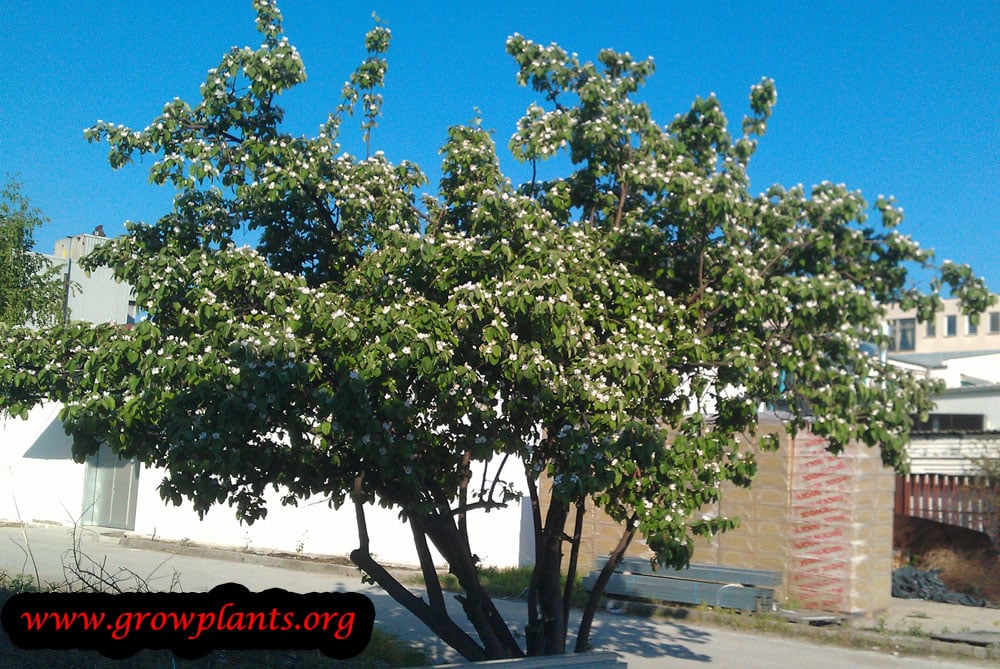
Overview: The quince is a small deciduous tree, typically 3-8 m (10-24 ft) tall, grown chiefly for its hard, aromatic yellow fruit. It is a long-lived perennial that is also trained as bonsai and valued for its spring blossom.
Quick Specifications
| Specification | Attribute |
|---|---|
| Plant Type / Life Cycle | Perennial (small deciduous fruit tree) |
| Foliage Type | Deciduous |
| Mature Size | 3-8 m (10-24 ft) tall; dwarf cultivars stay smaller |
| Growth Rate | Moderate |
| Root System | Shallow and fibrous, prone to suckering (widely used as a dwarfing rootstock for pears) |
| Toxicity | Fruit edible when cooked; seeds contain cyanogenic compounds and should not be eaten |
| Hardiness | USDA zones 5-10a (to 10b with care) |
Growth Form & Structure
- Height & Spread: 3-8 m in the ground; kept small in a large container by root-restriction and staged potting-up, and dwarf cultivars are available.
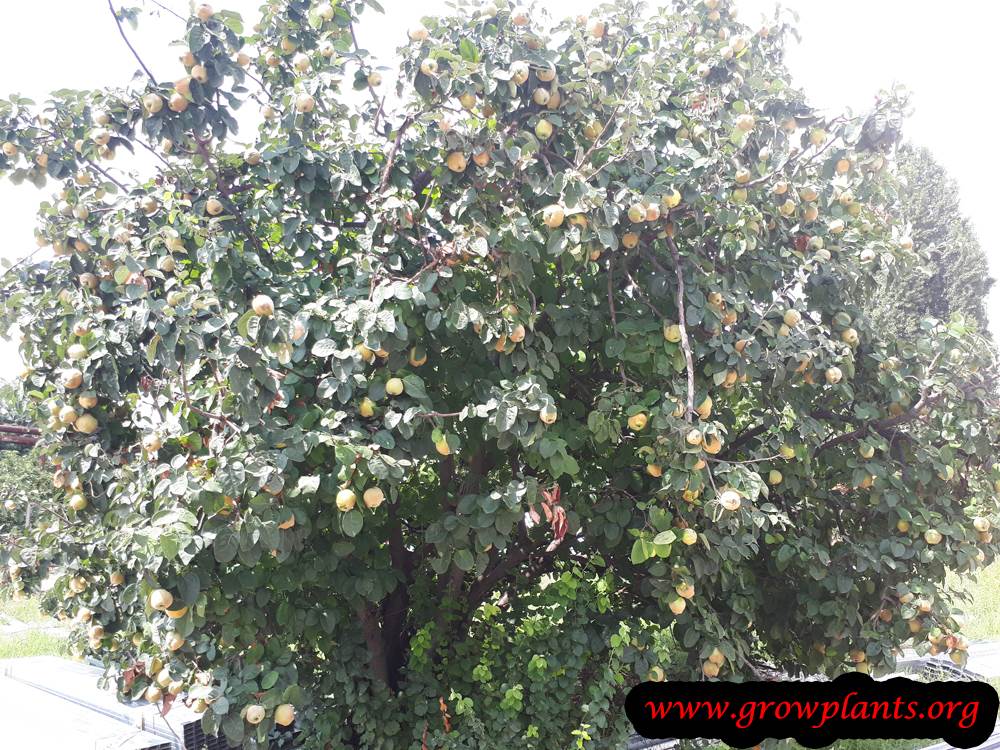
- Growth Habit & Form: Small, often crooked or shrubby tree with a low, spreading crown.
- Lifespan & Maturity: Long-lived; grafted trees bear fruit about 2-4 years after planting.
Anatomy & Physical Features
- Leaves & Foliage: Oval leaves, dark green above and softly grey-woolly beneath.
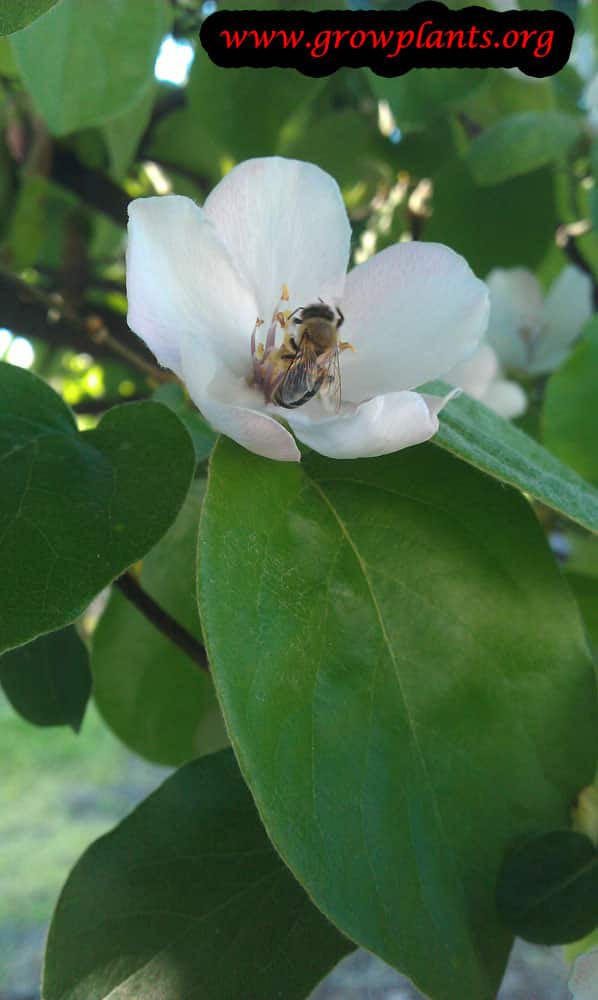
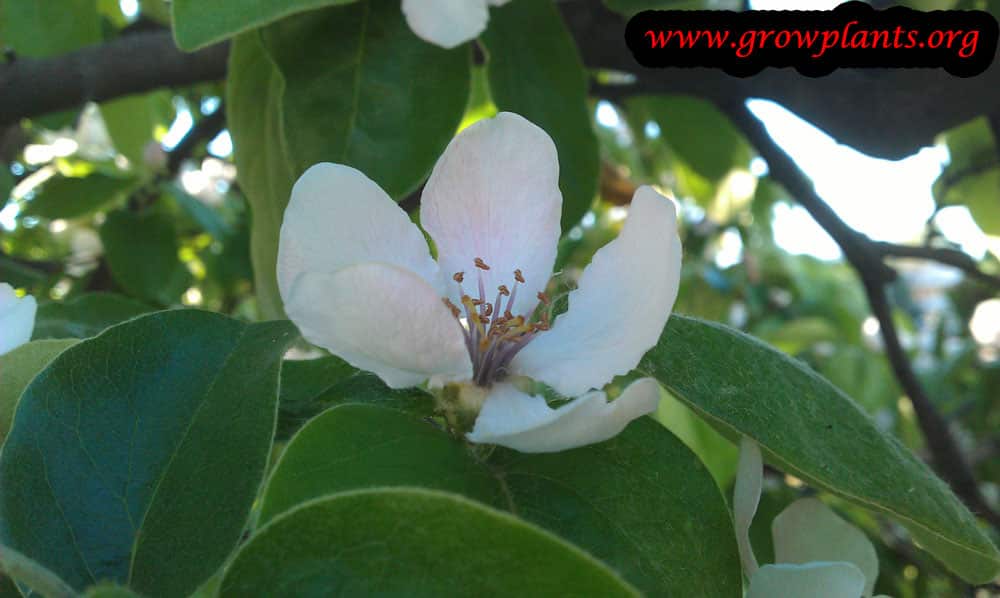
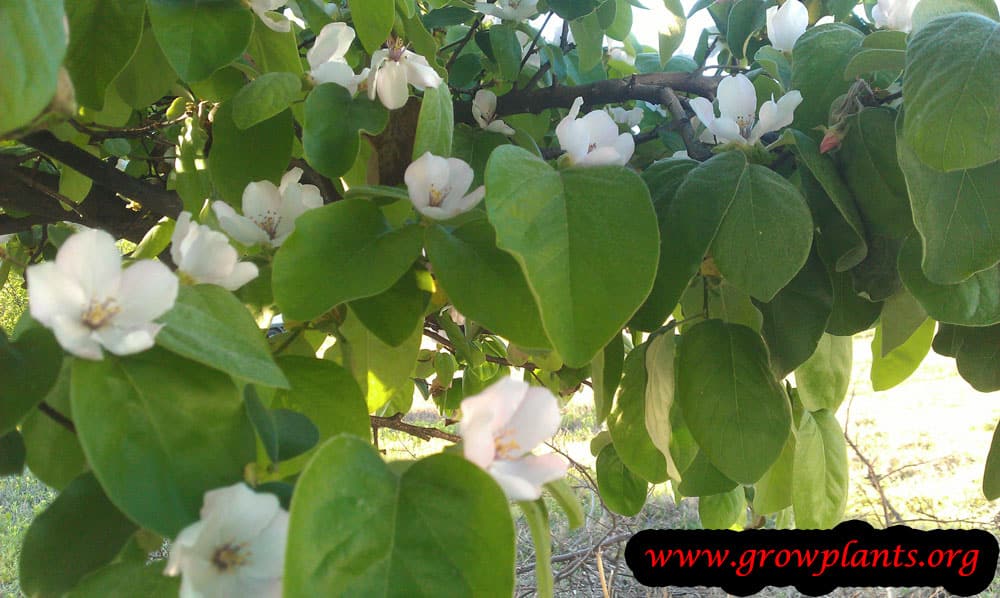
- Flower Characteristics: Solitary pink or white five-petalled flowers 2-4 cm across, borne in spring and attractive to bees.
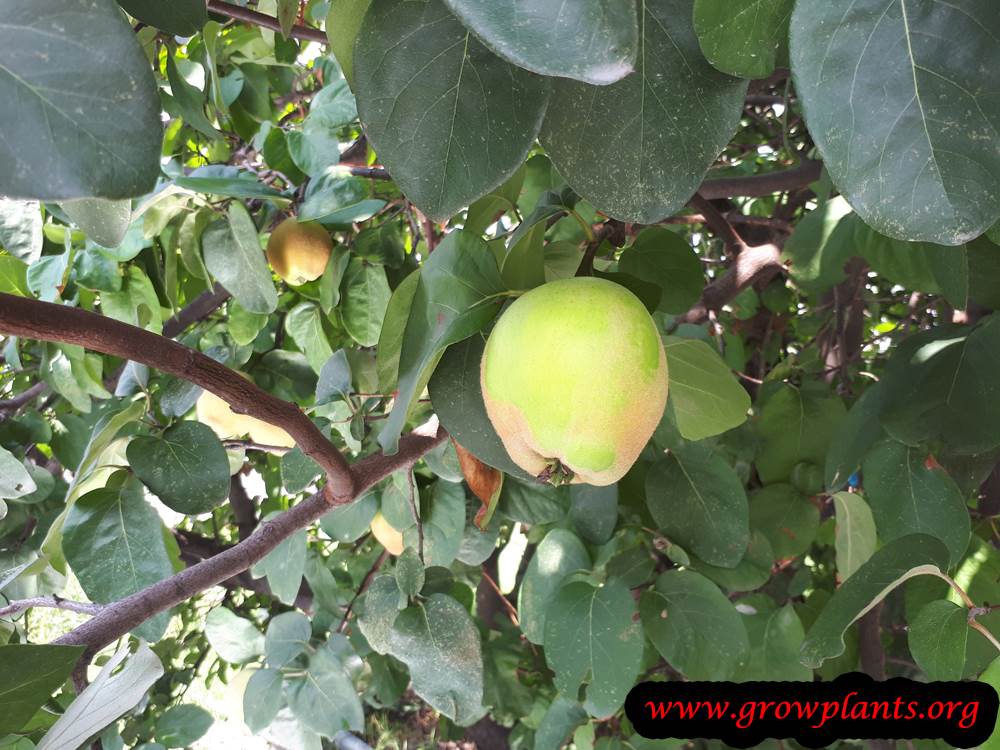
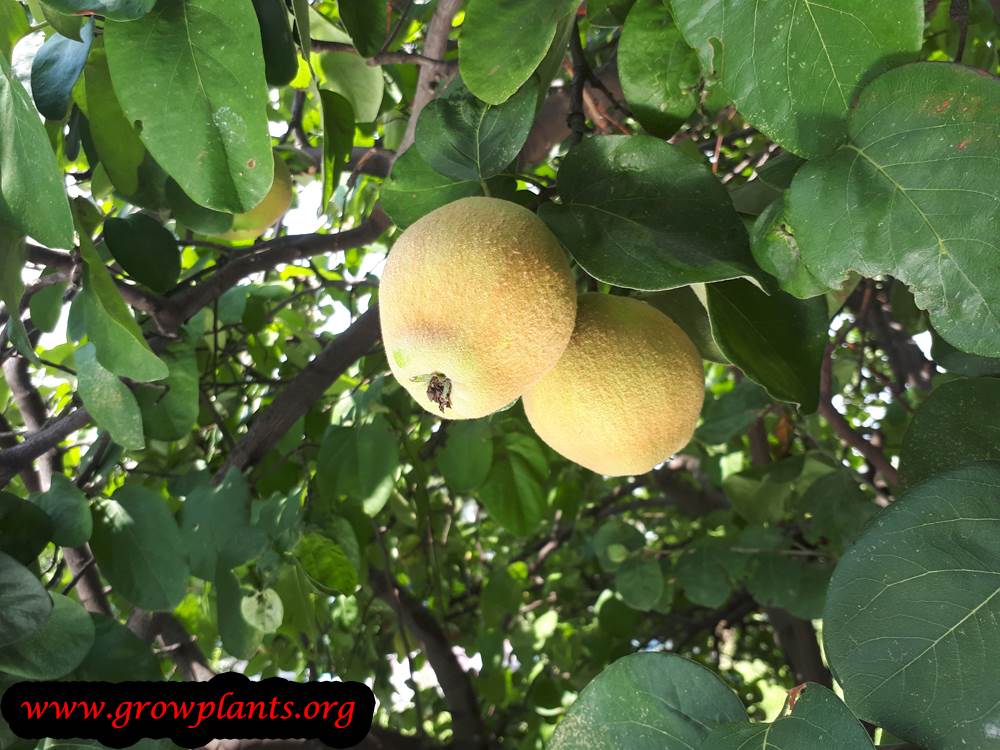
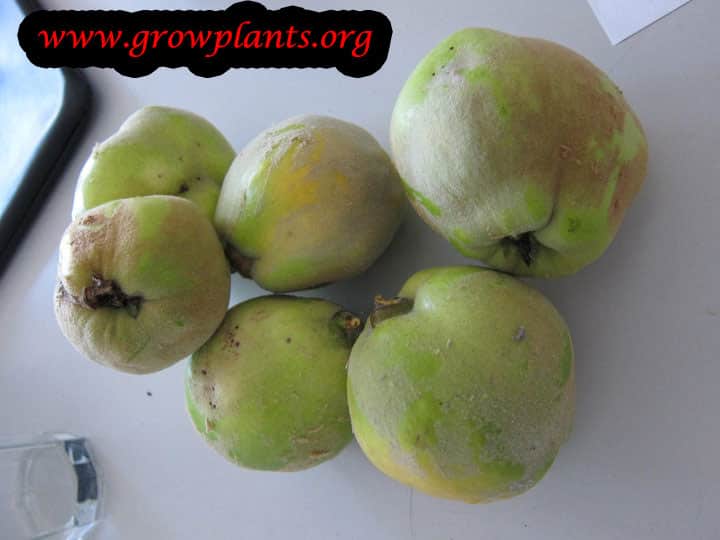
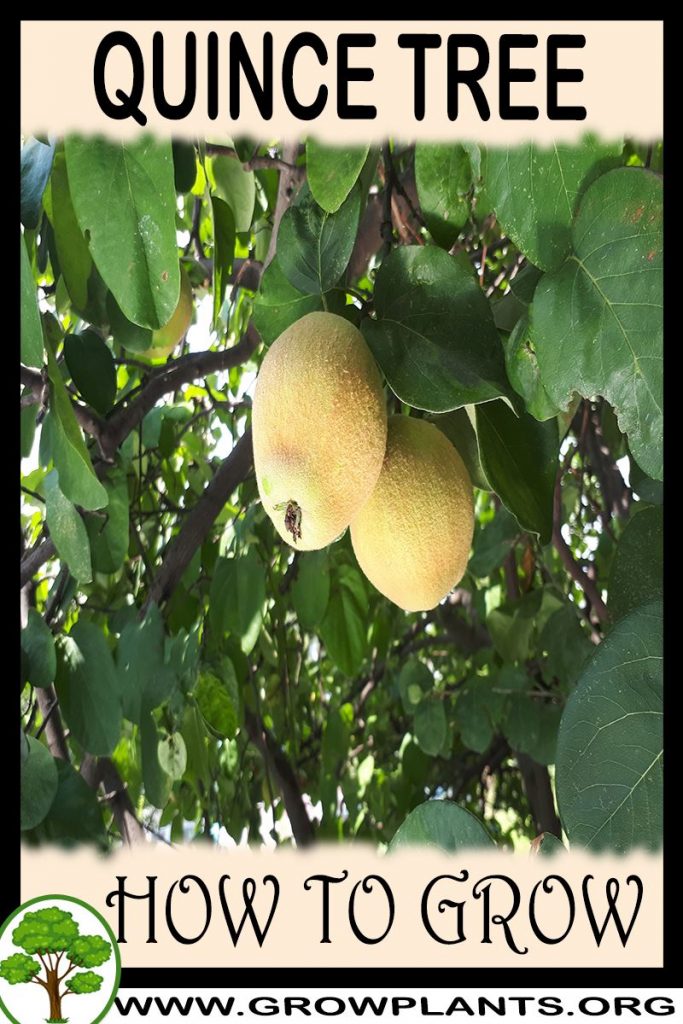
- Fruit Profile: Hard, aromatic pome, round to pear-shaped, 5-15 cm, ripening yellow; too astringent to eat raw but excellent cooked.
Primary Uses & Landscape Value
- Edible Uses: Fruit cooked into jams, jellies, cakes and baked dishes; some cultivars can be eaten raw when fully ripe.
- Functional & Ornamental Roles: Ornamental spring blossom and specimen fruit tree; also trained as bonsai and used as a dwarfing rootstock for pears.
Care Guide: Planting, Soil & Watering
Overview: The quince is a deciduous fruit tree that grows best in full sun and deep, rich soil, and it tolerates heavy clay. It needs winter chilling, moderate water and a weed-free root zone.
Quick Care Requirements
| Requirement | Ideal Condition |
|---|---|
| Planting Season | Winter to spring, while dormant (essential for bare-root trees) |
| Growth Rate | Moderate |
| Soil Type | Rich, deep soil; tolerates heavy clay |
| Water Need | Moderate |
Planting & Establishment
- Best Planting Season: plant while the tree is dormant, from winter to early spring; bare-root trees must go in during this window or they may fail.
- How to Plant:
- Hole Preparation: dig a wide hole; for bare-root trees, trim damaged roots and any growth above the graft union, and keep the graft above soil level.
- Soil Amendments: mix organic matter, humus and dead leaves into the soil to enrich the heavy, rich ground it prefers.
- Planting Depth: set the tree at its original nursery soil line with the graft union above the surface – do not bury the trunk.
- Growth Speed & Expectations: moderate; it grows to about 3–8 m and typically begins bearing fruit in around 2–4 years.
Soil, Watering & Drainage Care
- Soil Mix & Drainage Needs: it accepts heavy, rich clay but the ground should not stay waterlogged; keep the area around the trunk free of weeds. Fertilize and add organic matter once a year.
- Watering Schedule & Technique:
- Young / Newly Planted: water regularly through the first seasons to establish the tree.
- Established: water deeply but moderately, more while it is fruiting and in hot spells.
- Seasonal Adjustments: reduce watering over winter dormancy.
Climate, Light & Hardiness
Quince is a cold-hardy deciduous fruit tree suited to temperate, cool Mediterranean, and subtropical climates, requiring winter chill to flower and fruit well. It grows best in full sun and tolerates a wide range of winter cold.
Quick Climate Specifications
| Climate Zones | Temperate, cool Mediterranean, subtropical |
|---|---|
| USDA Hardiness Zones | 5–10a, and 10b with the right care |
| Frost Tolerance | High (dormant tree); flowers more frost-sensitive |
| Light Conditions | Full Sun |
Sunlight & Light Exposure
Optimal Light Setup
Full sun is required for strong growth, good flowering, and reliable fruiting; avoid shaded planting sites.
Shade & Heat Management
Quince tolerates full-sun exposure well across its temperate-to-subtropical climate range.
Temperature Extremes & Hardiness
USDA Hardiness & Regional Limits
Quince is hardy in USDA zones 5–10a, and can be grown with attentive care into zone 10b, spanning cold temperate winters through mild subtropical conditions.
Cold Damage & Winter Protection
If the tree is attacked or stressed going into winter, clear fallen leaves and fruit from the ground and prune out infected branches to protect it through the cold season; regular annual fertilizing and pruning also support winter resilience.
Frost Sensitivity
Spring blossoms are more frost-sensitive than the dormant tree, so a late frost can reduce fruit set even on an otherwise cold-hardy tree.
Chilling Requirement
Winter chilling hours are listed as a key care requirement for quince; adequate cold dormancy supports good spring flowering and fruit set.
Wind, Humidity & Microclimate
Microclimate Recommendations
Plant in a sunny site with good air movement and rich, weed-free soil, avoiding frost pockets that could damage spring blossoms.
Growing in Pots, Balconies & Indoors
Quince is a full-size deciduous fruit tree, not a houseplant – indoors it never gets the light or the winter chill it needs. It does, however, grow well in a large pot on a patio or balcony as long as it is kept small and potted up in stages.
Quick Details
- Container Size: Start about 20-50%% larger than the root ball and pot up in stages (see the grower’s tip)
- Indoor Suitability: Not a houseplant; grow it outdoors and keep it small in a pot
- Best Spot: Full sun – a bright, open balcony or patio
- Soil & Drainage: Free-draining peat-based mix with plenty of drainage holes and coarse grit at the base
- Watering in Pots: Average; pots dry fast, so check often, but never leave it standing in water
Indoors & On the Windowsill
- Not a houseplant: The grower does not grow Quince indoors – it needs full outdoor light and, being deciduous, a cold winter dormancy to fruit well.
- Cold is a friend, not an enemy: Unlike tender plants, this one does not need bringing inside for winter; the pot simply stays outdoors through its dormant, leafless season.
- Windowsill reality: Even the sunniest sill is too dim and too warm to crop this tree, so treat it strictly as an outdoor container plant.
On a Balcony or Patio
- Light & wind: Give it the sunniest, most open spot. On an exposed balcony, stake the young stem and shelter it from strong wind while it establishes.
- Reflected heat & drying: Walls and paving throw back heat, so pots dry quickly in warm weather – check moisture daily and water before the mix dries out. A drip irrigation kit with a timer can take over that watering check automatically.
- Weight & runoff: A large soil-filled pot is heavy and sheds water when watered, so set it where drainage runoff will not be a nuisance.
Choosing the Pot, Soil & Long-Term Care
- Pot & drainage: A pot with strong drainage holes is essential; skip a permanently full water saucer to avoid root rot, and empty any tray the same day it collects water. The grower adds a layer of lava grit or similar coarse material at the base for extra drainage.
- Potting mix: A free-draining peat-based mix; use a free-draining, aerated mix – peat or coir with perlite or vermiculite and some organic matter.
- Feeding: Potted plants exhaust their soil faster than those in the ground, so feed a little more often as nutrients leach out with watering.
- Refreshing the soil: Once the tree is large, do not repot into ever-bigger pots – instead swap out part of the tired soil every couple of years and lightly trim the roots to keep it healthy.
Grower’s Container Tip
- Grow the pot up with the tree: Start in a container only about 20-50%% larger than the root ball (the bigger the plant, the smaller that margin). Each time the roots fill it, move up one size, and repeat until it reaches the size you want. The grower prefers this staged method because it keeps the soil fresh and healthy and makes feeding and watering more efficient than starting a small tree in a huge pot.
Fertilizing & Feeding
Quince is a comparatively modest feeder among fruit trees once established, doing well in the rich, heavier soils it prefers with just modest supplemental feeding layered on top of that natural fertility.
Quick Fertilizing Specs
| Feeding Level | Moderate feeder, on the lighter side once established |
|---|---|
| Main Nutrient Priority | Organic matter and a nitrogen-forward feed while young, easing into a balanced feed once the tree is cropping |
| Best Feeding Period | Spring through the active growing season |
| Organic Options | Compost or well-rotted manure worked into naturally rich, heavier soil, which quince favors |
| Soil pH | Prefers rich, heavier soil and tolerates a wide pH range as long as it stays fertile and weed-free |
| Reduce/Stop Feeding | Taper feeding well before the tree drops its leaves so growth hardens off ahead of winter |
Feeding by Growth Stage
Newly Planted or Grafted Tree
Help a young quince, which is typically grafted, root into the rich, heavy soil it prefers.
| Nutrient direction | Work organic matter into the planting hole rather than reaching for fertilizer; a freshly planted or grafted tree needs to establish roots first. |
|---|---|
| Timing | The first growing season after planting, especially for bare-root stock planted while dormant. |
| Frequency | Feeding is rarely needed in the first season beyond organic matter mixed in at planting. |
| Fertilizer types | Compost, humus, or aged manure mixed into the backfill soil, A light, diluted balanced feed only if the site soil is poor |
| Precautions | Keep fertilizer away from bare roots and the graft union, and keep the root zone free of weeds, which quince is sensitive to competing with. |
Young Tree Building Structure
Support the vegetative growth a young quince needs to build its branch framework.
| Nutrient direction | A nitrogen-forward complete fruit-tree fertilizer suits the leafy growth phase before fruiting begins in earnest. |
|---|---|
| Timing | Spring through the active growing season, in the tree’s early years. |
| Frequency | Light, spaced-out feeding through the season suits active young growth better than one heavy dose. |
| Fertilizer types | A nitrogen-forward complete fruit-tree fertilizer, Compost worked into the soil as a lighter option |
| Routine trace nutrients | iron, manganese, zinc |
| Precautions | Keep the root zone weed-free and mulched, and taper feeding late in the season so growth can harden before winter. |
Established Tree Approaching Bearing Age
Carry a maturing quince from vegetative growth into its first meaningful crops.
| Nutrient direction | A balanced, complete fruit-tree fertilizer fits a tree that is settling into a steadier growth pattern. |
|---|---|
| Timing | Spring into early summer as the tree approaches bearing age. |
| Frequency | A single well-timed feeding at the start of the growing season is often all an established, non-bearing quince needs, with organic mulch carrying it the rest of the way. |
| Fertilizer types | A balanced complete fruit-tree fertilizer, applied lightly, An annual mulch or compost layer as the main ongoing nutrient source |
| Routine trace nutrients | iron, manganese, zinc |
| Precautions | Avoid over-feeding, since quince growing in already-rich soil rarely needs heavy fertilizer inputs. |
Mature, Fruit-Bearing Tree
Support flowering and the development of quince’s characteristically firm, aromatic fruit.
| Nutrient direction | A balanced feed, applied modestly, supports fruiting without pushing the tree toward excess leafy growth. |
|---|---|
| Timing | From spring bloom through fruit development, tapering as fruit nears harvest. |
| Frequency | Light to moderate feeding around bloom is generally enough for a bearing quince growing in rich soil. |
| Fertilizer types | A balanced complete fruit-tree fertilizer, used sparingly, An annual refresh of compost or mulch at the drip line |
| Routine trace nutrients | iron, manganese, zinc |
| Precautions | Cover or net fruit against fruit fly rather than over-fertilizing to compensate for fruit-quality issues, and collect fallen fruit and leaves promptly if disease has been a problem. |
Nutrient Deficiency Signs & Corrections
New leaves turn yellow with green veins standing out clearly against the pale leaf tissue.
| Possible causes | Iron chlorosis from alkaline or waterlogged soil, Compacted soil limiting root uptake, General nutrient shortage in poor soil, Root stress near the graft union |
|---|---|
| Appears first on | Newest leaves first |
| What to check | Soil pH and drainage, Whether the site tends to stay wet, Whether older leaves are also affected, Condition of the trunk and graft union |
| Possible correction | Improve drainage, correct markedly alkaline soil, and apply a chelated iron product per its label if chlorosis persists. |
Foliage looks pale overall and shoot growth is noticeably slow, especially on a young tree.
| Possible causes | General nitrogen shortage in lean soil, Weed competition, which quince tolerates poorly, Compacted or poorly draining soil, Insufficient feeding for a young, actively growing tree |
|---|---|
| Appears first on | Older leaves first |
| What to check | Weed pressure around the base, Recent feeding history, Soil drainage and compaction, This year’s shoot growth versus prior seasons |
| Possible correction | Clear weeds from around the tree, mulch to suppress regrowth, and resume light nitrogen-forward feeding suited to a young tree. |
The tree sets little fruit or shows generally weak seasonal growth despite otherwise favorable conditions.
| Possible causes | Nutrient-poor soil despite quince’s usual preference for rich ground, Weed competition suppressing root growth, Insufficient sunlight for good flowering and fruit set, Age of the tree, since young trees fruit lightly at first |
|---|---|
| Appears first on | New shoot growth and flowering |
| What to check | Soil richness and organic matter content, Weeds or competing vegetation nearby, Sun exposure over the growing season, Age of the tree relative to when it should start bearing |
| Possible correction | Improve soil richness with compost, keep the root zone weed-free, and confirm the tree is getting adequate sun before adjusting fertilizer. |
Pruning, Training & Seasonal Maintenance
Quince tree (Cydonia oblonga) is a deciduous fruit tree, often grown with a naturally somewhat open, spreading form rather than a strict fruiting-orchard framework. It tolerates moderate pruning: the objective is a manageable open structure and light penetration rather than heavy annual renewal, since quince fruits terminally on current-season shoots that arise from one-year-old wood, a lighter-touch pattern than apple’s long-lived spur system. The safest window is the dormant season, with a lighter touch than apple or pear given quince’s more modest response to hard cutting.
Quick Pruning & Maintenance Specs
| Pruning Tolerance | Moderate |
| Primary Pruning Window | Dormant season (late autumn to early winter) |
| Secondary Maintenance Window | Post-harvest, if fruit set was light that year |
| Typical Frequency | Annual, light |
| Main Objective | Maintain an open, well-lit framework; modest fruit-size improvement |
| Young Plant Priority | Establish an open, well-spaced branch framework |
| Mature Plant Priority | Remove crossing/dead wood; light thinning for light and fruit size |
| Best Tool Type | Bypass secateurs and loppers for most cuts; saw only occasionally |
| Avoid Heavy Pruning During | Bloom/fruit set; deep winter freezes |
Pruning by Plant Age & Size
Newly Established
Remove only damaged growth at planting; let the young tree establish before any formative cuts.
Young / Formative
Open framework training with moderately wide branch spacing; quince naturally tends toward a somewhat irregular, spreading habit, so formative pruning here is lighter-handed than the strict central-leader work used on apple.
Mature / Established
Remove dead, weak and crossing branches, and thin lightly so fruit-bearing terminal shoots get adequate light; reduce bud/shoot numbers somewhat to favor larger individual fruit, per the source’s own guidance.
Seasonal Pruning Schedule
| Stage | Objective | Remove | Do Not Remove | Response / Flowering Impact |
| Dormant/Winter | Framework maintenance and light renewal | Weak, dead and crossing branches; some old unproductive stems | One-year-old wood needed to produce this season’s fruiting shoots | Encourages new terminal fruiting shoots; light touch avoids delaying the crop |
| Post-Harvest (light-crop years) | Sanitary and corrective work | Diseased/damaged wood; fallen leaves and fruit if disease pressure was seen early in winter | Healthy one-year wood | Reduces overwintering disease carryover |
Flowering & Fruiting Wood
Quince fruits at the tips of current-season shoots that grow from one-year-old wood; it is not a heavy spur-bearer like apple. Because of this, aggressive apple-style spur thinning isn’t the right model – the priority is keeping a supply of healthy one-year wood each season, then lightly thinning to size up the resulting fruit rather than removing large amounts of older fruiting structure.
Structural Pruning & Training
Remove crossing and inward-growing branches; keep the naturally somewhat gnarled, open habit rather than forcing it into a tight orchard form; canopy thinning helps here mainly for light to ripening fruit, not for heavy renewal.
Special Growth to Remove
Grafted trees are standard (per source) – remove rootstock suckers below the graft union. Root suckers can also arise from own-root or stressed trees; remove promptly to avoid diverting vigor from the main framework.
Container & Small-Space Pruning
Supported per the source’s container guidance; keep the framework compact with light heading of the current season’s terminal shoots, and repot in stages as the tree fills its container.
Tools
- Bypass secateurs – terminal shoot and small wood cuts
- Loppers – medium branch removal
- Pruning saw – occasional larger structural cut
Tool Hygiene & Disease Risk
Increased: noted as very sensitive to pests and disease (aphids, borer, mite). Disinfect tools when cutting into diseased or pest-damaged wood and remove infected material from the site.
Cut Placement & Technique
Thinning cuts back to a branch’s point of origin, favored over heading, to preserve the natural open form; cut just outside the branch collar; avoid flush cuts.
Heavy Pruning & Rejuvenation
Moderate tolerance only – quince does not need or particularly benefit from hard rejuvenation the way a heavy spur-bearer might. Restore a neglected tree gradually over two seasons rather than a single hard cut, to avoid excessive vegetative regrowth at the expense of fruiting shoots.
Post-Pruning Care
Watch cuts for borer entry; no extra feeding needed after light routine pruning; monitor new terminal shoots for fruit set.
Common Pruning Mistakes
- Applying apple-style heavy spur thinning, which isn’t how this species fruits
- Over-tightening the naturally open, spreading habit into a dense form
- Ignoring rootstock suckers on grafted trees
When NOT to Prune
Avoid pruning during bloom/fruit set and during deep winter freezes.
Recommended Tools (by task)
| Task | Tool Category | Why |
| Terminal-shoot and small wood cuts | bypass_secateurs | Precise cuts appropriate for this species’ light, current-season fruiting pattern |
| Medium branch and crossing-wood removal | loppers | Handles the moderate-diameter wood typical of quince’s open framework |
| Occasional larger structural cut | pruning_saw | Needed only rarely, for older framework wood beyond lopper capacity |
| Between-cut hygiene on diseased wood | blade_disinfectant | Species noted as very sensitive to pests and disease |
Pruning Troubleshooting
| Problem | Possible Cause | What to Check | Corrective Action |
| Reduced fruiting after heavy pruning | Removed too much one-year wood, which is what carries this season’s terminal fruiting shoots | Volume and age of wood removed | Prune more lightly, prioritizing retention of healthy one-year growth |
| Dense, shaded canopy interior | Insufficient thinning of crossing/inward branches | Light penetration to fruiting shoots | Remove crossing wood with thinning cuts, staged over a season or two |
| Dieback after pruning | Borer entry at a wound | Cut condition and pest presence | Remove and destroy affected wood; disinfect tools |
Propagation Guide
Quince is usually grafted to guarantee fruit quality, as the site notes, but it is also one of the few tree fruits that roots relatively readily from hardwood cuttings – quince stock is itself commonly propagated this way for use as a pear rootstock – making cuttings a genuinely practical home alternative to grafting. Seed is not hard to start either, but seedling fruit quality is variable, so overall difficulty is best described as Moderate, with cuttings comparatively easy for many home growers.
Quick Propagation Specs
| Best Propagation Method | Hardwood cuttings or grafting (both preserve the parent’s fruit quality) |
| Alternative Methods | Seed (variable fruit quality) |
| Propagation Difficulty | Moderate (often Easy by hardwood cuttings; grafting used commercially to guarantee cultivar and fruit quality) |
| Seed True-to-Type | Variable |
| Vegetative True-to-Type | Yes |
| Best Propagation Season | Winter to spring for sowing; late autumn to winter (dormant) for hardwood cuttings; late winter for dormant grafting |
| Seed Germination Time | 4–6 weeks, not including the burying (stratification) period |
| Cutting Rooting Time | Roots often develop over the following growing season, typically several weeks to a few months |
| Seed Sowing Depth | 1 cm (0.5 in) |
Growing from Seed
Seed Handling & Viability
Keep seed in a cool, dark location until sowing.
Dormancy & Pre-Sowing Treatment
Seeds require burying (cold-moist stratification) for 1–2 months, either refrigerated in a moist medium or sown outdoors at the end of winter to stratify naturally.
Sowing Season
Winter to spring.
Sowing Depth & Orientation
1 cm (0.5 in) deep.
Germination Conditions
Moist soil in a sunny location; water an average to large amount and don’t let it dry out.
Germination Time
4–6 weeks, not counting the burying period.
Seedling Care
Keep moist, mulch, and water regularly; often grown singly in separate pots so a cultivar can later be grafted on, then transplanted to the final location.
Stem Cuttings
Cutting Type
Hardwood cuttings, taken from dormant wood.
Best Timing
Late autumn to winter, while the plant is dormant.
Cutting Preparation
Take firm, pencil-thickness sections of well-ripened one-year wood.
Rooting Setup
Insert into a well-drained nursery bed or pot and keep consistently moist.
Rooting Hormone
Optional – quince often roots without it, but a hormone can improve consistency and speed.
Rooting Time
Roots typically develop over the following growing season, often taking several weeks to a few months.
Grafting & Budding
Why Grafting Is Used
The site notes grafting is necessary for quince trees, used to guarantee fruit quality and consistency in the same way as for other pome fruits.
Preferred Grafting Methods
Whip-and-tongue or cleft grafting while dormant; budding is also used.
Rootstock
Named quince cultivars are often grafted onto quince seedling rootstock.
Scion Selection
Healthy, dormant one-year wood from a tree of known fruit quality.
Best Grafting Season
Late winter, while dormant.
Graft Aftercare
Protect the union until healed and remove growth arising below it from the rootstock.
Bloom & Flower Guide
Quick Details
- Bloom Season: Spring, often a little later than apples and pears
- Time to First Bloom: Grafted trees typically begin flowering within a few years of planting
- Flower Appearance: Large, cup-shaped flowers about 2-4 cm, in pink, white, or pink-and-white with five petals
- Edibility: Grown for its fruit; the blossoms are ornamental and not eaten
Detailed Blooming Overview
Quince flowers relatively late and singly rather than in tight clusters, opening large, cup-shaped pink-and-white blossoms as the leaves expand. The flowers are pretty and draw pollinators; quince is largely self-fertile, so even a lone tree usually sets fruit.
Flower Characteristics
- Large solitary flowers, about 2-4 cm, five petals
- Soft pink, white, or pink-and-white
- Open with the young leaves and attract pollinators
Bloom Care & Thinning
- Thinning: thin the bloom in the first years, until the tree is strong enough to carry a crop.
- Pollination: largely self-fertile, and bees improve the set.
Bloom Health & Protection
- Fire blight (Erwinia amylovora): quince can catch it through the open blossoms in warm, wet weather, wilting flowers and shoots. A copper-based spray around bloom and cutting out infected wood well below the damage help.
Fruit & Uses
The fruit is the edible part of the quince, but for most cultivars it is too hard, dry and astringent to enjoy raw and is cooked to become palatable. A few sweet dessert cultivars can be eaten raw, per the site’s own notes, but the majority are turned into jams, pastes, or baked dishes.
Quick Edible Specs
| Edible Parts | Fruit |
|---|---|
| Main Use(s) | Culinary – cooked into jams, pastes and baked dishes; a few sweet cultivars can be eaten raw |
| Eaten Raw or Cooked | Mostly cooked; raw eating limited to some sweeter cultivars |
| Preparation Required | Cook (most cultivars); core and seeds removed |
| Harvest Season | Summer / Autumn |
| Time to First Harvest | A young tree takes a couple of years before it begins bearing fruit |
| Storage | Firm, fragrant fruit stores for a period in cool conditions |
| Safety/Toxicity Caveat | Seeds contain cyanogenic compounds, as in other pome fruit; discard core/seeds rather than eating them |
Fruit
The fruit is notably firm and dense, round-elliptic in shape, 5–15 cm, ripening from green to a yellow-brown color and turning strongly fragrant when ready. It’s picked once fully colored, in summer into autumn, and protected with netting or similar against fruit fly while ripening. Because raw flesh is hard and astringent for most varieties, it is normally simmered into quince paste (membrillo-style), jam or jelly, or baked; only some sweeter cultivars are pleasant eaten raw.
Preparation, Uses & Safety
Lead with the caveat that most quince fruit needs cooking – simmering with sugar softens the dense flesh and mellows its tartness for jam, jelly, paste or baked dishes. Where a cultivar is sweet enough to eat raw, wash and slice as with any pome fruit. Always discard the core and seeds, which, like other pome fruit, contain cyanogenic compounds.
Pests, Diseases & Troubleshooting
Overview: Quince (Cydonia oblonga) is a pome fruit in the rose family and shares the pest complex of apples and pears – codling moth, aphids, mites and scale – but is especially prone to fire blight and to the leaf-and-fruit disease Entomosporium, plus quince rust. Its management centres on orchard hygiene, dormant oil, pheromone monitoring and prompt pruning-out of blight, choosing chemical intervention only when monitoring justifies it.
Quick Troubleshooting Overview
| Issue / Pest | Main Symptom | Primary Solution |
|---|---|---|
| Codling moth | Tunnels to the core with frass at the entry; wormy fruit | Pheromone traps; kaolin clay; sanitation; timed sprays |
| Quince curculio | Crescent egg scars and hard knots; larvae in fruit | Ground sanitation; remove fallen fruit; targeted control |
| Aphids | Curled leaves, honeydew, sooty mould; woolly colonies | Dormant oil; insecticidal soap; encourage predators |
| Fire blight | Blackened, hooked shoot tips looking scorched; oozing | Prune well below infection; disinfect tools; copper at bloom |
| Entomosporium leaf blight | Reddish spots on leaves and fruit; defoliation | Rake leaves; airflow; copper or labelled fungicide |
| Brown rot | Fruit rots with tan spore tufts; mummies | Remove mummies; sanitation; fungicide at bloom if needed |
Common Pests & Management
- Codling moth (Cydia pomonella):
- Symptoms: The classic ‘worm in the fruit’. Pinkish caterpillars tunnel to the core leaving a frass-filled entry hole, ruining fruit; damage is easily confused with curculio.
- Prevention & Control: Hang pheromone traps to time management, wrap trunks with cardboard bands to catch larvae, apply kaolin clay, remove and destroy infested fruit and drops, and use Bacillus thuringiensis, spinosad or granulosis virus on young larvae; codling moth virus is a good organic option.
- Quince curculio (Conotrachelus crataegi):
- Symptoms: A snout weevil whose feeding and egg-laying leaves crescent-shaped scars and hard corky knots in the fruit; grubs feed inside, and infested fruit often drops.
- Prevention & Control: Rake and destroy fallen fruit to break the cycle, cultivate lightly under trees, tarp-and-shake adults from branches in the morning, and use a labelled control at petal fall if pressure is high.
- Aphids (Aphis pomi & Eriosoma lanigerum):
- Symptoms: Green apple aphid curls and yellows new shoots with honeydew and sooty mould, while woolly apple aphid forms white cottony colonies on shoots, wounds and roots, causing galls.
- Prevention & Control: Apply dormant horticultural oil to smother eggs, spray insecticidal soap on colonies, and encourage ladybirds, lacewings, hoverflies and parasitic wasps (which are very effective on woolly aphid).
- Spider mites (Tetranychus / Panonychus species):
- Symptoms: Fine pale stippling, bronzing and premature leaf drop in hot dry summers, with webbing in bad cases.
- Prevention & Control: Avoid dust and drought stress, conserve predatory mites by minimising broad-spectrum sprays, hose down foliage, and apply horticultural oil if populations climb.
- Scale insects (Quadraspidiotus perniciosus):
- Symptoms: San Jose and other scales appear as small grey or brown bumps on bark and fruit, weakening branches and causing red-haloed spots on fruit.
- Prevention & Control: Apply dormant oil to smother overwintering scale, prune out heavily encrusted wood, and time any crawler sprays to the emergence period.
- Pear and quince slug (sawfly) (Caliroa cerasi):
- Symptoms: Shiny, dark, slug-like sawfly larvae skeletonise the upper leaf surface, leaving a lacy brown network of damaged tissue.
- Prevention & Control: Hand-pick or hose off larvae, dust with wood ash or spray insecticidal soap, and encourage predators; damage is usually cosmetic and tolerable.
Diseases & Fungal Issues
- Fire blight (Erwinia amylovora):
- Symptoms: The most serious quince disease. Blossoms, shoots and spurs suddenly blacken and die, with shoot tips bending into a ‘shepherd’s crook’; a milky bacterial ooze may appear, and cankers form on branches.
- Treatment & Management: Prune out infected wood at least 20–30 cm below visible damage in dry weather, disinfecting tools between cuts; remove cankers in dormancy, avoid excess nitrogen and heavy pruning, and apply copper or a labelled bactericide at bloom in high-risk conditions.
- Entomosporium leaf and fruit blight (Diplocarpon (Entomosporium) mespili):
- Symptoms: Small reddish-purple spots on leaves and fruit that enlarge and merge, causing yellowing and heavy defoliation and blemishing or cracking fruit; a very common quince problem in wet weather.
- Treatment & Management: Rake and destroy fallen leaves, prune for an open airy canopy, avoid overhead wetting, and apply a protectant copper or labelled fungicide from bud break through wet spring weather.
- Quince rust (Gymnosporangium clavipes):
- Symptoms: Distorted, swollen, aborted or corky-spotted fruit and occasional twig swellings; the fungus alternates with junipers nearby.
- Treatment & Management: Remove nearby juniper hosts where practical, prune out infected tissue, and apply a labelled fungicide during the spring infection window when junipers show orange galls.
- Brown rot (Monilinia fructigena / laxa):
- Symptoms: Blossoms blight, and fruit develops firm brown rotted areas with concentric tan spore tufts, shrivelling into hard ‘mummies’ that hang on the tree.
- Treatment & Management: Remove all mummies and rotted fruit, prune out blighted twigs, improve airflow, and apply a fungicide at bloom and pre-harvest where the disease is established.
- Powdery mildew (Podosphaera clandestina):
- Symptoms: White powdery growth on new shoots and leaves, distorting growth in mild humid weather.
- Treatment & Management: Prune for airflow, remove infected tips, avoid excess nitrogen, and apply sulfur or a labelled fungicide if it becomes established.
Growing Difficulties & Abiotic Problems
- Iron chlorosis:
- Cause & Symptoms: On alkaline or waterlogged soils quince cannot take up iron; leaves yellow between green veins, worst on new growth.
- Correction Strategy: Improve drainage, add organic matter, avoid over-liming, and apply chelated iron (and correct pH) to green the foliage.
- Fruit cracking and blemish:
- Cause & Symptoms: Irregular watering, especially heavy rain after dry spells, plus Entomosporium spotting, causes skin cracking and russeting.
- Correction Strategy: Keep soil moisture even with mulch and regular watering, and control leaf-and-fruit blight to reduce blemishing.
- Frost damage to blossom:
- Cause & Symptoms: Late frosts kill open flowers and young fruitlets, reducing the crop, and can mimic the early scorch of fire blight.
- Correction Strategy: Site trees away from frost pockets, protect small trees during late frosts, and distinguish frost from blight before pruning.
What Helps – Products & Tools
Build the season around sanitation and dormant oil. Keep codling-moth pheromone traps, kaolin clay and Bacillus thuringiensis/spinosad (or codling-moth granulosis virus) for the moth, dormant and summer horticultural oil plus insecticidal soap for aphids, scale and mites, and copper fungicide for fire blight, Entomosporium leaf blight and brown rot, with sulfur for mildew. Chelated iron corrects chlorosis on alkaline soil. Spray oils and any insecticides in the evening and follow the label to protect pollinators.