

Plant Profile & Key Characteristics
Overview: A deciduous shrub, 1-3 m (about 3-10 ft) tall, grown chiefly as an ornamental for its early, showy flowers though its quince-like fruit is edible. It is a moderate-growing perennial for temperate and cool Mediterranean gardens.
Quick Specifications
| Specification | Attribute |
|---|---|
| Plant Type / Life Cycle | Perennial (deciduous shrub) |
| Foliage Type | Deciduous |
| Mature Size | 1-3 m (3-10 ft) tall |
| Growth Rate | Moderate |
| Toxicity | Fruit edible (usually cooked); flesh non-toxic |
| Hardiness | USDA zone 5-9 (zone 10a with care) |
Growth Form & Structure
- Height & Spread: 1-3 m (3-10 ft) tall; can be kept small in containers, potted up gradually.
- Growth Habit & Form: Dense, twiggy, thorny deciduous shrub.
- Lifespan & Maturity: Moderate-growing perennial; bears fruit in about 2-4 years.
Anatomy & Physical Features
- Trunk & Bark: Tangled, spiny branches.
- Flower Characteristics: Red, pink, white or orange flowers with five to many petals, opening early on bare wood (full detail in the Bloom section).
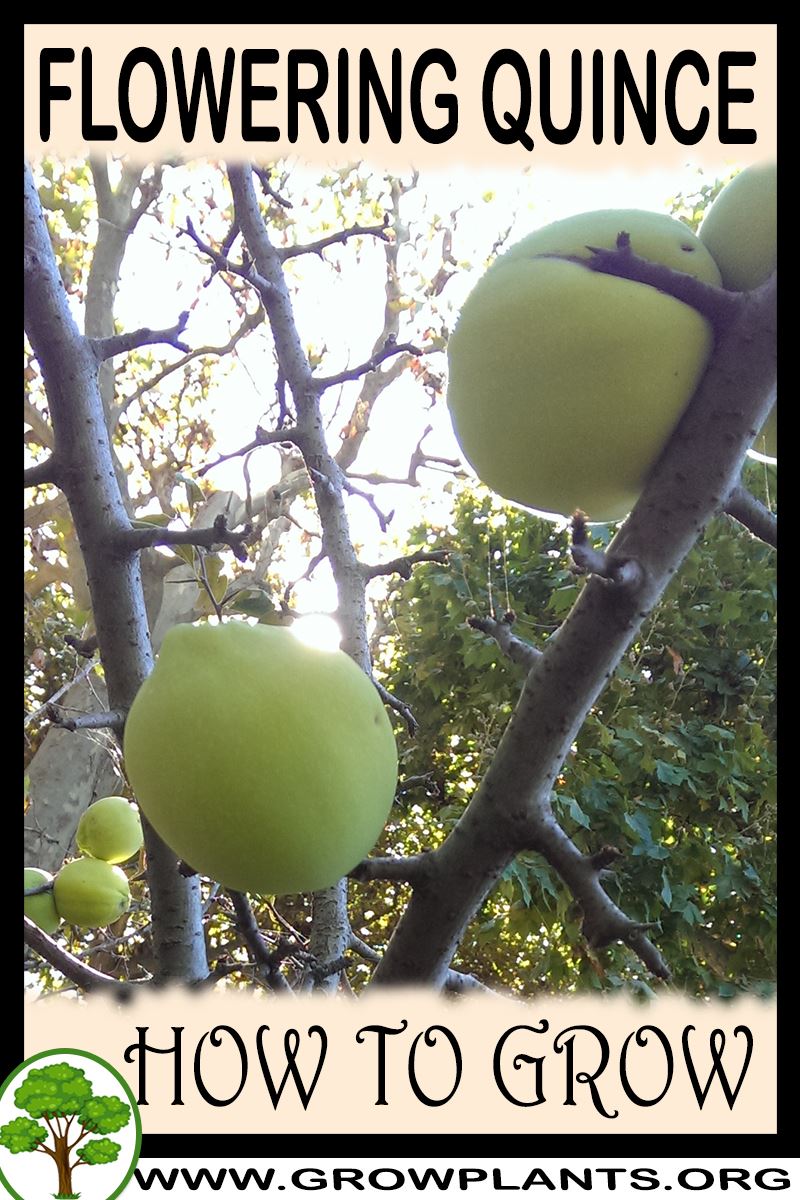
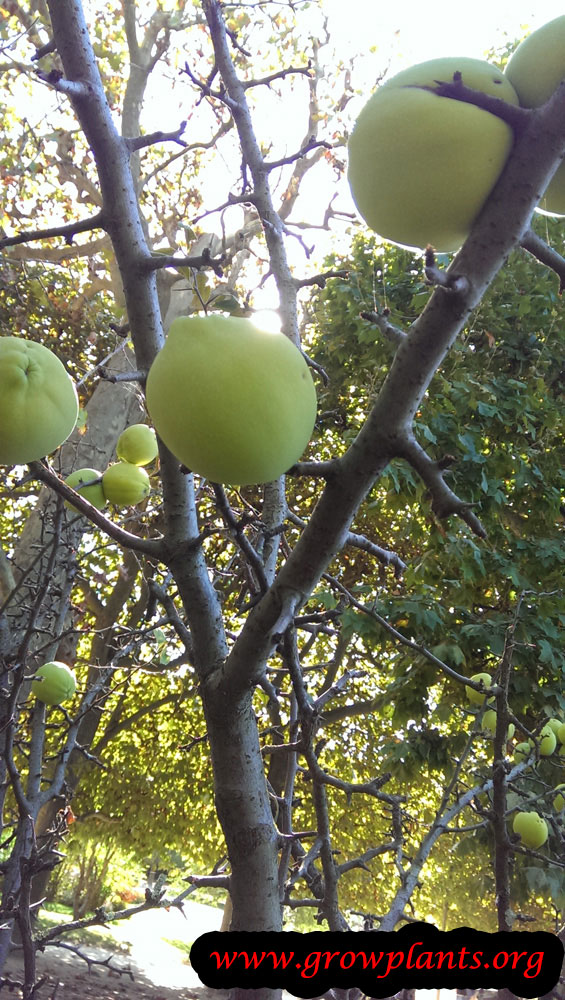
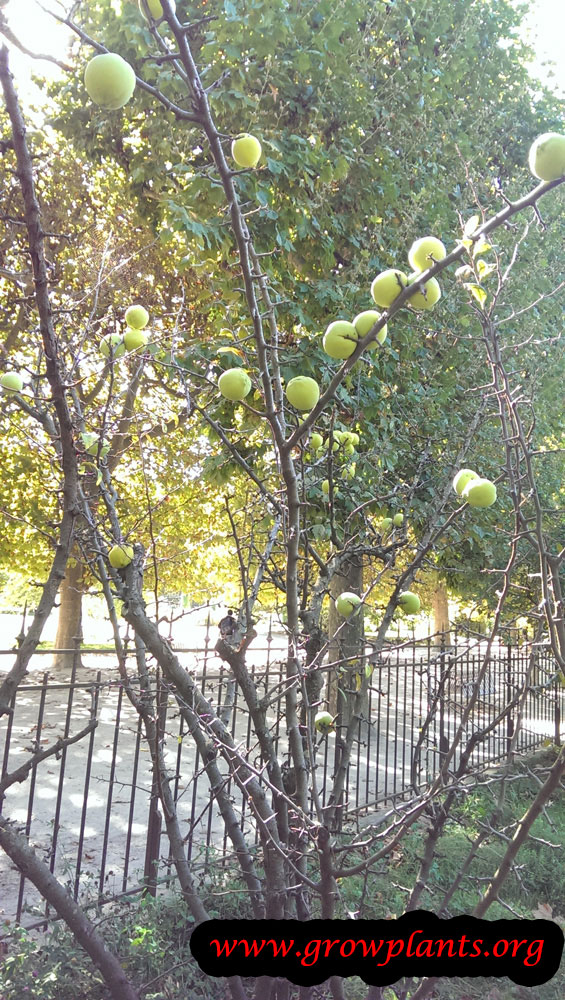
- Fruit Profile: Firm, round to elliptic quince-like fruit 5-15 cm across, green to yellow-orange (full detail in the Fruit section).
Primary Uses & Landscape Value
- Edible Uses: Fruit eaten cooked – baked, or made into jams and cakes.
- Functional & Ornamental Roles: Ornamental early-spring flowering shrub; thorny growth makes a good barrier hedge.
Care Guide: Planting, Soil & Watering
Overview: This hardy deciduous shrub enjoys full sun and a cool winter, which improves its early flowering. It grows in ordinary well-drained soil with a moderate, regular supply of water.
Quick Care Requirements
| Requirement | Ideal Condition |
|---|---|
| Planting Season | Late winter to spring; plant bare-root stock in late winter to early spring |
| Growth Rate | Moderate |
| Soil Type | Ordinary, well-draining garden soil |
| Water Need | Moderate – keep evenly moist, letting the surface dry between waterings |
Planting & Establishment
- Best Planting Season: From late winter to spring; bare-root plants should go in during late winter to early spring while dormant, and summer planting is less reliable.
- How to Plant:
- Hole Preparation: Dig a hole about twice the width of the root ball and just as deep, loosening the sides so young roots spread easily.
- Soil Amendments: Mix a few handfuls of compost or well-rotted organic matter into the backfill, adding grit or perlite if drainage is slow.
- Planting Depth: Set the plant so the root collar sits level with the surrounding soil; never bury the stem or trunk base.
- Growth Speed & Expectations: A moderate grower reaching 1-3 m, forming a twiggy, spring-flowering shrub.
Soil, Watering & Drainage Care
- Soil Mix & Drainage Needs: Plant in well-draining garden soil improved with a little compost. In containers keep plants compact, starting in a pot 20-50% larger than the root ball, potting up as needed and refreshing the soil periodically.
- Watering Schedule & Technique:
- Young / Newly Planted: Keep the soil evenly moist for the first several weeks, watering whenever the surface begins to dry.
- Established: Water deeply and let the top few centimetres dry before watering again, rather than giving frequent shallow sips.
- Seasonal Adjustments: Water more often through summer heat and reduce it in winter as growth slows.
Climate, Light & Hardiness
Flowering quince is a cold-hardy deciduous shrub suited to temperate, cool Mediterranean, and subtropical climates, needing a cool winter for its vivid early-spring bloom. It grows best in full sun and tolerates a wide range of winter cold.
Quick Climate Specifications
| Climate Zones | Temperate, cool Mediterranean, subtropical |
|---|---|
| USDA Hardiness Zones | 5–9, and 10a with the right care |
| Frost Tolerance | High (dormant plant); flowers more frost-sensitive |
| Light Conditions | Full Sun |
Sunlight & Light Exposure
Optimal Light Setup
Full sun gives the strongest growth and the best bloom; avoid shaded planting sites.
Shade & Heat Management
Flowering quince tolerates full-sun exposure well across its temperate-to-subtropical climate range.
Temperature Extremes & Hardiness
USDA Hardiness & Regional Limits
Flowering quince is hardy in USDA zones 5–9, and can be grown with attentive care into zone 10a, spanning cool temperate winters through mild subtropical conditions.
Cold Damage & Winter Protection
If the shrub is attacked or stressed going into winter, clear fallen leaves and fruit from the ground and prune out infected branches to help it through the cold season; note the fruit itself is also prone to being attacked.
Frost Sensitivity
Early spring blossoms are more frost-sensitive than the dormant shrub, so a late frost can shorten the ornamental bloom.
Chilling Requirement
A cool winter is listed as an important care requirement, reflecting a genuine chilling need for the shrub's characteristic early, profuse spring flowering.
Wind, Humidity & Microclimate
Microclimate Recommendations
Plant in a sunny site with good air movement, away from frost pockets that could damage the early spring bloom.
Growing in Pots, Balconies & Indoors
Flowering quince is a compact deciduous shrub rather than a houseplant, but it is well suited to a large container on a patio or balcony where it can stay for years.
Quick Details
- Container Size: Start about 20-50%% larger than the root ball and pot up in stages (see the grower’s tip)
- Indoor Suitability: Not a houseplant; a good long-term patio container shrub
- Best Spot: Full sun – a bright, open balcony or patio
- Soil & Drainage: Free-draining peat-based mix with plenty of drainage holes and coarse grit at the base
- Watering in Pots: Average; pots dry fast, so check often, but never leave it standing in water
Indoors & On the Windowsill
- Not a houseplant: The grower does not grow Flowering quince indoors – it needs full outdoor light and, being deciduous, a cold winter dormancy to fruit well.
- Cold is a friend, not an enemy: Unlike tender plants, this one does not need bringing inside for winter; the pot simply stays outdoors through its dormant, leafless season.
- Windowsill reality: Even the sunniest sill is too dim and too warm to crop this tree, so treat it strictly as an outdoor container plant.
On a Balcony or Patio
- Light & wind: Give it the sunniest, most open spot. On an exposed balcony, stake the young stem and shelter it from strong wind while it establishes.
- Reflected heat & drying: Walls and paving throw back heat, so pots dry quickly in warm weather – check moisture daily and water before the mix dries out. A drip irrigation kit with a timer can take over that watering check automatically.
- Weight & runoff: A large soil-filled pot is heavy and sheds water when watered, so set it where drainage runoff will not be a nuisance.
Choosing the Pot, Soil & Long-Term Care
- Pot & drainage: A pot with strong drainage holes is essential; skip a permanently full water saucer to avoid root rot, and empty any tray the same day it collects water. The grower adds a layer of lava grit or similar coarse material at the base for extra drainage.
- Potting mix: A free-draining peat-based mix; use a free-draining, aerated mix – peat or coir with perlite or vermiculite and some organic matter.
- Feeding: Potted plants exhaust their soil faster than those in the ground, so feed a little more often as nutrients leach out with watering.
- Refreshing the soil: Once the tree is large, do not repot into ever-bigger pots – instead swap out part of the tired soil every couple of years and lightly trim the roots to keep it healthy.
Grower’s Container Tip
- Grow the pot up with the tree: Start in a container only about 20-50%% larger than the root ball (the bigger the plant, the smaller that margin). Each time the roots fill it, move up one size, and repeat until it reaches the size you want. The grower prefers this staged method because it keeps the soil fresh and healthy and makes feeding and watering more efficient than starting a small tree in a huge pot.
Fertilizing & Feeding
Flowering quince is grown chiefly for its showy spring flowers rather than its fruit, so feeding is aimed at supporting healthy overall growth and bloom rather than fruit production; a balanced feed does that better than a high-phosphorus bloom product.
Quick Fertilizing Specs
| Feeding Level | Moderate feeder |
|---|---|
| Main Nutrient Priority | Balanced feeding that supports overall vigor, which in turn supports the spring flower display |
| Best Feeding Period | Early spring, as new growth begins |
| Organic Options | Compost or aged organic matter worked into the soil around the root zone |
| Soil pH | Tolerates a wide range of soils and is not particular about pH |
| Reduce/Stop Feeding | Stop feeding once the shrub is dormant for winter |
Feeding by Growth Stage
Spring Growth
Support new leaf and stem growth as the shrub breaks dormancy in early spring, ahead of and during bloom.
| Nutrient direction | Balanced feeding supports vigorous new growth without pushing excess leafiness at the expense of flowering. |
|---|---|
| Timing | As new growth begins in early spring, before or as flower buds open. |
| Frequency | A single light feeding at the start of spring growth is usually enough for this early, showy bloomer. |
| Fertilizer types | A balanced, general-purpose shrub fertilizer, Compost or aged organic matter worked into the soil around the root zone |
| Precautions | Avoid heavy nitrogen late in the season, which delays hardening, and skip high-phosphorus ‘bloom booster’ products – the extra phosphorus rarely helps and won’t outperform a balanced feed. |
Spring Bloom
Support the shrub’s showy spring flower display and the sparse, mostly ornamental fruit that can follow.
| Nutrient direction | Balanced feeding continues to be appropriate through bloom; overall plant vigor drives flowering more than any particular nutrient ratio. |
|---|---|
| Timing | During the spring bloom period. |
| Frequency | Feed sparingly while the shrub is in flower – this stage rarely needs more than what was already applied at the start of spring growth. |
| Fertilizer types | A balanced general-purpose fertilizer, applied sparingly if at all, Skip fertilizer entirely if spring growth already looks vigorous |
| Precautions | Heavy feeding during bloom can push leafy growth at the expense of flowers and can also encourage the soft new growth that aphids and other pests favor. |
Dormant Season
Let the shrub rest through its dormant season without pushing new growth it can’t use.
| Nutrient direction | None – withhold fertilizer while the shrub is dormant. |
|---|---|
| Timing | Autumn through winter, once leaves drop and growth stops. |
| Frequency | No feeding at this stage. |
| Fertilizer types | No feeding at this stage; resume light balanced feeding only once new spring growth begins. |
| Precautions | Do not fertilize a dormant shrub; wait for clear new growth in spring before feeding again. |
Nutrient Deficiency Signs & Corrections
Fewer flowers than expected in spring, or blooms that are smaller and sparser than in past years.
| Possible causes | Excess nitrogen pushing leafy growth at the expense of flower buds, Pruning at the wrong time of year, removing wood that would have flowered, Insufficient sunlight reaching the shrub, General nutrient imbalance from irregular feeding |
|---|---|
| Appears first on | Overall flower count and size at bloom time |
| What to check | Recent fertilizer balance, especially nitrogen levels, Timing of the most recent pruning, Sun exposure reaching the shrub, Flowering compared with previous seasons |
| Possible correction | Moderate nitrogen if growth has been heavily vegetative, prune only right after bloom rather than in the dormant season, and confirm the shrub is getting adequate sun. |
Leaves turn pale to yellow between the veins, which stay green.
| Possible causes | Iron chlorosis on alkaline soil limiting nutrient uptake, Waterlogged roots reducing uptake, General nitrogen deficiency in poor soil, Poor drainage around the root zone |
|---|---|
| Appears first on | Newer leaves first |
| What to check | Soil pH and drainage, Recent watering and any waterlogging, Whether older leaves are also affected |
| Possible correction | Improve drainage, correct markedly alkaline soil, and apply a chelated iron product per its label if chlorosis persists. |
Sparse, pale new growth and generally weak stems through the growing season.
| Possible causes | Nutrient-poor soil lacking organic matter, Root competition from nearby shrubs or turf, Insufficient light for the shrub’s sun preference, Compacted soil limiting root growth |
|---|---|
| Appears first on | New shoot growth |
| What to check | Soil organic matter content, Competing roots nearby, Light exposure, Soil compaction around the base |
| Possible correction | Work compost into the soil, reduce root competition nearby, and confirm the shrub is getting adequate sun. |
Pruning, Training & Seasonal Maintenance
Flowering quince (Chaenomeles) is a deciduous, suckering shrub (1–3m) grown mainly for its early spring blossom; fruit is edible but a minor use. It tolerates moderate-to-high pruning and renews readily from the base. Because it flowers on wood formed the previous season, the safest and most effective window is immediately after flowering in spring, not the dormant autumn-winter period – hard pruning while dormant removes flower buds already set and sacrifices much of the display. Pruning mainly shapes the plant and keeps flowering wood young; it has little effect on the minor fruit crop.
Quick Pruning & Maintenance Specs
| Pruning Tolerance | Moderate–High |
| Primary Pruning Window | Immediately after flowering (spring) |
| Secondary Maintenance Window | Summer – control of vigorous new suckers if the shrub is spreading too far |
| Typical Frequency | Annual, moderate |
| Main Objective | Renew flowering wood via base-level renewal; control spread |
| Young Plant Priority | Establish an open framework of well-spaced main stems |
| Mature Plant Priority | Remove oldest canes at the base each year; manage suckers |
| Best Tool Type | Bypass secateurs and loppers; thorny growth needs glove protection |
| Avoid Heavy Pruning During | Dormant autumn–winter (removes flower buds) and during bloom |
Pruning by Plant Age & Size
Newly Established
Minimal – remove only damaged growth from planting; allow the shrub to establish its framework in the first year or two.
Young / Formative
Open multi-stem shrub training: select several well-spaced main stems and remove weak, crowded or badly placed shoots. No central-leader or tree-form training applies – this is a spreading, suckering shrub by nature.
Mature / Established
Renewal (cane) pruning: each year after bloom, remove roughly a quarter to a third of the oldest, least-flowering stems at ground level to keep the shrub supplied with vigorous young flowering wood, and control the extent of basal suckering to manage spread.
Seasonal Pruning Schedule
| Stage | Objective | Remove | Do Not Remove | Response / Flowering Impact |
| Post-Flowering | Renew wood for next year’s bloom; shape and control spread | Spent flowering shoots, oldest canes at the base, excess suckers | Healthy young wood not yet flowered | Stimulates new basal growth that matures into next year’s flowering wood; correctly timed cuts do not reduce next year’s bloom |
| Dormant/Winter | Sanitary only | Dead or clearly damaged wood | Healthy wood carrying set flower buds | Heavy cuts now would remove a large share of the coming display |
Flowering & Fruiting Wood
Flowers form on old wood (growth from the previous season), opening in early spring, often before the leaves. Pruning between summer/autumn and the following spring removes flower buds already set; pruning right after bloom lets the shrub regrow and mature new wood in time for next spring, without sacrificing display.
Structural Pruning & Training
The main long-term tool is base-level renewal pruning, removing the oldest canes to keep the flowering wood youthful, since this shrub is a genuine renewal/cane-type grower rather than one built around a fixed permanent framework. Manage the extent of basal suckering to control spread into unwanted areas.
Special Growth to Remove
As a suckering shrub, basal shoots are the normal renewal mechanism – retain a reasonable number of young ones each year as replacements, but remove excess suckers spreading beyond the intended footprint. Grafted specimens (the source notes grafting is used) should also have any rootstock suckers removed below the graft.
Container & Small-Space Pruning
Well suited to containers given its naturally compact shrub size; post-bloom renewal pruning keeps it dense and controls spread, which matters more in a pot than in-ground where suckering has room to spread.
Tools
- Bypass secateurs – small flowering-wood cuts
- Loppers – base-level removal of older canes
Tool Hygiene & Disease Risk
Routine: pests noted are common aphids, borer and mite rather than an aggressive disease; clean, sharp tools are sufficient, with disinfection reserved for any visibly diseased wood.
Cut Placement & Technique
Cane-at-base removal for renewal pruning; avoid flush or stub cuts on retained stems; this species is thorny, so use sturdy gloves and a firm grip when reaching into the shrub’s interior.
Heavy Pruning & Rejuvenation
Tolerates hard rejuvenation well given its suckering habit – an overgrown, leggy shrub can be cut back hard right after flowering, and it will regenerate strongly from the base, though a full bloom display may take a season or two to fully return.
Post-Pruning Care
No extra feeding needed after routine renewal pruning; water normally; watch new basal shoots for aphid activity.
Common Pruning Mistakes
- Pruning in dormant winter, stripping next spring’s flower buds
- Never renewing old canes, leading to a woody, sparsely flowering shrub
- Letting basal suckers spread unchecked into surrounding beds
When NOT to Prune
Avoid pruning during dormant autumn-winter (removes flower buds) and during active spring bloom.
Recommended Tools (by task)
| Task | Tool Category | Why |
| Post-bloom shaping and spent flowering-shoot removal | bypass_secateurs | Clean cuts on the thin wood most routine maintenance targets |
| Base-level renewal removal of older canes | loppers | Handles thicker basal wood during cane renewal, this shrub’s main structural mechanism |
Pruning Troubleshooting
| Problem | Possible Cause | What to Check | Corrective Action |
| Little or no bloom the following spring | Pruned during dormant winter, removing set flower buds | Timing of last pruning versus bloom season | Shift pruning to immediately after flowering next year |
| Woody, sparsely flowering shrub | Old canes never renewed | Age distribution of stems | Begin staged base-level renewal, removing a portion of the oldest canes each year |
| Shrub spreading beyond its intended space | Basal suckers left unmanaged | Extent of sucker growth around the base | Remove excess suckers each year at ground level, retaining only enough for renewal |
Propagation Guide
Flowering quince is most reliably increased from stem cuttings taken at the end of winter, which keeps named cultivars (flower color, form) true; raising it from seed is possible but seedlings are variable and named selections need vegetative propagation or grafting to stay true-to-type. Overall difficulty is Moderate – cuttings need root hormone and steady humidity to take, and grafting (used by some growers/nurseries) calls for more skill.
Quick Propagation Specs
| Best Propagation Method | Softwood/semi-hardwood stem cuttings |
| Alternative Methods | Seed (species type only); grafting (for specific named cultivars) |
| Propagation Difficulty | Moderate |
| Seed True-to-Type | Variable for the wild species; No for named cultivars |
| Vegetative True-to-Type | Yes |
| Best Propagation Season | End of winter, possibly into spring, before new growth starts |
Growing from Seed
Seed Handling & Viability
The site does not give specific seed-handling detail for this plant. As with most Rosaceae shrubs, seed viability is best used relatively fresh rather than stored long-term.
Dormancy & Pre-Sowing Treatment
Flowering quince seed, like most temperate Rosaceae, typically needs a period of cold, moist stratification to germinate well; treat this as a cautious general guideline rather than a site-confirmed step.
Germination Time
Germination after stratification is generally slow and can be uneven, often taking several weeks.
Stem Cuttings
Cutting Type
Softwood to semi-hardwood stem cuttings.
Best Timing
End of winter, possibly into spring, taken before the plant starts active new growth.
Cutting Preparation
Take cuttings with a sterile knife to reduce infection risk.
Rooting Setup
Root in moist soil under high humidity.
Rooting Hormone
Rooting hormone is part of the site’s recommended method and is beneficial for improving take.
Rooting Time
Not specified by the site; typically several weeks under warm, humid conditions for shrubs propagated this way.
Grafting & Budding
Why Grafting Is Used
The site confirms grafting is used for Flowering quince, mainly to guarantee a specific named cultivar’s flower color/form rather than relying on variable seedlings.
Preferred Grafting Methods
Not detailed by the site; whip-and-tongue or chip budding onto Chaenomeles seedling rootstock is the general nursery approach for shrubs of this type.
Best Grafting Season
Dormant season, consistent with the late-winter cutting window given by the site.
Division, Offsets, Pups & Suckers
Flowering quince is a suckering shrub; established plants often send up rooted basal shoots at the base that can be separated with their own roots and transplanted. This is not detailed in the site’s own facts but is a standard, low-effort way home gardeners multiply an established plant.
Bloom & Flower Guide
Quick Details
- Bloom Season: Late winter to early spring, often on bare branches
- Flower Appearance: Cup-shaped flowers in red, pink, white, or orange, five-petalled to semi-double
- Edibility: Grown as an ornamental for its bloom; the flowers themselves are not eaten
Detailed Blooming Overview
Flowering quince is one of the earliest shrubs to come into bloom, often opening its cup-shaped flowers on bare branches in late winter or early spring, before the leaves. The colors run from fiery orange and red through pink to pure white, lighting up the garden when little else is flowering.
Flower Characteristics
- Five-petalled to semi-double flowers
- Colors span red, pink, white, and orange
- Borne on bare or barely-leafed wood in the earliest part of the season
Bloom Care & Thinning
- Thinning: thin the bloom in the first years, until the shrub is strong enough to carry a load.
- Pollination: pollinated by bees.
- Pruning: prune just after flowering, since the blooms form on the previous season’s wood.
Fruit & Uses
This shrub is grown mainly for its early spring blossoms, but its hard, very fragrant fruit is also edible once cooked. It is too hard, sour and astringent to enjoy raw and is instead simmered into preserves, the way true quince is used.
Quick Edible Specs
| Edible Parts | Fruit (the plant is primarily grown as an ornamental) |
|---|---|
| Main Use(s) | Culinary – cooked into jelly, jam or paste, and baked dishes |
| Eaten Raw or Cooked | Cooked only; not palatable raw |
| Preparation Required | Cook, typically with added sugar to balance the tartness |
| Harvest Season | Summer / Autumn |
| Storage | Firm, very fragrant fruit can be held briefly in cool storage before cooking |
| Safety/Toxicity Caveat | Seeds contain cyanogenic compounds, as in other pome fruit; discard core/seeds rather than eating them; do not expect the raw fruit to be palatable |
Fruit
The fruit has a hard, dense structure, round-elliptic shape, 5–15 cm, ripening from green to yellow or slightly orange, and turning strongly fragrant as it ripens. It’s picked once fully colored in summer into autumn, with netting or similar protection recommended against fruit fly while it develops. Because the flesh is gritty, sour and astringent, it is cooked down – simmered into jelly, jam or paste much like true quince, or added to baked dishes – rather than eaten out of hand.
Preparation, Uses & Safety
Lead with the caveat that this fruit is not meant to be eaten raw – cook it with sugar to soften the dense flesh and mellow its sourness, the same way true quince is prepared, for jelly, jam, paste or baking. Discard the core and seeds, which, like other pome fruit, contain cyanogenic compounds.
Pests, Diseases & Troubleshooting
Overview: Flowering quince is a hardy rose-family shrub whose main headaches are diseases – cedar-quince rust, fungal leaf spot that can defoliate, and occasional fire blight – while aphids, scale and mites are secondary. Good airflow, sanitation and prompt removal of diseased wood keep it looking its best.
Quick Troubleshooting Overview
| Issue / Pest | Main Symptom | Primary Solution |
|---|---|---|
| Cedar-quince rust | Orange spots/horns on leaves, fruit, twigs | Remove nearby junipers; rake leaves |
| Leaf spot | Dark spots, yellowing, early defoliation | Sanitation, airflow; fungicide if severe |
| Fire blight | Blackened ‘scorched’, shepherd’s-crook shoots | Prune out well below; sterilise tools |
| Aphids | Curled shoots, honeydew | Water jet; soap |
| Scale | Bumps on stems and twigs | Scrape; dormant/horticultural oil |
| Spider mites | Stippled, bronzed leaves in dry heat | Rinse; humidity; oil |
Common Pests & Management
- Aphids (Aphidoidea):
- Symptoms: Clusters of small green, black or grey soft-bodied insects on new shoots, buds and leaf undersides; curled distorted growth, honeydew and sooty mould.
- Prevention & Control: Blast off with a strong jet of water and squash colonies early. Encourage ladybirds, lacewings and hoverflies; avoid excess nitrogen that fuels soft growth. Use insecticidal soap or neem for stubborn outbreaks, sprayed in the evening to spare pollinators.
- Scale insects (Coccidae / Diaspididae):
- Symptoms: Immobile brown, tan or white bumps on stems and leaf undersides; sticky honeydew and blackish sooty mould on soft scale. Growth slows and leaves yellow.
- Prevention & Control: Scrape off light infestations by hand and prune heavily-encrusted stems. Smother the rest with horticultural or neem oil, covering undersides; repeat to catch mobile crawlers. Conserve parasitic wasps and ladybirds.
- Spider mites (Tetranychus urticae):
- Symptoms: Fine pale stippling on leaves, a dull bronzed look, and fine webbing on undersides in hot, dry conditions. Leaves dry and drop as numbers build.
- Prevention & Control: Raise humidity and hose down foliage to break the cycle; mites thrive on dry, dusty plants. Release predatory mites where practical, and treat with insecticidal soap or horticultural oil, coating leaf undersides over repeat applications.
- Caterpillars (Lepidoptera larvae):
- Symptoms: Chewed and skeletonised leaves and occasional webbing; usually cosmetic on an established shrub.
- Prevention & Control: Hand-pick and prune out webbed shoots; encourage birds and parasitic wasps. Bt spot-treats heavy outbreaks while sparing beneficials.
Diseases & Fungal Issues
- Cedar-quince rust (Gymnosporangium clavipes):
- Symptoms: Bright orange-yellow spots on leaves and, distinctively, orange spiny or hairy growths and swellings on fruit and twigs; needs nearby junipers (Juniperus) to complete its cycle.
- Treatment & Management: Remove or avoid planting alongside junipers where feasible, rake and destroy fallen debris, and prune infected twigs. Preventive fungicide from bud-break through the wet spring period is used where pressure is high and susceptible varieties are grown.
- Fungal leaf spot (Diplocarpon / Entomosporium spp.):
- Symptoms: Numerous dark reddish-brown spots on leaves, followed by yellowing and often heavy early leaf drop in wet seasons – the most disfiguring problem on quince.
- Treatment & Management: Rake and destroy fallen leaves to break the cycle, prune for airflow and avoid overhead watering. Where defoliation is severe, protect new growth with a labelled fungicide through the wet period; choose resistant varieties.
- Fire blight (Erwinia amylovora):
- Symptoms: Shoots and flowers suddenly blacken as if scorched, with tips bending into a ‘shepherd’s crook’; a bacterial disease that can kill branches.
- Treatment & Management: Prune out affected wood well below visible symptoms in dry weather, cutting into healthy tissue and sterilising tools between cuts; destroy prunings. Avoid excess nitrogen and heavy summer pruning that push susceptible soft growth.
- Scab (Fungal):
- Symptoms: Dark scabby lesions on leaves and fruit in wet springs.
- Treatment & Management: Sanitation and airflow as for leaf spot; usually cosmetic on ornamentals.
Growing Difficulties & Abiotic Problems
- Chlorosis on alkaline soil:
- Cause & Symptoms: Yellowing leaves with green veins on chalky soils.
- Correction Strategy: Mulch with organic matter and use chelated iron if needed; quince prefers neutral to slightly acid soil.
- Suckering & congestion:
- Cause & Symptoms: Dense, twiggy, congested growth that traps humidity and worsens disease.
- Correction Strategy: Thin out old and crossing stems after flowering to open the canopy and remove suckers to keep the shrub airy.
- Poor flowering:
- Cause & Symptoms: Few blooms after hard or badly timed pruning.
- Correction Strategy: Prune just after flowering, since blooms form on older wood, and avoid heavy late-season cutting.
What Helps – Products & Tools
Disease management leads here: rake and bin fallen leaves, prune for airflow, and keep sharp sterilised tools for cutting out fire blight. Backups are horticultural/dormant oil and insecticidal soap for scale, mites and aphids, and a labelled fungicide (for rust and leaf spot) only through wet spring weather on susceptible plants.