


Plant Profile & Key Characteristics
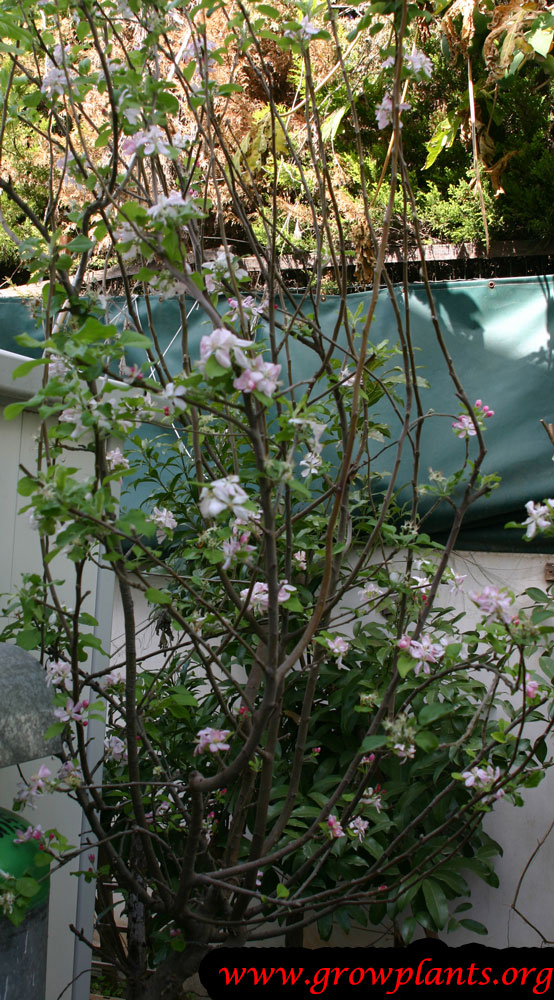
Overview: Low-chill deciduous apple tree reaching about 1.5-5 m (dwarf 1-2 m), grown for its edible fruit in mild-winter climates. Bears pink-and-white spring blossom before fruiting.
Quick Specifications
| Specification | Attribute |
|---|---|
| Plant Type / Life Cycle | Perennial (deciduous tree) |
| Foliage Type | Deciduous |
| Mature Size | 1.5-5 m (5-15 ft); dwarf 1-2 m |
| Growth Rate | Moderate |
| Toxicity | Fruit edible; seeds contain cyanogenic compounds (do not eat in quantity) |
| Hardiness | USDA zones 6-11 (to zone 5 with care) |
Growth Form & Structure
- Height & Spread: 1.5-5 m in the ground (dwarf 1-2 m); can be kept small in a container.
- Growth Habit & Form: Rounded deciduous fruit tree, usually grafted.
- Lifespan & Maturity: Long-lived; begins bearing in about 2-3 years.
Anatomy & Physical Features
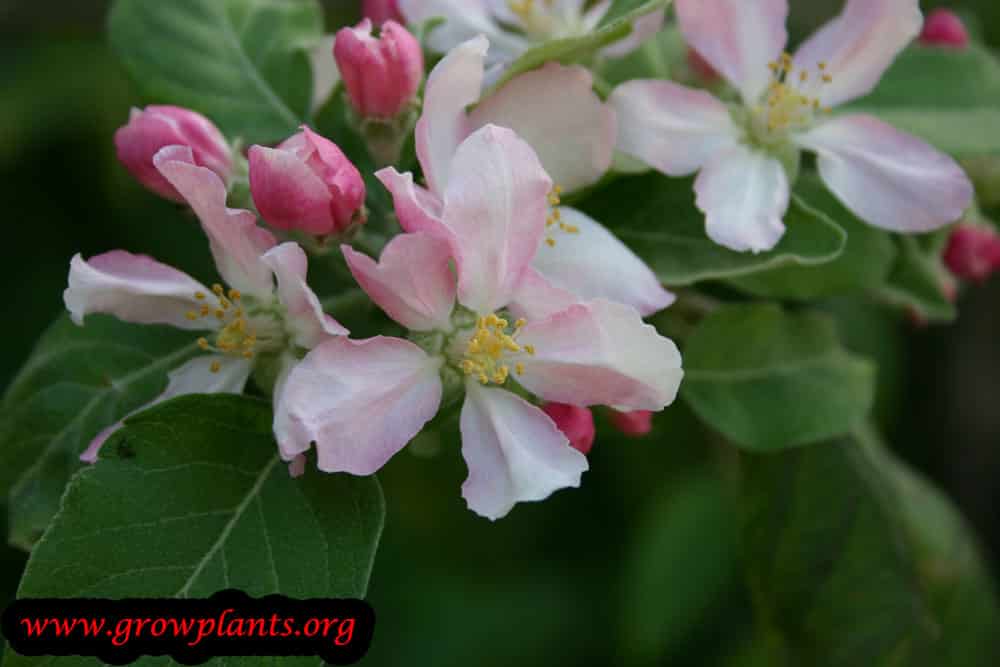
- Flower Characteristics: Pink, white, or pink-and-white five-petalled blossom, 2-4 cm.
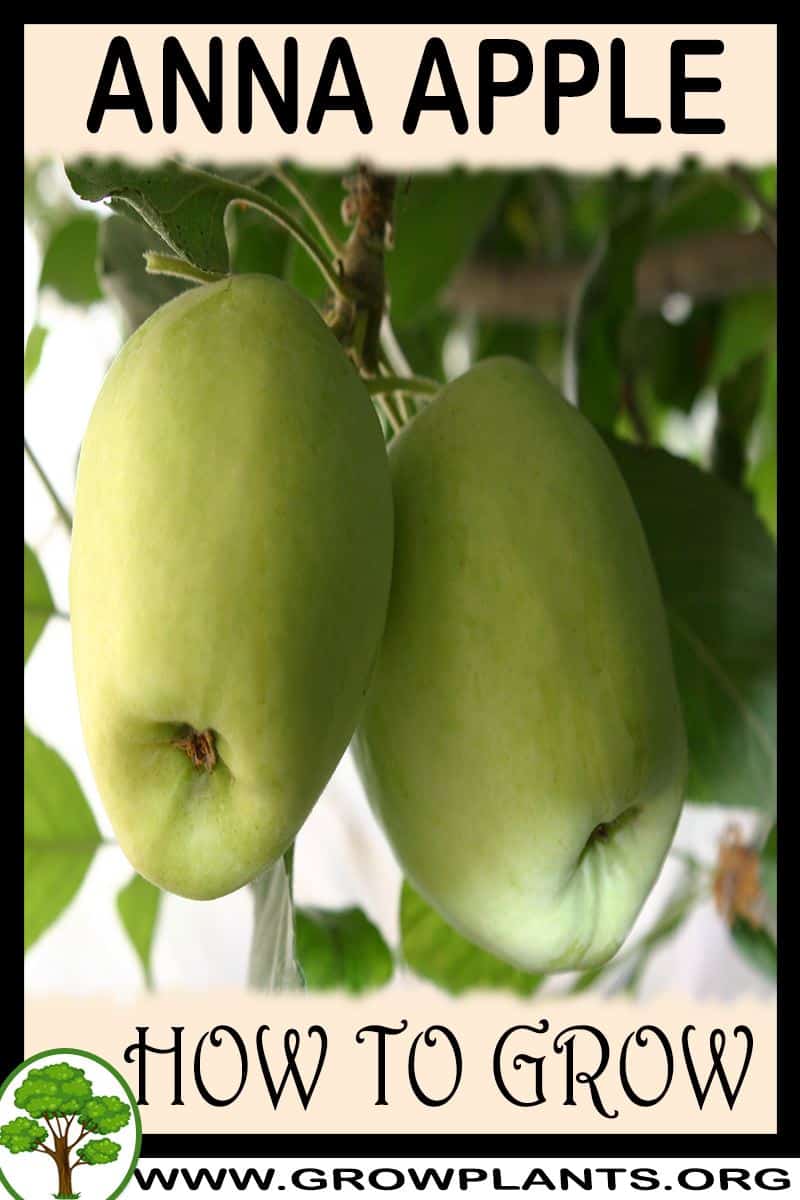
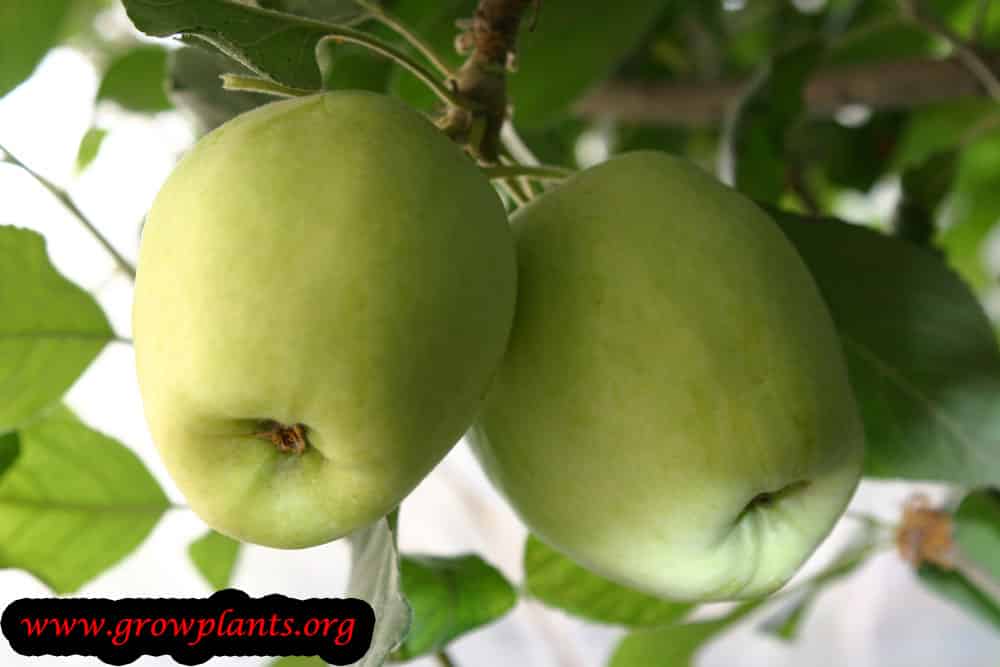
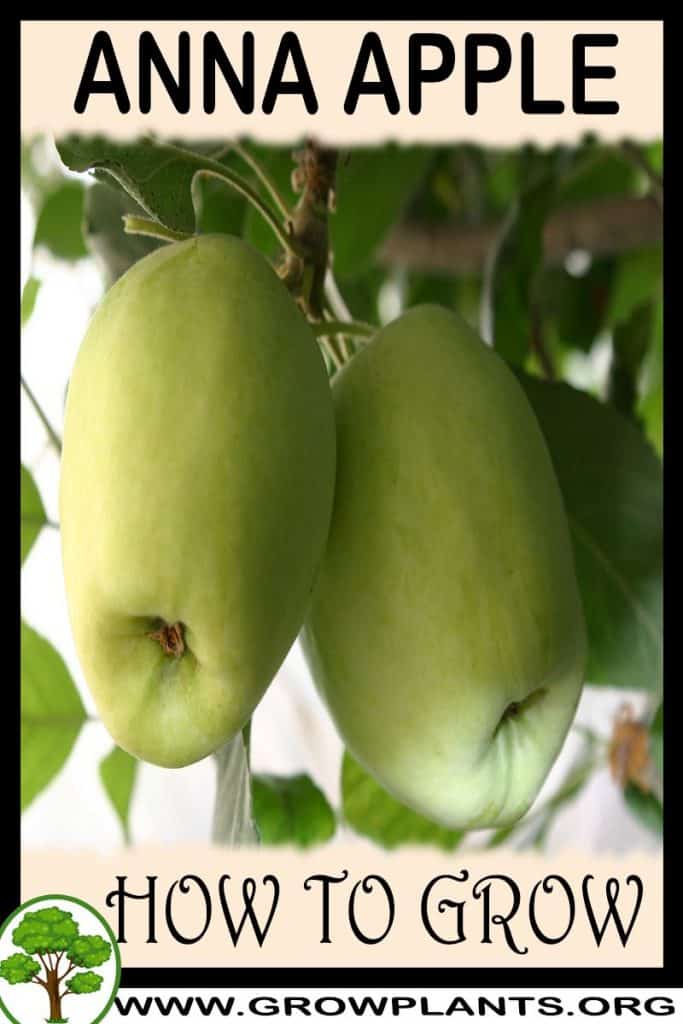
- Fruit Profile: Apple with white-green flesh and green, yellow or red skin, often bicoloured.
Primary Uses & Landscape Value
- Edible Uses: Fruit eaten raw, baked, in cakes or juiced.
- Functional & Ornamental Roles: Low-chill fruit tree for mild-winter gardens; also ornamental in blossom.
Care Guide: Planting, Soil & Watering
Overview: Anna apple (Malus domestica ‘Anna’) is a low-chill, moderate-growing deciduous fruit tree (zones 6–11) for full sun to part shade. It wants a deep, fertile, well-drained soil and moderate to generous watering, especially while the fruit is developing.
Quick Care Requirements
| Requirement | Ideal Condition |
|---|---|
| Planting Season | Winter to early spring |
| Growth Rate | Moderate |
| Soil Type | Deep, fertile, well-drained loam |
| Water Need | Moderate to high |
Planting & Establishment
- Best Planting Season: From winter to early spring (planting is possible in summer but less advised); set bare-root trees in during winter to early spring, as later planting risks loss.
- How to Plant:
- Hole Preparation: Dig a hole about the depth of the root ball and twice as wide; with a bare-root tree, trim any damaged roots and prune the top back above the graft union.
- Soil Amendments: Mix organic matter, humus and dead leaves through the backfill soil to enrich it and improve structure.
- Planting Depth: Set the tree so the graft union sits clearly above the soil line, and keep the root collar level with the surface.
- Growth Speed & Expectations: A moderate grower that typically begins fruiting about 2–3 years after planting.
Soil, Watering & Drainage Care
- Soil Mix & Drainage Needs: A deep, fertile, free-draining loam is ideal; avoid waterlogged ground. In containers keep the tree small, use free-draining peat-based mix with drainage material in the base, and let any collected water drain away the same day.
- Watering Schedule & Technique:
- Young / Newly Planted: Keep the soil consistently moist while the plant establishes, watering whenever the surface begins to dry.
- Established: Water deeply and regularly, keeping the soil evenly moist through fruiting; let the surface dry slightly between waterings.
- Seasonal Adjustments: Reduce watering in winter and increase noticeably through summer heat and fruit set.
Climate, Light & Hardiness
The Anna apple is a low-chill apple cultivar bred for mild-winter climates, growing successfully in Mediterranean, subtropical, and even artificially chilled tropical conditions. It needs full sun to half shade and tolerates only a modest amount of winter cold.
Quick Climate Specifications
| Climate Zones | Mediterranean, subtropical, temperate |
|---|---|
| USDA Hardiness Zones | 6–11, and zone 5 with the right care |
| Frost Tolerance | High (dormant tree); flowers more frost-sensitive |
| Light Conditions | Full Sun / Half Shade |
Sunlight & Light Exposure
Optimal Light Setup
Full sun is ideal for the strongest growth and fruiting; the tree also tolerates half shade, though with somewhat reduced vigor and yield.
Shade & Heat Management
Because Anna apple is adapted to mild, warm-winter climates, it copes well with hot summer sun without extra shading.
Temperature Extremes & Hardiness
USDA Hardiness & Regional Limits
Anna apple is rated for USDA zones 6–11, and can be grown with attentive care even in zone 5. This unusually broad range reflects the cultivar's low chilling need, which lets it fruit in much warmer areas than most apples, while it still tolerates real winter cold where zones run colder.
Cold Damage & Winter Protection
If the tree is attacked or stressed going into winter, clear fallen leaves and fruit from the ground and prune out infected branches to help it recover through the cold season.
Frost Sensitivity
Spring blossoms are more vulnerable to a late frost than the dormant wood, which can reduce that year's fruit set even on an otherwise hardy tree.
Extreme Heat Tolerance
In climates without a true cold winter, artificial chilling can be used to satisfy the tree's minimal dormancy needs, underlining how well this cultivar tolerates heat and mild winters compared with standard apples.
Chilling Requirement
Anna apple needs only a little cold winter to set fruit, and can even be grown in tropical climates with artificial cold treatment – a notably lower chilling requirement than most apple cultivars.
Wind, Humidity & Microclimate
Microclimate Recommendations
In borderline-cold sites, a sheltered, sun-facing spot helps protect spring blossom from late frosts while still meeting the tree's modest winter chill needs.
Growing in Pots, Balconies & Indoors
Anna apple is a full-size deciduous fruit tree, not a houseplant – indoors it never gets the light or the winter chill it needs. It does, however, grow well in a large pot on a patio or balcony as long as it is kept small and potted up in stages.
Quick Details
- Container Size: Start about 20-50%% larger than the root ball and pot up in stages (see the grower’s tip)
- Indoor Suitability: Not a houseplant; grow it outdoors and keep it small in a pot
- Best Spot: Full sun to half shade – a bright, open balcony or patio
- Soil & Drainage: Free-draining peat-based mix with plenty of drainage holes and coarse grit at the base
- Watering in Pots: Average to generous; pots dry fast, so check often, but never leave it standing in water
Indoors & On the Windowsill
- Not a houseplant: The grower does not grow Anna apple indoors – it needs full outdoor light and, being deciduous, a cold winter dormancy to fruit well.
- Cold is a friend, not an enemy: Unlike tender plants, this one does not need bringing inside for winter; the pot simply stays outdoors through its dormant, leafless season.
- Windowsill reality: Even the sunniest sill is too dim and too warm to crop this tree, so treat it strictly as an outdoor container plant.
On a Balcony or Patio
- Light & wind: Give it the sunniest, most open spot. On an exposed balcony, stake the young stem and shelter it from strong wind while it establishes.
- Reflected heat & drying: Walls and paving throw back heat, so pots dry quickly in warm weather – check moisture daily and water before the mix dries out.
- Weight & runoff: A large soil-filled pot is heavy and sheds water when watered, so set it where drainage runoff will not be a nuisance.
Choosing the Pot, Soil & Long-Term Care
- Pot & drainage: A pot with strong drainage holes is essential; skip a permanently full water saucer to avoid root rot, and empty any tray the same day it collects water. The grower adds a layer of lava grit or similar coarse material at the base for extra drainage.
- Potting mix: A free-draining peat-based mix; use a free-draining, aerated mix – peat or coir with perlite or vermiculite and some organic matter.
- Feeding: Potted plants exhaust their soil faster than those in the ground, so feed a little more often as nutrients leach out with watering.
- Refreshing the soil: Once the tree is large, do not repot into ever-bigger pots – instead swap out part of the tired soil every couple of years and lightly trim the roots to keep it healthy.
Grower’s Container Tip
- Grow the pot up with the tree: Start in a container only about 20-50%% larger than the root ball (the bigger the plant, the smaller that margin). Each time the roots fill it, move up one size, and repeat until it reaches the size you want. The grower prefers this staged method because it keeps the soil fresh and healthy and makes feeding and watering more efficient than starting a small tree in a huge pot.
- Keep it small: A grafted dwarf cultivar makes the whole staged-pot method far easier to manage.
Fertilizing & Feeding
As a low-chill apple cultivar, Anna still follows the general apple feeding pattern: nitrogen-forward while the canopy is developing, then a balanced, more potassium-aware feed once the tree is bearing fruit reliably.
Quick Fertilizing Specs
| Feeding Level | Moderate feeder |
|---|---|
| Main Nutrient Priority | Nitrogen-forward while the tree is young and building its canopy, shifting to a balanced, potassium-aware feed once it begins bearing |
| Best Feeding Period | Spring through the active growing season |
| Organic Options | Compost, aged manure, or mulch worked into the root zone as a complement to or substitute for granular feeding |
| Soil pH | Tolerates a range of soils but does best where soil is slightly acidic to near neutral |
| Reduce/Stop Feeding | Taper off feeding as the tree heads into winter dormancy so late growth has time to harden |
Feeding by Growth Stage
Newly Planted or Freshly Grafted Tree
Help a newly planted bare-root or grafted Anna Apple settle in and establish new roots before pushing top growth.
| Nutrient direction | Prioritize organic matter worked into the planting hole over fertilizer; a freshly grafted tree needs its roots and graft union to establish before it can make good use of feeding. |
|---|---|
| Timing | The first growing season after planting, especially for bare-root trees planted while dormant. |
| Frequency | Feeding is rarely needed in the first season; organic matter mixed in at planting usually carries the tree while it establishes. |
| Fertilizer types | Well-rotted compost or aged manure mixed into the backfill soil at planting, A light, diluted balanced feed only if the planting site soil is notably poor |
| Precautions | Keep any fertilizer away from direct contact with bare roots and the graft union, since both are easily burned by concentrated fertilizer salts while still establishing. |
Young, Pre-Bearing Tree
Support vigorous canopy and scaffold branch growth in the years before the tree begins to bear fruit.
| Nutrient direction | A nitrogen-forward, complete fruit-tree fertilizer supports the leafy, structural growth a young apple needs before it starts fruiting. |
|---|---|
| Timing | Spring through the active growing season, in the tree’s first few years. |
| Frequency | Several light feedings spread across the growing season suit a young, actively growing tree better than one heavy application. |
| Fertilizer types | A nitrogen-forward complete fruit-tree fertilizer, Composted organic matter as a supplement or lighter alternative |
| Routine trace nutrients | iron, manganese, zinc |
| Precautions | Keep fertilizer off the trunk and graft union, and ease off late-season feeding so new growth can harden before cool weather. |
Established Tree Approaching Bearing Age
Carry the tree through the stretch between structural establishment and its first meaningful fruit set.
| Nutrient direction | A balanced, complete fruit-tree fertilizer suits a tree that is no longer purely vegetative but not yet a heavy bearer. |
|---|---|
| Timing | Spring into early summer, as the tree matures toward its first significant crops. |
| Frequency | Moderate, evenly spaced feeding through the growing season is usually enough at this stage. |
| Fertilizer types | A balanced, complete fruit-tree fertilizer, Organic matter such as compost or aged manure worked into the root zone |
| Routine trace nutrients | iron, manganese, zinc |
| Precautions | Avoid pushing heavy nitrogen once the tree starts setting its first fruit, since excess nitrogen favors leafy growth over fruiting. |
Mature, Fruit-Bearing Tree
Support flowering, fruit set, and fruit development on a tree that is regularly bearing crops of apples.
| Nutrient direction | A balanced feed with a potassium-aware lean supports flowering and fruit development better than a nitrogen-heavy one, which can favor leafy growth over fruit. |
|---|---|
| Timing | From spring bloom through fruit development, tapering off as harvest approaches. |
| Frequency | Moderate feeding timed to bloom and early fruit development is usually sufficient for a bearing tree. |
| Fertilizer types | A balanced to potassium-leaning complete fruit-tree fertilizer, Compost or mulch renewed around the root zone each year |
| Routine trace nutrients | iron, manganese, zinc |
| Precautions | Net or otherwise protect fruit against fruit fly rather than relying on fertilizer to fix fruit-quality issues, and avoid heavy feeding right before harvest. |
Nutrient Deficiency Signs & Corrections
New leaves turn yellow between green veins, most visible on the newest growth.
| Possible causes | Iron chlorosis from alkaline or compacted soil limiting uptake, Waterlogged roots reducing nutrient uptake, General nitrogen deficiency in poor soil, Root or graft-union stress near the base |
|---|---|
| Appears first on | Newest leaves first |
| What to check | Soil pH and drainage around the root zone, Recent watering and any waterlogging, Whether older leaves are also affected, Condition of the trunk and graft union |
| Possible correction | Improve drainage and correct soil pH if it is markedly alkaline; apply a chelated iron product per its label if chlorosis is confirmed. |
Overall pale green to yellow foliage and noticeably slower shoot growth across the tree.
| Possible causes | General nitrogen deficiency in lean or leached soil, Root competition from turf or weeds around the base, Waterlogged or compacted soil limiting root function, Insufficient feeding for a young, actively growing tree |
|---|---|
| Appears first on | Older leaves first, spreading toward the whole canopy if uncorrected |
| What to check | Recent feeding history, Weed or turf competition at the base, Soil drainage and compaction, Overall shoot growth compared with past seasons |
| Possible correction | Clear competing turf or weeds from the root zone and resume nitrogen-forward feeding appropriate to the tree’s age. |
Leaf margins scorch and turn brown on older leaves, and fruit may size unevenly.
| Possible causes | Potassium deficiency, especially on a heavily bearing tree, Drought stress mimicking scorch symptoms, Excess nitrogen relative to other nutrients, Salt buildup from over-fertilizing |
|---|---|
| Appears first on | Margins of older leaves |
| What to check | Whether scorch tracks with a heavy fruit crop, Recent watering consistency, Fertilizer history and balance, Salt buildup in the soil |
| Possible correction | Shift toward a more balanced or potassium-aware fertilizer, especially on a tree carrying a heavy crop, and flush the soil if salts have built up. |
Fruit set is poor, or fruit develops corky brown patches or cracking as it matures.
| Possible causes | Boron deficiency affecting pollen-tube growth and fruit development, Poor pollination weather during bloom, General nutrient imbalance during fruit development, Water stress during fruit sizing |
|---|---|
| Appears first on | Developing fruit, and less visibly at bloom |
| What to check | Fruit for corky patches or cracking, Pollination activity and weather during bloom, Overall tree nutrient and watering history |
| Possible correction | Confirm boron deficiency before treating, since the margin between deficiency and toxicity is narrow, and apply a boron product only per its label if confirmed. |
Pruning, Training & Seasonal Maintenance
Anna is a low-chill apple grown as a small deciduous tree that is pruned to a permanent framework and a renewable system of fruiting spurs. It fruits mainly on spurs borne on two-year-old and older wood, with some bearing near one-year shoot tips, so the goal is to build a sound leader-and-scaffold structure, keep light reaching the spurs, and thin excess buds for fruit size. The main structural work is done while the tree is dormant and leafless (late autumn to early winter here), with lighter thinning and fruit or bud thinning through the growing season.
Pruning & the Edible Harvest
The edible crop is the apple, borne on spurs on two-year-old and older wood. Pruning works for the harvest by keeping light on the spurs, renewing exhausted spur systems, and holding the tree low enough to pick — not by heading it hard, which triggers unproductive watersprouts and delays cropping. Thinning blossom or young fruit trades quantity for size and helps prevent biennial bearing.
Quick Pruning & Maintenance Specs
| Pruning Tolerance | Moderate to High (structural dormant pruning is expected) |
| Primary Pruning Window | Dormant (late autumn–winter, leafless) |
| Secondary Maintenance Window | Summer — thin watersprouts, fruit and crowded shoots |
| Typical Frequency | Once a year (dormant) plus summer touch-ups |
| Main Objective | Strong leader framework and productive, well-lit spurs |
| Young Plant Priority | Establish a central or modified leader with tiered scaffolds |
| Mature Plant Priority | Renew spurs, thin crowding, contain height |
| Best Tool Type | Bypass secateurs, loppers, pruning saw |
| Avoid Heavy Pruning During | Bloom, active fireblight infection, hard-frost spells |
Pruning by Plant Age & Size
Newly Established
A bare-root Anna is usually headed at planting to balance the top against root loss and to force low scaffolds; on a containerised tree remove only damaged wood in the first season.
Young / Formative
Train a central or modified leader: select a central stem and tiers of 4–5 wide-angled scaffolds, spread narrow crotches, and head the leader lightly each dormant season to force the next tier. Remove competing co-leaders while the framework is still forming.
Mature / Established
Shift from building to renewal — thin crowded and older, unproductive spur systems, remove drooping shaded wood, and keep the top narrower than the bottom so lower spurs stay lit and cropping.
Seasonal Pruning Schedule
Dormant / Winter (main)
Objective: set the framework and renew spurs. Remove dead, weak and crossing wood, exhausted old spurs, and excess buds for fruit size. Do NOT remove healthy young spurs or the fruitful two-year wood. Response: balanced regrowth and larger fruit. Impact: light dormant thinning improves the crop, while heavy heading forces watersprouts and delays bearing.
Summer Canopy Management
Objective: control vigour and light. Remove upright watersprouts and thin congested new growth; summer cuts calm vigour rather than stimulating it, and expose ripening fruit to light.
Post-Harvest / Sanitary
Objective: reduce carry-over pests and disease. Collect and remove fallen leaves and mummified fruit and cut out infected wood, as the tree is very prone to pests and disease.
Flowering & Fruiting Wood
Anna fruits on spurs — short lateral shoots — on two-year-old and older wood, with some tip bearing. Spurs stay productive for several years, then need renewal. The pruning consequence: do not strip all one-year wood, because this year’s shoots become next years’ spur-bearing wood, and do not remove the fat fruit buds. Prune while dormant, before spring bud-break. Thinning blossom or young fruit (recommended in the first year) improves size and helps prevent biennial bearing.
Structural Pruning & Training
Maintain the leader-and-scaffold frame: widen narrow forks, remove crossing, rubbing and inward shoots, keep a pyramidal outline so lower branches stay lit, and renew tired spur systems.
Special Growth to Remove
The tree is grafted on a rootstock, so remove rootstock suckers below the graft union and any root or burr-knot suckers. Watersprouts are common after heavy cuts — remove most, but a well-placed one can be retained and tied down to replace old wood.
Container & Small-Space Pruning
Dwarf-rootstock apples suit large pots. Keep a compact leader, thin spurs, and summer-prune to restrain vigour; pair light canopy work with root pruning at repotting rather than hard topping.
Tools
Bypass secateurs for shoots and spurs, loppers for scaffolds to about 2–3 cm, and a pruning saw for larger limbs and renovation. Hedge shears are never appropriate for a spur-bearing tree.
Tool Hygiene & Disease Risk
Risk level: High-risk when fireblight is present. Erwinia amylovora is readily spread on tools, so disinfect between cuts when removing blighted, blackened, shepherd’s-crook shoots and cut well below the visible symptoms. At other times keep tools clean and sharp; the tree’s general susceptibility to pests and disease makes clean cuts important.
Cut Placement & Technique
Use thinning cuts over heading cuts; cut to an outward-facing bud to open the centre; cut just outside the branch collar; and remove big limbs in stages to avoid bark tear.
Heavy Pruning & Rejuvenation
An old apple tolerates renovation, but spread it over 2–3 winters — removing no more than about a quarter to a third of the canopy per year — because drastic dehorning triggers dense watersprouts and lost crop.
Post-Pruning Care
Do not force-feed after hard cuts, as they already stimulate growth. Watch for sunburn on newly exposed limbs in warm-climate sun, remove watersprouts in summer, and watch fresh wounds for fireblight during warm, wet spells.
Common Pruning Mistakes
- Heading the whole tree back each year, producing watersprouts and little fruit.
- Removing productive spurs or all one-year wood.
- Leaving narrow, included-bark forks that split under load.
- Pruning during warm, wet weather when fireblight is active, or leaving rootstock suckers.
When NOT to Prune
Do not prune during bloom, during active fireblight in warm wet weather, in hard frost, or on drought-stressed trees. Do not hard-prune a newly planted tree beyond the establishment heading cut.
Recommended Tools (by task)
- bypass_secateurs — spur renewal, shoot thinning and bud thinning.
- loppers — scaffold thinning and crowded 2–3 cm wood.
- pruning_saw — limb removal and staged renovation of old trees.
Pruning Troubleshooting
| Problem | Possible Cause | What to Check | Corrective Action |
| Vigorous watersprouts, little fruit | Over-heading in the dormant season | How much was headed vs thinned | Switch to thinning cuts; remove sprouts in summer; renew spurs gradually |
| Poor or biennial flowering | No blossom/fruit thinning, or excessive vigour | Crop load last year; nitrogen and pruning severity | Thin blossom/young fruit; reduce heavy pruning and feeding |
| Dying lower spurs, bare lower branches | Top too dense, shading the lower canopy | Canopy shape and light penetration | Keep the top narrower than the base; thin upper crowding |
| Blackened shoots with dieback | Fireblight (not a pruning fault) | Shepherd’s-crook shoots, oozing cankers | Cut well below symptoms, disinfect between cuts, destroy prunings |
Propagation Guide
‘Anna’ is a named apple cultivar, so it is reproduced by budding or grafting onto a clonal rootstock — seedlings do not come true and the rootstock sets the tree’s size and vigour. Cuttings and seed are possible but secondary (the fruiting cultivar roots poorly and seed is variable), so with a rootstock to hand the practical difficulty is Moderate.
Quick Propagation Specs
| Best Propagation Method | Budding or grafting onto a clonal apple rootstock |
| Alternative Methods | Hardwood cuttings (unreliable for the fruiting cultivar); seed (for rootstocks or breeding only) |
| Propagation Difficulty | Moderate |
| Seed True-to-Type | No — apple seedlings are highly variable and will not reproduce ‘Anna’ |
| Vegetative True-to-Type | Yes (buds and grafts keep the cultivar) |
| Best Propagation Season | Late winter to early spring for bench grafting and hardwood cuttings; late summer for budding |
Growing from Seed
True-to-Type Note
Apple is strongly out-crossing, so seedlings differ from the parent and from each other; ‘Anna’ cannot be reproduced from its own pips. Seed is used only to raise rootstocks or for breeding new varieties.
Dormancy & Pre-Sowing Treatment
Apple seed is dormant and needs a period of cold, moist stratification before it will germinate reliably; sow the stratified seed in spring.
Stem Cuttings
Cutting Type & Timing
Take hardwood cuttings at the end of winter, or in spring before growth begins, cutting with a sterile knife. Note that most fruiting apple cultivars root poorly from cuttings, so this method is unreliable for ‘Anna’ itself and is more dependable for rootstock clones.
Rooting Setup
Keep the medium moist and the air humid while the cutting roots.
Rooting Hormone
A rooting hormone is beneficial and generally recommended for these woody cuttings.
Grafting & Budding
Why Grafting Is Used
Grafting or budding is the standard method: it reproduces ‘Anna’ exactly and gives better, more consistent fruit than a seedling, while the rootstock controls tree size and hardiness.
Preferred Methods
Whip-and-tongue or bench grafting in late winter onto a dormant rootstock, or T-budding / chip-budding in late summer, are the usual choices.
Rootstock
Work the cultivar onto a clonal apple rootstock chosen for the wanted final size (dwarfing to vigorous). When planting a bare-root grafted tree, trim part of the roots and keep all pruning above the graft union so the rootstock is not overgrown.
Scion Selection
Take scion wood of ‘Anna’ from healthy, dormant one-year-old shoots.
Bloom & Flower Guide
Quick Details
- Bloom Season: Spring
- Time to First Bloom: Anna is precocious – grafted trees often flower within the first year or two
- Flower Appearance: Five-petalled flowers about 2-4 cm, in pink, white, or pink-and-white
- Edibility: Grown for its fruit; the blossoms are ornamental and not eaten
Detailed Blooming Overview
Anna is a low-chill apple prized for cropping in mild climates, and it comes into bloom readily. In spring it opens the classic apple blossom – deeper pink in bud, opening to paler pink or white – which the bees work for pollination.
Flower Characteristics
- Five-petalled flowers, about 2-4 cm across
- Colors range through pink, white, and pink-and-white
- Open in spring in loose clusters
Bloom Care & Thinning
- Thinning: in the first year, thinning the bloom lets the young tree establish rather than exhaust itself on fruit.
- Pollination: pollinated by bees; a compatible apple flowering nearby improves fruit set.
Bloom Health & Protection
- Fire blight (Erwinia amylovora): in warm, wet weather it can enter through the open blossoms and wilt flowers and shoot tips into a shepherd’s-crook shape. A copper-based spray around bloom and promptly pruning out infected wood well below the damage help.
Fruit & Uses
The Anna apple is grown for its edible fruit, eaten fresh straight from the tree. The apples are also baked, used in cakes and pressed for juice.
Quick Edible Specs
| Edible Parts | Fruit |
|---|---|
| Main Use(s) | Culinary – eaten raw, baked, in cakes and juiced |
| Eaten Raw or Cooked | Both – eaten fresh or cooked |
| Preparation Required | None to eat fresh; the core is removed (pips are not eaten) |
| Harvest Season | Summer |
| Time to First Harvest | A few years from planting (see Propagation) |
| Safety/Toxicity Caveat | Flesh and skin are eaten; the core and seeds are discarded |
Fruit
The flesh is white-green and the skin ripens in a mix of colours – often green, yellow and red together on the one apple. Anna is a low-chill, early variety, so it ripens in summer. Protect ripening fruit from birds and fruit fly, for example with netting (see Pests & Diseases).
Preparation, Uses & Safety
Ripe apples are eaten fresh out of hand and also baked, cooked into cakes and pressed for juice. Only the flesh and skin are eaten; the core and seeds are discarded. The fruit is crisp when just ripe and softens fairly quickly, so it is best eaten or used soon after picking.
Pests, Diseases & Troubleshooting
Overview: Apples are Rosaceae fruit trees with a well-known pest and disease complex: codling moth and aphids attack the fruit and shoots, while apple scab, powdery mildew and fire blight are the major diseases, backed by fruit-set and calcium disorders like bitter pit. An integrated, sanitation-first programme – resistant varieties, clean-up of fallen leaves and fruit, and well-timed dormant oil – keeps trees productive with minimal spraying.
Quick Troubleshooting Overview
| Issue / Pest | Main Symptom | Primary Solution |
|---|---|---|
| Codling moth | ‘Worm’ tunnels and frass in fruit; early drop | Sanitation; pheromone traps; trunk bands; bagging |
| Aphids (incl. woolly) | Curled shoots / white cottony wood galls | Dormant oil; predators; prune out woolly colonies |
| Spider mites | Stippling, bronzing, webbing in heat | Conserve predators; hose; horticultural oil |
| Apple scab | Olive-black leaf spots; scabby cracked fruit | Resistant cultivars; rake leaves; protectant fungicide |
| Fire blight | Blackened ‘shepherd’s-crook’ shoots; cankers | Resistant cultivars; prune out; copper at bloom |
| Powdery mildew / rust | White coating or orange rust spots | Prune tips; resistant cultivars; sulfur |
Common Pests & Management
- Codling moth (Cydia pomonella):
- Symptoms: The classic ‘worm in the apple’: larvae bore into the fruit from the calyx or side, tunnelling to the core and leaving frass-filled exit holes, causing premature drop and inedible fruit.
- Prevention & Control: Sanitation is key – remove fallen and infested fruit promptly to break the cycle, monitor and time controls with pheromone traps, use cardboard trunk bands and fruit bagging, encourage predators and parasitic wasps, and consider mating-disruption or codling-moth granulovirus where pressure is high.
- Aphids (incl. woolly apple aphid) (Aphis pomi / Eriosoma lanigerum):
- Symptoms: Green apple aphids curl and distort new shoots with honeydew, while woolly apple aphid forms white cottony masses on wood, wounds and roots, causing galls and weakening the tree.
- Prevention & Control: Hose off green aphids and encourage ladybirds, lacewings, hoverflies and the parasitoid Aphelinus for the woolly form; prune out infested wood, apply dormant oil for overwintering eggs, and use insecticidal soap only where needed.
- Spider mites (Panonychus ulmi / Tetranychus urticae):
- Symptoms: Fine stippling, bronzing and webbing on leaves in hot, dry, dusty conditions, reducing vigour and fruit quality.
- Prevention & Control: Conserve predatory mites (avoid broad-spectrum sprays), hose foliage, keep trees watered, and use horticultural oil and dormant oil for eggs; miticides only as a last resort.
- Apple maggot / fruit flies (Rhagoletis pomonella / Ceratitis capitata):
- Symptoms: Flies sting the fruit to lay eggs and maggots tunnel the flesh, leaving dimpled, pitted, prematurely rotting fruit.
- Prevention & Control: Hang red sphere or bait traps, collect and destroy dropped fruit, bag fruit where practical, and harvest promptly; sanitation is the backbone of control.
- Scale insects (San Jose scale) (Diaspidiotus perniciosus):
- Symptoms: Grey, encrusting scale on bark and fruit with red-haloed spots on fruit, weakening branches and downgrading fruit.
- Prevention & Control: Apply dormant/horticultural oil to smother overwintering scale, prune out heavily encrusted wood, and conserve parasitoid wasps and predatory beetles.
Diseases & Fungal Issues
- Apple scab (Venturia inaequalis):
- Symptoms: The number-one apple disease: olive-green to black velvety spots on leaves and scabby, cracked, corky lesions on fruit in cool, wet spring conditions, causing leaf drop and blemished fruit.
- Treatment & Management: Choose scab-resistant cultivars, rake up and destroy fallen leaves to remove the overwintering source, prune for an open airy canopy, avoid overhead watering, and apply protectant fungicide (sulfur or suitable products) from bud-break during wet weather where susceptible.
- Powdery mildew (Podosphaera leucotricha):
- Symptoms: White powdery coating on shoots, leaves and blossoms that stunts and distorts growth and russets fruit, favoured by warm humid conditions.
- Treatment & Management: Prune out silvered mildewed shoot tips in the dormant season, choose resistant cultivars, improve airflow, and apply sulfur or potassium-bicarbonate at first sign during the growing season.
- Fire blight (Erwinia amylovora):
- Symptoms: A serious bacterial disease: blossoms and shoot tips suddenly wilt, blacken and curl into a ‘shepherd’s crook’ as if scorched, with oozing cankers on wood; it can kill branches or whole trees.
- Treatment & Management: Choose resistant cultivars, avoid excess nitrogen and heavy summer pruning that force susceptible soft growth, prune out infected wood well below the canker in dry weather with sterilised tools, and use copper or approved bactericide at bloom where the disease is active.
- Cedar-apple & hawthorn rusts (Gymnosporangium spp.):
- Symptoms: Bright orange-yellow spots on leaves and fruit, sometimes with tube-like structures beneath, needing nearby juniper/cedar hosts to complete the cycle.
- Treatment & Management: Remove nearby alternate juniper hosts where feasible, choose resistant cultivars, rake up debris, and apply protectant fungicide in spring where the disease is a known problem.
- Canker & rots (Neonectria, Botryosphaeria, bitter rot):
- Symptoms: Sunken, cracked cankers on branches and dark rotting lesions on fruit, entering through wounds and pruning cuts.
- Treatment & Management: Prune out cankered wood well below the lesion with sterilised tools in dry weather, seal large cuts, remove mummified fruit, and keep trees vigorous and unstressed.
Growing Difficulties & Abiotic Problems
- Bitter pit (calcium disorder):
- Cause & Symptoms: Small sunken brown-flecked spots in the flesh and skin of the fruit, worst on large fruit from vigorous trees, caused by disrupted calcium uptake rather than any pest.
- Correction Strategy: Keep watering even (mulch to buffer moisture), avoid heavy nitrogen and over-pruning that push vigour, thin the crop, and apply calcium sprays through the growing season on prone varieties.
- Poor fruit set / June drop / biennial bearing:
- Cause & Symptoms: Blossom drops or a natural early fruit drop thins the crop, and heavy years alternate with light ones.
- Correction Strategy: Ensure a compatible pollinator variety nearby and protect pollinators and blossom from frost, thin fruit in heavy years to encourage regular annual bearing, and feed and water evenly.
- Sunscald & frost/split:
- Cause & Symptoms: Bark scald on exposed south-west trunks, frost damage to blossom, and fruit splitting after rain follows drought.
- Correction Strategy: Whitewash or shade young trunks against sunscald, site out of frost pockets, and water evenly to prevent the drought-then-flood cycle that splits fruit.
- Chlorosis on alkaline soil:
- Cause & Symptoms: Interveinal yellowing of leaves where high pH locks up iron.
- Correction Strategy: Test and adjust soil pH with organic matter and sulfur, and correct quickly with chelated iron.
What Helps – Products & Tools
An integrated toolkit works best: dormant/horticultural oil for overwintering aphids, mites and scale; pheromone and bait traps for codling moth and apple maggot; sulfur, potassium-bicarbonate or copper fungicides for scab, mildew and fire blight; and calcium sprays for bitter pit. Resistant varieties and diligent sanitation cut spraying dramatically.
Frequently Asked Questions
What is an Anna apple tree?
Anna is a low-chill apple cultivar that fruits reliably in mild, warm-winter regions, producing sweet green-to-red apples where standard apple varieties would fail to crop.
How do you care for an Anna apple tree?
Anna apple is a low-chill, moderate-growing deciduous fruit tree that does best in full sun to part shade, in deep, fertile, well-drained soil. Plant it from winter to early spring, and give it moderate to generous water: once established, water deeply and regularly, keeping the soil evenly moist through fruiting, with reduced watering in winter and noticeably more through summer heat and fruit set.
Does an Anna apple tree need a pollinator?
Anna’s blossom is pollinated by bees, and fruit set improves when a compatible apple variety is flowering nearby. Ensuring a compatible pollinator variety is close by and protecting pollinators and blossom from frost also helps the tree set a fuller crop.
How big does an Anna apple tree get?
In the ground, Anna apple reaches about 1.5-5 m in height and spread (dwarf plants stay to about 1-2 m), and it can also be kept small in a container. It’s long-lived and typically begins bearing fruit in about 2-3 years.
Can you grow a dwarf Anna apple tree in a container?
Yes. Anna apple is typically worked onto a clonal apple rootstock chosen for the wanted final size, from dwarfing to vigorous, and a grafted dwarf cultivar makes the staged-pot method much easier to manage. Dwarf-rootstock apples suit large pots well; keep a compact leader, thin the spurs, and summer-prune to restrain vigour, pairing light canopy work with root pruning at repotting rather than hard topping.