Plant Profile & Key Characteristics
Also known as: Mealycup sage, Mealy sage
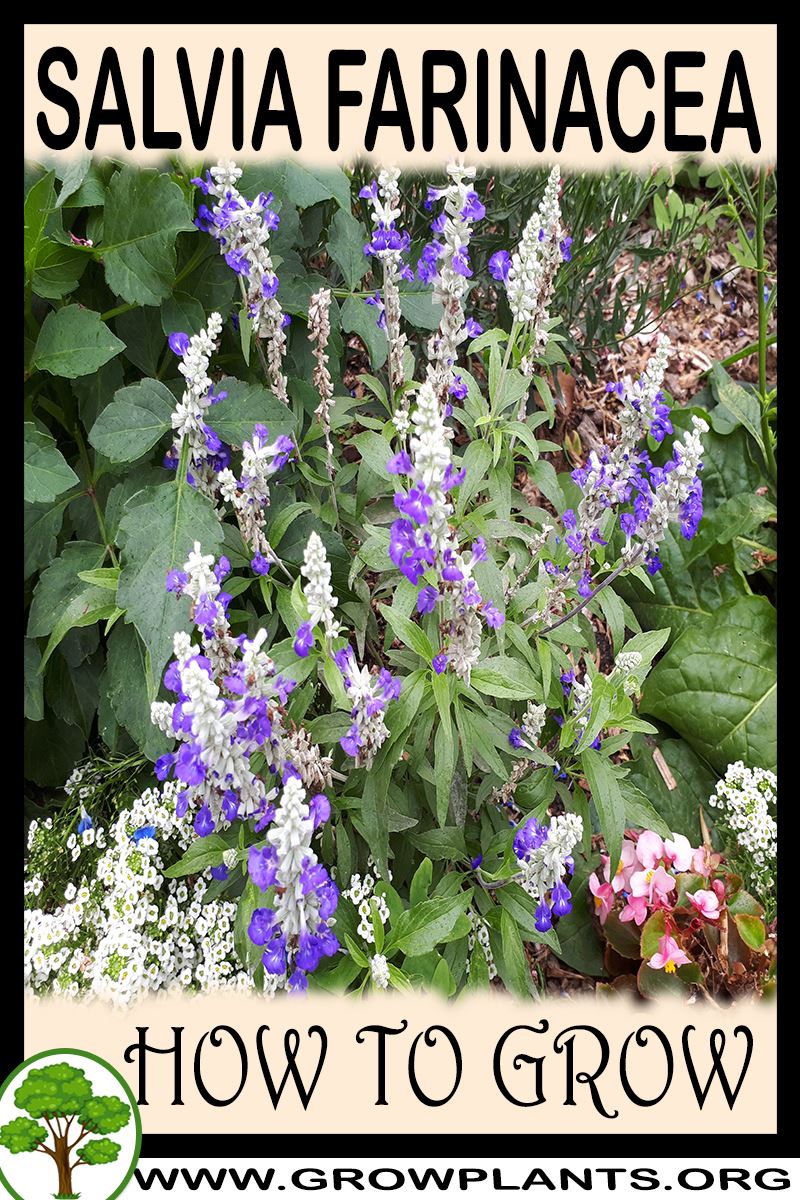
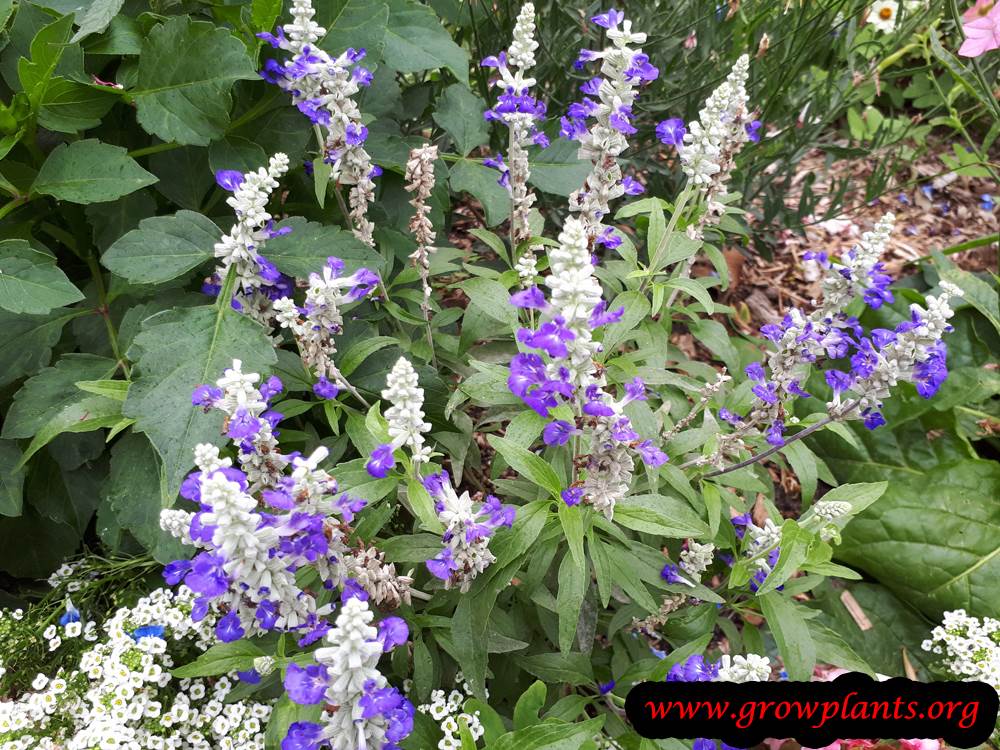
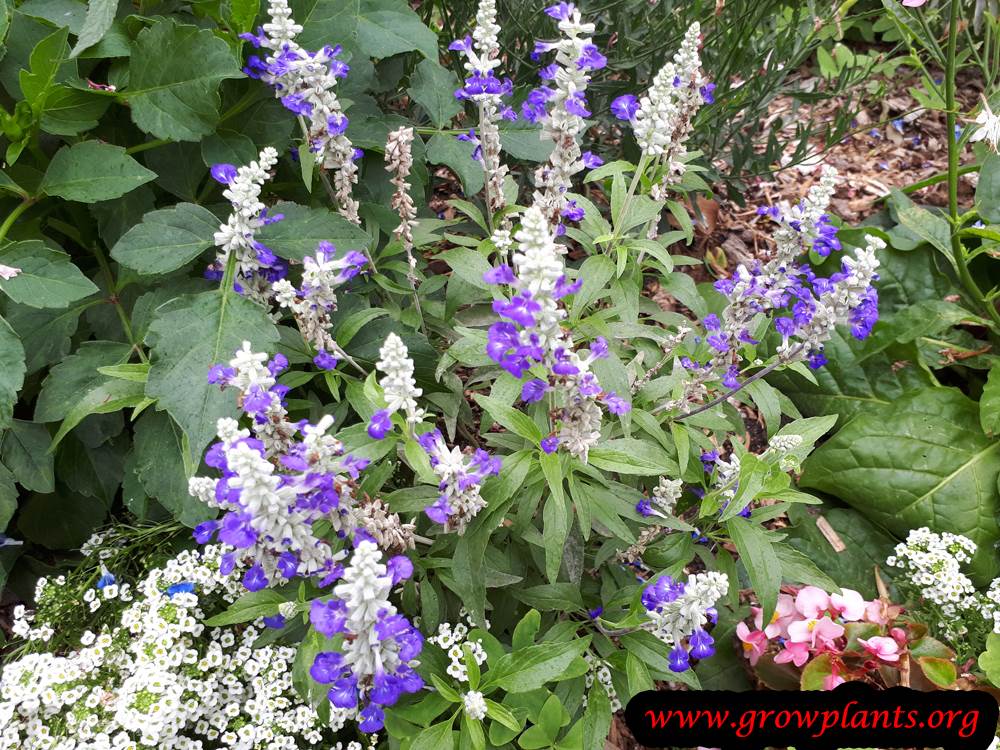
Overview: A bushy evergreen sub-shrub 40-90 cm (16-36 in) tall, grown as an ornamental (often as an annual) for its spikes of fragrant blue-purple flowers. It is a fast-growing, pollinator-friendly perennial.
Quick Specifications
| Specification | Attribute |
|---|---|
| Plant Type / Life Cycle | Perennial sub-shrub (grown as an annual in cold climates) |
| Foliage Type | Evergreen in frost-free climates |
| Mature Size | 40-90 cm (16-36 in) tall |
| Growth Rate | Moderate to fast |
| Hardiness | USDA zone 9+ (with the right overwinter care in cooler zones) |
Growth Form & Structure
- Height & Spread: A bushy plant 40-90 cm (16-36 in) tall in the ground; also grown in a 10-20 L (2.6-5.2 gal) container with free-draining soil.
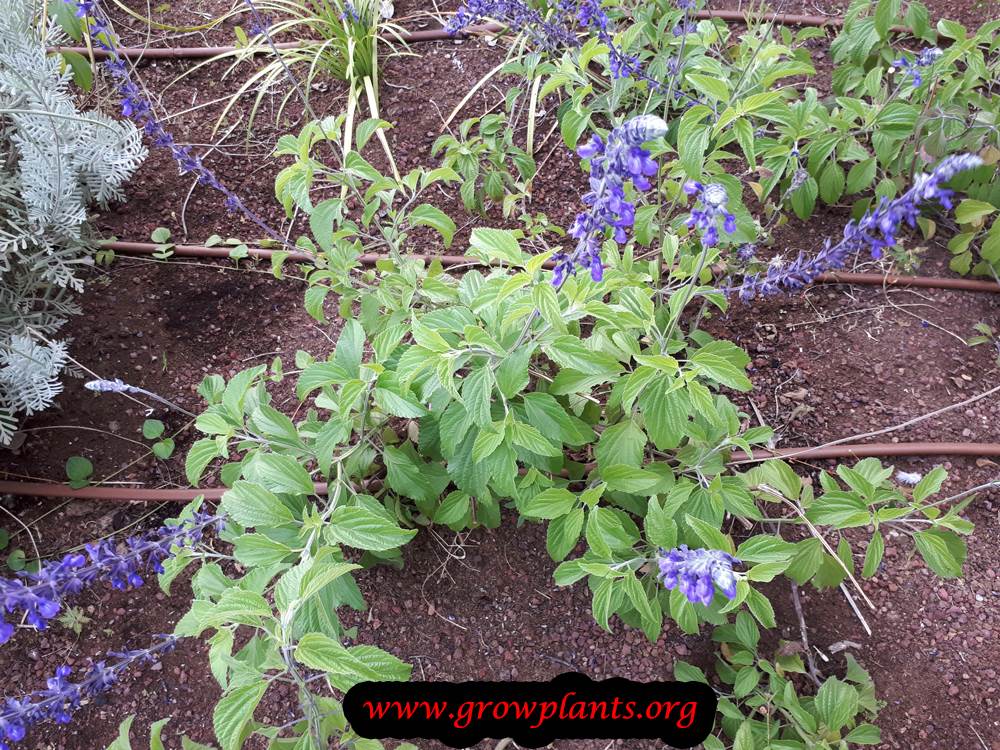
- Growth Habit & Form: Upright, clump-forming sub-shrub with a strong vertical accent from its many flower spikes; vigorous and can spread.
- Lifespan & Maturity: Reaches flowering size within a season and blooms over a long period; perennial where winters are mild.
Anatomy & Physical Features
- Leaves & Foliage: Green, elliptic, aromatic leaves.
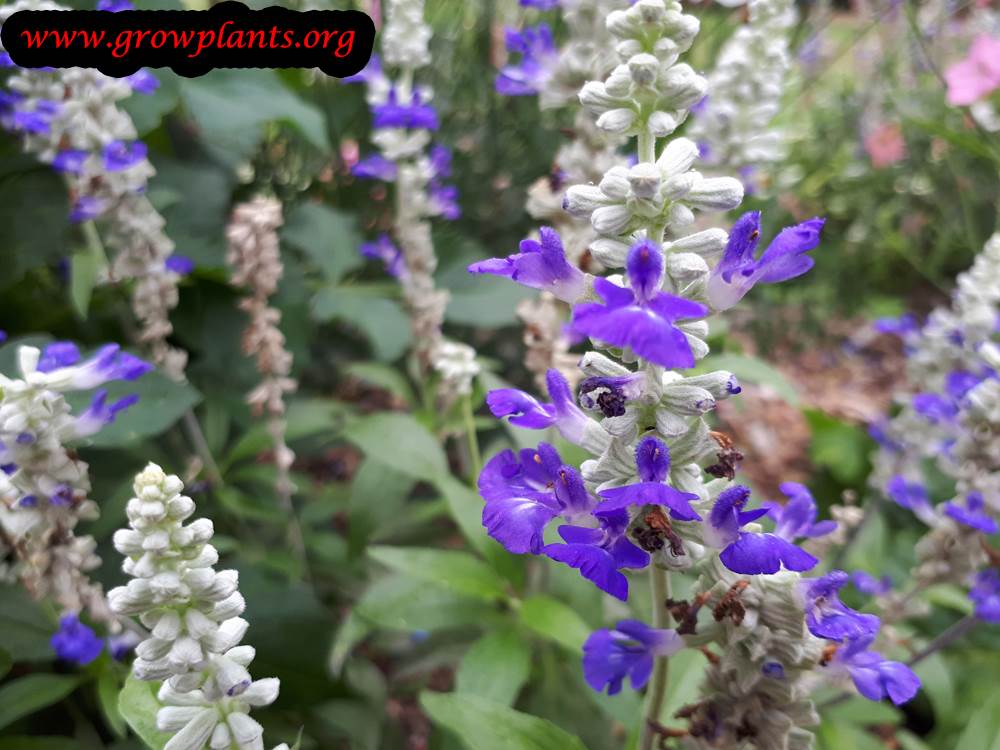
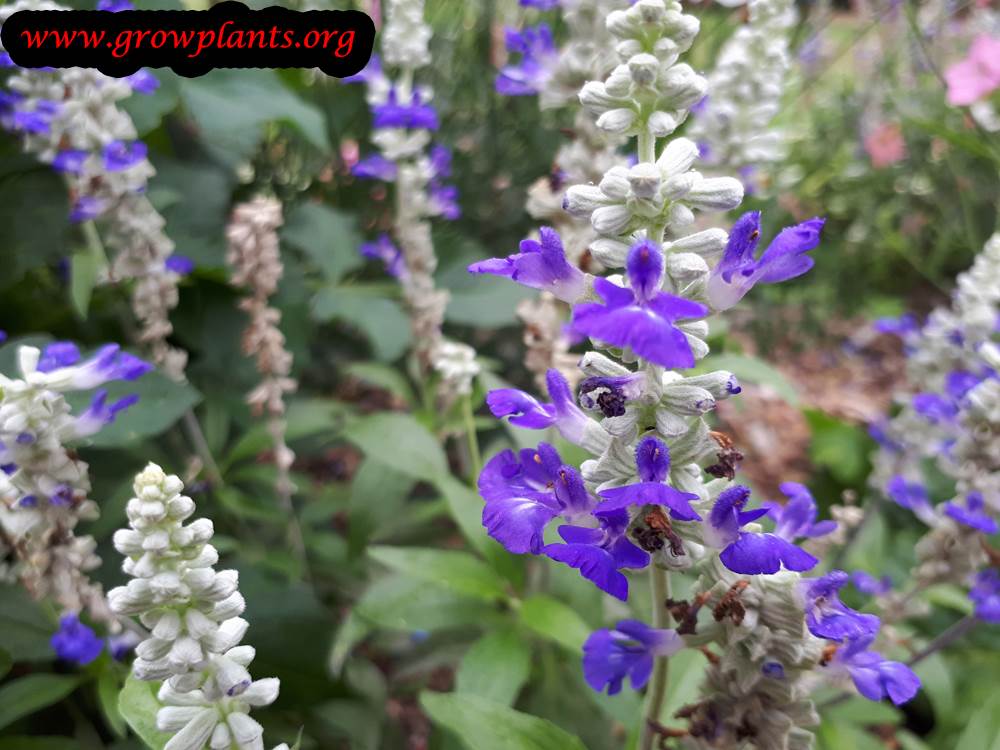
- Flower Characteristics: Small fragrant flowers in purple-blue, densely packed on mealy (“farinose”) upright spikes, very attractive to pollinators.
Primary Uses & Landscape Value
- Functional & Ornamental Roles: A bedding and border ornamental for vertical colour, a good cut flower, and a reliable pollinator plant for beds and containers.
Care Guide: Planting, Soil & Watering
Overview: Mealycup sage is an easy salvia for full sun to light shade that prefers richer, mulched, moisture-retentive but well-draining soil. It likes steady moderate moisture and benefits from a light annual feed.
Quick Care Requirements
| Requirement | Ideal Condition |
|---|---|
| Planting Season | Spring, summer or autumn (frost-free) |
| Growth Rate | Moderate to fast |
| Soil Type | Rich, moisture-retentive but well-draining soil |
| Water Need | Moderate — keep the soil lightly moist, letting the surface dry slightly between waterings |
Planting & Establishment
- Best Planting Season: Plant in spring, summer or autumn in frost-free zones; where grown as an annual, plant in spring after the last frost.
- How to Plant:
- Hole Preparation: Dig a planting hole roughly twice as wide as the root ball but no deeper, so the roots can spread into loosened soil.
- Soil Amendments: Work in plenty of compost or well-rotted organic matter to enrich the soil and help it hold moisture while still draining freely.
- Planting Depth: Set the plant at the same depth it grew in its pot, with the root collar level with the surface — never bury the stem, which invites rot.
- Growth Speed & Expectations: Expect a moderate to fast pace of growth, bulking up noticeably over the first warm season.
Soil, Watering & Drainage Care
- Soil Mix & Drainage Needs: Use rich, well-aerated soil that holds moisture yet drains freely, and mulch to keep the roots cool and damp; in pots use a quality potting mix with perlite so excess water can still escape.
- Watering Schedule & Technique:
- Young / Newly Planted: Keep the soil evenly moist after planting so the young roots never dry out while establishing.
- Established: Water deeply once or twice a week, letting the surface dry slightly between waterings, and adjust to rainfall.
- Seasonal Adjustments: Water more often in hot, dry spells and ease off in winter as growth slows.
Climate, Light & Hardiness
Mealycup sage is a fragrant flowering plant for tropical, Mediterranean, and subtropical climates, growing well in full sun to half shade. It is a true perennial only where winters stay mild, needs overwinter protection at the cooler edge of that range, and is grown as a colder-climate annual well outside it.
Quick Climate Specifications
| Climate Zones | Tropical, Mediterranean, or subtropical climates |
|---|---|
| USDA Hardiness Zones | 9 and warmer as a perennial; possible in zone 8 with overwinter care; commonly grown as an annual from zone 5 and warmer |
| Frost Tolerance | Low |
| Light Conditions | Full sun or half shade |
Sunlight & Light Exposure
Optimal Light Setup
Full sun suits it well; as temperatures climb above about 25°C (77°F), a half-shade position keeps growth more comfortable.
Shade & Heat Management
Site guidance recommends planting in full sun up to about 25°C (77°F), and half shade above that.
Temperature Extremes & Hardiness
USDA Hardiness & Regional Limits
Reliable as a true perennial in zone 9 and warmer; zone 8 is possible with dedicated overwinter care. From roughly zone 5 and warmer it is commonly grown as an annual, since freezing winters prevent year-round outdoor survival - a cold limit on perennial culture, not a sign it cannot grow as a genuine perennial where winters stay mild.
Cold Damage & Winter Protection
Site guidance recommends mulching over the base of the plant (wood chips or dead leaves) for winter protection at the cooler edge of its perennial range.
Frost Sensitivity
Frost-sensitive; freezing conditions are why it is grown as an annual outside its warmer perennial zones.
Wind, Humidity & Microclimate
Rainfall & Seasonal Moisture
Prefers consistently moist, rich soil with mulch rather than drought conditions; site guidance calls for average watering.
Microclimate Recommendations
A site with reliable moisture, mulch, and some afternoon shade in hot climates suits this species best; a mulched, sheltered base helps it through winter near its cold limit.
Growing in Pots, Balconies & Indoors
Salvia farinacea (mealycup sage) is not a houseplant, but the grower grows it well in containers – it is an excellent sunny balcony, patio or courtyard plant in a free-draining pot, flowering generously for pollinators.
Quick Details
- Container Size: 10-20 L (2.6-5.2 gal) (grower’s value)
- Indoor Suitability: Not an indoor plant – a sunny outdoor container plant
- Best Spot: Full sun to half shade
- Soil & Drainage: Well-ventilated, free-draining mix – potting mix, or peat with perlite/vermiculite
- Watering in Pots: Average – water must run straight out
Indoors & On the Windowsill
- Houseplant reality: Not a houseplant – indoors the light is too weak for good growth and flowering. A very sunny sill may hold it briefly, but it wants full outdoor light to flower well.
- Overwintering: Where winters are too cold for it outdoors, a key reason to pot it is to move the container into a bright, frost-free spot over the cold months and keep it on the dry side.
On a Balcony or Patio
- Light & wind: Give it the sunniest spot; it thrives in the reflected warmth of walls and paving. Pots on a balcony or patio dry fast – walls, railings and paving reflect heat – so check moisture often and water more in warm, windy spells. Remember a full pot is heavy and sheds run-off when watered.
- Drainage first: Make sure water runs straight out – salvias dislike sitting wet, especially in a pot.
Choosing the Pot, Soil & Long-Term Care
- Pot & drainage: A 10-20 L (2.6-5.2 gal) pot suits it. Give a free-draining, well-ventilated mix with plenty of holes so water runs straight out, and the grower prefers no drip tray under the pot. Every few years swap out all or part of the soil. Use a potting mix, or peat with perlite or vermiculite. Use a pot with strong drainage holes and skip a standing-water saucer so the roots never sit wet – that is the fastest route to root rot. Terracotta breathes and dries faster, while glazed or plastic pots hold moisture longer.
- Watering in pots: Average – let the mix dry a little between waterings; the grower prefers no drip tray.
- Feeding: Potted plants need feeding a little more often than those in the ground, as regular watering steadily leaches nutrients away – feed lightly through the growing season.
- Repotting: Grown on as a perennial, replace all or part of the soil every few years to keep it fresh and free-draining.
Fertilizing & Feeding
Mealycup sage is a light feeder – the source growing notes for this plant describe minimal feeding as sufficient, and modest feeding on rich soil is enough to support its purple-blue summer bloom.
Quick Fertilizing Specs
| Main Nutrient Priority | A balanced feed with adequate nitrogen supports steady growth and bloom better than a high-phosphorus bloom product. |
|---|---|
| Best Feeding Period | Spring as new growth begins, tapering off once the summer bloom is underway on already-rich soil. |
| Organic Options | Mulch and compost worked into the bed suit this plant’s preference for moist, rich soil and can reduce how much supplemental feeding is needed. |
| Soil pH | Grows well in moist, rich soil and is not particular about soil acidity within a normal garden range. |
| Reduce/Stop Feeding | Minimal feeding is typically enough for this plant on rich soil; hold off entirely once the plant is mulched over for winter or once bloom finishes for the year. |
Feeding by Growth Stage
Spring growth flush
Support new growth as the plant comes out of winter or as fresh plants establish, ahead of the summer bloom period.
| Nutrient direction | Light, balanced feeding to support steady spring growth. |
|---|---|
| Timing | Spring, as new growth resumes or new plants are getting established. |
| Frequency | A light feeding in spring is typically all this plant needs, especially where the soil is already rich. |
| Fertilizer types | A balanced, general-purpose fertilizer for flowering perennials, used sparingly |
| Precautions | Avoid repeated heavy feeding on soil that is already rich and well-mulched, since this plant rarely needs much supplemental fertilizer. |
Summer bloom
Support the purple-blue summer flowering this plant is grown for, without overfeeding an already light-feeding plant.
| Nutrient direction | Balanced feeding with adequate nitrogen; a high-phosphorus “bloom booster” is not needed for good flowering. |
|---|---|
| Timing | Summer, during the main bloom period. |
| Frequency | Minimal feeding is usually enough through the bloom period on soil that already carries mulch and organic matter. |
| Fertilizer types | A balanced, general-purpose fertilizer for flowering plants, applied lightly if the soil is not already rich |
| Precautions | Avoid overfeeding, which can push soft leafy growth at the expense of flowering on this naturally light-feeding plant. |
Autumn and winter rest
Let the plant rest through the cooler season, particularly where it is mulched over its base for winter protection.
| Nutrient direction | None – withhold fertilizer during the autumn and winter rest period. |
|---|---|
| Timing | Autumn through winter, once bloom has finished and growth has slowed. |
| Frequency | No feeding at this stage. |
| Fertilizer types | No feeding during autumn and winter rest – do not fertilize until spring growth resumes. |
| Precautions | Do not fertilize a plant that has been mulched over for winter protection; resume light feeding only once new spring growth appears. |
Nutrient Deficiency Signs & Corrections
Pale green foliage and reduced flowering.
| Possible causes | Nitrogen deficiency, Soil low in organic matter despite this plant’s preference for rich soil, Root stress from consistently wet soil |
|---|---|
| Appears first on | Older leaves and overall bloom vigor |
| What to check | Feeding history, Soil organic matter and mulch coverage, Drainage and recent watering |
| Possible correction | Apply a light, balanced feeding and refresh mulch or compost around the root zone. |
Yellowing between the veins of new leaves while the veins stay green.
| Possible causes | Iron deficiency linked to high soil pH, Waterlogged, rich soil limiting root function, Root stress from poor drainage |
|---|---|
| Appears first on | The newest leaves |
| What to check | Soil pH, Drainage, since this plant prefers moist but not waterlogged soil, Whether the pattern is limited to new growth |
| Possible correction | Improve drainage and soil pH balance, then apply a chelated iron product per its label if the pattern persists. |
Leaf tip or margin browning on container-grown plants.
| Possible causes | Fertilizer salt buildup from repeated container feeding, Underwatering that concentrates salts near the roots, A container overdue for a soil refresh |
|---|---|
| Appears first on | Leaf tips and margins |
| What to check | Salt crust on the soil surface, How recently the potting soil was refreshed, Watering consistency |
| Possible correction | Flush the container with plain water to leach built-up salts and reduce the feeding rate going forward. |
Pruning, Training & Seasonal Maintenance
Mealycup sage is a woody-based subshrub grown for its long summer flower spikes; it stays evergreen in its warmer range (zone 9+) but is often carried over winter with crown protection in marginal zones 8–9, per its own care notes. Pruning centers on deadheading to prolong the bloom season and a seasonal cutback tied to that overwintering routine, rather than any deep structural framework.
Quick Pruning & Maintenance Specs
| Pruning Tolerance | Moderate–High |
| Primary Pruning Window | Ongoing through the summer bloom season for deadheading |
| Secondary Maintenance Window | End-of-season cutback before winter mulching, in zones where it’s overwintered |
| Typical Frequency | Regular deadheading, plus one seasonal cutback where overwintered |
| Main Objective | Extend bloom, keep the plant compact, protect the crown through winter where marginal |
| Young Plant Priority | Pinch to build a bushy base before the main flower spikes form |
| Mature Plant Priority | Continuous deadheading; cut back toward the base at season’s end where overwintering in place |
| Best Tool Type | Precision snips for most cuts; bypass secateurs for the firmer basal stems at seasonal cutback |
| Avoid Heavy Pruning During | Active summer heat waves, and never into already-bare, leafless stem sections |
Pruning by Plant Age & Size
Newly Established
Minimal – pinch the tip once established.
Young / Formative
Pinching only, building a full multi-stemmed base; no leader/vase framework applies to this subshrub.
Mature / Established
Ongoing deadheading through the long bloom season, plus a harder cutback toward the crown at the end of the growing season in zones where the plant is carried over winter with base mulch, directly reflecting the plant’s own winter-care fact.
Seasonal Pruning Schedule
Ongoing Sanitary / Deadheading
Objective: sustain the summer bloom window. What to remove: spent flower spikes.
Dormant / Winter-Adjacent
Objective: protect the crown through winter in marginal zone 8–9 sites. What to remove: cut back after bloom finishes or at first real cold, then mulch the base, matching the plant’s own care instructions. Expected response: resprouts from the crown the following spring. In warmer zones (9+) where the plant stays evergreen, this hard cutback isn’t necessary – lighter shaping suffices.
Structural Pruning & Training
Minimal beyond overall size/density control through pinching and the seasonal cutback; avoid letting the base go entirely bare and woody without leafy growth, the same caution that applies to the other woody-based Salvia subshrub in this batch.
Special Growth to Remove
Spent flower spikes, to extend the bloom season on this fragrant, pollinator-attracting plant. Winter-damaged growth removed at the start of spring regrowth.
Container & Small-Space Pruning
Container growing is supported for this species, including as a perennial with periodic soil refreshing. Pot specimens follow the same deadheading routine, and the seasonal base cutback is especially useful before moving a container specimen somewhere sheltered for winter in marginal zones.
Tools
- Precision snips – deadheading and most shaping cuts.
- Bypass secateurs – the somewhat firmer basal stems at the seasonal cutback of a mature clump.
Tool Hygiene & Disease Risk
Routine: clean tools are sufficient. Aphids and whitefly are the documented pests for this plant, not a tool-vectored disease concern.
Cut Placement & Technique
Deadhead just below the spent spike to the next leaf pair or side shoot. For the seasonal cutback, cut stems down to a few inches above the crown, leaving the base intact for spring resprouting, and avoid cutting into any already-bare, leafless stem section.
Heavy Pruning & Rejuvenation
The seasonal cutback described above is the main “heavy” pruning this plant needs, and is well tolerated when timed at season’s end before winter mulching. Beyond that, avoid forcing a hard rejuvenation cut into bare old wood mid-season, since regrowth from leafless stems isn’t reliable.
Post-Pruning Care
Mulch the base after the seasonal cutback in marginal zones, directly from the plant’s own care guidance; the plant’s own care notes say a single yearly fertilizing is enough, so don’t add extra feeding just because of pruning; watch new growth for aphids and whitefly.
Common Pruning Mistakes
- Skipping the winter base mulch after cutting back in marginal zones and losing the crown to cold.
- Letting spent flower spikes accumulate, which shortens the overall bloom display.
- Cutting into bare, already-woody stem sections expecting resprouting.
When NOT to Prune
Avoid a hard cutback during an active summer heat wave. Avoid pruning right as spring growth is just emerging from an overwintered crown – let it establish first.
Recommended Tools (by task)
- Deadheading and most shaping, any age – precision_snips: covers the soft flower-spike and tip growth typical of this subshrub.
- Seasonal base cutback on a mature clump – bypass_secateurs: handles the firmer basal stems better than snips at season’s end.
Propagation Guide
Salvia farinacea (Mealycup sage) is most easily started from seed, which comes reasonably true for this species; stem cuttings or simple ground layering are a quick way to bulk up a particular plant or skip the seedling stage. Overall propagation difficulty is easy by any of these methods.
Quick Propagation Specs
| Best Propagation Method | Seed |
| Alternative Methods | Stem cuttings (in water or soil); ground layering |
| Propagation Difficulty | Easy |
| Seed True-to-Type | Usually true-to-type (species, not a named hybrid) |
| Vegetative True-to-Type | Yes (cuttings and layers are clones of the parent) |
| Best Propagation Season | Spring for sowing; warm spring or autumn for cuttings/layering (autumn works best in hardiness zone 10b-11) |
| Seed Germination Time | 2-3 weeks under optimal conditions, sometimes up to 5 weeks |
| Cutting Rooting Time | Not specified by source data; typically a few weeks under warm, humid conditions for Salvia cuttings |
| Germination Temperature | 20-25°C (68-77°F) optimal; possible from 15-29°C (59-84°F) but germination is slower and less complete outside the optimal range |
| Seed Sowing Depth | 3-6mm (0.2-0.4 inch) |
Growing from Seed
Seed Handling & Viability
Store seed in a dry, dark location, ideally at room temperature or in a refrigerator, until ready to sow.
Sowing Season
Sow spring through summer in hardiness zones below 10a; in zone 10b and warmer, sow in spring, autumn or winter, and avoid sowing during the hottest summer days.
Sowing Depth & Orientation
Sow shallowly at 3-6mm (0.2-0.4 inch) deep.
Germination Conditions
Keep the soil moist and humid in a sunny spot. Germination is best at 20-25°C (68-77°F); it is possible between 15-29°C (59-84°F) but will be slower with a lower germination rate.
Germination Time
2-3 weeks under good conditions, though it can take up to 5 weeks.
Seedling Care
Keep the soil moist in a sunny location; increase watering in hot summer weather.
Stem Cuttings
Cutting Type
Softwood/semi-hardwood stem cuttings.
Best Timing
Warm spring or autumn; in hardiness zone 10b-11 root cuttings in half shade.
Cutting Preparation & Rooting Setup
Take a stem cutting and either place it in water, changing the water every few days, or insert it into a well-drained medium such as peat-based soil. Both methods need consistently high humidity around the cutting.
Rooting Hormone
Beneficial for soil-rooted cuttings but not strictly required.
Rooting Time
Not specified by source data; typically several weeks under warm, humid conditions.
Air & Ground Layering
Bend a low, flexible stem down to the ground and cover the contact point with soil, keeping it consistently moist; once it has rooted, sever it from the parent plant. Best attempted in warm spring or autumn, in half shade in hardiness zone 10b-11.
Bloom & Flower Guide
Quick Details
- Bloom Season: Summer (often into autumn in warm climates)
- Flower Appearance: Small, softly fragrant purple-blue flowers on upright spikes, the stems dusted with a mealy white bloom
- Edibility: Ornamental – the flowers are non-toxic but grown for display, not the table
Detailed Blooming Overview
Mealycup sage earns its name from the fine mealy-white coating on its flower stems, which sets off the spikes of small purple-blue flowers beautifully. It blooms freely through summer, holds its colour well, and the lightly fragrant flowers are a steady draw for bees.
Flower Characteristics
- Small, purple-blue, and softly fragrant.
- Carried on upright spikes with characteristically mealy-white stems.
- A reliable magnet for bees and other pollinators.
Bloom Care & Thinning
- Keeping it blooming: Deadhead the spent spikes to prolong the display through the season.
- Pollination: Bees and other pollinators work the flowers.
- Placement: Full sun and well-drained soil give the strongest, longest flowering.
Bloom Health & Protection
- Powdery mildew: In humid, still conditions a white film can appear on foliage and flower stems – good airflow is the best prevention, with a sulfur-based fungicide available if it takes hold.
Pests, Diseases & Troubleshooting
Overview: Mealycup sage is a soft, bushy bedding salvia usually grown as an annual; whitefly and aphids are its main pests (as the source hints), with spider mites in heat, and powdery mildew, botrytis and damping-off of seedlings the diseases to manage.
Quick Troubleshooting Overview
| Issue / Pest | Main Symptom | Primary Solution |
|---|---|---|
| Whiteflies | White flies in clouds; sticky honeydew | Sticky traps; insecticidal soap on undersides |
| Aphids | Clustered insects on buds and shoots | Water jet, then insecticidal soap or neem |
| Spider mites | Stippling and webbing in dry heat | Raise humidity; horticultural oil / soap |
| Botrytis / powdery mildew | Grey mould or white coating in damp/crowding | Deadhead; ventilate; bicarbonate/biofungicide |
| Damping-off | Seedlings collapse at soil line | Clean media, warmth, airflow; don’t overwater |
Common Pests & Management
- Whiteflies (Trialeurodes vaporariorum):
- Symptoms: Tiny white moth-like insects that fly up in clouds when the plant is disturbed, with scale-like nymphs and honeydew on the leaf undersides, leading to yellowing, weak growth and sooty mould. Worst on soft-leaved and greenhouse-grown salvias.
- Prevention & Control: Hang yellow sticky traps to monitor and reduce adults; spray leaf undersides with insecticidal soap or neem oil every 5–7 days to break the life cycle; improve airflow and avoid excess nitrogen. Encarsia parasitic wasps help under cover.
- Aphids (Aphis / Myzus spp.):
- Symptoms: Clusters of small green, black or grey soft-bodied insects on tender new shoots, flower stalks and leaf undersides; sticky honeydew, sooty mould and distorted, curling young growth, often with ants in attendance.
- Prevention & Control: Blast colonies off with a firm jet of water in the morning; encourage ladybirds, lacewings and hoverflies by leaving some flowers; pinch out badly infested tips. If needed, treat with insecticidal soap or a light horticultural/neem oil, coating leaf undersides and repeating weekly.
- Two-spotted spider mites (Tetranychus urticae):
- Symptoms: Fine pale stippling or bronzing on the leaves, later a dusty look and delicate webbing on the undersides; leaves dry and drop. Flares up in hot, dry, dusty or indoor conditions.
- Prevention & Control: Raise humidity and hose the foliage down (mites hate moisture); remove heavily webbed leaves; avoid drought stress. Treat with horticultural oil or insecticidal soap, thoroughly wetting leaf undersides, and repeat every 5–7 days for several rounds.
- Mealybugs (Pseudococcus / Planococcus spp.):
- Symptoms: White cottony tufts tucked into leaf axils, stem joints and around the base; sticky honeydew and sooty mould, with stunted, off-colour growth. Common on tender salvias overwintered indoors.
- Prevention & Control: Dab colonies with a cotton bud dipped in surgical spirit; isolate affected plants; wash off with insecticidal soap. Repeat neem or soap sprays every 7–10 days, and inspect new plants before bringing them in.
- Thrips (Frankliniella spp.):
- Symptoms: Silvery streaking and tiny black specks on leaves and petals, distorted new growth and scarred flowers; slender insects visible only on close inspection.
- Prevention & Control: Use blue sticky traps to monitor; remove badly affected buds; encourage predatory mites and lacewings. Spray insecticidal soap or a spinosad-type product if numbers climb, treating in the evening to spare pollinators.
- Slugs & snails (Gastropoda):
- Symptoms: Ragged holes chewed in young leaves and soft new shoots, especially in spring and after rain, with slime trails on soil and foliage; most damaging to seedlings and fresh basal growth.
- Prevention & Control: Clear hiding places near the crown; hand-pick after dark; protect young plants with copper rings, grit or wool pellets; use iron-phosphate slug pellets sparingly where pressure is high.
Diseases & Fungal Issues
- Grey mould / Botrytis (Botrytis cinerea):
- Symptoms: Fuzzy grey-brown mould on faded flowers, soft stems and crowded leaves, rotting and collapsing them; common in cool, damp, still conditions and on winter-protected plants.
- Treatment & Management: Remove spent flowers and dead material promptly; increase ventilation and reduce leaf wetness; avoid overcrowding. A biofungicide or, if severe, a labelled fungicide can help – but sanitation and airflow are the real fix.
- Powdery mildew (Golovinomyces / Erysiphe spp.):
- Symptoms: White powdery patches on upper leaf surfaces and stems, spreading to coat the foliage; leaves may yellow, curl and drop. Worst in crowded plantings with poor airflow, humid nights and dry days.
- Treatment & Management: Space and prune for good air movement; avoid overhead watering late in the day; remove and bin affected leaves. Treat with a potassium-bicarbonate, sulphur or biofungicide spray, and choose mildew-tolerant varieties where it recurs.
- Damping-off (Pythium / Rhizoctonia):
- Symptoms: Seedlings of annual salvias (bedding types, chia) rot at the soil line and topple in cold, wet, overcrowded seed trays.
- Treatment & Management: Sow thinly in clean, free-draining media, use clean water, provide warmth and airflow, and avoid overwatering; a biofungicide drench helps where damping-off recurs.
- Root & crown rot (Rhizoctonia / Pythium / Phytophthora spp.):
- Symptoms: Wilting despite moist soil, blackened crown, mushy roots and sudden collapse – most often on Mediterranean sages sitting in wet, heavy ground over winter. This, not insects, is the biggest killer of shrubby salvias.
- Treatment & Management: Prevention is everything: plant in free-draining, gritty soil, avoid overwatering, and never let the crown sit wet. Improve drainage or grow in raised beds/pots. Remove and destroy collapsed plants; there is no reliable cure once rot is advanced.
- Leaf spot (Cercospora / Septoria spp.):
- Symptoms: Brown or purple-ringed spots that enlarge and merge on lower, older leaves in wet spells; heavy spotting yellows the leaves and causes drop.
- Treatment & Management: Remove and bin affected leaves; water at the base, not over the foliage; thin crowded growth for airflow. A copper-based fungicide can slow persistent outbreaks, but cultural control is usually enough.
Growing Difficulties & Abiotic Problems
- Wet feet & winter root rot:
- Cause & Symptoms: Salvias – especially shrubby Mediterranean and Mexican types – hate cold, soggy soil. Waterlogging in winter suffocates and rots the roots, causing yellowing, collapse and death often blamed on cold when drainage is the real culprit.
- Correction Strategy: Plant high in sharply drained, gritty soil; add horticultural grit to heavy ground or use raised beds and pots. Water sparingly once established, and cut back watering going into the cool season.
- Legginess & poor flowering:
- Cause & Symptoms: Too little light, sparse pruning or over-feeding with nitrogen makes plants sprawl with weak stems and few flowers.
- Correction Strategy: Give full sun; pinch young plants and cut back after each flush to keep them bushy; feed lightly. Many salvias flower far better when not over-pampered.
- Frost & cold damage:
- Cause & Symptoms: Tender salvias are cut down or killed by hard frost; foliage blackens and stems die back.
- Correction Strategy: Mulch the crown, grow in a sheltered spot, or overwinter frost-tender types under cover or as cuttings. Leave old top-growth on until the worst cold passes, then cut back as new shoots appear.
- Sunburn & heat/wind scorch:
- Cause & Symptoms: Bleached, brown-edged or crisped leaves where plants moved suddenly into fierce sun, hot drying wind or reflected heat without hardening off.
- Correction Strategy: Harden plants off gradually, keep them adequately (not excessively) watered in heat, and mulch the root zone; light afternoon shade helps in the hottest sites.
What Helps – Products & Tools
For the few pests salvias get, reach first for insecticidal soap, a light horticultural or neem oil, and yellow/blue sticky traps; a jet of water clears aphids and mites. For disease, airflow and good drainage do most of the work, backed by a potassium-bicarbonate or sulphur spray for powdery mildew and a copper fungicide for leaf spot or downy mildew. On soft bedding salvias, whitefly and botrytis are the usual battles – sticky traps, insecticidal soap and good ventilation handle most of it. Always follow the label, and spray oils in the cool of the evening to protect the bees that love salvia flowers.
Varieties & Cultivars
- Salvia blue victory: Also known as 'Victoria blue flowering sage' or 'Victoria blue salvia'. Purple-violet to deep blue flowers, with a long bloom period from late spring to frost. Height 45-60cm (18-24in), spread 25-45cm (10-18in). — Shop Salvia blue victory on Amazon
- Blue bedder sage: Deep violet-blue color flowers. Height 60-90cm (24-36in), spread 30-45cm (12-18in). — Shop Blue bedder sage on Amazon
- Strata: Bicolor flowers with blue color and white calyx, blooming from summer to autumn. Height 35-45cm (14-18in), spread up to 40cm (16in).