Plant Profile & Key Characteristics
Overview: A fast-growing annual sage 20-60 cm (8-24 in) tall, grown as an ornamental for its showy coloured bracts rather than the small true flowers. It completes its life cycle in a single season.
Quick Specifications
| Specification | Attribute |
|---|---|
| Plant Type / Life Cycle | Annual |
| Foliage Type | Herbaceous (annual) |
| Mature Size | 20-60 cm (8-24 in) tall |
| Growth Rate | Fast |
| Hardiness | Grown across USDA zones 4-11 as a warm-season annual |
Growth Form & Structure
- Height & Spread: An upright annual 20-60 cm (8-24 in) tall; grows well in a 5-10 L (1.3-2.6 gallon) container.
- Growth Habit & Form: Upright, branching annual that quickly forms a leafy stem topped with colourful bracts.
- Lifespan & Maturity: A single-season annual that grows, flowers and sets seed within one year.
Anatomy & Physical Features
- Leaves & Foliage: Green, oval to elliptic leaves on upright stems.
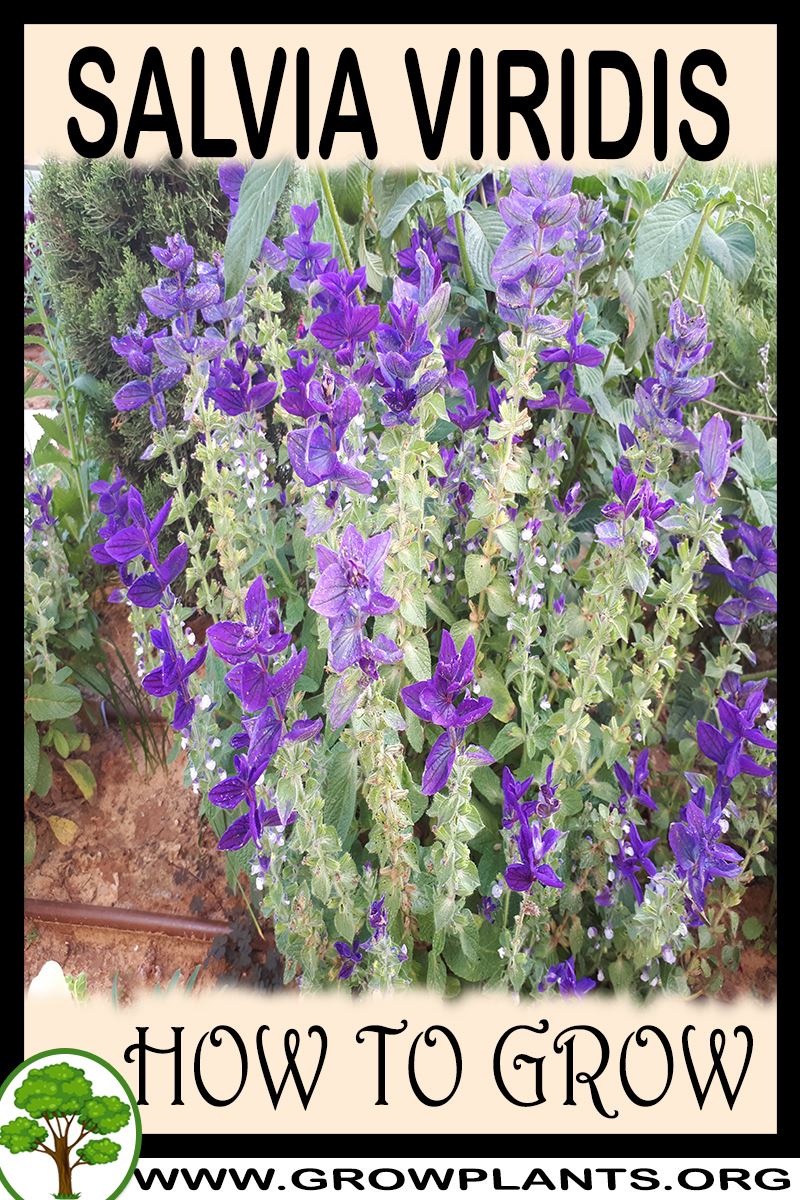
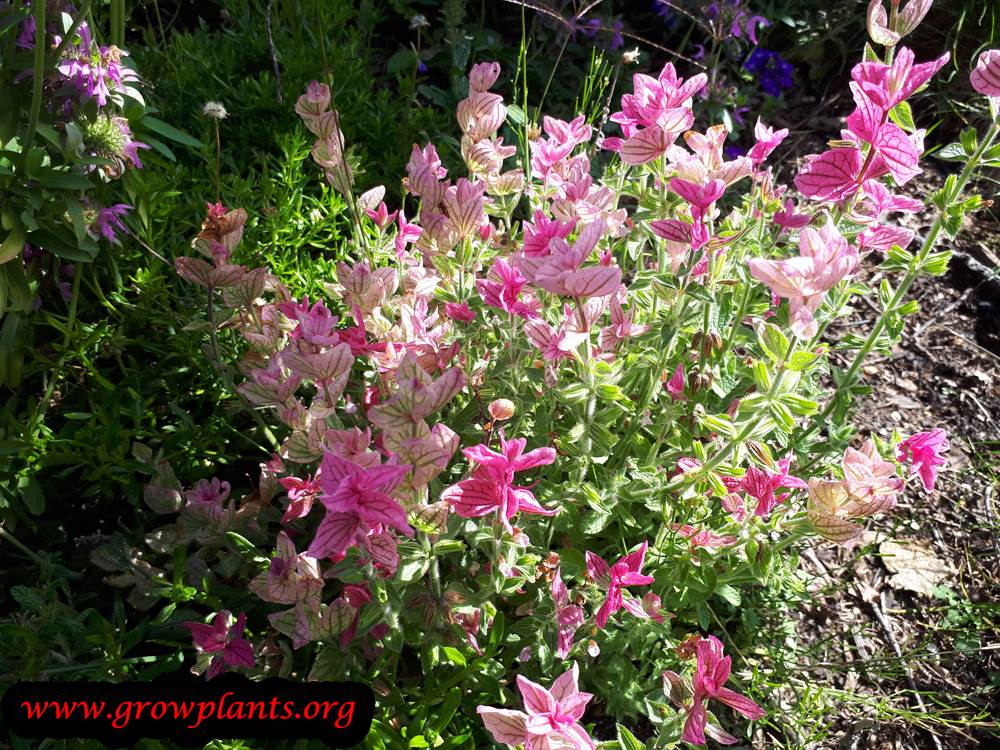
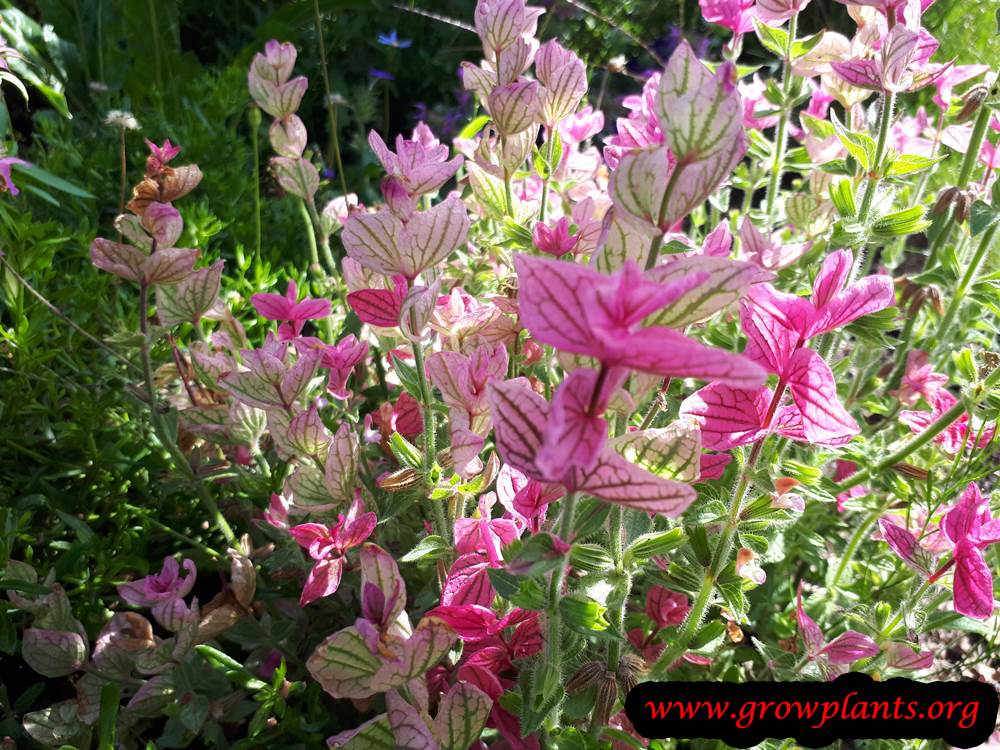
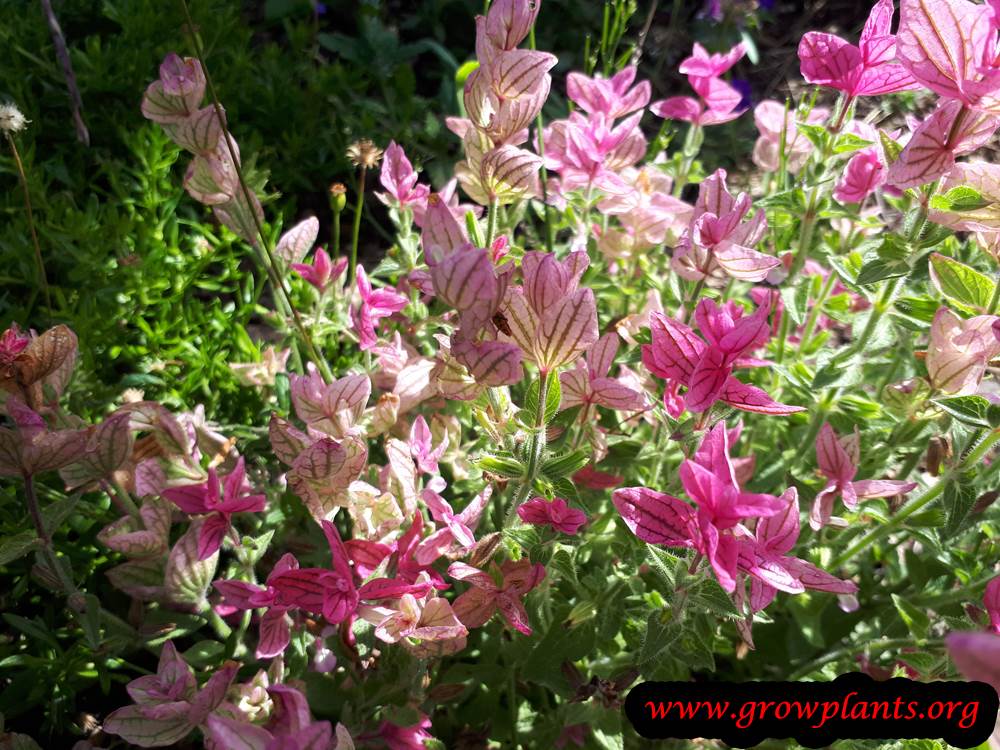
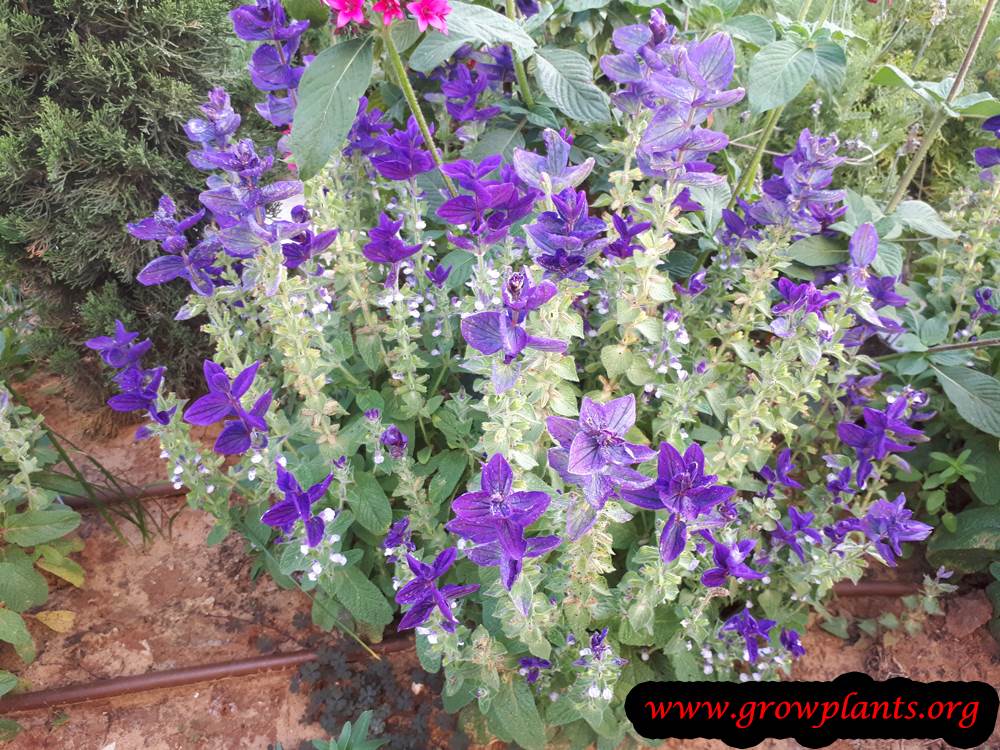
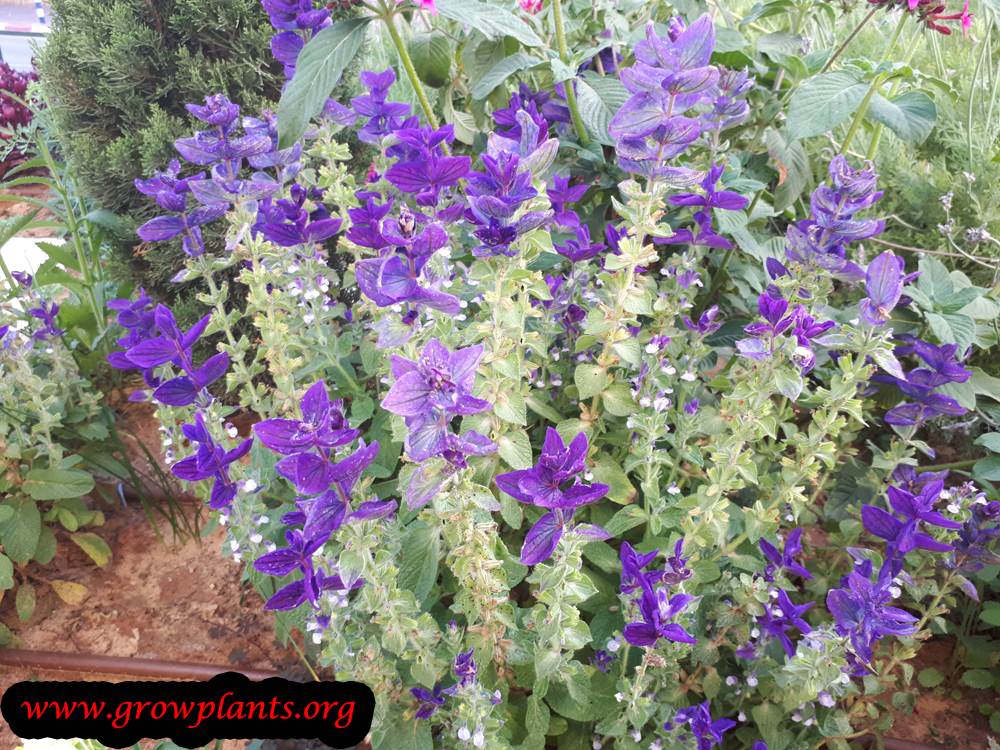
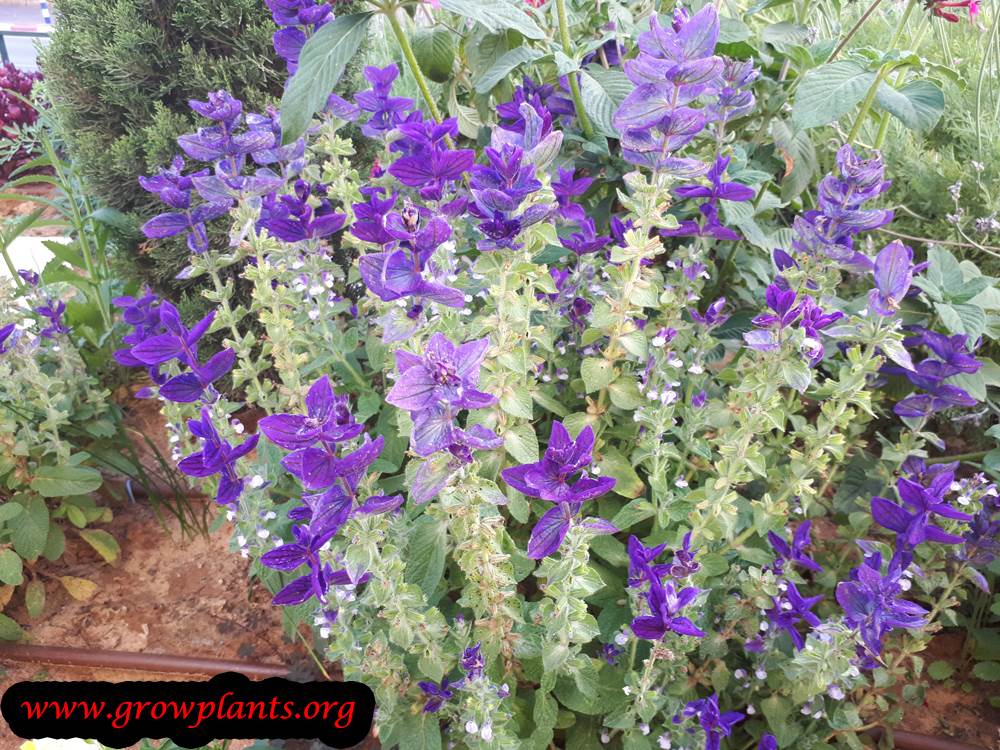
- Flower Characteristics: Small purple-and-white two-lipped flowers in racemes, the showy part being the purple, blue or pink oval bracts.
Primary Uses & Landscape Value
- Functional & Ornamental Roles: Annual bedding, border and cut-flower plant grown for its long-lasting coloured bracts, which also dry well.
Care Guide: Planting, Soil & Watering
Overview: Annual clary (Salvia viridis) is a fast-growing annual grown for its showy bracts, thriving in full sun and moist, well-draining soil. It likes steady moderate to generous moisture without becoming waterlogged.
Quick Care Requirements
| Requirement | Ideal Condition |
|---|---|
| Planting Season | Spring to summer (zones 4-10); late autumn to winter (zones 10-11) |
| Growth Rate | Fast |
| Soil Type | Rich, moisture-retentive but well-draining soil |
| Water Need | Moderate to high — keep the soil consistently moist, never letting it dry out for long |
Planting & Establishment
- Best Planting Season: Plant in spring to summer in zones 4-10, and in late autumn to winter in warm zones 10-11 so it flowers in the cooler season.
- How to Plant:
- Hole Preparation: Dig a planting hole roughly twice as wide as the root ball but no deeper, so the roots can spread into loosened soil.
- Soil Amendments: Work in plenty of compost or well-rotted organic matter to enrich the soil and help it hold moisture while still draining freely.
- Planting Depth: Set the plant at the same depth it grew in its pot, with the root collar level with the surface — never bury the stem, which invites rot.
- Growth Speed & Expectations: Expect fast growth in warm, favourable conditions, filling out its space within a single season.
Soil, Watering & Drainage Care
- Soil Mix & Drainage Needs: Use rich, well-aerated soil that holds moisture yet drains freely, and mulch to keep the roots cool and damp; in pots use a quality potting mix with perlite so excess water can still escape.
- Watering Schedule & Technique:
- Young / Newly Planted: Water generously and often after planting to keep the soil consistently moist while the roots establish.
- Established: Provide regular, deep watering so the soil stays reliably moist; do not let it dry out for long.
- Seasonal Adjustments: Increase watering through summer heat and reduce it in winter, keeping the soil from ever fully drying.
Climate, Light & Hardiness
Salvia viridis (annual clary) is an easy annual across Mediterranean, desert, subtropical, and temperate climates, needing full sun. As a true annual, its hardiness zone range mainly governs planting timing: in mild-winter regions it is sown in autumn for a winter-to-spring display, while in colder regions it is sown after the last frost for a spring-to-summer display.
Quick Climate Specifications
| Climate Zones | Mediterranean, Desert, Subtropical, Temperate |
|---|---|
| USDA Hardiness Zones | 4–11 (grown as an annual throughout its range) |
| Frost Tolerance | Low |
| Light Conditions | Full Sun |
Sunlight & Light Exposure
Optimal Light Setup
Full sun brings on the sturdiest growth and the best display of its showy colored bracts.
Temperature Extremes & Hardiness
USDA Hardiness & Regional Limits
Grown as an annual across USDA zones 4–11. In zones 10–11, where winters stay frost-free, it is planted from late autumn through winter for a winter-to-spring bloom; in zones 4–10, seedlings go out in spring to summer, after frost danger passes.
Frost Sensitivity
Young seedlings and open flowers are frost-sensitive; freezing weather ends the growing cycle.
Growing in Pots, Balconies & Indoors
Annual clary is a colourful, sun-loving annual grown for its bright bracts, ideal in a pot on a sunny patio or balcony but not a houseplant – it needs full sun. The grower recommends a small 5-10 L (1.3-2.6 gal) pot with good drainage.
Quick Details
- Container Size: 5-10 L (1.3-2.6 gal) – the grower’s recommendation
- Indoor Suitability: Not a houseplant – a full-sun Mediterranean-type sage
- Best Spot: Full sun to half shade
- Soil & Drainage: Well-drained, well-ventilated mix; water must run out freely
- Watering in Pots: Small to average – let it dry between waterings
Indoors & On the Windowsill
- Houseplant limits: Not a houseplant – it is a sun-loving annual that needs full, direct sun to colour up; indoor light leaves it pale and drawn.
- Windowsill start: You can raise young plants on a bright sill early on, but they belong outdoors in full sun once growing.
On a Balcony or Patio
- Light & air: Give it the sunniest, most open spot; it thrives in the bright, breezy conditions of a balcony and enjoys reflected heat from walls. Pots dry fast in sun, so check moisture in warm spells.
- Practicalities: A filled pot is heavy once watered – check the balcony can take the load, and stand it where drainage runoff will not be a nuisance.
Choosing the Pot, Soil & Long-Term Care
- Pot & drainage: The grower’s guide: a 5-10 L (1.3-2.6 gal) pot, well ventilated with enough holes for good drainage so water runs straight out – he advises against a saucer under the pot. strong drainage holes and never leave it standing in a saucer of water, or the roots rot. Terracotta breathes and dries faster; glazed or plastic holds moisture longer.
- Potting mix: Potting mix or peat soil with perlite or vermiculite and add rich soil with organic matter, as the grower advises.
- Soil renewal: Every few years change the soil – all of it, or just the outer soil around the roots, as the grower suggests.
- Feeding: Potted plants use up their feed quickly as nutrients leach away with each watering, so feed more often than plants in open ground through the growing season.
Fertilizing & Feeding
A light feeder through its short annual life: modest feeding while seedlings establish and through the bloom period is enough, with no need to feed once flowering finishes and the plant sets seed.
Quick Fertilizing Specs
| Feeding Level | Light feeder |
|---|---|
| Main Nutrient Priority | Balanced feeding with adequate nitrogen while establishing, then support for flower and bract color through bloom |
| Best Feeding Period | From seedling establishment through the bloom period |
| Organic Options | Compost or other organic matter worked into the bed at planting |
| Reduce/Stop Feeding | Stop feeding once flowering and bract production finish and the plant moves toward seed set |
| Micronutrients | Usually supplied by a complete fertilizer and organic soil; correct only if a specific deficiency is diagnosed |
Feeding by Growth Stage
Seedling establishment
Help young plants root in and put on steady early growth after sowing or transplanting.
| Nutrient direction | A balanced, nitrogen-adequate feeding supports steady leafy growth as the seedling establishes. |
|---|---|
| Timing | Soon after seedlings are up or transplants are set out. |
| Frequency | A light feeding at establishment, with organic matter mixed into the planting bed. |
| Fertilizer types | A balanced complete fertilizer, Compost or other organic matter worked into the soil |
| Precautions | Keep feeding light on young seedlings; overfeeding can produce leggy, weak stems that flop before bloom. |
Flower and bract production
Support the showy flower spikes and colorful bracts through the bloom period.
| Nutrient direction | Continue light balanced feeding; adequate nitrogen with potassium supports strong stems and good bract color rather than heavy phosphorus. |
|---|---|
| Timing | Through the flowering and bract-display period. |
| Frequency | Minimal feeding is usually enough for an established planting; a light supplemental feeding can help if growth looks thin. |
| Fertilizer types | A balanced complete fertilizer, A potassium-inclusive feed to support stem strength and bract color |
| Precautions | Avoid heavy nitrogen once bloom begins, which pushes leafy growth at the expense of flowers and bracts. |
Post-bloom decline and seed set
Let the annual complete its life cycle and set seed without pushing further growth.
| Nutrient direction | None – withhold fertilizer as the plant finishes flowering and declines. |
|---|---|
| Timing | After the main bloom finishes, as the plant sets seed and fades. |
| Frequency | No feeding at this stage. |
| Fertilizer types | No feeding at this stage; the annual is winding down and does not benefit from additional fertilizer. |
| Precautions | Do not fertilize a declining annual; spent plants can simply be removed once seed collection or self-sowing is complete. |
Nutrient Deficiency Signs & Corrections
Older leaves turn pale green to yellow and overall growth and flowering slow.
| Possible causes | low available soil nitrogen, heavy watering or rain leaching nutrients from a fast-draining bed, poor soil lacking organic matter |
|---|---|
| Appears first on | older, lower leaves |
| What to check | recent feeding history, soil organic matter level, overall vigor and leaf color |
| Possible correction | Apply a balanced, nitrogen-containing fertilizer and work in organic matter, then monitor for improvement. |
Stems become weak and flower spikes are sparse or floppy despite otherwise healthy foliage.
| Possible causes | low soil potassium, imbalanced feeding heavy in nitrogen alone, shallow or restricted rooting |
|---|---|
| Appears first on | flowering stems and bract quality |
| What to check | balance of recent feeding, root health and soil drainage, overall plant vigor |
| Possible correction | Shift to a balanced fertilizer that includes potassium rather than a nitrogen-only feed. |
Leaf edges brown or scorch and growth stalls even with adequate watering.
| Possible causes | fertilizer salt buildup in the root zone, under-watering that concentrates salts, over-fertilizing young seedlings |
|---|---|
| Appears first on | leaf margins and tips |
| What to check | recent fertilizer amounts, watering consistency, drainage around the planting |
| Possible correction | Ease off feeding and water thoroughly to help flush excess salts from the root zone. |
Pruning, Training & Seasonal Maintenance
Salvia viridis is a fast-growing annual grown for its long-lasting colored bracts, so it needs no structural pruning at all – the only useful interventions are pinching young plants for a bushier habit and removing spent flower spikes before they set seed. Both can be done safely at almost any point across its single growing season, and neither affects a “next year” since the plant completes its life cycle and is replaced from fresh seed.
Quick Pruning & Maintenance Specs
| Pruning Tolerance | Low (soft grooming only – no structural cuts) |
| Primary Pruning Window | Any time in the growing season, as needed |
| Typical Frequency | Occasional – light pinching and deadheading |
| Main Objective | Bushier branching and preventing unwanted self-seeding |
| Young Plant Priority | Pinch the growing tip after 2-3 leaf pairs |
| Mature Plant Priority | Deadhead spent bract spikes |
| Best Tool Type | Fingers or precision snips |
Pruning by Plant Age & Size
Newly Established
Leave seedlings alone until they have a few sets of true leaves; only remove any damaged or aphid-infested growth.
Young / Formative
Pinch out the main growing tip once the plant has 2-3 leaf pairs to push side branching – there is no leader or framework to train on an annual bedding plant.
Mature / Established
Once flowering starts, focus on deadheading rather than shaping; the plant keeps producing new bract spikes through the season if spent ones are removed.
Special Growth to Remove
- Spent flower/bract spikes – cut back to the next leaf pair or side shoot before seed drops; this species is noted as prone to aggressive self-seeding, so this is the single most useful “pruning” task for it.
- Any aphid-damaged or collapsed stems.
Container & Small-Space Pruning
In pots, pinch more assertively while plants are young to keep a compact, well-branched shape suited to the container’s size; no root pruning is needed since it is grown fresh from seed each cycle.
Tools
Fingers or precision snips only – stems are soft and herbaceous, so no cutting tool larger than snips is ever required.
Tool Hygiene & Disease Risk
Routine: clean, sharp snips are sufficient. Aphids are the main pest reported for this species but are not spread by pruning cuts, so no disinfection routine is needed.
Cut Placement & Technique
Pinch just above a leaf node to force two new side shoots; deadhead by cutting the flowering stem back to the nearest leaf pair or side branch.
Heavy Pruning & Rejuvenation
Not applicable. As a true annual, Salvia viridis cannot be rejuvenated by hard cutting back – once it finishes flowering late in the season it should be pulled and replaced rather than pruned hard.
Post-Pruning Care
A light watering after pinching is all that is needed; avoid feeding specifically in response to pinching, since that only encourages soft, floppy growth on an already fast-growing annual.
Common Pruning Mistakes
- Leaving spent bract spikes to go to seed, which drives the self-seeding this species is known for.
- Pinching too late, after the plant has already grown tall and floppy, instead of while it is still young.
When NOT to Prune
Avoid pinching newly transplanted seedlings until they show new growth and are established; leave a few spikes unpicked toward the end of the season if you want to collect seed for next year.
Recommended Tools (by task)
- precision_snips – the only tool this plant ever needs, for pinching tips and deadheading soft, thin bract stems.
Propagation Guide
Salvia viridis is grown from seed, either sown direct or started as seedlings and transplanted; as an annual, vegetative propagation is not used or needed. Seed comes reasonably true-to-type for this species, and the plant self-seeds so freely (part of why it is listed as invasive) that propagation is easy.
Quick Propagation Specs
| Best Propagation Method | Seed |
| Alternative Methods | Transplanting store-bought or home-started seedlings |
| Propagation Difficulty | Easy |
| Seed True-to-Type | Usually true-to-type; colour of the showy bracts (purple, blue or pink) can vary somewhat in mixed seed strains |
| Best Propagation Season | Spring or autumn |
| Seed Germination Time | 2-3 weeks under optimal conditions, sometimes up to 5 weeks |
| Germination Temperature | 20-25°C (68-77°F) optimal; possible at 15-29°C (59-84°F) but slower with a lower germination rate |
| Seed Sowing Depth | 3-6mm (0.2-0.4 in) |
Growing from Seed
Seed Handling & Viability
Store seed dry and dark, ideally at room temperature or refrigerated, until sowing.
Sowing Season
Sow in spring or autumn.
Sowing Depth & Orientation
Sow at 3-6mm (0.2-0.4 in) deep, with nursery spacing of around 30×40cm (12×16 in).
Germination Conditions
Keep the soil moist with good humidity in a sunny spot at 20-25°C (68-77°F); temperatures within 15-29°C (59-84°F) are workable but germinate more slowly and less reliably.
Germination Time
2-3 weeks in optimal conditions, though it can take up to 5 weeks.
Seedling Care
Keep seedlings in moist soil in full sun, giving more water in summer heat; plant out in a sunny spot, moving to half shade only where temperatures run above about 25°C (77°F).
Bloom & Flower Guide
Quick Details
- Bloom Season: Spring to summer in cooler zones; winter to spring in warm, frost-free areas
- Time to First Bloom: In its first season, as an annual grown from seed
- Flower Appearance: Small purple-and-white lipped flowers in spikes, crowned by showy purple, blue or pink bracts
- Edibility: Ornamental / none
Detailed Blooming Overview
Annual clary is grown for its colour, but the real show comes from the bracts rather than the flowers. The true flowers are small and two-lipped, purple and white, arranged in an upright spike (raceme); above and around them sit broad, papery bracts in purple, blue or pink that hold their colour for weeks and give the plant its ornamental value.
Flower Characteristics
- Small two-lipped flowers, purple with white, borne in a raceme.
- Oval bracts in purple, blue or pink – the showy, long-lasting part of the display.
- Also known as orval or painted sage.
Bloom Care & Thinning
- Managing the bloom: Deadhead spent spikes to prolong the show, or leave a few to self-sow.
- For cutting or drying: The bracted stems are good fresh and hold their colour well when dried.
Pests, Diseases & Troubleshooting
Overview: Annual clary is an easy-from-seed bedding salvia grown for its showy coloured bracts. As an annual its problems are front-loaded onto seedlings – damping-off and slug damage – plus routine aphids and, in damp seasons, powdery or downy mildew. Good hygiene, spacing and light watering keep it clean.
Quick Troubleshooting Overview
| Issue / Pest | Main Symptom | Primary Solution |
|---|---|---|
| Damping-off | Seedlings collapse at soil line | Clean mix, don’t overwater, good airflow |
| Aphids | Sticky, distorted shoot tips | Water jet, insecticidal soap |
| Slugs & snails | Shredded seedlings & young leaves | Traps, barriers, evening patrols |
| Powdery mildew | White powder on leaves late season | Spacing, airflow, bicarb/sulphur spray |
| Downy mildew | Yellow blotches, grey mould underside | Airflow, dry foliage, remove affected leaves |
Common Pests & Management
- Aphids (Aphis spp. / Myzus persicae):
- Symptoms: Green or black colonies on soft tips, bracts and flower stems; sticky honeydew and distorted growth; ants in attendance.
- Prevention & Control: Rinse off with water, encourage ladybirds and hoverflies, and pinch infested tips. Insecticidal soap or light neem oil deals with heavy colonies; spray undersides in the evening.
- Whitefly (Trialeurodes vaporariorum):
- Symptoms: Tiny white flies rising from disturbed foliage; honeydew and sooty mould, mainly in warm, sheltered spots.
- Prevention & Control: Improve airflow, use yellow sticky traps, and spray insecticidal soap or horticultural oil on leaf undersides, repeating to catch hatches.
- Two-spotted spider mite (Tetranychus urticae):
- Symptoms: Fine stippling and bronzing in hot, dry weather, with faint webbing on undersides.
- Prevention & Control: Hose foliage and raise humidity in heat; treat with insecticidal soap or horticultural oil if mites build up.
- Slugs and snails (Various spp.):
- Symptoms: Ragged holes and shredded seedlings and young leaves, with slime trails, especially in damp weather.
- Prevention & Control: Clear hiding places, water in the morning, and set beer traps or barriers of grit/copper; hand-pick at night or use iron-phosphate pellets.
Diseases & Fungal Issues
- Damping-off (Pythium / Rhizoctonia spp.):
- Symptoms: Seedlings topple and rot at the soil line, or fail to emerge, in cold, wet, crowded seed trays.
- Treatment & Management: Sow thinly in clean, free-draining mix, avoid overwatering, provide airflow and warmth, and water from below with clean water. Do not sow into cold, sodden ground.
- Powdery mildew (Golovinomyces spp.):
- Symptoms: White powdery coating on leaves, usually later in the season or in dry-root, humid-air conditions.
- Treatment & Management: Space plants, keep roots evenly moist, and remove affected leaves; a bicarbonate or sulphur spray helps at first signs.
- Downy mildew (Peronospora spp.):
- Symptoms: Yellow blotches on upper leaf surfaces with grey-purple mould beneath, in cool, wet, humid spells.
- Treatment & Management: Improve airflow, avoid wetting foliage, and remove affected leaves promptly; being an annual, badly hit plants are best pulled and replaced.
Growing Difficulties & Abiotic Problems
- Legginess in shade / rich soil:
- Cause & Symptoms: Soft, floppy growth with fewer, paler bracts in shade or over-fed soil.
- Correction Strategy: Grow in full sun on lean soil and pinch young plants to encourage branching and stronger bract colour.
- Poor bract colour:
- Cause & Symptoms: Washed-out bracts from too little light or excess nitrogen.
- Correction Strategy: Site in full sun and avoid rich feeding; the coloured bracts (the main show) develop best when the plant is grown a little lean and bright.
What Helps – Products & Tools
Salvias respond well to a light touch: insecticidal soap or horticultural/neem oil handles aphids, whitefly, mites and mealybugs; yellow sticky traps monitor and reduce whitefly; and a sulphur or potassium-bicarbonate fungicide manages powdery mildew. The best ‘product’, though, is sharp drainage and good airflow – most salvia losses are wet-soil root rot, not insects.