Plant Profile & Key Characteristics
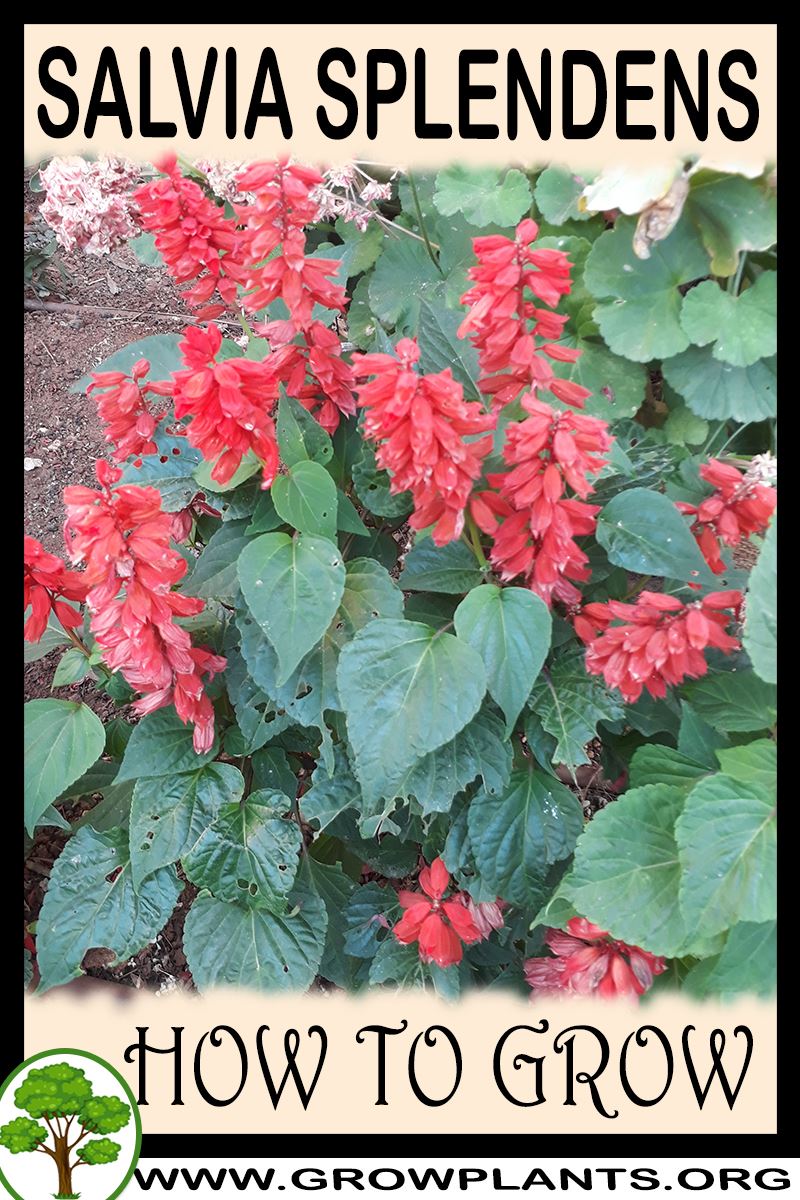
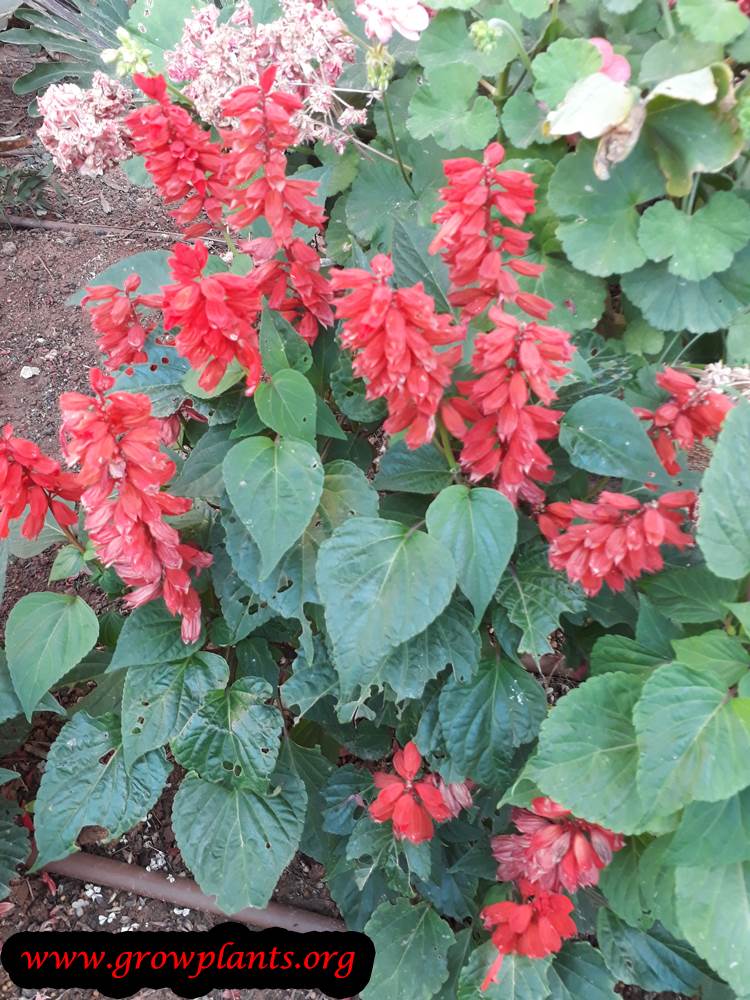
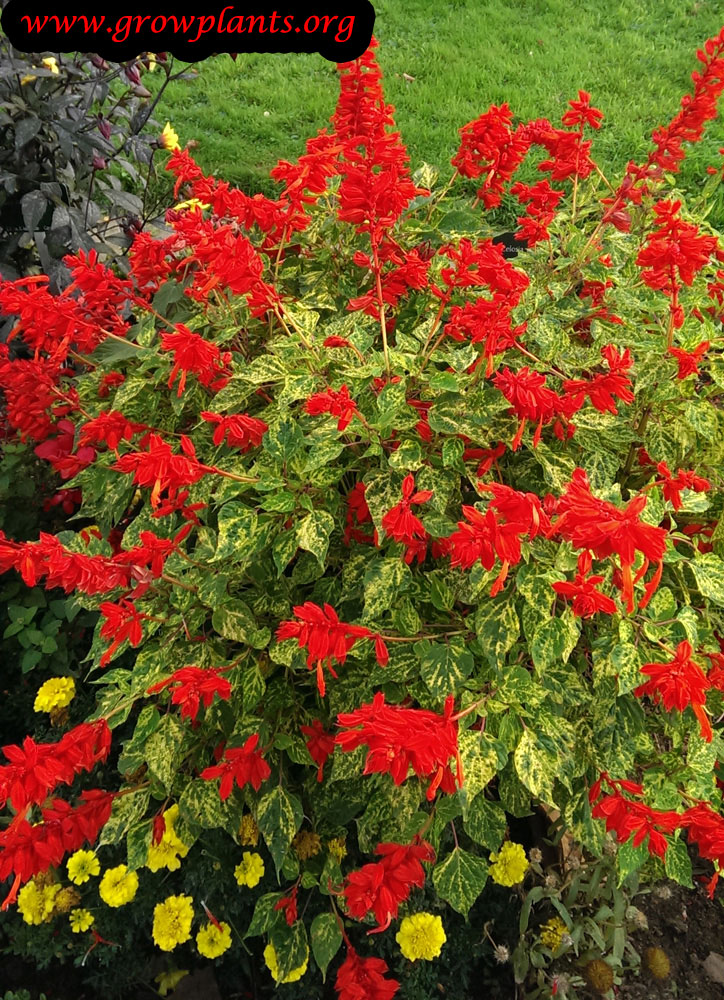
Overview: The familiar bedding scarlet sage, an upright herbaceous plant 0.4-1.5 m (16-60 in) tall grown as an ornamental (usually as an annual) for its bold spikes of tubular red flowers. It is a fast-growing, pollinator-friendly perennial.
Quick Specifications
| Specification | Attribute |
|---|---|
| Plant Type / Life Cycle | Herbaceous perennial (usually grown as an annual) |
| Foliage Type | Evergreen in frost-free climates |
| Mature Size | 0.4-1.5 m (16-60 in) tall |
| Growth Rate | Moderate to fast |
| Hardiness | USDA zone 10b+ as a perennial; 5-10a as an annual |
Growth Form & Structure
- Height & Spread: An upright plant 0.4-1.5 m (16-60 in) tall in the ground (compact bedding forms are much shorter); also grown in a 10-20 L (2.6-5.2 gal) container.
- Growth Habit & Form: Bushy, upright herbaceous habit topped with dense flower spikes; benefits from winter protection at the base where grown as a perennial.
- Lifespan & Maturity: Fast to reach flowering size within one season, blooming over a long period.
Anatomy & Physical Features
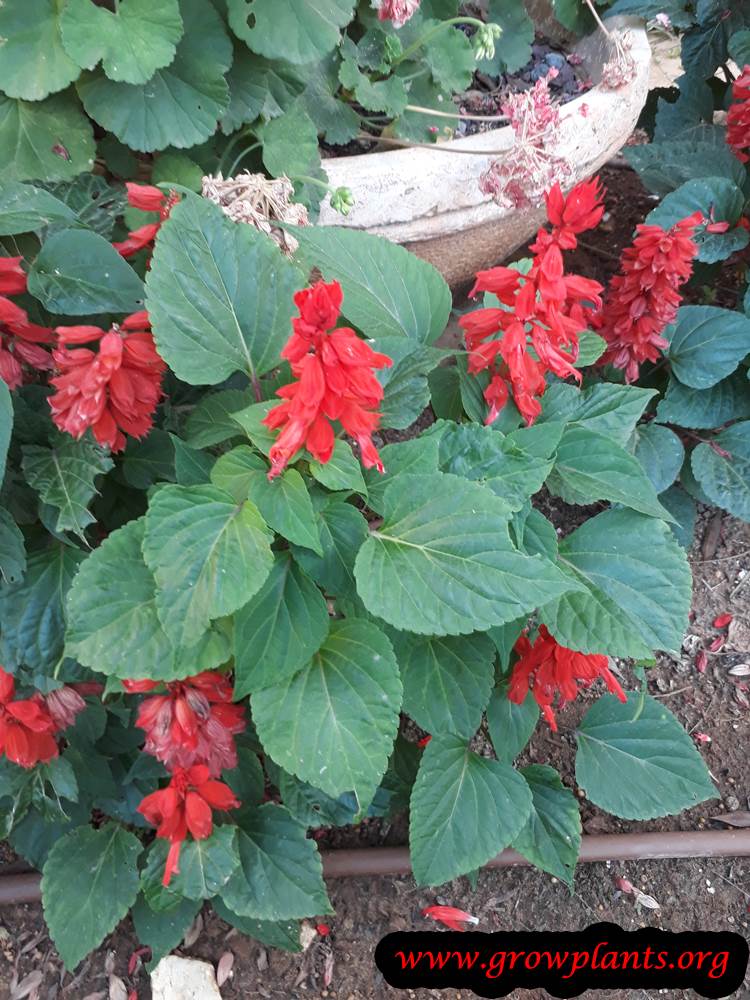
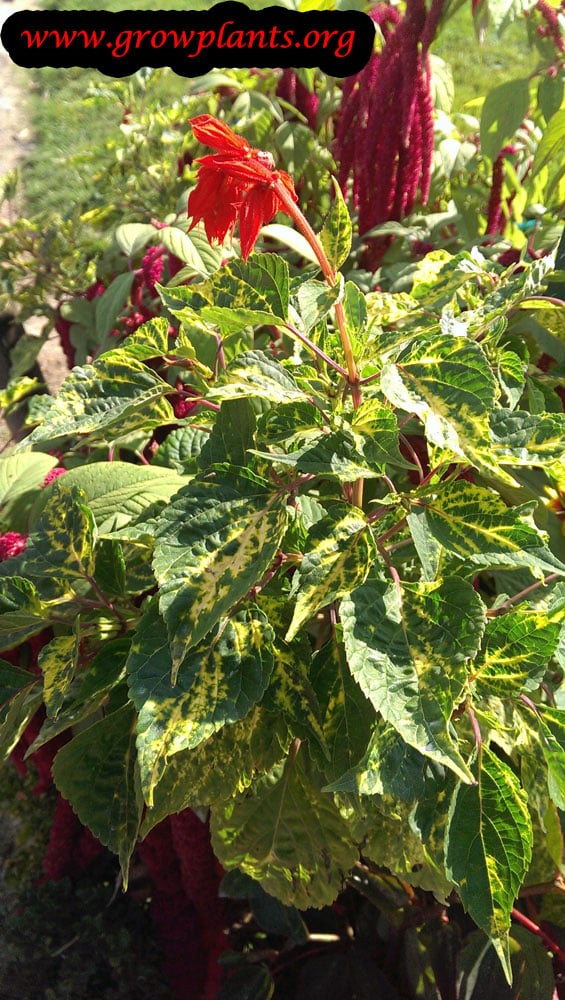
- Leaves & Foliage: Green, ovate to heart-shaped leaves.
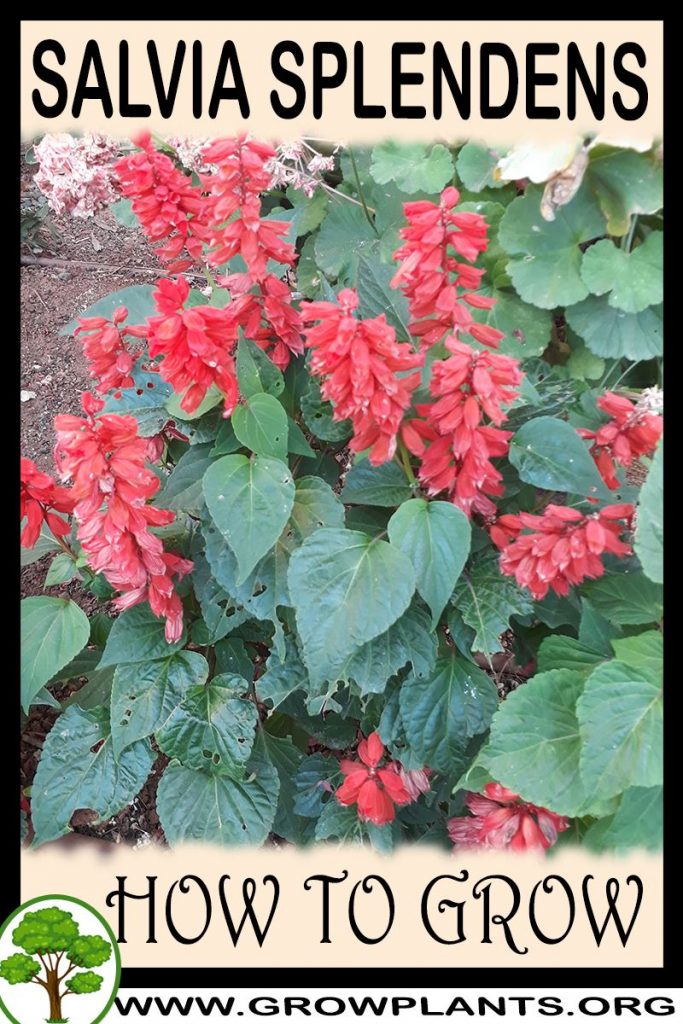
- Flower Characteristics: Dense upright spikes of tubular flowers, most often brilliant red but also pink, magenta, purple or white.
Primary Uses & Landscape Value
- Functional & Ornamental Roles: A classic bedding and container ornamental for bold blocks of colour, and a good pollinator and hummingbird plant.
Care Guide: Planting, Soil & Watering
Overview: Salvia splendens is a bold bedding salvia for full sun to light shade in rich, moisture-retentive but well-draining, frost-free soil. It needs more steady moisture than drought-type sages, without ever becoming waterlogged.
Quick Care Requirements
| Requirement | Ideal Condition |
|---|---|
| Planting Season | Spring (year-round in the tropics) |
| Growth Rate | Moderate to fast |
| Soil Type | Rich, moisture-retentive but well-draining soil |
| Water Need | Moderate to high — keep the soil consistently moist, never letting it dry out for long |
Planting & Establishment
- Best Planting Season: Plant in spring in most climates once frost has passed; in frost-free tropical zones it can go in year-round, and it is grown as an annual where winters are cold.
- How to Plant:
- Hole Preparation: Dig a planting hole roughly twice as wide as the root ball but no deeper, so the roots can spread into loosened soil.
- Soil Amendments: Work in plenty of compost or well-rotted organic matter to enrich the soil and help it hold moisture while still draining freely.
- Planting Depth: Set the plant at the same depth it grew in its pot, with the root collar level with the surface — never bury the stem, which invites rot.
- Growth Speed & Expectations: Expect a moderate to fast pace of growth, bulking up noticeably over the first warm season.
Soil, Watering & Drainage Care
- Soil Mix & Drainage Needs: Use rich, well-aerated soil that holds moisture yet drains freely, and mulch to keep the roots cool and damp; in pots use a quality potting mix with perlite so excess water can still escape.
- Watering Schedule & Technique:
- Young / Newly Planted: Water generously and often after planting to keep the soil consistently moist while the roots establish.
- Established: Provide regular, deep watering so the soil stays reliably moist; do not let it dry out for long.
- Seasonal Adjustments: Increase watering through summer heat and reduce it in winter, keeping the soil from ever fully drying.
Note: Space plants roughly 30-40cm (12-16in) apart.
Climate, Light & Hardiness
Salvia splendens (scarlet sage) grows well across tropical, subtropical, Mediterranean, and temperate climates in full sun to half shade. It is a frost-tender perennial that is reliably frost-free only in warm-winter zones, so most temperate gardeners grow it as a warm-season annual.
Quick Climate Specifications
| Climate Zones | Tropical, Subtropical, Mediterranean, Temperate |
|---|---|
| USDA Hardiness Zones | 10b+ as a true perennial; 5–10a commonly grown as an annual, with zone 10a capable of surviving given the right care |
| Frost Tolerance | Very Low |
| Light Conditions | Full Sun / Half Shade |
Sunlight & Light Exposure
Optimal Light Setup
Full sun to half shade both work well; full sun tends to produce the most flowers, while half shade suits hotter climates or the peak of summer.
Direct Sun Requirement
Direct sun for most of the day is ideal in mild climates; in tropical or very hot regions some shade during the hottest hours reduces stress.
Shade & Heat Management
In tropical climates it can be grown and flowered year-round, but benefits from part shade where summer heat is intense.
Temperature Extremes & Hardiness
USDA Hardiness & Regional Limits
Needs essentially frost-free conditions (zone 10b and warmer) to persist as a perennial. Commonly grown as an annual in climates with freezing winters (zones 5–10a), where frost ends the growing season each year; in zone 10a it may survive with attentive winter care.
Cold Damage & Winter Protection
Mulching the base with wood chips or dead leaves over winter helps protect the crown in borderline zones where a return of growth the following season is desired.
Frost Sensitivity
Frost-sensitive; even light frost typically damages or kills top growth, which is why it is treated as an annual outside essentially frost-free climates.
Extreme Heat Tolerance
Tolerates tropical heat well and grows year-round where winters stay frost-free.
Growing in Pots, Balconies & Indoors
Salvia splendens (scarlet sage) is not a houseplant, but the grower grows it well in containers – it is an excellent sunny balcony, patio or courtyard plant in a free-draining pot, flowering generously for pollinators.
Quick Details
- Container Size: 10-20 L (2.6-5.2 gal) (grower’s value)
- Indoor Suitability: Not an indoor plant – a sunny outdoor container plant
- Best Spot: Full sun to half shade
- Soil & Drainage: Well-ventilated, free-draining mix – potting mix, or peat with perlite/vermiculite, plus organic matter
- Watering in Pots: Average to generous – water must run straight out
Indoors & On the Windowsill
- Houseplant reality: Not a houseplant – indoors the light is too weak for good growth and flowering. A very sunny sill may hold it briefly, but it wants full outdoor light to flower well.
- Overwintering: Where winters are too cold for it outdoors, a key reason to pot it is to move the container into a bright, frost-free spot over the cold months and keep it on the dry side.
On a Balcony or Patio
- Light & wind: Give it the sunniest spot; it thrives in the reflected warmth of walls and paving. Pots on a balcony or patio dry fast – walls, railings and paving reflect heat – so check moisture often and water more in warm, windy spells. Remember a full pot is heavy and sheds run-off when watered.
- Drainage first: Make sure water runs straight out – salvias dislike sitting wet, especially in a pot.
Choosing the Pot, Soil & Long-Term Care
- Pot & drainage: A 10-20 L (2.6-5.2 gal) pot suits it. Give a free-draining, well-ventilated mix with plenty of holes so water runs straight out, and the grower prefers no drip tray under the pot. Every few years swap out all or part of the soil. Use a potting mix, or peat with perlite or vermiculite, with some rich, organic matter added. Use a pot with strong drainage holes and skip a standing-water saucer so the roots never sit wet – that is the fastest route to root rot. Terracotta breathes and dries faster, while glazed or plastic pots hold moisture longer.
- Watering in pots: Average to generous – let the mix dry a little between waterings; the grower prefers no drip tray.
- Feeding: Potted plants need feeding a little more often than those in the ground, as regular watering steadily leaches nutrients away – feed lightly through the growing season.
- Repotting: Grown on as a perennial, replace all or part of the soil every few years to keep it fresh and free-draining.
Fertilizing & Feeding
A moderate feeder – fast, leafy growth and near-continuous bedding-display bloom are best supported with steady, light feeding rather than one heavy application.
Quick Fertilizing Specs
| Feeding Level | Moderate |
|---|---|
| Main Nutrient Priority | Balanced feeding with adequate nitrogen to keep pace with fast vegetative growth and repeat flowering |
| Best Feeding Period | Throughout the growing season once the plant is established, whether grown as a perennial or as a bedding annual |
| Soil pH | Prefers well-drained soil; tolerant of a range of garden soils as long as drainage is good |
| Micronutrients | No routine micronutrient supplementation typically needed in ordinary garden or container mix |
| Organic Options | Compost or a rich, well-drained potting mix supports steady growth well |
| Reduce/Stop Feeding | Ease off as flowering slows going into the cooler part of the season or, where grown as an annual, as the display naturally winds down before frost |
Feeding by Growth Stage
Establishment and Spring Growth
Support rapid leafy growth as the plant establishes, whether freshly planted as a bedding annual or breaking dormancy as a perennial
| Nutrient direction | Balanced feeding with adequate nitrogen to fuel fast early growth |
|---|---|
| Timing | At planting and through early establishment in spring |
| Frequency | Light, regular feeding through the establishment period |
| Fertilizer types | A balanced, general-purpose fertilizer for bedding and flowering plants, Compost worked into the bed before planting |
| Precautions | Avoid overly rich feeding early on, which can push soft, leggy growth before the plant has built a sturdy root system |
Main Bloom Period
Sustain the dense flower spikes this bedding plant is grown for
| Nutrient direction | Balanced feeding – adequate nitrogen alongside phosphorus and potassium supports strong flowering better than a phosphorus-heavy product alone |
|---|---|
| Timing | Through the main flowering display once the plant is established |
| Frequency | Continue light, regular feeding through bloom; reduce if growth becomes leggy at the expense of flowers |
| Fertilizer types | A balanced, general-purpose flowering-plant fertilizer |
| Precautions | Very frequent watering in hot weather can leach nutrients quickly from containers and light soils, so watch for pale growth between feedings |
Repeat Bloom Through the Season
Keep the near-continuous flowering display going where the plant is grown as a bedding standout
| Nutrient direction | Light, balanced feeding paired with removing spent flower stalks to encourage further bloom |
|---|---|
| Timing | Across most of the growing season in favorable climates |
| Frequency | Feed sparingly through this extended period – a light, steady approach works better than infrequent heavy applications |
| Fertilizer types | A light, balanced feeding on a steady schedule, or a slow-release product applied early in the season |
| Precautions | Overfeeding encourages leafy growth over flowers and can make bedding displays look uneven |
Season End or Winter Rest
Let growth wind down naturally rather than pushing new growth that won’t have time to mature
| Nutrient direction | None – withhold fertilizer as the display winds down |
|---|---|
| Timing | Late in the growing season as frost approaches, or through the cool season for frost-free perennial plantings |
| Frequency | No feeding at this stage |
| Fertilizer types | No feeding at this stage |
| Precautions | Do not fertilize late in the season; new growth pushed too close to frost is quickly damaged and wastes the plant’s energy |
Nutrient Deficiency Signs & Corrections
Pale, yellow-green foliage and slowed, thin growth
| Possible causes | Nitrogen deficiency in nutrient-poor bedding soil or exhausted container mix, Heavy watering leaching nutrients from fast-draining soil, Root crowding in an undersized container |
|---|---|
| Appears first on | Older, lower leaves first |
| What to check | How long it has been since the soil or potting mix was refreshed, Watering frequency and drainage, Root crowding if grown in a container |
| Possible correction | Apply a balanced, nitrogen-forward feeding and refresh depleted container mix if the plant has been in the same pot a long time |
Yellowing between the veins on older leaves while the veins remain green
| Possible causes | Magnesium deficiency from heavy watering leaching nutrients out of fast-draining soil, Imbalanced feeding weighted heavily toward potassium or calcium, Cool, wet soil temporarily limiting root uptake |
|---|---|
| Appears first on | Older, lower leaves first |
| What to check | Watering frequency and drainage speed, Whether feeding has been unusually heavy or one-sided, Soil temperature and drainage after cool, wet weather |
| Possible correction | Return to a balanced feeding program and improve drainage if the soil stays consistently wet |
Scorched or browned leaf-edge margins and weaker flower spikes
| Possible causes | Potassium deficiency from a nitrogen-only feeding program, Drought stress interrupting nutrient movement, Fast-draining sandy soil or container mix that leaches nutrients between waterings |
|---|---|
| Appears first on | Margins of older leaves |
| What to check | Whether feeding has leaned heavily toward nitrogen-only products, Watering consistency, Soil or potting mix drainage speed |
| Possible correction | Switch to a balanced fertilizer and keep watering consistent rather than letting the plant swing between dry and saturated |
Pruning, Training & Seasonal Maintenance
Scarlet sage is a soft-stemmed herbaceous plant, most often grown as a frost-tender bedding annual and only as a true perennial in frost-free zones (10b+); it has no woody framework, so ‘pruning’ here really means pinching young plants for bushiness and deadheading spent flower stalks to keep the near-continuous bloom coming. It tolerates cutting at any time of year, and since it flowers on new growth, removing the dead stalks never costs future flowers – it encourages more of them.
Quick Pruning & Maintenance Specs
| Pruning Tolerance | High (soft growth, not woody) |
| Primary Pruning Window | Ongoing, all year (or throughout the growing season where grown as an annual) |
| Typical Frequency | Regular deadheading through bloom; one cutback in spring where grown as a perennial |
| Main Objective | Prolong bloom, encourage bushiness, tidy spent growth |
| Young Plant Priority | Pinch tips once established to encourage branching instead of one tall stem |
| Mature Plant Priority | Deadhead spent flower stalks; in perennial zones, cut back in spring to renew growth |
| Best Tool Type | Precision snips / bypass secateurs |
| Avoid Heavy Pruning During | Late autumn/winter where grown as a perennial (top growth buffers the crown) |
Pruning by Plant Age & Size
Newly Established
Pinch out the growing tip once the young plant has a few sets of leaves, to encourage side-branching rather than a single leggy stem.
Young / Formative
No structural training system applies to this soft herbaceous plant; continue light pinching to build a bushy, well-branched mound.
Mature / Established
Deadhead spent flower stalks (‘mostly dead stalk’ per its own care notes) regularly to keep new flowering shoots coming through the season; where grown as a perennial in frost-free zones, cut the whole plant back by about a third in early spring to keep it from becoming leggy.
Seasonal Pruning Schedule
| Stage | Objective | Remove | Do NOT remove | Expected response |
| Ongoing Sanitary (most of the growing season) | Prolong bloom, tidy plant | Spent flower stalks, any dead stems | Actively flowering shoots | New flower spikes continue to form on fresh growth |
| Pre-Growth / Early Spring (perennial zones only) | Renew growth after winter | About a third of top growth | Live basal growth | Fresh, bushier regrowth for the new season |
Flowering & Fruiting Wood
Scarlet sage flowers continuously on current-season growth; it has no persistent flowering wood to protect, so deadheading spent stalks at any time simply channels the plant’s energy into producing the next flush rather than seed.
Special Growth to Remove
- Spent flower stalks – the main and almost only pruning task for this plant.
- Any dead or winter-damaged stems where grown as a perennial.
Container & Small-Space Pruning
Does well in a 10–20L container with rich, well-drained soil; pinch young plants a little harder than in-ground specimens to keep a compact, floriferous mound suited to pot culture, and deadhead promptly since a container plant has less room to hide spent stalks.
Tools
- Precision snips or bypass secateurs – all cuts are on soft, non-woody stems.
Tool Hygiene & Disease Risk
Routine – clean, sharp tools; its only noted pest issue is aphids, not a disease spread by pruning cuts.
Cut Placement & Technique
Deadhead just below the spent flower cluster, above the next set of leaves or side-buds, to keep the plant looking tidy and encourage a new spike from that point.
Post-Pruning Care
Water normally after deadheading or a spring cutback; no extra feeding needed beyond its normal average-to-heavy watering regime.
Common Pruning Mistakes
- Leaving spent flower stalks in place, which slows the plant’s production of new blooms.
- Treating it like a woody shrub and attempting a hard structural cutback it doesn’t need.
- In perennial zones, cutting all top growth away in autumn rather than leaving it as winter protection until spring.
When NOT to Prune
Where grown as a perennial, avoid a hard cutback in late autumn/winter, since the standing growth (plus the recommended wood-chip winter mulch) helps protect the crown from cold.
Recommended Tools (by task)
- precision_snips – deadheading and pinching soft stems and flower stalks throughout the bloom season.
Propagation Guide
Salvia splendens (scarlet sage) is the classic bedding-plant salvia and is most practically grown from seed, which is standard for the species; cuttings or ground layering can be used to keep a frost-free perennial specimen going or to bulk up a particular color form. Propagation is easy overall.
Quick Propagation Specs
| Best Propagation Method | Seed (standard for bedding use) |
| Alternative Methods | Stem cuttings (water or soil); ground layering |
| Propagation Difficulty | Easy |
| Seed True-to-Type | Usually true-to-type (species) |
| Vegetative True-to-Type | Yes |
| Best Propagation Season | Spring in most climates; year-round in the tropics; cuttings/layering best in warm spring or autumn |
| Seed Germination Time | 2-3 weeks under optimal conditions, sometimes up to 5 weeks |
| Cutting Rooting Time | Not specified by source data; typically a few weeks under warm, humid conditions |
| Germination Temperature | 20-25°C (68-77°F) optimal; possible from 15-29°C (59-84°F) but slower with a lower germination rate |
| Seed Sowing Depth | 3-6mm (0.2-0.4 inch) |
Growing from Seed
Seed Handling & Viability
Store seed dry and dark, ideally at room temperature or refrigerated, until sowing.
Sowing Season
Sow spring through summer in hardiness zones below 10a (best in spring); in zone 10b and warmer, sow spring, autumn or winter, avoiding the hottest summer days.
Sowing Depth & Orientation
Sow shallowly at 3-6mm (0.2-0.4 inch).
Germination Conditions
Moist soil, humidity and a sunny spot; optimal at 20-25°C (68-77°F), possible but slower from 15-29°C (59-84°F).
Germination Time
2-3 weeks under good conditions, occasionally up to 5 weeks.
Seedling Care
Keep soil moist in a sunny spot; increase watering in summer heat.
Stem Cuttings
Cutting Type
Softwood/semi-hardwood stem cuttings.
Best Timing
Warm spring or autumn.
Cutting Preparation & Rooting Setup
Root in water (changing the water every few days) or in a well-drained peat-based soil, in half shade in hardiness zone 10b-11.
Rooting Hormone
Beneficial for soil-rooted cuttings but not essential.
Rooting Time
Not specified by source data; typically a few weeks under warm, humid conditions.
Air & Ground Layering
Bend a low, flexible stem to the ground and cover the contact point with soil, keeping it moist until rooted, then sever from the parent. Best in warm spring or autumn, in half shade in zone 10b-11.
Bloom & Edible Flower Guide
Quick Details
- Bloom Season: Most of the year in warm climates; through the warm months elsewhere
- Flower Appearance: Tubular flowers, most often scarlet red but also pink, magenta, purple or white, packed onto upright spikes
- Edibility: The tubular flowers hold a sweet, edible nectar and can be used as a garnish
Detailed Blooming Overview
Scarlet sage is a tireless bloomer, throwing up spike after spike of tubular flowers for most of the year in a frost-free spot. The vivid red is the classic, but it also comes in pink, magenta, purple and white. Those long-throated flowers are rich in sweet nectar – children have long pulled a bloom to taste it – and the same nectar makes the plant a firm favourite of hummingbirds and other pollinators.
Flower Characteristics
- Colour is mostly red, and also pink, magenta, purple or white.
- Slender, tubular flowers held on upright spikes.
- Nectar-rich, drawing hummingbirds and bees.
Bloom Care & Thinning
- Keeping it flowering: Trim back spent flower spikes to bring on fresh ones; steady moisture keeps the display going.
- Pollination: The tubular, nectar-filled flowers are especially attractive to hummingbirds.
Pests, Diseases & Troubleshooting
Overview: Scarlet sage is a soft bedding annual bred for bloom, and its lush growth attracts whiteflies, aphids and spider mites, plus seedling damping-off, botrytis and root rot in overwatered, crowded conditions – pests matter more here than on the woody sages.
Quick Troubleshooting Overview
| Issue / Pest | Main Symptom | Primary Solution |
|---|---|---|
| Whiteflies | White flies in clouds; sticky honeydew | Sticky traps; insecticidal soap on undersides |
| Aphids | Clustered insects on buds and shoots | Water jet, then insecticidal soap or neem |
| Spider mites | Stippling and webbing in dry heat | Raise humidity; horticultural oil / soap |
| Botrytis / powdery mildew | Grey mould or white coating in damp/crowding | Deadhead; ventilate; bicarbonate/biofungicide |
| Damping-off | Seedlings collapse at soil line | Clean media, warmth, airflow; don’t overwater |
Common Pests & Management
- Whiteflies (Trialeurodes vaporariorum):
- Symptoms: Tiny white moth-like insects that fly up in clouds when the plant is disturbed, with scale-like nymphs and honeydew on the leaf undersides, leading to yellowing, weak growth and sooty mould. Worst on soft-leaved and greenhouse-grown salvias.
- Prevention & Control: Hang yellow sticky traps to monitor and reduce adults; spray leaf undersides with insecticidal soap or neem oil every 5–7 days to break the life cycle; improve airflow and avoid excess nitrogen. Encarsia parasitic wasps help under cover.
- Aphids (Aphis / Myzus spp.):
- Symptoms: Clusters of small green, black or grey soft-bodied insects on tender new shoots, flower stalks and leaf undersides; sticky honeydew, sooty mould and distorted, curling young growth, often with ants in attendance.
- Prevention & Control: Blast colonies off with a firm jet of water in the morning; encourage ladybirds, lacewings and hoverflies by leaving some flowers; pinch out badly infested tips. If needed, treat with insecticidal soap or a light horticultural/neem oil, coating leaf undersides and repeating weekly.
- Two-spotted spider mites (Tetranychus urticae):
- Symptoms: Fine pale stippling or bronzing on the leaves, later a dusty look and delicate webbing on the undersides; leaves dry and drop. Flares up in hot, dry, dusty or indoor conditions.
- Prevention & Control: Raise humidity and hose the foliage down (mites hate moisture); remove heavily webbed leaves; avoid drought stress. Treat with horticultural oil or insecticidal soap, thoroughly wetting leaf undersides, and repeat every 5–7 days for several rounds.
- Mealybugs (Pseudococcus / Planococcus spp.):
- Symptoms: White cottony tufts tucked into leaf axils, stem joints and around the base; sticky honeydew and sooty mould, with stunted, off-colour growth. Common on tender salvias overwintered indoors.
- Prevention & Control: Dab colonies with a cotton bud dipped in surgical spirit; isolate affected plants; wash off with insecticidal soap. Repeat neem or soap sprays every 7–10 days, and inspect new plants before bringing them in.
- Thrips (Frankliniella spp.):
- Symptoms: Silvery streaking and tiny black specks on leaves and petals, distorted new growth and scarred flowers; slender insects visible only on close inspection.
- Prevention & Control: Use blue sticky traps to monitor; remove badly affected buds; encourage predatory mites and lacewings. Spray insecticidal soap or a spinosad-type product if numbers climb, treating in the evening to spare pollinators.
- Slugs & snails (Gastropoda):
- Symptoms: Ragged holes chewed in young leaves and soft new shoots, especially in spring and after rain, with slime trails on soil and foliage; most damaging to seedlings and fresh basal growth.
- Prevention & Control: Clear hiding places near the crown; hand-pick after dark; protect young plants with copper rings, grit or wool pellets; use iron-phosphate slug pellets sparingly where pressure is high.
Diseases & Fungal Issues
- Grey mould / Botrytis (Botrytis cinerea):
- Symptoms: Fuzzy grey-brown mould on faded flowers, soft stems and crowded leaves, rotting and collapsing them; common in cool, damp, still conditions and on winter-protected plants.
- Treatment & Management: Remove spent flowers and dead material promptly; increase ventilation and reduce leaf wetness; avoid overcrowding. A biofungicide or, if severe, a labelled fungicide can help – but sanitation and airflow are the real fix.
- Powdery mildew (Golovinomyces / Erysiphe spp.):
- Symptoms: White powdery patches on upper leaf surfaces and stems, spreading to coat the foliage; leaves may yellow, curl and drop. Worst in crowded plantings with poor airflow, humid nights and dry days.
- Treatment & Management: Space and prune for good air movement; avoid overhead watering late in the day; remove and bin affected leaves. Treat with a potassium-bicarbonate, sulphur or biofungicide spray, and choose mildew-tolerant varieties where it recurs.
- Damping-off (Pythium / Rhizoctonia):
- Symptoms: Seedlings of annual salvias (bedding types, chia) rot at the soil line and topple in cold, wet, overcrowded seed trays.
- Treatment & Management: Sow thinly in clean, free-draining media, use clean water, provide warmth and airflow, and avoid overwatering; a biofungicide drench helps where damping-off recurs.
- Root & crown rot (Rhizoctonia / Pythium / Phytophthora spp.):
- Symptoms: Wilting despite moist soil, blackened crown, mushy roots and sudden collapse – most often on Mediterranean sages sitting in wet, heavy ground over winter. This, not insects, is the biggest killer of shrubby salvias.
- Treatment & Management: Prevention is everything: plant in free-draining, gritty soil, avoid overwatering, and never let the crown sit wet. Improve drainage or grow in raised beds/pots. Remove and destroy collapsed plants; there is no reliable cure once rot is advanced.
- Leaf spot (Cercospora / Septoria spp.):
- Symptoms: Brown or purple-ringed spots that enlarge and merge on lower, older leaves in wet spells; heavy spotting yellows the leaves and causes drop.
- Treatment & Management: Remove and bin affected leaves; water at the base, not over the foliage; thin crowded growth for airflow. A copper-based fungicide can slow persistent outbreaks, but cultural control is usually enough.
Growing Difficulties & Abiotic Problems
- Wet feet & winter root rot:
- Cause & Symptoms: Salvias – especially shrubby Mediterranean and Mexican types – hate cold, soggy soil. Waterlogging in winter suffocates and rots the roots, causing yellowing, collapse and death often blamed on cold when drainage is the real culprit.
- Correction Strategy: Plant high in sharply drained, gritty soil; add horticultural grit to heavy ground or use raised beds and pots. Water sparingly once established, and cut back watering going into the cool season.
- Legginess & poor flowering:
- Cause & Symptoms: Too little light, sparse pruning or over-feeding with nitrogen makes plants sprawl with weak stems and few flowers.
- Correction Strategy: Give full sun; pinch young plants and cut back after each flush to keep them bushy; feed lightly. Many salvias flower far better when not over-pampered.
- Frost & cold damage:
- Cause & Symptoms: Tender salvias are cut down or killed by hard frost; foliage blackens and stems die back.
- Correction Strategy: Mulch the crown, grow in a sheltered spot, or overwinter frost-tender types under cover or as cuttings. Leave old top-growth on until the worst cold passes, then cut back as new shoots appear.
- Sunburn & heat/wind scorch:
- Cause & Symptoms: Bleached, brown-edged or crisped leaves where plants moved suddenly into fierce sun, hot drying wind or reflected heat without hardening off.
- Correction Strategy: Harden plants off gradually, keep them adequately (not excessively) watered in heat, and mulch the root zone; light afternoon shade helps in the hottest sites.
What Helps – Products & Tools
For the few pests salvias get, reach first for insecticidal soap, a light horticultural or neem oil, and yellow/blue sticky traps; a jet of water clears aphids and mites. For disease, airflow and good drainage do most of the work, backed by a potassium-bicarbonate or sulphur spray for powdery mildew and a copper fungicide for leaf spot or downy mildew. On soft bedding salvias, whitefly and botrytis are the usual battles – sticky traps, insecticidal soap and good ventilation handle most of it. Always follow the label, and spray oils in the cool of the evening to protect the bees that love salvia flowers.