Plant Profile & Key Characteristics
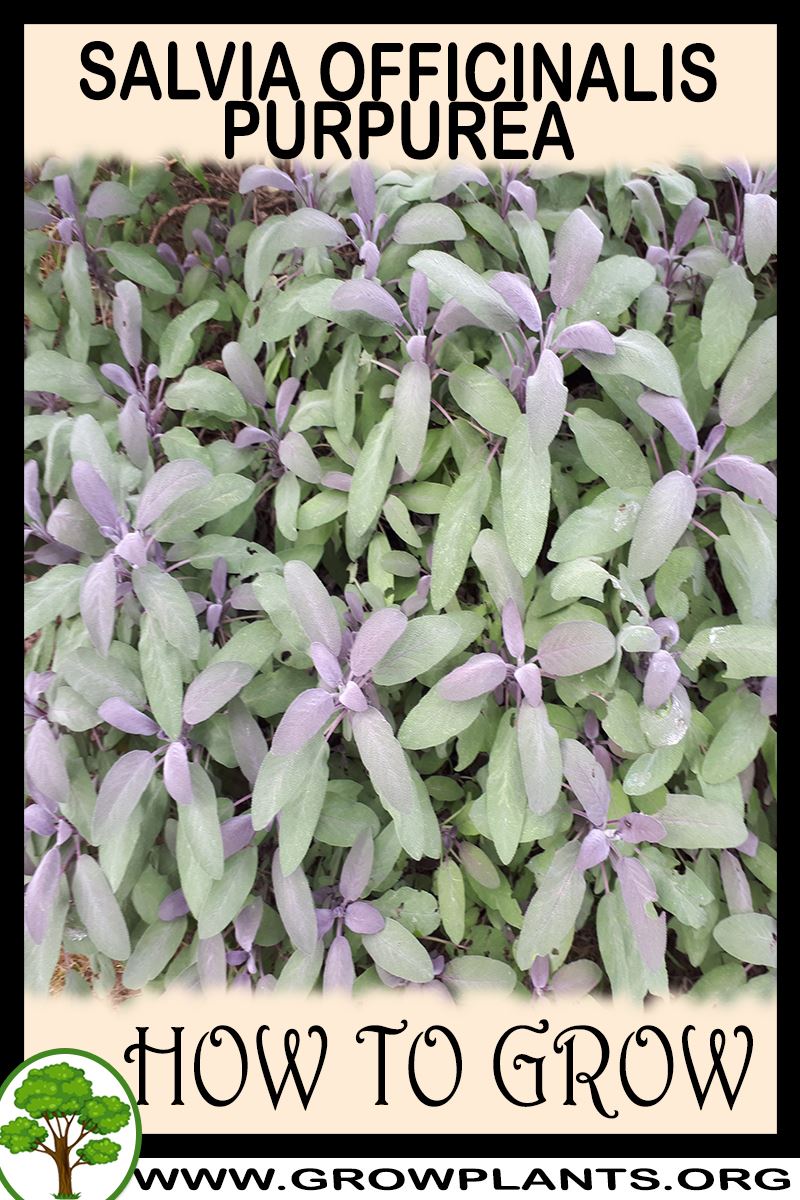
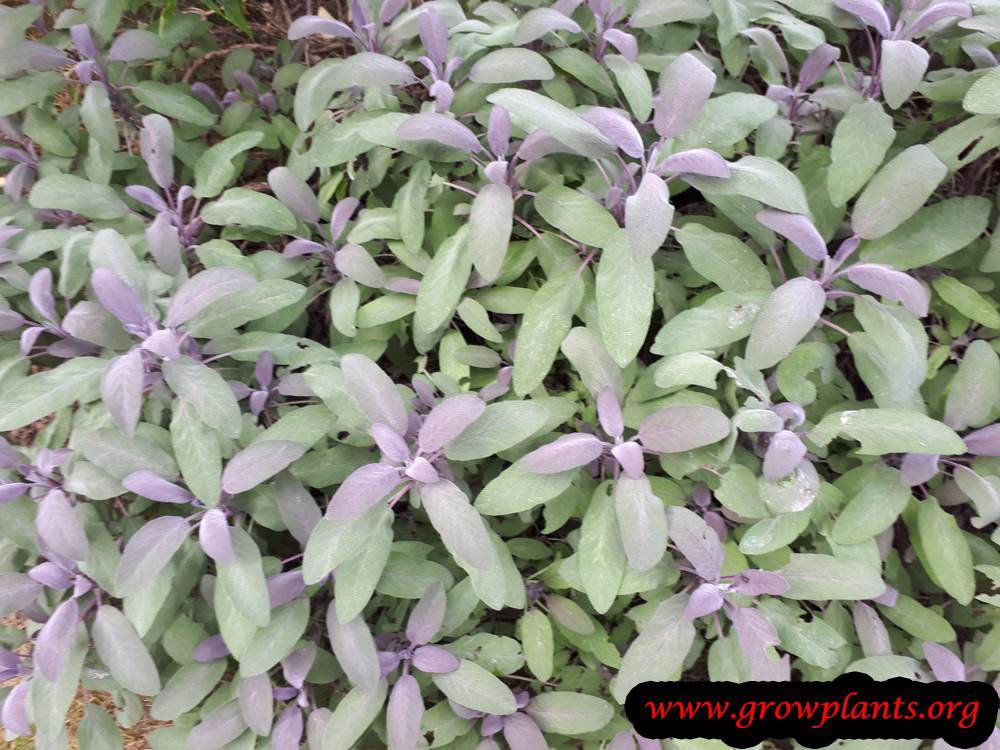
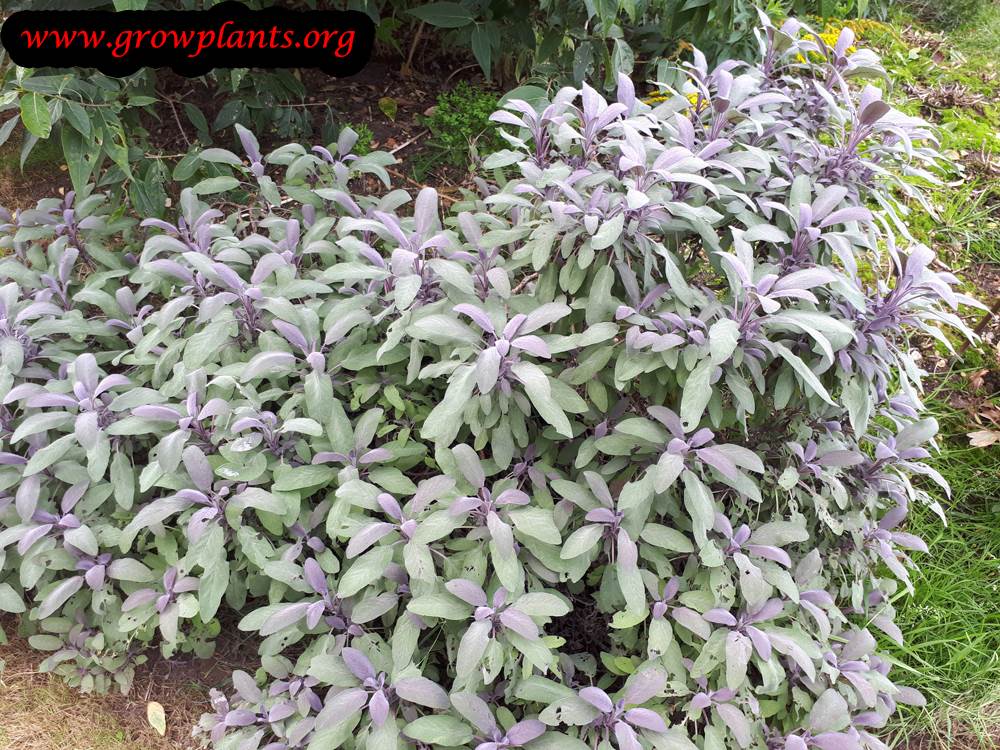
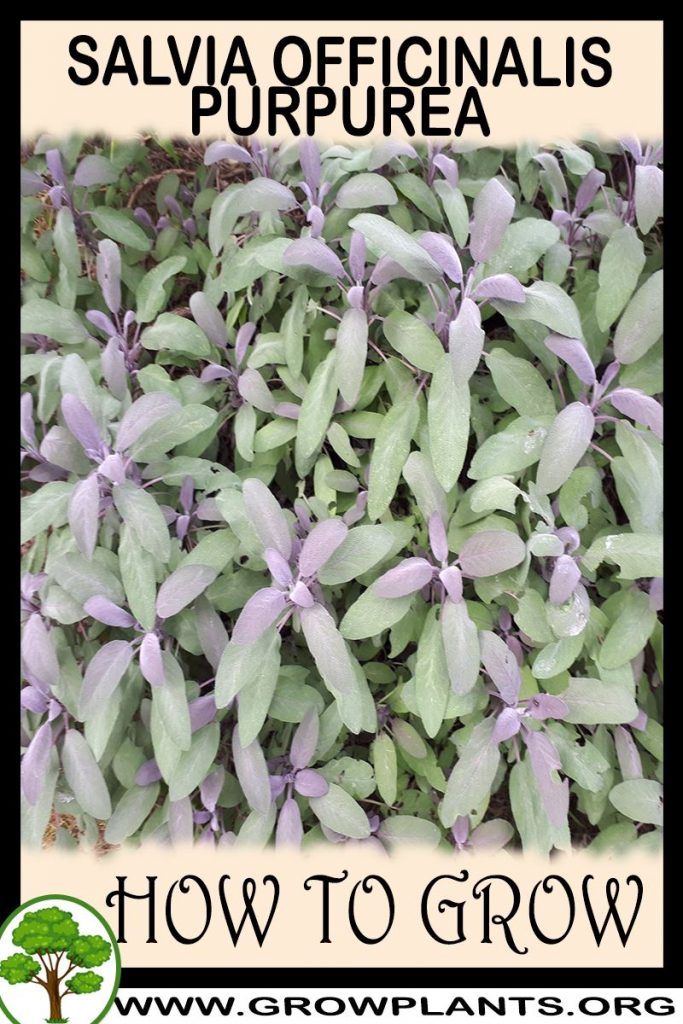
Overview: A purple-leaved form of culinary sage, an evergreen shrub 0.3-1 m (1-3 ft) tall grown for its edible aromatic leaves and its ornamental purple-and-green foliage. It is a hardy, moderate-growing perennial herb.
Quick Specifications
| Specification | Attribute |
|---|---|
| Plant Type / Life Cycle | Evergreen perennial shrub (herb) |
| Foliage Type | Evergreen |
| Mature Size | 0.3-1 m (1-3 ft) tall |
| Growth Rate | Moderate |
| Toxicity | Non-toxic / edible culinary herb |
| Hardiness | USDA zone 5-11 |
Growth Form & Structure
- Height & Spread: A low, spreading shrub 0.3-1 m (1-3 ft) tall in the ground; grows well in a 10-20 L (2.6-5.2 gal) container, and can be kept indoors in a bright spot (though it may not bloom).
- Growth Habit & Form: Woody-based, mounded, well-branched shrub; dislikes constantly wet soil and prefers sharp drainage.
- Lifespan & Maturity: A perennial herb productive for several years once established.
Anatomy & Physical Features
- Leaves & Foliage: Aromatic, hairy, oval leaves flushed purple with green; winter leaves are smaller and thicker than summer growth.
- Flower Characteristics: Small purple-white flowers on upright spikes.
Primary Uses & Landscape Value
- Edible Uses: Used like common sage as a culinary herb, spice and tea.
- Functional & Ornamental Roles: A decorative culinary herb whose purple foliage suits herb gardens, borders and containers.
Care Guide: Planting, Soil & Watering
Overview: Purple-leaved common sage is a Mediterranean culinary shrub for full sun and light, sharply drained soil. It is drought-tolerant and sensitive to excess moisture, so let the soil dry between waterings and keep water off the leaves. In very hot climates, light afternoon shade helps protect the plant and preserve its purple leaf color.
Quick Care Requirements
| Requirement | Ideal Condition |
|---|---|
| Planting Season | Spring to summer; also autumn-winter in warm climates |
| Growth Rate | Moderate |
| Soil Type | Light, well-draining soil |
| Water Need | Low to moderate — drought-tolerant once established; let the top few cm dry out between waterings |
Planting & Establishment
- Best Planting Season: Plant in spring or summer in cooler zones, and also in autumn or winter in warm, frost-free climates while the soil is workable.
- How to Plant:
- Hole Preparation: Dig a planting hole roughly twice as wide as the root ball but no deeper, so the roots can spread into loosened soil.
- Soil Amendments: Work in a little compost to improve structure, and add grit or coarse sand to sharpen drainage on heavier soils — these sages dislike rich, soggy ground.
- Planting Depth: Set the plant at the same depth it grew in its pot, with the root collar level with the surface — never bury the stem, which invites rot.
- Growth Speed & Expectations: Expect a moderate, steady pace of growth, reaching a good size over a season or two.
Soil, Watering & Drainage Care
- Soil Mix & Drainage Needs: Provide light, aerated, sharply drained soil; in containers use a free-draining potting mix with added perlite or vermiculite rather than heavy garden soil, and make sure excess water escapes freely, since waterlogged roots quickly rot.
- Watering Schedule & Technique:
- Young / Newly Planted: Water regularly right after planting to settle the roots, keeping the soil lightly moist while the plant establishes.
- Established: Once established it is drought-tolerant — water deeply but infrequently, letting the top few centimetres dry out before watering again.
- Seasonal Adjustments: Increase watering during prolonged heat and cut right back over the cool, wet season, since soggy soil is the main cause of rot.
Note: Space plants roughly 30-40cm (12-16in) apart.
Climate, Light & Hardiness
Salvia officinalis Purpurea (purple sage) is well suited to mediterranean, subtropical, and temperate climates with dry, well-drained conditions, and it needs full sun in cooler areas or can take half to full shade where summers are hot. It is a genuinely cold-hardy shrub, reliable outdoors from about USDA zone 5 through 11, and possible with overwinter protection in zone 4b.
Quick Climate Specifications
| Climate Zones | Mediterranean, subtropical, temperate |
|---|---|
| USDA Hardiness Zones | 5–11 (4b possible with overwinter protection) |
| Approx. Survival Minimum | Approximately −28.9°C to −23.3°C (−20°F to −10°F) at the zone 5 edge, briefly, for established plants |
| Frost Tolerance | High |
| Light Conditions | Full Sun (cooler climates) to Half/Full Shade (hot climates) |
Sunlight & Light Exposure
Optimal Light Setup
Full sun in cooler regions produces the best leaf color and compact growth; in hot climates it tolerates half to full (light) shade instead, which reduces heat and moisture stress.
Shade & Heat Management
Where summers are intensely hot, part shade combined with reduced watering (this species dislikes consistently wet soil) keeps the plant healthiest.
Temperature Extremes & Hardiness
USDA Hardiness & Regional Limits
A dependable perennial shrub from about zone 5 through 11; with overwinter protection (mulch, siting against a warm wall, etc.) it can also persist in zone 4b.
Cold Damage & Winter Protection
Winter protection becomes important at the coldest edge of its range (zone 4b–5); well within its normal range it needs no special measures.
Frost Sensitivity
Established plants have good frost tolerance for a Mediterranean-climate shrub, though young plants are more vulnerable and benefit from protection their first winter.
Wind, Humidity & Microclimate
Humidity Preferences
Prefers relatively dry air; humid, rainy conditions combined with wet foliage promote disease, so good air circulation matters more than ambient humidity.
Rainfall & Seasonal Moisture
Adapted to a dry-summer, Mediterranean-type rainfall pattern; in climates with heavy summer rain, free-draining soil and reduced supplemental water are important to avoid problems from excess moisture.
Growing in Pots, Balconies & Indoors
Purple sage is a compact culinary shrub-herb (0.3-1 m). The grower says it can be grown indoors if given good light, though it may not flower – it is a classic sunny-windowsill herb and thrives in pots on a patio or balcony.
Quick Details
- Container Size: 10-20 L (2.6-5.2 gal) pot
- Indoor Suitability: Grows indoors with strong light (may not flower) – best on a sunny windowsill
- Best Spot: Full sun (more water in cold climates); part to full shade in hot, bright climates
- Soil & Drainage: Well-drained, well-aerated mix with plenty of holes
- Watering in Pots: Small to average – let it drain freely, do not keep it soggy
Indoors & On the Windowsill
- Windowsill herb: The grower confirms it can grow indoors given plenty of light, though it may not bloom – a bright, sunny kitchen windowsill is ideal for snipping leaves.
- Light: Without strong light it grows weak and leggy, so give it your brightest sill.
On a Balcony or Patio
- Sunny spot: Full sun on a patio or balcony (a little shade in fierce heat); it is drought-tolerant once established.
- Light & heat: Walls, railings and paving reflect heat and wind dries pots fast, so check moisture often and water more in hot spells.
Choosing the Pot, Soil & Long-Term Care
- Pot & drainage: A 10-20 L pot with plenty of drainage holes; the grower advises against leaving it in a water-filled saucer.
- Potting mix: Well-aerated and free-draining – potting mix, or peat with perlite or vermiculite.
- Feeding: Container plants use up food faster because watering washes nutrients out – feed a little and often through the growing season.
- Repotting: Swap out all or part of the soil every few years to keep it fresh.
Fertilizing & Feeding
Purple sage is a lean-feeding Mediterranean herb – it grows best in well-drained soil with minimal added nitrogen, which keeps growth compact and flavorful rather than lush and disease-prone.
Quick Fertilizing Specs
| Feeding Level | Light feeder; performs well in lean, well-drained soil |
|---|---|
| Main Nutrient Priority | Balanced to low-nitrogen feeding to protect leaf flavor and reduce disease risk |
| Best Feeding Period | Spring at the start of the growing season, before major harvest |
| Organic Options | A light topdressing of compost worked in at the start of the growing season |
| Reduce/Stop Feeding | Ease off once the plant is established and harvesting is underway; extra feeding rarely helps |
Feeding by Growth Stage
Establishment
Help new sage plants root in without stressing them with fertilizer salts.
| Nutrient direction | None – withhold fertilizer while roots establish in well-drained soil. |
|---|---|
| Timing | The first few weeks after transplanting or direct sowing. |
| Frequency | No feeding at this stage. |
| Fertilizer types | No feeding at this stage; enrich the planting soil with a little compost at planting time instead. |
| Precautions | Do not fertilize newly planted sage; it establishes best in lean, well-drained soil without extra feeding. |
Active Growth
Support steady leaf production for harvest without pushing soft, disease-prone growth.
| Nutrient direction | A light, balanced-to-low-nitrogen feed – sage grown for aromatic leaves does best without heavy nitrogen, which dilutes flavor and raises disease risk in humid conditions. |
|---|---|
| Timing | Spring through the main growing season, ahead of major harvest pushes. |
| Frequency | A light feeding at the start of the growing season is usually enough for this low-demand herb. |
| Fertilizer types | A balanced, low-nitrogen organic or slow-release fertilizer, or a light topdressing of compost. |
| Precautions | Keep feeding light – sage is sensitive to excess moisture and rich soil, and over-fertilizing increases the risk of fungal problems. |
Nutrient Deficiency Signs & Corrections
Leaf production is sparse and leaves look pale rather than their expected purple-green color.
| Possible causes | Nitrogen deficiency from very lean soil with no feeding history, Waterlogged or poorly drained soil stressing roots, Insufficient sun exposure |
|---|---|
| Appears first on | New growth and overall plant vigor |
| What to check | Feeding and soil-amendment history, Soil drainage and recent rainfall or watering, Hours of direct sun the site receives |
| Possible correction | Apply a light balanced feeding during active growth and confirm the site drains well and gets adequate sun. |
Lower leaves yellow and the plant looks generally unthrifty despite a normal feeding routine.
| Possible causes | Root stress from consistently moist or heavy soil, Fungal root or crown disease favored by excess moisture, Overfeeding causing salt buildup around roots |
|---|---|
| Appears first on | Lower and older leaves first |
| What to check | Soil moisture and drainage patterns, Roots and crown for rot or fungal signs, Recent fertilizer frequency and strength |
| Possible correction | Improve drainage, let soil dry between waterings, and reduce fertilizer frequency if overfeeding is suspected. |
New leaves emerge yellowish between the veins while the veins remain green.
| Possible causes | Iron deficiency linked to alkaline or waterlogged soil, Cold soil temperatures slowing nutrient uptake, Compacted soil limiting root access to nutrients |
|---|---|
| Appears first on | Newest leaves |
| What to check | Soil pH and drainage, Soil temperature relative to season, Soil compaction around the root zone |
| Possible correction | Improve drainage and soil structure; correct pH and apply a chelated iron product per its label if chlorosis persists. |
Pruning, Training & Seasonal Maintenance
Salvia officinalis Purpurea is a woody-based evergreen subshrub grown for both its purple culinary leaves and its ornamental foliage. It tolerates light-to-moderate pruning well but, like other woody Lamiaceae subshrubs (lavender, rosemary), resprouts poorly from old, leafless wood, so cuts should stay within actively leafy growth. The main objectives are preventing the bare, woody, sprawling habit it develops after a couple of untrimmed years, and – when grown for the kitchen – removing flower stalks to keep leaf production and quality high rather than letting the plant put energy into bloom. The safest time for the main structural trim is late winter to early spring, after hard frost risk has passed but before strong new growth begins.
Quick Pruning & Maintenance Specs
| Pruning Tolerance | Moderate (tolerates trimming into leafy wood; poor recovery from bare old wood) |
| Primary Pruning Window | Late winter–early spring, after frost risk passes |
| Secondary Maintenance Window | Light tip-pinching/harvesting through the growing season |
| Typical Frequency | One structural trim per year, plus ongoing tip-pinching |
| Main Objective | Prevent legginess/bare centers; boost leaf quality by removing bloom stems |
| Young Plant Priority | Repeated tip-pinching in the first season to build a bushy, multi-branched framework |
| Mature Plant Priority | Annual spring trim of the past season’s growth; remove flower stalks if grown mainly for leaves |
| Best Tool Type | Precision snips for tips/harvest; bypass secateurs for the annual structural trim |
| Avoid Heavy Pruning During | Cutting into bare, leafless old wood, and just before a hard frost |
Pruning by Plant Age & Size
Newly Established
Pinch growing tips repeatedly through the first season rather than doing a structural cut – this builds a dense, multi-branched framework of young wood while the plant is still small, which matters later because old wood on this species does not resprout reliably.
Young / Formative
No single training system (like central-leader) applies; the goal is simply an open, multi-branched mound built from repeated tip-pinching in year one, giving the plant a wide base of young wood to renew from in later years.
Mature / Established
Each spring, trim the past season’s growth back by about a third, always cutting into wood that still carries leaves; remove flower spikes as they form if the plant is grown mainly for culinary leaf quality, since blooming diverts energy from leaf production.
Seasonal Pruning Schedule
Pre-Growth / Early-Spring
Objective: reset shape and stimulate dense new growth before the main flush. Remove: roughly the outer third of last year’s stems, cutting just above a leafy node. Do not remove: growth below the lowest leaves – cutting into bare old wood there often fails to resprout. Expected response: a flush of new, compact growth from just below each cut. Flowering impact: removes some of the season’s potential flower buds, which is generally a welcome trade-off for a plant grown for its leaves.
Ongoing Sanitary
Remove any winter-damaged, dead, or fungal-affected stems as noticed through the year, cutting back into clean, healthy wood.
Flowering & Fruiting Wood
Flowers form on the current season’s new growth, not on older wood, so an annual trim does not sacrifice a future year’s bloom the way pruning a one-year-wood shrub would – the plant simply produces a fresh flush of flowering stems each year from whatever wood is left after pruning. Where the priority is leaf quality rather than flowers, removing the flower spikes as they appear (deadheading before bloom) redirects the plant’s energy into foliage instead.
Structural Pruning & Training
Favor an open, rounded framework of several main stems rather than a single dominant leader, both for a fuller shape and to keep air moving through the foliage – this species is noted as sensitive to moisture sitting on its leaves, and an overly dense, congested center increases that risk. Remove any crossing or inward-rubbing stems at the same time as the annual trim.
Special Growth to Remove
- Spent or forming flower stalks, when the plant is grown primarily for culinary leaves.
- Dead or winter-damaged stems, cut back to clean, leafy wood.
- Any stem that has flopped onto damp soil, since ground contact combined with this species’ moisture sensitivity raises rot/fungal risk.
Container & Small-Space Pruning
Grows well in containers of roughly 10–20L. Pot-grown plants dry out faster and are easier to keep compact with more frequent light tip-pinching rather than relying solely on the one annual trim; because container soil can also stay wetter around the crown than open ground, keep the base of the plant a little more open (remove inward growth) to help it dry out after watering.
Tools
Precision snips for tip-pinching and culinary harvest; bypass secateurs for the tougher annual structural trim into semi-woody stems. Loppers and a saw are never needed on a subshrub this size.
Tool Hygiene & Disease Risk
Increased care is warranted: this species is specifically noted as sensitive to moisture on its foliage, so avoid pruning right before rain or irrigation, since fresh cuts on damp foliage are more prone to fungal entry. Wipe blades clean between plants if any fungal-affected stems were removed.
Cut Placement & Technique
Always cut just above a set of healthy leaves, never into bare stem below the lowest leaf – unlike many shrubs, this genus does not reliably break new growth from leafless old wood. Use thinning-style cuts (removing a whole stem back to its point of origin) for crossing or congested growth, and light heading cuts for the annual shape-and-size trim.
Heavy Pruning & Rejuvenation
Only cautiously tolerated: unlike shrubs that can be cut hard to bare wood and resprout freely, sage’s recovery from old, leafless wood is unreliable, so even a rejuvenation trim should stay within stems that still carry some leaves. A very woody, sparse, several-year-old plant is often better propagated from cuttings and replaced than forced through a hard rejuvenation cut that may leave bare, dead sections.
Post-Pruning Care
Water normally after a light trim. After the annual spring structural trim, avoid overhead watering directly onto the fresh cuts given this plant’s noted sensitivity to moisture on its foliage; let the plant dry between waterings as it regrows. No extra feeding is needed – this species prefers lean, well-drained conditions, and rich feeding after pruning tends to produce soft, floppy, less flavorful growth.
Common Pruning Mistakes
- Cutting hard into bare, leafless old wood expecting it to resprout, resulting in dead stubs.
- Never trimming at all, leading to a sprawling, woody, hollow-centered plant within a few years.
- Watering heavily right after pruning, compounding this species’ known sensitivity to wet foliage and soil.
When NOT to Prune
Avoid a hard trim right before an expected frost – fresh new growth is more cold-tender than mature stems. Avoid pruning immediately before rain or heavy irrigation, given the plant’s documented sensitivity to moisture on its leaves.
Recommended Tools (by task)
- precision_snips – tip-pinching and culinary harvest through the season.
- bypass_secateurs – the annual spring structural trim into semi-woody stems.
Pruning Troubleshooting
| Problem | Possible Cause | What to Check | Corrective Action |
| Bare, woody center with foliage only at the tips | Several seasons without a structural trim; cuts always made too high, never renewing lower growth | Look for green, leafy nodes lower on the stems | Trim harder into the lowest leafy growth over 1–2 seasons; if the base is entirely bare, propagate cuttings and replace the plant |
| Cut stem section dies back with no regrowth | Cut made into bare wood below the lowest leaf | Check exactly where the cut was made relative to the nearest leaf node | Always cut above a leafy node in future; remove the dead stub back to living tissue |
| Blackened or mushy stems after pruning, especially in a wet spell | Fungal infection entering a fresh cut combined with this species’ sensitivity to wet foliage | Inspect for soft, discolored tissue near recent cuts; check recent watering/rain timing | Remove affected stems back to clean tissue, avoid watering foliage, improve airflow around the base |
| Fewer, smaller leaves after a season of heavy flowering | Flower stalks left in place, diverting energy from leaf growth | Check whether flower spikes were deadheaded through the season | Remove flower stalks as they form next season if leaf production/quality is the priority |
Propagation Guide
Salvia officinalis purpurea is best propagated using stem cuttings or division when the goal is to preserve the current plant form.
Quick Propagation Specs
| Preferred Method | Stem cuttings or division |
| Seed | Seed may not preserve the purple-leaved form |
Vegetative Propagation
Take healthy vegetative material with viable nodes, avoid flowering or damaged growth, and root it in a clean, free-draining propagation medium. Maintain steady humidity without keeping the medium waterlogged.
Seed Propagation
Seed may not preserve the purple-leaved form. When seed is used, sow mature viable seed in a clean, free-draining medium at around 15-25C (59-77F); germination is possible down to about 10C and up to about 29C, but is slower and less reliable outside the ideal range.
Aftercare
Protect newly propagated plants from severe drought, heat and waterlogging until new roots and shoots are established.
Note: Sow seed about 3-6mm deep, or barely cover.
Bloom & Edible Flower Guide
Quick Details
- Bloom Season: Spring into summer, and in the mildest, frost-free areas it may also flower again in autumn
- Time to First Bloom: Established plants usually flower from their second year, sometimes late in the first
- Flower Appearance: Small, two-lipped purple flowers arranged in whorls up an upright spike
- Edibility: Edible — the flowers of culinary sage are edible, with a mild, savoury, sage flavour, and make an attractive garnish
Detailed Blooming Overview
Salvia officinalis Purpurea is the purple-leaved form of common culinary sage, and like the plain green sage it sends up spikes of nectar-rich flowers in the warmer months. The bloom is a bonus on top of the aromatic leaves: bees adore it, and the small flowers can be scattered over food. Many cooks pinch out the flower spikes to keep the leaves at their best, so bloom is often a matter of choice.
Flower Characteristics
- Small, hooded, two-lipped flowers in soft purple, typical of the sage family.
- Carried in tiered whorls along an upright flowering stalk that rises above the foliage.
- Fragrant and full of nectar, drawing bees and flies.
Bloom Care & Thinning
- Leaves or flowers: If you grow the plant mainly for its leaves, pinch the flower spikes out as they form to keep growth leafy and flavourful; leave them if you want the bloom and the pollinators.
- Using the flowers: Pick freshly opened flowers and use them as a garnish or scattered into salads.
- After flowering: Trim the plant lightly once the spikes fade to keep it neat and bushy.
Fruit & Uses
Purple sage is grown specifically for its edible leaves, used fresh or dried as a culinary herb, spice and beverage ingredient, alongside its ornamental purple-and-green foliage. The leaves are used raw or cooked, most often after light drying, with no special preparation required beyond harvesting and washing.
Quick Edible Specs
| Edible Parts | Leaves |
|---|---|
| Main Use(s) | Herbs, spices, beverage (site: “Uses of Salvia officinalis Purpurea leaves”); also traditionally used medicinally |
| Eaten Raw or Cooked | Both – fresh in cooking or dried for storage/tea |
| Preparation Required | None to eat fresh; drying recommended for longer-term herb/spice storage |
| Harvest Season | Spring to summer in hardiness zone 4–7; spring to autumn in zone 8–10a; all year in zone 10b–11 (site) |
| Time to First Harvest | After the plant is established (site); see Propagation/Care for establishment timing – not duplicated here |
| Storage | Best air-dried for long-term herb/spice use; fresh leaves keep only briefly |
| Safety/Toxicity Caveat | None specific beyond normal culinary-herb moderation; avoid confusing with non-culinary Salvia ornamentals |
Leaves & Greens
The hairy, purple-with-green leaves are the edible part; per the site, the plant produces two distinct leaf forms – smaller, thicker leaves in winter and larger leaves in summer. Leaves are harvested by cutting the stems once the plant is established (site: “better to cut the stems after the plant established”), during the harvest windows above. Use fresh as a culinary herb and flavouring, or dry for storage as a spice or for herbal tea/beverage use. Note that the site’s pruning guidance for this plant – cutting back bloom stems to favour leaf quality – directly affects the edible leaf harvest: letting the plant flower diverts energy from leaf production, so for kitchen use it is generally pruned before or instead of blooming (see Pruning for the general technique; not repeated here).
Harvesting
Harvest by cutting stems rather than stripping individual leaves, once the plant is well established; this can be repeated across the harvest window rather than being a single cut, and light, regular picking through the growing season encourages fresh new growth. In the mildest zones (10b–11) leaves can be harvested year-round.
Preparation, Uses & Safety
Leaves are used fresh or dried as a culinary herb and spice, and in beverages (site-confirmed uses). Sage is also traditionally used medicinally, though no specific health claims or dosing are made here. No cooking or detoxification step is required – the leaves are safe to eat fresh once washed. As with any culinary herb, use in normal food-seasoning quantities.
Pests, Diseases & Troubleshooting
Overview: Purple sage is the purple-leaved culinary form of common sage, sharing its aromatic, pest-resistant nature; its chief risks are root/crown rot in wet soil and powdery mildew, with rosemary beetle, aphids and leafhoppers as minor issues.
Quick Troubleshooting Overview
| Issue / Pest | Main Symptom | Primary Solution |
|---|---|---|
| Rosemary beetle | Metallic striped beetles; notched aromatic leaves | Hand-pick adults and grubs; clear litter |
| Aphids / leafhoppers | Clustered insects; pale flecking on leaves | Water jet; insecticidal soap if heavy |
| Spittlebug | Frothy ‘cuckoo spit’ on stems | Cosmetic – wash off with water |
| Powdery mildew | White powder on the foliage | Improve airflow; sulphur/bicarbonate; harvest tips |
| Root / crown rot | Wilting and collapse in wet soil | Very sharp drainage; never overwater |
Common Pests & Management
- Rosemary beetle (Chrysolina americana):
- Symptoms: Rounded, metallic green-and-purple striped beetles and their grey grubs chewing the aromatic foliage of sage, rosemary and lavender from late summer onward; leaves become notched and ragged.
- Prevention & Control: Hand-pick adults and larvae (hold a tray under the plant and tap them off); clear leaf litter where they shelter. Chemical sprays are rarely justified on culinary herbs – physical removal keeps numbers down without contaminating leaves you will eat.
- Aphids (Aphis / Myzus spp.):
- Symptoms: Clusters of small green, black or grey soft-bodied insects on tender new shoots, flower stalks and leaf undersides; sticky honeydew, sooty mould and distorted, curling young growth, often with ants in attendance.
- Prevention & Control: Blast colonies off with a firm jet of water in the morning; encourage ladybirds, lacewings and hoverflies by leaving some flowers; pinch out badly infested tips. If needed, treat with insecticidal soap or a light horticultural/neem oil, coating leaf undersides and repeating weekly.
- Leafhoppers (Cicadellidae):
- Symptoms: Small wedge-shaped insects that hop or run sideways when disturbed, causing pale flecking or stippling on the leaves and occasional distortion; more noticeable on culinary sages in warm weather.
- Prevention & Control: Tolerate light numbers – damage is mostly cosmetic. Encourage predatory insects, hose the foliage, and use insecticidal soap or neem on heavy infestations, spraying undersides in the cool of the evening.
- Spittlebugs (froghoppers) (Philaenus spumarius):
- Symptoms: Frothy white ‘cuckoo spit’ on stems and leaf joints in late spring, sheltering a soft green nymph; slight distortion but usually little real harm.
- Prevention & Control: Largely cosmetic – wash the froth off with a jet of water; no spraying is normally needed. Because this insect can carry Xylella in affected regions, keep plants vigorous and buy from clean stock.
- Two-spotted spider mites (Tetranychus urticae):
- Symptoms: Fine pale stippling or bronzing on the leaves, later a dusty look and delicate webbing on the undersides; leaves dry and drop. Flares up in hot, dry, dusty or indoor conditions.
- Prevention & Control: Raise humidity and hose the foliage down (mites hate moisture); remove heavily webbed leaves; avoid drought stress. Treat with horticultural oil or insecticidal soap, thoroughly wetting leaf undersides, and repeat every 5–7 days for several rounds.
- Slugs & snails (Gastropoda):
- Symptoms: Ragged holes chewed in young leaves and soft new shoots, especially in spring and after rain, with slime trails on soil and foliage; most damaging to seedlings and fresh basal growth.
- Prevention & Control: Clear hiding places near the crown; hand-pick after dark; protect young plants with copper rings, grit or wool pellets; use iron-phosphate slug pellets sparingly where pressure is high.
Diseases & Fungal Issues
- Powdery mildew (Golovinomyces / Erysiphe spp.):
- Symptoms: White powdery patches on upper leaf surfaces and stems, spreading to coat the foliage; leaves may yellow, curl and drop. Worst in crowded plantings with poor airflow, humid nights and dry days.
- Treatment & Management: Space and prune for good air movement; avoid overhead watering late in the day; remove and bin affected leaves. Treat with a potassium-bicarbonate, sulphur or biofungicide spray, and choose mildew-tolerant varieties where it recurs.
- Root & crown rot (Rhizoctonia / Pythium / Phytophthora spp.):
- Symptoms: Wilting despite moist soil, blackened crown, mushy roots and sudden collapse – most often on Mediterranean sages sitting in wet, heavy ground over winter. This, not insects, is the biggest killer of shrubby salvias.
- Treatment & Management: Prevention is everything: plant in free-draining, gritty soil, avoid overwatering, and never let the crown sit wet. Improve drainage or grow in raised beds/pots. Remove and destroy collapsed plants; there is no reliable cure once rot is advanced.
- Leaf spot (Cercospora / Septoria spp.):
- Symptoms: Brown or purple-ringed spots that enlarge and merge on lower, older leaves in wet spells; heavy spotting yellows the leaves and causes drop.
- Treatment & Management: Remove and bin affected leaves; water at the base, not over the foliage; thin crowded growth for airflow. A copper-based fungicide can slow persistent outbreaks, but cultural control is usually enough.
- Grey mould / Botrytis (Botrytis cinerea):
- Symptoms: Fuzzy grey-brown mould on faded flowers, soft stems and crowded leaves, rotting and collapsing them; common in cool, damp, still conditions and on winter-protected plants.
- Treatment & Management: Remove spent flowers and dead material promptly; increase ventilation and reduce leaf wetness; avoid overcrowding. A biofungicide or, if severe, a labelled fungicide can help – but sanitation and airflow are the real fix.
Growing Difficulties & Abiotic Problems
- Wet feet & winter root rot:
- Cause & Symptoms: Salvias – especially shrubby Mediterranean and Mexican types – hate cold, soggy soil. Waterlogging in winter suffocates and rots the roots, causing yellowing, collapse and death often blamed on cold when drainage is the real culprit.
- Correction Strategy: Plant high in sharply drained, gritty soil; add horticultural grit to heavy ground or use raised beds and pots. Water sparingly once established, and cut back watering going into the cool season.
- Woodiness & die-out of the centre:
- Cause & Symptoms: Older shrubby sages (common sage, Greek sage, autumn sage) become woody, bare and sparse in the middle, with reduced leaf quality, if never pruned.
- Correction Strategy: Prune lightly each year after flowering (never hard into old bare wood on the truly woody types), and replace tired plants every few years from cuttings, which root easily.
- Chlorosis in heavy or wet soil:
- Cause & Symptoms: Pale, yellowing leaves with green veins where roots are stressed by compacted, waterlogged or very alkaline soil that limits iron and manganese uptake.
- Correction Strategy: Improve drainage and structure with grit and organic matter; avoid overwatering; a chelated-iron feed gives a temporary green-up while you fix the soil.
- Sunburn & heat/wind scorch:
- Cause & Symptoms: Bleached, brown-edged or crisped leaves where plants moved suddenly into fierce sun, hot drying wind or reflected heat without hardening off.
- Correction Strategy: Harden plants off gradually, keep them adequately (not excessively) watered in heat, and mulch the root zone; light afternoon shade helps in the hottest sites.
What Helps – Products & Tools
For the few pests salvias get, reach first for insecticidal soap, a light horticultural or neem oil, and yellow/blue sticky traps; a jet of water clears aphids and mites. For disease, airflow and good drainage do most of the work, backed by a potassium-bicarbonate or sulphur spray for powdery mildew and a copper fungicide for leaf spot or downy mildew. On culinary sage, favour physical removal, water sprays and, at most, insecticidal soap or sulphur, and always observe harvest intervals before eating the leaves. Always follow the label, and spray oils in the cool of the evening to protect the bees that love salvia flowers.