Plant Profile & Key Characteristics
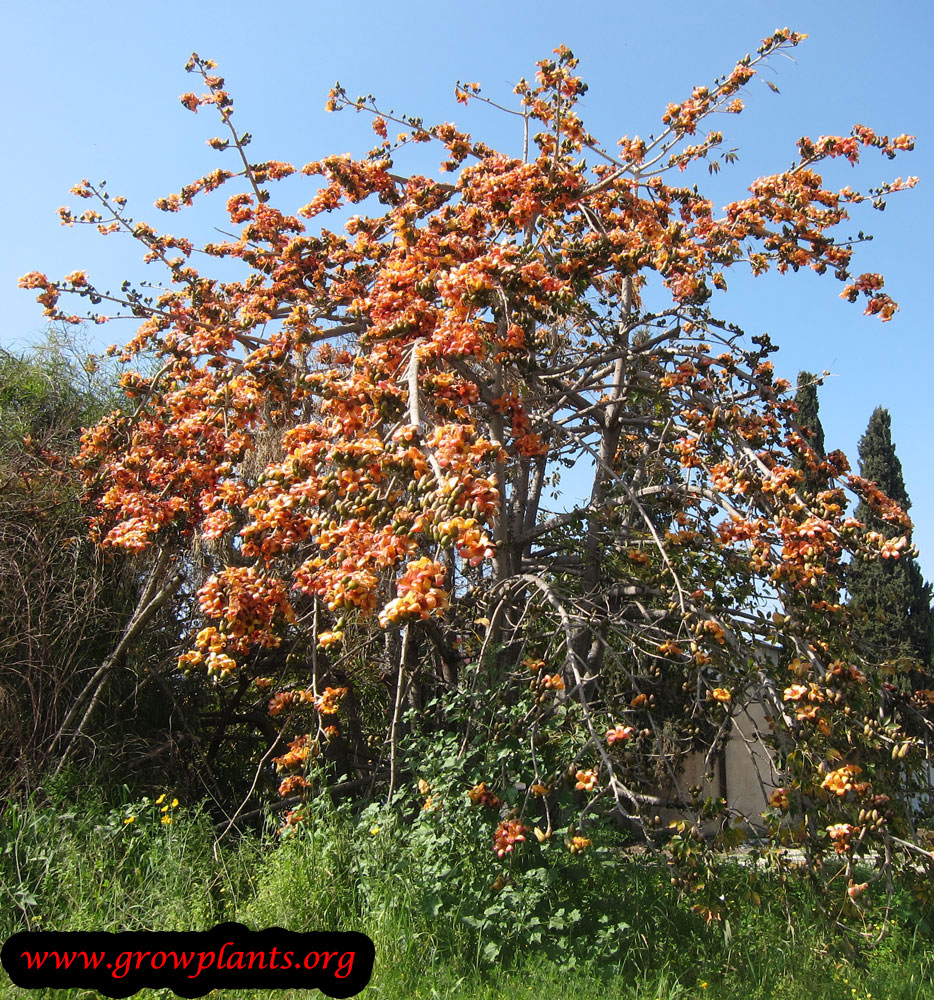
Overview: A large deciduous tree 7-18 m (21-56 ft) tall, grown as an ornamental and shade tree and prized for its big red-orange waxy flowers borne on bare branches. It is a drought-tolerant species also trained as bonsai.
Quick Specifications
| Specification | Attribute |
|---|---|
| Plant Type / Life Cycle | Perennial |
| Foliage Type | Deciduous |
| Mature Size | 7-18 m (21-56 ft) tall |
| Growth Rate | Moderate to slow |
| Hardiness | USDA zone 10+ |
Growth Form & Structure
- Height & Spread: 7-18 m (21-56 ft) tall; not suited to containers at maturity, though young plants are trained as bonsai.
- Growth Habit & Form: Large tree with a spreading crown; leaves are shed before the flowers open.
- Lifespan & Maturity: Long-lived tree of moderate to slow growth.
Anatomy & Physical Features
- Trunk & Bark: Stout trunk, often bearing conical prickles when young.
- Leaves & Foliage: Green, palmately compound leaves with 5-7 elliptic leaflets.
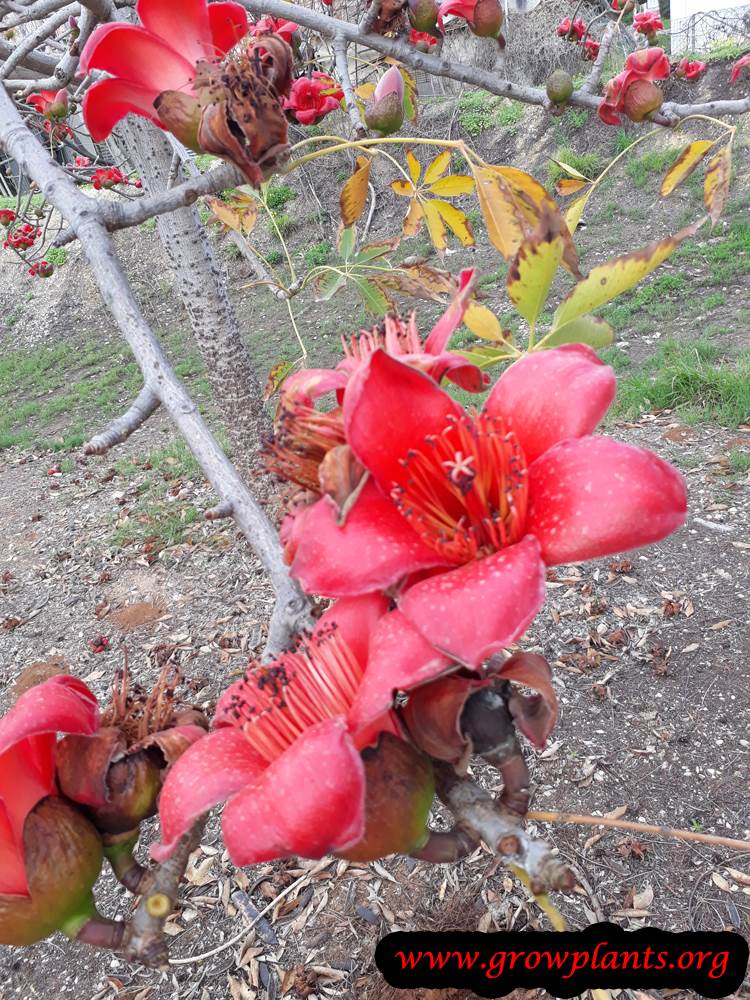
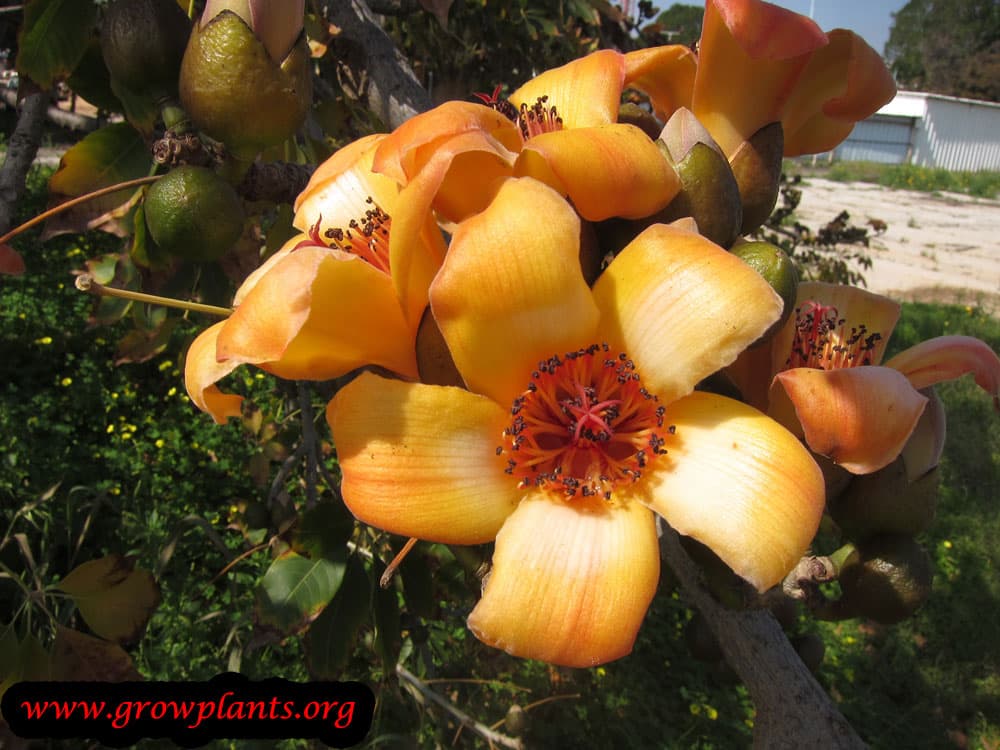
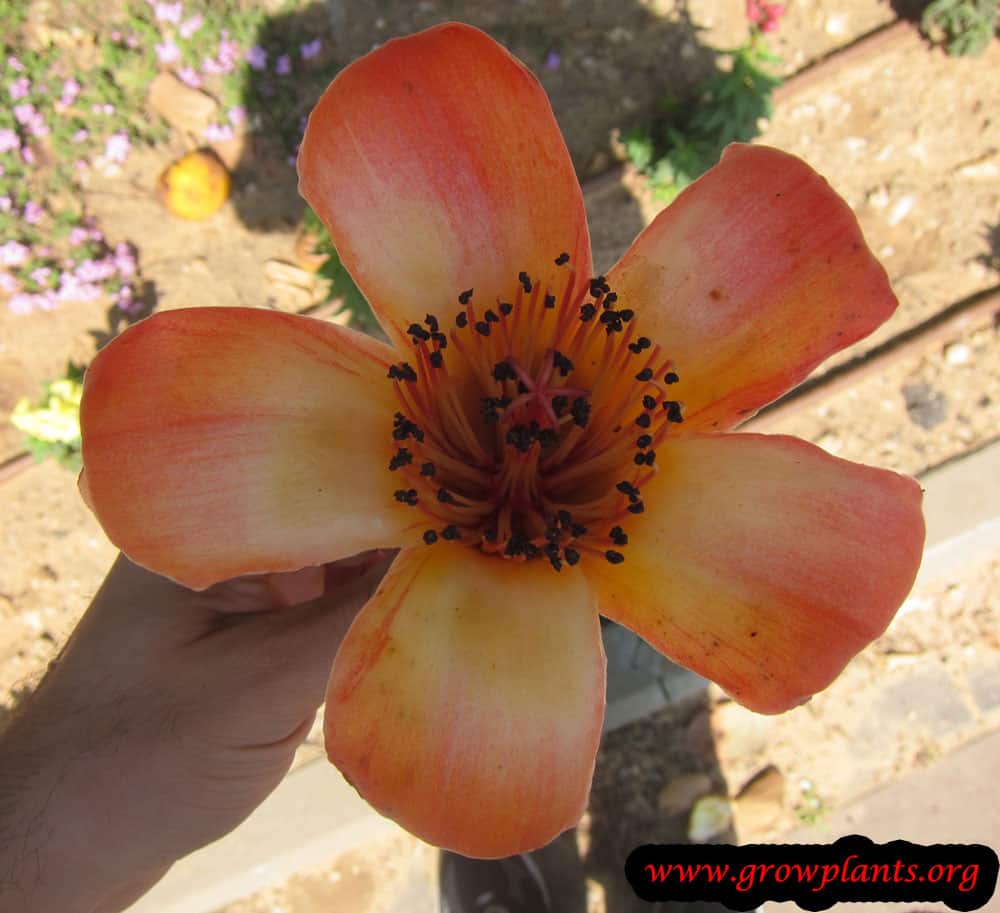
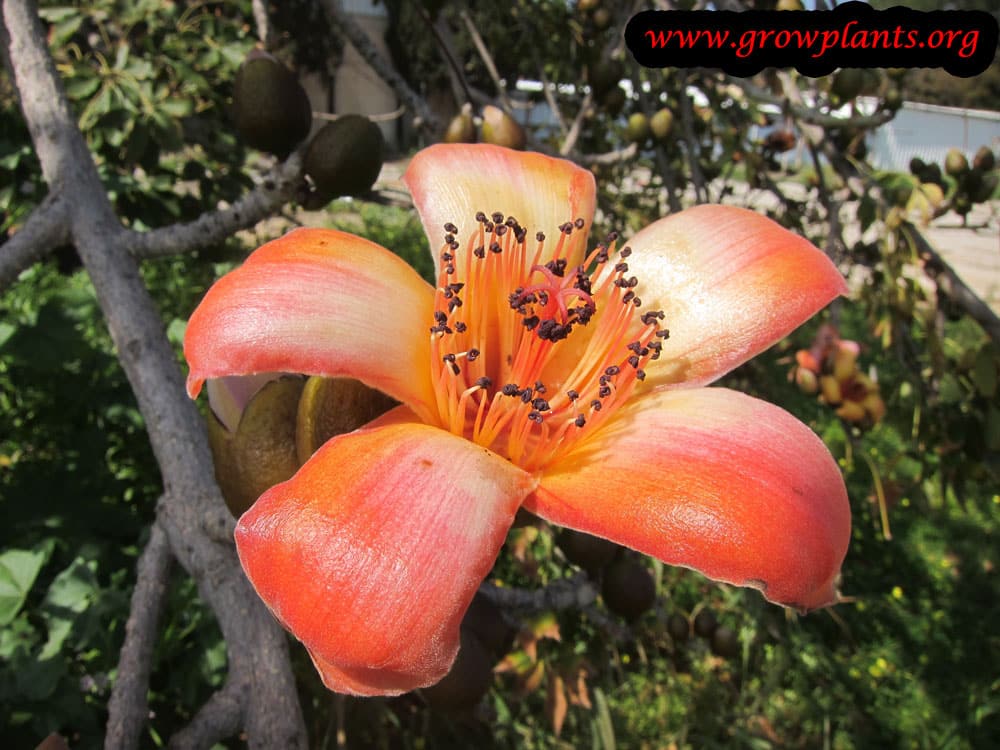
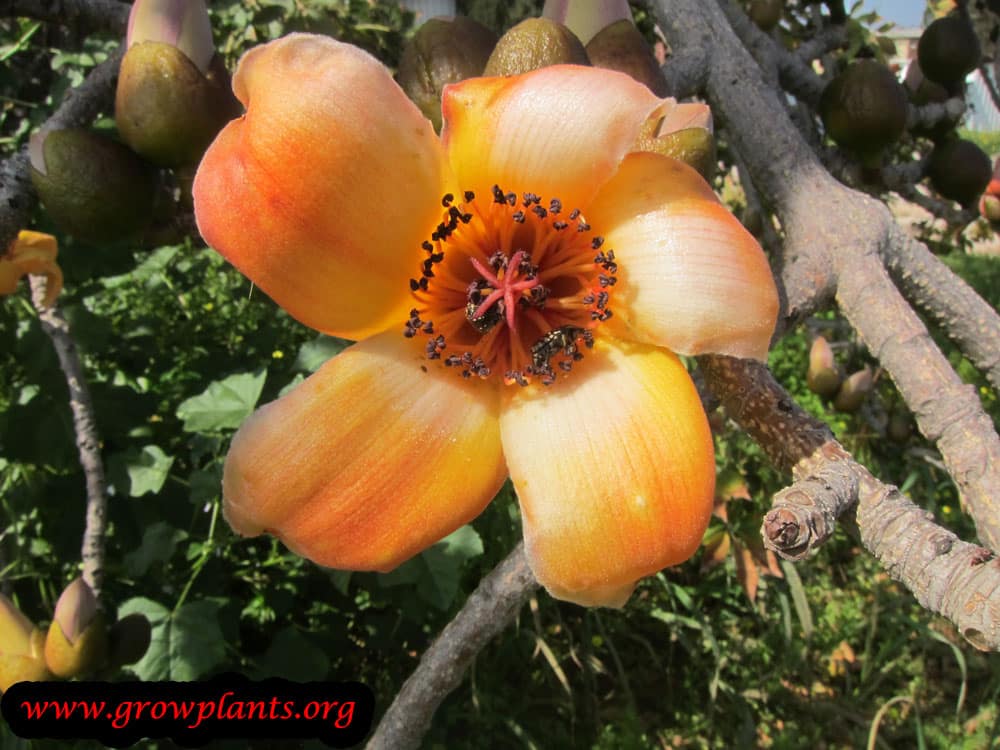
- Flower Characteristics: Large, waxy, five-petalled red-to-orange flowers on bare branches in late winter to early spring (full detail in the Bloom section).
Primary Uses & Landscape Value
- Functional & Ornamental Roles: Ornamental flowering and shade tree; drought tolerant and also grown as bonsai; the seed pods yield a kapok-like floss.
Care Guide: Planting, Soil & Watering
Overview: Bombax ceiba (red silk cotton tree) is a large, drought-tolerant deciduous tree for warm, frost-free climates (above about 2°C) that needs full sun and a deep, well-drained soil. It is a slow-to-moderate grower with low to moderate water needs once established.
Quick Care Requirements
| Requirement | Ideal Condition |
|---|---|
| Planting Season | Year-round in frost-free, warm conditions |
| Growth Rate | Slow to moderate |
| Soil Type | Deep, well-draining |
| Water Need | Low to moderate; let the soil dry between waterings once established |
Planting & Establishment
- Best Planting Season: Plant year-round in warm, frost-free areas so it establishes in warmth; give it a large, open site.
- How to Plant:
- Hole Preparation: Dig a wide hole about twice the root-ball width in deep, well-drained ground.
- Soil Amendments: Add some organic matter and improve drainage on heavy soil with grit; sharp drainage matters most.
- Planting Depth: Set the root collar level with the soil; never bury the trunk base.
- Growth Speed & Expectations: Slow to moderate; ultimately a large 7–18 m (21–56 ft) tree, so allow generous space – it is not suited to containers.
Soil, Watering & Drainage Care
- Soil Mix & Drainage Needs: Needs a deep, free-draining soil; avoid waterlogging.
- Watering Schedule & Technique:
- Young / Newly Planted: Water regularly to establish deep roots.
- Established: Drought-tolerant – water deeply but infrequently, letting the soil dry well between waterings.
- Seasonal Adjustments: More in prolonged summer heat; minimal in the cool, leafless dormant period.
Climate, Light & Hardiness
The red silk cotton tree is a warm-climate, drought-tolerant tree suited to subtropical, Mediterranean, and tropical conditions, thriving in full sun. It has essentially no frost tolerance and needs temperatures that stay comfortably above freezing.
Quick Climate Specifications
| Climate Zones | Subtropics, Mediterranean, tropics |
|---|---|
| USDA Hardiness Zones | 10 and warmer |
| Approx. Survival Minimum | Site data indicates it needs conditions warmer than approximately 2°C (36°F); colder temperatures risk damage |
| Frost Tolerance | None to Very Low |
| Light Conditions | Full sun |
Sunlight & Light Exposure
Optimal Light Setup
Needs full sun for healthy growth and the best flowering display.
Direct Sun Requirement
Requires strong direct sun for most of the day; it is not a shade-tolerant species.
Best Exposure / Orientation
An open, unobstructed southern exposure best suits its large mature size and sun requirement.
Temperature Extremes & Hardiness
USDA Hardiness & Regional Limits
Suited to zone 10 and warmer, consistent with its tropical-to-subtropical origins; unsuitable for climates with freezing winters.
Cold Damage & Winter Protection
Cold below roughly 2°C (36°F) risks damage; young trees are typically more cold-sensitive than established specimens, and a sheltered, warm microclimate is essential at the cool edge of its range.
Frost Sensitivity
Very high frost sensitivity - this species should be grown only in frost-free climates.
Extreme Heat Tolerance
Well adapted to hot subtropical and tropical conditions and, being drought-tolerant, copes with dry heat better than with cold.
Wind, Humidity & Microclimate
Humidity Preferences
Adapts across the humidity range typical of subtropical and tropical climates.
Wind Tolerance
As a large tree it generally withstands open-site wind once well established, though young trees benefit from staking.
Microclimate Recommendations
At the cool edge of its suitable range, a warm, sheltered, frost-free microclimate is essential.
Growing in Pots, Balconies & Indoors
Bombax ceiba (red silk-cotton tree) is a large landscape tree, not a houseplant, and the grower does not recommend growing it in a container – it belongs in open ground. Plan for it as a full-size tree rather than a potted specimen.
Quick Details
- Container Size: Not recommended by the grower – this tree needs open ground
- Indoor Suitability: Not a houseplant – a full-sun outdoor tree
- Best Spot: Full sun (some tolerate light shade) with plenty of room
- Soil & Drainage: Free-draining soil; any temporary pot must have strong drainage holes
- Watering in Pots: Moderate; let the surface dry between waterings and never leave it waterlogged
Indoors & On the Windowsill
- Not a houseplant: The grower marks it as unsuitable indoors. It is a sun-loving tree that quickly outgrows any indoor space, so keep it outdoors.
On a Balcony or Patio
- Scale: Only a young specimen suits a large patio pot, and only for a few years. Give it full sun and a heavy, stable container so wind can’t topple it, then plant it out once it grows on.
Choosing the Pot, Soil & Long-Term Care
- Not for containers: The grower marks container growing as unsuitable for this tree. If you must start one in a pot while tiny, treat it as strictly short-term before planting out.
- Pot & drainage: If potting a young tree, use the largest practical pot with strong drainage holes; skip a standing-water saucer to avoid root rot.
- Potting mix: A free-draining, aerated mix; terracotta breathes and dries faster, while glazed or plastic holds moisture longer.
- Feeding & repotting: Feed lightly through the growing season and pot up yearly while young – but the real plan is to move it into open ground before it outgrows containers.
Fertilizing & Feeding
Grown as a striking flowering shade tree, this drought-tolerant species does well on a moderate, steady feeding program timed to its active growth window, without needing rich or frequent applications.
Quick Fertilizing Specs
| Feeding Level | Moderate – feed during the active growing season and taper off as growth slows. |
|---|---|
| Main Nutrient Priority | Balanced nutrition to support canopy growth and the late-winter to early-spring flower display. |
| Best Feeding Period | Warm-season active growth, ahead of and alongside the late-winter to early-spring bloom. |
| Soil pH | Tolerates a wide range of well-drained soils; not fussy about pH. |
| Reduce/Stop Feeding | Reduce and stop feeding as the tree sheds its leaves and enters its deciduous rest period. |
| Organic Options | A layer of compost or well-rotted organic matter around the root zone supports steady nutrition without overfeeding. |
| Micronutrients | No routine micronutrient product is typically needed; watch for iron chlorosis only on poorly drained or very heavy soils. |
Feeding by Growth Stage
Establishment
Help a newly planted tree build a strong root system before shifting focus to canopy growth.
| Nutrient direction | A light, balanced feed that favors root establishment over rapid top growth. |
|---|---|
| Timing | The first growing season or two after planting. |
| Frequency | A light feeding as new growth begins is generally enough while the root system establishes. |
| Fertilizer types | A balanced, general-purpose tree fertilizer applied lightly, Compost worked into the planting area to support root development |
| Precautions | Avoid heavy feeding immediately after planting, which can stress a developing root system rather than help it. |
Active Growth and Flowering
Support canopy growth and the tree’s showy red-to-orange flower display without pushing excess soft growth.
| Nutrient direction | A balanced feed through the warm growing season, easing off as flowering approaches so bloom is not crowded out by foliage. |
|---|---|
| Timing | Through the warm growing season, ahead of the late-winter to early-spring bloom. |
| Frequency | A light to moderate feeding as active growth resumes is usually enough for an established tree. |
| Fertilizer types | A balanced, general-purpose flowering-tree fertilizer |
| Routine trace nutrients | iron |
| Precautions | Avoid heavy nitrogen feeding close to bloom time, since it tends to favor leaf growth over flowers. |
Deciduous Rest Period
Allow the tree to rest through its natural leafless period without encouraging new growth out of season.
| Nutrient direction | None – withhold fertilizer while the tree is leafless and resting. |
|---|---|
| Timing | The leafless period preceding the late-winter to early-spring bloom. |
| Frequency | No feeding at this stage; resume once active growth resumes after flowering. |
| Fertilizer types | No feeding at this stage – do not apply fertilizer while the tree is leafless and resting. |
| Precautions | Do not fertilize during the leafless rest period; the tree cannot make use of it and out-of-season growth is more frost- and cold-tender. |
Nutrient Deficiency Signs & Corrections
Interveinal yellowing on new leaves while the veins remain green.
| Possible causes | High soil pH or heavy soil limiting iron availability, Waterlogged or compacted roots reducing uptake, Root stress from poor drainage |
|---|---|
| Appears first on | Newest growth at branch tips |
| What to check | Soil drainage and compaction around the root zone, Whether local soil is known to be alkaline or heavy, Recent watering pattern for signs of waterlogging |
| Possible correction | Improve drainage first; a chelated iron product applied per its label can help address a confirmed deficiency. |
Pale green to yellow leaves overall and reduced shoot growth for the season.
| Possible causes | Insufficient nitrogen in the root zone, Sandy or fast-draining soil leaching nutrients, Root establishment problems in a young tree |
|---|---|
| Appears first on | Older, lower leaves first |
| What to check | Recent feeding history and soil organic matter, Age and root establishment of the tree, Drainage and irrigation pattern |
| Possible correction | Resume a balanced feeding program timed to active growth, and build soil organic matter over time. |
Few flowers or a notably sparse bloom for the season.
| Possible causes | Excess nitrogen favoring foliage over flowering, Insufficient light reaching the canopy, Stress from drought or pest pressure such as aphids or mealybug in the prior season |
|---|---|
| Appears first on | Whole-canopy bloom pattern rather than an individual leaf symptom |
| What to check | Recent feeding history for excess nitrogen, Canopy light exposure, Prior-season pest activity or drought stress |
| Possible correction | Favor balanced over high-nitrogen feeding and address any pest or drought stress; bloom often improves the following season. |
Pruning, Training & Seasonal Maintenance
Bombax ceiba (red silk cotton tree) is a large deciduous tree grown for its striking red-to-orange spring flowers, which appear on bare branches ahead of or alongside the new leaves. It needs little routine pruning once structurally established; the safest window is autumn into winter, once leaves have dropped, well ahead of the late-winter-to-early-spring bloom whose buds form on the past season’s branch growth. A practical handling note for anyone pruning this species: young trees are well known for stout, conical thorns along the trunk and branches, so protective gloves and careful positioning matter more here than on a thornless landscape tree.
Quick Pruning & Maintenance Specs
| Pruning Tolerance | Low-to-Moderate |
| Primary Pruning Window | Autumn into winter, after leaf drop |
| Typical Frequency | Regular light shaping while young; infrequent thereafter |
| Main Objective | Establish structure while young; preserve the bare-branch spring flower display on mature trees |
| Young Plant Priority | Select a strong leader and well-spaced scaffold branches for eventual large size |
| Mature Plant Priority | Deadwood and clearance pruning only, timed to protect the flower buds |
| Best Tool Type | Pruning saw / loppers for structural work; secateurs for young formative growth |
| Avoid Heavy Pruning During | Late winter into early spring, ahead of and during flowering |
Pruning by Plant Age & Size
Newly Established
Minimal – remove only damaged growth while the tree settles in.
Young / Formative
Central-leader or modified-leader training suits its eventual size: select a dominant trunk and well-spaced scaffold branches, correcting weak or crossing growth early while cuts are still small and easy to make safely around the thorny young trunk.
Mature / Established
Limit intervention to deadwood, hazard, and clearance pruning, done in the autumn-to-winter dormant window so the branch tips that will carry the spring bloom are left undisturbed.
Seasonal Pruning Schedule
| Dormant/Winter | Objective: structural shaping while leafless, per this species’ own pruning-season data (autumn/winter). Remove deadwood and crossing growth. Avoid removing branch tips likely to carry the coming bloom. Response: undisturbed bud development through the cool season. Flowering impact: positive if done in autumn/winter; pruning closer to the bloom risks removing flower buds. |
Flowering & Fruiting Wood
Flowers form on the past season’s branch growth and open from late winter into early spring, typically on bare wood before the new leaf flush. Because the flower buds are set on existing branch tips well before bloom, structural pruning should be finished in the autumn/winter window rather than carried into late winter or spring.
Structural Pruning & Training
Focus on removing crossing or rubbing branches and correcting weak crotch angles while young; a well-formed specimen needs little canopy thinning once mature.
Special Growth to Remove
- Dead or storm-damaged branches, at any time of year.
- Epicormic sprouts around old pruning wounds, which are weakly attached and not part of the desired structure.
Tools
Bypass secateurs for young formative growth; loppers for medium branches; a pruning saw for larger scaffold limbs. This species’ own data does not support general container growing (it needs an open ground run to reach its size), so pot-culture pruning guidance is not included here; the intro notes it can also be grown as bonsai by specialist growers, which is a distinct, more intensive practice outside general nursery care.
Tool Hygiene & Disease Risk
Routine – this species’ documented pests are aphids and mealybug, both sap-feeders rather than cut-transmitted pathogens; clean, sharp tools are sufficient, with a quick check of cuttings for pest presence before disposal.
Cut Placement & Technique
Cut just outside the branch collar and avoid flush cuts or long stubs; remove any large limb in stages to avoid tearing bark down the trunk. Given the trunk’s thorns on younger material, plan cut approach and footing before starting rather than working close to unseen spines.
Heavy Pruning & Rejuvenation
Not typically needed on a well-structured specimen; if storm damage requires major limb removal, stage the work over more than one season and expect a reduced flower display the following season while the tree recovers.
Post-Pruning Care
Watch newly exposed bark for sunscald after opening the canopy; water young or recently pruned trees through establishment; keep an eye out for aphid or mealybug buildup on fresh regrowth, which is more attractive to sap-feeders than mature wood.
Common Pruning Mistakes
Pruning in late winter or spring and removing the bare-branch flower buds that are this tree’s main ornamental feature; topping; working around the trunk without accounting for its thorns on younger growth.
When NOT to Prune
Not in late winter through spring, ahead of and during flowering; avoid major cuts right after transplanting.
Recommended Tools (by task)
- pruning_saw – for larger scaffold limbs on a tree reaching 7-18 m.
- loppers – for medium branches during young-tree formative work.
- bypass_secateurs – for fine formative cuts on young growth.
Pruning Troubleshooting
| Problem | Possible Cause | What to Check | Corrective Action |
| Reduced or absent spring flowering | Branch tips carrying flower buds removed in late winter or spring | Timing of the last pruning relative to bloom | Confine structural pruning to the autumn/winter dormant window |
| Aphid or mealybug buildup after pruning | Fresh, soft regrowth following a cut is more attractive to sap-feeders | New shoot tips near recent pruning cuts | Monitor regrowth and treat pest buildup promptly rather than repeatedly re-cutting |
Propagation Guide
Red silk cotton tree is propagated from seed, and the source explicitly states that grafting or vegetative propagation is not necessary. Seed-grown plants are generally easy to raise, though as with other large seed-capsule trees the seed benefits from a little preparation before sowing.
Quick Propagation Specs
| Best Propagation Method | Seed |
| Propagation Difficulty | Easy |
| Seed True-to-Type | Usually true-to-type for the species |
| Best Propagation Season | Not specified by the source; the plant’s own planting season is noted as year-round within its climate range |
Growing from Seed
Seed Handling & Viability
Not detailed by the source. Bombax ceiba seed is embedded in a silky, kapok-like floss inside large woody capsules; seed of this type is generally best sown reasonably fresh rather than stored long-term.
Dormancy & Pre-Sowing Treatment
Not detailed by the source. A hard seed coat is typical of this genus, and soaking seed in warm water before sowing is a commonly used way to improve germination.
Germination Conditions
Not detailed by the source; as a subtropical/tropical tree (hardiness zone 10+) it can be expected to germinate best in warm conditions.
Germination Time
Not specified by the source.
Seedling Care
Grow seedlings on in full sun, matching the species’ light requirement.
Grafting & Budding
The source states grafting/vegetative reproduction is not necessary for this species – seed is the standard way to raise it.
Bloom & Edible Flower Guide
Quick Details
- Bloom Season: Late winter into early spring
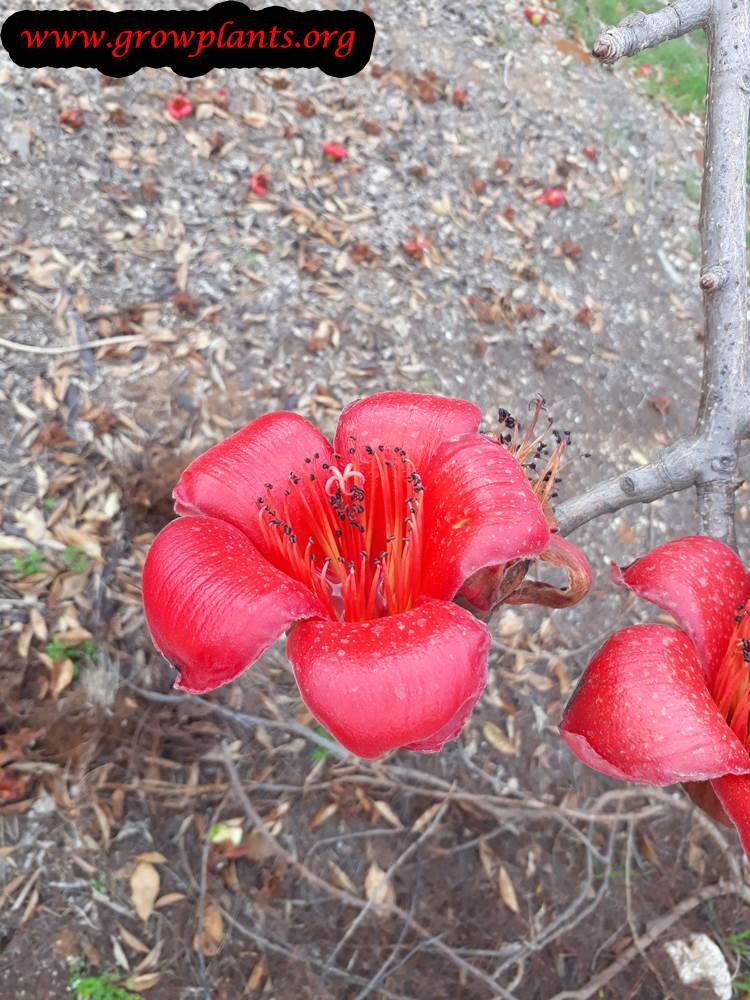
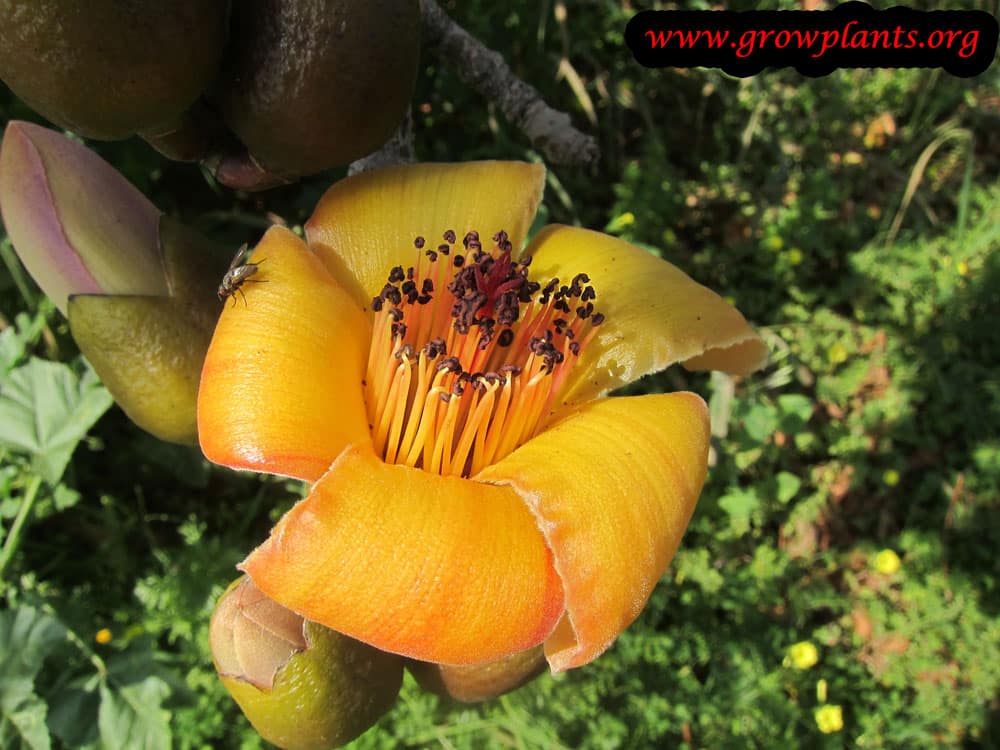
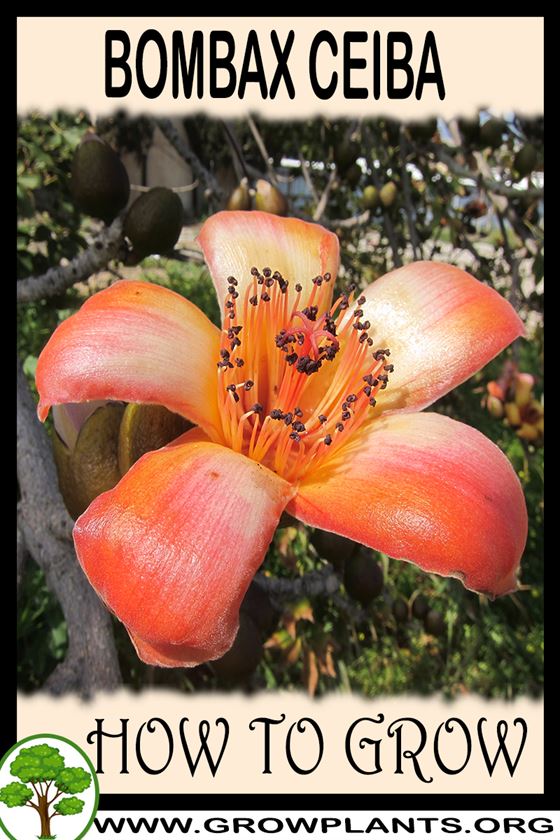
- Flower Appearance: Large, waxy red-to-orange flowers with five thick, curved petals and a rounded base, opening in showy clusters
- Edibility: The flowers are edible – in parts of Asia they are dried for soups or cooked as a vegetable – though the tree is grown here mainly as an ornamental and shade tree
Detailed Blooming Overview
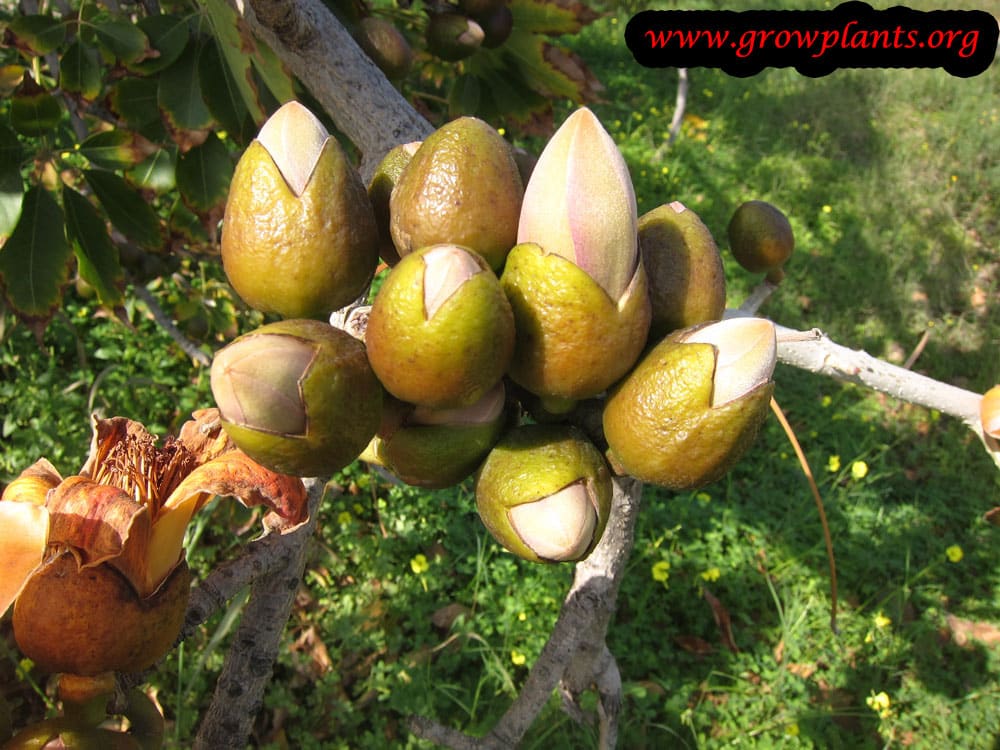
The red silk cotton tree makes a dramatic show in late winter and early spring, opening big, cupped, waxy flowers on its bare, leafless branches before the new foliage appears. The blooms are rich in nectar and are a well-known draw for nectar-feeding birds, which do much of the pollinating. After flowering, the tree sets the pods of silky fibre that give it its name.
Flower Characteristics
- Large, fleshy, waxy flowers in red to orange, with five thick, recurved petals.
- Rounded base and a prominent central bunch of stamens; carried on bare branches.
Bloom Care & Thinning
- Encouraging bloom: Full sun and a mature tree are the main requirements; flowering strengthens with age and a warm, dry late winter.
- Pollination: Nectar-rich and largely bird-pollinated, with bees and other insects also visiting.
- Using the flowers: If harvesting for the kitchen, gather clean, freshly opened blooms and cook them; take only what you need and leave the rest for pollinators and display.
Fruit & Uses
The site describes Bombax ceiba (red silk cotton tree) only as an ornamental, drought-tolerant shade and bonsai tree, but the unopened flower buds and the fleshy calyx of its large red flowers are a genuine, well-established food in South and Southeast Asian cooking, eaten cooked as a vegetable. The tree’s mature seed pods produce a cottony fiber (kapok) that is not eaten – it is used for stuffing – so it is only the young flower parts, not the fruit fiber, that belong in the kitchen.
Quick Edible Specs
| Edible Parts | Flower buds and fleshy calyx |
| Main Use(s) | Culinary – cooked as a vegetable in regional South and Southeast Asian dishes; the dried gum also has a traditional, non-culinary use |
| Eaten Raw or Cooked | Cooked |
| Preparation Required | Cook – buds/calyx are typically fried and then simmered with spices as a curry-style vegetable dish, not eaten raw |
| Harvest Season | During the tree’s late-winter to early-spring bloom, while buds and flowers are still unopened or fresh |
| Time to First Harvest | Not meaningfully tracked for flower use – this is a seasonal culinary use, not a fruit crop |
| Storage | Best used fresh, shortly after picking, as with other flower vegetables |
| Safety/Toxicity Caveat | Only the immature flower buds and calyx are eaten, always cooked; the fluffy seed-pod fiber (kapok) is not a food and should not be confused with the edible flower parts |
Flowers & Flower Buds
The large red to orange flowers and their fleshy green calyx are harvested while still young – as unopened buds or freshly opened flowers – before they become tough. They are prepared as a cooked vegetable, typically fried and then simmered with onion, tomato, ginger and spices, a regional dish sometimes called silk-cotton flower curry.
Harvesting
Buds and young flowers are picked during the tree’s bloom period, before the calyx toughens and before the flowers fully mature. This is a seasonal, short-window harvest tied to flowering, not to fruiting.
Preparation, Uses & Safety
Wash and cook the buds/calyx before eating – regional recipes fry them first, then simmer with spices as a vegetable side dish. The tree’s dried gum has a long history of traditional use, but no medical claims are made here beyond noting that tradition. Keep in mind the edible flower parts are separate from the mature pod’s cottony fiber, which is not a food.
Pests, Diseases & Troubleshooting
Overview: The red silk-cotton tree is a large tropical tree (Malvaceae, formerly Bombacaceae). It is broadly resilient, but the soft new growth and cottony seed floss attract sap-suckers – aphids and mealybugs with their sooty mould – while cotton stainer bugs feed on the seed floss, and leaf-eating caterpillars and bark or shoot borers attack the canopy and wood. Fungal leaf spots, rust and root rot occur in wet conditions. Vigorous growth and sanitation manage most of it.
Quick Troubleshooting Overview
| Issue / Pest | Main Symptom | Primary Solution |
|---|---|---|
| Aphids & mealybugs | Honeydew, sooty mould, sticky shoots | Water blast, insecticidal soap or oil, control ants |
| Cotton stainer bug | Feeding and staining of the seed floss | Sanitation, handpick, remove fallen pods |
| Leaf-eating caterpillars | Defoliation of the canopy | Handpick where reachable, Bacillus thuringiensis |
| Borers | Frass and dieback of branches / trunk | Prune out, keep tree vigorous, avoid wounds |
| Leaf spot / rust | Spots or pustules on the leaves | Sanitation, airflow, copper if severe |
Common Pests & Management
- Aphids (Aphididae):
- Symptoms: Colonies on soft new shoots and leaf undersides curl growth and coat it in honeydew and sooty mould.
- Prevention & Control: Hose them off, spray insecticidal soap or neem on young growth, encourage ladybirds and lacewings, and control ants.
- Mealybugs (Phenacoccus / Planococcus spp.):
- Symptoms: White cottony masses in branch forks, leaf axils and on pods, with heavy honeydew and sooty mould.
- Prevention & Control: Spray insecticidal soap or horticultural oil, wash off colonies, release predators such as Cryptolaemus, and manage ants.
- Cotton stainer bug (Dysdercus spp.):
- Symptoms: Red-and-black bugs congregate on the opened pods and cottony floss, feeding on the seeds and staining and spoiling the floss.
- Prevention & Control: Collect and destroy fallen and opened pods, handpick or trap the conspicuous bugs, keep the area sanitary, and encourage predators.
- Leaf-eating caterpillars (various Lepidoptera (loopers, defoliators)):
- Symptoms: Chewed, skeletonised and defoliated leaves from caterpillar feeding on the canopy.
- Prevention & Control: Handpick where reachable, encourage birds and parasitic wasps, and use Bacillus thuringiensis on young larvae; mature trees tolerate a lot of feeding.
- Bark / shoot borers (Cerambycidae / Lepidoptera borers):
- Symptoms: Tunnels, frass and dieback in shoots, branches and trunk, usually on stressed or wounded wood.
- Prevention & Control: Keep the tree vigorous and well-watered, prune out and destroy infested wood, and avoid bark injuries that invite egg-laying.
Diseases & Fungal Issues
- Leaf spot / anthracnose (Cercospora / Colletotrichum spp.):
- Symptoms: Brown to black spots and blotches on the leaves, sometimes merging and causing early leaf fall in wet weather.
- Treatment & Management: Rake and destroy fallen leaves, improve airflow, avoid overhead wetting, and apply copper only in persistent damp conditions.
- Rust (Uredinales (rust fungi)):
- Symptoms: Orange to brown powdery pustules on leaf undersides with yellowing above.
- Treatment & Management: Remove affected leaves, improve airflow, and reduce leaf wetness.
- Pink disease (Erythricium (Corticium) salmonicolor):
- Symptoms: A pinkish fungal encrustation on branches with dieback above, in warm, very humid conditions.
- Treatment & Management: Prune out and destroy affected branches well below the symptoms, improve airflow, and paint or treat cuts.
- Root rot (Phytophthora / Ganoderma spp.):
- Symptoms: Canopy thinning, dieback and instability from rotted roots in waterlogged or wounded conditions.
- Treatment & Management: Ensure good drainage, avoid trunk and root wounds, and remove severely affected trees.
Growing Difficulties & Abiotic Problems
- Brittle wood / branch breakage:
- Cause & Symptoms: The soft, fast-grown timber is brittle and sheds branches in storms and wind.
- Correction Strategy: Site away from targets, formative-prune for strong structure when young, and remove weak or crossing limbs.
- Chlorosis:
- Cause & Symptoms: Poor, alkaline or waterlogged soil yellows the foliage.
- Correction Strategy: Improve soil and drainage and feed; use iron chelate only if a deficiency is confirmed.
- Waterlogging:
- Cause & Symptoms: Prolonged wet soil stresses roots and invites rot.
- Correction Strategy: Plant on free-draining ground and avoid standing water.
What Helps – Products & Tools
For this tree keep insecticidal soap and horticultural or neem oil for aphids and mealybugs, Bacillus thuringiensis for caterpillars, and copper fungicide for leaf spot, rust and pink disease in humid weather; borers and cotton stainers are best handled by sanitation and vigour. Most of the tree’s resilience comes from good drainage and unstressed growth, not spraying.