Plant Profile & Key Characteristics
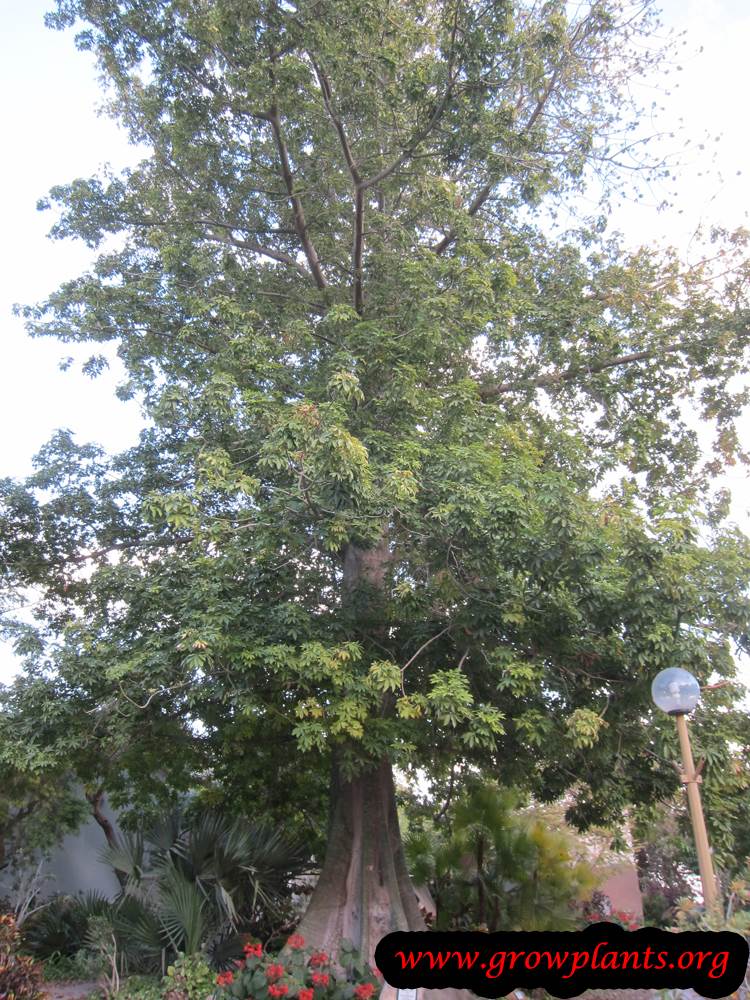
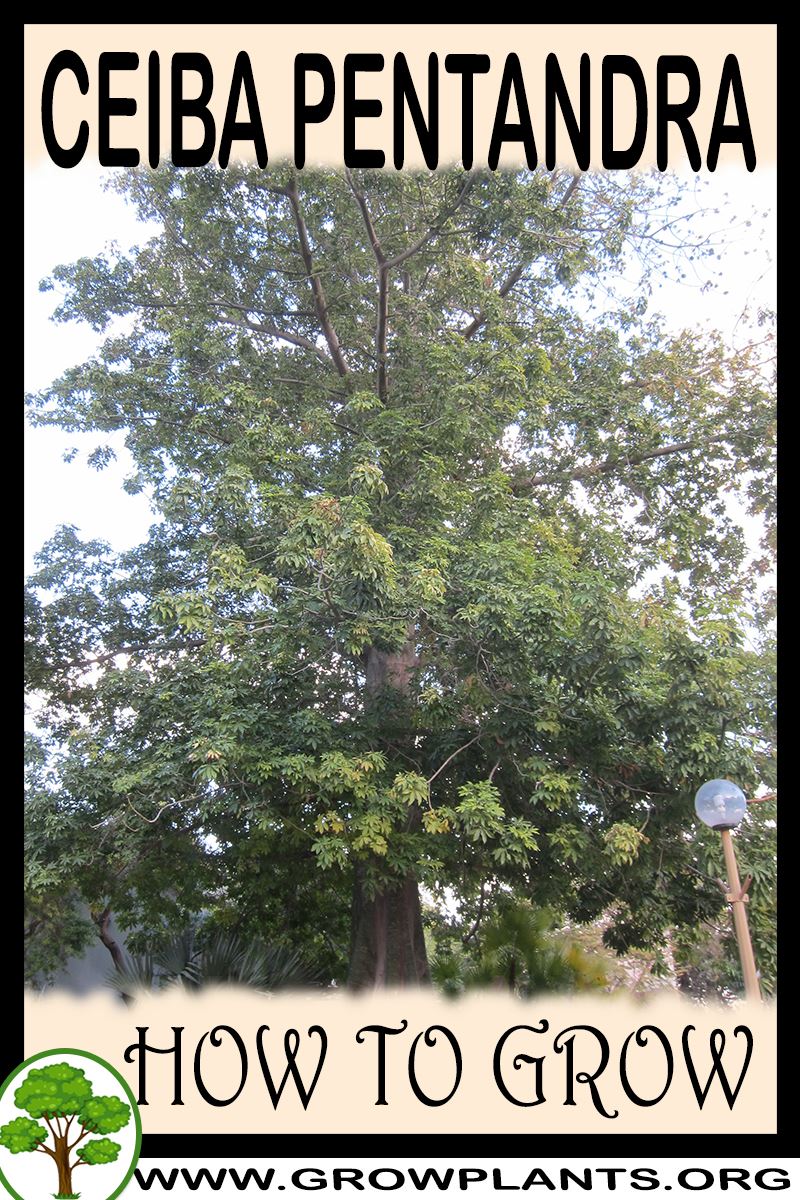
Overview: Ceiba pentandra (kapok / Java cotton) is a deciduous ornamental tree of 20-60 m (65-200 ft) with a distinctive swollen, bottle-shaped, often thorny trunk. This perennial is grown for its palmate foliage and large showy flowers, attracts pollinators, and is also trained as a bonsai.
Quick Specifications
| Specification | Attribute |
|---|---|
| Plant Type / Life Cycle | Perennial tree |
| Foliage Type | Deciduous |
| Mature Size | 20-60 m tall (65-200 ft) |
| Growth Rate | Moderate |
| Hardiness | USDA zones 10+ |
Growth Form & Structure
- Height & Spread: One of the tallest tropical trees, reaching 20-60 m (65-200 ft) in habitat. Not suited to permanent container culture except when trained as bonsai.
- Growth Habit & Form: Deciduous tree with a broad canopy and a characteristic bottle-shaped trunk.
- Lifespan & Maturity: Long-lived, moderate-growing perennial tree.
Anatomy & Physical Features
- Trunk & Bark: Brown, often thorny trunk that is typically swollen into a bottle shape.
- Leaves & Foliage: Green palmate leaves of elliptic leaflets joined at the base, resembling a hand with about seven fingers; deciduous.
- Flower Characteristics: White flowers with five petals, borne from winter through summer.
- Fruit Profile: Green capsule ripening brown, splitting to release seeds embedded in a mass of white cotton-like floss.
Primary Uses & Landscape Value
- Functional & Ornamental Roles: Ornamental flowering and specimen tree that attracts pollinators; the seed floss is used as a kapok-type stuffing fibre, and the tree is popular for bonsai.
Care Guide: Planting, Soil & Watering
Overview: Kapok, or Java cotton (Ceiba pentandra), is a moderate-growing deciduous tree for frost-free subtropical and tropical climates (hardiness zone 10+), needing full sun to part shade. Its swollen, water-storing trunk means it wants a well-drained soil and only low to moderate watering.
Quick Care Requirements
| Requirement | Ideal Condition |
|---|---|
| Planting Season | In the warm season once frost has passed |
| Growth Rate | Moderate |
| Soil Type | Well-drained soil |
| Water Need | Low to moderate – let the soil dry between waterings |
Planting & Establishment
- Best Planting Season: Plant in the warm season after all frost risk has passed.
- How to Plant:
- Hole Preparation: Dig a hole about twice the width of the root ball and no deeper than it.
- Soil Amendments: Add grit or coarse organic matter to sharpen drainage on heavy soils.
- Planting Depth: Set the root collar at soil level; avoid burying the trunk, and mind the thorns when handling.
- Growth Speed & Expectations: A moderate grower that becomes a very large tree of 20-60 m (60-180 ft), so give it ample space.
Soil, Watering & Drainage Care
- Soil Mix & Drainage Needs: Free-draining soil is essential – the water-storing trunk makes it prone to rot in soggy ground.
- Watering Schedule & Technique:
- Young / Newly Planted: Water moderately to establish, keeping the soil lightly moist but not wet.
- Established: Water sparingly once established, letting the soil dry well between waterings; it is drought-tolerant.
- Seasonal Adjustments: A little more in summer heat; keep drier while dormant and leafless in the cool season.
Climate, Light & Hardiness
The kapok tree is a fast-growing tropical-to-subtropical giant that needs full sun and warm, essentially frost-free conditions; it is deciduous in seasonally dry climates but has very little cold tolerance.
Quick Climate Specifications
| Climate Zones | Tropical, Subtropical, Mediterranean |
|---|---|
| USDA Hardiness Zones | 10+ |
| Frost Tolerance | None to Very Low |
| Light Conditions | Full Sun to Half Shade |
Sunlight & Light Exposure
Optimal Light Setup
Needs full sun to half shade for healthy growth; young or bonsai specimens tolerate slightly more shade.
Direct Sun Requirement
Full sun is preferred for a vigorous, well-formed tree.
Best Exposure / Orientation
Open, unobstructed sites away from frost pockets.
Temperature Extremes & Hardiness
USDA Hardiness & Regional Limits
Reliable only in essentially frost-free zone 10 and warmer; this is a true tropical to warm-subtropical tree.
Cold Damage & Winter Protection
Site data explicitly notes this species needs frost-free conditions; even light frost can damage or kill it, especially when young.
Frost Sensitivity
Very frost sensitive; site well away from any frost risk.
Extreme Heat Tolerance
Excellent; thrives in hot tropical and subtropical climates.
Wind, Humidity & Microclimate
Humidity Preferences
Naturally suited to humid tropical air, but also adapts to drier subtropical and Mediterranean conditions.
Dry-Air Tolerance
Reasonable, given its light-to-moderate watering needs and Mediterranean-climate adaptability noted in the site data.
Rainfall & Seasonal Moisture
Deciduous in seasonally dry tropical and subtropical climates, dropping leaves through the dry season and flushing new growth with the rains.
Growing in Pots, Balconies & Indoors
The kapok tree (Ceiba pentandra) is a giant tropical tree reaching 20-60 m (60-180 ft). The grower marks it as neither a houseplant nor a container plant – it simply grows far too large for pot culture.
Quick Details
- Indoor Suitability: Not a houseplant and not suited to pots
- Best Spot: Full sun to half shade, in the open ground
- Soil & Drainage: Deep, free-draining tropical soil
- Watering in Pots: Small to average once established
Indoors & On the Windowsill
- Houseplant limits: Not an indoor plant – it becomes one of the largest of all trees and needs open tropical ground.
- While young: A seedling may be grown in a pot only very briefly before it must go into the ground.
On a Balcony or Patio
- Reality check: Not a balcony or patio plant except as a short-lived seedling; it demands full ground and a warm, frost-free climate.
- Practicalities: Plan for open ground from the outset – container life is only a temporary nursery stage.
Choosing the Pot, Soil & Long-Term Care
- Pot & drainage: If raising a seedling, use a deep pot with strong drainage and plant it out into open ground as soon as it is established.
- Potting mix: A well-aerated, organic-rich mix – peat or coir blended with perlite or vermiculite so it drains freely.
- Feeding: Potted plants need feeding more often than those in open ground, since frequent watering leaches nutrients from the mix – feed regularly through the growing season.
- Repotting: Refresh the top of the mix each year and pot up about every two years; for perennials, lightly prune the root ball and top growth when you do.
Fertilizing & Feeding
A light feeder in open ground, where its size and roots find most of what it needs; grown in a container or as bonsai it needs more regular, though still modest, feeding to stay healthy.
Quick Fertilizing Specs
| Feeding Level | Light |
|---|---|
| young_feeding | Balanced feeding to establish a young tree |
| mature_feeding | Light, balanced feeding; ground-grown trees need little once established |
| Main Nutrient Priority | Balanced nutrition with adequate nitrogen for foliage and bloom |
| Best Feeding Period | During the active growing and flowering period |
| Organic Options | Compost and mulch |
| Reduce/Stop Feeding | Ease off as the tree drops its leaves and enters its rest period |
Feeding by Growth Stage
Establishment and active growth
Help a young tree establish and build its distinctive trunk and canopy.
| Nutrient direction | A balanced complete fertilizer supports steady early growth of trunk, branches and foliage. |
|---|---|
| Timing | During the active growing season while the tree is young and establishing. |
| Frequency | Light feeding spread across the active growing season. |
| Fertilizer types | Balanced complete tree or garden fertilizer, Compost or well-rotted organic matter |
| Precautions | Keep fertilizer off the trunk and avoid heavy applications before roots are established. |
Bloom, or container and bonsai culture
Support flowering on ground-grown trees, or sustain health and vigour on container-grown and bonsai specimens.
| Nutrient direction | Keep feeding balanced with adequate nitrogen; increase frequency modestly for container or bonsai culture rather than increasing strength. |
|---|---|
| Timing | During the flowering period, or throughout active growth for container and bonsai specimens. |
| Frequency | Light, steady feeding while in active growth or bloom; container and bonsai specimens benefit from more frequent light feedings than ground-grown trees. |
| Fertilizer types | Balanced complete fertilizer, A dedicated bonsai or container fertilizer for potted specimens |
| Precautions | Do not rely on high-phosphorus ‘bloom booster’ products; balanced feeding is enough to support flowering. |
Leaf drop and rest
Let the tree rest during its natural leaf-drop period without pushing new growth it cannot support.
| Nutrient direction | None – withhold fertilizer while the tree is leafless and resting. |
|---|---|
| Timing | During the tree’s natural deciduous rest period. |
| Frequency | No feeding at this stage. |
| Fertilizer types | No feeding at this stage; do not fertilize until active growth resumes. |
| Precautions | Do not fertilize a leafless, resting tree; resume only once new growth restarts. |
Nutrient Deficiency Signs & Corrections
Older leaves fade to pale green or yellow and growth slows.
| Possible causes | Low soil nitrogen, Poor, leached or sandy soil, Cold or waterlogged soil limiting root uptake |
|---|---|
| Appears first on | Older, lower leaves |
| What to check | Recent feeding history, Soil organic matter and drainage |
| Possible correction | Apply a balanced complete fertilizer during active growth and build soil with compost. |
Lush leafy growth but a disappointing show of flowers.
| Possible causes | Excess nitrogen relative to other nutrients, Insufficient light, Over-feeding with a high-nitrogen fertilizer |
|---|---|
| Appears first on | The whole tree, as leaves outpacing flowers |
| What to check | Fertilizer type and feeding history, Light levels, Overall vigour |
| Possible correction | Switch to balanced feeding, ease off nitrogen and ensure adequate light. |
Leaf tips or margins scorch and growth stalls, mainly on container-grown or bonsai specimens.
| Possible causes | Salt buildup from over-fertilizing a confined root ball, Roots outgrowing the container, Inconsistent watering around feeding |
|---|---|
| Appears first on | Newest leaves and leaf margins |
| What to check | Recent feeding rate and frequency, Root crowding and pot size, Watering consistency |
| Possible correction | Flush the potting mix with water to remove excess salts and repot if roots are crowded. |
Pruning, Training & Seasonal Maintenance
Ceiba pentandra is grown mainly as a large ornamental/shade tree that eventually reaches a massive 20–60m, with a thorny, bottle-shaped trunk when young. As a landscape tree it tolerates only light, design-focused pruning: the real work is early structural training to set strong, well-angled scaffold branches while the tree is small enough to manage safely, since major corrective cuts become impractical once it reaches its mature size. The safest window is summer. (Note: this species is also sometimes trained as bonsai, which uses an entirely different, much more intensive container and wiring regime not covered here.)
Quick Pruning & Maintenance Specs
| Pruning Tolerance | Moderate while young; Low once mature (scale-limited) |
| Primary Pruning Window | Summer |
| Typical Frequency | Regular formative shaping while young; infrequent clearance/safety pruning once mature |
| Main Objective | Build a strong branch framework while the tree is still small enough to work safely |
| Young Plant Priority | Central-leader training with wide-angled, well-spaced scaffold branches |
| Mature Plant Priority | Clearance from structures, removal of dead or crossing wood; minimal cutting otherwise |
| Best Tool Type | Bypass secateurs and loppers while young; pruning saw and pole pruner once mature |
| Avoid Heavy Pruning During | Active bloom (flowering can extend into the summer pruning window) and soon after transplanting |
Pruning by Plant Age & Size
Newly Established
Remove only transplant-damaged growth; avoid heading the young leader.
Young / Formative
Train to a central leader and select 4–6 well-spaced primary scaffold branches with wide crotch angles – critical for wind and storm resistance once the tree reaches its eventual great height. Remove any competing co-dominant leaders early, while cuts are still small.
Mature / Established
Maintenance shifts to clearance from structures and paths, and removal of dead, damaged or crossing wood. Avoid unnecessary cuts – wounds on a tree this large heal slowly and major work is best treated as hazard-tree maintenance rather than routine shaping.
Seasonal Pruning Schedule
Summer Canopy Management
Objective: design shaping and clearance during the tree’s recommended pruning window. Remove: crossing branches, low thorny growth near paths, dead or damaged wood. Do not remove: branch tips currently in flower, since bloom season can extend into summer for this species. Expected response: vigorous regrowth from a fast-to-medium growing tree. Flowering/fruiting impact: cutting flowering terminals in summer can remove the current bloom, so check the tree for open flowers before cutting.
Flowering & Fruiting Wood
Flowers form toward the ends of the branches and can appear across winter, spring and summer. The fibrous seed pods (kapok) that follow are an ornamental curiosity here rather than a harvested crop, so there is no fruiting-wood management beyond simply avoiding heavy heading cuts that remove the flowering branch tips during bloom.
Structural Pruning & Training
Scaffold branch selection with wide crotch angles is the priority while young, since narrow, weakly attached unions on a tree that will eventually reach 20–60m are a long-term storm-failure risk. Remove crossing or rubbing branches as found. Canopy thinning is not needed on a healthy specimen – the natural form is the goal. Once mature, height and spread should be accepted rather than fought: topping a tree of this ultimate scale is not appropriate (see Heavy Pruning below).
Special Growth to Remove
The trunk carries thorns, especially while young – work carefully and consider protective gloves and sleeves when pruning close to the trunk. Remove any low competing shoots near the base while the tree is young and being trained to a single leader. The species is not typically grafted, so rootstock suckers are not a concern.
Tools
- Bypass secateurs – small formative cuts on young growth
- Loppers – medium branches when selecting scaffold structure
- Pruning saw – larger limbs on established trees
- Pole pruner – higher clearance and safety cuts once the tree is too tall to reach from the ground
Tool Hygiene & Disease Risk
Routine: clean, sharp tools are sufficient – no transmissible disease is flagged in the source. The trunk thorns are a physical safety hazard rather than a disease-transmission risk, so the main precaution is protective handling, not tool sterilization.
Cut Placement & Technique
Use thinning cuts to remove whole branches back to their point of origin rather than heading cuts. Cut just outside the branch collar and avoid flush cuts. On larger limbs, stage the removal (undercut first) to avoid tearing bark given how large branches on this species can become.
Heavy Pruning & Rejuvenation
Not recommended. Topping or hard rejuvenation cuts on a tree that naturally reaches 20–60m produce weak, poorly attached regrowth and large wounds that heal slowly. If mature size will be a problem, that is a site-selection issue to solve before planting, not something to correct later with hard pruning.
Post-Pruning Care
Water normally; no extra feeding is needed after routine shaping. Monitor larger cuts as they heal, and inspect bark near big wounds for pest entry. Newly formed scaffold unions on young trees benefit from a follow-up check the next season to confirm the selected branches are developing well.
Common Pruning Mistakes
- Topping the tree or heavily heading branches, which this eventual-forest-giant does not recover from gracefully
- Letting co-dominant leaders or narrow-angled branches persist unchecked while the tree is young
- Working close to the thorny trunk without protective handling
- Planting too close to structures and then relying on repeated hard pruning instead of correct initial placement
When NOT to Prune
Avoid pruning while the tree is in active bloom, since flowering can extend into the summer pruning window – check for open flowers first. Avoid hard pruning shortly after transplanting, and avoid unnecessary large cuts on mature specimens.
Recommended Tools (by task)
- Young tree, scaffold selection and formative shaping: bypass_secateurs, loppers – for the small-to-medium cuts needed to set wide-angled branch structure while stems are still manageable.
- Mature tree, clearance and hazard pruning: pruning_saw, pole_pruner – genuinely warranted given this species’ eventual great height and the need to cut from a safe distance or reach.
Pruning Troubleshooting
| Problem | Possible Cause | What to Check | Corrective Action |
| Branch failure in storms | Co-dominant leaders or narrow crotch angles left unaddressed while young | Branch attachment angles on the main scaffold | Select wide-angled scaffolds early and remove competing leaders while cuts are still small |
| Reduced flowering | Flowering branch tips removed by pruning during bloom | Timing of cuts against the winter–spring–summer bloom season | Check for open flowers before summer pruning and avoid heading flowering terminals |
| Slow-healing wounds after cutting | Oversized cuts made on a mature, large-diameter specimen | Cut size relative to branch and trunk diameter | Minimize cuts on mature trees and use staged, collar-respecting cuts for any necessary large removals |
Propagation Guide
Ceiba pentandra (kapok, silk-cotton tree) is grown almost exclusively from seed extracted from the mature, cotton-filled pods, which germinates readily in warm conditions and needs no grafting or other vegetative propagation to keep its character. Large stem or branch cuttings can also root in this family and are sometimes used where a mature-looking trunk is wanted quickly, including for bonsai training, but seed remains the standard, easiest route.
Quick Propagation Specs
| Best Propagation Method | Seed |
| Alternative Methods | Large stem/branch cuttings (secondary, less common) |
| Propagation Difficulty | Easy |
| Seed True-to-Type | Usually true-to-type (species, not a cultivar) |
| Vegetative True-to-Type | Yes |
| Best Propagation Season | Warm, frost-free conditions within this plant’s winter-to-summer planting window |
| Seed Germination Time | Often within a few weeks under warm conditions |
| Germination Temperature | 25–30°C (77–86°F) |
| Seed Sowing Depth | Cover lightly, roughly the seed’s own depth |
Growing from Seed
Seed Handling & Viability
Extract seed from the mature, cotton-filled pods.
Sowing Season
Sow in warm, frost-free conditions, within this plant’s winter-to-summer planting window.
Sowing Depth & Orientation
Cover lightly.
Germination Conditions
Warm and consistently moist; this is a frost-tender tropical species and seedlings need protection from cold.
Germination Time
Often just a few weeks under warm conditions.
Seedling Care
Keep frost-free in full sun to half shade as suits this species; pot on as the young tree develops its characteristic bottle-shaped, sometimes thorny trunk.
Stem Cuttings
Large, semi-hardwood branch or trunk sections (“truncheons”) can also root when planted directly, a technique used for some fast-growing trees in this family. This is a secondary, less common method next to seed, mainly used in agroforestry settings or by bonsai growers wanting a mature-looking trunk quickly.
Bloom & Flower Guide
Quick Details
- Bloom Season: Through the warm, dry period – reported across winter, spring and summer depending on climate.
- Time to First Bloom: Only mature trees flower, typically after several years.
- Flower Appearance: Cream to white, five-petalled flowers, often opening in flushes on the bare or sparsely-leaved tree.
- Edibility: Ornamental / not used as an edible flower – the tree is grown for shade and its kapok fibre.
Detailed Blooming Overview
The kapok is a giant of tropical and subtropical regions, and it typically flowers when leafless or nearly so, making the bloom more conspicuous. The five-petalled, whitish flowers open in the evening and are rich in nectar – in habitat they are chiefly pollinated by bats. Good pollination leads on to the fibre-filled pods the tree is famous for.
Flower Characteristics
- Cream to white flowers with five petals.
- Open mainly at night and are heavy with nectar.
- Carried on the branches, often while the tree is bare.
Bloom Care & Thinning
- Pollination: Night-opening and bat-pollinated in its native range; other nectar feeders also visit.
- Encouraging bloom: A distinct warm, dry season and mature size both help trigger flowering.
Fruit & Uses
This tree is grown here mainly as an ornamental/bonsai and pollinator plant; its seed pods hold the cotton-like kapok fiber, which is not edible and is used for stuffing, not food. In parts of tropical Africa and Southeast Asia, the young leaves and flower buds are used regionally as a cooked vegetable, and the seeds are pressed for a cooking oil — but these are minor, regional uses rather than an established food crop, so this information should be treated cautiously.
Quick Edible Specs
| Edible Parts | Young leaves, flower buds, seeds (regional/minor uses only) |
|---|---|
| Main Use(s) | Culinary (regional cooked vegetable and cooking oil), not a mainstream food |
| Eaten Raw or Cooked | Cooked (leaves and flower buds); seeds pressed for oil, not eaten whole |
| Preparation Required | Cook leaves/buds; seeds require pressing/processing for oil |
| Harvest Season | Young leaves and flower buds gathered while tender, in step with this tree’s flowering season |
| Time to First Harvest | Not documented for edible use; this is a very large, slow-maturing tree overall |
| Storage | Best used fresh; not typically stored |
| Safety/Toxicity Caveat | The kapok fiber inside the pod is not edible and should not be eaten; leaf/bud/seed use should rely on reliable regional/ethnobotanical guidance, not be assumed universally safe from this entry alone |
Leaves & Greens
Young, tender leaves are sometimes cooked and eaten as a leaf vegetable in traditional regional cuisines. Only young growth is used; this is a minor, localized food use, not documented as a general practice everywhere this tree is grown.
Flowers & Flower Buds
Flower buds are likewise cooked and eaten as a vegetable in some regional cuisines, gathered while young before the flower fully opens.
Seeds, Pods & Nuts
The pod is best known for the kapok fiber it contains — the light, cotton-like floss used for stuffing pillows and life jackets, which is not eaten. The seeds inside are, in some regions, pressed to yield an edible-grade oil used in local cooking, though this is not a major or widely traded product from this species.
Preparation, Uses & Safety
Safety note first: the fluffy kapok fiber filling the seed pod is not food and should not be eaten — its use is textile/stuffing only. Any leaf, flower-bud, or seed-oil use described here reflects regional/traditional practice reported for the species rather than confirmed data for this specific plant entry, so it should be treated as a minor, occasional use rather than a routine harvest. Where used, leaves and flower buds are cooked, and seed oil is extracted by pressing rather than the seed being eaten directly.
Pests, Diseases & Troubleshooting
The kapok tree (Ceiba pentandra) is a large, fast-growing tropical tree that is generally robust and remarkably pest-free once established; its realistic problems are ordinary sap-suckers (scale, mealybugs, aphids), seed-feeding bugs, and root rot in poorly drained or overwatered soil. Management is mostly about siting, drainage and protecting young trees from cold and overwatering rather than routine spraying. As the classic kapok/floss producer it is more exposed to seed- and floss-feeding cotton stainer bugs.
Quick Troubleshooting Overview
| Issue / Pest | Main Symptom | Primary Solution |
|---|---|---|
| Scale insects | Waxy/crusty bumps on twigs and leaves, honeydew, sooty mould | Horticultural oil; prune out; conserve predators |
| Mealybugs | White cottony masses in leaf axils and on roots | Alcohol swab, horticultural oil, check roots |
| Aphids | Curled shoot tips, sticky honeydew, sooty mould | Water jet; insecticidal soap; encourage predators |
| Cotton stainer bugs | Feeding on developing seeds/floss; staining | Sanitation of fallen pods; tolerate; monitor |
| Root & collar rot | Wilting, dieback, decline on wet/poorly drained soil | Improve drainage; avoid overwatering; remove rot |
| Cold/frost damage | Blackened soft growth, dieback on young trees | Protect young trees; site frost-free |
Common Pests & Management
- Scale insects (Coccidae / Diaspididae):
- Symptoms: Waxy, crusty or shell-like bumps clustered on twigs, branches and leaf undersides suck sap; soft scales exude honeydew that blackens foliage with sooty mould, and heavy infestations weaken young growth.
- Prevention & Control: Prune out heavily encrusted twigs; smother with horticultural oil timed to the crawler stage, repeating as needed; conserve ladybirds and parasitic wasps by avoiding broad-spectrum insecticides; control ants that protect scale.
- Mealybugs (Pseudococcus / Planococcus spp.):
- Symptoms: White cottony insects in leaf axils, shoot tips and on the roots of container-grown trees, sucking sap, stunting growth and leaving honeydew and sooty mould.
- Prevention & Control: Dab clusters with an alcohol swab; rinse and spray with horticultural oil or insecticidal soap, repeating; check the root ball of potted trees for root mealybug and treat or repot; isolate new plants.
- Aphids (Aphis spp.):
- Symptoms: Colonies of soft aphids on tender new shoots suck sap, curling young leaves and coating growth with honeydew and sooty mould; mainly a problem on flushing young trees.
- Prevention & Control: Encourage ladybirds, lacewings and hoverflies; dislodge colonies with a water jet; treat persistent numbers with insecticidal soap or horticultural oil in the evening; control ants.
- Cotton stainer bugs (Dysdercus spp.):
- Symptoms: Red-and-black bugs feed on developing seeds and the fibrous floss inside pods, staining and damaging the fibre and seeds; mainly relevant where pods and floss matter.
- Prevention & Control: Clear fallen pods and seeds that sustain them; tolerate on ornamentals where floss is not harvested; hand-pick or spot-treat aggregations; remove nearby weedy Malvaceae hosts.
- Spider mites (Tetranychus spp.):
- Symptoms: Fine stippling and bronzing of leaves with faint webbing in hot, dry, dusty conditions, especially on young or container trees.
- Prevention & Control: Hose foliage to knock back mites and dust; keep trees watered in drought; horticultural oil or insecticidal soap on reachable foliage; conserve predatory mites.
Diseases & Fungal Issues
- Root and collar rot (Phytophthora / Fusarium spp.):
- Symptoms: On heavy, wet or overwatered soils the roots and root collar rot, the crown thins and yellows and branches die back; young and container trees are most vulnerable and can be killed.
- Treatment & Management: Prevent with free-draining soil and careful watering-never waterlog; plant on a raised site in wet ground; avoid piling mulch against the trunk; remove severely affected trees; keep trees vigorous.
- Anthracnose / leaf spot (Colletotrichum spp.):
- Symptoms: Brown to black spots and blotches on leaves in warm, wet conditions, sometimes with early leaf drop; largely cosmetic on established trees.
- Treatment & Management: Improve airflow; avoid overhead wetting; rake and destroy fallen infected leaves; copper fungicide only for repeated severe infection on young trees.
- Sooty mould:
- Symptoms: A superficial black film on leaves and twigs wherever sap-suckers leave honeydew; it blocks light rather than infecting tissue.
- Treatment & Management: Control the underlying scale, mealybugs or aphids and the mould stops forming; wash off deposits with mild soapy water on reachable foliage.
Growing Difficulties & Abiotic Problems
- Overwatering and poor drainage:
- Cause & Symptoms: These trees resent constantly wet feet; soggy soil suffocates roots, invites rot and causes wilting, yellowing and dieback, particularly in pots and young plantings.
- Correction Strategy: Grow in free-draining soil or a gritty mix; water deeply then allow drying; ensure pots drain freely; ease off water in cool seasons.
- Cold and frost sensitivity:
- Cause & Symptoms: As tropical trees they are damaged by cold; frost blackens soft growth and can kill young trees, though established trunks are hardier.
- Correction Strategy: Site in the warmest, most sheltered spot; protect young trees through cold snaps; grow under cover in marginal climates; prune cold-damaged wood once growth resumes.
- Nutrient chlorosis and establishment stress:
- Cause & Symptoms: Poor, compacted or alkaline soil causes pale, yellowing leaves and slow establishment; the swollen water-storing trunk can also crack if growth is erratic.
- Correction Strategy: Feed with a balanced fertiliser in the growing season and correct iron chlorosis with chelated iron; plant into well-prepared, free-draining soil and water consistently while establishing.
What Helps — Products & Tools
Care is mainly cultural: free-draining soil, sensible watering, sanitation of fallen pods and protection of young trees from cold. Horticultural oil and insecticidal soap (plus alcohol swabs) cover scale, mealybugs, aphids and mites; copper fungicide addresses persistent leaf spot; chelated iron corrects chlorosis. Drainage is the main defence against root rot.