

Plant Profile & Key Characteristics
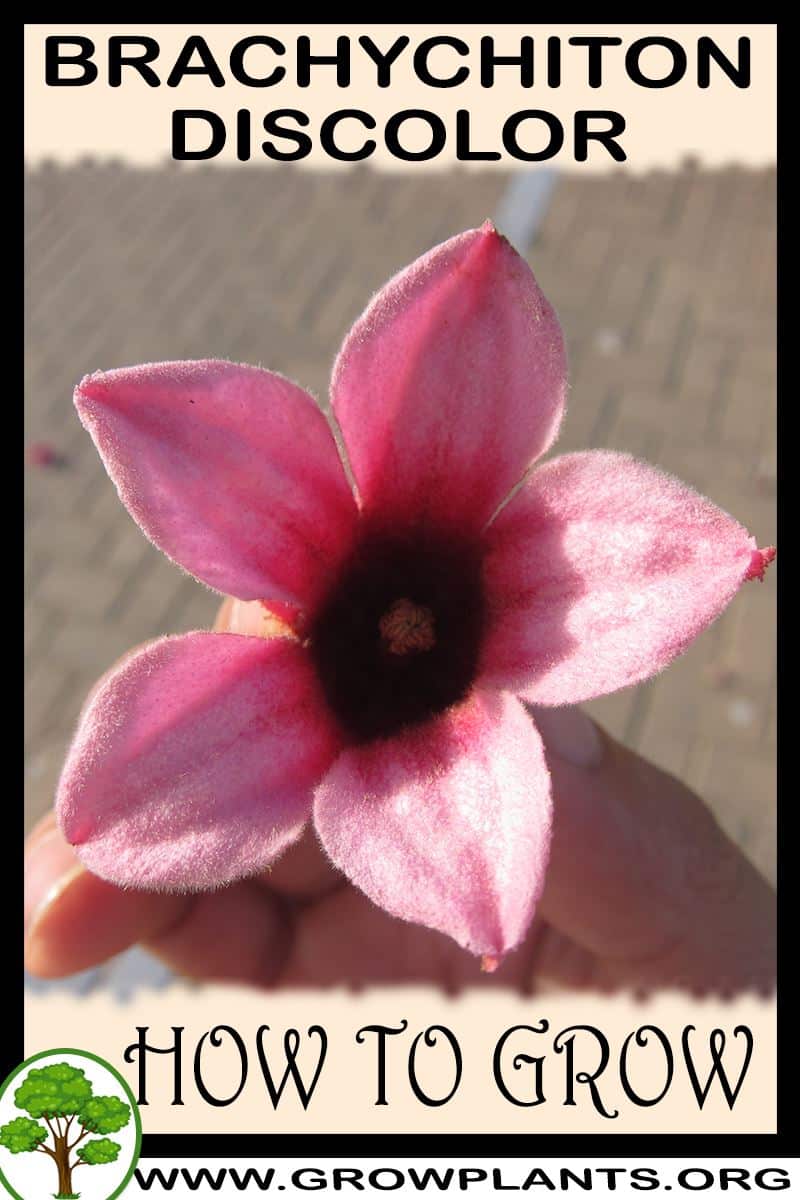
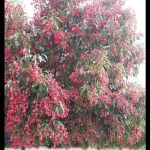
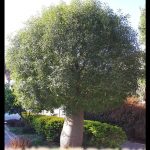
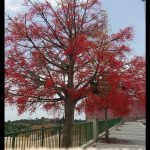
Overview: Brachychiton discolor (lacebark / bottletree discolor) is a perennial deciduous tree, about 10-30 m tall, grown as an ornamental and for its pollinator-attracting flowers in subtropical, mediterranean, desert, temperate and tropical climates. It is noted for its velvety pink to red bell-shaped flowers.
Quick Specifications
| Specification | Attribute |
|---|---|
| Plant Type / Life Cycle | Perennial (tree) |
| Foliage Type | Deciduous |
| Mature Size | 10-30 m tall (30-100 ft) |
| Growth Rate | Moderate |
| Toxicity | Seed-pod hairs are a skin and throat irritant – handle pods with care. |
| Hardiness | USDA zone 9+ |
Growth Form & Structure
- Height & Spread: 10-30 m (30-100 ft) in the ground; can be container-grown while young and trained as bonsai.
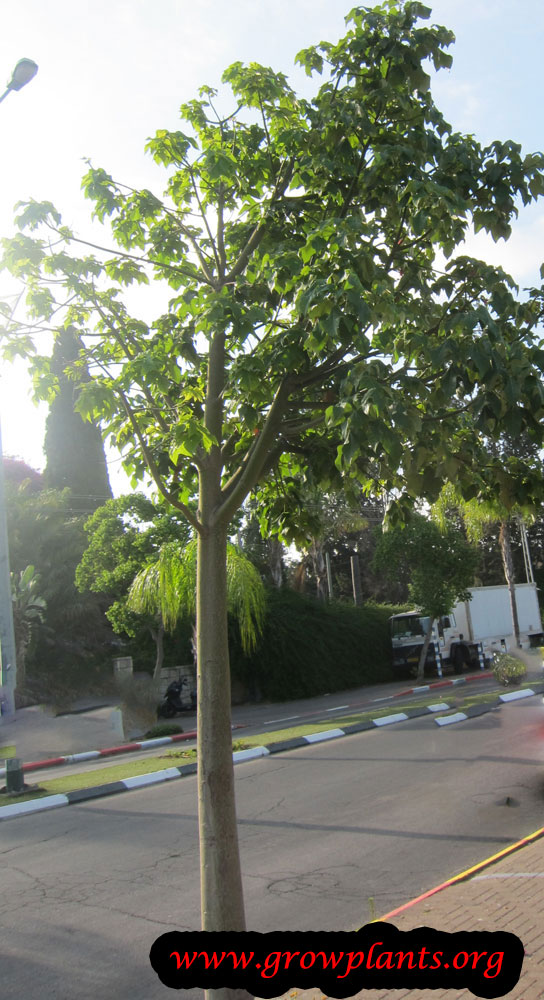
- Growth Habit & Form: Upright tree with a straight trunk and spreading crown.
- Lifespan & Maturity: Long-lived perennial tree of moderate growth.
Anatomy & Physical Features
- Leaves & Foliage: Green leaves, lobed with about five lobes.
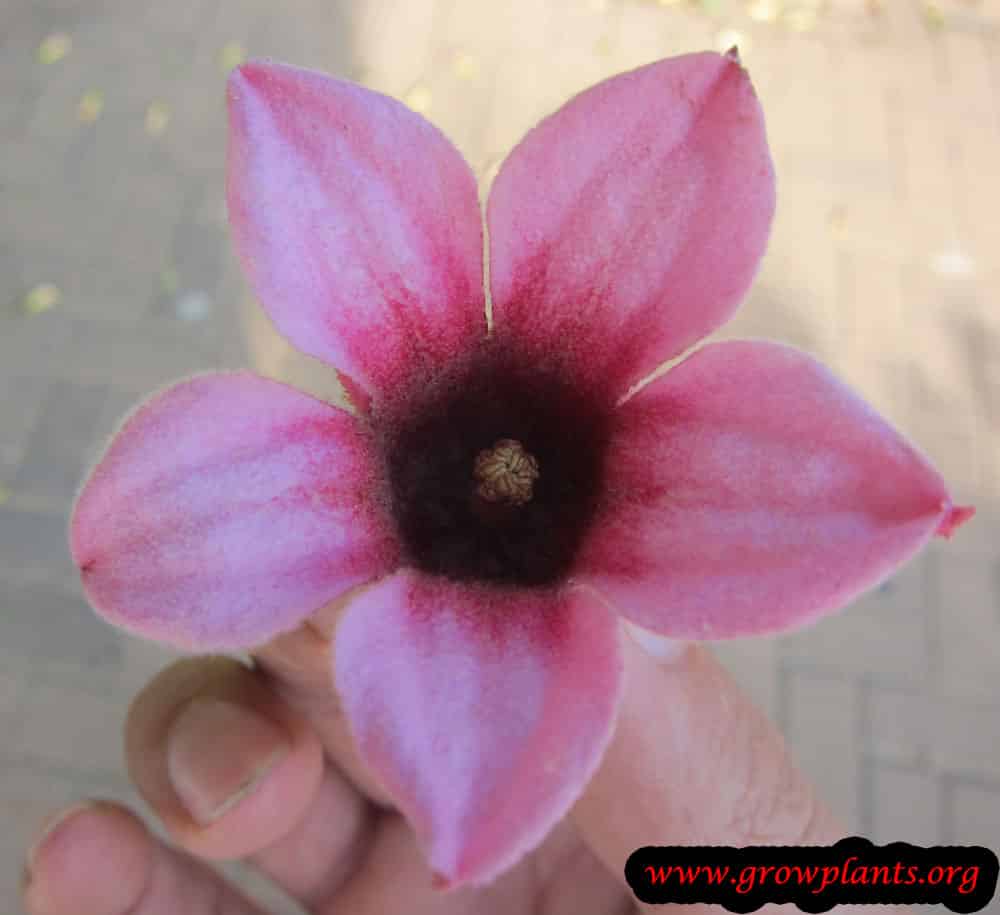
- Flower Characteristics: Bell-shaped, velvety flowers in pink or red, borne in inflorescences (summary only – see the Bloom guide).
Primary Uses & Landscape Value
- Functional & Ornamental Roles: Ornamental shade and specimen tree that attracts pollinators; also trained as bonsai.
Care Guide: Planting, Soil & Watering
Overview: Brachychiton discolor (lacebark / bottletree) is a large ornamental tree for subtropical, Mediterranean, desert and temperate gardens, growing best in full sun to light shade. It wants well-drained soil and, once established, is fairly drought-hardy, appreciating deep but occasional watering.
Quick Care Requirements
| Requirement | Ideal Condition |
|---|---|
| Planting Season | Warm season – spring through autumn |
| Growth Rate | Moderate |
| Soil Type | Well-drained soil |
| Water Need | Moderate – deep, occasional watering |
Planting & Establishment
- Best Planting Season: Plant in the warm season, spring to autumn, once frost risk has passed.
- How to Plant:
- Hole Preparation: Dig a hole the depth of the rootball and about twice as wide, loosening compacted ground beneath.
- Soil Amendments: Mix a little compost into the backfill and add grit on heavy soil to keep drainage free.
- Planting Depth: Set the root collar at soil level so water drains away from the trunk base.
- Growth Speed & Expectations: Moderate, developing over time into a large ornamental tree of 10-30 m.
Soil, Watering & Drainage Care
- Soil Mix & Drainage Needs: Free-draining soil is important; the tree dislikes sitting in wet ground.
- Watering Schedule & Technique:
- Young / Newly Planted: Water regularly through the first seasons to establish a deep, anchoring root system.
- Established: Water deeply but infrequently; mature trees tolerate dry spells well.
- Seasonal Adjustments: More during summer heat, much less in winter when growth slows.
Climate, Light & Hardiness
The pink bottletree (Brachychiton discolor) is a warm-climate tree suited to subtropical, Mediterranean, desert, temperate, and tropical conditions, growing well in full sun to half shade. It is a warm-zone species with limited cold tolerance.
Quick Climate Specifications
| Climate Zones | Subtropics, Mediterranean, desert, temperate, tropics |
|---|---|
| USDA Hardiness Zones | 9 and warmer |
| Frost Tolerance | Low |
| Light Conditions | Full sun / half shade |
Sunlight & Light Exposure
Optimal Light Setup
Thrives in full sun to half shade, giving flexibility in placement.
Direct Sun Requirement
Handles and generally prefers strong direct sun once established.
Shade & Heat Management
Half shade is a fine alternative in the hottest desert-type sites.
Best Exposure / Orientation
An open, unobstructed exposure suits its eventual large size.
Temperature Extremes & Hardiness
USDA Hardiness & Regional Limits
Suited to zone 9 and warmer, reflecting its subtropical-to-tropical origins; it is not intended for regions with regular hard freezes.
Cold Damage & Winter Protection
Cold snaps below the zone 9 threshold risk damage to foliage and branches; young trees are typically more cold-sensitive than established specimens, which benefit from a sheltered position at the cold edge of the range.
Frost Sensitivity
Frost sensitivity limits this species to frost-free or only lightly frosted climates.
Extreme Heat Tolerance
Well adapted to warm subtropical and desert-fringe heat.
Wind, Humidity & Microclimate
Humidity Preferences
Adapts across the humidity range from drier Mediterranean and desert climates to humid subtropics and tropics.
Wind Tolerance
As a substantial tree it generally withstands open-site wind once well established.
Microclimate Recommendations
In borderline zone 9 areas, a warm, sheltered site away from cold-air pockets reduces frost risk.
Growing in Pots, Balconies & Indoors
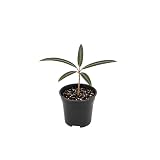
Brachychiton discolor (lacebark tree) is a large landscape tree, not a houseplant. It can be kept in a big container while young, but it is far too large for a pot in the long term – eventually it needs open ground. Treat any potted specimen as a temporary or feature plant for a sunny courtyard, patio or wide balcony.
Quick Details
- Container Size: A large, deep, heavy pot – suitable only while the tree is young; it will outgrow any container
- Indoor Suitability: Not a houseplant – a full-sun outdoor tree
- Best Spot: Full sun (some tolerate light shade) with plenty of room
- Soil & Drainage: Free-draining soil; any temporary pot must have strong drainage holes
- Watering in Pots: Moderate; let the surface dry between waterings and never leave it waterlogged
Indoors & On the Windowsill
- Not a houseplant: The grower marks it as unsuitable indoors. It is a sun-loving tree that quickly outgrows any indoor space, so keep it outdoors.
On a Balcony or Patio
- Scale: Only a young specimen suits a large patio pot, and only for a few years. Give it full sun and a heavy, stable container so wind can’t topple it, then plant it out once it grows on.
Choosing the Pot, Soil & Long-Term Care
- Container only while young: The grower confirms pot growing is possible, but as a tree that reaches this size it can only be held in a container temporarily before it needs the ground.
- Pot & drainage: If potting a young tree, use the largest practical pot with strong drainage holes; skip a standing-water saucer to avoid root rot.
- Potting mix: A free-draining, aerated mix; terracotta breathes and dries faster, while glazed or plastic holds moisture longer.
- Feeding & repotting: Feed lightly through the growing season and pot up yearly while young – but the real plan is to move it into open ground before it outgrows containers.
Fertilizing & Feeding
As an ornamental flowering tree grown for its showy pink-to-red spring bloom, this species does best with a moderate, steady feeding program through the growing season rather than a heavy or infrequent one.
Quick Fertilizing Specs
| Feeding Level | Moderate – feed during active spring and summer growth, then taper off. |
|---|---|
| Main Nutrient Priority | Balanced nutrition, with attention to iron availability on heavy or alkaline soils. |
| Best Feeding Period | Spring through early summer while new growth is active. |
| Soil pH | Prefers well-drained soil and tolerates a wide range, though strongly alkaline or waterlogged soil can trigger iron chlorosis. |
| Reduce/Stop Feeding | Reduce and stop feeding as the tree moves toward autumn dormancy and leaf drop. |
| Organic Options | Well-rotted compost worked into the root zone in spring supports steady, gentle nutrition. |
| Micronutrients | Iron and manganese are the most likely trace needs on heavy or alkaline soils. |
Feeding by Growth Stage
Spring Growth Flush
Support the flush of new leaves and shoot growth as the tree breaks dormancy in spring.
| Nutrient direction | A balanced, nitrogen-forward feed to fuel new foliage and branch growth. |
|---|---|
| Timing | As new growth begins in spring, once frost risk has passed. |
| Frequency | A light feeding at the start of the growing season is usually enough, with an additional light feeding later in spring if growth is vigorous. |
| Fertilizer types | A balanced, general-purpose ornamental tree fertilizer, A slow-release granular product worked into the root zone |
| Routine trace nutrients | iron, manganese |
| Precautions | Keep granular fertilizer away from the trunk and root flare, and water it in well. |
Bud Set and Bloom
Support bud development and the showy pink-to-red bloom without pushing excess soft leafy growth that can crowd out flowers.
| Nutrient direction | Shift away from a nitrogen push toward balanced nutrition, letting the spring feeding carry the plant through bloom. |
|---|---|
| Timing | From bud swell through the flowering period in spring. |
| Frequency | Feeding needs are minimal during bloom itself, relying on the reserve built up from the earlier spring feeding. |
| Fertilizer types | A balanced ornamental flowering-tree fertilizer, only if growth looks weak or pale |
| Precautions | Avoid a heavy nitrogen application right before or during bloom, since it tends to favor foliage over flowers. |
Autumn and Winter Dormancy
Let the tree enter its natural dormant period without encouraging tender new growth that frost could damage.
| Nutrient direction | None – withhold fertilizer as growth slows and leaves drop. |
|---|---|
| Timing | From leaf drop in autumn through winter dormancy. |
| Frequency | No feeding at this stage; resume only once new growth begins the following spring. |
| Fertilizer types | No feeding at this stage – do not apply fertilizer while the tree is dormant. |
| Precautions | Do not fertilize a dormant tree; late-season feeding can encourage frost-tender growth. |
Nutrient Deficiency Signs & Corrections
Interveinal yellowing (chlorosis) on new leaves while the veins stay green.
| Possible causes | High soil pH limiting iron availability, Waterlogged or compacted roots reducing uptake, Naturally low iron availability in heavy or calcareous soil |
|---|---|
| Appears first on | Newest growth at branch tips |
| What to check | Soil drainage and compaction around the root zone, Whether local soil is known to be alkaline or heavy, Whether nearby plants show the same pattern, suggesting a soil-wide issue |
| Possible correction | Improve drainage and correct pH if testing confirms an issue; a chelated iron product applied per its label can address a confirmed deficiency. |
Overall pale green to yellow leaves and slowed shoot growth.
| Possible causes | Insufficient nitrogen in the root zone, Poor root establishment limiting uptake, Fast-draining soil leaching nutrients before roots can use them |
|---|---|
| Appears first on | Older, lower leaves first, spreading upward if uncorrected |
| What to check | Recent feeding history and soil organic matter, Root health and any sign of root disease, Irrigation frequency and drainage pattern |
| Possible correction | Resume a balanced feeding program timed to active growth, and build soil organic matter over time. |
Buds forming but dropping before opening, or a noticeably sparse bloom.
| Possible causes | Nutrient imbalance such as excess nitrogen favoring foliage over flowers, Water stress (either drought or waterlogging) during bud development, Weather stress such as a late cold snap or heat spike during bud set |
|---|---|
| Appears first on | Flower buds along branches |
| What to check | Recent feeding history for excess nitrogen, Watering consistency during bud development, Recent weather extremes around bloom time |
| Possible correction | Correct any watering extremes and avoid heavy nitrogen feeding near bloom; a balanced fertilizer supports better bud retention over time. |
Pruning, Training & Seasonal Maintenance
Brachychiton discolor is a large deciduous tree grown chiefly for its showy pink-to-red, bell-shaped spring flowers, which are carried in a display similar to its close relative the Illawarra flame tree. It needs little routine pruning beyond structural work while young; the safest window is autumn once the leaves have dropped, well ahead of the following spring’s bloom, since the goal is to shape the tree without removing the branch tips that will carry that display.
Quick Pruning & Maintenance Specs
| Pruning Tolerance | Low-to-Moderate |
| Primary Pruning Window | Autumn, after leaf drop |
| Typical Frequency | Regular light shaping while young; infrequent thereafter |
| Main Objective | Establish structure while young; preserve the spring flower display on mature trees |
| Young Plant Priority | Select a strong leader and well-spaced scaffold branches for eventual large size |
| Mature Plant Priority | Deadwood and clearance pruning only, timed to protect the bloom |
| Best Tool Type | Pruning saw / loppers for structural work; secateurs for young formative growth |
| Avoid Heavy Pruning During | Late winter into spring, ahead of and during the flowering display |
Pruning by Plant Age & Size
Newly Established
Minimal – remove only damaged growth while the tree settles in.
Young / Formative
Central-leader or modified-leader training suits its eventual large size: select a dominant trunk and well-spaced scaffold branches and remove competing leaders or weak crotch angles early.
Mature / Established
Limit intervention to deadwood, hazard, and clearance pruning, done promptly after leaf drop so the tree has the full dormant season to set the coming spring’s flower buds undisturbed.
Seasonal Pruning Schedule
| Dormant/Autumn | Objective: structural shaping while leafless, promptly after leaf drop. Remove deadwood and crossing growth. Avoid removing branch tips likely to carry the spring bloom. Response: undisturbed bud development through winter. Flowering impact: positive if done early in the leafless window; late winter/spring cuts risk removing developing flower buds. |
Flowering & Fruiting Wood
Flowers appear in spring, typically on the past season’s branch growth, often before or alongside new leaves. Because the display is a large part of why this species is grown, avoid pruning branch tips in late winter or spring; do any structural work promptly in autumn instead, or wait until just after flowering finishes.
Structural Pruning & Training
Focus on removing crossing or rubbing branches and correcting weak crotch angles while young; a well-formed specimen needs little canopy thinning once mature.
Special Growth to Remove
- Dead or storm-damaged branches, at any time of year.
- Epicormic sprouts around old pruning wounds, which are weakly attached and not part of the desired structure.
Container & Small-Space Pruning
This species can be grown in a container; expect to prune more frequently than an in-ground tree to keep it in scale, and prioritize root pruning at repotting over letting the canopy simply be sheared back, which would sacrifice the flower display.
Tools
Bypass secateurs for young formative growth; loppers for medium branches; a pruning saw for larger scaffold limbs.
Tool Hygiene & Disease Risk
Routine – no specific transmissible disease risk is documented for this species; clean, sharp tools are sufficient.
Cut Placement & Technique
Cut just outside the branch collar and avoid flush cuts or long stubs; remove any large limb in stages to avoid tearing bark down the trunk.
Heavy Pruning & Rejuvenation
Not typically needed on a well-structured specimen; if storm damage requires major limb removal, stage the work over more than one season and expect the flower display to be reduced the following spring while the tree recovers.
Post-Pruning Care
Watch newly exposed bark for sunscald after opening the canopy; water young or recently pruned trees through establishment.
Common Pruning Mistakes
Pruning in late winter or spring and removing the flower buds that were the reason for planting this species; topping; delaying structural correction until large, disfiguring cuts are needed later.
When NOT to Prune
Not in late winter through spring, ahead of and during flowering; avoid major cuts right after transplanting.
Recommended Tools (by task)
- pruning_saw – for larger scaffold limbs on a tree that reaches 10-30 m.
- loppers – for medium branches during young-tree formative work.
- bypass_secateurs – for fine formative cuts, especially useful for container-grown specimens.
Pruning Troubleshooting
| Problem | Possible Cause | What to Check | Corrective Action |
| Reduced or absent spring flowering | Branch tips carrying flower buds removed in late winter or spring | Timing of the last pruning relative to bloom | Confine structural pruning to promptly after autumn leaf drop |
| Weak branch union | Competing leaders not separated while young | Young tree structure for narrow crotches | Select a single leader and well-spaced scaffolds during formative pruning |
Propagation Guide
Lacebark (Brachychiton discolor) is propagated from seed, and the source explicitly states that grafting or vegetative propagation is not necessary. This makes it a generally easy tree to raise at home once the seed’s tough coat and the pod’s irritant hairs are handled correctly.
Quick Propagation Specs
| Best Propagation Method | Seed |
| Propagation Difficulty | Easy |
| Seed True-to-Type | Usually true-to-type for the species |
| Best Propagation Season | Not specified by the source; align with the plant’s spring–autumn planting window |
Growing from Seed
Seed Handling & Viability
Not detailed by the source. As with other Brachychiton, ripe seed pods split open and the seed is surrounded by fine, irritant hairs – handle with gloves.
Dormancy & Pre-Sowing Treatment
Not detailed by the source. A hard seed coat is typical of this genus, and soaking seed in warm water for roughly a day before sowing is a commonly used way to improve germination.
Germination Conditions
Not detailed by the source; as a warm-climate tree (hardiness zone 9+, subtropics/mediterranean/desert/temperate/tropics) it can be expected to germinate best in warm conditions.
Germination Time
Not specified by the source.
Grafting & Budding
The source states grafting/vegetative reproduction is not necessary for this species – seed is the standard way to raise it.
Bloom & Flower Guide
Quick Details
- Bloom Season: Spring (into early summer in some seasons)
- Flower Appearance: Bell-shaped flowers in pink to red with a soft, velvety surface, borne in clusters along the branches
- Edibility: Ornamental only – the lacebark is grown for its showy flowering, not for eating
Detailed Blooming Overview
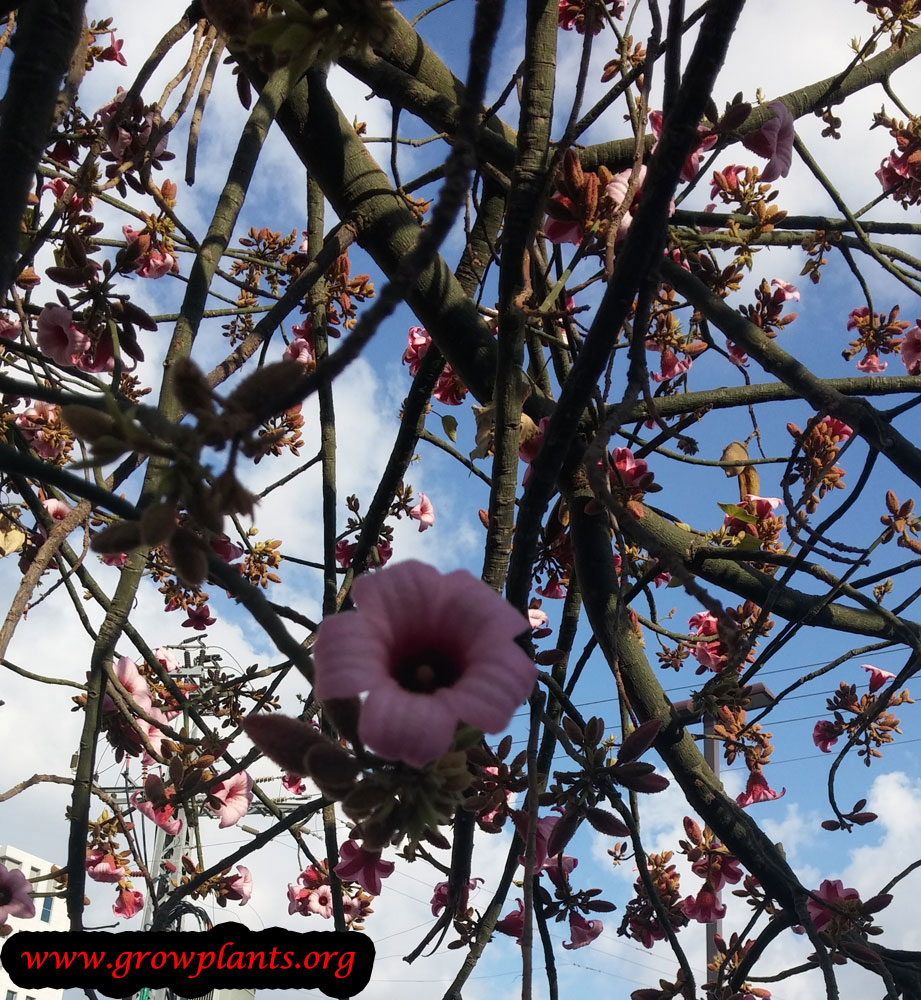
Brachychiton discolor, the lacebark or scrub bottle tree, is one of the showiest of its group. Being deciduous, it typically drops much of its foliage before flowering, then covers the bare branches with velvety pink bells – a striking display. The coloured, cup-shaped bell is the calyx rather than true petals, and the flowers draw plenty of pollinating insects.
Flower Characteristics
- Bell-shaped flowers in pink to red, with a distinctive velvety, felted texture.
- Carried in clusters, often on leafless branches for maximum impact.
Bloom Care & Thinning
- Encouraging bloom: Full sun and a warm, dry spring bring the heaviest flowering; display improves as the tree matures.
- Pollination: The velvety bells are attractive to bees and other pollinators.
- A note of care: The seed pods that follow are lined with fine irritant hairs, so wear gloves when clearing spent clusters.
Fruit & Uses
The site describes Brachychiton discolor purely as an ornamental, pollinator-attracting flowering tree, but its seeds have a documented traditional food use: once cleaned of the pod’s irritant hairs and roasted, they are locally used to make a roasted, coffee-like drink as well as being eaten as a snack. This is a minor, foraged use rather than the tree’s main purpose.
Quick Edible Specs
| Edible Parts | Seeds |
| Main Use(s) | Traditional/local use – roasted seeds eaten as a snack, or prepared as a roasted, coffee-like drink |
| Eaten Raw or Cooked | Roasted |
| Preparation Required | Remove the pod’s irritant hairs (wear gloves), then roast the seeds |
| Harvest Season | As pods mature and split, after flowering |
| Time to First Harvest | Not tracked – a foraged use, not a cultivated crop |
| Storage | Roasted seeds store dry like other roasted seeds |
| Safety/Toxicity Caveat | Pods are lined with fine irritant hairs, harmful to skin and eyes and hazardous if inhaled – always handle with gloves |
Seeds, Pods & Nuts
Seeds are enclosed in a woody pod lined with irritant hairs that must be removed before handling. Cleaned and roasted, the seeds are eaten as a snack and, in some local traditions, ground or brewed into a roasted drink said to resemble coffee with a hazelnut-like flavor.
Harvesting
Pods are gathered once mature and starting to split, after the tree’s spring bloom.
Preparation, Uses & Safety
Remove and avoid contact with the pod’s irritant hairs before touching the seeds, then roast before eating or brewing. This is a minor traditional/local use rather than an established commercial food product, and safety around the pod hairs should be taken seriously.
Pests, Diseases & Troubleshooting
Overview: Brachychiton (bottle trees, kurrajongs and lacebarks) are tough, drought-adapted Australian trees that store water in swollen trunks and are remarkably pest- and disease-resistant once established. The real risks are sap-sucking scale and mealybug, wood-boring beetle larvae in stressed trees, and – above all – root and collar rot when they are planted in heavy, poorly drained soil or overwatered. Management is mostly about siting them in free-draining soil, watering sparingly, and keeping trees vigorous so borers never gain a foothold. The lacebark (scrub bottle tree) is more of a rainforest-margin species with larger soft leaves, so it can show a little more leaf spot in humid, still air – keep it open.
Quick Troubleshooting Overview
| Issue / Pest | Main Symptom | Primary Solution |
|---|---|---|
| Scale insects | Bumps on stems/leaves, sticky honeydew and sooty mould | Horticultural oil; prune infested wood |
| Mealybugs | White cottony tufts in leaf axils; sticky foliage | Insecticidal soap / horticultural oil |
| Borers (longicorn beetles) | Frass and sawdust at holes, tunnels under bark, dieback | Keep trees vigorous; cut out infested limbs |
| Leaf-tier / leaf-roller caterpillars | Leaves webbed, rolled and chewed on new flushes | Hand-pick; Bt if widespread |
| Root / collar rot | Wilting, dieback, dark oozing bark near soil line | Improve drainage; avoid overwatering |
| Leaf drop | Sudden leaf fall in dry season or after stress | Often natural dormancy; ease watering |
Common Pests & Management
- Scale insects (Coccidae / Diaspididae):
- Symptoms: Immobile brown, grey or white bumps along twigs, branches and leaf veins. Soft scales excrete honeydew that blackens into sooty mould and attracts ants; armoured scales cause yellow flecking and twig dieback. Usually minor on healthy trees.
- Prevention & Control: Tolerate light infestations, which natural enemies keep in check. Prune out heavily encrusted twigs and conserve parasitic wasps and ladybirds. For build-ups on young or containerised trees, apply horticultural oil to smother scale, targeting the mobile crawler stage.
- Mealybugs (Pseudococcus / Planococcus spp.):
- Symptoms: White, cottony, waxy masses in leaf axils, branch forks and on tender growth, with associated honeydew, sooty mould and some yellowing. Most troublesome on juvenile and container-grown plants.
- Prevention & Control: Hose off colonies and dab clusters with an alcohol-moistened swab. Support predatory beetles and lacewings. Spray horticultural oil or insecticidal soap into the crevices where they hide, repeating every week or two until clear.
- Longicorn borers / wood-boring beetle larvae (Cerambycidae):
- Symptoms: Larvae tunnel beneath the bark and into branches, pushing out sawdust-like frass at entry holes and causing wilting, ringbarked limbs and dieback. Borers overwhelmingly attack trees already weakened by drought stress, sunscald or injury.
- Prevention & Control: Prevention is everything: keep trees vigorous with correct siting, mulching and occasional deep watering in prolonged drought, and avoid trunk wounds. Prune out and destroy infested limbs promptly. Chemical control of larvae inside wood is largely ineffective, so focus on tree health and sanitation.
- Kurrajong leaf-tier / leaf-roller (Dichocrocis clytusalis):
- Symptoms: Caterpillars web and roll leaves on new flushes into shelters and skeletonise them from inside, giving the canopy a tattered, webbed look. Damage is cosmetic on established trees but can check young ones.
- Prevention & Control: Prune out and squash rolled-leaf shelters. Encourage birds and parasitic wasps. For heavy outbreaks on small trees, spray Bacillus thuringiensis (Bt) onto the new growth in the evening.
- Aphids (Aphis spp.):
- Symptoms: Soft-bodied clusters on tender new shoots and flower stalks causing curling and honeydew; mostly a spring-flush nuisance on young growth.
- Prevention & Control: Hose off and let ladybirds and lacewings clean up. Only treat persistent colonies with insecticidal soap or a light oil spray on the affected tips; avoid high-nitrogen feeding that drives soft growth.
Diseases & Fungal Issues
- Root & collar rot (Phytophthora / Pythium spp.):
- Symptoms: Wilting and thinning canopy despite adequate soil moisture, yellowing, branch dieback and dark, sometimes oozing lesions at the base of the trunk. Roots turn dark and mushy. Driven by heavy, waterlogged soils and overwatering – the number-one killer of these drought trees.
- Treatment & Management: Plant only in free-draining soil, ideally on a mound, and never overwater; established trees need very little. Keep mulch and irrigation off the trunk base. There is no cure once advanced, so prevention through drainage and restrained watering is essential; remove and replace dead trees, improving the site first.
- Fungal leaf spot (various fungi):
- Symptoms: Brown or blackish spots and blotches on leaves in humid weather, sometimes with premature leaf drop. Largely cosmetic on these tough trees.
- Treatment & Management: Rake up and remove fallen leaves, improve air circulation with selective pruning, and avoid overhead watering. Fungicides are rarely justified; the tree outgrows minor leaf spotting.
- Sooty mould (Capnodium spp.):
- Symptoms: Black sooty film on leaves and stems growing on the honeydew of scale, mealybug or aphids rather than infecting the tree directly.
- Treatment & Management: Manage the underlying sap-sucking pest and the mould fades. Rinse residual film from accessible foliage if desired.
Growing Difficulties & Abiotic Problems
- Root rot from overwatering / poor drainage:
- Cause & Symptoms: These water-storing trees are exquisitely intolerant of wet feet. In heavy or poorly drained soil, or with frequent irrigation, roots suffocate and rot, causing wilt, dieback and collapse.
- Correction Strategy: Site in free-draining soil or raised ground, water deeply but infrequently, and let established trees rely largely on rainfall. Correct drainage before anything else.
- Seasonal / stress leaf drop:
- Cause & Symptoms: Many Brachychiton are semi-deciduous and shed leaves before flowering or during drought; sudden leaf fall alarms growers but is often normal dormancy or a stress response, not disease.
- Correction Strategy: Recognise natural leaf drop and do not respond by overwatering, which invites rot. Provide a deep drink in extreme drought, then let the tree flush again with the season.
- Transplant shock:
- Cause & Symptoms: Newly planted trees may wilt, drop leaves or stall; their fleshy roots dislike disturbance and dry, windy conditions after planting.
- Correction Strategy: Plant young, water in well, mulch (keeping mulch off the trunk), and shelter from harsh wind until established. Avoid overwatering during recovery.
- Sunscald / frost damage on young trees:
- Cause & Symptoms: Thin-barked juveniles can suffer bark splitting from sunscald in exposed sites, and soft new growth is frost-tender even though mature trees are hardy.
- Correction Strategy: Protect young trunks from intense afternoon sun and screen from hard frost while establishing. Mature trees tolerate heat, drought and light frost well.
What Helps – Products & Tools
The essential kit is horticultural / neem oil and insecticidal soap for scale, mealybug and aphids, Bt (Bacillus thuringiensis) for the leaf-tier caterpillars, and clean, sharp pruning tools to remove borer-infested limbs. Good free-draining soil, mulch and restrained watering are the best ‘products’ of all for preventing the root rot that actually kills these trees. Fungicides are seldom needed. Spray oils in the cool evening to protect pollinators.