Plant Profile & Key Characteristics
Overview: An evergreen shrub 0.6-1.5 m (2-5 ft) tall producing bright yellow daisy flowers almost year-round. A fast-growing, drought-tolerant ornamental that attracts pollinators.
Quick Specifications
| Specification | Attribute |
|---|---|
| Plant Type / Life Cycle | Perennial (evergreen shrub) |
| Foliage Type | Evergreen |
| Mature Size | 0.6-1.5 m tall (2-5 ft) |
| Growth Rate | Moderate to Fast |
| Hardiness | USDA zones 10+ |
Growth Form & Structure
- Height & Spread: 0.6-1.5 m (2-5 ft) tall; can be kept smaller in a container.
- Growth Habit & Form: Rounded, bushy evergreen shrub.
- Lifespan & Maturity: Fast-establishing perennial shrub; source notes it as vigorous/aggressive and it can become woody with age.
Anatomy & Physical Features
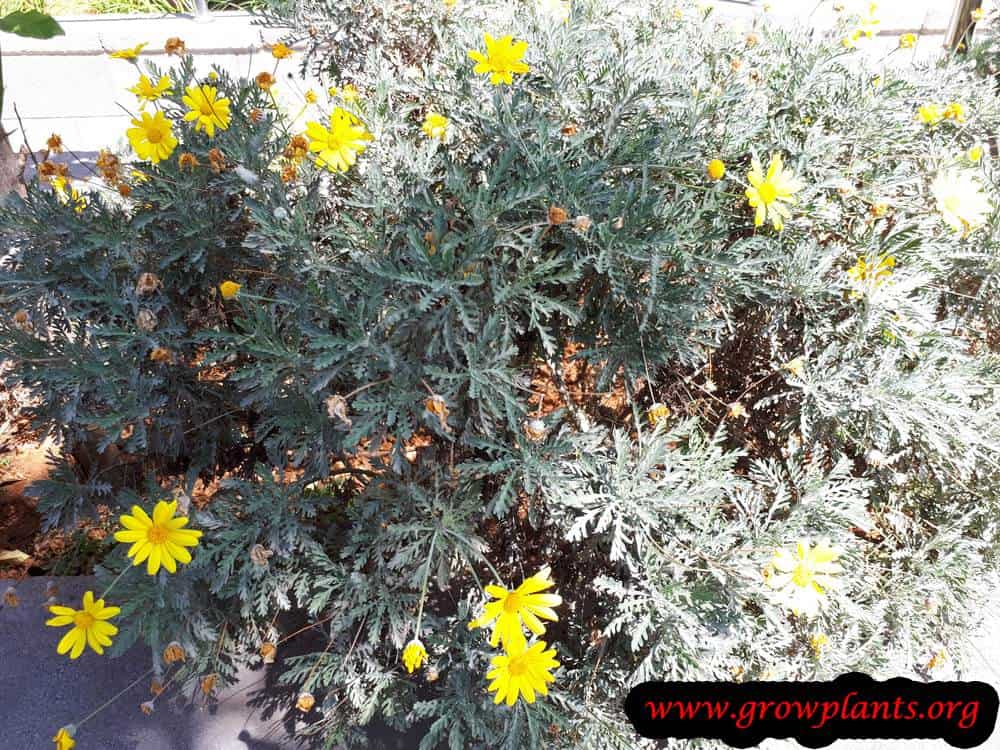
- Leaves & Foliage: Finely divided, deeply lobed green-to-grey leaves.
- Flower Characteristics: Bright yellow daisy flowers borne almost year-round (full detail in the Bloom guide).
Primary Uses & Landscape Value
- Functional & Ornamental Roles: Long-flowering ornamental shrub for borders, hedging and containers; drought tolerant and attracts pollinators. Not an indoor plant.
Care Guide: Planting, Soil & Watering
Overview: Euryops pectinatus (bush daisy) is a fast-growing evergreen shrub for Mediterranean, subtropical and tropical climates (hardiness zone 10+) that flowers best in full sun. It is drought tolerant, thriving in well-draining soil with only modest watering.
Quick Care Requirements
| Requirement | Ideal Condition |
|---|---|
| Planting Season | Year-round in frost-free areas |
| Growth Rate | Moderate to Fast |
| Soil Type | Well-draining |
| Water Need | Low to Moderate – let soil dry between waterings |
Planting & Establishment
- Best Planting Season: In frost-free climates it can be planted year-round; where light frost is possible, plant in the warm season so it establishes before cold weather.
- How to Plant:
- Hole Preparation: Dig a hole about the depth of the root ball and a little wider, on freely draining ground.
- Soil Amendments: Improve heavy soil with compost and grit for drainage; the shrub is not fussy about fertility.
- Planting Depth: Set the root ball so its top sits level with the soil surface, without burying the stem.
- Growth Speed & Expectations: A moderate-to-fast grower reaching about 0.6-1.5 m (2-5 ft); it can spread vigorously, so trim to shape.
Soil, Watering & Drainage Care
- Soil Mix & Drainage Needs: Grow in well-draining soil or, in containers, a free-draining potting mix with good drainage holes to keep the roots from staying wet.
- Watering Schedule & Technique:
- Young / Newly Planted: Water regularly while establishing, letting the top of the soil dry between waterings.
- Established: Once established it is drought tolerant – water deeply but occasionally, allowing the soil to dry first.
- Seasonal Adjustments: Give a little more in prolonged heat and cut back in cool, wet weather.
Climate, Light & Hardiness
Bush daisy is a drought-tolerant, frost-sensitive evergreen shrub for mediterranean, subtropical, and tropical climates, needing full sun. It flowers year-round where winters stay mild but is limited by cold in cooler climates.
Quick Climate Specifications
| Climate Zones | Mediterranean, subtropical, tropic |
|---|---|
| USDA Hardiness Zones | Zone 10 and warmer |
| Cold Damage Begins | Approaching freezing |
| Frost Tolerance | Low |
| Light Conditions | Full sun |
Sunlight & Light Exposure
Optimal Light Setup
Needs full sun for compact, bushy growth and continuous flowering.
Temperature Extremes & Hardiness
USDA Hardiness & Regional Limits
Suited to zone 10 and warmer; it needs a largely frost-free climate for year-round outdoor growth and flowering.
Frost Sensitivity
Frost damages or kills foliage and stems; in marginal climates it is best grown in a container that can be moved or given winter protection.
Growing in Pots, Balconies & Indoors
Euryops pectinatus (grey-leaved euryops) is a rounded, grey-foliaged evergreen shrub smothered in bright yellow daisies – a superb sunny patio and balcony shrub in a pot, not a houseplant, that flowers for much of the year given full sun.
Quick Details
- Container Size: A medium-to-large pot, about 15-30 L (4-8 gal), for a shrub of 0.6-1.5 m (24-60 in)
- Indoor Suitability: Not a houseplant (the grower marks it “No”) – a full-sun evergreen flowering shrub
- Best Spot: Full sun – the more the better for continuous flowering
- Soil & Drainage: Free-draining, gritty mix; it dislikes heavy, wet soil
- Watering in Pots: Low to moderate – drought-tolerant once established; let the top of the mix dry between waterings
Indoors & On the Windowsill
- Houseplant limits: The grower marks it as not suitable indoors. It is a sun-demanding shrub that grows lax and shy to flower in a room; it needs strong outdoor light.
- Overwintering: Tender to hard frost; where winters are cold, move the pot to a bright, cool, frost-free spot such as a porch or cold conservatory, and cut back lightly.
On a Balcony or Patio
- Light & wind: A first-rate long-flowering shrub for a hot, sunny balcony; give it the brightest spot and it barely stops blooming. Pots dry fast in sun – check moisture in summer.
- Practicalities: Use a stable pot for a rounded shrub and trim after the main flush to keep it neat and bushy.
Choosing the Pot, Soil & Long-Term Care
- Pot & drainage: A 15-30 L pot with strong drainage holes; skip a standing water saucer to avoid root rot. Terracotta suits its dislike of wet roots.
- Potting mix: A free-draining, gritty mix opened up with extra perlite or coarse sand.
- Feeding: Feed lightly through the growing season for steady flowering, as potted plants leach nutrients with watering.
- Repotting: Pot on or refresh the mix every couple of years and trim to shape to keep it compact.
Fertilizing & Feeding
A drought-tolerant shrub that flowers for much of the year on a light diet: a modest balanced feeding at planting and occasional light feeding afterward are usually enough to keep the yellow daisies coming.
Quick Fertilizing Specs
| Feeding Level | Light feeder |
|---|---|
| Main Nutrient Priority | Balanced, occasional feeding; extra phosphorus is not needed to increase bloom |
| Best Feeding Period | At planting and through the main growing and flowering period |
| Organic Options | Compost or organic matter worked into the planting hole |
| Reduce/Stop Feeding | Hold off whenever growth and bloom clearly slow in cooler weather |
| Micronutrients | Rarely an issue in average garden soil; correct only if diagnosed |
| Soil pH | Tolerates a wide range of well-drained soils |
Feeding by Growth Stage
Establishment after planting
Root new plants in without pushing overly soft, floppy growth in this drought-tolerant shrub.
| Nutrient direction | A light, balanced feeding at planting supports rooting; this tough shrub does not need rich fertility to establish. |
|---|---|
| Timing | At planting, which can be done in most seasons in mild, frost-free climates. |
| Frequency | A light feeding at planting is usually enough. |
| Fertilizer types | A balanced complete fertilizer used sparingly at planting, Compost or organic matter worked into the planting hole |
| Precautions | Keep feeding light; overly rich soil produces soft growth that is prone to flopping and can invite aphid problems. |
Ongoing growth and near-year-round bloom
Sustain the steady flush of yellow daisy flowers this shrub produces through most of the year in mild climates.
| Nutrient direction | Continue an occasional light, balanced feeding; more phosphorus is not needed to increase bloom, and steady moderate nutrition keeps flowering going without forcing weak growth. |
|---|---|
| Timing | Through the main growing and flowering period, which can extend most of the year. |
| Frequency | Light, occasional feeding is usually enough to keep it blooming. |
| Fertilizer types | An occasional light, balanced fertilizer |
| Precautions | Avoid heavy or frequent feeding, which favors soft leafy growth over flowers and can worsen aphid problems. |
Cooler-month rest
Let growth ease during any cooler stretches without pushing new growth.
| Nutrient direction | None – withhold fertilizer whenever growth and bloom clearly slow in cooler weather. |
|---|---|
| Timing | During any cooler-season slowdown. |
| Frequency | No feeding at this stage; resume once active growth and bloom pick back up. |
| Fertilizer types | No feeding at this stage; hold off fertilizing until active growth resumes. |
| Precautions | Do not fertilize while growth is stalled; routine deadheading matters more than feeding at this time. |
Nutrient Deficiency Signs & Corrections
Pale, undersized foliage and reduced flowering.
| Possible causes | low available soil nitrogen, nitrogen leaching from sandy, well-drained soil, thin, low-organic-matter soil |
|---|---|
| Appears first on | older, lower leaves |
| What to check | recent feeding history, soil organic matter, watering and drainage |
| Possible correction | Apply a light, balanced fertilizer with nitrogen and work in organic matter. |
New leaves emerge pale yellow while the veins stay distinctly green.
| Possible causes | high soil pH limiting iron availability, waterlogged or compacted soil restricting root function, naturally iron-poor alkaline soil |
|---|---|
| Appears first on | newest leaves |
| What to check | soil pH, drainage and recent watering, root health |
| Possible correction | Correct soil pH or drainage first, then apply a chelated iron product per its label if new growth stays pale. |
Weak, floppy stems and browning along older leaf margins, with reduced flowering.
| Possible causes | low soil potassium, potassium leaching from sandy, well-drained soil, a feeding routine skewed heavily toward nitrogen |
|---|---|
| Appears first on | margins of older leaves |
| What to check | recent fertilizer balance, soil texture and drainage, overall stem strength and flower production |
| Possible correction | Move to a more balanced fertilizer rather than a nitrogen-heavy one. |
Pruning, Training & Seasonal Maintenance
Bush Daisy is a mounding, woody-based subshrub that blooms almost continuously, so deadheading and light shaping happen year-round rather than in one seasonal window – matching its own "all year round" pruning and bloom facts. Unlike a purely herbaceous perennial, though, its base does become genuinely woody with age, and it is well known in Mediterranean-climate horticulture to grow leggy and sparse at the centre if it is only ever deadheaded and never cut back harder, so a periodic rejuvenation prune is a real, distinct part of its care.
Quick Pruning & Maintenance Specs
| Pruning Tolerance | Moderate – shapes and deadheads easily; avoid cutting into completely bare old wood |
| Primary Pruning Window | Ongoing, year-round (deadheading and light shaping) |
| Secondary Maintenance Window | Early spring or just after a heavy bloom flush, for the harder rejuvenation cut |
| Typical Frequency | Deadhead/shape continually; hard cutback roughly once a year, sometimes every 2 years |
| Main Objective | Remove spent flowers, control size, prevent the woody base going leggy/sparse |
| Young Plant Priority | Pinch soft tips early to build multiple branching points before wood forms |
| Mature Plant Priority | Periodic cutback by about a third into leafy (not bare) wood to renew density |
| Best Tool Type | Bypass secateurs for routine work; loppers only for thicker old basal wood |
| Avoid Heavy Pruning During | Peak summer heat or drought stress, and cutting into fully bare, leafless old wood at any time |
Pruning by Plant Age & Size
Newly Established
In the first season, pinch soft new tips rather than cutting into any woody growth, to encourage multiple low branches while the plant is still forming its framework.
Young / Formative
No formal leader/vase training is needed on a mounding subshrub; formative care is pinching and light tip shaping to build a dense, multi-branched mound before the base begins to woody up.
Mature / Established
Continue deadheading and light shaping year-round, and add a periodic harder cutback (roughly a third of the plant’s size) into wood that still carries leaves, timed for early spring or right after a strong bloom flush, to keep the centre from thinning out.
Seasonal Pruning Schedule
Ongoing (year-round, given continuous bloom): objective is a tidy, floriferous mound; remove spent flower stems and any straggly shoots; don’t remove more foliage than needed to shape, since this is also routine maintenance, not a dormant-season event; response is continued flowering with little interruption.
Early Spring / Post-Flush (periodic rejuvenation): objective is preventing legginess; cut back by roughly a third into leafy wood, avoiding bare stems that may not resprout; don’t remove more than about a third in one pass; response is denser, more compact new growth and renewed flowering within the following flush.
Structural Pruning & Training
Structure here is about canopy density and avoiding a hollow, bare-centred mound rather than a formal framework: thin out crossing or overly upright shoots occasionally, and use the periodic rejuvenation cutback as renewal pruning to keep new growth coming from lower on the plant rather than only at the tips.
Special Growth to Remove
Spent flower stems (continuous deadheading, since bloom is nearly year-round) and any straggly, overextended shoots that unbalance the mound’s shape; there are no suckers or rootstock growth to manage, since this species is not typically grafted.
Container & Small-Space Pruning
In a container, shape and deadhead the same way but lean toward the lighter end of the rejuvenation cutback, since a restricted root system regenerates new growth more slowly than an in-ground plant after a hard cut.
Tools
Bypass secateurs for deadheading, shaping and most of the rejuvenation cutback; loppers only if older basal stems have thickened enough that secateurs can’t get a clean cut.
Tool Hygiene & Disease Risk
Routine – clean, sharp tools are sufficient; no disease is flagged for this species in the available data, though aphids (a noted pest) can cluster on the flush of soft new growth that follows a cutback.
Cut Placement & Technique
Always cut back into a section of stem that still carries leaves or visible healthy buds – cutting into completely bare, leafless wood on this species risks a stub that won’t resprout. Deadhead individual flower stems back to the nearest leaf pair.
Heavy Pruning & Rejuvenation
Tolerated in moderation: a cutback of about a third of the plant’s size into leafy wood is the standard rejuvenation move and reliably thickens regrowth, but a full hard prune into bare old wood is not reliable on this species and can leave dead, non-resprouting stubs – renew gradually over more than one season if the plant is very overgrown rather than removing everything at once.
Post-Pruning Care
Water normally to support the regrowth flush; avoid feeding heavily right after a hard cutback, since the plant is already being pushed into vegetative regrowth. Watch new soft growth for aphids.
Common Pruning Mistakes
Never cutting back beyond deadheading and letting the plant go permanently leggy and sparse in the centre; cutting into bare old wood expecting it to resprout; hard-pruning during peak heat or drought stress, when the plant is least able to push new growth.
When NOT to Prune
Avoid a hard rejuvenation cutback during extreme heat or drought stress, when the plant can’t reliably push the regrowth the cut is meant to stimulate; light deadheading, by contrast, can continue year-round.
Recommended Tools (by task)
- Continuous deadheading and light shaping: bypass_secateurs – the routine, most-used cut on this plant.
- Periodic rejuvenation cutback into leafy wood: bypass_secateurs – clean cuts that leave leafy tissue behind to resprout from.
- Removing any thickened old basal stems: loppers – only needed where secateurs can’t get a clean cut through older wood.
Pruning Troubleshooting
| Problem | Possible Cause | What to Check | Corrective Action |
| Sparse, leggy mound with bare centre | Years of deadheading only, without any harder rejuvenation cut | Whether cuts have ever gone beyond spent flower stems | Begin gradual rejuvenation cutbacks into leafy wood, spread over 1–2 seasons if severe |
| Dead stub after a cutback | Cut made into completely bare, leafless old wood | Whether any leaves or live buds were present below the cut | Always cut back only as far as visibly leafy or budded wood; remove the dead stub |
| Reduced flowering after cutting back | Cutback timed during heat/drought stress or too severe in one pass | Recent weather and how much of the plant was removed at once | Water adequately post-cut and keep any single rejuvenation cut to about a third of the plant |
Propagation Guide
Bush daisy (Euryops pectinatus) is most reliably propagated from semi-hardwood or softwood stem cuttings, the standard nursery method for this shrub, since it roots readily and reaches flowering size faster than plants grown from seed. Seed can be used but germinates more slowly and less predictably. Propagation is easy overall.
Quick Propagation Specs
| Best Propagation Method | Semi-hardwood or softwood stem cuttings |
| Alternative Methods | Seed |
| Propagation Difficulty | Easy |
| Seed True-to-Type | Usually true-to-type for the species |
| Vegetative True-to-Type | Yes |
| Best Propagation Season | Spring through summer for cuttings; spring for sowing |
| Cutting Rooting Time | Usually a few weeks under warm conditions |
| Germination Temperature | Around 20–24°C (68–75°F) |
| Seed Sowing Depth | Lightly cover |
Growing from Seed
Sowing Season
Spring, once temperatures are reliably warm.
Sowing Depth & Orientation
Sow shallowly and cover lightly.
Germination Conditions
Warm temperature and consistent moisture; germination is slower and less even than with cuttings.
Seedling Care
Grow on in bright light; seedlings are slower to reach a saleable or plantable size than rooted cuttings.
Stem Cuttings
Cutting Type
Semi-hardwood tip cuttings from firm, non-flowering shoots; softwood tips also root well earlier in the season.
Best Timing
Spring to summer, during active growth.
Cutting Preparation
Take a 7–10 cm (3–4 inch) tip, remove flowers/buds and the lower leaves, and cut just below a node.
Rooting Setup
Insert into a free-draining cutting mix and keep humid and warm until roots form.
Rooting Hormone
Optional – beneficial for speed and uniformity but not essential for this easy-rooting shrub.
Rooting Time
Usually a few weeks under warm, humid conditions.
Bloom & Flower Guide
Quick Details
- Bloom Season: Practically all year in a mild climate, heaviest in the cooler months
- Time to First Bloom: Blooms in its first year and quickly builds to a near-constant display
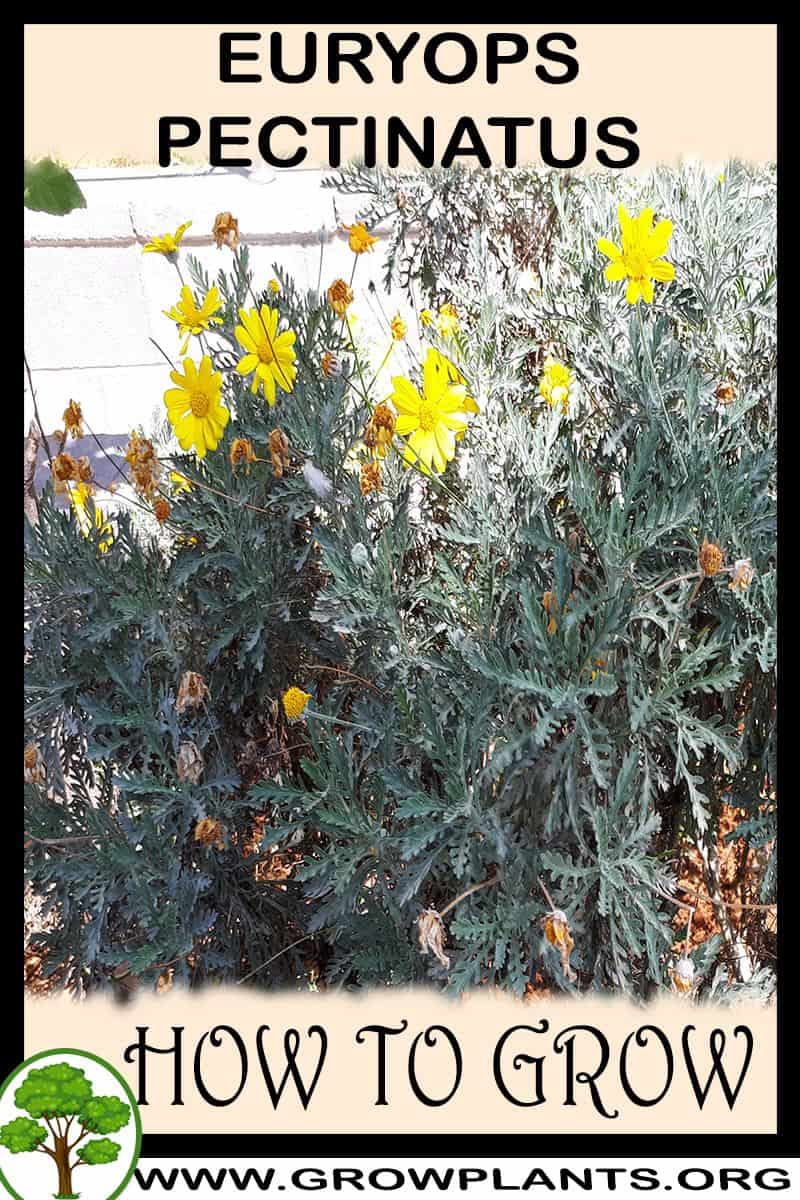
- Flower Appearance: Bright yellow daisy heads held above finely divided grey-green foliage
- Edibility: Ornamental only – not eaten
Detailed Blooming Overview
Few shrubs flower as generously or as long as the bush daisy. Clear yellow daisy heads are carried on wiry stalks above ferny, grey-green leaves, and in frost-free gardens the plant is rarely without bloom, peaking through the cooler part of the year. Its toughness and drought tolerance make it a dependable source of colour and a steady draw for pollinators.
Flower Characteristics
- Bright, clear-yellow daisy heads with slim rays around a yellow disc.
- Held well clear of the foliage on slender stalks.
- Set against distinctive, deeply cut grey-green leaves.
Bloom Care & Thinning
- Prolonging bloom: Regular deadheading and a light trim after each flush keep new flowers coming and the plant compact.
- Position: Full sun and free-draining soil give the most flowers; it is notably drought-tolerant once established.
- Pollination: The open daisies attract bees and other pollinators.
Pests, Diseases & Troubleshooting
Overview: Grey-leaved euryops is a tough, sun-loving evergreen shrub daisy that is largely trouble-free; its realistic problems are sap-sucking pests (aphids, whitefly, spider mites, thrips) on soft growth and, if grown in wet or poorly drained soil, root rot and foliar mildews. Grow it lean in full sun with good drainage and airflow, and lead with cultural controls and beneficials.
Quick Troubleshooting Overview
| Issue / Pest | Main Symptom | Primary Solution |
|---|---|---|
| Aphids | Sticky new shoots & buds, distortion | Water jet, beneficials, insecticidal soap |
| Whitefly | White flies rise when disturbed; honeydew | Sticky traps, oil/soap on leaf undersides |
| Spider mites | Stippling, bronzing, webbing in dry heat | Raise humidity, rinse, oil / predatory mites |
| Thrips | Silvered petals & leaves, black specks | Blue sticky traps, remove debris, spinosad |
| Root rot | Wilting/yellowing in wet, heavy soil | Improve drainage; water less |
| Downy / powdery mildew | Yellow blotches or white film on leaves | Airflow; copper or sulfur/bicarbonate |
Common Pests & Management
- Aphids (Aphis / Myzus spp.):
- Symptoms: Green or black soft-bodied insects clustering on soft new shoots and flower buds; sticky honeydew, sooty mould and distorted growth, especially in the flush of new spring growth.
- Prevention & Control: Knock off with a water jet and encourage ladybirds, lacewings and hoverflies. Avoid overfeeding with nitrogen, which drives soft aphid-prone growth. Treat persistent colonies with insecticidal soap or a light horticultural oil in the cool of the evening.
- Whitefly (Trialeurodes vaporariorum):
- Symptoms: Clouds of tiny white flies rising from the foliage when brushed; yellow flecking, honeydew and sooty mould, worst on soft growth and under cover.
- Prevention & Control: Monitor and reduce adults with yellow sticky traps, encourage Encarsia parasitoids and lacewings, and rinse and treat leaf undersides with insecticidal soap or horticultural oil, repeating weekly.
- Spider mites (Tetranychus urticae):
- Symptoms: Fine pale stippling, bronzing and a dull, dusty look with fine webbing under leaves during hot, dry, still spells.
- Prevention & Control: Raise humidity and airflow, rinse foliage to knock back numbers, and release predatory mites where practical. Spot-treat with horticultural oil or insecticidal soap and avoid broad-spectrum sprays that kill natural enemies.
- Thrips (Frankliniella / Thrips spp.):
- Symptoms: Silvery streaking and flecking on leaves and petals, distorted buds and tiny black frass specks; slender insects hide in flowers and growth tips.
- Prevention & Control: Use blue sticky traps to monitor, remove spent flowers and debris, and encourage predatory mites and minute pirate bugs. Spinosad or insecticidal soap helps in heavy infestations; rotate actives to avoid resistance.
- Leaf miner (Liriomyza spp.):
- Symptoms: Pale, winding or blotchy tunnels within the leaves; mostly cosmetic on established plants but disfiguring in heavy attacks.
- Prevention & Control: Pick off and destroy mined leaves, support parasitic wasps by avoiding broad-spectrum sprays, and keep plants vigorous. Chemical control is rarely warranted.
Diseases & Fungal Issues
- Downy mildew (Peronospora / Plasmopara spp.):
- Symptoms: Pale yellow blotches on the upper leaf surface with a greyish, downy mould beneath in cool, damp, humid weather; affected leaves brown and drop.
- Treatment & Management: Improve airflow and spacing, water at the base and keep foliage dry, and clear fallen leaves. Remove affected growth; a copper-based fungicide can protect valued plants when conditions stay wet.
- Powdery mildew (Golovinomyces / Podosphaera spp.):
- Symptoms: White powdery coating on leaves and stems, later yellowing and leaf drop; worst in crowded plants with warm days and cool nights.
- Treatment & Management: Space for airflow, avoid excess nitrogen, and remove affected leaves. Sulfur, potassium bicarbonate or a light horticultural oil checks spread.
- Root & crown rot (Phytophthora / Pythium / Rhizoctonia spp.):
- Symptoms: Wilting despite moist soil, yellowing and a browning, softening crown and roots; follows heavy, wet or poorly drained soil and overwatering.
- Treatment & Management: Grow in free-draining soil in full sun, water only when needed, and never let the crown sit wet. Remove badly affected plants; these Mediterranean-climate daisies resent waterlogging.
- Grey mould & flower blight (Botrytis cinerea):
- Symptoms: Fuzzy grey mould on faded flowers and soft damaged tissue in cool, damp, still weather; buds may brown and rot.
- Treatment & Management: Deadhead regularly, remove dead material, improve airflow and avoid overhead watering late in the day.
Growing Difficulties & Abiotic Problems
- Root rot from overwatering:
- Cause & Symptoms: Wilting, yellowing and collapse in heavy, wet or poorly drained soil; these sun-loving daisies dislike wet feet.
- Correction Strategy: Plant in full sun in free-draining soil or raised beds, water deeply but infrequently once established, and avoid waterlogging.
- Legginess & sparse bloom:
- Cause & Symptoms: Bare, woody, open growth with few flowers in shade, from lack of pruning or old age.
- Correction Strategy: Site in full sun, shear lightly after flushes to keep growth dense, and hard-prune leggy plants in the appropriate season to rejuvenate them.
- Chlorosis:
- Cause & Symptoms: Yellowing leaves with green veins in cold, wet or very alkaline soils.
- Correction Strategy: Improve drainage, feed a balanced fertiliser, and apply chelated iron on alkaline soils if needed.
- Frost & heat stress:
- Cause & Symptoms: Blackened soft growth after frost; scorched, wilting foliage in extreme heat and drying wind.
- Correction Strategy: Protect from hard frost in marginal climates, mulch to buffer roots, and water during prolonged heat; shelter from desiccating wind.
What Helps – Products & Tools
The workhorses here are insecticidal soap and horticultural (neem) oil for aphids, whitefly and mites; yellow and blue sticky traps for whitefly and thrips; spinosad for heavier thrips pressure; and, for disease, a copper fungicide for downy mildew plus sulfur or potassium bicarbonate for powdery mildew. Good drainage, full sun and airflow prevent most problems. Spray oils and soaps in the cool of the evening to protect bees on these nectar-rich daisies.