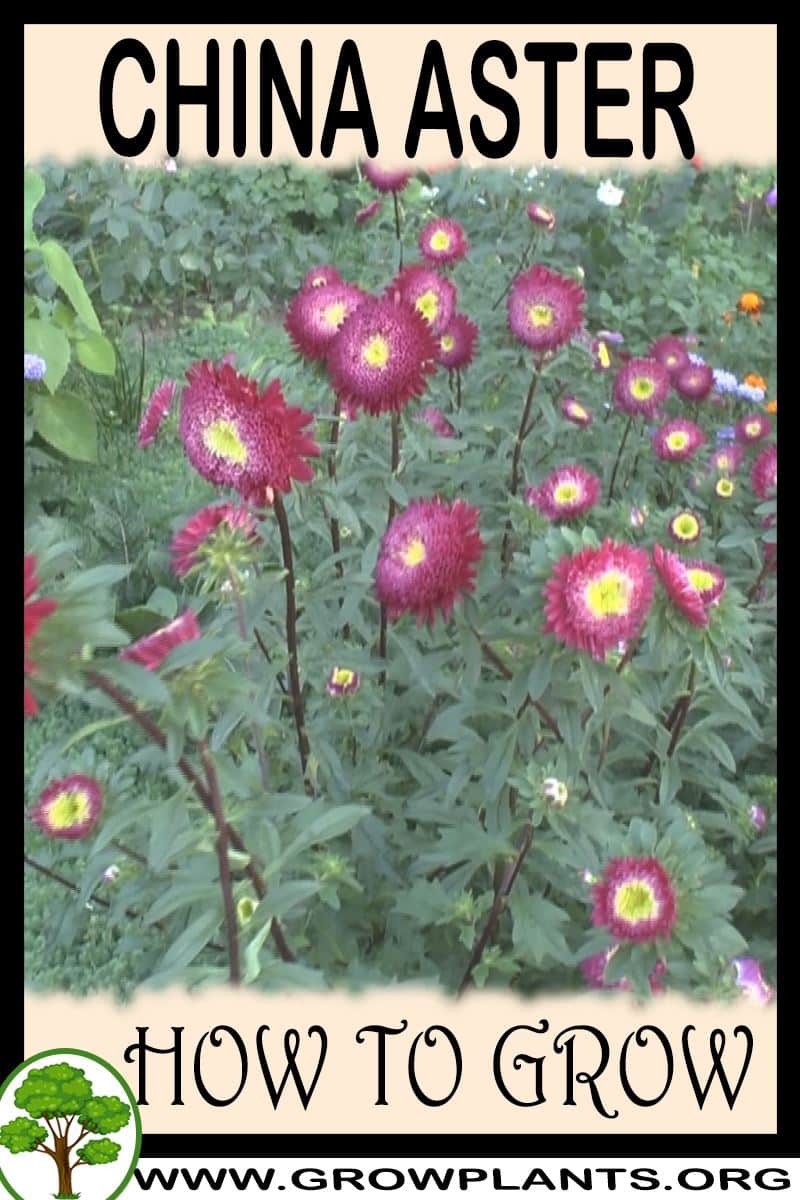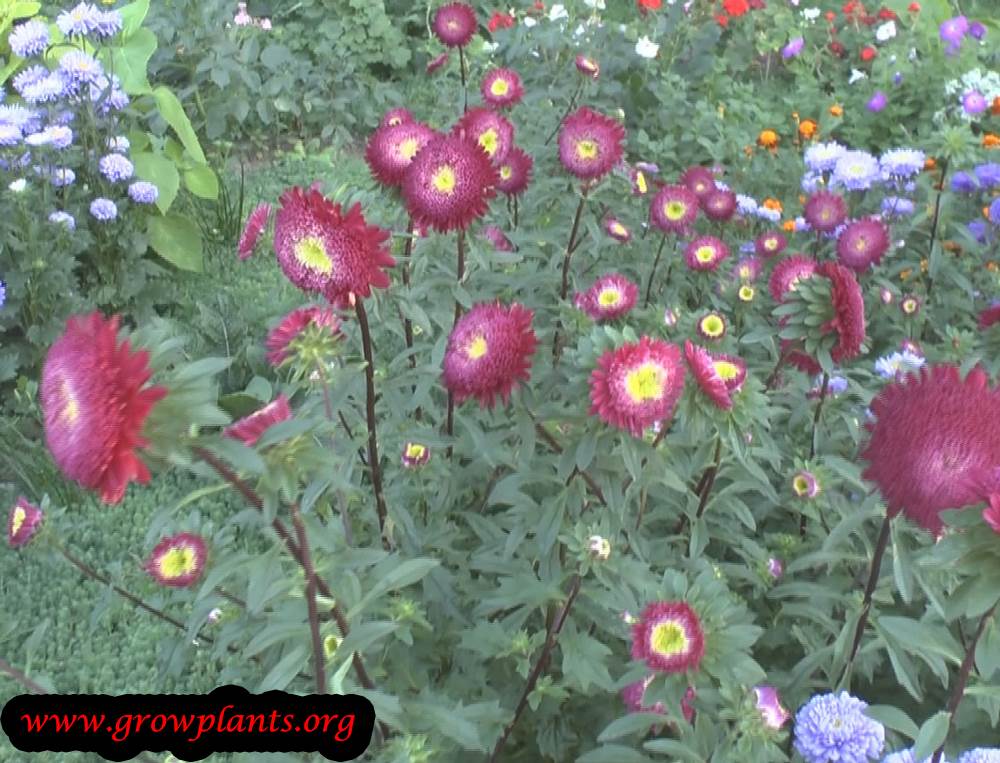


Plant Profile & Key Characteristics
Overview: An upright herbaceous annual (sometimes biennial) growing 30-100 cm (12-40 in) tall, grown almost entirely as an ornamental cut flower. It produces showy daisy-like blooms in a wide colour range.
Quick Specifications
| Specification | Attribute |
|---|---|
| Plant Type / Life Cycle | Annual (sometimes biennial) |
| Mature Size | 30-100 cm (12-40 in) tall |
| Growth Rate | Fast to moderate |
| Toxicity | Non-toxic |
| Hardiness | USDA zone 2+ |
Growth Form & Structure
- Height & Spread: 30-100 cm (12-40 in) tall; grown in beds, borders or in containers.
- Growth Habit & Form: Erect, branching herbaceous plant topped with long-stemmed flowers ideal for cutting.
- Lifespan & Maturity: Fast-growing annual that flowers and completes its cycle within a single season.
Anatomy & Physical Features
- Leaves & Foliage: Green, spoon-shaped leaves with lobed to serrated margins.
- Flower Characteristics: Daisy-shaped to fully double blooms in purple, pink, yellow, white, red, bordeaux or mixes (full detail in the Bloom section).
Primary Uses & Landscape Value
- Functional & Ornamental Roles: Premier cut flower; also used for bedding, borders and containers.
Care Guide: Planting, Soil & Watering
Overview: A fast-growing annual grown for its daisy-like cut flowers, thriving in full sun and rich, fertile soil. It likes steady, even moisture and responds well to feeding for heavier flowering.
Quick Care Requirements
| Requirement | Ideal Condition |
|---|---|
| Planting Season | Spring to summer, after the last frost |
| Growth Rate | Moderate to Fast |
| Soil Type | Rich, fertile, well-draining soil |
| Water Need | Moderate – keep evenly moist |
Planting & Establishment
- Best Planting Season: Plant or sow in spring after the last frost, through early summer.
- How to Plant:
- Hole Preparation: Dig a hole slightly wider than the root ball so roots settle without crowding.
- Soil Amendments: Enrich with compost and a balanced fertilizer to encourage more flowers.
- Planting Depth: Set the root collar at soil level; avoid burying the stem.
- Growth Speed & Expectations: Fast – reaches flowering size within a single growing season.
Soil, Watering & Drainage Care
- Soil Mix & Drainage Needs: Rich, moisture-retentive but well-draining soil; good drainage prevents stem and root rot.
- Watering Schedule & Technique:
- Young / Newly Planted: Keep consistently moist while seedlings and transplants establish.
- Established: Water regularly and deeply; do not let the soil dry out during budding and bloom.
- Seasonal Adjustments: Increase watering in summer heat; ease off in cool, wet spells.
Climate, Light & Hardiness
China aster is an annual-to-biennial cut-flower plant for subtropical, Mediterranean, desert, or temperate gardens that wants full sun to half shade. It is grown through a single warm season rather than relied on for winter cold survival.
Quick Climate Specifications
| Climate Zones | Subtropical, Mediterranean, desert, temperate |
|---|---|
| USDA Hardiness Zones | Zone 2 and warmer (grown on its normal annual/biennial cycle) |
| Frost Tolerance | Low |
| Light Conditions | Full sun / half shade |
Sunlight & Light Exposure
Optimal Light Setup
Full sun produces the strongest stems and most flowers; half shade is tolerated with some reduction in bloom.
Temperature Extremes & Hardiness
USDA Hardiness & Regional Limits
Grown across a wide hardiness range (zone 2 and up) as a spring/summer annual or biennial; the hardiness zone mainly describes where it can be seeded and grown through a season rather than overwintered as a mature flowering plant.
Frost Sensitivity
Frost kills foliage and flowers; plant after the last frost date.
Growing in Pots, Balconies & Indoors
China aster is a sun-loving bedding annual, grown for its showy autumn blooms – it is not a true houseplant, but it makes a fine pot and balcony flower, and a compact cultivar can bloom on a very bright, sunny windowsill.
Quick Details
- Container Size: A medium pot, roughly 10-20 L (3-5 gal), suits a plant of 30-100 cm (12-40 in); dwarf types are happy in smaller pots
- Indoor Suitability: Not a deep-indoor houseplant (the grower marks it “No”); a dwarf form can flower on a bright, sunny sill
- Best Spot: Full sun to light afternoon shade – a sunny balcony or patio is ideal
- Soil & Drainage: Rich, well-aerated mix (peat or coir with perlite); must drain freely
- Watering in Pots: Keep evenly moist – average needs; pots dry faster than open ground
Indoors & On the Windowsill
- Houseplant limits: The grower marks it as not suitable as a room houseplant – deep indoors the light is too weak and stems stretch and flop.
- Windowsill growing: Choose a compact or dwarf cultivar and the sunniest sill you have; with several hours of direct sun it will set and open its flowers.
- Season: It is a warm-season annual raised fresh each cycle, so there is nothing tender to overwinter indoors – simply resow.
On a Balcony or Patio
- Light & wind: Give it the brightest, sunniest spot. Tall cultivars flop in wind, so shelter them or give a discreet stake. Walls and railings reflect heat and pots dry quickly, so check moisture daily in hot weather. A drip irrigation kit with a timer can take over that watering check automatically.
- Practicalities: Group pots for a fuller show and make sure water drains away freely after watering.
Choosing the Pot, Soil & Long-Term Care
- Pot & drainage: A 10-20 L pot with strong drainage holes; skip a standing water saucer to avoid root rot. Terracotta breathes and dries fast; glazed or plastic holds moisture longer.
- Potting mix: A well-aerated, organic-rich mix – peat or coir with perlite or vermiculite.
- Feeding: Potted plants need feeding more often than those in the ground, as watering leaches nutrients out; a balanced liquid feed through the growing season keeps blooms coming.
- Repotting: As an annual it is not kept on, but refresh the pot with fresh mix for each new sowing.
Fertilizing & Feeding
China aster is a fast-to-medium growing annual cut-flower plant that rewards steady feeding through its single growing season – it is not a light feeder, but it also does not need to be fed year-round since it completes its life cycle in one season.
Quick Fertilizing Specs
| Feeding Level | Moderate |
|---|---|
| Main Nutrient Priority | Balanced feeding with adequate nitrogen for foliage, tapering toward bloom |
| Best Feeding Period | Spring through summer while the plant is actively growing and setting buds |
| Organic Options | Enrich planting soil with compost or well-rotted organic matter at planting time |
| Soil pH | Prefers rich, well-drained soil; tolerant of a range of garden soils |
Feeding by Growth Stage
Establishment (spring planting)
Support root and leaf development after transplanting seedlings or sowing seed
| Nutrient direction | Balanced feeding to build a strong root system and healthy foliage base |
|---|---|
| Timing | From transplanting or seedling emergence through early vegetative growth in spring |
| Frequency | Light, regular feeding through the establishment period |
| Fertilizer types | Balanced complete fertilizer, Compost or well-rotted organic matter worked into the planting bed |
| Precautions | Avoid heavy feeding right after transplanting, which can stress young roots; enrich the soil rather than force growth |
Vegetative growth into bloom
Support the bushy foliage growth and long bloom period through summer and into autumn
| Nutrient direction | Balanced feeding, since rich soil and steady nutrition are what drive strong, abundant flowering in this species |
|---|---|
| Timing | From active vegetative growth through the spring-to-autumn bloom period |
| Frequency | Continue light, regular feeding through active growth and flowering |
| Fertilizer types | Balanced complete fertilizer formulated for flowering annuals |
| Routine trace nutrients | iron, manganese |
| Precautions | Do not over-fertilize with a nitrogen-heavy product late in the season, as this can push leafy growth at the expense of flowers |
End-of-season decline
Let the annual plant complete its natural life cycle as growth slows toward the end of the season
| Nutrient direction | None – withhold fertilizer as the plant finishes its annual cycle |
|---|---|
| Timing | Late autumn as the plant naturally declines at the end of its one-season life cycle |
| Frequency | No feeding at this stage |
| Fertilizer types | No feeding at this stage – the plant is completing its annual life cycle |
| Precautions | Do not fertilize a declining annual in an attempt to revive it; remove spent plants at season end |
Nutrient Deficiency Signs & Corrections
Overall pale green to yellow foliage and weak, thin stems, most noticeable on older leaves lower on the plant
| Possible causes | Nitrogen deficiency, Soil low in organic matter, Waterlogged soil limiting root uptake |
|---|---|
| Appears first on | Older, lower leaves first |
| What to check | Overall soil fertility and organic matter content, Drainage around the root zone, Recent feeding history |
| Possible correction | Work in compost or an organic amendment and resume balanced feeding appropriate to the growth stage |
Interveinal yellowing on new growth while the leaf veins stay green
| Possible causes | Iron deficiency, Alkaline or compacted soil limiting iron availability, Overwatering restricting root function |
|---|---|
| Appears first on | Newest leaves at the growing tips |
| What to check | Soil pH and drainage, Whether new leaves specifically are affected versus the whole plant, Watering consistency |
| Possible correction | Correct soil pH toward neutral where testing confirms an issue, improve drainage, and apply a chelated iron product per its label if a true deficiency is confirmed |
Browning or scorching along leaf margins and weaker flower stems
| Possible causes | Potassium deficiency, Drought stress reducing nutrient uptake, Sandy soil with poor nutrient retention |
|---|---|
| Appears first on | Margins of older leaves |
| What to check | Watering regularity, since drought stress mimics this symptom, Soil texture and nutrient-holding capacity, Overall feeding history |
| Possible correction | Maintain even soil moisture and resume balanced feeding with adequate potassium as part of a complete fertilizer |
Pruning, Training & Seasonal Maintenance
China aster (Callistephus chinensis) is a herbaceous annual (occasionally biennial) grown from seed for cut flowers, with no woody or persistent structure. “Pruning” is limited to removing dead or diseased parts, deadheading spent flowers, and harvesting blooms – each cut prompts new flowering growth from the current season’s stem rather than affecting any future season. Because this species is described in its own facts as invasive/self-seeding and is well known for susceptibility to soilborne wilt and aster yellows disease, sanitary removal of dead or suspect plant material matters more here than for a typical bedding annual.
Quick Pruning & Maintenance Specs
| Pruning Tolerance | High (deadheading/harvest; no woody tissue) |
| Primary Pruning Window | Once plants are established and branching, before heavy bud set |
| Secondary Maintenance Window | Continuous through the bloom season |
| Typical Frequency | Ongoing deadhead/harvest every few days in bloom |
| Main Objective | Sustain repeat bloom; remove dead/diseased material promptly |
| Young Plant Priority | Light pinch of the growing tip to encourage branching |
| Mature Plant Priority | Deadhead or harvest flowers continuously; remove wilted/diseased stems fast |
| Best Tool Type | Precision snips |
| Avoid Heavy Pruning During | Not applicable – no structural/heavy pruning exists for this annual |
Pruning by Plant Age & Size
Newly Established
Let seedlings/transplants root in undisturbed; avoid cutting in the first 1–2 weeks.
Young / Formative
A single light pinch of the growing tip once plants are well rooted encourages side branching and more flowering stems; no structural training applies to this herbaceous annual.
Mature / Established
Deadhead or cut flowers for the vase continuously as they open or fade, cutting to the next leaf node or side bud so a new stem forms.
Seasonal Pruning Schedule
Ongoing Sanitary
Objective: sustain bloom and catch disease early. Remove: spent flowers, and immediately remove any plant showing sudden wilting, yellowing, or stunted/distorted growth (possible Fusarium wilt or aster yellows), rather than pruning around it. Do not remove: healthy foliage or unopened buds. Expected response: continued new flowering stems from healthy plants. Flowering impact: deadheading sustains bloom; delaying removal of a diseased plant risks spreading aster yellows to neighboring plants via leafhoppers.
Special Growth to Remove
- Spent flower heads (deadhead or harvest as cut flowers).
- Any wilted, yellowed, or distorted stems – remove and discard (do not compost) promptly given this species’ known susceptibility to Fusarium wilt and aster yellows.
Container & Small-Space Pruning
China aster grows well in containers (per facts). In a pot, deadhead a bit more proactively than in the ground, since containers have less buffer against the stress that predisposes plants to wilt disease, and good airflow around container-grown plants helps reduce fungal risk.
Tools
Precision snips only – stems are soft and herbaceous; no loppers, saw, or shears are appropriate.
Tool Hygiene & Disease Risk
Increased: this species carries a real, documented risk of soilborne Fusarium wilt and aster yellows phytoplasma, both of which can be spread on cutting tools or by handling infected material. Remove and discard (not compost) any diseased plant, and wipe tools between plants if disease is present in the planting, rather than treating every cut as routine.
Cut Placement & Technique
Cut down to the next leaf node or side bud when deadheading or harvesting, so a full new stem develops rather than a bare stub.
Post-Pruning Care
Water at the base rather than overhead to limit conditions that favor wilt disease; no extra feeding is needed to sustain flowering – regular deadheading is what keeps this species blooming.
Common Pruning Mistakes
- Leaving a wilted or yellowing plant in place instead of removing it promptly, risking spread of aster yellows via leafhoppers.
- Composting diseased material instead of discarding it.
- Letting spent flowers stand and go to seed, slowing new bud production.
When NOT to Prune
Avoid cutting back or pinching in the first 1–2 weeks after transplant while roots establish; otherwise there is no dormant period to avoid for this annual.
Recommended Tools (by task)
- precision_snips – the only tool needed, for pinching, deadheading, and cut-flower harvest.
- blade_disinfectant – recommended if any plant in the planting shows signs of wilt or aster yellows, to avoid spreading disease between plants on the same tool.
Propagation Guide
China aster is propagated from seed – it is a true annual with no standard vegetative method in general use, and seed is the fast, reliable way it is grown as a bedding and cut flower. Many modern China aster strains are F1 hybrids, so seed saved from garden plants will not reliably reproduce the exact parent; overall propagation from seed is easy.
Quick Propagation Specs
| Best Propagation Method | Seed |
| Propagation Difficulty | Easy |
| Seed True-to-Type | Hybrid offspring vary – many modern China asters are F1 hybrids; open-pollinated heirloom strains are more true |
| Best Propagation Season | Spring/summer, matching the plant’s planting season |
| Seed Germination Time | Typically a couple of weeks under warm conditions |
| Germination Temperature | Around room temperature, roughly 18–24°C (64–75°F) |
| Seed Sowing Depth | Shallow, around 0.5 cm (roughly 0.25 inches) |
Growing from Seed
Sowing Season
Sow in spring or early summer, matching the plant’s spring/summer planting season; can be started indoors ahead of the outdoor planting window or direct-sown once conditions warm.
Sowing Depth & Orientation
Sow shallowly, just lightly covered.
Germination Conditions
Keep the soil evenly moist and warm, in full sun to bright light.
Germination Time
Germinates within a couple of weeks under warm conditions.
Seedling Care
Grow seedlings on in average moisture, full sun to half shade; avoid overcrowding, since this species is prone to aphids and can behave as an aggressive self-seeder in favourable conditions.
Bloom & Flower Guide
Quick Details
- Bloom Season: Spring through autumn, with the main show in late summer
- Time to First Bloom: As an annual (or biennial) it flowers the same season from a spring sowing, generally within a few months
- Flower Appearance: Daisy-form to fully double, many-petalled heads in purple, pink, yellow, white, red, burgundy or mixed shades
- Edibility: Grown as an ornamental cut flower; not eaten
Detailed Blooming Overview
China aster is a premier cut flower with a long vase life. Sow it in succession through the season for a continuous supply of richly colored blooms, and cut the stems just as the flowers open.
Flower Characteristics
- Forms range from simple single daisies to dense, fully double pompons across a broad color palette.
Bloom Care & Thinning
- Managing the bloom: Deadhead to prolong flowering, stake taller types, and cut for the vase when the buds have just opened.
- Pollination: Pollinated by bees.
Bloom Health & Protection
- Aster yellows: Causes stunted, greenish, deformed flowers with no cure; remove affected plants and manage the leafhoppers that spread it.
- Aster (fusarium) wilt: A soil-borne disease that collapses plants near bloom time; grow wilt-resistant strains and rotate to fresh ground each year.
Pests, Diseases & Troubleshooting
Overview: China aster is a classic annual cut flower that is unfortunately prone to two serious soil- and insect-borne problems – Fusarium aster wilt and aster yellows – which shape its whole management. Sucking pests such as aphids and leafhoppers spread disease and disfigure buds. The winning strategy is prevention: resistant varieties, clean rotated ground, insect exclusion and prompt removal of any infected plants.
Quick Troubleshooting Overview
| Issue / Pest | Main Symptom | Primary Solution |
|---|---|---|
| Aster wilt (Fusarium) | Sudden one-sided wilt, brown stem base | Resistant varieties, rotate, remove plants |
| Aster yellows | Yellowed, deformed, greenish flowers | Control leafhoppers, rogue out plants |
| Aphids | Curled sticky shoots, virus spread | Soap / neem, encourage predators |
| Leafhoppers | Pale stippling; spread aster yellows | Insect netting, sticky traps |
| Tarsonemid mites | Distorted stunted buds and tips | Remove growth, miticidal soap |
| Grey mould / rots | Rotting stems and flowers in wet weather | Airflow, spacing, remove debris |
Common Pests & Management
- Aphids (Myzus persicae, Macrosiphum species):
- Symptoms: Soft green or black insects on shoots, buds and leaf undersides; curled sticky growth, sooty mould, and – most importantly – the spread of viruses between plants.
- Prevention & Control: Hose off colonies, encourage ladybirds, lacewings and hoverflies, and remove badly infested tips. Treat with insecticidal soap or neem in the evening; controlling aphids also reduces virus spread.
- Aster leafhopper (Macrosteles quadrilineatus):
- Symptoms: Small wedge-shaped green-yellow insects that jump and fly readily; feeding gives pale stippling, but their real danger is transmitting the aster-yellows phytoplasma from plant to plant.
- Prevention & Control: Exclude them with fine insect netting over the crop, use sticky traps to monitor, and keep down grassy weeds that harbour them. Rogue out yellows-infected plants at once; targeted sprays help only alongside exclusion.
- Tarsonemid / cyclamen mite (Phytonemus pallidus):
- Symptoms: Invisible to the eye; feeding in the growing tips gives stunted, thickened, distorted young leaves and deformed buds that fail to open properly.
- Prevention & Control: Remove and destroy affected tips, avoid moving mites on hands and tools, and discard badly affected plants. Predatory mites help under cover; sulphur or a suitable miticide can be used on valuable stock.
- Thrips (Frankliniella and Thrips species):
- Symptoms: Slender insects in buds and flowers causing silvery streaking, flecked petals and distorted blooms; they can also carry viruses.
- Prevention & Control: Monitor with blue sticky traps, remove spent and infested flowers, and keep plants unstressed. Introduce predatory mites or treat with spinosad or insecticidal soap.
- Spider mites (Tetranychus urticae):
- Symptoms: Fine stippling, bronzing and webbing on leaves in hot, dry spells, especially on drought-stressed plants.
- Prevention & Control: Keep plants well watered, hose down foliage and release predatory mites. Treat outbreaks with insecticidal soap or horticultural oil, covering leaf undersides.
- Blister beetles (Epicauta species):
- Symptoms: Slender soft-bodied beetles that arrive in groups and chew flowers and foliage; they can strip plants quickly and their body fluids can blister skin.
- Prevention & Control: Hand-pick (wearing gloves) into soapy water in the morning when they are sluggish, and remove nearby weedy hosts. Row covers exclude them; spot-treat only heavy invasions.
Diseases & Fungal Issues
- Fusarium aster wilt (Fusarium oxysporum f. sp. callistephi):
- Symptoms: The key China-aster disease: plants wilt suddenly, often on one side first, lower leaves yellow, and the stem base browns and rots with dark discoloration inside; whole plants collapse.
- Treatment & Management: There is no cure. Grow wilt-resistant strains, rotate onto fresh ground (do not replant asters in the same soil for several years), improve drainage and raise soil pH slightly. Remove and destroy infected plants and avoid working wet soil.
- Aster yellows (Aster-yellows phytoplasma):
- Symptoms: Leaves yellow and pucker, growth becomes bushy and upright, and flowers turn green, deformed and sterile; the whole plant is systemically infected via leafhoppers.
- Treatment & Management: No cure exists: rogue out and destroy affected plants immediately to protect the rest. Control the aster leafhopper with netting and manage weed reservoirs; there is no chemical treatment for the phytoplasma itself.
- Foot and root rot (Rhizoctonia solani, Phytophthora, Pythium):
- Symptoms: Damping-off of seedlings and blackened, rotting stem bases and roots on older plants in cold, wet, heavy soil.
- Treatment & Management: Sow in clean, well-drained media, avoid overwatering and overcrowding, and rotate crops. Remove collapsed plants; biofungicide drenches (Trichoderma) can help preventively.
- Grey mould (Botrytis cinerea):
- Symptoms: Fuzzy grey mould rotting stems, buds and open flowers in damp, still weather or on crowded plants.
- Treatment & Management: Space plants for airflow, avoid overhead watering late in the day and remove faded blooms and debris. A garden fungicide can be used under high pressure.
- Powdery mildew and rust (Golovinomyces / Coleosporium species):
- Symptoms: White powdery coating (mildew) or orange-brown pustules (rust) on leaves, worst in humid crowding or when stressed.
- Treatment & Management: Improve airflow and spacing, avoid overhead watering, and remove affected leaves. Sulphur or potassium-bicarbonate sprays manage mildew; choose resistant varieties where possible.
Growing Difficulties & Abiotic Problems
- Waterlogging and heavy soil:
- Cause & Symptoms: Cold, wet, compacted soil suffocates roots, encourages the wilt and rot organisms and causes yellowing and stunting.
- Correction Strategy: Plant in well-drained, moderately fertile soil improved with organic matter, avoid low wet spots, and never overwater. Raised beds help on heavy ground.
- Replant decline:
- Cause & Symptoms: Growing asters in the same bed year after year builds up Fusarium and other soil pathogens, so plants fail earlier each season.
- Correction Strategy: Rotate the planting site every year and avoid returning asters to infected ground for at least three to four years; start with clean seed and fresh compost.
- Sunscald and heat stress:
- Cause & Symptoms: Exposed plants in fierce heat can scorch on leaves and flowers and wilt at midday.
- Correction Strategy: Give full sun in cooler climates but light afternoon shade in very hot areas, mulch to keep roots cool and moist, and water consistently.
- Nutrient imbalance:
- Cause & Symptoms: Overly rich nitrogen gives lush soft growth prone to aphids and disease, while hunger gives pale, weak, poorly flowering plants.
- Correction Strategy: Feed moderately with a balanced fertiliser, favouring potassium and phosphorus at budding for strong stems and blooms rather than excess leafy growth.
What Helps – Products & Tools
Because the worst problems are disease, the key tools are cultural: resistant seed, crop rotation, fine insect netting to exclude leafhoppers, and prompt removal of infected plants. For insects, use insecticidal soap and neem for aphids and mites, blue and yellow sticky traps, spinosad for thrips, and sulphur for mildew and mites. Biofungicide (Trichoderma) drenches support healthy roots.