




Plant Profile & Key Characteristics
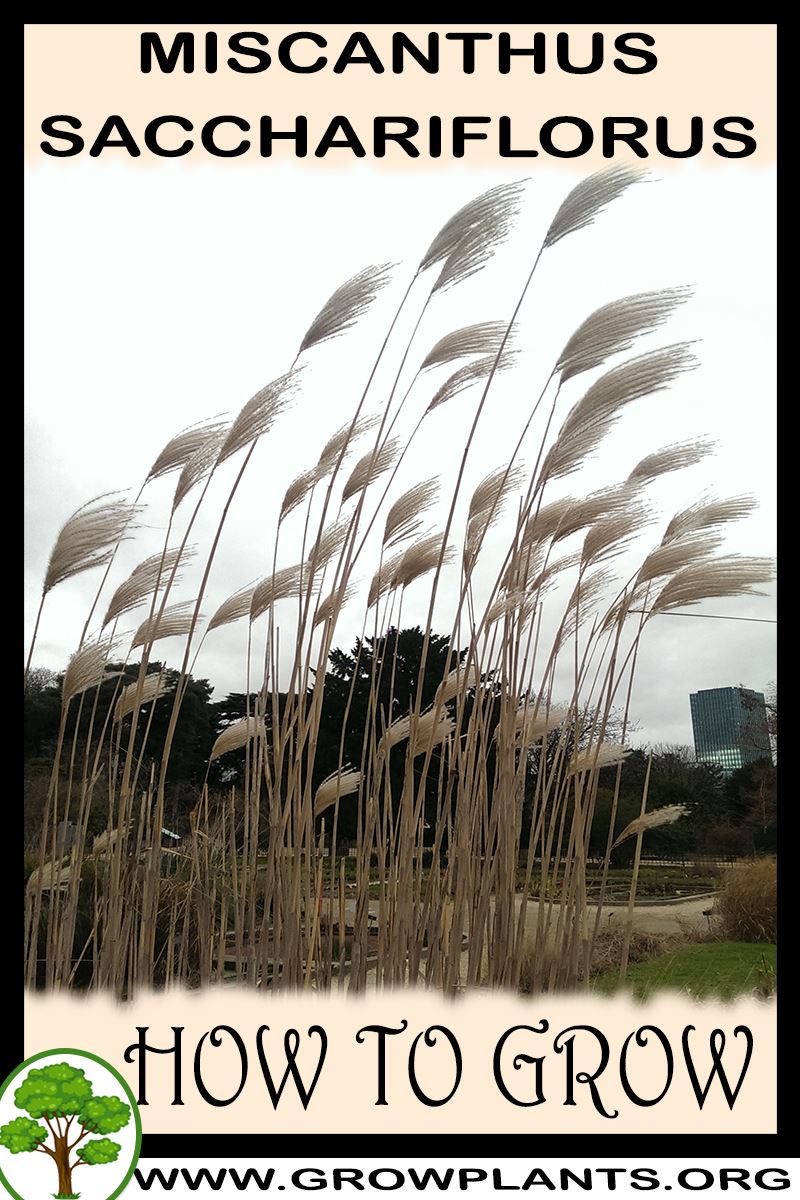
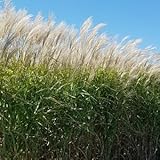
Overview: A tall perennial ornamental grass growing 1-2.5 m high, grown for its feathery silvery-white autumn plumes. It spreads by rhizomes and can be invasive.
Quick Specifications
| Specification | Attribute |
|---|---|
| Plant Type / Life Cycle | Perennial |
| Foliage Type | Semi-evergreen (deciduous in cold climates) |
| Mature Size | 1-2.5 m (40-100 in) |
| Growth Rate | Fast |
| Root System | Rhizomatous (spreading, can be invasive) |
| Toxicity | Non-toxic |
| Hardiness | USDA zones 5-10 |
Growth Form & Structure
- Height & Spread: 1-2.5 m (40-100 in) tall clumps that spread by rhizomes; can be grown in containers to restrain spread.
- Growth Habit & Form: Upright, clumping-to-running ornamental grass with tall canes.
- Lifespan & Maturity: Fast-growing, long-lived perennial; cut back in winter.
Anatomy & Physical Features
- Leaves & Foliage: Green blades borne on brownish canes.
- Flower Characteristics: Feathery white, beard-like plumes in late summer to autumn.
Primary Uses & Landscape Value
- Functional & Ornamental Roles: Ornamental screening grass, garden backdrop and source of cut plumes; note its invasive, spreading habit.
Care Guide: Planting, Soil & Watering
Overview: Amur silver-grass (Miscanthus sacchariflorus) is a vigorous ornamental grass for full sun to part shade in temperate to mediterranean climates (hardiness zone 5–10). It is adaptable but grows best in fertile, reliably moist soil and takes both average and wet ground.
Quick Care Requirements
| Requirement | Ideal Condition |
|---|---|
| Planting Season | Spring; through the growing season into autumn |
| Growth Rate | Fast |
| Soil Type | Fertile, moisture-retentive; tolerates a wide range |
| Water Need | Moderate to High – keeps moist, tolerates wet soil |
Planting & Establishment
- Best Planting Season: Plant divisions in spring so they establish over the warm season, though planting can continue through summer and into autumn.
- How to Plant:
- Hole Preparation: Dig a hole as wide as the root ball and the same depth.
- Soil Amendments: Enrich poor ground with compost; this grass is forgiving but responds to fertile, moisture-holding soil.
- Planting Depth: Set the crown at soil level, matching the depth it grew at previously.
- Growth Speed & Expectations: Fast – it forms tall, spreading clumps quickly in good conditions.
Soil, Watering & Drainage Care
- Soil Mix & Drainage Needs: Happy in average to damp soil and tolerant of wet sites; still benefits from soil that does not stay stagnant.
- Watering Schedule & Technique:
- Young / Newly Planted: Water regularly through the first season to establish a deep root system.
- Established: Keep the soil moist; established clumps handle both moderate moisture and periodically wet ground.
- Seasonal Adjustments: Water more in heat; cut the dead foliage back and water little over the dormant winter.
Climate, Light & Hardiness
Amur silver-grass is a cold-hardy temperate grass that thrives in full sun to half shade across mediterranean, subtropical, and temperate climates. Unlike many warm-desert ornamental grasses, it is built for cold winters and moist ground rather than for drought and heat.
Quick Climate Specifications
| Climate Zones | temperate, subtropical, and mediterranean |
| USDA Hardiness Zones | Zones 5–10 |
| Optimal Temp Range | Approximately 15–29°C (59–84°F) during active growth |
| Cold Damage Begins | Approximately 0°C (32°F) – foliage dies back with hard frost, as expected for a deciduous-topped perennial grass |
| Approx. Survival Minimum | Roughly −29 to −23°C (−20 to −10°F) for the root system, in line with USDA Zone 5 |
| Frost Tolerance | High |
| Light Conditions | Full Sun / Half Shade |
| Wind Tolerance | Moderate to High |
Sunlight & Light Exposure
Optimal Light Setup
Full sun produces the strongest, most upright canes; half shade is also well tolerated.
Shade & Heat Management
It grows comfortably in partial shade and across a wide span of summer heat, from mild temperate summers to warmer subtropical conditions.
Best Exposure / Orientation
Open beds or waterside plantings with at least half-day sun work well.
Temperature Extremes & Hardiness
USDA Hardiness & Regional Limits
Reliably perennial and root-hardy through USDA Zones 5–10, among the more cold-tolerant ornamental grasses covered on this site; the top growth dies back each winter and regrows from the crown in spring.
Cold Damage & Winter Protection
Foliage and canes are killed back by winter cold as a matter of course; no special winter protection is normally needed within its hardy zones, and old canes can be left standing over winter for structure and then cut back in late winter or early spring.
Frost Sensitivity
High tolerance once dormant; actively growing spring shoots are more tender to a late hard frost than the dormant crown.
Extreme Heat Tolerance
Good through Zone 10 summers, though it is chosen more often for cold-winter gardens than for extreme desert heat.
Wind, Humidity & Microclimate
Humidity Preferences
Comfortable in humid subtropical summers as well as drier temperate and mediterranean conditions.
Wind Tolerance
Moderate to high; the tall canes can lean in very exposed sites but generally recover.
Rainfall & Seasonal Moisture
Native to moist, temperate river-margin habitats, so it is naturally adapted to climates with regular seasonal rainfall rather than the long dry spells that suit desert ornamental grasses.
Microclimate Recommendations
Low-lying or waterside spots that stay naturally moister through the season suit its native habitat best.
Growing in Pots, Balconies & Indoors
Miscanthus sacchariflorus is a tall, vigorous ornamental grass (1-2.5 m / 40-100 in), not a houseplant, but a striking container plant for a large patio or balcony while it is young and manageable. Indoors the light is far too weak; it belongs outdoors in full sun to half shade.
Quick Details
- Container Size: A large, heavy, deep pot – the bigger the better for a tall clump, and the mass gives stability against wind.
- Indoor Suitability: Not a houseplant; grow it outdoors on a balcony, terrace or patio.
- Best Spot: Full sun to half shade.
- Soil & Drainage: Moisture-retentive but free-draining mix – this grass likes steady water.
- Watering in Pots: Keep evenly moist; it takes average to generous water, so do not let a potted plant dry out, but ensure the pot drains.
Indoors & On the Windowsill
- Houseplant limits: The grower confirms it is not an indoor plant – it is a large full-sun grass that needs open air and strong light.
- Overwintering: The foliage dies back for winter; a potted plant can be cut down and kept in a sheltered spot in cold climates, then it reshoots in spring.
On a Balcony or Patio
- Light & wind: Give it full sun and room to arch. It is tall, so shelter it from strong wind and expect a heavy, top-heavy pot – place it where it will not be knocked over. Reflected wall heat dries pots fast, so check moisture in warm spells.
- Practicalities: It is vigorous and long-lived; a container naturally limits its spread. Make sure runoff can drain away cleanly.
Choosing the Pot, Soil & Long-Term Care
- Pot & drainage: A large pot with strong drainage holes; no standing water saucer, which invites root rot. Glazed or plastic holds the moisture this grass prefers; terracotta dries faster.
- Potting mix: A rich, well-aerated potting mix with some water-holding material (coir or peat plus perlite).
- Feeding: Potted grasses use up nutrients faster than those in the ground – feed lightly through the growing season.
- Repotting & division: A strong grower, it fills a pot quickly; lift and divide the clump every couple of years, trim the roots and refresh the mix to keep it vigorous.
Fertilizing & Feeding
A light feeder by design: this is a large, fast-growing, cold-hardy grass already flagged as invasive and spreading by rhizome, so the goal is to establish it without encouraging further vigor and spread – a single light feeding at planting is usually the only feeding it should ever receive.
Quick Fertilizing Specs
| Feeding Level | Light feeder, and best avoided altogether once a clump is established |
|---|---|
| Main Nutrient Priority | A light, balanced feeding at planting only, to establish new rhizomes without fueling this already-vigorous, spreading grass any further |
| Best Feeding Period | At planting or transplanting only, while the new rhizomes are establishing |
| Organic Options | Compost worked into the soil at planting is generally sufficient long-term nutrition |
| Reduce/Stop Feeding | Stop feeding entirely once a clump is established, and skip feeding altogether given its already-noted tendency to spread |
| Micronutrients | Rarely needed given the moist, fertile soil this grass generally prefers; treat only a diagnosed problem |
| Soil pH | Adaptable to a range of soil pH; consistent moisture matters far more to this grass than pH |
Feeding by Growth Stage
Establishment at planting
Get newly planted rhizomes rooted in and growing, without encouraging more vigor than this already fast, spreading grass needs.
| Nutrient direction | A single light, balanced feeding is enough to establish new plantings; this grass typically needs no ongoing feeding beyond that. |
|---|---|
| Timing | At planting, or as new growth resumes the first spring after planting. |
| Frequency | One light feeding at planting is generally the only feeding this grass should need over its life in the garden. |
| Fertilizer types | A light, balanced granular or liquid feed at planting only, Compost worked into the soil at planting |
| Precautions | Avoid feeding an established clump – extra nitrogen mainly fuels the vigorous, spreading growth already noted as a difficulty with this species, and consistent moisture matters far more to its performance than added nutrients. |
Summer to autumn plume display
Let the feathery, beard-like white plumes display through summer and autumn without additional feeding.
| Nutrient direction | Feeding needs are minimal to none at this stage; an established clump draws on its own reserves and abundant moisture rather than added nutrients. |
|---|---|
| Timing | Through the summer and autumn plume display. |
| Frequency | Feeding is rarely, if ever, needed for an established clump at this stage. |
| Fertilizer types | No additional feeding is typically needed for an established clump at this stage |
| Precautions | Resist feeding to try to boost the plume display – this vigorous grass blooms readily on its own, and extra feeding mostly encourages more spread. |
Winter die-back and rest
Let the clump rest without feeding pressure once winter cold kills back the top growth.
| Nutrient direction | None – withhold fertilizer once the canes and blades die back for winter. |
|---|---|
| Timing | From when the canes brown and die back for winter until new shoots emerge from the rhizomes in spring. |
| Frequency | No feeding at this stage. |
| Fertilizer types | No feeding at this stage; do not fertilize a dormant clump until new spring shoots are clearly underway. |
| Precautions | Do not fertilize over winter dormancy; there is no active growth to use the nutrients, and this grass rarely benefits from feeding at all once established. |
Nutrient Deficiency Signs & Corrections
A newly planted clump stays sparse and pale rather than establishing its typically vigorous canes, distinct from the fast growth expected once rooted in.
| Possible causes | low available nitrogen in poor planting soil, nutrients leached out of moist soil by heavy watering or rainfall soon after planting, root stress from recent transplanting that has not yet resolved, competition from nearby aggressive roots at the planting site |
|---|---|
| Appears first on | older, lower blades |
| What to check | soil fertility at the planting site, time since planting, moisture levels and drainage |
| Possible correction | Give a single light, balanced feeding to help a struggling new planting establish; an established clump rarely needs this. |
Blade tips and margins show yellowing or a dry, scorched look on older canes despite this grass’s preference for consistently moist soil.
| Possible causes | low potassium relative to nitrogen from an early feeding, periods of dry soil that this moisture-loving grass tolerates poorly, sandy or fast-draining soil unable to hold the steady moisture and nutrients this grass prefers |
|---|---|
| Appears first on | tips and margins of older blades |
| What to check | soil moisture consistency, fertilizer balance if any was applied, soil texture and water-holding capacity |
| Possible correction | Keep soil consistently moist rather than adding more fertilizer; use a balanced feed only if a genuine nutrient issue is confirmed. |
New blades emerge pale yellow while the veins stay green, most often where soil stays wet and poorly aerated.
| Possible causes | waterlogged, poorly drained soil limiting root oxygen and iron uptake, more likely given this grass’s preference for consistently moist ground, alkaline or compacted soil tying up available iron, recent transplanting or division stressing the root system |
|---|---|
| Appears first on | newest blades |
| What to check | soil drainage and aeration despite the moist conditions this grass prefers, soil pH, recent division or transplanting |
| Possible correction | Improve soil aeration and avoid standing water first; apply a chelated iron product per its label only if the pattern persists. |
Pruning, Training & Seasonal Maintenance
Miscanthus sacchariflorus (Amur silver grass) is a tall (1-2.5m), fast-growing, high-pruning-tolerance ornamental grass with stiff cane-like culms and cold-hardy dormancy across zone 5-10. Its one recommended pruning task – a design-driven winter cutback – is purely cosmetic: per its own care facts, cutting back does not control the plant’s spread, since it spreads by running rhizome rather than staying in a tight clump. Anyone growing it where its documented invasive tendency is a concern needs a rhizome-containment strategy in addition to, not instead of, the winter cutback.
Quick Pruning & Maintenance Specs
| Pruning Tolerance | High for the top growth – tolerates a full winter cutback |
| Primary Pruning Window | Winter, once the canes have fully browned |
| Secondary Maintenance Window | None routinely needed beyond the winter cutback |
| Typical Frequency | Once a year |
| Main Objective | Design/tidiness only – does not control the plant’s rhizome spread |
| Young Plant Priority | Establish first season; leave uncut through its first winter |
| Mature Plant Priority | Annual winter cutback; physical rhizome containment if spread is unwanted |
| Best Tool Type | Hedge shears or loppers for the stiffer canes |
| Avoid Heavy Pruning During | Autumn/early winter while canes still provide winter structure, and once new spring shoots begin emerging |
Pruning by Plant Age & Size
Newly Established
Leave the young plant uncut through its first winter so the standing canes and root system establish; remove only clearly damaged growth.
Young / Formative
No structural training applies to the culms themselves; the only formative decision is whether to install a rhizome barrier before the clump spreads, given its documented invasive tendency.
Mature / Established
Annual winter cutback of all canes; periodically check the perimeter for rhizome spread beyond the intended planting area regardless of how the top growth is cut.
Seasonal Pruning Schedule
| Dormant/Winter | Objective: seasonal tidiness/design, once the brown canes have lost their winter-interest value. Remove: cut all canes back to near ground level. Do not remove: nothing needs preserving once fully dormant. Response: fresh canes rise from the crown and spreading rhizomes in spring. Bloom impact: none – flowering is on the current season’s new canes. |
Structural Pruning & Training
Top cutback does not limit this plant’s spread – it runs by rhizome, and per its own care guidance the winter cut is for appearance only. Where its invasive tendency is a concern, contain it with a physical rhizome barrier (buried edging) or plant in a container instead, and periodically remove any rhizome or shoot found crossing the intended boundary.
Special Growth to Remove
- Rhizome runners/shoots emerging outside the intended planting area – dig out and remove; cutting the visible cane does not stop the rhizome underneath.
- Damaged or broken canes – remove any time.
Container & Small-Space Pruning
Growing in a planter or large container is one of the more effective ways to contain this rhizome-spreading grass, unlike in-ground plantings where the top cutback alone does not stop it from running. Container specimens still get the same once-a-year winter cutback of the canes.
Tools
- Hedge shears or loppers – the canes are stiffer than fine-bladed grasses and cut more cleanly with a bypass action than fine snips.
- Pruning saw – for an old clump with thickened, woody-feeling basal growth.
Tool Hygiene & Disease Risk
Routine – no disease issue is flagged for this species; clean, sharp tools are sufficient.
Cut Placement & Technique
Bundle and tie the canes before cutting for easier handling and cleanup, then cut straight across near ground level, above the crown.
Heavy Pruning & Rejuvenation
The full annual cutback to near ground level is itself the routine heavy prune this species needs – there is no lighter alternative that achieves the same winter reset. If a clump develops a dead, hollow center after several years, divide it in spring rather than relying on cutback alone.
Post-Pruning Care
No feeding needed to force regrowth. Do the cutback before new shoots emerge in spring – cutting into emerging growth damages the season’s new canes.
Common Pruning Mistakes
- Assuming the winter cutback controls the plant’s spread – it does not; rhizome containment is a separate task.
- Cutting back too early in autumn, losing the winter structural interest the standing canes provide.
- Cutting after new spring shoots have emerged, damaging the season’s new growth.
When NOT to Prune
Avoid cutting back while the canes still hold their brown winter-interest value, and avoid cutting once new spring shoots are emerging from the crown.
Recommended Tools (by task)
- hedge_shears – efficient for the annual whole-clump winter cutback of the stiff canes.
- loppers – individual thick canes or an old, woody-based clump base.
- garden_spade – dividing an overgrown clump or removing rhizome runners that have crossed a containment boundary.
Propagation Guide
Dividing an established rhizome clump is the fastest way to get a garden-size plant and guarantees an exact match to the parent, while seed is also a workable option since this is a non-hybrid species. Because this grass spreads by both self-sown seed and creeping rhizomes, it is considered invasive in parts of its range, so either propagation method should be used with that spread potential in mind. Difficulty is Easy by either method.
Quick Propagation Specs
| Best Propagation Method | Rhizome/clump division |
| Alternative Methods | Seed; seedlings can also be transplanted |
| Propagation Difficulty | Easy |
| Seed True-to-Type | Usually true-to-type (non-hybrid species) |
| Vegetative True-to-Type | Yes |
| Best Propagation Season | Spring, summer or autumn, matching the plant’s recorded planting season |
Growing from Seed
Sow in spring through autumn in a sunny to lightly shaded spot with consistently moist soil. Specific germination timing is not documented for this plant; as a general caution, germination in Miscanthus can be somewhat slow and uneven, so allow several weeks before judging results.
Division, Offsets, Pups & Suckers
Lift and divide the spreading rhizome clump in spring as new growth begins, cutting or pulling apart sections that each carry roots and at least one or two growing shoots. Replant divisions promptly at their original depth and water well until new growth confirms establishment. Because the rhizomes spread readily, site divisions where their outward growth can be contained or monitored.
Bloom & Flower Guide
Quick Details
- Bloom Season: Late summer into autumn
- Time to First Bloom: Usually within a season or two of planting, once the clump is well established
- Flower Appearance: Silky, silvery-white plumes held in soft, fan- or beard-like fingers above the arching foliage
- Edibility: Ornamental only – grown for its plumes, not for eating
Detailed Blooming Overview
Amur silver-grass saves its display for late in the season, when tall stems push silky, silvery-white plumes above the foliage. The flowers open in feathery, fan-shaped fingers that soften to a pale, fluffy haze as they age and catch the low autumn light beautifully.
Flower Characteristics
- Feather-textured, silvery-white flowers arranged in fan- or beard-like plumes.
- Excellent for cutting and drying, holding their shape well once dried.
- Wind-pollinated, with airy plumes rather than nectar-rich flowers.
Bloom Care & Thinning
- Encouraging plumes: Give it full sun and room – the strongest flowering comes from established clumps in an open, sunny spot.
- Tidying: Leave the plumes for winter interest, then cut the clump back to the ground in late winter before new shoots appear.
- Keeping it in bounds: Amur silver-grass spreads by running rhizomes and can travel further than you expect, so plant it where its roots can be contained or where spread is welcome.
Pests, Diseases & Troubleshooting
Overview: Ornamental Miscanthus is a robust warm-season grass with relatively few pests, but it can suffer specific fungal blights and rusts, an occasional mealybug, and above all the practical problem of aggressive rhizome spread. Good siting, airflow and root containment prevent most trouble; chemical intervention is rarely needed.
Quick Troubleshooting Overview
| Issue / Pest | Main Symptom | Primary Solution |
|---|---|---|
| Miscanthus blight | Reddish-brown leaf lesions, dieback of blades | Cut back and remove debris, improve airflow |
| Rust | Orange-brown pustules on leaves | Space clumps, remove affected foliage, sulfur if severe |
| Mealybugs | White waxy insects at leaf bases, weak growth | Cut back, wash, horticultural oil |
| Rhizome spread | Grass invading beyond its space via runners | Install root barrier, choose clumping types, dig out |
| Flopping | Clump splaying open, weak stems | Full sun, lean soil, avoid over-feeding, divide |
Common Pests & Management
- Miscanthus mealybug (Miscanthicoccus miscanthi):
- Symptoms: White waxy insects hidden inside the lower leaf sheaths and crown, causing stunting, reddening and weak, distorted growth; often overlooked until the clump declines.
- Prevention & Control: Cut the clump to the ground in the dormant season and remove the debris, which clears many overwintering insects. Wash the crown, apply horticultural oil to exposed insects, and divide and replant only clean divisions.
- Aphids (Rhopalosiphum / Sipha spp.):
- Symptoms: Colonies on leaves and stems with honeydew and sooty mold, occasionally spreading grass viruses; usually minor.
- Prevention & Control: Tolerate light numbers, encourage predators, and hose off heavy colonies; insecticidal soap is rarely needed on such a vigorous grass.
- Spider mites (Tetranychus spp.):
- Symptoms: Fine stippling and bronzing on blades in hot, dry, sheltered spots.
- Prevention & Control: Rinse foliage, avoid drought stress, and treat only bad cases with horticultural oil or soap.
Diseases & Fungal Issues
- Miscanthus blight (Stagonospora / Leptosphaeria spp.):
- Symptoms: Reddish-brown to purple leaf spots and streaks that enlarge into blotches, causing blades to brown and die back, worst in wet seasons and crowded, poorly drained plantings.
- Treatment & Management: Cut back and remove all top growth in late dormancy and bin it, space and divide congested clumps for airflow, and avoid overhead watering; fungicides are seldom warranted in ornamental use.
- Rust (Puccinia miscanthi / P. graminis):
- Symptoms: Orange to reddish-brown powdery pustules on leaf surfaces, with yellowing and premature browning in humid conditions.
- Treatment & Management: Improve air movement, remove badly affected foliage, and avoid excess nitrogen; a sulfur fungicide can be used on valued specimens if it becomes severe.
- Barley yellow dwarf virus:
- Symptoms: Yellowing or reddening and stunting, spread by aphids; uncommon but possible in grass collections.
- Treatment & Management: Control aphids, remove severely affected clumps, and source clean plants; there is no cure.
Growing Difficulties & Abiotic Problems
- Aggressive rhizome spread:
- Cause & Symptoms: Miscanthus sacchariflorus spreads by running rhizomes and can become invasive, colonizing well beyond its planting spot.
- Correction Strategy: Install a deep root barrier, grow in a large sunken container, choose clumping cultivars where possible, and dig out escaping runners promptly.
- Flopping and open centers:
- Cause & Symptoms: Rich soil, shade or age cause the clump to splay open and stems to lodge.
- Correction Strategy: Grow in full sun on lean soil, avoid over-feeding, and divide congested clumps every few years to restore vigor.
- Poor flowering / late maturity:
- Cause & Symptoms: In cool, short seasons the plumes may not develop well.
- Correction Strategy: Site in the warmest, sunniest position; choose earlier-flowering types in cool climates.
What Helps — Products & Tools
This grass rarely needs sprays. The key tools are practical: sharp shears or a hedge trimmer for the annual cut-back and debris removal that prevents blight and mealybug, a root barrier to control spread, and a spade for dividing. Keep horticultural oil for mealybugs and a sulfur fungicide for rust only as occasional backups.